Last Updated: November 7, 2026

OZEMPIC Drug Patent Profile

« Back to Dashboard


When do Ozempic patents expire, and when can generic versions of Ozempic launch?

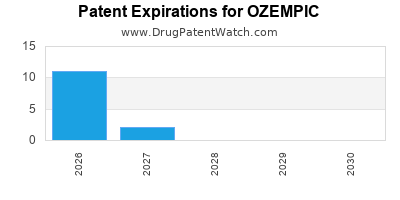
Ozempic is a drug marketed by Novo and is included in two NDAs. There are thirty patents protecting this drug and three Paragraph IV challenges.

The generic ingredient in OZEMPIC is semaglutide. There is one drug master file entry for this compound. Two suppliers are listed for this compound. Additional details are available on the semaglutide profile page.

DrugPatentWatch® Generic Entry Outlook for Ozempic

Ozempic was eligible for patent challenges on December 5, 2021.

By analyzing the patents and regulatory protections it appears that the earliest date for generic entry will be January 28, 2028. This may change due to patent challenges or generic licensing.

There have been fifty-three patent litigation cases involving the patents protecting this drug, indicating strong interest in generic launch. Recent data indicate that 63% of patent challenges are decided in favor of the generic patent challenger and that 54% of successful patent challengers promptly launch generic drugs.

There is one tentative approval for the generic drug (semaglutide), which indicates the potential for near-term generic launch.

Indicators of Generic Entry

< Available with Subscription >

  Start Trial

AI Deep Research
Questions you can ask:
  • What is the 5 year forecast for OZEMPIC?
  • What are the global sales for OZEMPIC?
  • What is Average Wholesale Price for OZEMPIC?
DrugPatentWatch® Estimated Loss of Exclusivity (LOE) Date for OZEMPIC
Generic Entry Date for OZEMPIC*:
Constraining patent/regulatory exclusivity:

TO REDUCE THE RISK OF SUSTAINED ESTIMATED GLOMERULAR FILTRATION RATE (EGFR) DECLINE, END-STAGE KIDNEY DISEASE, AND CARDIOVASCULAR DEATH IN ADULTS WITH TYPE 2 DIABETES MELLITUS AND CHRONIC KIDNEY DISEASE

NDA:
Dosage:

SOLUTION;SUBCUTANEOUS

*The generic entry opportunity date is the latter of the last compound-claiming patent and the last regulatory exclusivity protection. Many factors can influence early or later generic entry. This date is provided as a rough estimate of generic entry potential and should not be used as an independent source.

Recent Clinical Trials for OZEMPIC

Identify potential brand extensions & 505(b)(2) entrants

SponsorPhase
University of MinnesotaPHASE3
The Metis FoundationPHASE3
First Affiliated Hospital of Wenzhou Medical UniversityPHASE2

See all OZEMPIC clinical trials

Pharmacology for OZEMPIC
Paragraph IV (Patent) Challenges for OZEMPIC
Tradename Dosage Ingredient Strength NDA ANDAs Submitted Submissiondate
OZEMPIC Injection semaglutide 2 mg/3 mL 209637 1 2024-04-11
OZEMPIC Injection semaglutide 8 mg/3 mL 209637 1 2022-12-21
OZEMPIC Injection semaglutide 2 mg/1.5 mL and 4 mg/3 mL 209637 7 2021-12-06

US Patents and Regulatory Information for OZEMPIC

OZEMPIC is protected by thirty-seven US patents and two FDA Regulatory Exclusivities.

Based on analysis by DrugPatentWatch, the earliest date for a generic version of OZEMPIC is ⤷  Start Trial.

This potential generic entry date is based on TO REDUCE THE RISK OF SUSTAINED ESTIMATED GLOMERULAR FILTRATION RATE (EGFR) DECLINE, END-STAGE KIDNEY DISEASE, AND CARDIOVASCULAR DEATH IN ADULTS WITH TYPE 2 DIABETES MELLITUS AND CHRONIC KIDNEY DISEASE.

Generics may enter earlier, or later, based on new patent filings, patent extensions, patent invalidation, early generic licensing, generic entry preferences, and other factors.

Applicant Tradename Generic Name Dosage NDA Approval Date TE Type RLD RS Patent No. Patent Expiration Product Substance Delist Req. Exclusivity Expiration
Novo OZEMPIC semaglutide SOLUTION;SUBCUTANEOUS 209637-002 Apr 9, 2019 RX Yes Yes 8,920,383 ⤷  Start Trial Y Y ⤷  Start Trial
Novo OZEMPIC semaglutide TABLET;ORAL 213051-004 Dec 9, 2024 RX Yes Yes 11,833,248 ⤷  Start Trial Y ⤷  Start Trial
Novo OZEMPIC semaglutide SOLUTION;SUBCUTANEOUS 209637-004 Oct 6, 2022 RX Yes Yes 12,569,543 ⤷  Start Trial ⤷  Start Trial
Novo OZEMPIC semaglutide SOLUTION;SUBCUTANEOUS 209637-001 Dec 5, 2017 DISCN Yes No 9,457,154 ⤷  Start Trial Y Y ⤷  Start Trial
>Applicant >Tradename >Generic Name >Dosage >NDA >Approval Date >TE >Type >RLD >RS >Patent No. >Patent Expiration >Product >Substance >Delist Req. >Exclusivity Expiration

Expired US Patents for OZEMPIC

Applicant Tradename Generic Name Dosage NDA Approval Date Patent No. Patent Expiration
Novo OZEMPIC semaglutide SOLUTION;SUBCUTANEOUS 209637-001 Dec 5, 2017 8,536,122 ⤷  Start Trial
Novo OZEMPIC semaglutide SOLUTION;SUBCUTANEOUS 209637-004 Oct 6, 2022 8,579,869 ⤷  Start Trial
Novo OZEMPIC semaglutide SOLUTION;SUBCUTANEOUS 209637-002 Apr 9, 2019 8,920,383 ⤷  Start Trial
Novo OZEMPIC semaglutide SOLUTION;SUBCUTANEOUS 209637-004 Oct 6, 2022 7,762,994 ⤷  Start Trial
>Applicant >Tradename >Generic Name >Dosage >NDA >Approval Date >Patent No. >Patent Expiration

EU/EMA Drug Approvals for OZEMPIC

Company Drugname Inn Product Number / Indication Status Generic Biosimilar Orphan Marketing Authorisation Marketing Refusal
Novo Nordisk A/S Wegovy semaglutide EMEA/H/C/005422Wegovy is indicated as an adjunct to a reduced-calorie diet and increased physical activity for weight management, including weight loss and weight maintenance, in adults with an initial Body Mass Index (BMI) of- ≥30 kg/m² (obesity), or- ≥27 kg/m² to Authorised no no no 2022-01-06
Novo Nordisk A/S Ozempic semaglutide EMEA/H/C/004174Treatment of adults with insufficiently controlled type 2 diabetes mellitus as an adjunct to diet and exercise:as monotherapy when metformin is considered inappropriate due to intolerance or contraindications;in addition to other medicinal products for the treatment of diabetes.For study results with respect to combinations, effects on glycaemic control and cardiovascular events, and the populations studied, see sections 4.4, 4.5 and 5.1. Authorised no no no 2018-02-08
Novo Nordisk A/S Rybelsus semaglutide EMEA/H/C/004953Rybelsus is indicated for the treatment of adults with insufficiently controlled type 2 diabetes mellitus to improve glycaemic control as an adjunct to diet and exerciseas monotherapy when metformin is considered inappropriate due to intolerance or contraindicationsin combination with other medicinal products for the treatment of diabetes.For study results with respect to combinations, effects on glycaemic control and cardiovascular events, and the populations studied, see sections 4.4, 4.5 and 5.1. Authorised no no no 2020-04-03
>Company >Drugname >Inn >Product Number / Indication >Status >Generic >Biosimilar >Orphan >Marketing Authorisation >Marketing Refusal

International Patents for OZEMPIC

See the table below for patents covering OZEMPIC around the world.

Country Patent Number Title Estimated Expiration
Austria E447992 ⤷  Start Trial
Australia 2006278928 Syringe device with a dose limiting mechanism and an additional safety mechanism ⤷  Start Trial
Brazil PI0613926 dispositivo de seringa para ejetar uma dose de medicamento ⤷  Start Trial
Canada 2616248 APPAREIL A SERINGUE AVEC MECANISME DE LIMITATION DOSE ET DE MECANISME SUPPLEMENTAIRE DE SECURITE (SYRINGE DEVICE WITH A DOSE LIMITING MECHANISM AND AN ADDITIONAL SAFETY MECHANISM) ⤷  Start Trial
>Country >Patent Number >Title >Estimated Expiration

Supplementary Protection Certificates for OZEMPIC

Patent Number Supplementary Protection Certificate SPC Country SPC Expiration SPC Description
1863839 300936 Netherlands ⤷  Start Trial PRODUCT NAME: SEMAGLUTIDE; REGISTRATION NO/DATE: EU/1/17/1251 20180208
1863839 2018C/016 Belgium ⤷  Start Trial PRODUCT NAME: OZEMPIC - SEMAGLUTIDE; AUTHORISATION NUMBER AND DATE: EU/1/17/1251 20180212
1863839 CR 2018 00019 Denmark ⤷  Start Trial PRODUCT NAME: SEMAGLUTID; REG. NO/DATE: EU/1/17/1251 20180212
1863839 122018000075 Germany ⤷  Start Trial PRODUCT NAME: OZEMPIC-SEMAGLUTID; REGISTRATION NO/DATE: EU/1/17/1251 20180208
>Patent Number >Supplementary Protection Certificate >SPC Country >SPC Expiration >SPC Description

Ozempic Market Dynamics and Financial Trajectory

Last updated: October 12, 2026

Ozempic is Novo Nordisk’s once-weekly injectable semaglutide product for adults with type 2 diabetes. Its sales increased from about DKK 32.0 billion in 2022 to approximately DKK 52.7 billion in 2024, making it one of the company’s largest products. Growth has been driven by strong demand for GLP-1 medicines, broader physician adoption, persistent obesity-related demand, and expansion of injectable diabetes treatment.

The principal risks are competitive pressure from Eli Lilly’s Mounjaro, pricing and reimbursement constraints, manufacturing capacity, compounded semaglutide, and eventual U.S. generic entry after key patents expire.

What is Ozempic and how does it generate revenue?

Ozempic contains semaglutide, a glucagon-like peptide-1 receptor agonist, or GLP-1 RA. It is administered once weekly by subcutaneous injection at doses of 0.5 mg, 1 mg, or 2 mg for glycemic control in adults with type 2 diabetes. The FDA label also includes cardiovascular-risk reduction for adults with type 2 diabetes and established cardiovascular disease.[1]

Ozempic is not FDA-approved for chronic weight management. Novo Nordisk markets semaglutide for obesity under the Wegovy brand. The same active ingredient supports multiple commercial products:

Product Active ingredient Primary FDA use Delivery Manufacturer
Ozempic Semaglutide Type 2 diabetes Weekly injection Novo Nordisk
Wegovy Semaglutide Chronic weight management Weekly injection Novo Nordisk
Rybelsus Semaglutide Type 2 diabetes Daily oral tablet Novo Nordisk
Mounjaro Tirzepatide Type 2 diabetes Weekly injection Eli Lilly
Zepbound Tirzepatide Chronic weight management Weekly injection Eli Lilly

Ozempic’s commercial economics benefit from its chronic-use profile. Patients typically remain on therapy for extended periods, and weekly dosing supports refill persistence relative to older daily injectable therapies.

How have Ozempic sales changed from 2022 to 2024?

Novo Nordisk reported rapid year-over-year sales growth for Ozempic:

Fiscal year Ozempic sales Approximate growth
2022 DKK 32.0 billion 50%
2023 DKK 40.8 billion 27%
2024 DKK 52.7 billion 29%

Sources: Novo Nordisk annual reports and financial statements.[2][3][4]

At an exchange rate near DKK 6.8 per U.S. dollar, 2024 Ozempic sales equate to roughly $7.7 billion. The product represented a substantial share of Novo Nordisk’s diabetes and obesity franchise, although the company does not report Ozempic as a separate operating segment.

The financial trajectory has been supported by:

  • Higher prescription volume in the United States.
  • Continued adoption in Europe and other international markets.
  • Increased use among patients requiring injectable therapy after metformin or other oral treatments.
  • Prescriber familiarity with semaglutide from the Wegovy franchise.
  • Pricing and mix benefits from higher-dose presentations and commercial-market sales.

Revenue growth has been more dependent on volume than on large net price increases. U.S. rebates, payer negotiations, Medicare coverage rules, and government pricing pressure limit the conversion of list price into net sales.

What is Ozempic’s current pricing and reimbursement position?

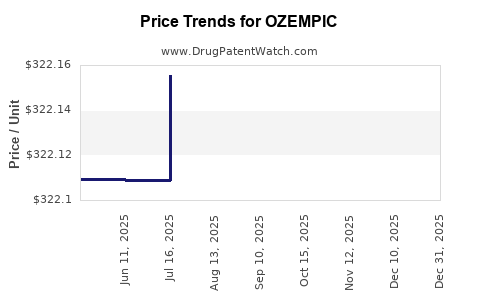
The U.S. list price for a one-month Ozempic supply is approximately $969 before rebates, discounts, and insurance coverage. Novo Nordisk’s patient-support programs and commercial insurance benefits can reduce patient out-of-pocket costs for eligible patients.[5]

The effective price varies by payer:

Payer channel Commercial effect
Commercial insurance Rebates and formulary positioning reduce net price
Medicare Part D Patient cost depends on plan design and coverage phase
Medicaid Statutory rebates reduce manufacturer net price
Cash-pay Patients face the full list price unless manufacturer programs apply
Employer plans Coverage increasingly depends on utilization management
Weight-loss use without coverage Often paid out of pocket, creating demand for compounded products

Ozempic’s diabetes indication gives it a broader reimbursement base than a product used only for obesity. Coverage for obesity treatment remains less consistent across commercial plans and government programs, while diabetes treatment is generally embedded in standard formularies.

How does Ozempic compare with Mounjaro, Wegovy, and Rybelsus?

Ozempic remains a leading diabetes GLP-1 product, but its competitive position is under pressure from tirzepatide.

Factor Ozempic Mounjaro Wegovy Rybelsus
Active ingredient Semaglutide Tirzepatide Semaglutide Semaglutide
Main use Type 2 diabetes Type 2 diabetes Obesity Type 2 diabetes
Administration Weekly injection Weekly injection Weekly injection Daily oral
Company Novo Nordisk Eli Lilly Novo Nordisk Novo Nordisk
Key advantage Brand scale and cardiovascular data Strong glycemic and weight-loss efficacy Obesity indication Oral delivery
Principal risk Tirzepatide competition and patents Manufacturing and reimbursement Coverage and supply Daily dosing

Mounjaro and Zepbound use tirzepatide, a dual GIP/GLP-1 agonist. Clinical-trial comparisons have generally favored tirzepatide for weight reduction and glycemic control, although product selection depends on indication, payer coverage, tolerability, and physician preference.[6]

Wegovy does not directly cannibalize all Ozempic demand because it is approved for obesity rather than diabetes. It does, however, create internal portfolio substitution. Some patients and prescribers may shift between brands depending on diagnosis, insurance coverage, dose availability, and treatment goals.

Rybelsus protects Novo Nordisk’s semaglutide franchise in patients who prefer oral treatment. Its daily administration and food-related dosing requirements limit substitution for some patients, but it expands the franchise beyond injectable therapy.

What patent protections cover Ozempic?

Ozempic is protected by semaglutide composition, formulation, delivery-device, and manufacturing-related intellectual property. The core U.S. semaglutide patent family is associated with Novo Nordisk and includes U.S. Patent No. 8,129,343, which has a reported expiration in December 2031 after patent-term adjustment.[7]

The relevant patent estate can include:

Protection category Commercial purpose
Semaglutide composition patents Protect the active peptide and related compounds
Formulation patents Protect injectable compositions, concentrations, and stabilizers
Pen-device patents Protect dose-selection and injection mechanisms
Manufacturing patents Protect peptide production, purification, and processing
Method-of-use patents Protect diabetes and cardiovascular treatment applications
Combination and dosing patents Protect treatment regimens and dose escalation

Expiration of a composition patent does not automatically eliminate all market barriers. Later-expiring formulation, device, process, or method-of-use patents may affect generic launch strategy. The practical launch date depends on the scope of the remaining claims, FDA listing status, litigation outcomes, settlement terms, and the ability of an applicant to design around non-core patents.

When does Ozempic lose exclusivity?

The primary U.S. composition-patent barrier is expected to extend into 2031. FDA statutory exclusivity is separate from patent protection. Ozempic received approval in 2017, and its principal new-drug exclusivity period expired before the current patent horizon.[1]

Barrier Expected status
FDA new-drug exclusivity Expired
Core semaglutide patent protection Extends into 2031
Generic or follow-on entry Possible after successful patent challenge or expiration
Biosimilar pathway Not the standard pathway for Ozempic
Device and formulation barriers May extend launch risk beyond the core patent

Semaglutide is a peptide drug rather than a conventional monoclonal antibody biologic. A follow-on product may seek approval through an abbreviated pathway if it satisfies applicable FDA requirements, but the regulatory and technical pathway is more complex than for a simple small-molecule tablet.

What is the Orange Book status of Ozempic?

Ozempic is listed in the FDA Orange Book as a prescription product with semaglutide as its active ingredient. Orange Book listings identify patents and regulatory exclusivities that may be relevant to abbreviated applications.[8]

A generic applicant seeking approval before expiration of listed patents could submit a Paragraph IV certification asserting that a patent is invalid, unenforceable, or not infringed. Novo Nordisk could then bring patent litigation, potentially triggering a 30-month stay of approval under the Hatch-Waxman framework.

No broad U.S. generic Ozempic launch has displaced the branded product through 2024. The commercial risk is therefore concentrated in future ANDA filings, patent challenges, and settlement arrangements rather than current generic erosion.

Which companies are challenging Ozempic’s market position?

Eli Lilly is the most significant branded competitor. Mounjaro competes in diabetes, while Zepbound competes in obesity. Other competition comes from AstraZeneca’s exenatide products, Sanofi’s insulin portfolio, Boehringer Ingelheim and Eli Lilly’s Jardiance franchise, and older GLP-1 medicines.

Compounded semaglutide has also affected the market. During periods when FDA recognized semaglutide injection as being in shortage, compounding pharmacies supplied versions of semaglutide under federal and state compounding frameworks. FDA removed semaglutide from its shortage list in 2025, changing the regulatory basis for some compounding activity.[9]

Compounded products can pressure Novo Nordisk through lower cash prices, but they do not carry the same FDA approval, manufacturing controls, labeling, or clinical-evidence profile as Ozempic. Novo Nordisk has pursued litigation and regulatory actions against entities marketing unauthorized compounded or counterfeit semaglutide products.

What manufacturing barriers protect Ozempic?

Ozempic manufacturing requires peptide synthesis, purification, formulation, sterile filling, cartridge or pen assembly, quality control, and cold-chain distribution. The device and sterile-injectable requirements create operational barriers beyond the active ingredient.

Novo Nordisk has invested heavily in production capacity for semaglutide and related GLP-1 products. Capacity constraints in 2023 and 2024 limited availability of certain presentations and contributed to temporary supply pressure. Scale remains a competitive advantage because a successful entrant must secure reliable peptide supply and demonstrate consistent product quality.

Manufacturing patents can also increase the cost of entry. A generic applicant may avoid some process claims through alternative synthesis or purification methods, but doing so can require additional development work and validation.

What licensing deals affect Ozempic?

Novo Nordisk developed semaglutide internally and controls the principal Ozempic commercial rights. The product does not depend on a major external license comparable to a co-developed small-molecule product.

Novo Nordisk’s broader GLP-1 strategy includes acquisitions and technology transactions designed to expand manufacturing, formulation, and obesity-drug capabilities. These transactions support the franchise but do not change the central fact that Ozempic economics are controlled by Novo Nordisk’s semaglutide patents, regulatory approvals, supply network, and commercial infrastructure.

What generic launch scenarios exist for Ozempic?

Three scenarios are commercially relevant.

Scenario 1: Patent expiry with orderly entry

Several manufacturers enter after expiration of core patents. Net prices decline rapidly, market share shifts to lower-cost products, and Ozempic retains a premium segment based on brand familiarity and physician confidence.

Scenario 2: Paragraph IV litigation

One or more applicants challenge core patents before expiry. Novo Nordisk sues, and approval is delayed by litigation or a statutory stay. A settlement could establish an agreed launch date earlier than full patent expiry.

Scenario 3: Delayed or limited entry

A generic applicant obtains approval but faces device, formulation, manufacturing, or supply constraints. Entry occurs gradually, with limited initial volume and slower erosion than in a conventional tablet market.

For investors, the third scenario is important. Even after regulatory approval, a follow-on semaglutide product must compete for peptide supply, sterile capacity, injection devices, payer contracts, and physician acceptance.

How strong is the Ozempic patent estate?

The estate is commercially strong through the early 2030s because it combines core active-ingredient protection with formulation, device, manufacturing, and use claims. Its main weaknesses are the finite patent horizon, the presence of competing incretin mechanisms, possible validity attacks, and the ability of generic applicants to design around secondary patents.

Patent strength is therefore highest for the core semaglutide molecule and lower for peripheral claims that may be narrower, easier to challenge, or less important to commercial freedom to operate.

What is the long-term financial outlook for Ozempic?

Ozempic should remain a major Novo Nordisk revenue contributor through the late 2020s, but growth is likely to moderate from the exceptional rates recorded after 2022. The main drivers will be:

  • Continued expansion of GLP-1 use in type 2 diabetes.
  • Increased cardiovascular-risk-based prescribing.
  • Greater access through payer negotiations.
  • Competition from tirzepatide.
  • Supply expansion.
  • Pricing pressure and formulary rebates.
  • Migration between Ozempic, Wegovy, and Rybelsus.
  • Future generic and follow-on competition.

The franchise’s financial value extends beyond Ozempic sales. It reinforces Novo Nordisk’s prescriber base, manufacturing scale, semaglutide clinical evidence, and bargaining position with payers. The key valuation issue is whether Novo Nordisk can shift demand toward newer products before Ozempic faces material patent-driven erosion.

Key Takeaways

  • Ozempic sales rose from about DKK 32.0 billion in 2022 to approximately DKK 52.7 billion in 2024.
  • Semaglutide, weekly dosing, cardiovascular evidence, and strong diabetes reimbursement support demand.
  • Mounjaro is the main branded competitive threat in type 2 diabetes.
  • Wegovy and Rybelsus expand Novo Nordisk’s semaglutide franchise but create some internal substitution.
  • The principal U.S. semaglutide patent barrier extends into approximately December 2031.
  • No broad U.S. generic launch had materially eroded Ozempic through 2024.
  • Future competition will depend on Paragraph IV litigation, formulation and device patents, manufacturing capacity, payer access, and tirzepatide adoption.
  • Revenue growth should continue before patent expiry, but likely at a slower rate as competition and reimbursement pressure increase.

FAQs

Is Ozempic more profitable than Wegovy?

Ozempic has a large and established diabetes market, while Wegovy has stronger obesity-market growth potential. Relative profitability depends on net pricing, payer coverage, manufacturing cost, dose mix, and the cost of expanding obesity supply.

Can a company make a generic Ozempic before 2031?

A company may file a Paragraph IV challenge before 2031, but commercial launch would depend on patent litigation, settlement terms, patent validity, and any applicable FDA stay. Patent expiry is not the only determinant of market entry.

Will Mounjaro replace Ozempic?

Mounjaro may capture share where physicians prioritize glycemic or weight-loss efficacy, but Ozempic retains advantages in brand scale, cardiovascular evidence, formulary access, and physician familiarity. Replacement is unlikely to be uniform across payer and patient segments.

Does Medicare cover Ozempic?

Medicare generally covers Ozempic when prescribed for an approved diabetes indication, subject to Part D plan rules, formulary placement, prior authorization, and cost-sharing. Coverage does not automatically extend to off-label weight-loss use.

Is compounded semaglutide equivalent to Ozempic?

Compounded semaglutide is not automatically equivalent to FDA-approved Ozempic. Differences may involve formulation, concentration, manufacturing controls, labeling, delivery devices, and clinical validation.

References

  1. U.S. Food and Drug Administration. (2024). Ozempic prescribing information. https://www.accessdata.fda.gov
  2. Novo Nordisk A/S. (2023). Annual report 2022. https://www.novonordisk.com
  3. Novo Nordisk A/S. (2024). Annual report 2023. https://www.novonordisk.com
  4. Novo Nordisk A/S. (2025). Annual report 2024. https://www.novonordisk.com
  5. Novo Nordisk. (2025). Ozempic savings and support information. https://www.novocare.com
  6. Frías, J. P., Davies, M. J., Rosenstock, J., et al. (2021). Tirzepatide versus semaglutide once weekly in patients with type 2 diabetes. New England Journal of Medicine, 385(6), 503-515.
  7. U.S. Patent and Trademark Office. (2012). U.S. Patent No. 8,129,343.
  8. U.S. Food and Drug Administration. (2025). Approved drug products with therapeutic equivalence evaluations, Orange Book. https://www.accessdata.fda.gov
  9. U.S. Food and Drug Administration. (2025). FDA’s drug shortages database and semaglutide compounding guidance. https://www.fda.gov

More… ↓

⤷  Start Trial

Make Better Decisions: Try a trial or see plans & pricing

Drugs may be covered by multiple patents or regulatory protections. All trademarks and applicant names are the property of their respective owners or licensors. Although great care is taken in the proper and correct provision of this service, thinkBiotech LLC does not accept any responsibility for possible consequences of errors or omissions in the provided data. The data presented herein is for information purposes only. There is no warranty that the data contained herein is error free. We do not provide individual investment advice. This service is not registered with any financial regulatory agency. The information we publish is educational only and based on our opinions plus our models. By using DrugPatentWatch you acknowledge that we do not provide personalized recommendations or advice. thinkBiotech performs no independent verification of facts as provided by public sources nor are attempts made to provide legal or investing advice. Any reliance on data provided herein is done solely at the discretion of the user. Users of this service are advised to seek professional advice and independent confirmation before considering acting on any of the provided information. thinkBiotech LLC reserves the right to amend, extend or withdraw any part or all of the offered service without notice.