The LATAM Generic Drug Playbook: Patent Cliffs, Regulatory Arbitrage, and Why Most Multinationals Get It Wrong
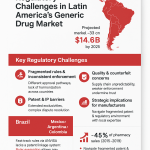
The Latin American generic pharmaceutical market sits in a range of USD 37.2 billion to USD 66.69 billion by the early 2030s, with a CAGR that analysts peg at 5.9% to 7.1%. Those figures look like a green light. They are not. The spread between those projections, nearly USD 30 billion across a decade, is itself the story. It reflects a market that rewards granular country-level intelligence and punishes executives who treat ‘LATAM’ as a single addressable unit.
This pillar page dismantles that misconception. It is written for pharma IP teams weighing portfolio construction, portfolio managers pricing generic-entry risk into valuations, and R&D leads deciding where to allocate finite development capital. Every section goes beyond the original market overview and adds technical depth: patent valuation mechanics, NRA-specific timelines and linkage rules, biosimilar development cost structures, and the specific competitive moves that Hypera, Viatris, Eurofarma, and Tecnoquimicas have executed to own their respective positions.
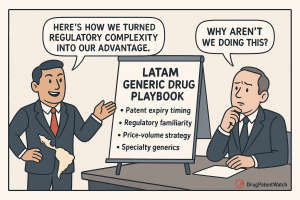
The core thesis: dominance in LATAM is not a function of scale. It is a function of regulatory acuity, IP offensiveness, pricing segmentation, and last-mile control. Miss any one of those, and the market’s structural growth will benefit a competitor.
The Market Most Companies Misread
Why the Growth Numbers Are Misleading
The LATAM generic market’s surface-level CAGR is contaminated by Argentina. Hyperinflationary peso dynamics inflate nominal revenue in USD-converted aggregates during depreciation cycles, then collapse them when peg adjustments occur. Any blended regional CAGR that incorporates Argentina without currency-adjusting the time series is statistically unreliable for capital allocation decisions.
Strip Argentina out of the aggregate and you get a cleaner signal from the four markets that actually determine the competitive hierarchy: Brazil, Mexico, Colombia, and Chile. Brazil alone accounts for roughly 45% of the region’s pharmaceutical market by value. Mexico contributes approximately 20%. Colombia and Chile together add another 15%. The remaining countries in the region, Central America, Peru, Ecuador, Bolivia, and others, are real markets but secondary in strategic priority for most new entrants.
The structural demand drivers are not speculative. Latin America carries a non-communicable disease (NCD) burden that, in several countries, now rivals or exceeds that of Western Europe: cardiovascular disease, type 2 diabetes, cancer, and central nervous system disorders account for the majority of long-term prescription volume. Out-of-pocket expenditure on pharmaceuticals in countries like Chile can reach 40% of total health spending. That household payment reality creates price sensitivity that generic manufacturers can directly monetize, and it is not going away. An aging population, improving but still incomplete health coverage, and governments under fiscal pressure to expand access without expanding budgets all point to structurally sustained generic demand through at least 2035.
The segment mix matters as much as the aggregate. Unbranded generics hold approximately 76% of volume, but branded generics dominate the revenue mix in the contract manufacturing segment, where they account for 64.5% of revenue. Biosimilars remain a small but accelerating slice. Any company entering the region with a single-segment, single-price strategy leaves substantial margin on the table.
Key Takeaways: The Market Most Companies Misread
The LATAM market is not one market. Brazil’s regulatory architecture, pricing rules, and competitive dynamics have almost nothing in common with Colombia’s. A blended CAGR is a planning fiction. The companies that build country-specific capital allocation models, separating Brazil and Mexico as primary markets with full-stack investment and treating smaller countries as distribution plays, outperform those that average across the region. The branded generic segment is disproportionately large because physicians and out-of-pocket patients use brand trust as a quality proxy in the absence of sophisticated payer-mandated substitution rules. Entering with an unbranded strategy in the private market is a choice to compete on price against local incumbents who have decades of brand equity. That is usually a losing trade.
The IP Battleground: Patent Linkage, Data Exclusivity, and Evergreening Mechanics
The TRIPS-Plus Framework in LATAM
The foundational IP architecture governing generic entry in Latin America is set by the Agreement on Trade-Related Aspects of Intellectual Property Rights (TRIPS), but the practical competitive landscape is shaped by what IP lawyers call TRIPS-plus provisions, those requirements embedded in bilateral free trade agreements with the United States and European Union that extend beyond TRIPS’ baseline.
Two mechanisms do most of the work: patent linkage and data exclusivity. Understanding their precise legal scope in each country is a prerequisite for any defensible portfolio selection or launch-timing decision.
Patent linkage ties the drug approval process to patent status. When it exists, the relevant National Regulatory Agency (NRA) cannot grant marketing authorization to a generic applicant if a valid patent covering the originator product appears on a designated register. Mexico runs the clearest example of this in the region: COFEPRIS formally checks the Mexican Institute of Industrial Property (IMPI) patent registry before approving generic applications. This means an originator company can delay generic entry by ensuring that secondary patents, covering new formulations, polymorphs, crystalline forms, or specific dosing regimens, appear on that register even after the primary composition-of-matter patent expires. That is the definitional evergreening tactic, and in Mexico it works as intended.
Brazil does not have patent linkage. ANVISA operates independently of the National Institute of Industrial Property (INPI), and generic manufacturers can obtain ANVISA approval regardless of patent status. The originator’s recourse is a separate civil infringement action, not a pre-approval regulatory block. Colombia and Argentina also lack patent linkage systems, creating a materially different competitive environment in those three countries compared to Mexico.
Data exclusivity is the second major barrier. It protects the clinical trial data an innovator submits to obtain its original marketing approval. During the exclusivity window, a generic applicant cannot rely on that data to support its own application. Colombia enforces a five-year data exclusivity period for new chemical entities. Brazil applies it inconsistently and narrowly. Argentina does not enforce it in any systematic way. This inconsistency means a drug can be off-patent and freely manufacturable by a generic producer in Argentina while simultaneously enjoying effective market exclusivity in Colombia through data exclusivity, even with no blocking patent.
Evergreening Tactics: A Technology Roadmap
Originators in LATAM deploy the same evergreening playbook used in the United States and Europe, but the effectiveness of each tactic varies by country depending on whether patent linkage exists, how patent utility requirements are interpreted by the local patent office, and how aggressively the NRA defers to patent status.
The roadmap runs in roughly four stages over a typical branded drug’s commercial lifecycle:
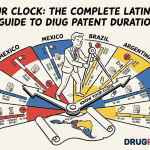
Stage one is composition-of-matter protection. The primary patent covers the active pharmaceutical ingredient (API) itself. This is the strongest form of protection, typically filed during preclinical development and carrying a twenty-year term from filing date. In LATAM, patent office backlogs in Brazil and Mexico often mean that by the time a patent is granted, six to ten years of the nominal term have already expired. Effective remaining exclusivity on the primary patent may be eight to twelve years from first launch.
Stage two is formulation and delivery mechanism patents. As the primary patent approaches expiration, originators file secondary patents covering specific extended-release formulations, particular salt forms (for example, the besylate versus maleate form of a molecule), or device-integrated delivery systems. These patents are weaker from a claim standpoint but effective in Mexico and any other market with patent linkage, because they appear on the registry and create the procedural block regardless of their ultimate validity. A generic challenger who wants to enter must either design around the formulation patent, wait for it to expire, or challenge it directly at the patent office or in court.
Stage three is indication expansion. New patent claims covering additional therapeutic uses of the same molecule extend the protected commercial footprint. Under Mexico’s patent linkage regime, a new-use patent listed in the IMPI registry can block a generic from launching even in the indication that the primary patent no longer covers, because the NRA is checking the registry as a whole rather than indication by indication. This is a known and heavily litigated area in Mexican pharmaceutical IP.
Stage four is pediatric formulations and lifecycle management products. Regulatory incentives for pediatric studies can add exclusivity periods in markets with formal pediatric designation rules, which in LATAM is primarily Mexico through COFEPRIS programs aligned with FDA pediatric exclusivity concepts.
For generic manufacturers, the practical response to each stage is distinct. Against weak formulation patents, an invalidity challenge at the patent office (IMPI in Mexico, INPI in Brazil) is often viable if the patent lacks genuine inventive step, particularly when prior art clearly discloses the relevant salt form or polymorph. Against new-use patents, a generic company can seek approval specifically for the off-patent indication and argue that the listed patent does not apply. That carve-out strategy is well-established in United States Hatch-Waxman litigation and is beginning to appear in Mexican COFEPRIS proceedings as the framework matures.
IP Valuation of Key Patent Assets in LATAM
For portfolio managers and IP teams, assigning a defensible IP valuation to a LATAM pharmaceutical asset requires moving beyond simple patent expiry date tracking. The relevant inputs are: residual exclusivity (accounting for office backlogs), the breadth and vulnerability of secondary patents, the presence or absence of patent linkage in the target market, the pricing ceiling available under each market’s price control regime, and the competitive entry density once exclusivity breaks.
Consider a hypothetical originator cardiovascular product with a primary composition-of-matter patent that expired in Brazil in 2023 but still carries a secondary formulation patent until 2027, listed on Mexico’s IMPI registry under COFEPRIS linkage. In Brazil, the IP-derived revenue premium is already gone; ANVISA can approve generics freely. In Mexico, the secondary patent creates a regulatory block that may not survive an IMPI invalidity challenge, but mounting that challenge costs time and legal fees, typically twelve to thirty-six months of proceedings, and delays generic entry. An originator holding that secondary patent can reasonably model two to four additional years of effective exclusivity in Mexico, representing meaningful enterprise value that would not appear on a simple patent-cliff analysis.
The commercial value of that extended Mexican exclusivity depends on COFEPRIS-approved pricing, the size of the addressable patient population, and whether the product is primarily dispensed through IMSS (the social security health system) or the private market. IMSS procurement operates through centralized tender mechanisms that compress pricing irrespective of patent status, so extended IP protection in Mexico’s public sector adds less value than it does in the out-of-pocket private channel.
For biosimilar assets, the IP valuation methodology requires additional layers: the originator biologic’s remaining patent life, the data exclusivity clock (which in Brazil runs eight years for biologics under Resolution RDC 204/2017), the manufacturing process patents covering upstream fermentation or downstream purification steps, and the cost of the clinical comparability program required to demonstrate biosimilarity. A biosimilar development program for a monoclonal antibody in LATAM typically requires USD 30 million to USD 100 million in development expenditure before the first regulatory submission, a figure that anchors the minimum IP value the biosimilar must generate to justify investment.
Investment Strategy: The IP Battleground
Portfolio managers evaluating generic or biosimilar companies with LATAM exposure should conduct patent linkage mapping as a first-pass filter. A company claiming significant near-term revenue from Mexico that has not modeled the linkage delay risk on any product protected by secondary patents is carrying unquantified downside. The same applies to biosimilar companies that have not accounted for Brazil’s eight-year biologic data exclusivity window when projecting launch timing.
For activist IP positions, the weak-patent identification opportunity in LATAM is real. Secondary patents covering obvious salt forms or trivially modified formulations are common in the regional patent registries, particularly in countries that adopted patent-linkage obligations as part of bilateral free trade agreements without a corresponding requirement for rigorous inventive-step review at the patent office. A generic company with the legal budget and technical sophistication to challenge these patents at IMPI or INPI can compress entry timelines and capture first-mover economic rents that late-filing competitors cannot.
The Four Pillars of Market Dominance
Pillar One: Regulatory Architecture as Competitive Weapon
Regulatory affairs in LATAM is where most multinationals underinvest relative to the competitive return available. The standard model, a small regional regulatory team that adapts global dossiers for local submission, leaves significant speed-to-market value unrealized. The companies winning consistently run their regulatory function as a forward-deployed commercial asset.
The core mechanism is the ‘Global-First, Local-Adapt’ filing strategy. A company begins with a core technical dossier built to FDA or EMA standards, the most stringent reference frameworks in the world. This investment is not wasted on smaller markets; it is the entry ticket to regulatory reliance pathways that multiple LATAM NRAs now offer. Brazil’s ANVISA, Colombia’s INVIMA, Peru’s DIGEMID, and a growing number of smaller NRAs have formalized reliance procedures that allow them to leverage the scientific assessment of a reference authority, dramatically compressing local review timelines compared to independent full-review processes.
The strategic implication is parallel processing. A company that builds a reliance-ready dossier can simultaneously file in five or six LATAM markets, each using the FDA or EMA approval as an anchor, rather than pursuing sequential country-by-country submissions. For a product with a twelve-to-eighteen-month approval timeline in Colombia and a twenty-four-month timeline in Brazil under full review, a parallel strategy can compress the total time to multi-market launch by two to three years. On a product generating USD 20 million per year in the region at steady state, that compression is worth USD 40 to 60 million in net present value.
The Big Four NRAs: Comparative Technical Specifications
Brazil’s ANVISA is the region’s most demanding NRA. The agency requires locally conducted bioequivalence studies for most solid oral dosage forms, meaning a sponsor cannot simply submit bioequivalence data generated in the United States or Europe and expect acceptance. The local study requirement adds six to twelve months to development timelines and USD 300,000 to USD 600,000 in direct costs per product. ANVISA’s pricing review for generics is handled by CMED (Drugs Market Regulation Chamber), which mandates a minimum 35% price discount against the reference product price. ANVISA also runs a separate, rigorous review process for biologics under its biologic registration pathway (RDC 204/2017), which includes mandatory comparative clinical and pharmacokinetic data packages for biosimilar applications.
Mexico’s COFEPRIS presents a different challenge profile. The agency’s formal patent linkage system, referencing IMPI’s registry, is the primary entry barrier. Bioequivalence studies must be conducted locally, at an authorized clinical research site in Mexico, or at a qualified site abroad with explicit COFEPRIS acceptance, which the agency grants selectively. The COFEPRIS backlog has historically stretched review timelines to eighteen to thirty months for straightforward generic applications, longer for complex generics or applications subject to patent linkage holds. The centralized government procurement shift toward IMSS-Bienestar further complicates market access, because winning the regulatory approval is a separate exercise from winning the procurement tender that actually generates revenue.
Colombia’s INVIMA operates without patent linkage but enforces a five-year data exclusivity period for new medicines. The approval process for generics is faster than Brazil or Mexico, typically twelve to eighteen months for standard applications. Colombia’s pricing authority, the CNPMDM, exercises discretionary power to impose price controls on specific products deemed critical or priced above international reference benchmarks. A generic entering Colombia’s market with a competitive price faces less regulatory friction than in Brazil or Mexico, but the out-of-pocket market is shaped heavily by pharmacy chain concentration. Cruz Verde and the Coopidrogas cooperative, a network of more than 6,500 independent pharmacies, collectively control the majority of retail distribution. Access agreements with those entities are a prerequisite for meaningful market penetration.
Argentina’s ANMAT operates in an environment where local generic companies, led by Roemmers, Laboratorios Bagó, and a cluster of mid-sized domestic players, hold dominant positions built over decades. ANMAT review timelines are generally twelve to eighteen months, and the agency does not apply patent linkage or systematic data exclusivity. The primary barriers for foreign entrants are competitive, not regulatory: the local incumbents have deeply entrenched prescriber relationships, efficient domestic manufacturing, and pricing flexibility that importers cannot match, particularly during currency devaluation cycles that make imported goods disproportionately expensive.
Pillar Two: IP Strategy from Defense to Offense
Passive IP management, which means waiting for patents to expire and then filing a generic application, is a strategy for entering crowded markets at thin margins. The companies generating above-market returns in LATAM generic pharmaceuticals run a proactive IP intelligence function that identifies and acts on opportunity before competitors recognize it exists.
The methodology begins with patent cliff mapping, but goes considerably deeper than a simple expiry calendar. A defensible pipeline requires analysis of the full patent landscape for each target molecule: the composition-of-matter patent, all secondary formulation and process patents, any new-use patents, pediatric exclusivity designations, and the litigation history across the key LATAM and reference-country jurisdictions. This is exactly what platforms like DrugPatentWatch are built to deliver, cross-referencing patent databases, regulatory status databases, litigation records, and supplier information in a single integrated view.
The practical output of this analysis is a risk-adjusted opportunity ranking. A molecule with a weak, soon-expiring secondary patent blocking entry in Mexico, and no secondary patents in Brazil, Colombia, and Chile, presents a materially different risk-return profile than a molecule where the originator has filed a dense thicket of credible secondary patents across all four major markets. The former is worth prioritizing for near-term development resource allocation. The latter may still be worth pursuing if an invalidity challenge is viable and the commercial prize is large enough to justify the legal spend.
For companies with the appetite for a direct legal challenge, the Paragraph IV filing mechanism in the United States (under the Hatch-Waxman Act) is a useful parallel model for understanding how aggressive generic manufacturers approach IP barriers globally. LATAM does not have an exact equivalent, but several markets allow generic companies to challenge patent validity before or during the regulatory review process. Mexico’s IMPI accepts post-grant invalidity challenges. Brazil’s INPI has an administrative nullity process. These proceedings are slower and less predictable than US Paragraph IV litigation, but they are the functional tools available for companies serious about contesting weak secondary patents.
Pillar Three: Pricing Architecture Across Public and Private Channels
The LATAM pharmaceutical market is structurally bifurcated. The public sector, funded by government health programs, SUS in Brazil, IMSS and ISSSTE in Mexico, SGSSS in Colombia, operates on price-driven procurement logic. The private sector, including pharmacy retail and physician-driven prescriptions, operates on a brand-trust and relationship logic. A single pricing strategy cannot optimize across both.
In Brazil, CMED’s ceiling of 65% of the originator reference price for generics sets the upper bound in the private market. Government procurement through SUS layers an additional mandatory discount on top of that ceiling. The math produces thin absolute margins compensated by very large volume. SUS covers approximately 214 million Brazilians, and its centralized procurement events are among the largest pharmaceutical tender processes in the world. A generic that wins a SUS contract for a high-volume chronic disease molecule, atorvastatin, metformin, amlodipine, can generate tens of millions of units annually. The commercial thesis for that product is volume, not margin.
Mexico’s public market has gone through consecutive procurement model disruptions. The UNOPS contract arrangement, intended to increase transparency and reduce corruption in government drug procurement, ran into execution problems and was replaced. IMSS-Bienestar now handles procurement for much of the federal social system, and the consolidated bidding process creates winner-take-most dynamics for high-volume contracts. Pricing is negotiated under framework agreements, and the government has explicit authority to request compulsory licensing for drugs deemed essential and priced above what public budgets can sustain.
In Colombia, the CNPMDM’s ‘supervised freedom’ regime means pricing is generally market-driven, but the commission maintains a list of controlled medicines where it sets direct price limits. This list includes critical cancer drugs, antiretrovirals, and some high-cost cardiovascular agents. The practical implication for generic entrants is that price controls apply where the commercial opportunity is largest, specifically in therapeutic areas with the highest originator prices and the greatest potential savings from generic substitution.
The out-of-pocket private market requires a differentiated commercial model. In all four major LATAM markets, a significant portion of prescriptions are filled at pharmacies where the dispensing pharmacist, or a physician associated with a pharmacy clinic, influences product selection. The branded generic gains its commercial advantage precisely here. A patient or physician who cannot evaluate formulation equivalence independently relies on brand familiarity as a proxy. Hypera’s Neo Química brand, which sponsors stadium naming rights and runs consumer-facing marketing campaigns, competes for that mental availability in a way that an unbranded molecule never can.
Pillar Four: Go-to-Market Execution and Last-Mile Control
Distribution in Latin America is concentrated in fewer hands than in North America or Western Europe, which creates both a risk and an opportunity. The risk: failing to secure favorable terms with the major distributors locks a company out of meaningful market coverage. The opportunity: a company that secures deep, preferential distribution partnerships, or better, acquires a company with an existing network, creates a structural advantage that is extremely expensive for competitors to replicate.
Tecnoquimicas in Colombia began as a distribution company before evolving into a manufacturer. That heritage gave it what no foreign entrant can easily buy: logistical reach to more than 100,000 clients, including independent pharmacies in secondary and tertiary cities that major chains do not cover. When Tecnoquimicas sells a product through its own network, it pays no third-party margin and controls placement, pricing, and promotional presence at the point of sale. That integration is the central reason it has held its leading domestic position against well-funded foreign challengers.
Hypera’s distribution model in Brazil pairs its own direct salesforce, approximately 10,000 employees, with selective wholesaler relationships. It built the direct channel specifically to serve the branded generic and OTC segments, where physician and pharmacist relationships drive prescription and recommendation. Its ihypera B2B digital platform handles smaller pharmacies and complements the direct sales coverage without requiring proportional headcount increases.
For a new entrant, the realistic path to competitive distribution is a deep exclusive partnership with a major national distributor or an acquisition. A standard non-exclusive agreement, which a new entrant will almost certainly be offered first, provides shelf presence but no preferential treatment, no active selling support, and no insight into competitor activity at the point of sale. That is insufficient for a company trying to displace an incumbent with brand equity. The negotiating leverage to get better terms comes from portfolio breadth and the willingness to make volume commitments that a small portfolio cannot sustain.
ANVISA’s generic drug approval process runs under Resolution RDC 204/2017 for biologics and the older RDC 16/2007 framework for small-molecule generics and similars, with subsequent updates. The agency classifies pharmaceutical products into three categories: reference (the originator brand), generic (must demonstrate pharmaceutical equivalence and bioequivalence to the reference), and similar (comparable efficacy but historically not required to demonstrate bioequivalence, though ANVISA has progressively tightened this distinction).
Bioequivalence studies for most oral dosage form generics must be conducted in Brazil, at an ANVISA-accredited clinical research center (CRO), using Brazilian reference product purchased at local pharmacies. The rationale ANVISA cites is potential formulation differences in locally marketed reference products versus products used in bioequivalence studies conducted abroad. The practical effect is a mandatory local clinical program for each product, with costs ranging from USD 250,000 to USD 600,000 per study depending on complexity, plus three to six months of data generation time before the dossier is even ready for submission.
ANVISA’s review of a standard generic dossier historically took twenty-four to thirty-six months. The agency has implemented expedited review pathways for products with significant public health relevance, and a priority review classification is available for generics of products on Brazil’s essential medicines list (RENAME). Even with priority status, the review process rarely completes in under twelve months.
For biosimilars, ANVISA requires a stepwise comparability exercise: physicochemical characterization, biological activity comparison, pharmacokinetic comparability studies, and, for most therapeutic proteins, a Phase III comparative clinical trial against the reference biologic. The data package is structurally similar to what EMA requires for biologic applications in Europe, which creates a natural synergy for companies pursuing simultaneous EU and Brazil development programs.
Mexico: COFEPRIS and the Patent Linkage Mechanics
COFEPRIS’ formal patent linkage system operates under the Health Supplies Regulations, which require the agency to consult IMPI’s compulsory licensing and administrative cancellation register before granting marketing authorization for generic applications. If a patent listed in that register covers the reference product, COFEPRIS issues a ‘linkage hold’ and the generic approval is suspended pending patent expiry or a successful invalidity ruling at IMPI.
The IMPI registry is only as reliable as the patents it contains. Originators have strong incentives to list every potentially applicable patent, including secondary patents of questionable validity, to maximize the duration of the linkage hold. IMPI’s pre-grant examination quality for pharmaceutical patents has been inconsistent, meaning some listed patents lack the inventive step or novelty that would survive post-grant scrutiny. A generic company that identifies a weak secondary patent on IMPI’s list and files a successful invalidity challenge can remove the linkage hold and accelerate its approval timeline, potentially by two to four years relative to simply waiting.
Bioequivalence for Mexico is conducted under NOM-177-SSA1-2013, which requires studies in Mexican volunteers at accredited sites. The NOM also specifies statistical criteria: the 90% confidence interval for the ratio of test to reference pharmacokinetic parameters must fall within 80% to 125%, the same range as FDA’s standard bioequivalence criterion. Regulatory submissions are made through COFEPRIS’ online SIGEN system, and the administrative review timeline has improved with agency staffing increases but still runs eighteen to twenty-four months for straightforward applications.
Colombia: INVIMA’s Comparative Efficiency and Its Limits
INVIMA is widely regarded as LATAM’s most process-efficient major NRA. It has no patent linkage, enforces a five-year data exclusivity period for new chemical entities (measured from first Colombian registration), and has streamlined its generic review through a risk-tiered system that allocates resources toward more complex applications.
The data exclusivity restriction deserves precision: it prevents a generic applicant from relying on the originator’s undisclosed clinical data during the exclusivity window, but it does not prevent a generic company from conducting its own independent bioequivalence study and filing a complete independent application. In practice, the cost of an independent bioequivalence study is far less than the revenue opportunity in Colombia’s private market, and several companies have used this pathway to launch branded generics in Colombia before the five-year data exclusivity window closes.
INVIMA’s pharmacy distribution landscape is shaped by the Cruz Verde chain, the Coopidrogas cooperative, and a number of regional chains. Coopidrogas is particularly important because it aggregates independent pharmacies that would otherwise be individually inaccessible to a national sales force. Securing a supply agreement with Coopidrogas effectively unlocks a network of pharmacies across secondary cities and rural areas that a direct sales approach cannot reach efficiently.
IP Valuation of Key Assets: Drugs and Companies
Atorvastatin (Lipitor) in LATAM: Post-Exclusivity IP Residual Value
Atorvastatin, originally launched by Pfizer as Lipitor, is the paradigm case for understanding LATAM’s IP residual value dynamics after primary patent expiry. The composition-of-matter patent for atorvastatin expired globally in the early 2010s. In LATAM, the patent cliff produced generic entry across all major markets, with aggressive price erosion in the public tender channel. Within two years of generic entry in Brazil, tender prices for atorvastatin dropped by 60% to 80% relative to Lipitor’s originator price.
But Viatris, which inherited Lipitor from Pfizer’s Upjohn division, did not simply cede the market. The Lipitor brand retains measurable commercial value in the private out-of-pocket channel in Brazil, Mexico, and Colombia. Physicians who trained during Lipitor’s period of market leadership prescribe it by brand, and patients who can afford the premium prefer a familiar name. Viatris’ strategy has been to compete in both channels: atorvastatin generic in the public tender, Lipitor brand in the private pharmacy.
For IP valuation purposes, the residual IP value of Lipitor in LATAM’s private market derives not from patent protection, which has lapsed, but from trademark and brand equity. The trademark ‘Lipitor’ is an IP asset in its own right, and its brand recognition among cardiologists and primary care physicians in Brazil and Mexico is something that competitors cannot appropriate. A pharma M&A analyst valuing the Viatris LATAM portfolio should treat the Lipitor trademark as a distinct intangible asset, separable from the generic atorvastatin SKU and carrying a meaningfully different revenue persistence curve.
Hypera Pharma’s IP and Brand Asset Valuation
Hypera Pharma’s enterprise value on the Bovespa (ticker: HYPE3) is not primarily a generic drug valuation. It is a brand portfolio valuation. The company’s most valuable assets are not patents, which on most of its molecules have long expired, but trademarks: Neo Química, Mantecorp Farmasa, Buscopan, Neosaldina, and a portfolio of other consumer-recognizable pharmaceutical brands.
The M&A acquisitions of Buscopan and Neosaldina from Bayer and Hypermarcas respectively represent classic ‘brand carve-out’ transactions where Hypera paid for the intangible value of physician and consumer recognition attached to a name, not for compound patent protection. Buscopan (hyoscine butylbromide) is off-patent. Neosaldina (a combination analgesic) has no remaining composition-of-matter patent. The purchase price Hypera paid in each transaction reflected discounted future cash flows attributable to brand-driven market share persistence, not IP-derived exclusivity.
For institutional investors, the relevant valuation metric is brand revenue premium: the price per unit that Hypera’s branded generics command relative to unbranded equivalents in the same therapeutic category. In Brazil’s self-medication and OTC market, this premium typically runs 15% to 40% above generic commodity pricing. Across a portfolio generating approximately BRL 9 billion in annual net revenue, that premium differential is the primary driver of margin above commodity-generic economics.
Eurofarma’s Genfar Acquisition: Platform IP Valuation
When Eurofarma acquired Genfar, Sanofi’s LATAM generics operation, it acquired a regulatory IP portfolio, specifically a set of marketing authorizations in Colombia, Ecuador, and Peru, that would have taken eight to twelve years to build from scratch through independent NRA submissions. Marketing authorizations in LATAM are transferable intellectual assets. They represent completed regulatory review, accepted bioequivalence data, and established commercial histories that regulators use as reference points in post-approval change evaluations.
The Genfar acquisition price, not publicly disclosed in full detail, reflected at least three asset categories: product marketing authorizations (valued on a per-country, per-product basis weighted by market size and remaining product lifecycle), manufacturing capacity (Genfar’s Cali, Colombia production site), and the Genfar brand, which Eurofarma subsequently designated as its pan-regional generics brand.
For deal analysis, the per-country marketing authorization valuation for a generic cardiovascular or diabetes product in Colombia typically runs USD 500,000 to USD 2 million per product depending on the molecule’s commercial maturity and the competitive density of the generic market in that category. Across Genfar’s portfolio of several hundred products across three countries, the total marketing authorization asset value is in the range of USD 200 million to USD 400 million at comparable per-unit market authorization valuations, which provides context for understanding the strategic logic even if the total transaction value was not fully public.
Biosimilar Technology Roadmap for LATAM
The Development and Commercialization Roadmap
Biosimilars in LATAM are not a near-term play for undercapitalized generic companies. They require a fundamentally different development infrastructure than small-molecule generics, a fact that the market’s growth projections sometimes obscure by placing biosimilars alongside traditional generics as if they are part of a continuous capability spectrum.
The technical development sequence for a monoclonal antibody (mAb) biosimilar follows a staged analytical-to-clinical comparability model. The sequence runs: reference product characterization, process development and cell line selection, analytical comparability (physicochemical and biological activity equivalence), PK/PD comparability in healthy volunteers or patients, and, for most mAb biosimilars in LATAM, a Phase III clinical trial powered to detect meaningful efficacy and safety differences against the reference biologic.
That Phase III requirement is the key cost driver. For an oncology mAb, a Phase III comparability trial can enroll five hundred to one thousand patients, run eighteen to thirty-six months, and cost USD 40 million to USD 80 million before regulatory submission. A rituximab biosimilar program for Brazil alone, following ANVISA’s biologic registration guidelines, requires a comparative clinical data package that is essentially equivalent to a Phase III study. For a company that has not previously run a Phase III trial, this is not a regulatory submission exercise; it is a clinical operations capability build.
The manufacturing requirements are equally demanding. mAb biosimilar production requires mammalian cell culture (CHO cells are standard), large-scale bioreactors (2,000L to 20,000L), complex downstream purification trains, and analytical characterization equipment including mass spectrometry, circular dichroism spectroscopy, and cell-based potency assays. A greenfield mAb biosimilar manufacturing facility costs USD 200 million to USD 500 million to build and validate. That is before the first batch of drug substance for clinical studies.
Only a small number of LATAM companies have the capital base and technical capability to run this program end-to-end: Eurofarma (through its Orygen biosimilar consortium), and a handful of larger multinationals like Sandoz and Teva with existing biologic manufacturing infrastructure. Companies without that capability are relegated to in-licensing finished biosimilar product from a third-party manufacturer, accepting lower margins and dependence on external supply chain decisions.
Bioequivalence and Interchangeability in LATAM Biosimilar Regulation
Biosimilar interchangeability, the regulatory designation that allows pharmacists to substitute a biosimilar for its reference biologic without physician intervention, is a distinct concept from biosimilar approval. In the United States, the FDA’s interchangeability designation requires an additional switching study demonstrating that patients can alternate between the biosimilar and the reference without increased risk. In LATAM, no country has a formal interchangeability designation equivalent to the FDA’s, but several are moving toward explicit policies.
Brazil’s ANVISA currently approves biosimilars under two pathways: the complete individual development pathway and the comparability pathway. The comparability pathway, which relies on published reference biologic data and a comparability package, produces a biosimilar approval but not an automatic substitution right. Substitution in Brazil’s pharmacy market is regulated at the state level, and in practice, physician prescription authority determines which product a patient receives. Biosimilar interchangeability in Brazil is therefore a commercial and physician education challenge, not purely a regulatory one.
Colombia’s INVIMA is developing a biosimilar regulation framework that will define substitution rules, but as of mid-2025, those rules remain in draft. Companies planning biosimilar launches in Colombia should monitor INVIMA’s regulatory calendar, because the substitution framework will materially affect whether a biosimilar can compete in the private market or is limited to the public channel where government procurement drives selection.
Key Takeaways: Biosimilar Technology Roadmap
The biosimilar opportunity in LATAM is real but structurally constrained to a small number of sufficiently capitalized players. The development cost for a mAb biosimilar, from cell line selection through Phase III comparability and ANVISA submission, is USD 80 million to USD 150 million. That floor eliminates the vast majority of LATAM generic manufacturers as independent biosimilar developers. The commercial opportunity is equally concentrated: oncology and immunology biologics carry annual treatment costs of USD 15,000 to USD 80,000 per patient in LATAM’s private markets, meaning a biosimilar capturing 30% market share in a mid-sized oncology indication generates hundreds of millions in annual revenue. The risk-adjusted return on a well-constructed biosimilar program is attractive; the problem is that very few companies can execute the program.
Investment Strategy: Biosimilars
For portfolio managers assessing biosimilar exposure in LATAM, the relevant question is not which companies plan to launch biosimilars but which companies have the manufacturing infrastructure and regulatory track record to execute a LATAM biosimilar program without partnership dependency. Eurofarma’s Orygen consortium is the best-documented LATAM-headquartered biosimilar development program. Sandoz has existing biologic manufacturing capacity in Europe and is expanding its LATAM biosimilar commercial footprint. Teva has biosimilar capabilities but has historically deprioritized LATAM relative to the US and Europe.
A company claiming LATAM biosimilar revenue in its five-year plan without owned biologic manufacturing or an explicit manufacturing partnership with a disclosed, credible CMO should be modeled with significant execution risk. The combination of clinical development complexity, ANVISA’s Phase III requirement, and the capital intensity of biologic manufacturing makes biosimilar entry the highest-barrier segment in the LATAM generic pharmaceutical landscape.
Case Studies: Four Companies, Four Strategies
Hypera Pharma: The Fortress Builder
Hypera Pharma’s ascent to the top of Brazil’s pharmaceutical market is a case study in domestic consolidation as a competitive strategy. The company grew primarily through acquisition, buying Farmasa, Neo Química, and Mantecorp from sellers who were either exiting Brazil or rationalizing their portfolios. Each acquisition added manufacturing capacity, a product portfolio, and, critically, a brand that Brazilian consumers and physicians already recognized.
The Neo Química brand is worth examining in detail. It is not a pharmaceutical brand in the traditional sense of a specific drug’s trade name. It is a portfolio brand, a trust mark applied across a range of cardiovascular, CNS, and infectious disease generics. By attaching a recognizable umbrella brand to what would otherwise be commodity generic molecules, Hypera created a defensible market position that does not depend on any single molecule’s patent status. Even when a competitive generic from a low-cost Indian or Chinese manufacturer enters the market at a lower price, many Brazilian physicians and pharmacists continue recommending Neo Química products because the brand carries quality associations built through years of consistent product availability and performance.
The stadium naming rights acquisition, which renamed a major São Paulo football stadium to ‘Neo Química Arena,’ is commercially rational, not merely a branding indulgence. Football in Brazil is a cultural institution, and associating a pharmaceutical brand with that institution increases the brand’s mental availability among consumers and healthcare professionals in a way that traditional pharmaceutical advertising cannot easily replicate. The estimated cost of the naming rights deal was approximately BRL 300 million over fifteen years, a fraction of the brand equity value it sustains across a portfolio generating billions in annual revenue.
Hypera’s digital channel, the ihypera B2B portal, is the company’s latest distribution moat. It allows independent pharmacies to order directly from Hypera, bypassing traditional wholesaler intermediaries and giving Hypera direct data on pharmacy-level purchasing patterns, inventory levels, and competitive product adjacency. That data, at the SKU level across thousands of pharmacies, is a competitive intelligence asset that no late-entering multinational can access without equivalent infrastructure.
Viatris: The Therapeutic Focus Model
Viatris entered LATAM as the product of a forced marriage between Mylan’s generic powerhouse and Pfizer’s off-patent branded product division (Upjohn). The integration challenge was significant: two companies with different cultures, different go-to-market models, and product portfolios that overlapped in some categories and diverged sharply in others.
The LATAM strategy that Patrick Doyle articulated reflects a deliberate answer to that complexity. Rather than trying to commercialize everything inherited from both companies, Viatris focused its LATAM commercial resources on three therapeutic areas: cardiovascular disease, CNS disorders, and pain management. That focus is defensible on epidemiological grounds. These three areas account for a disproportionate share of both the NCD burden and the long-term prescription volume in the region’s major markets.
The portfolio differentiation between branded legacy products and generic molecules is Viatris’ primary tactical advantage in LATAM. Lipitor (atorvastatin) and Norvasc (amlodipine) are two of the most prescribed cardiovascular drugs in the region’s medical culture. Brazilian cardiologists trained in the 1990s and 2000s prescribe atorvastatin by the Lipitor name. Viatris can capture that branded prescription in the private market while simultaneously competing on price with a generic atorvastatin SKU in public tenders. No pure generic company can execute that dual strategy without the brand, and no pure originator company with only branded products can compete in the tender channel. Viatris’ combined portfolio is uniquely suited to both.
The partnership model for smaller LATAM markets, deploying distributor relationships rather than direct commercial infrastructure, is capital-efficient but carries execution risk. A distributor’s commercial priority is determined by its own incentive structure, and a small portfolio from a new principal will not receive the same sales force attention as a larger, more established supplier relationship. Viatris’ ability to sustain that model depends on offering distributors a portfolio mix compelling enough to drive active recommendation and placement.
Eurofarma: The Pan-Regional Aggregator
Eurofarma is the most instructive case study for companies with long-term ambitions to build a pan-LATAM presence. Its internationalization was not opportunistic; it followed a systematic logic: secure absolute dominance in Brazil first, generate sufficient operating cash flow to fund international expansion, and then acquire platforms rather than building from zero in each new country.
The Genfar acquisition operationalized that logic at scale. Sanofi, rationalizing its global portfolio, decided to exit its LATAM generics business. Eurofarma acquired the operating company with its regulatory portfolio, manufacturing site, and distribution relationships across Colombia, Ecuador, and Peru. The acquisition transformed Eurofarma from a company with a small number of direct-country operations into a company with a genuine multi-country platform covering South America’s Andean corridor.
Designating Genfar as Eurofarma’s pan-regional generics brand outside Brazil is a brand architecture decision with significant commercial implications. It creates a unified identity across multiple markets, reduces the marketing cost of introducing new products (since physicians and pharmacists in Colombia, Ecuador, and Peru already know the Genfar name), and signals to potential acquisition targets in new markets that Eurofarma has a clear integration playbook.
The R&D investment rate, approximately 7% of net revenue in 2024, is high for a generic-dominated company. Most pure generic manufacturers run R&D at 2% to 4% of revenue. Eurofarma’s elevated investment reflects its biosimilar ambitions through Orygen and its development of what it calls incremental innovation, new formulations, combination products, and delivery mechanism improvements to existing molecules that can be patented locally and add margin above commodity generic pricing. This approach is a contained form of evergreening from the generic manufacturer’s perspective: taking an off-patent molecule and adding a technical improvement that justifies a premium price and provides some protection against low-cost commodity competitors.
Tecnoquimicas: The Distribution-as-Moat Model
Tecnoquimicas is Colombia’s largest domestic pharmaceutical company and the clearest example of a company that converted distribution capability into a durable competitive position. Its heritage as a distributor before becoming a manufacturer means that its commercial infrastructure, covering more than 100,000 clients across Colombia, was built to serve the full complexity of the market, from major urban pharmacies to rural dispensing points that no foreign manufacturer’s salesforce would ever visit directly.
The company has invested USD 200 million in manufacturing capacity expansion, a bet on local production capability as a cost and supply chain advantage. In an environment where API supply chains from China carry geopolitical and logistical risk, a company with local finished-dose manufacturing and the flexibility to source APIs from multiple suppliers has structural cost resilience that pure importers lack.
Tecnoquimicas’ biosimilar ambition, disclosed through IFC documentation, reflects the company’s recognition that remaining confined to small-molecule generics in Colombia’s market is a limitation as the high-growth segment migrates toward biologics. But entering biosimilars without a manufacturing partner is not feasible for Tecnoquimicas at its current capital scale. The company’s announced partnership-seeking strategy is the rational response: find a credible biologics manufacturer willing to supply product for the Colombian and Andean markets in exchange for Tecnoquimicas’ distribution network and NRA relationship access.
The Strategic Playbook: Five Decisions That Separate Winners From Laggards
Decision One: Choose Your Strategic Posture Before Allocating Capital
The three archetypes that the case studies illustrate are mutually exclusive in their resource requirements. The Deep Domestic Champion model requires patient, long-term investment in a single country: building brand equity, acquiring local players, and developing deep regulatory relationships. It is not compatible with trying to be a six-country operation simultaneously, because the capital and management attention required to execute it properly in one market consumes what would otherwise fund superficial presence in five others.
The Focused Multinational model requires discipline about what you will not do. Viatris explicitly declined to build direct commercial infrastructure across all LATAM markets. That decision preserved capital for deeper investment in Brazil and Mexico, where the commercial return justified the cost.
The Pan-Regional Aggregator model requires a home-market fortress first. Eurofarma spent twenty years dominating Brazil before its international revenue became material. Companies that attempt the Pan-Regional model without a dominant cash-generating home-market position typically run out of capital before achieving meaningful multi-country scale.
Decision Two: Build a Reliance-Ready Regulatory Dossier
The regulatory dossier is the company’s primary commercial asset at the product level. A dossier built to FDA or EMA standard that can be submitted in LATAM markets using reliance pathways is worth more than a dossier built only to Brazil’s specifications. The investment difference is not enormous: a global dossier costs perhaps 20% more to prepare than a Brazil-specific one, but it can reduce the total time to market across the regional portfolio by two to three years.
The specific requirements for a reliance-ready dossier include: a complete quality (chemistry, manufacturing, and controls) section meeting ICH Q7, Q8, Q9, and Q10 standards; a bioequivalence package from a GCP-compliant study that can be credibly referenced by non-reference-country NRAs; stability data meeting ICH Q1A zone IV conditions (relevant for tropical climates across LATAM); and a comprehensive summary of product characteristics formatted for adaptability to local requirements.
Decision Three: Deploy Tiered Portfolios Across the Public and Private Channels
The bifurcated market requires bifurcated product strategy. A single SKU cannot win the price-driven tender market and the brand-driven pharmacy market simultaneously. The companies that generate the best risk-adjusted returns in LATAM run at least two distinct product tiers: a tender-optimized unbranded generic priced at or near the regulatory price floor, and a branded generic or ‘similar’ product marketed to physicians and pharmacists with dedicated sales force support and pharmacy-level promotional investment.
The tender product’s commercial logic is volume. The branded generic’s commercial logic is margin. Together, they provide revenue resilience: if a tender contract is lost to a lower bidder, the branded private market continues generating cash. If private market brand competition increases, the tender volume provides base utilization that sustains manufacturing scale and unit cost competitiveness.
Decision Four: Weaponize Patent Intelligence
The ROI on patent intelligence investment in LATAM is asymmetric. The cost of a comprehensive DrugPatentWatch subscription or equivalent intelligence service is measured in tens of thousands of dollars per year. The commercial value of identifying a weak secondary patent that, when challenged successfully, compresses entry timing by eighteen months in Mexico’s market can be measured in tens of millions of dollars of incremental revenue.
The specific use cases for patent intelligence in LATAM include: identifying molecules where the primary composition-of-matter patent has expired but no secondary patents are listed on COFEPRIS’s linkage register (no-obstacle entry in Mexico), identifying molecules where secondary patents listed on IMPI are weak on novelty or inventive step grounds (challenge candidates), and tracking originator litigation behavior (originators that never litigate secondary patent challenges are signaling that those patents are weak or commercially unimportant to them).
Decision Five: Secure Last-Mile Control Before Launch
A product without preferential distribution is a product that loses market share to incumbent brands that own pharmacy relationships. The strategic sequencing matters: distribution agreements should be negotiated and finalized before regulatory approval is received, so that the company can place product in pharmacies within weeks of ANVISA or COFEPRIS approval rather than months.
For a new entrant without existing LATAM commercial infrastructure, the realistic options are: acquire a local company whose distribution network is the primary asset being purchased; negotiate a deep strategic alliance with a national distributor that includes co-marketing commitments, exclusive territory rights for specific therapeutic categories, and data-sharing arrangements that provide visibility into competitive pharmacy-level dynamics; or, for companies with sufficient scale, build a direct salesforce specifically for the branded generic portfolio while relying on wholesaler distribution for the unbranded tender products.
Investment Strategy for Analysts
Valuation Frameworks for LATAM Generic Pharmaceutical Companies
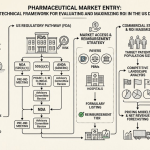
Institutional investors evaluating LATAM pharmaceutical equities or private company positions should apply a modified DCF framework that explicitly accounts for the regulatory-adjusted revenue timeline. The standard approach of modeling launch at patent expiry understates revenue timing risk in markets with NRA backlogs and patent linkage delays. A more defensible model assigns probability-weighted scenarios to three launch dates: base case (patent expiry plus NRA approval time), optimistic case (patent expiry plus accelerated reliance pathway), and pessimistic case (patent expiry plus linkage delay or challenge period).
For branded generic companies, the IP asset to model is trademark value persistence rather than patent term. Brand equity in LATAM pharmaceutical markets decays slowly because physician prescribing habits are sticky and pharmacist recommendations are relationship-driven. A well-established branded generic in Brazil or Colombia has a revenue half-life of ten to fifteen years post-patent expiry, meaningfully longer than the three-to-five-year revenue cliff that a US pharmaceutical analyst would model for an equivalent generic molecule after generic entry.
For biosimilar pipeline assets, the key valuation driver is manufacturing partnership credibility. A biosimilar program without a contracted, GMP-certified biologic manufacturer should carry a development execution discount of 40% to 60% relative to a program with verified manufacturing capacity in place. The clinical development risk, while real, is quantifiable. The manufacturing risk for companies without biologic infrastructure is the more common cause of LATAM biosimilar program failure.
Key Risk Factors for LATAM Pharma Investors
The four primary risks that are most commonly mispriced in LATAM pharmaceutical investment analyses are: currency and macroeconomic volatility (particularly in Argentina and, to a lesser extent, Brazil during political transition periods), regulatory timeline extension risk (ANVISA and COFEPRIS reviews frequently run 25% to 50% beyond stated target timelines), API supply chain concentration risk (a majority of LATAM-marketed generics use APIs from Chinese or Indian manufacturers, and supply disruptions carry revenue at risk), and biosimilar interchangeability regulatory uncertainty (the absence of formal interchangeability designations in most LATAM markets limits biosimilar uptake in private-market channels and extends the time to peak market share).
Frequently Asked Questions
Is patent linkage in Mexico surmountable without litigation?
Yes, in some cases. If a secondary patent listed on IMPI’s registry covers a specific formulation that the generic company’s product does not use, the generic applicant can submit a certificate of non-infringement to COFEPRIS demonstrating that its product falls outside the patent’s claims. COFEPRIS is not equipped to conduct independent patent claim analysis, so it relies on declaratory submissions from the applicant and, if contested, rulings from IMPI. The non-infringement path avoids full invalidity litigation and can be faster, but it requires that the generic manufacturer has genuinely designed around the listed patent’s claims, which in turn requires a proper design-around analysis before the product formulation is finalized.
How does Brazil’s CMED pricing formula affect the commercial economics of generic launches?
CMED’s 35% mandatory discount sets the maximum generic price at 65% of the originator reference price. This ceiling applies in the private market. The government public channel adds a further mandatory discount on top of the CMED price, and SUS procurement frequently drives prices to 40% to 50% below the reference price through competitive tender processes. The commercial model for unbranded generics in Brazil is therefore necessarily volume-driven. A generic that cannot achieve high volume through SUS contracts or high pharmacy throughput is difficult to make profitable at CMED-capped prices, particularly when factoring in local bioequivalence study costs, ANVISA registration fees, and the marketing investment required to establish pharmacy-level presence.
What triggers CNPMDM direct price controls in Colombia?
The Colombian pricing commission uses international reference pricing as its primary analytical tool. It monitors the prices of listed medicines in a basket of reference countries (Canada, United States, Germany, France, Spain, Italy, Australia) and can impose price controls when the Colombian price exceeds the median or minimum of the reference basket by a defined threshold. This mechanism most frequently affects high-cost specialty drugs rather than standard generic molecules. For generic manufacturers entering Colombia with commodity cardiovascular or diabetes molecules, CNPMDM intervention is unlikely. For biosimilar companies pricing into Colombia’s oncology or immunology market, where international reference prices for originators are publicly tracked and CNPMDM scrutiny is active, pricing strategy requires explicit analysis of where the Colombian price will fall relative to the international basket.
Can a mid-sized generic company compete in Brazil without local manufacturing?
Yes, but with margin constraints. Brazilian customs duties on finished pharmaceutical imports run 14% to 18% depending on the product category, and the currency exposure on repatriated profits adds financial planning complexity. Local manufacturing, even through a CMO arrangement with a Brazilian GMP site, eliminates the import duty and allows CMED classification in the ‘locally manufactured generic’ category, which carries slightly better pricing treatment in some government procurement frameworks. For a company entering Brazil with a limited portfolio, a CMO arrangement with a credentialed Brazilian manufacturer is the most capital-efficient path. Building or acquiring a manufacturing facility is only justified when the Brazilian portfolio reaches sufficient volume to utilize the facility at 70% capacity or above.
Key Takeaways
The LATAM generic market is not a growth wave to ride; it is a set of distinct competitive arenas requiring specific expertise in each. Patent linkage exists only in Mexico among the major markets, which makes Mexico uniquely demanding for generic entry timing but creates a legal arbitrage opportunity for companies willing to challenge weak secondary patents at IMPI. Brazil’s absence of patent linkage is a significant structural advantage for generic challengers, offset by ANVISA’s local bioequivalence study requirement and CMED’s pricing ceiling.
Branded generics account for 64.5% of LATAM contract manufacturing revenue, because the out-of-pocket market is large and brand trust functions as the primary quality signal for physicians and patients making direct cost-quality trade-offs. Entering the private market with an unbranded generic against an incumbent branded player is almost always the wrong tactical choice. Build the brand or acquire one.
IP intelligence is an offensive weapon, not a compliance tool. Weak secondary patents on IMPI’s patent linkage register are identifiable through systematic patent landscape analysis. A successful invalidity challenge at IMPI can compress Mexican market entry by two to four years. On a cardiovascular blockbuster-equivalent, that timing gain is worth USD 30 million to USD 80 million in net present value.
Biosimilars require a fundamentally different capability set than small-molecule generics. The development cost floor for a mAb biosimilar program in LATAM is USD 80 million. Companies without biologic manufacturing or a credible manufacturing partnership should not model biosimilar revenue without heavy execution risk discounts. Eurofarma’s Orygen consortium and Sandoz are the credible independent biosimilar development players in the LATAM context.
The Genfar acquisition model, buying a platform with existing regulatory approvals, distribution infrastructure, and brand recognition rather than building from zero, is the fastest path to pan-regional scale. Marketing authorizations in LATAM are transferable IP assets with quantifiable value based on market size, product lifecycle stage, and competitive density. Any M&A analysis of a LATAM pharmaceutical company that does not value its marketing authorization portfolio as a discrete intangible asset is understating the IP position of the acquisition target.
Distribution control, not market share, is the primary defensive moat. Tecnoquimicas’ 100,000-client network, Hypera’s ihypera B2B portal, and Eurofarma’s Genfar logistics infrastructure all represent competitive advantages that cannot be replicated quickly regardless of capital investment. A new entrant that underestimates the time and relationship capital required to secure equivalent distribution access will consistently lose at the point of sale, even with superior products and competitive pricing.
Data and competitive intelligence for patent cliff analysis, secondary patent mapping, and NRA status tracking across LATAM markets is available through DrugPatentWatch’s integrated pharmaceutical intelligence platform.