The global generic pharmaceutical industry is undergoing a technical overhaul. In 2024, the contract manufacturing market for generics reached a valuation of 51.96 billion dollars.1 Analysts at DrugPatentWatch expect this figure to grow at a 9.98% annual rate through 2030.1 This growth is not just a function of volume. It is a result of a fundamental shift in how companies design and produce medicines. Producers are moving away from simple chemical replication. They are adopting advanced manufacturing technologies to handle complex molecules and difficult formulations that were previously too expensive to copy.
These companies use two main strategies to stay competitive. Incremental innovation makes small changes to existing products to improve stability or taste.1 Re-innovation applies entirely new technologies, like 3D printing or nanotechnology, to established drugs.1 These methods allow manufacturers to create products that are better for patients while avoiding the risks of developing new drugs from scratch.
The Engineering Shift From Batches to Continuous Flow
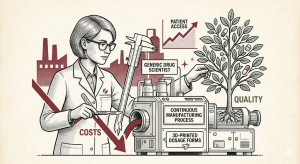
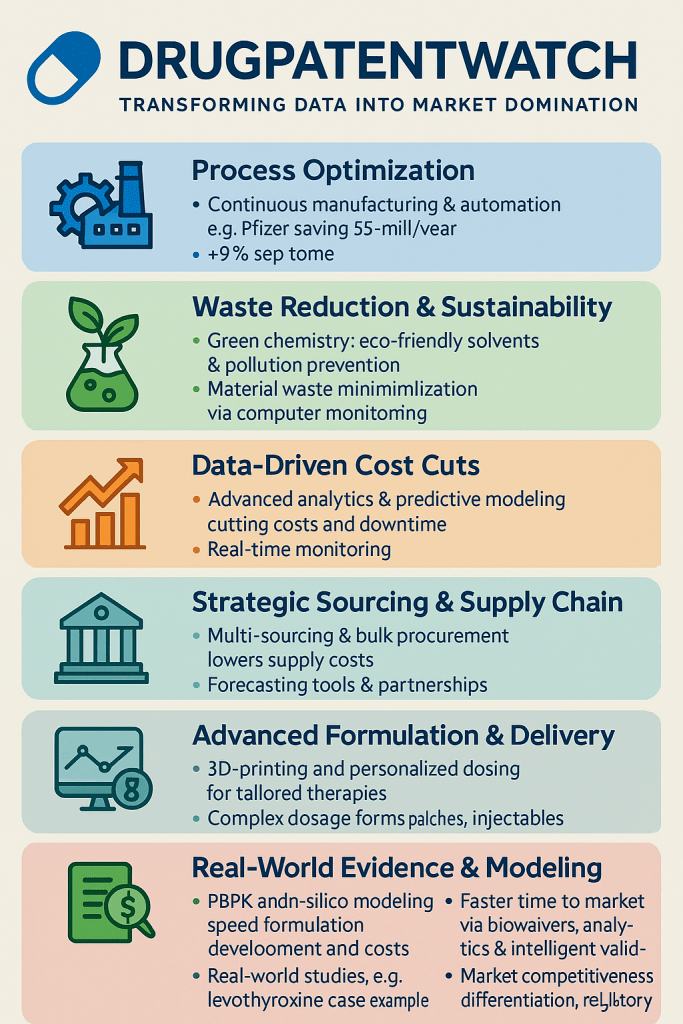
Traditional pharmaceutical manufacturing relies on batch processing. This method produces drugs in separate stages with breaks in between. Each break is a chance for quality to slip or for time to be wasted. Continuous manufacturing changes this. It integrates all production steps into a single, uninterrupted line.1 Raw materials go in one end and finished products come out the other.
Continuous manufacturing provides better control over the final product. Companies use process analytical technology (PAT) to monitor the drug in real-time.1 If a sensor detects a deviation in the chemical mix, the system adjusts automatically. This prevents the loss of entire batches. In traditional manufacturing, a mistake found at the end of a run means the whole batch is scrap. In a continuous setup, the manufacturer only diverts the small amount of material affected by the error.4
Performance Comparison of Manufacturing Models
Metric
Batch Processing
Continuous Manufacturing
Production Speed
Weeks or months
Days or hours
Quality Control
Testing after production
Real-time monitoring
Facility Size
Large, fixed plants
Compact, modular units
Waste Generation
High due to batch failures
Low due to precise control
Scaling
Requires new, larger machines
Requires longer run times
Continuous manufacturing also helps companies scale up faster. In batch processing, moving from a small lab trial to full commercial production requires buying larger equipment and re-testing everything. In continuous manufacturing, a company simply runs the same machine for a longer period.3 This reduces the time it takes to get a new generic to market. Firms like Lonza and Pharma Tech Associates are already deploying these systems for small molecules and biologics.3
The Regulatory Strategy of the 505(b)(2) Pathway
Generic manufacturers are finding more value in the 505(b)(2) regulatory pathway. This route is different from the standard 505(j) used for exact copies. It allows a company to use existing data from an old drug to approve a new, improved version.6 These products are often called supergenerics. They are not just cheaper; they are better.
The 505(b)(2) pathway is useful for drugs that need a new way to enter the body. A company might turn a pill into a patch or an injection into a nasal spray.6 This pathway also allows manufacturers to find new uses for old drugs or to combine two medicines into one pill. Emerging biopharma firms are leading this trend. Between 2020 and 2024, these small companies filed 56% of all 505(b)(2) applications.8
The financial benefit is clear. A standard generic gets 180 days of exclusivity if it is the first to challenge a patent. A 505(b)(2) drug can get up to five years of exclusivity if the manufacturer provides new clinical evidence.7 This protects the product from price wars with other generic makers.
The Mechanics of the Patent Thicket
Brand-name companies use patent thickets to keep generics off the market. A thicket is a group of secondary patents that cover small details of a drug.9 While the main patent on the chemical molecule might expire, the brand company may have patents on the pill’s shape, the way it is manufactured, or the specific crystals in the powder.
Generic firms must navigate these barriers using data intelligence. DrugPatentWatch identifies the “linchpin patent” in these thickets.9 This is the one patent that actually determines when a generic can launch. Many other patents in the thicket are weak and can be ignored or challenged. Using this data, generic makers can plan their launch dates with high precision.
One common way to beat a thicket is a “skinny label.” This happens when a generic company launches a drug for an old, unpatented use while leaving out the newer uses that are still protected.9 Another method is to find a different polymorph. Drugs can exist in different crystal structures. If a brand company has patented the most common crystal, a generic maker can find a different, unpatented structure that still works in the body.9
The Strategic Power of Paragraph IV Challenges
A Paragraph IV certification is a declaration of war. It is a statement by a generic company that a brand’s patent is invalid or will not be broken by the generic product.10 By law, filing this certification is an “artificial” act of patent infringement.12 It allows the brand and generic companies to fight in court before the generic drug even exists.
If the generic company wins, it gets 180 days of market exclusivity.11 This is a massive profit opportunity. During those six months, the generic maker is the only alternative to the high-priced brand drug. They can charge a price that is lower than the brand but much higher than what a crowded generic market would allow.
However, the brand company can fight back with a 30-month stay.11 If they sue the generic maker within 45 days, the FDA cannot approve the generic for two and a half years while the court case proceeds. This delay protects billions of dollars in brand revenue.
According to industry data, 46% of injectable brands losing exclusivity between 2020 and 2024 are complex products that are difficult to develop.1
The Reality of 3D Printed Medicine
3D printing is moving from the lab to the factory. This technology is essential for drugs that do not dissolve well in water. About 70% of drugs in the current development pipeline have solubility issues.14 3D printing solves this by creating tablets with high porosity or by locking the drug in an amorphous state that the body can absorb more easily.14
Fused Deposition Modeling (FDM) uses a plastic-like filament that contains the drug. The printer melts the filament and builds the tablet layer-by-layer.14 This process is excellent for creating controlled-release drugs where the pill dissolves slowly over many hours. Drop-on-Powder (DoP) printing jets liquid ink onto a bed of powder.14 This was the method used for Spritam, the first 3D-printed drug approved by the FDA.16 DoP is best for fast-dissolving tablets that melt on the tongue.
Comparison of 3D Printing Technologies
Feature
Fused Deposition Modeling (FDM)
Drop-on-Powder (DoP)
Starting Material
Solid filament
Loose powder
Manufacturing Speed
Slower
Faster
Tablet Strength
High
Low (can be fragile)
Drug Loading
Lower
Higher (up to 40%)
Main Benefit
Controlled release
Instant dissolution
Manufacturers use these tools to personalize doses. Instead of making millions of identical 10mg pills, a printer can make a 12.5mg pill for a specific patient.14 This is particularly useful in clinical trials where researchers need to test many different doses quickly.
The Nanotech Edge in Bioavailability
Nanotechnology allows generic manufacturers to copy drugs that were once considered uncopyable. By using nano-sized carriers like liposomes or nanoemulsions, companies can protect a drug from being destroyed by the body before it reaches the right spot.6 This increases the drug’s effectiveness and reduces side effects.
Doxil is a classic example of this technology. It uses a liposome—a tiny fat bubble—to carry a chemotherapy drug directly to tumors.6 Generic companies that master these tiny delivery systems can target high-value markets with very little competition. These “complex generics” are much harder to make than a simple aspirin copy, which keeps other generic makers out of the market.
The Economic Trap of Generic Injectables
Injectable generics are much harder to make than oral pills. They require sterile environments and specialized equipment.17 Because of these high costs, many generic injectables are not profitable. A study found that 70% of generic injectables launched between 2018 and 2021 failed to make a profit by their third year.17
This lack of profit leads to shortages. When only one or two companies make a critical hospital drug, any production problem can leave patients without medicine. To fix this, some manufacturers are calling for higher prices or government incentives to keep production lines running.17
Investment Requirements for Generic Injectables
Cost Item
Estimated Amount
Fixed Development Costs
9.16 million dollars
Variable Cost (% of Revenue)
42%
Average Return on Investment (Year 3)
0% to 42%
Discount Rate for Capital
8.82%
The AR Revolution on the Shop Floor
Teva Pharmaceuticals is using augmented reality (AR) to modernize its factories. Operators wear AR headsets that show them exactly how to clean or set up a machine.19 This removes the need for paper manuals and reduces human error.
The results are immediate. At its plant in Malta, Teva used AR to speed up the time it takes to switch a production line from one drug to another.19 This is critical for generic makers who produce many different drugs on the same line. If it takes six hours to clean a machine between drugs, that is six hours of lost revenue. AR helps workers do it faster and more accurately.
Teva is also using AI to predict when machines will break. By analyzing vibrations and heat from the equipment, the system can alert a mechanic before the machine stops.20 This prevents unplanned downtime and keeps the factory running 24 hours a day.
The AI Integration at Teva and Beyond
Artificial intelligence is changing the way generic drugs are developed. Teva’s “Rise” platform connects the company with tech startups to solve problems in drug manufacturing.20 They are using AI to design better clinical trials and to predict which product batches are at risk of failing quality tests.
AI also helps with “yield optimization.” This means finding the perfect temperature, pressure, and chemical mix to get the most drug out of a production run. ZS Associates estimates that a large pharmaceutical company can save 450 million dollars over five years just by using AI to improve yields.22
Digital Value Potential in Manufacturing (Five-Year Estimate)
Program
Savings for Top-10 Pharma
Yield Optimization
450 million dollars
Scrap Reduction
320 million dollars
Schedule Optimization
280 million dollars
Predictive Maintenance
220 million dollars
Total Median Value
1.8 billion dollars
The Reshoring Mandate and Supply Chain Resilience
For decades, the pharmaceutical industry moved its manufacturing to India and China to save money. Recent disruptions have shown the danger of this strategy.23 Now, companies are bringing production back to the United States and Europe.
Sandoz is investing 1.1 billion dollars in Slovenia to build a major hub for biosimilars.24 This site will produce high-tech versions of biologic drugs for the global market. In the United States, new tariffs and trade policies are making it more expensive to import drugs.26 Analysts estimate these tariffs could add up to 19 billion dollars in costs for the industry.26 To avoid these costs, companies are building new factories on American soil.
This reshoring is not just about moving machines. it is about building “smart factories” that use less labor and more automation.26 By using robotics and AI, a factory in the United States can be just as cost-effective as one in a low-wage country.
The Green Imperative: Aurobindo’s Energy Shift
Environmental responsibility is becoming a financial necessity. Energy costs are rising, and regulators are starting to demand that drug companies reduce their carbon footprint.27 Aurobindo Pharma recently bought a large stake in a solar power company to provide clean energy for its factories in India.28
Renewable energy helps generic manufacturers in four ways. It lowers long-term power costs. It improves their sustainability ratings, which is important for getting contracts from big hospital systems. It protects them from energy price spikes. It helps them meet global environmental standards.28
Sandoz is also focusing on “green chemistry.” This involves designing chemical reactions that use fewer hazardous materials and produce less waste.27 By reducing waste, the company saves money on raw materials and on the cost of disposing of chemical byproducts.
The 2025-2030 Patent Cliff
The pharmaceutical industry is facing the largest patent cliff in its history. Between 2025 and 2030, branded drugs with over 200 billion dollars in annual sales will lose their patent protection.27 This creates an unprecedented opportunity for generic and biosimilar makers.
The drugs going off patent include some of the world’s most popular treatments for cancer, diabetes, and heart disease.29 To capture this market, generic companies must be ready to launch on day one. This requires using tools like DrugPatentWatch to monitor every legal and regulatory move by the brand companies.9
Projected Market Impact of Patent Losses (2025-2030)
Year
Revenue at Risk (Global)
2025
35 billion dollars
2026
42 billion dollars
2027
50 billion dollars
2028
48 billion dollars
2029
38 billion dollars
Total
213 billion dollars
The Paragraph IV Playbook and 180-Day Exclusivity
The first generic company to file a Paragraph IV certification is eligible for 180 days of market exclusivity.12 This period is incredibly valuable. In many cases, the price of the drug only drops by 20% or 30% during the exclusivity period. Once multiple generic makers enter the market after the 180 days, the price can crash by 90% or more.
To win this exclusivity, companies must be aggressive. They often file their applications years before the brand patent expires. This leads to intense legal battles. The winner is not always the best chemist; it is often the best legal strategist.
Some companies use “volume-limited settlements” to enter the market early.9 Instead of fighting the brand company to the end, they agree to launch their generic in small quantities for a few years before the patent officially expires. This allows the generic maker to start earning revenue while the brand company avoids a sudden loss of all its profits.
Global Harmonization of Manufacturing Standards
Regulators around the world are working to make it easier for generic drugs to be approved in multiple countries at once. The FDA and the EMA are sharing information on new manufacturing technologies like 3D printing and continuous flow.30
This harmonization reduces costs for manufacturers. If a company can use the same data to get a drug approved in both the U.S. and Europe, they save millions of dollars in testing costs.18 It also makes the global supply chain more flexible. If one factory has a problem, a manufacturer can quickly shift production to a different factory in another country without waiting years for new regulatory approvals.
The FDA’s Emerging Technology Program and the EMA’s Quality Innovation Group are leading this effort.31 They meet with companies early in the development process to help them understand what data is needed to approve a new technology. This removes the fear that an innovative manufacturing method will lead to regulatory delays.
The Financial Reality of Biologic Drugs
Biologics are much more complex and expensive to make than traditional chemical drugs. Developing a biologic can be 11 times more expensive than a small-molecule drug.33 Because of this, the biosimilar market operates differently from the traditional generic market.
Sandoz is a leader in this field. They were the first to launch a biosimilar in 2006 and now have 13 on the market.25 Biosimilars require much larger investments in manufacturing, but they also offer higher profit margins. As the first wave of blockbuster biologics loses patent protection, companies that have invested in biosimilar manufacturing will see the largest returns.
WuXi Biologics uses “ultra-high productivity continuous bioprocessing” to reduce the cost of making these drugs.33 They claim their platform can reduce the cost of goods by up to 80% compared to traditional methods.33 This makes biologic treatments affordable for millions of more patients around the world.
Precision Drug Delivery Systems
Advanced formulation is no longer just about making a pill that dissolves. It is about precision delivery. Some new generic products use nanoparticles to cross the blood-brain barrier or to release medicine only when they reach a certain part of the gut.2
These systems require a high level of technical skill to manufacture. A slight change in the size of a nanoparticle can change how the drug works in the body. This creates a “technical barrier to entry” that protects the manufacturer from competition. Even after the patents expire, other companies may not have the expertise to copy the complex delivery system.
The Future of Digital Twins in Pharma
A digital twin is a virtual replica of a factory or a production process.2 Manufacturers use these digital models to simulate a production run before they even turn on the machines. This allows them to find problems and optimize the process in a virtual environment.
Using digital twins reduces the time it takes to transfer a drug from the lab to the factory.2 It also helps with troubleshooting. If a production line starts producing poor-quality drugs, engineers can use the digital twin to find the cause without stopping the actual machines. This technology is a key part of the “Industry 4.0” transformation in pharmaceutical manufacturing.2
Key Takeaways
The global generic manufacturing market is expanding at a 9.98% CAGR, driven by complex formulations and a massive 200 billion dollar patent cliff.1
Continuous manufacturing is replacing batch processing to provide real-time quality control and significant cost savings.1
The 505(b)(2) pathway allows manufacturers to create improved “supergenerics” with longer periods of market exclusivity.6
3D printing technologies like FDM and DoP are solving bioavailability problems for 70% of new drugs that are poorly water-soluble.14
Generic makers use DrugPatentWatch to identify “linchpin patents” and navigate the dense thickets used by brand-name companies.9
Digital tools like augmented reality and AI-driven yield optimization can add up to 1.8 billion dollars in value to a large manufacturer over five years.19
Reshoring and automation are increasing supply chain resilience as companies move production closer to the U.S. and European markets.23
Sustainability is a new business driver, with firms like Aurobindo investing in renewable energy to lower operational costs and meet ESG standards.27
FAQ
Why are generic companies using 3D printing instead of traditional pill presses? Traditional presses work best for making millions of identical, simple pills. 3D printing is better for complex drugs that are hard to dissolve or for cases where a specific patient needs a customized dose. It also allows for much faster changes to pill designs during development.14
How does a Paragraph IV certification help patients? It helps patients by challenging weak or unfair patents that keep drug prices high. When a generic company successfully challenges a patent, they can bring a lower-cost version of the drug to market years earlier than if they waited for the patent to expire.10
What is the benefit of the 505(b)(2) pathway over a regular generic application? The 505(b)(2) pathway allows for more innovation. A regular generic must be exactly the same as the original drug. A 505(b)(2) drug can be improved—it might work faster, have fewer side effects, or be easier to take. This innovation is rewarded with longer market protection.6
Is manufacturing in the U.S. more expensive than in India or China? While labor is more expensive in the U.S., automation and AI-driven smart factories can close the gap. When you add in the cost of shipping, the risk of supply chain delays, and new government tariffs, manufacturing locally can be just as cost-effective.23
What role does DrugPatentWatch play in a generic company’s strategy? DrugPatentWatch provides the competitive intelligence needed to know which patents are real barriers and which ones are “fluff.” It helps companies time their launches perfectly and avoid expensive legal mistakes by providing a clear map of the entire patent landscape.9