The active pharmaceutical ingredient gets all the attention. Patent cliffs, IND filings, NDA approvals, blockbuster valuations — the API is where equity analysts focus, where M&A teams negotiate, and where R&D budgets pile up. Yet a quieter, structurally overlooked layer of competitive intelligence sits beneath every approved drug product: the formulation itself, and the excipients that make it work.
Formulation switches — deliberate changes to the inactive ingredients, delivery system, or dosage form of an existing drug — are not rare events. They are a routine instrument of lifecycle management, patent defense, supply chain de-risking, and clinical differentiation. And they are almost always detectable weeks, months, or years before a competitor acts on the same intelligence.
This is a technical and commercial playbook for pharma IP teams, generic drug developers, excipient suppliers, institutional investors, and strategy consultants who need to read those signals accurately and early. The global pharmaceutical excipients market is projected to reach $19.29 billion by 2032 at a compound annual growth rate of 8.4%, and a material portion of that growth flows directly from reformulation activity on already-approved drugs. The question is who captures the commercial upside — those who spotted the trend twelve months out, or those who responded to the press release.
Why Drug Formulation Switches Are Structurally Predictable
A pharmaceutical company does not change an approved formulation without a reason. The regulatory cost alone — new stability data, updated CMC sections, potential bioequivalence studies, SUPAC-level filings with the FDA — ensures that reformulation decisions are deliberate and well-documented at the project level long before any public signal appears. That documentation trail is detectable.
The drivers of reformulation fall into four distinct categories. Understanding which force is driving a specific switch determines where to look for early signals, what excipients are likely involved, and which commercial relationships are at stake.
The Patent Cliff as the Primary Trigger for Drug Reformulation
When a composition-of-matter patent expires on a branded drug generating over $1 billion in annual revenue, generic entry typically erodes brand market share by 70–90% within the first 12 to 18 months. Price erosion can reach 85–90% at the generic level. For a brand-name manufacturer, this trajectory is the defining commercial event of a drug’s lifecycle.
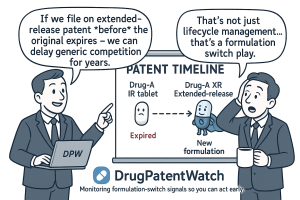
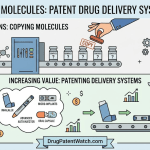
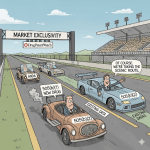
The strategic response is lifecycle management, and reformulation is its primary tool. A new dosage form, modified release profile, fixed-dose combination, or novel delivery mechanism can generate a secondary patent cluster that extends meaningful exclusivity by three to seven years. The FDA’s Orange Book will list these secondary patents, and each one represents a potential 30-month stay against generic entry under the Hatch-Waxman framework — if the generic files a Paragraph IV certification challenging that patent’s validity or non-infringement.
The critical insight for intelligence teams is that commercially driven reformulations follow a predictable sequence. The brand identifies the exclusivity cliff, commissions formulation development work, files secondary patents, initiates bioequivalence or PK studies, and eventually submits a Prior Approval Supplement to the FDA. Each of these steps is detectable. The window between the first detectable signal (a secondary patent filing) and the last lagging signal (an updated Inactive Ingredient Database entry) can span four to six years. That window is the opportunity.
How Secondary Patent Clusters Extend Market Exclusivity Beyond API Protection
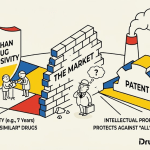
Secondary patents — covering formulation methods, delivery systems, manufacturing processes, polymorph forms, and prodrug structures — are the architectural layer of a patent thicket. They do not protect the molecule. They protect the commercial product.
A well-constructed secondary patent cluster can include dozens of individual patents across multiple jurisdictions, each covering a slightly different aspect of the same commercial product. AbbVie’s Humira (adalimumab) patent estate, which included over 130 U.S. patents, is the most cited example: composition-of-matter protection expired, but formulation, manufacturing, and use patents kept biosimilar competition at a commercially marginal level in the U.S. market until the January 2023 settlement-driven entry window opened. The revenue consequence was $20.7 billion in U.S. Humira net revenues in 2022 alone, the last full year before meaningful biosimilar competition arrived.
For small-molecule drugs, the equivalent mechanism is a reformulation that generates new, non-expired secondary patents. A once-daily extended-release tablet replacing a twice-daily immediate-release formulation can carry patent protection through the mid-2030s on a drug whose API patent expired in 2020. If the reformulation also addresses a genuine clinical need — improved tolerability, reduced food effect, better bioavailability in specific patient populations — it has both legal durability and formulary defensibility.
Which Drugs Are Most Likely to Undergo Lifecycle Extension Reformulation
The probability of a commercially driven reformulation increases with three variables: peak annual revenue, proximity of composition-of-matter patent expiry, and technical feasibility of a modified-release or delivery-system switch.
Drugs with peak revenues above $2 billion annually and a primary patent cliff within three to five years are the highest-value targets for monitoring. As of 2025–2026, the drugs in this category include Merck’s Keytruda (pembrolizumab), with U.S. composition-of-matter patent expiry expected around 2028, AstraZeneca’s Farxiga (dapagliflozin), Eli Lilly’s Mounjaro and Zepbound (tirzepatide), and Bristol Myers Squibb’s Eliquis (apixaban), where the first Paragraph IV litigation challenge was resolved through settlements allowing generic entry in 2028. Each of these represents a scenario where brand manufacturers will have strong incentives to develop and file secondary patents around formulation or delivery innovations.
The Four Commercial Drivers That Force a Formulation Change
Driver 1: Lifecycle Extension and Patent Defense
Covered above. The key monitoring implication: watch for secondary patent filings from brand manufacturers in the three-to-five-year window before primary patent expiry. A formulation patent filed by Merck on a subcutaneous Keytruda co-formulation, for example, signals both a delivery-system strategy and a potential biosimilar-resistance play once the composition-of-matter patent expires. The patent’s “Background of the Invention” section will typically state the clinical or commercial problem being solved. The “Examples” section will detail the specific excipients tested. Both sections are intelligence assets.
Driver 2: BCS Classification and Bioavailability Enhancement
Approximately 40% of currently marketed drugs and up to 90% of compounds in preclinical development have low aqueous solubility, putting them in BCS Class II (low solubility, high permeability) or Class IV (low solubility, low permeability). For these APIs, oral bioavailability is limited by dissolution rate, not absorption capacity. The clinical consequence is variable drug exposure, food effects, and dose-dependent tolerability issues.
Reformulation to address solubility is not lifecycle strategy. It is a technical necessity. The excipient technologies used fall into three main categories: lipid-based drug delivery systems, including self-emulsifying drug delivery systems (SEDDS) and self-microemulsifying drug delivery systems (SMEDDS); cyclodextrin complexation, where the hydrophobic API molecule is encapsulated within the hydrophilic cyclodextrin cavity to increase apparent solubility; and amorphous solid dispersions (ASDs), where the API is converted from its crystalline form to an amorphous state dispersed in a polymer carrier, dramatically increasing dissolution rate.
ASD technologies — spray-dried dispersions and hot melt extrusion — use specific polymer grades as carriers, most commonly hydroxypropyl methylcellulose acetate succinate (HPMC-AS or HPMCAS), hydroxypropyl methylcellulose phthalate (HPMCP), and polyvinyl caprolactam-polyvinyl acetate-polyethylene glycol graft copolymer (Soluplus, BASF). A new patent citing any of these polymers in combination with a BCS Class II or IV API is a strong indicator that a solubility-enhancement reformulation is underway.
Driver 3: Supply Chain Failures and Single-Source Excipient Risk
The COVID-19 pandemic exposed a structural vulnerability across pharmaceutical manufacturing: critical excipients with single-source or geographically concentrated supply chains. A manufacturing interruption at one site in China or India for a widely used excipient — microcrystalline cellulose, povidone, or certain grades of hypromellose — can trigger production shutdowns at drug manufacturers that depend on that supply.
When a drug manufacturer decides to qualify an alternative excipient source or switch to a chemically similar but differently sourced excipient, the regulatory consequence depends on the excipient’s functional role. A filler switch in an immediate-release tablet may require only a Level 1 or Level 2 SUPAC filing. A change to the release-controlling excipient in an extended-release product requires a Prior Approval Supplement, which must be submitted and approved before the new formulation can be distributed. That PAS filing is publicly trackable.
The commercial opportunity here is not for suppliers of the incumbent excipient. It is for suppliers who can offer a geographically diversified, multi-site supply chain as a direct alternative, particularly if they can demonstrate superior quality control and tighter pharmacopeial specification compliance.
Driver 4: Regulatory Pressure and Nitrosamine Contamination Risk
The FDA’s response to the discovery of N-nitrosodimethylamine (NDMA) and related nitrosamine impurities in metformin, ranitidine, valsartan, and losartan-containing products triggered one of the most disruptive waves of reformulation activity in recent pharmaceutical history. Nitrosamines can form from a reaction between secondary amines and nitrite-containing impurities. Several common excipients — including certain grades of povidone and polysorbates — can carry nitrite impurities that contribute to nitrosamine formation in finished drug products.
The FDA’s 2021 and 2023 guidance documents on nitrosamine risk assessment placed specific requirements on manufacturers to evaluate API-excipient interactions for nitrosamine formation potential. Where risk was identified, the options were either tighter specification controls on the incumbent excipient or substitution with an alternative excipient with documented low nitrite content. Both scenarios created commercial opportunity for excipient suppliers with validated, low-nitrite grades and robust analytical documentation packages.
Changes made under nitrosamine risk mitigation fall under the SUPAC framework depending on their scope. Monitoring FDA Citizen Petition responses, Warning Letters citing nitrosamine-related issues, and ANDA Complete Response Letters referencing impurity concerns provides early intelligence on which drugs are under pressure to reformulate.
How to Read a Formulation Patent for Competitive Intelligence
A secondary patent filing is the earliest detectable signal of a reformulation strategy. Most analysts read patents for their claims. For formulation intelligence, the most valuable sections are the Background, the Examples, and occasionally the Detailed Description — not the claims themselves.
What the ‘Background of the Invention’ Section Reveals About Commercial Strategy
Patent applicants are legally required to distinguish their invention from prior art. In doing so, they must describe the problem the invention solves. For formulation patents, this section is a direct statement of the drug’s current commercial or clinical weakness.
Language like “the existing immediate-release formulation requires three-times-daily dosing, which reduces patient adherence” signals a once-daily modified-release development program. “The marketed product exhibits significant food effect, with Cmax increasing by 200% when taken with a high-fat meal” signals a lipid-based or surfactant-stabilized delivery system being developed to reduce fed/fasted variability. “The current preservative system has been associated with ocular surface toxicity in chronic use patients” signals a preservative-free ophthalmic reformulation.
These statements are written by the manufacturer’s patent counsel. They are, in effect, an official public disclosure of the drug’s known weaknesses and the strategic direction being taken to address them.
Why the ‘Examples’ Section Is the Real Intelligence Asset in a Formulation Patent
The Examples section contains the formulator’s data. It describes specific batches prepared during development, lists exact excipients, their grades, and their weight percentages, and often includes comparative dissolution profiles, stability data, or in vivo pharmacokinetic results from animal or human studies. This is the closest external parties can get to the manufacturer’s development notebook.
For an excipient supplier, the Examples section answers three questions: What excipients are being used? At what concentrations? And how do they perform relative to the old formulation? A formulation patent for a new extended-release metformin product listing specific grades of hydroxypropyl methylcellulose (HPMC K4M, K15M, or K100M), for example, directly identifies the technical specification of the supply opportunity.
How to Monitor Formulation Patents at Scale Using Automated Alerts
Manual patent monitoring across USPTO, EPO, and WIPO databases for hundreds of target drugs is not feasible as a sustained activity. Platforms like DrugPatentWatch allow analysts to configure automated alerts by drug name, company name, active ingredient, or keyword combination. An alert structured as “metformin AND (extended-release OR controlled-release OR HPMC OR hypromellose)” will return new patent filings within the target formulation space within hours of publication, regardless of whether the filer is the original brand manufacturer or a generic developer building IP around a competing delivery platform.
The secondary patent alert is the starting signal. By itself, it warrants a ‘watch and investigate’ status. When that signal is followed by a bioequivalence study registration on ClinicalTrials.gov, the confidence level of the reformulation thesis rises substantially. When a Prior Approval Supplement is subsequently filed with the FDA, the thesis is confirmed at near-certainty.
The Three Public Signal Sources That Predict a Formulation Switch
Signal Source 1: The FDA’s SUPAC Framework and What Each Filing Level Means
The Scale-Up and Post-Approval Changes (SUPAC) guidelines govern how manufacturers report formulation changes to the FDA after a drug receives initial approval. The filing level required for a given change is directly proportional to the change’s potential impact on the drug’s safety and performance. Each level is also a different-grade intelligence signal.
A Level 1 change — a minor adjustment to a colorant or an insignificant change in excipient quantity — goes into the manufacturer’s annual report. These are low-value signals; they confirm a minor change has been made but offer limited strategic intelligence.
A Level 2 change — such as switching the technical grade of an excipient or modifying the supplier of a non-critical functional excipient — requires a Changes Being Effected in 30 Days (CBE-30) supplement. The 30-day pre-distribution notice is a moderate-strength signal that an approved change is imminent.
A Level 3 change — any alteration to a release-controlling excipient, any excipient change exceeding 10% by weight of a non-release-controlling component, or the introduction of an entirely new excipient — requires a Prior Approval Supplement. The manufacturer must receive FDA approval before distributing the new formulation. PAS filings are the highest-value regulatory intelligence signal in the SUPAC framework. They are trackable through FDA submission databases and, when identified, indicate that a major reformulation is locked in from an R&D perspective and awaiting regulatory clearance. The period between PAS filing and approval — typically 6 to 10 months for a standard PAS — is the golden window for supplier engagement.
Signal Source 2: Bioequivalence and PK Studies as Reformulation Confirmation Signals
When a brand manufacturer changes the formulation of an approved drug, FDA typically requires demonstration that the new formulation is bioequivalent to the approved version. This involves at minimum a single-dose crossover pharmacokinetic study in healthy volunteers comparing the two formulations on Cmax and AUC. For modified-release products, additional fed/fasted state comparisons may be required.
These studies are registered on ClinicalTrials.gov before enrollment begins. The registration entry includes the sponsor, the study design (crossover, parallel), the drug under study, and the specific formulations being compared. A study listed as “Pharmacokinetic Study of New Formulation B vs. Approved Formulation A of Drug X in Healthy Volunteers” is an unambiguous confirmation that a formulation switch program is advanced enough to be in clinical testing.
For drugs with ongoing patient adherence concerns, additional study types may appear: patient preference studies comparing old versus new dosage forms, pediatric palatability or taste-acceptance studies for reformulated oral liquids, and human factors studies for new delivery devices. Each study type signals a distinct reformulation rationale.
Signal Source 3: The FDA Inactive Ingredient Database as a Lagging Confirmation Signal
The FDA Inactive Ingredient Database lists every excipient present in each approved drug product, cross-referenced by route of administration, dosage form, and maximum potency per unit. When a formulation change is approved and the new product enters the market, the IID is eventually updated to reflect the changed excipient profile.
This update is the last detectable signal in the formulation switch sequence. By the time it appears, the new formulation has already been developed, patented, clinically tested, and regulatory-approved. For competitive intelligence purposes, the IID update is confirmatory — useful for retrospective analysis and baseline mapping, but not useful for first-mover positioning.
The IID’s primary intelligence value is in establishing the current excipient fingerprint of a drug. Combined with the secondary patent and clinical trial signals, the IID baseline allows analysts to construct a before/after comparison: what excipients are currently approved, and what excipients is the manufacturer developing toward?
Four Real-World Formulation Switches: What the Signals Looked Like
How Glucophage XR Was Predicted Before Launch: The Metformin Extended-Release Play
Bristol-Myers Squibb’s Glucophage (metformin hydrochloride, immediate-release) was facing primary patent expiry in the early 2000s. The strategic response was Glucophage XR — an extended-release version using a dual hydrophilic polymer matrix system built around sodium carboxymethylcellulose and hypromellose, replacing the IR formulation’s povidone binder system.
The technical change was not trivial. Immediate-release metformin tablets require rapid disintegration and full drug release within 45 minutes. Glucophage XR needed a 24-hour release profile with no dose-dumping risk in the fed state. The dual polymer matrix — where sodium carboxymethylcellulose and HPMC hydrate on contact with gastrointestinal fluid to form a gel layer that controls drug diffusion — was the enabling technology. It required specific polymer grades, specific blend ratios, and a manufacturing process designed to maintain polymer homogeneity through compression.
The predictive signals were standard for a lifecycle extension play: secondary patents claiming the dual polymer matrix formulation appeared years before the XR launch; pharmacokinetic studies comparing once-daily XR to twice-daily IR dosing were registered on clinical trial databases; and the eventual Prior Approval Supplement filing confirmed the development program was in its final regulatory stage.
For excipient suppliers with appropriate HPMC grades and sodium carboxymethylcellulose capacity, the window between the patent filing and the PAS approval represented an extended opportunity for supplier qualification. The clinical benefit was genuine — once-daily dosing improves adherence in a chronic disease like type 2 diabetes — and the commercial rationale was clear. This combination gave the Glucophage XR program both regulatory durability and formulary defensibility.
Why Acuvail’s Preservative-Free Formulation Was Clinically Inevitable
Allergan’s Acuvail (ketorolac tromethamine ophthalmic solution, 0.45%) removed benzalkonium chloride (BAK), the standard quaternary ammonium preservative used in most ophthalmic solutions, and replaced it with a preservative-free, single-dose unit packaging system with carboxymethylcellulose sodium added as a viscosity enhancer and ocular surface lubricant.
BAK had been used in ophthalmic formulations for decades. Its antimicrobial efficacy is not in question. What changed was the accumulation of clinical evidence demonstrating that chronic BAK exposure causes ocular surface toxicity — disruption of the tear film lipid layer, conjunctival goblet cell loss, and in some patients, progression of pre-existing dry eye disease. For patients recovering from cataract surgery, who are typically prescribed anti-inflammatory drops four to eight times daily for weeks postoperatively, BAK exposure is not trivial.
The predictive signal for this reformulation was not a single patent or trial. It was a sustained direction in the clinical literature: a series of peer-reviewed publications in Ophthalmology, the British Journal of Ophthalmology, and Cornea documenting BAK-related adverse effects. Any analyst tracking BAK toxicity publications from 2000 to 2010 could have mapped the trajectory toward preservative-free formulations — and identified the excipient categories that would benefit: alternative viscosity enhancers like carboxymethylcellulose sodium and sodium hyaluronate, single-dose packaging technologies including blow-fill-seal systems, and unit-dose containers with preservative-free barrier properties.
The commercial opportunity was not just excipient supply. It was contract development and manufacturing capability for sterile, aseptic blow-fill-seal production — a specialized technology with significant capital and regulatory barriers to entry.
Tobradex ST and What Xanthan Gum Revealed About Alcon’s Strategy
Alcon’s Tobradex ST (tobramycin 0.3% / dexamethasone 0.05% ophthalmic suspension) replaced the standard Tobradex formulation (tobramycin 0.3% / dexamethasone 0.1%) through a specific functional excipient addition: the replacement of hydroxyethyl cellulose as the suspending agent with xanthan gum.
The change was not cosmetic. Xanthan gum has a pseudoplastic rheology — it has low viscosity at low shear rates (making the suspension easy to dispense from a bottle) and high viscosity at the high shear rate experienced during instillation and immediately after (extending the formulation’s residence time on the ocular surface). This extended contact time substantially increased both tobramycin and dexamethasone penetration into ocular tissues relative to the original Tobradex. The pharmacokinetic consequence was significant enough that Alcon was able to reduce the dexamethasone concentration from 0.1% to 0.05% in the ST formulation while maintaining or exceeding the original product’s anti-inflammatory efficacy.
The intelligence signal here was a formulation patent claiming the combination of tobramycin, dexamethasone, and xanthan gum in an ophthalmic suspension, with Examples showing comparative tissue concentration data from rabbit models. For a supplier of ophthalmic-grade xanthan gum, this patent was a direct commercial alert. The drug’s manufacturer was building IP around an excipient in that supplier’s catalog.
The commercial approach triggered by this signal should not have been a generic product pitch. It should have been a technical engagement: contacting Alcon’s ophthalmic formulation team with grade-specific characterization data, batch-to-batch viscosity consistency data under shear, and regulatory support documentation for xanthan gum in sterile ophthalmic applications. The excipient was not a commodity component in this context — it was the enabling technology for a clinically differentiated, next-generation product.
Why Generic Metoprolol Succinate ER Failed and What the Signal Looked Like
AstraZeneca’s Toprol-XL (metoprolol succinate extended-release tablets) used a pellet-in-tablet architecture: the API was first formulated into multiparticulate pellets, each coated with a release-controlling polymer membrane, then compressed into a tablet. The release profile was governed by the membrane coating thickness, polymer grade, and plasticizer concentration — variables that are highly sensitive to manufacturing process conditions and compression forces.
When Toprol-XL’s patents began expiring in the mid-2000s, generic manufacturers filed ANDAs but encountered substantial difficulty replicating the release profile. The pellet-in-tablet architecture is technically demanding: over-compression during tableting can rupture the membrane coatings, causing immediate release of drug from pellets that should have contributed to the extended-release phase. This dose-dumping risk was the central regulatory concern.
Multiple generic ANDA applicants received Complete Response Letters citing bioequivalence failures or inadequate dissolution data. Post-market reports from physicians, pharmacists, and patient advocacy organizations documented cases of recurrent palpitations or blood pressure elevation when patients were switched from Toprol-XL to certain generic versions. The FDA’s Office of Generic Drugs reviewed the evidence and concluded that some generic versions had therapeutic equivalence issues, though the formal regulatory outcome varied by product.
The intelligence signal for excipient suppliers was not a patent or a clinical trial. It was a pattern of FDA CRLs, published bioequivalence failures, and post-market clinical reports that collectively identified a specific technical problem: generic manufacturers needed a more robust controlled-release pellet coating or matrix system that could survive commercial-scale tableting. Suppliers of specialized ethylcellulose aqueous dispersion coating systems (Surelease, Colorcon; Aquacoat ECD, FMC/DuPont) and HPMC-based controlled-release matrix systems had a direct solution. The opportunity was to approach struggling ANDA holders with a formulation platform built around more compression-tolerant release technology.
The SUPAC Filing Hierarchy: A Practical Reference for Intelligence Analysts
SUPAC Level
Change Type Example
FDA Reporting Requirement
Strategic Intelligence Value
Level 1 (Minor)
Change in colorant amount up to 0.5%
Annual Report
Low — confirms minor change
Level 2 (Moderate)
Change in excipient grade or supplier (non-critical)
CBE-30 Supplement
Moderate — change imminent
Level 3 (Major)
Change to release-controlling excipient; new excipient introduction; >10% change in non-critical excipient
Prior Approval Supplement
High — major reformulation confirmed
Level 3 (Major, ER)
Any change to release-controlling component in modified-release product
Prior Approval Supplement + BE study
Highest — PAS + BE = near-certain reformulation
Building a Systematic Formulation Switch Monitoring Program
How to Define the Target Drug Universe for Monitoring
Not all 20,000-plus approved drug products warrant active formulation monitoring. A monitoring program needs a defined scope calibrated to strategic value. The highest-priority targets share at least two of these characteristics: annual revenues above $500 million, a primary patent expiry within the next four years, a known clinical weakness (food effect, poor tolerability, inconvenient dosing), BCS Class II or IV classification, or a complex controlled-release architecture that generic developers have historically struggled to replicate.
Secondary screening criteria include the manufacturer’s history of lifecycle management activity, the breadth of the existing secondary patent cluster, and the therapeutic area’s generic competitive intensity. An extended-release oral tablet in a primary care therapeutic area faces different generic entry dynamics than a preservative-free ophthalmic suspension or a sterile injectable.
How to Set Up Multi-Source Alerts That Catch Signals Across the Timeline
The monitoring architecture requires alerts at three distinct points in the reformulation timeline: the patent signal, the clinical signal, and the regulatory signal.
Patent alerts should be configured to trigger on new applications from target companies that include specific functional terms: extended-release, modified-release, amorphous solid dispersion, hot melt extrusion, spray-dried dispersion, fixed-dose combination, or the names of specific enabling excipients. The alert should capture the full patent application, not just the abstract, to allow extraction of the Examples section data.
Clinical alerts on ClinicalTrials.gov should filter for Phase 1 or Phase 2 pharmacokinetic and bioequivalence studies on already-approved drugs. A new PK study for a marketed product registered by the brand manufacturer is among the highest-confidence reformulation signals available in the public domain. The study protocol will typically specify the formulations being compared, and in many cases will name the specific dosage form characteristics of the new formulation being tested.
Regulatory alerts on FDA submission databases should prioritize Prior Approval Supplements for targeted NDCs. A PAS filing is the final pre-launch regulatory confirmation of a major formulation change. When a PAS appears for a drug that already generated a patent alert and a clinical trial alert, the three-signal convergence is the analytical trigger for immediate commercial action.
What Signal Convergence Looks Like in Practice
A patent filing alone has a relatively low conversion rate to commercial launch. Many patented formulations are never developed into commercial products. The conversion rate rises substantially when the patent signal is followed by a clinical trial registration, and approaches certainty when both are followed by a PAS filing. For commercial intelligence purposes, the three-signal model works as follows: the patent filing triggers investigation and preliminary outreach; the clinical trial registration triggers active commercial qualification; the PAS filing triggers urgent supplier engagement.
The time between the patent filing and the PAS submission typically runs two to five years for a straightforward IR-to-ER reformulation. For more complex development programs — a new delivery device, a novel fixed-dose combination, or a difficult BCS Class IV amorphous solid dispersion — the timeline can extend to seven or eight years. This extended window is an advantage for well-positioned suppliers who begin engaging early in the development cycle. Excipients specified in the formulation during early development are far more likely to carry through to commercial manufacturing than alternatives introduced later.
Deformulation: What It Tells You and When It’s Worth the Investment
Reverse engineering an approved drug product — systematically identifying and quantifying every component of the formulation — is standard practice in generic drug development but is equally valuable as a competitive intelligence tool for excipient suppliers and CDMOs.
Which Analytical Techniques Are Required for Accurate Deformulation
A complete deformulation program uses a combination of analytical methods. Chromatographic techniques — HPLC and GC-MS — separate and identify small-molecule excipients including plasticizers, preservatives, and surfactants, as well as quantifying the API. Spectroscopic techniques — FTIR, Raman, and solid-state NMR — identify polymers and characterize their physical state. Thermal analysis (differential scanning calorimetry and thermogravimetric analysis) determines whether the API is in crystalline or amorphous form and characterizes the thermal properties of polymer carriers. Scanning electron microscopy visualizes the microstructure of the dosage form — the pellet layers, membrane coatings, or matrix architecture that govern release behavior.
The data output from a comprehensive deformulation study answers three questions that matter commercially: What is the reference listed drug’s formulation composition? What are the critical quality attributes that govern its performance? And what excipient alternatives, at what specifications, could replicate or improve those attributes?
When Deformulation Justifies the Cost
For generic ANDA development on a complex product — a modified-release pellet system, an inhaled dry powder formulation, a transdermal patch, or a liposomal injectable — deformulation is not optional. It is the cost of entry into the development program. A failed bioequivalence study typically costs $500,000 to $2 million and delays market entry by one to two years. A thorough deformulation program at $200,000 to $500,000 that prevents one BE failure repays itself immediately.
For excipient suppliers, deformulation is a business development tool. A supplier who approaches an ANDA developer with deformulation data on the RLD, a technical analysis of the reference product’s critical quality attributes, and a demonstration that their excipient grade can replicate those attributes — backed by formulation and dissolution data — has transformed the sales conversation from price negotiation to technical partnership. This is the difference between winning a commodity bid and winning a preferred supplier designation embedded in a regulatory filing.
Revenue at Risk: How to Quantify What a Formulation Switch Means Financially
Why Excipient Transitions in Blockbuster Reformulations Generate Defined Revenue Events
A formulation switch on a drug with $3 billion in annual revenues does not change the drug’s commercial footprint overnight. But it does change the excipient supply relationships embedded in that product’s manufacturing. If the new formulation uses a different grade of HPMC or introduces a new polymer that was not in the previous formulation, the incumbent excipient supplier may lose tonnage. The new excipient supplier gains a multi-year, multi-million-dollar supply contract embedded in an approved regulatory filing.
The revenue at stake for an excipient supplier is not a percentage of the drug’s $3 billion in sales. It is a function of excipient loading in the formulation, number of dosage units manufactured annually, and the price per kilogram of the excipient. A drug with 100 million tablet units annually, with a polymer loading of 30% by weight in a 1-gram tablet, requires approximately 30 metric tons of that polymer per year. At $20–$80 per kilogram depending on the polymer type and grade, that supply contract is worth $600,000 to $2.4 million annually — recurring, price-stable, and embedded in a regulatory filing that creates significant switching costs for the drug manufacturer.
Scale that across the number of approved drugs using a given excipient platform, and the commercial mathematics become clear.
How Loss of Exclusivity on Complex Drugs Differs from Standard Small-Molecule Cliff Dynamics
For simple small-molecule immediate-release tablets with expired patents and no secondary patent protection, loss of exclusivity is rapid and nearly complete. Prices collapse to single-digit dollars per unit within 18 months of first generic entry, and brand market share falls below 10%.
Complex drugs — modified-release products, fixed-dose combinations, biologics, inhalation products — face a structurally different post-exclusivity trajectory. Multiple factors slow market erosion: the technical barriers to replicating the innovator’s formulation, the cost and time of bioequivalence studies required for complex generics, and the size of the Paragraph IV patent litigation docket.
Toprol-XL remained at commercially significant brand market share years after generic entry because generic versions faced documented performance issues. Advair Diskus (fluticasone propionate/salmeterol inhalation powder) retained substantial market presence well past its primary patent expiry because the device and particle engineering components of the formulation created a multi-year development barrier for generic applicants. These are formulation moats — competitive advantages created not by the API but by the delivery system, the excipient architecture, and the manufacturing process knowledge embedded in the product.
For investors analyzing post-LOE revenue scenarios, the formulation complexity of the product is a primary variable in revenue erosion modeling. A drug with a complex controlled-release architecture, a proprietary delivery device, or a difficult-to-replicate manufacturing process will typically exhibit slower market share erosion than a standard immediate-release tablet.
What Investors Are Watching: Formulation IP as a Valuation Driver
Why Drug Formulation Patents Appear on Investor Due Diligence Checklists
Institutional investors analyzing pharmaceutical company valuations need to assess not just when composition-of-matter protection expires, but whether secondary patent clusters provide meaningful commercial protection beyond that date. A formulation patent that covers the specific drug product sold commercially — and is listed in the Orange Book — can extend effective exclusivity by years. A formulation patent covering an alternative version that is not the commercial product provides little practical protection.
The due diligence question is whether the secondary patent estate covers the product that generates revenue. For AbbVie, this was the central question during the 2018–2023 Humira biosimilar litigation period. The composition-of-matter patent had expired; the commercial product’s protection rested on formulation and manufacturing patents. Whether those patents would hold, and whether biosimilar challengers would design around them or settle for delayed entry, was the key variable in Humira revenue forecasting for several years. Settlement terms granting 2023 U.S. entry (Amgen’s Amjevita) effectively resolved that uncertainty and allowed investors to model the revenue trajectory more precisely.
How Paragraph IV Filings Signal Formulation Patent Vulnerabilities
When a generic manufacturer files an Abbreviated New Drug Application with a Paragraph IV certification against an Orange Book-listed patent, it is declaring that the listed patent is invalid, unenforceable, or will not be infringed by the generic product. For formulation patents specifically, Paragraph IV certifications often argue that the patent’s claims are not supported by the disclosed data (written description), that the claimed formulation is obvious over prior art, or that the generic’s formulation differs sufficiently from the claimed formulation to avoid infringement.
The Paragraph IV notification to the patent holder triggers a potential 30-month stay on FDA approval of the ANDA, giving the brand manufacturer time to litigate. Tracking Paragraph IV filings against Orange Book-listed formulation patents provides investors and IP analysts with early warning that a specific secondary patent’s durability is being tested.
A pattern of multiple ANDA filers challenging the same formulation patent — the standard dynamic in high-revenue generic entry scenarios — is a signal that the market has assessed the patent as litigable. The litigation outcome, settlement terms, and entry dates that emerge from that process directly determine the revenue model for the drug over the next several years.
Common Investor Questions About Formulation Patent Risk
Does a new formulation patent restart the patent clock? It extends it for the specific innovation claimed. An immediate-release to extended-release reformulation filed in year eight of a drug’s commercial life can carry a 20-year patent term from the filing date, extending effective market exclusivity well past the original composition-of-matter expiry — but only if the new formulation is the commercial product and the patent is listed in the Orange Book.
Can a generic developer launch on the original formulation after the composition-of-matter patent expires, even if a new formulation is patent-protected? Yes, if the original formulation is still marketed. Paragraph IV filers can challenge the new formulation’s patents, but a generic of the original formulation does not need to address patents on a different dosage form. The commercial risk to the brand is that physicians may prescribe the original generic once it is available, reducing prescribing of the new, patent-protected formulation.
What is ‘product hopping’ and how does it affect generic competition? Product hopping is the deliberate migration of the prescribing base from an original formulation (vulnerable to generic entry) to a new formulation (protected by secondary patents) before generic entry into the original formulation occurs. If successful, it substantially reduces the commercial opportunity for generic manufacturers who obtain approval on the original formulation. Antitrust challenges to product hopping have had mixed outcomes; the Second Circuit in Namenda (donepezil/memantine, Forest Labs) found that hard switches — removing the original formulation from the market — could constitute anticompetitive conduct under certain conditions.
GLP-1 Formulation Strategy: The Next Wave of Reformulation Intelligence
Why Lilly’s Tirzepatide and Novo Nordisk’s Semaglutide Face Formulation Patent Scrutiny
GLP-1 receptor agonists represent the pharmaceutical industry’s most commercially consequential drug class of the 2020s. Ozempic (semaglutide injection), Wegovy (semaglutide injection, higher dose), Mounjaro (tirzepatide injection), and Zepbound (tirzepatide injection, obesity indication) collectively generated over $30 billion in annual revenues in 2024. Their composition-of-matter patents expire on varying timelines through the late 2020s and early 2030s, and the companies holding them are engaged in intensive formulation development to extend market exclusivity.
Novo Nordisk’s oral semaglutide product, Rybelsus, is itself a formulation innovation: semaglutide is not bioavailable as a standard oral tablet because it is enzymatically degraded in the gastrointestinal tract. Rybelsus uses a specific absorption enhancer, sodium N-(8-[2-hydroxybenzoyl]amino)caprylate (SNAC), which transiently increases GI permeability in the proximal stomach, enabling meaningful oral bioavailability. This SNAC-based delivery system is protected by a separate patent estate from the semaglutide composition-of-matter patents.
Eli Lilly is pursuing oral and subcutaneous formulation variants of tirzepatide, with phase 3 data on a once-weekly subcutaneous autoinjector and ongoing development of an oral formulation. Each delivery variant generates its own formulation patent estate and its own potential Orange Book listing. The competitive intelligence implication: tracking Lilly’s formulation patent filings in the GLP-1 space provides a multi-year advance view of the secondary patent architecture being built around tirzepatide.
What Makes GLP-1 Manufacturing Difficult for Generic and Biosimilar Entrants
Semaglutide is a 31-amino acid GLP-1 analogue with a fatty diacid moiety attached via a linker to enable albumin binding and extend half-life. Tirzepatide is a 39-amino acid dual GLP-1/GIP agonist with similar structural complexity. Neither is a biologics in the regulatory sense — they are synthetic peptides approved under the NDA pathway, not the BLA pathway — but their manufacturing complexity approaches that of small biologics.
Peptide synthesis at commercial scale requires specialized facilities, purification infrastructure, and analytical capabilities to control the numerous potential impurities generated during synthesis and conjugation. The fatty acid attachment step introduces additional process complexity. Generic peptide manufacturers who have successfully produced simpler peptides like liraglutide analogs face a different scale of challenge with semaglutide and tirzepatide.
The regulatory pathway for generic semaglutide and tirzepatide products is also less defined than for standard small molecules. The FDA has not yet issued specific complex drug substance guidance for synthetic GLP-1 analogues of this structural complexity, creating regulatory uncertainty that extends the effective exclusivity window beyond what the patent expiry dates alone would suggest. For investors, this regulatory ambiguity is a revenue protection factor that warrants inclusion in LOE modeling.
Key Takeaways
The formulation layer of a pharmaceutical product generates more commercially actionable intelligence than most analysts extract from it. Patent filings on formulation innovations appear years before clinical development reaches the PAS stage. Bioequivalence studies on ClinicalTrials.gov confirm which development programs have survived early R&D and are approaching regulatory submission. Prior Approval Supplements to the FDA mark the point of no commercial return — the formulation is locked, the clinical package is complete, and the manufacturer is preparing for commercial-scale production.
Each of these signals is public. Each appears at a distinct point in the reformulation timeline. And each carries a different commercial implication, depending on whether you are an excipient supplier, a generic ANDA developer, an IP analyst, or a portfolio manager assessing revenue durability.
The organizations that consistently win formulation switch opportunities are not those with the most comprehensive generic database access. They are those who have built systematic monitoring programs that detect signal convergence — patent plus clinical plus regulatory, pointing to the same drug — and who respond with technically grounded commercial engagement rather than a generic product pitch.
Formulation intelligence is not a niche capability for specialty excipient chemists. It is a core competency for anyone who needs to understand where pharmaceutical revenues are going, when they are at risk, and how the competitive landscape will shift before the press release appears.
Frequently Asked Questions
What is a formulation switch in pharmaceuticals? A formulation switch is a deliberate change to the inactive ingredients, dosage form, delivery system, or release mechanism of an already-approved drug product. It is distinct from a change to the active pharmaceutical ingredient itself. Examples include converting an immediate-release tablet to an extended-release version, replacing a preserved ophthalmic solution with a preservative-free single-dose unit, or adding a solubility-enhancing polymer to address BCS Class II bioavailability limitations.
How does a formulation patent differ from a composition-of-matter patent? A composition-of-matter patent protects the API molecule itself — its chemical structure and, in many cases, its salts and polymorphs. A formulation patent protects the specific combination of the API with other components — the delivery system, release-controlling excipients, or dosage form architecture — but not the molecule independently. A generic manufacturer can use the same API without infringing a formulation patent, provided their formulation does not use the patented excipient combination or delivery system.
What is the SUPAC framework and why does it matter for formulation intelligence? SUPAC (Scale-Up and Post-Approval Changes) is the FDA’s regulatory framework governing how manufacturers report changes to approved drug formulations. Changes are categorized as Level 1 (minor, reported in Annual Report), Level 2 (moderate, CBE-30 supplement), or Level 3 (major, Prior Approval Supplement). Level 3 changes, particularly to release-controlling excipients in modified-release products, are the highest-value regulatory intelligence signal because they confirm a major reformulation is underway and awaiting FDA approval before commercial distribution.
How long does it typically take for a formulation switch to move from initial patent filing to commercial launch? For a straightforward IR-to-ER reformulation with an established excipient platform, the timeline from secondary patent filing to commercial launch typically runs three to six years. More complex programs — a new delivery device, a novel amorphous solid dispersion requiring spray-drying or hot melt extrusion scale-up, or a fixed-dose combination requiring a new clinical development program — can run seven to ten years from first patent filing to first commercial shipment.
What is bioequivalence and why is it required for formulation changes? Bioequivalence (BE) means that the new formulation delivers the same rate and extent of drug absorption as the approved formulation under the same dosing conditions, within pre-specified statistical limits (typically 80–125% for AUC and Cmax in the standard two-period crossover design). When a manufacturer changes the formulation of an approved drug in a way that could affect drug absorption — changing a release-controlling excipient, modifying the drug release mechanism, or altering the dosage form significantly — the FDA requires a new BE study to confirm that the new formulation performs equivalently to the approved product.
How do investors use formulation patent data in pharmaceutical stock analysis? Investors use formulation patent data to assess the durability of revenue streams beyond primary composition-of-matter patent expiry. An Orange Book-listed formulation patent that covers the commercial product and has survived Paragraph IV challenges extends the effective exclusivity period used in revenue modeling. Formulation patent families that have not been challenged via Paragraph IV may indicate either a robust IP position or a commercially unimportant product — the context determines the interpretation. The breadth and depth of the secondary patent estate, its litigation history, and settlement terms are all variables in post-LOE revenue scenario analysis.
What is product hopping and how does it affect generic drug competition? Product hopping is the deliberate migration of prescribing from an original drug formulation facing generic entry to a new, patent-protected formulation before the generic enters the market. If physicians and patients have already transitioned to the new formulation, the commercial value of the generic entry on the original formulation is substantially reduced. Soft switches — making the new formulation available while keeping the original on the market — are generally permissible. Hard switches — withdrawing the original formulation from the market to force migration — have faced antitrust scrutiny, with courts applying a fact-specific analysis of anticompetitive intent and market impact.
What analytical methods are used in pharmaceutical deformulation? A comprehensive deformulation program typically uses HPLC and GC-MS for quantitative identification of small-molecule components, FTIR and Raman spectroscopy for polymer identification and physical state characterization, solid-state NMR for detailed structural analysis of crystalline and amorphous API forms, differential scanning calorimetry and thermogravimetric analysis for thermal characterization, and scanning electron microscopy for microstructural visualization of coated pellets, layered tablets, or matrix architectures. The combination of these methods allows analysts to identify all excipients, their concentrations, and the formulation architecture that governs drug release.