Section 1: Deconstructing Market Exclusivity: The Interplay of Patents and Regulatory Protections
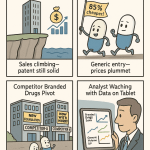
The financial viability of an in-licensed pharmaceutical asset is fundamentally determined by the durability of its market exclusivity. In an era where generic competition can erode 80% to 90% of a branded drug’s revenue within the first year of entry, the ability to accurately forecast the longevity of this exclusivity period is the most critical component of strategic due diligence.1 Identifying branded drugs with a low likelihood of generic entry has therefore become a paramount strategy for pharmaceutical companies seeking to expand their portfolios and secure stable, long-term revenue streams.3
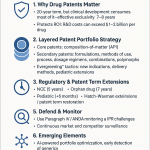
A simplistic analysis focused solely on the expiration date of a primary patent is dangerously incomplete. A truly resilient asset is shielded by a multi-layered defense system comprising two distinct but complementary pillars: a robust “patent fortress” constructed by the innovator company and a formidable “regulatory moat” granted by government bodies like the U.S. Food and Drug Administration (FDA). This section deconstructs this architecture, providing a foundational understanding of how these legal and statutory protections interact to create a defensible barrier against premature generic competition. A sophisticated assessment of these layers is the first and most crucial step in identifying high-value in-licensing targets.
1.1 The Patent Fortress: Assessing the Strength and Depth of IP Protection
The patent estate is the collection of intellectual property rights that an innovator proactively builds to protect its invention. It is both an offensive weapon to deter competitors and a defensive wall to withstand legal challenges. The strength of this fortress is not determined by a single patent but by the breadth, depth, and strategic layering of its entire portfolio.
The Hierarchy of Patent Value
At the heart of any drug’s intellectual property protection lies the composition of matter patent. This is considered the most valuable and sought-after type of patent in the pharmaceutical industry because it protects the active pharmaceutical ingredient (API) itself—the core molecular entity responsible for the drug’s therapeutic effect.4 Securing a strong composition of matter patent provides the broadest possible competitive advantage and serves as the initial cornerstone of a drug’s market exclusivity.6 It grants the innovator a temporary monopoly, a necessary incentive to recoup the staggering costs of research and development (R&D) and to fund future innovation.4
However, relying on a single patent, even a composition of matter patent, creates a single point of failure. A generic challenger needs to invalidate only that one patent to open the market. Therefore, a truly well-protected asset—and a more attractive in-licensing target—will be buttressed by a diverse and strategically layered portfolio of secondary patents.
Building the “Patent Thicket”
Sophisticated innovators employ a strategy of creating a “patent thicket” or “patent cluster,” which involves filing numerous secondary patents that cover various aspects of the drug beyond its core molecule.2 This complex web of IP makes it significantly more difficult, time-consuming, and expensive for a generic manufacturer to “clear the path” for market entry. Each additional patent represents another legal battle that must be fought and won. Key types of secondary patents that form this thicket include:
Method of Use Patents: These patents protect a specific, novel way of using a drug, such as for a new therapeutic indication.4 If a drug is initially approved for hypertension and the innovator later discovers and patents its use for heart failure, a generic company could be blocked from marketing its version for the heart failure indication even after the original composition of matter patent expires.
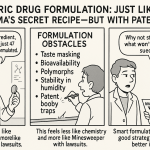
Formulation Patents: These cover specific formulations of the drug product. This is a common and highly effective strategy that includes patents on extended-release versions, specific coatings on a tablet, or fixed-dose combinations with other active ingredients.2 These patents can provide years of additional protection for improved versions of a product.
Polymorph Patents: Many chemical compounds can exist in different crystalline structures, known as polymorphs. An innovator can obtain patents on specific polymorphs that may have advantageous properties, such as improved stability or bioavailability, creating another hurdle for generics.9
Process Patents: These patents protect the specific, proprietary methods used to manufacture the drug.5 If a unique manufacturing process is essential to achieving the drug’s final purity, efficacy, or safety profile, a process patent can be a powerful barrier, forcing a generic competitor to invest in developing an alternative, non-infringing manufacturing method.
The presence of a dense and diverse patent thicket is more than just a collection of legal documents; it is a powerful strategic signal. It demonstrates the innovator’s commitment to the franchise, their sophistication in IP strategy, and their clear intent to vigorously defend the product against all challengers.2 As one expert aptly described, “A well-constructed patent portfolio is like a chess game. Each patent is a piece on the board, strategically placed to defend your product and block competitors’ moves”.6 During due diligence for an in-licensing opportunity, the sheer number and diversity of patents are critical metrics for assessing the durability of the asset’s market protection.3
1.2 The Regulatory Moat: Leveraging FDA-Granted Exclusivities
Operating in parallel to the patent system is a separate layer of protection known as regulatory or marketing exclusivity. Unlike patents, which are granted by the U.S. Patent and Trademark Office (USPTO) for novel inventions, these exclusivities are granted by the FDA upon a drug’s approval as a statutory incentive to encourage development in specific areas of public health need.12 This “regulatory moat” is a critical component of a drug’s defense, as these exclusivity periods run concurrently with patents and can provide market protection even if the underlying patents have expired or been successfully challenged in court.15
A comprehensive understanding of these exclusivities is essential for any in-licensing evaluation. The primary types of FDA marketing exclusivity in the United States are detailed in Table 1.
Table 1: Comprehensive Guide to U.S. FDA Marketing Exclusivities
Exclusivity Type
Duration
Statutory Criteria
Impact on Generic/505(b)(2) Applications
Key Strategic Value for In-Licensing
New Chemical Entity (NCE)
5 years
Granted for a drug containing an active moiety never before approved by the FDA.13
Bars FDA from accepting an ANDA or 505(b)(2) application for 4 years (or 5 years if no patent challenge is filed).14
Provides a guaranteed minimum period of protection from the date of approval, regardless of remaining patent life. A foundational protection for innovative drugs.
Orphan Drug (ODE)
7 years
Granted for a drug designated and approved to treat a rare disease or condition affecting fewer than 200,000 people in the U.S..12
Bars FDA from approving any other application (generic or brand) for the same drug for the same orphan indication for 7 years.14
Extremely valuable. Creates a strong barrier in niche markets that are already less attractive to generics. Can provide protection long after patents expire.
Biologic (BPCIA)
12 years
Granted to a new biologic product upon approval.13
Bars FDA from approving a biosimilar application for 12 years from the date of the reference product’s first licensure.13
The longest and one of the strongest exclusivities, reflecting the high cost and complexity of biologic development. A major deterrent to biosimilar entry.
Clinical Investigation (3-Year)
3 years
Granted for an application or supplement containing new clinical investigations (other than bioavailability studies) essential for approval.12
Bars FDA from approving an ANDA or 505(b)(2) that relies on the new data for 3 years.14
Crucial for life cycle management. Protects new formulations, new indications, or other significant changes to an already-approved drug.
Pediatric (PED)
6 months
Granted when the sponsor conducts pediatric studies in response to a written request from the FDA.12
Adds 6 months of exclusivity to all existing patents and exclusivities for the drug.12
A valuable “tack-on” protection that can extend the entire exclusivity period of a drug by half a year, which can be worth hundreds of millions for a blockbuster.
Qualified Infectious Disease Product (QIDP)
5 years (additive)
Granted to certain antibacterial or antifungal drugs intended to treat serious or life-threatening infections.13
Adds 5 years to any other existing exclusivity (e.g., NCE, ODE). An NCE with QIDP designation receives a total of 10 years of exclusivity.13
A powerful incentive that creates a very long period of market protection for critically needed antibiotics, making them attractive assets.
Generic Drug (GDE)
180 days
Granted to the first generic applicant to submit a substantially complete ANDA with a Paragraph IV patent challenge.12
Provides a 180-day period of market exclusivity for the first generic entrant, blocking other generics.14
Not a protection for the brand, but a critical factor in understanding the competitive landscape. The “jackpot” that incentivizes generic challenges.
Sources: 12
The strategic value of these exclusivities cannot be overstated. A drug nearing the end of its patent life might seem like a poor in-licensing candidate until one discovers it holds several more years of Orphan Drug Exclusivity. This regulatory moat completely changes the risk calculation. Furthermore, these protections vary by jurisdiction, and a global commercialization strategy must account for the different exclusivity periods available in Europe, Japan, China, and other key markets.4
A more nuanced analysis reveals that the regulatory moat can provide the time and safety needed to reinforce a weakening patent fortress. For instance, a drug may have a composition of matter patent set to expire in three years, but if it also holds a seven-year Orphan Drug Exclusivity, the immediate threat of generic entry is nullified. A savvy in-licensing company can leverage the first few years of that ODE period to conduct its own R&D on a new extended-release formulation or a novel delivery device. By filing new patents on these improvements, the licensee can construct its own secondary patent walls, creating a new layer of defense that will persist long after the ODE expires. The regulatory protection provides the crucial window of opportunity to build the next generation of patent protection.
1.3 The Art of Evergreening: Interpreting an Innovator’s Defensive Posture
Evergreening is the set of strategies used by innovators to obtain new, secondary patents on often minor modifications of their drugs, with the goal of extending the product’s monopoly period well beyond the life of the original patent.11 This practice is often criticized for delaying the entry of lower-cost generics and increasing healthcare costs.17 However, from the perspective of a potential licensee conducting due diligence, a history of successful evergreening is a powerful positive indicator. It signals the innovator’s deep commitment to defending a franchise and their institutional capability to execute complex life cycle management strategies.10 Key evergreening tactics serve as a blueprint for long-term durability.
Key Evergreening Tactics
“Product Hopping”: This is a highly effective strategy where the innovator introduces a new, patent-protected version of a drug—often a minor modification like an extended-release formulation—and invests heavily in marketing to migrate the patient base from the old product to the new one before the original patent expires.9 This tactic effectively depletes the market for the impending generic, making it a much less attractive commercial target. The textbook case of a successful product hop is AstraZeneca’s masterful switch of patients from its blockbuster heartburn medication Prilosec to its next-generation, evergreened version, Nexium. This move thwarted generic competition and preserved the company’s gastrointestinal franchise revenue.10
Line Extensions: This tactic involves developing new dosage forms, strengths, or formulations to secure new patents and buy additional time on the market.10 A prime example is GlaxoSmithKline’s management of its epilepsy drug Lamictal. By obtaining a patent on a chewable tablet formulation, GSK extended the drug’s total protection to 32 years, a full 12 years beyond the expiration of the original compound patent.9
Authorized Generics: In this strategy, the brand-name manufacturer enters into a partnership with a generic company to launch a so-called “authorized generic” version of its own drug.10 This controlled entry allows the brand to retain a significant share of the generic market through royalty payments and can serve to discourage other, more aggressive generic competitors from entering a market that already has a generic player with the brand’s backing.3
Case Studies in Durability
An examination of some of the most commercially successful drugs reveals the power of a multi-pronged evergreening strategy. Companies like AstraZeneca, Johnson & Johnson, and Gilead have become masters of this approach, building formidable defenses around their key assets.9
Revlimid: Celgene extended the monopoly for its blockbuster cancer drug by 18 years, securing 27 additional patents and eight separate orphan drug exclusivities.17
Suboxone: The manufacturer of the opioid addiction treatment gained nearly two extra decades of exclusivity by obtaining patents on a film version of the drug just as the tablet version’s protection was set to expire.17
EpiPen: The life-saving allergy treatment is protected until 2025—a remarkable 38 years after its initial introduction—due to a series of patents on minor tweaks to the auto-injector device, not the century-old drug itself.17
This history provides a critical insight for due diligence. An innovator’s track record of evergreening on other drugs in their portfolio is a strong predictor of their likely commitment to defending the target asset. This “corporate DNA” of aggressive IP defense and franchise protection is an invaluable, albeit intangible, part of the asset being licensed. If the licensor has a documented history of successfully executing product hops and building patent thickets for other major products, it is highly probable that they have already laid the strategic and legal groundwork for a similar defense of the asset under consideration. This institutional knowledge and legal precedent significantly reduces the risk that the innovator will abandon the fight after the in-licensing deal is signed, adding another layer of confidence for the licensee.
Section 2: Beyond Intellectual Property: Structural and Market-Based Barriers to Generic Entry
While the legal framework of patents and exclusivities forms the primary defense against competition, a second class of barriers exists that can be equally, if not more, formidable. These are the structural and market-based hurdles inherent to the drug product itself or the market it serves. These barriers arise from technical complexity, supply chain constraints, and fundamental economic principles that can naturally deter generic entry, independent of the legal landscape. An in-licensing candidate fortified by these structural barriers possesses a deeper, more resilient moat that complements its IP protections.
2.1 Manufacturing Complexity as a Deterrent
The strategic landscape of generic development has fundamentally shifted. As one industry analysis notes, “The golden era of simply replicating blockbuster oral tablets…is over”.20 The pharmaceutical industry’s pipeline is increasingly focused on complex products that are scientifically challenging, technically demanding, and capital-intensive to manufacture. This complexity creates a significant natural barrier to entry for many would-be generic competitors.20
The Technical Hurdle
Biologics and Biosimilars: Biologics are large, complex molecules—such as monoclonal antibodies—produced in living cell systems. Unlike small-molecule drugs that can be chemically synthesized and copied precisely, biologics cannot be perfectly replicated.20 The manufacturing process itself is a proprietary trade secret, and even minor variations in cell lines, nutrient media, or purification steps can alter the final product’s efficacy and safety. A company seeking to create a “biosimilar” must essentially reverse-engineer this entire biological process without access to the innovator’s know-how. This undertaking is a monumental scientific and financial challenge, with development timelines of 7-8 years and costs ranging from $100 million to $250 million.20 This high barrier inherently limits the competitive field to a small number of highly specialized and well-capitalized players.13
Complex Formulations: Products that move beyond simple tablets present substantial manufacturing challenges. Long-acting injectables, liposomal drug delivery systems, and transdermal patches require specialized equipment, sterile manufacturing environments, and deep formulation expertise that are not commonplace in the generic industry.20 Replicating these systems is far more difficult than pressing a standard pill.
Drug-Device Combinations: Products like metered-dose inhalers for asthma or auto-injectors for emergency use (e.g., EpiPen) add another layer of complexity. A generic competitor must replicate not only the drug’s formulation but also the performance characteristics of the delivery device itself.20 This involves complex engineering, human factors studies, and a separate stream of regulatory approvals, significantly increasing the barrier to entry.
API Sourcing and Supply Chain
The global supply chain for active pharmaceutical ingredients (APIs) is another source of structural friction. The production of many critical APIs and their chemical precursors is highly concentrated, particularly in China and India, creating a fragile and often precarious supply chain.20 A potential generic manufacturer must first secure a reliable, long-term source of the API that complies with Current Good Manufacturing Practices (cGMP). This can be a major hurdle, especially for complex molecules where few suppliers exist.3
The recent “nitrosamine crisis,” in which carcinogenic impurities were found in several widely used drugs, has placed immense pressure on the industry. It has forced a complete re-evaluation of manufacturing processes and imposed significant new costs for advanced analytical testing and process re-validation across entire product portfolios.20 For a generic company, the burden of ensuring a clean and compliant API supply chain adds substantial cost, risk, and potential for delay.
For an in-licensing team, a drug with a complex manufacturing process or a tightly controlled API supply chain is a double-edged sword. While these factors provide a strong competitive advantage by deterring generics, they also represent a significant operational risk for the licensee. The due diligence process must therefore include a rigorous evaluation of the licensor’s manufacturing capabilities, and the final deal must contain robust provisions for a seamless and complete transfer of all necessary technology, know-how, and manufacturing arrangements.3 A failure in technology transfer can be as commercially catastrophic as losing a patent lawsuit.
2.2 The Niche Market Advantage: The Economics of Generic Entry
The decision for a generic company to enter a market is a purely economic one, driven by a calculation of potential return on investment. This calculation is heavily influenced by the size of the market and the expected level of competition. Understanding these economic drivers is crucial for identifying branded drugs that are naturally less attractive targets for genericization.
The Generic Business Model
The fundamental business model for generics relies on capturing market share from a high-priced brand with a lower-cost alternative. However, this model is predicated on a significant price differential and sufficient market volume to generate profit. The economic reality is that generic competition is brutal and leads to rapid price erosion. The entry of just a single generic competitor can slash the brand’s price by 30-39%, and with two competitors, the price falls by 54%.20 Once six or more generics enter the market, prices can plummet by a staggering 95%, effectively commoditizing the drug.17 Generic manufacturers must therefore carefully select their targets, focusing on markets large enough to justify the significant upfront costs of development, regulatory approval, and potential patent litigation.
The “Blockbuster Paradox” and the Niche “Sweet Spot”
This economic reality leads to what can be termed the “Blockbuster Paradox.” While blockbuster drugs with billions in annual sales appear to be the most lucrative targets, their very size attracts a flood of competition. Large markets, defined as those with 15,000 or more users per month, are the most intensely competitive, often attracting close to 10 different generic manufacturers.28 This hyper-competition leads to the most severe price erosion, making sustained profitability a challenge. Consequently, blockbuster drugs are the primary targets for aggressive patent challenges from a multitude of generic firms.1
Conversely, smaller, niche markets are often overlooked by the major generic players who are geared for high-volume, blockbuster-scale production.3 This creates a strategic “sweet spot” for branded drugs. A market with annual sales in the range of $50 million to $200 million can be highly profitable for a single branded player but is often too small to attract a rush of generic competitors who know that the entry of even two or three players would destroy the market’s profitability.21 Analysis shows that these small markets average only about three generic entrants, allowing for much greater price stability.28
Orphan drugs, which are developed to treat rare diseases, are the quintessential example of this principle. These products benefit from a powerful combination of a regulatory moat (a 7-year Orphan Drug Exclusivity) and a natural economic moat stemming from their small, well-defined patient populations.21 While the R&D costs for orphan drugs can be high, the potential for monopolistic pricing, coupled with the significantly lower likelihood of generic competition, makes them exceptionally attractive in-licensing targets.33
The strategic implications of these market dynamics are quantified in Table 2.
Table 2: The Economic Impact of Generic Entry on Brand Viability
Number of Generic Competitors
Average Brand Price Reduction (%)
Average Brand Market Share Loss (Year 1)
Strategic Implication for In-Licensing Target Selection
1 Competitor
20-39%
20-30%
Manageable risk. The brand can often retain significant market share and pricing power. A highly desirable scenario for an in-licensed asset.
2 Competitors
54%
>50%
Significant erosion. The market becomes highly competitive quickly. Profitability is substantially impacted.
3-5 Competitors
60-80%
>70%
Severe price and volume loss. The market is approaching commoditization. High risk for a branded asset’s long-term value.
6+ Competitors
80-95%
>85%
Catastrophic erosion. The brand’s revenue stream is effectively eliminated. Markets of this nature should be avoided as in-licensing targets.
Sources: 3
A crucial, forward-looking consideration in this economic analysis is the potential impact of the Inflation Reduction Act (IRA) in the United States. The IRA’s drug price negotiation provisions are designed to lower the prices of top-selling branded drugs covered by Medicare.27 This policy could have the unintended consequence of strengthening the niche market advantage. The primary incentive for generic entry is the large price differential between the branded drug and its generic alternative. By negotiating a lower “maximum fair price” (MFP) for a branded drug, the IRA effectively shrinks this price differential. This reduction in the potential profit margin for a generic could deter manufacturers from entering markets they previously would have targeted, paradoxically lowering the risk of generic competition for some drugs subject to negotiation. This evolving policy landscape must be factored into any long-term risk assessment.
2.3 The Bioequivalence (BE) Hurdle
Before a generic drug can be approved, its manufacturer must scientifically demonstrate to the FDA that it is bioequivalent to the innovator’s product. This means it must have the same active ingredient, strength, dosage form, and route of administration, and it must work in the same way and in the same amount of time.35 For many modern, complex drugs, meeting this bioequivalence standard is a significant scientific and regulatory hurdle that can deter potential competitors.
Narrow Therapeutic Index (NTI) Drugs
For certain classes of drugs, small variations in the concentration of the drug in the bloodstream can lead to serious therapeutic failures or toxic adverse events. These are known as Narrow Therapeutic Index (NTI) drugs and include critical medications such as antiepileptics, anticoagulants (e.g., warfarin), certain antiarrhythmics, and thyroid medications.36 Due to the high risk associated with even minor variations in performance, regulators often impose more stringent bioequivalence standards for NTI drugs. For example, the 90% confidence interval for key pharmacokinetic parameters might be tightened from the standard 80%-125% range to a much narrower 90%-111% range.37 Meeting these tighter specifications increases the technical difficulty, cost, and risk of failure for generic development. Furthermore, physicians and patients are often reluctant to switch from a branded NTI drug on which a patient is stable, creating an additional barrier to generic uptake even after approval.34
Challenging Delivery Systems
Proving bioequivalence for a drug with a unique or complex delivery system goes far beyond a simple blood test. For a transdermal patch, a generic developer must demonstrate not only equivalent drug absorption but also comparable skin adhesion and irritation properties.20 For an inhaled product, the developer must precisely match the particle size distribution and aerosol dynamics of the innovator’s product, a complex challenge that involves the interplay between the drug formulation and the inhaler device itself.3 These challenging bioequivalence requirements can serve as a substantial deterrent, filtering out all but the most technically sophisticated generic companies.
Ultimately, the structural barriers of manufacturing complexity, niche market economics, and high bioequivalence hurdles are not independent factors; they are interconnected and mutually reinforcing. A drug that is a complex biologic (high manufacturing barrier) developed for a rare disease (niche market) and has a narrow therapeutic index (high BE hurdle) represents the “holy grail” of a structurally fortified asset. A generic company might possess the technical expertise to overcome a complex manufacturing process, but it is unlikely to make the massive capital investment to do so for a small orphan market. It might be willing to undertake a difficult bioequivalence study for a multi-billion dollar blockbuster, but it will hesitate to do so for a niche product with a fragile API supply chain. The combination of these factors exponentially increases the risk and decreases the potential ROI for any generic challenger, creating a powerful, multi-layered structural moat that can protect an in-licensed asset for years to come.
Section 3: The Litigation Gauntlet: Assessing and Quantifying Risk from Patent Challenges
For most high-value branded drugs, the transition to a generic market is not a peaceful handover upon patent expiration. Instead, it is a contentious and complex process adjudicated in the courtroom. The Hatch-Waxman Act of 1984, while designed to facilitate generic entry, created a highly structured system for patent litigation that has become a central feature of the pharmaceutical landscape. Understanding the mechanics of this “litigation gauntlet,” the financial incentives that drive it, and how to assess a target’s ability to withstand it is a critical component of de-risking an in-licensing decision. For any drug with substantial sales, a patent challenge should be viewed not as a remote risk, but as a near certainty. The pivotal question is not if a challenge will occur, but how strong the defense will be.
3.1 The Paragraph IV Pathway and the First-Filer Incentive
The primary mechanism for challenging a brand’s patents is the Paragraph IV (PIV) certification. This provision of the Hatch-Waxman Act has become a routine and essential part of the business strategy for nearly all generic drug companies.29
The Challenge Mechanism
When a generic company files an Abbreviated New Drug Application (ANDA) with the FDA, it must make a certification for each patent listed in the FDA’s Orange Book for the corresponding brand-name drug. A PIV certification is a declaration by the generic firm that it believes the brand’s patent is either invalid, unenforceable, or will not be infringed by the generic product.7 This filing is an explicit act of aggression, effectively inviting a lawsuit from the patent holder.
The 30-Month Stay
Upon receiving notice of a PIV filing, the brand-name company has a 45-day window to initiate a patent infringement lawsuit against the generic applicant.29 The filing of this suit automatically triggers a 30-month stay, during which the FDA is legally barred from granting final approval to the generic’s ANDA.7 This stay is a powerful strategic weapon for the brand company. It provides a guaranteed delay of up to 2.5 years, preserving the brand’s monopoly revenue stream regardless of the ultimate strength or weakness of its patents. For a blockbuster drug, this guaranteed delay can be worth billions of dollars in sales. This is not merely a procedural delay; it is a substantial financial asset created by the litigation itself, which fundamentally shapes the negotiation dynamics between the parties. The brand knows it has this guaranteed revenue extension, and this value can be used as a potent bargaining chip in any potential settlement discussions.
The 180-Day Exclusivity “Jackpot”
The engine that drives the entire PIV litigation ecosystem is the powerful financial incentive offered to the first generic company to file a substantially complete ANDA with a PIV certification.26 If this “first-filer” prevails in the ensuing patent litigation (or secures a favorable settlement), it is granted a 180-day period of marketing exclusivity.12 During these six months, the first-filer is the
only generic version of the drug on the market, allowing it to capture significant market share at a price point only moderately discounted from the brand (often just 15-25% lower).40 This temporary duopoly is far more profitable than the subsequent period when multiple other generics enter and drive prices down by 80% or more. For a blockbuster drug, this 180-day exclusivity can be a “jackpot” worth hundreds of millions of dollars in high-margin revenue.29
The canonical example of this strategy’s power is the case of Barr Laboratories’ PIV challenge to Eli Lilly’s blockbuster antidepressant, Prozac. After prevailing in court, Barr launched its generic fluoxetine and, during its 180-day exclusivity period in 2001, captured the vast majority of the market. The company’s gross profit margin nearly doubled as a result.29 This landmark case demonstrated the enormous financial rewards of being a successful first-filer and ignited the aggressive PIV challenge strategies that are now commonplace in the industry.
3.2 Quantifying Litigation Risk and Financial Stakes
PIV patent litigation is a high-stakes endeavor with immense financial implications for both parties. The potential outcomes can dramatically alter corporate valuations and market dynamics.
Asymmetrical Stakes
The financial stakes involved are massive and starkly asymmetrical. A comprehensive 2020 study published in the Journal of Law and Economics used unique patent-litigation data to estimate the average financial stakes in these cases. The study concluded that, on average, the brand-name firm’s stakes in a PIV litigation decision are $4.3 billion. In contrast, the average stakes for the generic firm are $204.3 million.42 This enormous disparity—a greater than 20-to-1 ratio—vividly illustrates why brand-name companies are willing to invest heavily in legal fees and employ every available tactic to defend their monopolies and delay generic entry.
Success Rates and Settlements
Despite the brand’s financial motivation, generic challengers have a notable track record of success. One analysis found that generic firms prevail in PIV challenges at a rate of 76%.40 This high success rate, combined with the lucrative 180-day exclusivity prize, ensures that generic companies will continue to aggressively pursue these challenges.
However, the high costs, lengthy timelines, and inherent uncertainty of litigation mean that a large number of cases do not reach a final court decision. Instead, they are resolved through settlements.40 These settlements often take the form of “pay-for-delay” or “reverse payment” agreements, in which the brand-name company provides a payment or other form of compensation to the generic challenger in exchange for an agreement to delay its market entry until a specified future date.11 While these agreements face increasing antitrust scrutiny from the Federal Trade Commission (FTC), they remain a common outcome, as they provide certainty for both parties and allow the brand to orchestrate a more controlled and predictable loss of exclusivity.
The Role of Inter Partes Review (IPR)
Since the passage of the America Invents Act in 2011, generic firms have gained another powerful tool for challenging patents: the Inter Partes Review (IPR) process. An IPR is a trial proceeding conducted before the Patent Trial and Appeal Board (PTAB) of the USPTO, which allows a third party to challenge the validity of an issued patent.29 Generic companies often file IPR petitions in parallel with their district court litigation. The IPR process has proven to be a formidable weapon for challengers, with studies showing a high invalidation rate of 60-70% for challenged patent claims.6 A negative outcome for the brand in an IPR proceeding can significantly weaken its position in the corresponding district court case and often precipitates a settlement on terms more favorable to the generic. The advent of the IPR has shifted the balance of power in patent litigation, and any due diligence must now consider the vulnerability of a target’s patents to this parallel challenge pathway.
This evolution in the legal landscape has an important implication for due diligence: the “vintage” of a patent portfolio matters. Patents that were granted before the IPR system was established in 2011 may be more vulnerable than newer patents. These older patents were examined and granted under a different legal and procedural standard, without the looming threat of a future IPR challenge. Patents prosecuted after 2011, however, were often drafted with the specific arguments and prior art challenges common in IPRs in mind, potentially making them more resilient. Therefore, an in-licensing candidate protected by an older patent portfolio that has never been tested in an IPR proceeding may carry a different, and arguably higher, risk profile than an asset protected by more modern patents.
3.3 Interpreting a Target’s Litigation and Patent Defense History
Past performance is a strong indicator of future behavior in the world of patent litigation. A thorough due diligence process must therefore include a deep dive into the litigation history of both the target asset and its innovator company.
A History of Victory: The most de-risked in-licensing target is one whose key patents have already been challenged and have successfully withstood PIV or IPR proceedings.3 A patent that has been affirmed as valid and infringed in a final court decision is an ironclad asset. This real-world validation provides a level of certainty that no paper-based analysis can match.
The Innovator’s Track Record: The licensor’s corporate history of patent defense is a critical factor. Does the company have a reputation for settling cases early and on unfavorable terms? Or is it known as an aggressive litigator that fights to the very end to protect its franchises? A demonstrated history of successful patent defense, even on other products, signals an institutional commitment and expertise that adds significant value and reduces risk for a potential licensee.44
Frivolous Petitions: Another signal of an aggressive defensive posture is the filing of “citizen petitions” with the FDA. In these petitions, brand manufacturers raise scientific or regulatory objections to the approval of a generic application, often arguing that the standard bioequivalence testing is inadequate for their specific drug.11 While the FDA denies the vast majority of these petitions, viewing them as attempts to delay competition, the act of filing them demonstrates a willingness to use every available tool, however frivolous, to protect a product’s revenue stream.
Section 4: A Unified Framework for In-Licensing Due Diligence
The identification of a durable in-licensing asset requires the synthesis of the complex legal, structural, and market-based factors discussed in the preceding sections. This is not a task that can be accomplished with a simple checklist. It demands a systematic, data-driven, and multi-disciplinary due diligence process. This section outlines a unified framework for conducting this assessment, integrating advanced competitive intelligence tools with a holistic risk evaluation model and the engagement of critical external expertise. This framework is designed to move the evaluation process from a qualitative “gut feel” to a rigorous, evidence-based analysis that can support high-stakes investment decisions.
4.1 The Competitive Intelligence Toolkit: Data-Driven Assessment
A robust due diligence process is built on a foundation of comprehensive and accurate data. While no single source provides a complete picture, a combination of public databases and specialized commercial intelligence platforms can illuminate the competitive landscape.
The FDA Orange Book: Officially titled Approved Drug Products with Therapeutic Equivalence Evaluations, the Orange Book is the foundational resource for any analysis. It is a public database maintained by the FDA that lists all approved drugs, along with the patents that their manufacturers claim cover them and any regulatory exclusivities they have been granted.5 The Orange Book is the essential starting point for mapping patent and exclusivity expiration dates and understanding the basic IP landscape of a target drug.
Patent Databases and Analytics Platforms: To move beyond the basic information in the Orange Book, specialized intelligence platforms are indispensable. Services like DrugPatentWatch, Juristat, and others provide the tools necessary for a deeper analysis.3 These platforms enable several critical functions:
Comprehensive Patent Landscaping: They allow for the identification of all patents related to a drug, including international filings and patents that are not listed in the Orange Book. This is crucial for understanding the full scope of the “patent thicket” and identifying potential “white space” opportunities for future innovation.8
Competitor Monitoring: These tools can be configured with automated alerts to track new patent filings by known generic competitors or in specific therapeutic areas. This provides an invaluable early warning system, revealing potential competitive threats years before a generic product enters the market.45
Litigation Tracking: They provide access to court dockets and legal databases, allowing the due diligence team to actively monitor the status of PIV litigation, IPR petitions, and other legal challenges related to the target asset or its competitors.7
Other Key Sources: A complete picture requires integrating data from multiple domains. This includes analyzing clinical trial registries (e.g., ClinicalTrials.gov) to understand the current and future clinical development landscape, reviewing regulatory submission documents for detailed product information, searching scientific literature for relevant prior art or new data, and consulting market research reports for commercial forecasts and physician prescribing patterns.3
The true power of this toolkit lies not in viewing each data source in isolation, but in integrating them to uncover deeper connections. For example, one can cross-reference patent litigation data 29 with an innovator’s public financial reports to understand how much revenue is at stake, which can help predict their likely settlement strategy. By analyzing clinical trial data 3 alongside recent patent filings 45, one might discover that a company is developing a new formulation specifically designed to execute a “product hop” just before a key patent on the original version expires. This synthesis of disparate information—linking legal, financial, and clinical data—is what transforms raw data into predictive, strategic intelligence.
4.2 The Multi-Factor Risk Assessment Scorecard
To systematically evaluate and compare multiple in-licensing opportunities, a structured assessment tool is required. The Multi-Factor Risk Assessment Scorecard (Table 3) provides a framework for quantitatively and qualitatively scoring potential targets across the key domains that determine the durability of their market exclusivity. This tool forces a disciplined analysis and creates a clear, documented rationale for investment decisions.
Table 3: Template: Multi-Factor Risk Assessment Scorecard for In-Licensing Targets
Assessment Domain
Assessment Factor
Data Source(s)
Score (1-5)
Weight (%)
Weighted Score
Qualitative Notes / Key Risks
Patent Fortress
Composition of Matter Patent
Orange Book, Patent Databases
15%
Remaining term? Strength?
Patent Thicket Density
Patent Databases, Juristat
10%
Number and diversity of secondary patents (formulation, method of use, etc.).
Key Patent Expiry Dates
Orange Book, DrugPatentWatch
10%
Timeline of patent cliff.
Litigation History
Court Dockets, IPR Databases
5%
Have key patents withstood challenges?
Regulatory Moat
NCE/ODE/Biologic Exclusivity
Orange Book, FDA Database
15%
Type and remaining duration of core exclusivity.
Pediatric/QIDP Extension
Orange Book, FDA Database
5%
Presence of valuable “add-on” exclusivities.
Structural Barriers
Manufacturing Complexity
Technical Docs, Expert Review
10%
Biologic, complex injectable, drug-device combo, etc.
API Sourcing Risk
Supply Chain Analysis
5%
Single source? Geopolitical risk?
BE / NTI Hurdles
FDA Guidelines, Literature
5%
Is the drug NTI? Does it have a complex delivery system?
Market Dynamics
Market Size (Annual Revenue)
Market Reports, Financials
5%
Is it in the niche “sweet spot” ($50M-$200M)?
Orphan / Niche Status
FDA Designations, Epidemiology
5%
Formal orphan status? Small patient population?
IRA Impact Risk
Policy Analysis, Sales Data
5%
Is it a high-spend Medicare drug likely to be targeted for negotiation?
Litigation Posture
Innovator’s Defense History
Litigation Databases
5%
History of aggressive litigation vs. early settlement.
TOTAL
100%
(Sum of Weighted Scores)
Overall Durability Score
This scorecard should not be treated as a static, one-time assessment. It is a dynamic tool that should be updated throughout the due diligence and negotiation process. An initial assessment might yield a high Durability Score, making an asset seem very attractive. However, if subsequent legal due diligence uncovers a previously unknown piece of prior art that significantly weakens a key patent, the “Patent Fortress” score must be downgraded. This, in turn, lowers the overall score and should immediately trigger a re-evaluation of the deal’s valuation and terms. The scorecard thus becomes a living document that translates new information into direct, actionable consequences for the negotiation strategy.
4.3 Engaging Expertise: The Imperative of Formal Legal and Technical Counsel
The data gathered through competitive intelligence and the scores generated by the assessment framework are powerful tools for screening, prioritizing, and preliminary evaluation. However, they are not a substitute for formal, expert legal and technical opinions. A final investment decision of this magnitude must be supported by rigorous, independent verification from specialized counsel.
Legal Due Diligence: It is an absolute necessity to engage a law firm specializing in pharmaceutical patent law to conduct a comprehensive review of the target’s IP portfolio.3 This formal legal due diligence should include, at a minimum:
Freedom-to-Operate (FTO) Analysis: A formal FTO opinion confirms that the manufacturing, marketing, and sale of the drug will not infringe on any valid third-party patents. This is a critical step to avoid costly future litigation from other patent holders.24
Patent Validity and Enforceability Opinion: This is an in-depth assessment of the strength of the target’s own patents and their likelihood of withstanding a PIV or IPR challenge from a generic competitor. The attorneys will analyze the patent’s prosecution history, review prior art, and provide a legal opinion on its defensibility.3
Technical and Regulatory Due Diligence: An equally critical stream of work involves the in-depth evaluation of the technical and regulatory aspects of the asset. This requires engaging experts to:
Assess Manufacturing Processes: Technical experts must evaluate the innovator’s manufacturing facilities and processes for cGMP compliance, scalability, cost-effectiveness, and the feasibility of a successful technology transfer.24
Vet Clinical and Regulatory Data: Regulatory affairs experts must meticulously review all clinical trial data and regulatory submissions to ensure their integrity, confirm that all claims are supported by the evidence, and identify any potential regulatory hurdles that could arise in the future.24
Section 5: Structuring the Deal and Post-Licensing Strategy
The culmination of a successful due diligence process is not simply a “go/no-go” decision but the execution of a well-structured licensing agreement that reflects the asset’s true risk profile and positions the licensee for long-term success. The insights gathered during the evaluation must directly inform the negotiation strategy and the post-acquisition life cycle management plan. This final section focuses on translating the analytical findings into a resilient deal structure and a proactive plan for maintaining and enhancing the asset’s durability after the agreement is signed.
5.1 Negotiating for Resilience: Contractual Mitigation of Generic Risk
The negotiation of the licensing agreement is the final and most critical stage of due diligence. The structure of the deal must be a direct reflection of the risks and opportunities identified in the assessment scorecard. A licensor’s willingness, or unwillingness, to accept risk-sharing terms can be a powerful final red flag, potentially revealing a lack of confidence in their own asset that was not apparent from the data alone.
Pricing in the Risk
The valuation of the in-licensing target and the allocation of payments should be flexible and risk-adjusted. A high Durability Score on the assessment scorecard may justify a larger upfront payment, as the licensee is acquiring a more certain and secure revenue stream. Conversely, a lower score, indicating higher risk of generic competition or other vulnerabilities, necessitates shifting a larger portion of the deal’s value to back-end, risk-adjusted milestone payments and royalties.51 This approach ensures that the licensor is only fully compensated if the asset delivers on its promise of sustained market exclusivity.
Key Deal Terms for Risk Mitigation
The licensing agreement must be meticulously crafted with specific clauses designed to protect the licensee from the financial consequences of premature generic entry. Key provisions to negotiate include 3:
Tiered Royalties: The agreement should include a clause that automatically reduces the royalty rate paid to the licensor in the event that a generic competitor enters the market. This ensures that the financial pain of competition is shared between both parties.
Exclusivity-Contingent Milestone Payments: A significant portion of the milestone payments should be explicitly tied to the successful defense of key patents or the maintenance of market exclusivity through specific future dates. If a patent is invalidated or a generic enters early, these payments would not be triggered.
Litigation Control and Cooperation: The contract must clearly define which party has the right to control patent defense litigation, how the substantial legal costs will be allocated, and the level of technical and legal cooperation required from the licensor to support the defense.
Royalty Stacking Provisions: To protect against unforeseen IP issues, the agreement should include a “royalty stacking” clause. This provision limits the licensee’s total royalty burden by allowing for a reduction in the royalty rate paid to the licensor if additional licenses from third parties are required to commercialize the product without infringing on their patents.25
The strategic importance of licensing as a growth driver cannot be overstated. Recent data shows that an astonishing 68% of blockbuster drugs now originate from licensing deals rather than purely in-house development, underscoring its central role in modern pharmaceutical strategy.52 Furthermore, in-licensing is often a more surgically precise and capital-efficient strategy than mergers and acquisitions (M&A), as it allows a company to acquire a specific, high-potential asset without the complexity and financial burden of absorbing an entire company, including its unwanted technologies or operational baggage.55
5.2 Proactive Life Cycle Management (LCM): Continuing the Defense
Signing the in-licensing agreement is not the end of the process; it is the beginning of the next phase of franchise management. The responsibility for defending and enhancing the asset’s market exclusivity now shifts to the licensee. A world-class business development organization recognizes that a successful in-licensing strategy involves not just acquiring durable assets, but actively working to make them even more durable over time. The licensee must be prepared to seamlessly continue, and even expand upon, the innovator’s proactive life cycle management plan.3
Post-Licensing LCM Tactics
Immediately following the acquisition, the new owner should initiate a strategic plan to further fortify the asset’s competitive position. This proactive LCM strategy should include exploring tactics such as:
Developing New Formulations or Delivery Methods: The licensee can invest in its own R&D to create a proprietary next-generation version of the product, such as an improved extended-release formulation, a new oral-dissolving tablet, or a more convenient drug-device combination. Successfully developing and patenting these improvements can create a new wall of patent protection, enabling a “product hop” strategy to migrate patients before the original patents expire.2
Exploring Additional Indications: The licensee should evaluate the scientific potential for the drug in other therapeutic areas. By conducting new clinical trials to get the drug approved for new uses, the company can not only expand the market but also gain valuable new method-of-use patents and potentially a new 3-year period of clinical investigation exclusivity.3
Generating New Data: Conducting post-marketing studies and real-world evidence analyses can generate new data that reinforces the drug’s unique value proposition with payers, physicians, and patients. This data can be crucial for defending market share against generic alternatives by highlighting superior efficacy, safety, or patient convenience, and can support premium formulary placement even in a competitive environment.3
Ultimately, a sophisticated in-licensing strategy is not about finding a single, perfectly risk-free asset. No such asset exists. It is about building a balanced and diversified portfolio of deals with carefully assessed and managed risk profiles. The analytical framework outlined in this report provides the tools to move beyond opportunistic deal-making toward strategic portfolio construction. By systematically evaluating assets, a company can balance a high-risk, high-reward blockbuster candidate with a portfolio of lower-risk, steady-return niche products. This disciplined, data-driven, and forward-looking approach is the hallmark of a world-class business development organization and the key to building a resilient and high-value pharmaceutical pipeline for the future.
Conclusion
The pursuit of in-licensing opportunities for branded drugs is a cornerstone of modern pharmaceutical strategy, offering a vital pathway to pipeline replenishment and revenue growth. However, the escalating threat of premature generic competition makes this a high-stakes endeavor where the durability of market exclusivity is the paramount determinant of success. Identifying assets with a low likelihood of generic entry requires a sophisticated, multi-layered due diligence framework that transcends a superficial review of patent expiration dates.
A truly durable asset is protected not by a single wall, but by a series of concentric defenses. The first is the Patent Fortress, a strategically constructed thicket of composition of matter, method of use, formulation, and process patents designed to complicate and deter legal challenges. The second is the Regulatory Moat, a set of statutory marketing exclusivities granted by the FDA—such as Orphan Drug or Biologics Exclusivity—that provide a distinct and powerful layer of protection that can persist even if patents fail.
Beyond these legal protections lie the Structural Barriers inherent to the product or its market. These include high manufacturing complexity, which makes the drug difficult and expensive to replicate; niche market economics, where a smaller patient population naturally disincentivizes a flood of generic competitors; and high bioequivalence hurdles, which create significant scientific challenges for would-be copycats. These factors can form a formidable defense in their own right.
Finally, any assessment must confront the Litigation Gauntlet. For any commercially significant drug, a Paragraph IV patent challenge is not a risk but an eventuality, driven by the powerful financial incentive of 180-day first-filer exclusivity. A successful evaluation, therefore, does not ask if a challenge will occur, but rather quantifies the strength of the asset’s defenses to withstand it, based on the innovator’s litigation history and the robustness of its IP.
The unified framework presented in this report—integrating competitive intelligence tools with a multi-factor risk scorecard—provides an actionable methodology for this complex assessment. It enables business development teams to move from qualitative judgment to a disciplined, evidence-based process. This framework allows for the objective comparison of diverse opportunities and creates a documented rationale for high-stakes investment decisions. Crucially, the insights from this process must not only inform the go/no-go decision but also dynamically shape the valuation and negotiation of the licensing agreement, ensuring that risk is appropriately priced into the deal structure through mechanisms like tiered royalties and exclusivity-contingent milestones.
By adopting this holistic and rigorous approach, pharmaceutical companies can de-risk their in-licensing investments, identify and acquire assets with the highest probability of a long and uninterrupted revenue stream, and ultimately build a more resilient and valuable pipeline for sustained growth.
Assessing strength of evidence for regulatory decision making in licensing: What proof do we need for observational studies of effectiveness? – PMC, accessed July 31, 2025, https://pmc.ncbi.nlm.nih.gov/articles/PMC7687174/