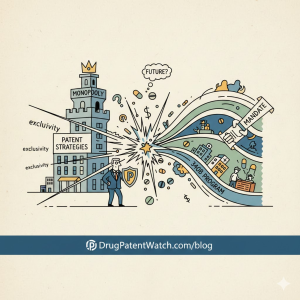
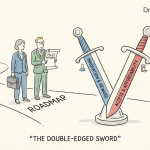
The United States healthcare landscape is shaped by a complex web of federal statutes, each with distinct and sometimes conflicting objectives. At a critical intersection of healthcare finance and pharmaceutical economics lie two such frameworks: the 340B Drug Pricing Program and the U.S. patent system. The 340B program, born from a mandate to support the nation’s healthcare safety net, requires drug manufacturers to provide substantial discounts to eligible hospitals and clinics serving vulnerable populations.1 The patent system, conversely, is designed to foster innovation by granting manufacturers a time-limited market monopoly, allowing them to recoup the significant costs of research and development through exclusive sales at market-driven prices.3
For years, these two systems coexisted in a state of relative equilibrium. However, this balance has become precarious. The conflict is not foundational, embedded in the original statutes, but is an emergent property of a rapidly evolving market. The exponential growth of the 340B program—from discounted purchases of approximately $4 billion annually between 2007-2009 to $66.3 billion in 2023—has transformed it from a minor cost for manufacturers into a significant factor in their financial planning.4 This growth has been fueled by expanded provider eligibility, a systemic shift toward outpatient care, and, most critically, the proliferation of high-cost, single-source specialty drugs.2 These specialty medications, while representing only 36% of 340B units purchased, now account for over 60% of total 340B spending, making the program’s financial viability increasingly dependent on the very products that are most profitable for manufacturers under patent protection.4
This report argues that the strategic use of patent lifecycle management tools, particularly “evergreening” and “patent thickets,” coupled with direct legal and operational challenges to the mechanics of the 340B program, constitutes a significant and potentially existential threat to the program’s ability to fulfill its congressional mandate. This threat is not merely a financial dispute over discounts; it is a structural challenge rooted in the 340B statute’s inherent ambiguities, the patent system’s robust legal protections, and a fundamental disagreement over the program’s intended scope and purpose.2 The analysis will proceed by examining the foundational principles of both systems, detailing the specific manufacturer strategies creating the conflict, assessing the judicial and financial consequences, and exploring potential legislative pathways toward a sustainable resolution.
II. The Statutory Pillars: Understanding the Two Systems in Conflict
The current friction between drug manufacturers and 340B providers arises from the intersection of two distinct statutory frameworks. One is a targeted federal health program with a vaguely defined operational scope, while the other is a constitutionally enshrined system of intellectual property rights. This asymmetry in statutory clarity has created a power imbalance, enabling the party with more clearly defined rights—the pharmaceutical manufacturers—to unilaterally dictate terms in areas where the 340B statute is silent.
A. The 340B Drug Pricing Program: A Safety Net Woven from Discounts
Legislative Origins and Intent
Enacted in 1992 as Section 340B of the Public Health Service Act, the 340B Drug Pricing Program was a legislative remedy to an unintended consequence of the 1990 Medicaid Drug Rebate Program.1 The Medicaid program required manufacturers to provide rebates, including a “best price” guarantee, to state Medicaid agencies. This new requirement led manufacturers to cease offering the deep, voluntary discounts they had previously provided to safety-net hospitals and clinics.1 Faced with drastic price increases, these providers saw their ability to serve low-income and uninsured populations diminish. Congress created the 340B program to restore these discounts, establishing a legal requirement for manufacturers to offer discounted outpatient drugs as a condition of their products being covered by Medicaid and Medicare Part B.2 The stated congressional intent, cited consistently by program proponents, was to permit these safety-net providers “to stretch scarce federal resources as far as possible, reaching more eligible patients and providing more comprehensive services”.7
Program Mechanics and Key Stakeholders
The 340B program operates through a complex interplay of stakeholders, each with a distinct role.12
Covered Entities: The beneficiaries of the program are “covered entities,” a statutorily defined group of safety-net providers. This includes six categories of hospitals—such as Disproportionate Share Hospitals (DSHs), which serve a high percentage of low-income patients, Critical Access Hospitals (CAHs), and rural referral centers—and ten categories of non-hospital federal grantees, such as Federally Qualified Health Centers (FQHCs) and Ryan White HIV/AIDS clinics.9 The Affordable Care Act (ACA) of 2010 significantly expanded the types of hospitals eligible to participate, contributing to the program’s rapid growth.5
The “Spread” as a Funding Mechanism: The program’s financial engine is the “spread” generated from drug sales. Covered entities purchase outpatient drugs at a statutorily mandated 340B ceiling price but are reimbursed by payers (such as Medicare, Medicaid managed care, or commercial insurers) at a higher, non-discounted rate.1 This differential creates revenue that, according to the program’s intent, is to be used to fund and expand patient services, provide free or low-cost medications, and offset uncompensated care.1 This mechanism is also a central point of controversy. Critics, including pharmaceutical manufacturers, argue that the lack of transparency in how this revenue is used has allowed the program to morph from a safety-net support system into an unchecked “profit engine” for hospitals.1
Discount Calculation: The 340B ceiling price is calculated as the Average Manufacturer Price (AMP) minus the Unit Rebate Amount (URA). For most brand-name drugs, the URA is the greater of 23.1% of AMP or the difference between AMP and the manufacturer’s “best price”.9 Crucially, the formula includes an additional inflationary penalty: if a drug’s price rises faster than the rate of inflation, the discount increases proportionally. For certain high-price-growth drugs, this penalty can drive the 340B price down to as little as a penny, resulting in discounts approaching 100%.10 This inflation penalty makes older, high-cost branded drugs particularly valuable sources of 340B savings and, consequently, a major point of conflict.
The Rise of Contract Pharmacies: A pivotal development in the program’s history was the 2010 guidance from the Health Resources and Services Administration (HRSA) that permitted covered entities to contract with an unlimited number of outside pharmacies to dispense 340B drugs.7 This was intended to improve patient access, particularly for entities without an in-house pharmacy.11 The result was an explosive expansion, with the use of contract pharmacies increasing by over 4,000% since 2010.7 This expansion is a primary justification cited by manufacturers for their recent restrictions, as they argue the proliferation of contract pharmacies increases the risk of drug diversion and duplicate discounts.10
Regulatory Oversight and its Limits
The 340B program is administered by HRSA’s Office of Pharmacy Affairs (OPA).9 However, the program’s authorizing statute is notably vague on many operational details and grants HRSA very limited, specific authority to engage in rulemaking.7 This lack of broad regulatory power has been repeatedly affirmed in federal court, leaving HRSA unable to definitively resolve disputes over key program elements like the definition of a patient or the obligations of manufacturers regarding contract pharmacies.21 This statutory weakness stands in stark contrast to the robust legal framework underpinning the patent system.
B. The U.S. Patent System: Fueling Innovation Through Exclusivity
Constitutional and Legislative Foundations
The U.S. patent system is rooted in the Constitution, which grants Congress the power “To promote the Progress of Science and useful Arts, by securing for limited Times to… Inventors the exclusive Right to their respective… Discoveries”.24 This principle is codified in Title 35 of the U.S. Code and is designed to incentivize the enormous financial investment and risk required for innovation, particularly in the pharmaceutical sector where research and development costs are substantial.3 The system grants inventors a temporary monopoly, allowing them to be the sole marketers of their invention and to set prices that can recoup their investment and fund future research.26
Mechanics of Drug Patents
The protection afforded to a new drug is multi-layered, involving both patents and regulatory exclusivities.
Patent Term and Effective Market Life: A new patent is granted by the U.S. Patent and Trademark Office (USPTO) for a term of 20 years from the application filing date.29 However, because companies must file for patents early in the development process, much of this 20-year term is consumed by preclinical and clinical trials required for Food and Drug Administration (FDA) approval. The result is an effective patent life—the actual period of market exclusivity post-launch—that is often only 7 to 10 years.29 This truncated period of profitability is a key driver of manufacturer strategies to extend their monopoly.
Types of Patents: A single drug is often protected by a portfolio of different patents. These can include a “composition of matter” patent on the active pharmaceutical ingredient itself, “method of use” patents for treating specific diseases, “formulation” patents for the delivery mechanism (e.g., an extended-release tablet), and “polymorph” patents on different crystalline structures of the molecule.29 This ability to patent various aspects of a single product is the foundation upon which “patent thickets” are built.
Patents vs. Exclusivity: Separate from patents are regulatory exclusivities granted by the FDA upon a drug’s approval. These are statutory prohibitions on the FDA approving competitor drugs for a set period. Key examples include a 5-year exclusivity for New Chemical Entities (NCEs) and a 7-year Orphan Drug Exclusivity (ODE) for drugs treating rare diseases.29 These exclusivities can run concurrently with patents and provide an additional layer of market protection.
III. Weaponizing the Patent: “Evergreening” and “Patent Thickets”
While the patent system is intended to reward novel invention, manufacturers employ sophisticated legal and business strategies to extend market monopolies on existing drugs, often for modifications that offer little additional therapeutic value. These strategies, broadly known as “evergreening,” are a primary driver of the conflict with the 340B program, as they keep high-cost, single-source drugs on the market longer, thereby maximizing both manufacturer revenue and the financial stakes for 340B covered entities.
Defining the Strategies
Two key tactics are central to modern pharmaceutical lifecycle management:
Evergreening: This is the practice of obtaining new patents on secondary features of a drug as its primary patents near expiration. These can include patents for new formulations (e.g., switching from a tablet to a film), new dosage forms (e.g., creating an extended-release version), or new therapeutic indications.3 This tactic is pervasive; data shows that 78% of drugs associated with new patents are existing products, not new medicines entering the market for the first time.32
Patent Thickets: This strategy involves creating a dense web of overlapping patents around a single drug, covering not just the active ingredient but also its manufacturing processes, formulations, and methods of use.3 This “thicket” makes it legally and financially daunting for a generic or biosimilar manufacturer to challenge the monopoly, as it would require litigating dozens or even hundreds of patents to clear a path to market.34
Case Study: The Humira Precedent
The archetypal example of a successful patent thicket strategy is AbbVie’s blockbuster immunology drug, Humira (adalimumab). The drug was protected by a portfolio of over 250 patent applications, which successfully delayed biosimilar competition in the U.S. for years after its primary patent expired.3 The majority of these patents were not on the original molecule but on secondary aspects like formulations and methods of treating specific inflammatory conditions. This legal fortress forced potential competitors into costly litigation and ultimately delayed the availability of lower-cost alternatives.
The Economic Link to 340B
These patent strategies directly intensify the conflict with the 340B program. By delaying generic and biosimilar entry, evergreening and patent thickets prolong the period during which a drug remains a high-cost, single-source product. This dynamic has a crucial, albeit paradoxical, effect on the 340B ecosystem. While it maximizes revenue for manufacturers, it also maximizes the potential revenue “spread” for covered entities, making these patent-protected drugs the financial linchpin of many 340B providers’ operations.4
This creates a perverse financial alignment that ultimately fuels conflict. The 340B program generates the most revenue for hospitals from drugs with the largest gap between the discounted acquisition cost and the insurer reimbursement rate.1 This gap is widest for high-list-price branded drugs, especially those subject to the inflation penalty that can drive their 340B price to pennies.9 In contrast, lower-cost generics and biosimilars offer a much smaller discount (a baseline of 13% for generics) and a correspondingly smaller revenue opportunity for the hospital.16 Consequently, a 340B hospital has a direct financial incentive to prescribe the higher-priced, patent-protected reference drug over a clinically equivalent, lower-cost biosimilar. This explains empirical findings that 340B hospitals demonstrate a significantly lower rate of biosimilar adoption compared to non-340B facilities.37 The 340B program, therefore, can inadvertently disincentivize the very market competition that patent law is, in theory, designed to eventually allow, placing the program’s financial interests at odds with broader healthcare cost-containment goals.
IV. The Manufacturer Offensive: Direct Challenges to the 340B Framework
Beginning in 2020, armed with a legal strategy centered on the 340B statute’s ambiguities, several of the largest pharmaceutical manufacturers launched a direct offensive against the operational framework of the program. This campaign has focused on two primary fronts: restricting access to 340B discounts through the contract pharmacy network and attempting to unilaterally convert the program’s upfront discount model into a back-end rebate system.
A. Restricting Contract Pharmacy Access
A cohort of at least 21 drugmakers has unilaterally imposed policies that limit or deny 340B pricing for drugs dispensed by contract pharmacies.2 These restrictions vary but often include limiting a covered entity to a single designated contract pharmacy or refusing to provide discounts unless the covered entity submits extensive claims data to a third-party vendor, such as 340B ESP, controlled by the manufacturers.42
Manufacturers justify these actions as necessary measures to ensure program integrity.43 They argue that the vast and loosely regulated contract pharmacy network creates significant risks of diversion (the provision of 340B drugs to individuals who are not eligible patients of the covered entity) and duplicate discounts (an instance where a manufacturer provides both a 340B discount and a Medicaid rebate on the same unit of a drug), both of which are prohibited by statute.10
Covered entities and their advocates, such as the American Hospital Association (AHA), counter that these restrictions are illegal actions that violate the statute’s core requirement that manufacturers “shall offer” discounted drugs to covered entities.2 They contend that these policies are not about integrity but are a thinly veiled attempt to curtail the program and retain billions of dollars in discounts. The impact, they argue, falls disproportionately on rural and smaller providers that lack the resources to operate an in-house pharmacy and rely entirely on contract pharmacy arrangements to serve their patients.41
B. The Shift to Rebate Models
A more recent and arguably more fundamental challenge to the program is the attempt by some manufacturers to replace the statutory upfront discount with a back-end rebate model.2 Under this proposed system, a covered entity would purchase drugs at the full, non-discounted Wholesale Acquisition Cost (WAC) and then submit claims to the manufacturer to receive a rebate for the difference between WAC and the 340B ceiling price.48
This proposed shift represents an existential threat to many covered entities. Safety-net providers, often operating on thin margins, would face severe cash-flow crises by being forced to finance high-cost drugs upfront.2 The model would also impose significant new administrative burdens and, critically, would grant manufacturers unilateral authority to adjudicate and deny claims with little to no oversight from HRSA, effectively allowing them to control the flow of 340B savings.41 HRSA has formally rejected these unilateral models as being inconsistent with the statute’s upfront discount structure and has launched its own voluntary, limited 340B Rebate Model Pilot Program to explore the concept under strict federal oversight.47
V. The Judicial Arena: Courts Define the Battlefield
The conflict between manufacturers and the 340B program has inevitably moved into the federal courts, where judges have been tasked with interpreting a statute that is often silent on the very issues at the heart of the disputes. The resulting body of case law has largely favored manufacturers, underscoring HRSA’s limited regulatory authority and cementing the legal high ground for pharmaceutical companies.
A. The Contract Pharmacy Litigation
The central legal question in the contract pharmacy dispute is whether the 340B statute’s mandate for a manufacturer to “offer” drugs for “purchase” at the ceiling price implicitly requires them to deliver those drugs to any and all contract pharmacies a covered entity designates. In a series of landmark decisions, federal appellate courts have answered this question in the negative.
The U.S. Court of Appeals for the Third Circuit, in Sanofi-Aventis U.S., LLC v. HHS, and the D.C. Circuit, in Novartis Pharmaceuticals Corp. v. Johnson, both concluded that the 340B statute is silent on the logistics of drug delivery and distribution.23 The courts reasoned that the statute imposes a mandatory price term but leaves other commercial terms, such as delivery locations, unaddressed. In this statutory silence, the courts found that manufacturers retain their traditional commercial freedom to set at least some conditions on distribution.22
These rulings did not grant manufacturers unlimited power. The courts included a crucial caveat, noting that their decisions do not foreclose the possibility that some conditions could be so “onerous” as to effectively deny a covered entity access to the 340B price, which could violate the statute.22 However, the practical effect of these decisions has been to validate the manufacturers’ core strategy and severely weaken HRSA’s ability to enforce broad access through contract pharmacies.
B. The Orphan Drug Exclusion Saga
The legal battle over the 340B Orphan Drug Exclusion serves as a powerful microcosm of the larger conflict over HRSA’s authority. The ACA expanded 340B eligibility to new types of hospitals but also excluded orphan-designated drugs from the program for these newly eligible entities.20 A dispute arose over the scope of this exclusion: HRSA interpreted it narrowly, applying it only when an orphan drug was used for its designated rare disease indication, while the Pharmaceutical Research and Manufacturers of America (PhRMA) argued for a broad interpretation applying to all uses of the drug.53
Through a series of lawsuits, PhRMA successfully challenged both a formal rule and a subsequent “interpretive rule” from HRSA. The D.C. District Court ultimately ruled that HRSA lacked the specific statutory authority to issue a legislative rule on the matter and that the “plain language of the statute,” which refers to drugs “designated” as orphan, supported the manufacturers’ broader interpretation.21 This case was a decisive defeat for HRSA and established a key precedent limiting the agency’s power to fill statutory gaps through regulation or interpretation.
C. The Supreme Court’s Intervention (AHA v. Becerra)
In a rare 340B case to reach the highest court, hospital groups achieved a significant victory. In American Hospital Ass’n v. Becerra, the Supreme Court ruled unanimously that the Department of Health and Human Services (HHS) acted unlawfully when it implemented deep cuts to Medicare Part B reimbursement rates for 340B hospitals in 2018 and 2019.57 The Court found that the statute required HHS to conduct a survey of hospital drug acquisition costs before setting reimbursement rates that varied from the standard formula, a step HHS had failed to take.14 While a win for hospitals on the issue of reimbursement, the ruling reinforced the overarching legal principle that has defined the 340B legal battles: federal agencies must adhere strictly to the explicit text of their authorizing statutes and cannot exceed the authority granted to them by Congress.
Table 1: Landmark 340B Litigation and Rulings
Case Name
Sanofi-Aventis U.S., LLC v. HHS (2023)
Novartis Pharmaceuticals Corp. v. Johnson (2024)
Pharm. Research & Mfrs. of Am. v. HHS (2015)
American Hospital Ass’n v. Becerra (2022)
VI. The Financial and Operational Fallout: Quantifying the Threat
The legal victories for manufacturers have translated into direct and substantial financial consequences for 340B covered entities. By restricting access to discounts, manufacturers are not just altering program logistics; they are systematically dismantling the financial foundation that allows safety-net providers to fund patient care. These actions function as a de facto rewriting of the statute, achieved not through congressional amendment but through the exercise of private commercial power in a regulatory vacuum.
Documenting the Financial Harm
Analyses conducted by organizations like 340B Health quantify the staggering financial impact of these restrictions. As of June 2023, the policies of 21 restricting drugmakers placed an estimated $8.4 billion in annual 340B savings at risk.59 An earlier analysis focusing on just the first five companies to impose restrictions found that hospitals’ 340B savings from those manufacturers decreased by an estimated $1.1 billion between 2020 and 2021 alone.41 These are not abstract figures; they represent a direct transfer of resources away from the healthcare safety net and back to pharmaceutical companies.
Disproportionate Impact on Specialty Drugs
The manufacturer restrictions are strategically targeted for maximum financial effect. The policies disproportionately affect high-cost specialty drugs, which, due to their high list prices and susceptibility to inflation penalties, generate the largest 340B discounts.41 One study found that of the $8.4 billion in at-risk savings, $5.3 billion was attributable to specialty drugs.59 For 11 of the 21 restricting companies, specialty drugs accounted for over 75% of their contract pharmacy savings.60 By focusing on these high-value products, manufacturers can inflict the most significant financial damage on the 340B program while impacting a relatively small number of prescriptions.
Impact on Patient Care and Services
The loss of billions of dollars in program savings has had a direct, negative impact on patient care. Surveys of 340B hospitals reveal that the loss of revenue has forced them to cut back on vital services.60 One-third of critical access hospitals, which are often the sole healthcare providers in their rural communities, reported having to cut services due to the restrictions.60 Two-thirds of hospitals with impacted drug assistance programs reported direct patient harm.60 These cuts threaten services in areas like mental health, medication management, and the provision of free vaccines, undermining the core purpose of the 340B program.13
Administrative Burden
Beyond the direct financial losses, the patchwork of varying manufacturer restrictions has created an immense administrative burden for covered entities. Providers must navigate dozens of different policies, each with unique requirements for data submission, pharmacy designation, and claims identification.61 One 340B program specialist reported spending the first several hours of every day just dealing with the complexities of manufacturer restrictions before processing a single claim.61 This administrative drain diverts resources that could otherwise be used for patient care and makes compliance a full-time challenge.
VII. The Path to Stability: Legislative Reform and the Future Landscape
The escalating conflict, judicial rulings affirming statutory ambiguity, and clear evidence of financial harm have made it apparent that a durable solution requires congressional action. The current state of affairs—where manufacturers can unilaterally reshape a federal program through private contractual power—is unsustainable. Legislative proposals are now emerging on two fronts: those aimed at clarifying and strengthening the 340B program itself, and those aimed at reforming the underlying patent system that creates the market distortions fueling the conflict.
A. Reforming the 340B Program
Recognizing the need for statutory clarity, a bipartisan group of senators has introduced draft legislation known as the SUSTAIN 340B Act.62 This bill represents a comprehensive attempt to address the program’s most contentious issues by:
Codifying Contract Pharmacy Arrangements: Formally recognizing the role of contract pharmacies in the 340B statute, which would provide HRSA with the clear authority to protect their use.
Clarifying the Patient Definition: Establishing a clear, statutory definition of an eligible 340B patient to reduce ambiguity and disputes over diversion.
Enhancing Transparency and Integrity: Implementing new reporting requirements for covered entities on how they use 340B savings, a key demand from program critics.
Other legislative efforts include the PROTECT 340B Act, which would prohibit discriminatory reimbursement practices by pharmacy benefit managers (PBMs) against 340B providers, and the Rural 340B Access Act, which would expand eligibility to rural emergency hospitals.64
B. Reforming the Patent System
Addressing the 340B conflict also requires looking at the source of the high-cost drugs that make the financial stakes so great. Several legislative proposals aim to curb the patent strategies that delay generic competition. The Eliminating Thickets to Improve Competition (ETHIC) Act seeks to prevent the abuse of patent thickets by limiting the number of patents a brand-name manufacturer can assert in infringement litigation against a generic or biosimilar competitor.66 Other proposals focus on curtailing evergreening by raising the bar for what constitutes a patentable invention, particularly for secondary patents on minor drug modifications that offer no new clinical benefit.32
C. The Broader Policy Context
The landscape is also being shaped by other major health policies. The Inflation Reduction Act (IRA) introduced Medicare’s authority to negotiate prices for certain high-cost, single-source drugs.70 This could interact with the 340B program, as the law includes a provision to prevent a duplicate discount between a 340B ceiling price and a negotiated Maximum Fair Price (MFP).44 Over time, as more drugs become subject to negotiation, it could alter the financial dynamics for both manufacturers and 340B entities.
Ultimately, a lasting resolution to the current crisis requires a dual legislative approach. Reforms aimed solely at the 340B program, while necessary for operational stability, will not address the underlying economic pressures created by extended drug monopolies. Conversely, patent reform alone will not fix the statutory ambiguities that have left the 340B program vulnerable to legal challenges. Only by acting on both fronts—clarifying the rules of the 340B program while also ensuring that the patent system’s incentives for innovation do not lead to market distortions that undermine other critical healthcare programs—can a stable equilibrium be restored.
VIII. Conclusion: Reconciling Innovation Incentives with the Safety Net Mandate
The U.S. drug patent system, through strategic practices like evergreening and the creation of patent thickets, fosters market conditions that are now in direct and escalating conflict with the foundational goals of the 340B Drug Pricing Program. This is not a theoretical tension but an active campaign by pharmaceutical manufacturers to leverage the patent system’s legal strengths and the 340B statute’s ambiguities to claw back billions of dollars in discounts from the nation’s healthcare safety net. The resulting legal battles have consistently exposed the limited authority of HRSA to defend the program, allowing manufacturers to unilaterally impose restrictions that are fundamentally altering its scope and diminishing its financial impact.
The threat to the 340B program’s survival is therefore severe and ongoing. Without decisive legislative intervention, the program’s ability to “stretch scarce resources” for vulnerable populations will be progressively eroded. The survival of the 340B program as Congress intended it is genuinely at risk, not from a single patent or a single lawsuit, but from the systemic pressure applied by the strategic maximization of patent-driven monopolies against a program ill-equipped by statute to defend itself.
To resolve this conflict and ensure the long-term stability of both pharmaceutical innovation and the healthcare safety net, policymakers should pursue a multi-layered approach:
Adopt a Dual Legislative Solution: Congress must simultaneously address the weaknesses in both systems. This involves passing comprehensive 340B reform, such as the SUSTAIN 340B Act, to provide statutory clarity on contract pharmacies and patient definition, alongside meaningful patent reform, like the ETHIC Act, to curb anticompetitive practices that delay generic and biosimilar competition.
Grant HRSA Targeted Rulemaking Authority: To prevent future paralysis and endless litigation over operational details, Congress should grant HRSA specific, but carefully circumscribed, rulemaking authority over key program elements, including distribution standards, data submission requirements, and dispute resolution. This would empower the agency to administer the program effectively and adapt to future market dynamics without overstepping its role.
Reconciling the incentive for innovation with the mandate to support the safety net is one of the most complex challenges in modern healthcare policy. It requires acknowledging that while both systems serve a valid public purpose, their current interaction has created a destructive feedback loop. Restoring balance will require not just tinkering at the margins, but a clear-eyed legislative effort to redefine the rules of engagement for the benefit of the entire healthcare system.
Assessing the Impact of the 340B Drug Pricing Program: A Scoping Review of the Empirical, Peer‐Reviewed Literature – PubMed Central, accessed August 17, 2025, https://pmc.ncbi.nlm.nih.gov/articles/PMC11176403/
What Economists Should Know about the 340B Drug Discounting Program – IZA – Institute of Labor Economics, accessed August 17, 2025, https://docs.iza.org/dp17880.pdf