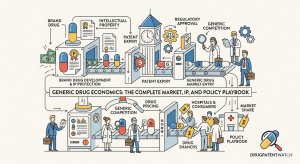
Generic drugs account for approximately 90% of all prescriptions dispensed in the United States, yet they represent only about 18% of total drug spending. That ratio is the single most important number in pharmaceutical health economics. It captures, in one statistic, the mechanism by which patent expiry converts monopoly-priced medicine into a commodity and redistributes hundreds of billions in annual revenue from originator manufacturers to payers, pharmacy benefit managers, and patients.
This guide is written for pharmaceutical portfolio managers, generic drug development teams, IP strategists, and institutional investors who need a technically precise, commercially grounded account of how health economics shapes every stage of generic drug development — from ANDA filing strategy through launch sequencing, price erosion modeling, bioequivalence controversy, formulary policy, and the biosimilar transition. The source article this expands treated the subject in fewer than 900 words. The actual discipline requires considerably more.
Part I: The Economic Architecture of Generic Drug Markets
How Patent Expiry Creates the Generic Opportunity
A pharmaceutical patent is a 20-year exclusive right measured from the filing date, not the approval date. Because drug development and FDA review consume an average of 10 to 12 years of that term, the effective market exclusivity period for most small molecule drugs sits between 7 and 12 years post-approval, extended in specific cases by a patent term extension (PTE) under 35 U.S.C. § 156 of up to five years, plus a potential 6-month pediatric exclusivity extension under the Best Pharmaceuticals for Children Act. Hatch-Waxman data exclusivity adds 5 years for new chemical entities (NCEs) and 3 years for new clinical investigations of previously approved compounds, running concurrently with or independently of patent protection.
When this exclusivity stack expires, the economic structure of the market changes categorically. Pre-expiry, the originator sets price to maximize return on R&D investment, subject to payer negotiation leverage. Post-expiry, generic entry forces price toward marginal manufacturing cost. The speed and depth of that price collapse depends on the number of generic entrants, the therapeutic substitutability of the generic product, and the formulary and dispensing policies of the dominant payers in the market.
The Congressional Budget Office estimated that generic drugs saved the U.S. healthcare system approximately $253 billion in 2014. That figure, which has grown substantially in the decade since, reflects the cumulative price difference between what the U.S. would have spent had all prescriptions been filled with branded products versus what was actually spent with generic substitution in effect. IQVIA’s 2023 Medicine Spending and Affordability report put the annual U.S. savings from off-patent small molecule generics at over $400 billion, a number that excludes the additional savings beginning to flow from biosimilar competition.
The Price Erosion Curve: What Actually Happens at Patent Expiry
The canonical generic price erosion model is well-documented but frequently misapplied in financial forecasting. The initial generic entrant in a Paragraph IV first-to-file scenario typically prices at 10% to 30% below the branded list price during the 180-day exclusivity period established under 21 U.S.C. § 355(j)(5)(B)(iv). This exclusivity is granted to the first ANDA applicant to file a Paragraph IV certification and survive originator litigation. During this window, the generic manufacturer captures significant volume from price-sensitive payers while maintaining a near-monopoly price relative to what multi-generics competition will eventually produce.
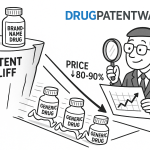
At the end of the 180-day exclusivity window, when multiple generic entrants receive FDA approval and enter the market simultaneously, price erosion accelerates sharply. Research from the FDA’s Office of Generic Drugs and from academic health economists converges on a consistent empirical pattern: with two generic entrants, average generic pricing falls to roughly 55% of the pre-expiry branded price. With five entrants, the average drops to approximately 33%. With ten or more competitors, pricing converges toward 20% or below. For commoditized oral solid dosage molecules — generic atorvastatin, metformin, lisinopril — pricing can reach single-digit percentages of the original branded price within two to three years of multi-generics entry.
This erosion curve has direct implications for ANDA filing strategy. A company entering as the 12th generic filer in a high-volume, low-complexity market faces radically different economics than the first filer targeting Paragraph IV exclusivity on a still-patented molecule. The decision to file an ANDA must incorporate a probabilistic model of how many competitors will reach the market within 12 to 24 months of launch, and what the resulting price floor implies for volume-weighted average selling price across the product’s commercial lifetime.
ANDA Economics: Development Cost, Regulatory Risk, and Return Modeling
The cost structure of ANDA development differs materially from NCE development. An ANDA for a standard oral solid dosage generic drug — think a tablet or capsule with a well-characterized API — costs between $1 million and $5 million to develop and file, spanning formulation development, raw material sourcing, analytical method validation, stability studies, and bioequivalence studies. Complex generics, including inhalation products, transdermal systems, ophthalmic preparations, and parenteral formulations, cost substantially more — routinely $10 million to $50 million and in some cases exceeding $100 million for complex drug-device combinations.
FDA Complete Response Letters (CRLs) and inspection-related holds add time and cost risk. The average ANDA approval time from submission to first action has fluctuated significantly over the past decade, ranging from 36 to 48 months during the backlog peak in 2013-2017 to a current median closer to 10 to 12 months following the Generic Drug User Fee Amendments (GDUFA I and II) reforms. GDUFA II, which took effect with FY2018 submissions, established specific performance goals tied to user fee revenue and restructured the FDA’s goal metrics around 90% of original ANDAs receiving action within 10 months.
Return modeling for a generic ANDA requires estimating the net present value of the revenue stream net of development cost, manufacturing cost, and allocated regulatory overhead, discounted at a rate that reflects the litigation risk where Paragraph IV is involved. For a first-to-file Paragraph IV applicant on a branded product generating $1 billion or more in annual revenue, the expected value of the 180-day exclusivity period can reach hundreds of millions of dollars — a return profile that has historically justified ANDA development costs and several years of Hatch-Waxman litigation simultaneously.
Key Takeaways: Generic Market Economics
The 90/18 disproportion — 90% of prescriptions, 18% of spending — defines the structural economic role of generics. Patent expiry triggers a price erosion curve that produces near-commodity pricing within 2-3 years when ten or more competitors enter. ANDA development economics range from $1-5 million for standard oral solids to $50 million-plus for complex generics. First-to-file Paragraph IV exclusivity is the most commercially significant regulatory mechanism in generic drug economics, capable of generating hundreds of millions in profit during the 180-day window alone.
Part II: The Hatch-Waxman Framework and Its Economic Consequences
The Legislative Structure and Its Intended Incentive Design
The Drug Price Competition and Patent Term Restoration Act of 1984, universally referenced as Hatch-Waxman, created the modern U.S. generic drug market by establishing the ANDA pathway and the legal framework that governs the interplay between originator patents and generic entry. The Act’s core bargain was explicit: generic manufacturers received a streamlined approval pathway requiring only bioequivalence data (not full clinical safety and efficacy trials), while originators received patent term restoration for regulatory review time and a 30-month stay of generic approval triggered by filing a patent infringement suit within 45 days of receiving Paragraph IV notice.
The economic incentive embedded in Paragraph IV is straightforward. The statute grants 180-day market exclusivity to the first ANDA applicant to file a certification that a listed Orange Book patent is invalid, unenforceable, or not infringed by the generic product. This exclusivity is worth a substantial amount when the reference listed drug has significant revenue, because the first-to-file generic faces no competition from other generics during the exclusivity window, allowing pricing at a meaningful premium relative to subsequent multi-generics competition.
The 2003 Medicare Modernization Act (MMA) significantly refined the Paragraph IV framework, addressing the problem of ‘parking’ — situations where a first-filer holding exclusivity refused to launch (often pursuant to a settlement with the originator) while blocking other generics from entering the market. The MMA introduced forfeiture provisions under which the 180-day exclusivity lapses if the first applicant fails to market the drug within specific time windows, or if a court decision of invalidity or non-infringement has gone unreversed and the applicant fails to launch within 75 days.
Pay-for-Delay Settlements: The Economics of Reverse Payment
The pay-for-delay settlement, formally a reverse payment agreement, is the mechanism by which an originator pharmaceutical company pays a generic filer to delay market entry and withdraw its Paragraph IV invalidity challenge. The economic logic from the originator’s perspective is straightforward: the expected cost of paying the generic challenger to stay out of the market is less than the expected revenue loss from early generic entry if the patent challenge succeeds.
The Supreme Court’s 2013 decision in FTC v. Actavis, Inc. established that reverse payment settlements are subject to antitrust scrutiny under the rule of reason standard, rejecting the ‘scope of the patent’ test that had previously been applied in some circuits. Actavis held that a large, unexplained reverse payment to a generic challenger to settle patent litigation is a potential indicator of anticompetitive harm because it signals that the originator’s patent may not be strong enough to withstand a full validity challenge.
Post-Actavis, the pay-for-delay landscape has evolved rather than disappeared. Settlements have shifted from explicit cash payments to ‘non-cash value’ transfers — authorized generic agreements, exclusive distribution arrangements, favorable manufacturing supply terms, and co-promotion rights. The FTC’s annual monitoring of pharmaceutical settlements continues to document these structures. Economically, these settlements represent a transfer of value from payers and patients (who would benefit from earlier generic competition) to the originator and generic challenger who split the monopoly profit during the extended exclusivity period.
For portfolio managers and antitrust economists, the economic harm from a single successful pay-for-delay settlement on a large branded product can be quantified: the price differential between the generic-competitive price and the maintained near-monopoly price, multiplied by the volume sold during the delayed entry period. On blockbuster products, this figure can exceed $1 billion per year.
Orange Book Patent Listings and Strategic IP Valuation
The Orange Book (formally, ‘Approved Drug Products with Therapeutic Equivalence Evaluations’) contains FDA-approved drug products and their associated patents. Listing a patent in the Orange Book triggers the Hatch-Waxman 30-month stay mechanism and forces generic filers to certify their position against each listed patent. Strategic listing decisions — which patents to list, whether to list late-filed continuation patents, and how to sequence listings as new patents issue — are core IP management decisions with direct commercial consequences.
Courts have addressed improper Orange Book listings, with generic manufacturers increasingly challenging listings of patents that do not meet the statutory criteria under 21 U.S.C. § 355(b)(1). The FDA Modernization Act 2.0 and subsequent regulatory guidance have tightened the statutory definitions of listable patents to require that they ‘claim the drug or a method of using the drug for which approval was granted,’ excluding patents that cover manufacturing processes, packaging, or uses not covered by the NDA.
For IP valuation purposes, each Orange Book-listed patent associated with a major branded product carries quantifiable value tied to the additional exclusivity it provides. A method-of-use patent listed in the Orange Book for a $2 billion revenue product, with a remaining term of 3 years, adds roughly $6 billion in protected revenue to the originator’s cash flow projection before generic erosion begins — net present value approximating $3-4 billion at a standard pharma discount rate. This valuation mechanics is precisely why originator IP teams invest heavily in continuation application prosecution designed to produce listable patents with later expiry dates.
Key Takeaways: Hatch-Waxman Economics
The Paragraph IV first-to-file exclusivity is worth hundreds of millions on blockbuster products, which drives high ANDA filing volumes against major branded drugs. Pay-for-delay settlements shifted post-Actavis from explicit cash to non-cash value transfers but continue to delay competitive entry. Each Orange Book-listed patent extends monopoly pricing into the future and carries NPV measurable in billions for major products. Generic manufacturers and originators are both optimizing their behavior within Hatch-Waxman’s incentive structure simultaneously, and the equilibrium outcome determines patient access and payer cost across enormous revenue pools.
Part III: Bioequivalence — The Science, the Controversies, and the Market Access Consequences
The Regulatory Framework for Bioequivalence Demonstration
Bioequivalence (BE) is the scientific and regulatory standard that allows a generic drug to be approved without full clinical efficacy and safety trials. A generic drug product is bioequivalent to its reference listed drug (RLD) if the rate and extent of absorption of the active pharmaceutical ingredient (API) do not differ significantly from the RLD under similar experimental conditions. The FDA accepts a 90% confidence interval of the ratio of pharmacokinetic parameters (typically AUC and Cmax) within the bounds of 80% to 125% as evidence of bioequivalence.
The 80-125% rule reflects the inherent variability in pharmacokinetic measurements, not a 20% tolerance for inferior drug performance. The statistical framework requires that the 90% CI of the geometric mean ratio fall within 80-125%, meaning that the true population difference between the generic and RLD is unlikely to be clinically significant. For drugs with narrow therapeutic indexes (NTIs) — anticoagulants like warfarin, immunosuppressants like cyclosporine and tacrolimus, and anticonvulsants like carbamazepine — the FDA applies tighter bioequivalence standards, typically requiring the 90% CI to fall within 90-111.11% of the RLD, with additional reference-scaled average bioequivalence (RSABE) requirements.
Complex generics — inhaled corticosteroids, parenteral emulsions, topical products, transdermal patches, and drug-device combination products — face a significantly more demanding BE pathway. For locally acting drugs like inhaled products, systemic pharmacokinetic equivalence alone does not establish therapeutic equivalence; the FDA requires evidence of equivalence at the site of drug action. For Advair Diskus (fluticasone propionate/salmeterol inhalation powder), FDA bioequivalence guidance issued and revised over more than a decade reflects the difficulty of establishing BE for a complex combination inhaler through combined in vitro testing, pharmacokinetic studies, and pharmacodynamic/clinical endpoint studies. The resulting barrier to generic entry is economically significant — Advair generated over $3 billion in annual U.S. sales for years beyond its compound patent expiry because no generic could meet the full BE requirement package.
Therapeutic Equivalence Ratings and Formulary Substitution
The FDA’s therapeutic equivalence (TE) ratings, published in the Orange Book, determine which generic products are substitutable for branded drugs at the pharmacy level. A TE rating of ‘A’ — specifically AB, AT, or other coded subcategories — indicates that the generic is therapeutically equivalent to the RLD and may be substituted without prescriber authorization in states whose pharmacy practice laws permit automatic substitution. A ‘B’ rating indicates therapeutic equivalence has not been established and the product may not be automatically substituted.
The economic consequence of an AB-rated therapeutic equivalence designation is immediate: pharmacy benefit managers (PBMs) and state Medicaid programs shift utilization to the lowest-cost AB-rated generic through formulary placement, step therapy requirements, and quantity limit policies. A generic that fails to receive an AB rating, or receives only a BX rating pending further information, cannot access automatic substitution pathways and is effectively excluded from most of the formulary-driven volume that determines generic market share.
For formulary managers and health plan administrators, TE ratings are the primary decision input for generic substitution policy. The practical implication is that a generic manufacturer investing in ANDA development must achieve an AB rating to access the formulary volume that makes the investment economics viable. AB rating failures — which have occurred for complex generics across multiple product categories — can strand the entire ANDA investment.
The Generic Substitution Controversy: Clinical Evidence and Specific Drug Classes
Controversy over generic substitution has concentrated in several therapeutic categories where the clinical argument against substitution is strongest, irrespective of formal bioequivalence. The NTI drug class is the most extensively studied and debated. For tacrolimus (brand: Prograf, manufactured by Astellas Pharma), immunosuppression post-organ transplant requires maintaining blood trough concentrations within narrow ranges; deviation outside those ranges risks acute rejection or toxicity. Published literature includes both prospective pharmacokinetic studies demonstrating BE between generic tacrolimus products and the RLD, and clinical case reports associating involuntary formulation switches (as in generic substitution without prescriber notification) with acute rejection episodes.
The regulatory and clinical literature distinguishes between concerns about the bioequivalence science itself (largely resolved by FDA’s NTI guidance tightening the BE acceptance criteria) and concerns about practice-level substitution management (where the real issue is whether prescribers and pharmacists communicate with patients and each other during transitions). The economic argument for generic tacrolimus is significant: tacrolimus has an annual per-patient drug cost of $10,000 to $25,000 depending on dose and patient population; generic substitution reduces that by 60-80%, generating material savings per transplant patient per year across a substantial patient population.
For neurological conditions including epilepsy, where serum anticonvulsant concentrations are monitored and therapeutic windows are narrow, the American Academy of Neurology has published guidance cautioning against automatic substitution without physician oversight, while acknowledging that the formal bioequivalence data for most anticonvulsant generics meet FDA standards. The health economics of anticonvulsant generic substitution across the U.S. epilepsy population — estimated at approximately 3.5 million people on chronic antiepileptic therapy — represent significant payer savings that must be balanced against the clinical monitoring cost of managing any transitions.
Key Takeaways: Bioequivalence and Market Access
The 80-125% confidence interval standard is a statistical framework, not a quality tolerance. NTI drugs face tighter BE standards (90-111.11%) reflecting their pharmacological sensitivity. Complex generics for locally acting drugs — particularly inhaled products — require site-of-action equivalence evidence beyond systemic pharmacokinetics, creating the most durable generic entry barriers. AB-rated therapeutic equivalence is the commercial prerequisite for formulary-driven substitution volume. Controversy over substitution in NTI drug classes (tacrolimus, anticonvulsants) is largely a clinical management issue rather than a deficiency in FDA bioequivalence standards.
Part IV: Evergreening, Patent Thickets, and the Originator Response to Generic Entry
The Evergreening Taxonomy
Evergreening is the collective term for patent prosecution and regulatory strategies that originators deploy to extend effective market exclusivity beyond the primary compound patent’s expiry date. The strategies range from routine pharmaceutical innovation (genuinely improved formulations or delivery systems) to IP accumulation with limited clinical benefit whose primary purpose is to delay generic competition. Health economists and antitrust regulators distinguish between the two based on the incremental therapeutic value of the patented improvement, though the line in practice is frequently contested.
The primary evergreening mechanisms, taken in sequence of typical deployment across a product’s lifecycle, operate as follows. Formulation patents covering new salt forms, co-crystals, polymorphic forms, and controlled-release systems represent the first line of lifecycle extension beyond the compound patent. A drug company reformulating an immediate-release compound into an extended-release product — esomeprazole (AstraZeneca’s Nexium from omeprazole/Prilosec), or amphetamine salts (Shire’s Adderall XR from immediate-release Adderall) — generates a new patent estate with a 20-year term from the formulation patent filing date. If the new formulation delivers a genuine clinical advantage (once-daily dosing compliance, reduced peak-trough fluctuation, improved tolerability), payers and prescribers are motivated to adopt it. If the advantage is marginal, the reformulation functions primarily as an IP lifecycle strategy.
Indication expansion patents — method-of-use patents covering new therapeutic applications discovered for an existing molecule — create additional Orange Book listable IP with independent expiry dates. Duloxetine (Eli Lilly’s Cymbalta) is illustrative: the compound patent expired in 2013, but indication-specific method-of-use patents covering different therapeutic applications created a staggered exclusivity timeline that shaped generic entry sequencing.
Dosing regimen patents covering specific dose ranges, patient stratification criteria, and titration schedules represent a third tier. These patents are frequently challenged in Paragraph IV proceedings and have a mixed validity track record, but they add to the patent thicket that a generic challenger must navigate, increasing litigation cost and delay even when the patents ultimately fall in post-grant proceedings.
Pediatric exclusivity, earned by completing FDA-requested pediatric studies under the Best Pharmaceuticals for Children Act (BPCA), adds 6 months to the term of all existing patents and exclusivities covering the product, regardless of whether the pediatric indication has commercial significance. For a blockbuster drug with $3 billion in annual revenue, 6 months of pediatric exclusivity is worth approximately $1.5 billion in protected revenue.
AstraZeneca and Esomeprazole: A Case Study in Pharmaceutical Lifecycle Strategy and IP Valuation
AstraZeneca’s transition from omeprazole (Prilosec) to esomeprazole (Nexium) is the canonical case study in pharmaceutical lifecycle management and the economics of evergreening. The strategic and economic logic is precise.
Omeprazole was a racemic mixture of the S- and R-enantiomers of the proton pump inhibitor compound. AstraZeneca’s compound patent on the racemate was expiring, exposing a product generating approximately $6 billion in annual global sales to imminent generic competition. AstraZeneca filed for approval of the isolated S-enantiomer — esomeprazole — with claims of superior pharmacokinetic properties, specifically slower first-pass metabolism producing higher plasma concentrations at equivalent doses. The clinical trial package supporting Nexium demonstrated non-inferiority to omeprazole and superiority versus lower-dose omeprazole comparators in healing rates for erosive esophagitis.
The IP estate built around esomeprazole included compound patents on the isolated S-enantiomer, formulation patents on the magnesium salt form and its controlled-release beads technology, method-of-use patents covering Nexium’s specific indications, and the pediatric exclusivity extension earned through pediatric studies. This IP stack extended effective exclusivity into the 2014-2015 timeframe for U.S. market protection, generating cumulative U.S. revenue for Nexium that exceeded $20 billion before generic entry.
The antitrust critique of this strategy — pursued in class action litigation and FTC investigations — argued that Nexium provided no meaningful clinical advantage over generic omeprazole for the vast majority of patients, and that AstraZeneca’s marketing investment in switching prescribers from omeprazole to Nexium before generic omeprazole launched was designed to insulate the market from price competition. The economic harm to payers was quantified in litigation as the difference between Nexium prices and generic omeprazole prices paid by patients and payers who could have used the cheaper product with equivalent clinical outcomes.
For IP valuation analysts, the Nexium case illustrates how a secondary patent estate built around a formulation innovation can generate enterprise value measurable in billions when it successfully redirects prescribing volume away from an impending LOE product. The valuation of AstraZeneca’s Nexium IP at its peak included not only the NPV of Nexium’s own revenues but also the implicit value of forestalling the branded Prilosec revenue collapse by replacing that product in the prescribing base before its LOE.
The Pay-for-Delay Economics Revisited: Shire and Adderall XR
Shire Pharmaceuticals’ lifecycle management of amphetamine salts extended-release (Adderall XR) provides a parallel case with distinct IP and commercial mechanics. The core Adderall XR active ingredients — mixed amphetamine salts — were off-patent, but Shire’s proprietary MICROTROL delivery technology, producing a bead-based extended-release capsule formulation, was patent-protected. The extended-release formulation patent was the primary market exclusivity driver after the immediate-release Adderall compound exclusivity expired.
Shire’s Orange Book filings for Adderall XR listed multiple patents covering the extended-release formulation, delivery technology, and method of use. Generic challengers including Barr Pharmaceuticals (later acquired by Teva) and Impax Laboratories filed Paragraph IV ANDAs challenging the listed patents. The resulting settlements — some of which included authorized generic licensing arrangements whereby Shire permitted specific generic entrants to market authorized generics under controlled terms — structured the competitive entry in ways that maintained Shire’s revenue longer than unconstrained generic competition would have produced.
From an IP valuation perspective, Shire’s Adderall XR IP estate was a core asset in its portfolio valuation when AbbVie acquired Shire in 2019 for approximately $63 billion. The Adderall XR franchise, despite significant generic competition by 2019, contributed to the specialty CNS portfolio that supported the acquisition economics alongside Shire’s rare disease assets.
Key Takeaways: Evergreening and Originator IP Strategy
Evergreening encompasses formulation patents, indication expansion patents, dosing regimen patents, and pediatric exclusivity, deployed sequentially to extend effective market exclusivity beyond the primary compound patent. The Nexium case quantifies the commercial value of enantiomer-based lifecycle management at over $20 billion in U.S. revenue; the IP estate that protected it was a core component of AstraZeneca’s enterprise value. Pay-for-delay settlements and authorized generic arrangements represent negotiated outcomes that split monopoly profits between challengers and originators, uniformly at the expense of payers and patients. IP valuation of originator pharmaceutical assets cannot be separated from analysis of the evergreening strategy those assets support.
Part V: Payer Economics and the Formulary Architecture of Generic Drug Markets
PBM Mechanics and Generic Preferred Formulary Placement
Pharmacy benefit managers — the three largest being Express Scripts (now part of Evernorth/Cigna), CVS Caremark, and OptumRx — process the majority of U.S. outpatient prescription claims and exercise formulary control over the vast majority of commercially insured lives. Their economic model in the generic space is distinct from their branded drug management approach. For branded drugs, PBMs extract rebates from manufacturers in exchange for preferred formulary placement. For generics, rebate economics are minimal because generic prices are already near commodity levels; instead, PBMs focus on generic dispensing rate (GDR) as the primary cost management metric.
GDR — the percentage of dispensed prescriptions that are generic rather than branded — is the single most important operational metric in PBM generic economics. A 1-percentage-point increase in GDR across a large PBM’s book of business translates to hundreds of millions in annual drug cost savings for plan sponsors. PBM contracts with plan sponsors frequently include GDR guarantees, incentivizing PBMs to aggressively implement generic step therapy, prior authorization requirements for branded products with bioequivalent generics available, and generic-only formulary tiers.
Formulary tiering — placing generics on Tier 1 (lowest cost-sharing), brand-preferred drugs on Tier 2, and non-preferred brands on Tier 3 or higher — creates patient-level economic incentives to accept generic substitution. For drugs where the patient’s out-of-pocket cost difference between Tier 1 generic and Tier 3 branded can reach hundreds of dollars per month, formulary tiering is among the most effective generic utilization drivers. Research consistently shows that adherence to cost-effective generics is comparable to branded equivalents when patient cost-sharing is minimized, while adherence deteriorates when cost-sharing is high regardless of whether the product is generic or branded.
Medicaid Economics: Best Price, FAMP, and the Generic Incentive Structure
Medicaid’s drug reimbursement structure differs fundamentally from commercial PBM economics and has its own specific generic drug incentive architecture. The Medicaid rebate program, established by the Omnibus Budget Reconciliation Act of 1990 (OBRA 90) and administered through CMS, requires manufacturers to pay rebates to state Medicaid programs. For branded drugs, the mandatory rebate is the greater of 23.1% of Average Manufacturer Price (AMP) or the difference between AMP and the best price charged to any customer. For generic drugs, the mandatory rebate is 13% of AMP, reflecting the already-reduced pricing.
States supplement the federal rebate with supplemental rebate agreements negotiated directly with manufacturers, which can significantly increase effective rebate levels for specific drug classes. The practical economic consequence is that Medicaid’s net cost for branded drugs is frequently comparable to or below the net cost for high-priced generics with no rebate obligation — a dynamic that complicates straightforward cost-containment through generic substitution.
Federal Upper Limit (FUL) pricing for generic drugs in Medicaid, calculated as 175% of the weighted average of AMP for all covered generic forms of the drug, sets the maximum reimbursement Medicaid pays for most generic products. State Maximum Allowable Cost (MAC) lists — maintained independently by state Medicaid programs and PBMs for commercial plans — similarly cap reimbursement at calculated multiples of AMP or other benchmark prices. Generic manufacturers whose actual transaction prices exceed MAC list prices face reimbursement claw-backs, creating margin pressure particularly in competitive multi-generics markets where prices evolve faster than MAC lists are updated.
Hospital and Institutional Generic Drug Economics: GPO Contracting and the Shortage Problem
Hospital pharmaceutical spending runs through group purchasing organization (GPO) contracts that aggregate buying power across hundreds or thousands of hospital members. The major healthcare GPOs — Premier, Vizient, and HealthTrust — negotiate generic drug contracts with manufacturers based on committed volume, sole-source or multi-source arrangements, and price stability provisions. The economic model creates strong incentives for manufacturers to compete for GPO contract awards because contract positioning drives access to the committed institutional volume that stabilizes revenues.
The same economic dynamics that drive generic pricing to near-commodity levels in retail pharmacy markets create a structural problem in institutional markets: when margins on generic drugs become too thin to sustain reliable manufacturing investment, manufacturers exit the market. The result is the chronic generic drug shortage problem that has affected U.S. hospitals for over 15 years. ASHP’s annual drug shortage reports consistently identify 100-plus active drug shortages in any given year, predominantly affecting sterile injectable generics — oncology drugs, antibiotics, anesthetic agents, and cardiovascular medications — where manufacturing complexity and thin margins combine to produce fragile supply chains.
The economic root cause of generic drug shortages is a market failure in commodity manufacturing: price competition drives margins too low to fund the quality systems investment, manufacturing redundancy, and inventory buffers that would make supply chains resilient. Policy responses have included the FDA’s Drug Shortages Staff monitoring and intervention functions, the CARES Act provisions authorizing FDA to require manufacturers to develop supply chain risk management plans, and the bipartisan push for domestic pharmaceutical manufacturing incentives to reduce dependence on foreign API supply concentrated in India and China.
Key Takeaways: Payer and Formulary Economics
Generic dispensing rate (GDR) is the primary PBM cost management metric, and formulary tiering is the most effective behavioral mechanism driving generic substitution. Medicaid’s rebate structure means branded net cost can approach generic net cost for highly rebated drugs, complicating generic substitution economics. GPO contract economics in institutional markets have pushed generic sterile injectable pricing to levels that cannot sustain adequate manufacturing investment, producing structural drug shortages. The shortage problem is a market failure with economic roots, and its resolution requires policy intervention beyond standard generic market mechanisms.
Part VI: Biosimilars — The Next Wave of Generic Economics
The BPCIA Framework and Its Distinctions from Hatch-Waxman
The Biologics Price Competition and Innovation Act of 2009 (BPCIA), enacted as part of the Affordable Care Act, created the 351(k) abbreviated approval pathway for biosimilars — biological products that are highly similar to an FDA-licensed reference biological product, with no clinically meaningful differences in safety, purity, and potency. BPCIA’s structure mirrors Hatch-Waxman in broad concept but differs in crucial technical details that materially affect the economics of biosimilar development and competition.
Biologics are manufactured in living cells rather than through chemical synthesis, producing complex macromolecular structures — monoclonal antibodies, fusion proteins, erythropoietins, growth hormones — that cannot be replicated with the molecular precision of small molecule generic manufacturing. This complexity means that ‘generic biologic’ is scientifically imprecise; ‘biosimilar’ acknowledges that the product is highly similar, not identical, to the reference product. The clinical consequence of this distinction — whether any differences between the biosimilar and reference product could affect patient outcomes — is the central scientific question that biosimilar development programs must address.
The BPCIA data exclusivity provisions protect reference biologics for 12 years from the date of first licensure. This 12-year exclusivity, which has no Hatch-Waxman equivalent for small molecules (which receive only 5 years NCE exclusivity), reflects the policy judgment that the longer development and regulatory investment required for biologics warrants extended protection. The practical effect is that biosimilars for major biological drugs approved in the 2000-2010 period — including adalimumab (AbbVie’s Humira), bevacizumab (Roche/Genentech’s Avastin), and trastuzumab (Roche/Genentech’s Herceptin) — began reaching the market only after both the 12-year BPCIA exclusivity and the relevant patent estates expired or were resolved.
Biosimilar Interchangeability: The Regulatory and Commercial Stakes
The BPCIA creates two tiers of biosimilar designation: biosimilar (demonstrating no clinically meaningful differences from the reference) and interchangeable (demonstrating that the product can be expected to produce the same clinical result as the reference in any given patient, and that switching between the reference and the biosimilar does not produce greater risk than remaining on either product alone). Interchangeability designation is the functional equivalent of the AB therapeutic equivalence rating in the small molecule world — it enables automatic substitution at the pharmacy without prescriber authorization in states permitting such substitution.
The commercial significance of biosimilar interchangeability designation is substantial. A biosimilar without interchangeability designation cannot be automatically substituted for the reference biologic at the pharmacy; it can only be used when specifically prescribed or when a prescriber actively switches a patient to the biosimilar. A biosimilar with interchangeability designation can be substituted automatically in dispensing, enabling the same formulary-driven volume shift that biosimilar AB-equivalent TE ratings enable for small molecule generics. For biologics that are dispensed through specialty pharmacy channels with high prescriber engagement, the practical impact of interchangeability designation on market penetration is debated, but its importance in institutional and PBM formulary contexts is clear.
Adalimumab (Humira) and the Commercial Reality of Biosimilar Competition
AbbVie’s adalimumab franchise provides the most commercially significant case study in how originator IP strategy shapes biosimilar market entry and the resulting economics for the healthcare system. Humira generated approximately $21 billion in global net revenues in 2022, making it the world’s highest-revenue pharmaceutical product. The compound patent on adalimumab expired in 2016 in the United States. Despite this, biosimilar market entry in the U.S. was delayed until January 2023, and the path to meaningful market penetration has been slow relative to European biosimilar markets.
AbbVie constructed a patent thicket around adalimumab that, at its peak, included over 250 patents covering the antibody’s manufacturing process, formulation, concentration, dosing regimen, administration device, and secondary patents on therapeutic uses. This estate — which AbbVie aggressively listed and asserted against biosimilar applicants — required each biosimilar developer to negotiate licenses individually. AbbVie executed patent settlement agreements with biosimilar manufacturers Amgen, Sandoz, Mylan, Samsung Bioepis, Pfizer, and others, granting U.S. market access beginning January 2023 in exchange for royalties on biosimilar revenues and covenant not to sue agreements.
The economic consequence of AbbVie’s strategy was a 6-year delay in U.S. biosimilar competition relative to European markets, where biosimilars launched in 2018 and achieved significant market penetration. European adalimumab biosimilar adoption drove price reductions of 60-80% from reference product levels. Extrapolating from European price erosion patterns, the 6-year U.S. delay represents tens of billions of dollars in foregone savings to U.S. payers and patients. The IP valuation of AbbVie’s adalimumab patent estate during this period was essentially the NPV of the premium pricing maintained by delaying competition — a figure that analysts have estimated in excess of $50 billion in cumulative revenue protection.
As of 2024, multiple biosimilar adalimumab products with interchangeability designation are approved and marketed in the U.S., including Hadlima (Samsung Bioepis), Hyrimoz (Sandoz), Cyltezo (Boehringer Ingelheim), and others. Market penetration has accelerated through PBM formulary management — CVS Caremark and OptumRx have implemented exclusive biosimilar adalimumab formulary positions that exclude the Humira reference product for many commercial plan members, a formulary architecture that has rapidly shifted volume to biosimilar products and driven price negotiations down significantly.
For institutional investors evaluating biosimilar development-stage companies, the economic model differs materially from both small molecule generic economics and branded biopharmaceutical economics. Biosimilar development programs for complex monoclonal antibodies cost $100 million to $300 million from concept through regulatory approval, reflecting the analytical characterization burden, the clinical immunogenicity and PK/PD studies required to establish biosimilarity, and the manufacturing process development necessary to achieve comparability. This cost structure requires a large market and a credible commercial strategy to produce viable returns.
The price erosion curve for biosimilars has been slower and shallower than for small molecule generics, for several reasons. Physician switching friction — the preference for the known reference product in stable patients — is more significant for biologics than for simple oral dosage forms. Specialty pharmacy distribution channels allow reference product manufacturers to maintain closer prescriber relationships than mass-market oral solid generics. And the smaller number of biosimilar competitors (typically 5-10 in a mature market rather than 20-30 for small molecule commodities) produces less severe price erosion than the small molecule multi-generics model.
European biosimilar markets, where price competition has proceeded further, show average biosimilar pricing at 40-60% of reference product list price in mature competitive markets, with some markets (notably rituximab in Norway and the Netherlands, where centralized procurement produced aggressive tendering outcomes) at 80-90% below reference price. U.S. biosimilar pricing is trending toward the European pattern as PBM formulary pressure intensifies, but the pace of adoption and price erosion will continue to be shaped by how aggressively health plans and PBMs implement biosimilar-exclusive formulary strategies.
Key Takeaways: Biosimilar Economics
BPCIA’s 12-year reference product exclusivity and the patent thicket strategy deployed by major biologic originators have delayed U.S. biosimilar competition by years relative to European markets. Adalimumab’s case quantifies this delay at tens of billions in foregone payer savings. Biosimilar interchangeability designation enables pharmacy-level substitution and is the commercial threshold required for formulary-driven volume capture. Development economics ($100-300 million per program) require large markets and robust market access strategies. Price erosion in mature biosimilar markets reaches 40-80% below reference list price, but U.S. penetration depends heavily on PBM formulary architecture and health plan benefit design.
Part VII: Global Generics Economics — Policy Frameworks and Market Differentiation
European Generics Markets: Reference Pricing, INN Prescribing, and Tendering
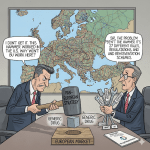
European generic drug markets operate under regulatory and reimbursement frameworks that differ materially from the U.S. Hatch-Waxman model. Reference pricing systems — in use across Germany, the Netherlands, Spain, and other EU member states — set a maximum reimbursement level for therapeutically equivalent products within a reference cluster. Manufacturers pricing above the reference price cover the difference out of pocket for patients (or accept the reference price as full reimbursement). This mechanism creates strong downward price pressure in therapeutic categories with multiple generic entrants, since the lowest-priced generic effectively sets the market reimbursement floor.
Germany’s AMNOG (Arzneimittelmarktordnungsgesetz) framework, enacted in 2011, changed early benefit assessment for new drugs requiring demonstrated added benefit over existing standard of care, with price negotiations with the GKV-Spitzenverband (statutory health insurance federation) reflecting the magnitude of added benefit. For generics, Germany’s Aut-idem substitution rule — requiring pharmacists to substitute generics unless the prescriber ticks the ‘aut-idem’ exclusion box on the prescription — produces high generic dispensing rates in substitutable categories. Germany also uses mandatory manufacturer rebate contracts through which health insurers select generics via competitive tendering, concentrating volume with a limited number of manufacturers and driving prices down further.
Nordic countries, particularly Norway and Sweden, have achieved the highest generic penetration rates in Europe through a combination of INN (International Non-proprietary Name) prescribing requirements, pharmacy substitution mandates, and step-down pricing regulations that automatically reduce the reimbursed price for a product as additional generics enter the market. The step-down model creates predictable price trajectories that manufacturers can model prospectively in market entry decisions.
India’s Pharmaceutical Industry: Section 3(d), Compulsory Licensing, and the Global Generics Supply Chain
India’s generic pharmaceutical industry, centered in Hyderabad, Ahmedabad, and Mumbai, manufactures the API and finished dosage forms for a substantial portion of the world’s generic drug supply. Companies including Sun Pharmaceutical Industries, Dr. Reddy’s Laboratories, Cipla, Lupin, and Aurobindo Pharma are among the largest generic drug manufacturers in the world by volume, and their ANDA filings with the FDA represent the primary source of new generic competition for U.S. branded products across multiple therapeutic categories.
India’s Patents Act 1970, specifically Section 3(d), bars patent protection for new forms of known substances unless the applicant demonstrates significantly enhanced efficacy. This provision has invalidated or prevented the grant of numerous secondary patents that would otherwise extend exclusivity for molecules whose base compound patents have expired. The Novartis AG v. Union of India Supreme Court decision in 2013 — rejecting Novartis’s patent application for the beta-crystalline form of imatinib (Gleevec) under Section 3(d) — confirmed that formulation and polymorph patents that do not deliver enhanced therapeutic efficacy are not patentable in India.
The practical consequence for global generic drug economics is a bifurcated IP landscape: many secondary patents that create FTO obstacles and extend exclusivity in the U.S. and Europe are simply not granted in India, enabling Indian manufacturers to produce and export those products without IP barriers. This bifurcation makes India both the primary global source of commodity generic API and finished dosage forms and a policy model for countries seeking to resist originator evergreening strategies.
Compulsory licensing under the TRIPS Agreement’s Article 31 and India’s Patents Act Sections 84-92 provides an additional mechanism for overriding valid patents in the public interest — used in India in the 2012 Natco Pharma v. Bayer Corporation case granting a compulsory license for generic sorafenib (Bayer’s Nexavar) at a price approximately 97% below the branded product’s Indian price. The economic and policy debate over compulsory licensing continues to shape pharmaceutical IP negotiations in multilateral trade agreements, with originators arguing that licensing undermines R&D incentives and health advocates arguing that access to affordable medicines is a public health necessity that patent rights cannot trump.
Key Takeaways: Global Generic Policy Frameworks
European reference pricing and tendering create predictable generic price floors and concentrate volume with fewer manufacturers. German Aut-idem and Nordic INN prescribing mandates produce high generic dispensing rates without depending on prescriber-level behavior change. India’s Section 3(d) bars secondary and formulation patents not delivering enhanced efficacy, enabling Indian manufacturers to produce generics for molecules still patent-protected elsewhere. The Indian generics industry is the backbone of global generic drug supply — API concentration risk in India (and China) represents a supply chain vulnerability that regulators and procurement agencies are actively working to address.
Part VIII: Investment Strategy — The Generic Drug Market for Portfolio Managers
Identifying Value in Generic ANDA Portfolios
For institutional investors and portfolio managers, generic drug companies present a distinctive risk-return profile shaped primarily by ANDA portfolio quality, Paragraph IV litigation track record, manufacturing compliance history, and pipeline-to-maturity ratio. Generic drug company equity analysis focuses on the ANDA pipeline as the primary value driver, with approved and marketed products generating the current cash flow and pending ANDAs representing option value on future revenues.
The key metrics in ANDA pipeline analysis are the number of Paragraph IV first-to-file applications (which carry the highest revenue potential through 180-day exclusivity), the number of tentative approvals pending patent clearance (representing value-in-waiting), and the product-level revenue potential adjusted for the number of anticipated generic competitors (the first-to-file advantage being meaningless if ten competitors launch simultaneously at day 181). Companies with strong Paragraph IV track records — Teva, Viatris (formerly Mylan), Aurobindo, Sandoz — have institutional knowledge in ANDA filing strategy, bioequivalence study design, and patent litigation management that is itself a durable competitive asset.
Manufacturing compliance is the most significant latent risk in generic drug company valuation. FDA Warning Letters and consent decrees have resulted in import alerts blocking specific facilities from shipping to the U.S. market, effectively destroying the revenue generating capacity of the affected plant and the approved ANDA products it manufactures. Dr. Reddy’s Laboratories, Ranbaxy (now part of Sun Pharma), Wockhardt, and other Indian generic manufacturers have all experienced material FDA compliance actions that disrupted revenue and required significant remediation investment. Due diligence on generic drug company investments must include a rigorous assessment of manufacturing compliance history and current cGMP status at all production facilities.
The Patent Cliff as an Investment Catalyst
The patent cliff — the period during which a significant cluster of high-revenue branded drugs lose exclusivity within a compressed timeframe — creates investment catalysts on both sides of the originator/generic divide. Originators approaching a patent cliff face revenue pressure that drives M&A activity (acquiring pipeline assets to replace LOE revenues), business development transactions (co-promotion or licensing of late-stage assets), and cost restructuring programs. For equity investors, the patent cliff creates price pressure on originator stocks as revenue risk is priced in, followed by potential re-rating as management demonstrates successful pipeline replacement.
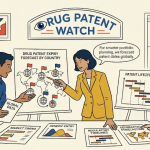
For generic drug companies, a concentrated patent cliff creates investment opportunity in ANDA pipeline companies with specific exposure to the upcoming LOE products. Quantifying the revenue opportunity requires a product-level analysis of the branded drug’s current revenue, the projected generic penetration curve (how quickly and deeply will generics capture market share), the number of anticipated generic entrants, and the likely price erosion trajectory. DrugPatentWatch tracks Orange Book patent expiration dates, Paragraph IV filing history, and anticipated LOE timelines with product-level granularity that directly supports this analysis.
The current and near-term patent cliff is substantial. IQVIA projects that branded drugs with approximately $180-200 billion in global annual revenue will face LOE between 2024 and 2028, including major products across oncology, immunology, and neurology. For investors, the LOE pipeline translates into identifiable revenue opportunities for generic manufacturers and biosimilar developers who hold approved or tentatively approved products against those reference drugs.
Risk Factors Specific to Generic Drug Investments
Several risk categories specific to generic drug investments warrant systematic attention in portfolio management. Price erosion risk — the pace and depth of price decline in competitive generic markets — is directly influenced by new entrant timing that is only partially predictable from ANDA filing data. A product priced at 40% of the reference branded price can become uneconomic within 18 months if five additional entrants launch simultaneously, driving per-unit prices to 15% of reference and compressing margins below the manufacturer’s cost of goods sold.
Channel concentration risk reflects the dominant position of the three major PBMs in U.S. generic drug purchasing. PBM MAC list repricing decisions, which can reduce reimbursement rates for specific generics unilaterally and with limited notice, can destroy margin on individual products. Generic drug companies that lack diversification across multiple products, therapeutic categories, and distribution channels are highly exposed to MAC repricing events in their concentrated products.
API supply chain risk — specifically, sourcing dependence on API manufacturers in India and China — creates regulatory and geopolitical supply chain exposure. FDA inspection actions at key API suppliers can trigger supply disruptions for finished dosage form manufacturers who depend on single-source API suppliers. Recent policy attention to domestic pharmaceutical manufacturing, including IRA provisions and bipartisan legislation targeting essential medicines supply chain resilience, is beginning to shift investment and manufacturing decision-making in this area.
Key Takeaways: Investment Strategy
Generic drug company equity value is driven primarily by ANDA portfolio quality, Paragraph IV first-to-file exposure, and manufacturing compliance history. Patent cliff analysis identifies specific LOE catalysts for both originator stock repricing and generic company revenue opportunity. Price erosion risk, PBM MAC repricing, and API supply chain concentration are the three latent risk categories requiring systematic monitoring in generic drug portfolios. DrugPatentWatch’s Orange Book expiration tracking and Paragraph IV filing data provide the product-level intelligence base that underlies credible generic drug investment analysis.
Conclusion: Health Economics as the Operating System of Generic Drug Strategy
Every decision in generic drug development — which ANDA to file, which Paragraph IV challenge to pursue, which market to enter first, which formulation complexity to invest in — is a health economics decision. The price erosion curve determines whether the investment returns justify the development cost. The bioequivalence standard determines whether the product can access formulary-driven substitution volume. The PBM’s MAC pricing decision determines whether the approved product generates margin or merely revenue. The patent thicket determines whether the 180-day exclusivity window is accessible or blocked.
The $400+ billion in annual generic drug savings to the U.S. healthcare system is not a natural market outcome. It is the product of a specific regulatory architecture, a litigation framework, a formulary management system, and a global manufacturing supply chain, each of which is shaped by economic incentives that generic manufacturers, originators, PBMs, payers, and policymakers are all simultaneously optimizing. Understanding how those incentives interact — and where they are shifting, as biosimilar competition matures and IRA-era drug pricing policy reshapes the reference product landscape — is the analytical prerequisite for making sound decisions anywhere in the generic and biosimilar pharmaceutical value chain.
DrugPatentWatch provides pharmaceutical-grade patent intelligence including Orange Book mapping, Paragraph IV litigation tracking, patent expiration analysis with PTE and SPC calculations, and competitive ANDA pipeline data. Designed for generic drug development teams, IP strategists, portfolio managers, and institutional investors who need current, actionable pharmaceutical market intelligence.