In the competitive arena of the pharmaceutical industry, where innovation fuels progress and market share dictates success, the strategic management of intellectual property rights stands as a cornerstone for sustained growth. For business professionals venturing into or currently operating within the Russian pharmaceutical market, a thorough understanding of patent-term extensions (PTEs) is not merely advantageous—it is an indispensable tool for transforming groundbreaking research into enduring market leadership. As an intellectual property law expert specializing in the nuances of the Russian pharmaceutical patent landscape, I have observed firsthand the pivotal role that PTEs play in enabling companies to maximize the return on their investments and solidify their competitive positioning. This comprehensive guide aims to illuminate the intricacies of the Russian PTE system, offering practical insights and expert perspectives to empower your organization in effectively leveraging this crucial mechanism.
The Strategic Imperative of Patent-Term Extensions (PTEs) in the Pharmaceutical Sector
The journey of a pharmaceutical innovation from its initial conception to its availability to patients is an arduous and resource-intensive undertaking. It demands substantial financial investment, extensive research efforts, and years of navigating complex regulatory pathways.1 The standard patent term of 20 years, while seemingly substantial, can be significantly eroded by the time-consuming processes of clinical trials and securing marketing authorizations.1 This reduction in the effective patent life can severely impact a pharmaceutical company’s ability to recoup its significant investments and fully capitalize on its innovation. Patent-term extensions emerge as a critical instrument in this context, providing a legal avenue to prolong the period of market exclusivity beyond the initial two decades.1 This extended exclusivity allows pharmaceutical companies a more substantial window to generate revenue, reinvest in further research and development, and maintain a strong foothold in the market.6
The availability of PTEs in Russia significantly enhances the attractiveness of the Russian pharmaceutical market for innovators. By offering the prospect of prolonged market exclusivity, the legal framework incentivizes the introduction of novel and improved medicines, ultimately contributing to the advancement of healthcare within the country. This mechanism directly addresses the inherent challenges of the pharmaceutical industry, where lengthy development and approval cycles can diminish the commercial lifespan of a patented product. The potential for extending patent terms provides a greater degree of certainty for investors and encourages continued investment in pharmaceutical research targeting the Russian market.
Understanding the Russian Legal Landscape for PTEs
The legal framework governing patent-term extensions in Russia is primarily rooted in the Civil Code of the Russian Federation, with specific provisions outlined in Article 1362.4 This article serves as the bedrock for the possibility of extending patent protection for pharmaceutical inventions, acknowledging the unique circumstances and regulatory burdens associated with bringing these products to market.
Article 1362 of the Civil Code: The Foundation of PTEs
Article 1362(2) of the Russian Civil Code explicitly establishes the legal basis for extending the term of patents related to medicinal products, pesticides, and agrochemicals in Russia.4 The core objective of this provision is to compensate patent holders for the time lost in securing the necessary marketing authorization required to legally commercialize their products within the Russian Federation.4 It is important to emphasize that the extension of the patent term is not an automatic entitlement but rather requires a formal application to be submitted by the patentee to the Russian Patent and Trademark Office (Rospatent).4 This legal foundation specifically addresses the impact of regulatory delays on the effective period of patent protection for pharmaceutical innovations in Russia. Without this provision, the incentives for investing in pharmaceutical R&D targeting the Russian market would be significantly diminished due to the compressed period of potential market exclusivity.
Rospatent’s Regulatory Framework and Guidelines
While Article 1362 of the Civil Code provides the overarching legal framework, the practical implementation and administration of patent-term extensions in Russia fall under the purview of the Russian Patent and Trademark Office (Rospatent).4 Rospatent is the governmental agency responsible for receiving, examining, and ultimately deciding on applications for PTEs. The specific procedures, documentation requirements, and evaluation criteria are further detailed in administrative regulations issued by the Ministry of Economic Development of the Russian Federation.4 It is crucial for business professionals to recognize that Rospatent’s approach to granting PTEs has undergone significant evolution, particularly since 2015. During this period, Rospatent has adopted a notably more stringent policy regarding PTEs, aiming to narrow the scope of the extended protection.5 This tightening of regulations necessitates a highly strategic and meticulously prepared approach from pharmaceutical companies seeking to maximize their chances of obtaining a PTE in Russia. Understanding Rospatent’s current examination practices and expectations is paramount for navigating the application process successfully.
Similarities and Differences with the European SPC System
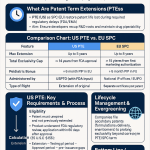
For pharmaceutical companies familiar with the intellectual property landscape in the European Union, the concept of patent-term extensions may resonate with the system of Supplementary Protection Certificates (SPCs). Indeed, the Russian PTE system shares a fundamental objective with the EU SPC system: to compensate for the reduction in the effective patent term caused by the time required to obtain regulatory approval for medicinal products.4 Both systems recognize that the lengthy pre-market approval processes can significantly diminish the commercial value of a patent. However, despite this shared goal, several critical differences exist between the two systems. For example, in Russia, PTEs are generally granted only for patents that protect the medicinal product itself.4 This contrasts with the EU system, where SPCs can be based on patents covering the active ingredient or combinations of active ingredients, even if the patent does not directly claim the final marketed product. Furthermore, unlike the EU, Russian law currently does not offer any specific provisions to incentivize the development and marketing of medicines for pediatric use through additional extensions of the patent term.4 These distinctions underscore the importance for pharmaceutical companies operating in both regions to develop tailored IP strategies that account for the specific nuances of each system.
Feature
Russia (PTE)
European Union (SPC)
Governing Law
Article 1362(2) of the Civil Code of the Russian Federation
Regulation (EC) No 469/2009
Eligible Patents
Primarily patents protecting the medicinal product itself
Patents covering the active ingredient, combinations, or the product itself
Maximum Extension
5 years
5 years (can be extended by 6 months for pediatric use)
Filing Deadline
6 months from first marketing authorization or patent grant (whichever later)
6 months from marketing authorization or patent grant (whichever later)
Type of Extension
Supplementary patent with restricted claims
Supplementary Protection Certificate
Pediatric Extension
Not available
Up to 6 months available
Challenging Extensions
Easier under recent IP Court rulings
Established procedures
This table provides a concise overview of the key differences between the Russian PTE system and the European SPC system, highlighting the need for a nuanced approach when seeking patent-term extensions in Russia.
Decoding PTE Eligibility: Which Pharmaceutical Patents Qualify in Russia?
Not every pharmaceutical patent automatically qualifies for a patent-term extension in Russia. To effectively leverage this mechanism, business professionals must have a clear understanding of the specific criteria that determine eligibility. A fundamental prerequisite is the explicit disclosure of the active agent within the patent documentation.
The Crucial Requiremet of Active Agent Disclosure
A primary condition for obtaining a PTE in Russia is that the patent in question must clearly disclose the active agent of the medicinal product that has received marketing authorization.10 Rospatent will meticulously examine the patent claims and the accompanying specification to ensure that the active ingredient is unambiguously identified.1 The Halaven case, concerning Russian patent No. 2245335 held by Eisai R&D Management Co., serves as a significant illustration of this requirement.1 In this instance, a local pharmaceutical company challenged the patent’s term extension, arguing that it was improperly applied to compounds beyond the specific drug (Eribulin) approved in Russia. While the Russian IP Court ultimately dismissed these claims, the case underscored the critical importance of a direct and evident link between the patented invention and the active ingredient of the marketed product.1 This implies that even if a patent broadly encompasses a class of compounds, for a PTE to be granted successfully, the specific active agent present in the drug being sold in Russia must be distinctly and unequivocally disclosed within the patent document.
Focusing on Product Claims: Compounds, Antibodies, and Pharmaceutical Compositions
In Russia, patent-term extensions are predominantly available for patents featuring “product claims”.8 These typically include claims directed to the chemical compound itself, which can be defined by a specific structure or a general structural formula (Markush structure), as well as claims covering biological entities such as antibodies, and claims pertaining to pharmaceutical compositions or formulations containing the active agent.8 However, it is essential to consider the impact of the regulatory changes implemented in 2015. As Linda Norrgård, a European Patent Attorney at Papula-Nevinpat, emphasizes, Rospatent’s current practice mandates that the claims in the supplementary patent must be narrowly tailored to the precise characteristics of the medicinal product that has received marketing authorization.14 For biological products like antibodies, securing robust protection often involves including claims that specify the antibody’s name, its biological function in the intended use, and its amino-acid sequence.14 This shift necessitates a strategic approach to claim drafting from the initial patent application stage, keeping in mind the potential need for a PTE in the future.
It is important to recognize that certain categories of patent claims are generally not eligible for patent-term extensions in Russia. Claims directed to methods of treatment, processes for preparing a compound or composition, or new uses of a known product typically do not qualify for PTEs.5 The rationale behind this limitation is that the extension is intended to compensate for the time lost in obtaining marketing authorization for the product itself, rather than for the methods used to produce it or the ways in which it might be used.8 While “use” claims were sometimes considered for extension in the past, as evidenced by the extension granted for claims relating to the use of Sugammadex in Russian patent №2260013 17, current practice strongly favors product claims. Therefore, pharmaceutical companies should prioritize securing strong product claims in their initial patent applications if they anticipate seeking a PTE in Russia to protect their market exclusivity for the drug product itself.
Navigating the PTE Application Process with Rospatent: A Detailed Roadmap
Once the eligibility of a pharmaceutical patent for a PTE in Russia has been established, the subsequent crucial step involves navigating the application process with Rospatent. This requires a thorough understanding of the necessary documentation, adherence to critical timelines, and recognition of the significance of the first marketing authorization obtained in Russia.
Essential Documentation and Information Requirements
Submitting a comprehensive and accurate PTE application to Rospatent is paramount for a successful outcome. This necessitates the meticulous gathering of specific documentation and information. According to information from BRICS and Beyond, the essential documents typically include: 1) a list of claims that are narrowly restricted to the approved drug, encompassing both independent and corresponding dependent claims; 2) documents that definitively establish the identity between the drug for which the first marketing authorization has been granted and the patented product (examples include the medical pharmacopoeia, extracts from the registration dossier, package inserts, and excerpts from reputable medical guides such as the Merck Index); 3) a notarized copy of the first marketing authorization issued by the relevant local Health Authority; and 4) a copy of the drug label.8 Furthermore, as highlighted by Papula-Nevinpat, the application must also include the specific claims for the supplementary patent, accompanied by detailed explanations demonstrating the direct relationship between the features of these claims and the commercial product for which marketing authorization was obtained.10 Applicants are also required to submit an amended claim set that precisely mirrors the features of the drug as described in the granted marketing authorization.8
Key Timelines and Deadlines for Filing PTE Requests
Strict adherence to the timelines and deadlines stipulated by Russian law is absolutely critical when seeking a PTE. As emphasized by multiple sources, the application for a patent-term extension in Russia must be submitted within six months from either the date of the first marketing authorization issue or the date of the patent grant, whichever date expires later.4 It is also imperative to ensure that the PTE application is lodged while the original patent remains in force.4 Given the pivotal role of the marketing authorization in the PTE process, pharmaceutical companies should proactively monitor the official publications of the Ministry of Health for the announcement of marketing authorization approvals for their products. As noted by NatLawReview, instances of delays between the issuance of the official certificate of approval and its actual receipt by the patentee have been reported, underscoring the importance of proactive monitoring.15 Missing these critical deadlines will result in the irreversible loss of the opportunity to extend the patent term.
The Significance of the First Marketing Authorization in Russia
The first marketing authorization granted in Russia for a specific medicinal product holds a position of paramount importance in the PTE process. It not only triggers the eligibility for a patent-term extension but also serves as the definitive basis for defining the scope of protection afforded by the supplementary patent.4 As outlined by Globallawexperts, the potential extension period is calculated based on the duration that elapsed between the date of filing the patent application and the date of this first marketing authorization, minus a period of five years.4 It is crucial to note that the total extension period cannot exceed five years. Furthermore, the supplementary patent that is ultimately granted will exclusively contain claims that are directly related to the specific product covered by this initial marketing authorization.4 Therefore, understanding the timing and scope of this first marketing authorization is fundamental to strategizing for and successfully obtaining a PTE in Russia.
Adapting to the Evolving Regulatory Environment: Recent Trends and Stricter Examination Practices
The regulatory landscape governing pharmaceutical patent-term extensions in Russia is not static; it is subject to ongoing evolution. Notably, significant regulatory changes introduced in 2015 have ushered in an era of stricter examination practices by Rospatent. Pharmaceutical companies must remain acutely aware of these recent trends to effectively navigate the PTE process and maximize their chances of success.
The Impact of the 2015 Regulatory Changes on PTEs
The year 2015 marked a significant shift in the Russian approach to patent-term extensions for pharmaceuticals. As highlighted by Drug Patent Watch and other sources, substantial tightening of the regulations occurred during this period.5 Prior to these changes, it was often feasible to extend the full scope of a patent claim, encompassing all potential embodiments disclosed within the patent specification.5 However, under the revised legislation, this is no longer the standard practice. Instead of a direct extension of the original patent’s claims, Rospatent now issues a supplementary patent.5 The critical distinction lies in the fact that the claims of this supplementary patent are considerably more restricted. They are now limited to directly covering the specific medicinal product for which marketing authorization has been granted and do not permit alternative features or broader interpretations that might have been acceptable under the previous regulatory framework. For instance, if the original patent included a broad Markush claim covering a range of related compounds, the supplementary patent will likely be narrowed to encompass only the single compound that serves as the active ingredient in the approved drug.9 This shift necessitates a more focused and precise approach to PTE applications.
Rospatent’s Heightened Scrutiny of Claim Scope and Amendments
In the wake of the 2015 regulatory changes, Rospatent has demonstrably intensified its scrutiny of the scope of claims presented in PTE applications. As noted by Gowling WLG, Rospatent maintains a “fairly strict policy” concerning patent-term extensions and actively endeavors to minimize the breadth of legal protection conferred by an additional patent.5 Examiners at Rospatent now frequently demand a significant narrowing of the claims submitted for the supplementary patent. In some instances, they may even request amendments that extend beyond the explicit disclosure provided in the original patent specification.5 For example, when dealing with pharmaceutical compositions, Rospatent might insist on limiting the concentration ranges of active agents to the precise, isolated values specified in the marketing authorization, even if the original patent claimed a wider range.5 This heightened level of scrutiny underscores the paramount importance of meticulously preparing the amended claims and providing compelling and well-reasoned arguments that justify their accuracy and appropriateness in reflecting the approved medicinal product. Pharmaceutical companies must be prepared to defend the scope of their claims with robust supporting evidence and legal rationale.
Demonstrating Technical Effect and Providing Robust Experimental Data
While not a newly introduced explicit requirement specifically for PTE applications, there is a discernible trend within the Russian patent system towards a more rigorous evaluation of pharmaceutical patent applications in general. This includes a greater emphasis on the necessity of demonstrating the technical effect of the claimed compounds and providing comprehensive experimental data to support the claims. As Linda Norrgård from Papula-Nevinpat points out, Russia has been progressively tightening its patent rules and practices concerning the prosecution of pharmaceutical patent applications, including those pertaining to compounds, with stricter demands for experimental data and evidence of technical effect.14 Although the primary focus of a PTE application centers on establishing the identity between the patented product and the marketed drug, this broader trend suggests that furnishing clear and convincing evidence of the active ingredient’s properties and its relevance to the approved medicinal use can indirectly bolster a PTE application. The Halaven case, while decided under the pre-2015 legal framework, touched upon the sufficiency of the patent’s disclosure regarding its anticancer activity, highlighting the enduring importance of a solid technical foundation for pharmaceutical patents.1 While the direct requirements for PTEs may not explicitly mandate extensive new experimental data, ensuring the original patent provides a robust technical basis for the claimed active ingredient can contribute to a more favorable assessment of the PTE application.
Mastering the Art of Claim Drafting for Successful PTE Applications
In the context of the stringent regulatory environment in Russia, mastering the art of claim drafting is paramount for achieving success with patent-term extension applications. This involves employing specific strategies to narrow claims effectively, strategically utilizing dependent claims and divisional applications, and carefully addressing the nuances of different claim formats.
Strategies for Narrowing Claims to Align with the Marketed Product
A fundamental strategy for achieving success with PTE applications in Russia is to meticulously narrow the patent claims so that they precisely align with the specific characteristics of the medicinal product that has received marketing authorization.5 This process entails removing any alternative features or broader language that might have been present in the original patent claims. The focus should be on the specific active ingredient, its exact form (e.g., salt, isomer, crystalline form), and the precise formulation as approved by the regulatory authorities.5 For patents that include Markush claims, which cover a genus of chemical compounds, the PTE application will likely require limiting the claim to the single, specific compound that constitutes the active ingredient in the marketed product.9 Precision in claim drafting is therefore of utmost importance. The supplementary patent that is ultimately granted will only provide protection to the extent that its claims accurately and specifically reflect the approved medicinal product. Any deviation or broader language could lead to rejection or a narrower scope of protection than desired.
The Strategic Use of Dependent Claims and Divisional Applications
Incorporating a comprehensive set of embodiments within the dependent claims of the original patent application can prove highly beneficial during PTE proceedings in Russia.9 If Rospatent deems the independent claim to be overly broad and thus unsuitable for extension in its original form, the presence of more specific embodiments in the dependent claims can provide a valuable basis for narrowing the scope of the supplementary patent to an acceptable level.9 Furthermore, proactively maintaining a pending divisional application related to the original patent can offer significant strategic flexibility. This allows the patent holder to pursue claims with a narrower scope that might be more readily acceptable to Rospatent for a PTE, particularly in situations where the initially approved indication is later followed by approvals for additional indications.9 Having a divisional application in place provides an opportunity to tailor claims specifically to the later-approved product, potentially maximizing the chances of obtaining a PTE for those indications as well.
Addressing Specific Claim Formats: Markush Groups, Salts, Isomers, and Formulations
When the original patent includes Markush claims, which define a group of chemical compounds through a general structural formula with variable substituents, the application for a PTE in Russia will likely necessitate limiting the claim to the specific compound that is the active ingredient in the approved pharmaceutical product.5 If the marketed drug is a salt form of the patented compound, the claims of the supplementary patent will typically retain the feature “pharmaceutically acceptable salt” to accurately reflect the approved product.5 For patents that cover isomers of a compound, it may be necessary to provide technical documentation that demonstrates the presence of at least trace amounts of the specific isomer found in the marketed drug.5 Similarly, for pharmaceutical compositions where the ingredients are defined by concentration ranges, Rospatent may insist on amending the claims to specify the exact amounts of each ingredient as stated in the marketing authorization, even if the original patent specification disclosed broader ranges.5 Understanding Rospatent’s specific approach to these different claim formats is crucial for tailoring the PTE application and providing the necessary supporting information to increase the likelihood of a successful outcome.
Anticipating and Overcoming Challenges: Common Grounds for PTE Rejection by Rospatent
While patent-term extensions offer a valuable opportunity to extend market exclusivity, pharmaceutical companies often encounter challenges during the application process with Rospatent. Understanding the common grounds for rejection is crucial for proactively addressing potential issues and maximizing the chances of a successful outcome.
Issues with Broad or Ambiguous Independent Claims
Rospatent may reject a PTE application if the independent claims of the original patent are deemed to be unduly broad and cannot be sufficiently narrowed to specifically cover only the medicinal product that has received marketing authorization.8 Claims that encompass multiple compounds or a broad genus of substances without a clear and specific disclosure of the active ingredient present in the marketed drug are particularly susceptible to rejection.1 The Gilead Pharmasset case involving Sovaldi provides an illustrative example of a rejection based on the argument that the active ingredient (sofosbuvir) was a specific stereoisomer not explicitly claimed as such in the original patent, which broadly recited “stereoisomer”.8 Although this decision was ultimately overturned by the IP Court, it highlights the potential pitfalls of overly broad claims in the context of PTE applications. Therefore, drafting original patent claims with a clear focus on the intended active ingredient and its specific characteristics can significantly mitigate the risk of rejection on the grounds of claim breadth when seeking a PTE later on.
Insufficient or Inconsistent Disclosure of the Active Ingredient
Another common reason for Rospatent to refuse a PTE is if the patent specification does not adequately disclose the active ingredient of the marketed product or if there are inconsistencies between the patent claims and the information provided in the marketing authorization.1 The patent specification should provide sufficient detail to demonstrate that the claimed compound possesses the necessary activity for its use in the medicinal product as described in the marketing authorization.8 The Halaven case initially saw objections raised regarding the explicit disclosure of the specific salt form (Eribulin Mesylate), although the court ultimately did not uphold this objection.1 Nevertheless, this case underscores the importance of a well-drafted patent specification that clearly supports the claims and provides comprehensive information about the active ingredient, including its relevant forms, to avoid PTE rejection based on insufficient disclosure. Any ambiguity or lack of clarity in the patent regarding the active ingredient can provide grounds for Rospatent to deny the extension.
Discrepancies Between Patent Claims and the Approved Product
Any significant discrepancies between the features of the product as claimed in the patent and the product details outlined in the marketing authorization can lead to the rejection of a PTE application.1 This includes differences in the specific active ingredient, its form (e.g., free base versus a particular salt), the dosage form of the medication, or other critical characteristics that define the approved product.1 The Gilead case, where the initial rejection was based on the argument that sofosbuvir (the active ingredient in Sovaldi) was a specific stereoisomer while the patent claimed “stereoisomer” in general, illustrates this point.8 Ensuring complete and accurate alignment between the patent claims and the precise details of the approved pharmaceutical product is therefore paramount. Any deviation, no matter how seemingly minor, can provide grounds for Rospatent to refuse the requested patent-term extension.
The Recourse of Appeal: Challenging Rospatent’s Decisions in the IP Court
While Rospatent’s decisions on PTE applications are significant, they are not necessarily final. If a patent holder’s application for a patent-term extension is rejected, they have the right to seek recourse by appealing the decision to the Intellectual Property (IP) Court in Russia. Understanding the grounds and procedures for such an appeal, as well as analyzing relevant case law, is crucial for pharmaceutical companies seeking to protect their intellectual property rights.
Understanding the Grounds and Procedures for Appeal
If Rospatent issues a decision rejecting a PTE application, the patent holder has a legal right to appeal this decision to the Intellectual Property (IP) Court within a period of three months from the date of the official refusal.5 The appeal process involves initiating a lawsuit against Rospatent in the IP Court, wherein the patent holder presents their arguments and evidence as to why Rospatent’s decision was incorrect and the PTE should be granted.5 The IP Court will then conduct a review of the case, considering the arguments and evidence presented by both the patent holder and Rospatent. Following its review, the IP Court has the authority to either uphold Rospatent’s initial decision, thereby rejecting the appeal, or to overturn Rospatent’s decision and compel the agency to grant the patent-term extension.9 This right to appeal provides a vital safeguard for patent holders who believe that their PTE application was wrongly denied by Rospatent. Understanding the specific procedures for filing an appeal and the types of arguments that are likely to be successful is essential for protecting their intellectual property rights in Russia.
Analyzing Key Case Law and Precedents from the IP Court
Several cases that have been brought before the Intellectual Property (IP) Court in Russia have played a significant role in shaping the interpretation and application of the regulations governing patent-term extensions. These cases have established important precedents that provide valuable insights into the Court’s approach to PTE disputes and Rospatent’s examination practices.1 The Halaven case (Eisai vs. local pharmaceutical company) is particularly noteworthy as it affirmed the validity of older PTEs that were filed before the regulatory changes of 2015, under the legal framework that was in effect at that time.1 This decision provided legal certainty for patent owners who had been granted extensions under the previous regulations. The Gilead case (Sovaldi), where Rospatent initially rejected the PTE application, saw the IP Court ultimately overturn this decision. In doing so, the Court emphasized that the inclusion of alternative features in patent claims is permissible and that sufficient disclosure of a specific stereoisomer could be inferred from the broader disclosure in the patent specification.8 More recently, the Geropharm vs. Novo Nordisk case introduced a new legal mechanism for challenging granted PTEs and Supplementary Protection Certificates (SPCs), potentially making it easier for generic companies to contest the validity of these extensions.19 Analyzing these key decisions from the IP Court is crucial for pharmaceutical companies as it provides valuable guidance on how the Court interprets PTE law and the types of arguments that are likely to be persuasive in an appeal scenario.
Strategic Considerations for a Successful Appeal Process
When contemplating an appeal against Rospatent’s rejection of a PTE application, it is paramount to have a robust legal basis for challenging the agency’s decision. The appeal should focus on demonstrating errors in the application of the law or misinterpretations of the relevant regulations by Rospatent.5 Presenting clear, concise, and compelling arguments, supported by strong factual evidence and referencing pertinent case law and legal precedents, is essential for a successful appeal.5 Given the complexities of Russian intellectual property law and the intricacies of IP Court proceedings, it is highly recommended to engage experienced intellectual property lawyers who possess specific expertise in Russian pharmaceutical patent law and have a proven track record of handling appeals before the IP Court. These legal professionals can provide invaluable guidance on developing a strong appeal strategy, preparing the necessary legal documents, and effectively presenting the case to the Court. A well-prepared and strategically executed legal challenge significantly increases the chances of a favorable outcome in the appeal process.
Unlocking Strategic Advantages: How PTEs Drive Market Dominance in Russia
Obtaining a patent-term extension in Russia offers a multitude of strategic advantages for pharmaceutical companies, most notably by extending the period of market exclusivity and thereby hindering the entry of generic competitors. This prolonged exclusivity has significant implications for maximizing return on investment and maintaining a competitive edge within the Russian pharmaceutical market.
Extending the Period of Market Exclusivity and Blocking Generic Entry
The most immediate and significant strategic benefit of securing a PTE is the extension of the patent’s lifespan, providing the innovating pharmaceutical company with additional years of market exclusivity for its product.1 This extended period of exclusivity acts as a powerful barrier, effectively delaying the entry of generic competitors into the market.6 By preventing or postponing generic competition, the innovator company can maintain its market share and pricing power for a longer duration, allowing it to fully capitalize on its investment in research and development. In a market like Russia, where the introduction of generic alternatives can rapidly erode the profitability of branded drugs following patent expiration, PTEs are particularly crucial for maximizing the commercial success and longevity of innovative pharmaceutical products.7 The additional years of exclusivity provided by a PTE can translate directly into substantial revenue streams and a stronger overall market position.
Maximizing Return on Investment in Research and Development
The pharmaceutical industry operates with exceptionally high research and development costs, coupled with significant risks of failure. To justify these substantial investments, companies rely on a period of market exclusivity to generate sufficient revenue to recoup their expenditures and achieve profitability.1 Patent-term extensions directly contribute to this critical goal by extending the period during which the innovator company can exclusively market and sell its product, thereby enhancing the return on its initial investment in R&D.6 This increased profitability not only allows companies to recover their development costs but also provides the financial resources necessary to reinvest in future research and development efforts, fostering a cycle of continued innovation within the pharmaceutical sector.6 In essence, PTEs play a vital role in making pharmaceutical innovation a financially sustainable endeavor, encouraging the development of new and improved treatments for patients.
Maintaining Competitive Advantage in the Russian Pharmaceutical Market
In the highly competitive landscape of the Russian pharmaceutical market, sustaining a technological and market advantage is paramount for long-term success.11 Patent-term extensions serve as a key tool in helping companies achieve and maintain this competitive edge. By delaying the entry of generic competitors, PTEs provide the innovator with a longer window to build strong brand loyalty among healthcare professionals and patients, establish a robust market presence, and potentially develop follow-on innovations or improved formulations of their existing product.6 While the Russian government is actively promoting the growth of its domestic pharmaceutical industry, PTEs remain a valuable mechanism for both international and local innovators to protect their market position and ensure the continued commercial success of their proprietary medicines.11 The extended exclusivity afforded by a PTE allows companies to consolidate their market leadership and strategically plan for future product development and market evolution.
Analyzing the Impact: PTEs and the Dynamics of the Russian Pharmaceutical Market
Patent-term extensions have a significant impact on the dynamics of the Russian pharmaceutical market, influencing everything from market competition and pricing to innovation incentives and access to medicines. Understanding these impacts is crucial for both innovator companies seeking to leverage PTEs and for policymakers aiming to balance innovation with public health needs.
Statistical Insights into PTE Grants and Their Market Effects
While the provided snippets do not offer comprehensive, specific statistics on the number of PTEs granted in Russia or their precise market effects, the available information provides valuable context. The fact that Rospatent handles a substantial volume of pharmaceutical patent applications—approximately 15,000 are currently valid in Russia, with a majority held by non-Russian entities—suggests that PTEs are a relevant consideration for a significant number of players in the market.11 Globally, the impact of patent expiration, which PTEs aim to mitigate, is substantial, with billions of dollars in revenue potentially at risk.7 While Russia-specific figures are not provided, it is reasonable to infer that similar economic pressures exist within the Russian market. The tightening of PTE regulations since 2015, as highlighted earlier, likely indicates a potential trend towards a decrease in the number or scope of granted extensions. However, as expert opinions suggest, companies that adopt a strategic and well-informed approach can still achieve success in obtaining supplementary protection.9 Further in-depth research into Rospatent’s official reports and intellectual property statistics would likely yield more specific data on the prevalence and impact of PTEs within the Russian pharmaceutical market.
Balancing Innovation Incentives with Access to Affordable Medicines
Patent-term extensions, while essential for incentivizing pharmaceutical innovation by providing a longer period of market exclusivity, can also raise concerns regarding their potential impact on access to affordable medicines.11 The Russian government and regulatory bodies, such as the Federal Antimonopoly Service, are increasingly focused on ensuring the availability of essential medicines at reasonable prices for the population and may be taking measures to carefully manage the scope and duration of patent protection extensions.11 The introduction of a new legal mechanism to challenge granted PTEs and SPCs, as evidenced in the Geropharm vs. Novo Nordisk case, reflects this inherent tension between safeguarding the rights of innovator companies and promoting generic competition to enhance affordability.19 This dynamic underscores the delicate balance that policymakers and regulatory agencies must strike to foster pharmaceutical innovation while simultaneously ensuring that essential medicines are accessible to all who need them. The application and interpretation of PTE regulations in Russia are likely to continue to be influenced by this ongoing consideration.
Future Trends and Predictions for Pharmaceutical Patent Protection in Russia
Looking ahead, several trends and predictions can be made regarding the future of pharmaceutical patent protection in Russia, particularly in the realm of patent-term extensions. The current trend towards stricter examination practices by Rospatent is likely to persist, requiring pharmaceutical companies to adopt an even more strategic and meticulous approach to their patent drafting and PTE applications.5 The increasing scrutiny of “evergreening” patents—strategies used to extend patent monopolies on existing drugs through minor modifications—and the emergence of mechanisms that facilitate challenges to granted PTEs suggest a potentially more challenging environment for extending patent exclusivity on pharmaceutical products.11 Furthermore, the Russian government’s stated focus on promoting domestic pharmaceutical production may lead to further policy adjustments that could impact the landscape of patent protection and enforcement in the future.11 Given these evolving dynamics, it is crucial for pharmaceutical companies operating in or planning to enter the Russian market to remain well-informed about the latest regulatory developments and to adapt their intellectual property strategies proactively to navigate this changing environment effectively.
Case Studies in Action: Illustrative Examples of Pharmaceutical PTEs in Russia
Examining specific case studies of pharmaceutical patent-term extensions in Russia can provide valuable insights into the practical application of the legal framework and the factors that contribute to successful outcomes or lead to rejection.
Examining Successful PTE Applications and Their Key Factors
The extension granted for Russian patent No. 2260013 (covering BRIDAN), based on the marketing authorization for a drug containing Sugammadex, serves as an example of a successful PTE application.17 Similarly, the extension of Russian patent No. 2114860 (covering ATRIANCE), based on the marketing authorization for a drug containing Nelarabine, showcases another instance where a PTE was successfully obtained.17 These examples suggest that patents with strong product claims directly related to the active ingredient of the marketed drug have a higher likelihood of being granted an extension. Furthermore, the successful appeal by Gilead for its Sovaldi patent extension, despite an initial rejection by Rospatent, highlights the importance of thoroughly understanding the nuances of the law and being prepared to challenge unfavorable decisions with well-reasoned legal arguments.8 In this case, the IP Court recognized that the active ingredient, while a specific stereoisomer, was sufficiently disclosed within the broader claim language of the patent. These successful cases often involve patents with clear disclosure of the active ingredient and amended claims that are precisely aligned with the approved product.
Analyzing Cases of PTE Rejection and the Lessons Learned
Conversely, examining cases where PTE applications have been rejected by Rospatent can offer valuable lessons for pharmaceutical companies seeking to avoid similar pitfalls. The initial rejection of Gilead’s Sovaldi patent extension by Rospatent, based on the discrepancy between the broad claim to a “stereoisomer” and the specific (S)-stereoisomer (sofosbuvir) in the marketed product, serves as a cautionary tale about the critical importance of precise claim drafting and ensuring that the patent specification adequately supports the specific active ingredient in the approved drug.8 While the specific details of other rejected cases are not extensively covered in the provided snippets, the general reasons for rejection—such as overly broad independent claims, insufficient disclosure of the active ingredient, and discrepancies between the patent claims and the approved product—highlight common pitfalls that applicants should strive to avoid.8 The case involving Genentech’s patent extension application for patent no. 2326127, which received a preliminary refusal from Rospatent, also underscores the need for careful alignment between the patent claims and the active ingredient of the marketed product.12 These instances of rejection emphasize the need for meticulous preparation of PTE applications and a deep understanding of Rospatent’s examination practices.
The Halaven Case and its Significance for PTE Interpretation
The Halaven case (Russian patent No. 2245335) stands out as a pivotal court decision that significantly influenced the interpretation of pharmaceutical patent-term extensions in Russia.1 The central issue in this case was a challenge to the extended validity of a pharmaceutical patent, with the argument that the PTE was improperly applied to compounds not directly related to the specific drug (Eribulin) registered in Russia.1 The Russian IP Court ultimately dismissed these claims, affirming that for PTE requests filed before January 1, 2015, the regulations in effect at that time did not require a supplementary patent with narrowed claims, allowing the original broad patent to be extended in its entirety.1 This ruling established a landmark precedent in Russian IP law, particularly for pharmaceutical patent extensions granted under the older regulations, providing legal certainty for patent owners who had secured extensions under that framework.1 The Halaven case remains a critical reference point for understanding the historical interpretation of PTE law in Russia and its implications for patents granted under the pre-2015 regime.
Expert Perspectives: Insights from Leading IP Professionals on Russian PTEs
Gaining insights from leading intellectual property professionals who specialize in the Russian pharmaceutical market can provide invaluable guidance for companies seeking to navigate the complexities of patent-term extensions. Their perspectives on current challenges, emerging opportunities, and strategic recommendations offer practical advice grounded in real-world experience.
Quotes and Opinions on Current Challenges and Opportunities
Linda Norrgård, a European Patent Attorney at Papula-Nevinpat, emphasizes the increasing stringency of patent rules and practices in Russia concerning pharmaceutical patent applications, including those for compounds and PTEs.14 This highlights the need for meticulous preparation and a deep understanding of Rospatent’s current expectations. Satu Lehesranta, also from Papula-Nevinpat, points out Rospatent’s tendency to limit the claims of supplementary patents very closely to the specific approved product.10 This underscores the importance of narrowly drafting claims in PTE applications. Vladimir Biriulin and Elena Nazina from Gorodissky & Partners have extensively analyzed the legal landscape of PTEs in Russia, including significant court cases like the Halaven case, providing valuable insights into the legal precedents shaping the field.1 Dr. Sarah Johnson, a Pharmaceutical Patent Expert, as quoted by Drug Patent Watch, aptly notes that incremental innovations in pharmaceuticals, such as new formulations or delivery systems, also deserve recognition through patent term extensions.22 These expert opinions collectively highlight the evolving nature of the Russian PTE landscape and the need for a strategic and informed approach.
Strategic Recommendations for Navigating the Russian PTE Landscape
Experts in the field consistently recommend that pharmaceutical companies adopt a proactive and strategic approach to patent protection in Russia, with patent-term extensions in mind from the earliest stages of patent drafting.9 Maintaining pending divisional applications can provide valuable flexibility to pursue claims with a narrower scope that may be more readily accepted for PTEs.9 Including the maximum possible embodiments in the dependent claims of the original patent can significantly increase the chances of obtaining a supplementary patent with adequate protection.9 Thorough and meticulous preparation of the PTE application, with careful attention to detail and a clear and demonstrable alignment between the amended claims and the specifics of the approved product, is absolutely crucial for success.8 Finally, staying continuously informed about the latest regulatory updates from Rospatent and keeping abreast of relevant case law developments from the IP Court are essential for effectively navigating the ever-evolving landscape of PTEs in Russia. Engaging with experienced local IP counsel is also highly recommended to gain up-to-date insights and tailored advice.
Best Practices for Optimizing Pharmaceutical PTEs in Russia: A Checklist for Success
To maximize the chances of successfully obtaining and leveraging pharmaceutical patent-term extensions in Russia, business professionals should adhere to a set of best practices throughout the patent lifecycle, from initial filing to PTE application.
Early Planning and Proactive Patent Portfolio Management
Integrate PTE considerations into the initial patent strategy and drafting process.
Ensure patent claims, particularly independent claims, are supported by sufficient disclosure in the specification, with a clear focus on the active ingredient.
Strategically utilize dependent claims to cover specific embodiments and variations of the invention.
Consider filing divisional applications to pursue claims with narrower scope that may be better suited for PTEs.
Regularly review and manage the patent portfolio, anticipating potential PTE opportunities well in advance of patent expiration.
Meticulous Preparation of PTE Applications and Supporting Documentation
Gather all required documentation, including the notarized marketing authorization, drug label, and evidence of identity between the patented product and the marketed drug.
Prepare an amended claim set that precisely matches the features of the approved product, removing any alternative features or broader language.
Provide clear and convincing arguments detailing how each feature in the amended claims relates to the approved product.
Ensure all timelines and deadlines for filing the PTE request are strictly adhered to.
Consider seeking expert legal counsel to review the application before submission.
Staying Informed About Regulatory Updates and Case Law Developments
Monitor Rospatent’s official publications and guidelines for any changes in PTE regulations or examination practices.
Keep abreast of relevant case law from the IP Court regarding PTEs, understanding the precedents and interpretations being established.
Attend industry conferences and seminars to stay informed about the latest developments in Russian IP law related to pharmaceuticals.
Engage with local IP experts and legal counsel to gain insights into current trends and best practices.
Conclusion: Mastering PTEs for Sustainable Market Leadership in the Russian Pharmaceutical Arena
In conclusion, navigating the landscape of pharmaceutical patent-term extensions in Russia demands a comprehensive understanding of the legal framework, evolving regulatory practices, and strategic considerations. By proactively integrating PTE planning into their intellectual property strategies, meticulously preparing their applications, and staying informed about the latest developments, pharmaceutical companies can significantly enhance their ability to secure these valuable extensions. Mastering the intricacies of the Russian PTE system is not merely a matter of legal compliance; it is a strategic imperative for unlocking sustainable market leadership, maximizing the return on innovation investments, and ultimately contributing to the advancement of healthcare in Russia.
Key Takeaways
Patent-term extensions are crucial for recouping R&D investments and extending market exclusivity for pharmaceutical products in Russia.
The legal framework for PTEs is primarily governed by Article 1362 of the Russian Civil Code and implemented by Rospatent.
Eligibility for PTEs generally requires the patent to disclose the active agent of the marketed product and have product claims (compounds, antibodies, compositions).
The PTE application process involves specific documentation and strict adherence to deadlines, typically within six months of the first marketing authorization or patent grant.
Rospatent has tightened its examination practices since 2015, requiring claims in supplementary patents to be narrowly tailored to the approved product.
Successful PTE applications often involve strategic claim drafting, including the use of dependent claims and potentially divisional applications.
Challenges to PTE applications are common, and understanding the grounds for rejection (broad claims, insufficient disclosure, discrepancies) is essential.
Decisions by Rospatent can be appealed to the IP Court, and analyzing relevant case law provides valuable insights.
PTEs offer significant strategic advantages, including delaying generic entry and maximizing return on investment.
The Russian pharmaceutical market presents a balance between incentivizing innovation and ensuring access to affordable medicines, which influences the PTE landscape.
Staying informed about regulatory updates and seeking expert advice are crucial for optimizing PTE strategies in Russia.
FAQs
What is the primary purpose of a pharmaceutical patent-term extension in Russia?
The primary purpose is to compensate patentees for the loss of effective patent protection due to the time taken to obtain regulatory approval (marketing authorization) for their medicinal products in Russia, thereby extending their market exclusivity.
What are the key eligibility requirements for obtaining a PTE for a pharmaceutical product in Russia?
The patent must protect a medicinal product requiring marketing authorization in Russia and must disclose the active agent of the marketed product. The application must be filed within six months of either the marketing authorization date or the patent grant date, whichever is later, and during the patent’s validity term.
How does the PTE application process differ between Rospatent and the Eurasian Patent Office?
While both processes require similar documentation and focus on the marketed product, PTEs granted by Rospatent result in a supplementary patent with its own limited claims. In contrast, when a Eurasian patent covering Russia is extended by the Eurasian Patent Office (EAPO), a supplement to the original patent is issued, indicating the extended claims and the approved product, without creating a separate supplementary patent.
What are the most common reasons for Rospatent to reject a PTE application?
Common reasons include overly broad or ambiguous independent claims in the original patent, insufficient or inconsistent disclosure of the active ingredient in the patent specification, and discrepancies between the patent claims and the details of the approved pharmaceutical product in the marketing authorization.
What strategic steps can pharmaceutical companies take to maximize their chances of securing a PTE in Russia?
Strategic steps include early planning with PTEs in mind during patent drafting, utilizing dependent claims and divisional applications, meticulously preparing the PTE application with precise claim alignment to the approved product, providing strong justifications for claim scope, and staying informed about regulatory updates and relevant case law.