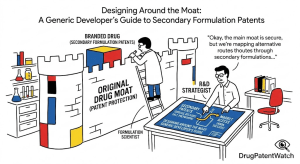
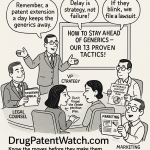
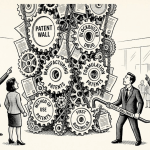
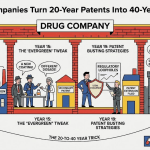
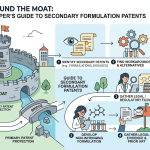
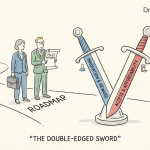
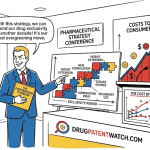
When AbbVie filed its 132nd patent on adalimumab, the drug that became Humira, the company was not protecting a new molecule. The molecule had been known for years. What AbbVie was protecting was everything around the molecule: the concentration ratios, the buffer systems, the injection-device geometry, the specific citrate-free formulation that reduced injection-site pain. By the time the primary composition-of-matter patent expired, AbbVie had constructed a barrier made not of one wall but of dozens.
Generic developers who want to compete in markets where blockbuster drugs have lost their core patent protection face exactly this challenge. The original molecule is available. The synthesis route is documented. The basic pharmacology is understood by every competent formulator in the business. What stands between a generic developer and a profitable market is a web of secondary patents covering formulation, dosage form, excipient combinations, release mechanisms, and manufacturing processes.
This guide is written for the formulation scientist, the regulatory strategist, and the business development executive who need to understand how those patents are constructed, where their weaknesses lie, and what it takes to develop a product that earns FDA approval without triggering an injunction.
Designing around a patent is not illegal. It is the intended mechanism of the patent system. Congress designed the system so that patents expire, disclosure enables follow-on innovation, and competitors can produce non-infringing alternatives once the period of exclusivity ends. Secondary formulation patents complicate that picture, but they do not change its fundamental logic.
What you need to understand is that designing around a formulation patent requires you to simultaneously satisfy three distinct audiences: the patent claim, the FDA standard for bioequivalence or approval, and your own manufacturing constraints. A design-around that avoids the patent but cannot be manufactured at scale, or that FDA will not approve as bioequivalent, is commercially worthless. Keeping all three constraints in view at once is the central discipline of this work.
What Secondary Patents Actually Are
The pharmaceutical patent system is commonly described as having two layers. That description understates the complexity in real product life cycles, but it captures the structural distinction that matters most for generic developers.
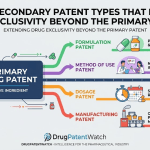
A primary patent protects the active pharmaceutical ingredient (API) itself. It covers the chemical structure, the specific molecular entity, and often the basic methods of synthesis. Primary patents file early, often before the drug enters clinical trials, and they define the core period of exclusivity. When a primary patent expires or is invalidated, the API enters the public domain.
Secondary patents cover everything else. They protect specific salts or polymorphic forms of the API, particular formulation compositions, delivery mechanisms, dosage regimens, combinations with other active or inactive ingredients, patient populations, and manufacturing processes. Secondary patents typically file later in the product life cycle, often after the brand has already established commercial success, and they can extend market protection by years or decades beyond the primary patent’s expiration.
The Patent Layering System Explained
The term ‘patent thicket’ gets used loosely in policy discussions, but it has a specific technical meaning in the formulation context. A patent thicket is a dense web of overlapping intellectual property rights that a company must navigate to commercialize a product. In pharmaceuticals, thickets form around successful drugs through systematic filing of continuation applications, divisionals, and continuation-in-part applications that expand coverage as the clinical and commercial profile of the product becomes clearer.
The layering strategy works like this: the original compound patent files when the molecule is identified, typically 10 to 15 years before market approval. As clinical trials reveal the optimal dosing range, a second wave of patents covers specific concentration windows. When commercial formulation work identifies a preferred excipient system, that system gets patented. When the formulation team solves a stability problem by adjusting the pH of the buffer system, that pH range gets patented. When device integration is required for delivery, the device-drug combination gets patented.
Each layer adds years of potential litigation exposure for any generic developer who files an ANDA. The aggregate effect, intended or not, is to make the cost of entry high enough that some potential competitors abandon the market entirely, even when the core molecule has been in the public domain for years.
Primary vs. Secondary Patents: The Practical Difference for Generic Developers
Primary patents are usually binary for a generic developer. Either the primary patent has expired, or it has not. If it has expired, the API synthesis is available. If it has not, the generic developer is generally waiting, although challenges through inter partes review (IPR) proceedings before the Patent Trial and Appeal Board (PTAB) can accelerate that timeline.
Secondary patents require a different analytical framework. They are more numerous, often narrower in scope, and frequently more vulnerable to invalidity challenges because they claim incremental improvements rather than novel chemical entities. But their vulnerability comes at a cost: proving invalidity requires claim-by-claim analysis, often supported by expert testimony and an extensive prior art record.
The generic developer faces a choice with each secondary patent. She can challenge it through a Paragraph IV certification under the Hatch-Waxman Act, inviting litigation. She can design around it by developing a formulation that falls outside its claims. She can wait for it to expire. Or she can petition for IPR at PTAB and seek to have it cancelled administratively. Each path has different risk, cost, and timeline profiles, and most sophisticated generic programs use all four approaches in combination.
The FDA Orange Book and What It Hides
The Orange Book, formally the FDA’s Approved Drug Products with Therapeutic Equivalence Evaluations, lists the patents that brand manufacturers certify as covering an approved NDA product. Generic developers must address all Orange Book-listed patents when filing an ANDA. The most common approach is a Paragraph IV certification, which asserts that the listed patent is invalid, unenforceable, or will not be infringed by the generic product.
What the Orange Book does not show is the full scope of the brand manufacturer’s secondary patent portfolio. Orange Book listing rules require that only patents claiming the drug substance, the drug product, or an approved method of using the drug product get listed. Patents on manufacturing processes, intermediates, certain packaging, and some formulation patents that don’t directly claim the final drug product may not be listed but can still be asserted in infringement litigation.
This means that a generic developer who reviews only Orange Book-listed patents gets an incomplete picture of her litigation exposure. A thorough patent landscape analysis must extend to the USPTO database, the European Patent Office’s Espacenet, and commercial databases such as DrugPatentWatch, which aggregates patent data with FDA regulatory records to give generic developers a more complete view of what is actually protecting a given drug product. Skipping this broader review is the most common and most costly mistake in generic program planning.
The Scale of the Problem: How Secondary Patents Delay Competition
The commercial impact of secondary patent strategies is substantial. Generic entry delays cost the U.S. healthcare system an estimated $116 billion in incremental drug spending annually, according to research published by the Association for Accessible Medicines in 2023 [1]. While not all of that figure is attributable specifically to secondary formulation patents, the strategies that generate the longest delays are disproportionately formulation-based.
The mechanism is straightforward. When a primary patent expires and a generic drug should theoretically enter the market, a brand manufacturer files a Paragraph IV lawsuit based on its secondary patents. Under Hatch-Waxman, that lawsuit triggers an automatic 30-month stay of FDA approval for the ANDA, meaning that even if the generic developer wins in court, she cannot receive approval during that period unless she gets an affirmative ruling of non-infringement or invalidity.
A single secondary patent, properly asserted, can add two to three years to a brand manufacturer’s effective exclusivity period. A thicket of ten or twenty secondary patents, litigated serially through continuation applications that are filed and issued strategically to keep the 30-month clock running, can extend exclusivity far beyond anything Congress envisioned when it designed the Hatch-Waxman framework.
By the Numbers: The Cost of Evergreening
“Brand manufacturers filed approximately 4,442 patent applications on just 100 best-selling drugs between 2005 and 2015, with an average of 38 patent applications per drug and the large majority covering formulations, delivery mechanisms, or methods of use rather than new chemical entities.” Feldman, R. (2018). May your drug price be evergreen. Journal of Law and the Biosciences, 5(3), 590-647. [2]
The scale of this filing activity reveals something important about the structure of pharmaceutical competition. Secondary patents are not a peripheral feature of the system. They are its dominant feature in mature drug markets. Understanding how to work with or around them is not an edge skill for a generic developer. It is the core competency of the business.
The economics favor the brand manufacturer in the litigation phase. An NDA holder with a blockbuster drug generating $5 billion per year can spend $100 million on patent litigation without blinking. A generic developer competing for a market that might net her $300 million annually faces a very different calculus. This asymmetry is why the design-around strategy, when it succeeds, generates disproportionate rewards. A generic developer who enters a market before her competitors through a clean non-infringement position does not have to litigate at all.
Case Study: The Humira Patent Thicket
Humira’s (adalimumab) patent situation has become the most-studied example of secondary patent strategy in pharmaceutical history, and for good reason. AbbVie’s patent portfolio on the drug grew from roughly 7 patents at its initial approval to more than 136 by 2015, covering formulation variations, dosing schedules, patient populations, citrate-free formulations, and autoinjector devices [3].
The primary composition-of-matter patent expired in the United States in December 2016. AbbVie had warned investors years earlier that it expected biosimilar competition to be delayed. The company was right. The first biosimilar competitor did not reach patients until 2023, seven years after the core patent expiration, due to a combination of litigation settlements that included licenses with delayed entry dates and the practical difficulty of designing around the formulation thicket.
The Humira case illustrates something that formulation scientists sometimes underweight when they focus on the technical design-around question. Litigation settlements create a secondary barrier to entry that is separate from the technical question of patent validity or non-infringement. When brand manufacturers settle with potential competitors on terms that delay entry in exchange for license grants, they effectively privatize the public patent system. The design-around strategy is the only approach that lets a generic developer enter without participating in that settlement dynamic.
Case Study: AstraZeneca’s Nexium and the Purple Pill Playbook
The Prilosec-to-Nexium transition is the textbook case of secondary patent strategy in small-molecule drugs. AstraZeneca’s Prilosec (omeprazole) faced generic competition when its primary patent expired in 2001. AstraZeneca had already prepared its successor. Nexium (esomeprazole) was the S-enantiomer of omeprazole, meaning it was one of two mirror-image forms of the same molecule. AstraZeneca had patented the specific enantiomer, the manufacturing process for isolating it, and the clinical data supporting specific dosing claims.
Generic manufacturers challenged the esomeprazole patents through Paragraph IV certifications. AstraZeneca litigated aggressively. The court battles lasted years. By the time generic esomeprazole reached the market, AstraZeneca had extracted substantial additional revenue from Nexium while simultaneously converting its prescriber base from the soon-to-be-generic omeprazole to the still-protected Nexium.
The lesson for generic developers is two-fold. First, enantiomer patents, polymorph patents, and salt-form patents are among the most commercially significant secondary patents and among the most frequently litigated. Second, the brand manufacturer’s marketing strategy and the patent strategy are integrated. When a brand company starts promoting an incremental reformulation heavily, it often signals that secondary patents on that reformulation are already filed or are about to be.
The Legal Framework: What Makes a Secondary Patent Vulnerable
Secondary formulation patents are not invulnerable. They challenge on validity through the same doctrines that apply to any patent: novelty under 35 U.S.C. Section 102, non-obviousness under 35 U.S.C. Section 103, and the written description and enablement requirements of 35 U.S.C. Section 112. They are also subject to the doctrine of double patenting, which prevents a patent holder from obtaining two patents on the same invention or on obvious variants of each other without appropriate terminal disclaimers.
The practical experience of Paragraph IV litigation shows that secondary formulation patents are more likely to fall on obviousness grounds than on any other basis. This reflects the fundamental nature of formulation science: it is a discipline of optimization and selection, and much of that optimization draws on techniques, excipients, and design principles that are already known in the art. When a claim covers a pH range of 6.0 to 7.0 and the prior art taught pH 6.8 as optimal for similar drug classes, the path to invalidity is clear.
35 U.S.C. Section 103: The Obviousness Doctrine and Formulation Patents
The Supreme Court’s 2007 decision in KSR International Co. v. Teleflex Inc. transformed obviousness analysis in ways that are particularly favorable for challenges to formulation patents [4]. The Court rejected the rigid ‘teaching, suggestion, or motivation’ test that had made obviousness difficult to prove, and replaced it with a flexible approach that allows courts and the USPTO to consider general knowledge in the relevant field and common sense.
For formulation patents, KSR matters because it validates the argument that a skilled formulator, faced with a known API and a known set of formulation challenges, would predictably try known solutions. If the prior art included buffered liquid formulations for similar proteins, and the patent claims a specific buffer type and concentration range, the relevant question is whether trying that buffer was obvious to a person of ordinary skill. Under KSR, if the result was predictable, the claim is likely obvious.
Post-KSR cases in formulation patent challenges have developed a consistent analytical pattern. The challenger identifies prior art teaching the general formulation approach. She demonstrates that the specific parameters claimed (pH range, concentration window, excipient type) fall within ranges that the prior art described as suitable or optimal. She shows that selecting those parameters was a matter of routine experimentation, not inventive step. And she demonstrates that the results were predictable, not surprising.
Brand manufacturers defend against this pattern by arguing unexpected results: that the claimed formulation performed significantly better than the prior art would have predicted. Unexpected results can save an otherwise obvious claim, but they must be commensurate with the scope of the claim and supported by comparative data. When brand manufacturers claim unexpectedly superior stability or bioavailability, the data supporting those claims becomes central to the validity analysis.
The Written Description and Enablement Requirements
Section 112 of the Patent Act requires that a patent claim be supported by a written description that demonstrates that the inventor had possession of the claimed invention at the time of filing, and that the disclosure enables a person of ordinary skill in the art to make and use the invention without undue experimentation. Both requirements have generated formulation patent invalidity arguments, though on different factual bases.
Written description challenges succeed most often against continuation applications that claim subject matter not actually described in the parent application. When a brand manufacturer files a continuation claiming a formulation component that was not described in the original application, the written description requirement offers a path to invalidity. The challenge requires showing that the original disclosure did not demonstrate possession of the later-claimed subject matter.
Enablement challenges in the formulation context often focus on the breadth of functional claims. A patent that claims ‘a pharmaceutical composition comprising X that provides sustained release over 12 to 24 hours’ may be challenged on the ground that the disclosure does not enable the full scope of that claim across all possible formulation implementations. If the specification describes only one specific release mechanism but the claims sweep in all mechanisms that achieve the result, the enablement gap may be fatal.
Double Patenting: Terminal Disclaimers and Their Limits
Obviousness-type double patenting (ODP) prevents a patent holder from extending the patent term by obtaining a second patent whose claims are obvious variants of the first patent’s claims. The doctrine requires the patent holder to file a terminal disclaimer, limiting the second patent’s term to expire no later than the first patent’s. When a brand manufacturer builds a thicket of continuation patents claiming obvious formulation variations, each terminal disclaimer shortens the protection available from later patents.
The practical consequence for generic developers is that the expiration dates of secondary patents in a thicket need careful analysis. A continuation patent that would nominally expire in 2040 may actually expire when its parent expires in 2030 if a terminal disclaimer links them. DrugPatentWatch and similar analytical tools can pull terminal disclaimer data from the USPTO, but verifying the actual linked-expiration dates requires direct USPTO records review.
Obviousness-Type Double Patenting After AbbVie v. MSD International
The Federal Circuit’s 2023 decision in AbbVie Inc. v. MSD International GmbH significantly tightened the application of ODP to patents in different patent families, holding that ODP can apply even when two patents share no common priority date [5]. The decision arose from the adalimumab biosimilar litigation and has become a foundational case for any formulation patent thicket analysis.
Under the pre-AbbVie understanding, a brand manufacturer could potentially structure its patent filings so that independent patent families, each with their own priority dates, avoided ODP analysis between families. The Federal Circuit’s decision narrowed that approach, holding that ODP analysis looks at whether the claims of two patents are patentably distinct from each other, not whether they share a priority claim. This creates new ammunition for generic developers who want to challenge secondary patents whose claims are obvious variants of already-expired patents in different families.
The AbbVie decision has not fully resolved the law in this area. Subsequent district court and PTAB decisions have applied it with varying degrees of breadth. Any ODP challenge in a formulation patent case should be supported by experienced patent litigation counsel who can assess the specific claim relationships at issue.
The Doctrine of Equivalents and Prosecution History Estoppel
The doctrine of equivalents allows a patent holder to assert infringement even when the accused product does not literally fall within the patent claims, if it differs only in insubstantial ways. For a generic developer who has designed around a formulation patent, the doctrine of equivalents is the primary litigation risk. A claim that literally requires citrate as a buffer can potentially be extended through equivalents to phosphate if a court finds the substitution insubstantial.
Prosecution history estoppel provides the primary defense. When a patent applicant narrows a claim during prosecution to overcome a prior art rejection, she surrenders the ability to recapture through the doctrine of equivalents what she gave up through claim narrowing. For formulation patents, prosecution history is frequently rich with narrowing amendments made to overcome rejections based on prior art formulations. Those amendments can create clear estoppel bars to equivalents arguments.
The strategic lesson is to document your design-around rationale with the prosecution history in hand. If you substitute citrate buffer for phosphate buffer, and the prosecution history shows that the patent applicant added ‘citrate’ to overcome a prior art reference teaching phosphate, you have a strong argument that equivalents are estopped. That argument should be developed before you file your ANDA, not after litigation begins.
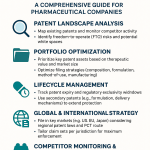
Building Your Design-Around Strategy: A Technical Framework
A design-around strategy is not a single decision. It is a structured process that moves from patent claim analysis through formulation science through regulatory assessment, with commercial viability evaluation at each stage. Skipping stages, or running them in the wrong sequence, is how generic programs waste years and millions of dollars.
The framework described here is drawn from the published literature on Paragraph IV litigation outcomes, formulation science best practices, and the regulatory guidance that FDA has issued on bioequivalence and 505(b)(2) applications. It is a starting point, not a substitute for the specific expertise you need in patent law, formulation science, and regulatory strategy.
Step 1: Patent Landscape Mapping
Before your formulation scientists spend a day in the lab, your patent team needs a complete landscape. That landscape includes every patent and patent application with claims that could cover your target product, organized by claim type, expiration date, and current legal status.
Start with the Orange Book. Every patent listed there must be addressed in your ANDA. But as discussed above, the Orange Book is not complete. Extend your search to the USPTO patent full-text database using the API name, the brand name, the assignee name, and relevant CPC classification codes for pharmaceutical formulations (A61K and its subclasses). Do the same on Espacenet for European equivalents, since U.S. continuation patents often have European counterparts that reveal claim strategy.
DrugPatentWatch provides a valuable shortcut for this initial mapping phase. Its platform aggregates FDA Orange Book data, USPTO patent records, and PTAB proceedings for pharmaceutical products, allowing you to quickly identify the complete portfolio surrounding a target drug, track expiration dates including those affected by terminal disclaimers, and see the history of any prior patent challenges. For generic developers who need to build a landscape quickly to support a business case, it is the most efficient first tool available.
After your initial database search, you need human review. A patent attorney or agent with formulation chemistry expertise should review every identified patent and application to assess its scope, identify its central claims, and flag the claims most likely to be asserted against a generic product. This review should produce a claim matrix that maps each patent to the formulation characteristics it covers.
Step 2: Claim Construction Analysis
Claim construction is the process of determining what a patent claim actually covers. Courts apply the Phillips standard from the 2005 Federal Circuit en banc decision, which requires interpreting claim terms according to their ordinary meaning in light of the patent specification and prosecution history [6]. PTAB applies a slightly broader standard in IPR proceedings.
For your design-around analysis, claim construction defines the boundary you need to cross. A claim that requires ‘a buffered aqueous solution having a pH of 5.5 to 6.5’ must be construed before you know whether a pH of 6.8 is inside or outside the claim. That seems straightforward, but formulation patents routinely include functional language (‘stable,’ ‘bioavailable,’ ‘controlled release’) whose meaning depends on how the specification defines the function and what the prosecution history says about its scope.
The most important claim construction questions for formulation design-arounds are four: What is the literal scope of each numerical range? What does each functional term mean in context? Are there dependent claims that narrow the independent claim in ways that suggest design-around space? What narrowing amendments were made during prosecution, and what do they imply about claim scope?
Step 3: Identifying the Design-Around Space
After claim construction, you know the boundaries of each patent’s protection. The design-around space is everything outside those boundaries that could still achieve FDA approval for a therapeutically equivalent product. Identifying that space requires the combined judgment of your patent attorneys and your formulation scientists working together.
The design-around space is not simply ‘all formulations that don’t read on the claims.’ It is the intersection of the technical space outside the claims with the space of formulations that are scientifically achievable, manufacturable at scale, and approvable by FDA as bioequivalent or therapeutically equivalent to the reference listed drug (RLD). Formulations that clear the first test but fail one of the others are commercially useless.
Map the design-around space visually if you can. For a formulation patent covering a pH range of 5.5 to 6.5 with a specific buffer system, draw the relevant parameter space: pH on one axis, buffer type as discrete categories, and mark the claimed region clearly. Your design-around candidates are the parameter combinations outside that region. Then overlay your scientific knowledge of what works: if pH below 5.0 causes API degradation and pH above 7.5 causes precipitation, your actual design-around space may be quite narrow.
Step 4: Formulation Development Constraints and Opportunities
The design-around space defined in Step 3 becomes the brief for your formulation development work. You are not developing a formulation from scratch; you are developing the best formulation within a defined parameter space. That constraint changes the development calculus.
Some generic developers treat this constraint as purely limiting. It is also an opportunity. When you develop a formulation that is genuinely different from the reference product in ways that matter commercially, whether in patient experience, dosing convenience, storage stability, or manufacturing cost, you may be able to build your own intellectual property around the improved design-around formulation. Generic entry through design-around is not incompatible with building a proprietary portfolio. It just requires that you understand which aspects of your formulation are genuinely novel and potentially patentable.
Specific Formulation Variables and How to Exploit Them
The technical content of secondary formulation patents clusters around a predictable set of formulation variables. Understanding the patent landscape for each variable type allows you to approach design-around work systematically rather than case-by-case.
Particle Size and Polymorphic Form
Polymorphic form patents are among the most litigated secondary patents in the industry. A drug substance can exist in multiple crystalline forms (polymorphs) that have the same chemical composition but different physical structures, leading to differences in solubility, dissolution rate, stability, and bioavailability. When a brand manufacturer patents a specific polymorph, that patent can block generic developers from using that form even after the API patent expires.
The design-around strategy for polymorph patents is to identify or develop a different polymorphic form, an amorphous form, a co-crystal, or a different salt form that achieves equivalent bioavailability. This is not trivial. The FDA requires that the generic product be bioequivalent to the reference listed drug, and a different polymorphic form may have sufficiently different dissolution behavior to fail bioequivalence. Your formulation work needs to bridge the dissolution difference through excipient selection, particle size control, or other techniques while staying outside the polymorph claims.
Particle size patents claim specific size ranges, often expressed as D90, D50, or D10 values (the particle diameter below which 90%, 50%, or 10% of particles by volume fall). The design-around question is whether you can achieve your bioequivalence target with particles of a different size or size distribution than the claimed range. For poorly soluble drugs where dissolution is rate-limiting, this often requires significant formulation work to compensate for the different dissolution profile of particles outside the claimed size range.
The scientific literature is rich with polymorph and particle size prior art. Many claimed forms were described in academic literature before the patent filing date, creating strong invalidity arguments. A thorough prior art search in chemical and pharmaceutical journals is essential before you commit to a design-around versus an invalidity challenge for polymorph claims.
Excipient Selection and Functional Alternatives
Excipient-based patents present the clearest design-around opportunities in formulation science. An excipient patent typically claims a specific excipient or class of excipients as a component of the formulation, often with a defined concentration range. To design around it, you substitute a different excipient that provides the same or equivalent function without falling within the claimed class.
The analytical framework for excipient substitution has two components. First, identify what function the patented excipient serves in the claimed formulation. Is it a solubilizer? A stabilizer? A release modifier? A wetting agent? The patent specification usually explains this, and the explanation guides your choice of functional alternative. Second, identify excipients known in the pharmaceutical literature to perform that function. The GRAS (Generally Recognized as Safe) list, the FDA’s Inactive Ingredient Database, and the pharmaceutical excipient literature are your primary resources.
The most common pitfall in excipient design-arounds is substituting an excipient that falls within a broader claim you missed. Patent claims often use class terms (‘a non-ionic surfactant,’ ‘a cellulosic polymer’) that sweep in many specific compounds. Before committing to a substitution, confirm that the substitute does not fall within any claim term in any asserted patent, including dependent claims that may be more specifically drawn to the class you are using.
Concentration design-arounds are equally common. If a patent claims a surfactant concentration of 0.1% to 1.0% by weight, a formulation using 0.05% or 1.5% is literally outside the claim. The risk is the doctrine of equivalents: if 0.05% performs substantially the same function in substantially the same way to achieve substantially the same result as 0.1%, a court might find equivalents infringement. The prosecution history is your first line of defense against that argument.
Release Mechanism Redesign
Modified-release formulation patents are the most technically complex and often the most valuable category of secondary patents. They cover the specific mechanisms by which a drug is released from its dosage form at a controlled rate, achieving the pharmacokinetic profile necessary for the claimed therapeutic benefit. Designing around these patents requires both formulation chemistry expertise and a clear understanding of the pharmacokinetic targets you need to achieve.
The PK target is set by the bioequivalence standard. For an extended-release product, FDA requires that the test and reference products have equivalent area under the curve (AUC) and Cmax, and typically requires similar in vitro dissolution profiles at multiple time points. This means your design-around formulation must hit the same PK targets as the reference product, even though it uses a different release mechanism. That is a tighter constraint than it might appear.
Matrix vs. Reservoir Systems
Most extended-release oral solid dosage forms use either a matrix system, in which the drug is dispersed throughout a polymer matrix from which it diffuses, or a reservoir system, in which the drug core is coated with a rate-controlling membrane. The two technologies have different patent landscapes, different manufacturing requirements, and different dissolution characteristics.
If the reference product uses a reservoir system and the relevant secondary patents cover specific membrane materials, coating compositions, and pore-former concentrations, a matrix-based design-around may provide complete freedom-to-operate on the formulation patents while still achieving the required PK profile. The challenge is that matrix and reservoir systems can have quite different release kinetics, and demonstrating bioequivalence across the two technologies may require extensive formulation work and multiple clinical BE studies.
Hydrophilic matrix systems using cellulosic polymers (hydroxypropyl methylcellulose, in particular) are extensively covered by patents from multiple parties. If you are considering a matrix approach as a design-around for a reservoir-system patent, confirm that the specific matrix polymers and their concentration ranges you intend to use are themselves free of infringement issues. HPMC-based formulation patents from brand manufacturers have been filed actively since the 1990s and the patent landscape is dense.
Osmotic Technology Alternatives
OROS (oral osmotic) technology, originally developed by ALZA Corporation and now held by Johnson and Johnson, has generated one of the most extensive secondary patent portfolios in modified-release formulation. OROS-based products like Concerta (methylphenidate) and Procardia XL (nifedipine) have faced extensive design-around work from generic developers.
The Concerta OROS litigation produced a particularly instructive outcome for generic developers. Watson Pharmaceuticals (later Actavis, later Allergan) obtained FDA approval for a methylphenidate extended-release product using a non-OROS formulation. But FDA subsequently found that Watson’s product was not therapeutically equivalent to Concerta because its in vivo release profile, while falling within bioequivalence bounds on average, showed different characteristics in certain patient subpopulations. FDA removed the TE rating. The case illustrates that technical non-infringement of the formulation patent is not sufficient: your design-around must also satisfy FDA’s standard for therapeutic equivalence, which for modified-release products can be demanding.
Salt Forms and Co-Crystals
Most drug molecules can form salts with a variety of counterions. A brand manufacturer that patents a specific salt form, such as the hydrochloride salt of a base drug, does not necessarily patent all salts of that drug. A generic developer might design around a salt-form patent by using a different pharmaceutically acceptable salt, such as the mesylate, tosylate, or fumarate salt, provided the different salt is bioequivalent and FDA accepts the substitution.
Salt-form design-arounds require careful evaluation of two issues. First, does the chosen salt fall within any claims in the brand’s portfolio? Brand manufacturers often file patents on multiple salts of important drug molecules, anticipating exactly this design-around strategy. Second, does the chosen salt form genuinely perform equivalently in terms of solubility, stability, and bioavailability? Different salt forms can have substantially different physical properties, and the formulation work required to achieve bioequivalence with a less soluble or less stable salt may be extensive.
Co-crystals are a relatively newer category of solid forms that have attracted significant patent activity. A co-crystal is a crystalline material made of two or more components, typically the API and a co-former, held together by non-covalent interactions. FDA issued guidance on the regulatory status of co-crystals in 2018, classifying them in most cases as drug substances rather than drug products [7]. Co-crystals can offer solubility and stability advantages that make them attractive design-around candidates, but the patent landscape for co-crystals has developed rapidly and requires careful review.
Drug Delivery Route Modification
Route-of-administration design-arounds are less common than formulation parameter design-arounds, but they are worth considering in cases where the secondary patent portfolio is particularly dense for a specific dosage form and the pharmacology of the drug permits alternative routes.
The classic example is the transition from intravenous to subcutaneous formulations, or from subcutaneous to inhalation delivery. These transitions require not just different formulation chemistry but different device integration, potentially different PK profiles that require clinical bridging data, and FDA review of the safety and efficacy data applicable to the new route. For these reasons, route-of-administration design-arounds are more appropriately pursued through a 505(b)(2) application than through an ANDA, and they function more as new product development than pure generic entry.
Within a given route of administration, delivery system variations offer more targeted design-around opportunities. Transdermal patches, for example, have multiple different construction types (matrix, reservoir, drug-in-adhesive) with different patent landscapes. A brand manufacturer’s reservoir patch patents may not cover matrix-type patches that achieve equivalent permeation rates.
The ANDA Paragraph IV Pathway: Litigation as Strategy
Many generic developers treat Paragraph IV litigation as an unavoidable cost of doing business. The more strategic framing is that a Paragraph IV filing is itself a strategic choice whose timing, patent selection, and claim assertions can be optimized to maximize commercial value. Understanding the mechanics of the process is the prerequisite for using it strategically.
How Paragraph IV Certifications Work
When a generic manufacturer files an ANDA with FDA, it must certify its position with respect to each Orange Book-listed patent. The certification options run from Paragraph I (the patent has expired) through Paragraph IV (the patent is invalid, unenforceable, or will not be infringed by the generic product). A Paragraph IV certification for a patent covering both the drug substance and drug product triggers the automatic 30-month stay upon the brand manufacturer’s filing of a patent infringement suit within 45 days.
The certification must specify the legal and factual basis for the non-infringement or invalidity position. This specificity requirement is critical for design-around strategies. If your product design-around position is that your formulation uses a different buffer system that does not fall within the patent’s claims, your Paragraph IV notice letter must describe that non-infringement position in sufficient detail that the brand manufacturer can assess its merits. A vague certification invites a complaint that the notice was deficient, potentially resetting the 45-day litigation clock.
The notice letter is a strategic document. Its description of your non-infringement position is admissible in the subsequent litigation and will be scrutinized by the brand manufacturer’s patent counsel. The positions you assert in the notice letter need to be defensible and consistent with the formulation you actually intend to manufacture and sell. Inconsistencies between the notice letter and the ANDA product create vulnerabilities that experienced brand-side litigators will exploit.
The 180-Day Exclusivity Calculation
The first ANDA filer who includes a Paragraph IV certification against the same patent can be entitled to 180 days of generic market exclusivity. This means that after the first filer enters the market, FDA cannot approve other generic ANDAs for the same drug for 180 days. The commercial value of this exclusivity can be enormous for large markets: $100 million or more in net revenue from a single exclusivity period is common.
The 180-day exclusivity creates strong incentives to file first, even when the legal and technical positions are not fully developed. The tension between filing speed and position quality is real. A Paragraph IV certification filed hastily, with an underdeveloped non-infringement position, may get you first-filer status but leave you with a weak litigation posture. The commercial calculus depends on the size of the market, the number of likely filers, and your confidence in your position.
The exclusivity clock starts running when the first filer either receives a final approval and begins commercial marketing, or when a court enters a final judgment of invalidity or non-infringement. For design-around strategies, the latter trigger matters. If you have a strong non-infringement position based on your formulation design, you may be able to obtain a declaratory judgment of non-infringement relatively quickly, triggering the exclusivity period even if other filers remain in litigation with the brand manufacturer.
First-Filer Strategy and Patent Dance Obligations
For small-molecule ANDAs under Hatch-Waxman, there is no formal ‘patent dance’ equivalent to the one established for biologics under the BPCIA. Generic developers simply file their ANDA, send the Paragraph IV notice letter, and wait for the brand manufacturer’s response. The brand manufacturer has 45 days to file suit if it wants the 30-month stay.
The strategic timing question for generic developers concerns the relationship between the filing date, the patent expiration dates, and the anticipated litigation timeline. If key secondary patents expire before a reasonable litigation timeline concludes, you may be better off waiting for those expirations and filing your ANDA as a Paragraph III certification (patent has not yet expired but will expire by the time approval is sought). Paragraph III filings do not trigger 30-month stays or patent dance obligations, and they can still qualify for 180-day exclusivity in some circumstances.
Inter Partes Review as a Parallel Track
IPR proceedings before PTAB offer an alternative or parallel path to challenging patent validity. Any party who has not already filed a civil action challenging the patent’s validity can petition for IPR. For generic developers, this creates the option of challenging secondary patents at PTAB rather than waiting for the brand manufacturer to sue after an ANDA filing.
The practical advantages of IPR are significant. PTAB proceedings are faster than district court litigation, typically concluding within 18 months of institution. The standard of proof for invalidity at PTAB (preponderance of the evidence) is lower than in district court (clear and convincing evidence). And PTAB judges have deep technical expertise in patent validity analysis, which is generally favorable for challengers of secondary formulation patents whose invalidity turns on scientific prior art.
The disadvantages are equally significant. Filing an IPR petition creates estoppel: if you raise a ground in IPR and PTAB either institutes and denies the ground or institutes and you lose, you cannot raise that same ground in subsequent district court litigation. This means that IPR strategy requires careful selection of which invalidity grounds to assert where. Reserve your weakest grounds for PTAB, where the lower burden of proof makes them viable, and keep your strongest grounds for district court, where you may need them if IPR fails.
Bioequivalence Without the Bullseye
Bioequivalence is the regulatory standard that connects your formulation design-around to market approval. FDA requires that a generic product demonstrate that its rate and extent of absorption are not significantly different from those of the reference listed drug. The standard is typically operationalized through pharmacokinetic parameters: AUC (area under the plasma concentration-time curve, measuring extent) and Cmax (maximum concentration, correlating with rate), with 90% confidence intervals that must fall within 80% to 125% of the reference values.
This standard applies to the drug molecule in systemic circulation. It does not require that your dosage form be physically identical to the reference. A tablet can be bioequivalent to a capsule. A different excipient system can achieve the same systemic exposure as the reference system. The BE standard, properly understood, is what gives design-around formulations their viability: you can change the formulation as long as the change does not change the systemic pharmacokinetics beyond the acceptable bounds.
When BE Studies Prove Design-Around Validity
A successful bioequivalence study does more than satisfy the regulatory requirement. It provides the most direct evidence that your formulation design-around works technically. If your design-around formulation uses a different excipient system than the claimed formulation and achieves bioequivalence in a pivotal BE study, you have demonstrated that the substitution is functionally equivalent in the sense that matters most: the patient experiences the same systemic drug exposure.
This evidentiary function of BE studies matters in litigation. When brand manufacturers argue that your design-around formulation infringes under the doctrine of equivalents because it achieves the same result as the claimed formulation, the BE data becomes double-edged. To assert equivalents, the brand manufacturer needs to argue that your formulation performs substantially the same function in substantially the same way. But the function in a pharmaceutical context is therapeutic delivery, and you have just demonstrated, to FDA’s satisfaction, that your formulation achieves that function. Arguing equivalents while conceding bioequivalence creates analytical tensions that brand-side litigators need to navigate carefully.
PK/PD Considerations in Modified Release Design-Arounds
For modified-release products, the BE analysis is more complex than for immediate-release formulations. FDA typically requires multiple-dose steady-state studies in addition to single-dose studies, and may require additional evidence of therapeutic equivalence for drugs with narrow therapeutic indices or complex PK profiles. For certain drug classes, FDA has published product-specific guidance that describes the BE methodology in detail.
When you redesign a modified-release mechanism, you are changing the in vitro dissolution profile of your product relative to the reference. FDA requires demonstration that despite this in vitro difference, the in vivo PK profile remains equivalent. This is sometimes achievable and sometimes not. The feasibility assessment should happen early in your design-around program, before significant formulation development investment.
In vitro/in vivo correlation (IVIVC) modeling is a powerful tool here. If you can develop a validated IVIVC for your design-around formulation, you can use in vitro dissolution testing to predict in vivo PK performance, reducing the number of clinical BE studies required and accelerating your development timeline. FDA’s guidance on IVIVC development (Guidance for Industry: Extended Release Oral Dosage Forms) describes the methodology [8]. Building an IVIVC should be a core objective of your design-around formulation development work for any modified-release product.
FDA Guidance on In Vitro/In Vivo Correlations
An IVIVC relationship exists when the in vitro dissolution profile can predict the in vivo absorption profile with sufficient accuracy that dissolution testing alone can substitute for human PK studies in specified circumstances. For design-around formulations, achieving an IVIVC has two benefits: it reduces clinical study requirements, and it provides scientific support for the argument that your formulation achieves the same therapeutic objective as the reference through a different technical mechanism.
Developing a validated Level A IVIVC (the highest level of correlation) requires point-to-point correlation between cumulative in vitro dissolution and cumulative in vivo absorption across multiple formulations with different release rates. This is demanding work that typically requires at least three formulations spanning the dissolution space and at least one clinical PK study for each. The investment is justified for large markets where the design-around strategy provides a significant commercial advantage and where reducing clinical study requirements meaningfully accelerates your timeline.
The IPR and PTAB Playbook
Inter partes review has changed the economics of pharmaceutical patent challenges fundamentally. Before the America Invents Act created IPR proceedings in 2012, the only way to challenge a patent after it had been issued was through expensive district court litigation or through reexamination proceedings that were slow and rarely resulted in cancellation. IPR provided a faster, cheaper, and more effective mechanism for invalidity challenges, and the pharmaceutical industry has used it aggressively.
Between 2012 and 2023, pharmaceutical patents were among the most frequently challenged patent categories at PTAB. Generic manufacturers, branded competitors, hedge funds in the ‘short and distort’ strategy (where investors bet against a company’s stock while challenging its patents), and third-party coalitions have all used IPR against drug product patents. Secondary formulation patents are among the most successful IPR targets, with cancellation rates in some years exceeding 70% of instituted proceedings.
Filing Strategy: When to IPR vs. When to Design Around
The decision between IPR and design-around is not either/or. Many sophisticated generic programs run them in parallel. You file an IPR to put invalidity pressure on the patent while simultaneously developing a design-around formulation that avoids the claims even if the patent survives IPR. This dual-track approach maximizes your probability of a successful market entry while managing the risk that either track alone might fail.
IPR alone is the right choice when the patent is clearly invalid based on strong prior art, when you cannot design around the claims without fundamentally compromising your product’s commercial viability, and when the costs of design-around formulation development exceed the litigation risk from relying solely on the invalidity argument.
Design-around alone is the right choice when the patent’s claims are narrow enough that a non-infringing formulation is technically achievable without significant performance compromise, when the prior art for an IPR challenge is weak or uncertain, and when you want to avoid IPR estoppel.
The dual-track approach is appropriate when the market is large enough to justify both investments, when the patent has some vulnerability but the outcome of IPR is uncertain, and when you want maximum optionality in your litigation posture.
Key PTAB Decisions Affecting Formulation Patents
PTAB has developed a significant body of precedent on formulation patent challenges. Several decisions deserve particular attention for anyone planning an IPR against a secondary formulation patent.
Mylan Pharmaceuticals Inc. v. Allergan Inc. (IPR2016-00820) involved extended-release formulation patents on cyclosporine ophthalmic emulsion. PTAB’s analysis of the obviousness of specific excipient combinations and concentration ranges became a template for subsequent challenges. The board found that selecting among known excipients in known concentration ranges was prima facie obvious absent unexpected results, placing the burden on the patent holder to show that its specific combination produced results that would not have been predicted by a skilled formulator.
Coal. for Affordable Drugs v. AbbVie Inc. (IPR2015-00990), one of the first hedge-fund-driven IPRs against a pharmaceutical patent, challenged AbbVie’s adalimumab-related patents on obviousness grounds. The proceedings, though ultimately terminated when AbbVie disclaimed certain claims, highlighted the vulnerability of secondary patents to organized IPR campaigns and the value of DrugPatentWatch-style patent intelligence in identifying the most challengeable patents in a large portfolio.
In Novartis AG v. Noven Pharmaceuticals Inc. (2017), the Federal Circuit affirmed PTAB’s cancellation of a transdermal patch formulation patent, finding that the prior art’s teaching of similar polymer matrices rendered the claimed combination obvious. The case is frequently cited for its holding that optimization of known parameters within known ranges is routine formulation work, not inventive activity.
Estoppel Consequences and How to Manage Them
IPR estoppel under 35 U.S.C. Section 315(e) prevents an IPR petitioner from asserting, in subsequent district court or ITC proceedings, that a claim is invalid on any ground that the petitioner ‘raised or reasonably could have raised’ in the IPR. The scope of this estoppel has been actively litigated, with courts splitting on whether ‘reasonably could have raised’ includes all prior art that was publicly available or only the art that was specifically within the scope of the IPR’s grounds.
The practical consequence for generic developers is that filing an IPR narrows your future invalidity options. If you file an IPR challenging a formulation patent on obviousness grounds based on certain prior art combinations, you may be estopped from asserting other prior art combinations in district court if the brand manufacturer sues you after the IPR concludes.
Managing estoppel requires strategic selectivity in IPR petition drafting. You should assert the grounds that are most likely to succeed at PTAB and reserve the strongest litigation-quality prior art for district court. Your patent counsel can help model the estoppel risk across different filing strategies. The goal is to use PTAB’s lower burden of proof on your second-tier invalidity arguments while preserving your best arguments for the higher-stakes district court environment.
Regulatory Strategy: Getting FDA to Accept Your Design-Around
Designing around a patent only creates commercial value if FDA will approve your product. The regulatory strategy for a design-around formulation must be developed in parallel with the patent strategy from the beginning of your program. Surprises at the regulatory stage, after years of formulation development and patent litigation investment, are one of the costliest failure modes in generic drug development.
505(b)(2) vs. ANDA: Choosing the Right Pathway
The ANDA pathway requires that your product be the same as the reference listed drug in active ingredient, route of administration, dosage form, strength, and labeling (with some permitted differences for less-than-full-labeling). The 505(b)(2) pathway allows for some differences from the RLD, relying in part on FDA’s prior findings of safety and efficacy for the reference product.
A design-around formulation that differs from the reference in dosage form, route of administration, or active ingredient necessarily requires a 505(b)(2) application or a full 505(b)(1) NDA. A design-around that differs only in inactive ingredients while maintaining the same dosage form and route may qualify for the ANDA pathway, subject to FDA’s determination that the differences do not affect safety or efficacy.
The choice between pathways has significant commercial implications. ANDA approval confers automatic substitutability with the RLD in pharmacy dispensing. A 505(b)(2) product may not be automatically substitutable, which significantly reduces its generic market penetration. For most design-around strategies targeting the generic market, maintaining ANDA eligibility is essential. If your design-around requires changes that push you into the 505(b)(2) pathway, you need to assess whether the commercial model still makes sense.
Chemistry, Manufacturing, and Controls for Novel Formulations
The CMC section of an ANDA for a design-around formulation requires particular care. Your formulation will differ from the reference product in at least some respects, and FDA’s review will focus on whether those differences have been characterized, controlled, and validated appropriately.
For a polymorphic form design-around, your CMC package must demonstrate that your manufacturing process consistently produces the intended form, that the form is stable under the storage conditions of your proposed labeling, and that the form’s physical properties (particularly dissolution) are adequately controlled by your specifications. If you are using an amorphous form that is less thermodynamically stable than the reference polymorph, your stability data must demonstrate that the form does not convert during shelf life.
For an excipient substitution design-around, FDA may require safety data on the substitute excipient if it has not been used in an approved product at the proposed concentration in the proposed route. The FDA Inactive Ingredient Database is your first resource for confirming whether an excipient has been approved at relevant concentration levels. If your design-around requires excipients outside the database parameters, plan for additional safety studies that will add time and cost to your development program.
Navigating FDA’s Sameness Determination
FDA’s determination of whether a proposed generic product is the ‘same’ as the reference listed drug has been a source of significant regulatory litigation. The agency’s regulations and guidances define ‘same’ for each product characteristic, and the definitions are not always intuitive.
For active ingredients, the sameness determination is generally straightforward for single-entity drugs but can be complex for salts. FDA has issued guidance confirming that different salts of the same active moiety can be considered the same active ingredient for ANDA purposes in many circumstances, which directly supports salt-form design-around strategies. But the analysis depends on whether the different salt meets FDA’s definition of an ‘ester, ether, salt, or other noncovalent derivative’ of the reference active ingredient.
For drug product, sameness requires the same dosage form and route. FDA has issued guidance classifying various drug products to assist this determination. Your regulatory counsel should confirm sameness eligibility early in your design-around program, particularly when your formulation involves any changes to the physical dosage form structure (e.g., from multi-layer tablet to single-layer, from hard capsule to soft gel).
Commercial and Competitive Intelligence
A design-around program that succeeds technically and legally is still a failure if the market opportunity has changed by the time you arrive. Commercial intelligence is not peripheral to the design-around decision. It is central to it.
Timing Your Entry: Patent Cliffs vs. Design-Around Windows
Patent cliffs are the events that open large markets to generic competition. They occur when primary or multiple key secondary patents expire simultaneously or within a short window, triggering rapid generic entry and price erosion. Patent cliffs create urgency for generic developers: the first entrant captures the largest share of the market before price erosion accelerates.
Design-around windows are different. They occur when a primary patent has expired but secondary patents still protect specific formulations, leaving a narrow set of non-infringing formulations available. A design-around window may be open for years before the last secondary patent expires, and a generic developer who can access that window early earns premium pricing relative to later entrants.
The commercial assessment for a design-around program requires modeling both scenarios. What is the market size today? How will it change as more entrants arrive through either litigation victories or patent expirations? What price premium can you sustain as a first or second entrant through design-around vs. as a later Paragraph IV filer who enters after litigation resolves? The answers vary dramatically by product and market, and they need to be calculated with current market data before you commit capital.
Building a Patent-Safe Formulation IP Portfolio
Design-around formulations frequently generate their own patentable innovations. When your formulation scientists develop a novel excipient combination, a new release mechanism, or a manufacturing process that achieves equivalent bioavailability at lower cost, those innovations may be worth protecting.
Building a proprietary formulation portfolio as a generic company is not a contradiction. Several successful generic manufacturers have built significant IP portfolios from their design-around work and subsequently licensed those portfolios to other generic developers or used them to defend against brand manufacturer design-around counterclaims. The key is to capture the innovation systematically: when your formulation team makes a technical advance that would not have been obvious from the prior art, flag it for patent evaluation before you disclose it externally.
The timing of patent filing for design-around innovations requires careful thought. Filing before you submit your ANDA creates a public record that the brand manufacturer can use to understand your formulation. Waiting until after FDA approval creates a longer period of unprotected disclosure. The commercial strategy for protecting your design-around innovation should be discussed with patent counsel before your ANDA is filed.
Licensing as a Fallback
Not every design-around program succeeds. If your formulation cannot meet the bioequivalence standard outside the claimed patent space, or if the design-around space is too narrow to achieve a manufacturable product, licensing from the brand manufacturer may be the only path to market entry.
Licensing negotiations are strengthened by having a credible design-around alternative or a viable IPR petition in development. A brand manufacturer that knows you can enter the market without a license has less leverage than one that knows you are stuck. Even if you ultimately license, the existence of a design-around program improves your negotiating position.
Licensing deals in pharmaceutical secondary patent contexts typically involve entry date commitments, royalty rates as a percentage of net sales, minimum sales commitments, and field-of-use restrictions. The entry date is usually the most commercially significant term. A license that allows entry one year earlier than your litigation timeline is worth modeling against the royalty cost.
Common Mistakes Generic Developers Make
Patent counsel and formulation scientists who have worked through multiple design-around programs consistently identify the same failure modes. Avoiding them requires process discipline, not just technical competence.
Underestimating Continuation Applications
The most dangerous patent claim for a generic developer is not the one she knows about. It is the pending continuation application that has not yet issued but that can be prosecuted to claim the very formulation characteristics that the generic developer’s product embodies.
Brand manufacturers with pending continuations have the ability to review published generic patent applications and ANDA product formulations (which become available through the litigation discovery process) and then draft continuation claims specifically tailored to cover the generic formulation. This is known as ‘submarine patent’ strategy in its most extreme form, and while post-AIA changes to U.S. patent law have reduced some forms of submarine risk, continuation applications that predate the generic program are still a significant threat.
The mitigation strategy is to monitor USPTO records for pending continuation applications continuously, not just at the start of your design-around program. DrugPatentWatch tracks not only issued patents but also published patent applications related to FDA-approved drugs, providing an early warning system for pending claims that could affect your design-around. Set up monitoring alerts for the relevant patent families and assignees so that new publications trigger immediate review.
Ignoring Foreign Counterparts
U.S. secondary patent analysis is necessary but not sufficient for generic developers with global commercial ambitions. European, Japanese, Canadian, and Australian patents often cover the same subject matter as U.S. secondary patents but may be drafted differently, may have different prosecution histories, and may be more or less vulnerable to validity challenges in their respective jurisdictions.
European Patent Office opposition proceedings offer a mechanism for challenging granted European patents before national courts and are frequently used by generic developers as a parallel track to U.S. IPR. An EPO opposition, if successful, revokes the patent across all validating European national jurisdictions simultaneously. For secondary formulation patents covering major European markets, EPO opposition can be more commercially valuable than a PTAB IPR that affects only the U.S. market.
Canada’s patent linkage system, established under its Patented Medicines (Notice of Compliance) Regulations, operates differently from Hatch-Waxman but with similar strategic implications. Generic developers targeting Canadian markets need to understand the Canadian patent landscape for their target products, which may differ from the U.S. landscape due to differences in Canadian patent law on obviousness and double patenting.
Failing to Model Litigation Costs Against Development Costs
The decision between a Paragraph IV litigation strategy and a design-around development strategy should be made on quantitative financial grounds, not on technical preference. The inputs to that model are not perfectly knowable, but they can be estimated with sufficient precision to guide the decision.
A Paragraph IV litigation for a secondary formulation patent typically costs between $5 million and $15 million in legal fees through trial, with additional costs for appeals. A design-around formulation development program for a modified-release oral solid dosage form typically costs between $2 million and $8 million, including formulation development, analytical method development, pilot-scale manufacturing, and bioequivalence studies. Neither number is small, but their comparison changes depending on the probability of success in litigation and the probability of achieving FDA approval for the design-around.
Model both paths with explicit probability-weighted expected value calculations. Assign probabilities to litigation success based on the strength of the invalidity or non-infringement position. Assign probabilities to design-around success based on technical feasibility assessments from your formulation team. Apply revenue projections and timeline assumptions to calculate expected net present value for each path. The results of that model, not intuition, should drive the strategic choice.
The Future of Secondary Formulation Patents
The secondary patent landscape is not static. Legislative proposals, court decisions, USPTO policy changes, and technological developments are changing the environment in which generic developers operate. Understanding these trends is necessary for strategic planning beyond the immediate product pipeline.
AI-Assisted Patent Filing and What It Means for Generic Challengers
Artificial intelligence tools for patent drafting and prosecution have advanced rapidly since 2020. Several large law firms and brand pharmaceutical companies have deployed AI systems that can identify patentable aspects of formulation work, draft initial patent claims, and survey the prior art landscape to identify filing opportunities. The practical consequence is that brand manufacturers can file secondary patents more quickly and comprehensively than before, potentially closing design-around spaces before generic developers identify them.
For generic developers, the same AI tools offer corresponding advantages in patent landscape analysis, prior art identification, and design-around space mapping. Tools that use natural language processing to analyze patent claims and flag potential invalidity arguments based on semantic similarity to prior art are already commercially available. The question is not whether these tools are useful but whether your organization has the technical sophistication to deploy them effectively.
AI-drafted patent claims raise novel validity challenges that courts and PTAB have not yet fully addressed. Questions about inventorship (can an AI be an inventor?), the disclosure requirements for AI-assisted inventions, and the level of ordinary skill in the art when AI tools are widely available all remain actively contested. Generic developers challenging AI-assisted formulation patents will need to address these issues as they mature.
Legislative Pressures: CREATES Act and PATENT Act Impacts
The Creating and Restoring Equal Access to Equivalent Samples (CREATES) Act, enacted in 2019, addressed one of the most significant practical barriers to generic entry that secondary patent strategies enabled: brand manufacturers’ refusal to provide generic developers with the drug samples needed to conduct comparative BE studies [9]. The CREATES Act created a private right of action for generic and biosimilar developers denied access to drug samples, allowing them to sue brand manufacturers who refuse to provide samples on commercially reasonable terms.
The CREATES Act has changed the leverage dynamics in formulation patent disputes. Before its enactment, brand manufacturers could use sample denial to delay generic development timelines, buying additional effective exclusivity without relying on the patent system at all. Post-CREATES, that delay tactic is legally constrained, and generic developers who are denied samples have a legal remedy that can itself be used as negotiating leverage.
The PATENT Act and related patent reform proposals have focused on the continuation application problem and the relationship between Orange Book listing and secondary patents. Legislative proposals to require delisting of Orange Book patents that courts or PTAB find invalid or not infringed, to limit the number of continuations that can be filed based on a given specification, and to reform the 30-month stay trigger have been introduced in multiple Congressional sessions without becoming law. These proposals reflect genuine policy concerns about secondary patent strategy, and the probability that some version of reform legislation passes increases with each election cycle in which drug pricing remains a salient political issue.
Key Takeaways
The following points distill the strategic and technical framework of this guide into actionable guidance for generic developers planning a design-around program.
Secondary formulation patents, not primary composition-of-matter patents, are the principal barrier to generic entry in mature branded drug markets. Treating them as peripheral to your program strategy is the most common planning error.
A complete patent landscape analysis requires going beyond the Orange Book. Use DrugPatentWatch, the USPTO full-text database, Espacenet, and human expert review to identify every patent and pending application that could affect your product. Monitor for new publications continuously throughout your development program.
Claim construction defines the boundary of your design-around space. Get it right before your formulation scientists start development work. The prosecution history of each patent is as important as the claims themselves.
Bioequivalence is the non-negotiable regulatory constraint that defines which design-around formulations are commercially viable. Run a technical feasibility assessment against the BE standard before committing formulation development resources.
The design-around strategy and IPR strategy are complementary, not alternative. In large markets with complex patent thickets, running both tracks simultaneously maximizes your probability of timely market entry.
Model litigation costs against design-around development costs explicitly, with probability-weighted expected value calculations. Let the financial model, not technical preference, drive strategic choices.
Pending continuation applications are your highest-risk blind spot. Monitor actively and engage patent counsel who understands how to identify and assess continuation risk before you commit to a formulation approach.
Legislative and regulatory changes, including the CREATES Act, PTAB reforms, and proposed Orange Book delisting requirements, are shifting the balance of power between brand and generic manufacturers. These changes should be incorporated into your strategic planning, not treated as background noise.
Frequently Asked Questions
1. Can a design-around formulation itself be patented, and does that conflict with the generic entry strategy?
A design-around formulation can absolutely be patented if it meets the requirements of novelty, non-obviousness, and adequate written description. This is not in conflict with generic entry strategy. The relevant distinctions are between patent protection on your own innovation and freedom-to-operate with respect to the brand manufacturer’s patents. You can file patents on your own novel formulation approach while simultaneously asserting non-infringement of the brand’s patents, because the two patent portfolios cover different subject matter. Several generic manufacturers have built substantial proprietary formulation patent portfolios from design-around work and used those portfolios as licensing assets or defensive hedges against brand manufacturer counterclaims.
2. How does the doctrine of equivalents apply specifically to numerical ranges in formulation patents, and how do you defend against equivalents arguments?
Numerical ranges in formulation patents present distinctive equivalents analysis questions. Courts generally apply the ‘range rule’ developed in Abbott Laboratories v. Andrx Pharmaceuticals, which holds that a claim specifying a specific numerical range does not, by itself, sweep in values outside that range through the doctrine of equivalents. The rationale is that when a patent applicant chooses to claim a specific numerical range, she surrenders the values outside that range. This rule is not absolute: if the prosecution history shows no narrowing amendment related to the range, and if the difference between the claimed range and the accused value is truly insubstantial, equivalents may still apply. Your defense starts with prosecution history estoppel (did the applicant narrow the range during prosecution?), extends to the range rule, and falls back on whether the performance difference between your formulation parameter and the claimed range is scientifically meaningful.
3. When should a generic developer use a 505(b)(2) application rather than an ANDA for a design-around product, and what are the commercial tradeoffs?
The 505(b)(2) pathway becomes necessary when your design-around formulation differs from the RLD in a way that takes it outside ANDA eligibility: a different dosage form, a different route of administration, or a different active ingredient (including a different salt that FDA does not consider the same active ingredient). The commercial tradeoff is automatic substitutability: an AB-rated ANDA product can be substituted by pharmacists for the RLD without prescriber intervention, which is the primary driver of generic market penetration. A 505(b)(2) product typically cannot be automatically substituted. For the generic market, this distinction is frequently fatal to the business case. The exception is when your 505(b)(2) product has a meaningful clinical advantage over the RLD (improved tolerability, once-daily versus twice-daily dosing, elimination of a significant adverse effect) that supports its own commercial positioning as a specialty product rather than a generic commodity.
4. What is the current PTAB institution rate for IPR petitions against secondary pharmaceutical formulation patents, and how should that affect your filing decision?
PTAB’s overall institution rate for IPR petitions across all technology areas has been roughly 55% to 65% in recent fiscal years, based on USPTO annual reports through 2024. For pharmaceutical patents, and specifically for secondary formulation patents challenged on obviousness grounds, institution rates have historically been somewhat higher, reflecting PTAB’s consistent view that formulation optimization claims are vulnerable to prior-art-based challenges. Among instituted pharmaceutical IPRs, cancellation of at least some challenged claims occurs in approximately 70% to 80% of proceedings, again based on multi-year USPTO data. These numbers are favorable enough that an IPR petition with a well-developed prior art case should not be abandoned simply because the outcome is uncertain. The relevant comparison is not ‘will I definitely win IPR?’ but ‘is IPR, with its probabilities and costs, a better expected-value investment than design-around or waiting for expiration?’
5. How do foreign secondary patent portfolios interact with U.S. design-around strategy, and should a generic developer coordinate U.S. and foreign challenges?
Coordination between U.S. and foreign patent challenges is both possible and often strategically valuable, though it requires careful management. A successful EPO opposition that revokes a European patent provides strong persuasive authority in U.S. district court for validity challenges to the corresponding U.S. patent. PTAB is not formally bound by EPO decisions, but it pays attention to them, and a well-reasoned EPO revocation decision based on the same prior art you are asserting in IPR supports your validity position. Conversely, a failed EPO opposition provides the brand manufacturer with favorable authority. If the prior art record and claim construction are similar between the EPO and USPTO proceedings, you should coordinate your U.S. and European challenges to avoid developing inconsistent positions. Retaining counsel who can manage both U.S. IPR and EPO opposition proceedings simultaneously, or who has strong working relationships in both jurisdictions, is essential for a coordinated multinational challenge strategy.
References
[1] Association for Accessible Medicines. (2023). The U.S. Generic & Biosimilar Medicines Savings Report. Association for Accessible Medicines.
[2] Feldman, R. (2018). May your drug price be evergreen. Journal of Law and the Biosciences, 5(3), 590-647. https://doi.org/10.1093/jlb/lsy009
[3] Initiative for Medicines, Access & Knowledge (I-MAK). (2021). Overpatented, overpriced: How excessive pharmaceutical patents are extending monopolies and driving up drug prices. I-MAK. https://www.i-mak.org/overpatented-overpriced/
[4] KSR International Co. v. Teleflex Inc., 550 U.S. 398 (2007). Supreme Court of the United States.
[5] AbbVie Inc. v. MSD International GmbH, No. 2022-1364 (Fed. Cir. 2023).
[6] Phillips v. AWH Corp., 415 F.3d 1303 (Fed. Cir. 2005) (en banc).
[7] U.S. Food and Drug Administration. (2018). Guidance for industry: Regulatory classification of pharmaceutical co-crystals. FDA. https://www.fda.gov/media/81824/download
[8] U.S. Food and Drug Administration. (1997). Guidance for industry: Extended release oral dosage forms: Development, evaluation, and application of in vitro/in vivo correlations. FDA. https://www.fda.gov/media/70939/download
[9] Creating and Restoring Equal Access to Equivalent Samples (CREATES) Act of 2019, Pub. L. No. 116-94, 133 Stat. 3131.
[11] Novartis AG v. Noven Pharmaceuticals Inc., 853 F.3d 1289 (Fed. Cir. 2017).
[12] Drug Price Competition and Patent Term Restoration Act of 1984 (Hatch-Waxman Act), Pub. L. No. 98-417, 98 Stat. 1585.
[13] Leahy-Smith America Invents Act, Pub. L. No. 112-29, 125 Stat. 284 (2011).
[14] U.S. Food and Drug Administration. (2023). Approved drug products with therapeutic equivalence evaluations (43rd ed.). FDA. https://www.accessdata.fda.gov/scripts/cder/ob/