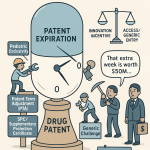
In the high-stakes world of pharmaceutical innovation, time is more than money—it’s the very currency of market exclusivity. For a blockbuster drug, a single day of patent protection can be worth over $8.2 million in revenue. Yet, the journey from a breakthrough discovery in the lab to a life-saving therapy in the hands of patients is a marathon, not a sprint. It’s a grueling gauntlet of preclinical research, multi-phase clinical trials, and rigorous regulatory scrutiny that can easily span 10 to 15 years and consume upwards of $1 billion.2 This protracted timeline creates a fundamental paradox: the standard 20-year patent term, which begins ticking from the moment an application is filed, is substantially eroded before a product ever generates a single dollar of revenue. The effective period of market exclusivity—the time a company actually has to recoup its massive investment—is often slashed to a mere 7 to 10 years.2
This “lost time” dilemma represents a profound economic disincentive to the very innovation our healthcare system depends on. If the rewards for a decade of high-risk research are fleeting, why take the risk at all? This is the critical question that the U.S. Congress sought to answer with the Drug Price Competition and Patent Term Restoration Act of 1984, universally known as the Hatch-Waxman Act.5 At its heart lies a provision that is arguably one of the most valuable strategic assets in the biopharmaceutical industry: Patent Term Extension, or PTE.
PTE is not a mere administrative bonus or a simple extension of time. It is a legislatively engineered remedy designed to restore a portion of the patent life that is inevitably consumed by the pre-market regulatory review process.7 It is a statutory “overtime” period, a lifeline thrown to innovators to ensure the high-risk, high-cost model of drug development remains economically viable.1 Understanding how to calculate and maximize this extension is not a task to be relegated to the back-office legal department; it is a C-suite level strategic imperative.
This report serves as a comprehensive guide for business leaders, in-house counsel, and portfolio managers aiming to transform the complex statutes of PTE into a tangible competitive advantage. We will dissect the foundational legal framework, provide a granular, step-by-step walkthrough of the calculation itself, and explore the advanced strategies that separate market leaders from the rest of the pack. The calculation of the regulatory review period is more than a mathematical exercise; it is the ultimate monetization of a company’s clinical and regulatory strategy. Every decision—from the timing of an Investigational New Drug (IND) submission to the diligence of responses to Food and Drug Administration (FDA) queries—has a direct and quantifiable impact on the final patent term and, consequently, on billions of dollars in potential revenue. Mastering this equation is essential for securing market dominance in the decades to come.
The Foundation: Deconstructing the Hatch-Waxman Act’s “Grand Bargain”
To truly grasp the strategic value of Patent Term Extension, one must first understand the legislative architecture from which it was born. The Hatch-Waxman Act of 1984 was a landmark piece of legislation, a “grand legislative compromise” that permanently reshaped the pharmaceutical landscape. It was crafted to resolve a fundamental tension in public policy, balancing two powerful, and often competing, societal goals.
A Tale of Two Goals: Spurring Innovation While Fueling Generic Competition
Before 1984, the pharmaceutical market was plagued by inefficiencies that satisfied neither innovators nor consumers. Brand-name drug manufacturers watched helplessly as their effective patent life dwindled during lengthy FDA reviews, diminishing their return on investment. Simultaneously, the path to market for generic drugs was arduous and expensive, requiring duplicative and often unnecessary clinical trials to prove safety and efficacy for already-established molecules. This created a “de facto monopoly” for brand drugs that often extended well beyond their patent expiration, keeping prices high and limiting patient access.
Congress, through the Hatch-Waxman Act, sought to strike a new balance.10 The legislation embodied a carefully crafted quid pro quo, a grand bargain aimed at achieving two core objectives simultaneously:
To Encourage Generic Drug Competition: The Act created the Abbreviated New Drug Application (ANDA) pathway. This streamlined process allowed generic manufacturers to get their products approved by demonstrating “bioequivalence” to the brand-name drug, rather than conducting their own costly and time-consuming clinical trials.5 This was the “stick” for the innovator industry, designed to unleash a flood of low-cost alternatives the moment core patent protection expired.
To Preserve Incentives for Innovation: In exchange for this expedited generic pathway, the Act offered a crucial “carrot” to innovator companies: the Patent Term Extension.5 This provision, codified in 35 U.S.C. § 156, was designed to restore a portion of the patent term lost during the FDA’s premarket regulatory review, thereby preserving the economic incentive for companies to undertake the risky and expensive process of developing new drugs.4
The success of the generic-focused side of this bargain has been nothing short of staggering. In the four decades since the Act’s passage, generic drug uptake in the United States has skyrocketed from a mere 19% of prescriptions to a dominant 90% today. This phenomenal success underscores precisely why the PTE provisions are so meticulously defined and constrained. The legislative intent was never to grant an unlimited or open-ended extension. It was to provide a reasonable and calculated restoration of lost time, after which the powerful engine of generic competition was designed to take over and drive down healthcare costs. The strict eligibility criteria, deductions, and statutory caps that we will explore are not bugs in the system; they are the essential features that maintain the integrity of this grand bargain.
Defining the “Product”: The Cornerstone of PTE Eligibility
Before one can even begin to calculate the length of a potential extension, a fundamental threshold question must be answered: is the approved product eligible in the first place? The answer hinges on the statutory definition of a “product” and the crucial requirement that the FDA’s approval represents the first permitted commercial marketing or use of that product.8
Under 35 U.S.C. § 156(f), a “drug product” is defined as “the active ingredient of a new drug…including any salt or ester of the active ingredient, as a single entity or in combination with another active ingredient”. This definition is the primary gatekeeper for PTE eligibility and has been the subject of significant legal battles and evolving interpretations that have created powerful strategic opportunities.
Initially, a disconnect existed between how the FDA and the U.S. Patent and Trademark Office (USPTO) viewed a new drug. For the purpose of granting New Chemical Entity (NCE) exclusivity, the FDA focuses on the “active moiety”—the core therapeutic molecule, excluding any salt or ester appendages. The USPTO, in its early interpretations, adopted a similar view for PTE, arguing that if the active moiety of a new drug had been previously approved (perhaps as a different salt), then the new drug was not truly “new” for PTE purposes.
This interpretation was decisively overturned by the courts, most notably in the 2010 Federal Circuit case PhotoCure ASA v. Kappos. The court rejected the “active moiety” test and held that the statute’s plain language must be followed. The USPTO must now look only at the specific “active ingredient” as defined in the statute—including its salt or ester form.8 This pivotal shift has profound implications for pharmaceutical lifecycle management. It means that a company can develop and patent a new ester or salt of a previously known active moiety, and if that new ester or salt is approved by the FDA, it can serve as the basis for a PTE. The
product (the ester) is considered new, even if the underlying moiety is not. This opens the door for innovators to secure valuable extensions on second-generation products that offer improvements over an original therapy, a strategy that was previously blocked.
However, the rules for combination products are more stringent. A new combination of two previously approved active ingredients is not eligible for PTE. To qualify, a combination product must contain at least one active ingredient that has never before been approved by the FDA.8 This distinction is critical for companies developing fixed-dose combination therapies, as it dictates whether their innovation will be rewarded with additional patent term.
The Anatomy of the Regulatory Review Period (RRP): A Tale of Two Phases
At the heart of the Patent Term Extension calculation is the Regulatory Review Period (RRP). This is the specific timeframe that the statute seeks to measure and partially restore. It is not an arbitrary period; it is precisely defined by law and broken into two distinct phases, each with its own weight in the final calculation. The RRP is the sum of the “testing phase” and the “approval phase”.7 Understanding the bookends of these two phases is the first and most critical step in determining the potential length of an extension.
The Testing Phase: Earning Half a Day’s Credit
The first component of the RRP is the “testing phase.” This period is designed to capture the time spent conducting the necessary clinical investigations to prove a drug’s safety and efficacy in humans before a formal marketing application can be submitted to the FDA.
Start Date: The testing phase officially begins on the date an Investigational New Drug (IND) application becomes effective.7 An IND is the application submitted to the FDA to get permission to start clinical trials in humans. Typically, an IND becomes effective 30 days after the FDA receives it, unless the agency places a clinical hold on the investigation.
End Date: The testing phase concludes on the date a New Drug Application (NDA) or Biologics License Application (BLA) is initially submitted to the FDA.7
The duration of this phase is credited at a rate of one-half day for every full day that passes.1 This “half-day” rule reflects a legislative compromise. Congress recognized that the clinical trial period is a necessary part of drug development that is largely driven by the innovator company, though it operates under the FDA’s oversight. The time is not entirely “lost” to regulatory delay in the same way as the period when an application is sitting on a reviewer’s desk at the FDA. Therefore, the statute provides partial, but not full, compensation for this phase. This structure implicitly encourages companies to design and execute their clinical programs efficiently, as they will only be compensated for half of the time spent in this phase.
The Approval Phase: Securing a Full Day’s Credit
The second component of the RRP is the “approval phase.” This period captures the time the FDA is actively reviewing the formal marketing application submitted by the drug sponsor.
Start Date: The approval phase begins on the same day the testing phase ends: the date the NDA or BLA is “initially submitted” to the FDA.7
End Date: The approval phase concludes on the date the NDA or BLA is officially approved by the FDA.7
Unlike the testing phase, the time spent in the approval phase is credited at a rate of one full day for every day that passes.1 This one-for-one credit reflects the understanding that this period represents a direct delay imposed by the regulatory agency, during which the company has a market-ready product but is legally barred from selling it.
The boundary between these two phases—the date of NDA or BLA submission—is a critical strategic pivot point. Because this date marks the transition from a half-credit period to a full-credit period, any acceleration in preparing and filing the marketing application has a leveraged impact on the final PTE calculation. For instance, if a regulatory affairs team can compress the NDA preparation timeline by 30 days, they not only bring the potential approval date forward but also convert 30 days of RRP from the 0.5x credit bucket to the 1.0x credit bucket. This seemingly small operational efficiency effectively adds 15 days of high-value, patent-protected market exclusivity to the product’s lifecycle. This creates a direct, quantifiable financial incentive for excellence and efficiency in regulatory affairs, transforming it from a cost center into a direct contributor to the company’s most valuable assets.
The Master Formula: A Step-by-Step Guide to the PTE Calculation
With a clear understanding of the two phases of the Regulatory Review Period, we can now assemble the master formula that the USPTO uses to calculate the final patent term extension. This equation, laid out in 35 U.S.C. § 156(c), is more than a simple addition of the two phases. It incorporates several critical deductions that account for the timing of the patent grant and the applicant’s diligence during the review process.
Unveiling the Equation: PTE = RRP – PGRRP – DD – ½ (TP – PGTP)
The official formula, while appearing complex, can be broken down into a logical sequence of calculations. The USPTO’s Manual of Patent Examining Procedure (MPEP) and related regulations provide a clear, albeit dense, framework for this process. A simplified version of the core calculation is as follows:
PTE=(21×Testing Phase)+Approval Phase−Deductions
However, to perform the calculation with the precision required by the statute, we must use the more detailed formula that explicitly accounts for the pre-grant period 19:
Period of Extension=RRP−PGRRP−DD−21(TP−PGTP)
Where the variables are defined as 19:
RRP (Regulatory Review Period): The total number of days from the IND effective date to the NDA/BLA approval date.
PGRRP (Pre-Grant Regulatory Review Period): The number of days of the RRP that occurred on or before the date the patent was issued.
DD (Due Diligence): The number of days during the RRP that the applicant did not act with due diligence (this is typically zero unless successfully challenged).
TP (Testing Phase): The total number of days in the testing phase (from IND effective date to NDA/BLA submission date).
PGTP (Pre-Grant Testing Phase): The number of days of the testing phase that occurred on or before the date the patent was issued.
While this formula may seem daunting, its logic is straightforward. It starts with the total creditable time (half the testing phase plus the full approval phase) and then subtracts any time that is not eligible for restoration.
The Pre-Grant Deduction: Why Patent Timing is Everything
The most significant and strategically important deduction in the PTE formula is the one for the pre-grant period. The fundamental principle of PTE is to restore patent term that was lost to regulatory review.7 Logically, one cannot lose patent term if a patent has not yet been granted. The statute reflects this by explicitly stating that the extension is granted for the portion of the regulatory review period that “occurs after the date the patent is issued”.
The formula achieves this by subtracting out all of the RRP that occurred before the patent grant date (PGRRP) and then adding back half of the testing phase that occurred before the grant date (the net effect of the – ½(TP – PGTP) term when combined with the other variables). The simpler way to conceptualize this is:
Calculate the creditable time from the testing phase (½ × TP).
Calculate the creditable time from the approval phase (1 × AP).
Add them together to get a preliminary total.
Subtract any time from the testing phase that occurred before the patent was granted, credited at the half-day rate (½ × PGTP).
Subtract any time from the approval phase that occurred before the patent was granted, credited at the full-day rate.
This pre-grant deduction creates a crucial strategic tension between a company’s patent prosecution strategy and its drug development timeline. There are competing incentives:
Incentive to File Early: Filing a patent application as early as possible secures an early priority date, which is critical for establishing novelty and non-obviousness in a competitive field.
Incentive to Grant Late (Relative to R&D): The later a patent is granted relative to the start of the RRP (the IND effective date), the more of the RRP will be “pre-grant” and thus non-creditable, reducing the potential PTE.
This dynamic forces a sophisticated, cross-functional dialogue between IP counsel, who manage the patent prosecution timeline, and the R&D and regulatory teams, who manage the clinical development timeline. Decisions about whether to accelerate patent examination (e.g., through Track One prioritized examination) or how to respond to office actions are no longer just legal tactics; they are strategic financial decisions. Accelerating the grant date of a key patent so that it issues before a lengthy clinical trial begins can directly translate into hundreds of additional days of patent term extension, potentially adding hundreds of millions of dollars to the product’s lifetime revenue. This transforms patent prosecution from a simple process of securing rights into a dynamic tool for maximizing the value of those rights.
A Practical Walkthrough: Calculating PTE for a Hypothetical Drug
To demystify the formula, let’s walk through a detailed, step-by-step calculation for a hypothetical drug, “Innovapharm.” This example will serve as a practical template, illustrating the application of the formula, the pre-grant deduction, and the statutory caps.
Scenario Data Points:
IND Effective Date: June 1, 2015
Patent Grant Date: March 1, 2017
NDA Submission Date: August 1, 2021
NDA Approval Date: August 1, 2023
Due Diligence Deduction (DD): 0 days (assuming the applicant was diligent)
Step 1: Calculate the Duration of Each Phase
First, we determine the total number of days in the testing and approval phases.
Testing Phase (TP) Duration:
Formula: NDA Submission Date – IND Effective Date
Calculation: August 1, 2021 – June 1, 2015 = 2,252 days
Approval Phase (AP) Duration:
Formula: NDA Approval Date – NDA Submission Date
Calculation: August 1, 2023 – August 1, 2021 = 730 days
Step 2: Calculate the Initial Creditable Time (Before Deductions)
Next, we apply the half-day credit to the testing phase and the full-day credit to the approval phase.
Creditable Time from Testing Phase:
Formula: TP Duration / 2
Calculation: 2,252 days / 2 = 1,126 days
Creditable Time from Approval Phase:
Formula: AP Duration × 1
Calculation: 730 days × 1 = 730 days
Total Initial Credit:
Calculation: 1,126 days + 730 days = 1,856 days
Step 3: Calculate and Apply the Pre-Grant Deduction
Now, we must subtract the portion of the creditable time that occurred before the patent was granted on March 1, 2017.
Pre-Grant Testing Phase (PGTP) Duration:
Formula: Patent Grant Date – IND Effective Date
Calculation: March 1, 2017 – June 1, 2015 = 639 days
Note: In this scenario, the entire pre-grant period falls within the testing phase. If the patent were granted after the NDA submission, we would also have a pre-grant approval phase to account for.
Pre-Grant Deduction Amount:
Formula: PGTP Duration / 2 (since it’s from the testing phase)
Calculation: 639 days / 2 = 319.5 days. The statute ignores half-days, so we round down to 319 days.
Base PTE Calculation (Adjusted Credit):
Formula: Total Initial Credit – Pre-Grant Deduction
Calculation: 1,856 days – 319 days = 1,537 days
Step 4: Apply the Statutory Caps
The calculated value of 1,537 days is not the final answer. We must now check it against the two hard statutory caps.
Cap 1: The 5-Year Maximum
The maximum possible extension is 5 years, which is 1,826 days (5 × 365.25).
Our calculated value of 1,537 days is less than 1,826 days. So, we are currently limited to 1,537 days.
Cap 2: The 14-Year Post-Approval Rule
This cap limits the total remaining patent term (original term + extension) to no more than 14 years from the FDA approval date.
First, find the original patent expiration date:
Formula: Patent Grant Date + 20 Years (assuming a standard term from filing, and for simplicity, that grant date is close to the 20-year end date calculation from filing)
Calculation: March 1, 2017 + 20 years = March 1, 2037.
Next, find the remaining patent term at the time of approval:
Formula: Original Expiration Date – NDA Approval Date
Calculation: March 1, 2037 – August 1, 2023 = 4,960 days (approximately 13.58 years).
Finally, calculate the maximum extension allowed under this cap:
Formula: 14 Years – Remaining Term at Approval
Calculation (in days): 5,113 days (14 years) – 4,960 days = 153 days.
Step 5: Determine the Final PTE Award
The final, permissible Patent Term Extension is the smallest of the three values we have determined:
Base Calculated Extension: 1,537 days
5-Year Cap: 1,826 days
14-Year Cap: 153 days
The smallest value is 153 days.
Final Result: Despite a long regulatory review period that initially suggested a potential extension of over four years, the 14-year cap is the limiting factor in this scenario. The final PTE award for “Innovapharm” would be 153 days. This example powerfully illustrates how critical it is to analyze all the components of the PTE calculation, as the final result can be dramatically affected by the statutory limitations.
The Fine Print: Navigating Statutory Caps and Limitations
The master formula provides the raw calculation of potentially restorable time, but this figure is always subject to a series of statutory guardrails. These limitations, or caps, are not mere footnotes; they are powerful constraints that often dictate the final PTE award. They represent Congress’s intent to provide a substantial but ultimately finite period of restoration, ensuring that the “grand bargain” of Hatch-Waxman remains balanced. For the strategist, understanding these caps is just as important as understanding the core calculation, as they define the absolute boundaries of what is achievable.
The Five-Year Ceiling: The First Hard Cap on Extension
The most straightforward limitation on Patent Term Extension is the five-year ceiling. Regardless of how long a product’s regulatory review period was, the statute unequivocally states that the extension granted cannot exceed five years.7
This cap serves as a simple, absolute backstop. Even if a drug faced an exceptionally prolonged and complex journey through clinical trials and FDA review—perhaps a decade or more—the maximum compensation it can receive under PTE is five years. This prevents extreme outliers from receiving extensions that would excessively delay generic competition and ensures a degree of predictability in the system. For most drugs, the calculation will result in a number less than five years, but for those with the longest development timelines, this cap is often the first and most significant limiting factor.
The Fourteen-Year Rule: The More Complex Cap on Total Market Life
While the five-year cap limits the extension itself, the fourteen-year rule limits the total effective patent life of the product after it has been approved. This is arguably the most critical, and often the most misunderstood, constraint in the entire PTE framework.
The rule, found in 35 U.S.C. § 156(c)(3), states that the remaining term of the patent after the extension is added cannot exceed fourteen years from the date of the product’s marketing approval.4 If, at the time of FDA approval, the patent already has 14 or more years of life remaining, the product is ineligible for
any extension, regardless of how long its RRP was.
This rule functions as a “catch-up” mechanism. It is designed to provide the greatest benefit to those drugs whose patent terms were most severely eroded by the regulatory process. Consider two scenarios:
Drug A (Fast Development): A drug moves quickly through R&D. At the time of FDA approval, its core patent still has 15 years of life remaining. Under the 14-year rule, it is ineligible for any PTE. The law deems that it already has a sufficient period of market exclusivity.
Drug B (Slow Development): A drug for a complex disease requires extensive, lengthy trials. At the time of FDA approval, its core patent has only 7 years of life remaining. The 14-year rule allows for a potential extension of up to 7 years (14 years – 7 years remaining = 7 years). While this would still be subject to the 5-year cap and the RRP calculation, the 14-year rule provides a much larger window of potential restoration.
By structuring the cap this way, the law implicitly aligns the legislative benefit with the products that “need it most.” It ensures that the goal of PTE—to provide a meaningful period of post-approval exclusivity—is achieved, while preventing products that already have a long runway from receiving an additional, arguably unnecessary, extension. For strategic planning, this means that the timing of the patent filing relative to the expected approval date is paramount, as this relationship directly determines the “remaining term” that forms the basis of the 14-year cap calculation.
The “One Patent, One Product” Rule
The final key limitation is that for any single regulatory review period, only one patent may be extended.19 A company cannot take the RRP for a single drug approval and use it to extend multiple patents covering that drug. If the patent owner files multiple PTE applications for the same RRP, the USPTO will require them to elect a single patent for extension before the certificate is issued.7
On its face, this seems like a simple restriction. However, the precise statutory language—”in no event shall more than one patent be extended…for the same regulatory review period for any product”—creates a powerful strategic loophole that sophisticated companies can exploit.24 The rule does not say “one patent per product”; it says “one patent per RRP.”
This distinction is the key. What if a single active ingredient is the subject of multiple, distinct NDAs, each with its own unique RRP? This scenario arose in a landmark case involving the diabetes drug Nesina® (alogliptin). The company, Takeda, secured FDA approval for three different products on the exact same day:
Nesina®: Containing the new active ingredient alogliptin.
Kazano®: A combination of alogliptin and the previously approved drug metformin.
Oseni®: A combination of alogliptin and the previously approved drug pioglitazone.
Because each product was approved under a separate NDA, each had its own distinct RRP based on its unique clinical development timeline. And because the approvals all occurred on the same day, each one qualified as a “first permitted commercial marketing” for that specific product. The result? The USPTO awarded three separate PTEs to three different patents, all based on the same new active ingredient, alogliptin.
This case demonstrates that the “Rule of Ones” is more nuanced than it appears. It transforms clinical development and regulatory filing into a tool for intellectual property strategy. By pursuing multiple indications or combination products in parallel rather than in series, and by meticulously coordinating with the FDA to align approval dates, a company can potentially build a fortress of overlapping PTEs around a single blockbuster molecule, dramatically extending its effective market exclusivity far beyond what a single extension could provide. This requires immense foresight and a deeply integrated approach across a company’s R&D, regulatory, and IP departments, but the potential rewards are measured in billions of dollars.
The Due Diligence Gauntlet: A Critical and Often Overlooked Factor
Within the intricate machinery of the PTE calculation lies a crucial, qualitative element that can significantly reduce the final award: the “due diligence” requirement. The statute mandates that the extension period be reduced by any time during which the applicant failed to act with due diligence.19 This provision acts as a check on the system, ensuring that patent term is not extended to compensate for delays that were the fault of the applicant rather than the regulatory agency. While challenges on this basis are rare, the existence of this requirement imposes a significant burden on innovator companies to maintain a diligent pace and meticulous records throughout the entire drug development process.
Defining “Due Diligence”: The FDA’s Standard of Effort
What exactly constitutes “due diligence” in this context? The FDA’s regulations define it as “that degree of attention, continuous directed effort, and timeliness as may reasonably be expected from, and are ordinarily exercised by, a person during a regulatory review period”.27 This is not a standard of perfection, but one of reasonable and continuous effort to advance the product toward approval without unnecessary delay.
The FDA will consider all relevant factors when assessing diligence, including :
The time elapsed between the IND becoming effective and the initiation of the first clinical trial.
The time required to conduct the clinical trials themselves.
Compliance with FDA requirements and regulations.
Delays solely attributable to FDA action (which would not count against the applicant).
Delays caused by external factors, such as actions by other government agencies or the physical destruction of testing facilities.
The unavailability of key personnel involved in the development program.
Crucially, the FDA has emphasized that this list is not exhaustive. The agency will look at the totality of the circumstances to determine if the applicant’s actions (or inactions) unnecessarily prolonged the regulatory review period.
The Challenge Process: How Third Parties Can Derail a PTE
The due diligence requirement is not merely a self-policing mechanism. The statute provides a formal process for third parties—most notably, generic competitors with a vested interest in limiting the brand’s patent term—to challenge an applicant’s diligence.
The process unfolds in a series of prescribed steps:
FDA Publishes RRP Determination: After a PTE application is filed with the USPTO and forwarded to the FDA, the FDA calculates the RRP and publishes its determination in the Federal Register.
Petition Window Opens: This publication triggers a 180-day window during which “any person” may file a “due diligence petition” with the FDA.17
Petition Requirements: The petition must allege that the applicant failed to act with due diligence during a specific part of the RRP and must include sufficient facts to warrant an investigation. A mere allegation is not enough; the petitioner must provide a plausible basis for their claim.
FDA Investigation: Upon receiving a valid petition, the FDA has 90 days to either deny it or launch an investigation. If it investigates, the agency will review its records and may ask the applicant for additional information. The FDA will then publish its final determination.
Informal Hearing: If any party is unsatisfied with the FDA’s determination, they can request an informal hearing within 60 days of the publication. The burden of proof at this hearing rests with the party challenging the FDA’s decision.
Once this process is complete and the RRP is finalized, the FDA informs the USPTO, which then proceeds with the final PTE calculation.
Case Studies in Due Diligence Challenges
Despite the formal process being in place for decades, due diligence petitions are exceedingly rare. As of 2017, only four such petitions had been filed, and none resulted in a formal FDA finding of a lack of due diligence against an applicant. However, these cases provide valuable insight into the types of delays that can attract scrutiny:
Sapien Transcatheter Heart Valve (2012): A petition alleged that the applicant, Edwards Lifesciences, unreasonably delayed approval by suspending clinical trials, making unnecessary major design modifications, and requesting numerous extensions for providing information to the FDA. The petition was ultimately withdrawn before a final decision.
Mifeprex® (mifepristone) (2002): A petition alleged that the applicant delayed approval for over four years due to an inadequate manufacturing source. The FDA rendered the petition moot by agreeing to revise the RRP based on a separate request from the petitioner, effectively granting the challenger’s desired outcome without ruling on the diligence question.
Nexium® (esomeprazole) (2001): Dr. Reddy’s Laboratories filed a petition against AstraZeneca, which was later withdrawn.
The rarity of these challenges does not diminish the importance of the due diligence requirement. Its existence serves as a powerful deterrent, compelling innovator companies to avoid unreasonable delays. For corporate strategists and in-house counsel, this has a clear practical implication: meticulous record-keeping is essential. Every significant pause or delay in the clinical development or regulatory submission process should be documented contemporaneously with a clear, defensible rationale. This documentation becomes a crucial defensive shield, protecting a future multi-billion-dollar PTE award from being chipped away by a competitor’s challenge years down the line.
The Three-Player Game: Roles and Interactions of the Applicant, FDA, and USPTO
The process of obtaining a Patent Term Extension is not a simple bilateral transaction but a complex, multi-stage interplay between three key actors: the patent owner (the applicant), the Food and Drug Administration (FDA), and the U.S. Patent and Trademark Office (USPTO). Each has a distinct and statutorily defined role, and understanding this procedural dance is essential for successfully navigating the system. The separation of duties is designed to ensure that regulatory expertise and patent law expertise are applied correctly, but the necessary communication between the agencies can lead to a lengthy process that requires careful management.
The Applicant’s Playbook: Initiating and Managing the PTE Application
The patent owner is the prime mover in the PTE process. The burden of initiating the request and providing all necessary information falls squarely on their shoulders.
The first and most critical responsibility is timeliness. The PTE application must be submitted to the USPTO within a strict 60-day period beginning on the date the product receives FDA approval for commercial marketing.7 This is an unforgiving deadline; missing it means forfeiting the right to extension entirely.
The application itself is a comprehensive document that must contain specific information, including 7:
The identity of the approved product and the federal statute under which it was reviewed.
The identity of the patent for which extension is sought, along with a copy of the patent.
Identification of each claim in the patent that covers the approved product, its method of use, or its method of manufacture.
A statement that the patent is eligible for extension.
A brief description of the activities undertaken by the applicant during the regulatory review period, including all significant dates (e.g., IND effective date, NDA submission date, approval date).
The applicant’s own calculation of the length of the extension.
A key strategic element of the applicant’s playbook involves managing a portfolio of patents. A single drug product may be covered by multiple patents claiming the compound, formulations, and methods of use. While only one patent can ultimately be extended for a given RRP, the applicant is permitted to file PTE applications for multiple eligible patents within the 60-day window.7 This is a powerful tactic. It allows the company to postpone the crucial decision of which patent to extend until much later in the process. This can be advantageous if, for example, the various patents have different expiration dates or if one patent is facing a validity challenge in litigation. The company can wait until the landscape is clearer before making its final, binding election.
The FDA’s Role: The Official Timekeeper
The FDA’s role in the PTE process is specific and circumscribed: it acts as the official timekeeper and the arbiter of due diligence.8 The USPTO, which has no expertise in drug regulation, defers entirely to the FDA on these matters.17
Once the USPTO receives a PTE application, it forwards a copy to the FDA and requests confirmation on several key eligibility points, including whether the product was subject to a qualifying regulatory review and whether the approval was the first permitted commercial marketing. Assuming eligibility is confirmed, the USPTO’s primary request is for the FDA to formally determine the length of the Regulatory Review Period.
The FDA determines the start and end dates of the testing and approval phases based on its official records. It then publishes this determination in the Federal Register, which, as discussed, initiates the 180-day period for any third party to file a due diligence petition.27 The FDA is responsible for reviewing any such petitions and making a final ruling on the applicant’s diligence. After the 180-day window closes and any petitions are resolved, the FDA’s determination of the RRP becomes final, and it communicates this final number to the USPTO.8
The USPTO’s Role: The Final Arbiter
The USPTO administers the overall PTE regime, acting as the final arbiter that calculates and grants the extension.8 Its role begins with receiving the application and conducting an initial review for formal compliance and patent eligibility (i.e., ensuring the patent claims the product, its use, or manufacture).
After receiving the final RRP determination from the FDA, the USPTO performs its own independent calculation of the patent term extension. It takes the RRP number provided by the FDA and applies all the statutory deductions and caps: the pre-grant deduction, the half-day credit for the testing phase, the five-year ceiling, and the fourteen-year rule.
The USPTO then issues a Notice of Final Determination to the applicant, stating the length of the extension for which the patent is eligible and showing the calculations used to arrive at that number. If the applicant agrees and has elected a single patent for extension, the USPTO issues a formal Certificate of Extension, which is recorded in the official file of the patent and becomes part of the original patent.
This separation of duties, while logical, often results in a protracted timeline. The back-and-forth correspondence between the two agencies, coupled with statutory waiting periods, can mean that the final Certificate of Extension is not issued until years after the initial application was filed—sometimes taking over four years. This delay underscores the importance of another procedural tool: the interim extension. If a patent is set to expire while its PTE application is still pending, the applicant can apply for one or more interim extensions of up to one year each to prevent a lapse in protection.7 This adds another layer of complexity that applicants must diligently manage to ensure their rights are continuously maintained.
Advanced Strategies and Complex Scenarios
The foundational principles of PTE calculation apply to all regulated products, but the increasing complexity of modern therapeutics—from large-molecule biologics to combination products—presents unique challenges and strategic considerations. Furthermore, the interaction of PTE with other aspects of patent law, such as the doctrine of obviousness-type double patenting, creates intricate scenarios that require a sophisticated, forward-looking approach to both patent prosecution and lifecycle management.
Navigating PTE for Biologics: When the “Active Ingredient” is Complex
The PTE statute was written in 1984 with traditional, chemically synthesized small-molecule drugs in mind. Applying its framework to large-molecule biologics, such as monoclonal antibodies, cell therapies, and gene therapies, has proven to be a significant challenge.32 The core of the issue lies in the statutory lynchpin of eligibility: the definition of the “active ingredient”.
For a small molecule, the active ingredient is a well-defined chemical structure. For a biologic, the “active ingredient” can be far more complex and heterogeneous. This is particularly true for autologous cell therapies like CAR-T, where the final product is manufactured from a patient’s own cells and is therefore unique to each individual. This raises a thorny question: if the product differs from patient to patient, what is the single “active ingredient” that can be defined as “new” for the purpose of PTE eligibility?
The PTE application for YESCARTA®, a CAR-T cell therapy, illustrates these challenges perfectly. The USPTO initially questioned the application, stating that (a) the cells themselves could not be the active ingredient because they differ between patients, and (b) the chimeric antigen receptor (CAR) was not sufficiently defined in the application. Ultimately, the USPTO was persuaded to grant the extension, appearing to focus on the novel amino acid sequence of the CAR construct as the new “active ingredient” that distinguished it from previously approved products.
This ambiguity creates both risk and opportunity. The risk is that the USPTO may struggle to apply the small-molecule framework, leading to rejections or requests for clarification that can delay the process. The opportunity, however, is significant. Because biologics are inherently variable, it may be possible to argue that relatively minor modifications—such as changes to the amino acid sequence or glycosylation patterns—create a distinct and “new” product for PTE purposes. This sets a potentially different, and in some ways higher, bar than for small molecules, where only a new salt or ester of a previously approved moiety might not suffice. Successfully navigating this landscape requires a deep integration of scientific, regulatory, and patent expertise to craft a PTE application that precisely defines the novel aspects of the biologic and persuasively argues why it meets the “first approval” standard.
PTE for Combination Products: The “New Component” Rule
Fixed-dose combination (FDC) products, which combine two or more active ingredients into a single dosage form, are a common and clinically valuable form of pharmaceutical innovation. However, they are subject to strict rules for PTE eligibility.
As established previously, a new combination of two previously approved active ingredients is not eligible for a PTE. The policy rationale is that the regulatory review for such a product, while necessary, does not involve the same level of risk and investment as bringing a truly novel compound to market for the first time.
To qualify for a PTE, a combination product must meet a critical “new component” test: at least one of its active ingredients (including any salt or ester of that ingredient) must not have been previously approved by the FDA.8 Furthermore, the patent for which the extension is sought must claim that newly-approved active ingredient. This ensures that the PTE is rewarding the innovation associated with the new molecular entity, not merely the act of combining existing ones. This rule has a direct impact on R&D strategy, incentivizing companies to develop novel co-formulations concurrently with the development of a new chemical entity, rather than as a later-stage, add-on strategy.
The Terminal Disclaimer Trap: How ODP Can Impact Patent Term
One of the most complex but strategically vital areas of PTE practice involves its interaction with terminal disclaimers. A terminal disclaimer is a legal instrument an applicant files with the USPTO to overcome a rejection for “obviousness-type double patenting” (ODP). An ODP rejection occurs when an applicant tries to claim an obvious variation of an invention already claimed in one of their earlier patents. To get the second patent, the applicant must file a terminal disclaimer, essentially agreeing that the second patent will expire on the same day as the first, thereby preventing an unjustified extension of the patent monopoly.36
This creates a potential conflict with statutory mechanisms that extend patent term, namely Patent Term Adjustment (PTA) and Patent Term Extension (PTE).
Patent Term Adjustment (PTA) is granted to compensate for administrative delays by the USPTO during patent prosecution.
Patent Term Extension (PTE) is granted to compensate for delays by the FDA during regulatory review.
The Federal Circuit has made a critical distinction in how terminal disclaimers affect these two types of extensions. In the landmark case In re Cellect, the court affirmed that a terminal disclaimer effectively nullifies any PTA granted on a patent.37 The statute governing PTA explicitly states that a patent’s term cannot be adjusted beyond the date specified in a disclaimer.
However, the statute for PTE contains no such language. Citing this difference, the Federal Circuit has consistently held that an otherwise valid PTE can extend the term of a patent beyond an expiration date set by a terminal disclaimer.12 The PTE is added
after the terminally disclaimed date.
This differential treatment has profound strategic consequences for patent prosecution.
If a patent is a strong candidate for PTE (e.g., it covers a new drug in early clinical trials), facing an ODP rejection and filing a terminal disclaimer is a relatively low-risk strategic move. The valuable PTE will not be forfeited.
If a patent’s primary source of extra term is likely to be PTA (e.g., it covers a research tool or a product not subject to FDA review, and has faced long prosecution delays), filing a terminal disclaimer could be a catastrophic error, inadvertently surrendering years of valuable patent life.
This requires patent strategists to have exceptional foresight. During the prosecution of a patent family, they must analyze the potential commercial path of the claimed inventions, predict which form of term extension will be most relevant and valuable years down the road, and tailor their response to any ODP rejections accordingly. It is a high-stakes chess match where a single move can determine the fate of years of market exclusivity.
From Theory to Practice: Real-World PTE Case Studies
The principles and formulas governing Patent Term Extension can seem abstract. To ground these concepts in reality, it is essential to analyze how they have been applied to real-world blockbuster drugs. By deconstructing the PTE calculations for well-known products, we can see the strategic decisions, regulatory timelines, and statutory constraints in action. These case studies serve not only as practical examples but also as powerful illustrations of the immense value at stake.
Case Study 1: Keytruda® (pembrolizumab)
Merck’s Keytruda® (pembrolizumab) is one of the most successful biologic drugs in history, a PD-1 blocking antibody approved to treat a wide range of cancers. Its commercial success is underpinned by a robust patent portfolio, and securing a PTE on a key patent was a critical step in maximizing its lifecycle. Let’s reconstruct the PTE calculation for Keytruda® using publicly available data.
The Key Data Points:
Product: KEYTRUDA® (pembrolizumab), approved under Biologics License Application (BLA) 125514/0.
Patent Extended: U.S. Patent No. 8,354,509, which claims antibodies to the human PD-1 receptor.41
Patent Grant Date: January 15, 2013.43
IND Effective Date: January 7, 2011. This date was determined by the FDA based on its records.
BLA Submission Date: February 27, 2014.
BLA Approval Date: September 4, 2014.46
The PTE Calculation:
1. Calculate Phase Durations:
Testing Phase (TP): From January 7, 2011, to February 27, 2014.
Duration = 1,147 days.
Approval Phase (AP): From February 27, 2014, to September 4, 2014.
Duration = 189 days.
2. Calculate Initial Creditable Time:
From Testing Phase: 1,147 days / 2 = 573.5 days. Rounding down gives 573 days.
From Approval Phase: 189 days × 1 = 189 days.
Total Initial Credit: 573 + 189 = 762 days.
3. Apply the Pre-Grant Deduction:
The patent was granted on January 15, 2013. The entire RRP for Keytruda® occurred after this date. The IND became effective in 2011, but the patent grant date is the key reference point for the post-grant period. The entire RRP is post-grant.
Pre-Grant Testing Phase (PGTP): The period from the IND effective date (Jan 7, 2011) to the patent grant date (Jan 15, 2013) is 739 days.
Pre-Grant Deduction: 739 days / 2 = 369.5 days. Rounding down gives 369 days.
Correction: A more precise reading of the statute requires calculating the portion of the RRP that occurs after the patent is issued.
Post-Grant Testing Phase: From Patent Grant (Jan 15, 2013) to BLA Submission (Feb 27, 2014) = 408 days. Credit = 408 / 2 = 204 days.
Post-Grant Approval Phase: From BLA Submission (Feb 27, 2014) to BLA Approval (Sep 4, 2014) = 189 days. Credit = 189 × 1 = 189 days.
Base PTE Calculation: 204 days + 189 days = 393 days.
4. Apply Statutory Caps:
Cap 1 (5-Year Maximum): 393 days is well below the 1,826-day maximum.
Cap 2 (14-Year Rule):
Original Patent Expiration (assuming 20 years from priority date, which is June 18, 2007 ): June 18, 2027.
Remaining Term at Approval (Sep 4, 2014): From Sep 4, 2014, to June 18, 2027 = 4,670 days (approx. 12.78 years).
Maximum Extension Allowed: 14 years – 12.78 years = 1.22 years (approx. 446 days).
5. Final Determination:
Base Calculation: 393 days
5-Year Cap: 1,826 days
14-Year Cap: 446 days
The final PTE award is the minimum of these values, which is 393 days. This extension pushed the expiration date of this key patent from mid-2028 to late 2029, securing over a year of additional multi-billion-dollar sales for Merck.
Case Study 2: Sovaldi® (sofosbuvir)
Gilead Sciences’ Sovaldi® (sofosbuvir) revolutionized the treatment of Hepatitis C and became one of the fastest-selling drugs in history. Its commercial success was protected not by a single patent, but by a complex and layered portfolio—a “patent thicket”—that illustrates a broader lifecycle management strategy where PTE is just one piece of the puzzle.48
Sovaldi® is protected by numerous patents covering :
The base nucleoside compound.
The “prodrug” structure that allows the body to metabolize the active compound.
Specific crystalline forms (polymorphs) of the drug substance.
This strategy, often criticized by opponents as “evergreening,” involves filing a series of secondary patents on incremental innovations that expire later than the original composition-of-matter patent.50 The primary patent on the sofosbuvir base molecule might expire in 2025, but patents on the prodrug and crystalline forms extend well beyond that, with some expiring as late as 2030 or beyond.48
The strategic decision for Gilead was not just about calculating the PTE, but about choosing which patent to apply it to. By extending a later-expiring patent on a crucial formulation or prodrug, a company can create a more formidable and longer-lasting barrier to generic entry than by simply extending the earliest-expiring patent. A generic competitor might be able to design around the base compound patent once it expires, but if a PTE-extended patent on the specific, commercially successful crystalline form is still in force, they cannot market an equivalent product.
The Sovaldi® case highlights a critical third-order insight: PTE strategy does not exist in a vacuum. It must be integrated with a company’s overall patent prosecution and lifecycle management plan. The choice of which patent to extend is a complex business calculation that requires forecasting the litigation risk, commercial relevance, and defensibility of every patent in the portfolio. The goal is to select the patent that, when extended, creates the most significant and durable obstacle for would-be generic competitors, thereby maximizing the total period of market exclusivity for the franchise as a whole.
The Strategist’s Toolkit: Research and Analysis for Competitive Advantage
Mastering the calculation and strategy of Patent Term Extension requires more than just understanding the law; it demands the ability to gather, synthesize, and analyze complex data from multiple sources. For legal professionals and business strategists, knowing where to find the critical pieces of the puzzle—from patent listings and regulatory exclusivities to the complete file history of a PTE application—is a fundamental skill. This section provides a practical guide to the essential tools of the trade.
The FDA Orange Book: Your Primary Source for Patent and Exclusivity Data
The FDA’s publication, “Approved Drug Products with Therapeutic Equivalence Evaluations,” universally known as the Orange Book, is the definitive public resource for patent and exclusivity information related to small-molecule drugs.55 For any patent professional conducting a PTE analysis, the Orange Book is the mandatory first stop.
A practitioner would use the Orange Book to :
Identify Listed Patents: By searching for a drug by its brand name or active ingredient, one can retrieve a list of all U.S. patents that the NDA holder has asserted cover the drug, its formulation, or its method of use.58 The listing includes the patent number and its expiration date.
Analyze Patent Use Codes: For method-of-use patents, the Orange Book provides specific “use codes” that describe the patented indication. This is critical for understanding the scope of the patent’s coverage.
Determine Regulatory Exclusivities: The Orange Book also lists all applicable regulatory exclusivities, such as New Chemical Entity (NCE), Orphan Drug (ODE), or Pediatric exclusivity, along with their expiration dates.58 These exclusivities provide market protection independent of patents and are a crucial component of a drug’s overall lifecycle.
It is important to remember that the FDA’s role in listing patents is primarily ministerial; it relies on the information submitted by the NDA holder on Form FDA 3542.58 While the agency provides a mechanism for disputing the accuracy of a listing, the Orange Book itself is a reflection of the innovator’s claims, which may later be challenged in court.
The USPTO Patent Center: Uncovering the Full PTE File History
While the Orange Book tells you which patents are listed for a drug, it doesn’t provide the details of any PTE application. For that, one must turn to the USPTO. Historically, finding this information was a cumbersome process. Today, the USPTO has made it significantly easier by publishing dedicated lists of PTE applications and grants, which link directly to the relevant files in the Patent Center portal.61
A step-by-step guide for a legal professional to research a PTE application using these tools would be:
Navigate to the USPTO’s PTE Webpage: Start at the USPTO’s page for “Patent terms extended under 35 U.S.C. 156”.61
Access the PTE Application List: This page contains a downloadable Excel spreadsheet listing all PTE applications filed within the last five years. This is the primary tool for identifying pending applications.
Search for the Drug or Patent: Open the spreadsheet and search for the drug’s trade name, active ingredient, or the patent number (if known from the Orange Book). The list provides the application number, patent number, product name, and filing date.
Access the File Wrapper in Patent Center: The USPTO’s list often includes direct links to the application file in Patent Center. If not, the application number can be used to search directly in the Patent Center public search interface.
Review the “Image File Wrapper”: Once in the Patent Center for the specific PTE application (which will have its own application number, often in the 90/XXXXXX series), the “Image File Wrapper” tab contains the complete, chronologically-ordered history of the application. Here, a researcher can find:
The initial PTE application filed by the patent owner.
All correspondence between the USPTO and the applicant.
Correspondence between the USPTO and the FDA, including the FDA’s final determination of the Regulatory Review Period.
The USPTO’s Notice of Final Determination, showing its final calculation.
The final Certificate of Extension, if granted.
This ability to access the complete public record allows for a full reconstruction and verification of any PTE calculation, providing transparency and critical data for competitive analysis.
Leveraging Business Intelligence: The Role of Platforms like DrugPatentWatch
Public databases like the Orange Book and Patent Center provide the raw data. However, synthesizing this information and placing it in a broader strategic context can be time-consuming. This is where commercial business intelligence platforms play a crucial role.
Services like DrugPatentWatch provide a fully integrated database that combines patent data, regulatory information from the FDA, clinical trial data, and details on patent litigation, including Paragraph IV challenges. For a strategist, these platforms offer several key advantages:
Efficiency: They consolidate disparate data sources into a single, searchable interface, saving hundreds of hours of manual research.
Competitive Intelligence: They provide insights that go beyond simple patent listings, such as tracking the patent litigation history of competitors, identifying which firms are challenging patents, and monitoring the pipelines of generic and biosimilar manufacturers.64
Strategic Decision Support: The decision of which patent in a portfolio to extend is a complex one, requiring an assessment of future litigation risk and commercial value. By providing data on past successes of patent challengers and the research paths of competitors, platforms like DrugPatentWatch equip decision-makers with the necessary intelligence to make a more informed and defensible choice.64
By integrating public data with the curated, context-rich information from a business intelligence service, a company can move from a reactive to a proactive stance, using patent data not just for compliance, but as a powerful weapon for strategic planning and securing a competitive edge.
Global Perspectives: A Comparative Analysis of U.S. PTE and EU SPCs
For any pharmaceutical company with a global footprint, a comprehensive intellectual property strategy cannot be limited to the United States. The European Union represents the other largest pharmaceutical market, and while it shares the same fundamental goal of compensating innovators for regulatory delays, it employs a distinct legal framework to achieve it: the Supplementary Protection Certificate (SPC).67 Understanding the nuances and differences between the U.S. PTE system and the EU SPC system is paramount for developing a coherent and effective global lifecycle management strategy.
Key Differences in Framework, Calculation, and Scope
While both systems aim to restore lost patent time, they diverge on several fundamental aspects, from their legal nature to their administrative procedures and calculation methods.
1. Nature of the Right:
U.S. PTE: A Patent Term Extension is a true extension of the original patent’s term. The original patent is simply given a new, later expiration date.
EU SPC: A Supplementary Protection Certificate is a sui generis (unique) intellectual property right that is separate from the patent itself. It comes into effect the day after the basic patent expires, providing an additional period of protection.4 This distinction can have implications for litigation and enforcement.
2. Administering Body:
U.S. PTE: The process is centralized. Applications are filed with a single federal agency, the USPTO, which coordinates with another federal agency, the FDA.
EU SPC: The system has been historically decentralized. An SPC must be applied for and granted by the national patent office of each individual EU member state where protection is sought. This requires multiple filings in multiple languages, adding significant cost and administrative complexity. However, the recent introduction of the Unitary Patent system is paving the way for a centralized Unitary SPC, which promises to streamline this process.
3. Calculation and Caps:
U.S. PTE: The calculation is complex, based on the RRP and subject to multiple deductions (pre-grant period, due diligence) and two hard caps (5 years of extension and a total of 14 years of patent life post-approval).
EU SPC: The calculation is more straightforward. The duration is equal to the period between the patent application filing date and the date of the first marketing authorization in the EU, minus five years. It is also subject to a cap of five years of extension. The overarching goal is to provide a total of up to 15 years of effective market protection from the date of first marketing authorization.4
4. Filing Deadline:
U.S. PTE: A very strict 60-day deadline from the date of FDA approval.
EU SPC: A more generous deadline of six months from the date of marketing authorization or six months from the patent grant date, whichever is later.67
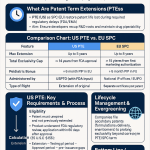
Table: U.S. PTE vs. EU SPC at a Glance
The following table summarizes the key distinctions between the two systems, providing a quick-reference guide for global IP strategists.
Feature
U.S. Patent Term Extension (PTE)
EU Supplementary Protection Certificate (SPC)
Enabling Legislation
Hatch-Waxman Act of 1984
Council Regulation (EEC) No 1768/92
Nature of Right
Extension of the original patent term
Separate, complementary IP right 4
Administering Body
U.S. Patent and Trademark Office (USPTO)
National patent offices of EU member states; emerging centralized procedure via EUIPO for Unitary SPCs 4
Filing Deadline
Within 60 days of regulatory approval
Within 6 months of marketing authorization or patent grant (whichever is later)
Maximum Extension
Up to 5 years
Up to 5 years
Total Exclusivity Cap
Total patent term cannot exceed 14 years from FDA approval
Total market exclusivity (patent + SPC) generally aims for 15 years from first marketing authorization
Pediatric Extension
Additional 6 months available
Additional 6 months available
Scope of Protection
Covers the approved product, its method of use, or its method of manufacture as claimed in the patent
Protects the specific active ingredient(s) of the authorized product
Due Diligence Factor
Explicitly deducted from calculation if applicant lacked diligence
Not a direct factor in the duration calculation formula
Strategic Implications for Global Pharmaceutical Companies
The existence of these two parallel but distinct systems means that a “one-size-fits-all” approach to patent lifecycle management is doomed to fail. A successful global strategy requires a nuanced, market-specific approach.
The decentralized nature of the SPC system has historically placed a greater administrative and cost burden on applicants, requiring careful coordination of filings across multiple jurisdictions. This contrasts with the more streamlined, albeit complex, centralized process in the U.S.
Furthermore, the different calculation formulas and caps can lead to different outcomes for the same drug. A product with a very long development timeline might receive the maximum five-year extension in both regions, but a product with a moderately long timeline might receive a three-year extension in the U.S. but a four-year certificate in the EU, or vice versa. These differences directly impact global revenue forecasts, loss-of-exclusivity (LOE) modeling, and the timing of generic and biosimilar entry in the world’s two largest markets.
Finally, the differing legal philosophies—the U.S. system’s adversarial nature and data-driven demands versus the EU’s more trust-based, narrative-driven approach—can influence how regulatory and patent applications are drafted and prosecuted. A global pharmaceutical company must be adept at navigating both systems, tailoring its strategies to the unique legal traditions, regulatory philosophies, and political compromises of each region to maximize the commercial potential of its innovations worldwide.
Conclusion, Key Takeaways, and Future Outlook
The calculation of the regulatory review period for Patent Term Extension is far more than a procedural formality. It is a strategic discipline that lies at the intersection of intellectual property law, regulatory affairs, and corporate finance. For pharmaceutical and biotechnology companies, mastering this complex equation is not optional; it is a fundamental driver of valuation and a critical component of long-term market leadership. The ability to reclaim even a fraction of the patent term eroded by years of research and regulatory review can translate directly into billions of dollars of revenue, providing the necessary incentive to fuel the next generation of life-saving innovations.
The framework established by the Hatch-Waxman Act represents a delicate balance—a “grand bargain” designed to reward innovation while simultaneously paving the way for affordable generic alternatives. The intricate rules governing PTE—the precise definitions of the testing and approval phases, the various deductions, and the stringent statutory caps—are the mechanisms that maintain this balance. A successful strategy requires not only a granular understanding of the calculation itself but also a holistic view that integrates patent prosecution, clinical development, and regulatory filing into a single, cohesive plan. From the timing of an IND submission to the choice of which patent to extend, every decision carries significant financial weight.
Key Takeaways for Business Leaders
PTE is a Core Financial Asset, Not a Legal Afterthought: The potential value of a PTE should be factored into R&D and portfolio management decisions from the earliest stages of development. A single day of extended exclusivity for a blockbuster drug can be worth millions of dollars.
The NDA Submission Date is a Critical Strategic Lever: Because the NDA submission marks the shift from a half-day credit period (testing phase) to a full-day credit period (approval phase), accelerating the preparation and filing of the marketing application has a leveraged, positive impact on the final PTE award.
Patent Prosecution Timing Matters: PTE only restores patent term lost after a patent has been granted. A proactive patent prosecution strategy that aims to get key patents granted early in the clinical development process is essential to minimize the “pre-grant deduction” and maximize the potential extension.
Meticulous Record-Keeping is a Non-Negotiable Defense: The “due diligence” requirement, while rarely challenged, represents a potential vulnerability. Companies must maintain detailed, contemporaneous records justifying any and all delays in their development programs to defend against future challenges from generic competitors.
The “Rule of Ones” Has Strategic Loopholes: While only one patent can be extended per regulatory review period, it is possible to obtain multiple PTEs for the same core active ingredient by securing separate, same-day approvals for different products (e.g., a single agent and a combination product). This requires sophisticated, parallel development and regulatory strategies.
Global Strategy Must Be Bifurcated: The U.S. PTE and EU SPC systems are fundamentally different. A successful global lifecycle management plan requires a tailored approach for each market, accounting for distinct legal frameworks, filing deadlines, and calculation methods.
The Evolving Landscape: Future Trends and Potential Reforms
The world of pharmaceutical patents is never static. The framework for PTE will continue to evolve as it confronts new technologies and shifting policy priorities. The application of PTE principles to complex biologics, cell therapies, and gene therapies will undoubtedly be a source of ongoing litigation and clarification from the USPTO and the courts.
Furthermore, the practice of “evergreening”—using secondary patents on formulations, dosages, or methods of use to extend a drug’s monopoly far beyond the life of its original compound patent—remains a subject of intense debate.50 While PTE itself is a direct and transparent restoration of term, its interplay with these broader patent thickets is a focus of policymakers concerned about drug pricing and access to affordable medicines. Future legislative or judicial actions aimed at curbing these practices could alter the strategic calculus for lifecycle management.
For the foreseeable future, however, the Patent Term Extension provisions of the Hatch-Waxman Act will remain one of the most powerful tools in the innovator’s arsenal. For the companies that invest the time and resources to master its complexities, the rewards will continue to be measured in years of market exclusivity and billions of dollars in value.
“Life science companies developing new therapeutics – both small molecule and biologic – know that obtaining long patent term for their products is a key driver of valuation and revenue. An important method to mitigate these losses can be found in the Patent Term Extension (‘PTE’) provisions of 35 U.S.C § 156, which provide statutory compensation for the substantial time and resources expended by an innovator to bring a new drug to market.”
— Goodwin Procter LLP, “Strategic Considerations for Seeking Patent Term Extension (PTE) and its Scope for Drug Products”
Frequently Asked Questions (FAQ)
1. What is the single most common and costly mistake companies make when applying for Patent Term Extension?
The most critical and often irreversible mistake is missing the 60-day filing deadline following FDA approval.7 This is an absolute, non-extendable deadline. A more strategic, and potentially more costly, error is the failure to align the patent prosecution timeline with the drug development timeline. If a company’s core patent is not granted until late in the clinical trial process, a significant portion of the regulatory review period will be “pre-grant” and therefore ineligible for restoration. This can lead to the forfeiture of hundreds of days of potential extension, a mistake worth hundreds of millions of dollars that could have been avoided with proactive management of the patent application process.
2. Can a patent that has received Patent Term Adjustment (PTA) for USPTO delays also receive a Patent Term Extension (PTE) for FDA delays?
Yes, a single patent can benefit from both PTA and PTE. However, they interact in a specific way. The USPTO first calculates the patent’s expiration date including any PTA. This adjusted date then becomes the “original expiration date” from which the PTE is calculated. Importantly, while a terminal disclaimer can wipe out PTA, it does not invalidate a subsequently added PTE.37 A sophisticated strategy involves analyzing which of the two extensions is likely to be more valuable for a given patent and managing prosecution (e.g., decisions around filing terminal disclaimers) accordingly.
3. If a drug is approved for a new indication years after its first approval, can the company get a second PTE for the patent covering the new use?
No. The statute is clear that PTE is only available based on the first permitted commercial marketing or use of the product (the active ingredient).8 The subsequent approval for a new indication is not the “first” approval of the active ingredient. While the company can (and should) obtain new method-of-use patents to cover the new indication, and these patents will be listed in the Orange Book, they will not be eligible for their own PTE. The only PTE available is the one tied to the very first time the FDA approved that active ingredient for any use.
4. How does the PTE calculation differ for a medical device compared to a drug?
The overall formula and caps are very similar, but the definition of the “testing phase” is different. For a drug, the testing phase begins with the effective date of an Investigational New Drug (IND) application. For a medical device, which is typically reviewed under a Premarket Approval (PMA) application, the testing phase begins on the effective date of an Investigational Device Exemption (IDE) or, if no IDE was required, the date on which “a clinical investigation on humans…was begun”. The approval phase is analogous, running from the submission of the PMA to its approval. This difference in the starting trigger for the testing phase is a key nuance for device manufacturers.
5. Why would a company file multiple PTE applications for the same drug if only one patent can be extended?
Filing multiple PTE applications is a critical strategic tactic that buys a company valuable time and flexibility.7 A new drug is often protected by several patents: one on the core compound, another on a specific formulation, and perhaps a third on a method of use. At the time of FDA approval, it may not be clear which of these patents will be the most valuable or resilient to a legal challenge over the long term. By filing PTE applications on all eligible patents within the 60-day window, the company preserves its right to extend any one of them. It can then wait, sometimes for years, while the USPTO and FDA process the applications. During this time, the patent landscape may become clearer—perhaps one patent survives a litigation challenge while another does not. The company can then make its final, binding election of which patent to extend with the benefit of hindsight, ensuring it applies the priceless extension to its strongest and most valuable asset.
2761-Multiple Applications for Extension of Term of the Same Patent or of Different Patents for the Same Regulatory Review Period for a Product – USPTO, accessed July 30, 2025, https://www.uspto.gov/web/offices/pac/mpep/s2761.html