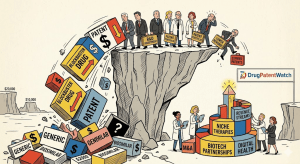
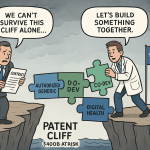
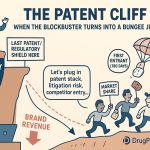
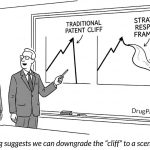
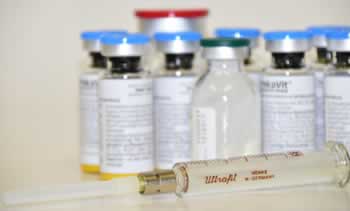
Merck made $29.5 billion from a single drug last year. That drug, Keytruda, loses its primary patent in 2028.
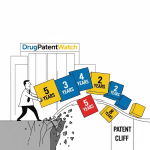
Read that sentence again. One patent. Four years. Then it is gone, or at least the monopoly is.
The pharmaceutical industry has known this moment was coming for years, yet the scale of what is unfolding between now and 2030 is still remarkable. This is not the gentle erosion of a single blockbuster’s sales. It is the simultaneous unwinding of an entire generation of mega-revenue medicines—immunotherapies, anticoagulants, diabetes treatments, heart failure drugs—many of which were built on scientific platforms that took decades to develop and billions to commercialize.
GlobalData estimates that U.S. pharmaceutical revenues exposed to patent expiry between 2025 and 2030 exceed $230 billion [1]. A separate analysis from William Blair puts the aggregate sales of nearly 50 products at $162.8 billion in 2025, declining to $67 billion by 2029 as generics and biosimilars flood in [2]. The research firm GlobeNewswire, citing its own 2025 report on blockbuster patent cliffs, describes it as the largest such cliff since 2010 [3].
For investors, business development teams, and pipeline strategists, the financial math is severe. For patients, it means an inflection in how medicines are developed, priced, and delivered. For the competitive landscape, it marks the transition from an industry built around chemistry-based mass-market medicines to one that runs on biology, data, and precision.
This article dissects the mechanics of the collapse, names the companies most exposed, and provides a detailed analysis of the four technology platforms being positioned to generate the next generation of pharmaceutical revenue: artificial intelligence, antibody-drug conjugates (ADCs), mRNA therapeutics, and cell and gene therapy (CGT). It also addresses the non-scientific hurdles—manufacturing, regulation, and reimbursement—that will determine whether scientific promise translates into commercial reality.
Part One: The Anatomy of a $236 Billion Problem
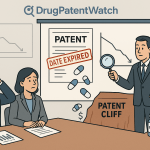
What a Patent Cliff Actually Means—and Why This One Is Different
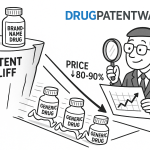
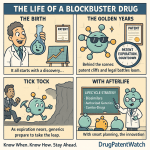
The term “patent cliff” describes something precise: the revenue drop that follows a drug’s loss of market exclusivity (LOE). When a small-molecule drug loses its patent, the FDA can approve generics under the Hatch-Waxman pathway, and those generics typically enter the market at prices 80–85% below the brand. Revenue for the innovator company can fall by 80–90% within twelve months. For biologics, the mechanism is similar in principle—biosimilar entrants take market share—though the dynamics play out more slowly because biosimilars are costlier and more complex to manufacture [4].
What makes the 2025–2030 cliff structurally different from past cycles is the type of drugs involved. Previous patent cliffs—the 2012 cliff, for example, when drugs like Plavix and Lipitor went generic—were dominated by oral small-molecule medicines in primary care categories. Replacing those revenues required large sales forces but relatively straightforward drug development expertise.
The current cliff is concentrated in oncology, immunology, and cardiometabolic disease. The drugs expiring are biologics and first-in-class agents that succeeded because of scientific breakthroughs. Replacing them demands scientific platforms, specialized commercial infrastructure, and regulatory expertise that most companies have spent years building and still haven’t fully mastered. The competitive dynamics following these LOEs will involve biosimilars, not simple generics, and the pricing erosion—while still significant—will be slower and more contested [4].
There is also the issue of sheer corporate concentration. According to one industry analysis, the expiring drugs account for more than 30% of the combined 2024 revenues of Bristol Myers Squibb, Pfizer, AstraZeneca, Novartis, and Regeneron [3]. For companies like BMS, the revenue from their top five drugs could fall by as much as 62% by 2030. This is not a portfolio reshuffling. It is a structural crisis.
The Drugs on the Clock: A Company-by-Company Breakdown
The following assessments are grounded in patent expiration data tracked through resources including DrugPatentWatch, which aggregates FDA Orange Book data, patent term extensions, and Paragraph IV challenge records to provide granular LOE intelligence.
Merck faces the most talked-about single expiration on the horizon. Keytruda (pembrolizumab), a PD-1 checkpoint inhibitor approved across dozens of oncology indications, generated more than $29 billion in 2024. Its core composition-of-matter patent expires in 2028, after which biosimilar competitors will seek approval. Merck has tried to delay this by developing subcutaneous formulations and new indications, but no formulation patent extends the monopoly indefinitely. The company also faces LOE for Januvia and Janumet (diabetes) in 2026, Lenvima (a cancer therapy co-marketed with Eisai) in 2025, and Lynparza (PARP inhibitor, oncology) in 2027 [5].
Bristol Myers Squibb is, by most assessments, the company in the most acute position. Eliquis (apixaban), the anticoagulant co-developed and co-commercialized with Pfizer, generated more than $20 billion combined in 2024 and faces LOE between 2026 and 2028 depending on the jurisdiction and the outcome of ongoing patent litigation. Opdivo (nivolumab), another PD-1 inhibitor and direct competitor to Keytruda in multiple tumor types, pulled in roughly $9 billion and faces its own cliff in 2028. Yervoy (ipilimumab), a CTLA-4 inhibitor generating $2.5 billion annually, began facing generic competition in 2025 [5].
AstraZeneca has two major near-term exposures. Farxiga (dapagliflozin), an SGLT2 inhibitor that became one of the most commercially successful drug classes of the past decade—approved for diabetes, heart failure, and chronic kidney disease—generated $7.7 billion in 2024 and faces key patent expirations in 2025. Soliris (eculizumab), a rare disease treatment with close to $2.6 billion in annual revenues, is in active biosimilar competition [5]. AstraZeneca has set a public revenue target of $80 billion by 2030. Meeting that number with Farxiga declining sharply requires its pipeline to perform with unusual reliability.
Novartis faces the LOE of Entresto (sacubitril/valsartan), a heart failure drug that generated $7.8 billion and lost market exclusivity in July 2025. Cosentyx (secukinumab), an IL-17 inhibitor in immunology, faces biosimilar competition approaching. The company’s ability to manage this transition rests heavily on its oncology and rare disease pipeline [5].
Johnson & Johnson began facing biosimilar competition for Stelara (ustekinumab)—an IL-12/23 inhibitor that generated $6.72 billion in the U.S. in 2024—at the start of 2025. Multiple biosimilars have already launched. Darzalex (daratumumab), one of the standard-of-care treatments in multiple myeloma, faces LOE by 2029 [5].
Regeneron‘s Eylea (aflibercept), used to treat age-related macular degeneration and diabetic eye disease, has been facing biosimilar competition since 2024 and is in an active market defense posture. The company launched a high-dose formulation (Eylea HD) specifically to buy commercial time and maintain differentiation [5].
The table below converts these exposures into their approximate revenue context.
Drug
Company
2024 Revenue
Expected U.S. LOE
Keytruda (pembrolizumab)
Merck
>$29B
2028
Eliquis (apixaban)
BMS / Pfizer
>$20B combined
2026–2028
Opdivo (nivolumab)
BMS
~$9B
2028
Entresto (sacubitril/valsartan)
Novartis
$7.8B
2025
Farxiga (dapagliflozin)
AstraZeneca
$7.7B
2025
Stelara (ustekinumab)
J&J
$6.72B (U.S.)
2025 (ongoing)
Eylea (aflibercept)
Regeneron
~$6B
2024–2025
Soliris (eculizumab)
AstraZeneca
$2.6B
2025 (ongoing)
Yervoy (ipilimumab)
BMS
$2.5B
2025
The Innovation Paradox: Why the Blockbuster Model Broke Before the Cliff Arrived
The patent cliff is the most visible pressure on the industry, but it is not the only one. The blockbuster model was already structurally compromised before the expirations hit.
The traditional logic was linear: discover a molecule for a common condition, patent it, run mass-market clinical trials, launch with a large sales force, achieve $1 billion or more in annual revenues. Use those revenues to fund the next round. The model worked reliably when most of medicine’s “low-hanging fruit” was available: hypertension, hypercholesterolemia, type 2 diabetes in its earlier treatment lines, acid reflux, depression. Those targets were physiologically accessible with small molecules, the patient populations were enormous, and treatment guidelines made broad prescribing the standard of care.
That fruit is largely picked. The easy molecular targets have been addressed. What remains is harder biology—complex signaling pathways in cancer, autoimmune disease mechanisms involving multiple cell types, genetic diseases with small patient populations, neurodegenerative conditions whose mechanisms remain incompletely understood.
Meanwhile, IQVIA data shows that a “true blockbuster” now needs to generate more than $3 billion in annual sales to be considered elite—up from the old $1 billion benchmark—because average drug development costs have risen to approximately $2.3 billion per approved medicine [6]. Only 45 products met that higher threshold in 2022. The cost of failure has expanded faster than the size of the rewards.
Payer resistance has added another constraint. Formulary committees at large health plans and pharmacy benefit managers (PBMs) in the U.S. now require significant clinical differentiation before granting preferred formulary placement. European health technology assessment (HTA) bodies have raised the bar further. The result is a market environment where a new drug must offer meaningful superiority over existing options—not just safety equivalence or modest efficacy improvement—to command premium pricing and adequate reimbursement.
This confluence of harder science, higher development costs, compressing effective patent lives (typically 7–12 years after accounting for development time), and more demanding payers created a structural problem in pharma’s business model well before the current cliff became visible. The cliff is the most acute expression of a chronic condition.
Build, Buy, or Cut: Three Corporate Responses in Real Time
Large pharmaceutical companies have responded to the cliff pressure in ways that reveal their underlying strategic positions. The responses are not converging on a single best answer—they are diverging, and that divergence will determine the competitive rankings of the industry over the next decade.
The “Build” strategy—betting on an internal pipeline—is most credibly represented by Eli Lilly. The company built a concentrated position in GLP-1 agonists through years of internal investment and has been rewarded spectacularly: Mounjaro (tirzepatide) and Zepbound together generated revenues that sent the company’s market capitalization above $700 billion at its peak. Projections suggest Lilly’s revenues could grow 165% through 2030 relative to its 2022 base, making it effectively immune to the patent cliff pressures facing its peers [7]. This was not luck. It was a sustained commitment to a scientific platform that most of the industry underweighted.
The “Buy” strategy is best illustrated by AbbVie, which had years of warning that Humira (adalimumab) would face biosimilar competition. It used the decade of Humira cash flows to execute a transformative $63 billion acquisition of Allergan in 2019, securing a diversified aesthetics and neurotoxin business that is not subject to generic competition. It simultaneously built new immunology assets—Skyrizi (risankizumab) and Rinvoq (upadacitinib)—that are now on trajectories to collectively exceed Humira’s peak revenues [7]. This approach requires prescient timing, a strong balance sheet, and the discipline to deploy capital aggressively before the crisis becomes acute.
The “Cut” strategy—cost reduction as the primary response—is most clearly demonstrated by Bristol Myers Squibb. Facing the simultaneous LOE of both Eliquis and Opdivo, BMS announced a cost-cutting program targeting $1.5 billion in savings by 2025, involving roughly 2,200 layoffs. It subsequently expanded that target to $3.5 billion [7]. The risk with this approach is structural: aggressive cost reduction can impair R&D productivity at precisely the moment when new innovation is most needed. BMS has made acquisitions—including Karuna Therapeutics and RayzeBio in 2023 and 2024—but those pipelines need time to mature into commercial revenues, and the company faces a gap period.
The investor community is watching these trajectories carefully. Companies that picked the “Build” path and were right—Lilly, to a lesser extent Novo Nordisk—are trading at substantial premiums. Those that cut or bought defensively are trading at significant discounts to their historical valuations. The market’s verdict on each strategy will become clearer by 2027–2028, when the revenue gaps from the cliff are fully visible.
Part Two: The Four Technologies Being Built to Replace the Blockbuster Machine
Artificial Intelligence: The Infrastructure Transformation No One Can Opt Out Of
AI in pharmaceutical R&D is not a niche application any more. It has become the foundational infrastructure through which competitive companies expect to discover, develop, and optimize drugs. The market for AI in drug discovery is projected to grow from $6.93 billion in 2025 to $16.52 billion by 2034—a compound annual growth rate exceeding 10% [8]. That growth reflects genuine adoption, not hype.
Understanding what AI actually does in pharma requires moving past the generic claims and examining specific applications across the R&D value chain.
Target identification and validation. The first step in drug development is identifying a biological target—a protein, receptor, or pathway whose modulation will produce a therapeutic effect. AI models trained on genomic, proteomic, and clinical datasets can identify associations between molecular abnormalities and disease states at a speed and breadth that human researchers cannot match. These models also help validate targets by predicting whether modulating them will produce the intended therapeutic effect or trigger undesired compensatory responses.
Protein structure prediction. DeepMind’s AlphaFold fundamentally changed what was computationally possible in structural biology. By training a deep learning model on known protein structures, AlphaFold achieved near-experimental accuracy in predicting the three-dimensional shape of proteins from their amino acid sequences [9]. This was a genuine breakthrough, not an incremental improvement. It means that researchers can now model how a candidate drug molecule will interact with a target protein structure without waiting for expensive and time-consuming crystallography experiments. The practical result is faster lead identification and more accurate predictions of binding affinity and selectivity.
Molecular design. Generative AI platforms—similar in architecture to the large language models used in natural language processing—can now be used to design novel molecules optimized for specific target binding, metabolic stability, solubility, and other properties. Insilico Medicine demonstrated this commercially when it advanced an entirely AI-designed molecule for idiopathic pulmonary fibrosis (IPF) into Phase 2 clinical trials, compressing a process that would traditionally take four to five years into approximately two years [10]. Exscientia published data showing its AI-designed oncology compound reached first-in-human dosing within 12 months of initiation.
Clinical trial optimization. Clinical development is the most expensive and failure-prone stage in drug R&D. AI contributes in two distinct ways. First, patient identification and recruitment: AI models can mine electronic health records (EHRs) to identify patients who match trial eligibility criteria with high precision, significantly accelerating enrollment. TrialGPT and similar tools have demonstrated the potential to shorten recruitment timelines, which is important because slow enrollment is the most common cause of trial delays. Second, adaptive trial design: AI enables real-time analysis of interim efficacy and safety data, allowing trial protocols to be modified dynamically rather than waiting for pre-specified interim analyses. The estimated annual savings from AI-powered clinical trial improvements exceed $26 billion industry-wide [8].
Pfizer’s use of AI in the accelerated development of Paxlovid during COVID-19 demonstrated that these approaches work under real-world pressure and timeline constraints. The company has since signed partnerships with Tempus and CytoReason to apply similar tools across its oncology pipeline. AstraZeneca is working with BenevolentAI on chronic kidney disease, and Roche has made AI a central plank of its R&D strategy through both in-house development and acquisitions.
The competitive logic of AI in pharma deserves careful attention, because it is not the same as the competitive logic of developing a drug patent.
A drug patent provides legal exclusivity: once the patent expires, competitors can copy the molecule. An AI platform built on proprietary data and trained on a company’s own trial results, genomic datasets, and real-world evidence creates a different kind of advantage. It is durable, it compounds over time as more data is fed into the system, and it is difficult for competitors to replicate precisely because the underlying data is proprietary.
Xaira Therapeutics’ $1 billion Series A—one of the largest biotech venture rounds in recent history—is the most dramatic expression of investor belief in this model [11]. The logic is that a company that can design better drugs faster, using AI models superior to competitors’, will ultimately outcompete on both scientific output and cost structure. The molecule may still be patentable, but the engine that produced it creates a durable performance advantage.
This creates a “winner-take-most” dynamic. Companies that build integrated, enterprise-wide AI infrastructure will widen their performance gap against those that treat AI as a series of isolated pilot projects. The early leaders—Lilly, AstraZeneca, Roche, and a handful of well-capitalized biotechs—have structural head starts that will be difficult to close.
Antibody-Drug Conjugates: The Most Commercially Mature “Next Big Thing”
Of all the technologies positioned to replace blockbuster revenues, ADCs combine the highest near-term commercial readiness with the clearest strategic fit for large pharmaceutical companies. The global ADC market is projected to grow from approximately $7 billion in 2025 to between $17 billion and $34.7 billion by 2032, at a CAGR of 14–17.5% [12].
That range reflects genuine uncertainty about market penetration rates, but even the conservative end represents a near-tripling of market size in seven years. For a pharmaceutical company with a large antibody manufacturing footprint and expertise in oncology, ADCs represent a path to significant incremental revenue without requiring an entirely new scientific platform.
The underlying science. An ADC consists of three components: a monoclonal antibody that targets a specific antigen overexpressed on cancer cells, a cytotoxic payload that kills the cell once the ADC is internalized, and a chemical linker that connects the two. The antibody acts as a guided delivery vehicle; the payload does the killing; the linker ensures the payload stays attached during transit through the bloodstream and releases only after the ADC is taken up by the target cell [13].
The concept has existed since the 1980s. The first commercially approved ADC, Mylotarg (gemtuzumab ozogamicin), was approved by the FDA in 2000—and then withdrawn in 2010 due to safety concerns, though later re-approved at a lower dose. Early ADCs had three key engineering problems. First, the antibody components were often mouse-derived, triggering immune reactions. Second, the linkers were chemically unstable, releasing the payload prematurely in the bloodstream. Third, the conjugation chemistry was non-specific, attaching payloads randomly to different sites on the antibody and producing a heterogeneous mixture of molecules with unpredictable behavior [14].
Each generation of ADCs addressed these problems systematically.
Second-generation ADCs like Adcetris (brentuximab vedotin, approved 2011) and Kadcyla (trastuzumab emtansine, approved 2013) used humanized or fully human antibodies to reduce immunogenicity and employed more stable linker chemistry. Their limitation was the stochastic conjugation method, which still produced heterogeneous products.
Third-generation ADCs introduced site-specific conjugation technologies that attach a precise number of payload molecules to defined locations on the antibody. This homogeneity produces consistent drug-to-antibody ratios (DARs), typically 2 or 4, which translate to more predictable pharmacokinetics and a cleaner safety profile [14].
The bystander effect. The most commercially important innovation in recent ADC development has been the shift to moderately potent topoisomerase I inhibitors as payloads—specifically, derivatives of the exatecan chemical family. The prototype is Enhertu (trastuzumab deruxtecan), developed jointly by AstraZeneca and Daiichi Sankyo. Enhertu uses a high DAR of 8 and a membrane-permeable payload that, upon release inside a tumor cell, diffuses outward to kill neighboring cancer cells even if those cells do not express the HER2 target antigen.
This “bystander effect” is not just a technical curiosity. It is a clinical breakthrough. Solid tumors are often heterogeneous—not all cells within a given tumor express the same surface proteins. An ADC that can only kill antigen-expressing cells will leave behind resistant subclones that repopulate the tumor. An ADC whose payload can diffuse through the tumor microenvironment and kill antigen-negative cells as well has a fundamentally higher probability of achieving durable responses.
Enhertu’s clinical data bear this out. It has produced response rates and survival improvements in HER2-low breast cancer—a patient population previously considered untreatable with HER2-targeted therapy—that have reshaped treatment guidelines. The drug generated $2.7 billion in 2024 sales and is growing rapidly [12].
Gilead’s Trodelvy (sacituzumab govitecan) uses a similar design logic in triple-negative breast cancer and urothelial carcinoma. Both drugs are now the basis of platform licensing deals across the industry, as companies that lack internal ADC capabilities attempt to acquire them.
The strategic case for incumbents. For large pharmaceutical companies facing the patent cliff, ADCs are attractive for several reasons. They build on existing antibody manufacturing and development expertise. The regulatory pathway is established—the FDA and EMA have approved more than 15 ADCs since 2000, and the agencies have significant experience with the class. The oncology market, where most ADCs are developed, already has high willingness-to-pay and established reimbursement frameworks. The technology can be applied across multiple tumor types using different antibody targeting moieties, making the platform extensible once the core manufacturing and clinical capabilities are in place [12].
The main risk is target crowding. The most validated ADC targets—HER2, TROP2, EGFR, CD79b—are now being pursued by dozens of companies simultaneously. The competition for first-line oncology positions in the most commercially attractive tumor types is intensifying quickly, and later entrants will face significant barriers to achieving the clinical differentiation required for regulatory approval and market access. Companies without established ADC positions will need either to identify less-contested targets or to develop ADCs with meaningfully superior engineering—better linkers, more potent payloads, or novel targeting strategies.
AstraZeneca and Daiichi Sankyo have structured their partnership to exploit this advantage broadly, with plans to apply the ADC platform across a wide range of tumor-antigen combinations. AbbVie, Roche, and Pfizer are all scaling their ADC capabilities through a combination of internal development and acquisition.
mRNA Therapeutics: The Technology That Proved Itself—Now Trying to Do More
The mRNA COVID-19 vaccines demonstrated something no amount of academic publication could have: that a lipid nanoparticle-delivered mRNA construct can be designed, manufactured at scale, and administered safely to hundreds of millions of people within months of a new target being identified. For purposes of pharmaceutical strategy, this is an existence proof for the platform.
The question now is whether that platform can be extended from infectious disease prevention to chronic disease treatment, cancer therapy, and genetic medicine.
The basic mechanism. mRNA therapy works by delivering a synthetic strand of messenger RNA into the body’s cells. Once internalized, the cell’s own ribosomes read the mRNA sequence and synthesize a target protein. This can be used to replace a missing or dysfunctional protein, generate an immune response against a disease antigen, or deliver gene-editing machinery [15]. The mRNA is transient—it degrades within days without integrating into the genome—which is both a safety advantage and a logistical challenge for chronic diseases where repeated dosing is required.
Protein replacement. Many rare genetic diseases result from a single faulty gene that fails to produce a functional protein. mRNA therapy offers a route to restore that protein function without the need for permanent genomic modification. The technical challenge is delivering mRNA reliably to the affected tissue—liver, lung, muscle, or CNS—with sufficient efficiency and duration. Arcturus Therapeutics has been developing mRNA approaches for cystic fibrosis, a disease affecting the lungs, which requires delivery to respiratory epithelial cells—a harder problem than liver delivery [16].
Personalized cancer vaccines. The most strategically significant application of mRNA in oncology is the individualized neoantigen vaccine. Each cancer produces unique mutational signatures—neoantigens—that distinguish cancer cells from normal tissue. An mRNA vaccine designed to encode these neoantigens can, in theory, prime the patient’s immune system to recognize and destroy cancer cells while ignoring normal tissue.
Moderna’s mRNA-4157 (V940), developed in partnership with Merck, is the most advanced program in this category. Interim Phase 2 data in adjuvant melanoma showed that the combination of the individualized vaccine with Keytruda reduced the risk of recurrence or death by 44% compared to Keytruda alone [17]. This is a compelling result, and it has driven Moderna’s post-COVID strategic narrative: the mRNA platform is not just a vaccine technology, it is an oncology platform.
The challenge is cost and logistics. Each patient’s vaccine must be custom-manufactured based on the genomic sequencing of their individual tumor. This requires rapid tumor biopsies, sequencing, computational neoantigen selection, and vaccine synthesis—all within a clinically relevant timeframe. Scaling this process affordably is a significant operational problem that remains unsolved at population scale.
The delivery bottleneck. Naked mRNA is a fragile molecule. Ribonucleases (RNases) in the bloodstream degrade it rapidly; its large size and negative charge prevent passive entry into cells. Lipid nanoparticles (LNPs) are the current standard delivery vehicle: they encapsulate the mRNA in a sphere of specialized lipids that protects it in circulation and fuses with the cell membrane to allow intracellular delivery [15].
LNPs work well for liver delivery—the liver naturally takes up particles circulating in the bloodstream, and the COVID-19 vaccines delivered their mRNA effectively to muscle cells at the injection site. The problem is organ targeting. LNP formulations developed so far have limited capacity for selective delivery to lung, CNS, or tumor tissue. Modifying the lipid composition or adding targeting ligands can improve tissue specificity, but this remains an active area of research without an established general solution [15].
Endosomal escape is the second bottleneck. LNPs are internalized by cells through endosomes—internal vesicles that can sequester and degrade their contents before the mRNA escapes into the cytoplasm where translation occurs. Improving endosomal escape efficiency directly improves the proportion of delivered mRNA that actually produces protein. Several companies, including Precision BioSciences and Generation Bio, are working on alternative delivery vehicles—DNA-based or non-LNP approaches—that may improve on current limitations.
Post-pandemic realities. Both Moderna and BioNTech are in a financially difficult transition period. COVID vaccine revenues collapsed faster than either company planned for, and both announced significant layoffs and pipeline pruning in 2025 [16]. BioNTech cut hundreds of positions and discontinued several early-stage programs. Moderna laid off staff in its digital and data functions following the departure of its chief information officer.
These cuts are not a sign that mRNA is failing as a platform. They reflect the reality that building a second act after a one-time public health windfall requires generating commercial validation in entirely different disease categories—rare disease, oncology, cardiology—where the clinical, regulatory, and market access requirements are entirely different from vaccine deployment. The mRNA-4157 melanoma data is the most promising near-term validation, but the broader therapeutic application of mRNA remains several years from generating the revenues that COVID vaccines did at their peak.
Cell and Gene Therapy: The Highest Risk, Highest Reward Bet in Biotech
Cell and gene therapies (CGTs) represent the most disruptive technologies in pharmaceutical development. They do not treat disease symptoms or slow disease progression in the way conventional drugs do. At their best, they cure disease through a single administration. The CGT market is projected to grow from $8.7 billion in 2024 to over $76 billion by 2030, a CAGR of approximately 44% [18]. That growth trajectory is extraordinary, but it reflects both the scientific potential and the current tiny base from which the field is scaling.
The field has two main branches: cell therapy (with CAR-T as its most commercially developed form) and gene therapy (with CRISPR-based editing as its most scientifically significant recent advance).
CAR-T: What It Is, What It Does, and Why It’s So Hard to Scale
CAR-T therapy is a form of adoptive cell therapy in which a patient’s own T cells are extracted, genetically re-engineered outside the body to express a Chimeric Antigen Receptor (CAR), expanded to large numbers, and then infused back into the patient. The CAR protein allows the re-engineered T cells to recognize and attack cancer cells expressing a specific antigen with high precision [19].
The four approved autologous CAR-T therapies in the U.S.—Kymriah (Novartis), Yescarta (Gilead/Kite), Breyanzi (BMS), and Carvykti (J&J/Legend Biotech)—are approved for specific hematologic malignancies including relapsed or refractory large B-cell lymphoma, multiple myeloma, and acute lymphoblastic leukemia. Clinical outcomes for eligible patients can be exceptional: multi-year complete remission rates in patient populations where median survival was previously measured in months [19].
The logistical architecture of CAR-T is what makes it both extraordinary and extraordinarily difficult to scale. The process is sometimes called “vein-to-vein,” referencing the extraction and re-infusion endpoints. It involves:
Step one: leukapheresis. Blood is drawn from the patient and passed through an apheresis machine that separates T cells from other blood components. The T cells are cryopreserved and shipped to a centralized manufacturing facility under controlled temperature conditions.
Step two: engineering and expansion. At the manufacturing site, the T cells are transduced with a viral vector carrying the CAR gene, then cultured and expanded over approximately two weeks until the required dose has been achieved. This process occurs in a highly controlled, sterile, cleanroom environment with extensive quality testing at multiple steps.
Step three: release and infusion. The CAR-T product is cryopreserved again and shipped to the treating hospital. Before infusion, the patient undergoes lymphodepleting chemotherapy to reduce endogenous immune cells and create space for the CAR-T cells to engraft and proliferate.
Each step creates opportunity for failure. Manufacturing yield is highly variable and depends on the quality of the starting T-cell material from the patient—which itself varies based on the patient’s prior treatment history and immune status. Vein-to-vein timelines typically run four to six weeks, and patients with rapidly progressing disease may not survive the wait. Manufacturing slot availability at centralized facilities creates further bottlenecks; at various points since their commercialization, all major CAR-T manufacturers have had to manage waitlists [20].
The cost structure is a direct consequence of this complexity. List prices for CAR-T therapies range from $400,000 to over $500,000 for the drug product alone. When hospitalization costs, pre-conditioning chemotherapy, management of toxicities, and supportive care are included, the total cost of treatment frequently exceeds $1 million per patient [20].
The toxicity challenge. CAR-T can cause serious, life-threatening adverse events. The two most clinically significant are Cytokine Release Syndrome (CRS) and Immune Effector Cell-Associated Neurotoxicity Syndrome (ICANS). CRS occurs when the massive immune activation triggered by CAR-T cells releases inflammatory cytokines at levels that cause systemic inflammation—high fevers, hypotension, and in severe cases, multi-organ dysfunction. ICANS involves neurological symptoms ranging from confusion and aphasia to seizures and cerebral edema. Both can be fatal if not managed promptly, and both require management by experienced multidisciplinary teams at specialized centers. This concentration of required expertise further limits access to CAR-T therapy to academic medical centers and large oncology programs [19, 20].
The allogeneic solution. The most promising path out of the autologous manufacturing bottleneck is allogeneic (“off-the-shelf”) CAR-T—engineering universal donor T cells that can be administered to any patient without the need for individualized manufacturing. The scientific challenge is substantial: donor T cells must be engineered to avoid immune rejection by the recipient and to not attack the recipient’s normal tissue. Multiple companies including Allogene Therapeutics, Precision BioSciences, and Century Therapeutics are pursuing allogeneic approaches. None have yet produced clinical data matching autologous CAR-T efficacy across the same indications, but the manufacturing advantages—batch production, inventory, lower cost-of-goods—are significant enough that the field continues to invest heavily in solving the allogeneic biology.
CRISPR: The Promise and the Constraints of Permanent Genetic Editing
CRISPR-Cas9 gene editing is, by any scientific measure, a revolutionary capability. It allows precise, programmable modification of specific DNA sequences in living cells with a simplicity and efficiency that older gene editing tools—zinc finger nucleases, TALENs—could not approach. The CRISPR-Cas9 system uses a guide RNA (gRNA) to direct the Cas9 endonuclease to a specific genomic locus, where it makes a double-strand break. The cell’s DNA repair machinery then resolves the break either by error-prone end-joining (gene knockout) or, if a DNA template is provided, by precise insertion or correction of a sequence [21].
The first CRISPR therapy approved by regulators anywhere in the world is Casgevy (exagamglogene autotemcel), developed by CRISPR Therapeutics and Vertex Pharmaceuticals. It was approved in the U.S. and UK in late 2023 for sickle cell disease and transfusion-dependent beta-thalassemia. The therapy works ex vivo: the patient’s stem cells are extracted, edited to reactivate fetal hemoglobin production, and re-infused after conditioning. Initial clinical data show functional cures in a high proportion of treated patients—the majority have required no blood transfusions after treatment [21].
As of early 2025, approximately 250 clinical trials involve gene editing technologies, with more than 150 actively recruiting [22]. The programs span blood disorders, oncology, infectious disease (including HIV), cardiovascular risk reduction, and autoimmune conditions.
The off-target risk. CRISPR is precise but not perfectly precise. The guide RNA can direct Cas9 to locations in the genome that share partial sequence similarity with the intended target—so-called off-target sites. A cut at an off-target site could disrupt a tumor suppressor gene or activate an oncogene, with potentially severe long-term consequences. The frequency and severity of off-target effects depend on the specific guide RNA sequence, the Cas9 variant used, and the cell type being edited. Detecting off-target effects comprehensively requires sophisticated genome-wide sequencing assays, and the long-term consequences of low-frequency edits may not be detectable until years after treatment [21].
This is the central safety concern with somatic CRISPR therapy. Developers including Intellia Therapeutics and Editas Medicine have invested heavily in base editing and prime editing variants that can make specific nucleotide changes without creating double-strand breaks, reducing—though not eliminating—the potential for off-target genome damage.
Germline editing—modifying embryos or reproductive cells to create heritable genetic changes—is subject to near-universal regulatory prohibition in human applications. The 2018 case of Chinese researcher He Jiankui, who produced genome-edited babies outside regulatory oversight, demonstrated the severity of the scientific and ethical response to premature germline applications and reinforced the necessity of strict oversight frameworks [21].
The cost problem. Casgevy’s U.S. list price is $2.2 million for a one-time treatment. This is defensible from a health economics standpoint—sickle cell disease imposes lifelong costs through hospitalizations, transfusions, and pain management—but it strains payer systems that are not designed to make single payments of this magnitude. The reimbursement infrastructure for one-time curative therapies is still being built. Several states have piloted outcomes-based payment models for gene therapies, where a portion of the payment is deferred and conditional on maintained efficacy, but these arrangements are logistically complex and have seen limited adoption [20].
Part Three: Strategy, Intelligence, and the Path to Market
Capital Allocation in a Selective Market: Where the Money Is Going
The post-COVID correction in biotech financing has produced a more selective investment environment. Venture capital deployment into life sciences declined from its 2021 peak and has not fully recovered in volume terms, but the deals being done are larger for companies that can demonstrate validated science.
The therapeutic areas attracting the highest concentration of investment are consistent with the platforms described above. Oncology, immunology, and rare disease together account for the majority of biotech VC deployment, with AI-enabled drug discovery attracting deals at premium valuations that reflect the infrastructure and data assets involved rather than traditional drug candidate milestones.
Xaira Therapeutics’ $1 billion Series A is the clearest example of market confidence in AI as a standalone pharmaceutical asset [11]. The assumption embedded in that valuation is that the company’s AI models and computational infrastructure will produce a higher hit rate in drug discovery than conventional approaches—and that this creates a durable business model, not just a service offering.
China-origin biotechs have become increasingly prominent in out-licensing deals with U.S. and European pharmaceutical companies. Several ADC platforms and immuno-oncology assets originating from companies including BioNTech’s China-based operations, Zymeworks, and a number of Chinese domestic biotechs have been in-licensed at deal values that reflect serious competitive assessment of their scientific quality. The internalization of global biopharmaceutical innovation capacity across more countries creates both competitive pressure and collaboration opportunities for Western pharmaceutical companies [11].
For early-stage biotechs without near-term commercial assets, the market remains difficult. Investors have less tolerance for long-duration bets on platform technologies without near-term clinical catalysts. Companies that raised large rounds in 2020 and 2021 at frothy valuations have found subsequent financing rounds at significant markdowns, and some have been forced into mergers or wind-downs. This is tightening the supply of early-stage companies at the same time that large pharma’s demand for external innovation—to fill patent cliff gaps—is at a cyclical high.
The tension between supply and demand creates opportunity for biotechs with validated Phase 2 or Phase 3 assets in high-priority therapeutic areas. They are in a strong negotiating position relative to companies with only pre-clinical or early-stage data. This has driven a noticeable shift in BD deal structures toward larger upfront payments for later-stage assets, and continued pressure on milestone payments for earlier ones.
Why Competitive Intelligence Is No Longer Defensive Work
There is a persistent misunderstanding about the role of patent-related competitive intelligence in pharmaceutical strategy. Most executives frame it as a defensive activity: monitor when competitors’ patents expire, watch for Paragraph IV challenges to your own drugs, and manage the legal risks associated with LOE events. This is the risk-mitigation reading of patent intelligence, and while accurate, it substantially understates what the data can actually do. <blockquote> “The pharmaceutical industry is bracing for one of its most financially significant patent cliffs in over a decade, with multiple blockbuster drugs set to lose exclusivity by 2030. As biosimilars and generics flood the market, pricing pressures will intensify—particularly in oncology—challenging pharma companies to rethink revenue strategies, pipeline investments, and lifecycle management to safeguard long-term growth.” — William Blair analysts, as reported by BioSpace [2] </blockquote>
The offensive application of patent intelligence is substantially more valuable. A competitor’s patent portfolio is a strategic document. The claims define what the company believes it owns, which reveals what scientific territory it has explored. The detailed descriptions and examples within a patent specification reveal the manufacturing and formulation challenges the company encountered—and how it solved them. The continuation and divisional filings show how the company is trying to extend and broaden its protection over time. The Paragraph IV challenges it faces indicate where its exclusivity is legally vulnerable [23].
DrugPatentWatch aggregates this data—from FDA Orange Book listings, patent term extension records, ANDA filings, and litigation dockets—into a searchable, actionable database. For a business development team evaluating a target for acquisition or in-licensing, this means being able to quickly map the exclusivity cliff profile of a target company’s portfolio. For a generic manufacturer, it means identifying not just when a drug’s lead composition patent expires, but whether secondary formulation or method-of-use patents extend effective exclusivity, and whether those secondary patents have been challenged through Paragraph IV filings [23].
The Orange Book is the critical registry in this context. When a drug is approved, the innovator company lists patents it believes protect the drug in the FDA’s Orange Book. Generic applicants filing ANDAs must certify whether they believe those listed patents are valid and infringed by their proposed generic. A Paragraph IV certification—asserting that a listed patent is invalid or will not be infringed—triggers potential litigation that can delay generic entry by up to 30 months. Understanding the Orange Book listing strategy of an innovator company, and tracking the pattern of Paragraph IV challenges it has faced, provides significant intelligence about both its defensive posture and its vulnerability to earlier generic competition than its nominal patent dates suggest [23].
For innovator companies, the offensive intelligence question is: what is white space in the patent landscape of a given therapeutic area? Where are competitors filing—and therefore concentrating their R&D attention? Where are they not filing, which signals unexplored territory? In a field like ADC chemistry, for example, the pattern of patent filings for specific linker chemistries, payload classes, and conjugation methods can map the competitive frontier more accurately than any public pipeline disclosure [23].
In the new strategic environment, where companies must make high-stakes decisions about which science to develop internally versus license externally, and where the cost of entering a crowded therapeutic space is prohibitively high, this kind of intelligence is a decision-support tool of genuine consequence. Companies without systematic competitive intelligence functions operating in real time are flying blind.
The Reimbursement Problem: Why Curing Diseases May Not Be Profitable
The pharmaceutical industry’s pricing and reimbursement systems were built for a chronic disease model. A patient with hypertension takes a daily pill for decades. The payer pays a modest amount per prescription each year, spread over a long time horizon. The manufacturer collects reliable revenues over the patent life. The economics work because the payment stream matches the therapeutic benefit stream.
Gene therapy inverts this model entirely. A patient with sickle cell disease pays (through their insurer) $2.2 million for Casgevy on day one. The therapeutic benefit—reduced hospitalizations, eliminated transfusion requirements, improved quality of life—accrues over subsequent decades. But the payer that writes the $2.2 million check may not be the payer that captures the downstream savings. U.S. commercial insurance is not structured around population-level lifetime cost management; it is structured around annual plan enrollment cycles. A patient treated with a curative gene therapy at age 35 may switch insurance plans several times before reaching Medicare eligibility at 65 [20].
This creates a structural misalignment between who pays for the cure and who benefits from the savings. Commercial payers have limited incentive to invest in one-time curative treatments whose downstream cost savings accrue to future payers. This is not a theoretical problem; it is actively inhibiting market access for approved gene therapies.
Payers and manufacturers are experimenting with outcomes-based payment models—arrangements where a portion of the payment is deferred and conditional on sustained efficacy at agreed timeframes. Several U.S. state Medicaid programs have entered these arrangements for gene therapies including Zolgensma (onasemnogene abeparvovec) for spinal muscular atrophy and, more recently, for hemoglobinopathy treatments. The mechanics are complex: who tracks the patient’s outcomes data? What constitutes treatment success or failure? How are rebates operationalized if the therapy does not perform as expected? Contracts that seem reasonable in principle become administratively burdensome in practice [20].
CAR-T reimbursement faces a parallel problem. Under the current Medicare MS-DRG payment system, hospitals are reimbursed a fixed amount per inpatient episode for most diagnoses. CAR-T therapy routinely exceeds this fixed payment, leaving hospitals to absorb significant losses on each treated patient. The CMS has created new technology add-on payments and qualifying therapy codes to address this, but the reimbursement gaps remain material at many institutions [20].
The companies that will succeed commercially in the CGT space will be those that solve the access problem, not just the science problem. This means investing in outcomes tracking infrastructure, building relationships with payer medical directors to construct workable outcomes agreements, engaging with CMS to develop appropriate payment mechanisms, and developing the health economics data required to demonstrate long-term cost-effectiveness to HTAs globally.
Regulatory Adaptation: How the FDA Is Trying to Keep Up
The FDA’s traditional regulatory framework was designed around small molecules and conventional biologics. An IND is filed when preclinical data is sufficient to justify human testing. Phase 1 through Phase 3 trials follow a linear path. A BLA or NDA is submitted with accumulated safety and efficacy data from those trials. The framework assumes the drug is a defined chemical entity with known manufacturing parameters, predictable pharmacokinetics, and the ability to be replicated across batches.
Cell and gene therapies satisfy none of these assumptions. A CAR-T drug is a living product with variable biological characteristics that cannot be fully standardized across batches. Its pharmacokinetics depend on patient biology—specifically, how much the infused CAR-T cells expand and persist in the patient’s body. A CRISPR therapy involves permanent genomic modification whose long-term consequences are, by definition, unknown at the time of approval. The manufacturing processes for CGTs are complex, sensitive to process variations, and difficult to transfer between sites.
The FDA’s Center for Biologics Evaluation and Research (CBER) has taken several structural steps to address this. The Office of Therapeutic Products (OTP), established within CBER in 2022, created a dedicated review organization for regenerative medicine products. The INTERACT meeting program allows CGT developers to obtain early regulatory feedback on complex chemistry, manufacturing, and controls (CMC) questions before filing formal INDs, reducing the risk of late-stage surprises [24].
Breakthrough Therapy Designation, Accelerated Approval, and Regenerative Medicine Advanced Therapy (RMAT) designation can each compress review timelines for CGTs that show early promise in serious conditions with unmet needs. These pathways have been extensively used in the field, and they have materially shortened approval timelines for therapies like Casgevy and several CAR-T products.
What the FDA has not fully resolved is the question of what constitutes adequate long-term safety surveillance for permanent gene modifications. The first cohort of patients treated with CRISPR-based therapies will need to be followed for years to decades to assess whether off-target edits have caused any long-term harm. This data collection burden falls on sponsors, and the monitoring registries required represent a significant ongoing commitment that extends well beyond the traditional post-marketing surveillance obligations.
Manufacturing standards present a parallel challenge. The FDA’s expectations for CGT CMC data are demanding and have not always been clearly communicated in advance. The consequence is that many early CGT programs encountered unexpected regulatory holds or complete response letters due to inadequate characterization of manufacturing processes—problems that can delay approvals by one to two years and add significant cost. INTERACT meetings and more iterative early dialogue between sponsors and CBER have helped, but the manufacturing regulatory framework for CGTs remains less mature than for small molecules or conventional biologics [24].
The Biosimilar Opportunity: Who Gains When Blockbusters Fall
The flip side of the innovator patent cliff is the biosimilar opportunity. Every dollar of revenue lost by a biologic manufacturer upon LOE represents a commercial opportunity for a biosimilar entrant. The biosimilar market in the U.S. grew from a standing start in 2015 (when Zarxio, a biosimilar of Neupogen, became the first FDA-approved U.S. biosimilar) to approximately $10 billion in annual sales by 2024.
Biosimilar entry for the drugs expiring through 2030 represents an opportunity of a different magnitude from previous cycles. Stelara, Humira, Eylea, Farxiga (technically a small molecule despite its SGLT2 mechanism), Keytruda, Opdivo, Eliquis—these are collectively among the best-selling drugs in U.S. pharmaceutical history. The biosimilar revenues from these LOE events will be large, but capturing them requires capabilities that are substantially different from conventional generic manufacturing.
Biologic manufacturing requires expertise in cell culture, purification, characterization, and formulation that most generic companies do not possess. It also requires the ability to demonstrate biosimilarity—that the proposed biosimilar is highly similar to the reference biologic in structure, function, and clinical behavior—through extensive analytical and clinical comparability studies [4].
The regulatory pathway is clear for most biologic drug classes: file a 351(k) application under the BPCIA, conduct analytical comparability studies, and, depending on the molecule and the state of the evidence, conduct a confirmatory clinical study to demonstrate similar efficacy and safety. But the development cost for a biosimilar can run $100–$250 million, orders of magnitude above what a conventional small-molecule generic costs to develop. This creates a market structure where biosimilar development is feasible only for companies with sufficient capital and manufacturing expertise—a smaller set than the generic drug market.
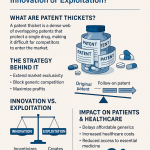
The Paragraph IV challenge dynamic applies here too. Many innovator companies have layered their flagship biologics with extensive secondary patent portfolios covering formulations, dosing methods, devices, and manufacturing processes. Biosimilar developers must navigate these “patent thickets,” either designing around the secondary patents or challenging them through inter partes review (IPR) at the USPTO or Paragraph IV certification in the BPCIA’s patent dance process [23].
DrugPatentWatch’s Orange Book and biosimilar pathway data enables both innovators and potential biosimilar entrants to map these thickets precisely: which secondary patents are listed, which have been challenged, which litigation is pending, and what the expected outcomes-based timelines are. For a biosimilar developer evaluating market entry for a particular biologic LOE, this intelligence is the foundation of the business case.
The Role of Data Partnerships and Platform Licensing in the New Ecosystem
The complexity of the new therapeutic landscape has produced a structural need for partnerships that would have been uncommon or unnecessary in the blockbuster era. When pharmaceutical competition centered on developing and commercializing a small-molecule for a large patient population, the core capabilities—medicinal chemistry, large-scale synthesis, clinical trials management, commercial deployment—were well-established and broadly distributed across the industry. Most large companies had them; partnerships were primarily used to share development risk or access specific geographic markets.
The new technologies require fundamentally different expertise combinations. AI drug discovery requires both pharmaceutical biology and computer science. ADC development requires antibody engineering, cytotoxic chemistry, and conjugation technology. mRNA therapeutics require nucleic acid synthesis, LNP chemistry, and specialized delivery expertise. CAR-T requires cell processing, viral vector manufacturing, and clinical management of complex immune toxicities. CRISPR requires molecular biology, genomics, delivery science, and long-term safety monitoring.
No single company has deep expertise across all of these. The result is an ecosystem of specialized companies—AI platforms, CDMOs (contract development and manufacturing organizations), gene therapy specialists, delivery technology companies, clinical data analytics providers—that are being integrated into pharmaceutical development programs through partnerships, licensing deals, and acquisitions.
CDMOs have become increasingly strategic in the CGT context. Companies like Lonza, Samsung Biologics, Catalent (now part of Nova Holdings/BD), and Thermo Fisher Scientific’s biologics division have built or are building cell and gene therapy manufacturing capacity specifically because the demand from smaller biotech companies—which lack manufacturing infrastructure—is high and growing. The pricing power of CGT CDMOs reflects this structural shortage of capacity [25].
For innovator pharmaceutical companies navigating the post-patent-cliff environment, building versus buying in each technology domain is a continuous strategic decision. AI partnerships—like Pfizer’s deals with Tempus and CytoReason—are generally structured as service or data access relationships rather than acquisitions, because the AI company’s value is often in its continuously improving model and proprietary data, which is difficult to capture through acquisition. ADC capabilities are being acquired directly through M&A; AstraZeneca’s in-house ADC team, built partly through its Daiichi Sankyo partnership, is now a core organizational asset. CGT capabilities require substantial capital commitments to build, and many companies are pursuing them through acquisition of small biotechs at proof-of-concept stage.
Measuring the Pipeline Gap: What Gets Built Between Now and 2030
The pipeline that currently exists will not fully close the revenue gap created by the 2025–2030 cliff. This is the honest assessment based on what is currently in Phase 2 and Phase 3 development across the industry.
IQVIA’s annual industry pipeline reports have consistently shown that the industry’s aggregate late-stage pipeline is large but concentrated in oncology, and that many programs targeting the same mechanisms are competing for the same patient populations. The probability that every late-stage program succeeds is, by historical base rates, low: approximately 50–60% of Phase 3 programs reach approval. The probability that every company executes well commercially after approval is lower still.
The five to seven year development timeframe for most drug programs means that the revenues available between 2025 and 2032 are largely determined by what was in Phase 2 in 2018–2020. The more speculative technologies—broad CRISPR gene editing applications, allogeneic CAR-T at scale, tissue-targeted mRNA therapeutics—are unlikely to generate blockbuster-scale revenues within this window. They are building blocks for the post-2030 cycle.
This creates a structural reality that pharma executives and investors must accept: the patent cliff revenue gap will not be fully replaced by 2030. Some companies will fill it partly through new products, partly through M&A, and partly through biosimilar revenue from their own legacy products’ LOE events where they have chosen to launch their own biosimilar versions. Others will manage through cost reductions. A few—Lilly being the most prominent example—have positioned themselves to not just bridge the gap but grow through it.
The companies that will emerge from this cycle in strongest position are those that are simultaneously managing near-term LOE events defensively while building the scientific and organizational capabilities required to compete in the next cycle. This is a harder management challenge than it looks: the urgency of near-term revenue preservation can crowd out the long-term investment in platform building that the next decade demands.
What the GLP-1 Franchise Teaches the Rest of the Industry
The commercial success of GLP-1 agonists—specifically Novo Nordisk’s Ozempic/Wegovy (semaglutide) and Eli Lilly’s Mounjaro/Zepbound (tirzepatide) in the obesity and type 2 diabetes markets—is the most instructive case study available for understanding what the next blockbuster cycle will look like.
Both drugs emerged from scientific platforms that were the subject of serious academic and clinical research for more than two decades before their commercial success became apparent. The biology of GLP-1 receptors in regulating appetite, insulin secretion, and energy metabolism was well-characterized in the literature long before it was translated into commercially viable therapies. The clinical differentiation of semaglutide and tirzepatide from earlier GLP-1 agents like liraglutide came from improved molecule design—longer half-lives, higher receptor affinity, and in tirzepatide’s case, dual GIP/GLP-1 agonism—that produced meaningfully better clinical outcomes.
The market response was not predictable from standard pharmaceutical commercial forecasting models. The obesity indication for semaglutide was approved in 2021; within two years it had created supply shortages at Novo Nordisk and was driving sustained double-digit revenue growth that made Novo Nordisk briefly the largest company in Europe by market capitalization. The scale of demand, driven by both the prevalence of obesity and the genuine magnitude of the drugs’ weight-loss effects in clinical trials, exceeded consensus estimates by a large margin.
The lessons are applicable to the next generation of technologies. First, scientific platform investment has long gestation periods but can produce revenue outcomes that dwarf conventional pipeline projections. The companies that will generate the next GLP-1-scale commercial successes are, in most cases, making their bets now in areas that are not yet commercially validated. Second, when a drug works dramatically better than existing alternatives—not marginally better, but dramatically better—the commercial response can exceed market models. This is the bet on CRISPR, on best-in-class CAR-T for solid tumors, and on the most effective personalized cancer vaccines: that when these technologies achieve their scientific potential, the market response will be commensurately large. Third, manufacturing capacity is a competitive moat. The supply constraints that Novo Nordisk and Lilly have both experienced in GLP-1 demonstrate that building manufacturing capacity ahead of demand is both expensive and strategically correct. The companies that build CGT and ADC manufacturing scale before the market demands it at peak will have a meaningful commercial advantage.
The Geographic Dimension: Why the U.S. Still Dominates—and for How Long
The United States accounts for approximately 45–50% of global pharmaceutical revenues by value, a proportion that reflects both the size of its commercial market and its comparatively permissive pricing environment relative to Europe, Japan, and other regulated markets. The Inflation Reduction Act (IRA) of 2022 introduced the first direct Medicare price negotiation authority in U.S. history, targeting a small set of drugs each year beginning in 2026 [26]. The first ten negotiated drugs include several major products, and the scope is expected to expand progressively.
The IRA’s impact on the patent cliff dynamic is complex. For drugs already facing LOE, the negotiated prices are largely irrelevant—generic and biosimilar competition will reduce prices far more aggressively than any HTA negotiation. The IRA’s effect is primarily on drugs with remaining exclusivity periods, particularly biologics (which receive 13 years of data exclusivity before negotiation is eligible). For small molecules, the negotiation window opens after 9 years of exclusivity.
For pharmaceutical company R&D incentive structures, the IRA creates a bias toward biologic development (longer runway before negotiation) and toward orphan disease indications (where negotiation exemptions apply to drugs with few approved uses). This has already begun to influence pipeline composition: companies are more explicitly evaluating whether their development programs optimize for IRA treatment under the current regulatory calculus.
European markets, while smaller in aggregate revenue contribution, matter for the global pipeline calculus because EMA approval provides access to a combined market of 450 million people and because EU HTA bodies—NICE in the UK, G-BA in Germany, HAS in France—set templates for value-based pricing that influence payer negotiations globally. The Joint Clinical Assessment (JCA) process being implemented under the EU Health Technology Assessment Regulation will produce pan-European clinical assessments for oncology and ATMPs starting in 2025, which will create more standardized evidence requirements and potentially accelerate market access timelines for companies that meet the bar [26].
China has become a significant factor in the global pharmaceutical innovation landscape, as noted above. Not only are Chinese biotechs producing assets of sufficient quality to be in-licensed by Western pharmaceutical companies, but the Chinese domestic market—now the second largest pharmaceutical market in the world—provides a revenue base that supports R&D investment at scale. Chinese regulators at the NMPA have taken steps to harmonize approval pathways with ICH standards, reducing the duplication of clinical requirements that previously made China an afterthought in global drug development strategies.
Part Four: What This Means for Stakeholders—A Framework for Action
For Large Pharmaceutical Companies: The Capability Audit
The patent cliff is the forcing function that is compelling long-overdue strategic clarity about what large pharmaceutical companies actually do well—and what they should stop pretending they do well.
The capabilities required for the next decade are distinct from those that drove success in the blockbuster era. Chemistry-based medicinal chemistry programs, while still relevant, are no longer sufficient as a primary competitive strategy. Primary care commercial deployment—large sales forces targeting general practitioners with chronic disease medicines—is declining as a value driver as prescribing consolidates in specialty care and as payer controls limit market access through formulary management.
The capabilities that matter going forward are:
Scientific depth in complex biology. Oncology, immunology, and rare disease now account for the majority of new drug approvals and the highest-value commercial opportunities. Companies without genuine depth in these scientific domains—molecular biology, cell biology, structural biology, clinical pharmacology in complex patient populations—cannot compete effectively in developing the next generation of therapies.
Data and AI infrastructure. As argued above, this is becoming a foundational capability rather than a strategic differentiator. Companies that have not yet built integrated, enterprise-wide data platforms and AI capabilities are operating at a growing disadvantage.
Manufacturing platform breadth. The new therapeutic modalities—biologics, ADCs, cell therapies, gene therapies, mRNA—each require distinct and specialized manufacturing capabilities. Companies that can manufacture across multiple platforms gain flexibility in their pipeline choices; those locked into a single modality face strategic constraints.
Commercial model innovation. Specialty care commercial deployment, outcomes-based contracting capabilities, patient services infrastructure for complex therapies, and HTA engagement expertise are all critical competencies for generating revenue from the new generation of medicines.
The companies that can honestly assess their current capabilities against this list—and act on the gap analysis with genuine urgency—are the ones best positioned to come out of the patent cliff cycle as long-term winners.
For Biotech Executives: Navigating the Funding Environment
The financing environment of 2025 is challenging but not uniformly so. There is capital available for the right science in the right therapeutic areas. The challenge is that “the right science” is being defined more narrowly than at the 2021 peak, and investors are significantly more focused on near-term clinical catalysts.
The practical implications for biotech executives:
Programs in Phase 2 with compelling data in validated disease biology are fundable and potentially acquirable. The demand from large pharma for late-stage, de-risked assets is high. Companies in this position should be running active BD processes and not waiting for unsolicited approaches.
Early-stage platform companies without near-term clinical assets need to demonstrate scientific differentiation through published data, proof-of-concept in model systems, or expert credibility before approaching institutional investors. The bar for platform-only rounds at substantial valuations is higher than it has been at any point in the past five years.
The China out-licensing market deserves attention from management teams that have not historically engaged with it. Chinese pharmaceutical companies have become significant, well-capitalized partners for assets that might not command comparable deal terms in U.S. or European BD conversations.
Patent strategy is integral to fundraising narrative. Investors—both strategic and financial—are doing more diligent patent landscape analysis than they were at the 2021 peak. A clean, well-structured patent portfolio with freedom-to-operate analyses completed and a realistic view of exclusivity timelines is a prerequisite for serious BD or financing conversations. Resources like DrugPatentWatch allow management teams to understand how their own patent positions stack up against the competitive landscape before those conversations begin [23].
For Generic and Biosimilar Manufacturers: Mapping the Entry Points
The 2025–2030 cliff is the largest opportunity in biosimilar development since the Biologics Price Competition and Innovation Act was passed in 2009. The drugs going off patent are among the highest-revenue products ever commercialized, and the biosimilar revenues available from winning positions in these markets are substantial.
But the opportunity is not equal across all products. Four factors determine biosimilar opportunity quality: development cost and feasibility, competitive crowding in the biosimilar applicant pool, payer and physician receptivity to substitution, and innovator lifecycle management strategies.
For highly complex biologics like Keytruda and Opdivo, the development cost and characterization requirements are substantial—these are large, complex antibodies with extensive clinical use data that biosimilar developers must benchmark against. The competitive field will likely include a moderate number of biosimilar programs, enough to ensure price competition, but not the 20+ applicant crowding that characterized early biosimilar markets for simpler biologics like filgrastim. Payer uptake will likely be relatively rapid given the enormous price savings potential.
For products like Entresto—a small molecule combination drug rather than a biologic—generic entry is simpler developmentally but may face formulation patent challenges. The key analytical question is the secondary patent landscape: what patents remain listed in the Orange Book after the lead composition patent expires, and how defensible are they? Orange Book data assembled through DrugPatentWatch allows generic companies to construct precise patent expiry timelines that account for all listed patents, not just the headline composition patent, which is the data point that is commonly cited in mainstream financial analysis [23].
The biosimilar manufacturers that will generate the highest returns from this cliff cycle are those that make portfolio entry decisions in the next 12–24 months—before the clinical development timelines for 2028–2030 LOE products close. Waiting for the primary patent to expire to begin biosimilar development is waiting too long.
Key Takeaways
The following points summarize the most important conclusions for pharmaceutical strategists, investors, biotech executives, and healthcare analysts.
The revenue exposure is real and concentrated. Between 2025 and 2030, more than $230 billion in annual U.S. pharmaceutical revenues is at risk from patent expirations. The exposure falls disproportionately on a handful of large companies—BMS, Pfizer, Merck, Novartis, AstraZeneca—and the drugs expiring are some of the best-selling in history.
The three corporate response strategies are diverging. Build (Eli Lilly), Buy (AbbVie), and Cut (BMS) are all being pursued simultaneously across the industry. The market will render a verdict on their relative merits by 2027–2030. Each strategy carries risks that are not fully captured in current stock valuations.
AI is now infrastructure, not experimentation. Companies with integrated AI and data platforms will accelerate discovery timelines, reduce development costs, and make better portfolio decisions. The competitive moat from proprietary data and algorithms is different from—and in some ways more durable than—a patent moat on a molecule.
ADCs are the most commercially near-term technology. The clinical validation of the bystander effect through Enhertu and Trodelvy has created a clear development roadmap. Companies with ADC platform capabilities will deploy them across multiple tumor types over the next five to seven years, generating revenues that are identifiable and scalable in ways that cell and gene therapy currently cannot match.
mRNA’s therapeutic potential is real; its near-term commercial scope is limited. The technology works as a vaccine platform and may work as a personalized cancer vaccine. Protein replacement applications remain constrained by delivery challenges. Companies should track the mRNA-4157 melanoma pivotal trial results as the most important near-term data point for the platform’s commercial trajectory.
Cell and gene therapy will cure diseases—but not at scale before 2030. Manufacturing bottlenecks, reimbursement system constraints, and regulatory evolution will limit CGT’s commercial impact over the next five years. The technologies that will generate large revenues in the 2030s are being funded and early-stage validated now.
Competitive intelligence is an offensive weapon. Patent landscape analysis—using resources including DrugPatentWatch—is no longer just a legal risk management tool. For innovator companies, it maps white space and competitor strategy. For generics and biosimilar manufacturers, it defines market entry timelines with more precision than headline patent dates suggest. For investors, it is a primary source of pipeline and exclusivity intelligence.
The reimbursement system is the constraint that science cannot solve alone. The most important bottleneck to CGT commercial success is not scientific; it is the misalignment between payment structures and the value created by one-time curative therapies. Companies that invest in health economics, outcomes data infrastructure, and payer relationship development alongside their scientific programs will have a material commercial advantage.
FAQ
1. Why does a patent expiration cause revenue to collapse so fast, and will biosimilar competition for Keytruda behave the same way as generic competition for Lipitor?
Generic erosion for small molecules is rapid and severe—80–90% revenue decline within 12 months—because manufacturing a generic oral tablet is straightforward, regulatory approval is fast, and payers and pharmacy benefit managers enforce substitution aggressively. Biosimilar competition for biologics like Keytruda is different in several ways. Biosimilar development takes longer and costs more, which limits the number of entrants. Physicians are less reflexively comfortable with automatic substitution for complex injectables. Innovator companies defend their biologics through patient assistance programs, formulary contracting, and clinical experience arguments that are unavailable for small-molecule brands. The revenue decline for Keytruda post-LOE will be significant, but it will occur over three to five years rather than in a single year, and the innovator will likely retain meaningful market share even after multiple biosimilars are available. This is the pattern observed with Humira in the U.S. and Europe [4].
2. What does the Inflation Reduction Act actually do to pharma’s incentive to develop new drugs, and is the concern valid?
The IRA introduces Medicare price negotiation for a defined set of high-expenditure drugs after specified exclusivity periods—9 years for small molecules, 13 years for biologics. The argument that this will deter R&D investment is partially valid and partially overstated. For drugs with long development timelines and large potential markets—exactly the kind of drug that a patent-cliff-era pharma company needs to develop—the negotiation window comes late enough that it reduces, but does not eliminate, the expected return on a successful drug. The distortion effect is more pronounced for smaller-market drugs where the expected revenue over the full exclusivity period is lower. There is also an observable composition effect: the IRA creates differential incentives for biologic versus small-molecule development, and for rare disease (which has exemptions from negotiation under certain conditions) versus common disease. Both effects are visible in pipeline composition data from 2023–2025, suggesting the concern is not theoretical [26].
3. If Eli Lilly’s GLP-1 franchise is generating the growth that offsets patent cliff concerns, why doesn’t every pharma company just copy this strategy?
They cannot, for two reasons. First, the GLP-1 scientific platform was developed over roughly 25 years before it generated blockbuster commercial products. The earliest GLP-1 receptor agonist, exenatide, was approved in 2005, and the commercial breakthrough came two decades of iterative science later. Companies that want a GLP-1-like platform in 2030 would have needed to start funding the foundational science in the mid-2000s. Second, Lilly’s GLP-1 success reflects specific choices—scientific focus, manufacturing scale-up investment, and clinical development strategy—that were made consistently over a long period. The companies now facing the worst patent cliff exposures made different choices in that same period, often rationally allocating capital to nearer-term, lower-risk programs. The lesson is that long-duration platform investment is the strategy that avoids the cliff, but it requires sustained commitment at the expense of near-term returns, and most public company governance structures do not reward that kind of patience [7].
4. What is the single most important data point to watch for determining whether mRNA becomes a broad therapeutic platform, not just a vaccine platform?
The pivotal Phase 3 data for Moderna’s mRNA-4157 (V940), the individualized neoantigen cancer vaccine developed with Merck’s Keytruda. The Phase 2 adjuvant melanoma data—44% reduction in risk of recurrence or death versus Keytruda alone—was compelling enough to justify the investment in a pivotal Phase 3 trial. If that trial confirms the Phase 2 signal, it will demonstrate that personalized mRNA cancer vaccines can produce clinically and statistically significant improvements in survival in a large, commercially important cancer indication, where regulatory approval would follow, and payer coverage at substantial price points would be defensible. This would validate mRNA as a therapeutic platform beyond the infectious disease context and attract capital and partnership interest across the pharmaceutical industry. If the Phase 3 trial misses, it will set back the therapeutic mRNA timeline by several years and force a recalibration of both company strategies and investor valuations across the sector [17].
5. How should a biotech company in a crowded ADC space differentiate itself from the dozens of competitors pursuing the same HER2, TROP2, or EGFR targets?
There are four viable differentiation strategies, and the best companies are pursuing more than one simultaneously. First, target novelty: rather than competing on validated targets where Enhertu and Trodelvy have already established high clinical bars, develop ADCs against novel antigens that are highly expressed in specific tumor types but have not been exploited by existing drugs. This requires bioinformatics investment in tumor antigen discovery and risk tolerance for unvalidated targets. Second, engineering superiority: develop proprietary linker chemistries, site-specific conjugation methods, or payload classes that offer better therapeutic windows than existing approved ADCs. Third, combination strategy: position an ADC not as a monotherapy but as a combinable agent alongside checkpoint inhibitors, CDK4/6 inhibitors, or other standard-of-care drugs, where the clinical question is additive or synergistic efficacy rather than head-to-head replacement. Fourth, tumor biology selection: rather than pursuing breast cancer or urothelial carcinoma where ADC clinical data is already mature, develop the clinical evidence base in underserved solid tumor types—gastric, cervical, endometrial, or small-cell lung cancers—where the unmet need is high and the competitive ADC field is less crowded [12, 13].
References
[1] GlobalData. (2025). Big pharma prepare for next patent cliff as blockbuster drugs revenue losses loom. GlobalData Media. https://www.globaldata.com/media/pharma/big-pharma-prepare-next-patent-cliff-blockbuster-drugs-revenue-losses-loom-says-globaldata/
[2] William Blair Analysts, as reported by BioSpace. (2025). 5 Pharma powerhouses facing massive patent cliffs—and what they’re doing about it. BioSpace. https://www.biospace.com/business/5-pharma-powerhouses-facing-massive-patent-cliffs-and-what-theyre-doing-about-it
[3] GlobeNewswire. (2025, July 28). Blockbuster drugs on patent cliffs research report 2025: 2025–2030 patent cliff to be largest since 2010, hitting blockbusters like Keytruda, Eliquis, and Darzalex. https://www.globenewswire.com/news-release/2025/07/28/3122199/0/en/Blockbuster-Drugs-on-Patent-Cliffs-Research-Report-2025-2030-Patent-Cliff-to-Be-Largest-Since-2010-Hitting-Blockbusters-Like-Keytruda-Eliquis-and-Darzalex.html
[4] Kaplan, W., & Wirtz, V. J. (2016). The impact of patent expiry on drug prices: A systematic literature review. PMC/PubMed Central. https://pmc.ncbi.nlm.nih.gov/articles/PMC6132437/
[5] DrugPatentWatch. (2025). The end of exclusivity: Navigating the drug patent cliff for financial implications, lifecycle strategies, and market transformations. https://www.drugpatentwatch.com/blog/the-impact-of-drug-patent-expiration-financial-implications-lifecycle-strategies-and-market-transformations/
[6] IQVIA Institute. (2024). The global use of medicines outlook through 2029. IQVIA. https://www.iqvia.com/insights/the-iqvia-institute/reports-and-publications/reports/the-global-use-of-medicines-outlook-through-2029
[8] Precedence Research. (2025). Artificial intelligence (AI) in drug discovery market size, share, and trends 2025 to 2034. https://www.precedenceresearch.com/artificial-intelligence-in-drug-discovery-market
[9] World Economic Forum. (2025, January). How 2025 can be a pivotal year of progress for biopharma. https://www.weforum.org/stories/2025/01/2025-can-be-a-pivotal-year-of-progress-for-pharma/
[10] DigitalDefynd. (2025). AI in the pharmaceutical industry: 5 success stories [2025]. https://digitaldefynd.com/IQ/ai-in-pharmaceutical-industry/
[11] Grant Thornton. (2025). Stable growth continues in the life sciences VC market. https://www.grantthornton.com/insights/articles/life-sciences/2025/life-sciences-vc-market
[13] Khera, E., & Bhatt, D. L. (2021). Introduction to antibody-drug conjugates. PMC/PubMed Central. https://pmc.ncbi.nlm.nih.gov/articles/PMC8628511/
[14] Chau, C. H., Steeg, P. S., & Figg, W. D. (2019). Antibody-drug conjugates: The dynamic evolution from conventional to next-generation constructs. PMC/PubMed Central. https://pmc.ncbi.nlm.nih.gov/articles/PMC10814585/
[15] TriLink BioTechnologies. (2025). Applications for mRNA. https://www.trilinkbiotech.com/applications-for-mrna
[17] Moderna Inc. (2025). Investor relations and pipeline updates. Moderna corporate communications. Referenced via Fierce Pharma and BioSpace reporting.
[18] PharmaLive. (2025). Cell and gene therapy market set to grow at 44% CAGR through 2030. https://www.pharmalive.com/cell-and-gene-therapy-market-set-to-grow-at-44-cagr-through-2030/
[19] National Cancer Institute. (2025). CAR T cells: Engineering immune cells to treat cancer. https://www.cancer.gov/about-cancer/treatment/research/car-t-cells
[20] ASCO Publications. (2025). High cost of chimeric antigen receptor T-cells: Challenges and solutions. https://ascopubs.org/doi/10.1200/EDBK_397912
[21] Synthego. (2025). What is CRISPR: Your ultimate guide. https://www.synthego.com/learn/crispr
[23] DrugPatentWatch. (2025). The strategic value of Orange Book data in pharmaceutical competitive intelligence. https://www.drugpatentwatch.com/blog/the-strategic-value-of-orange-book-data-in-pharmaceutical-competitive-intelligence/
[24] FDA/CBER. (2025). Cellular & gene therapy products. U.S. Food and Drug Administration. https://www.fda.gov/vaccines-blood-biologics/cellular-gene-therapy-products
[25] Grand View Research. (2025). Cell and gene therapy manufacturing market report, 2030. https://www.grandviewresearch.com/industry-analysis/cell-gene-therapy-manufacturing-market
[26] McKinsey & Company. (2025). What to expect in US healthcare in 2025 and beyond. https://www.mckinsey.com/industries/healthcare/our-insights/what-to-expect-in-us-healthcare-in-2025-and-beyond
Copyright notice: This article draws upon and substantially expands analysis originally published at DrugPatentWatch.com. All data citations are attributed to their primary sources. DrugPatentWatch provides pharmaceutical patent intelligence used by drug developers, generic manufacturers, biotech investors, and healthcare analysts.