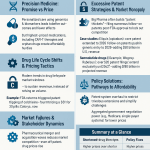
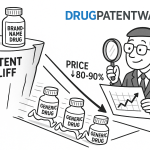
Pharmaceutical patent thickets, dense and overlapping webs of intellectual property rights, have become a formidable barrier to market competition and patient access to affordable medicines. This deliberate strategy, which is particularly pronounced in the United States due to its legal and regulatory environment, serves to extend monopolies and stifle generic and biosimilar competition.1 The economic toll is staggering, with a single case like AbbVie’s Humira thicket costing the American healthcare system an estimated 19 billion dollars by delaying biosimilar market entry for five years longer than in Europe.1 Traditional methods of intellectual property (IP) analysis, reliant on manual searching, are inherently unsuited to address this systemic issue. These legacy processes are prohibitively time-consuming, costly, and susceptible to human error, which prevents the timely and effective challenge of these complex legal constructs.4
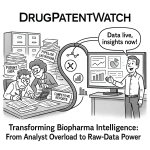
Artificial intelligence (AI) offers a transformative solution, presenting a powerful new paradigm for IP analysis. By leveraging advanced technologies such as Natural Language Processing (NLP), Machine Learning (ML), and Knowledge Graphs, AI systems can process and analyze vast, global patent datasets with unprecedented speed, accuracy, and scalability.5 This enables the automation of tasks that were once labor-intensive, including comprehensive prior art and invalidation searches, predictive litigation analytics, and dynamic competitive landscape mapping. The shift transforms IP strategy from a reactive, defensive function to a proactive, data-driven engine of competitive advantage, de-risking the entire research and development (R&D) pipeline and accelerating innovation.7
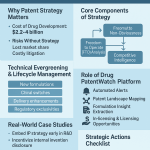
The strategic imperative for the pharmaceutical and biotech industries is to adopt a “human-in-the-loop” model. In this symbiotic relationship, AI performs the foundational work of data processing and analysis, while human experts apply their irreplaceable legal, scientific, and strategic judgment.10 This collaborative approach is not only an operational best practice but also a legal necessity to ensure human inventorship and navigate evolving regulatory frameworks. For branded companies, this means de-risking R&D investments by assessing patentability early on. For generic and biosimilar manufacturers, it means accelerating market entry by efficiently identifying weaknesses in patent thickets.5 The strategic embrace of AI will ultimately secure defensible innovation in a rapidly changing landscape and, in the process, accelerate the availability of life-saving medicines.
2. The Gordian Knot: Deconstructing the Pharmaceutical Patent Thicket
Defining the Thicket and the Thicket’s Paradox
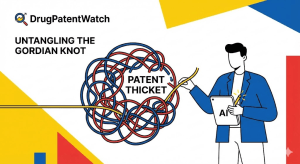
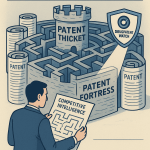
A patent thicket is commonly understood as a “dense web of overlapping intellectual property rights that a company must hack its way through in order to actually commercialize new technology”.1 While this definition originated from industries like smartphone manufacturing, where a single product requires licensing technologies from a multitude of patent holders, the pharmaceutical thicket is a distinct and strategically created construct.13 It is not a natural consequence of technological complexity but rather a deliberate business and legal maneuver to extend market exclusivity.1
This is a critical distinction that frames the problem not as an unavoidable technical reality but as a consequence of legal and regulatory design. The prevalence of these dense drug patent thickets is not a universal phenomenon; it is most pronounced in the United States. Specific legal mechanisms, such as permissive patent examination that allows for the filing of numerous patents on minor improvements, and the high costs of litigation, create an environment favorable for their growth.1
The Anatomy of Evergreening: Primary vs. Secondary Patents
The construction of a pharmaceutical patent thicket relies on the strategic distinction between primary and secondary patents. Primary patents are the foundational intellectual property for a new medicine, typically covering the core Active Pharmaceutical Ingredient (API), which is the molecule or protein sequence that produces the therapeutic effect.1 These patents grant a 20-year monopoly from the date of filing, intended to allow the company to recoup its significant R&D investment.2
Secondary patents, in contrast, are the building blocks of the thicket. They do not cover the core API but instead target a wide array of peripheral, incremental, or “follow-on” innovations related to the original drug.1 Examples include patents on specific dosage forms, new manufacturing methods, or the drug’s delivery device, such as a specialized inhaler or auto-injector.1 A compelling statistic reveals the strategic nature of this practice: for top-selling drugs, a staggering 66% of patent applications are filed years after the drug has received FDA approval.2
The core issue with this strategy, known as “evergreening,” is not the existence of secondary patents themselves, but rather the deliberate leveraging of a single minor improvement into dozens or even hundreds of overlapping patents.1 The overarching objective is to create a complex and costly litigation landscape that is disproportionate to the inventive contribution. This deters would-be competitors, thereby extending the monopoly for years beyond what was envisioned by the original patent grant.1
Economic and Social Consequences
The direct consequences of pharmaceutical patent thickets are sustained high drug prices and significant barriers to patient access.1 The five-year delay in the U.S. market entry of Humira biosimilars, compared to Europe, is directly attributed to its U.S. patent thicket, which included over 165 granted patents.1 This delay is estimated to have cost the American healthcare system tens of billions of dollars.1 Similarly, the drug Revlimid saw its price increase by over 300% over a 20-year period, with an 18-year legal battle blocking generic competition despite the primary patents having expired.2
For generic and biosimilar companies, challenging these thickets is a costly and protracted affair. The litigation for a single drug can cost millions of dollars and last for years, creating a formidable barrier to entry for would-be competitors.2 The sheer complexity of navigating dozens of overlapping claims deters many from even attempting a challenge, thereby achieving the goal of extended monopoly without a single court ruling.1
Beyond the direct economic and patient access issues, this strategy distorts incentives for innovation. Critics argue that patent thickets divert valuable R&D resources away from the development of novel therapies toward “evergreening” strategies.2 For instance, a company like Merck spent years patenting the subcutaneous injection method for its drug Keytruda instead of investing in developing new drugs, while small firms and startups face a 25% higher litigation risk in thicket-heavy fields.2 The data reveals a fundamental shift in the purpose of IP, where the patent has become a building block in a “sophisticated architecture of extended market exclusivity,” rather than a reward for a single invention.1 This signifies a system where legal maneuvering is rewarded more than scientific breakthroughs.
3. The Legacy Gauntlet: The Limitations of Traditional IP Analysis
The Manual Burden: A Challenge of Scale and Scope
Traditional patent analysis, whether for prior art searches or invalidation, has historically relied heavily on manual, labor-intensive methods performed by highly skilled professionals.4 This legacy approach is a significant bottleneck in the IP ecosystem. The process is notoriously time-consuming, often requiring weeks or months to complete due to the sheer volume of data that must be manually reviewed.5 This includes not only patent databases but also a vast expanse of scientific literature and non-patent publications. The extensive research and analysis demanded by this method can be particularly challenging for entities operating under tight deadlines or with limited resources.4
The financial burden of this manual process is also immense. A thorough patent invalidation search requires specialized legal and technical expertise, making it a resource-intensive and costly endeavor that can be prohibitive for smaller entities or individuals.4 This lack of scalability is a primary reason why patent thickets are so successful as a barrier to competition. The inability of traditional methods to keep pace with the exponential growth of patents and the increasing complexity of technologies creates a bottleneck effect, directly contributing to the time delays and inflated costs seen in the thicket case studies.5
The Inevitability of Human Error and Bias
In addition to being slow and expensive, manual methods are susceptible to a wide range of human errors and cognitive biases. Analysts may miss critical pieces of prior art or misinterpret technical information due to the complexity and technical nuances of patent documents.5 A common pitfall is the “thesaurus issue,” where a searcher uses terms they are aware of but fails to find relevant prior art that uses different expressions for the same concept.4
Without access to specialized databases and professional expertise, a manual search can lead to a critical, inadvertent oversight. A case study of a small startup illustrates this point: despite their earnest efforts, they overlooked a similar patent, which led to a legal dispute and significant financial losses.4 This underscores that the limitations of traditional methods are not merely inefficiencies; they are a direct cause of the vulnerabilities and protracted legal battles that plague the industry.
Table 1: Traditional vs. AI-Augmented Patent Analysis
Metric
Traditional (Manual) Method
AI-Augmented Method
Time to Complete
Weeks to months
Hours to minutes
Cost
Prohibitive, high upfront legal and expert fees
High initial investment, but significant long-term savings in time and manpower
Accuracy
Susceptible to human error, oversight, and bias
Enhanced thoroughness, detects subtle patterns, and mitigates human error
Scalability
Limited by the availability of skilled professionals
Near-unlimited; can process vast amounts of data at speeds unattainable by human teams
The table above provides a clear, quantitative comparison of the “before and after” of AI adoption. It demonstrates that AI is not just a marginal improvement but a step-change in capability, offering a solution to the fundamental limitations that have made the traditional system so vulnerable to patent thicketing.
4. AI as a Strategic Catalyst for Patent Analysis
Core Capabilities: Unlocking the Data
AI, with its unparalleled processing capabilities, is revolutionizing how patent data is analyzed, managed, and utilized.7 It leverages a suite of advanced technologies to unlock insights from the immense volume of patent and scientific literature data.
Natural Language Processing (NLP): NLP is the foundational technology that allows AI to “dissect and understand complex patent documents at speeds and scales previously unimaginable”.7 It moves beyond simple keyword matching to recognize the context and meaning of technical concepts, which solves the “thesaurus issue” that plagues manual searches.9 NLP is also used for automated patent classification, a process that can read and organize millions of patents per hour, eliminating the need for manual tagging or complex boolean queries.6
Machine Learning (ML) & Knowledge Graphs: ML algorithms are adept at identifying patterns, trends, and connections within large datasets that would likely be overlooked by human analysts.7 Knowledge graphs, powered by ML, integrate and visualize data from patents, research papers, and standards, creating a structured map of an industry’s innovation landscape.15 These tools are instrumental for trend prediction and competitive analysis, allowing companies to foresee market shifts and adapt their R&D strategies proactively.7
Generative AI & Large Language Models (LLMs): LLMs and Generative AI can process and analyze vast amounts of data to provide rapid access to insights.8 They can also assist in generating preliminary patent drafts, outlining the essential elements of an invention and streamlining the creation of initial legal documents.7
AI-Powered Solutions for the Thicket
These core capabilities translate into powerful, actionable solutions for addressing the complexities of pharmaceutical patent thickets.
Automated Prior Art and Invalidation Search: AI is transforming the prior art search by scanning existing patents in a matter of seconds, providing immediate feedback on a new application’s potential for success.17 This allows companies to identify potential similarities to existing patents early in the R&D pipeline. The ability to forecast patentability transforms IP from a legal checkpoint into a proactive, strategic tool for de-risking the entire R&D process, saving a company from a catastrophic misallocation of resources on a compound “doomed to fail…in the patent office”.10
Competitive and Technology Landscape Mapping: AI helps companies gain critical competitive intelligence.6 By analyzing patent data, it can identify emerging technologies, pinpoint where top players are focusing their filings, and reveal unexplored “white spaces” for strategic R&D.18 This elevates patent searching from a tactical necessity to a source of strategic intelligence that can drive business strategy and R&D planning.9
Predictive Analytics for Litigation and Portfolio Management: ML models can be trained on historical patent data to predict which patents are most likely to end up in court.17 This capability allows a company to move beyond a qualitative, “gut-feel” assessment of a project’s viability to a quantitative, data-driven one, for example, by generating a “patentability score”.10 This enables more rational capital allocation decisions across a portfolio and elevates the IP function from a necessary cost center to a core driver of value creation.8
Case Study: Insilico Medicine’s AI-First Approach
Insilico Medicine is a leading example of an AI-driven biotech company. Its Pharma.AI platform is used to identify novel therapeutic targets and design new molecules.22 This integrated approach has been shown to reduce drug discovery timelines from years to months, as demonstrated by their Phase IIa drug candidate, rentosertib, which was discovered and designed using AI.22
The company’s strategy demonstrates a new approach to IP. By using AI to design new molecules, they can simultaneously assess patentability at the point of invention.10 This allows them to proactively steer their R&D away from “crowded, AI-obvious chemical spaces” and toward territories that are “truly inventive and legally defensible”.10 This represents a fundamental shift from a reactive IP function that simply files patents to a proactive IP function that drives R&D strategy and de-risks the entire pipeline. The ability to prevent a “catastrophic misallocation of resources” on a compound that might fail in the patent office is a direct result of this integrated, AI-first strategy.10
Table 2: AI Applications in Pharmaceutical IP
AI Capability
Application
Business Benefit
NLP
Prior Art Search, Patent Classification
Reduced search time, improved accuracy, solved “thesaurus” issues, and streamlined patent analysis 6
Predictive Analytics
Litigation Prediction, Portfolio Prioritization
Quantified risk assessment, better capital allocation, and focus on high-value patents 8
Machine Learning
Competitive Landscaping, Trend Identification
Strategic intelligence, identification of white spaces, and proactive R&D planning 7
Generative AI
Patent Drafting, Analysis & Content Generation
Accelerated document creation and quicker access to strategic insights 6
This table provides a clear overview of how AI technologies map to tangible business outcomes. It demonstrates that AI is a tool for strategic decision-making that can help pharmaceutical companies, from branded to generics, and biotech startups alike, navigate the complexities of patent thickets and the broader IP landscape.
5. The Hybrid Advantage: The Human-in-the-Loop Imperative
The future of IP analysis does not lie in a complete replacement of human expertise by AI, but in a powerful augmentation of it. The most effective model is a “hybrid” or “human-in-the-loop” approach that combines AI’s speed and scale with the irreplaceable legal and strategic judgment of human experts.10 This symbiotic relationship is the core principle for navigating the new IP landscape.
The Collaborative Cycle
The optimal workflow for this hybrid approach unfolds in three symbiotic stages:
AI’s First Pass: The process begins with the AI system performing the “heavy lifting”.10 The AI analyzes vast datasets to identify and surface prior art, predict patentability, and uncover non-obviousness risks that a human might miss.10 This acts as a powerful first-pass filter, freeing up human experts to focus their time and cognitive resources on the most complex and critical issues instead of on manual, labor-intensive tasks.10
Expert Human Review and Refinement: Once the AI has provided its initial analysis, human experts—including patent attorneys and R&D scientists—step in to review the output.10 They apply their legal acumen, deep domain knowledge, and strategic judgment to interpret the results, validate the AI’s findings, and uncover related art that the algorithm might have overlooked.10 This step is crucial because AI models cannot yet handle the uniquely human aspects of patent law, such as the nuanced interpretation of a patent’s claims or the subjective judgment required for legal arguments.10
Iterative Feedback Loop: The process does not end with the human expert’s review. The conclusions and decisions made by the human team are fed back into the system as new, labeled data.10 By marking certain documents as “highly relevant” or “irrelevant,” they continuously retrain and improve the underlying AI models. This creates a cycle where the AI becomes progressively smarter and better aligned with the organization’s specific needs, further elevating the quality and speed of future analyses.10
This collaborative cycle underscores a fundamental shift in the role of the IP professional. AI will not make legal professionals obsolete but will “transform their roles” by automating routine tasks.10 By shifting the focus from labor to strategy, AI frees up attorneys to concentrate on higher-value work, such as advising clients on AI-driven innovations, navigating complex litigation, and building defensible portfolios.9 This redefines the IP function, moving it from a “necessary cost center” to a core “driver of value creation”.10
6. Navigating the New Landscape: Key Challenges and Mitigation Strategies
The integration of AI into pharmaceutical IP analysis, while promising, is not without significant legal and ethical challenges that require careful navigation.
The Evolving Legal Framework and the “Human Inventor” Imperative
The primary legal challenge is the ambiguity surrounding AI inventorship.11 The global consensus, reinforced by rulings like the UK Supreme Court’s
Thaler decision and the USPTO’s guidance, is that an inventor must be a human being.11 An invention generated
solely by an AI system is not currently considered patentable.11 To be patentable, a human must provide a “significant contribution” to the conception of the invention.11
The definition of “obviousness” is also evolving in this new landscape. As AI tools for drug discovery and analysis become ubiquitous—with over 90% of pharmaceutical companies now investing in AI—the legal standard for a “Person Having Ordinary Skill in The Art” (PHOSITA) will likely evolve to include proficiency with these tools.10 This means that a new molecule that could be easily generated by a standard AI model, given a known biological target, might be deemed “obvious to try” and therefore unpatentable.10 Securing a patent in the future will require a clear demonstration of “human ingenuity that goes beyond what a standard AI could predictably generate”.10
To mitigate these risks, meticulous documentation of human contributions at every stage of the AI interaction is paramount.11 This documentation should include records of how scientists framed the problem, curated the training data, interpreted the AI’s outputs, and validated the results through lab experiments.10 This process ensures that the human contribution is evident and defensible in the face of a challenge.
Data Security and Confidentiality Risks
The use of public, third-party AI tools for patent analysis presents a significant and “non-negotiable, paramount concern”.10 Providing pre-publication invention data to a public AI platform could be interpreted as a public disclosure, which would destroy the novelty of the invention worldwide and constitute a serious breach of confidentiality and attorney-client privilege.10 The case of the law firm Young Basile illustrates this risk. The firm rejected numerous AI tools because the providers couldn’t guarantee that their clients’ sensitive data would not be used to train the underlying AI models, leading to the risk of data dissemination.30
The only safe and defensible approach is to use AI models deployed in a secure, private environment where the company retains full control of its data.10 Platforms like Patlytics have addressed this concern by becoming SOC2 certified and explicitly stating that they do not use client data for training their models.31
Addressing Algorithmic Bias
AI models are a “reflection of the data they are trained on” and can inadvertently replicate prior art or produce biased outputs if the training data is not carefully curated.10 One patent for an AI-designed drug was rejected after the USPTO identified an underrepresentation of Asian genomic data in the training set.11 This highlights the risk of algorithmic bias affecting the validity of an invention.
To mitigate this, companies must build cross-functional teams that include data scientists, legal experts, and regulatory specialists to ensure data diversity and validate model performance.32 This collaborative approach ensures that AI-driven solutions are not only technically robust but also appropriate for the regulatory context in which they will be used.
7. Strategic Recommendations and a Forward-Looking View
The overwhelming complexity of pharmaceutical patent thickets is no longer an intractable problem. AI provides the only scalable solution to untangle this legal and economic knot, but its successful implementation requires a clear strategic vision.
For Branded Pharmaceutical Companies:
A proactive approach to portfolio management is essential. Leverage AI to continuously audit and optimize existing patent portfolios, identify high-value assets, and pinpoint potential infringement risks.8 Use AI-driven predictive analytics to make “go/no-go” decisions early in the R&D pipeline, saving billions in potential misallocated resources on compounds with low patentability.10 This transforms the IP function into a core driver of business strategy and value creation.
For Generic and Biosimilar Companies:
The primary recommendation is to embrace AI for expedited prior art and invalidation searches. AI’s ability to rapidly identify vulnerabilities in patent thickets and uncover prior art can dramatically reduce the time and cost of challenging thickets, thereby accelerating market entry and bringing down drug prices.1
For AI-Driven Biotech Startups:
Integrate IP strategy from the outset of research. Embed a comprehensive IP strategy into every phase of the R&D process to ensure that new molecules are not only novel but also legally defensible.19 Meticulous documentation of human contributions at every interaction with the AI system is paramount to meet inventorship requirements and protect the integrity of the invention.11 Additionally, invest in a secure, private AI platform to protect pre-publication IP and client confidentiality, as this is a non-negotiable for long-term success.10
Conclusion: The Future of Innovation and IP
The convergence of AI and pharmaceutical R&D is creating a powerful, self-reinforcing cycle: “large data → more accurate models → better drugs → more and better data”.25 AI is not a fleeting trend but a fundamental, transformative shift that will reshape the entire R&D and IP landscape. It provides the only scalable solution to the overwhelming complexity of patent thickets. By strategically integrating AI into a human-led, collaborative process, the industry can untangle this long-standing legal knot, transforming IP from a legal burden into a core driver of competitive advantage, de-risking new innovation, and ultimately, accelerating access to life-saving medicines for patients worldwide.