1. What Pharmaceutical Competitor Analysis Actually Is
Definition and Scope
Pharmaceutical competitor analysis is the systematic collection, validation, and interpretation of information about rival companies, converted into strategic intelligence that drives decisions across R&D, regulatory affairs, commercial operations, and corporate finance. It is not market research. It is not a quarterly report on competitor revenues. At its most operational, it is a continuous intelligence function that answers a specific category of questions: What will competitors do next, when will they do it, and what are the IP and commercial consequences for your portfolio?
The pharmaceutical sector demands a distinct analytical architecture. Development timelines extend 10 to 15 years. Regulatory outcomes are binary and consequential. Patent protection windows are finite and subject to legal attack. A single Paragraph IV certification can shave $3 to $8 billion from a branded company’s market capitalization within days of filing. Generic manufacturers face ANDA approval races where being second to file, rather than first, can cost 180 days of market exclusivity worth hundreds of millions in profit. In this environment, competitive intelligence that operates on quarterly cadences or relies on analyst consensus reports is strategically inadequate.
Effective pharmaceutical competitor analysis operates across four time horizons simultaneously. Immediate-term intelligence (zero to twelve months) covers expected generic entries, upcoming regulatory decisions, and PDUFA dates. Medium-term intelligence (one to three years) covers Phase 2 and Phase 3 readouts, NDA/BLA submissions, and label negotiation outcomes. Long-term intelligence (three to ten years) covers early-stage pipeline mapping, patent estate construction, and therapeutic area consolidation. Strategic intelligence (beyond ten years) covers technology platform bets, modality transitions (e.g., from small molecules to cell therapy), and payer landscape evolution.
Key Takeaways: Scope and Definition
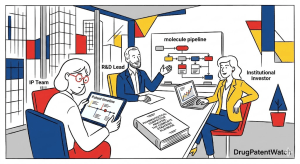
The analytical scope must match the time horizon of the decision it supports. IP counsel reviewing a Paragraph IV challenge requires granular claim-by-claim patent analysis and litigation precedent mapping, not a five-year pipeline overview. An R&D portfolio head deciding whether to advance a Phase 2 asset requires competitive landscape depth across enrolled trials, endpoint choices, and probability-weighted approval scenarios. An institutional investor stress-testing a biopharmaceutical company’s revenue outlook requires LOE (loss of exclusivity) modeling, authorized generic probability assessments, and biosimilar entry timeline distributions. Each function needs different intelligence product formats, even when they draw from the same raw data.
2. The IP Valuation Imperative: Why Patent Assets Must Anchor Every Analysis
Patents as Balance Sheet Items
A pharmaceutical company’s patent estate is not ancillary to its commercial assets. It is the commercial asset. The revenue stream of any branded drug depends entirely on the geographic scope, remaining term, and legal defensibility of the IP protecting it. Yet most competitor analyses treat patent data as a compliance checkbox rather than a valuation input. This is an analytical error with material financial consequences.
The IP valuation of a pharmaceutical asset has five core components that must be quantified separately before they can be aggregated: the remaining patent term on the active pharmaceutical ingredient (API) composition-of-matter patent; the number, strength, and expiry dates of secondary patents covering formulation, method of use, polymorph, and metabolite claims; the regulatory exclusivity periods layered on top of patent protection (new chemical entity exclusivity, orphan drug exclusivity, pediatric exclusivity); the enforceability of each patent as assessed by prosecution history, prior art exposure, and IPR (inter partes review) vulnerability; and the geographic breadth of protection relative to the product’s commercial footprint.
Consider AbbVie’s adalimumab (Humira) portfolio as the reference case for maximalist IP construction. AbbVie built a patent thicket of over 130 U.S. patents covering adalimumab’s formulation, concentration, dosing regimen, citrate-free formulation, and device design, with expiries extending through the mid-2030s despite the original composition-of-matter patent expiring in 2016. The commercial consequence was a multi-year delay in U.S. biosimilar market entry, worth an estimated $14 billion in protected revenue between 2023 and 2026. AbbVie’s success in negotiating settlement agreements with biosimilar developers, granting U.S. market entry in 2023 versus 2018 in Europe, reflects precisely the kind of IP valuation differential that competitor analysis must quantify.
The Orange Book as a Competitive Intelligence Tool
The FDA Orange Book (formally, ‘Approved Drug Products with Therapeutic Equivalence Evaluations’) contains every patent and exclusivity period associated with an approved NDA. Reading the Orange Book as a competitive intelligence source, rather than merely a compliance reference, reveals competitive strategy in real time. A company that lists only a composition-of-matter patent in the Orange Book signals limited lifecycle management investment. A company that lists twelve patents spanning formulation, dosage form, and method of use signals an aggressive evergreening posture. The gap between what a company chooses to list and what exists in its patent portfolio often reveals internal debates about IP enforcement priorities.
Paragraph IV certifications, filed by generic applicants challenging Orange Book-listed patents, are the single highest-value early-warning signal available in pharmaceutical competitive intelligence. Each Paragraph IV filing triggers a 45-day window during which the branded company can sue and trigger an automatic 30-month stay. Companies monitoring competitor Paragraph IV filings gain 30 months of advance notice before any generic can launch. The FDA’s database of Paragraph IV certifications is publicly available, though it is updated on a lag. Third-party services aggregate this data in near-real time.
The Purple Book performs an analogous function for biologics, listing reference product exclusivities and biosimilar application linkages. Unlike the Orange Book, the Purple Book does not list specific patents, which means competitive analysis of biologics patent estates requires independent patent landscaping rather than Orange Book review.
Evergreening: A Full Tactical Roadmap
Evergreening describes the set of IP and regulatory strategies used to extend effective market exclusivity beyond a compound’s original composition-of-matter patent expiry. The term is often used pejoratively in policy contexts, but from a competitive analysis standpoint it describes a set of legitimate and well-documented strategic tools that any analyst must understand in detail.
The core evergreening tactics, in rough order of legal strength and commercial impact, are as follows.
New polymorph patents cover crystalline forms of the API that may offer processing or stability advantages. These are vulnerable to invalidity challenges because polymorph claims often face prior art and obviousness attacks, but they nonetheless add 20 years of patent term from the filing date and force generic applicants to design around them or challenge them in litigation. AstraZeneca’s use of esomeprazole (Nexium) as a single-enantiomer replacement for omeprazole (Prilosec) is the canonical example: the new compound occupied roughly the same receptor pharmacology but carried a fresh composition-of-matter patent, generating over $25 billion in revenue during its protected window.
Formulation patents cover novel delivery mechanisms that may improve bioavailability, reduce dosing frequency, or improve tolerability. Extended-release formulations are a standard evergreening tool, commonly used in CNS (e.g., once-daily methylphenidate formulations), cardiovascular (e.g., extended-release metoprolol), and metabolic disease (e.g., extended-release metformin). The competitive intelligence question is not whether a competitor has filed formulation patents but whether those formulations offer clinically meaningful differentiation sufficient to drive prescribing behavior and withstand substitution by generic immediate-release versions.
Method-of-use patents cover specific therapeutic applications that may not have been claimed in original composition-of-matter filings. These become competitively significant when a drug receives label expansion into a new indication, triggering fresh regulatory exclusivity periods and requiring generic applicants to file ‘carve-out’ labels that exclude the patented indication, limiting their market access.
Pediatric exclusivity, granted under the Best Pharmaceuticals for Children Act (BPCA) upon completion of FDA-requested pediatric studies, adds six months to all Orange Book-listed patents and exclusivity periods. For a drug generating $4 billion annually, six months of pediatric exclusivity is worth $2 billion in protected revenue at minimal clinical development cost. Every competitor analysis covering a product with substantial pediatric use potential must assess whether the company has sought pediatric exclusivity and, if not, why.
Patent thicket construction, exemplified by Humira but replicated across oncology (lenalidomide, ibrutinib), immunology, and CNS, involves filing overlapping patents across multiple IP dimensions simultaneously. The objective is to make generic/biosimilar entry prohibitively expensive by requiring challengers to invalidate or design around dozens of patents rather than one. The competitive intelligence question for a generic or biosimilar developer is the thicket’s weakest link: which patents face the most compelling invalidity arguments, which have the narrowest commercially relevant claims, and which cover features that can be designed around without clinical consequence.
IP Valuation Sub-Section: Ibrutinib (Imbruvica)
AbbVie and Johnson & Johnson’s ibrutinib offers a current example of how patent estate construction determines competitive dynamics in a blockbuster franchise. The compound’s original Paragraph IV challenges by generic manufacturers targeted the core BTK inhibitor composition-of-matter patents. AbbVie and J&J hold over 80 patents across ibrutinib’s formulation, crystalline forms, combination uses, and manufacturing processes. Multiple IPR petitions filed between 2021 and 2024 have produced mixed outcomes, with some claims surviving and others being cancelled. The commercial implication: at peak revenues above $10 billion globally, each year of successful patent defense equates to approximately $1.5 to $2 billion in protected gross profit, making the economics of litigation defense highly favorable for the originator regardless of individual patent outcomes.
Generic applicants who have filed ANDAs for ibrutinib capsules and tablets face a landscape where the API composition-of-matter protection overlaps with formulation and polymorph claims through at least 2027, with method-of-use extensions potentially pushing effective protection further. Any buy-side model projecting ibrutinib LOE must incorporate probability weights across multiple litigation tracks rather than assuming a single exclusivity cliff.
Investment Strategy: IP Estate Quality Assessment
For institutional analysts, the IP estate quality score of a pharmaceutical asset should be a primary input in DCF valuation models, not a footnote. A practical framework scores each asset across five dimensions: remaining API patent term (years), secondary patent count and average remaining term, regulatory exclusivity periods and their independence from patent protection, litigation exposure assessed by active Paragraph IV challenges and IPR petitions, and geographic coverage gaps relative to ex-U.S. revenue. Assets scoring in the top quartile across these dimensions should carry materially lower LOE risk haircuts than assets with thin or vulnerable IP positions. The AbbVie/ibrutinib and Merck/pembrolizumab estates represent high-score benchmarks; the transition-era Pfizer/atorvastatin estate (single composition patent, no sustained secondary protection) represents the opposite end of the spectrum.
3. The Regulatory Intelligence Layer: Orange Book, Purple Book, and FDA Approval Databases
Mapping the Regulatory Approval Ecosystem
Regulatory strategy is competitive strategy. The designation a company receives, the clinical trial design it proposes, the label language it negotiates, and the post-marketing commitments it accepts all shape the competitive position of an approved drug. Companies that systematically track competitors’ regulatory interactions gain actionable intelligence months or years before commercial consequences become visible.
The FDA’s accelerated approval, breakthrough therapy designation, priority review, and fast track programs create competitive differentiation through timing. Breakthrough therapy designation (BTD), introduced under FDASIA 2012, is particularly significant because it involves intensive FDA guidance throughout development, reducing the risk of late-stage clinical failure from regulatory misalignment. As of 2025, over 1,400 BTD requests have been granted across oncology, rare disease, and CNS indications. A competitor receiving BTD for a program in your therapeutic area signals both regulatory confidence in the mechanism and a compressed competitive timeline that may require accelerating your own development schedule.
Accelerated approval creates a specific competitive dynamic. Products approved on surrogate endpoints must eventually conduct confirmatory trials. When competitors hold accelerated approvals, their commercial positions carry a contingent risk: if confirmatory trial data fail, withdrawal is possible. The regulatory intelligence task is tracking which competitive products carry this risk, how well-designed their confirmatory trials are, and what the timeline to completion looks like.
Advisory Committee Intelligence
Advisory committee meetings are among the most information-rich public events in pharmaceutical competitive intelligence. The briefing documents, which the FDA typically posts 24 to 48 hours before the meeting, can run to 500 pages and contain granular clinical data, FDA reviewer assessments, and applicant responses to agency questions. Systematic analysis of these documents across therapeutic areas reveals which clinical development approaches regulators find compelling, which safety signals trigger the most concern, and which evidentiary standards are being applied in practice rather than just in guidance.
For competitive intelligence purposes, the committee discussion transcript is as valuable as the vote. When committee members identify specific mechanistic questions, safety monitoring requirements, or label limitation concerns, they are effectively signaling the standards your own program will face. Companies that fail to analyze advisory committee proceedings for competitive programs routinely design development programs that recreate problems already identified and publicly discussed in competitors’ reviews.
Key Takeaways: Regulatory Intelligence
Regulatory exclusivity periods are independent of patent protection and must be tracked separately. A competitor’s NDA approval triggers five years of new chemical entity (NCE) exclusivity during which no ANDA can be filed, regardless of patent status. A competitor’s first approval for a rare disease indication triggers seven years of orphan drug exclusivity. A competitor’s completion of pediatric studies triggers six additional months layered onto existing protections. Complete Response Letters issued to competitors are public signals of development vulnerabilities. European Public Assessment Reports (EPARs) contain clinical and manufacturing data not available in FDA approval packages, making them a valuable parallel source for competitor drug analysis.
4. Patent Cliffs, Loss of Exclusivity, and the Evergreening Playbook
Quantifying LOE Exposure Across a Competitive Set
Loss of exclusivity events are the most quantifiable inflection points in pharmaceutical competitive analysis. The standard LOE model projects the date on which generic or biosimilar competition begins, the rate at which the branded product loses market share, and the floor price to which the branded product settles. Each of these variables has a competitive intelligence input.
Generic entry timing depends on which ANDA filers have achieved first-to-file status and whether any 30-month litigation stays are active. If a branded company has sued the first Paragraph IV filer, the 30-month stay can extend branded exclusivity substantially beyond the patent expiry date. If the stay has not been triggered, at-risk launch becomes a possibility, meaning a generic entrant may launch before litigation resolves, accepting the risk of damages if the patent is ultimately upheld.
Market share erosion rates vary predictably by therapeutic area, dosage form complexity, and the number of generic entrants. Small molecule oral solid dosage forms in competitive therapeutic areas (statins, ACE inhibitors, PPIs) typically see branded products lose 80 to 90 percent of their unit volume within six months of generic entry. Specialty products with more complex patient management requirements, risk evaluation and mitigation strategies (REMS), or limited prescriber bases erode more slowly. Biologics facing biosimilar competition erode differently from small molecules: slower initial erosion, but sustained pressure as biosimilar interchangeability designations accumulate and formulary substitution takes hold.
The authorized generic (AG) strategy requires specific competitive intelligence attention. A branded company launching its own generic through a subsidiary or licensing arrangement to a generic partner captures a share of the post-LOE market while blunting the first Paragraph IV filer’s 180-day exclusivity period. The competitive implication for other generic filers is significant: an AG launch halves the effective market during the 180-day exclusivity window, reducing the economics that make Paragraph IV challenges financially attractive in the first place. Tracking which branded companies have historically deployed AG strategies predicts whether future LOE events will attract multiple generic entrants or deter entry.
The Evergreening Technology Roadmap: Small Molecules
For small molecules, the competitive evergreening roadmap follows a well-documented sequence that IP teams at generic companies should anticipate and that branded company IP teams should execute proactively.
Phase 1 of evergreening (years 0 to 5 post-NDA approval) involves filing formulation, polymorph, and metabolite patents to supplement the original composition-of-matter filing. The branded company builds the initial thicket while the product is still in early commercial ramp-up. The strategic error at this stage is failing to file divisional applications and continuation applications that extend prosecution timelines and generate additional patent terms.
Phase 2 (years 5 to 10) involves clinical lifecycle management: pursuing new indications, new patient populations (pediatric studies for BPCA exclusivity, new molecular entity supplemental NDAs for new chemical entity exclusivity on active metabolites), and new formulations that warrant their own 3-year exclusivity periods under the Hatch-Waxman Act. The competitive intelligence question is how many supplemental NDAs competitors have filed, what indications they cover, and whether the clinical programs supporting them are rigorous enough to generate prescription-driving evidence rather than mere exclusivity extensions.
Phase 3 (years 10 to 15, approaching first LOE) involves the authorized generic decision, co-pay card and patient support program intensification to maintain patient loyalty through formulary disruption, and potential switch campaigns designed to migrate patients from an LOE-exposed form to an in-patent successor product. The successor product strategy, exemplified by AstraZeneca’s migration from omeprazole to esomeprazole, Pfizer’s migration from amlodipine to amlodipine besylate combinations, and Forest Laboratories’ migration from citalopram to escitalopram, requires years of clinical and commercial preparation. Companies that track competitors’ successor product investments can predict switch campaign timing and assess whether clinical differentiation is sufficient to drive genuine prescriber behavior change versus symbolic label differences.
Key Takeaways: LOE and Evergreening
LOE modeling is only as accurate as its IP input assumptions. Analysts who use nominal patent expiry dates from the Orange Book without adjusting for litigation outcomes, authorized generic probability, or formulation switch campaign effectiveness will consistently mistime competitive disruption. The correct analytical approach constructs probability-weighted scenario distributions, not point estimates, for every significant LOE event in a competitive analysis.
5. Pipeline Analysis and Development Timeline Mapping
Systematic Pipeline Surveillance
Pipeline analysis answers the question: what products will enter the competitive landscape over the next five to ten years, and when? The data inputs are largely public: ClinicalTrials.gov and its international equivalents, FDA and EMA IND/CTA databases where disclosed, company investor presentations, and peer-reviewed publications. The analytical challenge is converting this raw data into probability-weighted competitive landscape models.
The foundational pipeline analysis exercise is an indication-level competitive map showing all programs in development by phase, with projected approval timelines, for a defined patient population. This map establishes the competitive density at future time points, which is the primary input for market share distribution models. A market with six Phase 3 assets converging on the same first-line indication in the same three-year window will produce dramatically different pricing, access, and market share dynamics than a market with two entrants separated by two years.
Phase transition probabilities are the critical analytical input for turning a pipeline inventory into a competitive forecast. Phase transition rates by therapeutic area and phase are well-established from public datasets. Industry-wide phase 2 to phase 3 transition rates average approximately 28 to 32 percent, but they vary substantially by mechanism maturity, indication precedent, and therapeutic area. Oncology programs using validated biomarker selection strategies have materially higher transition rates than first-in-class CNS programs targeting novel mechanisms with limited translational precedent. Applying area-specific and mechanism-specific probability adjustments, rather than industry averages, produces more accurate competitive landscape forecasts.
Reading Clinical Trial Design as Competitive Signal
The specific choices a competitor makes in designing a Phase 2 or Phase 3 trial reveal strategic intent that is not articulated in press releases or investor presentations. Endpoint selection, comparator choice, patient population definition, and sample size all encode competitive calculations.
A competitor choosing an active comparator trial against a standard-of-care product rather than a placebo-controlled design is making a regulatory bet: they believe their drug’s efficacy advantage over standard of care is sufficient to demonstrate superiority, and they want the label to reflect that claim. A competitor choosing a placebo-controlled design in a therapeutic area where active comparator data would be more commercially compelling is signaling either regulatory risk aversion, a thinner efficacy signal, or a clinical development budget constraint.
Biomarker-enriched patient selection in competitive trials is both a clinical efficiency tool and a competitive positioning signal. If your direct competitor is designing their trial to select the top quartile of responders by PD-L1 expression, genetic mutation status, or proteomics signature, they are effectively ceding the broader population to you while seeking a best-in-class claim in the enriched subset. Whether that is a favorable competitive development or a threat depends on whether the enriched subset is the commercially valuable segment or the residual population.
Investment Strategy: Pipeline Competitive Density Models
For analysts modeling revenue trajectories of pipeline assets, competitive density at projected launch date is a more reliable long-term variable than current-cycle market research. A Phase 2 oncology asset targeting a first-line indication with two approved competitors and four Phase 3 programs will face a materially different commercial environment at launch than current-cycle revenue models suggest, unless the model explicitly weights in competitive entries. A practical approach assigns each competitive program a probability-weighted approval scenario, projects the competitive landscape at the target asset’s launch date under each scenario, and applies indication-specific market share capture curves from comparable historical launches.
6. Biologics and Biosimilar Interchangeability: The Competitive Roadmap
The Biologic Patent Estate: Complexity and Vulnerability
Biologic drugs, including monoclonal antibodies, fusion proteins, and cytokines, carry fundamentally different IP architectures than small molecules. The molecule itself is typically too large and complex to receive meaningful composition-of-matter patent protection through the standard claims available to small molecules. Instead, biologic originator companies build IP protection around manufacturing processes (cell lines, fermentation conditions, purification sequences), formulation characteristics (excipients, concentration, pH), device features (prefilled syringe geometry, auto-injector design), and method-of-use claims across multiple indications.
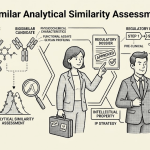
This architecture has two competitive intelligence implications. First, biologic IP is more vulnerable to engineering around than small molecule IP. A biosimilar developer does not need to replicate the originator’s manufacturing process; they need to demonstrate analytical similarity in the final product and clinical equivalence in an abbreviated development program. The originator’s process patents may be entirely irrelevant to a biosimilar that achieves the same product through a different cell line and fermentation approach. Second, the analytical complexity of demonstrating biosimilarity creates a structural entry barrier that is independent of patent status. The FDA’s totality-of-evidence standard for biosimilar approval requires a comprehensive comparability package that typically costs $100 to $250 million, compared to $1 to $5 million for a generic small molecule ANDA. This cost barrier limits biosimilar competition to large-market reference products where the investment economics are favorable.
Biosimilar Interchangeability: Regulatory and Commercial Mechanics
Biosimilar interchangeability is the regulatory designation that allows a biosimilar to be substituted for its reference product at the pharmacy level without prescriber intervention. FDA grants interchangeability designation when a biosimilar developer demonstrates, through switching studies, that patients can transition between the reference product and the biosimilar without additional clinical risk compared to using the reference product alone.
The commercial implications of interchangeability are substantial. In states with pharmacist substitution laws, an interchangeable biosimilar can capture market share through formulary substitution without requiring prescriber action, mimicking the generic substitution dynamic for small molecules. As of 2025, multiple biosimilars have received interchangeability designations including Cyltezo (adalimumab-adbm), Semglee (insulin glargine-yfgn), and Hadlima (adalimumab-bwwd), with the first interchangeable adalimumab biosimilar launches in the U.S. market in 2023 transforming the $20 billion-plus adalimumab franchise.
Competitive intelligence for biologic originators must track not just which biosimilar developers are filing biosimilar applications but specifically which are pursuing interchangeability designation, as this represents the highest commercial threat. For biosimilar developers, the competitive intelligence question is whether multiple interchangeable biosimilars in the same reference product market will fragment the formulary preference landscape, eroding the pricing premium that interchangeability theoretically supports.
The Biologics Competitive Technology Roadmap
The competitive technology landscape for biologics has evolved through four distinct phases over the past twenty years, each requiring updated competitive intelligence frameworks.
Phase 1 (1990s to 2008) was the first-generation biologic era: recombinant proteins, first-generation monoclonal antibodies (infliximab, adalimumab, rituximab, trastuzumab), and erythropoietins. IP protection was relatively thin by current standards, with limited secondary patents and no established framework for biosimilar approval in the U.S. until the Biologics Price Competition and Innovation Act (BPCIA) in 2010.
Phase 2 (2009 to 2016) was the biosimilar framework era: the BPCIA created the 12-year reference product exclusivity period and the abbreviated BLA pathway, triggering the first wave of U.S. biosimilar development. Competitive intelligence during this period required tracking the evolving FDA guidance framework as much as individual competitive programs, since regulatory pathway uncertainty was a primary investment risk.
Phase 3 (2017 to 2023) was biosimilar market entry and interchangeability development: the first biosimilar approvals (Zarxio, filgrastim-sndz, in 2015) were followed by increasingly aggressive market entry, particularly in oncology supportive care. The Humira biosimilar wave, delayed by AbbVie’s patent settlements, arrived in 2023 with 9 biosimilars launching within 12 months, creating the most competitive branded-to-biosimilar conversion in biologic history.
Phase 4 (2024 onward) is the next-generation biologic competitive era: ADCs (antibody-drug conjugates), bispecific antibodies, and cell therapies represent the emerging competitive frontiers. These modalities have IP architectures that differ materially from conventional monoclonal antibodies. ADC IP, for example, involves separate patent estates for the antibody, the linker chemistry, the payload, and the conjugation process, creating multi-party patent landscapes that require sophisticated analysis to assess freedom-to-operate.
IP Valuation Sub-Section: Pembrolizumab (Keytruda)
Merck’s pembrolizumab is the highest-revenue pharmaceutical product globally, generating approximately $25 billion in 2024 across over 40 approved indications. Its patent estate illustrates both the opportunity and the competitive intelligence challenge of next-generation biologic IP valuation. The original pembrolizumab antibody sequence patents, filed in the early 2000s, are approaching expiry in the late 2020s. However, Merck has constructed an expansive secondary patent estate covering pembrolizumab’s numerous combination therapy indications, dosing regimens, and specific formulation and device characteristics. Competing anti-PD-1 and anti-PD-L1 antibodies (nivolumab, atezolizumab, durvalumab) have navigated around the core antibody patents through distinct binding epitopes, but the method-of-use patent landscape across pembrolizumab’s 40-plus indications creates a complex freedom-to-operate picture for any PD-1 pathway agent.
For biosimilar developers planning programs against pembrolizumab, the BLA submission window opens when the 12-year BPCIA exclusivity expires, but the commercial opportunity depends on penetrating a market where Merck’s clinical data infrastructure across 40 indications, its KOL relationships across 15 therapeutic areas, and its integrated healthcare system contracts create commercial barriers that are independent of IP status.
Key Takeaways: Biologics and Biosimilar Interchangeability
IP analysis for biologics requires parallel tracking of the reference product’s patent estate, BPCIA exclusivity calendar, biosimilar application pipeline, and interchangeability designation status. The 12-year exclusivity period runs from first approval and is independent of patent protection. Multiple biosimilar approvals in the same reference product market do not guarantee price compression comparable to small molecule generics: as of 2025, U.S. biosimilar markets have shown more modest price reductions (20 to 40 percent) compared to European biosimilar markets (40 to 80 percent), reflecting differences in formulary structure, contracting practices, and biosimilar interchangeability adoption.
7. Pricing, Payer Dynamics, and Market Access Intelligence
Value Demonstration and HTA Positioning
Health technology assessment (HTA) agencies, including NICE in the UK, the G-BA in Germany, the HAS in France, and ICER in the U.S., have become de facto pricing gatekeepers in their respective markets. A competitor’s interaction with these bodies reveals strategic priorities that financial disclosures do not capture. Which incremental clinical benefit claims are being defended? Which comparators are being proposed for cost-effectiveness analysis? Which patient subgroups are being prioritized for value demonstration?
Germany’s AMNOG process is particularly information-rich for competitive intelligence. The G-BA’s benefit assessment documents, publicly available for every drug that has undergone early benefit assessment since 2011, contain detailed clinical comparisons, data gap assessments, and benefit ratings (major, considerable, minor, non-quantifiable, no proven added benefit) that directly determine reimbursement pricing. When a competitor receives a “non-quantifiable” benefit rating rather than “considerable,” this signals a clinical evidence gap that may affect similar drugs in the class. AMNOG outcomes are searchable and provide a continuous stream of comparative effectiveness intelligence that does not depend on proprietary research.
ICER’s assessments in the U.S. market lack the reimbursement authority of European HTA bodies, but they carry increasing influence with commercial payers and pharmacy benefit managers. A drug receiving an ICER cost-effectiveness ratio above the $100,000 to $150,000 per QALY threshold will face formulary access resistance from an increasing share of payers, regardless of FDA labeling. Tracking ICER assessments for competitive drugs provides advance intelligence about payer access challenges and potential counter-evidence opportunities.
Launch Sequencing as a Competitive Signal
The order in which a company launches a new product across global markets encodes pricing strategy. Companies concerned about international reference pricing (IRP), where many European countries peg domestic prices to those in other reference countries, typically launch first in markets with the highest acceptable prices: the U.S. (where IRP does not apply), Switzerland, Germany (where free pricing applies during the first 12 months under AMNOG), and the UK (which uses value-based pricing independent of IRP to most markets). Sequential launches in IRP-sensitive markets follow, managed to prevent low reference prices from propagating to high-value markets.
When a competitor deviates from this standard sequencing, it reveals information. A company launching first in an IRP-sensitive market signals either confidence in high local pricing outcomes, an inability to achieve acceptable U.S. pricing, or a global access commitment. A company delaying certain market launches indefinitely signals pricing concerns, manufacturing capacity constraints, or a strategic decision to defer markets with unfavorable access dynamics.
Contracting Intelligence: Reading What Cannot Be Disclosed
Contract terms between pharmaceutical manufacturers and payers are confidential in virtually every market, but contracting patterns can be inferred from observable outcomes. Which products maintain consistent net price despite list price increases? Which products have broad formulary access across competing payer systems despite inferior labels? Which products have clinical data clearly supporting preferred status yet sit on Tier 3? These observations reveal the underlying economics of access contracts without requiring access to confidential terms.
For competitive intelligence purposes, formulary tracking across a representative sample of major commercial payers, Medicare Part D plans, and integrated delivery networks (IDNs) provides a systematic view of competitive access positions. Year-over-year formulary position changes for competitive products track the direction of access negotiations without requiring knowledge of specific rebate levels. A competitor product moving from Tier 2 to Tier 1 preferred during an annual formulary cycle, without a label expansion or new clinical data, almost certainly reflects a contract price concession.
Key Takeaways: Pricing and Market Access
Market access competitive intelligence requires separate frameworks for U.S. and ex-U.S. markets because the competitive dynamics differ fundamentally. In the U.S., commercial and Part D formulary positioning, GPO contracting, and hospital system formulary committee decisions are the primary access battlegrounds. In Europe, HTA outcomes and national pricing negotiations determine access, with IRP linkages creating cross-market pricing constraints. Any launch strategy built without explicit competitive access intelligence for each major market is operating with material blind spots.
8. Primary Research Methods: KOLs, Conferences, and Field Intelligence
Key Opinion Leader Interview Architecture
KOL interviews for competitive intelligence are not market research interviews. The objective is not to measure prescriber intent or treatment algorithm prevalence; it is to extract expert assessment of competitive scientific and clinical merit. These interviews require interviewers with sufficient therapeutic area expertise to probe beyond surface-level commentary and extract nuanced assessments of mechanisms, clinical data quality, and unmet need differentiation.
The most productive KOL interviews for competitive intelligence are structured around the gap between the KOL’s therapeutic ideal and what the competitive landscape actually offers. “What would the next best drug in this class need to demonstrate to change your practice?” is a more operationally useful question than “How do you view Drug X?” The former generates insight about competitive requirements; the latter generates market research opinions. When competitive programs are specifically discussed, the most valuable probe is clinical data quality assessment: does the KOL view competitors’ data as mechanistically compelling and statistically robust, or as technically positive but clinically underwhelming? This assessment often predicts commercial uptake more accurately than market research on prescriber intent.
KOL network mapping adds another competitive intelligence dimension. Competitors invest heavily in specific KOL relationships, funding research, speaker programs, and advisory activities. By mapping which KOLs are aligned with which competitors, pharmaceutical intelligence teams can identify potential bias in scientific opinion, anticipate which thought leaders will advocate for competitive products at conferences, and identify KOLs who are genuinely independent and whose assessments carry the highest evidentiary weight.
Medical Conference Intelligence: Systematic Extraction
Major medical conferences, including ASCO, ASH, ESMO, AHA, EASD, and disease-specific symposia, are concentrated competitive intelligence events where 12 to 24 months of competitive development activity becomes visible simultaneously. A systematic conference intelligence program covers presentation analysis, poster documentation, and ecosystem observation as distinct activities with different methodologies.
Presentation analysis goes beyond recording data results. The structure of a competitor’s presentation, the statistical analyses they chose to highlight versus bury in supplementary materials, the patient subgroup analyses they pre-specified versus post-hoc, and the adverse event reporting depth all provide clinical data quality signals. A Phase 3 presentation that opens with subgroup analyses before primary endpoint discussion is often compensating for a primary endpoint result that does not independently support the competitive positioning the company wants. Analysts trained in clinical trial methodology extract these signals automatically; non-specialists miss them entirely.
Poster sessions typically carry early-stage data that will shape the competitive landscape two to four years hence. Systematic poster coverage requires a team approach at large conferences, with pre-conference preparation that identifies all relevant posters by abstract search, assigns coverage responsibilities by scientific expertise, and establishes a structured documentation format for capturing key data points, methodology assessments, and preliminary clinical impressions. Post-conference synthesis, completed within one week, converts this raw data into competitive landscape updates.
Satellite symposia, funded by pharmaceutical companies as scientific education activities, are explicit competitive intelligence events. The data, messages, and clinical positioning companies choose to emphasize in symposia they fund reveal current commercial strategy, emerging clinical narrative, and anticipated competitive differentiation claims more directly than peer-reviewed publications or investor presentations.
9. Secondary Data Architecture: Patents, Registries, and Regulatory Filings
Building a Patent Surveillance Infrastructure
Patent surveillance for pharmaceutical competitive intelligence requires going beyond keyword alerts from a single database. A complete patent intelligence infrastructure covers multiple patent offices (USPTO, EPO, WIPO, JPO, CNIPA), multiple database sources (Espacenet, PatSnap, Derwent Innovation, CAS SciFinder), and multiple analytical dimensions beyond individual filing tracking.
Continuation and divisional application monitoring is particularly important in pharma IP surveillance. When a competitor files a divisional application from a pending parent application, they can introduce new or modified claims that change the scope of protection in ways not visible from the original filing. Monitoring continuation and divisional filing patterns requires tracking prosecution history status, not just granted patents.
Patent prosecution history analysis, called file wrapper review in USPTO parlance, reveals what claim scope a competitor sought versus what they received. A patent claiming broad coverage of an entire mechanism class but narrowed during prosecution to a specific compound subset may appear threatening in a database search but have limited commercial relevance. Conversely, a patent with apparently narrow claims that was allowed without significant prosecution history may reflect underlying prior art that makes the claim set vulnerable. This nuance requires human analytical judgment that automated patent monitoring tools cannot provide.
International patent family analysis tracks geographic protection scope. A U.S. patent covering a drug formulation with no corresponding EP or CN family members signals either a deliberate decision to limit geographic protection or a failed prosecution attempt internationally. Either interpretation has competitive intelligence value: the former may reflect a company’s assessment that the U.S. is the commercially relevant market, the latter may reveal a patent with vulnerable claims that did not survive examination under different standards.
Clinical Trial Registry Mining
ClinicalTrials.gov contains over 500,000 registered studies as of 2025. Mining this database systematically for competitive intelligence requires structured search protocols, alert systems for new registrations in relevant therapeutic areas, and analytical frameworks for interpreting trial design choices.
Protocol amendments are a particularly underutilized source of competitive intelligence. When a competitor amends an ongoing trial’s endpoints, sample size, or inclusion criteria, they are responding to something: emerging efficacy data, competitive differentiation pressure, regulatory guidance received, or safety signal management. Amendment history is available in the ClinicalTrials.gov record and, when read in chronological sequence alongside external competitive events, often reveals strategic decision-making that would otherwise remain invisible.
Site selection patterns carry geographic competitive intelligence. A trial with sites concentrated in Eastern Europe and Southeast Asia reflects a recruitment speed and cost optimization strategy at the expense of regional data credibility in Western regulatory submissions. A trial with a high proportion of U.S. academic medical center sites signals investment in KOL relationships and real-world evidence generation as much as regulatory efficiency. Comparing site selection patterns across competitors in the same indication reveals different development philosophies and resource levels.
Estimated completion date tracking provides an early warning system for competitive program delays. A trial that has revised its estimated primary completion date backward by 12 months or more without a corresponding protocol amendment or sample size change typically signals enrollment difficulty, which itself signals patient population access challenges, competitive trial enrollment pressure, or site performance problems. Serial delays without public explanation are a competitively informative signal.
10. Advanced Analytical Frameworks Applied to Pharma Competition
Porter’s Five Forces: Pharmaceutical-Specific Application
Michael Porter’s Five Forces framework requires substantive modification when applied to pharmaceutical markets because several standard assumptions do not hold. The supplier of critical inputs to pharmaceutical R&D is not a commodity chemical provider but a network of biotechnology companies, academic institutions, contract research organizations, and technology platform providers whose power varies dramatically by therapeutic area and modality.
In cell therapy, for example, manufacturing capacity through CDMOs (contract development and manufacturing organizations) is severely constrained. Companies without dedicated cell therapy manufacturing capability or locked-in CDMO relationships face significant operational risk. The bargaining power of CDMOs in autologous CAR-T manufacturing has effectively allowed suppliers to capture a substantial share of the value chain, creating a structural cost disadvantage for companies without vertical integration. This supplier power dynamic does not appear in traditional pharmaceutical Porter analyses but determines competitive positioning in next-generation therapy development.
Buyer power in pharmaceutical markets operates at two distinct levels that must be analyzed separately. Patient-level demand is relatively inelastic for products with meaningful therapeutic differentiation: patients with metastatic cancer or severe rare diseases are not price-sensitive buyers in the classical economic sense. But institutional buyer power, concentrated in GPOs, pharmacy benefit managers, hospital formulary committees, and national HTA bodies, is substantial and growing. The transition of multiple oncology agents to Part D under IRA provisions starting in 2026 creates a new buyer power dynamic for Medicare that did not exist previously.
The threat of substitutes in pharmaceutical markets extends to modalities that do not resemble drugs at all. Digital therapeutics, surgical interventions, medical devices, and behavioral health programs address overlapping disease areas with different clinical and economic profiles. Competitive intelligence teams that monitor only pharmaceutical pipeline assets miss potential substitution threats that could reshape competitive dynamics. The clinical adoption of continuous glucose monitoring (CGM) and closed-loop insulin delivery systems materially altered the competitive landscape for insulins and oral antidiabetics in ways that traditional pharma competitive intelligence frameworks did not anticipate.
SWOT Analysis: Pharma-Specific Constraints
SWOT analysis in pharmaceutical competitive intelligence should be executed as a dynamic, time-stamped assessment rather than a static snapshot. A strength that exists today (a first-in-class approval) becomes a competitive neutral as me-too entrants arrive and then potentially a liability if new entrants demonstrate superior clinical profiles. A weakness today (no presence in a therapeutic area) may be irrelevant if the competitive dynamics in that area are unfavorable.
The most common analytical failure in pharmaceutical SWOT analysis is overweighting current competitive position relative to forward-looking IP and pipeline dynamics. A company with a $10 billion franchise today but a patent cliff in 36 months and a thin pipeline has a SWOT profile that differs materially from its current revenue position. Conversely, a company with modest current revenues but a deep pipeline with multiple Phase 3 programs has a SWOT profile that its trailing financials underrepresent. The forward-looking dimensions of SWOT, grounded in pipeline and IP analysis, are more decision-relevant than backward-looking product performance assessment for pharmaceutical strategic planning.
War Gaming: Mechanics and Best Practices
War gaming exercises are structured competitive simulations where cross-functional teams role-play as competitors, regulators, and payers to stress-test strategies against realistic competitive responses. In pharmaceutical contexts, war games are most valuable at specific decision points: pre-launch strategy development, in-licensing bid calibration, lifecycle management investment decisions, and Paragraph IV litigation response planning.
A well-structured pharmaceutical war game assigns competitor roles to teams with genuine knowledge of those competitors’ public strategies, financial positions, and historical decision patterns. The teams are given a scenario prompt (e.g., “your competitor has just received FDA approval with a broad label six months before your projected approval date”) and asked to make strategic decisions as that competitor would, using their actual resources, constraints, and incentive structures. The value is not predicting exactly what competitors will do but revealing the range of plausible responses and identifying which of your own strategic assumptions break under competitive pressure.
Red teaming is the most operationally useful component of pharmaceutical war gaming. A red team is given the explicit mandate to challenge the prevailing strategic assumptions, construct the most compelling case that competitive threats have been underestimated, and identify the specific conditions under which the strategy would fail. Red team findings that confirm the strategy’s robustness are reassuring but not actionable. Red team findings that identify specific vulnerabilities are directly actionable, either by modifying the strategy or by developing contingency plans for the identified risk scenarios.
11. AI, NLP, and Predictive Analytics in Competitive Intelligence
Natural Language Processing Applications in Pharma CI
Natural language processing has transformed the scale at which pharmaceutical competitive intelligence teams can monitor scientific literature, patent filings, regulatory documents, and clinical trial records. NLP tools can process thousands of documents daily, extracting entity mentions (drugs, companies, targets, mechanisms), sentiment assessments, and relationship structures at volumes entirely beyond manual capacity. The intelligence value, however, depends entirely on the quality of the training data and the specificity of the extraction tasks.
Entity recognition in pharmaceutical text is non-trivial. Drug names appear in multiple forms: INN, brand name, code number, chemical name, and abbreviation. Target names have similar multiplicity. Mechanism descriptions require specialized ontologies aligned with pharmacological terminology. NLP tools trained on general text corpora perform poorly on pharmaceutical documents; tools trained on pharmaceutical-specific corpora with validated entity ontologies (e.g., MeSH terms, NCI Thesaurus, ChEMBL entity sets) provide substantially higher extraction quality.
Sentiment analysis applied to scientific literature and clinical trial publications provides a signal about how the scientific community is receiving competitors’ research programs. A meta-analytical signal across publications citing a specific mechanism or compound, tracking whether citations are positive, neutral, or skeptical, provides an early indicator of emerging scientific consensus or controversy. This signal often precedes its translation into commercial impact by 12 to 24 months, giving early-acting companies a competitive intelligence advantage.
Patent claim mapping through NLP allows rapid identification of claim overlaps between your IP and competitors’, supporting freedom-to-operate analysis at scales that manual review cannot achieve. The most advanced implementations use NLP to construct competitive IP maps showing claim density by technology sub-area, identifying white spaces where patent protection is absent and high-density zones where entry would require challenging multiple patents. These maps are particularly valuable for competitive analysis in biologic manufacturing processes, where hundreds of process patents may cover a specific therapeutic area.
Predictive Analytics: Building LOE and Pipeline Models
Predictive models for pharmaceutical competitive intelligence fall into two broad categories: event probability models and timing models. Event probability models estimate the likelihood that a specific competitive event will occur (a Phase 3 trial will succeed, an ANDA will achieve approval, a biosimilar will receive interchangeability designation). Timing models estimate when events will occur, conditional on them occurring at all.
Both model types require careful calibration against historical base rates for the specific event category and therapeutic area. A Phase 3 success probability model that applies industry-average success rates of approximately 55 to 65 percent without therapeutic area or mechanism-specific adjustment will systematically over- or underestimate competitive program risk depending on the specific context. CNS development historically carries lower Phase 3 success rates than oncology programs with validated biomarker selection; rare disease programs with clear mechanistic rationale often carry higher rates than large population programs with less target validation.
Machine learning applications improve predictive accuracy by identifying non-obvious predictive features beyond the standard development phase and therapeutic area variables. Historical data from public clinical trial databases has been used to develop models that incorporate trial design features (sample size relative to indication prevalence, primary endpoint type, number of sites and countries) as predictive variables. These models outperform base rate estimates when calibrated on sufficiently large historical datasets, though their value diminishes for truly novel mechanisms or patient populations with limited historical analogues.
The most analytically sophisticated pharmaceutical intelligence teams are integrating predictive models with scenario planning infrastructure, generating competitive landscape distributions rather than point estimates. Instead of “competitor X will launch in Q2 2027,” the output is a probability distribution: “25 percent probability of competitive launch before Q4 2026, 60 percent probability in 2027, 15 percent probability of delayed approval into 2028 or beyond.” This distributional output directly feeds into launch planning scenario models, resource allocation decisions, and financial modeling assumptions.
12. Building and Operationalizing a CI Function
Organizational Architecture for Pharmaceutical CI
The organizational debate in pharmaceutical competitive intelligence centers on centralization versus distribution. A fully centralized CI function provides methodological consistency, economies of scale in vendor management, and enterprise-level perspective. But centralized teams struggle to develop the deep scientific and clinical knowledge required for high-quality competitive analysis in complex therapeutic areas. A fully distributed model, embedding analysts within therapeutic area teams, develops contextual depth but at the cost of methodological consistency, cross-portfolio learning, and efficiency.
The hybrid model that leading pharmaceutical companies have converged on combines a centralized CI center of excellence (CoE) responsible for methodology, platforms, vendor relationships, and enterprise competitive analysis with embedded analysts within major therapeutic area teams and key functional units. The CoE provides the infrastructure and standards; embedded analysts provide the domain expertise and operational proximity to decision-makers. This model works when the CoE maintains genuine influence over embedded analyst performance standards and when embedded analysts maintain genuine connection to the CoE’s methodological community, rather than drifting into purely tactical market research roles.
Technology infrastructure is a critical and often under-resourced element of CI operational capability. A competitive intelligence platform should aggregate patent data, clinical trial registry data, regulatory submission information, publication databases, news and press releases, and analyst report content in a single searchable environment with alerting capabilities for predefined competitive triggers. Building this infrastructure on multiple siloed vendor platforms creates analytical inefficiency and increases the risk of missing competitive signals that would only be visible when datasets are analyzed jointly.
Ethical Boundaries and Legal Compliance
The Society of Competitive Intelligence Professionals (SCIP, now known as Crayon/SCIP following merger activities) code of ethics provides a framework for pharmaceutical CI operations, though pharmaceutical-specific legal constraints add several layers beyond general CI ethics. The Health Insurance Portability and Accountability Act (HIPAA) constrains how competitive intelligence involving patient data can be conducted. The Defend Trade Secrets Act creates liability for competitive intelligence activities that involve misappropriation of trade secrets, including receiving information from competitor employees who provide it in violation of their employment agreements.
The practical risk management approach involves three principles. All competitive intelligence sources must be ones the company would be comfortable disclosing publicly. All engagements with external parties must begin with accurate identification of the company’s role. All information received from former competitor employees must be evaluated against their likely access to confidential information, with legal review for any information that may have been obtained through confidential relationships. Companies that formalize these principles in written CI ethics guidelines, provide regular training, and conduct periodic compliance reviews avoid the legal and reputational risks that have periodically damaged pharmaceutical competitive intelligence programs that operated in gray areas.
13. Cognitive Bias, Information Overload, and Analytical Quality Control
Systematic Debiasing in Pharmaceutical CI
Confirmation bias is the most pervasive analytical failure mode in pharmaceutical competitive intelligence. Teams develop institutional views of competitors that persist long after the underlying facts have changed. A competitor that struggled with regulatory affairs five years ago may have built a world-class regulatory organization since. A competitor viewed as commercially weak in one therapeutic area may have hired an entirely different commercial leadership team with superior capabilities. Institutional views that are not systematically challenged against current evidence produce competitive analyses that miss material changes in competitive capability.
The structured analytic technique most applicable to pharmaceutical CI bias reduction is analysis of competing hypotheses (ACH), developed originally in intelligence analysis at the CIA. ACH requires analysts to explicitly identify all plausible hypotheses about a competitive situation, list all evidence relevant to distinguishing among them, and evaluate each hypothesis against the evidence as a whole rather than seeking evidence that confirms a single favored hypothesis. In pharmaceutical applications, this might mean explicitly considering “Competitor X has a superior development candidate” as a hypothesis alongside “our candidate has superior efficacy” rather than defaulting to analyses that optimize for confirming internal views.
Pre-mortem analysis, in which analysts are asked to assume a specific competitive threat has materialized and then work backward to identify how it could have happened, is particularly effective at surfacing competitive risks that optimistic forward-looking analyses miss. When a product launch team assumes their product will achieve 35 percent market share in year two, asking them to write the failure narrative (“it is year three, we achieved 15 percent market share, here is what happened”) generates more actionable risk intelligence than traditional sensitivity analysis.
Signal-to-Noise Ratio Management
A pharmaceutical competitive intelligence function monitoring all relevant therapeutic areas, modalities, companies, and geographies will receive thousands of competitive signals weekly. The operational challenge is filtering to actionable intelligence without creating analytical bottlenecks that delay time-sensitive insights.
Tiered alert management structures competitive monitoring into three response levels. Tier 1 alerts require immediate human review, typically within 24 to 48 hours: Paragraph IV certifications against your products, competitor NDA/BLA approvals or Complete Response Letters, Phase 3 trial results announcements, and major acquisition announcements in your core therapeutic areas. Tier 2 alerts require review within one to two weeks: new Phase 2 trial registrations in competitive indications, patent filings covering technology platforms adjacent to your pipeline, and regulatory guidance documents relevant to your development programs. Tier 3 signals accumulate in a weekly monitoring digest: scientific publications, conference abstracts, investor presentation updates, and background patent filings.
The error rate in Tier 1 alerts is commercially costly in both directions. False positives that consume emergency-level analytical resources on non-material events reduce organizational credibility and create alert fatigue. False negatives that miss genuinely material competitive developments are the more serious risk. Calibrating tier assignment requires regular review of historical alerts against their eventual commercial relevance, adjusting criteria as false positive and false negative patterns emerge.
14. Emerging Competitive Frontiers
Digital Therapeutics: A New Competitive Set
Digital therapeutics (DTx), prescription software-based interventions that deliver evidence-based therapeutic functions, have received FDA authorization under the De Novo pathway and 510(k) clearance in indications including insomnia (Somryst), substance use disorder (reSET, reSET-O), ADHD (EndeavorRx), and major depressive disorder (Rejoyn). The competitive intelligence framework for DTx differs from pharmaceutical analysis in several important respects.
DTx development cycles are shorter (2 to 4 years versus 10 to 15 years for drugs), iteration is continuous post-launch, and IP protection relies more heavily on software patents and trade secrets than pharmaceutical composition patents. The competitive threat to pharmaceutical incumbents is not drug substitution in the classical sense but outcome-based formulary substitution: if a payer can achieve comparable clinical outcomes in a patient population with a $300 annual DTx versus a $5,000 annual pharmaceutical, the formulary economics favor the DTx regardless of mechanism.
Pharmaceutical companies assessing DTx competitive threats must evaluate both current clinical evidence and evidence development velocity. A DTx competitor with limited current evidence but an aggressive real-world evidence generation program may achieve clinical credibility within 24 to 36 months. Companies that track DTx evidence generation programs (registered at ClinicalTrials.gov like any clinical study), regulatory interaction patterns, and payer formulary adoption decisions maintain an informed competitive posture in this evolving landscape.
Precision Medicine and Companion Diagnostic Competitive Dynamics
Precision medicine competitive analysis requires tracking three interlinked competitive sets simultaneously: therapeutic candidates, companion diagnostic platforms, and biomarker discovery programs. A competitor who controls a validated, FDA-approved companion diagnostic in an oncology indication with limited alternative testing platforms has a structural commercial advantage that is independent of comparative therapeutic efficacy. Prescribers who have already embedded the competitor’s diagnostic platform into their clinical workflow face switching costs that favor the diagnostic-paired therapeutic.
The competitive intelligence task in precision medicine requires mapping not just pipeline drugs but the full diagnostic-therapeutic ecosystem around each competitive target. Which competitors have co-development agreements with diagnostic companies? Which have in-house diagnostic capabilities (Roche’s diagnostic division integration with its pharmaceutical pipeline is the canonical example)? Which targets have a single validated diagnostic platform versus multiple competing platforms that reduce any single competitor’s structural advantage?
Biomarker discovery rate is an emerging competitive metric for precision medicine intelligence. Companies with proprietary patient genomics databases, proteomic datasets, or longitudinal real-world evidence cohorts can identify responsive patient subpopulations faster than competitors without these data assets. Tracking competitors’ data asset acquisition activity, research consortium participation, and publication output from biomarker discovery programs provides early indicators of where precision medicine competitive advantages are accumulating before they become visible in clinical development pipelines.
Emerging Market Competitive Dynamics: China, India, and Brazil
China’s pharmaceutical competitive landscape has been fundamentally restructured by the National Medical Products Administration (NMPA) reforms of 2015 to 2020, which created a clinical trial waiver pathway for innovative drugs first approved in major markets, accelerated domestic review timelines, and enabled conditional approval for drugs with unmet need designations. The commercial consequence is a dramatic compression of the time lag between Western market approval and China market entry, from a historical norm of 5 to 7 years to under 2 years for priority drugs under current NMPA policies.
The competitive intelligence implication is that China can no longer be treated as a secondary market with lagged competitive dynamics. A domestic Chinese pharmaceutical company (CNNC, Henlius, BeiGene, Zymeworks, Zai Lab) with a Phase 3 program in a major indication may reach the Chinese market at approximately the same time as a Western multinational’s global launch, creating simultaneous competitive entry rather than the sequential dynamics that historically allowed Western companies to establish market positions before facing domestic competition.
India’s pharmaceutical industry requires distinct competitive intelligence because it operates primarily at the generics and API level globally, while building innovative capability domestically. The competitive threat to Western innovator companies from Indian players is concentrated in ANDA filings, Paragraph IV challenges (Indian companies have historically been among the most aggressive Paragraph IV filers in the U.S. market), and biosimilar development programs targeting Western markets. Sun Pharma, Cipla, Dr. Reddy’s, Aurobindo, and Lupin maintain sophisticated Paragraph IV programs that competitive intelligence teams at originator companies must track with the same rigor applied to traditional U.S. generic competitors.
15. Investment Strategy Appendix for Institutional Analysts
Using Competitive Intelligence Outputs in Pharma Equity Valuation
The standard DCF model for pharmaceutical company valuation applies phase-specific clinical success probabilities, revenue ramp assumptions, and LOE timing assumptions that are often derived from sell-side consensus estimates rather than original competitive intelligence. This approach systematically underweights competitive dynamics that deviate from consensus and overweights historical base rates that may not apply to novel mechanisms or market structures.
A competitive intelligence-adjusted valuation framework incorporates four specific inputs that distinguish it from consensus-based models.
First, IP estate quality scores replace simple patent expiry date assumptions. An asset with a high IP quality score (deep secondary patent estate, no active IPR petitions, multiple independent regulatory exclusivity layers, strong geographic coverage) should carry a lower LOE probability discount than one with a thin estate and active Paragraph IV challenges. This adjustment can shift a DCF value by 15 to 40 percent for products within five years of nominal patent expiry.
Second, competitive pipeline density at launch date replaces static market share assumptions. A product entering a market with two approved competitors and one Phase 3 entrant near approval should carry lower peak market share assumptions than a product entering a market with no competitors. Applying probability-weighted competitive entry scenarios, rather than single competitive landscape assumptions, produces more accurate distribution estimates of commercial outcomes.
Third, regulatory exclusivity independence from patent protection is tracked explicitly. A product with strong patent protection but limited regulatory exclusivity periods (e.g., a reformulation of an existing drug) faces a materially different competitive risk profile from a new molecular entity with five years of NCE exclusivity stacked on top of patent protection. Regulatory exclusivity periods cannot be challenged by Paragraph IV filings and therefore represent a more reliable exclusivity protection than patents alone.
Fourth, competitive price pressure modeling incorporates both generic/biosimilar entry economics and innovative competitor pricing dynamics. In markets with two or more approved innovative alternatives, pricing discipline tends to erode over time as payer leverage increases. LOE modeling must incorporate this pre-LOE erosion, not just the post-LOE generic cliff, for accurate revenue projections.
Event-Driven Opportunities from Competitive Intelligence
Specific competitive intelligence events create predictable equity price dislocations that represent tradeable opportunities for pharmaceutical-focused investors. Paragraph IV certifications filed against a branded company’s major product reliably produce negative short-term price reactions that often overestimate long-term LOE risk if the branded company has a strong litigation history and deep secondary patent estate. Conversely, Phase 3 failures at a market-leading competitor can create durable positive re-ratings for second-in-class products if their mechanism and clinical data differentiate them sufficiently from the failed asset.
Biosimilar application submissions for a high-value biologic create another predictable event pattern. The initial application filing typically produces a modest negative reaction in the originator’s stock. The FDA acceptance and review timeline updates, the potential patent litigation under the BPCIA “patent dance” mechanism, and the ultimate approval decision create a series of discrete events over an 18 to 30 month period, each carrying competitive intelligence content that allows probability-updating of the timeline and commercial impact of biosimilar entry.
For investors with a multi-year time horizon, the most valuable application of competitive intelligence is identifying companies where consensus LOE risk estimates are materially overstated because of overlooked IP strength, or where consensus pipeline value estimates are materially understated because competitive convergence on the same therapeutic target will compress commercial returns below single-product peak sales assumptions. Both mispricings are common in pharmaceutical equities and are correctable through rigorous competitive intelligence that goes beyond sell-side consensus.
Due Diligence: Competitive Intelligence in M&A
Pharmaceutical M&A due diligence that lacks competitive intelligence depth regularly produces value-destroying transactions. The most common failure mode is acquiring an asset or company based on peak sales assumptions that do not account for the competitive landscape the asset will face at launch or the IP vulnerabilities that will accelerate LOE. Pfizer’s $14 billion acquisition of Arena Pharmaceuticals in 2022, which included the approved etrasimod (Vtama) alongside a pipeline, required a competitive intelligence assessment of the crowded S1P modulator and inflammatory bowel disease landscape that subsequent competitive entries have continued to challenge.
A rigorous competitive intelligence due diligence covers the target asset’s IP estate quality (using the five-dimension framework described in Section 2), competitive pipeline density at projected launch date, regulatory exclusivity duration and independence, payer landscape competitive access position, and adjacent technology threat assessment. This analysis should produce a range of competitive scenario outcomes, not a single optimistic competitive landscape assumption, to inform deal pricing and contingent value right structures.
Summary: The Integrated Competitive Intelligence Operating Model
Pharmaceutical competitive analysis has evolved from a marketing department support function into a mission-critical capability that spans IP strategy, R&D portfolio management, regulatory affairs, commercial operations, and corporate finance. The companies that extract the most competitive intelligence value treat it as an integrated system rather than a set of disconnected analytical activities.
The integrated system has four operating layers. The surveillance layer covers continuous, largely automated monitoring of patents, clinical trials, regulatory filings, scientific literature, and competitive news. The analytical layer applies structured methodologies including patent estate quality scoring, pipeline success probability modeling, regulatory pathway assessment, and LOE scenario construction. The synthesis layer translates analytical outputs into decision-relevant intelligence products calibrated to specific stakeholder needs and decision timelines. The organizational layer embeds competitive intelligence outputs into formal decision processes, ensuring that intelligence reaches decision-makers before, not after, critical resource allocation choices.
Companies that invest in this integrated model, and sustain it through organizational cycles and leadership transitions, develop cumulative competitive intelligence advantages that compound over time. Patent landscapes become more accurate as institutional knowledge of competitor IP strategies accumulates. Pipeline models become more calibrated as predictions are systematically compared against outcomes. LOE models become more precise as the company’s database of historical competitive entry patterns grows. This cumulative knowledge is itself a strategic asset, one that is difficult to replicate quickly and that has direct commercial value in every drug development, licensing, litigation, and investment decision the company makes.
This analysis draws on public data from the FDA Orange Book, ClinicalTrials.gov, USPTO patent databases, EMA EPARs, and published industry research. All company and product examples reference publicly available information. This document does not constitute investment advice.