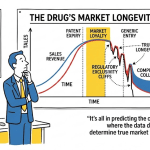
Generic drugs fill roughly 90% of all U.S. prescriptions but account for only about 22% of total drug spending. That ratio is not policy failure; it is the designed output of a regulatory architecture purpose-built to compress access costs once a molecule’s innovation period expires. The business case writes itself, and right now, the arithmetic is unusually favorable.
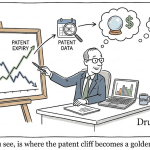
Between 2025 and 2030, branded drugs generating between $217 billion and $236 billion in annual sales are projected to lose patent protection — the largest volume of branded revenue entering the competitive zone in a single five-year window since the post-Lipitor cliff of the early 2010s. What makes this cycle structurally different from every prior cliff is the asset class at the center of it. The largest individual assets facing loss of exclusivity are biologics, not small molecules. That changes everything about market entry mechanics, IP challenge strategy, development economics, and competitive timeline modeling.
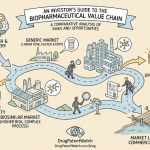
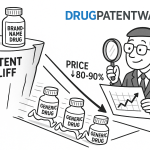
The global market for generic drugs is projected to reach USD 611 billion by 2030, growing at rates between 4.23% and 7.23% annually. Those numbers conceal more than they reveal. The variance is not noise; it reflects two different markets growing at two different speeds inside one label. Traditional small-molecule generics face rapid and severe price compression at launch. Complex generics and biosimilars are expanding at 8.2% CAGR or higher through the same period, with far fewer competitors at entry and sustained prices 30 to 50 percent below the brand, rather than the 80 to 90 percent discount typical of commodity oral tablets.
The oncology sector leads with a projected growth rate of 9.21% annually until 2030, driven by the expiration of patents for major cancer drugs and an estimated $25 billion opportunity in oncology and immunology biosimilars by 2029.
For portfolio managers and R&D leads, the actionable insight is that this market rewards specificity. A blended strategy built around commodity oral generics is a margin compression trade. Targeted development programs in complex generics, biologic follow-ons, and 505(b)(2) reformulations built on expiring blockbuster IP are the profit centers.
Key Takeaways: Market Context
The 2025-2030 patent cliff is the largest in history by revenue at risk, with $217-236 billion in branded sales entering the competitive zone.
The dominant asset class in this cliff is biologics, requiring biosimilar development mechanics, not traditional ANDA workflows.
Biosimilar price erosion follows a ‘scalloped’ curve tied to PBM formulary cycles, not the 6-month crash typical of small-molecule generic entry. Models must reflect a 2-3 year ramp to peak volume erosion.
Oncology biosimilars represent the highest-value addressable segment at an estimated $25 billion by 2029.
FDA’s Regulatory Modernization Stack
The FDA’s Office of Generic Drugs is not running one modernization project. It is running a stack of parallel initiatives across review technology, bioequivalence science, regulatory harmonization, and statutory process architecture. Understanding how these pieces interact determines how quickly an ANDA applicant can get to approval, and how much competitive advantage an early mover captures before others catch up.
Under GDUFA III and increasing international regulatory harmonization, the FDA is lowering scientific and procedural barriers to entry. The implementation of the ICH M13A and M13B guidelines aims to provide globally harmonized scientific expectations for immediate-release solid oral dosage forms. By 2025, these updates streamlined development by reducing the requirement for dual fasting and fed BE studies for non-high-risk drugs. The introduction of additional strengths biowaivers under ICH M13B allows generic applicants to gain approval for multiple drug strengths without exhaustive in vivo testing, provided they meet specific scientific criteria.
FDA’s OGD continued to prioritize the efficient and timely approval of ANDAs — both for first-time generics and products already subject to generic competition — the conversion of tentative approvals to final approvals, the issuance of hundreds of initial and revised product-specific guidances for bioequivalence studies, and the convening of pre-ANDA meetings.
As of October 2025, the FDA has posted more than 2,300 Product-Specific Guidances. The PSG database is the clearest forward-looking signal in the regulatory landscape. When the FDA publishes a PSG for a complex product, it is publicly declaring that it has resolved the scientific questions that previously made bioequivalence assessment unpredictable. Research from within CDER quantified the effect: the existence of a published PSG made the submission of an ANDA 3.8 times more likely for non-new chemical entity drugs. For IP strategists monitoring a target product’s competitive landscape, new PSG issuance is an entry signal.
GDUFA III implementation went into effect on October 1, 2022, and is scheduled through September 2027. The FDA will begin negotiations in 2025 for the next reauthorization cycle, GDUFA IV, scheduled for congressional authorization in 2027. GDUFA IV negotiations will likely address three structural tensions that have accumulated under GDUFA III: AI integration into the review process at scale, bioequivalence methodology for drug-device combination generics, and the growing complexity of post-approval change submissions driven by supply chain resilience requirements.
Key Takeaways: FDA Modernization Stack
ICH M13A/M13B harmonization has materially reduced in vivo study burden for IR solid oral dosage forms, cutting development cost and timeline for the most common generic dosage form.
2,300-plus published PSGs create an intelligence-rich target landscape. Every new PSG is a competitive signal, not just a guidance document.
GDUFA III runs through September 2027. GDUFA IV negotiations begin in 2025 and will shape the regulatory economics of the 2028-2033 pipeline cycle.
Pre-ANDA program meetings — product development, pre-submission, and mid-review cycle — are underutilized by most generic applicants and represent the highest-ROI regulatory investment available.
BEAM and GDSA-BE: The End of Freestyle Bioequivalence Assessment
The FDA’s Bioequivalence Assessment Mate (BEAM) — now more precisely characterized in FDA presentations as GDSA-BE, the Generic Drug Structured Assessment for Bioequivalence — targets one of the oldest bottlenecks in the ANDA review process: the freestyle, narrative-based bioequivalence assessment that has been standard practice for decades.
The core problems GDSA-BE was designed to solve include: a freestyle narrative-based BE assessment in place for decades, labor-intensive tasks to process data and conduct analysis, lack of a better practice for knowledge sharing and knowledge management, and need for a more streamlined assessment process to better meet GDUFA goals.
The operational consequence of a narrative-based system is that every reviewer makes independent structural choices about what to assess, in what order, and how to document it. Two reviewers evaluating pharmacokinetically identical datasets can produce divergent recommendations because their documentation frameworks differ, not because the science differs. This creates three downstream problems: inconsistent review times across similarly complex products, a review record that is difficult to search or mine for precedent, and knowledge that leaves the agency when individual reviewers leave.
BEAM aims to automate labor-intensive tasks, enhance data collection, and provide user-friendly interfaces and reports. According to Dr. Meng Hu, Staff Fellow with CDER: ‘The next steps will certainly save a lot of time for our reviewers.’
The broader significance for ANDA applicants is indirect but real. A structured, consistent assessment process generates a searchable body of review precedent that both FDA staff and, over time, sponsors can use to anticipate deficiency patterns. Applicants who understand the data submission structure that GDSA-BE expects — standardized datasets, pre-formatted statistical outputs, specific PK parameter templates — will see fewer complete response letters tied to administrative deficiencies and faster review cycle completion.
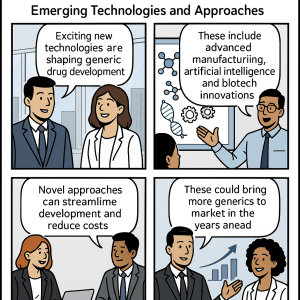
AI deployment at FDA in the context of generic drug assessment includes natural language processing and predictive modeling to offer near real-time surveillance for identifying quality signals for generic drugs — moving from a reactive, voluntary submission model to a proactive signal identification system.
Investment Strategy Note: Any generic developer that invests in NDA-quality dataset structuring and submission formatting that anticipates GDSA-BE inputs will gain a structural review-time advantage over competitors filing with legacy narrative submissions. This is a preparation investment, not a compliance cost. The applicants who treat it as a compliance exercise will be filing complete response letter responses while competitors are receiving approvals.
GDUFA III Science Priorities: An Eight-Point Technical Roadmap
The eight priority areas for the FY 2025 GDUFA Science and Research Initiatives are: (1) Develop Methods for Generics to Address Impurities such as Nitrosamines; (2) Enhance the Efficiency of Bioequivalence Approaches for Complex Active Ingredients; (3) Enhance the Efficiency of Bioequivalence Approaches for Complex Dosage Forms; and five additional areas spanning drug-device combinations, inhalation products, ophthalmic formulations, model-integrated evidence, and AI/ML applications in regulatory assessment.
Each of these is a research-active area, not an aspirational goal. The GDUFA program funds empirical studies across FDA, academia, and industry, and produces annual science and research reports that translate directly into new or revised PSGs.
Nitrosamine Impurities (Priority Area 1)
The nitrosamine issue erupted in 2018 with ranitidine and metformin recalls and has since expanded across multiple API classes. GDUFA-funded research in this area is producing state-of-the-art analytical procedures to characterize product quality and performance, giving manufacturers more efficient approaches for developing generic products. For IP and R&D teams, the practical requirement is a nitrosamine risk assessment embedded into every new ANDA program from the pre-formulation stage. Retrofitting this into a late-stage submission triggers a major amendment classification, adding 10 months to the assessment goal date.
Complex Active Ingredients and Formulations (Priority Areas 2 and 3)
Complex active ingredients include peptides, polymeric compounds, complex mixtures of active moieties, and proteins not defined as biologics. Complex formulations include liposomes, microspheres, modified-release systems, and drug-device combination products. Both categories share the defining characteristic that traditional in vivo comparative pharmacokinetic studies either cannot establish bioequivalence (because local tissue concentration, not systemic exposure, is the relevant metric) or are scientifically insufficient without model-informed supplementation.
GDUFA-funded research directly supported the approval of the first three generic iron sucrose products in 2025 — a complex iron carbohydrate product category that had resisted generic entry for years because no accepted BE methodology existed. Iron sucrose is the template. FDA developed the science, published the PSG, and generic entry followed. The same pipeline is active for liposomal products, complex topical formulations, and locally-acting GI drugs.
Model-Integrated Evidence (MIE) involves the use of computational modeling and simulation — including PBPK and computational fluid dynamics models — to help establish BE. MIE is a major research priority under GDUFA III, and the FDA has launched a dedicated MIE Industry Meeting Pilot Program to facilitate early engagement with sponsors on innovative approaches.
The MIE Industry Meeting Pilot Program is operationally significant. It means FDA will hold pre-submission meetings specifically to evaluate a sponsor’s modeling approach and provide feedback before the ANDA is filed. A sponsor who uses this program correctly enters the formal review with pre-validated modeling methodology, reducing the probability of a bioequivalence-related complete response letter to near zero.
Key Takeaways: GDUFA III Science Roadmap
Nitrosamine risk assessment is a required pre-formulation activity, not a late-stage check. Filing an ANDA without it documented invites a major amendment.
Iron sucrose generic approval in 2025 confirms FDA’s model: fund the science, publish the PSG, enable entry. Products awaiting similar PSG resolution include multiple liposomal injectables and inhaled products.
The MIE Industry Meeting Pilot Program is the highest-value pre-submission engagement option for complex generic programs. Use it.
AI/ML integration into FDA’s own review process is live and expanding. FDA’s AI-assisted tools reduced standard generic review times by 15.8% in 2024 pilot programs.
Complex Generics: The New Business Model
The traditional generic drug business model runs on volume, speed, and price. Get to approval first, take the 180-day exclusivity period under Hatch-Waxman, extract monopoly pricing for six months, then manage margin compression as additional ANDAs are approved. That model still works for commodity oral tablets, but the return profile has deteriorated as the number of ANDA filers per target molecule has increased and first-to-file exclusivity has fragmented across simultaneous Paragraph IV filers.
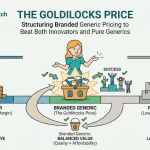
Complex generics, as FDA defines them, include drug products with complex active ingredients, complex formulations, complex routes of administration, or complex drug-device combinations. They face higher development costs and longer timelines than commodity generics. In return, they face far fewer competitors at launch and sustain prices 30-50% below the brand rather than the 80-90% discount typical of commodity oral generic competition.
The development economics reflect this. A commodity ANDA costs roughly $1 to $3 million in bioequivalence and CMC work. A complex generic for an inhaled product, liposomal injectable, or topical semi-solid can run $15 to $50 million or more, depending on whether clinical endpoint studies are required in addition to PK equivalence. That 10x to 15x cost increase is paired with a 5x to 10x reduction in the number of competitors who can clear the scientific bar — and a market entry price point that holds at 30 to 50 percent below the brand for years rather than collapsing to commodity pricing within 12 to 18 months.
For portfolio construction, this calculus favors a smaller number of high-investment complex generic programs over a high-volume commodity ANDA pipeline. A portfolio of 20 commodity ANDAs across competitive therapeutic areas generates less risk-adjusted NPV than 4 to 6 well-selected complex generic programs where the company’s formulation capabilities create a defensible barrier.
The Drug-Device Combination Generic
Drug-device combination generics — generic versions of products like inhalers, autoinjectors, and transdermal systems — are among the highest-value and most defensible positions in the complex generic space. The device component adds IP complexity that a compound patent challenge alone cannot address. A Paragraph IV certification that successfully invalidates the reference product’s compound patent may still leave the generic developer blocked by device patents that are not Orange Book-listed but are independently assertable in district court infringement actions.
For some products so complex they cannot meet the strict ‘sameness’ requirements of a traditional ANDA, the PSG can also help a developer determine if they need to pursue an alternative regulatory pathway, such as the 505(b)(2) application — allowing a sponsor to rely on some of the innovator’s safety and efficacy data while submitting bridging studies to justify differences.
Key Takeaways: Complex Generic Business Model
Complex generics sustain 30-50% below-brand pricing vs. 80-90% erosion for commodity generics. The return profile is categorically different.
Drug-device combinations add a device IP layer that Paragraph IV compound patent challenges cannot neutralize alone. Due diligence must extend to non-Orange Book device patents.
FDA’s PSG database identifies which complex product categories have active entry pathways. Products without a PSG face methodology uncertainty that compounds development cost and timeline.
PBPK Modeling and Virtual Bioequivalence
Physiologically Based Pharmacokinetic modeling is the most technically mature computational tool in generic drug development. It is also the most consistently underutilized in non-leading generic development programs.
A PBPK model simulates drug movement through the body by integrating drug-specific properties — solubility, permeability, protein binding, metabolic clearance — with a mathematical representation of human physiology including gastrointestinal transit, regional absorption, hepatic extraction, and renal clearance. For complex oral dosage forms with modified-release profiles, PBPK models predict the in vivo dissolution-absorption relationship and generate simulated pharmacokinetic profiles without a clinical study.
FDA has accepted PBPK modeling as supportive evidence in ANDA submissions for complex formulations where traditional in vitro-in vivo correlation (IVIVC) is difficult to establish. A PBPK model that predicts the generic product’s absorption profile to within 10% of the reference product’s observed clinical data provides regulatory support for a biowaiver claim or formulation optimization decision.
The application of PBPK modeling to generic development has given rise to Virtual Bioequivalence (VBE). VBE allows a company to conduct a simulated BE study on a virtual population of patients before ever dosing a human subject. Developers can test hundreds of virtual formulations with varying characteristics to identify the one most likely to be bioequivalent to the reference listed drug, dramatically reducing the number of physical batches required. A robust VBE study can provide sufficient evidence to waive the requirement for a clinical BE study entirely — the first FDA-approved complex topical generic successfully used Simcyp modeling to demonstrate bioequivalence.
The cost differential is the argument that every CFO needs to see in writing. A validated PBPK model costs roughly $50,000 to $150,000 in expert time and computational resources. A pilot clinical BE study typically costs $300,000 to $800,000. A program that would require two pilot studies before a pivotal study has spending exposure in the $600,000 to $1.6 million range before the pivotal study budget. PBPK can replace both pilots and directly inform pivotal study design. On a complex generic program with a total development budget in the $20 to $40 million range, PBPK investment is a rounding error that eliminates a seven-figure clinical spending decision.
Ocular and Inhalation Delivery: PBPK Frontier Applications
Ophthalmic and inhalation products represent PBPK’s most active frontier in generic development. Topical ophthalmic bioequivalence is inherently complex because systemic PK measurements do not reflect corneal drug concentration, which is the therapeutically relevant compartment. PBPK modeling for ophthalmic products accounts for drug movement through tears, cornea, conjunctiva, and puncta — mass balance equations that traditional PK studies cannot characterize by systemic measurement alone. FDA researchers have noted that even the eye-to-brain transport pathway may require modeling in neuroactive compounds. This creates both a development challenge and a defensible differentiation opportunity: a generic developer with validated ophthalmic PBPK expertise can file for products that competitors cannot approach without building that capability from scratch.
Key Takeaways: PBPK and Virtual Bioequivalence
PBPK validation costs $50K-$150K. A pilot clinical BE study costs $300K-$800K. The substitution economics are unambiguous.
FDA has already accepted VBE-based biowaiver claims. The regulatory pathway exists and has been used successfully.
Ophthalmic and inhalation PBPK is an emerging capability moat. Developers who build it gain access to complex generic target molecules that commodity competitors cannot pursue.
The MIE Industry Meeting Pilot Program under GDUFA III provides pre-submission FDA feedback on modeling methodology — use it before filing.
AI and ML in Generic Development: Verified Applications
The pharmaceutical industry’s AI conversation frequently confuses aspiration with deployment. The following are verified, operationally deployed applications with documented performance data.
AI and ML applications in generic drug development with documented performance metrics include: BE risk classification at 84% accuracy for categorizing drugs by bioequivalence challenge level, enabling pre-formulation resource allocation; in silico bioequivalence prediction using PBPK models to reduce the number of pilot BE studies required before the pivotal study; API synthetic route prediction and impurity profiling to identify potential nitrosamine formation pathways before experimental testing; dissolution modeling for BCS classification support; and FDA review time optimization — FDA’s own AI-assisted review tools reduced standard generic review times by 15.8% in 2024 pilot programs.
The 84% accuracy figure on BE risk classification is worth examining. It means that out of 100 programs where AI pre-classified a molecule as ‘high BE risk’ or ‘standard BE risk,’ 84 were correctly categorized. The 16% misclassification rate is not trivial, but neither is the baseline — without the model, all molecules enter the same development workflow regardless of their actual risk profile. Even imperfect risk stratification at the portfolio entry stage allows R&D leads to front-load investment toward programs with cleaner BE profiles and defer or over-resource programs where the model flags ambiguity.
Portfolio Optimization at the ANDA Pipeline Level
ML-based portfolio optimization tools integrate patent landscape data, competitive ANDA filing data, historical BE success rates by drug class, CMC complexity assessments, and market size forecasts to rank development candidates by expected risk-adjusted net present value. These tools identify non-obvious candidate combinations — a pipeline of five independent ANDA programs looks different from the same five programs when their development timelines, patent litigation outcomes, and market entry dates are modeled together.
The interaction effects are the key insight. Two ANDA programs that individually appear low-NPV may be highly complementary when their development timelines are staggered to share manufacturing campaigns, litigation resources, and regulatory submission workload. An ML portfolio tool surfaces these combinations. A human analyst working through a spreadsheet does not.
Natural Language Processing in FDA-Facing Applications
FDA’s AI deployment extends to natural language processing for near real-time quality signal surveillance — proactively identifying signals before they appear in recalls or adverse event reports, replacing the current system that relies on voluntary industry submissions and the agency’s periodic review.
For generic manufacturers, this is a compliance signal as much as a technology note. If FDA’s NLP quality surveillance identifies a signal in a competitor’s product, that information flows into the agency’s enforcement prioritization. If it identifies a signal pattern across a therapeutic category — impurity profiles in a specific API source, dissolution variability in a particular tablet technology — it can trigger category-wide requests for additional testing data that affect all ANDA holders in that space simultaneously. Manufacturers with robust internal quality surveillance that mirrors FDA’s NLP framework will identify and address these signals before they become enforcement actions.
Key Takeaways: AI and ML Deployment
BE risk classification ML tools are in production at 84% accuracy. They do not replace human judgment; they stratify portfolios before human judgment is deployed.
FDA’s own AI tools cut standard generic review times by 15.8% in 2024 pilots. GDSA-BE integration will amplify this. Applicants who submit clean, structured datasets will benefit disproportionately.
NLP-based quality surveillance is live at FDA. Internal quality monitoring programs should track the same signal categories that FDA’s NLP is designed to detect.
Evergreening Technology Roadmap: What Generics Are Fighting
Understanding evergreening is not an academic exercise for generic developers. The evergreening architecture of the reference listed drug is the primary determinant of how much capital a Paragraph IV program will consume, how long litigation will extend development timelines, and whether a first-to-file advantage will survive the 30-month stay period.
Evergreening is a systematic IP strategy that brand companies deploy across a multi-year timeline, typically beginning three to five years before the primary compound patent expires. Phase 1 (6-10 years before primary patent expiry): File formulation patents covering specific excipients, particle size distributions, polymorphic forms, and controlled-release mechanisms. Phase 2 (4-7 years before primary patent expiry): File method-of-use patents covering new indications, patient subpopulations, or dosing regimens.
The formulation patent layer is the most commonly encountered by ANDA filers. Crystalline polymorph patents, particle size patents, and specific excipient combination patents typically have narrow claims that are easier to design around than compound patents, but each requires its own invalidity or non-infringement analysis, and each triggers an independent 30-month stay if the patent is Orange Book-listed and the NDA holder sues within 45 days of receiving the Paragraph IV notice letter.
The method-of-use patent layer creates a different problem. Under Section viii carve-out provisions, a generic applicant can seek approval for unpatented indications while excluding patented methods of use from the labeling — skinny labeling. The assault on skinny labeling is one of the defining legal battles of 2025 and 2026, as brand companies increasingly argue that generic manufacturers’ commercial and marketing activities induce infringement of method patents even when the label has been carved out. The Federal Circuit’s 2024 ruling that Hikma’s website language describing a drug as a ‘generic equivalent’ could constitute inducement is the clearest current precedent. Generic commercial teams and legal teams must coordinate explicitly on every piece of external-facing content before a skinny-label product launches.
Biologic Evergreening: The BPCIA Patent Dance
For biosimilar developers, evergreening operates through the BPCIA patent dance mechanism rather than the Orange Book/30-month stay system. Several biosimilar companies have reached license agreements that resolved secondary patent disputes in exchange for delayed launch or royalty payments, illustrating that the BPCIA patent dance generates the same revenue-extending mechanics that Hatch-Waxman’s 30-month stay creates in the small-molecule space.
Keytruda (pembrolizumab) is the largest single target in the current cliff and has the most complex evergreening architecture in modern pharmaceutical history. DrugPatentWatch data indicates more than 40 secondary patent filings covering specific formulations, methods of use in combination therapy regimens, dosing intervals, and device systems — an estate built over a decade to extend market exclusivity beyond the compound patent’s 2028 U.S. expiration.
For biosimilar developers targeting Keytruda, the compound patent challenge is the entry ticket, not the endpoint. The secondary patent estate requires a litigation strategy that anticipates multi-year challenges across formulation, dosing interval, and combination therapy method patents simultaneously.
The 505(b)(2) Evergreening Architecture
The 505(b)(2) evergreening roadmap produces a commercial protection architecture that can rival a biologic’s 12-year BPCIA exclusivity when all layers are coordinated. Formulation patents, device patents, method patents, staged indication approvals, and pediatric extensions can collectively generate 10 or more years of protected revenue from a three-year statutory base. Each new indication approved via 505(b)(2) generates an independent three-year new chemical entity exclusivity period from the date of that approval.
Key Takeaways: Evergreening
Patent landscape analysis for any Paragraph IV target must extend beyond the compound patent to cover all Orange Book-listed formulation and method-of-use patents, plus non-listed device patents.
Skinny labeling under Section viii is legally fragile in the post-2024 Federal Circuit environment. Commercial teams need active legal oversight of every external-facing product communication.
Keytruda’s 40-plus secondary patents make it a multi-year litigation program, not a standard biosimilar entry. Capital commitment must match that reality.
The 505(b)(2) protection architecture can generate 10-plus years of exclusivity from a 3-year statutory base when indicator layering, pediatric extensions, and device patents are coordinated. Generic developers targeting 505(b)(2) products face this architecture routinely.
Vertical Integration and M&A Strategy
The generic drug industry’s consolidation logic is well-established: scale reduces per-unit manufacturing cost, increases purchasing power with API suppliers, and spreads regulatory and litigation overhead across a larger revenue base. The strategic calculus in 2026 is more nuanced because the relevant variable is not just scale but capability mix.
A large-scale generic manufacturer that has built out PBPK modeling capability, a complex formulation platform for liposomal injectables, and in-house patent litigation expertise has a fundamentally different competitive profile than a company of identical revenue that competes exclusively in commodity oral tablets. M&A activity in the generic space is increasingly targeting capability acquisition rather than pure scale.
The four strategic positions available to generic manufacturers in the current environment are: scale consolidation through merger or acquisition to reduce cost structure and increase pipeline capacity; forward integration into specialty pharmacy and direct distribution channels to capture margin currently extracted by intermediaries; backward integration into API manufacturing or key starting material production to reduce supply chain exposure; and capability pivot toward high-value generics, complex generics, and 505(b)(2) reformulations that generate higher margin per program.
Following FTC warning letters in May 2025 to manufacturers including Novartis, Teva, and Mylan, disputing over 200 patent listings across 17 brand-name products, removing those listings effectively strips a significant barrier to generic entry by eliminating the automatic 30-month stay triggered by Orange Book litigation. This regulatory pressure on brand-side patent listing creates near-term entry opportunities for generic companies that have been waiting for litigation risk to clear.
IP Valuation in M&A Due Diligence
When a generic company acquires another generic company, the asset being valued is not the manufacturing plant — it is the ANDA pipeline, the approved product portfolio, the first-to-file positions, and the litigation docket. Each of these has a distinct IP valuation methodology.
Approved ANDA products are valued on a discounted cash flow basis, with the discount rate reflecting therapeutic area pricing erosion patterns, number of ANDA filers, and remaining patent life of any product-specific exclusivity periods. First-to-file Paragraph IV positions are valued on probability-weighted expected returns, accounting for litigation success probability, 180-day exclusivity value, and the likely market entry pricing scenario. Pipeline ANDA programs are valued on risk-adjusted NPV, with the risk parameters reflecting BE success probability, CMC complexity, litigation exposure, and competitive landscape at projected approval.
The highest-value acquisition targets in the current market are companies with first-to-file Paragraph IV positions on large-molecule biosimilar reference products, particularly those in the Keytruda, Dupixent, or Eliquis exclusivity windows. These positions carry substantial optionality value even before trial outcomes, because the first-to-file exclusivity period for biosimilars under the BPCIA creates a revenue profile analogous to the 180-day small-molecule exclusivity but for a market where initial biosimilar entry typically captures 20 to 30% of volume in the first year.
Key Takeaways: M&A and Vertical Integration
M&A targets with Paragraph IV positions on biologics approaching LOE carry embedded option value that standard DCF models understate. Probability-weighted exclusivity period revenue must be modeled explicitly.
FTC patent listing challenges in 2025 removed 30-month stay protection on 200-plus patents across 17 brand products. These are immediate entry signals for applicants with approved or pending ANDAs on those products.
Vertical integration into API manufacturing is a hedge against geopolitical supply chain exposure, not just a cost play. Model it as risk reduction.
The 505(b)(2) Pivot for Generic Manufacturers
The 505(b)(2) pathway represents the most strategically underutilized regulatory route for generic manufacturers facing margin compression in commodity ANDA markets. A 505(b)(2) NDA allows the applicant to rely on FDA’s prior finding of safety for a Reference Listed Drug or on published literature, while submitting bridging studies that justify the differences between the proposed product and the RLD. Development costs run 60 to 80 percent below a full 505(b)(1) NDA.
A well-validated PBPK model can predict the pharmacokinetics of a new formulation or route of administration from the known properties of the compound and the formulation, potentially replacing or reducing the scope of clinical PK studies required as bridging evidence under 505(b)(2).
The IP architecture of a successful 505(b)(2) product is categorically more defensible than an ANDA. The NDA holder’s Orange Book rights attach to the 505(b)(2) product, not just to the RLD. The applicant can list its own formulation patents, device patents, and method-of-use patents in the Orange Book, creating the same 30-month stay protection that brand companies use against generic challengers.
A 505(b)(2) evergreening roadmap produces protection that can rival a biologic’s 12-year BPCIA exclusivity when all layers are coordinated — formulation patents, device patents, method patents, staged indication approvals, and pediatric extensions collectively generating 10 or more years of protected revenue.
For a generic manufacturer with formulation capabilities and a PBPK platform, the 505(b)(2) pathway turns those capabilities into IP assets rather than development costs. The formulation work that would produce an ANDA for a competitor’s product can instead produce a protected reformulation, with independent exclusivity, Orange Book listing rights, and a brand company’s legal arsenal against subsequent generic challengers — at a fraction of the cost of a full NDA program.
Key Takeaways: 505(b)(2) Pivot
505(b)(2) development costs are 60-80% below 505(b)(1) NDA costs, while generating the same IP architecture — Orange Book listing rights, 30-month stay protection, and independent exclusivity periods.
PBPK modeling reduces bridging study requirements in 505(b)(2) programs, compressing both cost and timeline.
A 505(b)(2) product’s IP estate can be constructed to block the same commodity generic competition that is compressing margins in the developer’s ANDA business.
IP Valuation in the Generic Pipeline
The value of a generic drug program is a function of four variables: the probability of regulatory approval, the timing of that approval relative to patent protection, the market share and pricing achievable at launch, and the duration of competitive protection before additional filers erode that position. Each variable interacts with the others, and the interactions are where most valuation models introduce error.
The First-to-File Exclusivity Premium
Under Hatch-Waxman, the first Paragraph IV ANDA filer for a given drug product earns 180 days of generic marketing exclusivity — a period during which no subsequent ANDA for the same product can receive final approval. The financial value of this exclusivity period is the spread between branded pricing and the first generic’s pricing, multiplied by market share captured during the 180-day window, discounted by litigation delay probability.
For a drug with $2 billion in annual U.S. sales, the 180-day window at an initial generic price of 80% of brand with 30% market share generates roughly $240 million in gross revenue. After development costs, litigation costs, and the probability-weighted chance of losing the Paragraph IV case or triggering a settlement with delayed launch, the expected NPV of a first-to-file position on a $2 billion product typically runs $50 to $150 million. For the largest products — Keytruda at $29.5 billion in 2024 global revenue, Eliquis at $13.3 billion — the expected NPV of a first-to-file biosimilar or generic position scales proportionally.
Exclusivity as a Layered Architecture
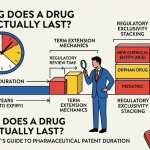
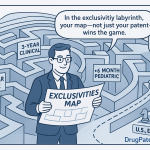
The pharmaceutical industry no longer operates on simple patent cliffs where a drug’s protection ends on a single date. Market exclusivity now functions as a layered system of legal and regulatory protections. The Effective Patent Life of most drugs is only 7 to 12 years of the 20-year statutory term, because drug development and FDA review consume the first decade of the patent’s life.
For generic developers, this means that the ‘patent expiration date’ is almost never the relevant competitive date. The relevant date is the earliest date on which a final ANDA approval can be granted, accounting for: compound patent expiration, formulation and method-of-use patent expirations, New Chemical Entity or New Clinical Investigation exclusivity periods, orphan drug exclusivity where applicable, pediatric exclusivity add-ons, the 30-month stay period if litigation is triggered, and any court-ordered injunctive relief that extends beyond the stay.
Modeling a generic entry date without a comprehensive exclusivity layer analysis will consistently produce optimistic entry timeline projections. The divergence between modeled and actual entry dates is where generic companies lose the most value in their pipeline — not at the bench or at the FDA, but in the competitive entry timing.
The IRA Negotiation Intersection
The Inflation Reduction Act created a new limitation unrelated to patents or FDA exclusivity. Medicare can now negotiate prices for drugs that lack generic or biosimilar competition after defined periods — 9 years for small molecules, 13 years for biologics. This creates a ‘statutory cliff’ where companies lose pricing power while patents may still be valid.
For generic developers, this IRA mechanic creates a perverse secondary effect. A brand company facing IRA negotiation has an incentive to accelerate generic entry if generic competition qualifies the drug as having a ‘bona fide’ generic available — which would exempt it from negotiation. Innovators have approached generic manufacturers about authorized generic agreements or accelerated settlement terms specifically to create a market presence that avoids the IRA price negotiation process. Generic developers with ANDAs pending on IRA-selected drugs have unexpected negotiating leverage that their traditional Hatch-Waxman analysis would not have surfaced.
Key Takeaways: IP Valuation
First-to-file NPV on a $2 billion small-molecule product runs $50-$150 million after litigation cost and delay adjustment. Modeled NPV without that adjustment is not a valuation — it is a ceiling.
IRA negotiation creates new negotiating dynamics between generic filers and brand companies. ANDA holders on IRA-selected drugs have leverage that extends beyond Hatch-Waxman settlement terms.
Exclusivity layer analysis — compound patent, secondary patents, NCE/NCI exclusivity, orphan/pediatric extensions, 30-month stay — must precede any generic pipeline valuation. Missing one layer can displace projected entry by three or more years.
Supply Chain Resilience: The China API Dependency Problem
As of 2025, China produces approximately 40 to 45% of the Key Starting Materials and Active Pharmaceutical Ingredients for the global generic market. This is not a risk that can be diversified away quickly. API manufacturing requires specialized equipment, validated processes, and FDA registration — a manufacturing transfer from a Chinese supplier to an Indian or European alternative takes 18 to 36 months and requires ANDA amendment submissions that reset assessment timelines.
The concentration in China extends beyond finished APIs to Key Starting Materials, which are the precursor chemicals used to synthesize APIs. KSM manufacturing is even more concentrated in China than finished API production, which means the actual supply chain exposure is upstream of what ANDA holders typically monitor.
Blockchain technology is enhancing transparency and traceability in the pharmaceutical supply chain, while IoT sensors are ensuring cold chain compliance at high accuracy rates for temperature-sensitive products. These technologies address detection and visibility. They do not address the underlying concentration risk. A blockchain system that perfectly tracks a supply chain that runs 45% through a single geopolitical counterparty makes the concentration more visible, not less dangerous.
For IP teams, API source concentration creates patent risk alongside supply risk. A manufacturing transfer requires a CMC amendment, which may require bioequivalence bridging if the API particle size distribution or polymorphic form changes as a result of the new source. A new API source that produces a different polymorphic form may encounter a brand company’s polymorph patent — a secondary patent that was irrelevant when the original Chinese API source was used but becomes newly relevant when the transfer changes the API’s physical form.
Key Takeaways: Supply Chain
API supply chain diversification is a 3-year program minimum. Companies that have not started are already behind the risk curve.
Manufacturing transfers require CMC amendments, which reset ANDA assessment timelines. A transfer triggered by a supply crisis adds 8-10 months to approval timelines at the worst possible moment.
New API sources can create new patent exposure if the source change alters a physical property covered by a secondary patent. Patent landscape analysis must accompany every source change.
Investment Strategy for Analysts
The generic drug sector in 2026 does not reward undifferentiated exposure. The following framework segments the investable landscape by risk-adjusted return profile.
Tier 1: Complex Generic and Biosimilar Developers with Pembrolizumab or Dupilumab Programs
Keytruda’s compound patent expires in the U.S. in December 2028. Merck has explicitly acknowledged that U.S. sales will begin declining in January 2028 under IRA pricing, then decline further after LOE. The company’s lifecycle strategy includes new formulations and routes of administration to complicate switching dynamics. Any biosimilar developer with a validated biologic manufacturing process, a filed BLA, and a clean patent dance record against Merck’s secondary estate holds an asset with first-year exclusivity revenue potential in the billions. The manufacturing barrier to pembrolizumab biosimilar development is the primary investment differentiator in this space — not the patent challenge, which is a shared variable among all filers.
Dupixent (dupilumab) generated €13.1 billion in 2024 global revenue. Data protection periods extend into the early 2030s, but biosimilar development work is already visible — Formycon announced FYB208, a dupilumab biosimilar candidate, with completed preclinical development and preparation for clinical studies as of November 2025. Early-stage investors who can evaluate the manufacturing process comparability and clinical development plan for dupilumab biosimilar candidates have a 5-to-7 year entry-to-market horizon with a clearly defined commercial target.
Tier 2: Generic Developers with AI/PBPK Capability Platforms
Generic companies that have made validated investments in PBPK modeling and ML-based portfolio optimization have a structural cost advantage on complex generic development programs. This advantage compounds: each complex generic program that uses PBPK to replace pilot clinical studies generates cost savings that can be reinvested in additional program starts. Over a 5-year period, a company with a mature PBPK platform can run 30 to 40% more complex generic programs than a competitor with identical capital.
The investment signal to look for is evidence that the company’s PBPK capabilities have been accepted by FDA in actual submissions — not that they have built the capability internally. FDA acceptance in a filed submission is the validation event that converts a development capability into a competitive moat.
Tier 3: Companies with First-to-File Positions on IRA-Selected Molecules
The IRA bona fide marketing dynamic creates negotiating leverage that is not captured in traditional Paragraph IV valuation. A company with a pending ANDA on an IRA-selected molecule should be valued with an explicit line item for this optionality — either accelerated settlement terms from the brand, an authorized generic arrangement, or a negotiated royalty that allows early commercial entry as the ‘bona fide’ generic in the market. This optionality has not been systematically priced into generic company valuations.
Avoid: Undifferentiated Commodity ANDA Pipelines in Saturated Therapeutic Areas
A pipeline of 20 to 30 commodity ANDAs in oral hypoglycemics, generic statins, and ACE inhibitors is not a growth strategy in 2026. It is a margin compression schedule. The incremental ANDA approval in a therapeutic area with 8 to 12 existing generic competitors generates negative pricing pressure on the entire portfolio without generating meaningful incremental revenue. Capital allocated to these programs would generate higher risk-adjusted returns in almost any of the three tiers above.
Full Key Takeaways Summary
Technology and FDA Modernization
GDSA-BE structured assessment replaces decades of freestyle narrative BE review. Applicants who pre-format submissions to its requirements gain structural review-time advantages.
The MIE Industry Meeting Pilot Program under GDUFA III is the highest-ROI pre-submission engagement available for complex generic programs.
FDA’s AI tools reduced standard review times by 15.8% in 2024 pilots. This number will increase as GDSA-BE scales.
Science and Development
ICH M13A/M13B harmonization eliminated dual-fasting/fed study requirements for most IR solid oral forms. The cost reduction is immediate and applicable to the majority of active ANDA programs.
PBPK modeling eliminates $300K-$800K pilot clinical studies on complex oral, topical, and inhalation products. At $50K-$150K per validated model, the ROI is unambiguous.
VBE has already been used to support FDA-approved biowaivers. The regulatory pathway exists.
Complex generics sustain 30-50% below-brand pricing vs. 80-90% erosion for commodity generics. Business model design around complex generics is not aspirational — it is arithmetic.
IP and Patent Strategy
The 2025-2030 patent cliff puts $217-236 billion in branded sales at risk. Biosimilars dominate the high-value targets.
Pembrolizumab (2028 LOE), dupilumab (early 2030s), and apixaban (2028) are the three largest individual targets by revenue.
Evergreening architecture on Keytruda includes 40-plus secondary patents. A biosimilar entry strategy that plans for compound patent expiration only will encounter litigation from the secondary estate before it reaches the market.
First-to-file NPV on large branded products must be modeled with litigation cost and delay adjustments. Unadjusted NPV calculations overstate expected returns by 30 to 50 percent depending on litigation success probability.
The IRA bona fide marketing dynamic creates new leverage for ANDA holders on negotiation-selected molecules. This option value is not captured in standard Paragraph IV valuations.
Operations and Supply Chain
China produces 40-45% of global generic APIs and a higher share of Key Starting Materials. Supply diversification is a 3-year minimum program. Companies that have not started are carrying unmodeled geopolitical risk.
Manufacturing transfers require CMC amendments, resetting ANDA timelines. A supply crisis is the worst time to discover this.
New API sources require parallel patent landscape analysis to identify secondary patent exposure that did not apply to the original source.
Data sources: FDA GDUFA Science and Research Reports (FY2024, FY2025); FDA SBIA Generic Drugs Forum presentations (April 2024); DrugPatentWatch; IQVIA; credevo.com; labiotech.eu; Morgan Lewis FDA analysis (January 2025). All financial projections are analyst estimates subject to litigation outcomes, regulatory decisions, and market conditions. Nothing in this document constitutes investment advice.