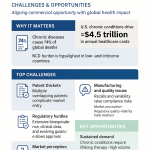
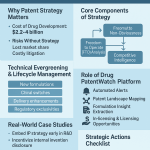
Investors and executives often treat the expiration of a composition-of-matter patent as the singular moment of truth in a drug’s life. This focus is a mistake. While a patent provides a property right to exclude others from making or selling an invention, regulatory exclusivity provides a distinct, statutory barrier administered by the Food and Drug Administration (FDA).1 For a business professional aiming to turn patent data into a competitive advantage, the nuance between New Chemical Entity (NCE) and New Clinical Investigation (NCI) exclusivity is where the real margin is defended or lost.
Regulatory exclusivity is not a property right; it is a government-mandated delay in competitor approvals.2 If a patent is the deed to a piece of land, exclusivity is a zoning permit that prevents any neighbor from even applying to build a competing structure for a set number of years.2 This distinction matters because exclusivity cannot be challenged in the same way a patent can. One cannot invalidate NCE exclusivity in a courtroom on the grounds of obviousness. It is a rigid, administrative shield that remains in force even if the underlying patents are torn to pieces by litigation.2
The grand bargain of 1984 and the hierarchy of protection
The current system is the result of the Drug Price Competition and Patent Term Restoration Act of 1984, popularly known as the Hatch-Waxman Act. This legislation attempted to balance the needs of innovators with the demand for affordable generics.4 Innovators received two primary benefits: a mechanism to extend patent terms to compensate for time lost during regulatory review and a set of guaranteed marketing exclusivities that run independently of patent status.4
Exclusivity exists to reward the research and development investment required to bring a drug to market, especially the expensive clinical trials required for a New Drug Application (NDA).5 Table 1 outlines the primary forms of protection available under this framework.
Exclusivity Type
Duration
Primary Trigger
Blocked Application
Orphan Drug (ODE)
7 Years
Approval for rare disease (<200k patients)
ANDA/505(b)(2) for same drug and use 3
New Chemical Entity (NCE)
5 Years
First approval of a new active moiety
ANDA/505(b)(2) submission 4
New Clinical Investigation (NCI)
3 Years
New clinical trials essential to approval
ANDA/505(b)(2) approval 4
Pediatric Extension (PED)
+6 Months
Completion of FDA-requested pediatric trials
All existing patents and exclusivities 4
Competitive Generic (CGT)
180 Days
First generic to market with no competition
Subsequent generic approvals 8
The regulatory shield versus the property right
A patent is a 20-year term from the date of filing, but the effective patent life (EPL) is often much shorter—frequently just seven to 12 years—because the clock starts ticking long before the drug is approved.9 Exclusivity, however, attaches only upon marketing approval.1 This means exclusivity is often the final and most critical line of defense when patents are narrow, weak, or near the end of their life.2
For strategic teams, the monopoly period is defined by whichever barrier falls last: the final relevant patent or the final applicable exclusivity.12 Relying solely on patent dates is a common error in pharmaceutical valuation that ignores the structural reality of the Orange Book.9 Platforms like DrugPatentWatch allow analysts to synthesize these overlapping layers of protection into a coherent forecast of market longevity.13
NCE exclusivity: The five-year submission wall
New Chemical Entity (NCE) exclusivity is the most robust form of data protection available for small-molecule drugs. It is granted to a drug that contains no “active moiety” previously approved by the FDA in any other NDA submitted under section 505(b) of the Act.4 The definition of “active moiety” is the heart of the regulatory battleground. It refers to the molecule or ion responsible for the physiological or pharmacological action of the drug substance.14
The submission ban and its strategic implications
Unlike other exclusivities that merely delay approval, NCE exclusivity blocks the submission of a competing Abbreviated New Drug Application (ANDA) or 505(b)(2) application for five years from the date of the original NDA approval.4 This is a five-year dead zone for generic manufacturers. Even if a generic firm has its formulation ready and its bioequivalence trials finished, the FDA is prohibited from even accepting the application for review.5
This five-year statutory window often translates into six or seven years of actual market exclusivity.5 Because the FDA typically takes two or more years to review and approve an ANDA, the review period only begins once the submission ban is lifted.5
Defining the active moiety: Salts, esters, and prodrugs
The FDA generally considers a salt or an ester of an approved drug to be the same active moiety and therefore ineligible for a new period of NCE exclusivity.4 However, the boundary is shifting. In the case of Aristada (aripiprazole lauroxil), the FDA awarded NCE exclusivity despite a linker appendage that included an ester, because it was a 505(b)(2) NDA relying on prior approvals of aripiprazole.14
Prodrugs present another nuance. In the case of Emend (fosaprepitant dimeglumine), the FDA initially denied NCE exclusivity, arguing the drug was merely a prodrug of aprepitant.14 The agency later reversed its decision, illustrating that the technical determination of what constitutes a “new” moiety is subject to administrative and legal advocacy.14
The NCE-1 date: The declaration of war
There is one major exception to the five-year submission ban. If a generic manufacturer intends to challenge an innovator’s patent as invalid or not infringed—known as a Paragraph IV certification—it may submit its ANDA after four years, exactly one year before the NCE exclusivity expires.4 This is the NCE-1 date.
“The 180-day exclusivity incentive can be significant for a generic company as it would be the only generic version on the market. It can price its product slightly below the branded version for six months, take market share, and maintain its price point before other generics enter the market.” 16
For innovators, the NCE-1 date is the warning bell that generic competition is imminent.15 For generics, it is a race to the courthouse. The first applicant to submit a substantially complete ANDA on this date is eligible for 180 days of generic marketing exclusivity.17 This period is the primary profit engine of the generic industry, allowing firms to capture 40% to 50% of the market share at a high margin before multi-source competition drives prices down by 80% to 90%.12
Tactical filing and shared exclusivity
Because the first-to-file status is so valuable, multiple manufacturers often file on the NCE-1 date.17 When multiple firms file on the same day, they share the 180-day exclusivity.19 This shared exclusivity reduces the individual windfall but still protects the group from the broader market collapse that occurs when the generic space swells to ten or more competitors.8
NCI exclusivity: Three years for incremental innovation
New Clinical Investigation (NCI) exclusivity provides a three-year period of protection for changes to an already approved drug—such as a new indication, a new dosage form, or a switch from prescription to over-the-counter status.4 Unlike NCE exclusivity, which blocks submission, NCI exclusivity only blocks approval.4 Generic firms can still submit an ANDA during this time, but the FDA cannot grant final approval until the three years have elapsed.4
The “essential to approval” threshold
To qualify for NCI exclusivity, the application must contain reports of “new clinical investigations” conducted or sponsored by the applicant that were “essential to the approval” of the application or supplement.6 This means there were no other data available that could support the approval.6
New clinical investigations must be in humans and must not be bioavailability or bioequivalence studies.6 The applicant must have provided more than 50% of the cost of the study or have a predecessor-in-interest relationship.6 If the FDA could have approved the change based on existing literature or prior findings, exclusivity is denied.6
Skinny labels and the Section viii paradox
NCI exclusivity is often narrower than NCE exclusivity. Because it usually applies to a specific new use or dosage form, a generic manufacturer may attempt to carve out the protected information from its labeling.4 This is done via a Section viii statement, where the generic applicant asserts that it is not seeking approval for the patented or exclusivity-protected use.22
If the FDA determines that the generic can be used safely and effectively without the protected indication, it may approve a skinny label.25 This allows the generic to enter the market for the original, unpatented uses while the innovator maintains a monopoly on the new, protected use.25
The risk of omission in promotional activities
For decades, skinny labeling was a reliable pathway for generic entry. However, recent rulings in GSK v. Teva and Amarin v. Hikma have fundamentally changed the risk profile. In the GSK case involving Coreg (carvedilol), the Federal Circuit reinstated a $235 million jury verdict, finding that Teva’s marketing materials induced doctors to infringe GSK’s patent, even though Teva had carved out the patented indication from its label.25 The court found that Teva’s press releases calling the product a generic version and its use of AB-rated claims suggested interchangeability for all uses.26
The 30-month stay: Buying time at $10 million a day
When a generic manufacturer files a Paragraph IV certification, it is considered a technical act of patent infringement.5 If the innovator sues the generic challenger within 45 days of receiving the notice, an automatic 30-month stay is triggered.4 During this period, the FDA is prohibited from approving the ANDA.5
The financial value of procedural delays
The 30-month stay is one of the most valuable assets in an innovator’s defensive arsenal. For a blockbuster drug generating $10 million in daily revenue, a 30-month delay in generic entry preserves approximately $900 million in revenue.19 This revenue is preserved regardless of whether the patents are ultimately found to be valid or infringed.19
Table 2 illustrates the financial impact of generic entry delays based on daily revenue and stay duration.
Daily Revenue
12-Month Stay Value
30-Month Stay Value
$1 Million
$365 Million
$912 Million
$5 Million
$1.82 Billion
$4.56 Billion
$10 Million
$3.65 Billion
$9.12 Billion
Tolling the stay: The Mavenclad precedent
The duration of the stay can be modified by a court if either party fails to reasonably cooperate in expediting the litigation.4 A significant recent case involves Merck’s drug Mavenclad (cladribine). After generic defendant Hopewell successfully invalidated Merck’s patents in Inter Partes Review (IPR), Merck requested a tolling of the 30-month stay while the IPR was on appeal.32
The district court granted the tolling, effectively extending the stay.33 When the Federal Circuit affirmed the patent invalidity, Hopewell moved to lift the stay to prevent competitive harm.32 The court refused, noting it lacked the power to lift a statutory stay until the final mandate was issued.32 This case underscores that the 30-month stay is a rigid statutory mechanism that courts are hesitant to shorten, even when underlying patents have been struck down in other forums.32
The ROI of the six-month pediatric bonus
Strategically minded firms do not rely on a single exclusivity period. They stack them. Pediatric exclusivity is exceptionally powerful because it is an add-on that attaches to the end of all existing patents and regulatory exclusivities listed in the Orange Book for that active moiety.1
Valuing the pediatric add-on
If an innovator completes pediatric studies requested by the FDA, every patent and exclusivity listed for the drug receives an additional six months of protection.3 For a drug generating $50 million per month, this bonus is worth $300 million.36 For top-tier blockbusters, it can be worth billions.3
Drug Revenue (Annual)
6-Month Pediatric Value
Estimated Study Cost
ROI Ratio
$100 Million
$50 Million
$5 Million
10:1
$1 Billion
$500 Million
$10 Million
50:1
$10 Billion
$5 Billion
$20 Million
250:1
The distribution of net economic return for six months of exclusivity varies substantially among products, ranging from a loss of $8.9 million to a gain of $507.9 million in older cohorts.37 However, for high-revenue assets, the return is almost always lucrative.39
Orphan Drug Exclusivity: The targeted moat
Orphan Drug Exclusivity (ODE) provides seven years of protection for drugs treating rare diseases affecting fewer than 200,000 people in the US.1 It bars the FDA from approving the same drug for the same indication.3 Unlike NCE exclusivity, ODE is indication-specific, meaning a competitor can still get approval for a different, non-orphan use of the same molecule.3 This makes ODE a powerful but narrow shield that must be paired with broader NCE or patent protection.3
The economics of the 180-day duopoly
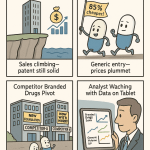
The transition from brand exclusivity to generic competition is the primary determinant of asset valuation in the pharmaceutical sector.19 For small molecules, this transition is a cliff. Multi-source generic entry typically precipitates a revenue collapse of 90% or more within months.12
The rate of erosion is a function of the number of competitors ($N$).40 When a first-filer enjoys 180-day exclusivity, prices typically drop by only 15% to 30%.8 As seen in Table 3, the second and third competitors cause the most significant marginal price drops.
Number of Generic Labelers
Price Reduction from Brand
1 (Exclusivity Period)
15% – 25%
3
40% – 60%
6
75% – 80%
10+
80% – 95%
Authorized Generics: The innovator’s counter-strike
Innovators often launch an Authorized Generic (AG)—the brand drug in generic packaging—during the first-filer’s 180-day exclusivity window.17 This turns the duopoly into a triopoly and can reduce the first-filer’s revenue by 40% to 52%.17 For the brand, an AG allows them to capture a portion of the generic market share while maintaining the premium price for the branded version for loyal patients.42
Competitive Generic Therapy (CGT) exclusivity
The CGT pathway addresses a market failure: the existence of drugs with a de facto monopoly due to a lack of generic competition, despite having no unexpired patents.8 For a drug to be designated as a CGT, the FDA must determine that there is no more than a single approved drug in the active section of the Orange Book.8 The incentive is a 180-day period of marketing exclusivity, which is triggered by the commercial launch rather than a patent challenge.8
The Orange Book as a strategic map
The Orange Book is a comprehensive database that serves as both a regulatory document and a source of competitive insights.45 Mastering its data analytics provides a significant edge in identifying market opportunities and anticipating competitive threats.45
Sophisticated competitive intelligence teams use platforms like DrugPatentWatch to monitor NCE-1 submission windows, knowing exactly when a competitor can file a Paragraph IV challenge.3 They also track settlement patterns, determining whether a competitor typically fights to the end or settles for a date certain entry.13
The Inflation Reduction Act and the new statutory cliff
The enactment of the Inflation Reduction Act (IRA) introduced a new variable into the exclusivity equation: Medicare price negotiation.9 This represents a hard cap on the clean revenue period, necessitating the adjustment of long-term cash flow models.9
Small molecules are eligible for negotiation nine years after approval, while biologics are eligible after thirteen years.3 This creates a statutory cliff that operates independently of patents, making the stacking of exclusivities like NCI and Pediatric extensions even more critical for recouping research and development costs.9
Induced infringement: The Amarin v. Hikma trap
The recent Amarin v. Hikma case involving Vascepa has created a liability minefield for generic manufacturers using skinny labels.46 The Federal Circuit held that Hikma could be liable for induced infringement despite its carve-out, pointing to press releases that cited total sales figures for Vascepa, which included both the patented and unpatented indications.28
Generic launches must now adhere to a strict hygiene protocol regarding communications.28 Every press release, investor statement, and website entry must be scrubbed of any language that could imply equivalence for patented uses.28
The biologic paradigm: Slope vs. Cliff
Biologics—large, complex molecules derived from living cells—face a biologic slope rather than a cliff, characterized by a slower rate of erosion.9 The BPCIA provides 12 years of data exclusivity for biologics, compared to 5 for small molecules, creating a longer baseline monopoly.19 However, the shift from small molecules to biologics means that erosion is less automatic at the pharmacy level.12
Key Takeaways
Exclusivity is often more rigid than patents. While patents can be challenged in court, NCE and NCI exclusivities are statutory barriers that remain in force even if patents are invalidated.
The NCE-1 date is the critical tactical window. Generic firms must be prepared to file on the first possible day (Year 4) to secure the 180-day exclusivity windfall.
The 30-month stay is a massive revenue preserver. It functions as an insurance policy for blockbusters, allowing innovators to maintain their monopoly while litigation proceeds.
Skinny labels are no longer a guaranteed safe harbor. Generic manufacturers must ensure their promotional materials do not implicitly encourage use for patented indications.
Stacking extensions is the ultimate moat strategy. Adding a 6-month pediatric extension to a 7-year orphan exclusivity and multiple secondary patents creates a fortress that is difficult to breach.
FAQ
What is the practical difference between a patent and regulatory exclusivity?
A patent is a property right granted by the USPTO that lasts 20 years from filing and can be challenged in court. Exclusivity is a statutory delay on competitor approval granted by the FDA upon drug approval. Exclusivity functions independently of patents and cannot be invalidated through litigation.
Can a generic company file an ANDA if there is still NCE exclusivity?
No. NCE exclusivity blocks the submission of an ANDA for five years. The only exception is if the generic firm files a Paragraph IV certification, in which case they can submit at the four-year mark (NCE-1).
What happens if a brand’s patent is found invalid during the 30-month stay?
If a court enters a final judgment that the patent is invalid or not infringed, the 30-month stay terminates, and the FDA can approve the generic ANDA. However, if the decision is on appeal, the court may choose to toll the stay until the mandate is issued.
Why would a company pursue a 3-year NCI exclusivity if they already have patents?
NCI exclusivity provides a redundant layer of protection. If the primary patents are challenged or found to be weak, the 3-year exclusivity ensures that the FDA cannot approve a generic for that specific indication or dosage form.
How does the Inflation Reduction Act affect drug exclusivity?
The IRA creates a statutory cliff where Medicare can negotiate prices nine years after a small molecule’s approval and thirteen years after a biologic’s approval. This essentially caps the period of premium pricing regardless of whether patents remain in force.
Estimating the Value of Adding 30 Days to the 180-Day Market Exclusivity of the First-to-File Generic Drug Manufacturer – PMC – NIH, accessed January 31, 2026, https://pmc.ncbi.nlm.nih.gov/articles/PMC12796020/