The pharmaceutical industry, long dominated by profit-driven giants, is witnessing a transformative shift with the rise of nonprofit pharmaceutical companies. These organizations are redefining the landscape by prioritizing patient access and affordability over shareholder value. From tackling skyrocketing drug prices to addressing chronic shortages and developing treatments for neglected diseases, nonprofit pharma is carving out a vital role. For business professionals, understanding how these entities leverage patent data—using tools like DrugPatentWatch—offers insights into turning intellectual property into a competitive advantage. This article explores the mission, impact, and strategies of nonprofit pharma, highlighting their potential to reshape the industry for the better.
Understanding Nonprofit Pharma
Definition and Core Principles
Nonprofit pharmaceutical companies are organizations that develop, manufacture, or distribute medications without the primary goal of generating profit. Instead, they focus on public health, aiming to make essential drugs affordable and accessible. Unlike for-profit companies, which prioritize shareholder returns, nonprofits reinvest any surplus into their mission, such as reducing drug costs or addressing unmet medical needs.
“Nonprofit pharmaceutical companies promote the affordability of medical products as a goal in their mission and vision statements, offering a cost-plus model that prices drugs at sustainable margins.” — ASPE Report, 2024 [2]
Key Differences from For-Profit Pharma
For-profit pharmaceutical companies rely on high profit margins and market exclusivity through patents to recoup research and development (R&D) costs. In contrast, nonprofit pharma operates under a mission-driven model, often targeting areas with little commercial appeal, such as generic drugs or neglected tropical diseases. They use alternative funding sources like donations, grants, and partnerships, allowing them to price drugs based on production costs rather than market dynamics.
Leading Examples
Several nonprofit pharma organizations are making significant strides:
Civica Rx: Founded in 2018 by U.S. hospitals and philanthropies, Civica Rx addresses generic drug shortages and high prices (https://civicarx.org).
Drugs for Neglected Diseases initiative (DNDi): Established in 2003, DNDi develops treatments for neglected diseases like sleeping sickness and Chagas disease (https://dndi.org).
NP2: A newer player aiming to produce life-saving generics at below government-negotiated prices (https://np2.org).
The Mission and Goals of Nonprofit Pharma
Prioritizing Patients Over Profits
The core mission of nonprofit pharma is to ensure that no patient is priced out of life-saving treatments. This patient-centric approach drives their efforts to:
Reduce Drug Prices: By pricing medications based on production costs, nonprofits make drugs affordable for underserved populations.
Address Shortages: They maintain buffer stocks and stable supply chains to prevent disruptions in drug availability.
Innovate for Neglected Diseases: Nonprofits focus on conditions overlooked by for-profit companies due to low profitability.
Addressing Market Failures
Nonprofit pharma steps in where market-driven models fail. For instance, generic drug prices can spike due to limited competition, as seen with a 5,000% increase for pyrimethamine [9]. Nonprofits like Civica Rx counteract such price gouging by offering stable, affordable alternatives.
Case Study: Civica Rx
Background and Formation
Civica Rx was launched in 2018 by a coalition of health systems, including Intermountain Healthcare and Mayo Clinic, and philanthropies like the Gary and Mary West Foundation. The initiative, initially called Project Rx, was a response to chronic shortages and price spikes of generic drugs in U.S. hospitals.
Mission to Combat Shortages and High Prices
Civica Rx’s mission is to ensure that essential generic medications are both available and affordable. They achieve this by:
Identifying Critical Drugs: Hospital pharmacists and clinicians select medications prone to shortages or price increases.
Cost-Based Pricing: Drugs are priced to cover manufacturing costs plus a sustainable margin, not market-driven profits.
Buffer Stocks: Maintaining six months of extra inventory to mitigate supply disruptions.
Impact on the Industry
Civica Rx has made significant strides:
Insulin Pricing: Plans to sell insulin at $30 per vial or $55 for five pens, compared to market prices often exceeding $300 per vial [5].
Abiraterone Acetate: Through CivicaScript, offers this prostate cancer drug at $160 per bottle, saving Medicare Part D patients approximately $3,000 monthly [6].
Supply Stability: Supplies over 70 medications to more than 1,400 U.S. hospitals, treating millions of patients annually [3].
Collaborative Model
Civica Rx operates on a membership model, where hospitals commit to long-term purchase agreements. This ensures predictable demand, enabling investments in manufacturing facilities, such as their Virginia plant set to produce insulin and injectables by 2024 [2].
Case Study: Drugs for Neglected Diseases Initiative (DNDi)
Origins and Purpose
Founded in 2003 by Médecins Sans Frontières (MSF), the World Health Organization, and research institutions from Brazil, India, Kenya, Malaysia, and France, DNDi addresses the lack of treatments for neglected tropical diseases. These diseases affect over one billion people, primarily in low-income countries, but receive minimal attention from for-profit pharma due to limited market potential [5].
Focus on Neglected Diseases
DNDi has delivered 13 affordable treatments for six diseases, including:
Fexinidazole: The first all-oral treatment for both stages of sleeping sickness, approved by the EMA in 2018 and FDA in 2021 [8].
Ravidasvir: A simple, affordable hepatitis C treatment developed in partnership with others [1].
Child-Friendly HIV Treatment: A sweet-tasting formulation for pediatric HIV patients, introduced in 2022 [9].
Intellectual Property Approach
DNDi’s IP policy prioritizes access over exclusivity. They secure non-exclusive rights to their drugs, aiming to make them global public goods. This approach ensures multiple manufacturers can produce treatments at low cost, enhancing accessibility (https://dndi.org/advocacy/pro-access-policies-intellectual-property-licensing).
Collaborative R&D
DNDi collaborates with over 200 partners worldwide, including pharmaceutical companies, academia, and governments. This model reduces R&D costs—estimated at $110–$170 million per drug, compared to the industry’s $1 billion claim—by leveraging existing compounds and shared expertise [6].
Case Study: Harm Reduction Therapeutics
Addressing the Opioid Crisis
Harm Reduction Therapeutics, a 501(c)(3) nonprofit, focuses on making opioid overdose reversal medications accessible. Their flagship product, RiVive, is a 3 mg naloxone nasal spray approved by the FDA in 2023.
Affordable Pricing
RiVive is priced at $36 per twin pack, significantly lower than competitors like Narcan, which can cost over $125 for a two-pack [4]. This affordability is enabled by their nonprofit status, which eliminates shareholder-driven price hikes.
Impact on Public Health
By offering RiVive at a low cost, Harm Reduction Therapeutics ensures that first responders, community organizations, and individuals can access this life-saving medication, addressing the opioid crisis that claims tens of thousands of lives annually.
Financial Sustainability of Nonprofit Pharma
Funding Models
Nonprofit pharma relies on diverse funding sources:
Donations and Grants: From philanthropies, governments, and international organizations.
Partnerships: Collaborations with hospitals, research institutions, and other stakeholders provide financial and in-kind support.
Revenue from Sales: Surplus from drug sales is reinvested into R&D and operations.
For example, Civica Rx is funded by member hospitals and philanthropies, while DNDi receives support from MSF, governments, and foundations [10].
Challenges to Sustainability
Nonprofits face several hurdles:
Tax Code Issues: Lack of a suitable tax-exempt status for commercial activities [6].
Investment Barriers: Limited access to capital compared to for-profit companies [6].
Regulatory and Market Challenges: Navigating complex regulations and competing with established pharma giants [2].
Strategies for Long-Term Viability
To ensure sustainability, nonprofits employ strategies like:
Cost-Plus Pricing: Pricing drugs to cover costs plus a sustainable margin [9].
Outsourcing Manufacturing: Partnering with contract manufacturing organizations (CMOs) to reduce costs [2].
Long-Term Contracts: Securing stable revenue through hospital commitments [3].
Impact on Drug Pricing
Significant Price Reductions
Nonprofit pharma has demonstrated a profound impact on drug pricing:
Drug
Nonprofit Price
Market Price
Savings
Insulin (Civica Rx)
$30/vial
$300+/vial
Up to 90%
Abiraterone Acetate
$160/bottle
$3,000/month
~$2,840/month
RiVive (Naloxone)
$36/twin pack
$125+/twin pack
~$89/twin pack
These reductions make medications accessible to patients who might otherwise forgo treatment due to cost.
Market Influence
By offering lower-priced alternatives, nonprofits pressure for-profit companies to justify their pricing or compete. For instance, Civica Rx’s insulin initiative could disrupt the insulin market, encouraging competitors to lower prices [5].
Addressing Drug Shortages
Strategies to Prevent Shortages
Nonprofit pharma employs several strategies to combat drug shortages:
Buffer Stocks: Civica Rx maintains six months of extra inventory to cushion supply disruptions [3].
Domestic Manufacturing: Investments in U.S.-based facilities reduce reliance on global supply chains [2].
Evidence of Impact
While comprehensive statistics are limited, Civica Rx’s supply of over 70 medications to 1,400+ hospitals suggests significant progress. Their focus on critical drugs, like chemotherapy agents, addresses acute shortages that impact patient care [8].
Innovation in Neglected Areas
Targeting Underserved Needs
Nonprofit pharma fills gaps left by for-profit companies, particularly for neglected tropical diseases. DNDi’s 13 treatments for diseases like leishmaniasis and pediatric HIV demonstrate their commitment to innovation where market incentives are lacking [1].
Collaborative R&D Models
Nonprofits leverage partnerships to drive innovation efficiently. DNDi’s collaborative approach with over 200 partners reduces costs and accelerates development, making treatments like fexinidazole viable [9].
The Role of Patents in Nonprofit Pharma
Pro-Access IP Policies
Nonprofit pharma manages patents to prioritize access:
Non-Exclusive Licensing: DNDi secures non-exclusive rights to allow multiple manufacturers to produce drugs at low cost [9].
Global Public Goods: They aim to make treatments widely available, as seen with fexinidazole, developed with Sanofi [8].
Open Sharing: DNDi publishes model contracts to promote transparency in IP management [9].
Contrast with For-Profit Pharma
For-profit companies use patents to maintain market exclusivity, often leading to high prices. Nonprofits, however, view patents as tools to ensure affordability, not barriers to access.
Leveraging Patent Data for Competitive Advantage
The Role of DrugPatentWatch
DrugPatentWatch (https://www.drugpatentwatch.com) is a business intelligence platform that provides data on drug patents, generic entries, and more. It supports strategic decision-making for:
Generic Manufacturers: Identifying patent expirations to develop affordable generics.
Payers and Distributors: Predicting market changes to manage budgets and inventory.
Nonprofit Pharma: Planning R&D by targeting expiring patents or repurposing drugs.
Applications for Nonprofit Pharma
Nonprofits can use DrugPatentWatch to:
Identify Generic Opportunities: Track expiring patents to produce low-cost generics, as Civica Rx does with insulin [5].
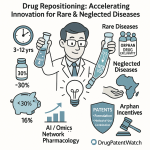
Repurpose Drugs: Find existing compounds for new indications, especially for neglected diseases [9].
Strategic Planning: Avoid IP conflicts and optimize resource allocation [7].
Example Scenario
If a nonprofit identifies an expiring patent for a high-cost drug using DrugPatentWatch, they can plan to manufacture a generic version, reducing costs for patients and increasing access.
Challenges Faced by Nonprofit Pharma
Regulatory Hurdles
Navigating FDA approvals and international regulations is resource-intensive, particularly for nonprofits with limited budgets [2].
Market Competition
Competing with for-profit giants, which have vast resources and established market presence, poses a significant challenge [6].
Funding and Sustainability
Securing consistent funding remains a hurdle, as nonprofits rely on grants and donations, which can be unpredictable [10].
Supply Chain Issues
The pharmaceutical supply chain is often geared toward for-profit models, making it difficult for nonprofits to secure reliable manufacturing and distribution [6].
Future Prospects and Potential
Growth of the Sector
The nonprofit pharma sector is poised for growth as public demand for affordable drugs increases. Organizations like Civica Rx and DNDi are expanding their reach, with plans for new manufacturing facilities and treatment pipelines [3].
Provide Funding: Offer grants or low-interest loans to support R&D [2].
Streamline Regulations: Expedite FDA reviews for nonprofit-developed drugs [2].
Transformative Potential
By continuing to innovate and collaborate, nonprofit pharma could:
Increase Access: Make life-saving drugs available to millions worldwide.
Influence Markets: Pressure for-profit companies to lower prices.
Drive Innovation: Expand treatments for neglected diseases, benefiting global health.
Conclusion
Nonprofit pharmaceutical companies are revolutionizing the industry by prioritizing patients over profits. Through innovative funding, collaborative R&D, and pro-access IP policies, they are addressing critical issues like drug shortages, high prices, and neglected diseases. Tools like DrugPatentWatch empower these organizations to strategically navigate the patent landscape, enhancing their ability to deliver affordable generics and innovative treatments. As the sector grows, it holds the potential to transform the pharmaceutical industry into one that serves the public good, ensuring that no patient is left behind due to cost or access barriers.
Key Takeaways
Nonprofit pharma prioritizes affordability and access, addressing market failures in drug pricing and availability.
Civica Rx reduces prices for generics like insulin and mitigates shortages through buffer stocks and hospital partnerships.
DNDi drives innovation for neglected diseases, delivering 13 treatments since 2003.
Harm Reduction Therapeutics makes life-saving drugs like RiVive affordable, combating the opioid crisis.
Financial sustainability relies on donations, grants, partnerships, and reinvested revenue.
Pro-access IP policies ensure treatments are widely available, contrasting with for-profit exclusivity.
Tools like DrugPatentWatch help nonprofits identify patent expirations for strategic planning.
Challenges include regulatory hurdles, funding limitations, and market competition.
Policy support could enhance the sector’s impact, driving broader industry change.
FAQ
What distinguishes nonprofit pharma from for-profit pharma? Nonprofit pharma focuses on patient access and affordability, reinvesting revenue into their mission, while for-profit companies prioritize shareholder profits, often leading to higher drug prices.
How do nonprofit pharma companies sustain themselves financially? They rely on donations, grants, partnerships, and revenue from drug sales, which is reinvested to fund further development and operations.
Can nonprofit pharma compete with large pharmaceutical companies? While challenging, nonprofits compete by targeting niche markets, leveraging partnerships, and focusing on public health needs, which attract support and funding.
How do nonprofits manage intellectual property differently? They use non-exclusive licensing and aim to make drugs global public goods, ensuring affordability and access rather than market exclusivity.
How can patent data tools like DrugPatentWatch benefit nonprofit pharma? These tools help identify expiring patents for generic development and opportunities for drug repurposing, enabling nonprofits to plan cost-effective R&D.