Patient advocacy groups (PAGs) have crossed a threshold. They are no longer peripheral voices lobbying from hallways outside committee rooms. They are now embedded in FDA advisory panels, Orange Book litigation strategies, biosimilar interchangeability debates, and Congressional negotiations over data exclusivity terms. For pharma IP teams and portfolio managers, ignoring the PAG dimension of a generic entry timeline is no longer an option.
This pillar page examines the full scope of PAG influence across the generic drug lifecycle, from ANDA filing strategy and Paragraph IV litigation dynamics to post-market surveillance and global TRIPS reform. It goes deeper than the standard survey: each section maps the specific IP and market access mechanisms through which PAGs operate, and identifies the strategic implications for generic manufacturers, branded innovators, biosimilar entrants, and institutional investors.
Key Takeaways
PAGs have direct influence over FDA’s formal regulatory engagement structures, including the Patient Engagement Collaborative (PEC) and NORD Memoranda of Understanding with the agency.
Patent thicket opposition has become a core PAG activity. Groups like Generation Patient specifically endorse legislation targeting Orange Book gaming and stacked exclusivity periods.
Generic manufacturers benefit when PAGs pressure branded companies over anti-competitive ANDA delay tactics. The interests are structurally aligned, even when the actors never coordinate.
Pharma-funded PAGs carry documented conflict-of-interest risk. The 2009 Senate investigation into NAMI’s $45 million in industry receipts remains a cautionary benchmark.
Biosimilar interchangeability is the current pressure point. The Biosimilar Red Tape Elimination Act, backed by AAM and multiple PAGs, would collapse the regulatory distinction between biosimilar and interchangeable biosimilar designations, reshaping the competitive landscape for reference biologic manufacturers.
Data exclusivity periods for biologics (currently 12 years in the U.S.) face growing PAG-backed pressure toward the 5-year model applied to small molecules.
II. What Patient Advocacy Groups Actually Are (and What They Are Not)
Definition, Organizational Structure, and Mission Scope
PAGs are formally organized nonprofit entities dedicated to a specific disease state or cluster of conditions. Their core functions span patient education, caregiver support, legislative lobbying, research funding, and disease awareness campaigns. The range is wide enough to include single-disease foundations with $500,000 annual budgets and multi-disease coalitions managing hundreds of millions in assets.
The tendency to treat PAGs as a monolithic category produces strategic errors. A group like the Leukemia and Lymphoma Society, which funds oncology drug research directly, operates in a fundamentally different mode from Patients For Affordable Drugs (P4AD), which runs zero-dollar research operations and focuses exclusively on price and patent reform. Conflating the two misses the point entirely.
What matters for pharma IP and market access strategy is PAG taxonomy by function, not by disease area. The operationally relevant categories are:
Research-funding PAGs, which provide grants to academic institutions and occasionally to industry, sometimes generating intellectual property questions around joint inventorship under U.S. patent law. Regulatory engagement PAGs, which formally participate in FDA advisory meetings, submit comments during ANDA review, and engage EMA through the European Patients’ Forum. Market access PAGs, which lobby payers, state legislatures, and CMS on formulary placement, step therapy protocols, and copay structures. Patent reform PAGs, which challenge Orange Book listings, support FTC actions, and endorse specific legislation by name.
Most large PAGs operate across all four functions simultaneously. That breadth is precisely what makes them institutionally significant.
The ‘Patients as Partners’ Transition and Its IP Implications
The shift from patients as research subjects to patients as partners is not rhetorical. It has structural consequences. When a PAG co-develops research tools, biomarkers, or registry data with an academic institution or a pharma company, the question of patent ownership becomes live. Under 35 U.S.C. § 116, joint inventorship requires each named inventor to have contributed to the conception of at least one claim. PAG-employed scientists who contribute substantively to assay development or biomarker identification may qualify. Agreements that fail to address IP ownership upfront create downstream litigation risk.
For IP counsel, any collaboration agreement with a PAG that involves research activities should include explicit IP assignment or licensing terms, ownership clauses covering improvements and derivative works, and publication rights provisions that do not inadvertently trigger prior art bars under AIA § 102(b)(1).
III. The Generic Drug Pipeline: ANDA Mechanics, Bioequivalence Standards, and Market Scale
ANDA Pathway Mechanics: What Drives Speed and Risk
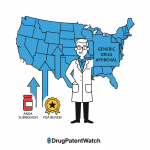
The Abbreviated New Drug Application pathway, created by the Hatch-Waxman Act of 1984, lets generic manufacturers obtain FDA approval without repeating the full Phase 1-3 clinical development program of the reference listed drug (RLD). The applicant must demonstrate pharmaceutical equivalence (same active ingredient, strength, dosage form, route of administration) and bioequivalence, establishing that the generic performs clinically like the RLD in the body.
Bioequivalence studies measure three primary pharmacokinetic parameters: maximum plasma concentration (Cmax), time to reach that maximum (Tmax), and area under the concentration-time curve (AUC), which represents total drug exposure. FDA’s standard requires that the 90% confidence interval for the geometric mean ratios of Cmax and AUC fall within 80-125% of the RLD values. For narrow therapeutic index (NTI) drugs such as warfarin, levothyroxine, or lithium, FDA applies tighter standards, typically requiring a 90-111.11% CI, because small deviations in bioavailability carry clinically significant consequences.
The ANDA process also includes a patent certification requirement. When submitting an ANDA for a drug whose RLD has patents listed in the Orange Book, the applicant must submit one of four certifications. A Paragraph I certification states no patents are listed. Paragraph II covers patents that have already expired. Paragraph III covers patents the applicant agrees to wait out. A Paragraph IV certification asserts that the listed patent is invalid, unenforceable, or will not be infringed by the generic. Paragraph IV is the primary mechanism for challenging brand drug patent protection, and it triggers a 30-month stay on FDA approval while litigation proceeds.
The first generic applicant to file a Paragraph IV certification receives 180 days of market exclusivity upon approval, before any subsequent generic can launch. This 180-day exclusivity is the single most valuable short-term commercial asset in generic drug development. The present value of that exclusivity on a high-revenue RLD can range from $50 million to well over $1 billion, depending on the branded product’s annual U.S. sales.
Market Scale and the Patent Cliff Dynamic
Generic drugs fill approximately 90% of U.S. prescriptions while accounting for roughly 22% of total drug spending, a gap that reflects their structural role as the cost-containment mechanism of the U.S. healthcare system. Annual savings attributable to generics routinely exceed $300 billion across public and private payers combined.
The global generic drug market was valued at approximately $478 billion in 2023 and is projected to reach $655 billion by 2028, driven primarily by patent expirations on high-revenue branded products and biosimilar uptake. The near-term pipeline is substantial: drugs generating combined annual revenues exceeding $200 billion face patent cliffs through 2030, including blockbuster biologics now entering the biosimilar competition window.
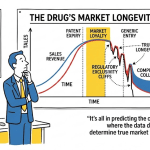
For portfolio managers, the patent cliff is not simply a date on a calendar. The actual generic entry timeline reflects the layering of composition-of-matter patent expiration, formulation and method-of-use patent protection, regulatory exclusivities (NCE exclusivity, orphan designation, pediatric extensions), potential 30-month litigation stays from Paragraph IV challenges, and any authorized generic arrangement the innovator deploys to dilute the 180-day first-filer advantage. PAGs influence several of these layers directly, particularly by applying pressure on patent thicket strategies and publicly opposing pay-for-delay settlements.
Key Takeaways – Section III
ANDA filers face patent certification requirements that create litigation risk but also exclusivity upside: the 180-day first-filer period is the most commercially concentrated asset in generic development.
Narrow therapeutic index drugs require tighter bioequivalence CI standards (90-111.11%), raising the development hurdle but also limiting the number of credible generic competitors.
The $655 billion global generic market projection through 2028 is driven by patent cliffs and biosimilar uptake, both of which PAGs actively work to accelerate.
IV. Historical Arc: From HIV Activist Protests to Institutionalized Drug Policy Influence
The Origins: Self-Help Groups and the First Rights Frameworks
Organized patient advocacy in the U.S. traces to mutual aid societies of the 1940s and 1950s, disease-specific support organizations of the 1960s, and rights-based movements accelerated by the National Welfare Rights Organization in the 1970s. The legal architecture followed: the Civil Rights of Institutionalized Persons Act (CRIPA) in 1980, the Protection and Advocacy for Mentally Ill Individuals Act in 1986. These laws embedded the principle that patients have legally enforceable claims to representation, independent of the institutions serving them.
The concept of a ‘patient rights advocate’ as a formal role appeared in the literature in 1974. It took another decade before the pharmaceutical regulatory system began to accommodate that concept operationally.
HIV/AIDS Activism and the Regulatory Rewiring
The HIV/AIDS crisis of the 1980s and 1990s produced the most consequential patient-driven regulatory reform in FDA history. ACT UP and the Treatment Action Group did not simply lobby; they disrupted FDA meetings, published detailed critiques of clinical trial design, and forced the agency to justify its evidentiary standards in public. Their demands led directly to the creation of Expanded Access Programs, codification of compassionate use pathways, and the Accelerated Approval mechanism, which lets FDA approve drugs for serious conditions based on surrogate endpoints that are ‘reasonably likely’ to predict clinical benefit, with confirmatory trials required post-approval.
For the generic drug sector, the long-run consequence was structural: these reforms established the precedent that regulatory pathways are not fixed, that patient experience constitutes legitimate scientific input, and that organized advocacy can rewrite the rules. Every subsequent PAG effort to influence ANDA review timelines, FDA’s Complex Drug Substance guidance, or biosimilar interchangeability policy inherits this precedent.
The Orphan Drug Act and the Rare Disease Playbook
Rare disease advocates, working through organizations like NORD, secured passage of the Orphan Drug Act in 1983. The Act provided tax credits for clinical research costs, a 50% credit later reduced to 25% under the Tax Cuts and Jobs Act, along with seven years of market exclusivity for drugs targeting conditions affecting fewer than 200,000 people in the U.S. and expedited FDA review.
The commercial consequences were dramatic and, from a market access standpoint, sometimes problematic. Orphan exclusivity became a lifecycle management tool, with manufacturers seeking orphan designations for rare subpopulations of larger conditions to extend effective market protection beyond primary composition-of-matter patent expiration. PAGs have since divided on this issue: some rare disease groups defend orphan exclusivity as essential to development economics, while broader access-focused coalitions flag it as an evergreening mechanism that delays affordable alternatives.
Key Takeaways – Section IV
HIV/AIDS advocacy established the template for all subsequent patient-driven regulatory reform, including biosimilar policy.
The Orphan Drug Act’s seven-year exclusivity has been used as an evergreening tool, creating a fault line within the PAG community between rare disease organizations and price-reform advocates.
NORD’s formal MOU with FDA, which enables Patient Listening Sessions on rare disease regulatory questions, is a structural model other PAGs seek to replicate.
V. Hatch-Waxman at 40: The Legislative Architecture PAGs Now Operate Within
The 1984 Act and Its Immediate Market Effects
The Drug Price Competition and Patent Term Restoration Act of 1984 created the modern generic pharmaceutical industry. Before Hatch-Waxman, generic manufacturers needed to conduct full safety and efficacy studies to get approval, essentially the same burden as the innovator. The Act introduced the ANDA pathway, enabling approval through bioequivalence demonstration alone.
The market response was immediate. Generic prescription share rose from 18% in 1984 to 63% by 2007, reaching approximately 69% by 2010 and holding near 90% of all dispensed prescriptions (by volume) today. The economic transfer from branded to generic spending represents one of the largest sustained cost-reduction programs in U.S. healthcare history.
Hatch-Waxman also granted innovators a patent term restoration mechanism, compensating for time lost during FDA review, up to five additional years but not extending the total post-approval patent term beyond 14 years. This balance between generic access and innovator incentives is the axis around which nearly all subsequent PAG advocacy has turned.
The Medicare Modernization Act (2003) and ANDA Reform
The Medicare Modernization Act of 2003 amended several Hatch-Waxman provisions that brand manufacturers had used to extend 30-month stays on generic approval. Under the original statute, a branded company could trigger a new 30-month stay each time it listed a new patent in the Orange Book, even if the new listing occurred after the generic filed its ANDA. The MMA limited this to a single 30-month stay per ANDA, representing a direct win for generic manufacturers and the PAGs aligned with access advocacy.
The 2017 FDA Drug Competition Action Plan and the 2018 Competitive Generic Therapy (CGT) pathway extended the reform agenda further, prioritizing review of ANDAs for drugs with limited or no generic competition. CGT applicants receive a 180-day exclusivity period analogous to the Paragraph IV first-filer reward, creating a targeted incentive for generic entry where market dynamics had failed to attract competition.
Orange Book Patent Listing Integrity
The Orange Book, formally the Approved Drug Products with Therapeutic Equivalence Evaluations, lists patents that a brand manufacturer certifies as covering either the drug substance, drug product, or an approved method of use. Inaccurate or improper listings directly delay generic entry by triggering 30-month stays on invalid or inapplicable patent grounds.
The FTC’s December 2023 enforcement actions against several major pharmaceutical companies for improper Orange Book listings marked an escalation in regulatory scrutiny of this practice. PAGs including Generation Patient have been vocal in supporting FTC authority to challenge these listings, framing it as an access issue rather than a purely antitrust matter. For ANDA filers, PAG pressure on Orange Book integrity reduces the litigation risk premium embedded in 30-month stays.
Key Takeaways – Section V
Hatch-Waxman’s 180-day first-filer exclusivity is the primary commercial incentive driving Paragraph IV challenges. Its present value on high-revenue RLDs can exceed $1 billion.
The MMA’s single 30-month stay limit eliminated a significant brand-side delay tactic. PAGs lobbied in support of this change.
FTC enforcement on improper Orange Book listings is an ongoing risk for branded manufacturers and a direct benefit for ANDA filers; PAG advocacy is structurally aligned with the enforcement agenda.
VI. PAGs in the ANDA Pipeline: Research Prioritization, Trial Design, and Regulatory Engagement
Directing Research Toward Unmet Need: The Funding and Priority-Setting Role
PAGs shape which drugs get developed by funding research and by publicly identifying unmet needs that regulators and manufacturers track. In rare disease, the effect is most visible: conditions with organized patient communities attract FDA breakthrough therapy designations, orphan designations, and academic attention at disproportionate rates relative to prevalence alone.
For generic drug development specifically, PAG influence on research prioritization operates at two levels. The first is downstream pressure: when a PAG publicly identifies a high-cost branded drug as a priority access concern, it signals to generic manufacturers that regulatory and payer support for a generic entry is likely. The second is upstream signal: PAGs sometimes commission or fund comparative effectiveness research that documents the cost burden of branded drugs, providing the evidentiary foundation for payer policies favoring generic substitution.
The AAM’s annual savings report, documenting generic drug cost savings by therapeutic area, draws on data that PAGs and payer coalitions have helped compile and publicize. When that report shows $300+ billion in annual savings, it is simultaneously a market development argument for generic manufacturers and a policy advocacy tool for access-focused PAGs.
Clinical Trial Design: Patient-Reported Outcomes and Protocol Feasibility
PAGs have moved from reactive review to proactive co-design in clinical trials. The shift matters for bioequivalence study design in ways that are underappreciated. While standard ANDA bioequivalence studies focus on pharmacokinetic endpoints (Cmax, AUC, Tmax) in healthy volunteers, complex generics, including locally-acting drug products, inhaled corticosteroids, topical formulations, and transdermal delivery systems, require additional clinical endpoint studies where patient-reported outcomes matter directly.
FDA’s Complex Drug Substance and Complex Drug Product guidances have expanded the set of products requiring clinical endpoint BE studies rather than PK studies alone. For these products, PAG input on which endpoints patients consider meaningful, what administration burden is acceptable, and how symptoms map to quality of life can substantively influence study design and FDA’s willingness to accept the protocol.
CTTI recommendations on patient group engagement in trial design represent best-practice consensus. They call for PAG involvement at protocol inception, not after the fact, and for sponsor organizations to establish written engagement plans specifying the scope, methods, and decision-making authority of patient contributors.
FDA Regulatory Partnerships: PEC, NORD MOU, and the EMA Collaboration
FDA’s Patient Engagement Collaborative (PEC) operates as a standing forum for patient organization representatives to discuss how patient perspectives inform medical product development and regulatory decisions. The PEC includes representatives from disease-specific organizations, patient advocacy coalitions, and cross-disease groups, meeting quarterly and providing input on FDA guidance documents and policy development.
The FDA-NORD Memorandum of Understanding provides a more specific mechanism: Patient Listening Sessions for rare disease conditions, which feed directly into FDA’s clinical and regulatory understanding of disease burden and unmet need. These sessions are not advisory in the formal sense, but their documentation influences the benefit-risk framework FDA applies to both novel drug applications and, in some cases, ANDA review of complex products targeting rare conditions.
The FDA/EMA Patient Engagement Cluster, a bilateral collaboration between the two agencies, shares methodologies for patient involvement across the drug development lifecycle. Standardized approaches to patient preference studies, real-world evidence integration, and benefit-risk communication are the active workstreams. For global generic manufacturers operating in both U.S. and EU markets, this convergence reduces the regulatory translation burden when patient engagement data generated in one jurisdiction supports applications in the other.
Post-Market Surveillance: FAERS, MedWatch, and PAG Engagement
FDA’s post-market safety monitoring for approved drugs relies heavily on voluntary adverse event reporting through MedWatch and the FDA Adverse Event Reporting System (FAERS). For generic drugs, post-market surveillance takes on an additional dimension: reports of therapeutic inequivalence, where a patient experiences a different clinical effect after switching from brand to generic or between generic manufacturers, even when pharmaceutical equivalence and bioequivalence are established.
PAGs contribute to this surveillance function indirectly. By educating patients about the MedWatch system and encouraging reporting of adverse experiences, including perceived differences in effectiveness after product switches, PAGs expand the sensitivity of post-market signal detection. This is consequential for NTI drugs in particular, where inter-individual variability in absorption and the tight therapeutic window mean that even within-standard bioequivalence parameters, a small fraction of patients may experience subtherapeutic or supratherapeutic effects after switching.
For generic manufacturers, PAG-educated patients who report switch-related adverse events create regulatory risk. FDA’s response to clustering FAERS reports around a specific generic manufacturer or formulation can range from a labeling update to a recall. Risk management strategies for NTI generics should account for PAG-driven increases in patient reporting rates.
Key Takeaways – Section VI
PAG influence on FDA regulatory engagement is structural, not episodic, through the PEC, NORD MOU, and FDA/EMA cluster mechanisms.
For complex generics requiring clinical endpoint BE studies, PAG input on patient-relevant outcomes can shape protocol design and FDA guidance compliance.
Post-market FAERS reporting is amplified when PAGs educate patients about MedWatch, creating additional pharmacovigilance risk for generic manufacturers of NTI drugs.
VII. Patent Thickets, Pay-for-Delay, and the Advocacy War on Anti-Competitive IP Tactics
The Patent Thicket Mechanism: How Branded Manufacturers Build Walls
A patent thicket is a dense cluster of overlapping patents covering a single drug product, collectively extending market exclusivity well beyond the primary composition-of-matter patent. The strategy exploits the Orange Book listing system: any patent that meets FDA’s criteria for listing can trigger a 30-month stay against ANDA approval, even if that patent covers a minor formulation variant, a manufacturing process detail, or a method of use applicable to only a small patient subset.
AbbVie’s protection of Humira (adalimumab) is the most documented example. By 2023, AbbVie had accumulated over 250 patents on Humira, including formulation patents, device patents for the autoinjector, and method-of-use patents for specific dosing regimens. While the primary composition-of-matter patent expired in 2016, the thicket delayed biosimilar competition in the U.S. until January 2023, seven years later, generating an estimated $150+ billion in additional U.S. revenues during that window. No single biosimilar entrant had the litigation resources to challenge the full thicket simultaneously.
For small molecules, thicket construction relies on the same core tools: filing continuation applications to generate new claims on formulations, polymorphs, enantiomers (chiral switching), or delivery mechanisms; listing those patents in the Orange Book; and using the resulting 30-month stay rights to extend effective market exclusivity on each successive ANDA challenge.
Evergreening Tactics: A Technical Roadmap
Evergreening encompasses a range of IP lifecycle management strategies that branded manufacturers use to extend commercial exclusivity beyond primary patent protection. For pharma IP teams evaluating competitive exposure and for generic manufacturers assessing ANDA timing, understanding the specific mechanisms is operational, not academic.
Polymorph patents protect specific crystal forms of an active pharmaceutical ingredient. Because the bioavailability of a drug can vary by polymorph, a manufacturer who patents the commercially relevant polymorph can challenge generic products that may inadvertently or intentionally use the same form. AstraZeneca’s esomeprazole (Nexium) polymorph patents, challenged in Paragraph IV litigation by Ranbaxy and others, represent a canonical case study.
Prodrug and active metabolite patents cover chemically modified versions of the original molecule that convert to the active form in the body. Because a prodrug technically has a different chemical structure than the parent compound, it can receive a new composition-of-matter patent. Fexofenadine (Allegra), the active metabolite of terfenadine, followed this path.
Pediatric exclusivity, granted under FDCA § 505A for completing FDA-requested pediatric studies, adds six months to all patent and exclusivity protections on an RLD, regardless of whether the drug is actually used in children in practice. While the public health rationale is legitimate, the mechanism effectively extends exclusivity on any drug for which FDA issues a Written Request for pediatric studies, creating an incentive for manufacturers to complete those studies regardless of therapeutic need.
Method-of-use patents cover specific dosing regimens, patient populations, or treatment protocols. A generic manufacturer can carve out (i.e., omit) the patented indication from its labeling under a ‘skinny label’ strategy, but the remaining label must not be so narrow as to eliminate commercial viability.
PAGs have identified these tactics as the primary mechanisms by which drug prices remain elevated long after primary patent protection should logically have expired. Generation Patient’s endorsement of the ETHIC Act targets the Orange Book listing mechanism specifically. The Stop STALLING Act, supported by multiple access-focused PAGs, gives FTC authority to treat product hopping (switching the market to a slightly modified product with later-expiring patents before generics enter) as an unfair competitive practice.
Pay-for-Delay: The Settlement Structure and Its Consequences
A reverse payment settlement, colloquially called pay-for-delay, is a patent litigation settlement in which the branded manufacturer pays the generic Paragraph IV filer to drop its challenge and delay market entry. The payment can take the form of cash, a no-authorized-generic agreement (itself commercially valuable to the filer), or a side-deal involving unrelated business.
The Supreme Court’s 2013 FTC v. Actavis decision held that reverse payment settlements are subject to antitrust scrutiny under the rule of reason, rejecting the brand’s argument that settlements within the scope of the patent are presumptively lawful. The decision opened pay-for-delay agreements to FTC challenge, and subsequent enforcement actions have reduced (though not eliminated) the practice.
For PAGs, pay-for-delay is a straightforward access problem. When the first-filer generic, the entrant with 180-day exclusivity, is paid to wait, all other generic entrants also wait. The branded price holds. Patients pay full price. The FTC’s continued enforcement priority on pay-for-delay aligns with PAG advocacy, and PAG amicus briefs in related antitrust cases have reinforced the public health framing that courts consider in rule-of-reason analysis.
Key Takeaways – Section VII
Patent thicket construction is systematic and well-documented. AbbVie’s Humira portfolio (250+ patents, 7-year biosimilar delay) is the benchmark case for IP counsel evaluating defensive strategy and for biosimilar manufacturers assessing litigation cost.
Evergreening tools (polymorph patents, prodrug patents, pediatric exclusivity, method-of-use patents, skinny label constraints) each require distinct countermeasures in ANDA and biosimilar strategy.
Pay-for-delay settlements remain legally viable post-Actavis but face heightened FTC scrutiny. No-authorized-generic agreements as settlement currency have replaced cash payments in many recent deals.
VIII. IP Valuation as a Core Asset: How Patent Intelligence Shapes Advocacy Strategy
Drug Patent IP Valuation: The Methodology
For a branded pharmaceutical product, the patent portfolio is the primary commercial asset. Revenue streams beyond the primary composition-of-matter patent expiry depend entirely on the strength, scope, and enforceability of secondary patents in the thicket. Valuing those assets requires modeling the probability that each patent survives Paragraph IV challenge, the potential damages from infringement if it does, and the competitive dynamics that emerge if it does not.
Standard IP valuation methodologies applied to pharmaceutical patents include the income approach, which discounts projected future cash flows from protected sales at a risk-adjusted rate that accounts for patent challenge probability, litigation duration, and FTC intervention risk; the market approach, which compares the patent portfolio to comparable licenses or acquisition transactions; and the cost approach, which estimates replacement cost but is rarely used for pharmaceutical IP because the R&D costs of recreating a specific molecule provide a floor, not a market value.
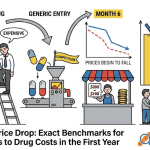
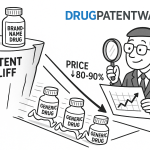
For generic ANDA filers, IP valuation runs in reverse. The question is not what the patent portfolio is worth to the brand, but what the expected value of a successful Paragraph IV challenge is to the generic. That calculation requires: the annual branded revenue subject to generic competition, the expected price erosion curve post-launch (typically 80-90% price reduction within 12-18 months of multi-source generic entry), the probability of prevailing in district court litigation (historically around 50-60% for ANDA Paragraph IV challengers), the 180-day exclusivity period value if the filer is the first, and the litigation cost, which routinely runs $5-15 million per district court case and substantially more through appeal.
PAGs do not conduct these valuations themselves, but patent intelligence platforms, including DrugPatentWatch, IQVIA’s ARK Patent Intelligence tool, and IPD Analytics, publish Orange Book data, litigation outcomes, and generic entry timelines in forms that PAG research and policy staff use when building legislative arguments. When P4AD testifies that a specific drug’s patent portfolio is blocking affordable generics despite expired composition-of-matter protection, they are drawing on exactly this type of IP landscape analysis.
How PAGs Read the Patent Landscape
The Orange Book is a public document. PAG policy teams at organizations like P4AD and Generation Patient have developed internal capacity to read patent expiry dates, identify continuation application clusters, and map the gap between the last listed patent expiry date and the likely real-world generic entry date. This gap, which can run five to ten years on heavily protected products, is the central target of PAG legislative advocacy.
When PAG analysts identify a product with a composition-of-matter patent that expired years ago but secondary patents listed in the Orange Book extending to dates a decade out, they flag the product for targeted advocacy: public campaigns naming the manufacturer, Congressional testimony citing the specific patent numbers and their expiry dates, and FTC complaint letters documenting the competitive effect.
DrugPatentWatch data is routinely cited in these advocacy contexts. IQVIA patent data appears in peer-reviewed health economics literature that PAGs commission or co-fund to support their legislative positions. The sophistication of PAG patent intelligence has increased substantially over the past decade, making them credible counterparties in policy discussions that previously excluded them.
Investment Strategy Note – Section VIII
Portfolio managers assessing branded pharmaceutical companies should track PAG-generated IP threat signals alongside standard patent expiry data. A PAG-led public campaign targeting a specific product’s secondary patent portfolio is an early indicator of accelerated generic entry risk, often preceding formal FTC action or successful Paragraph IV litigation by 12-24 months. Companies with concentrated revenue in products that PAGs are actively targeting face a compressed timeline for generic competition that standard patent cliff models may underestimate.
IX. Biosimilar Interchangeability: The Next Advocacy Frontier
The Regulatory Framework for Biosimilar Approval and Interchangeability
Biosimilars are approved under the Biologics Price Competition and Innovation Act of 2009 (BPCIA), which created the 351(k) pathway, the biologic equivalent of the ANDA. A 351(k) applicant must demonstrate that its product is ‘highly similar’ to the reference product, with no clinically meaningful differences in safety, purity, or potency. The scientific standard is more demanding than small-molecule bioequivalence because biologics are large, structurally complex molecules (monoclonal antibodies, fusion proteins, glycoproteins) whose manufacturing process cannot be fully replicated, making them inherently more variable than chemically synthesized small molecules.
An additional designation, ‘interchangeable,’ requires demonstrating that the biosimilar can be expected to produce the same clinical result as the reference product in any given patient, and for products administered more than once, that alternating or switching between the biosimilar and the reference product does not present greater safety or efficacy risk than using the reference product alone. An interchangeable biosimilar may be substituted for the reference product at the pharmacy level without physician intervention, subject to state substitution laws, analogous to automatic generic substitution for small molecules.
The interchangeable designation has been the subject of sustained PAG and industry advocacy. As of 2025, FDA has granted interchangeable status to a small subset of approved biosimilars, including Cyltezo (adalimumab-adbm, Boehringer Ingelheim), interchangeable with Humira; Semglee (insulin glargine-yfgn, Viatris/Biocon), interchangeable with Lantus; and Cimerli (ranibizumab-eqrn, Coherus), interchangeable with Lucentis.
The Biosimilar Red Tape Elimination Act and PAG Support
The Biosimilar Red Tape Elimination Act, introduced in Congress, would remove the formal distinction between biosimilar and interchangeable biosimilar, treating all FDA-approved biosimilars as automatically substitutable at the pharmacy. The Association for Accessible Medicines’ Biosimilars Council, along with multiple patient advocacy organizations, has submitted joint letters supporting the legislation.
The argument from the access side is empirical: real-world evidence from European markets, where biosimilar substitution has operated without a formal interchangeability designation for over a decade, shows no material increase in immunogenicity, adverse events, or loss of efficacy associated with non-medical switching. The European biosimilar market achieved penetration rates exceeding 80% in some therapeutic areas well before the U.S. reached 30% in comparable categories.
For branded biologic manufacturers, the interchangeability distinction has functioned as a meaningful market protection mechanism. Once eliminated, the competitive dynamics for reference products change materially: formulary managers gain authority to substitute biosimilars without prior authorization workflows, PBMs can steer toward biosimilars at point-of-dispensing, and the revenue premium that reference products currently capture from interchangeability uncertainty narrows rapidly.
BPCIA ‘Patent Dance’ and Litigation Strategy
The BPCIA established a structured patent dispute resolution process, informally called the ‘patent dance,’ requiring the biosimilar applicant to disclose its application and manufacturing information to the reference product sponsor, allowing the parties to identify and negotiate which patents will be litigated before market entry. Unlike Hatch-Waxman, where Paragraph IV triggers automatic 30-month stays, BPCIA litigation does not automatically delay biosimilar approval. The applicant can opt out of portions of the patent dance, as the Supreme Court clarified in Sandoz v. Amgen (2017), accepting a narrower disclosure obligation.
PAGs have not engaged directly with BPCIA patent dance mechanics in the way they have with Orange Book reform. The litigation is sufficiently technical and bilateral that PAG intervention is less tractable. The downstream advocacy target, pushing for interchangeability rule changes and biosimilar formulary parity, has more direct patient impact.
Key Takeaways – Section IX
The Biosimilar Red Tape Elimination Act, if passed, eliminates the interchangeability designation as a competitive moat for reference biologic manufacturers.
European real-world evidence on non-medical biosimilar switching shows no clinically meaningful safety signal, providing the evidentiary foundation PAGs use to support automatic substitution policy.
For reference biologic portfolio managers, PAG-backed interchangeability reform is a material revenue risk that accelerates competitive exposure beyond what standard biosimilar approval timelines predict.
X. Data Exclusivity, TRIPS, and the Global Access Debate
U.S. Data Exclusivity Periods: The Current Structure
Data exclusivity protects the clinical trial data submitted with an NDA or BLA from being referenced by a generic or biosimilar applicant for a fixed period, independent of patent protection. The U.S. framework provides five years of NCE exclusivity for new chemical entities (three years for new clinical studies supporting a change to an approved drug), seven years for orphan-designated drugs, and twelve years for reference biologics under BPCIA.
Data exclusivity and patent protection are legally independent. A drug can have an expired composition-of-matter patent but active data exclusivity, or active patents with no remaining data exclusivity. In practice, for many products, data exclusivity is the binding constraint on generic entry in the first few years after approval, while later patent protection takes over.
The 12-year biologic exclusivity period is the most contentious element of the current framework. P4AD and academic health law scholars, citing analysis from WVU and other institutions, argue the period should be reduced to five years, consistent with small-molecule NCE exclusivity, on the grounds that biologics already generate substantial revenue before the exclusivity clock even starts, that their patent portfolios are generally stronger than small molecules, and that the 12-year period was not derived from empirical data on development cost recovery but from a legislative negotiation compromise.
Proponents of the 12-year period, including the Biotechnology Innovation Organization (BIO) and branded biologic manufacturers, argue that the higher development costs, longer timelines, and greater clinical failure rates for biologics justify the extended exclusivity runway.
The IRA’s drug price negotiation provisions, which CMS began implementing in 2024, exempt small-molecule drugs from negotiation eligibility for nine years post-approval and biologics for thirteen years, implicitly tracking the exclusivity framework. PAGs that supported the IRA generally accepted this structure as a compromise; P4AD continues to advocate for reducing the biologic exclusivity floor.
Adaptive Exclusivity Proposals
Several health law scholars and PAG-adjacent policy organizations have proposed adaptive exclusivity frameworks that link protection duration to real-world therapeutic value rather than applying fixed periods uniformly. Under these proposals, a drug demonstrating significant real-world advantages in comparative effectiveness research could qualify for extended exclusivity, while drugs with modest clinical differentiation or declining marginal utility relative to existing alternatives would face shorter protection.
The administrative challenge is substantial: defining real-world therapeutic value in a way that is legally stable, resistant to gaming, and operationally feasible within FDA’s existing frameworks requires either new legislative authority or a significant expansion of CMS and FDA’s comparative effectiveness infrastructure. No adaptive exclusivity proposal has advanced to legislation as of 2026, but the concept has moved from academic discussion into PAG policy platforms, including through P4AD’s published reform agenda.
TRIPS and the Doha Declaration: Global Access Implications
The Agreement on Trade-Related Aspects of Intellectual Property Rights (TRIPS), administered through the WTO, sets minimum standards for pharmaceutical patent protection that member countries must provide. TRIPS Article 27 requires patentability for inventions in all fields of technology, including pharmaceuticals, with a 20-year patent term from filing. For developing countries that lacked pharmaceutical patent systems before TRIPS, the transition periods ended in 2005 for most middle-income countries, effectively forcing implementation of product patents for drugs where previously only process patents (or no patents) existed.
The consequence was immediate for generic manufacturing in countries like India and Brazil. Compulsory licensing, authorized under TRIPS Article 31, allows a government to permit manufacture or import of a patented drug without the patent holder’s consent under defined circumstances, including national emergencies and public health crises. The Doha Declaration on TRIPS and Public Health (2001) clarified that member states have the right to grant compulsory licenses and to define national emergencies broadly, rejecting pharmaceutical industry arguments that TRIPS constrained this flexibility.
PAGs and public health advocacy organizations were central to the Doha negotiations and continue to monitor implementation. The practical importance has shifted as Indian generic manufacturers gained global scale: the availability of Indian-manufactured generics through voluntary licensing agreements (with branded manufacturers) and through direct government procurement programs in low- and middle-income countries has become a more reliable access mechanism than compulsory licensing in most cases. Compulsory licensing remains a backstop for products not covered by voluntary licenses, including newer antivirals and certain oncology drugs where voluntary access programs are limited.
Key Takeaways – Section X
The 12-year biologic data exclusivity period is the primary PAG policy target in the U.S. Reduction to five years is the advocacy goal; the IRA’s 13-year negotiation exemption for biologics represents a near-miss from the access perspective.
Adaptive exclusivity frameworks linking protection duration to real-world therapeutic value remain a policy idea without legislative vehicle as of 2026.
Doha Declaration compulsory licensing rights remain relevant for specific newer products in LMICs, particularly where voluntary licensing programs exclude certain markets or product categories.
XI. The Funding Problem: Pharma Money, PAG Independence, and Structural Conflicts of Interest
The Scale of Industry Funding
The financial relationship between pharmaceutical manufacturers and patient advocacy organizations is extensive and, in the U.S., inadequately disclosed relative to European standards. A multi-country study published through Johns Hopkins found that U.S. PAGs received the majority of pharmaceutical industry donations across the countries examined. Disclosed amounts vary dramatically by organization size and therapeutic focus.
The NAMI case remains the most cited benchmark for conflict-of-interest analysis: the organization received $45 million from major pharmaceutical companies between 1996 and 2008. A subsequent U.S. Senate investigation concluded that the funding influenced NAMI’s public positions on antipsychotic drug policy, including aggressive lobbying for newer, branded antipsychotics despite evidence that older generic alternatives were comparably effective and substantially cheaper.
The structural problem is not that individual PAG staff are corrupt. It is that organizations develop funding relationships that shape hiring, programmatic priorities, communication strategies, and public positions over time, often without explicit coordination. A PAG that derives 60% of its operating budget from manufacturers of branded products has structural incentives that run counter to advocating aggressively for generic substitution or patent reform affecting those products.
The Disclosure Gap
The U.S. has no uniform federal disclosure requirement for PAG receipt of pharmaceutical industry funding. Several European countries require PAGs receiving industry funds to disclose those relationships in public communications and regulatory submissions. The EMA requests disclosure from patient organization representatives participating in scientific advice and CHMP meetings. FDA’s PEC does not currently have an equivalent mandatory disclosure standard for participating organizations.
Voluntary disclosure frameworks, like IFPMA’s guidelines for patient and patient organization interactions, recommend that companies avoid being the sole or majority funder of any PAG, require written agreements specifying the terms of support, and disclose funding relationships in materials produced with industry support. Implementation is uneven.
For pharma IP and regulatory affairs teams, the risk runs in both directions. A PAG that receives funding from a branded manufacturer and then submits comments opposing a specific ANDA creates appearance-of-conflict problems that can undermine the comment’s persuasive weight with FDA. A PAG that receives funding and then publicly endorses policies favorable to that manufacturer creates the NAMI problem.
Managing Conflicts: What Actual Best Practice Looks Like
CTTI’s Recommendations on Patient Group Engagement specify several practices that represent operational best practice. Written engagement agreements should define scope, compensation, intellectual property ownership, and the PAG’s right to participate independently in any public process related to the disease area. A company should not retain rights over a patient’s life story or over educational materials developed by the PAG for patient use. The PAG should retain the right to participate in regulatory proceedings, make public statements, and develop policy positions independently of the sponsor relationship.
Diversified funding is the most reliable structural protection. A PAG that draws from government grants (NIH, PCORI), foundation support, individual donors, and multiple industry sponsors is substantially more resistant to any single funder’s implicit pressure than one that relies on a primary industry source.
Patient Advocate Foundation’s publicly stated conflicts-of-interest policy, which requires individual board and staff disclosure and recusal, is an organizational model. The policy is publicly accessible and creates accountability at the individual level rather than only at the organizational level.
Key Takeaways – Section XI
The NAMI benchmark ($45 million, Senate investigation, documented policy influence) is the reference case for evaluating PAG funding conflict risk.
No uniform U.S. federal disclosure requirement exists for PAG pharmaceutical funding. European standards are more rigorous.
Written engagement agreements covering IP ownership, publication rights, and independent participation are necessary (not sufficient) safeguards against conflict problems.
XII. Operational Realities: What PAG-Pharma Partnerships Look Like on the Ground
What Works and What Breaks Down
The PMLive analysis of PAG-pharma relationships documented several persistent operational problems that pharma IP and market access teams need to understand, because they affect partnership reliability and ultimately the strategic value of PAG engagement.
Inconsistent follow-up after patient contributions to advisory processes is the most common complaint from PAG representatives. When pharma companies commission PAG input on trial design, label comprehension, or patient preference studies and then fail to communicate outcomes, whether those inputs were used, how the protocol changed, or why a project was discontinued, the relationship erodes. PAGs invest organizational capital and patient time in these processes; a one-way information flow is not a partnership.
Content ownership disputes are structurally predictable. When a pharma company co-develops patient education materials with a PAG, the materials may be subject to medical-legal review processes that the PAG cannot independently navigate. If the company then retains copyright to jointly developed materials, the PAG cannot freely use content it helped create in its own community outreach. Agreements should address this upfront, with PAGs retaining at minimum a royalty-free license to use materials for patient education purposes.
Short-term campaign orientation from pharma versus long-term sustainability focus from PAGs is a timing mismatch that becomes acute at product lifecycle transitions. When a branded product loses patent protection and faces generic competition, the manufacturer’s incentive to fund disease-area PAG activities drops. The PAG, however, continues serving a patient population whose numbers have not declined. Revenue withdrawal at the point of generic entry leaves PAGs structurally exposed and creates the appearance of funding conditionality even when no explicit condition was set.
High representative turnover on the pharma side compounds the relationship continuity problem. When a PAG has established working relationships with a company’s patient advocacy liaison team and those personnel rotate out, the institutional knowledge of the partnership, what commitments were made, what the PAG’s specific needs are, what data was shared, transfers imperfectly or not at all. Companies that treat PAG relationship management as a junior role with high turnover pay a long-run credibility cost.
The Novartis-SMA Case Study
Novartis’s collaboration with spinal muscular atrophy PAGs on the development and market access strategy for Zolgensma (onasemnogene abeparvovec) is cited by market access analysts as a model of structured PAG engagement. The drug, a one-time gene therapy approved by FDA in 2019 for children under two with SMA, was priced at $2.1 million, making it the most expensive drug ever approved at the time of launch.
PAG involvement was essential to the reimbursement strategy. SMA patient organizations had a decade of experience educating payers, neurologists, and health technology assessment bodies about the functional decline trajectory of untreated SMA and the cost burden of long-term supportive care. When Novartis needed to make the pharmacoeconomic case for a $2.1 million price tag, PAG-generated natural history data, caregiver burden studies, and quality-adjusted life year models developed in collaboration with the SMA community provided the evidentiary foundation. The outcome-based installment payment model that Novartis negotiated with CMS was itself informed by PAG input on what payment structures patients and families could realistically navigate.
The Zolgensma case illustrates both the value and the limits of PAG partnership. PAG engagement produced a reimbursement outcome that made the therapy accessible to more patients than a straight negotiation would have achieved. It also reinforced PAG dependence on a single manufacturer’s commercial success, creating the structural funding alignment problem that critics of industry-PAG relationships identify.
Key Takeaways – Section XII
Operational breakdowns (follow-up gaps, content ownership disputes, short-term campaign orientation, high turnover) are predictable and manageable through written agreements and senior relationship ownership.
The Novartis-SMA case demonstrates how PAG natural history data and patient burden evidence directly supports pharmacoeconomic arguments for reimbursement, creating commercial value that justifies sustained partnership investment.
Funding withdrawal at patent expiry is a structural conflict problem that well-governed PAGs address through diversified funding before the cliff arrives, not after.
XIII. Investment Strategy: What Generic and Biosimilar Portfolio Managers Need to Watch
PAG Signals as Leading Indicators of Market Events
For institutional investors and portfolio managers tracking pharmaceutical equities, PAG activity patterns provide early signals on several market events that are not well-captured by standard patent expiry databases or Wall Street sell-side analysis.
PAG-led patent reform advocacy targeting a specific product is a leading indicator of accelerated generic entry. When Generation Patient names a product in its ETHIC Act endorsement communications, or when P4AD launches a public campaign identifying specific Orange Book patents as blocking access, FTC and Congressional attention typically follows within 12-24 months. Branded manufacturers with concentrated revenue in those products face a compressed competition timeline relative to the patent cliff date implied by the Orange Book.
PAG support for biosimilar interchangeability legislation is a leading indicator of reference biologic revenue compression for Humira, Enbrel, Stelara, and Eylea biosimilar markets. The Biosimilar Red Tape Elimination Act advancing from introduction to committee vote, which PAG coalition support would accelerate, would materially change formulary substitution rates and the competitive economics for both entrants and reference product holders.
PAG engagement in FDA Patient Listening Sessions for a specific rare disease is a leading indicator of expedited review for treatments targeting that condition, including orphan generics and 505(b)(2) products that rely on existing safety data.
Valuing Patent Cliff Risk: Adjusting for PAG Pressure
Standard patent cliff models calculate revenue at risk by multiplying annual branded sales by the expected generic price erosion curve, discounted by litigation probability and timing. They generally do not incorporate PAG advocacy pressure as an input. That omission understates risk in several situations.
When a PAG publicly names a specific secondary patent as the primary obstacle to generic entry and supports FTC enforcement, the probability that FDA will face pressure to expedite ANDA review, and that courts will view the patent with heightened skepticism, increases. The litigation risk premium embedded in the generic filer’s Paragraph IV challenge calculus shifts favorably, accelerating the expected entry date.
When PAG advocacy produces Congressional hearings on a specific manufacturer’s pricing and patent practices, the reputational and regulatory risk to that manufacturer creates incentives for settlement on terms more favorable to the generic filer than litigation economics alone would predict.
Portfolio managers should incorporate a ‘PAG advocacy discount’ applied to secondary patent exclusivity periods for products that are active PAG campaign targets. A 10-20% reduction in the expected remaining exclusivity period on the most contested secondary patents provides a conservative adjustment that better reflects actual generic entry risk.
Biosimilar Portfolio Construction
For asset managers building biosimilar-exposed pharmaceutical equity portfolios, PAG advocacy on interchangeability reform represents the most significant near-term catalytic event. Biosimilar manufacturers with FDA-approved products lacking interchangeable status (the large majority of approved biosimilars) would see formulary access improvement immediately upon passage of legislation eliminating the distinction.
Reference product holders with concentrated revenue in products facing biosimilar competition, particularly adalimumab (Humira biosimilars), ustekinumab (Stelara biosimilars), and ranibizumab (Lucentis biosimilars), face accelerated price erosion under the interchangeability reform scenario. The market already prices some of this risk following the 2023 adalimumab biosimilar launches, but formulary substitution rates remain below European levels, and the interchangeability reform scenario represents additional downside to reference product revenue that sell-side consensus models typically underweight.
Key Takeaways – Section XIII
PAG campaign targeting of specific products is a 12-24 month leading indicator of FTC action and accelerated Paragraph IV litigation success probability.
Biosimilar interchangeability reform is the most significant near-term catalytic event for the biosimilar sector; PAG coalition support for the Biosimilar Red Tape Elimination Act should be tracked alongside Congressional sponsorship counts.
Standard patent cliff models do not incorporate PAG advocacy pressure as an input. A 10-20% discount on secondary patent exclusivity periods for actively targeted products provides a more accurate expected entry timeline.
XIV. Policy Recommendations
For Generic Manufacturers and ANDA Filers
Early and systematic PAG engagement on access-priority products reduces litigation friction and regulatory risk in ways that internal ANDA strategy alone cannot achieve. PAG public support for a Paragraph IV challenge does not change the legal outcome, but it shapes the regulatory and Congressional environment in which FTC enforcement decisions and FDA priority review allocations are made.
For ANDAs on NTI drugs where post-market patient reporting rates are elevated, proactively engaging with the PAGs serving those patient populations, with transparent information about bioequivalence study design and post-market safety monitoring protocols, reduces the probability that patient-reported adverse events after product switches trigger regulatory review.
For Branded Pharmaceutical Manufacturers
Patent thicket strategies that delay generic entry generate revenue in the short term and PAG-driven regulatory and political exposure in the medium term. For products where primary composition-of-matter patent protection has expired and secondary patents represent the primary exclusivity barrier, the risk-adjusted return on continued thicket defense should reflect the probability of FTC enforcement, court-granted preliminary injunctions against improper Orange Book listings, and Congressional legislative action. The calculus increasingly favors authorized generic strategies, accelerated voluntary licensing, or negotiated biosimilar entry timing agreements over full thicket defense.
PAG engagement programs that treat the relationship as a PR function rather than a strategic partnership are operationally fragile and generate the appearance-of-conflict problems that damage both parties. Senior relationship ownership, written agreements covering IP and content rights, multi-year funding commitments not tied to product-specific timelines, and consistent follow-up on patient input processes are the minimum requirements for a relationship that withstands public scrutiny.
For Policymakers
The current data exclusivity framework for biologics (12 years) lacks empirical grounding. The original 12-year figure was a legislative compromise, not a calculation based on development cost recovery analysis. A congressionally commissioned study on actual biologic development costs, average revenue at market approval, and expected exclusivity period needed to cover development expenditure at a defined rate of return would provide an evidence base for rationalized reform that the current debate lacks entirely.
Mandatory and standardized disclosure of pharmaceutical industry funding for PAGs, modeled on the European approach and administered through FDA’s PAG engagement programs (PEC and NORD MOU), would reduce the conflict-of-interest risk that currently undermines PAG credibility in regulatory proceedings where that credibility matters most.
The FTC’s authority to challenge improper Orange Book listings should be maintained and expanded. The December 2023 enforcement actions represent a model for ongoing monitoring that should be institutionalized with dedicated resources rather than conducted episodically.
XV. Conclusion
Patient advocacy groups are operating at every layer of the generic drug system, from the scientific inputs that shape bioequivalence study design for complex products to the legislative campaigns that determine how long branded manufacturers can block affordable alternatives. Their influence has grown from moral authority and political organizing into technical sophistication, with PAG policy staff who read Orange Book listings, commission health economics research, and engage FDA formal advisory processes on an institutional basis.
For pharma IP teams, portfolio managers, and R&D leads, the practical implications are clear. PAG campaign activity on specific products is a signal worth monitoring systematically, not just responding to when it arrives in a news cycle. PAG support for biosimilar interchangeability reform and data exclusivity reduction represents regulatory and legislative risk to reference product revenue that standard patent cliff models underestimate. And PAG engagement programs that are well-structured, transparent, and genuinely bilateral generate strategic value; programs designed to neutralize advocacy through financial dependency generate the NAMI problem.
The generic drug system saves over $300 billion annually for U.S. payers and patients. Patient advocacy organizations are one of the primary institutional forces keeping that system operating as Congress intended in 1984, and expanding it into the biologics era where the stakes are higher and the IP complexity is considerably greater.
Data sourced from FDA Orange Book, IQVIA, DrugPatentWatch, AAM, P4AD, Generation Patient, CTTI, IFPMA, and published academic literature. Patent valuations and market projections reflect analyst estimates and are not investment advice.