A deep-dive for pharma/biotech IP counsel, formulary directors, health economics leads, and institutional investors
The Scale of the Problem: Spending Data and Structural Diagnosis
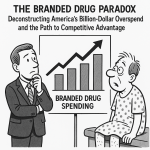
U.S. prescription drug expenditures hit $576.9 billion in 2021, a 7.7% year-over-year increase. Projections for 2022 put the growth rate at 4% to 6% for the overall market, with clinic-administered drugs — where high-cost specialty biologics are largely dispensed — expected to run 7% to 9% higher. These are not outlier years. The trajectory has been consistent for two decades, and it shows no structural inflection.
Pharmacy costs have expanded from 21% to 27% of total employer health benefit spending in roughly two years. No other category in the healthcare spend grows at that rate with that consistency. Between January 2022 and January 2023, nearly half of all drug price increases exceeded the general CPI rate, with an average price hike of 15.2%. Brand-name drugs in the U.S. cost, on average, more than three times what the same molecules sell for in comparable OECD nations. The American market is not simply the largest drug market in the world; it is the primary profit engine for every major global pharmaceutical company, and pricing in other countries is structurally subsidized by what U.S. payers absorb.
The human consequence is measurable and direct. Cost-driven non-adherence, particularly in chronic conditions like type 2 diabetes, heart failure, and asthma, produces a secondary wave of avoidable hospitalizations and complications that raises total system costs well above the drug spend it was supposed to avoid. Cutting the drug line in a per-member-per-month (PMPM) budget does not reduce total expenditure — it shifts costs downstream into acute care, often at a worse ratio.
The core structural problem is a mismatch between two economic models that now operate in the same marketplace. Managed care is built on predictable, population-averaged cost trends distributed across large member pools. Modern pharmaceutical pricing — particularly for biologics, specialty drugs, and curative gene therapies — is built on single-patient value arguments, monopoly rents protected by intellectual property, and launch prices that bear no relationship to manufacturing cost. These two models cannot coexist without sustained, escalating conflict. That conflict is now the defining feature of the U.S. drug market.
Key Takeaways: Scale and Structural Diagnosis
U.S. drug spending exceeded $576.9 billion in 2021 and continues to grow faster than every other component of the healthcare spend.
Brand-name drug prices in the U.S. average more than 3x the price in comparable countries, making the domestic market the primary global profit center for multinational pharma.
Cost-driven non-adherence in chronic disease generates downstream acute care costs that offset pharmacy budget savings, defeating the economic logic of pure cost-cutting.
The fundamental conflict is structural, not cyclical: the PMPM population model is architecturally incompatible with value-based, monopoly-supported pharmaceutical pricing.
The Managed Care Payment Architecture Under Stress
Managed care in the U.S. is not a single entity. Health Maintenance Organizations (HMOs), Preferred Provider Organizations (PPOs), Point of Service plans, and Exclusive Provider Organizations each operate under distinct rules around network access, referral requirements, and cost-sharing. What unites them is the capitation model.
Under capitation, a managed care organization (MCO) receives a fixed PMPM payment from an employer, Medicaid, or Medicare in exchange for bearing the full financial risk for that member’s care during the contract period. The MCO profits when total cost of care falls below aggregate PMPM receipts. It loses when it does not. HMOs control cost through tight network management and primary care gating; PPOs use financial incentives (differential cost-sharing) rather than hard network restrictions to nudge utilization toward lower-cost providers.
The pharmacy benefit sits at the center of this financial model in a way it did not twenty years ago. When pharmacy represented 10% to 15% of total health benefit spend, an MCO could manage it with a relatively straightforward formulary and generic substitution policy. At 27% of total spend — and rising — pharmacy is no longer a manageable line item. It is the primary driver of whether the MCO’s capitation model closes to a profit or a loss.
Gene therapy makes the dysfunction explicit. A single claim for onasemnogene abeparvovec (Zolgensma) at $2.125 million instantly exceeds the aggregate PMPM payments for thousands of members for an entire year. No actuarial model built around chronic-care averages can absorb that without distorting every other line in the budget. The MCO is caught between its contractual obligation to cover medically necessary care and a payment architecture that was not designed to function as a capital-expenditure vehicle for curative medicine.
Key Takeaways: Managed Care Architecture
The PMPM capitation model prices risk based on population averages. It has no internal mechanism to absorb six- or seven-figure individual claims without cross-subsidization from the rest of the member pool.
Pharmacy has grown from a manageable subset of health benefit cost to its dominant and fastest-growing component, fundamentally altering the financial calculus of every MCO contract.
Gene therapy and one-time curative treatments expose a structural design flaw: the system reimburses ongoing chronic care effectively but cannot rationally finance durable cures under a year-to-year budgeting cycle.
The R&D Cost Stack: What Actually Drives Launch Prices
The pharmaceutical industry’s standard justification for high launch prices is the cost of R&D. The headline numbers are real: in 2019, the industry invested $83 billion in research and development, roughly ten times the inflation-adjusted spend of the 1980s. Average total development cost for a single approved drug, accounting for failure rates across the development pipeline and the cost of capital over a 10-to-12-year cycle, runs from just under $1 billion to well over $2 billion depending on therapeutic area and development complexity.
Clinical trials alone account for 60% to 70% of that total. Since 2020, the volume of registered clinical studies has risen by 50%, intensifying competition for qualified research sites and eligible patients and pushing per-patient trial costs higher. Phase III oncology trials for biomarker-defined subpopulations now routinely run into the hundreds of millions of dollars for relatively small patient cohorts.
Two important nuances are often left out of the industry’s cost-recovery argument. First, a material portion of the foundational basic science that enables drug discovery is publicly funded through the National Institutes of Health and analogous agencies in Europe and the UK. NIH funding de-risks the earliest, most speculative stages of target identification and lead compound discovery. This public subsidy is not reflected in the final launch price.
Second, and more important for strategic analysis: the rising R&D cost figure is not an exogenous inflationary pressure the industry is absorbing. It is the direct output of a deliberate portfolio strategy. The blockbuster model of the 1990s, built around high-volume, low-margin small molecules for mass-market conditions, has been replaced by a high-margin, specialty-focused model that targets narrow patient populations defined by genetic biomarkers and rare disease classifications. As of 2022, more than half of all active oncology trials targeted a biomarker-defined subpopulation.
When you spend $2 billion developing a drug that only 8,000 patients per year will use, the math of price-per-patient pushes launch prices toward six figures almost automatically, before any consideration of market power or IP-protected monopoly. The R&D cost argument is not a fabrication; it is a partial truth that omits the fact that the industry chose the portfolio strategy that makes those high per-patient costs inevitable.
IP Valuation Context: Why R&D Spend Is Also IP Spend
For pharma IP teams and institutional investors, the R&D line on an income statement is functionally an IP creation budget. Each dollar of R&D that produces a new chemical entity or biologic with a strong patent position generates an intangible asset: a time-limited monopoly whose present value depends on the size of the addressable market, the strength of the patent estate surrounding it, and the credibility of the clinical data supporting its reimbursement position.
Industry analysts typically value a drug’s IP asset using risk-adjusted net present value (rNPV) modeling, which discounts projected cash flows by the probability of each development and regulatory milestone, then applies a cost-of-capital discount rate. A compound in Phase II oncology with a clean composition-of-matter patent, a plausible biomarker-defined subpopulation, and accelerated approval eligibility might carry an rNPV of $500 million to $1.5 billion, depending on competitive dynamics. That same compound with a cluttered patent position, a genericizable small-molecule scaffold, and a large unmet-need market with multiple competitors enters a materially different risk-adjusted valuation.
For investors, the critical insight is that the published R&D budget does not tell you which portion of that spend is creating durable IP assets versus burning capital on late-stage failures. Pipeline productivity metrics, patent grant rates, and Freedom-to-Operate (FTO) analysis are the instruments for separating productive IP creation from write-offs in progress.
Key Takeaways: R&D Cost Stack
The $1 billion-plus average drug development cost is real but incomplete: it omits the public subsidy embedded in NIH-funded basic science and the strategic choice that created high per-patient costs in the first place.
The industry’s shift to biomarker-defined subpopulations is a deliberate portfolio strategy, not an exogenous cost driver, and it directly produces the launch price levels that strain MCO budgets.
For IP and investment teams, R&D spend is IP creation spend. rNPV modeling, patent position quality, and FTO analysis are the correct tools for valuing the output.
The Patent Monopoly Engine: Evergreening, Patent Thickets, and the IP Valuation of Market Exclusivity
A U.S. patent grants a 20-year term from the date of filing. For pharmaceuticals, effective market exclusivity is typically shorter, because the patent is usually filed during preclinical development, years before FDA approval. The Hatch-Waxman Act created a mechanism to partially compensate for this through patent term extension (PTE), which can restore up to five years of patent life lost during FDA review, capped at 14 years of post-approval exclusivity. Separately, FDA regulatory exclusivity — distinct from patent protection — provides five years of data exclusivity for new chemical entities and three years for new clinical investigations supporting label changes.
This baseline framework incentivizes investment in genuinely novel drugs. It becomes problematic when brand manufacturers use it as a starting point for strategies designed to push effective monopoly well beyond the life of the composition-of-matter patent — the patent that actually covers the therapeutic molecule.
Evergreening: The Technology Roadmap
Evergreening is the practice of securing secondary patents on aspects of an existing drug to extend total IP protection beyond the primary patent term. The legitimate version of this practice protects genuine improvements: a new salt form with materially better bioavailability, a controlled-release formulation that reduces dosing frequency and improves adherence, or a pediatric formulation required under the Pediatric Research Equity Act (PREA). These innovations add real clinical value.
The abusive version does not. It covers trivial modifications — a cosmetic change to a delivery device, a manufacturing process variation with no patient benefit, or a method-of-use patent for a disease indication already treated by clinicians off-label — filed strategically at intervals designed to chain the end of one exclusivity period to the beginning of the next. The roadmap works like this:
The composition-of-matter patent, which typically grants the broadest protection and is the hardest to design around, expires first. Before that expiration, the brand manufacturer files for and secures a cluster of secondary patents covering formulation variants, device patents, and method-of-use claims. Each of these patents has its own 20-year term from its filing date. Because they are filed years after the original composition-of-matter patent, their expiration dates trail the primary patent by a decade or more. A potential generic or biosimilar entrant cannot launch without either designing around each secondary patent (technically difficult and commercially uncertain) or successfully challenging each patent’s validity in court.
The Paragraph IV certification process under Hatch-Waxman is the generic manufacturer’s primary legal tool for challenging these secondary patents. A Paragraph IV filer must certify that the listed patent is invalid or will not be infringed by the generic product. The brand manufacturer then has 45 days to file an infringement suit, which triggers an automatic 30-month stay on FDA approval of the generic. If the case takes the full 30 months plus trial, the generic may be delayed for years even if it ultimately prevails.
For biologics, the Biologics Price Competition and Innovation Act (BPCIA) governs biosimilar interchangeability applications through a similar but procedurally distinct “patent dance” framework under which the reference product sponsor and the biosimilar applicant exchange patent lists and negotiate which patents to litigate. The BPCIA’s complexity and the high cost of biosimilar development (manufacturing a biologic is inherently more expensive than synthesizing a small molecule) give brand manufacturers additional time and leverage.
Patent Thickets: The Multi-Layer Defense
A patent thicket is a dense cluster of overlapping patents covering multiple aspects of a single product simultaneously. Unlike sequential evergreening, which chains exclusivity periods end-to-end, a patent thicket creates a web of patents with staggered expiration dates and heterogeneous claim types. The goal is not to win every potential infringement case, but to make the total cost and risk of challenging the thicket so large that biosimilar or generic developers choose to settle.
Patent settlements under the BPCIA and Hatch-Waxman typically involve the biosimilar or generic developer agreeing to a delayed market entry in exchange for the brand manufacturer dropping its infringement claims. From the brand’s perspective, this is efficient: it converts expensive, uncertain litigation into a predictable monopoly extension at relatively low legal cost. From the payer’s perspective, it is a transfer of monopoly rents that would otherwise flow to market competition.
IP Spotlight: AbbVie / Humira (Adalimumab) — A Patent Thicket Case Study with IP Valuation
Humira is the most profitable drug in pharmaceutical history, with cumulative global revenues exceeding $200 billion since launch. It is also the clearest example in the market of what strategic patent accumulation can accomplish.
The composition-of-matter patent for adalimumab’s active ingredient expired in the United States in December 2016. Under normal competitive dynamics, biosimilar interchangeability products would have entered the U.S. market within 12 to 18 months of that expiration. They did not, for nearly seven years.
AbbVie assembled a patent estate of over 250 patents around Humira, the vast majority filed after the drug’s original 2002 approval. These secondary patents covered the drug’s citrate-free formulation (designed to reduce injection site pain), the auto-injector pen device, concentration-specific dosing regimens, and methods of use for distinct disease indications including rheumatoid arthritis, plaque psoriasis, ankylosing spondylitis, and Crohn’s disease. Each represents a separate litigation risk for a biosimilar applicant.
AbbVie entered into settlement agreements with every major biosimilar developer that filed under the BPCIA, granting each a U.S. market entry date of January 2023 (for the first wave) in exchange for dropping patent challenges. The agreements were reached with Samsung Bioepis, Amgen, Sandoz, Fresenius Kabi, Coherus BioSciences, and others — in each case, years before any patent challenge could have been resolved on the merits.
The financial consequences: between the original composition-of-matter patent expiration in 2016 and biosimilar entry in January 2023, AbbVie raised Humira’s U.S. list price repeatedly, with cumulative price increases of approximately 470% since launch. The Congressional Budget Office and House Oversight Committee analysts estimated the delay cost the U.S. healthcare system at least $19 billion in potential savings over that window. AbbVie generated approximately $114 billion in revenue during that period, much of it in the U.S.
IP Valuation Analysis — Humira Patent Estate
AbbVie’s Humira IP position illustrates the difference between nominal and effective exclusivity in pharmaceutical asset valuation. A simple reading of the composition-of-matter patent expiration in 2016 would have suggested that Humira’s intangible asset value (its IP-protected revenue stream) was largely exhausted by that date. Analysts using that assumption in their DCF models would have materially undervalued AbbVie’s balance sheet.
The correct methodology is to model the patent estate as a portfolio of probabilistic exclusivity events, not a single expiration date. For Humira, the relevant variables were: the number and claim types of secondary patents (over 250, heavily method-of-use and device-focused), historical BPCIA settlement rates and delay lengths in analogous situations (high settlement probability, 4-to-7-year delay range), the profitability of extended exclusivity given AbbVie’s pricing power (each additional year of U.S. exclusivity worth approximately $5 to $6 billion in net revenue at peak prices), and the regulatory and reputational cost of aggressive settlement terms (minimal, given the legal structure of BPCIA settlements).
Using those inputs, a portfolio-adjusted IP valuation would have assigned Humira’s U.S. exclusivity a probable endpoint several years beyond the 2016 composition-of-matter expiration, closely approximating what actually occurred. Patent intelligence platforms that track secondary patent filings, BPCIA docket activity, and settlement terms by reference product are the practical tools for executing this analysis.
Investors analyzing biologic-focused companies should apply a multi-layer patent audit rather than relying on a single exclusivity date. The framework: map the full secondary patent estate by filing date and claim type; cross-reference with open BPCIA docket activity and existing settlement agreements; model the probability distribution of actual biosimilar entry dates rather than using the nominal primary patent expiration; weight the probability distribution by the capital structure of competing biosimilar applicants (a well-capitalized biosimilar developer with a strong manufacturing track record is a more credible threat than a first-time BPCIA filer). For companies with Humira-scale revenue concentration in a single biologic, the gap between nominal and effective exclusivity is the single most important variable in the long-term revenue model.
Key Takeaways: Patents and IP Strategy
Effective market exclusivity for a biologic is routinely 5 to 10 years longer than the nominal composition-of-matter patent expiration, once secondary patent estates and BPCIA settlement dynamics are modeled correctly.
A patent thicket’s economic function is deterrence, not litigation success. The brand manufacturer does not need to win every case; it needs the total litigation cost to exceed the biosimilar applicant’s expected profit from early market entry.
Evergreening via method-of-use patents is particularly durable because each new indication approval can support a new patent filing, extending the chain further than formulation or device patents alone.
For payers, the correct formulary planning tool is not the FDA approval date of a biosimilar but the expected date of effective competitive entry — a materially different number that requires active patent intelligence tracking.
The PBM Layer: Spread Pricing, Rebate Walls, and Structural Incentive Misalignment
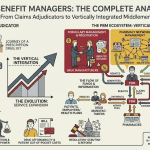
Pharmacy Benefit Managers (PBMs) were created as administrative intermediaries for prescription drug claims. The three largest, CVS Caremark, Express Scripts (Cigna), and OptumRx (UnitedHealth), now collectively administer pharmacy benefits for the majority of commercially insured Americans and operate in a market structure that is effectively an oligopoly.
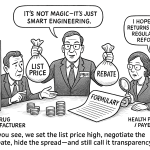
PBMs generate revenue through two primary mechanisms. The transparent or pass-through model passes all manufacturer rebates directly to the health plan and charges a flat administrative fee per claim processed. The traditional spread pricing model allows the PBM to retain a portion of the manufacturer rebate and simultaneously charge the health plan a different (higher) rate per drug dispensed than it reimburses the dispensing pharmacy. The PBM profits from both the retained rebate and the spread between what it charges and what it pays.
The rebate wall dynamic is the most consequential distortion in the PBM model. Manufacturer rebates are typically calculated as a percentage of the drug’s published list price (the Wholesale Acquisition Cost, or WAC). This creates a structural incentive for the PBM to prefer a high-WAC drug with a large rebate over a competing drug with a lower WAC and a smaller rebate, even when the lower-WAC drug’s net cost to the health plan is lower. The preferred formulary placement goes to the product that maximizes the rebate calculation, which is the product with the highest list price — a direct inversion of the cost-minimization goal the PBM is nominally hired to achieve.
A new specialty biologic entering the market at a list price 20% below the incumbent’s WAC may generate a smaller rebate in absolute dollar terms than the incumbent, even with an identical rebate percentage. Under spread pricing, the PBM may place the lower-cost entrant on a non-preferred tier or exclude it entirely. This practice is documented most clearly in the insulin market, where competing biosimilars and authorized generics with lower WAC prices have faced formulary placement barriers against legacy high-list-price products whose rebates support PBM revenue streams.
The patient impact is direct and often invisible. Patient cost-sharing — copayments and, increasingly for specialty drugs, coinsurance — is typically calculated on the WAC or an approximation of it, not the net price the health plan pays after rebates. A patient paying 30% coinsurance on a $10,000-per-month specialty drug is paying $3,000 per month in out-of-pocket cost on a product the plan may be receiving an $8,000 net price for. The patient is effectively subsidizing the PBM’s rebate model through cost-sharing obligations calibrated to an inflated list price.
Key Takeaways: PBM Mechanics
Spread pricing and percentage-of-WAC rebate structures create systematic incentives for PBMs to favor high-list-price drugs over lower-cost alternatives, directly undermining formulary cost containment goals.
The rebate wall is a real and documented barrier to market entry for lower-cost biosimilars and novel drugs with transparent pricing models.
Patient out-of-pocket costs calculated on inflated WAC prices constitute a de facto tax on sick patients that does not flow through to the health plan’s actual net cost, generating prescription abandonment rates that raise total system costs.
Direct-to-Consumer Advertising as a Formulary Counter-Strategy
The United States and New Zealand are the only OECD countries that permit prescription drug advertising directed at consumers. In 2023, the top ten pharmaceutical companies spent approximately $14 billion on advertising, with the average American television viewer exposed to an estimated nine prescription drug ads per day. This spend is not distributed evenly across the portfolio; it is concentrated on recently launched, patent-protected brand-name drugs where the manufacturer needs to build market share before generic or biosimilar competition arrives.
Research on the relationship between DTC spend and clinical value shows the correlation runs in an uncomfortable direction. Higher advertising budgets are associated with products that carry lower added clinical benefit ratings in comparative effectiveness frameworks such as Germany’s AMNOG or France’s Haute Autorite de Sante (HAS). Drugs that demonstrate strong clinical superiority over existing alternatives do not need to manufacture demand through consumer advertising; their clinical data does that work. The marketing budget is largest where the evidence base is weakest.
The prescriber impact is measurable. When a patient requests a specific brand-name drug seen in a television ad, the prescribing physician writes a prescription for that exact product in roughly 53% of encounters, according to published research. This rate is high enough to materially distort prescribing patterns away from formulary-preferred products at scale. A plan that has invested in a formulary architecture placing the advertised drug on Tier 3 with step therapy requirements will see that architecture eroded in practice by a multi-billion-dollar media campaign operating directly on its member population.
From a pure game-theory perspective, DTC advertising is a direct counterplay to formulary management. The MCO spends $5 million on pharmacy analytics and P&T committee deliberations to build a formulary that routes patients to a preferred $200-per-month product. The manufacturer spends $500 million on a DTC campaign that generates sufficient patient demand for the $800-per-month alternative to override the formulary’s behavioral incentives. The leverage ratio in that exchange heavily favors the manufacturer.
Key Takeaways: DTC Advertising
DTC advertising is concentrated on patent-protected drugs with weak comparative clinical profiles relative to less-promoted alternatives. The marketing budget is inversely correlated with demonstrated added clinical value.
The 53% physician accommodation rate for patient-requested drugs is large enough to materially erode formulary cost-containment strategies at scale.
For MCOs, DTC is best modeled as a competitive threat to formulary integrity, not a peripheral consumer information issue.
The Managed Care Cost-Containment Toolkit
Formulary Architecture and Tier Design
The drug formulary is the foundational cost-management instrument in any managed care pharmacy benefit. It is maintained by a Pharmacy and Therapeutics (P&T) committee — typically composed of physicians, pharmacists, clinical pharmacologists, and health economists — that meets regularly to evaluate new drugs and reassess existing placements using comparative clinical and economic evidence.
Open formularies cover most drugs with differential cost-sharing; closed formularies restrict coverage to listed drugs entirely, with exceptions only through a formal medical exemption process. Closed formularies give the MCO maximum negotiating leverage with manufacturers, because inclusion on the formulary represents total market access for that plan population rather than a preferred share. In exchange for exclusive preferred placement, manufacturers offer steeper rebates or lower net prices.
The tiered benefit design operationalizes cost incentives through patient cost-sharing differentials. Tier 1 holds preferred generics with nominal copayments in the $0 to $10 range. Tier 2 covers generic drugs with higher costs and preferred branded products with negotiated net prices. Tier 3 contains non-preferred branded products. Tier 4 and higher are reserved for specialty drugs, with cost-sharing typically structured as coinsurance rather than a fixed copayment — 20% to 33% of the drug’s list price is common.
The shift from fixed copayments to percentage coinsurance for specialty drugs is a major structural change in how financial risk is distributed in the pharmacy benefit. A Tier 2 copayment of $75 is a predictable, manageable expense for most commercially insured patients. A 25% coinsurance on an oncology biologic with a $15,000 monthly cost is a $3,750 monthly out-of-pocket obligation that many patients cannot sustain. Prescription abandonment — where a patient does not pick up a filled prescription after receiving it — rises sharply when out-of-pocket costs exceed $100 to $125 per fill for specialty drugs, with abandonment rates documented as high as 45% to 75% for certain therapies.
This means the specialty tier, at the coinsurance levels now common in commercial plans, functions as rationing by financial attrition rather than clinical triage. The patients who discontinue are not necessarily those for whom the drug is least appropriate; they are the patients who cannot sustain the cash outlay regardless of clinical need.
Prior Authorization and Step Therapy Mechanics
Prior authorization (PA) requires the prescribing provider to obtain pre-approval from the health plan before a specific drug will be dispensed with coverage. PA applications require clinical documentation including diagnosis codes, prior treatment history, lab values, and sometimes letter-of-medical-necessity narratives. Review timelines range from 24 hours for standard requests to several weeks for complex cases involving specialist review. The American Medical Association estimates PA volume for prescription drugs will continue increasing at approximately 20% annually.
The administrative cost of PA falls primarily on physician practices. A 2022 AMA survey found that the average physician practice spends approximately two business days per week on prior authorization tasks, the majority of that time managed by clinical staff rather than physicians directly. The downstream effect is real: treatment delays for patients waiting for PA decisions, and a documented rate of treatment abandonment where neither the prescriber nor the patient pursues approval after an initial denial.
Step therapy (also known as fail-first protocols) requires a patient to try and demonstrate failure or intolerance of one or more lower-cost alternative treatments before the plan will approve coverage for a more expensive product. A standard rheumatoid arthritis step therapy protocol might require a trial of two conventional disease-modifying antirheumatic drugs (csDMARDs) such as methotrexate and hydroxychloroquine before approving a TNF inhibitor biologic. The clinical logic has merit for conditions where first-line therapies are effective for the majority of patients. It becomes clinically problematic when step therapy protocols override a prescriber’s judgment that a patient’s disease characteristics — specific biomarker profile, severity of presentation, or contraindications to first-line agents — make bypassing the initial steps medically appropriate.
Twenty-seven states have enacted step therapy reform legislation as of early 2026, generally requiring that plans honor a prescriber’s exemption request when supported by clinical documentation. The federal gold-carding concept — exempting physicians with consistently high PA approval rates from standard PA requirements — has been adopted by a small number of commercial plans and is gaining legislative support at the state level.
Key Takeaways: Cost-Containment Toolkit
Closed formularies provide maximum negotiating leverage but require a robust medical exception process to avoid coverage gaps for patients with legitimate clinical needs.
Specialty tier coinsurance at current levels generates clinically indiscriminate prescription abandonment: patients who stop treatment are not those for whom the drug lacks efficacy, but those who cannot afford their share of an inflated list price.
PA and step therapy impose real administrative and clinical costs that are not fully captured in pharmacy budget line items. The total cost of PA, including provider time, delayed treatment, and abandonment, should be modeled when evaluating whether PA programs generate net savings.
The Specialty Drug Paradigm: Budget Impact, Biosimilar Interchangeability, and the Biologic Patent Lifecycle
Specialty drugs represent fewer than 2% of all prescriptions written in the United States and account for approximately 51% of total pharmacy spending. No other category in managed care has this degree of spending concentration. A plan with 100,000 members might have 1,500 to 2,000 members on specialty drugs, and those members drive the majority of the pharmacy benefit’s total cost.
Specialty drugs are defined by a cluster of characteristics: high acquisition cost (typically above $6,000 per month for a 30-day supply), biologic or complex synthetic origin, special handling and distribution requirements (cold chain, limited distribution networks, specialty pharmacy dispensing), and intensive clinical monitoring requirements. The last point is economically important: specialty drugs do not just cost more to acquire; they cost more to manage. Clinical case management, adherence monitoring, and adverse event tracking for patients on biologics add real operational costs that do not appear in the drug acquisition price alone.
Biosimilar interchangeability has been the market’s primary competitive response to specialty drug costs. An FDA-approved biosimilar can be substituted for the reference biologic at the pharmacy level without prescriber intervention, provided the FDA has granted interchangeability status. Biosimilar interchangeability status requires the manufacturer to demonstrate, through dedicated switching studies, that alternating between the reference product and the biosimilar does not produce greater safety or efficacy variation than continued use of the reference product alone. This additional evidentiary burden delays interchangeability designations relative to basic biosimilar approval.
The biologic patent lifecycle creates a predictable pattern of competitive dynamics that IP and formulary teams should map explicitly. The composition-of-matter patent for a biologic typically expires 10 to 14 years after launch, accounting for PTE. Secondary patents (device, formulation, method-of-use) extend effective exclusivity further. FDA regulatory exclusivity for biologics provides 12 years of data exclusivity from approval date, meaning that the earliest a biosimilar applicant can reference the originator’s clinical data is year 12. In practice, the combination of data exclusivity, secondary patent estates, and BPCIA litigation/settlement dynamics means the average gap between a biologic’s approval and its first biosimilar’s commercial launch is 14 to 16 years in the U.S. market.
IP Spotlight: Zolgensma (Onasemnogene Abeparvovec) / Novartis-AveXis — Valuing a Curative Gene Therapy
Zolgensma was approved by the FDA in May 2019 for the treatment of spinal muscular atrophy (SMA) type 1 in pediatric patients weighing less than 13.5 kilograms. At launch, Novartis priced it at $2.125 million for a single intravenous infusion, making it the most expensive drug in history at that time. The underlying gene therapy technology was developed largely at Nationwide Children’s Hospital and the University of Massachusetts, with foundational research funded by SMA research charities and NIH grants. AveXis, the company that took the program through clinical development, was acquired by Novartis in 2018 for $8.7 billion.
The pricing justification rested on a net present value comparison against Spinraza (nusinersen), the only approved alternative, whose list price ran approximately $750,000 in year one and $375,000 per year thereafter, implying a 10-year cost exceeding $3 million. Novartis argued that Zolgensma’s one-time price represented a net saving to the system over a 10-year horizon, a value-based pricing argument using quality-adjusted life year (QALY) and cost-per-QALY frameworks that are standard in European HTA but not routinely used in U.S. payer negotiations.
The MCO problem with this argument is temporal: a plan paying $2.125 million in year one bears the full upfront cost while realizing none of the downstream savings if the patient switches plans in year two, which is statistically likely in the commercial market given average annual member churn rates of 15% to 25% in employer-sponsored plans. Novartis addressed this with two novel access arrangements: a pay-over-time model spreading the cost over five annual installments, and an outcomes-based rebate agreement under which Novartis would refund a portion of the payment if the therapy failed to maintain defined clinical milestones at specified intervals.
Both arrangements are financially logical but operationally demanding. Multi-year payment structures require multi-year financial commitments that most self-funded employer plans, which operate on annual budget cycles, cannot easily accommodate. Outcomes-based agreements require the clinical data infrastructure to track patient outcomes reliably over three to five years across a population that is simultaneously at high risk of insurance discontinuity. For most MCOs outside of the largest national carriers, neither arrangement is administratively feasible at scale.
IP Valuation Analysis — Zolgensma and AAV Gene Therapy Patents
AveXis’s core IP position was built around adeno-associated virus serotype 9 (AAV9) as the delivery vector for SMN1 gene replacement. The composition-of-matter patent covering the specific AAV9-SMN1 construct and its use in SMA treatment has an estimated expiration in the early 2030s, though PTE could extend that. Novartis also holds patents on the manufacturing process for AAV9-based gene therapies at clinical scale, a category where IP is particularly important because consistent, high-yield manufacturing of AAV is technically complex and not easily replicated.
Gene therapy patent landscapes differ from small-molecule or monoclonal antibody landscapes in a critical way: the field is young, the enabling technology patents covering AAV serotypes and promoter constructs are held by academic institutions and early movers (including Spark Therapeutics and University of Pennsylvania), and cross-licensing arrangements are extensive. Any gene therapy IP valuation needs to account for the royalty burden embedded in the manufacturing cost from those foundational licenses.
For investors, the gene therapy IP valuation question is whether a single-use, one-time-administration product with a narrow patient population (SMA type 1 affects approximately 400 to 500 U.S. newborns per year) can generate returns sufficient to justify a $2 billion-plus development investment, given that the patient pool is exhausted after the initial diagnosed population is treated and the annual incidence rate is the primary driver of ongoing revenue. The answer depends heavily on whether the AAV9 technology can be extended to additional indications, which is why Novartis and other AAV-platform companies are pursuing indication expansion aggressively.
Investment Strategy: Gene Therapy Asset Valuation
The standard rNPV model for a gene therapy asset must incorporate four variables that do not apply to chronic-use drugs. First, the annual incidence of the target disease determines total addressable market per year, capped by the number of newly diagnosed patients. Second, the prevalence effect: there is an initial bolus of treatment-eligible patients who have been waiting for an approved therapy, which generates a front-loaded revenue spike in years one through three post-launch, followed by a lower run-rate driven by annual incidence. Third, the durability of clinical effect: a therapy that requires re-dosing in 10% of patients per year has a fundamentally different long-term revenue model than one whose effect is permanent. Fourth, competing platform risk: AAV9-based competitors, ex vivo editing approaches, and next-generation delivery technologies all represent discount factors to the terminal value of any single gene therapy asset.
Key Takeaways: Specialty Drugs and Gene Therapy
Specialty drugs drive 51% of total pharmacy spending from fewer than 2% of patients. Formulary strategies designed for the general drug market are operationally inadequate for this concentration of cost.
Biosimilar interchangeability requires dedicated switching studies beyond standard biosimilar approval, delaying automatic substitution and limiting short-term formulary cost savings even after a biosimilar enters the market.
Zolgensma’s $2.125 million price is defensible on a lifetime net present value basis but structurally incompatible with annual budget cycles and high member churn rates in commercial plans.
Gene therapy IP valuation requires modeling bolus-versus-incidence revenue dynamics, AAV technology royalty stacks, and platform extension optionality, none of which are captured by a standard per-patient revenue model.
The Inflation Reduction Act: Negotiation Mechanics, Part D Liability Shift, and R&D Distortion
The Inflation Reduction Act (IRA), signed in August 2022, is the most consequential pharmaceutical pricing legislation since Hatch-Waxman in 1984. It dismantled three decades of Medicare non-interference in drug price negotiation and introduced structural reforms to the Part D benefit that will force fundamental changes in MCO financial strategy.
Medicare Drug Price Negotiation: Mechanics and Market Impact
The IRA empowers the Secretary of HHS to negotiate a Maximum Fair Price (MFP) for a defined and expanding set of drugs covered under Medicare Parts B and D. The program launched with 10 high-expenditure Part D drugs selected in 2023, with negotiated prices taking effect in 2026. The program expands to 15 additional drugs for 2027, 15 more (including Part B drugs) for 2028, and 20 drugs annually thereafter.
Eligibility criteria center on drugs that are single-source brand-name products or biologics without generic or biosimilar competition, among the top spenders in Medicare, and outside of certain exemptions including drugs that have been approved for fewer than 9 years (small molecules) or 13 years (biologics), drugs for rare diseases qualifying for orphan drug designation, and low-expenditure products below a Medicare revenue threshold.
The MFP ceiling is calculated as a percentage of the drug’s non-federal Average Manufacturer Price (non-FAMP), with the discount deepening based on years post-approval: 75% of non-FAMP for drugs in the 9-to-11-year post-approval window, 65% for years 12 to 16, and 40% for drugs approved 16 or more years prior. These are statutory ceilings; the actual negotiated MFP may be lower.
The commercial spillover effect is the IRA’s most underappreciated strategic implication. Because Medicare MFP figures will be public record, they immediately become a benchmark for commercial payer negotiations. A commercial MCO negotiating with AstraZeneca over dapagliflozin’s formulary placement will be able to reference the Medicare MFP as a floor below which the commercial net price should reasonably fall. Manufacturers will be forced to either extend near-MFP pricing into commercial channels or defend the price differential, a position that will be politically and commercially untenable for most.
Part D Benefit Redesign and the Liability Transfer
The IRA’s 2025 Part D redesign creates a $2,000 annual cap on beneficiary out-of-pocket spending, a genuine improvement for Medicare patients on high-cost specialty drugs who previously faced uncapped exposure in the catastrophic phase. The mechanism for financing this cap, however, shifts substantial financial risk directly onto Part D plan sponsors.
Under the pre-IRA structure, once a beneficiary entered catastrophic coverage, Medicare reinsurance covered 80% of costs, the Part D plan covered 15%, and the beneficiary covered 5%. Starting in 2025, in the catastrophic phase, plan liability rises from 15% to 60% of costs for brand-name drugs, while Medicare reinsurance falls from 80% to 20%. This is a transfer of approximately $25 billion per year in catastrophic drug cost exposure from the federal government’s reinsurance pool to Part D plan sponsors.
Plans managing members on high-cost specialty drugs, particularly in oncology, immunology, and neurology, face materially higher per-member catastrophic liability than under the previous structure. The immediate operational response will be tighter formulary management, more restrictive prior authorization protocols, and an accelerated push toward biosimilar interchangeability utilization wherever clinically defensible. Some actuaries predict that PBMs, facing margin compression, will respond by placing IRA-negotiated drugs on higher formulary tiers with larger cost-sharing requirements, which would offset some of the patient benefit the $2,000 cap was designed to provide.
Inflation Rebates: Penalizing Price Escalation
The IRA requires drug manufacturers to pay rebates to Medicare when drug prices increase faster than CPI-U. The provision applies to most Part D drugs and single-source Part B drugs. For Part D, the rebate obligation kicks in when WAC increases over any rolling 12-month period exceed the CPI-U inflation rate for the same period.
This provision directly addresses the 15.2% average price-hike dynamic documented in the 2022-2023 pricing data. Companies that have relied on annual list price increases as a revenue maintenance mechanism, particularly for mature products facing limited competition, will need to recalibrate their pricing strategy for Medicare-covered products.
R&D Distortion and Pipeline Effects
The IRA’s differential treatment of small-molecule drugs (negotiation eligible at year 9) versus biologics (year 13) has created what analysts at IQVIA and the Congressional Budget Office have termed the small-molecule penalty. The four-year additional exclusivity window for biologics directly increases the expected net present value of a new biologic relative to a new small-molecule drug with identical clinical potential.
The industry’s response is already visible in development pipeline data. Since the IRA’s passage, at least a dozen major pharmaceutical companies have publicly disclosed the termination of early-stage small-molecule programs, citing the IRA’s impact on expected return on investment. Investment in small-molecule medicinal chemistry programs across the industry declined measurably in 2023 and 2024. Concurrently, the share of Phase I and Phase II programs that are biologics, antibody-drug conjugates (ADCs), or cell and gene therapies has increased.
The IRA is also reshaping indication sequencing strategies. Previously, a manufacturer might bring a drug to market for its lead indication and pursue additional indications sequentially, extending commercial lifecycle. Under the IRA, the 9-year or 13-year negotiation clock starts from the first approval, regardless of how many indications are added later. This incentivizes simultaneous, front-loaded indication stacking — pursuing multiple clinical programs concurrently to maximize the approved label at launch rather than building it out over years. This approach requires substantially more upfront capital, disadvantaging smaller biotech companies relative to large-cap pharma and potentially accelerating consolidation in the sector.
Key Takeaways: IRA Mechanics and Strategic Implications
Medicare MFP figures will become public benchmarks that structurally compress commercial net prices for negotiated drugs, extending the IRA’s pricing impact well beyond Medicare.
The Part D liability transfer shifts approximately $25 billion per year in catastrophic drug cost exposure onto plan sponsors, creating an immediate financial incentive for more aggressive specialty drug management.
The small-molecule penalty in the IRA’s negotiation timeline has measurably shifted R&D investment away from traditional small molecules toward biologics and cell/gene therapies, with long-term consequences for the types of drugs entering the market in the 2030s.
Indication stacking — simultaneous multi-indication development to maximize the launch label — will favor large-cap pharma over biotech in the post-IRA environment and may accelerate sector consolidation.
Emerging Vectors: Value-Based Contracts, AI in Drug Development, and Patient Advocacy
Value-Based Contracts: Technical Requirements and Practical Limits
Value-based contracts (VBCs), also called outcomes-based agreements or risk-sharing arrangements, link drug reimbursement to real-world clinical performance. The theoretical structure is straightforward: a manufacturer offers larger rebates or price reductions if a drug fails to meet pre-specified clinical endpoints in the payer’s member population; the payer agrees to broader formulary access in exchange for this performance guarantee.
In practice, VBCs face four structural barriers that explain why, a decade after their introduction, they remain a niche instrument rather than a standard contracting mechanism. First, outcome definition: the parties must agree on what clinical endpoint will be measured (A1c reduction, event-free survival, hospitalization rate), what threshold constitutes success versus failure, and over what time horizon the measurement occurs. For chronic diseases, measuring a durable clinical outcome requires a 12-to-36-month follow-up window, during which patient churn may render the original member cohort unmeasurable.
Second, data infrastructure: measuring outcomes in a payer’s actual member population requires integrated medical and pharmacy claims data linked to clinical records, a capability that most mid-size MCOs do not have at the depth needed for reliable VBC measurement. Third, regulatory constraints: the federal Anti-Kickback Statute and Medicaid Best Price rules create legal ambiguity around rebate structures tied to outcomes, because a rebate paid in year three based on year-one treatment could affect Medicaid best price calculations retroactively. Regulatory safe harbors for outcomes-based arrangements remain incomplete. Fourth, administrative cost: the legal, analytical, and operational overhead of structuring, executing, and monitoring a VBC is substantial, often consuming a material fraction of the rebate value it is designed to generate.
VBCs are most viable for high-cost, single-administration therapies with discrete, measurable binary outcomes and small patient populations, exactly the profile of gene therapies like Zolgensma. For complex chronic conditions with continuous drug use, multifactorial outcomes, and large patient populations, the operational barriers are prohibitive for most organizations.
AI in Drug Discovery: Efficiency Gains and Pricing Reality
Artificial intelligence and machine learning are being deployed across the drug development lifecycle with genuine technical impact. In target identification, generative AI platforms can screen vast protein structure and genomic databases to identify novel binding targets and design candidate molecules with specified pharmacological properties faster and at lower cost than traditional high-throughput screening. In clinical trial operations, AI models can improve patient eligibility screening from electronic health record data, reduce screen failure rates, and predict site performance. In pharmacovigilance, natural language processing tools extract adverse event signals from unstructured clinical notes and published literature at scale.
IQVIA and McKinsey analyses suggest AI-enabled efficiency gains could reduce total R&D timelines by 25% to 40% and lower per-trial costs by 20% to 30% over a 5-to-10-year horizon. These are real productivity improvements.
What they will not produce, in the near term, is lower launch prices. Pharmaceutical pricing is not cost-plus. It is value-based and monopoly-protected. A manufacturer that develops a drug in five years instead of ten using AI-assisted medicinal chemistry has not changed the drug’s competitive position, the size of the addressable patient population, or the patent-protected exclusivity period within which it must generate returns. The economic incentive is to capture the AI efficiency gain as margin expansion, not to pass it to payers as a lower launch price.
The more immediate and important impact of AI on payer-manufacturer negotiations is on the data side. Manufacturers are building sophisticated real-world evidence (RWE) platforms that use machine learning to identify patient subpopulations in which their drug shows disproportionately large efficacy signals. These AI-generated RWE analyses will be used in formulary negotiations to argue for premium pricing in specific microsegments. Payers that cannot match this analytical depth will be at a systematic disadvantage at the negotiating table. The payers that can build or buy equivalent AI-enabled population analytics capabilities will be able to critically interrogate these claims and develop their own evidence-based counter-positions.
Patient Advocacy: The Third Force in Market Access
Patient advocacy organizations (PAOs) have moved from grassroots pressure groups to institutionalized stakeholders with direct influence over FDA advisory committee composition, clinical trial design, accelerated approval decisions, and, increasingly, formulary access and payer policy. The FDA’s Accelerated Approval Pathway and the Breakthrough Therapy designation both exist in their current form partly due to sustained advocacy pressure, most notably from the HIV/AIDS community in the 1980s and 1990s. The Orphan Drug Act, which provides tax credits, grant funding, and seven-year marketing exclusivity for drugs targeting diseases with fewer than 200,000 U.S. patients, was also the product of organized advocacy.
In the coverage and reimbursement context, well-resourced PAOs, frequently supported through unrestricted grants or logistical assistance from the drug’s manufacturer, can mount public campaigns, coordinate legislative lobbying, and amplify patient testimonials through social media in ways that transform a routine P&T committee formulary decision into a reputational and political crisis for the MCO. An MCO that places a new, expensive MS drug on Tier 3 with step therapy requirements may be scientifically correct that the drug offers marginal clinical improvement over a cheaper incumbent. If a PAO with 50,000 members launches a social media campaign portraying the MCO as denying life-altering treatment to MS patients, the plan may face enough political and media pressure to reverse the formulary decision regardless of the P&T committee’s clinical analysis.
This dynamic is a real cost driver, though it does not appear on any pharmacy spend report. It represents an erosion of the MCO’s ability to enforce evidence-based formulary decisions on high-profile specialty drugs.
Key Takeaways: Emerging Vectors
Value-based contracts are most structurally viable for single-administration gene therapies with small patient populations and measurable binary outcomes. They are not scalable for chronic specialty drug management.
AI efficiency gains in R&D will produce margin expansion at manufacturers, not lower launch prices, because pricing is value-based and monopoly-protected rather than cost-plus.
AI’s near-term impact on the payer-manufacturer relationship is in RWE analytics: manufacturers are building AI-powered sub-population analyses to justify premium prices, and payers must build equivalent analytical capabilities to negotiate effectively.
Patient advocacy creates real formulary override pressure that represents an unquantified but material cost driver for MCOs managing high-profile specialty drug categories.
Investment Strategy Synthesis
This section addresses institutional investors, pharma/biotech CFOs, and healthcare fund analysts directly.
Long Positions in Patent-Dense Biologic Platforms. Companies with established secondary patent estates around approved biologics have longer effective exclusivity windows than their nominal composition-of-matter expirations suggest. Use patent portfolio analytics (including tracking of BPCIA docket activity and secondary patent filing dates) to identify the gap between nominal and effective exclusivity. This gap is the most important variable in biologic company long-term revenue models.
Short Positions or Underweights in Small-Molecule-Dependent Portfolios. The IRA’s small-molecule penalty is not priced into most street-consensus models, which still use nominal data exclusivity and primary patent expirations as the key revenue cliff variables. Companies with heavy revenue concentration in small molecules facing Medicare negotiation eligibility in the 2026-2030 window are carrying greater revenue risk than consensus models reflect.
Gene Therapy Platform Valuation. Apply bolus/incidence-split revenue modeling, not standard chronic drug revenue curves. The front-loaded bolus cohort drives year-one-through-three revenue; the long-term run rate is determined by annual disease incidence. Durability of effect, re-dosing rates, and platform extension to additional indications are the primary terminal value drivers. AAV technology royalty stacks reduce gross margin; factor these in explicitly.
Biosimilar Entry Timing as a Payer Opportunity. For MCOs and PBM operators, the Humira biosimilar market provides the clearest current evidence of what effective biosimilar interchangeability adoption can deliver. Adalimumab biosimilars have taken roughly 30% to 40% market share from the originator in plans that implemented aggressive conversion protocols within 12 months of the January 2023 entry date. Plans that waited experienced materially slower share shifts. The lesson is that biosimilar conversion programs require proactive formulary management, including non-medical switching protocols, patient education, and prescriber engagement, not passive availability.
IRA Medicare MFP as a Commercial Benchmark Anchor. When MFPs for the initial ten negotiated drugs take effect in 2026, model those prices as a commercial negotiation floor. MCOs that update their net price assumptions for negotiated drugs toward MFP levels in 2026 budget projections will have more accurate pharmacy cost forecasts than those that assume commercial prices remain at pre-IRA levels.
PBM Reform Exposure. Legislative pressure on PBM spread pricing and rebate transparency is bipartisan and building. Companies with high earnings exposure to spread pricing revenue (specifically the three major PBMs) carry regulatory repricing risk that should be discounted in forward earnings models. Pass-through PBM structures and transparent contracting models gain pricing share in this environment.
Key Takeaways by Segment
Spending and Structural Dynamics. U.S. drug spending exceeds $576 billion annually and grows at a rate that outpaces every other healthcare cost category. The structural driver is a fundamental incompatibility between the MCO’s population-averaged PMPM payment model and the single-patient value-based pricing model that governs today’s high-cost specialty drugs and gene therapies.
R&D Economics and IP Creation. Published R&D budgets are IP creation budgets. The shift to biomarker-defined specialty drug development was a strategic portfolio choice that made high per-patient launch prices inevitable. rNPV modeling, patent quality assessment, and FTO analysis are the correct tools for valuing pipeline assets.
Patent Strategy. Effective market exclusivity for a biologic routinely exceeds the nominal composition-of-matter patent expiration by 5 to 10 years, once secondary patent estates and BPCIA settlement dynamics are modeled correctly. The Humira thicket generated $114 billion in extended-monopoly revenue during a seven-year delay. Patent intelligence tracking of secondary filings, BPCIA docket activity, and settlement terms is a necessary operational capability for formulary planners and investors alike.
PBM and Supply Chain Distortion. Spread pricing and percentage-of-WAC rebate structures create incentives that systematically favor high-list-price drugs over cost-effective alternatives. Patient cost-sharing calculated on inflated WAC prices shifts financial burden to patients without reducing the plan’s actual net cost, producing prescription abandonment that raises downstream acute care costs.
Specialty Drugs and Gene Therapy. Specialty drugs drive the majority of pharmacy spend from a small fraction of patients. Gene therapy’s one-time pricing model is structurally incompatible with annual budget cycles and commercial plan member churn. Biosimilar interchangeability adoption requires active formulary management protocols to capture competitive savings.
IRA Implications. Medicare MFPs will anchor commercial price negotiations below pre-IRA levels for negotiated drugs. The Part D liability transfer to plan sponsors creates urgent financial pressure to tighten specialty drug management. The small-molecule penalty is actively reshaping the R&D pipeline toward biologics and away from traditional small molecules, with measurable effects on the composition of the 2030-2040 drug market.
Emerging Dynamics. Value-based contracts work for gene therapy; they do not scale for chronic specialty drugs. AI’s near-term impact on the market is through RWE-based pricing arguments, not lower list prices. Patient advocacy is an unquantified but real formulary override force for high-profile specialty drugs.
Frequently Asked Questions
Why can’t an MCO simply exclude a $2 million gene therapy from coverage?
Federal and state law constrains the exclusion of medically necessary treatments, particularly for conditions with no therapeutic alternatives. Medicare Part D’s protected class policies mandate coverage for nearly all drugs in categories including oncology and immunology. Beyond legal requirements, excluding the only available treatment for a fatal pediatric disease creates reputational and political exposure that most plans cannot sustain. The practical question is not whether to cover it but how to structure payment to avoid a single claim consuming the per-member budget for thousands of other members.
How does the IRA’s Medicare MFP affect commercial plan drug prices?
The IRA’s negotiation authority is legally confined to Medicare. The commercial spillover comes through transparency: MFP figures will be public, and they will immediately function as a benchmark in commercial negotiations. Manufacturers negotiating commercial net prices that are substantially higher than publicly known Medicare MFPs will face pressure from employer clients and state regulators to justify the differential. Most analysts expect commercial prices for negotiated drugs to converge toward or near MFP levels within two to three years of Medicare prices taking effect.
If AI reduces R&D costs, why won’t drug prices fall?
Pharmaceutical pricing is value-based and monopoly-protected, not cost-plus. A manufacturer that cuts development time by 30% using AI-assisted discovery captures that as margin expansion, not as a lower list price, because pricing is set by the drug’s clinical value, the size of the addressable patient population, and what the market will bear under patent-protected exclusivity. The more direct near-term impact is that AI will make manufacturer RWE arguments more sophisticated and targeted, increasing analytical complexity in formulary negotiations.
What is the rebate wall and why does it increase patient costs?
The rebate wall forms when PBMs negotiate rebates calculated as a percentage of a drug’s WAC, creating a financial incentive to give formulary preference to high-WAC products with large percentage rebates over lower-WAC products with smaller absolute rebates, even when the lower-WAC product has a lower net cost to the plan. Patient cost-sharing is typically calculated on WAC, not net price. A patient may pay a high coinsurance on a nominally preferred drug whose high WAC supports the PBM’s rebate revenue, unaware that the plan is receiving a substantial rebate on the back end.
Why did Humira’s biosimilar competition take seven years after the composition-of-matter patent expired?
AbbVie constructed a patent estate of over 250 secondary patents covering formulations, devices, and methods of use. Each patent represents a potential infringement claim in BPCIA litigation. The cost and risk of challenging dozens of patents simultaneously exceeded the expected return from early market entry for every biosimilar applicant, leading each company to settle with AbbVie for a delayed U.S. launch date rather than litigate to resolution. The composition-of-matter patent was irrelevant to competitive entry because the secondary patent estate was sufficient to deter all competition through settlement.
How should formulary teams model biosimilar interchangeability entry for planning purposes?
The key variables are: the composition-of-matter patent expiration date (starting point only), the secondary patent estate size and claim diversity (use DrugPatentWatch or equivalent patent intelligence tools to enumerate), open BPCIA litigation docket status, historical settlement patterns for this manufacturer in analogous prior biosimilar entries, and the financial position of leading biosimilar applicants. Model a probability distribution of commercial entry dates using these inputs rather than relying on the nominal patent expiration date. The Humira case suggests that for major biologics with aggressive brand manufacturers, the settlement-adjusted entry date is typically 4 to 8 years after the composition-of-matter expiration.
This analysis was prepared using publicly available regulatory filings, published clinical and economic literature, Congressional Budget Office analyses, KFF policy briefs, and IQVIA industry data. Patent data and litigation tracking sourced from DrugPatentWatch. This document does not constitute investment advice.