The Patent Fortress: Navigating the High-Stakes World of Pharmaceutical IP
The pharmaceutical patent is not merely a legal document; it is the foundational pillar of the industry’s economic model. It underpins the multi-billion-dollar, high-risk investments required for research and development (R&D) by granting a temporary market monopoly, a period of exclusivity that allows innovator companies to recoup their substantial costs.1 Consequently, the strategic management, analysis, and defense of patent portfolios represent a critical, board-level function. The landscape of pharmaceutical intellectual property (IP) has evolved into a complex “patent fortress,” a deliberately intricate web of legal protections designed to maximize commercial longevity. This growing complexity has stretched traditional, human-centric methods of patent analysis to their breaking point, creating an environment where such approaches are no longer sufficient. This reality has catalyzed a paradigm shift toward Artificial Intelligence (AI), transforming patent intelligence from a reactive legal necessity into a proactive, predictive, and strategic imperative.
The 20-Year Illusion: Deconstructing the “Effective Patent Life”
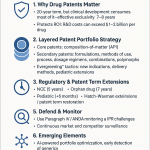
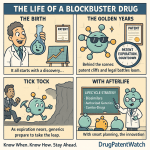
While the statutory term for a new patent is globally standardized at 20 years from the date of the initial application filing, this figure creates a misleading impression of market exclusivity.4 The true commercial lifespan of a patented drug is defined by its “effective patent life”—the actual period during which it enjoys monopoly sales on the market without direct generic competition. This effective period is consistently and significantly shorter than the nominal 20-year term.5
This discrepancy arises from the protracted and capital-intensive nature of pharmaceutical development. The journey from a promising molecule to a marketable drug is a marathon that typically spans 12 to 15 years, and in cutting-edge fields like gene therapy, can extend up to 30 years.5 This timeline is consumed by several demanding stages:
Discovery and Preclinical Research: This initial phase, which can last 4 to 7 years, involves identifying molecular targets, screening thousands of compounds, and conducting extensive in vitro and in vivo testing to establish basic safety and efficacy profiles.5
Clinical Research: This is the most resource-intensive stage, testing the drug in human subjects across three sequential phases, each with increasing scale and complexity, to rigorously evaluate safety and efficacy.5
Regulatory Review: Following successful clinical trials, the innovator company submits a New Drug Application (NDA) to the U.S. Food and Drug Administration (FDA) or equivalent international bodies. This review process itself can take a year or more to complete.5
Because companies must file for patent protection very early in this process—often as soon as a promising molecule is discovered—a substantial portion of the 20-year patent term, frequently 10 to 15 years, is eroded before the drug generates any revenue.4 The result is a compressed “recoupment window” of just 7 to 10 years on the market.5 This truncated effective life creates immense economic pressure on innovator companies to maximize revenue during this limited period, a reality that directly influences drug pricing, dictates marketing intensity, and fuels the aggressive pursuit of additional IP protections to extend market exclusivity for as long as possible.5
Beyond the Core Compound: A Landscape of Lifecycle Extension Strategies
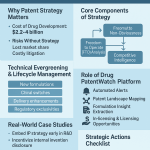
The intense economic pressure created by the short effective patent life has driven innovator companies to develop sophisticated strategies to extend market exclusivity beyond the expiration of the primary “composition-of-matter” patent, which protects the active pharmaceutical ingredient (API) itself. These lifecycle management strategies, often criticized as “evergreening,” are not isolated legal tactics but a systemic response to the industry’s economic structure.2 They form a multi-layered defense designed to be deliberately convoluted and costly for generic competitors to navigate. Key strategies include:
New Formulations: One of the most common approaches is to obtain new patents on novel formulations of an existing drug that offer clinical advantages. These can include extended-release versions that improve patient compliance through less frequent dosing, or formulations with improved therapeutic outcomes or more favorable side-effect profiles.1 For example, when facing the patent expiration of its blockbuster antidepressant Prozac, Eli Lilly developed and patented a once-weekly, sustained-release formulation. Similarly, Bristol-Myers Squibb extended the life of its diabetes drug Glucophage by patenting an extended-release version, Glucophage XR.1
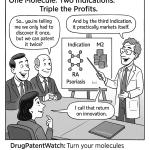
New Methods of Use: Companies can secure new patents by discovering and validating new therapeutic uses or indications for existing drugs. This allows them to maximize their initial R&D investment while opening new revenue streams and extending market exclusivity for the new use.8 A classic example is Merck’s Finasteride, first approved for benign prostate enlargement under the brand name Proscar, and later patented and marketed for male pattern baldness as Propecia.1
Polymorphs and Chiral Switches: A single drug molecule can often exist in multiple crystalline forms, known as polymorphs, which can have different physical properties like stability and solubility. Companies can patent a specific, advantageous polymorph after the original compound patent has been filed.1 A related strategy is the “chiral switch,” where a drug originally marketed as a racemic mixture (containing two mirror-image molecules, or enantiomers) is re-patented and sold as a single, more effective enantiomer. AstraZeneca’s Nexium (esomeprazole) was a highly successful chiral switch of its earlier drug, Prilosec (omeprazole).1
Combination Drugs: This strategy involves combining two or more existing drugs, often both successful in their own right, into a single fixed-dose tablet. This creates a new, patentable product that can offer improved convenience for patients and extend the commercial life of the constituent compounds.1
“Patent Thickets”: This practice involves creating a dense, overlapping web of dozens or even hundreds of secondary patents around a single blockbuster drug, covering everything from manufacturing processes and dosage forms to minor chemical variations.2 The strategic goal of a patent thicket is not necessarily to defend any single patent, but to deter generic competition by creating a prohibitively complex and expensive legal minefield that any potential challenger must navigate.2
This strategic layering of intellectual property must be understood in the context of a parallel system of regulatory protections. In the United States, innovator drugs are protected not only by patents granted by the U.S. Patent and Trademark Office (USPTO) but also by regulatory exclusivities granted by the FDA.2 These exclusivities, such as the five-year New Chemical Entity (NCE) exclusivity or the seven-year Orphan Drug Exclusivity (ODE), prevent the FDA from approving a generic competitor for a set period, regardless of patent status.4 These two systems are deeply intertwined; for instance, a six-month pediatric exclusivity granted by the FDA can be added to the end of an existing patent term.4 A truly intelligent search and analysis system, therefore, cannot view these as separate tracks. It must integrate both patent and regulatory datasets to construct an accurate, holistic picture of a drug’s total market exclusivity landscape—a core capability of advanced, pharma-specific AI platforms.3
The Ticking Clock: Loss of Exclusivity and the Economics of the “Patent Cliff”
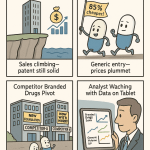
The inevitable expiration of a blockbuster drug’s patents and exclusivities creates a dramatic financial event known as the “patent cliff.” The stakes are immense; one analysis projected that branded drugs with worldwide sales of $356 billion were at risk from patent expiration in the period from 2023 to 2028 alone.7 Upon loss of exclusivity (LOE), the market is typically flooded with low-cost generic alternatives, leading to a rapid and steep decline in the innovator’s revenue and market share.6
In the United States, this process is governed by the Drug Price Competition and Patent Term Restoration Act of 1984, commonly known as the Hatch-Waxman Act.5 This landmark legislation created an abbreviated pathway for generic drug approval (the ANDA) and established the framework for patent litigation between brand and generic manufacturers.6 A key provision of the Act is the 180-day market exclusivity granted to the first generic company to successfully challenge a brand’s patent via a “Paragraph IV certification”.10 This incentive turns the period leading up to patent expiry into a high-stakes race, where precise timing and strategic legal challenges can be worth hundreds of millions of dollars in revenue.12
To navigate this perilous LOE period, innovator companies deploy a range of commercial strategies. In the 12 to 18 months prior to patent expiry, they may engage in “surge pricing” to maximize revenue from the brand.7 They also recalibrate rebate strategies with payers and pharmacy benefit managers (PBMs) and may implement innovative contracting with distributors to inhibit generic substitution.6 A primary goal is often to switch patients to a next-generation, follow-on product that is protected by a new set of patents, thereby preserving the revenue stream within the franchise.7 The complexity and financial significance of these interlocking patent, regulatory, and commercial strategies underscore the critical need for precise, predictive, and comprehensive intelligence.
The Limits of Human Diligence: Why Traditional Patent Searches Fail
The intentionally complex and high-stakes nature of the pharmaceutical patent landscape has rendered traditional, manual search methodologies dangerously obsolete. These legacy approaches are not merely inefficient; they are fundamentally ill-equipped to handle the sheer volume, velocity, and strategic nuance of modern pharmaceutical IP. Their inherent limitations create significant business risks, from missed prior art that can invalidate a company’s own patents to overlooked competitor patents that can trigger multi-million dollar infringement lawsuits.
The Data Deluge: Volume, Velocity, and Variety
The foundational challenge of any patent search is the overwhelming scale of the data. The global patent ecosystem comprises millions of documents spread across more than 100 national and regional patent offices.13 Navigating this “vast sea of information” requires specialized tools and expertise simply to manage the volume.13
This challenge is compounded by the complexity of the data’s organization. Patents are categorized using intricate and constantly evolving classification systems, such as the Cooperative Patent Classification (CPC) and International Patent Classification (IPC).13 A searcher must remain continuously updated on changes to these schemes to ensure a comprehensive search. Furthermore, the data within public databases is often inconsistent or incomplete, with missing documents or improper classifications that can lead to critical gaps in a search and, consequently, flawed strategic conclusions.13 The rapid pace of technological expansion, particularly in biotechnology, means new and complex fields are constantly emerging, making it even more difficult to identify relevant prior art using static, predefined classification systems.13
The Semantic Trap: The Inadequacy of Keyword and Classification Searches
The core technical failure of traditional patent searching lies in its reliance on keywords and classification codes. This approach is caught in a “semantic trap,” unable to grasp the context, meaning, and intent behind the language used in patent documents. This leads to a fundamental and unavoidable trade-off between precision (retrieving only relevant documents) and recall (retrieving all relevant documents). A broad keyword search—for example, for “cancer therapy”—will return an unmanageable volume of irrelevant “noise,” exhibiting low precision.14 Conversely, a highly specific keyword search risks missing critical documents that use synonyms, alternative technical phrasing, or different linguistic constructs to describe the same inventive concept, resulting in dangerously low recall.3 This is not a mere inconvenience; it is a strategic flaw that forces analysts to choose between being thorough and drowning in irrelevant data, or being specific and risking a fatal oversight.
This inadequacy is particularly acute in the pharmaceutical domain due to several factors:
Synonymy and Ambiguity: A single drug can be referred to by its brand name (e.g., Lipitor), its International Nonproprietary Name (INN) or generic name (atorvastatin), its complex IUPAC chemical name, and multiple internal company project codes.12 A keyword search for any one of these terms will fail to retrieve patents that use only the others.
Complex Legal and Technical Jargon: Patent claims are drafted by attorneys in dense, legalistic language designed to define a precise legal boundary. This language is often deliberately broad or abstract and does not lend itself to simple keyword matching.13
Markush Structures: A significant challenge in chemical patents is the “Markush” claim, a legal convention that allows an applicant to claim an entire family of related compounds using a generic chemical formula with variable components. A single Markush claim can encompass millions or even billions of distinct molecules without explicitly naming or drawing them.12 Keyword searches are “utterly useless” for identifying specific compounds protected under such claims, which are effectively invisible to text-based methods.12
“Hidden” Sequences in Biologics: For biologic drugs, which are based on proteins or nucleic acids, the specific amino acid or nucleotide sequences are the core of the invention. However, this critical data is often disclosed within the text of the patent description or embedded within figures and tables, rather than in standardized, machine-readable “Sequence Listing” files. This creates a massive information gap for traditional search methods, which cannot effectively extract and index this “hidden” sequence data.3
The Economic Drag: Analyzing the Prohibitive Cost and Time of Manual Analysis
The inherent inefficiencies of manual patent searching translate directly into significant economic costs and strategic delays. A professional patent search is a labor-intensive process requiring highly skilled experts. Consequently, even a basic patentability search can cost between $500 and $2,000, while more complex and critical analyses like Freedom-to-Operate (FTO) or invalidity searches frequently range from $3,000 to over $10,000 per search.17 The total cost to secure a single utility patent in the U.S., including the back-and-forth prosecution with the patent office, can easily exceed $50,000.18
These searches often operate under intense time pressure, driven by filing deadlines, litigation schedules, or the race to market.13 The temptation to “save money” by opting for a lower-cost search from a smaller or less-resourced firm often proves to be a false economy. Such cursory searches frequently fail to uncover critical art, leaving the client no closer to a definitive answer and forcing them to spend more money on subsequent, more thorough searches.19
This high cost and inefficiency are exacerbated by the perceived accessibility of “free” public databases like Google Patents or the USPTO’s public search portal. While these tools are valuable for basic lookups, relying on them for high-stakes pharmaceutical patent analysis is a significant business risk.12 These platforms are fundamentally general search engines, not curated, pharma-specific intelligence databases. They lack the crucial integration of regulatory data (e.g., the FDA’s Orange Book), litigation status, and post-grant challenge information. They cannot perform the complex, layered queries essential for strategic analysis (e.g., “find all patents for oral dosage forms of SSRIs set to expire in the next three years”).12 The hidden “cost” of using these free tools is not the subscription fee one avoids, but the potential for a multi-million-dollar infringement verdict or the squandering of an entire R&D budget on a discovery that is ultimately unpatentable.
Feature
Traditional Methodology
AI-Powered Methodology
Strategic Implication
Core Technique
Keyword/Classification Search
Semantic/Conceptual Search
Breaks the precision-recall tradeoff, enabling comprehensive results without overwhelming noise.
Delivers synthesized answers and predictive insights rather than raw data requiring extensive manual analysis.
Human Role
Data Miner/Reader
Strategic Analyst/Interrogator
Augments human expertise, freeing experts from tedious data retrieval to focus on high-value strategic interpretation.
The Algorithmic Revolution: AI Technologies Remaking Patent Intelligence
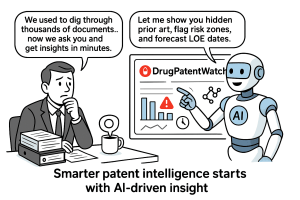
The manifest failures of traditional patent search methodologies have created a compelling need for a new technological paradigm. Artificial Intelligence, particularly in the fields of Natural Language Processing (NLP), Machine Learning (ML), and Generative AI, provides the solution. These technologies are not merely incremental improvements; they represent a fundamental revolution in how patent data is processed, analyzed, and transformed into strategic intelligence. They are moving the practice of patent analysis away from a manual, linear process of “searching” toward a dynamic, interactive process of “interrogating” a synthesized body of knowledge.
Beyond Keywords: The Power of Natural Language Processing (NLP)
Natural Language Processing is the branch of AI that gives computers the ability to read, understand, interpret, and generate human language.20 In the context of patent intelligence, NLP is the primary weapon against the “semantic trap” that ensnares keyword-based systems. Instead of simply matching strings of text, NLP models are trained on vast corpora of documents to learn the relationships between words, the nuances of grammar, and the context in which terms are used.22
This capability allows AI-powered platforms to overcome the challenges of synonymy and complex terminology. An NLP model can understand that “atorvastatin,” “Lipitor,” and (3R,5R)-7-[2-(4-fluorophenyl)-3-phenyl-4-(phenylcarbamoyl)-5-propan-2-ylpyrrol-1-yl]-3,5-dihydroxyheptanoic acid are all references to the same chemical entity.3 It can parse the convoluted sentence structure of a patent claim to identify its constituent parts—the preamble, transitional phrase, and limitations—and understand their legal significance.3
Specific NLP tasks are particularly crucial for patent analysis:
Named Entity Recognition (NER): NER models are trained to identify and categorize key entities within a text, such as drug names, company names (assignees), chemical compounds, diseases, and legal terms.20 This automatically structures the unstructured text of a patent, making it queryable in far more sophisticated ways.
Document Summarization: NLP can generate concise, accurate summaries of lengthy and dense patent documents, allowing an analyst to quickly grasp the core of an invention without having to read the entire text.24
Semantic Search: This is the most powerful application. Instead of searching for keywords, a user can search for a concept. The NLP model translates this concept into a mathematical representation (a vector) and finds documents with similar vector representations, regardless of the specific words used. This enables the discovery of conceptually related prior art that would be invisible to keyword searches.3
Learning the Landscape: How Machine Learning (ML) Identifies Patterns and Clusters
If NLP provides the ability to understand language, Machine Learning provides the engine for recognizing patterns, making classifications, and generating predictions from the resulting data.26 ML algorithms learn from vast datasets to identify underlying correlations that are often too subtle or complex for a human analyst to detect.10
In patent intelligence, ML is transforming large-scale analysis:
Automated Patent Landscaping: ML models can treat the task of creating a technology landscape as a massive classification problem.27 By training a model on a “seed set” of known relevant patents and an “anti-seed set” of irrelevant documents, the algorithm can learn the defining characteristics of a technology area. It can then scan millions of patents and classify each one as being inside or outside that landscape with a high degree of accuracy. This automates a traditionally laborious process and can uncover unexpected connections and applications of a technology that a human-defined query might miss.27
Predictive Analytics: ML is the core of predictive intelligence. By training on historical data, ML models can be used to forecast future events. For example, a model can analyze thousands of past patent litigation cases—correlating factors like patent characteristics, examiner history, and court data—to predict the probability that a newly challenged patent will be invalidated.10 Similarly, models can predict a patent’s potential importance or commercial value by analyzing its citation velocity and other metrics.3
The Synthesizer: The Role of Generative AI in Analysis and Reporting
Generative AI, powered by Large Language Models (LLMs), represents the latest and perhaps most transformative layer of the AI revolution. These models are capable of not just analyzing existing information but synthesizing it to create entirely new content, from human-like text to tables and charts.28
In patent intelligence, Generative AI serves as a powerful interface and accelerator:
Accelerating Analysis and Insight: Platforms like LexisNexis’s TechDiscovery and IPRally’s conversational review feature use Generative AI to allow users to interact with patent data in natural language.29 An analyst can ask a complex question in plain English, such as “What are the main differences in the formulation strategies for oral semaglutide patents filed by Novo Nordisk versus their competitors?” The GenAI system can then query the underlying structured data, analyze the relevant patents, and generate a synthesized summary, complete with charts and tables, in seconds.28
Automating Reporting and Documentation: A significant amount of time in patent analysis is spent on documentation tasks like creating claim charts, which meticulously map the elements of a patent’s claims against a product’s features or a piece of prior art. Generative AI is now being used to automate the creation of these documents, drastically reducing manual labor and freeing up experts to focus on strategic interpretation.31
This technological evolution is also pushing the industry towards multimodality. Pharmaceutical patents are rich with non-textual data, including chemical structure diagrams, graphs showing clinical trial results, and schematics of drug delivery devices. The next frontier for AI in this domain involves developing multimodal models that can “read” a chemical structure from an image within a patent PDF, convert it into a machine-readable format like SMILES, and correlate it with the associated claims text.22 Platforms that master this integration of text and image analysis will offer a profound competitive advantage, particularly as complex biologics and medical devices become more prevalent.
Core Applications: AI-Powered Strategies for Pharmaceutical Patent Analysis
The convergence of NLP, ML, and Generative AI is not a theoretical exercise; it is actively being deployed in a suite of powerful applications that are reshaping every facet of pharmaceutical patent strategy. These AI-driven tools are collapsing what was once a series of distinct, sequential tasks—patentability search, FTO analysis, competitive landscaping—into a single, dynamic, and iterative workflow. This integration allows R&D, IP, and legal teams to operate in a continuous loop of discovery, analysis, and strategic adjustment, dramatically accelerating the innovation cycle.
Automating Prior Art and Patentability Searches
The foundational task of any patent strategy is determining if an invention is novel and non-obvious in light of existing “prior art.” A failure at this stage can lead to the rejection of a patent application, wasting millions in R&D and filing costs. AI is making this process faster, more comprehensive, and more reliable.
AI-powered semantic search tools can understand the core concepts of an invention described in natural language and find relevant prior art even if it uses entirely different terminology.3 This ability to search by concept rather than keyword is crucial for overcoming the “semantic trap” and uncovering prior art that traditional methods would miss, leading to more robust and defensible patents.3 Platforms like IPRally and NLPatent are built around this capability.34
Furthermore, AI can automatically organize and visualize search results by clustering patents into distinct technology groups based on their content.3 This allows an analyst to quickly identify the most crowded areas of innovation and focus their detailed review on the most pertinent documents. Open-source initiatives like PQAI (Patent Quality Artificial Intelligence) are working to democratize access to these advanced search capabilities, providing powerful tools to under-resourced inventors and startups.37
De-Risking Commercialization with AI-Driven Freedom-to-Operate (FTO) Analysis
A Freedom-to-Operate (FTO) analysis is a critical, high-stakes assessment performed before a product launch to ensure it does not infringe on any valid, in-force patents held by others.38 A flawed FTO analysis can lead to catastrophic consequences, including injunctions that block a product from the market and infringement damages that can run into the hundreds of millions or even billions of dollars.12 AI is transforming this critical risk-management function from a costly, time-consuming legal exercise into a more efficient, accurate, and proactive process.
Automated Infringement Assessment: AI tools can now automate the initial stages of FTO by programmatically comparing the features of a proposed product against the claims of potentially relevant patents. Using NLP to parse claim language, these systems can flag potential conflicts with a speed and scale unattainable by human reviewers, allowing legal teams to focus their efforts on the highest-risk patents.31
Automated Claim Chart Generation: The creation of detailed claim charts is a notoriously tedious and time-consuming part of FTO analysis. AI platforms can now automate the generation of these charts, systematically mapping patent claim elements to product features or prior art documents, saving hundreds of hours of paralegal and attorney time.31
AI-Assisted “Design Around” Strategies: Perhaps the most revolutionary application of AI in FTO is its ability to facilitate proactive “design-around” strategies. Advanced platforms, such as that offered by Clearstone FTO, can analyze a blocking patent and suggest specific, technically viable modifications to a product’s design or formulation that would avoid infringement.31 This transforms FTO from a simple “go/no-go” assessment into a dynamic R&D tool that helps guide innovation toward clear commercial pathways. Companies like senseIP offer continuous, real-time FTO monitoring, alerting a company to new patent filings that could pose a threat to their products in development.41
Mapping the Battlefield: AI for Competitive Intelligence and White Space Analysis
Beyond defensive applications, AI is a powerful offensive weapon for competitive intelligence (CI). Patent databases are a rich source of CI, offering a window into competitors’ R&D strategies years before products are publicly announced or clinical trials are initiated.3
Decoding Competitor Strategies: AI algorithms can analyze a competitor’s entire patent portfolio—thousands of documents—to identify overarching patterns and strategic shifts. They can detect a growing focus on a particular therapeutic area, the adoption of a new drug delivery technology, or a consistent strategy of building “patent thickets” around key assets.26 The true power of AI in this domain comes from platforms that act as integrated data ecosystems. A tool like DrugPatentWatch, for example, does not just analyze patent documents in isolation. It links them to FDA regulatory data, court litigation records, clinical trial information, and even market sales data.3 This multi-dimensional view allows for far more sophisticated insights. An AI model can learn not just what a competitor is patenting, but how successful those patents are in litigation, which ones are linked to approved drugs, and how those drugs are performing commercially.
Identifying “White Space”: By ingesting and classifying all patents within a given technological or therapeutic domain, AI can create comprehensive landscape maps that reveal areas with little or no patenting activity.47 This “white space” represents untapped R&D territory and potential market opportunities where a company can innovate with a reduced risk of encountering a crowded IP field, potentially securing a valuable first-mover advantage.49
The Crystal Ball: Predictive Analytics for Strategic Foresight
The most advanced application of AI in patent intelligence involves leveraging machine learning to move from analysis of the past to prediction of the future. By training on vast historical datasets, these models can identify the subtle signals that forecast critical business events.
Forecasting Patent Expiration and Generic Entry: The precise date of a drug’s Loss of Exclusivity (LOE) is one of the most critical data points in pharmaceutical strategy. However, calculating it is complex, depending on the original patent expiry, any patent term extensions (PTEs) or adjustments (PTAs), various regulatory exclusivities, and the outcome of any litigation.4 AI models can integrate all of these disparate data points to generate more accurate, probabilistic forecasts of LOE dates, providing crucial foresight for both brand-name companies planning defense strategies and generic manufacturers planning their market entry.10
Modeling Patent Litigation Risks: Patent litigation is notoriously costly and unpredictable. AI is bringing a new level of quantitative rigor to this domain. By analyzing thousands of past patent challenges, ML models can identify the factors that correlate with success or failure. These can include the specific language used in the patent’s claims, the track record of the patent examiner who approved it, the arguments used in prosecution, the jurisdiction and judge hearing the case, and the litigation history of the law firms involved.10 The output is a predictive model that can assess a given patent and assign a probability of it being invalidated in court. This transforms litigation strategy from a purely legal art into a data-driven science, allowing companies to make more informed decisions about which patents to challenge, which to settle, and how to quantify and manage their legal risk as a part of their overall business strategy.11
Patent Task
Core Challenge
Key AI Technologies
Key Benefits & Outcomes
Patentability/Prior Art Search
Semantic ambiguity, data volume, finding “hidden” art.
Natural Language Processing (NLP), Semantic Search, ML Clustering.
Higher accuracy, reduced prosecution costs, stronger and more defensible patents.
Freedom-to-Operate (FTO)
High cost, time consumption, significant infringement risk.
Automated Claim Charting, GenAI for Design-Arounds, Continuous Monitoring.
The New Frontier: Navigating the Legal, Ethical, and Strategic Challenges of AI in Patent Law
While AI offers a powerful toolkit for navigating the patent fortress, its application in the creation of new inventions introduces profound challenges to legal frameworks that have been in place for over a century. The increasing role of AI as a partner in the inventive process, rather than just a tool for analysis, is forcing a re-evaluation of the fundamental principles of patent law, including inventorship, non-obviousness, and disclosure. Navigating this new frontier requires not only technological savvy but also a keen understanding of the emerging legal and ethical landscape.
The Ghost in the Machine: The Human Inventorship Requirement
The most significant legal question raised by AI in drug discovery is fundamental: who is the inventor? U.S. patent law has long been predicated on the concept of human ingenuity. This principle was tested and affirmed in the landmark case of Thaler v. Vidal, where the U.S. Court of Appeals for the Federal Circuit held that an “inventor” under the Patent Act must be a “natural person,” i.e., a human being.53 The court rejected an application that listed an AI system named DABUS as the sole inventor, cementing the rule that an AI itself cannot hold a patent.55
This ruling, however, left open the critical question of inventions made with the assistance of AI. In February 2024, the USPTO provided crucial clarity by issuing its “Inventorship Guidance for AI-Assisted Inventions”.57 The guidance affirms that AI-assisted inventions are not categorically unpatentable. The key determinant is whether at least one human has made a “significant contribution” to the conception of the invention claimed in the patent.53
To assess this, the USPTO directs examiners to use the existing legal framework for joint inventorship, established in the case Pannu v. I. & N. Cable, Inc..57 The
Pannu factors require that a person “(1) contribute in some significant manner to the conception or reduction to practice of the invention, (2) make a contribution to the claimed invention that is not insignificant in quality… and (3) do more than merely explain to the real inventors well-known concepts”.56
The USPTO guidance provides several principles for applying this test to AI-assisted inventions:
Merely presenting a problem to an AI system is not sufficient for inventorship.
However, constructing a specific, creative prompt that guides the AI to a particular solution to a problem could constitute a significant contribution.
Simply recognizing and appreciating the output of an AI is not enough, but taking that output and significantly modifying or improving upon it can be.
Designing, building, or training an AI model for a specific purpose that then leads to an invention can be a significant contribution.54
This “significant contribution” standard creates a new and critical strategic imperative: meticulous documentation. The “lab notebook” of the AI era must now include a detailed log of every substantive human-AI interaction—the specific prompts used, the rationale for data selection in training, the human interpretation of AI outputs, and the subsequent experimental work to validate or modify the AI’s suggestions.45 Companies that master this documentation process will be far better positioned to secure and defend patents for their AI-assisted discoveries.
Raising the Bar: How AI is Reshaping the Standard for “Non-Obviousness”
A cornerstone of patentability is the requirement that an invention must be “non-obvious”.9 This means the invention cannot have been obvious at the time it was made to a “person having ordinary skill in the art” (PHOSITA)—a hypothetical legal construct representing a typical practitioner in the relevant technological field.11
The widespread adoption of sophisticated AI tools in drug discovery is poised to significantly elevate the capabilities of this hypothetical PHOSITA. As AI becomes a standard tool for predicting molecular interactions, designing novel compounds, and screening candidates, the standard for what is considered “obvious” will inevitably rise.45 An invention that would have been considered a breakthrough a decade ago might be deemed obvious today if a standard AI platform could have generated it with a simple prompt.60
This legal evolution could have a profound impact on pharmaceutical innovation strategy. It may disincentivize R&D focused on incremental molecular modifications—the very foundation of many “evergreening” strategies—as these are the types of optimizations at which AI excels and which may soon be rendered obvious. This could force a bifurcation in R&D strategy. Some companies may be pushed to pursue truly groundbreaking, high-risk research into novel biological mechanisms that AI cannot easily predict. Others may pivot away from patenting incremental improvements altogether, choosing instead to protect their proprietary AI models and curated training datasets as valuable trade secrets—a strategy that carries its own risks, as trade secrets offer no protection against independent discovery or reverse engineering.59
Trust and Transparency: Addressing Bias, Confidentiality, and “Black Box” Challenges
The integration of AI into the inventive process introduces a new set of ethical and practical challenges that companies must proactively manage.
Confidentiality and Security: The use of third-party, cloud-based generative AI platforms poses a severe risk to intellectual property. Submitting a detailed description of a novel invention into such a system could be considered a public disclosure, which would destroy the novelty required for patent protection.62 Furthermore, there is a risk that this confidential data could be used to train future versions of the AI model, effectively leaking trade secrets. This necessitates a move toward on-premises AI models or partnerships with AI providers who can guarantee zero data retention and build ethical walls to protect client data.62
Algorithmic Bias: AI models are trained on data, and if that data reflects historical biases, the AI will learn and perpetuate them.63 In drug discovery, this could manifest as AI systems that focus disproportionately on biological targets relevant to well-studied populations, potentially neglecting diseases that primarily affect underrepresented groups. Ensuring that training datasets are diverse and representative is not only an ethical imperative but also a legal one, as a patent based on biased data could be vulnerable to challenge.66
The “Black Box” Problem: Many advanced AI models, particularly deep neural networks, operate as “black boxes,” meaning their internal decision-making processes are not easily interpretable by humans.67 This creates a direct conflict with a key requirement of patent law: disclosure. A patent application must describe the invention in sufficient detail to “enable” a person skilled in the art to make and use it.69 If an inventor cannot explain how or why an AI generated a particular successful drug candidate, the resulting patent application may be rejected for failing the enablement and written description requirements.67
Strategic Imperatives: Integrating AI-Driven Patent Intelligence for Competitive Advantage
The integration of Artificial Intelligence into the world of pharmaceutical patents is more than a technological upgrade; it is a fundamental strategic inflection point. The speed and depth of insight afforded by AI are becoming the new basis of competition. Organizations that successfully embed AI-driven intelligence into the core of their innovation and IP strategies will not just be more efficient; they will be able to out-think, out-maneuver, and ultimately out-innovate their rivals. This requires a conscious evolution of teams, processes, and corporate culture.
Building the Augmented IP Team: Fusing Human Expertise with Machine Intelligence
The rise of AI does not signal the end of the human expert in patent law or competitive intelligence. Instead, it heralds a transformation of their role. AI is not a replacement for human intellect but a powerful augmentation tool that handles the scale and velocity of data processing, freeing human experts to focus on what they do best: strategic interpretation, nuanced legal analysis, and creative problem-solving.3
This new paradigm of Human-AI Collaborative Intelligence requires building an “augmented IP team” with a blended skillset.43 The IP professional of the future must be more than a legal scholar or a scientist; they must also be data-literate, capable of formulating sophisticated queries (prompt engineering), and adept at critically evaluating and contextualizing AI-generated outputs.71 The most successful organizations will be those that recognize that optimal intelligence comes from this synergy—where AI systems process vast datasets to identify patterns and generate hypotheses, and human domain experts interpret those findings, validate their plausibility, and translate them into actionable business strategy.70 This integration will necessitate a cultural and organizational shift, breaking down the traditional silos between IP/Legal departments and R&D/Commercial teams. The capabilities of real-time FTO analysis, AI-suggested design-arounds, and strategic white-space mapping demand that IP strategy be a continuous, integrated part of the R&D process from its earliest stages, not a final checkpoint before filing.3
From Defensive Tool to Offensive Weapon: A Framework for Proactive Patent Strategy
Historically, patent searching has been viewed primarily through a defensive lens—a necessary legal check to mitigate the risk of infringement or ensure an invention is patentable.3 AI transforms patent intelligence into a proactive, offensive weapon for identifying and seizing market opportunities. A framework for this new approach involves a continuous strategic cycle:
Monitor: Implement AI-powered systems for continuous, real-time monitoring of the entire IP landscape. This includes tracking competitor patent filings, new clinical trial initiations, regulatory announcements, and litigation events to detect the earliest signals of market shifts.43
Analyze: Employ AI-driven landscaping and clustering tools to map technology domains and therapeutic areas. The primary goal is to identify “white space”—untapped niches with low patent density that represent fertile ground for high-value R&D investment.48
Predict: Leverage predictive analytics to model future events. This includes forecasting competitor LOE timelines with greater accuracy and quantifying the risk of patent litigation to inform strategic decisions about which legal battles to fight, settle, or avoid.11
Act: The final and most critical step is to integrate these AI-generated insights directly into the core strategic decision-making processes of the organization. White-space analysis should guide R&D portfolio management; competitive intelligence should inform business development and M&A targeting; and predictive litigation models should shape legal and financial planning.43
Future Outlook: The Trajectory of AI in Patent Prosecution and Portfolio Management
The AI revolution in patent intelligence is still in its early stages. The next wave of disruption will move beyond search and analysis to transform the very processes of creating and managing intellectual property.
AI in Patent Prosecution: The emergence of AI tools designed to assist in the patent prosecution process is set to further accelerate the innovation lifecycle. These platforms can help draft initial versions of patent applications, including the detailed description and claims.32 They can analyze office actions from patent examiners and suggest arguments for response. By analyzing an examiner’s entire history of past decisions, AI can even predict their likely objections and help attorneys proactively address them, increasing the efficiency and success rate of securing a patent.72
AI in Strategic Portfolio Management: AI will enable a far more dynamic and data-driven approach to managing large patent portfolios. ML models will be able to continuously assess the strategic value of every patent in a portfolio, analyzing its citation patterns, relevance to current R&D projects, and coverage of key market products. This will allow companies to make more informed decisions about which patents to maintain, which to license out to generate revenue, and which to abandon to save on maintenance costs, ensuring the entire portfolio is strategically aligned with current business objectives.26
Ultimately, the competitive advantage conferred by AI in this domain is not static; it is a compounding feedback loop. A company that uses AI to identify a white space, invent a novel drug, and prosecute a strong patent generates new, proprietary data. This data—from biological experiments to legal arguments—can then be used to train their next generation of AI models, making them smarter and more effective. Over time, this creates a proprietary data and intelligence advantage that competitors will find increasingly difficult to overcome. In the hyper-competitive landscape of the pharmaceutical industry, the future belongs to the organizations that can learn the fastest. By integrating AI into the heart of their IP strategy, they are building the engine for that learning.
DrugPatentWatch has revolutionized our approach to identifying and seizing business opportunities, accessed August 6, 2025, https://www.drugpatentwatch.com/