The pharmaceutical industry operates at the confluence of groundbreaking scientific innovation, intricate regulatory frameworks, and profound public health imperatives. At the heart of this complex ecosystem lies patent linkage, a mechanism that profoundly shapes the trajectory of drug development, market competition, and access to life-saving medicines. For business professionals navigating this landscape, a deep understanding of patent linkage is not merely a legal curiosity but a strategic necessity, offering pathways to competitive advantage and informed decision-making.
The Nexus of Innovation and Access: Unpacking Patent Linkage
Defining Patent Linkage: A Critical Intersection
Patent linkage represents the pivotal connection between the regulatory approval process for pharmaceuticals and the patent status of a drug.1 In essence, it dictates that a regulatory authority, such as the U.S. Food and Drug Administration (FDA), must consider the patent status of an innovator drug before granting marketing approval for a generic or biosimilar version.2 This system is meticulously designed to prevent the marketing of generic drugs while the brand-name drug’s patent remains in effect, thereby safeguarding intellectual property rights.1
Should a valid patent exist, the regulatory body may be compelled to notify the patent owner of the generic application, delay approval until the patent expires or is invalidated, or even reject the application outright.2 This framework fundamentally alters the traditional battleground of patent infringement. Instead of a reactive measure where innovators sue after an infringing product has entered the market, patent linkage transforms enforcement into a proactive, pre-market regulatory and legal framework.3 This pre-emptive capability offers a significant strategic advantage to brand-name companies. It allows them to preserve their market exclusivity and avoid the complexities, uncertainties, and potential damages associated with widespread post-launch infringement. For generic companies, while challenging, it establishes a formalized pathway to contest patents before they commit substantial commercial investment to a potentially infringing product.
The Dual Mandate: Incentivizing Innovation, Facilitating Access
The overarching purpose of patent linkage is multifaceted. Primarily, it aims to protect the intellectual property rights of patent holders, providing a crucial incentive for the immensely costly and inherently risky endeavor of pharmaceutical research and development (R&D).1 Without robust IP protection, the substantial investments—often exceeding $2 billion for each new drug—required for drug discovery and development would be nearly impossible to recoup, potentially stifling future innovation.5
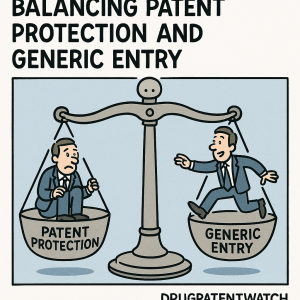
Concurrently, these systems are designed to ensure that generic versions of drugs can enter the market promptly once the original patent expires or is invalidated.1 This delicate balance is paramount for public welfare, as generic competition stands as the most proven and sustainable method for reducing medicine prices, enhancing affordability, and broadening patient access to essential treatments.7 The system theoretically establishes clearer pathways for patent enforcement and dispute resolution, which could, in principle, reduce litigation costs while providing more structured mechanisms for protecting legitimate intellectual property rights.7
However, the very certainty patent linkage seeks to provide can be a double-edged sword. While it offers generic companies greater procedural clarity in planning their marketing strategies and helps them avoid potential damages if a commercialized product is later found to infringe, it can also significantly delay approval until a patent expires or is invalidated.2 This creates a paradoxical situation: the system provides
procedural certainty by establishing a clear framework for patent challenges and notifications, yet it simultaneously introduces market entry uncertainty for generic companies due to the potential for protracted litigation and regulatory stays. For innovator companies, it offers the certainty of a formalized enforcement mechanism but also the certainty that their patents will be challenged. This inherent tension between procedural clarity and market entry delay is a fundamental characteristic that stakeholders must navigate.
A significant, often overlooked, implication of patent linkage is how it can transform regulatory authorities. In jurisdictions where patent linkage is recognized, the regulatory authority effectively becomes a patent enforcement agency, tasked with functions for which they generally possess no inherent expertise.3 Regulatory bodies like the FDA, traditionally focused solely on ensuring drug safety, efficacy, and quality, are now compelled to adjudicate complex patent disputes.3 This expansion of their mandate beyond core competencies can divert resources, increase administrative burdens, and introduce a new layer of complexity to drug approval processes. It also raises pertinent questions about whether these agencies are the most appropriate bodies to make determinations on patent validity or infringement, which are typically the exclusive domain of specialized courts.
Why Patent Linkage Matters: A Strategic Imperative for Pharma
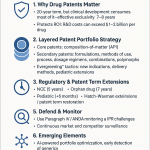
For pharmaceutical companies, understanding patent linkage transcends mere legal compliance; it is a strategic imperative that profoundly influences drug development pipelines, market entry timelines, competitive positioning, and ultimately, financial performance.1 Innovator companies strategically leverage patent linkage to maximize market exclusivity, protect their substantial R&D investments, and meticulously manage the lifecycle of their blockbuster drugs.5 Generic manufacturers, conversely, must expertly navigate these complex systems to identify optimal opportunities for market entry, strategically challenge weak patents, and secure their rightful share of the market once exclusivity periods conclude.1
The intricate interplay between patent protection and generic entry directly impacts drug pricing and accessibility, making it a critical consideration for healthcare systems and patient populations globally.7
The American Blueprint: The Hatch-Waxman Act and Its Legacy
A Historical Perspective: Catalyzing the Generic Drug Industry
The Drug Price Competition and Patent Term Restoration Act of 1984, universally known as the Hatch-Waxman Act, fundamentally reshaped the U.S. prescription drug market.15 Before its enactment, generic manufacturers faced formidable hurdles, often being required to replicate costly animal and clinical studies to prove the safety and efficacy of their products, even for drugs whose patents had already expired.16
Hatch-Waxman introduced a streamlined pathway for generic drug products to enter the market through Abbreviated New Drug Applications (ANDAs).15 These applications only necessitated demonstrating bioequivalence to an innovator drug, dramatically reducing the cost and time associated with generic development and thereby catalyzing the modern generic drug industry.15 The Act was meticulously crafted to strike a delicate balance: providing robust incentives for brand-name manufacturers to develop novel drugs while simultaneously facilitating the entry of lower-cost generics for unpatented products.1 Its impact has been profound; by 2012, generic drugs accounted for approximately 84% of all prescriptions dispensed in the U.S., yet comprised less than 20% of total drug costs.15 This trend continued, with generics filling an estimated 91% of all prescriptions in 2022.17 Despite its undeniable success, the Act has not been without its criticisms over the years, with issues such as deliberate manipulation of the system and unexpected challenges like “pay-for-delay” agreements emerging.15
Pillars of the System: The Orange Book, 30-Month Stay, and 180-Day Exclusivity
The U.S. patent linkage system, established under the Hatch-Waxman Act, is widely recognized as a global benchmark.2 It rests upon several interconnected components:
The Orange Book: The FDA’s “Approved Drug Products with Therapeutic Equivalence Evaluations,” commonly referred to as the Orange Book, serves as a public registry listing approved chemical drugs and their associated patents.11 These listed patents typically cover active ingredients, formulations, and medical uses, though not manufacturing processes or packaging.2 Innovator companies are mandated to submit relevant patent information to the FDA at the time of their New Drug Application (NDA) submission for inclusion in the Orange Book.18 The Orange Book transcends its role as a mere regulatory list; it functions as a dynamic, publicly accessible central hub for competitive intelligence. It allows generic drug manufacturers to review patent information, enabling them to determine patent expiration dates and understand the subject matter of patents, thereby accelerating their assessment of potential infringement.11 This capability is critical for identifying market opportunities, anticipating competitive threats, and informing strategic R&D and market entry decisions.19 Both innovator and generic companies actively mine this data to inform their strategic decisions, making it an indispensable tool for navigating the pharmaceutical landscape.19 Its transparency, while sometimes leading to controversies such as “over-listing” of patents, fundamentally shapes market dynamics.
Patent Certification by Generic Applicants: When filing an ANDA, a generic manufacturer must submit one of four types of certifications regarding the listed patents:
Paragraph I: Certifies that no patent information has been submitted for the innovator drug.2
Paragraph II: Certifies that the listed patent has already expired.2
Paragraph III: Certifies that the generic product will not be marketed until the listed patent expires.2
Paragraph IV: Certifies that the listed patent is invalid, unenforceable, or will not be infringed by the generic applicant’s product. This is the most litigious certification, as it directly challenges the innovator’s patent rights.2
30-Month Stay: A Paragraph IV certification triggers a critical 45-day window during which the innovator company can file a lawsuit for patent infringement.2 If a lawsuit is initiated within this specified period, the FDA is automatically barred from granting final approval to the generic drug for a period of up to 30 months.2 This regulatory stay is intended to provide sufficient time for the underlying patent litigation to proceed and potentially resolve before the generic product enters the market.20 Should the litigation be resolved in favor of the generic manufacturer sooner, the stay is terminated.22 While the 30-month stay is presented as a mechanism to allow for litigation, it effectively grants the innovator a guaranteed period of extended market exclusivity, irrespective of the ultimate validity of the challenged patent.10 This means that even a weak patent, if listed and challenged, can secure an additional two-and-a-half years of monopoly for the brand-name drug. This direct impact on generic entry timelines has significant implications for drug pricing and patient access, as it postpones the availability of more affordable alternatives, thereby maintaining higher costs for consumers and healthcare systems for an extended period.
180-Day Exclusivity: A powerful incentive within the Hatch-Waxman framework is the 180-day marketing exclusivity period awarded to the first generic manufacturer to file a substantially complete ANDA with a Paragraph IV certification and successfully challenge the patent (or reach a settlement).10 During this crucial period, the FDA is prohibited from approving other generic versions of the same drug.23 This exclusivity is a highly sought-after prize, often leading to significant “windfall profit” for the first generic entrant due to the limited competition.23 This provision transforms generic manufacturers into active “patent watchdogs” 14, encouraging them to invest substantial resources in challenging patents, even those that might be considered “shaky” or “improperly issued”.10 The potential for a lucrative, albeit temporary, market monopoly drives significant litigation activity and shapes the competitive strategies of both generic and innovator companies, fostering a dynamic environment of challenges and defenses.10
Global Tapestry: Patent Linkage Systems Across Jurisdictions
Patent linkage, while a cornerstone of U.S. pharmaceutical regulation, is implemented with significant variations across the globe, reflecting diverse national priorities and legal traditions.7
China’s Evolving Framework: A New Giant’s Approach
China introduced its patent linkage system in 2021, a pivotal development influenced by commitments under the Regional Comprehensive Economic Partnership (RCEP).2 This framework represents a modern attempt by a major global player to balance intellectual property protection with public health needs within its rapidly expanding pharmaceutical market.
Similar to the U.S. Orange Book, China’s system utilizes a public platform managed by the National Medical Products Administration (NMPA) for listing relevant patent information.2 A key distinction, however, is that patent listing in China is
not mandatory; only patents that are listed can be enforced under the patent linkage system during regulatory approval.2 The scope of patents eligible for listing is broad, covering active ingredients, formulations, and medical uses for chemical drugs, as well as sequences and medical uses for biologics, and extracts, formulations, and medical uses for Traditional Chinese Medicines (TCMs).2
Generic applicants in China, when filing with the NMPA, must submit a declaration akin to the U.S. certifications.2 China’s system includes “Type 4” declarations (similar to U.S. Paragraph IV), which encompass Type 4.1 (asserting patent invalidity) and Type 4.2 (asserting non-infringement by the generic product).26 A Type 4 declaration triggers a shorter 9-month stay for chemical drugs if the innovator files a lawsuit within 45 days.2 Critically, the first generic applicant who successfully challenges a brand drug’s patent
and is the first to receive market approval in China can enjoy a 12-month market exclusivity period.26 During this period, the NMPA may review, but will not approve, other generic drug applications, with the exception of co-challengers.26
Early court decisions within China’s nascent patent linkage system have largely favored generic applicants.26 However, landmark cases, such as
AstraZeneca plc v. Sichuan Guowei Co. Ltd. (2023), marked the first instance where China’s Supreme People’s Court found a generic product to infringe a brand company’s patent under the new system.26 This broad scope, covering chemical drugs, biologics, and TCMs, along with the 12-month market exclusivity for the first approved generic challenger, suggests that China is not merely adopting a foreign model. Instead, it appears to be strategically adapting patent linkage to foster its own domestic pharmaceutical industry, encouraging local generic R&D and potentially aiming for market leadership. The current absence of a mechanism to challenge improper patent listings also suggests a regulatory approach that, at least initially, prioritizes the innovator’s declared patents, potentially to encourage foreign investment and domestic IP development.2
Canada’s PM(NOC) Regulations: A Distinct North American Model
Canada’s Patented Medicines (Notice of Compliance) Regulations, commonly known as the PM(NOC) Regulations, establish a direct link between the approval of subsequent-entry drugs (generics and biosimilars) and patents pertaining to the brand-name reference product.27 These regulations are designed to prevent patent infringement by potentially blocking infringing products from market entry.27
The PM(NOC) Regulations comprise five main components: the listing of patents on a patent register, the filing of a subsequent-entry drug submission, a right to sue for patent infringement, the potential approval of the subsequent-entry product, and potential claims for damages.28 Innovators are required to list eligible patents and Certificates of Supplementary Protection (CSPs) on a public patent register maintained by Health Canada.27 For listing, patents must claim the medicinal ingredient, its use, or a dosage form/formulation.27 CSPs, which can provide up to two years of additional protection for new drugs due to regulatory delays, are also eligible.27 Strict timing and subject matter requirements apply to these listings.27
If a generic manufacturer seeks approval by comparing its product to a brand-name drug with listed patents, it must either confirm consent from the brand-name manufacturer, commit to waiting until patent expiry, or serve a Notice of Allegation (NOA).27 An NOA asserts that the patent is invalid, would not be infringed, or is ineligible for PM(NOC) protection, providing a detailed legal and factual basis for these assertions.27
Upon receiving an NOA, the brand-name manufacturer has 45 days to initiate a lawsuit in the Federal Court.27 If a lawsuit is commenced, the Minister of Health is automatically prevented from approving the generic product for 24 months [27, S_