Prosecute to Win: Why Your Drug Patent Portfolio Is Your Next Competitive Assertion Asset
The moment a generic manufacturer files an Abbreviated New Drug Application (ANDA) with a Paragraph IV certification, the game changes. Suddenly, every word in every claim your prosecution team wrote five or ten years ago gets examined by a team of adversarial attorneys whose sole job is to find what you got wrong. They will comb through the prosecution history for statements that limit your claims. They will map your specification against your claims to find written description gaps. They will pull prior art your examiner never cited. And they will do all of this with the benefit of hindsight you did not have when you were drafting.
This is not a theoretical problem. Between 2000 and 2023, generic manufacturers succeeded in invalidating or designing around brand-name drug patents in roughly 75% of Paragraph IV challenges that went to a decision, according to data compiled by Amin Talati Wasserman and reviewed by the Food and Drug Law Institute [1]. The brands that survived those challenges were not simply lucky. They prosecuted differently.
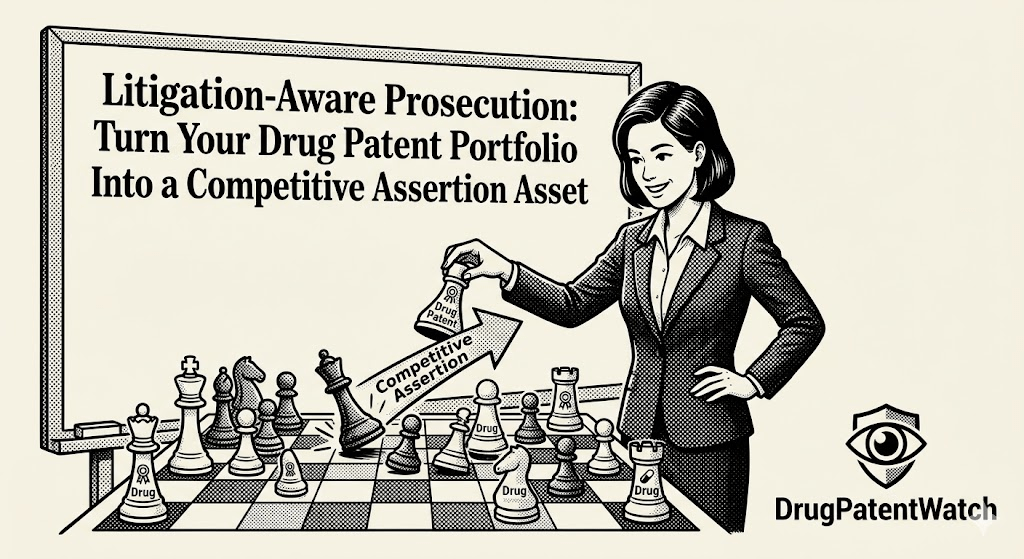
Litigation-aware prosecution is the practice of writing and prosecuting patent applications with one eye perpetually on the courtroom. It means anticipating the arguments your future adversary will make and foreclosing those arguments before the application is ever filed — or at least before it issues. It means building a portfolio that functions as a genuine assertion asset, not merely a regulatory placeholder on the Orange Book.
This piece walks through the mechanics of that practice, the case law that shapes it, the prosecution decisions that most often blow up in litigation, and the portfolio architecture strategies that sophisticated pharmaceutical companies use to convert their IP into durable competitive positions. Data from DrugPatentWatch surfaces throughout to give context to specific patent expiry windows, litigation timelines, and claim structures that have been tested in court.
The Orange Book Is Not a Defense Strategy
Most pharmaceutical companies list their patents on the Orange Book because the Hatch-Waxman Act requires it. A listed patent triggers the 30-month stay that buoys stock prices and deters some generic entrants. That is the extent of the strategic thinking for many brands.
It is not enough.
The Orange Book listing is the starting gun, not the finish line. What matters is whether the listed patent — when litigated — actually holds. A patent that issues, gets listed, and then gets invalidated under 35 U.S.C. § 103 for obviousness after a 10-day bench trial is worse than no patent at all. It provides a false sense of security during development, generates no licensing revenue, and can be used by the generic as a roadmap for designing around your entire portfolio.
Consider the trajectory of Allergan’s Restasis patents. Allergan listed several patents covering cyclosporine ophthalmic emulsions, but when Teva, Akorn, and other generics filed Paragraph IV certifications, the district court found the asserted claims obvious [2]. Allergan’s attempt to transfer the patents to the Saint Regis Mohawk Tribe to invoke tribal sovereign immunity — an audacious maneuver that generated significant press — was ultimately rejected by the Federal Circuit [3]. The patents were invalidated. Restasis lost exclusivity. The point here is not to relitigate Allergan’s strategy, but to illustrate that a large Orange Book listing does not translate into durability without prosecutorial rigor at the outset.
The companies that consistently hold exclusivity through Paragraph IV challenges share a set of prosecution practices that most of their competitors do not follow systematically. Those practices are the subject of this article.
What ‘Litigation-Aware’ Actually Means in Practice
The phrase gets used loosely. Cleared up: litigation-aware prosecution is a specific set of choices made during drafting, prosecution, and portfolio maintenance that reduce invalidity risk and enhance enforceability. It is not simply ‘writing good claims’ or ‘doing a thorough prior art search.’ Those are necessary but not sufficient.
Four concrete practices define the discipline:
1. Claim Architecture That Survives Both § 102 and § 103 Challenges
Most prosecution teams focus on getting claims allowed. That means distinguishing prior art, which typically means narrowing claims through amendment or argument. The problem is that every narrowing amendment becomes part of the prosecution history and can be used to limit claim scope through prosecution history estoppel or disclaimer.
Litigation-aware prosecution flips this logic. The question during drafting is not ‘What is the broadest claim we can get allowed?’ but ‘What is the broadest claim that will survive an IPR petition and a § 103 obviousness attack at trial?’
Those are meaningfully different questions. A claim that gets allowed by an examiner who missed a key prior art reference might be broad, but it is brittle. A claim drafted to survive a coordinated obviousness attack with secondary considerations evidence may require narrower scope at the independent claim level, but it is durable.
The practical implication: before filing, the prosecution team should run a mock obviousness analysis against the intended independent claims using the most relevant prior art they can find. If they cannot defeat that analysis on paper, the claim needs to be restructured — not just narrowed, but architected to require a combination that no prior art reference or combination of references makes obvious, with secondary considerations (commercial success, long-felt need, failure of others) documented in the specification to be raised at trial.
2. Written Description and Enablement as Litigation Armor
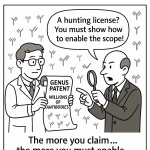
The Federal Circuit has tightened written description requirements for pharmaceutical patents substantially over the past decade. Ariad Pharmaceuticals v. Eli Lilly confirmed that written description is a separate requirement from enablement, and the court has applied it aggressively in genus claim cases [4]. Amgen v. Sanofi — which went to the Supreme Court in 2023 — drew the clearest line yet: functional claiming over an entire genus is presumptively invalid without enablement across the full breadth of the claim [5].
For small-molecule pharmaceutical patents, the written description requirement means that your specification must describe the actual compounds or compound classes you are claiming with sufficient particularity that a person of ordinary skill would recognize that you, the inventor, actually possessed what you are claiming. A specification that describes one compound and then claims a genus of ten thousand compounds will not survive litigation.
Litigation-aware practice means drafting specifications with representative examples across the claimed genus, providing structural data (X-ray crystallography, NMR spectra, biological assay data) for each representative, and explicitly connecting the structural features of the genus to the functional properties that make the genus patentable. That sounds expensive because it is. It is substantially less expensive than losing an IPR or a bench trial.
3. Anticipating the Prior Art Your Examiner Will Not Find
Patent examiners are skilled professionals working under time constraints that make thorough prior art searches genuinely difficult. A pharmaceutical examiner may have three to five hours to search the prior art for a complex chemistry application. Adversarial attorneys hired by a generic manufacturer to challenge your patent will spend 500 to 1,000 hours on prior art searches, including foreign patent databases, academic literature, conference abstracts, and internal documents obtained through discovery.
Litigation-aware prosecutors conduct that search themselves before filing. They use competitive intelligence tools — including DrugPatentWatch for mapping competitive patent landscapes and identifying prior art by therapeutic area and chemical class — and they disclose what they find to the examiner proactively. The duty of candor under 37 C.F.R. § 1.56 requires disclosure of material prior art, but sophisticated prosecutors go beyond compliance: they disclose material prior art and explain in the prosecution record why it does not anticipate or render obvious the claimed invention.
That explanation matters at trial. If the same prior art reference is later raised in litigation, the brand can argue that the examiner considered and rejected it. If the brand did not disclose it, the generic can argue inequitable conduct — a defense that, if successful, renders the entire patent unenforceable.
4. Prosecution History Management Across a Portfolio
A drug product rarely has one patent. It has a portfolio: a composition patent, a formulation patent, a method of treatment patent, and potentially polymorph and metabolite patents. Each of those patents has its own prosecution history, and statements made in one prosecution can be used to limit claims in a related patent.
In Omega Engineering v. Raytek, the Federal Circuit held that statements made in related applications within the same family can disclaim claim scope across all family members [6]. In pharmaceutical litigation, generics routinely comb prosecution histories of all related patents looking for statements that limit the scope of the patent at issue.
Litigation-aware portfolio management means maintaining consistency across all related prosecution histories, flagging limiting statements before they are made, and using continuation practice strategically to add claims that fill gaps exposed by the prosecution history of the parent application.
The Paragraph IV Ecosystem: Reading the Data
To understand why litigation-aware prosecution matters commercially, it helps to understand the volume and velocity of Paragraph IV litigation.
Between 2010 and 2023, the FDA received more than 5,000 Paragraph IV certifications, triggering litigation on a substantial portion of them [7]. The 30-month stay that follows a Paragraph IV certification and subsequent brand lawsuit buys time, but it does not buy certainty. Generic manufacturers have become increasingly sophisticated at identifying weak patents and filing challenges designed to collapse brand exclusivity before or shortly after the stay expires.
‘Of the Paragraph IV ANDA decisions issued from 2000 to 2023, patent owners prevailed in only about 25% of cases that reached a final merits decision — a figure that has been remarkably consistent across product categories and patent types.’ [1]
DrugPatentWatch tracks these dynamics in real time, providing data on which patents are expiring, which ANDAs have been filed, which patents face Paragraph IV certifications, and the litigation outcomes that follow. Competitive intelligence teams at major pharmaceutical companies use this data to assess the vulnerability of competitor portfolios and the strength of their own before dedicating resources to building out a patent family.
The data reveals a pattern: patents covering the core active ingredient (NCE patents) are rarely challenged successfully because the relevant prior art is usually the compound itself and the challenger must prove the compound was known or obvious before the filing date. Formulation patents and method of treatment patents are the litigation battleground. Those are the patents where prosecution choices — claim scope, specification support, prosecution history statements — determine whether the brand survives the challenge.
Inter Partes Review: The Parallel Track That Changed Everything
The America Invents Act of 2011 created Inter Partes Review (IPR), and IPR changed pharmaceutical patent litigation as fundamentally as Hatch-Waxman itself had in 1984.
Before IPR, challenging a pharmaceutical patent meant litigating in district court under Hatch-Waxman. That process takes three to five years, costs tens of millions of dollars on each side, and produces a single decision from a single district court judge whose pharmaceutical chemistry expertise may be limited. The Federal Circuit reviews that decision de novo on claim construction, which adds another one to three years.
IPR offers a faster, cheaper, patent-examiner-adjudicated alternative. A petition filed at the Patent Trial and Appeal Board (PTAB) can be decided in 12 to 18 months. The standard for institution is lower than summary judgment: a petitioner need only show ‘a reasonable likelihood’ that at least one challenged claim is unpatentable. And the PTAB has historically been more willing than district courts to find claims obvious, particularly for pharmaceutical patents claiming formulations or methods of use.
Generic manufacturers have used IPR aggressively. A coordinated attack that files an ANDA with a Paragraph IV certification and simultaneously files an IPR petition can pressure brand companies on two fronts at once. The PTAB proceeding creates IPR estoppel that limits what the generic can raise in district court, but the PTAB’s faster timeline means a brand might lose at the PTAB before the district court case even reaches trial.
What PTAB Statistics Tell Prosecution Teams
PTAB instituted review on approximately 62% of IPR petitions filed between fiscal year 2012 and fiscal year 2022 [8]. Of petitions that were instituted and proceeded to a final written decision, the petitioner (the party challenging the patent) prevailed on at least some claims in roughly 75% of cases [8].
Those numbers should alarm any pharmaceutical patent prosecution team. They mean that if a generic files an IPR against your formulation patent, there is better than a 60% chance PTAB will review it and, if reviewed, roughly a 75% chance they will invalidate at least some claims.
The prosecution choices that most often result in PTAB institution and claim cancellation are:
Claims that rely on a single distinguishing limitation that turns on claim construction — because PTAB and district courts have historically construed claims differently, and what passes muster at district court may be construed more broadly at PTAB
Claims whose only support in the specification is the claimed result, not the claimed structure — which creates written description vulnerability
Claims that were allowed by examiner after amendments that created prosecution history estoppel limiting the claim scope below what is needed to capture generic formulations
Method of treatment claims that rely on clinical data generated after the filing date, which the patent owner cannot properly introduce to bolster a specification that was deficient at filing
Vanda Pharmaceuticals v. West-Ward: A Litigation-Aware Win
Not every brand loses at PTAB. Vanda Pharmaceuticals v. West-Ward Pharmaceuticals produced a Federal Circuit ruling in 2018 that upheld method of treatment claims covering the use of tradipitant (then a different drug, iloperidone) based on a specific genetic biomarker [9]. The claims survived because they required a specific step — genotyping the patient for a CYP2D6 polymorphism — that was not disclosed in any prior art reference and that was supported by detailed clinical trial data in the specification.
The prosecution team had, deliberately or not, built a claim that required a patient selection step tied to a specific genetic marker. That structure made the claim both non-obvious (no prior art had suggested the connection between this particular genotype and this particular drug interaction) and enabled (the specification contained clinical data demonstrating the genotype-response relationship). It was litigation-durable because it was built on real clinical science described in the patent, not merely asserted in the claims.
That is what litigation-aware prosecution looks like from the outside: a claim structure that holds up because the specification can support it and the prior art cannot anticipate it.
Building the Claim Architecture: A Technical Blueprint
Claim architecture in a pharmaceutical patent portfolio is not merely a legal exercise. It reflects decisions about what the company believes it can prove in court — and those decisions should be made before filing, not during litigation.
Independent Claims: The Floor, Not the Ceiling
Independent claims should define the minimum scope required to capture any commercially viable generic formulation. That sounds obvious. In practice, prosecution teams often write independent claims that are either too broad (and therefore vulnerable to prior art) or too narrow (and therefore easily designed around).
The calibration requires understanding the generic manufacturer’s options. If your independent claim covers a solid oral dosage form of Drug X in a range of 10 mg to 100 mg, and a generic can reformulate at 5 mg or 150 mg and achieve the same therapeutic effect, your claim does not capture the commercially relevant generic product. You need dependent claims — or, if your independent claim is too narrow, a continuation application — to close that gap.
Litigation-aware prosecution maps the design-around space before filing. What formulation modifications could a generic make that would remain within the FDA-approved therapeutic window but fall outside your independent claim? Those modifications define what your dependent claims need to cover. If your independent claim cannot be broadened to capture them without becoming obvious, you need to build a continuation strategy that files additional claims as you learn more about the competitive landscape.
Dependent Claims as Independent Fallback Positions
Every dependent claim in a well-prosecuted pharmaceutical patent functions as an independent claim in waiting. If the independent claim is invalidated, the dependent claims survive only if they are independently patentable — meaning the additional limitation must itself be non-obvious and supported by the specification.
Prosecution teams that write dependent claims as mere formalities — ‘wherein the tablet comprises a coating,’ with no data in the specification demonstrating why that coating matters — are not building fallback positions. They are creating an illusion of coverage that will collapse in litigation when the generic argues that the dependent claim is also obvious because coated tablets are well-known in the art.
Litigation-aware practice drafts dependent claims that each add a limitation supported by specific data — stability data, bioavailability data, dissolution data, clinical outcome data — demonstrating that the limitation provides a non-obvious technical advantage. That data lives in the specification. When the generic challenges the independent claim, the brand falls back to the dependent claim and wins because the dependent claim’s distinguishing limitation is backed by hard data, not mere description.
Formulation Claims: The Specific Numbers Trap
Pharmaceutical formulation patents frequently claim specific ranges: ‘from about 5% to about 20% by weight of excipient X.’ Generic manufacturers attack these ranges in two ways.
First, they argue the range is inherently anticipated because a prior art formulation of a related compound used a similar excipient in an overlapping range. Courts have found inherent anticipation even where the prior art did not explicitly disclose the exact range, if the prior art’s practice would necessarily result in an overlap [10].
Second, they argue the range is obvious because it represents routine optimization. Pharmaceutical formulation is highly empirical, and courts have been willing to find obviousness where a formulator of ordinary skill would have been motivated to adjust excipient ratios using standard techniques with a reasonable expectation of achieving the claimed result.
The prosecution response to both attacks requires, first, prior art searches that identify the closest formulation prior art before you set your ranges, and second, data in the specification demonstrating that the claimed range provides a non-obvious improvement over the closest prior art. If the range was arrived at through routine optimization, it probably is obvious. If it was arrived at because the inventor discovered an unexpected technical effect at that range — better dissolution, greater stability, reduced food effect — that unexpectedness needs to be documented with data and disclosed in the specification.
Method of Treatment Claims: The § 101 Minefield
The Supreme Court’s decision in Mayo Collaborative Services v. Prometheus Laboratories created a § 101 subject matter eligibility problem for a class of pharmaceutical method of treatment claims that had previously been considered safe [11]. Mayo held that a method of measuring a drug metabolite level and adjusting dosage accordingly was not patent-eligible because it claimed a law of nature — the relationship between metabolite levels and drug efficacy.
Post-Mayo, method of treatment claims that hinge on a natural phenomenon (a genetic marker, a biomarker, a physiological relationship) face § 101 challenges both at the USPTO and in district court. The Federal Circuit has tried to carve out a safe harbor for method of treatment claims that require administering a drug to a patient — the physical act of administration, the court has held, transforms the abstract relationship into patent-eligible subject matter — but the safe harbor has limits and is not consistently applied [12].
Litigation-aware prosecution for method of treatment claims means drafting claims that require discrete, specific, patentee-defined treatment steps rather than merely claiming the application of a natural relationship. A claim that recites ‘administering to a patient in need thereof a therapeutically effective amount of compound X’ combined with a specific patient selection criterion supported by clinical trial data has a stronger § 101 footing than a claim that recites measuring a biomarker and adjusting dosage, even if both claims are directed at the same clinical practice.
The Prosecution History: Your Future Adversary’s Best Friend
Everything you say to the USPTO becomes part of the public prosecution history. Every argument you make, every amendment you offer, every interview summary, every response to a restriction requirement — all of it is available to generic manufacturers, their attorneys, and the courts.
The doctrine of prosecution history estoppel bars a patent owner from using the doctrine of equivalents to recapture claim scope surrendered during prosecution. The doctrine of prosecution history disclaimer prevents a patent owner from arguing for a claim construction that contradicts statements made to the examiner. Together, these doctrines mean that what you said to get your patent allowed can prevent you from winning in litigation even if your competitor’s product is functionally identical to what you invented.
The ‘Magic Words’ Problem
Patent prosecutors under deadline pressure develop habits. One of those habits is using boilerplate language in office action responses: ‘The claimed invention is distinguished from [prior art reference] because the claims require [limitation X].’ That language works to get claims allowed. It also works to limit your claims to [limitation X] for the life of the patent.
The Federal Circuit has been clear: prosecution disclaimer requires a ‘clear and unmistakable’ surrender of claim scope [13]. Boilerplate office action responses often produce precisely that kind of clear and unmistakable statement without the prosecutor intending it.
Litigation-aware prosecution requires two things. First, responses to office actions should be reviewed not only for persuasiveness but also for what scope they might disclaim. Second, when an argument might be read as limiting claim scope, the prosecutor should either rephrase it to avoid the implication or, if the limitation is necessary to get the claim allowed, file a continuation application with broader claims that do not carry the disclaimer.
Interviews with Examiners: Undisclosed Statements and Their Risks
Patent prosecution interviews — telephone or in-person meetings with the patent examiner — can resolve rejections faster than written office action responses. They are standard practice. But they create a documentation problem.
Interview summaries prepared by both the examiner and the applicant become part of the prosecution history. Statements made in interviews that are not reflected in the summary can still be considered if there is other evidence of what was discussed [14]. More importantly, the interview summary is prepared contemporaneously and may not reflect the full nuance of what was said.
Litigation-aware practice means treating every interview summary as a litigation document. The applicant’s interview summary should be drafted by a senior attorney who understands both the technical content and the claim construction implications of every statement. Vague summaries — ‘Applicant and Examiner agreed that the pending claims are allowable over the cited references’ — leave room for dispute about what was actually agreed. Precise summaries that document the specific technical distinction agreed upon are better, but they also need to be drafted without creating unnecessary disclaimers.
Secondary Considerations: Building the Record Before Filing
Secondary considerations of non-obviousness — commercial success, long-felt unmet need, failure of others, unexpected results, industry praise — are not just litigation weapons. They are prosecution tools. And the record supporting them needs to be built before the application is filed, not assembled years later when a generic challenges your patent.
The Federal Circuit has repeatedly held that secondary considerations must be taken into account in every obviousness analysis [15]. Courts have found claims non-obvious primarily on the basis of secondary considerations even where the prior art evidence of obviousness was strong. But courts have also discounted secondary considerations where the nexus between the secondary consideration and the claimed invention was not established — where, for example, the commercial success was attributable to marketing, brand recognition, or patient preference rather than the patented features themselves [16].
The nexus requirement is the critical point. You cannot simply point to your drug’s commercial success and argue non-obviousness. You must show that the commercial success is attributable specifically to the features claimed in the patent, not to other factors. Establishing that nexus requires having sales data, market research, physician survey data, and payer formulary data organized and documented at the time of the patent’s issuance — or, better, at the time of filing.
Long-Felt Need: Documentation Is Everything
Long-felt unmet need requires showing that others in the field recognized the problem your invention solved, tried to solve it, and failed. The ‘long-felt’ requirement means the need must have persisted for a meaningful period — courts have found as few as three years sufficient in some cases, though longer periods are more compelling [17].
The practical challenge is documentation. Scientific literature, conference presentations, FDA advisory committee transcripts, and internal research files that predate your filing date can establish that the need was recognized. Prosecution teams working on litigation-aware strategies compile that literature at the time of filing and attach it to the prosecution record as evidence of long-felt need. That is not something most prosecution teams do routinely. It is something that litigation teams wish they had done years earlier when they are preparing for trial.
Unexpected Results: The Specification as Your Laboratory Notebook
Unexpected results are among the most powerful secondary considerations, but they require the cleanest nexus: the result must have been unexpected to a person of ordinary skill at the time of filing and must be attributable to the specific claimed limitation.
A pharmaceutical patent claiming a specific polymorph that exhibits dramatically better bioavailability than other known polymorphs of the same compound has a strong unexpected results argument — provided the specification discloses comparative bioavailability data showing the comparison. If the specification merely asserts that the claimed polymorph is superior without providing that data, the unexpected results argument is weak at trial because the prior art presumption is that all polymorphs are equivalent absent data showing otherwise.
This is why litigation-aware prosecution treats the specification as a laboratory notebook. Every claimed advantage should be supported by comparative data. Every numerical range should be supported by data showing what happens at the boundaries of the range. Every functional limitation should be supported by experimental results demonstrating the function is achieved across the full breadth of the claim.
The Continuation Strategy: Extending Coverage and Closing Gaps
A patent application is not a finished product when it issues. A well-prosecuted pharmaceutical patent family is an evolving asset that grows through continuation practice to close gaps exposed by litigation, cover new formulations or methods of use discovered during clinical development, and respond to the design-around strategies of generic competitors.
How Continuations Work as a Portfolio Tool
A continuation application claims the priority date of the parent application but can present different claims. A continuation-in-part (CIP) can add new matter — new experimental data, new embodiments — but new claims supported only by the new matter receive only the later filing date for priority purposes.
The strategic value of continuation practice for pharmaceutical companies is substantial. A company that files a new drug application (NDA) and receives approval has a product on the market generating revenue and clinical data. That clinical data — post-approval studies, Phase IV trials, pharmacovigilance reports — may support new patent claims that were not available at the time of the original filing.
A company that files a continuation application covering a new method of use supported by post-approval data can list that continuation on the Orange Book and trigger a new Paragraph IV cycle when a generic tries to compete. That is not gaming the system — that is using the patent system as Congress designed it, to incentivize continued innovation and investment in approved products.
The FDA’s Orange Book listing rules constrain this strategy: only patents claiming the drug or a method of using the drug may be listed, and the listing must be made promptly upon patent issuance [18]. Companies that fail to list patents within the regulatory timeframe can lose the benefit of the 30-month stay for those patents.
Continuation Practice and the SPE’s Office: Managing the Family
Continuation applications in a large pharmaceutical patent family are examined by the same art unit — sometimes the same examiner — as the parent application. The prosecution history of the parent is part of the record for the continuation. Statements made in the parent prosecution can limit claim scope in the continuation.
Large pharmaceutical companies with dozens of continuation applications pending simultaneously need a prosecution history management system that tracks what has been said across the entire family. Missing a limiting statement made three applications back, which now discounts the scope of a continuation claim you need to cover a new generic formulation, is the kind of error that surfaces in litigation and cannot be corrected.
This is an area where technology has genuinely improved the practice. IP management platforms that index prosecution history statements across related applications, flag potential disclaimers, and alert prosecution teams to consistency issues exist and are used by the most sophisticated pharmaceutical IP shops. The cost of those systems is real. The cost of the alternative — discovering the disclaimer at trial — is larger.
Paragraph IV Certification Strategy: Reading the Generic’s Playbook
When a generic manufacturer files a Paragraph IV certification, the brand has 45 days to file suit and trigger the 30-month stay. The brand’s litigation team will analyze the generic’s invalidity and non-infringement arguments, prepare infringement contentions, and develop claim construction positions.
Those activities are reactive. Litigation-aware prosecution is what makes the reactive phase less painful. But there are also proactive steps a brand can take between the filing of an ANDA and the institution of litigation that reflect a prosecutorial mindset.
Analyzing the Paragraph IV Notice Letter
The Paragraph IV notice letter, which the generic must send to the brand within 20 days of accepting an ANDA filing, must provide a detailed factual and legal basis for the certification [19]. The generic must explain why each patent it is certifying against is invalid, unenforceable, or not infringed by the proposed generic product.
That notice letter is a roadmap. It tells the brand exactly which claims the generic believes are vulnerable, which prior art the generic intends to rely on, which prosecution history statements the generic believes limit claim scope, and how the generic’s proposed product is formulated. Brands that analyze that letter carefully — not just as a litigation document, but as prosecution intelligence — can use continuation practice to file new claims that close the gaps the generic has identified.
There is a timing constraint: new claims filed after the generic’s ANDA is accepted and before the Paragraph IV notice letter is received can still be listed on the Orange Book if they issue before final approval. Claims filed after the 30-month stay has been triggered may not be listable. But claims filed in pending continuations, even after the notice letter, can provide additional enforceable coverage if they issue — they just may not extend the stay.
The Decision to Sue: Patent Selection Strategy
A brand need not sue on every listed patent when it receives a Paragraph IV certification. Selecting which patents to assert is itself a litigation-aware decision. Asserting patents that are most likely to generate an injunction or settlement — typically the patents with the clearest infringement reads and the strongest prosecution histories — is preferable to asserting every listed patent and inviting the generic to argue that some of your portfolio is obviously invalid.
Courts have discretion to award attorney fees in exceptional cases under 35 U.S.C. § 285. A brand that asserts patents it knew were weak — based on internal validity assessments that surface in discovery — risks an exceptional case finding and fee shifting. Asserting a well-curated subset of your portfolio is not just strategically sound; it is ethically cleaner.
DrugPatentWatch‘s litigation tracking data shows which patents in a given portfolio have been challenged most frequently, which have survived challenge, and which therapeutic areas see the most Paragraph IV activity. That data informs not only litigation strategy but also the prosecutorial prioritization decisions that brands make years before any challenge is filed — which applications to pursue, which continuations to file, which formulation variations to cover.
Inter Partes Review Defense: Designing Your Portfolio to Survive PTAB
Since the AIA’s enactment, IPR practice has become central to pharmaceutical patent litigation strategy. Generic manufacturers use IPR both as a standalone attack on brand patents and as a coordinated weapon in conjunction with Hatch-Waxman litigation. Understanding how to design a portfolio that survives IPR requires understanding what PTAB does differently from district courts.
Claim Construction at PTAB
PTAB uses the ‘plain and ordinary meaning’ claim construction standard — the same Phillips standard used in district courts since 2016 [20]. Before the 2016 change, PTAB used the broader ‘broadest reasonable interpretation’ (BRI) standard, which meant that claims construed broadly enough to be non-obvious in district court might be construed broadly enough to be anticipated or obvious at PTAB.
The alignment on claim construction standards has reduced (but not eliminated) the risk of inconsistent results between PTAB and district court. The more persistent problem is PTAB’s different evidentiary culture: PTAB panels are technically trained patent judges who are more comfortable with complex chemistry and more skeptical of prosecution history-based claim limitation arguments than generalist district court judges.
That means claims that survived examination by distinguishing prior art in ways that relied on claim construction rather than technical substance are particularly vulnerable at PTAB. A claim that was allowed because the examiner accepted a narrow construction of a key term — and that construction was the primary basis for distinguishing prior art — will be aggressively attacked by a well-prepared IPR petitioner who will argue for a broader construction that brings the claim within the prior art’s ambit.
Secondary Considerations at PTAB
PTAB considers secondary considerations, but the board has a reputation for discounting them, particularly commercial success arguments. PTAB panels have frequently found that commercial success evidence is insufficiently nexus-linked to the claimed invention, or that the commercial success is better explained by other factors — a large sales force, extensive direct-to-consumer advertising, formulary positioning — than by the patented features.
The prosecution-stage response to this is to build the nexus into the record as early as possible. A claim whose commercial success nexus is established in the prosecution history — through inventor declarations, market surveys, and scientific evidence linking the claimed features to the commercial outcome — is stronger at PTAB than a claim whose commercial success evidence was assembled by litigation consultants a decade after filing.
The Estoppel Shield
IPR creates a powerful estoppel that limits what a petitioner can raise in subsequent district court litigation. Under 35 U.S.C. § 315(e), an IPR petitioner is estopped from raising in district court (or at the ITC) any ground that was raised or could have been raised in the IPR petition. That estoppel is significant: a generic that fails to invalidate a patent at PTAB is barred from re-raising those arguments in district court.
Some brands have begun using PTAB affirmatively — filing ex parte reexamination or even seeking inter partes reviews of their own patents to strengthen them before generic challenges arrive. The strategy is not without risk (any proceeding can go wrong), but a carefully targeted ex parte reexamination that results in the issuance of strengthened claims with a clean prosecution history, resolving a potential prior art problem before a generic exploits it, has genuine defensive value.
Portfolio Architecture for Orphan Drugs and Biologics: Different Rules, Same Logic
The litigation-aware prosecution principles discussed so far apply primarily to small-molecule drugs prosecuted under Hatch-Waxman. Biologics and orphan drugs have different regulatory exclusivity regimes, but the same prosecution logic applies.
Biosimilars and the 12-Year Exclusivity Window
The Biologics Price Competition and Innovation Act (BPCIA) provides 12 years of reference product exclusivity for biologics from the date of FDA approval, independent of patent protection [21]. That exclusivity window is substantial. But patent protection for biologics matters for one reason the statutory exclusivity does not provide: the ability to exclude competitors after the 12-year window closes.
Biologic patents — covering the molecule, the manufacturing process, and specific formulations — are the only protection available once the reference product exclusivity expires. And those patents are increasingly being challenged through the BPCIA’s patent dance process and IPR petitions filed by biosimilar applicants.
The litigation-aware prosecution principles for biologics are more complex because the technology is more complex. Biologics are difficult to characterize structurally, which makes claiming them on the basis of structure alone problematic. Functional claiming — claiming based on what the biologic does, not what it is — raises enablement concerns under Amgen v. Sanofi. Prosecution teams for biologic patents are navigating the narrowest channel in pharmaceutical patent law.
The most defensible approach for biologic patents combines structural claims (claiming specific amino acid sequences, glycosylation patterns, and three-dimensional structures determined by X-ray crystallography) with process claims (claiming specific manufacturing conditions, purification steps, and formulation parameters that are necessary to achieve the claimed structure) and method of treatment claims (claiming specific dosing regimens, patient populations, or combination therapies supported by clinical data). Each layer of that patent stack provides a different barrier to biosimilar entry.
Orphan Drug Patents: Leveraging the Regulatory Exclusivity Gap
Orphan drugs receive seven years of regulatory exclusivity from FDA approval, a 50% tax credit for clinical research expenses, and expedited review [22]. The regulatory exclusivity framework means that patent protection may matter less during the initial exclusivity period, but it becomes critical when that period expires and the product enters a potentially unprotected competitive window.
Companies developing orphan drugs for rare diseases often have smaller patient populations, which means commercial success arguments for secondary considerations may be less persuasive. Long-felt unmet need arguments, by contrast, tend to be very strong — rare diseases by definition lack existing treatment options, and the documented history of failed attempts to develop treatments is often extensive.
The Role of Patent Analytics Platforms in Prosecution Decisions
Litigation-aware prosecution requires intelligence about the competitive landscape that goes beyond what a thorough prior art search alone can provide. It requires knowing what your competitors have patented, what they have abandoned, where their portfolio has gaps, and which of their Orange Book patents are most vulnerable.
That intelligence is now available at a level of detail that was not possible a decade ago. Platforms like DrugPatentWatch aggregate Orange Book listings, ANDA filings, Paragraph IV certifications, litigation outcomes, patent family data, and patent expiry timelines into searchable databases that can be queried by drug, company, therapeutic area, or patent number. That data informs prosecution decisions in several ways.
First, it allows prosecution teams to identify the prior art landscape by examining what competitors have claimed and how they have been allowed to claim it. If a competitor’s similar compound was claimed using a particular range of excipient concentrations and that claim survived IPR, that is useful information about what PTAB considers patentable in that chemical space.
Second, it allows companies to identify gaps in competitor portfolios that represent opportunities for their own patent filings. If a competitor’s formulation patent expires in two years and they have not filed any continuations claiming new formulations or methods of use, that expiry may represent an opportunity for a company with a competing product to build a patent position that captures the space the competitor is abandoning.
Third, it allows licensing teams to negotiate from an informed position. A license negotiation in which one party has analyzed the other’s entire portfolio, knows which patents are expiring, which are vulnerable to IPR challenge, and which represent genuine blocking positions is a different negotiation than one conducted without that intelligence.
Invalidity Opinions and FTO: When to Say What Your Prosecution Team Cannot
Litigation-aware prosecution is about building assets that will hold. Freedom to operate (FTO) analysis is the mirror image: assessing whether your product development activities infringe someone else’s patent. Both exercises require the same skills — claim construction, prior art analysis, prosecution history review — but they serve different clients at different stages of the product lifecycle.
The relationship between FTO analysis and prosecution practice is not always managed well. A company that obtains an FTO opinion identifying a potential blocking patent, and then proceeds to develop a product that might infringe that patent without either designing around it or challenging it, has created evidence that could be used against it in a willful infringement argument if the patent owner later sues.
The standard for willful infringement requires the accused infringer to have ‘deliberately or consciously disregarded’ a known risk of infringement [23]. An FTO opinion that identifies a blocking patent and recommends designing around it, followed by a product launch that does not design around the patent, is close to that standard. Managing FTO opinions carefully — including deciding what to write down, when to obtain opinions, and how to act on them — is part of the broader litigation-aware discipline.
The Written Opinion Paradox
For many years, patent attorneys advised clients to obtain written invalidity or non-infringement opinions as a shield against willful infringement findings. The Supreme Court’s decision in Halo Electronics v. Pulse Electronics changed the willfulness standard, giving district courts more discretion to find willfulness even where the accused infringer had obtained an opinion of counsel [24]. The opinion of counsel defense is no longer as ironclad as it once was.
The current best practice is to obtain an FTO opinion when patent risk is identified, act consistently with the opinion’s recommendations, and document that consistency. An opinion that recommends designing around a particular claim, combined with engineering documents showing that the design-around was actually implemented, is a strong willfulness defense. An opinion that recommends designing around a claim, followed by a product launch that ignores the recommendation, is no defense at all.
Licensing and Settlements: When the Portfolio Is the Negotiation
Pharmaceutical patent portfolios are not just litigation weapons. They are licensing assets. And the strength of a portfolio in licensing negotiations is determined by the same factors that determine its strength in litigation: claim scope, prosecution history, prior art exposure, and specification support.
A generic manufacturer deciding whether to settle a Paragraph IV litigation will model the expected value of continuing to litigate against the expected value of accepting a settlement that includes a licensed entry date. That model requires the generic’s attorneys to assess the probability that each asserted patent will survive challenge at PTAB and in district court. The more valid and infringed a brand’s patents appear, the earlier the settlement date the generic will accept.
A brand with a portfolio of patents prosecuted with litigation-awareness — broad independent claims, strong specification support, clean prosecution histories, secondary considerations on the record — will command earlier licensed entry dates and larger royalty rates than a brand with a portfolio of thin formulation patents and weak method of treatment claims. The prosecution investment pays dividends at the settlement table, not just at trial.
The 180-Day Exclusivity Incentive and First-Filer Settlements
The Hatch-Waxman framework gives the first generic filer — the first ANDA applicant to certify against a brand patent under Paragraph IV — 180 days of generic market exclusivity before subsequent generic entrants can receive final approval [25]. That exclusivity is valuable. Brands often settle Paragraph IV litigation with first filers by granting a license that allows the first filer to enter the market at an agreed date, preserving the first filer’s 180-day exclusivity and delaying subsequent generic competition.
These settlements — sometimes called ‘pay for delay’ or ‘reverse payment’ settlements — have been scrutinized by the Federal Trade Commission (FTC) under antitrust law since the Supreme Court’s decision in FTC v. Actavis, which held that reverse payment settlements can be anticompetitive and subject to antitrust scrutiny under the rule of reason [26]. Settlement negotiations in this area require antitrust counsel working alongside patent counsel, and the terms of the settlement must be carefully structured to avoid antitrust exposure.
Case Studies: What Litigation-Aware Prosecution Looks Like in Practice
AstraZeneca and Crestor: Defending the Rosuvastatin Patent
AstraZeneca’s rosuvastatin patents for Crestor faced challenges from multiple generic manufacturers. The Orange Book-listed patents included composition and method claims. The core composition patent survived district court challenge on infringement and validity grounds in several cases, in part because AstraZeneca had a strong written description in the specification covering the specific crystalline form of rosuvastatin calcium that was commercially produced and clinically validated [27].
The method of use patents faced more sustained challenges. The formulation patents were more mixed. The overall result was that AstraZeneca retained exclusivity longer than many observers predicted during the initial Paragraph IV wave, in part because the portfolio had sufficient depth that the early generic challengers could not invalidate the full stack on their first pass.
Pfizer and Lyrica: The Secondary Considerations Win
Pfizer’s pregabalin patents for Lyrica provide one of the more studied examples of secondary considerations successfully supporting claim validity. The core patents covered pregabalin composition and methods of treating epilepsy, fibromyalgia, and neuropathic pain. When generics challenged these patents, Pfizer deployed a comprehensive secondary considerations package including evidence of commercial success, long-felt need (for effective neuropathic pain treatment), failure of others to develop gabapentinoid analogs with pregabalin’s profile, and unexpected results data showing pregabalin’s superiority over racemic mixtures [28].
The secondary considerations case was persuasive in part because the data supporting it was contemporaneous with the patent’s development — the clinical trial results, the market data, and the scientific literature recognizing the unmet need were all available from the record that existed at the time of the invention, not manufactured afterward. That temporal alignment is what made the nexus argument credible.
Jazz Pharmaceuticals and Xyrem: Method of Treatment Durability
Jazz Pharmaceuticals built its Xyrem (sodium oxybate) exclusivity through a combination of regulatory strategy (the REMS program and the restricted distribution system made generic entry logistically complex) and patent prosecution (multiple Orange Book-listed patents covering different aspects of the sodium oxybate product and methods of use) [29].
The Xyrem patent litigation generated significant controversy — Jazz was sued by the FTC over alleged sham petitioning — but the underlying patent prosecution had created a portfolio with enough depth that generic manufacturers faced a complex validity challenge across multiple patents with different prosecution histories and different claim structures [30]. That complexity, deliberately engineered through continuation practice and careful portfolio management, contributed to Jazz’s ability to maintain its market position for an extended period.
The Cost-Benefit Analysis: What Litigation-Aware Prosecution Actually Costs
Objections to more rigorous prosecution practice usually come down to cost. Litigation-aware prosecution — thorough prior art searches, data-rich specifications, secondary considerations documentation, portfolio management across large patent families — costs more than standard prosecution. The question is whether the additional cost is justified by the expected value of more defensible patents.
The math is generally clear for major pharmaceutical products. A drug generating $500 million per year in net sales that loses six months of exclusivity due to a successful Paragraph IV challenge loses $250 million in revenue. If litigation-aware prosecution added $2 million to the cost of building the patent portfolio and reduced the probability of a successful challenge by 20 percentage points, the expected value of the additional investment is $50 million (20% of $250 million). That is a 25x return on the additional prosecution investment.
The math is less obvious for smaller products, orphan drugs with limited patient populations, or products with limited remaining patent life at the time the prosecution decision is made. Portfolio-level judgment is required: companies cannot apply maximum prosecutorial rigor to every application, and the cost of building a litigation-aware portfolio for a drug with $50 million in annual sales and five years of remaining patent life may not be warranted.
The strategic answer is not to apply litigation-aware prosecution universally, but to identify the products in your pipeline and portfolio for which exclusivity matters most and direct the additional prosecutorial investment toward those products. That is a business decision as much as a legal one, and it requires IP leadership that can translate patent law into the language of competitive strategy.
Training Your Prosecution Team: The Organizational Challenge
Litigation-aware prosecution is a different skill set from standard prosecution. It requires prosecutors who understand how litigation works, how PTAB operates, how claim construction evolves from prosecution through trial, and how secondary considerations are deployed. Most patent prosecutors specialize in prosecution. Most litigators specialize in litigation. The overlap is smaller than it should be.
The organizational response to this gap takes several forms at the most sophisticated pharmaceutical companies.
First, prosecution teams are structured to include at least one attorney or agent per significant application family who has litigation experience and serves as the litigation-awareness reviewer for prosecution decisions. That person’s job is not to draft claims or respond to office actions, but to review prosecution choices for their litigation implications before they are committed to the record.
Second, prosecution teams and litigation teams are given explicit cross-training. Litigators attend prosecution workshops where they are walked through a prosecution file from filing through issuance, including the decisions that created problems in later litigation. Prosecutors attend trial simulations where they watch how prosecution history statements are used by opposing counsel at trial and how courts respond to them.
Third, prosecution templates and office action response guidelines are developed with litigation review. Boilerplate language that has historically caused claim scope problems is identified and removed. Alternative language that makes the same technical argument without creating unnecessary disclaimers is provided. These templates are updated as new case law creates new risks.
This kind of institutional knowledge does not develop overnight. It develops through sustained collaboration between prosecution and litigation teams over years, with systematic review of past cases to understand what went wrong and what worked. The pharmaceutical companies that do this consistently — Eli Lilly, AstraZeneca, Johnson & Johnson, and a handful of specialized biotech companies — maintain measurably stronger Paragraph IV defense records than those that treat prosecution and litigation as separate disciplines.
What AI Tools Are (and Are Not) Doing for Patent Prosecution
The pharmaceutical patent field has not been immune to the general enthusiasm for artificial intelligence tools in legal practice. Several platforms offer AI-assisted prior art searches, claim drafting suggestions, and prosecution history analysis. These tools have genuine utility in some contexts and genuine limitations in others.
AI-assisted prior art searches are more comprehensive than manual searches for publicly available literature, particularly international patent databases and academic literature. They are less reliable for the kind of strategic prior art analysis — understanding why a reference does or does not anticipate a claim, modeling how a generic manufacturer would characterize a reference in an IPR petition — that requires legal judgment.
AI-assisted claim drafting tools can generate claim language efficiently, but they cannot make the strategic choices about claim scope that define litigation-aware prosecution. A claim drafted by an AI tool and not reviewed by an experienced prosecutor for prosecution history implications, written description support, and § 101 exposure is not a litigation-aware claim. It is a generated document.
The appropriate role for AI tools in litigation-aware prosecution is as a force multiplier for experienced attorneys: speeding up routine tasks like prior art searching and claim formatting so that experienced practitioners can spend more time on the strategic decisions that determine whether a patent portfolio holds up in court. That is a useful contribution. It is not a substitute for the judgment that litigation experience provides.
What the Next Five Years Look Like: Emerging Challenges
The pharmaceutical patent landscape is shifting. Three developments are redefining how litigation-aware prosecution needs to be practiced.
The Inflation Reduction Act and Drug Pricing Negotiation
The Inflation Reduction Act of 2022 introduced Medicare drug price negotiation for a defined set of high-cost drugs. Drugs subject to negotiation — which are selected based on Medicare spending levels — face government-set maximum fair prices that reduce their economic value [31]. The IRA’s negotiation framework changes the commercial calculus for patent protection: if a drug’s post-negotiation price is substantially lower than its pre-negotiation price, the value of additional years of exclusivity is commensurately reduced.
That change has already begun to affect pipeline prioritization and patent strategy. Companies may be less willing to invest in heavy patent prosecution for products they expect will be subject to negotiation. Alternatively, companies may become more focused on maintaining exclusivity for products outside the negotiation framework, investing more prosecutorial resources in those products.
AI-Generated Prior Art and the § 102(b)(1) Question
Generative AI tools are beginning to produce prior art. A hypothetical AI system that generates thousands of pharmaceutical compound structures and publishes them before your filing date may constitute prior art that anticipates your claims if your claimed compound is among those generated. The USPTO has begun examining how the AI-generated prior art question will be handled [32]. The answer is not yet settled.
For pharmaceutical prosecutors, the emerging risk is that the prior art landscape is becoming more crowded faster than it ever has been. Thorough prior art searches before filing are more important, not less, in an environment where AI-generated chemical structures are proliferating in patent databases and scientific literature.
Patent Term Adjustment and Patent Term Extension Strategy
Patent Term Adjustment (PTA) compensates patent owners for USPTO delays during prosecution. Patent Term Extension (PTE) compensates for regulatory review delays at the FDA. Both mechanisms can extend the effective life of a pharmaceutical patent beyond its nominal 20-year term from filing.
Litigation-aware prosecution should factor PTA and PTE into portfolio strategy. A prosecution strategy that extends prosecution delays for strategic reasons — to delay publication, to maintain prosecution flexibility — may also create PTA that effectively extends patent term. That extended term is a valuable asset, but it is also a period during which the patent can be challenged through IPR. Prosecution strategies that maximize PTA need to be evaluated against the extended vulnerability window they create.
Practical Checklist: Litigation-Aware Prosecution Before Filing
For prosecution teams that want to implement litigation-aware practices immediately, the following items belong on a pre-filing review checklist for every significant pharmaceutical patent application:
Prior art sweep: Has the team conducted a thorough prior art search using multiple databases, including international patent databases, scientific literature, conference proceedings, and unpublished clinical trial registrations? Has that search been updated within six months of the filing date?
Claim scope mapping: Has the team mapped the claim scope against potential generic design-arounds? Are the independent claims broad enough to capture every commercially viable generic formulation while narrow enough to be distinguished from prior art?
Specification data audit: Does the specification contain comparative data supporting every claimed advantage? Are numerical ranges supported by data at the boundaries? Are unexpected results documented with experimental evidence?
Written description and enablement review: Is every claimed embodiment disclosed in the specification with sufficient particularity that a person of ordinary skill would recognize the inventor possessed it?
Secondary considerations documentation: Are the records needed to establish commercial success, long-felt need, failure of others, and unexpected results organized and preserved?
Prosecution history disclaimer pre-analysis: Has the team identified language in the draft specification or proposed claims that might be used to limit claim scope through prosecution history estoppel or disclaimer, and has that language been revised?
§ 101 analysis: If the claims include method of treatment claims tied to a natural phenomenon or biomarker, has the team analyzed § 101 eligibility and structured the claims to satisfy the Mayo/Alice framework?
Continuation strategy: Has the team identified the claims that need to be in the parent application and the claims that should be reserved for continuation applications to provide strategic flexibility?
Key Takeaways
Patent prosecution and patent litigation are not separate disciplines in pharmaceutical IP. Prosecution choices made years before a Paragraph IV challenge determine whether the brand survives that challenge.
The 75% generic success rate in contested Paragraph IV decisions is not inevitable. It reflects systematic prosecution failures — weak written description, unnecessary prosecution history disclaimers, formulation claims without supporting data — that can be corrected with different prosecutorial practices.
Claim architecture should be designed to survive IPR at PTAB, not just to satisfy a patent examiner during prosecution. Those are different standards applied by different decision-makers with different technical sophistication.
The specification is a litigation document. Every claimed advantage should be supported by comparative data. Every numerical range should be justified by experimental results. Secondary considerations evidence should be built into the record at the time of filing, not assembled years later by litigation consultants.
Prosecution history management across a patent family requires systematic tracking of statements across all related applications. Limiting statements in one application can restrict claim scope in a continuation filed years later.
Continuation practice is an active portfolio management tool, not a passive filing exercise. Pending continuations should be monitored for opportunities to close gaps exposed by Paragraph IV notice letters and design-around attempts.
Platforms like DrugPatentWatch provide the competitive intelligence needed to make informed prosecution decisions — identifying competitor patent vulnerability, tracking expiry timelines, and monitoring Paragraph IV activity — before challenges are filed.
The cost of litigation-aware prosecution is real but justified for products with significant commercial value. The expected value calculation overwhelmingly favors the investment for any product generating hundreds of millions in annual sales.
Frequently Asked Questions
1. What is the single most common prosecution mistake that causes pharmaceutical patents to fail in Paragraph IV litigation?
The most frequent failure is making arguments in office action responses that unnecessarily disclaim claim scope. Prosecutors write arguments to overcome a rejection, not anticipating that their exact words will be read by a generic’s attorneys a decade later to argue that the claim does not cover what the brand thought it covered. The discipline required to argue persuasively without creating unnecessary disclaimers is genuinely difficult, but it is the skill that most differentiates litigation-aware prosecution from standard prosecution. Before submitting any office action response, the prosecution team should ask: ‘If opposing counsel reads this statement at trial, what claim limitation does it create?’ If the answer is uncomfortable, the response needs to be rewritten.
2. How does Inter Partes Review change the strategic value of pharmaceutical formulation patents?
IPR has substantially reduced the effective value of formulation patents that are supported primarily by routine optimization data rather than novel scientific insight. PTAB has been willing to find formulation claims obvious where the claimed excipient combinations and concentration ranges represent the kind of empirical adjustment that a formulation scientist of ordinary skill would routinely try. The response is not to stop filing formulation patents — they remain important assets — but to prosecute them with data demonstrating non-obvious technical effects at every claimed parameter, so the obviousness argument requires the generic to explain away affirmative evidence rather than merely recite the skill set of a formulation chemist.
3. Can a pharmaceutical company patent a drug combination that was individually obvious, if the combination produces an unexpected synergistic effect?
Yes, but the documentation requirements are stringent. The Federal Circuit and PTAB recognize synergy as a basis for patentability — a drug combination that produces an effect greater than the additive effects of each individual drug is non-obvious if that synergy was unexpected and is supported by data. But ‘unexpected synergy’ must be demonstrated with rigorous comparative data in the specification: the patent must show the effect of Drug A alone, Drug B alone, and the A+B combination, and the combination effect must be demonstrably greater than additive. Anecdotal claims of synergy without supporting data are rejected during prosecution and destroyed at trial. The data needs to be in the specification at the time of filing.
4. What is the practical difference between a prosecution disclaimer and prosecution history estoppel, and why does the distinction matter in litigation?
Prosecution disclaimer limits the literal scope of a claim based on statements made during prosecution. If you told the examiner your invention requires Feature X to distinguish prior art, and the generic’s product does not have Feature X, you have disclaimed the scope that would cover the generic’s product literally. Prosecution history estoppel operates in the doctrine of equivalents space: if you narrowed your claim by amendment to distinguish prior art, you cannot later argue that the generic’s product, which does not literally meet your narrowed claim, is nevertheless equivalent to it. The practical impact: prosecution disclaimer can block literal infringement arguments; prosecution history estoppel can block equivalents arguments. A brand that narrowed its claims to get them allowed and made arguments to the examiner explaining why the narrowed claims distinguish the prior art may have created both types of limitations, which together can make it impossible to capture a generic formulation that is substantively identical to the patented invention.
5. Is there a point in the product lifecycle where it is too late to implement litigation-aware prosecution practices?
The single most impactful opportunity is pre-filing. If the application has already been filed, the specification is fixed and cannot be supplemented with new data without filing a new application or a continuation-in-part with a later priority date for the new matter. But several meaningful improvements are still possible after filing. During prosecution, before any office action response is submitted, a litigation review of the proposed arguments can prevent disclaimer from being created. Through continuation practice, new claims can be added that cover design-around formulations or new clinical uses, building portfolio depth even after the parent application issues. And through inter partes reexamination or post-grant review of your own patents — a more aggressive but legitimate strategy — potential vulnerabilities can sometimes be addressed before a generic exploits them. The window narrows as the product ages, but it never closes entirely until the last continuation is abandoned and the last patent expires.
References
Amin Talati Wasserman LLP. (2023). Paragraph IV decisions: Outcomes by patent type, 2000–2023. Food and Drug Law Institute Annual Conference Proceedings.
Allergan, Inc. v. Teva Pharmaceuticals USA, Inc., No. 2:15-cv-01455-WCB (E.D. Tex. 2017).
Saint Regis Mohawk Tribe v. Mylan Pharmaceuticals Inc., 896 F.3d 1322 (Fed. Cir. 2018).
Ariad Pharmaceuticals, Inc. v. Eli Lilly & Co., 598 F.3d 1336 (Fed. Cir. 2010) (en banc).
Amgen Inc. v. Sanofi, 598 U.S. ___ (2023).
Omega Engineering, Inc. v. Raytek Corp., 334 F.3d 1314 (Fed. Cir. 2003).
U.S. Food and Drug Administration. (2024). Paragraph IV certifications: Annual report data 2010–2023. FDA.gov.
United States Patent and Trademark Office. (2023). Patent trial and appeal board statistics: FY2012–FY2022. USPTO.gov.
Vanda Pharmaceuticals Inc. v. West-Ward Pharmaceuticals International Ltd., 887 F.3d 1117 (Fed. Cir. 2018).