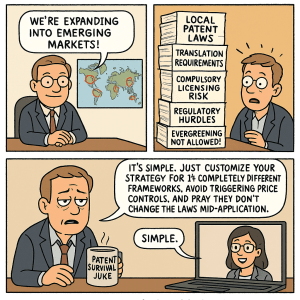
The emerging market pharmaceutical story has a simple headline: $500 billion by 2027, compounding at roughly 6.9% annually. What that number obscures is the brutal complexity sitting underneath it. A compound that clears the USPTO in eighteen months can spend four years trapped in Brazil’s ANVISA prior-consent process. A formulation patent bulletproof in Europe may collide with India’s Section 3(d) and get rejected outright. A Russian patent grant buys you a certificate, not market exclusivity, because enforcement is a separate problem entirely.
IP teams that treat emerging market patenting as a downstream activity, something to handle after the US and EU filings are filed, are leaving material value on the table and building portfolios that will not withstand generic challenge. This guide covers the full decision surface: which markets to prioritize, how to structure filings, how evergreening tactics translate across jurisdictions, where data exclusivity substitutes for patent protection, and how to manage compulsory licensing risk before it becomes a crisis.
Part I: The Market Opportunity and Why IP Timing Determines Who Captures It
Why the $500 Billion Projection Should Change Your Filing Calendar
Pharma executives know the BRICS shorthand. What the acronym misses is the internal heterogeneity. Brazil’s pharmaceutical market runs on a universal coverage mandate through the Sistema Unico de Saude, creating enormous government procurement volumes but also making the state a motivated compulsory licensee. India has the largest volume of WHO-prequalified generic manufacturers on earth, with Sun Pharma, Cipla, and Dr. Reddy’s each operating patent challenge programs that would be recognizable to any US Paragraph IV practitioner. China’s National Medical Products Administration has been running an accelerated review track for innovative drugs since 2017, compressing approval timelines and creating genuine first-mover windows, but the country’s patent office (CNIPA) applies strict absolute novelty standards that punish late filers.
The conventional IP cascade, file in the US, then Europe, then everywhere else when resources allow, does not work in this environment. A compound disclosed at a scientific conference before an Indian national phase entry voids novelty under absolute novelty rules. A competitor who files a formulation patent in China three months before you can lock up a clinically preferred delivery route. Timing in emerging market patent strategy is not about administrative convenience; it is about whether your IP portfolio will hold when generic manufacturers run their first freedom-to-operate analysis.
The CAGR differential between emerging and developed pharmaceutical markets is roughly three to one. Developed markets are growing at approximately 2-3% annually in volume terms; emerging markets are running at nearly 7%. That gap widens every year you defer serious IP investment in these jurisdictions.
IP Valuation as a Core Asset in Emerging Market Portfolios
When institutional investors or acquirers run due diligence on a pharmaceutical asset with emerging market exposure, the patent portfolio in those jurisdictions carries a different risk profile than the US orange-book listing. A licensed DCF model for an asset with BRICS coverage typically applies a 15-25% haircut to projected revenues from markets with high compulsory licensing risk (Brazil, Indonesia, Thailand historically) relative to markets with strong enforcement records (China post-2017 reform, South Korea). That haircut is not arbitrary; it reflects empirically observed compulsory licensing events and the discount to exclusivity that weak enforcement creates.
IP teams building toward licensing transactions, partnerships, or M&A exits should model their emerging market patent portfolios explicitly, by jurisdiction, by claim type, and by time to expiry, rather than treating them as a block. A formulation patent in China expiring in 2034 is a different asset class than a compound patent in India being challenged under Section 3(d). Treating them identically in portfolio valuation is an error that surfaces during due diligence and corrects downward.
Key Takeaways: Market Opportunity
Simultaneous PCT filing at the time of IND submission, rather than after US Phase 2 data, captures roughly twelve additional months of prosecution runway in most emerging market jurisdictions. That twelve months can represent the difference between national phase entry before or after a competitor’s prior art creates an anticipation problem. Emerging market IP budgets should be sized relative to projected market revenues at launch, not relative to the current revenue base of markets already commercialized.
Part II: Patentability Regimes Across Key Emerging Markets, Jurisdiction by Jurisdiction
India: Section 3(d), the Pre-Grant Opposition System, and What ‘Enhanced Efficacy’ Actually Means
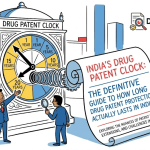
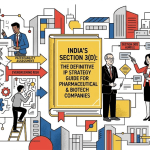
India’s Patents Act, Section 3(d), restricts patent protection for new forms of known substances, including salts, esters, ethers, polymorphs, metabolites, and prodrugs, unless the applicant demonstrates significantly enhanced efficacy over the known substance. The Supreme Court of India clarified this standard in the 2013 Novartis v. Union of India ruling on imatinib mesylate (Gleevec/Glivec). Novartis had argued that the beta crystalline form of imatinib had superior bioavailability, with 30% higher absorption than the free base. The Court held that bioavailability alone does not constitute ‘efficacy’ under Section 3(d); the relevant efficacy for a pharmaceutical compound is therapeutic efficacy. Improved absorption data, without corresponding clinical evidence of superior therapeutic effect, was not sufficient.
That ruling defined the evidentiary standard pharmaceutical companies now have to meet for secondary patents in India. A polymorph patent application must come with clinical data, not just physicochemical characterization. Formulation patents are similarly vulnerable unless the applicant can show therapeutic enhancement beyond convenience or stability. The practical implication: evergreening strategies that work in the US and Europe, where the bar for formulation patents is considerably lower, frequently fail in India, requiring R&D teams to design true therapeutic improvements rather than defensive IP around existing compounds.
India also operates a pre-grant opposition system under Section 25(1) of the Patents Act. Any person can file a pre-grant opposition before the Controller General of Patents, Designs, and Trade Marks after a patent application is published but before it is granted. Indian generic manufacturers have used this mechanism extensively, particularly against secondary patents filed by innovators. Cipla, Natco Pharma, and various patient advocacy groups have successfully opposed patent applications from AstraZeneca, Roche, and Bristol-Myers Squibb using this route. The pre-grant opposition extends prosecution timelines materially and should be factored into Indian launch planning from the outset.
Post-grant oppositions under Section 25(2) are available to ‘any person interested,’ a broad standing requirement that includes generic manufacturers regardless of whether they are producing or selling the challenged compound.
IP Valuation Note: India
An innovator’s Indian compound patent, assuming it clears Section 3(d) scrutiny, is typically valued on a risk-adjusted basis reflecting an approximate 35-40% probability of pre- or post-grant opposition from at least one Indian generic manufacturer for blockbuster-class compounds. Secondary Indian patents, covering formulations or delivery systems, carry a higher invalidation risk and should be valued accordingly, often at a steep discount relative to their US or European equivalents.
China: CNIPA’s Absolute Novelty Standard, the Linkage System, and Post-2017 Reforms
China’s patent system operates under strict absolute novelty: any public disclosure anywhere in the world before the filing date destroys novelty. A conference presentation, a published abstract, or even a regulatory submission that becomes public can invalidate a Chinese patent application if it precedes the filing date. The six-month grace period China provides covers only disclosures made at government-recognized international exhibitions or academic conferences designated by the State Council, a narrow carveout.
China implemented a pharmaceutical patent linkage system in 2021, modeled loosely on the US Hatch-Waxman Act. Under this system, innovators list their patents in the China Marketed Drug Patent Information Registration Platform (the ‘registration platform,’ analogous to the US Orange Book). Generic applicants must certify their relationship to listed patents at the time of regulatory submission, similar to Paragraph I through IV certifications in the US. A Category IV certification (challenging a listed patent or asserting non-infringement) triggers a nine-month stay of marketing approval during which the innovator can seek a patent protection order. This linkage system meaningfully changed the Chinese IP landscape for pharmaceuticals; before 2021, there was no formal mechanism tying patent status to regulatory approval timelines.
China also introduced a patent term compensation system in 2021, allowing up to five years of additional patent term for innovative drugs to compensate for regulatory review time, capped at a total remaining term of fourteen years from marketing approval. This mirrors the US PTE mechanism under 35 U.S.C. 156 and European SPC framework, and it matters significantly for IP valuation of Chinese assets. A compound with five years of remaining patent term at approval that receives a five-year compensation has materially different projected exclusivity than one that does not.
The State Intellectual Property Office’s (SIPO, now CNIPA) examination standards for pharmaceutical patents have tightened since the 2017 reform cycle. Inventive step requirements are now applied rigorously; a formulation that shows a predictable improvement will frequently fail the non-obviousness bar. R&D teams targeting Chinese patent protection need to document unexpected technical effects with experimental data, ideally comparative data against the closest prior art, in the original application. Amending claims post-filing in China is constrained; the practice of broad initial claims with later narrowing, common in US prosecution, carries more risk in the Chinese system.
IP Valuation Note: China
Chinese pharmaceutical patents granted post-2021 reform carry a higher enforcement credibility premium than pre-reform grants. The Beijing Intellectual Property Court has developed a track record of granting preliminary injunctions in pharmaceutical patent cases, a capability that was largely absent before 2019. Institutional investors with China exposure should note that portfolio companies with valid, post-reform Chinese patents in therapeutic areas with established linkage registration are meaningfully better positioned for exclusivity protection than those relying on pre-reform grants that were not examined substantively by modern standards.
Brazil: The ANVISA Prior Consent Mechanism, Its Recent Reform, and Compulsory Licensing History
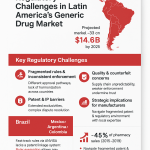
Brazil’s pharmaceutical patent landscape has a feature no other major market shares: until 2021, the National Health Surveillance Agency (ANVISA) exercised prior consent authority over pharmaceutical patent applications. ANVISA could review applications alongside the Instituto Nacional da Propriedade Industrial (INPI, Brazil’s patent office) and recommend rejection on public health grounds, introducing a parallel health regulatory layer into patent prosecution. This dual-review system frequently created delays of three to seven years beyond normal INPI examination timelines, and ANVISA recommendations to reject were honored in the majority of contested cases involving antiretrovirals and oncology compounds.
Law No. 14,195/2021 extinguished ANVISA’s prior consent role. INPI now conducts pharmaceutical patent examination without mandatory health authority review, a change that removes the primary procedural bottleneck. This reform materially improved Brazil’s standing as a patentable jurisdiction for pharmaceutical innovators, and IP portfolios should be reassessed in light of it. The effective date of the change means that applications filed before 2021 may still have prosecution histories reflecting ANVISA delays, but new filings proceed on INPI-only timelines.
Brazil’s compulsory licensing framework, however, remains active. The government issued a compulsory license for efavirenz in 2007, breaking Merck’s patent to enable domestic production of the antiretroviral. The efavirenz decision established a template: a presidential decree invoking national interest or public emergency is sufficient to authorize compulsory manufacture or importation. Sofosbuvir (Gilead’s hepatitis C compound, Sovaldi) faced compulsory licensing pressure in Brazil between 2015 and 2019 before Gilead negotiated a voluntary license with Brazilian generic manufacturer Blanver. The voluntary license resolved the compulsory license threat at the cost of a substantially reduced royalty rate.
Technology Roadmap: Protecting Biologics in Brazil
Biologics present a distinct filing challenge in Brazil. INPI examines biologic patents under standard patentability criteria, but the scope of claims available for biological macromolecules is constrained by the written description and enablement requirements, and Brazilian courts have limited experience with biologic patent claim construction relative to the US Federal Circuit. For a monoclonal antibody program targeting the Brazilian market, a defensive filing strategy should include the full antibody sequence claims, the specific CDR sequences (as fallback), the method-of-treatment claims covering the approved indication, and the formulation claims covering clinically preferred dosing concentrations and excipient combinations. Data exclusivity for biologics in Brazil runs eight years for new biological entities, providing a regulatory barrier to biosimilar entry even if patent protection is challenged.
Russia: Legislative Framework Versus Enforcement Reality
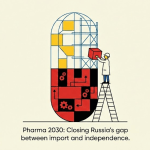
Russia operates a patent system that is formally compliant with the TRIPS Agreement, administered by the Federal Service for Intellectual Property (Rospatent). The formal requirements, novelty, inventive step, industrial applicability, are standard. The practical challenge is enforcement. Russia’s pharmaceutical market is estimated at roughly $20 billion annually, with a significant share in generic compounds and a state procurement system that has historically favored domestic manufacturers, particularly since 2014 sanctions and post-2022 regulatory changes.
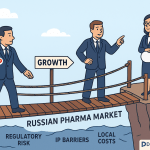
Russia introduced parallel import authorization for patented pharmaceutical products in 2022 as a sanctions response, allowing import of patented goods from any country without patent holder consent, a direct erosion of exclusivity rights. Parallel import authorization means that a patented originator product can be purchased in a third country (where it may be sold at a lower price) and imported into Russia without the patent holder’s involvement. For pharmaceutical companies with Russian revenue exposure, this mechanism fundamentally changes the value of Russian patent protection: the patent may be valid, but it does not prevent market entry by parallel importers.
Patent enforcement through Russian courts, while possible, has historically been slow, with cases running two to four years through first instance and appeal. Interim injunctions are available but granted infrequently in pharmaceutical cases. Russian pharmaceutical IP strategy should be structured around minimizing reliance on court-based exclusivity enforcement and maximizing other barriers to entry, including data exclusivity, contract-based supply relationships, and regulatory pathway management.
South Africa: Deposit-Based Examination and the Implications for Post-Grant Validity
South Africa operates the only remaining major pharmaceutical market with a non-examining patent regime for standard applications. The Companies and Intellectual Property Commission (CIPC) receives patent applications and issues patents based on formal requirements without substantive examination of novelty or inventive step. A South African patent grant is therefore not a statement that the claimed invention is novel or non-obvious; it is a statement that the application met formal filing requirements.
The practical consequence: South African patent validity is routinely challenged in infringement proceedings. A generic manufacturer sued for infringement in South Africa can counterclaim for revocation on novelty and inventive step grounds, and those arguments get their first substantive hearing in litigation rather than examination. This system effectively shifts the examination burden from the patent office to the courts, increasing litigation risk and cost for patent holders relative to systems where validity has already been tested during prosecution.
South Africa proposed transitioning to a substantive examination system through its Intellectual Property Policy Phase II process, with draft legislation circulated periodically since 2018, but implementation has been repeatedly delayed. IP teams should monitor this reform process; a transition to substantive examination would create prosecution opportunities but also require retroactive validity assessment of the existing South African portfolio.
Key Takeaways: Jurisdiction Analysis
Building a BRICS-wide pharmaceutical patent portfolio requires five distinct prosecution strategies, not one. India requires clinical efficacy evidence for secondary patents. China rewards early filing, complete experimental data at filing, and investment in the linkage registration system. Brazil’s post-ANVISA-reform landscape is more favorable than it was five years ago, but compulsory licensing risk demands voluntary licensing contingency planning for high-volume public health compounds. Russia’s parallel import authorization has materially diminished the value of its patent protection since 2022. South Africa’s deposit system makes litigation readiness as important as prosecution quality.
Part III: Filing Pathways, PCT Strategy, and Portfolio Architecture
PCT Filing: The 30-Month Option Window and How to Use It
The Patent Cooperation Treaty allows a single international application to simultaneously reserve filing rights in 157 member countries. The core strategic value is the delay: national phase entry can be deferred to 30 months from the earliest priority date (31 months in certain jurisdictions). That window allows pharmaceutical companies to complete Phase 2 trials, assess commercial potential in each target jurisdiction, monitor competitor filings through published PCT applications, and make nationally differentiated decisions about claim scope and prosecution strategy before committing translation costs, national filing fees, and local counsel engagement.
For a compound entering Phase 1 with an estimated $50,000-$80,000 cost per country for national phase entry (when translation, local counsel, and official fees are aggregated), the ability to defer fifty emerging market national entries for 18 months has a non-trivial NPV. More importantly, the international search report (ISR) issued by the International Searching Authority during PCT prosecution gives the applicant a preview of likely prior art challenges before national phase entry. An ISR citing strong prior art allows the applicant to amend claims before entering national phases where prosecution strategy should address the cited references directly.
The PCT’s international preliminary examination (Chapter II) is underutilized by many pharmaceutical filers. Requesting Chapter II examination provides a preliminary opinion on patentability that, while not binding on national offices, can accelerate examination in several emerging market jurisdictions that use the international preliminary examination report as a starting point for national prosecution.
Claim Architecture for Multi-Jurisdictional Protection
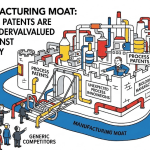
A pharmaceutical patent portfolio designed for emerging market protection should be structured as a layered claim set that accounts for the varying patentability standards across target jurisdictions. The compound claim (genus and species) is the foundational layer, protecting the active ingredient itself. Formulation claims cover specific pharmaceutical compositions, including concentration ranges, excipient combinations, and delivery systems. Method of treatment claims cover approved and anticipated indications. Process claims cover synthesis routes. Crystalline form and polymorph claims, where supportable with clinical efficacy data in Section 3(d) jurisdictions, provide additional protection duration.
Each claim layer has a different exposure profile by jurisdiction. In India, compound claims for genuinely novel structures are the most defensible; formulation claims require clinical efficacy evidence. In China, compound and formulation claims with experimental support are strong; method of treatment claims are available but require careful drafting around the Chinese requirement that method claims cannot encompass surgical or diagnostic methods. In Brazil post-ANVISA reform, all standard claim types are available, but claim breadth should be calibrated to avoid overclaiming relative to experimental support, as INPI has improved its examination rigor in recent years.
Evergreening Tactics in Emerging Markets: What Transfers and What Fails
Evergreening, the practice of filing secondary and tertiary patents around an approved compound to extend effective market exclusivity beyond the compound patent expiry, works differently in emerging markets than in the US or Europe. The US Orange Book listing system and 30-month stay mechanism under Hatch-Waxman reward secondary patent filings because each listed patent can trigger an additional 30-month stay against a Paragraph IV filer. That incentive structure does not exist in most emerging markets.
In India, Section 3(d) directly targets evergreening. The legislative intent was explicit: prevent innovators from extending market exclusivity through trivial modifications. Polymorphic form patents, salt patents, and metabolite patents are all vulnerable. Formulation patents survive only if clinical data demonstrates therapeutic enhancement. The consequence for IP portfolio design is that Indian secondary patents must be built around genuine clinical improvements, not administrative patent office strategies.
In China, the linkage registration system creates some incentive for secondary patent filing because each registered patent can trigger a stay of generic approval. However, CNIPA’s increasingly rigorous inventive step examination means that secondary patents built around predictable modifications are being rejected at higher rates than they were before 2017.
In Brazil, the compulsory licensing framework creates a countervailing pressure: the government’s willingness to issue compulsory licenses for ‘national interest’ creates a ceiling on the commercial value of evergreened patent terms for high-profile compounds. An innovator who extends exclusivity through secondary patents on an HIV or hepatitis C drug in Brazil should model the probability of compulsory licensing as a function of pricing, not assume the extended term will be commercially realized.
Technology Roadmap: Biologic Evergreening in Emerging Markets
For biologics, the evergreening concept translates into formulation-based lifecycle management rather than compound modification. A monoclonal antibody like adalimumab (AbbVie’s Humira) illustrates the model. AbbVie has filed hundreds of patents covering adalimumab formulations, concentrations, delivery devices, and citrate-free formulations. The citrate-free formulation (lower injection site pain) is clinically meaningful, reduces discontinuation, and supports premium pricing. In markets with substantive examination, the clinical differentiation supports patent grant; in markets like South Africa with deposit-only examination, the formulation patent is granted automatically but faces validity challenge risk.
For a biologic program targeting emerging markets, the technology roadmap for lifecycle IP should include: device patents covering the autoinjector or prefilled syringe; formulation patents for concentration variants validated in patient preference studies; indication extension patents covering each new approved use with clinical trial data; manufacturing process patents covering purification and cell culture conditions; and biosimilar interchangeability-preventing formulation differences that are clinically meaningful, not merely cosmetic. That last category, formulation differences that affect immunogenicity or stability profiles in ways that matter clinically, is the most defensible from a Section 3(d) or CNIPA inventive step perspective and should be the primary focus of biologic secondary patent investment in emerging markets.
Data Exclusivity as a Portfolio Backstop
Where patent protection is unavailable, narrow, or under challenge, data exclusivity provides an alternative period of market protection. Data exclusivity prevents generic manufacturers from relying on the innovator’s regulatory submission data (clinical trial results, safety and efficacy data) to obtain abbreviated marketing approval for a specified period. It is a regulatory right, not a patent right, and cannot be challenged through patent opposition proceedings.
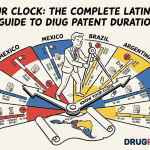
Data exclusivity periods vary by jurisdiction and compound type. In Brazil, the data exclusivity period for new chemical entities is five years under ANVISA regulations. India does not provide comprehensive data exclusivity under its current pharmaceutical regulatory framework, a gap that significantly weakens the market protection available to innovators in compounds where patent protection is difficult to obtain or maintain. China provides data exclusivity of six years for new chemical entities and eight years for new biological entities. Russia provides six years of data exclusivity for innovative drugs under Roszdravnadzor regulations.
For a compound blocked from secondary patent protection in India by Section 3(d), the absence of Indian data exclusivity means that a generic manufacturer can file for marketing approval immediately upon expiry of the compound patent by referencing the innovator’s clinical data. There is no regulatory backstop. This is a material risk that should appear in any honest IP valuation of assets with Indian market exposure.
Investment Strategy Note: Portfolio Architecture
For institutional investors evaluating a pharmaceutical company’s emerging market IP portfolio, the relevant analytical frame is not ‘how many patents do they have in BRICS countries’ but ‘what is the earliest defensible generic entry date in each key market and what revenue is at risk in each year after that date.’ A company with twenty Brazilian patents, all secondary formulation filings, may have weaker actual exclusivity than a company with two Brazilian patents, both covering genuinely novel compound structures with clean prosecution histories. Patent count is not a proxy for exclusivity duration.
Part IV: Compulsory Licensing, Parallel Imports, and Public Health Carve-Outs
The TRIPS Flexibilities Framework: What Governments Can Legally Do
The TRIPS Agreement, administered by the WTO, establishes minimum standards for pharmaceutical IP protection that all 164 member countries must meet. But TRIPS includes explicit flexibilities, the Doha Declaration on TRIPS and Public Health (2001) reaffirmed and expanded these, that allow governments to override patent rights in defined circumstances. Compulsory licensing, government use, parallel importation, and exceptions for regulatory use (‘Bolar exception’) are all permitted under TRIPS and exercised by emerging market governments with varying frequency.
The Doha Declaration established the principle that TRIPS ‘can and should be interpreted and implemented in a manner supportive of WTO members’ rights to protect public health and, in particular, to promote access to medicines for all.’ This language has been interpreted broadly by governments seeking to justify compulsory licenses. The legal standard in practice is less rigorous than pharmaceutical executives sometimes assume; a government does not need to declare a national health emergency to issue a compulsory license. Brazil’s 2007 efavirenz license was issued under ‘national interest’ grounds without a declared emergency.
The WTO Paragraph 6 system (now a permanent amendment to TRIPS under Article 31bis) allows countries with insufficient manufacturing capacity to import generics manufactured under compulsory license in a third country. This matters for smaller emerging markets that would like to issue compulsory licenses but lack domestic generic manufacturing capacity. Indonesia, Thailand, and Malaysia have all used or threatened use of this mechanism for antiretroviral and oncology compounds.
Brazil’s Compulsory Licensing Track Record: A Case Study in Negotiating Pressure
Brazil’s government has issued compulsory licenses twice in the pharmaceutical context: efavirenz (Merck, 2007) and has threatened compulsory licenses against Gilead (sofosbuvir), AbbVie (lopinavir/ritonavir), and Roche (docetaxel) at various points. Each of these situations followed a similar pattern: the Ministry of Health issued a declaration of public interest or initiated negotiations with the innovator, a price demand well below current reimbursement levels was communicated, and the innovator was given a defined window to accept voluntary licensing terms before the compulsory license was formally issued.
Gilead’s resolution of the sofosbuvir situation in Brazil is instructive. Rather than risk compulsory licensing, Gilead entered a voluntary license agreement with Blanver Farmoquimica in 2015, granting non-exclusive rights to manufacture and sell sofosbuvir-based products to the Ministry of Health at a substantially reduced royalty rate. The agreement preserved Gilead’s patent rights nominally while accepting the commercial reality that exclusivity pricing was politically untenable for a hepatitis C drug in a country with a universal healthcare mandate.
The strategic lesson is that compulsory licensing in Brazil is more negotiating instrument than automatic outcome. Innovators who engage proactively with the Ministry of Health, demonstrate pricing flexibility, and establish local manufacturing partnerships or technology transfer commitments face lower compulsory licensing risk than those who rely on patent exclusivity alone to defend commercial pricing.
Designing a Tiered Pricing Strategy That Reduces Compulsory Licensing Risk
Tiered pricing, structured by per-capita income levels rather than arbitrarily by region, is the most operationally defensible approach to emerging market pharmaceutical pricing. The reference framework most commonly cited is the per-capita income differential between the emerging market and the innovator’s home market, applied to the list price as a discount coefficient. A compound priced at $50,000 per year in the US might be accessible at $5,000-$8,000 per year in Brazil under an income-scaled pricing framework, depending on disease severity and treatment alternatives.
Tiered pricing must be managed carefully to prevent parallel trade back into high-price markets. Product differentiation (different dosing configurations, different packaging, different product codes) helps prevent arbitrage. Some innovators use volume-controlled supply agreements with local distributors that limit resale to the designated territory. In markets where the government is the primary purchaser, as in Brazil’s SUS procurement system or India’s Jan Aushadhi Scheme, supply agreements directly with the health authority create a de facto prohibition on parallel export.
The commercial case for tiered pricing is stronger than many IP teams concede. A compound accessed at $6,000 per year by 50,000 Brazilian patients generates $300 million in annual revenue that a compulsory license would redirect to generic manufacturers at a royalty rate of typically 0.5-5% of net sales. The expected revenue under a voluntary license arrangement, even at heavily discounted prices, almost always exceeds the royalty income from a compulsory license.
Key Takeaways: Compulsory Licensing Management
Compulsory licensing risk is manageable and largely a pricing and relationship management problem rather than a pure legal problem. Companies with active engagement with health ministries, transparent pricing frameworks aligned with income-based access principles, and local manufacturing or technology transfer commitments have substantially lower incidence of compulsory licensing actions than those relying on patent exclusivity without market access concessions. The Gilead sofosbuvir, AbbVie HIV portfolio, and Merck efavirenz cases are not anomalies; they are the template for how high-volume public health compounds in large emerging markets will be handled by governments with universal healthcare mandates.
Equity analysts building revenue models for emerging market-exposed pharmaceutical companies should assign explicit compulsory licensing probability weights to each material revenue stream. A reasonable framework: greater than 30% probability for any compound with per-patient annual treatment cost exceeding 15% of per-capita GDP in the market, treating a high-burden disease (HIV, hepatitis, oncology, tuberculosis). The probability decreases with evidence of tiered pricing programs, voluntary licensing, and local manufacturing investment. That adjusted probability weight should be applied to the exclusivity period in the DCF, not to total revenue indefinitely, since compulsory licensing typically affects only the exclusivity-period revenue, not the generic-competitive-market revenue.
Part V: Patent Analytics, Competitive Intelligence, and Platform-Based Portfolio Management
How to Read Competitor Emerging Market Filings for Strategic Intelligence
Patent filings are public documents, and they are among the most information-dense public documents a competitor produces. A PCT application reveals the compound structure, the claimed indications, the experimental data the applicant chose to include (which signals what they have and where they are in clinical development), and the patent families they are building. An emerging market national phase entry reveals which markets the applicant views as commercially significant, the specific claim scope they are pursuing in each jurisdiction, and, where prosecution is public, the prior art they have had to distinguish.
Competitor patent filings in emerging markets provide more actionable intelligence than most competitive intelligence functions currently extract from them. A Chinese national phase entry with claims narrowed to a specific polymorph after examination indicates the examiner rejected broader claims, likely citing prior art that is now publicly available in the prosecution file. An Indian application that has been pending without examination requests for three years may indicate the applicant has deprioritized India or is waiting for Section 3(d) case law to develop before prosecution. A Brazilian application that was filed pre-ANVISA-reform, stalled for seven years, and recently resumed prosecution may indicate the applicant is now optimistic about the post-reform examination environment.
These signals are exploitable. A generic manufacturer building a Paragraph IV equivalent in an emerging market jurisdiction reads competitor prosecution histories for weaknesses. An innovator should run the same analysis on its own applications, through the eyes of a generic filer, before prosecution closes.
Building a Patent Expiry Map Across Emerging Market Jurisdictions
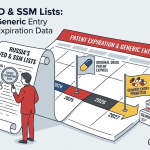
A patent expiry map, plotting earliest defensible generic entry dates by compound, by jurisdiction, is the foundational document for commercial planning in markets approaching patent expiry. The construction is more complex than a simple patent term calculation because compound patents, formulation patents, data exclusivity, and potential patent term extensions create an overlapping protection landscape with different expiry dates for different aspects of the product.
For a product like a GLP-1 receptor agonist with emerging market exposure, the expiry map might show: compound patent expiring in India in 2028, with no data exclusivity backstop; compound patent expiring in China in 2030, with five-year term extension available, pushing effective expiry to 2033 subject to term extension approval; compound patent expiring in Brazil in 2029, with formulation patent extending to 2032 and data exclusivity to 2031; no effective patent protection in Russia due to parallel import authorization, with data exclusivity running to 2030.
Each cell of that map represents a distinct competitive exposure date that should drive commercial planning, generics monitoring, and lifecycle management investment decisions. The map is not static; patent term extensions must be applied for, data exclusivity periods must be confirmed with current regulatory data, and litigation outcomes can accelerate or defer effective generic entry dates.
Monitoring Generic Filers: Early Warning Signals in Emerging Markets
Generic manufacturers in emerging markets file patent challenge applications, regulatory submissions, and occasionally compulsory license requests long before they launch products. Each of these filings is a trackable signal. In India, a Section 25(1) pre-grant opposition by a named generic manufacturer is a public filing that identifies both the challenger and the claims they consider vulnerable. In China, a Category IV patent certification under the linkage system is a public declaration of challenge intent. In Brazil, a public interest declaration by the Ministry of Health is a formal signal of compulsory licensing consideration.
Monitoring systems that aggregate these signals across jurisdictions, from patent office publications, regulatory databases, and court records, allow IP teams to move from reactive to proactive posture. The specific emerging market generic manufacturers with active patent challenge programs in each major therapeutic area are not anonymous; they are traceable through their filing histories. Companies with systematic monitoring of Natco, Cipla, Dr. Reddy’s, Sun Pharma, Zydus, and the Chinese generic manufacturers in their therapeutic areas have materially better advance warning of patent challenges than those who rely on litigation initiation as their first signal.
Key Takeaways: Patent Analytics
Patent analytics tools that aggregate expiry dates, litigation status, generic entry histories, and prosecution file wrappers across emerging market jurisdictions convert raw IP data into portfolio management decisions. The most underutilized capabilities in most pharmaceutical IP teams are the forward-looking ones: filing trend analysis that identifies where competitors are building portfolio density in emerging markets, expiry modeling that drives commercial lifecycle management decisions, and generic challenger identification that enables pre-emptive IP strengthening or litigation readiness.
Investment Strategy Note: Patent Analytics
Portfolio companies that have systematic patent analytics programs, with documented processes for expiry mapping, competitor monitoring, and generic threat identification across emerging market jurisdictions, carry lower IP risk than those managing their portfolios reactively. Due diligence processes for pharmaceutical M&A should assess the target company’s analytics infrastructure, not only its patent count.
Part VI: Licensing Structures, Technology Transfer, and Partnership Models
Voluntary Licensing in Emerging Markets: Deal Structures That Preserve IP Value
Voluntary licensing is the primary commercial mechanism through which pharmaceutical innovators participate in emerging markets while managing compulsory licensing risk and regulatory complexity. The deal structures range from simple royalty-bearing non-exclusive licenses to complex technology transfer agreements that involve manufacturing know-how, quality system documentation, and regulatory package sharing.
For small molecule drugs, a typical voluntary license in an emerging market covers a defined territory (often a LMIC grouping), grants non-exclusive rights to manufacture and sell (or, more commonly, to purchase from a designated manufacturer and sell), specifies a royalty rate as a percentage of net sales (commonly 0.5% to 5% for high-access programs, up to 15% for commercially negotiated deals), and includes quality audit rights allowing the innovator to inspect the licensee’s manufacturing facilities. The license term is typically tied to the patent term, with provisions for continuation if data exclusivity extends beyond patent expiry.
The Medicines Patent Pool (MPP), a Geneva-based UN-backed body, brokers voluntary licenses for HIV, hepatitis C, and tuberculosis drugs between innovators and generic manufacturers, particularly for low- and middle-income country supply. Gilead has licensed sofosbuvir, the GS-7977 compound for HCV, through the MPP for supply to 101 countries. Pfizer licensed nirmatrelvir (Paxlovid component) through the MPP for COVID-19 treatment. MPP licenses provide a structured, transparent mechanism for emerging market access programs but require accepting below-market royalty rates in exchange for political protection and reputational benefit.
Technology Transfer Requirements and Their IP Implications
Several emerging markets condition market access, government procurement contracts, or regulatory approval on technology transfer commitments. Brazil’s Partnerships for Productive Development (PDP) program, administered by the Ministry of Health, has required technology transfer as a condition of government purchase agreements for biologics and high-cost drugs. Under PDP agreements, an innovator transfers manufacturing technology to a local Brazilian public laboratory (typically Fiocruz or Butantan), which then takes over domestic production after a transition period of typically five to seven years, after which the innovator’s procurement revenue from the government channel ends.
From an IP perspective, technology transfer agreements require careful structuring. The scope of know-how transferred must be defined precisely. Manufacturing process patents should be distinguished from product patents, and the license to manufacture should not inadvertently include rights to export the product beyond the agreed territory. Quality system documentation and regulatory dossier data are often the most commercially sensitive elements of a technology transfer, more sensitive than the patent rights themselves, and should be covered by robust confidentiality provisions and field-of-use restrictions.
India’s pharmaceutical industry has been a technology transfer recipient for decades and has developed considerable expertise in reverse-engineering manufacturing processes. Any technology transfer to Indian manufacturers, whether under a formal licensing agreement or under government pressure, should be conducted with legal advice from IP counsel familiar with Indian trade secret law and contractual enforcement, both of which are less robust than their US or European equivalents.
Joint Ventures and Local Manufacturing: Structural Considerations
Joint ventures with local emerging market manufacturers offer market access, distribution networks, and political legitimacy. The IP structuring of a pharmaceutical joint venture is one of the most complex commercial transactions in the sector. The core challenge: the innovator brings the valuable IP (the compound, the regulatory data, the brand, the manufacturing know-how), and the local partner brings market access, regulatory relationships, and capital. The relative contribution determines ownership splits, governance rights, and exit mechanisms.
The innovator’s IP should remain in the innovator’s ownership and be licensed (not assigned) to the JV entity. An equity contribution consisting of an IP license creates a defensible IP ownership structure; an equity contribution consisting of an IP assignment creates a risk that the JV’s dissolution or the local partner’s acquisition of the JV’s assets results in IP ownership transfer. Reversion rights on IP licenses in the event of JV dissolution should be explicitly documented.
Part VII: Enforcement Mechanisms, Litigation Readiness, and Anti-Counterfeiting
Building Litigation Readiness Before You Need It
Patent litigation in emerging markets is expensive, slow, and outcome-uncertain. A first-instance pharmaceutical patent case in India’s High Court can take three to five years from filing to judgment. Chinese IP courts are faster by design, with Beijing Intellectual Property Court targeting twelve-month resolution for standard patent cases, but complex biologic cases involving technical expert evidence take longer. Brazilian litigation through the federal courts in Rio de Janeiro (INPI-related cases) can run five to eight years at first instance.
Litigation readiness requires building the evidentiary infrastructure before a case arises. This means maintaining evidence of the patent’s reduction to practice, including laboratory notebooks, formulation development records, and clinical trial protocols, in a format that is admissible in each target jurisdiction. It means documenting commercial use, including sales records, marketing materials, and regulatory submissions, to support injunctive relief applications. It means maintaining an updated freedom-to-operate analysis and validity analysis for each material patent so that the first day of litigation does not begin with a due diligence exercise under time pressure.
Local counsel relationships should be established proactively, not reactively. The leading IP litigation firms in Mumbai, Beijing, Sao Paulo, and Moscow maintain pharmaceutical practice groups. Retaining local counsel on an advisory basis before a litigation situation arises allows the relationship, and the counsel’s familiarity with the company’s portfolio, to develop at reasonable pace rather than under the pressure of an adverse filing.
Anti-Counterfeiting Programs: Technology and Enforcement Coordination
Counterfeit pharmaceuticals in emerging markets cause patient harm directly and erode brand value indirectly. The World Health Organization estimates that approximately 10% of pharmaceutical products in low- and middle-income countries are substandard or falsified. In specific emerging markets, particularly those with fragmented distribution systems and limited regulatory enforcement capacity, the percentage is higher.
Anti-counterfeiting programs for pharmaceutical companies operating in emerging markets operate across three layers. The product security layer deploys authentication technologies: holograms, color-shifting inks, serialized QR codes, RFID tags embedded in packaging, and covert features detectable by inspectors but not reproducible by counterfeiters. The track-and-trace layer implements supply chain serialization connecting manufacturers to distributors to retail pharmacies, allowing identification of diversion and introduction of counterfeits at specific points in the distribution chain. The enforcement coordination layer works with national customs agencies, police units, and health regulatory bodies to identify and disrupt counterfeiting operations.
China’s enforcement against pharmaceutical counterfeiting has strengthened since 2018, with National Medical Products Administration enforcement actions increasingly coordinated with local police. India’s drug regulatory system operates through state-level drug controllers with highly variable enforcement capacity. Brazil’s ANVISA has active enforcement programs against unauthorized pharmaceutical imports.
Key Takeaways: Enforcement and Operations
Enforcement of pharmaceutical IP in emerging markets requires treating patent litigation, regulatory enforcement, and anti-counterfeiting as integrated, not separate, programs. A product with a strong patent portfolio but no anti-counterfeiting infrastructure is vulnerable to market erosion by counterfeit supply that customers cannot distinguish from the genuine product. A product with excellent anti-counterfeiting technology but no patent enforcement capability is vulnerable to generic entry by competitors operating within the letter of the law while challenging patent validity.
Part VIII: Biologics and Biosimilar Competition in Emerging Markets
The Biosimilar Regulatory Landscape in BRICS Countries
Biosimilar regulatory pathways in emerging markets are less developed and less harmonized than in the US or EU, creating both risk and opportunity for originator biologic companies. India’s Central Drugs Standard Control Organization (CDSCO) issued biosimilar guidelines in 2016 that require comparability studies, including analytical, non-clinical, and clinical comparisons with a reference biologic. Indian biosimilar approval requires reference to an internationally approved originator product; reliance on locally approved generics as reference products is not permitted.
China’s National Medical Products Administration has a rigorous biosimilar approval process with requirements for full analytical and clinical comparability. China’s linkage registration system covers biologics as well as small molecules, meaning originator biologic patents can be listed on the registration platform and can trigger stays against biosimilar applicants. Brazil’s ANVISA classifies biosimilars into ‘individual comparability pathway’ (requiring full comparability package) and ‘abbreviated pathway’ (where full clinical comparability may be waived based on analytical similarity), analogous to the EU’s EMA framework.
The heterogeneity of these pathways means that biosimilar interchangeability designations, which exist in the US and increasingly in Europe, do not have direct equivalents in most emerging markets. A biosimilar approved in India as a comparable product is not automatically interchangeable at the pharmacy level in the way that an FDA-designated interchangeable biosimilar is. This regulatory gap reduces automatic substitution pressure in emerging markets relative to the US, which is commercially favorable for originator biologics.
IP Valuation for Biologic Assets in Emerging Markets
Biologic assets require a different IP valuation framework than small molecule assets. The compound patent for a biologic (the sequence patent) typically expires earlier relative to commercial maturity than for small molecules, because biologic development timelines are longer. The surrounding portfolio of formulation patents, device patents, and process patents becomes more important as the sequence patent ages.
For a monoclonal antibody program, the IP valuation analysis should distinguish between the sequence patent term remaining, the formulation patent coverage by jurisdiction, the data exclusivity period by jurisdiction, and the biosimilar interchangeability regulatory status in each target market. A biologic with expired sequence patents but strong formulation patent coverage and eight years of Chinese data exclusivity has a meaningfully different risk profile than one with only the sequence patent remaining.
Part IX: Future Outlook and Strategic Preparation
AI-Assisted Patent Prosecution and Competitive Intelligence
Generative AI tools are entering pharmaceutical patent prosecution and competitive intelligence in measurable ways. AI-assisted prior art search has demonstrably reduced the time required to identify relevant prior art from weeks to hours for standard searches. Natural language processing tools can parse prosecution histories in Chinese, Portuguese, and Russian, converting foreign-language prosecution files into actionable English-language intelligence for IP teams without native language capability.
The implications for emerging market IP strategy are practical. AI-augmented competitive intelligence can monitor patent publications across CNIPA, INPI, and Rospatent simultaneously, flagging competitor filings in real time without requiring manual monitoring of each database. AI-assisted claim drafting can generate claim sets calibrated to the evidentiary standards of specific jurisdictions, including language patterns that have historically survived Indian or Chinese examination. These tools reduce the cost of high-quality emerging market patent prosecution and monitoring, potentially making systematic programs accessible to smaller biotechs that previously could not afford the overhead.
The risk is that AI-assisted prosecution creates new forms of vulnerability. Claims drafted by AI without deep jurisdiction-specific expertise may pass formal requirements while creating prosecution history estoppel problems that undermine enforcement years later. IP teams adopting AI tools in prosecution need to maintain jurisdiction-specific expertise to review and validate AI outputs, particularly for complex markets like India and China where the evidentiary standards require human judgment.
Regulatory Harmonization: What Is Actually Moving and on What Timeline
IP harmonization across emerging markets is slower than pharma industry advocacy suggests. The Regional Comprehensive Economic Partnership (RCEP), which includes China, ASEAN members, Australia, and New Zealand, has IP provisions but does not create a harmonized pharmaceutical patent system equivalent to European unitary patent protection. Bilateral trade agreements between the US and emerging market countries have historically included TRIPS-plus provisions requiring stronger pharmaceutical IP protections, but the negotiation and ratification cycles for these agreements run five to ten years.
The African Continental Free Trade Area (AfCFTA) includes a protocol on IP that is still under development, with pharmaceutical patent provisions among the most contested. African pharmaceutical manufacturers, represented through bodies like the African Union’s Pharmaceutical Manufacturing Plan, are seeking flexibilities similar to TRIPS Doha provisions; originator pharmaceutical companies are seeking longer data exclusivity and stronger enforcement commitments. The AfCFTA IP protocol is unlikely to create a harmonized continental pharmaceutical patent system in the near term.
For practical planning purposes, IP teams should operate on the assumption that the current regime of heterogeneous national systems remains in place through 2030 at minimum. The automation of monitoring and prosecution workflows is a more productive investment than waiting for harmonization to simplify the compliance burden.
Access and ESG Convergence: How IP Strategy Is Becoming Public Affairs
The pharmaceutical industry’s ESG reporting frameworks, including the IFPMA Code of Practice and the Access to Medicine Index, now include pharmaceutical patent policy commitments as scored elements. The Access to Medicine Index ranks the world’s twenty largest pharmaceutical companies on access-related IP practices, including whether they have voluntary licensing programs for essential medicines, whether they participate in the MPP, and whether they enforce patents in least-developed countries.
ESG ratings agencies and institutional investors are incorporating these scores into pharmaceutical equity analysis. A company with a systematic voluntary licensing program for essential medicines in LMICs, regardless of whether it materially affects revenue, receives a higher ESG rating than one relying entirely on compulsory licensing pressure to determine access terms. For pharmaceutical companies managing relationships with institutional investors with ESG mandates, which now represent a substantial fraction of the institutional shareholder base, this creates a direct financial incentive to structure emerging market IP programs around proactive access commitments rather than defensive patent enforcement postures.
The convergence of access commitments and compulsory licensing risk management creates a coherent strategic position: companies that engage proactively on access, through tiered pricing, voluntary licensing, or technology transfer, both reduce their compulsory licensing exposure and improve their ESG profile. These two objectives reinforce rather than conflict with each other.
Key Takeaways: Full Article Summary
The strategic error most pharmaceutical IP teams make in emerging markets is sequencing: they treat these jurisdictions as downstream from developed market strategy rather than as parallel programs with distinct requirements and distinct windows of opportunity. The compound patent filed in the US in year one should trigger a PCT application in the same month, with national phase entry planned for thirty months out based on clinical and commercial data available at that point, not after European approval.
Jurisdiction-specific strategies are mandatory, not optional. India requires clinical efficacy evidence for secondary patents and carries a high pre-grant opposition risk for blockbuster compounds. China rewards early filing, demands complete experimental data at application, and offers meaningful patent term compensation and linkage system protections for those who invest in them. Brazil’s post-ANVISA reform environment is materially more favorable than it was five years ago, but voluntary licensing contingency planning for high-volume public health drugs remains necessary given the government’s demonstrated willingness to use compulsory licensing as a negotiating instrument.
Data exclusivity is an underutilized asset in emerging market portfolio design. In jurisdictions where secondary patent protection is difficult to obtain, data exclusivity provides a regulatory barrier to generic entry that cannot be challenged through patent opposition proceedings. The absence of Indian data exclusivity is a material risk for innovators that should appear in revenue modeling and IP valuation.
Compulsory licensing risk is primarily a pricing and relationship management problem. The pattern across Brazil’s efavirenz license, Gilead’s sofosbuvir negotiation, and Thailand’s compulsory licenses on oncology compounds shows that governments use compulsory licensing pressure when they believe commercial pricing is incompatible with public health access obligations, and they negotiate when innovators demonstrate pricing flexibility. Proactive engagement with health ministries, income-based tiered pricing, and voluntary licensing programs reduce compulsory licensing risk more effectively than patent enforcement posture alone.
Patent analytics infrastructure is now a competitive capability, not a cost center. Companies with systematic monitoring of competitor filings, expiry mapping across emerging market jurisdictions, and early identification of generic challenge activity operate with meaningful advance warning that translates into better commercial and litigation preparation.
The ESG and access dimensions of emerging market IP strategy are now material to institutional investor relations. Pharmaceutical companies with documented, systematic access commitments in emerging markets receive better ESG scores, face lower compulsory licensing risk, and maintain better government relationships than those managing IP as a pure legal function isolated from commercial and public affairs strategy.
Investment Strategy: Consolidated Framework for Analysts
Analysts building pharmaceutical equity models or evaluating M&A targets with emerging market exposure should incorporate the following analytical discipline. First, build a jurisdiction-by-jurisdiction patent expiry map for material revenue streams, distinguishing compound patent expiry, formulation patent expiry, and data exclusivity end dates. Second, apply compulsory licensing probability weights to high-cost, high-burden disease compounds in Brazil, India, Indonesia, Thailand, and South Africa based on pricing relative to per-capita GDP. Third, assess the quality of the target company’s portfolio in each jurisdiction not by patent count but by claim type, prosecution history cleanliness, and enforcement track record. Fourth, evaluate whether the company has voluntary licensing programs, MPP participation, or documented tiered pricing frameworks, as proxies for compulsory licensing risk management maturity. Fifth, assess the patent analytics infrastructure: is the company systematically monitoring generic filer activity across emerging market jurisdictions, or will it first learn of a generic challenge when litigation is filed?
Companies that score well across these five dimensions carry materially lower IP risk in their emerging market revenue projections than those managing these functions reactively. That difference in risk profile should be reflected in terminal value assumptions and discount rates applied to emerging market revenue, not masked in a single blended cost of capital.
This analysis was prepared for pharmaceutical IP teams, portfolio managers, and institutional investors with emerging market pharmaceutical exposure. All market size estimates, CAGR figures, and data exclusivity periods cited reflect publicly available sources including IQVIA Global Use of Medicines Reports and national regulatory authority publications. Patent prosecution timelines and litigation duration estimates reflect industry experience averages and may vary materially by compound, jurisdiction, and market conditions.