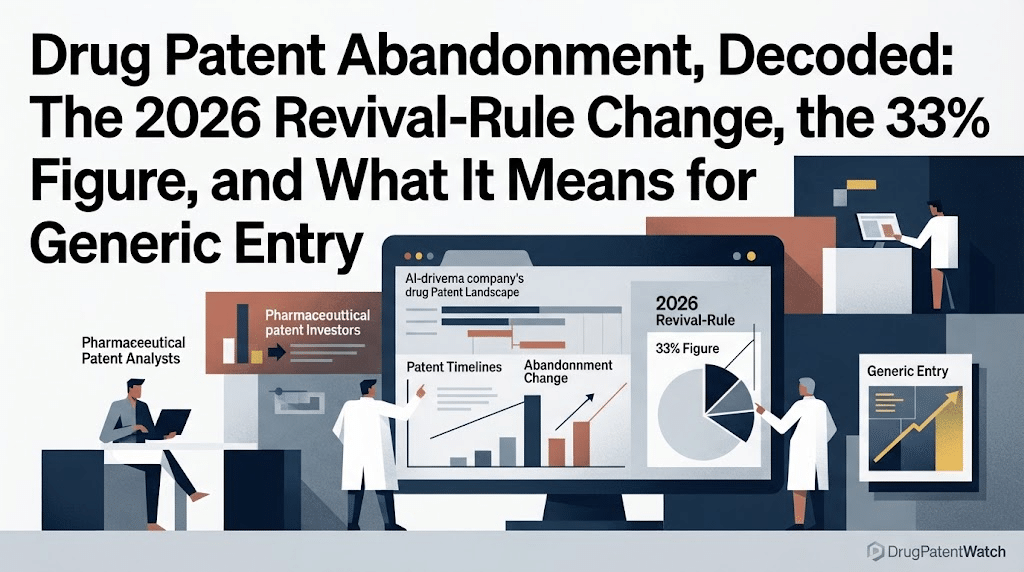
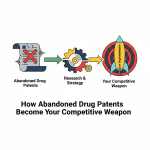
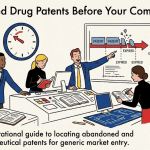
On August 13, 2026, the rules governing “zombie patent” revivals get tighter. The U.S. Patent and Trademark Office finalized a rule on June 24, 2026 that cuts in half the window before a lapsed patent owner must prove, with detailed evidence, that their failure to pay a fee or respond to an office action was genuinely unintentional. For twenty years, that heightened scrutiny only kicked in after a patent had been dead for two years. Starting in mid-August 2026, it kicks in after one year.[1][2] For any pharmaceutical company, generic manufacturer, or investor trying to figure out whether a lapsed or abandoned drug patent is safe to build around, that single regulatory change reshapes the calculus.
This matters because abandonment in pharma is rarely an accident. A peer-reviewed 2024 study in JAMA Internal Medicine found that of 1,429 patents and patent applications covering the ten top-selling prescription drugs in the United States, 469 — or 33% — had been abandoned, and 72% of all filings were submitted after the drug had already won FDA approval.[3] Abandonment, in other words, is a tool. It is used to build prior-art thickets, to prune costly portfolios, and occasionally to signal a competitor’s R&D dead end. The rest of this article works through what “abandoned” legally means, how the economics and the new USPTO rule change the risk calculus, what the 2025–2030 patent cliff means for abandonment decisions industry-wide, and how a company can safely use expired or abandoned IP without stepping on a revived patent.
Quick Answer: Is an Abandoned Drug Patent Safe to Build On?
It depends entirely on why the patent is inactive. A patent that reached the end of its 20-year statutory term, or its term plus any Patent Term Extension (PTE) under 35 U.S.C. § 156, is permanently in the public domain and carries essentially no revival risk.[4] A patent that lapsed for non-payment of a maintenance fee, or an application that was abandoned for failure to respond to an office action, can be revived through a petition under 37 CFR 1.137 if the USPTO accepts that the delay was “unintentional” — and as of August 13, 2026, that petition faces a tougher evidentiary bar after just one year of inactivity rather than two.[1][2] The practical rule: confirm the cause of inactivity before you confirm the opportunity.
Status
What It Means
Typical Cause
Revival Risk After Aug. 13, 2026
Expired
Statutory 20-year term (or PTE-extended term) has run out
Natural end of term
None — permanently public domain
Abandoned application
Never issued as a patent; removed from USPTO’s pending docket
No response to office action, no issue fee paid, or express abandonment
Moderate for the first year; heightened evidentiary burden after one year under the new rule[1]
Lapsed (post-grant)
Issued patent went out of force before its full term
Missed maintenance fee at the 3.5-, 7.5-, or 11.5-year mark
Same one-year evidentiary threshold applies; revival remains possible for the life of the original term[5]
Delisted from Orange Book
Patent itself may still be valid and in force; only its FDA listing is removed
FTC challenge or company’s own compliance decision
Not a true abandonment — the patent can still be asserted in litigation, it simply no longer triggers an automatic 30-month stay[6]
What Changed on August 13, 2026, and Why It Matters for Pharma
Since March 2020, USPTO practice required petitioners who filed a revival petition more than two years after their application lapsed to submit additional, detailed evidence that the entire delay was unintentional.[2] Filing within that two-year window generally only required a simple sworn statement. The final rule published under Docket No. PTO–P–2025–0413 and effective for any petition filed on or after August 13, 2026 compresses that window from two years to one year.[1][2] The agency’s stated goal is to increase certainty and predictability around patent rights and to push petitioners toward filing promptly rather than banking on an easy revival years later.[2]
For a company evaluating whether to build a product around a year-old lapsed pharmaceutical patent, this is a meaningful signal shift. A patent abandoned in, say, March 2025 would have had until March 2027 before the heightened two-year evidentiary bar applied under the old rule. Under the new rule, any petition the original owner files after March 2026 — roughly one year post-abandonment — already faces the tougher standard and the higher associated petition fee.[2] That does not eliminate revival risk; the Director retains discretion to demand additional information at any point if there is a genuine question about intent, regardless of how much time has passed.[2][7] But it does mean the “quiet period” during which a lapsed patent is most likely to be quietly and easily revived is now shorter, which should, in principle, let a freedom-to-operate analysis reach a stable conclusion sooner than it could under the prior two-year standard.
What a Grantable Revival Petition Still Requires
Regardless of the one-year or two-year threshold, a petition to revive an application abandoned under 37 CFR 1.137(a) must include the overdue reply itself, the petition fee set under 37 CFR 1.17(m), a sworn statement that the entire delay was unintentional, and — where applicable — a terminal disclaimer dedicating to the public any period equivalent to the abandonment.[7][8] None of this is a rubber stamp. It is a formal evidentiary submission the USPTO can reject.
Abandoned, Lapsed, and Expired: The Definitions That Actually Matter
The three terms get used loosely, but they describe three different risk profiles.
Expired. The patent reached the end of its statutory term — typically 20 years from the earliest effective filing date, or longer if the FDA review process triggered a Patent Term Extension under 35 U.S.C. § 156. Once expired, the invention is permanently in the public domain. There is no revival mechanism for a patent that has simply run its full course.
Abandoned application. This is an application that never became a patent. It can be abandoned expressly, through a formal written declaration under 37 CFR 1.138, or it can be abandoned by default — the applicant failed to respond to an office action, failed to pay the issue fee, or missed another statutory deadline.[9] Abandoned applications that were published 18 months after filing (the default under U.S. patent law) remain part of the prior-art record even though they never issued.
Lapsed (post-grant). This is a patent that was granted, then went out of force because the owner did not pay a required maintenance fee at the 3.5-, 7.5-, or 11.5-year mark. As of the fee schedule that took effect January 19, 2025, those three payments cost $2,150, $4,040, and $8,280 respectively for a large entity.[10] Missing one of these payments — sometimes due to nothing more than a docketing error at a law firm, a merger that scrambled IP records, or a deliberate cost-benefit decision — ends the patent’s enforceability years before its natural 20-year term would have run out.
Why Pharma Companies Abandon Patents: What the Data Actually Shows
The 2024 JAMA Internal Medicine study, led by researchers including Aaron Kesselheim at Brigham and Women’s Hospital, examined the patent portfolios protecting the ten top-selling prescription drugs in the U.S. for 2021 — four small molecules and six biologics.[3] It found 742 issued patents (52%), 218 pending applications (15%), and 469 abandoned applications (33%) across those ten products, for a combined 1,429 patents and applications.[3] Postapproval filing peaked within the first five years after FDA approval for small molecules and around twelve years after approval for biologics, and patent-thicket density peaked at year 13, when the ten drugs were protected by a median of 42 active patents — 66% of which had been filed after approval.[3]
That 33% abandonment rate is not evenly distributed. Patent trackers and advocacy researchers who have examined individual drug portfolios find wide variation by company and by drug, and the pattern is strikingly consistent: large, late-stage filings on secondary features, then a meaningful share of those filings get abandoned rather than pursued to grant. The following table — compiled from I-MAK’s “Overpatented, Overpriced” research and a December 2021 U.S. House Committee on Oversight and Reform report — compares four of the drugs named most often in this context.
Drug
Company
Total Patents Filed
% Filed Post-FDA-Approval
Source
Humira (adalimumab)
AbbVie
247–250 applications; 130+ granted
89%
I-MAK; House Oversight Committee (2021)[11][12]
Keytruda (pembrolizumab)
Merck
168
64%
House Oversight Committee (2021), cited in BioSpace[12]
Stelara (ustekinumab)
Johnson & Johnson
57
79%
House Oversight Committee (2021), cited in BioSpace[12]
Eliquis (apixaban)
Bristol Myers Squibb / Pfizer
37
~33%
House Oversight Committee (2021), cited in BioSpace[12]
For Humira specifically, I-MAK’s research found that 49% of its U.S. patent applications were filed after the molecule’s first patent had already expired in 2014, years into the product’s commercial life.[11][13] A European Patent Office comparison is instructive: AbbVie filed roughly three times as many patent applications on the same molecule in the U.S. as it did in Europe.[13][14] The jurisdictional gap is itself a data point — it shows the post-approval filing strategy was a response to the U.S. patent and regulatory system specifically, not a universal R&D pattern.
“Regardless of the validity of each patent, the overall density of patent thickets can deter competition by raising the perceived cost of market entry.”[15]
Reading Abandonment as Competitive Intelligence
A granted patent reports what a competitor finished years ago. An abandoned application reports what a competitor tried and then chose to stop pursuing — which is a more current signal. A cluster of abandonments in one technology area from a single filer typically means one of three things: the examiner cited prior art the applicant could not design around, the commercial case for that specific claim evaporated, or the filing was never meant to issue and existed only to seed the prior-art record ahead of a competitor’s filing. Distinguishing between these three requires looking at the actual office-action history in USPTO Patent Center, not just the abandonment date.
The Patent Cliff Backdrop: Why Abandonment Decisions Accelerate Right Now
Abandonment decisions do not happen in a vacuum. Between 2025 and 2030, the pharmaceutical industry faces what several analysts describe as the largest patent cliff since 2010 by dollar value. Estimates vary by methodology and by which drugs and exclusivities are included, but they converge on a multi-hundred-billion-dollar figure.
Source
Estimate
Scope
Morgan Stanley
$171 billion
2025 revenue at large-cap biopharma companies going off-patent by end of 2030[16]
Deloitte (Oct. 2024)
$236 billion
190 drugs losing exclusivity by 2030, including 69 “blockbusters” over $1 billion in annual sales each[17][18]
GlobalData
$230 billion+
U.S. market losses from patent cliffs, 2025–2030[19]
Cited in trade press (STAT)
Up to $400 billion
Cumulative lost revenue extending to 2033[20][21]
These are industry estimates built on different drug lists and different assumptions about exclusivity dates, not a single reconciled figure — treat the range, not any one number, as the signal. Specific exposures are more concrete. Bristol Myers Squibb’s blood thinner Eliquis, which generated roughly $13.3 billion in sales, faces patent expiration in Japan in 2026 and in the U.S. in 2028.[16] Merck’s Keytruda, approaching $30 billion in annual sales, loses core patent protection around 2028; the company’s response has included developing a subcutaneous reformulation to establish a new, separately protectable product.[20] Sanofi and Regeneron’s Dupixent, which brought in €13.1 billion in 2024 — about 30% of Sanofi’s total revenue that year — has key patents expiring around 2030–2031.[21] Bristol Myers Squibb overall faces what analysts describe as the steepest proportional exposure of any major pharmaceutical company, with an estimated 47% of its revenue at risk by 2030.[21]
What this means: when a branded product is two to four years from loss of exclusivity, the company’s secondary-patent strategy shifts from “build the thicket” to “decide which parts of the thicket are worth defending.” That triage is exactly where abandonment decisions concentrate — a weak formulation patent facing a credible Paragraph IV challenge, or a device patent the FTC has already flagged, costs more to defend than it is worth preserving once the core composition-of-matter patent is close to its own expiration.
The Hatch-Waxman Levers That Delay — or Hasten — Abandonment
Three statutory mechanisms shape when a pharma company abandons a secondary patent versus fights to keep it alive.
Patent Term Extension (PTE). Under 35 U.S.C. § 156, a single patent covering an FDA-approved product can have its term extended to compensate for time lost during clinical testing and regulatory review. The extension is capped at five years, and the patent’s total remaining term after extension cannot exceed 14 years from the date of FDA approval.[4][22] Only one patent per approved product is eligible, and the application must be filed within 60 days of marketing approval.[23] A patent nearing PTE-adjusted expiration, rather than its nominal 20-year mark, is a common source of miscalculation in third-party freedom-to-operate searches.
Pediatric exclusivity. A separate six-month period of marketing exclusivity, awarded for conducting FDA-requested pediatric studies, stacks on top of all other patent and regulatory exclusivities for the product.
The ANDA pathway and Paragraph IV litigation. The Hatch-Waxman framework lets a generic manufacturer rely on the innovator’s safety and efficacy data through an Abbreviated New Drug Application, provided it either waits out all listed patents or certifies — under Paragraph IV — that those patents are invalid or won’t be infringed. A Paragraph IV certification triggers a potential 45-day window for the brand to sue, and that lawsuit in turn triggers an automatic 30-month stay of FDA approval for the generic, independent of the litigation’s ultimate outcome.[6] This stay mechanism is precisely why which patents get listed — and kept listed — in the FDA’s Orange Book matters more than whether any individual patent would actually hold up if challenged.
USPTO Maintenance Fees and the Economics of Walking Away
Maintenance fees are not trivial, and the escalating schedule is itself part of why large portfolios get pruned. Under the fee schedule effective January 19, 2025, the three payments due over a patent’s life are as follows.[10]
Payment Window
Fee (Large Entity, effective 1/19/2025)
Prior Fee
Due at 3.5 years post-grant
$2,150
$2,000
Due at 7.5 years post-grant
$4,040
$3,760
Due at 11.5 years post-grant
$8,280
$7,700
Analysis (not an independently reported figure): multiply the final-stage $8,280 fee across a portfolio of even 300 active secondary patents on a single molecule — the rough scale of AbbVie’s Humira estate — and the 11.5-year renewal alone would run to roughly $2.4 million for that one payment cycle, before accounting for the two earlier renewal cycles or any foreign-counterpart annuities. That calculation is illustrative, built from the public fee schedule, not a disclosed AbbVie expenditure; it exists to show why portfolio triage against the maintenance-fee schedule is a real line-item decision for IP departments managing hundreds of pharmaceutical patents, not a hypothetical one.
FTC’s Orange Book Crackdown: A Different Kind of Forced Abandonment
Since 2023, the Federal Trade Commission has run a parallel track that produces abandonment-like opportunities without touching patent validity at all: challenging the Orange Book listings themselves. In November 2023, the FTC sent warning letters to roughly ten manufacturers disputing the “accuracy or relevance” of more than 100 listed patents, concentrated on asthma inhalers and epinephrine autoinjectors — products whose patents often cover the delivery device rather than the drug itself.[24][25] GSK, Impax, and Kaléo subsequently withdrew patents covering Advair, Arnuity, Flovent, Ventolin, Adrenaclick, and Auvi-Q from the Orange Book.[26][27] GSK kept one Arnuity patent in place after concluding the claim remained appropriate, showing the process is contested case by case rather than a blanket retreat.[26]
The FTC returned with a third wave in May 2025, sending letters covering more than 200 additional patents tied to seventeen brand-name drugs, including Teva’s Qvar inhalers and Viatris’s EpiPen, after a federal appeals court ruling clarified that many device-related patents do not meet the Orange Book’s listing criteria.[28][29] Delisting does not invalidate a patent or prevent an infringement suit — but it removes the automatic 30-month stay that listing confers, which is often the practical value of the listing in the first place.[6][26]
What this means for competitive strategy: a delisted patent is not “abandoned” in the formal USPTO sense, but it behaves like one from a generic manufacturer’s perspective — the regulatory tripwire is gone even though the underlying legal right may persist. Any freedom-to-operate or competitive-landscape analysis that only checks “is this patent still in force” and ignores Orange Book listing status is missing half the picture for drug-device combination products specifically.
Freedom to Operate: Using Expired and Abandoned Pharma IP Without Getting Sued
Freedom to Operate (FTO) analysis determines whether a planned product or process is likely to infringe valid, in-force patent rights in a specific jurisdiction — and expired or abandoned patents play both a defensive and an offensive role in that analysis. A clearly expired patent that fully discloses the technology you intend to use is strong evidence the technology sits in the public domain. An abandoned application can be used to narrow the claims of a competitor’s still-active patent, by showing the broader concept was already disclosed and therefore cannot be claimed as novel.
Diligence Category
Question to Answer Before Relying on the Patent
Status verification
Have we confirmed whether this patent is inactive because its term ran out, versus a lapse for non-payment or abandonment for failure to respond?
Revival risk
How long has it been inactive? Does a revival petition filed today fall before or after the one-year heightened-evidence threshold that took effect August 13, 2026?[1]
Patent family search
Are there continuations, divisionals, or foreign counterparts still active in any market where we plan to sell?
Orange Book / Purple Book status
For a drug-device combination, is the relevant patent still listed, or has it been delisted following an FTC challenge?[26]
Terminal disclaimers
Does the file history show a terminal disclaimer tying this patent’s expiration to an earlier, related patent?
Patent Term Extension
Has a PTE under 35 U.S.C. § 156 pushed the effective expiration date later than the nominal 20-year term would suggest?[4]
Legal opinion
Has qualified patent counsel issued a written FTO opinion based on all of the above?
Drug Repurposing: Turning Abandoned Compounds Into New Indications
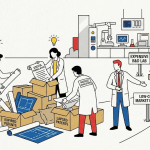
A compound abandoned for lack of efficacy against its original target, or a molecule whose composition-of-matter patent has simply expired, is not necessarily a dead end — it is frequently a pre-vetted starting point for a new indication. The economic logic is straightforward: a repurposed drug typically carries prior human safety data, which shortens development timelines and reduces the clinical failure rate relative to a molecule starting from scratch.
Patent protection for a repurposed molecule most commonly comes through a method-of-use patent — a claim covering the new therapeutic application rather than the compound itself. These patents are enforceable but structurally weaker than a composition-of-matter patent, in large part because off-label prescribing of the cheaper generic version for the newly patented use is difficult to police or prevent. Any repurposing strategy built on an abandoned or expired compound should budget for that enforcement gap from the outset, not treat the method-of-use patent as equivalent protection to what covered the original molecule.
Methodology Note
Patent counts, abandonment percentages, and post-approval filing shares cited for Humira, Keytruda, Stelara, and Eliquis come from two distinct research efforts — I-MAK’s “Overpatented, Overpriced” analysis and the U.S. House Committee on Oversight and Reform’s December 2021 report — and figures for total applications filed on Humira range from 247 to 311 depending on the source and the date of the count, since AbbVie’s portfolio continued to grow after the earliest reports were published.[11][12][13][30] Where sources disagreed, this article reports the range rather than selecting a single number. The 33% abandonment figure and the 1,429-patent total are drawn from a single peer-reviewed, cross-sectional study with a defined 2021 drug list and a defined patent-family methodology, and should not be assumed to generalize precisely to drugs outside that list.[3] Patent-cliff revenue-at-risk estimates ($171B–$400B) come from four independent analyst methodologies covering different drug lists and different end dates (2030 vs. 2033); they are presented as a range for that reason, not reconciled into one figure.
Key Takeaways
A USPTO rule effective August 13, 2026 shortens, from two years to one year, the point at which a patent revival petition faces heightened evidentiary scrutiny — compressing the “safe to assume it’s dead” timeline for lapsed pharmaceutical patents.[1][2]
33% of all patents and applications tied to the ten top-selling U.S. prescription drugs in a 2021 cross-section had been abandoned, and 72% of all filings came after FDA approval — evidence that abandonment is frequently strategic rather than incidental.[3]
The 2025–2030 patent cliff carries estimates ranging from $171 billion to $400 billion in at-risk revenue depending on methodology, with Eliquis, Keytruda, and Dupixent among the named exposures.[16][20][21]
USPTO maintenance fees now run $2,150, $4,040, and $8,280 at the 3.5-, 7.5-, and 11.5-year marks respectively — a real, escalating cost that drives portfolio-pruning decisions on large secondary-patent estates.[10]
FTC Orange Book challenges since November 2023 have produced over 300 disputed patent listings across inhaler and autoinjector products, delisting patents without touching their underlying validity — a distinct, regulatory form of forced “abandonment” that opens generic-entry opportunities.[24][28]
An abandoned patent or lapsed patent is never safe to build around without first determining why it is inactive; the cause determines whether the risk is negligible or substantial.
FAQ
1. Does the August 13, 2026 USPTO rule change make it safer to build on a lapsed pharmaceutical patent? It shortens the window before heightened scrutiny applies from two years to one year, which can make a stable risk assessment available sooner than under the prior rule. It does not eliminate revival risk, since the USPTO retains discretion to demand additional evidence of unintentional delay at any time.[2][7]
2. What is the difference between an abandoned patent application and a lapsed patent? An abandoned application never issued as a patent — it was removed from the USPTO’s pending docket, usually for missing a deadline. A lapsed patent did issue, then went out of force later, typically for non-payment of a maintenance fee at the 3.5-, 7.5-, or 11.5-year mark.[9][10]
3. Why would a pharmaceutical company abandon a patent application on an already-approved, profitable drug? Filing a post-approval application creates published prior art the moment it publishes, regardless of whether it is later abandoned. A dense field of such filings makes it harder for a generic or biosimilar competitor to secure its own patents on workaround formulations, even after the original filer walks away from prosecution.[3]
4. How many patents did AbbVie file on Humira, and how many were post-approval? Reported totals range from 247 to roughly 311 patents and applications depending on the source and count date, with independent analyses putting the post-approval share at 89%.[11][12][13]
5. What is an Orange Book delisting, and is it the same as patent abandonment? No. Delisting removes a patent from the FDA’s Orange Book, which means it no longer triggers an automatic 30-month stay against a generic competitor’s ANDA. The underlying patent can remain valid and in force, and the owner can still sue for infringement — delisting just removes that specific procedural advantage.[6][26]
6. Can a patent that has been expired for ten years still be revived? No. Expiration at the end of a patent’s full statutory term (including any Patent Term Extension) is permanent. Revival under 37 CFR 1.137 applies only to applications abandoned before issuance or patents that lapsed before their natural term ended — not to patents that simply ran their full course.[4][7]
7. What is Patent Term Extension, and how does it change a drug patent’s real expiration date? Under 35 U.S.C. § 156, one patent per approved drug can have its term extended to offset time lost during FDA review, capped at five additional years and at 14 years of total exclusivity measured from the approval date. A patent’s nominal 20-year filing-date expiration is frequently not its real expiration date once PTE is applied.[4][22]
8. How does drug repurposing use abandoned or expired patents? A compound whose original composition-of-matter patent has expired, or whose development was abandoned for lack of efficacy against the original target, can be redeveloped for a new indication and protected with a new method-of-use patent — though that protection is generally weaker and harder to enforce against off-label generic prescribing than the original composition patent was.
9. How much does it cost to maintain a single U.S. utility patent through its full term? At the fee schedule effective January 19, 2025, the three maintenance payments total $14,470 per patent ($2,150 + $4,040 + $8,280) for a large entity, excluding any surcharges for late payment and excluding separate renewal costs in other jurisdictions.[10]
10. Where can I check whether a specific pharmaceutical patent is still active, lapsed, or abandoned? The USPTO’s Patent Center shows live application and patent status along with the full prosecution history. For drugs specifically, cross-referencing current Orange Book or Purple Book listing status against the underlying patent’s USPTO status is necessary, since the two can diverge — a patent can be valid but delisted, or listed but expired.
References
National Law Review. (2026, July 1). Unintentional delay: USPTO shortens threshold for additional information requirement. https://natlawreview.com/article/unintentional-delay-uspto-shortens-threshold-additional-information-requirement
U.S. Patent and Trademark Office. (2026, June 24). USPTO to require additional information and fee for petitions based on unintentional delays exceeding one year. https://content.govdelivery.com/accounts/USPTO/bulletins/419e4b2
Kesselheim, A. S., et al. (2024). Patent portfolios protecting 10 top-selling prescription drugs. JAMA Internal Medicine. https://pmc.ncbi.nlm.nih.gov/articles/PMC11091822/
Fish & Richardson (IP Law Essentials). Introduction to Patent Term Extensions (PTE). https://www.fr.com/insights/ip-law-essentials/intro-patent-term-extension/
U.S. Patent and Trademark Office. Official Gazette notices on maintenance fee reinstatement, December 2025. https://www.uspto.gov/web/offices/com/sol/og/2025/week49/TOC.htm
BioSpace. Three companies relent to FTC demands, delist patents from FDA’s Orange Book. https://www.biospace.com/three-companies-relent-to-ftc-demands-delist-patents-from-fda-s-orange-book
Cornell Law School, Legal Information Institute. 37 CFR § 1.137 – Revival of abandoned application. https://www.law.cornell.edu/cfr/text/37/1.137
U.S. Patent and Trademark Office. Petition for Revival of an Application for Patent Abandoned Unintentionally Under 37 CFR 1.137(a) (Form PTO/SB/64). https://www.uspto.gov/web/forms/sb0064.pdf
USPTO Manual of Patent Examining Procedure. § 711 – Abandonment of Patent Application. https://www.uspto.gov/web/offices/pac/mpep/s711.html
Barnes & Thornburg LLP. (2025, January 15). Important update: USPTO fee changes effective January 2025. https://btlaw.com/en/insights/alerts/2025/important-update-uspto-fee-changes-effective-january-2025
Initiative for Medicines, Access & Knowledge (I-MAK). (2018, December 18). Report finds 89% of total U.S. patent applications on Humira were filed after FDA approval. https://www.i-mak.org/2018/12/18/report-finds-89-of-total-u-s-patent-applications-on-humira-were-filed-after-fda-approval-pointing-to-a-deliberate-strategy-to-delay-competition/
BioSpace. AbbVie’s Humira is a textbook case for drugmakers navigating patent cliff. https://www.biospace.com/abbvie-s-humira-is-a-textbook-case-for-drugmakers-navigating-patent-cliff
Center for Biosimilars. I-MAK report takes on Humira’s patent estate. https://centerforbiosimilars.com/view/imak-report-takes-on-humiras-patent-estate
Center for Biosimilars. Tahir Amin: Why US consumers must wait for adalimumab biosimilars. https://www.centerforbiosimilars.com/interviews/tahir-amin-why-us-consumers-must-wait-for-adalimumab-biosimilars
FDAnews. America’s priciest drugs protected by post-approval patent thickets, study says. https://fdanews.com/articles/213690-americas-priciest-drugs-protected-by-post-approval-patent-thickets-study-says
South China Morning Post. Patent cliffhanger: will China biotech throw Big Pharma a lifeline? https://www.scmp.com/business/china-business/article/3337038/patent-cliffhanger-will-china-biotech-throw-big-pharma-lifeline
Jacobin. (2025, September). Big pharma is about to lose billions on expired patents. https://jacobin.com/2025/09/pharma-patent-expiration-mergers-acquisitions
BS Capital Markets. Patent cliffs and the new pharma M&A cycle. https://www.bscapitalmarkets.com/patent-cliffs-and-the-new-pharma-ma-cycle.html
Trade and Industry Development. (2025, July 7). Big pharma prepares for “patent cliff” as blockbuster drug revenue losses loom. https://www.tradeandindustrydev.com/industry/bio-pharmaceuticals/big-pharma-prepares-patent-cliff-blockbuster-drug-34694.md
Life Science Daily. (2026, May 18). Biologics on the brink: the patent cliff facing Big Pharma. https://lifesciencedaily.news/?p=8678
U.S. Patent and Trademark Office. MPEP § 2758 – Notice of Final Determination, Calculation of Patent Term Extension. https://www.uspto.gov/web/offices/pac/mpep/s2758.html
Sterne Kessler. Patent term extension considerations for regulated products. https://www.sternekessler.com/news-insights/insights/patent-term-extension-considerations-regulated-products/
Pharmaphorum. FTC challenges dozens of “improper” US drug patents. https://pharmaphorum.com/news/ftc-challenges-dozens-improper-us-drug-patents
Concurrences. FTC again takes strong stance against improper listing of patents in the Orange Book. https://awards.concurrences.com/en/awards/2024/business-articles/ftc-again-takes-strong-stance-against-improper-listing-of-patents-in-the-orange
FiercePharma. GSK, Amneal and Kaléo pull patents from FDA listing after FTC challenge. https://www.fiercepharma.com/pharma/gsk-amneal-and-kaleo-pull-patents-fda-listing-after-ftc-challenge
BioSpace. Three companies relent to FTC demands, delist patents from FDA’s Orange Book. https://www.biospace.com/three-companies-relent-to-ftc-demands-delist-patents-from-fda-s-orange-book
Bloomberg Law. (2025, May 21). FTC renews attacks on “improper” drug-device patent listings. https://news.bloomberglaw.com/ip-law/ftc-renews-crackdown-on-improperly-listed-drug-device-patents
Common Dreams. FTC drug patents: crackdown on sham Orange Book listings. https://commondreams.org/news/ftc-drug-patents
Labiotech. Can AbbVie’s legacy live beyond its once best-selling drug Humira? https://www.labiotech.eu/in-depth/abbvie-beyond-humira/