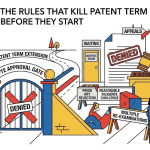
A federal judge held four Restasis patents invalid in October 2017. The Federal Circuit affirmed that ruling on 13 November 2018. [1] FDA approved the first generic of Restasis on 2 February 2022. [2] That gap is 1,177 days, or 3 years, 2 months and 20 days (our calculation from the two dates). The patents were gone. The generic was not on the market.
The title of this article is a simplification, and we want to say so early. Complex generics are hard to make. Only 12% of the 2,030 generic applications that the US Government Accountability Office (GAO) reviewed for fiscal years 2015 to 2017 won approval in the first review cycle. [3] The narrower claim that the evidence supports is this: for complex generics, the last patent expiry date is a weak predictor of the first entry date. The science, the litigation and the paperwork each run on their own calendar. The first generic arrives when the last of those calendars ends.
We assembled public records for six complex products: Restasis, Advair Diskus, Symbicort, Victoza, Saxenda and ProAir HFA. We calculated the gaps between key dates. We also built a simple framework, the Four Clocks of Generic Entry, to explain why those gaps differ. DrugPatentWatch tracks the patent, exclusivity and Paragraph IV records that feed the first two clocks. We use it for context, and we check the key facts against primary and trade sources.
The Short Answer: What Decides When a Complex Generic Launches?
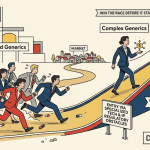
A complex generic launches on the date of the last unresolved clock, not on the date of the last patent. Four clocks run at the same time: a patent clock, an exclusivity clock, a litigation and listing clock, and a scientific review clock. A patent expiry date ends only the first one.
The record shows the patent clock fails in both directions. Restasis generics arrived about three years after the patent ruling. Liraglutide generics arrived more than a year before the early-2026 expiry date reported for one Victoza patent. [4][13] In both cases, a different clock set the date.
The Five Findings That Matter
Each finding below stands alone. The label ‘calculated’ means we derived the number from dated source records. It does not mean a source reported the number.
Restasis: FDA approved the first generic 1,177 days after the Federal Circuit affirmed that four Restasis patents were invalid (calculated from 13 November 2018 and 2 February 2022). [1][2]
Liraglutide: FDA announced the Hikma generic of Victoza on 23 December 2024, about 12 months after the December 2023 entry date in Teva’s 2019 settlement with Novo Nordisk (calculated). [5][6]
Review cycles: GAO found that 12% of 2,030 generic applications won approval in the first cycle, and that applications needed an average of three cycles from 2013 to 2017. [3]
ProAir HFA: Amneal sent its Paragraph IV notice 6,873 days (18 years, 9 months) after FDA approved ProAir HFA, and the Federal Circuit decided the delisting appeal 484 days after the notice (both calculated). [7][8]
Guidance workload: 109 of the 206 product-specific guidances FDA issued in fiscal year 2024 covered complex products, or 52.9% (calculated). [9] In fiscal year 2022, complex products were 13% of generic approvals. [10]
What Is a Complex Generic Drug?
A complex generic is a generic product that FDA places in a category where proof of sameness is harder than for a standard oral tablet. FDA does not define the term by price or by the size of the market. It defines it by the technical problem.
Which Product Categories Does FDA Treat as Complex?
A USP white paper lists the categories that FDA uses. [10] We reproduce them here, with examples taken from the products in this article.
FDA category
Examples in the USP paper
Product in this article (our classification)
Complex active ingredients
Peptides, complex mixtures
Liraglutide (Victoza, Saxenda)
Complex formulations
Liposomes, colloids
Restasis (cyclosporine ophthalmic emulsion)
Complex routes of delivery
Dermatological products, otic suspensions, emulsions and gels
Source for the categories: USP. [10] The last column is our classification. FDA did not assign these products to the categories in the sources we reviewed.
How Large Is the Complex Generic Share of Approvals?
Complex generics are a minority of approvals. The USP paper reports that complex products were 13% of generic approvals in fiscal year 2022, while complex products are 25% of approved reference listed drugs on the market. [10]
In fiscal year 2022, 13% of approved generic drugs were complex generics, while complex products make up 25% of approved reference listed drugs on the market. (USP, Complex Generics white paper, July 2023) [10]
Our calculation from the same paper: the complex share of approvals is about half of the complex share of the reference market. We read that gap as a sign of under-supply. We do not know the cause from this one figure.
Does FDA Put More Effort Into Complex Products Than Their Approval Share Suggests?
The guidance numbers point that way. GAO reported that FDA had issued 993 new or revised product-specific guidances since 2013, and 378 of them focused on complex drugs. [3] That is 38.1% (calculated). In fiscal year 2024, FDA issued 206 product-specific guidances, and 109 covered complex products. [9] That is 52.9% (calculated). These numbers measure guidance documents. They do not measure approvals. The periods also differ, so the shares should not be compared as a trend.
Methodology: How We Built the Case Timeline Dataset
This section lets a reader repeat our calculations.
What Data Did We Analyze?
We analyzed dated events for six products: Restasis (cyclosporine ophthalmic emulsion), Advair Diskus (fluticasone propionate and salmeterol), Symbicort (budesonide and formoterol), Victoza and Saxenda (liraglutide) and ProAir HFA (albuterol sulfate). The events run from 2004 to 2025. We took dates from FDA releases, a Federal Circuit decision as reported by law firms, company press releases and trade press. We also used the GAO and FDA statistics cited in the text.
Which Records Did We Include?
We included an event only if a source stated its date. We included three event types: patent or court rulings, FDA approvals or announcements, and generic launches. We excluded events with no stated date. We excluded revenue estimates unless a source reported them with a period.
How Did We Calculate the Gaps?
We counted calendar days between two dates, and we show years, months and days where useful. Where a source gave only a month, we say so and we show the gap as approximate. We call every derived number ‘calculated’.
How Did We Handle Conflicting Records?
Sources disagree in two places. The DrugPatentWatch page for Victoza lists a Paragraph IV submission date of 12 December 2016. [19] A Pharmacy Times report says Teva filed its application in 2017. [6] We did not use either date in a precise calculation. We say only that the gap from submission to the first ANDA approval was between seven and eight years. The same DrugPatentWatch page also shows two different Victoza approval dates in different sections, so we did not use the Victoza approval date at all.
What Are the Limits of This Analysis?
Six products are a small set. We chose products with public records and a known first generic, so the set favors cases where a generic did arrive. We cannot see confidential FDA review correspondence. Where a source did not state the cause of a delay, we do not state it either. The public sources we reviewed do not itemize why FDA approval took as long as it did in any of the six cases.
The Four Clocks of Generic Entry: An Original Framework
The Four Clocks framework is our own classification. It is not an established industry taxonomy. We built it to separate date sources that a forecaster can merge into one ‘patent expiry’ date.
Clock
What starts it
What ends it
Who controls it
Public record
1. Patent
Patent grant and filing dates
Expiry, invalidation or a license
Brand company, courts, the USPTO
Orange Book, patent documents
2. Exclusivity
FDA approval of the brand or the generic
End of the statutory period
Statute and FDA
Orange Book exclusivity list
3. Litigation and listing
Paragraph IV notice, suit, or a challenge to a listing
Court ruling, settlement, 30-month stay end or delisting
Courts, parties, FTC
Court dockets, settlement filings
4. Scientific review
ANDA submission
FDA approval
Applicant and FDA
Mostly not public until approval
Clock 1: When Do the Patents Expire, and Which Ones Count?
Patents on one product expire on different dates. A drug can have a compound patent, a formulation patent, a manufacturing patent and a device patent. The Victoza record shows the spread. A report on the Novo Nordisk and Sandoz settlement says the active ingredient patent was set to expire in the US and Europe in 2023. [13] The same report says patent 8,114,833, which covers manufacturing and formulation, runs to early 2026. [13] DrugPatentWatch lists 8,114,833 and 9,968,659 as the two Orange Book patents for Victoza, both marked for pediatric exclusivity. [19]
Why Does the Choice of ‘Last Patent’ Matter?
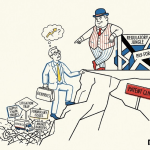
If a forecaster uses the compound patent, the model says 2023. If the forecaster uses the last listed patent, the model says 2026. Teva’s authorized generic launched in June 2024. [6] The first Hikma generic followed in December 2024. [4][5] Both dates fall between the two patent dates. Neither patent date predicts the entry.
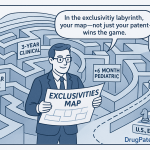
Clock 2: How Do FDA Exclusivities Delay Generic Entry?
FDA exclusivity runs apart from patents. Under the Federal Food, Drug, and Cosmetic Act, a new chemical entity gets five years of exclusivity, and a new clinical investigation can earn three years. [20] Pediatric exclusivity adds six months to existing protection. [21] The Victoza case shows the effect: a report says Teva’s December 2023 settlement entry date moved by six months because of the pediatric approval. [6]
Clock 3: How Do Litigation and Orange Book Listings Set the Date?
Litigation sets the date when a brand sues over a listed patent. A settlement can fix the date by contract. Teva and Novo Nordisk settled in 2019 on a launch date of December 2023. [6] Sandoz settled with Novo Nordisk before an April trial and could launch by 22 June 2024, or earlier under certain circumstances. [13]
What Is a Paragraph IV Certification?
It is a statement by a generic applicant that a listed patent is invalid or will not be infringed. [18] The notice it triggers starts the litigation clock.
Listing is a second source of timing risk. A patent that FDA lists in the Orange Book can trigger a Paragraph IV challenge. A patent that a court orders delisted cannot. We cover that case below.
Clock 4: Why Does FDA Review Take Several Cycles for Complex Products?
An ANDA reviewer decides whether the generic is the same as the brand in the ways that FDA requires. For a tablet, a bioequivalence study and a quality review often answer that question. For an inhaler or an emulsion, the applicant may need more data. One case in our dataset shows the extreme: FDA told Hikma to run another clinical trial for its Advair generic, according to RAPS. [11]
How Does the Paragraph IV Process and the 30-Month Stay Work?
A generic applicant files a Paragraph IV certification to say that a listed patent is invalid or not infringed. The brand company can then sue and delay final approval. We summarize the rules below, because they set the legal clock for every product in this article.
What Are the Statutory Time Limits?
Rule
Period
Source
Applicant sends Paragraph IV notice after FDA acknowledges the ANDA
Within 20 days
DLA Piper [18]
Brand or patent owner files suit after receiving notice
Within 45 days
DLA Piper [18]
Automatic stay of ANDA approval after timely suit
30 months
DLA Piper [18]
Marketing exclusivity for the first Paragraph IV applicant
180 days
DLA Piper [18]
New chemical entity exclusivity
5 years
21 U.S.C. 355 [20]
Pediatric exclusivity extension
6 months
21 U.S.C. 355a [21]
FDA target to decide a competitive generic therapy request
60 calendar days
FDA guidance [17]
Marketing deadline after ANDA approval for competitive generic therapy exclusivity
75 calendar days
FDA guidance [17]
When Can a Generic Company File a Paragraph IV Challenge Against a New Drug?
An ANDA with a Paragraph IV certification can be filed four years after approval of a new chemical entity. [20] If the brand sues within 45 days, the 30-month stay can run until 7.5 years after the brand approval. [18][20] This is our arithmetic from the statutory periods. We did not find a source that states the 7.5-year figure in the pages we reviewed, so a reader should confirm it in the statute.
What Happens to the 180-Day Exclusivity?
The first applicant to file a Paragraph IV challenge can block other generics for 180 days. [18] The applicant can lose that right through forfeiture rules, but the sources we reviewed do not list every forfeiture trigger. [18] For complex products the exclusivity matters less than the approval itself. A first filer that cannot win approval holds a place in line that it cannot use.
What Is Competitive Generic Therapy Exclusivity?
FDA can designate a drug as a competitive generic therapy when it finds inadequate generic competition. [17] The drug qualifies if no more than one approved drug is in the active section of the Orange Book, counting the reference drug and any generic that references it. [17] The first approved applicant can earn 180 days of exclusivity if it markets the drug within 75 calendar days of approval, and if no unexpired patent or exclusivity was listed for the reference drug when the applicant submitted the ANDA. [17]
This pathway fits a different timing problem than the one in this article. It rewards entry into markets with no blocking patents. It does not help with the patent-thicket cases below. FDA reported more than 245 requests and more than 70% granted as of March 2019. [17]
Why Do Complex Generics Need More Than One FDA Review Cycle?
Complex generics need more than one review cycle because the applicant must show sameness in more ways than for a tablet, and each gap in the data triggers another round. The GAO numbers show the scale of the problem for all generics, and complex products sit at the hard end.
What Did GAO Find About First-Cycle Approval Rates?
GAO reviewed 2,030 generic applications from fiscal years 2015 to 2017. Twelve percent, or roughly 244 applications, won approval in the first cycle, and 1,786 needed further cycles. [3] From 2013 to 2017, applications took an average of three review cycles to reach approval. [3] GAO also found that first-cycle approval rates were lower for first generics than for applications with no priority designation. [3]
The data pre-date the second Generic Drug User Fee Amendments (GDUFA II) commitments, and the detailed GAO sample was small. [3] We use these figures as a baseline and not as a current rate.
What Do FDA’s Fiscal Year 2024 Numbers Show?
FDA’s fiscal year 2024 statistics list 694 ANDA approvals and 162 tentative approvals for the period from 1 October 2023 to 30 September 2024. [9] FDA’s goals are 10 months for a standard original ANDA and 8 months for a priority original ANDA. [9] FDA’s preliminary results show 96% of the 50 completed standard original ANDA actions met the goal, and 95% of the 19 completed priority actions met it. [9]
Why Is the 10-Month Goal Not the Same as a 10-Month Approval?
The goal measures FDA’s time to act on a submission. A first-cycle action can be a complete response letter, not an approval. Mylan received complete response letters for its Advair generic in 2017 and earlier in 2018, before approval in January 2019. [11] Each cycle is a new clock. The preliminary FDA figures also leave a wide range of possible results, because many fiscal year 2024 actions were still open. [9]
How Does the Pre-ANDA Program Try to Cut Review Cycles?
FDA’s pre-ANDA program aims to help applicants file more complete applications, reduce assessment cycles and help complex products reach approval. [16] GDUFA III added product-specific guidance meetings and formal meetings for complex products. [16] The FDA page does not give numeric targets for these meetings or for guidance posting. [16] A USP paper reports that industry representatives say a product-specific guidance can save years of development, especially for complex generics. [10] That is a statement of opinion from the paper, not a measured result.
Case Study: Restasis Generic Entry Timeline
Restasis shows the longest gap between a patent event and a generic approval in our dataset.
Which Restasis Patents Did the Courts Invalidate?
After a trial in October 2017, Judge William C. Bryson found claims in four Restasis patents invalid as obvious. [1] The patents are US 8,629,111, US 8,648,048, US 8,685,930 and US 9,248,191. [1] Judge Bryson found that Allergan had ‘substantially overstated’ improvements in effectiveness when comparing cyclosporine formulations. [1] The Federal Circuit affirmed on 13 November 2018 in a nonprecedential judgment in Allergan Inc. v. Teva Pharmaceuticals USA Inc., No. 18-1130. [1]
What Was the Saint Regis Mohawk Tribe Deal?
Allergan transferred the patents to the Saint Regis Mohawk Tribe and licensed them back. [1] The goal was to claim tribal sovereign immunity against generic challengers. [1] The Federal Circuit rejected that approach in a separate inter partes review case in 2018. [1] The deal added a legal step to the Restasis timeline, but the sources we reviewed do not say how many days it added to generic entry.
Why Did FDA Approval Take Another 1,177 Days?
We do not know the exact reasons from the public sources. We do know three facts. FDA approved Mylan’s cyclosporine ophthalmic emulsion 0.05% in single-use vials on 2 February 2022. [2] Restasis had been approved for nearly 20 years at that point. [2] FDA also said it had supported 16 research projects on cyclosporine ophthalmic emulsion since 2012. [2]
Our analysis: the four invalidated patents ended the patent clock for those claims in November 2018. The remaining delay sat in the scientific review clock, and in any other clock that the public record does not show. Sally Choe, director of FDA’s Office of Generic Drugs, said that ‘Supporting development and expanding opportunities to bring complex generic drugs to the market’ is a major focus for FDA. [2] The Restasis record shows why.
Case Study: Advair Diskus and the First Generic From Mylan
Advair Diskus shows how long a scientific review clock can run for a drug-device combination.
When Did FDA Approve the First Advair Diskus Generic?
RAPS reported that FDA approved Mylan’s generic of Advair Diskus late on a Wednesday, in an article dated 31 January 2019. [11] The date was most likely 30 January 2019, which was a Wednesday (our inference, because the article does not state the date). [11] The approval covered three strengths: fluticasone propionate 100, 250 and 500 mcg, each with salmeterol 50 mcg. [11]
How Many Complete Response Letters Did Mylan Receive?
Mylan received complete response letters in 2017 and earlier in 2018. [11] That is at least two failed cycles before the approval. Hikma also received a complete response letter for its Advair generic, and FDA told Hikma to conduct another clinical trial. [11]
What Did the First Advair Generic Cost to Develop?
RAPS reported that Mylan CEO Heather Bresch said the approval reflected more than $700 million in investment. [11] This is a statement by the company’s chief executive. We did not find an independent audit of the figure.
What Does Advair Show About Timing?
The Advair case does not involve a patent ruling like Restasis. It involves repeated review cycles. Each complete response letter added a new cycle, and a new cycle added months. The date a forecaster would have chosen from patents alone would have missed that cost.
Case Study: Symbicort and the First Budesonide-Formoterol Generic
FDA approved Breyna, a budesonide and formoterol fumarate dihydrate inhalation aerosol, on 16 March 2022. [12] It is the first FDA-approved generic of AstraZeneca’s Symbicort. [12] Mylan Pharmaceuticals, a Viatris subsidiary, received the approval. [12]
Who Developed Breyna and in What Strengths?
Viatris worked with Kindeva Drug Delivery, a contract development and manufacturing organization. [12] The approval covers 160 mcg/4.5 mcg and 80 mcg/4.5 mcg strengths. [12] The indications are asthma in patients six years or older, and maintenance treatment of airflow obstruction and reduction of exacerbations in COPD. [12]
What Does the Partnership Model Show About Complex Generic Timing?
Two inhaler generics in our dataset, the Advair Diskus generic and Breyna, came from Mylan, which is now part of Viatris. [11][12] The second approval came about 37 months after the first, from about 30 January 2019 to 16 March 2022 (calculated). A shared developer did not give the second product a shared date. Each product had its own device, its own formulation and its own review clock.
Case Study: The Liraglutide Generic Timeline for Victoza and Saxenda
Liraglutide is a peptide in a prefilled pen. It sits in two FDA categories at once: complex active ingredient and drug-device combination. We classify it that way. FDA did not state the classification in the sources we reviewed.
How Did the Victoza Settlements Set Entry Dates?
Teva settled with Novo Nordisk in 2019. Under that settlement Teva could launch in December 2023. [6] A report says the date moved by six months because of the pediatric approval. [6] Sandoz settled with Novo Nordisk before an April trial in the District of Delaware, and could launch by 22 June 2024. [13] Viatris challenged patent 8,114,833 in 2020 and had settled by April 2021. [13]
What Is the Difference Between Teva’s June 2024 Launch and Hikma’s December 2024 Approval?
Teva announced a launch of an authorized generic of Victoza (liraglutide injection, 1.8 mg) on 24 June 2024. [6] An authorized generic is the brand product sold under a generic label. It does not need an ANDA approval. FDA announced an approval for Hikma on 23 December 2024, and trade press reported it as the first generic of liraglutide injection (Victoza). [5] Hikma launched immediately after approval. [4]
What Is an Authorized Generic?
An authorized generic is the brand drug sold without the brand name, usually under a license from the brand company. The Teva product of June 2024 was described this way in trade press. [6]
The sequence is useful for forecasters. A generic-priced product reached pharmacies in June 2024 under a settlement date. An ANDA generic reached them six months later, after FDA approval. Both dates differ from the 2023 compound patent date and from the early-2026 date for patent 8,114,833. [13]
How Much Revenue Did Victoza Face?
Hikma cited IQVIA data that put US sales of liraglutide injection 6 mg/mL at about $1.3 billion in the 12 months ending October 2024. [4] That is a company-reported figure from a market data vendor, and it covers the Victoza product only.
When Did the First Saxenda Generic Arrive?
Teva announced FDA approval and US launch of generic Saxenda (liraglutide) in a report published on 29 August 2025. [14] FDA approved Saxenda for Novo Nordisk on 23 December 2014. [14] The gap is about 10 years and 8 months (calculated, using the report date for the generic). The report does not say whether the Teva product followed the ANDA pathway, so we do not make that claim. [14]
What Does DrugPatentWatch Show for Victoza?
DrugPatentWatch lists two US Orange Book patents for Victoza, 8,114,833 and 9,968,659, both marked for pediatric exclusivity. [19] It records one Paragraph IV challenge for the 18 mg/3 mL prefilled syringe, with a submission date of 12 December 2016. [19] It also records Hikma’s approval for a generic liraglutide on 23 December 2024. [19] A reader should confirm patent expiry dates and exclusivity dates in the FDA Orange Book, because the public view of the page we reviewed did not show them, and its narrative sections did not match its tables in places.
Litigation Breakdown: Teva v. Amneal and the ProAir HFA Device Patents
Teva v. Amneal is the clearest example of the third clock. A court decided which patents could count, and so decided which timing rules applied.
What Did the Federal Circuit Decide in Teva v. Amneal?
On 20 December 2024, the Federal Circuit affirmed an order that required Teva to delist patents from the Orange Book entry for ProAir HFA (albuterol sulfate). [8] The case number is 24-1936. [8] The court held that a listed patent must claim at least the active ingredient, and that patents which claim only device components of an NDA product do not meet the listing requirement. [8] The statute is 21 U.S.C. 355(b)(1)(A)(viii), as amended in 2021. [8]
The district court said the inhaler patents ‘contain no claim for the active ingredient at issue, albuterol sulfate’ and are ‘directed to components of a metered inhaler device.’ [7] The Federal Circuit rejected Teva’s argument that infringement equals claiming, because the statute treats the two as separate requirements. [7]
What Is the Teva v. Amneal Timeline?
Date
Event
Days from FDA approval (calculated)
Source
29 Oct 2004
FDA approves ProAir HFA
0
[7]
24 Aug 2023
Amneal sends Paragraph IV notice
6,873
[7]
Nov 2023
FTC challenges more than 100 patents, including the five at issue
Not calculated (month only)
[7]
22 Mar 2024
FTC files amicus brief for delisting
7,084
[7]
10 Jun 2024
District of New Jersey orders delisting
7,164
[7]
20 Dec 2024
Federal Circuit lifts its stay and affirms
7,357
[7][8]
Our calculations from the source dates: 291 days passed from the notice to the district court order, 193 days passed from that order to the Federal Circuit decision, and 484 days passed from the notice to the Federal Circuit decision.
Why Does Delisting Change the 30-Month Stay Math?
A brand that sues within 45 days of a Paragraph IV notice triggers a 30-month stay. [18] Thirty months from 24 August 2023 is 24 February 2026. That date is our illustration, based on the notice date alone. The statute starts the stay at the later of the two receipt dates, and the sources we reviewed do not give the exact receipt dates. [18] The point holds without the exact date: a listed patent that a court removes cannot support a stay, so the delisting order removed the stay from the worst-case calendar for Amneal, which ran to about February 2026 on our illustration.
What Has the FTC Done About Device Patent Listings?
The FTC first challenged improper Orange Book listings in November 2023 as an unfair method of competition under Section 5 of the FTC Act. [15] In May 2024 it sent 10 more letters, which brought the total to about 400 challenged listings. [15] On 21 May 2025 it sent seven warning letters that cover about 200 patent listings across 17 NDAs. [15]
Company
Products named in the May 2025 FTC letters
Covis Pharma
Tudorza Pressair, Duaklir Pressair
Teva Branded Pharmaceutical Products
ProAir HFA, ProAir DigiHaler, ProAir RespiClick, QVAR 40 and 80
Can a Delisted Device Patent Still Block a Generic?
Yes, a delisted patent can still be asserted in a normal infringement suit. IPWatchdog reports that industry groups note delisted device patents remain enforceable, so the FTC campaign could lead to infringement suits outside Hatch-Waxman timelines. [15] The same article reports that industry groups and Senator Bill Cassidy say FDA has not clarified how device patents should be listed. [15] Delisting removes the 30-month stay from the calendar. It does not remove the patent.
What the Data Shows: Six Complex Generics, Six Different Gaps
Product
Complexity type (our classification)
Reference point
Generic event
Gap (calculated)
Sources
Restasis
Complex formulation, ophthalmic route
Federal Circuit affirms invalidity, 13 Nov 2018
FDA approves first generic, 2 Feb 2022
1,177 days (3y 2m 20d)
[1][2]
Advair Diskus
Drug-device combination (dry powder)
Complete response letters, 2017 and early 2018
FDA approves Mylan generic, about 30 Jan 2019
At least two failed cycles
[11]
Symbicort
Drug-device combination (metered dose inhaler)
Advair generic approval, about 30 Jan 2019
FDA approves Breyna, 16 Mar 2022
About 37 months after the Advair generic
[11][12]
Victoza
Peptide in a pen
Settlement entry date, Dec 2023
FDA announces Hikma approval, 23 Dec 2024
About 12 months
[5][6]
Victoza
Peptide in a pen
Settlement entry date, Dec 2023
Teva authorized generic, 24 Jun 2024
About 6 months (pediatric extension)
[6]
Saxenda
Peptide in a pen
FDA approves Saxenda, 23 Dec 2014
Generic launch reported 29 Aug 2025
About 10y 8m
[14]
ProAir HFA
Drug-device combination (metered dose inhaler)
Paragraph IV notice, 24 Aug 2023
Federal Circuit affirms delisting, 20 Dec 2024
484 days
[7][8]
What Pattern Do the Gaps Show?
The gaps have no common size. They range from six months to almost 11 years, and they measure different things. That is the finding. A forecaster who applies one lag to all six products would be wrong on at least five of them. We do not claim the dataset is a random sample, so we do not offer an average.
Scenario Analysis: Which Clock Binds Last?
The scenarios below use identifiable assumptions. They are illustrations of how the clocks interact, not forecasts for a named drug. Each scenario points to a case in this article.
Scenario A: The Science Clock Binds Last
Assumption: no unexpired patent blocks the product, and the applicant needs several review cycles. Result: entry follows the last complete response letter and the approval. Anchor cases: Advair, where Mylan received complete response letters in 2017 and 2018, and Restasis, where approval came 1,177 days after the patent ruling. [2][11]
Scenario B: The Settlement Clock Binds Last
Assumption: a settlement sets the entry date, and an exclusivity extension moves it. Result: entry follows the contract date plus any extension, even if patents expire later. Anchor case: Victoza, where the December 2023 date moved by six months because of pediatric approval, and entry came before patent 8,114,833 expired in early 2026. [6][13]
Scenario C: The Listing Clock Binds Last
Assumption: a brand lists device patents and sues. Result: a 30-month stay holds approval until a court rules on the listing or the stay ends. Anchor case: ProAir HFA, where the district court ordered delisting 291 days after the Paragraph IV notice. [7][18]
Scenario D: A New Chemical Entity Stays Protected to the Longest Possible Date
Assumption: the product is a new chemical entity, the generic files at year four, and the brand sues within 45 days. Result: our arithmetic from the statutory periods puts the stay end at about 7.5 years after the brand approval. [18][20] This case has no anchor in our dataset, so it is the least verified scenario.
Why Is Scenario D Included If It Has No Anchor Case?
It shows the longest legal delay that the statutory periods allow for a new chemical entity. The other three scenarios show delays that happened. Scenario D shows a ceiling that has not been tested in our dataset.
What This Means for Generic Developers
Generic developers should model the review clock as the likely last clock for a complex product. The Advair record shows two complete response letters and a $700 million investment claim. [11] A developer that budgets for one cycle will miss both the timing and the cost.
What Should a Developer Do Before Filing?
FDA offers pre-ANDA product development meetings and pre-submission scientific meetings. [16] GDUFA III also added product-specific guidance meetings. [16] A developer should use them, because the stated purpose is to reduce assessment cycles. [16] We cannot say from the sources how many cycles these meetings save.
When Is a Competitive Generic Therapy Request Worth Filing?
A request is worth filing when the product has no unexpired listed patent or exclusivity and fewer than two approved drugs in the Orange Book. [17] A developer that wins exclusivity must market within 75 calendar days of approval. [17] Hikma launched its Victoza generic immediately on approval. [4] That is the pattern the 75-day rule rewards.
What This Means for Brand Manufacturers
Brand manufacturers should audit device patents in the Orange Book now. The Federal Circuit ruled that a listed patent must claim at least the active ingredient. [8] The FTC has challenged about 400 listings in 2023 and 2024 and about 200 more in May 2025. [15] A listing that fails the test removes the 30-month stay and exposes the brand to antitrust counterclaims. The district court in Teva v. Amneal denied Teva’s motion to dismiss Amneal’s five antitrust counterclaims. [8]
Can a Brand Still Protect a Device With Patents?
Yes. The ruling limits Orange Book listing, not patent ownership. A brand can still assert a device patent in an infringement suit. [15] The change is the timing. A suit outside the Hatch-Waxman process does not carry an automatic 30-month stay.
What This Means for Analysts, Investors and Pricing Teams
Analysts should stop using one ‘loss of exclusivity’ date for complex products. The Four Clocks framework gives four dates to model, and each date has a different source and a different probability.
How Should Analysts Weight Each Clock?
We do not offer numeric weights, because six cases cannot support them. We offer an order of operations. First, list the patents and their types. Second, list the exclusivities. Third, read the dockets and settlements for contract dates. Fourth, check public signals of review difficulty, such as a long Paragraph IV record with no approval, and complete response letters that the applicant reported.
How Can DrugPatentWatch Support the First Three Steps?
DrugPatentWatch consolidates Orange Book patents, exclusivity data and Paragraph IV records by drug. For Victoza, it shows two listed patents, one Paragraph IV record and the Hikma approval date. [19] We treat it as a starting index. A reader should verify dates in the FDA Orange Book, the court docket or the company filing before using them in a model.
How to Forecast Generic Entry for a Complex Product
What Is the Four-Step Forecast Method?
Patent clock: list every Orange Book patent with its type (compound, formulation, manufacturing or device) and its expiry date.
Exclusivity clock: list new chemical entity, new clinical investigation, pediatric and competitive generic therapy periods.
Litigation clock: list every Paragraph IV notice, suit, settlement entry date and any challenge to a listing.
Review clock: count the known ANDA filers, the reported complete response letters and the product-specific guidance status.
Then set the forecast at the latest of the four dates, and show the earliest plausible date next to it. The gap between the two is the uncertainty. For Restasis, that gap was more than three years after the patent ruling. For Victoza, it was about two years. [1][2][13]
Where Does This Method Fail?
Which Inputs Are Hardest to Observe?
Review-clock inputs are the hardest, because FDA review correspondence is mostly not public until approval. The method fails when settlement terms are confidential, when a filer does not disclose a complete response letter and when a court rules on a listing without warning. The method gives a range of dates. It does not give a single date.
Key Takeaways
FDA approved the first Restasis generic 1,177 days after the Federal Circuit affirmed that four Restasis patents were invalid. (Calculated from [1] and [2].)
GAO found a 12% first-cycle approval rate across 2,030 generic applications from fiscal years 2015 to 2017, and an average of three cycles from 2013 to 2017. [3]
Mylan received at least two complete response letters before the first Advair Diskus generic won approval in January 2019. [11]
Liraglutide generics entered in June 2024 and December 2024, between the 2023 compound patent date and the early-2026 date for patent 8,114,833. [4][5][6][13]
On 20 December 2024, the Federal Circuit held that device-only patents do not meet the Orange Book listing requirement. [8]
The FTC has challenged about 400 listings in 2023 and 2024 and about 200 more across 17 NDAs in May 2025. [15]
For a complex product, use the latest of four dates (patent, exclusivity, litigation and review), and publish a range.
FAQ: Complex Generic Timing and Generic Entry
Can FDA Approve a Generic While a 30-Month Stay Is Active?
FDA cannot give final approval while the stay is in force. FDA can still review the application, and it issues tentative approvals. In fiscal year 2024 FDA issued 162 tentative approvals and 694 ANDA approvals. [9] A court ruling that a patent is invalid or not infringed can end the stay early. [20]
How Long Does an FDA Generic Drug Review Take?
FDA’s goal is 10 months for a standard original ANDA and 8 months for a priority original ANDA. [9] Real approval takes longer when an applicant needs more than one cycle. GAO found an average of three cycles from 2013 to 2017. [3]
What Is a Product-Specific Guidance?
A product-specific guidance is an FDA document that states how an applicant can show that a generic matches a given reference drug. FDA issued 206 of them in fiscal year 2024, and 109 covered complex products. [9] Industry representatives say a guidance can save years of development. [10]
What Is a Competitive Generic Therapy Designation?
It is an FDA designation for a drug with inadequate generic competition, meaning no more than one approved drug in the active Orange Book. [17] FDA aims to decide a request within 60 calendar days. [17] A first approved applicant can earn 180 days of exclusivity if it markets the drug within 75 calendar days of approval. [17]
Why Do Inhaler Generics Depend on Device Patents?
An inhaler is a drug and a device in one product. A brand can hold patents on device components. In Teva v. Amneal, the five patents at issue covered device components, and the courts ordered them delisted. [8][7] The listing, not the existence of the patent, set the stay.
Does Delisting Remove a Patent?
No. Delisting removes the patent from the Orange Book. Industry groups say the patent stays enforceable in an ordinary infringement suit. [15] The change is that Hatch-Waxman timelines and the 30-month stay no longer attach to that patent.
Does a Settlement Fix the Generic Launch Date?
A settlement can fix the date by contract. Teva and Novo Nordisk agreed in 2019 to a December 2023 launch for liraglutide, and the date moved by six months because of a pediatric approval. [6] Sandoz settled to launch by 22 June 2024 or earlier under certain circumstances. [13]
How Much Does It Cost to Develop a First Complex Generic?
One company has given a figure. Mylan’s CEO said the Advair Diskus generic approval reflected more than $700 million in investment, according to RAPS. [11] One case is not an industry average, and the figure is not audited.
What Does the GDUFA III Pre-ANDA Program Offer Applicants?
It offers pre-ANDA product development meetings, pre-submission scientific meetings and product-specific guidance meetings. [16] It also covers formal meetings for complex products under an October 2022 guidance. [16] FDA’s page does not state numeric timelines for them. [16]
Where Can I Check the Patents and Exclusivities for a Specific Drug?
Start with the FDA Orange Book for the legal record. DrugPatentWatch provides a drug-level view that groups Orange Book patents, Paragraph IV records and generic approvals, and it is useful as an index. [19] Confirm any date you plan to publish in the Orange Book, the court docket or the company filing.
References
Sterne Kessler. (n.d.). Fed. Circ. won’t restore Allergan’s Restasis patent claims [Reprint of Law360 article by J. Overley]. https://www.sternekessler.com/news-insights/news/fed-circ-wont-restore-allergans-restasis-patent-claims/
U.S. Food and Drug Administration. (2022, February 2). FDA approves first generic of Restasis [Press release, reprinted by BioSpace]. https://www.biospace.com/fda-approves-first-generic-of-restasis
The FDA Law Blog. (2019, August). Dust yourself off and try again: GAO report on ANDA approval shows that multiple review cycles are still often necessary [Summary of GAO-19-565]. https://www.thefdalawblog.com/2019/08/dust-yourself-off-and-try-again-gao-report-on-anda-approval-shows-that-multiple-review-cycles-are-still-often-necessary/
Hikma Pharmaceuticals. (2024, December 26). Hikma receives FDA approval and launches the generic version of Victoza, Liraglutide, in the US [Press release]. https://www.hikma.com/news/hikma-receives-fda-approval-and-launches-the-generic-version-of-victoza-liraglutide-in-the-us/
Pharmaceutical Executive. (2024, December 24). FDA approves Hikma generic GLP-1 agonist for type 2 diabetes [Citing FDA press release of December 23, 2024]. https://www.pharmexec.com/view/fda-approves-hikma-generic-glp-1-agonist-type-2-diabetes
Pharmacy Times. (2024, June 28). Teva launches generic formulation of liraglutide in US. https://pharmacytimes.com/view/teva-launches-generic-formulation-of-liraglutide-in-us
American Bar Association, Antitrust Law Section. (n.d.). Federal Circuit affirms Teva v. Amneal. https://www.americanbar.org/groups/antitrust_law/resources/newsletters/federal-circuit-affirms-teva-amneal/
Cooley LLP. (2025, January 2). Teva v. Amneal ruling interprets Orange Book listing statute, affirms delisting of device patents (Teva Branded Pharm. Prods. R&D, Inc. v. Amneal Pharms. of N.Y., LLC, No. 24-1936, Fed. Cir. Dec. 20, 2024). https://www.cooley.com/news/insight/2025/2025-01-02-teva-v-amneal-ruling-interprets-orange-book-listing-statute-affirms-delisting-of-device-patents
U.S. Food and Drug Administration. (n.d.). Generic drug program statistics, fiscal year 2024 (1 October 2023 to 30 September 2024). https://www.fda.gov/media/187051/download
U.S. Pharmacopeia. (2023, July). Complex generics [White paper]. https://www.usp.org/sites/default/files/usp/document/ea83b_complex-generics_wp_2023-07_v3.pdf
Regulatory Affairs Professionals Society. (2019, January 31). Mylan wins FDA approval for first Advair generic. https://www.raps.org/resource/mylan-wins-fda-approval-for-first-advair-generic.html
Pharmaceutical Technology. (2022, March 17). FDA approves generic version of AstraZeneca’s Symbicort to treat asthma and COPD. https://pharmtech.com/view/fda-approves-generic-version-of-astrazeneca-s-symbicort-to-treat-asthma-and-copd
Fierce Pharma. (n.d.). Novo Nordisk and Novartis put Victoza patent suit to bed, teeing up Sandoz copycat in 2024. https://www.fiercepharma.com/pharma/novo-nordisk-and-novartis-put-victoza-patent-suit-bed-teeing-sandoz-copycat-2024-report
Patient Care. (2025, August 29). Generic liraglutide approved, marking first generic GLP-1 RA indicated specifically for weight management in the US. https://www.patientcareonline.com/view/generic-liraglutide-approved-marking-first-generic-glp-1-ra-indicated-specifically-for-weight-management-in-the-us
IPWatchdog. (2025, May 22). FTC renews campaign to remove ‘junk’ inhaler and device patents from Orange Book listings. https://ipwatchdog.com/2025/05/22/ftc-renews-campaign-remove-junk-inhaler-device-patents-orange-book-listings/
U.S. Food and Drug Administration. (n.d.). GDUFA III enhancements to the pre-ANDA program. https://www.fda.gov/industry/generic-drug-user-fee-amendments/gdufa-iii-enhancements-pre-anda-program
U.S. Food and Drug Administration. (2019). Competitive generic therapies: Guidance for industry (draft). https://www.fda.gov/media/125691/download
DLA Piper. (2020, June 29). Hatch-Waxman litigation 101. https://www.dlapiper.com/en-hk/insights/publications/2020/06/ipt-news-q2-2020/hatch-waxman-litigation-101
DrugPatentWatch. (n.d.). Victoza patent, exclusivity and generic entry data. https://www.drugpatentwatch.com/p/alphasignals/tradename/VICTOZA
Federal Food, Drug, and Cosmetic Act, 21 U.S.C. 355. https://www.law.cornell.edu/uscode/text/21/355
Federal Food, Drug, and Cosmetic Act, 21 U.S.C. 355a (pediatric studies of drugs). https://www.law.cornell.edu/uscode/text/21/355a