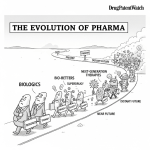
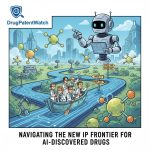
The global biopharmaceutical sector has entered a decisive inflection point in early 2026, characterized by the convergence of three macroeconomic super-cycles: the maturation of generative artificial intelligence from experimental novelty to industrial necessity, a geopolitical inversion where China has eclipsed the United States in the volume and velocity of therapeutic innovation, and a historic “patent cliff” that is stripping revenue from established blockbusters at an unprecedented rate. This report provides a comprehensive, “Skyscraper-level” analysis of these dynamics, offering institutional investors and industry strategists a detailed roadmap of the market landscape.
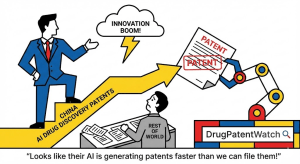
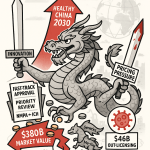
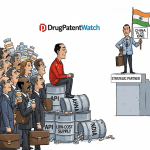
Contrary to the “fast follower” narrative that defined the 2010s, data from the first quarter of 2026 confirms that China has fundamentally decoupled its innovation engine from Western reliance. Chinese biotechs now account for nearly 70% of global AI-driven drug discovery patent filings and approximately 32% of global out-licensing deal value—a figure that has quadrupled since 2021.1 This surge is not merely a function of state subsidies but reflects a structural advantage in clinical trial execution speed and the integration of automated “self-driving” laboratories.
Simultaneously, the technical substrate of the industry has evolved. The “Generative AI” hype cycle of 2023 has settled into a deployment phase dominated by diffusion models and flow matching algorithms, which have rendered earlier Generative Adversarial Networks (GANs) obsolete for high-fidelity molecular design.4 Platforms like AlphaFold 3 and XtalPi’s ID4 have collapsed the silos between biology and physics, enabling the de novo design of complex biomolecular complexes and the precise prediction of crystal polymorphs—a capability that has become a critical defensive weapon in intellectual property battles.6
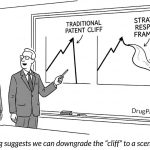
However, this technological renaissance collides with a harsh financial reality. The industry faces a $200 billion revenue chasm by 2030, with 2026 serving as “Day Zero” for the loss of exclusivity (LOE) on franchise-defining assets such as Eliquis and Januvia.8 The regulatory environment has further intensified this pressure; the FDA’s removal of “switching studies” for biosimilars has lowered the barrier to entry for interchangeable biologics, signaling a rapid erosion of post-patent biological monopolies.10
This report integrates these multidimensional trends to construct a high-conviction investment thesis for 2026: capital must rotate from “long-only” positions in legacy pharma facing patent exposure toward “picks and shovels” AI infrastructure providers and agile, clinically validated TechBio hybrids that have successfully navigated the “Valley of Death.”
1. The Geopolitical Axis Shift: China’s Ascension in Biopharma Innovation
The prevailing geopolitical narrative of the last decade positioned the United States as the undisputed architect of pharmaceutical innovation, with China serving primarily as a manufacturing depot and a consumer market. The data emerging in 2025 and early 2026 unequivocally dismantles this paradigm. The “innovation gap” has not merely closed; in specific high-value modalities—particularly Antibody-Drug Conjugates (ADCs), bispecifics, and AI-designed small molecules—it has reversed.
1.1 The Patent Volume and Quality Divergence
In 2026, the velocity of intellectual property generation in China has created a statistical chasm between it and Western competitors. China now accounts for nearly 70% of global generative AI patents filed since 2014, a lead that has widened significantly in the post-2024 period.2 While Western critics historically dismissed Chinese patent volume as a function of subsidized quantity over quality, 2026 metrics indicate a structural improvement in the “inventive step” and commercial viability of these filings.
The China National Intellectual Property Administration (CNIPA) has met and exceeded its rigorous 14th Five-Year Plan targets, reporting over 16 high-value invention patents per 10,000 people.13 Crucially, the administrative friction that once plagued the Chinese system has been engineered out; CNIPA has cut invention patent review times to an average of 15 months, significantly faster than the 20+ month backlog often experienced at the USPTO.13 This regulatory efficiency allows Chinese firms to secure priority dates and build “patent thickets” around emerging targets faster than their US counterparts.
This surge is deeply embedded in applied pharmacology rather than theoretical computer science. By early 2026, China has emerged as the world’s second-largest source of first launches for New Molecular Entities (NMEs), capturing an 18% global share.1 This statistic is a lagging indicator of R&D investments made five to ten years prior, suggesting that the current patent boom will likely translate into even greater commercial dominance by 2030. The focus has shifted from “me-too” generics to “best-in-class” and “first-in-class” assets, particularly in oncology and immunology.
1.2 The Deal Flow Reversal: From Import to Export
Perhaps the most tangible metric of China’s rise is the flow of capital in licensing transactions. Historically, Chinese companies effectively operated as import vehicles, in-licensing Western assets for the domestic market. By 2026, this flow has inverted. China-originated assets now account for approximately 32% of global out-licensing deal value, a dramatic increase from just 8% in 2021.1
The J.P. Morgan Healthcare Conference in January 2026 served as a theater for this disparity. While global pharma giants hesitated on internal AI infrastructure bets, prioritizing capital conservation, they aggressively deployed funds to acquire Chinese assets. During the conference week alone, Chinese biotech firms closed deals totaling approximately $7.3 billion, dwarfing the $1.5–$2 billion spent on AI infrastructure partnerships.1
This signals a strategic “buy vs. build” pivot. Western multinational corporations (MNCs) have tacitly acknowledged that Chinese laboratories, leveraging lower labor costs, massive patient data access, and integrated AI platforms, are generating validated clinical assets faster and cheaper than internal US R&D divisions. The discount on Chinese assets—often commanding smaller upfront payments (60–70% lower) and total deal sizes (40–50% less) compared to Western peers—makes them highly attractive targets for replenishing pipelines hollowed out by the patent cliff.3
Table 1: Comparative Innovation Metrics (US vs. China) – 2026
Metric
United States
China
Strategic Implication
Global GenAI Patent Share
~18%
~70%
China dominates volume and application; US retains edge in foundational model architecture.2
Global License-Out Value Share
~27-28%
~50% (Trend)
US share declining; China becoming the primary source of novel assets for Global Pharma.1
Clinical Trial Volume (2025)
~6,200
~7,700
China executing trials at scale; 1,500+ more trials annually than US.1
Regulatory Speed (FIH)
Variable
~87 days
China’s streamlined IND review enables rapid iteration of Phase I safety data.1
Blockbuster Deal Origination
33-34 deals ≥$1B
35 deals ≥$1B
Parity achieved; China slightly ahead in origination of high-value assets.1
AI Investment Focus
Infrastructure & Models
Application & Assets
US invests in tools (e.g., NVIDIA, foundational LLMs); China invests in drugs generated by tools.
1.3 The “Clinical Scale” and “Data Gravity” Advantage
The speed of iteration in drug discovery is a function of both computational power and biological validation. While the US maintains a lead in computational infrastructure (GPU availability), China has achieved a structural advantage in biological data generation. The country surpassed the US in total clinical trial volume in 2021 and has widened that lead annually, conducting approximately 7,700 trials in 2025 compared to ~6,200 in the US.1
Regulatory reforms have compressed the “First-in-Human” (FIH) approval timeline in China to roughly 87 days, compared to over 500 days pre-2015.1 This regulatory velocity, combined with high patient density in centralized urban hospital networks, allows Chinese biotechs to iterate through Phase I trials—where safety and initial pharmacokinetics are established—at a pace that Western counterparts cannot match.
This creates a “data gravity” effect. AI models require vast amounts of wet-lab data for reinforcement learning. Chinese companies, capable of generating experimental and clinical data at scale and speed, can update their models more frequently than US competitors who face slower feedback loops. The integration of this clinical data into feedback loops is creating “Digital Twins” of patient cohorts, allowing for in silico trial simulation that further accelerates development.15
2. The Technical Frontier of 2026: Beyond the Hype
As the market landscape shifts, so too does the technological toolkit. The simplistic “AI will cure cancer” narrative of 2023 has been replaced by a nuanced engineering discipline focused on specific, high-value bottlenecks in the discovery pipeline. The era of “black box” prediction is yielding to an era of “explainable design” and physical simulation.
2.1 The Paradigm Shift: Diffusion Models and Flow Matching
By 2026, the industry has largely moved beyond early deep learning architectures like Variational Autoencoders (VAEs) and basic Generative Adversarial Networks (GANs) for molecular generation. While these older models were effective at generating valid chemical strings (SMILES), they often struggled with 3D conformational stability and synthesizability. The state-of-the-art is now defined by Diffusion Models and Flow Matching algorithms.4
Diffusion Models: These models, which underpin image generators like Midjourney, have been rigorously adapted for 3D molecular geometry. The mechanism involves adding Gaussian noise to a valid molecular structure until it degrades into randomness, and then training a neural network to reverse that process, effectively “denoising” random coordinates back into a coherent, chemically valid structure.
Key Implementations: Tools like RFDiffusion3 (Baker Lab) and Chroma (Generate:Biomedicines) allow researchers to design proteins de novo with specific backbone and sidechain configurations that do not exist in nature. RFDiffusion3, released in late 2025, supports atomic-level constraint specification, enabling the design of binders for specific epitopes with unprecedented precision.17
Clinical Impact: Generate:Biomedicines’ asset GB-0895 (asthma), designed using the Chroma platform, entered Phase 3 trials in late 2025, validating the diffusion approach in a late-stage clinical setting.17
Flow Matching: This technique is emerging as a computationally more efficient alternative to diffusion, particularly for generating cyclic conformers and complex ligands.
Mechanism: Flow matching models the continuous transformation of probability distributions via Ordinary Differential Equations (ODEs). Unlike diffusion, which relies on a stochastic process, flow matching defines a deterministic path from the prior distribution (noise) to the target distribution (data), resulting in faster inference times and higher stability.
Applications: Models like FlowDock and Megalodon utilize flow matching to generate high-quality 3D structures with better energy profiles and “validity” rates than previous methods. Megalodon, a scalable transformer model, has demonstrated state-of-the-art results in conditional structure generation, producing up to 49x more valid molecules at large scales compared to prior benchmarks.5 This capability is critical for targeting “undruggable” proteins where standard library screening fails to provide hit candidates.
2.2 AlphaFold 3 and the “Structure Silo” Collapse
The release of AlphaFold 3 (AF3) and its subsequent partial open-sourcing in late 2024/early 2025 marked a “Great Unlocking” for the industry.18 Unlike AlphaFold 2, which focused primarily on protein backbones, AF3 utilizes a diffusion-based module to predict the structure of complex biomolecular systems—proteins bound to DNA, RNA, ligands, ions, and modified residues.6
This capability has collapsed the “structural silo” that historically separated biology (protein targets) from chemistry (small molecule ligands). In 2026, AF3 is not merely a prediction tool; it acts as the engine for Digital Twin simulations. Researchers can now model how a specific patient’s genetic variant might alter a protein’s structure and, consequently, its binding affinity to a drug.
Strategic Shift: This allows discovery teams to move from “experimental validation after computational prediction” to “computational prediction alongside experimental validation.” By 2026, early target selection depends far more on this computational interrogation of large biological datasets before any wet-lab work is committed.15
2.3 Polymorph Prediction: The New IP Battleground
A less publicized but financially critical application of AI in 2026 is Crystal Structure Prediction (CSP) and polymorph screening. The solid form of a drug (its crystal structure) dictates its solubility, stability, bioavailability, and crucially, its patentability. Unexpected polymorphs can cause manufacturing disasters (e.g., the historical Ritonavir case) or open the door for generic challengers to bypass patents.
AI-driven CSP, led by companies like XtalPi, Schrödinger, and emerging players like Lavo Life Sciences, has reduced the computational cost of predicting stable crystal forms by orders of magnitude.19
Technical Advantage: AI models, often combined with density functional theory (DFT), can scan the entire energy landscape of a molecule to identify thermodynamic global minima that experimental screening might miss due to kinetic trapping.21
Commercial Implication: This technology is being used defensively to “evergreen” patents by filing claims on all theoretically stable polymorphs before competitors can discover them.22 Conversely, generic manufacturers utilize these tools to find “holes” in innovator patent estates—stable forms that were missed and not claimed—allowing for early market entry. The integration of automated “self-driving” crystallization robots with these AI models creates a closed-loop system that validates predictions in real-time.22
Table 2: Key AI Models & Platforms in 2026 Drug Discovery
Model/Platform
Developer
Core Technology
Key Functionality & 2026 Update
AlphaFold 3
Google DeepMind
Diffusion-based Module
Prediction of full biomolecular complexes (DNA, RNA, Ligands); enables in silico interaction modeling.6
RFDiffusion3
Baker Lab
Diffusion Model
De novo protein design with atomic-level constraint specification; released Dec 2025 for precise binder design.17
Chroma
Generate:Biomedicines
Graph Neural Networks + Diffusion
Programmable protein generation using geometric constraints; linked to Phase 3 asset GB-0895.17
Megalodon
NVIDIA / BioNeMo
Scalable Transformer + Flow Matching
3D molecule generation; outperforms prior models in structure energy benchmarks and validity rates.5
ID4 Platform
XtalPi
Quantum Physics + AI
Combines first-principles calculation with AI for crystal structure prediction; critical for solid-form patent strategies.24
FlowDock
Emerging Research
Conditional Flow Matching
Models multiple binding ligands concurrently; addresses pharmacologically relevant drug targets.16
3. The Regulatory Labyrinth: Innovation Meets Governance
As technological capabilities accelerate, regulatory bodies in the United States and China are diverging in their approaches to AI inventorship, patentability, and biosimilar approval. This divergence creates a complex compliance landscape for multinational biopharma companies, requiring distinct strategies for each jurisdiction.
3.1 The USPTO’s “Human Contribution” Standard
In the United States, the patentability of AI-generated inventions remains a contested frontier. Under Director John A. Squires, the USPTO has adopted a cautiously “AI-optimistic” stance but maintains strict boundaries regarding inventorship to protect the concept of human ingenuity.25
The “Squires Doctrine”: The USPTO has rescinded earlier, more restrictive guidance, now emphasizing that while AI can be a sophisticated tool, a human must provide a “significant contribution” to the conception of the invention. The “Subject Matter Eligibility Declaration” (SMED) memos issued in late 2025 reinforce this, requiring applicants to detail the human technical contribution when AI is heavily involved.25
PTAB Precedents: Recent decisions, such as Ex parte Desjardins (designated precedential in late 2025), have reversed rejections of AI claims, clarifying that improvements to the functionality of AI models themselves (e.g., a specific training method or architecture) are patent-eligible under 35 U.S.C. § 101.27 However, purely AI-generated molecules without documented human “conceptual leaps”—such as selecting specific parameters, refining structures for bioavailability, or solving a specific technical problem defined by the human—remain vulnerable to rejection.29 R&D departments must now mandate rigorous documentation systems to track human intervention in the AI discovery workflow to ensure patent enforceability.
3.2 China’s CNIPA: High Volume, Strict Quality
The China National Intellectual Property Administration (CNIPA) is executing a dual strategy: incentivizing volume to meet national strategic goals while simultaneously tightening the patentability criteria for secondary pharmaceutical patents, particularly crystalline forms (polymorphs).30
The “Technical Effect” Hurdle: Unlike the US/Europe, where structural novelty or problem-solving utility may suffice, CNIPA increasingly demands quantifiable evidence of a superior technical effect (e.g., significantly improved stability or solubility) over prior art forms. Routine screening, even if performed by advanced AI, is often deemed “obvious” and insufficient for patent protection unless a surprising technical advantage is demonstrated.30
Strategic Paradox: This creates a paradox where China leads the world in AI patent filings, yet securing enforceable secondary patents (evergreening) for Western companies in China is becoming harder. Western firms must generate comparative data specifically for CNIPA prosecution to prove that their AI-discovered polymorph is not just “different” but objectively “better.”
3.3 FDA Biosimilar Reform: The End of “Switching Studies”
A major regulatory shift in 2026 is the FDA’s comprehensive overhaul of biosimilar interchangeability. Following draft guidance in late 2025, the FDA has finalized the elimination of the requirement for “switching studies”—clinical trials where patients switch back and forth between the reference biologic and the biosimilar to prove safety.10
Market Impact: This reform aligns the biosimilar approval pathway more closely with the small-molecule generic model. By removing this costly and time-consuming barrier, the FDA effectively collapses the distinction between “biosimilar” and “interchangeable,” paving the way for automatic pharmacy substitution.11
Commercial Consequence: This is a catastrophic development for originators of biologics like Keytruda and Prolia, as it significantly lowers the “moat” protecting their market share post-exclusivity. It incentivizes a wave of new biosimilar entrants who can now access the US market with lower development costs and faster timelines, accelerating price erosion.31
4. Market Movers: The Divergence of Hype and Reality
The financial performance and strategic maneuvering of key players in 2026 illustrate the separation between “AI-native” biotechs that have successfully integrated into the clinic and those struggling with the transition from platform to product.
4.1 Recursion Pharmaceuticals (RXRX): The Consolidation Play
Recursion’s acquisition of Exscientia (completed in 2025) created a “TechBio” giant, combining Recursion’s biology-first phenotypic screening (generating massive image datasets) with Exscientia’s chemistry-first precision design capabilities.32 However, scale has not insulated the company from the realities of drug development.
Pipeline Prioritization: In May 2025, Recursion shelved three advanced programs (for Cerebral Cavernous Malformation and Neurofibromatosis Type 2) to conserve cash and focus resources on high-impact assets.33 This “disciplined prioritization” reflects the harsh lesson that AI platforms, no matter how advanced, cannot eliminate fundamental biological uncertainties in rare diseases.
Valuation Dynamics: Despite these setbacks and continued losses, Recursion maintains a premium price-to-sales ratio (33.6x), significantly higher than the biotech industry average.34 The market views it as an infrastructure play—a “AWS of drug discovery”—betting on its industrial-scale data generation and partnership potential rather than solely on its internal pipeline.
4.2 Insilico Medicine: The “Validated” Contender
Insilico Medicine’s IPO on the Hong Kong Stock Exchange in late 2025 raised nearly $300 million, valuing the company significantly higher than many struggling US peers, and marking it as the first AI-driven biotech to list on the Main Board under Chapter 18A.35
Financial Health: The company reported approximately $85.8 million in revenue for 2024 and significantly narrowed its losses, signaling an imminent path to breakeven—a rarity in the cash-burning AI-biotech space.37
Clinical Validation: Its lead asset for idiopathic pulmonary fibrosis (IPF), ISM018_055, was the first fully AI-generated drug to enter Phase II trials, serving as a critical proof-of-concept for the entire sector.38 Insilico represents the successful hybridization of AI speed with traditional clinical execution, utilizing a dual business model of internal pipeline development and software licensing (Pharma.AI platform).
4.3 XtalPi: The “Picks and Shovels” Leader
XtalPi (QuantumPharm), which went public in Hong Kong, has carved a unique and highly profitable niche by focusing on solid-state physics and crystal structure prediction rather than pure therapeutic risk.24
Financial Surge: XtalPi reported a revenue increase of over 400% in the first half of 2025, reaching RMB 517.1 million, driven by major collaborations with giants like Pfizer and Eli Lilly.7
Strategic Moat: By combining quantum physics (first-principles calculations) with AI, XtalPi offers a service that is essential for every small molecule drug developer (patent protection and formulation). This model insulates it from the binary risks of clinical trial failures that plague therapeutic biotechs. It essentially sells “insurance” against polymorph surprises and patent challenges, making it a critical infrastructure provider.41
5. The 2026 Patent Cliff: A $200 Billion Shockwave
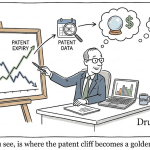
The industry is navigating one of the steepest patent cliffs in history, with over $200 billion in branded sales at risk by 2030.8 The year 2026 acts as “Day Zero” for several franchise-defining blockbusters, forcing a reallocation of capital.
5.1 Eliquis (Apixaban): The Revenue Void
Bristol Myers Squibb’s Eliquis, a massive revenue generator, faces a complex Loss of Exclusivity (LOE) scenario.
Generic Entry: While the primary compound patent was extended to November 2026, litigation settlements allow generic entry in the US starting April 1, 2028.9 However, key EU markets face expiry in late 2026, leading to immediate revenue erosion internationally.
IRA Impact: Compounding the generic threat, Eliquis was selected for the first round of Medicare price negotiation. The “Maximum Fair Price” (MFP) of $231 (a reduction from >$500) officially takes effect on January 1, 2026.9 This creates a “double cliff”—first a sharp pricing cliff driven by regulation in 2026, followed by a volume cliff driven by generics in 2028.
5.2 Januvia (Sitagliptin): The Generic Flood
Merck’s diabetes blockbuster Januvia faces a definitive commercial end in 2026.
Entry Date: Settlements with generic manufacturers allow entry in the US in May 2026 (or earlier under certain conditions).44
Impact: This opens the door for a flood of competitors. Multiple manufacturers, including Watson Labs and Sun Pharma, have tentative approvals lined up and are expected to launch immediately.46 For Merck, this necessitates an aggressive pivot to its pipeline and increased reliance on Keytruda (which itself faces an LOE in 2028), raising the stakes for its internal R&D productivity.
5.3 The Biosimilar Wave: Keytruda and Prolia
With the FDA’s streamlined guidance removing switching studies, 2026 will see an acceleration of biosimilar launches that are “locked and loaded.”
Prolia/Xgeva (Denosumab): Biosimilars like Enoby, Osvyrti, and Jubereq have received FDA approval and are set for launch in late 2025 and throughout 2026.47 The removal of interchangeability barriers means these products can rapidly cannibalize Amgen’s market share.
Keytruda (Pembrolizumab): While the main US patent cliff is 2028, biosimilar developers like Formycon and Samsung Bioepis are completing pivotal trials in 2026.31 Formycon has successfully completed enrollment for its pharmacokinetic study (“Dahlia”) and expects results in Q1 2026. The streamlined FDA pathway means these competitors will be ready for immediate launch upon patent expiry, preventing Merck from enjoying an extended “tail” of exclusivity.
Investing in this landscape requires a move away from simple “long biotech” strategies toward nuanced, theme-driven allocations that account for technical differentiation and geopolitical exposure.
6.1 Valuation Framework: The “VISTA” Model
Analysts in 2026 are increasingly adopting multi-pillar valuation frameworks (like VISTA) that value Platform Scalability and Strategic Partnerships over single-asset Net Present Value (NPV).49
Platform Value: Companies like XtalPi and Recursion are valued on their ability to generate multiple assets and partnerships (high “PSI” – Partnership Strength Index). Their valuation is derived from the probability of success across a portfolio, rather than the binary outcome of one drug.
Asset Value: Traditional biotechs are valued on clinical de-risking. The divergence is clear: Platform companies trade at high revenue multiples (20-30x) due to their recurrence and scalability, while single-asset companies trade on binary clinical readouts with high volatility.
6.2 The “Picks and Shovels” Thesis
The “gold rush” for AI drugs is maturing; the “infrastructure build” is the current safer play.
Thesis: Long positions in companies providing the essential data, simulation, and manufacturing infrastructure for the AI transition are safer and potentially more lucrative than betting on individual drug candidates.
Targets:XtalPi (crystallization/AI service) and Schrödinger (software dominance) are prime examples. These companies benefit from the industry’s aggregate R&D spend regardless of which specific drug succeeds. They provide the “rails” upon which the AI drug discovery revolution runs.
6.3 Pair Trade Opportunities (Long/Short)
Long:XtalPi (2228.HK) / Schrödinger (SDGR).
Rationale: Dominance in the essential “physics + AI” niche; revenue generating from day one; insulated from binary trial risk; XtalPi specifically benefits from China’s innovation surge and “data gravity” advantage.21
Short:Legacy Pharma with High Exposure (e.g., BMS) or Pure-Play Generative AI with No Clinical Data.
Rationale: BMS faces the Eliquis double-whammy (IRA price cut + looming patent cliff) without a sufficient immediate backfill to replace the revenue loss.9 Pure-play AI startups that haven’t entered the clinic by 2026 face a “valuation crunch” as investors demand proof of concept over platform potential.51
Rationale: Direct beneficiaries of the FDA’s removal of switching studies; poised to capture massive volume from the Prolia and Stelara markets in 2026 due to easier pharmacy substitution.52
Conclusion
The pharmaceutical sector in 2026 is defined by a “Great Rotation”—away from accidental discovery toward engineered design, and away from US-centric hegemony toward a bipolar innovation world where China acts as a co-equal engine of drug origination.
For investors and strategists, the era of easy wins is over. Success now requires navigating a complex matrix of deep technical due diligence (understanding the difference between a GAN and a Diffusion model), geopolitical risk assessment (balancing China exposure against the innovation premium), and regulatory foresight (anticipating biosimilar erosion). The winners of 2026 will not just be those who discover the best drugs, but those who build the most robust, data-efficient engines to design them—and who can navigate the fierce patent battlegrounds that protect them.
Diffusion Models at the Drug Discovery Frontier: A Review on Generating Small Molecules Versus Therapeutic Peptides – MDPI, accessed January 24, 2026, https://www.mdpi.com/2079-7737/14/12/1665
A robust crystal structure prediction method to support small molecule drug development with large scale validation and blind study – NIH, accessed January 24, 2026, https://pmc.ncbi.nlm.nih.gov/articles/PMC11882951/
Largest biotech IPO in HK 2025: Insilico Medicine debuts after record 1427x oversubscription – VCBeat, accessed January 24, 2026, https://www.vcbeatglobal.com/article/2294