I. The Core Problem: Effective Patent Life vs. Nominal Term
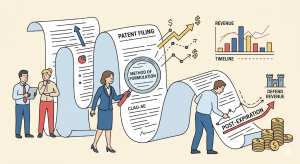
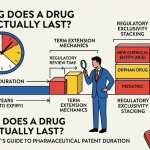
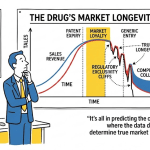
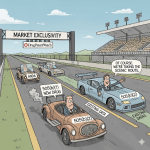
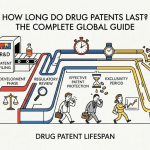
The pharmaceutical business runs on a single structural tension: the nominal patent term is 20 years from filing date, but the effective market exclusivity period — the window during which a company can charge monopoly prices — averages 12 to 14 years. Clinical trials, Phase I through III, consume most of that gap. Regulatory review at FDA takes another 10 to 12 months on average, sometimes longer. By the time a drug reaches commercial launch, a decade of patent life is already spent.
That math is the engine behind every post-expiration strategy in this guide. A company that files a composition-of-matter patent on a new molecular entity at the start of preclinical work and gets FDA approval 14 years later has roughly 6 years of primary patent exclusivity left. The entire architecture of secondary patenting, authorized generics, and lifecycle reformulation exists to extend the profitable window beyond that 6-year endpoint.
Historical data from clinical-stage programs shows trial failure rates exceeding 90% across all indications. When a compound does reach approval, it must recover not only its own development costs — typically $1 billion to $2.6 billion fully capitalized — but also the R&D costs of the 19 or more failures that preceded it. Patent exclusivity is the mechanism that makes that math work. Post-expiration strategy is what happens when exclusivity starts to erode.
Key Takeaways for Section I
Effective patent life averages 12-14 years, not 20.
Clinical development consumes the bulk of the nominal 20-year term.
Post-expiration strategy is not optional — it is the financial bridge between peak exclusivity revenue and genericization.
The time from NME filing to launch determines how much runway remains at approval. Modeling that runway drug-by-drug is the first analytical step.
II. The $350 Billion Patent Cliff: Asset-Level Exposure
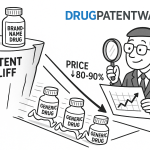
Between 2025 and 2030, an estimated $236 billion to $350 billion in branded pharmaceutical revenue is at risk of generic or biosimilar competition. That range reflects different methodologies — the lower bound covers confirmed patent expirations through the Orange Book and equivalent EU databases, while the upper bound incorporates estimated data exclusivity cliffs and the probability of Paragraph IV challenges succeeding against patents that currently appear intact.
The drugs driving the largest individual exposure include Keytruda (pembrolizumab, Merck), Eliquis (apixaban, Bristol-Myers Squibb/Pfizer), Xarelto (rivaroxaban, Johnson & Johnson/Bayer), Jardiance (empagliflozin, Boehringer Ingelheim/Eli Lilly), Ozempic and Wegovy (semaglutide, Novo Nordisk), and Dupixent (dupilumab, Sanofi/Regeneron). Each represents a different IP architecture, a different timeline to loss of exclusivity (LOE), and a different set of lifecycle management levers.
The pace of market share erosion after LOE depends heavily on molecular complexity. Small-molecule drugs face the steepest drop: generics typically capture 80% to 90% of prescription volume within 6 to 12 months of entry, with branded revenue falling by a corresponding fraction. Biologics decline more slowly — biosimilars captured 30% to 70% of unit volume in the first year for the most competitive categories — but the revenue decline is still severe given the price concessions required to retain formulary position.
What accelerates the cliff beyond patent expiration alone is competitive compression within drug classes. The interval between FDA approval of the first and second new molecular entity sharing a mechanism of action fell from approximately 8 years in the early 2000s to under 1 year by 2020. That means a drug can face erosion from within-class competition long before its primary patent expires. Keytruda’s dominant position in PD-1/L1 inhibition, for example, faces ongoing pressure from Opdivo (nivolumab), Libtayo (cemiplimab), and emerging next-generation checkpoint combinations regardless of patent status.
Key Takeaways for Section II
$236-350 billion in revenue faces LOE exposure through 2030. Asset-level modeling requires drug-by-drug patent mapping, not sector-level averages.
Small-molecule LOE is faster and steeper than biologic LOE. Model them with separate erosion curves.
Within-class competition from follow-on NMEs can compress a drug’s effective market dominance period well before patent expiry.
Identifying which drugs in a portfolio have the longest secondary patent coverage is the primary task for IP teams managing the cliff.
Investment Strategy: Sizing the Patent Cliff Exposure by Company
Portfolio managers assessing branded pharma equities should build LOE-adjusted revenue models that distinguish between three categories of patent protection: primary composition-of-matter coverage (near-certain loss at expiry), secondary patent clusters that are likely to be challenged under Paragraph IV (probabilistic loss, model at 60-75% chance of generic entry within 18 months of LOE), and secondary patents with strong non-obviousness arguments and no pending ANDAs (model as likely to hold).
AbbVie is the clearest historical case study. Humira (adalimumab) generated $21.24 billion in 2022 U.S. revenue. By 2024, that figure had fallen to $8.99 billion — a 58% decline in two years driven by biosimilar entry. AbbVie anticipated this and built Skyrizi (risankizumab) and Rinvoq (upadacitinib) as the replacement assets, both of which had patent protection extending into the mid-2030s. The lesson for analysts: the relevant question is not when a drug loses exclusivity, but whether the pipeline assets that replace it have comparable exclusivity duration and revenue ramp.
III. Secondary Patenting and Evergreening: The Full Technical Playbook
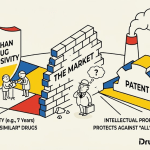
Evergreening is the practice of filing secondary patents — on formulations, polymorphs, manufacturing methods, new indications, delivery devices, dosage regimens, and combinations — to extend de facto market exclusivity beyond the primary composition-of-matter patent’s expiration. It is standard practice, legally sanctioned, and intensely contested by generic manufacturers, payers, and regulators simultaneously.
Empirical data from the literature is specific: for new molecular entities, 81% carry formulation patents, 83% carry method-of-use or treatment patents, and 51% carry PIPES patents (Polymorphs, Isomers, Prodrugs, Esters, or Salts). The proportion protected by method-of-use claims rose from 61% for drugs approved between 1985-1987 to 95% for drugs approved between 2003-2005. Secondary patents, on average, add 4 to 5 years to the nominal patent term. For drugs that lack a composition-of-matter patent entirely — an increasingly relevant category for reformulated or repurposed drugs — secondary patents can provide 9 to 11 years of effective exclusivity.
A critical operational detail: 66% of all patent applications for top-selling drugs are filed after FDA approval. This is not post-approval invention — it is systematic IP prosecution timed to Orange Book listing. Orange Book patents confer a 30-month automatic stay against ANDA approvals when infringement is alleged, making post-approval filing a direct mechanism for extending regulatory exclusivity beyond the patent’s intrinsic value.
Formulation Patents
Formulation patents protect the specific combination of active pharmaceutical ingredient (API), excipients, and preparation methodology that constitute a dosage form. Their strategic value is straightforward: a generic manufacturer must match the formulation sufficiently to demonstrate bioequivalence, but cannot copy it without infringing the patent. Excipient selection — polymers controlling release rate, pH modifiers, solubilizing agents, stabilizers — creates a design space that brands can patent in layers.
Extended-release (ER) and controlled-release (CR) formulations are the most commercially durable variant. An ER formulation patent often runs 5 to 7 years longer than the original immediate-release API patent, and ER versions typically command significant price premiums — 20% to 40% above the immediate-release reference — on the argument of improved tolerability or compliance. The transition campaign (persuading prescribers and patients to switch to the ER version before IR goes generic) is one of the most common and financially material lifecycle moves in branded pharma.
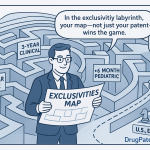
The regulatory mechanics matter here: when a brand launches an ER formulation, it files a new NDA (or a supplemental NDA, sNDA) that generates its own 3-year exclusivity period for the new clinical investigation. That exclusivity runs concurrently with or sequentially to existing patent protection, depending on timing.
Method of Use Patents (Section viii Carve-Outs)
Method-of-use (MOU) patents cover a specific therapeutic application of a known compound. Their strategic value is asymmetric: the brand can enforce the patent for the listed indication, but the Hatch-Waxman Act permits generic manufacturers to carve out that indication from their label under a Section viii statement, limiting their approved indications to those not covered by the MOU patent. This is the ‘skinny label’ strategy.
The skinny label creates a persistent litigation risk. Brands have increasingly argued that even with a carve-out, a generic’s label, marketing materials, or public statements can constitute induced infringement if physicians predictably use the drug for the patented indication. In Amarin Pharma v. Hikma Pharmaceuticals, the Federal Circuit held in 2024 that induced infringement could be plausibly pleaded based on a generic’s label and public communications even where a Section viii carve-out was filed. That ruling has meaningfully raised the litigation risk for skinny-label generics and extended the deterrent value of MOU patent portfolios.
For IP teams, the practical implication is that MOU patents filed for secondary indications — particularly where the secondary indication accounts for a large fraction of off-label prescribing — carry greater defensive value than a simple patent term comparison would suggest.
Polymorph Patents and the PIPES Taxonomy
Polymorphs are distinct crystalline arrangements of the same molecular structure. They share identical chemical composition but differ in physical properties: solubility, dissolution rate, hygroscopicity, melting point, and manufacturability. The pharmaceutical relevance is concrete — a more soluble polymorph can be dosed at a lower mass, improving the bioavailability profile and reducing excipient burden. A more stable polymorph reduces degradation during storage, extending shelf life.
Patents on specific polymorphic forms are filed under the broader PIPES taxonomy: Polymorphs, Isomers, Prodrugs, Esters, and Salts. Each subcategory offers its own exclusivity angle. Salt forms alter solubility and bioavailability. Prodrugs convert to active compound in vivo, enabling different pharmacokinetic profiles. Isomers — particularly single enantiomers derived from racemic mixtures — have generated some of the most contentious evergreening cases, with critics pointing to Nexium (esomeprazole) as the archetypal example of an enantiomer switch timed to Prilosec’s generic entry.
Polymorph patents are jurisdictionally fragile. India’s Patent Act Section 3(d) explicitly prohibits new forms of known substances unless the applicant demonstrates significantly enhanced therapeutic efficacy — a standard that has blocked numerous PIPES patents filed by multinationals in that market. The European Patent Office requires a demonstrable technical effect linked to the polymorphic form, not merely a different crystal structure. USPTO practice is more permissive, but post-grant inter partes review (IPR) proceedings at PTAB have invalidated polymorph claims at above-average rates when prior art disclosed the same compound in solution or amorphous form.
In Salix Pharmaceuticals v. Norwich Pharmaceuticals (2024), a district court found polymorph patents obvious based on detailed prior art teaching crystallization of the parent compound. That ruling is a data point IP teams should incorporate into their probability-of-validity assessments for polymorph-heavy patent clusters.
Process Patents and Manufacturing Trade Secrets
Process patents protect the synthesis route, purification method, crystallization conditions, or other manufacturing steps used to produce an API or finished dosage form. Their strategic role differs from composition and formulation patents: they do not prevent a generic manufacturer from producing the same API via a different route, but they do prevent copying the proprietary manufacturing process itself.
The more durable competitive advantage in manufacturing is often the trade secret rather than the patent. Biologic manufacturing in particular — where cell line selection, fermentation conditions, purification trains, and post-translational modification profiles are deeply interdependent — is largely protected by trade secrets rather than patents. The decision between patenting and maintaining process information as a trade secret turns on several factors: detectability of infringement (trade secrets are only valuable if the process cannot be reverse-engineered from the product), competitive threat timeline, and regulatory requirements. FDA’s biosimilar pathway requires detailed manufacturing comparability data, which can partially expose process information during litigation discovery.
For small molecules, process patents that cover a novel route achieving a substantial cost reduction or yield improvement have material value independent of their contribution to market exclusivity. A 15% reduction in API manufacturing cost for a $10 billion drug translates to $150 million in annual margin improvement — a figure that belongs in IP valuation models.
Dosage Regimen and Combination Patents
Dosage regimen patents cover the specific schedule, frequency, or administration sequence for an existing compound. They are jurisdictionally variable: U.S. patent law permits method claims covering a dosage regimen if the regimen is novel and non-obvious; European practice is more restrictive under the ‘Swiss-type claim’ doctrine.
Combination patents protect fixed-dose combinations (FDCs) of two or more active ingredients. Their strategic value is meaningful when the combination offers a synergistic effect, improved tolerability, or dosing simplification that justifies a new NDA and new patent term. The Symbyax example is instructive: Eli Lilly combined fluoxetine (Prozac, already facing generic entry) with olanzapine and secured new patent protection and a new indication (bipolar depression) under the Symbyax NDA. The combination patent provided exclusivity years after fluoxetine itself was genericized.
Tertiary Patents: Device-Drug Coupling
Tertiary patents couple an active ingredient — potentially off-patent — with a proprietary delivery device. Auto-injectors, prefilled syringes, inhalers, transdermal patches, and intravitreal implants all fall in this category. The device component can be patented separately, and the combination product receives its own NDA, exclusivity period, and Orange Book listing.
The Advair (fluticasone/salmeterol) Diskus inhaler is the canonical case. GlaxoSmithKline’s ELLIPTA inhaler for successor products, and AstraZeneca’s device-coupled respiratory portfolio, represent the systematic application of this strategy. For injectable biologics, the transition from vial to prefilled syringe to auto-injector has been used systematically to extend exclusivity and patient preference, with each device iteration supporting new Orange Book patents.
Key Takeaways for Section III
Evergreening is quantifiable: secondary patents add an average of 4-5 years to nominal exclusivity; PIPES patents alone can add 9-11 years for drugs without a composition-of-matter patent.
66% of top-drug patent applications are filed after FDA approval. Orange Book listing timing is strategic, not incidental.
MOU patents carry elevated litigation risk for generics post-Amarin v. Hikma (2024). Skinny labels are no longer safe harbors.
Polymorph patents face heightened scrutiny at PTAB and in India’s Section 3(d) review. Probability-of-validity discounts should apply in IP valuation models.
Trade secrets protect manufacturing know-how more durably than process patents for biologic production, where infringement is difficult to detect from finished product.
IV. IP Valuation as a Core Portfolio Asset
Pharmaceutical intellectual property is a financial asset that must be modeled with the same rigor applied to revenue streams and cost structures. The dominant framework is risk-adjusted net present value (rNPV), which discounts projected exclusivity-period cash flows by a probability of patent validity and a rate reflecting IP-specific risk.
The inputs that drive rNPV materially differ from standard DCF inputs. Patent family size is a measurable proxy for IP defensibility: portfolios with 20 or more related patents across jurisdictions carry a 68% higher valuation premium in transaction comparables, reflecting the cost and complexity of challenging each individual patent. Forward citation count — how many subsequent patents cite a given patent — correlates with foundational importance; each forward citation adds an estimated 3-5% to patent value. Claim breadth is another quantifiable input: independent claims covering four or more distinct therapeutic uses command a 22% valuation premium relative to single-indication patents, based on deal precedent analysis.
Applying these inputs requires a structured scoring model. IP teams and portfolio managers should assign each patent in a cluster a composite score covering: remaining term (years), probability of validity against best available prior art, Orange Book status (listed vs. unlisted), forward citation count, and geographic coverage. That composite score drives the probability weighting in the rNPV model.
Market size is the parameter that most directly determines whether a patent will be challenged under Paragraph IV. Data from challenge frequency analyses shows that larger markets attract challenges at significantly higher rates — the expected return for a generic manufacturer filing a successful Paragraph IV suit on a $5 billion drug vastly exceeds the litigation cost, while the same calculation is marginal or negative for a $100 million drug. This creates a systematic gap: drugs with small market sizes are frequently under-challenged, maintaining high prices despite expired primary patents or weak secondary protection. That gap is both a policy problem and, for payers and PBMs, an opportunity for proactive intervention.
Case Study: Humira’s IP Architecture and Asset Concentration Risk
AbbVie’s Humira (adalimumab) illustrates both the power and the concentration risk of a patent thicket-based IP strategy. AbbVie filed 247 patent applications covering the drug, resulting in 132 granted patents — a portfolio that effectively extended U.S. market exclusivity to 39 years from first approval. Revenue at peak was estimated at $47.5 million per day before biosimilar entry.
For IP valuation purposes, the relevant analytical question is how to model the duration of effective exclusivity for a drug with a 132-patent portfolio versus the patent cliff exposure for a drug with primary composition-of-matter coverage and two secondary patents. The Humira portfolio created an obstacle that biosimilar manufacturers had to navigate through settlement — not through litigation wins. The result was a series of authorized biosimilar entry agreements that delayed all U.S. competition until January 2023, despite the primary biological patent’s earlier expiration date. The settlements themselves — with AbbVie paying or offering licensing arrangements to biosimilar developers in exchange for delayed entry — represent a distinct IP monetization tactic that regulators increasingly scrutinize under antitrust frameworks.
The post-entry revenue outcome for Humira provides the other side of the valuation equation: by 2024, U.S. adalimumab revenue had declined by roughly 58% from peak. That erosion curve is the model for what happens when a large patent thicket eventually fails to hold — a rapid convergence toward commodity pricing across all biosimilar versions, with the brand retaining only the most price-insensitive patient and payer segments.
Case Study: Keytruda’s Patent Portfolio and the Subcutaneous Formulation Bet
Merck’s Keytruda (pembrolizumab) generated $29.5 billion in revenue in 2024, making it the world’s top-selling drug and its patent cliff the single largest individual revenue event in the current exposure period. The primary composition-of-matter and biologic patents begin expiring around 2028. Merck’s response has been systematic: the company has filed 129-plus patent applications for Keytruda, including formulation patents covering a subcutaneous (SC) injectable version.
The SC formulation strategy is analytically significant for two reasons. First, subcutaneous administration of pembrolizumab would allow outpatient self-injection rather than IV infusion in a clinical setting, materially improving patient convenience and potentially shifting market share from the IV formulation before biosimilars arrive. Second, the SC formulation patents extend the IP lifecycle of the pembrolizumab franchise beyond the intravenous formulation’s expiration, creating a new Orange Book anchor for a successor product that could maintain premium pricing post-2028.
Merck is simultaneously in active litigation with Halozyme Therapeutics over the SC formulation, with Halozyme alleging that Merck’s use of its ENHANZE drug delivery technology infringes patents it licensed to third parties but not to Merck. That litigation directly affects the SC strategy’s probability of success and timeline. IP teams and portfolio managers should incorporate this litigation risk explicitly into Keytruda valuation models.
Key Takeaways for Section IV
rNPV with patent validity probability weights is the appropriate framework for drug IP valuation. Standard DCF models understate patent cliff risk.
Patent family size (threshold: 20+), forward citation count, and claim breadth are the three quantitative inputs with the strongest empirical correlation to IP asset value.
Market size drives Paragraph IV challenge frequency. Low-revenue drugs are systematically under-challenged. Payers should target these for formulary leverage.
Humira demonstrates that settlement-based delay is a distinct IP monetization tactic. Model it separately from litigation-driven delay in post-expiration scenarios.
Keytruda’s SC formulation patent strategy is both a lifecycle extension and a biosimilar defense. Halozyme litigation materially affects its probability of success.
V. Patent Thickets: Anatomy, Asset Concentration Risk, and Regulatory Backlash
A patent thicket, in operational terms, is a set of overlapping patents covering a single product across multiple dimensions — composition, formulation, process, method of use, polymorph, device — such that a generic or biosimilar manufacturer cannot bring a competing product to market without either designing around every patent or litigating each individually. The cost and complexity of that litigation is itself a market-entry deterrent, independent of whether any individual patent would survive challenge.
The anatomy of a thicket follows a consistent architecture. Primary patents on the core API provide the foundational exclusivity layer, typically granted 20 years from the filing date and eligible for patent term extension (PTE) of up to 5 years under the Hatch-Waxman Act to compensate for regulatory review time. Secondary patents — the thicket’s actual structure — are filed systematically post-approval, timed to secure Orange Book listing before primary patent expiry begins to approach. Each Orange Book-listed patent, when a generic files a Paragraph IV certification against it, triggers a 30-month automatic stay. With a sufficiently large patent portfolio, a brand can generate sequential 30-month stays, each buying time and deterring capital allocation to the generic program.
The documented examples are unambiguous. AbbVie’s 132-patent Humira portfolio is the largest case, but Bristol Myers Squibb’s Revlimid (lenalidomide) portfolio generated an 18-year litigation process that blocked generic entry despite primary patent expiration. Merck’s Keytruda portfolio of 129-plus applications includes patents on sterile packaging and storage conditions — features that are trivially different from the reference product.
The economic impact of thickets is measurable. Drugs protected by thickets carry price inflation rates that frequently exceed 300% over a 20-year period. Patients in high-deductible plans who cannot afford branded prices — and who cannot access generics because generic entry is blocked — ration their medications at clinically significant rates. The aggregate cost to U.S. payers runs to tens of billions of dollars annually in excess spending on drugs that would be genericized in the absence of secondary patent barriers.
Regulatory and legislative response is accelerating. The FTC challenged over 100 improper Orange Book listings in 2024, arguing that patents on devices or components not directly tied to the active ingredient should not be eligible for Orange Book listing and the associated 30-month stay mechanism. That challenge reflects a specific legal theory: that the Teva v. Amneal Pharmaceuticals (2024) ruling, which held that Orange Book patents must claim the active ingredient itself rather than ancillary components, narrows the scope of eligible Orange Book listings. If the FTC’s position is sustained in subsequent litigation, a material portion of the secondary patent portfolio that many brands rely on for thicket construction would lose its stay-triggering function.
Post-grant review at PTAB has invalidated 38% of challenged pharmaceutical patents in 2024 — a high rate that reflects the vulnerability of secondary claims drafted at the margin of obviousness. The PREVAIL Act, if enacted, would raise the standing requirements for PTAB petitioners and limit multiple petitions against the same patent, reducing the effectiveness of PTAB as a generic manufacturer’s primary patent challenge tool.
Key Takeaways for Section V
Thicket architecture = primary patent + sequential Orange Book secondary patents generating sequential 30-month stays. Model each stay individually for LOE probability curves.
Teva v. Amneal (2024) narrows Orange Book eligibility to patents claiming the active ingredient. This ruling retroactively reduces the defensive value of device and component patents already listed.
PTAB invalidated 38% of challenged pharma patents in 2024. Secondary patent validity should be probability-discounted, not assumed intact.
PREVAIL Act passage would reduce PTAB challenge access for generic manufacturers, increasing the practical durability of patent thickets.
Brands that depend on thicket strategies for LOE defense carry regulatory overhang risk from FTC and PTAB actions that does not appear in standard patent expiry calendars.
VI. Authorized Generics: Strategic Mechanics and Pricing Impact
An authorized generic (AG) is the branded drug marketed without the brand name under the original NDA, bypassing the ANDA approval process. The brand either launches the AG itself, through a wholly owned subsidiary, or licenses it to a generic partner. Because the AG is not a separate ANDA approval, it does not appear in the FDA’s Orange Book as a generic equivalent and cannot displace the 180-day first-filer exclusivity period — but it can compete directly during that period.
That competitive positioning is the AG’s primary strategic value. Hatch-Waxman gives the first Paragraph IV filer 180 days of generic market exclusivity against all subsequent generic ANDAs. The first filer is not protected from an AG. Launching an AG on day one of the 180-day window means the first generic must immediately compete with a product that is literally identical to the reference listed drug, sold at a discount and backed by the brand’s distribution network. Data shows that 73.9% of authorized generics are launched within 30 days of the first generic’s market entry.
The pricing impact of AG competition during the 180-day exclusivity period is documented and substantial. With an AG present, retail prices for the generic version are 4% to 8% lower than without an AG; wholesale acquisition cost data shows 7% to 14% lower on-invoice prices. More recent analysis covering 2016-2023 shows a 13% to 18% reduction in prices paid by pharmacies when an AG competes during the exclusivity window. The brand benefits from these price dynamics by capturing the price-sensitive substitution segment directly, rather than ceding it entirely to the first-filer.
The financial impact on first-filer generics is severe enough to function as a deterrent to Paragraph IV challenge activity. AG competition reduces generic firm revenues by 40% to 52% during the 180-day window, and by 53% to 62% over the subsequent 30 months if AG competition persists. That revenue destruction affects the NPV calculation that generic manufacturers use to decide whether a Paragraph IV challenge is worth undertaking in the first place. For moderately sized drug markets — where the expected 180-day exclusivity revenue for the generic is marginal after litigation costs — the credible threat of an AG launch can deter the challenge entirely, preserving the brand’s exclusivity without litigation.
The AG strategy intersects with regulatory transparency in a specific way: the FDA’s Orange Book does not list AGs, but the AG’s NDA number is traceable through FDA’s NDC database. Generic manufacturers track AG announcements as a forward-looking indicator of how aggressively a brand plans to defend LOE revenue.
Key Takeaways for Section VI
AG launch on day 1 of the 180-day first-filer window is the most aggressive LOE defense available that does not require litigation.
AG competition reduces first-filer revenues by 40-52% during the exclusivity period. Model this as a probability-weighted deterrent to Paragraph IV challenge activity.
73.9% of AGs launch within 30 days of first generic entry. IP teams should build AG launch readiness into LOE planning 18-24 months ahead of the primary expiry date.
AG deployment does not require any new regulatory approval. The marginal cost of maintaining AG readiness is primarily commercial and supply-chain.
Investment Strategy: AG as a Revenue Retention Instrument
Portfolio managers modeling branded pharma revenue through LOE should explicitly incorporate AG strategy probability into their erosion curves. A drug with confirmed AG readiness — or a history of AG deployment by the same company — should carry a slower post-LOE revenue erosion rate in the model, particularly for the first 18 months. The spread between a no-AG and AG scenario can represent 10-20 percentage points of revenue retention in the first year post-LOE, a material difference at the scale of top-selling drugs.
VII. Reformulation and New Indication Strategy: The Innovation-Extension Continuum
New formulations and new therapeutic indications represent the part of lifecycle management that is simultaneously the most scientifically legitimate and the most commercially motivated. At one end of the spectrum, an ER formulation that genuinely reduces peak-to-trough concentration variability and improves tolerability adds clinical value. At the other end, a cosmetic change in dosage form with no clinical benefit, timed to shift prescription volume before generic entry, is pure evergreening with a reformulation label.
The distinction matters for both regulatory and competitive strategy. FDA grants 3-year exclusivity for a new formulation only when the application contains at least one new clinical study that is essential to approval. That requirement means the formulation must demonstrate something — bioavailability, safety, efficacy in a specific population — that justifies the clinical investment. Brands that invest in genuine formulation improvements can earn both the 3-year exclusivity and a clinically defensible switching campaign. Brands that use cosmetic reformulations find the switching strategy harder to sustain against physician and PBM scrutiny.
The Eli Lilly Prozac case remains the clearest lifecycle case study in primary care. When fluoxetine’s primary patent expired in 2001, generics captured 73% of new prescriptions within two weeks. Lilly had prepared two strategic moves: Prozac Weekly, a once-weekly enteric-coated formulation utilizing the Lilly-patented prodrug approach, and Symbyax, the fixed-dose combination of fluoxetine and olanzapine indicated for bipolar depression and treatment-resistant major depression. Prozac Weekly competed on convenience; Symbyax competed on indication exclusivity. The two strategies together addressed different prescriber segments and sustained branded fluoxetine revenue streams for years after generic entry on the original daily formulation.
Eli Lilly’s tadalafil portfolio adds the new indication layer. Cialis (tadalafil 5mg, 10mg, 20mg) was approved for erectile dysfunction, but subsequent clinical investigation documented efficacy in benign prostatic hyperplasia (BPH), leading to approval of Cialis 5mg once daily for that indication with a separate Orange Book listing. The BPH indication served a distinct prescriber base (urologists rather than primary care or urology-adjacent specialists) and a distinct patient population with different price sensitivity and insurance coverage. Adcirca, the pulmonary arterial hypertension (PAH) formulation of tadalafil at 40mg daily, competed in an entirely different therapeutic category with orphan drug designation and a separate pricing environment.
The new indication strategy’s IP mechanics work through method-of-use patents for the specific new use, supported by the data exclusivity periods applicable under Hatch-Waxman. A new chemical entity with no prior approval gets 5 years of data exclusivity. A new indication for a previously approved drug gets 3 years if at least one new clinical investigation is essential to the approval. The data exclusivity clock runs independently of patent protection, providing a floor of competitive protection even if the MOU patent is challenged and invalidated.
Key Takeaways for Section VII
FDA’s 3-year formulation exclusivity requires a new clinical study essential to approval. The clinical investment must be real; cosmetic reformulations do not qualify.
The ER switch campaign — moving prescription volume from IR to ER before generic entry — is the most consistently executed lifecycle move in primary care. Its success depends on demonstrating clinical differentiation to formulary committees.
New indication strategies open distinct patient populations, prescriber bases, and pricing environments. The tadalafil portfolio across ED, BPH, and PAH is the model for multi-indication IP architecture.
Data exclusivity (3 or 5 years) provides a floor of protection independent of patent status. Model it separately from patent term in LOE analysis.
VIII. Patent Data Analytics: Building Quantitative Post-Expiration Models
Raw patent filings are public documents. The analytical advantage comes from structuring, scoring, and modeling them at the drug level to produce probabilistic LOE timelines and revenue retention estimates. The inputs are specific, the models are replicable, and the outputs directly inform portfolio decisions.
The fundamental dataset for U.S. modeling is the FDA Orange Book — the official list of approved drug products with associated patent and exclusivity information. The Orange Book lists each patent by number, expiration date, and use code. Use codes specify whether a patent covers the drug substance itself (DS), the drug product formulation (DP), or a method of use (MOU), and for MOU patents, the specific indication covered. Layering Orange Book data with USPTO patent family data, PTAB trial history, and ANDA filing records — available through FDA’s ANDA database — produces a complete picture of each drug’s IP position and its exposure to challenge.
Key quantitative inputs for a drug-level post-expiration model include:
Patent count and composition: How many Orange Book-listed patents cover the drug? What fraction are DS, DP, and MOU? A drug with 12 listed patents, 10 of which are DP and MOU secondary claims filed post-approval, is materially more vulnerable to an LOE scenario than the patent count alone suggests, because secondary claims carry higher invalidation probability.
Patent family size: The number of related patents across jurisdictions. A large international family — 20 or more patents covering the drug across U.S., EU, Japan, and key emerging markets — indicates a defensible, diversified IP position. Empirical deal comparables show a 68% valuation premium for portfolios at this family size threshold.
Forward citation count: Patents cited frequently in subsequent applications are foundational. Each forward citation adds an estimated 3-5% to patent asset value. High citation count reflects both the patent’s breadth and the difficulty of designing around it.
Paragraph IV challenge history: Has the drug faced prior Paragraph IV certifications? How many ANDAs are currently pending? What was the outcome of prior litigation? Drugs with pending Paragraph IV challenges are statistically likely to face generic entry within 30 months of challenge if the brand does not prevail, based on historical settlement and litigation outcome data.
Predictive models built from historical data can forecast generic challenge probability with accuracy above 80% for established drug categories, identifying the combination of market size, primary patent expiry timeline, and secondary patent vulnerability that historically predicts aggressive Paragraph IV activity.
The rNPV model structure for a single drug should include: projected revenues under continued exclusivity, adjusted downward by probability of each patent being invalidated or circumvented within the forecast window. The probability vector for each patent should reflect its type (DS patents carry higher validity probability than secondary MOU patents), its PTAB challenge history, and the number of pending ANDAs. The output is a probability-weighted LOE date range, rather than a single point estimate, which is the appropriate representation for financial planning purposes.
Key Takeaways for Section VIII
The Orange Book is the primary data source for U.S. drug-level IP analysis. Patent type (DS, DP, MOU) and use codes determine both legal exposure and Orange Book-linked stay eligibility.
Historical models predict Paragraph IV challenge probability at above 80% accuracy using market size, patent expiry timeline, and secondary patent count as inputs.
rNPV with probability-weighted patent validity is the appropriate framework. Single-point LOE estimates understate revenue risk for thicket-protected drugs.
Forward citation count and patent family size are the two quantitative inputs most correlated with IP asset value in transaction comparables.
IX. AI and Machine Learning in Pharmaceutical IP Strategy
AI is integrated into pharmaceutical IP strategy at four levels: drug discovery (AI generates patentable candidates), patent prosecution (AI assists in claim drafting and prior art search), patent analytics (ML models predict litigation outcomes and generic entry timing), and portfolio management (AI screens filing activity for strategic signals).
At the drug discovery level, AI has compressed the timeline from target identification to IND-enabling data in ways that directly affect patent strategy. Insilico Medicine’s 18-month timeline from target identification to clinical candidate for its fibrosis program — versus the historical 4-6 year average — illustrates the compression. Shorter discovery cycles mean earlier filing dates relative to commercial timelines, extending the effective patent life at launch. But they also mean that the inventive step may be harder to establish: if an AI system autonomously generates a candidate structure by optimizing against a target, the contribution of human inventors to the conception of the claimed invention must be specifically documented to satisfy USPTO and EPO inventorship requirements.
The USPTO’s current standard requires that each listed inventor demonstrate a ‘significant contribution to the conception of the claimed invention.’ This is an active prosecution risk for AI-assisted discovery programs. IP teams at companies using generative chemistry AI must maintain contemporaneous documentation of each human decision point: which targets were selected, which generated structures were evaluated by human chemists and on what scientific basis, which analogs were synthesized and why. Without that documentation, patent applications face rejection or post-grant invalidation on inventorship grounds.
The EPO requires demonstration of ‘technical character’ for AI-related innovations. For biotech applications, this means AI must serve a concrete technical purpose in the drug discovery or development context — not merely process data. For AI-generated therapeutic candidates, the relevant claim structure is one that defines the compound by its structure and properties, with the AI’s role disclosed as the method by which it was identified. The claim itself protects the compound, not the AI method.
China’s CNIPA requires detailed disclosure of how an AI system is trained, the data used in training, and the tangible technical benefits achieved — a disclosure requirement that creates strategic tension between patent protection and trade secret protection of the training data set.
At the litigation prediction level, ML models trained on ANDA challenge outcomes, claim language characteristics, and judge/court assignment data can forecast litigation outcomes for new Paragraph IV challenges with accuracy approaching 89% for ANDA-specific claim interpretation questions. For IP teams assessing whether to settle or litigate an ANDA challenge, that probability estimate belongs in the decision framework.
The hybrid IP strategy that most large pharma companies are moving toward combines patents for structurally novel compounds and formulations — where the technical contribution is clear and the infringement would be detectable — with trade secret protection for training datasets, AI model weights, manufacturing processes, and formulation know-how where detection of infringement is difficult or where disclosure requirements would reveal competitively sensitive information.
Key Takeaways for Section IX
AI-compressed discovery timelines extend effective patent life at launch by moving the IND filing earlier in the nominal patent term. This is a quantifiable advantage for programs using AI in lead identification.
Human inventor documentation is the primary prosecution risk for AI-assisted discovery. Contemporaneous records of human decision points are legally necessary, not optional.
ML models predict ANDA litigation outcomes at up to 89% accuracy for claim-specific questions. This probability estimate should enter settlement-vs.-litigate decisions.
Trade secret protection for AI training data and model weights is often more durable than patent protection, given the difficulty of detecting model-level infringement and the disclosure requirements of patent prosecution.
X. Hatch-Waxman Mechanics: Paragraph IV Filings, 30-Month Stays, and Pay-for-Delay
The Drug Price Competition and Patent Term Restoration Act of 1984 — Hatch-Waxman — established the architecture of the U.S. generic market and every post-expiration strategy described in this guide operates within or against that architecture. The mechanics at the level that matter for analysts are these:
An ANDA applicant seeking generic approval must certify one of four positions on each Orange Book-listed patent: that no patent has been filed (Paragraph I), that the patent has expired (Paragraph II), that the generic will not launch until patent expiry (Paragraph III), or that the patent is either invalid or will not be infringed (Paragraph IV). The Paragraph IV certification is the trigger for patent litigation under the Act.
Filing a Paragraph IV ANDA is itself a technical act of patent infringement under 35 U.S.C. 271(e)(2), which gives the brand immediate standing to sue without waiting for actual product launch. If the brand sues within 45 days of receiving the Paragraph IV notice, FDA approval of the ANDA is automatically stayed for 30 months, or until a court decision resolves the dispute, whichever comes first. This 30-month stay is the most valuable procedural tool in the brand’s post-expiration defense toolkit — and multiple sequential stays, triggered by multiple Orange Book-listed patents, are how patent thickets generate their deterrent effect.
The first Paragraph IV filer who achieves commercial marketing of the generic gets 180 days of market exclusivity against all subsequent ANDA approvals. This first-mover incentive drives significant investment in Paragraph IV challenge programs at generics companies.
Pay-for-delay (reverse payment) settlements occur when a brand pays or provides value to a generic company in exchange for that company withdrawing its Paragraph IV challenge and delaying market entry. The FTC v. Actavis (2013) Supreme Court ruling established that reverse payment settlements are subject to antitrust scrutiny under the rule of reason, but did not categorically prohibit them. Settlements continue at significant volume. The empirical pattern is that reverse payment settlements are most common for drugs where the brand’s assessment of patent validity is uncertain, the generic’s litigation position is credible, and the expected revenue from settlement delay exceeds the litigation cost for the brand.
Key Takeaways for Section X
Each Orange Book-listed patent can trigger a separate 30-month stay. A 10-patent Orange Book listing is not 10x more protective than a 1-patent listing, but sequential stays can extend the blocking period materially.
Paragraph IV challenge frequency correlates directly with market size. Drugs generating over $500M annually face near-certain challenges within 2 years of primary patent expiry.
Pay-for-delay settlements remain active post-FTC v. Actavis. Model them as probability-weighted LOE delay events rather than assuming all challenges resolve at trial.
The 180-day first-filer exclusivity is the generic’s primary financial incentive. Its expected value determines the level of litigation investment a generic manufacturer will make against a given patent portfolio.
XI. 2024-2025 Case Law: What Changed and Why It Matters
The Hatch-Waxman litigation environment shifted materially in 2024-2025 across several dimensions. IP teams and analysts should update their probability assessments for specific patent categories based on these rulings:
Edwards Lifesciences v. Meril Life Sciences (Federal Circuit, 2024) broadly interpreted the Hatch-Waxman safe harbor under 35 U.S.C. 271(e)(1). Activities ‘reasonably related’ to FDA submissions are protected, even where those activities have promotional aspects alongside their regulatory purpose. This ruling benefits brands running pre-approval comparator studies or competitive positioning work that touches on the regulated product, confirming safe harbor protection for a broader range of pre-launch activities.
Salix Pharmaceuticals v. Norwich Pharmaceuticals (2024) delivered two rulings with different directional effects. The district court found polymorph patents obvious based on prior art disclosing the parent compound in solution — reducing the assumed validity of polymorph-only patent clusters. The same case also rejected the generic manufacturer’s attempt to modify its ANDA post-trial to carve out infringing indications in order to achieve earlier market entry, setting a precedent that late-stage label modification as a litigation tactic does not get judicial approval.
Amarin Pharma v. Hikma Pharmaceuticals (Federal Circuit, 2024) substantially raised the litigation risk profile of skinny-label generics for method-of-use patents. The court found that induced infringement of a method-of-use patent could be plausibly pleaded based on the generic’s label and public statements, even with a formal Section viii carve-out in place. This ruling increases the deterrent value of MOU patents for brands and narrows the strategic protection that a Section viii carve-out previously provided for generics.
Allergan USA v. MSN Laboratories clarified that obviousness-type double patenting (ODP) does not automatically void a patent that expires later than a reference patent when the later expiration results from Patent Term Adjustment, rather than from strategic prosecution delay. This protects PTA-extended patents from a category of validity challenge that had been gaining traction post-In re Cellect (2023).
Teva v. Amneal Pharmaceuticals held that Orange Book patent listings must claim the active ingredient of the approved drug product, not peripheral components like devices or packaging. This ruling aligns with the FTC’s challenge position on improper Orange Book listings and retroactively exposes device-coupled secondary patents already listed in the Orange Book to potential delisting challenges. Brands relying on device-patent Orange Book listings for 30-month stay protection should assess their specific listings against this standard immediately.
Key Takeaways for Section XI
Amarin v. Hikma: Section viii carve-outs no longer reliably insulate generics from MOU patent infringement claims. The induced infringement analysis now extends to label language and public statements. MOU patent portfolios carry higher deterrent value than before this ruling.
Teva v. Amneal: Device-component Orange Book listings face delisting challenge exposure. Any brand relying on device patents for stay eligibility should audit its listings against this standard.
Salix: Polymorph patent obviousness analysis is getting more rigorous. Prior art disclosing the parent compound in solution may suffice to establish obviousness for a crystalline form.
Allergan v. MSN: PTA-extended patents are protected from automatic ODP invalidity. This matters for any patent where term extension has created a discrepancy with the reference patent’s expiry date.
XII. Legislative Risk: PREVAIL, PERA, and RESTORE
Three legislative proposals in active consideration through 2025 would each, if enacted, materially shift the balance between patent holders and challengers. The directional effect of each is important for IP teams to model as scenario-level risk:
The PREVAIL Act would reform PTAB procedures by requiring petitioners to demonstrate standing and limiting the ability to file multiple petitions against the same patent. Critics argue it would reduce access to the IPR mechanism that generic manufacturers use to challenge secondary pharmaceutical patents without the cost of district court litigation. PREVAIL passed the Senate Judiciary Committee in November 2024. If enacted, it would increase the practical durability of secondary pharmaceutical patent portfolios by making PTAB challenges more expensive and procedurally restricted — a net positive for brands, net negative for generic challengers.
PERA — the Patent Eligibility Restoration Act — would eliminate judicial exceptions to patent eligibility established under Mayo Collaborative Services v. Prometheus Laboratories (2012) and Alice Corp. v. CLS Bank International (2014). In pharmaceutical terms, Mayo created significant uncertainty around diagnostic and biomarker-based method claims, which are difficult to patent under current case law because correlating a biological measurement with a disease state is treated as a natural phenomenon. PERA would restore eligibility for these claims. The primary beneficiaries in pharma are diagnostics companies and biotech firms whose companion diagnostic and personalized medicine IP is constrained by Mayo.
RESTORE — the Realizing Engineering, Science, and Technology Opportunities by Restoring Exclusive patent Rights Act — would establish a rebuttable presumption favoring permanent injunctions when patent infringement is found. Post-eBay Inc. v. MercExchange (2006), courts have discretion to deny injunctions and award ongoing royalties instead. RESTORE would shift that default for companies that practice their patents, which most branded pharmaceutical companies do. A permanent injunction standard would meaningfully strengthen a brand’s position against generic at-risk launches — cases where a generic enters the market before patent litigation is resolved — by increasing the exposure for the generic manufacturer.
Key Takeaways for Section XII
PREVAIL, if enacted, reduces PTAB petition access and increases the practical durability of secondary pharma patent portfolios. Model it as a tail risk that extends median LOE by 12-18 months for thicket-protected drugs.
PERA would restore patent eligibility for diagnostic and biomarker-based method claims. Companion diagnostic IP strategies should be rebuilt assuming PERA passage as a base case scenario.
RESTORE would increase at-risk launch exposure for generics and strengthen the brand’s injunction position. Model it as reducing the probability of at-risk generic entry prior to final judgment.
XIII. Biologics and Biosimilar Interchangeability: A Separate Playbook
Biologics require a separate analytical framework from small molecules. The Biologics Price Competition and Innovation Act (BPCIA), enacted as part of the Affordable Care Act in 2010, established the biosimilar approval pathway, the 12-year reference product exclusivity period (longer than small-molecule data exclusivity), and the ‘patent dance’ — a structured exchange of patent information between the reference product sponsor and the biosimilar applicant before litigation commences.
The 12-year exclusivity period for reference biologics is not equivalent to patent protection: it is regulatory exclusivity based on the data underlying the original Biologics License Application (BLA), running independently of patents. A biosimilar manufacturer cannot rely on the originator’s clinical data for FDA approval until that 12-year period expires. This is the floor of biologic market exclusivity, and for drugs approved recently, it represents more durable protection than patents alone.
Biosimilar interchangeability is a distinct regulatory designation beyond biosimilarity. An interchangeable biosimilar can be substituted for the reference product at the pharmacy level without physician intervention in most U.S. states, replicating the generic substitution mechanism that drives rapid small-molecule erosion. Achieving interchangeability requires a switching study demonstrating that alternating between the reference product and the biosimilar does not produce greater risk than continued use of the reference product. The first interchangeable biosimilar approved for a given reference product receives 12 months of interchangeability exclusivity — a shorter but meaningful first-mover advantage.
Revenue erosion for biologics post-biosimilar entry is slower than for small molecules, typically 30-70% unit volume loss in the first year for competitive categories, but the dynamics vary significantly by drug class. Insulin biosimilars have driven aggressive price competition in a relatively short window. Adalimumab (Humira) biosimilar competition was slower to materialize due to AbbVie’s settlement strategy, but once entry began in January 2023, volume loss accelerated rapidly. The subcutaneous formulation transition strategy — moving patients to a citrate-free, concentration-optimized formulation before biosimilar entry — is the biologic analog of the small-molecule ER switch, designed to shift the reference population to a new product that biosimilars must separately match.
Key Takeaways for Section XIII
Biologic exclusivity has two layers: 12-year BPCIA reference product exclusivity (regulatory) and patent protection (legal). Model both explicitly, with separate probability weights.
Biosimilar interchangeability is the commercial threshold that drives pharmacy-level substitution. The first interchangeable biosimilar gets 12 months of interchangeability exclusivity.
The biologic LOE erosion curve is slower than small-molecule erosion but the long-term endpoint is the same: commodity pricing. Model a 5-7 year erosion window for biologics in competitive categories vs. 12-18 months for small molecules.
The SC formulation transition strategy (Humira citrate-free, Keytruda SC) is the standard biologic lifecycle move. Each requires its own NDA/sBLA, patent protection, and switching campaign.
XIV. Market Retention and Brand Loyalty Engineering
The non-patent component of post-expiration strategy is often underweighted in IP-focused analyses but accounts for a material share of revenue retained after generic entry. Market retention tactics operate at three levels: patient-level, prescriber-level, and payer-level.
At the patient level, branded pharmaceutical companies deploy copay assistance programs — commercially known as patient assistance programs, copay cards, or hub services — timed to launch 3 to 6 months before primary patent expiry. These programs reduce out-of-pocket cost to a level competitive with generic copays for commercially insured patients, neutralizing the financial driver of generic switching. PBMs and payers have responded with ‘copay accumulator’ programs that prevent copay assistance from counting toward patient deductibles, weakening the effectiveness of this tactic in high-deductible health plan contexts.
At the prescriber level, brands invest in education campaigns that communicate formulation-specific or quality-related factors that may be relevant to switching decisions. For drugs with narrow therapeutic index (NTI) — anticoagulants, immunosuppressants, thyroid hormones, antiepileptics — FDA requires brand-to-generic and generic-to-generic switching to be handled with clinical monitoring, providing a legitimate basis for prescriber caution. For most drugs, the bioequivalence standard is 80-125% for AUC and Cmax with statistical confidence, which brands sometimes challenge on clinical grounds. The clinical argument is more credible for complex release profiles (ER formulations) or drugs where intra-patient variability is clinically significant.
At the payer level, the critical post-expiration dynamic is formulary tier management. PBMs and managed care organizations typically move the branded drug to a higher cost-sharing tier or remove it from the formulary entirely within 60-90 days of first generic availability. Brands that negotiate contracts with PBMs to maintain formulary position — accepting price concessions in exchange for tier placement — retain access to the 15-20% of patients who remain on branded therapy post-generic entry by preference or physician instruction. Modeling this segment requires data on formulary retention rates by drug class and payer mix, which varies significantly across therapeutic categories.
Key Takeaways for Section XIV
Copay assistance programs lose effectiveness under copay accumulator programs, which are standard in many commercial plans. The net patient-level effectiveness of copay cards post-accumulator deployment should be modeled at a discount.
NTI drugs carry legitimate prescriber switching caution. These drugs retain branded market share at higher rates post-generic entry. Identify NTI status when building LOE erosion curves.
Formulary delisting occurs within 60-90 days of generic availability for most categories. Brands that pre-negotiate formulary contracts accept price concessions in exchange for access retention.
The segment of patients that remains on branded therapy after generic entry is typically 10-20% of the pre-LOE volume and is concentrated in commercially insured and Medicare populations with formulary-determined access.
XV. Investment Strategy for Analysts
Pharmaceutical IP analysis is not an academic exercise — it is a financial modeling discipline. The following framework applies the concepts in this guide to portfolio management decisions:
Rank holdings by LOE exposure over a 5-year horizon. Identify which drugs in each company’s portfolio are within 5 years of their earliest credible LOE date — defined as the earlier of (a) the latest primary patent expiry plus likely PTE, or (b) the first pending Paragraph IV ANDA’s estimated court decision or settlement date. Weight each drug by its share of total company revenue. Companies where more than 40% of revenue is concentrated in drugs with sub-5-year LOE timelines carry structurally higher earnings risk than their stated revenue figures suggest.
Assess pipeline replacement coverage. A company facing $5 billion in LOE revenue erosion over the next 4 years needs visible pipeline assets with credible peak sales potential sufficient to offset that decline, with adequate patent protection on those pipeline assets to ensure they are not themselves immediately at risk. The Humira-to-Skyrizi/Rinvoq transition is the model — AbbVie pre-built its replacement revenue with assets that had 15-year patent runways.
Model secondary patent durability probabilistically. For each drug in a portfolio, estimate the fraction of listed Orange Book patents that are DS (high validity probability, ~85%), DP formulation (moderate, ~65%), and MOU (moderate to low, ~55-65%), then weight each by the number of pending ANDAs. A drug with 12 Orange Book patents, 10 of which are secondary DP and MOU claims, and 4 pending ANDAs, faces a materially higher LOE probability in the next 36 months than its nominal patent calendar suggests.
Track Paragraph IV filings as a leading indicator. ANDA challenge filings are public. A drug receiving its first Paragraph IV certification is 18-30 months from a probable generic entry decision (either litigation resolution or settlement). Building a monitoring system for new Paragraph IV filings against portfolio company drugs provides a 2-year leading indicator of LOE events that the market often prices in late.
Monitor PTAB petition activity. IPR petitions at PTAB are filed before district court litigation, making them an even earlier signal of patent challenge activity. A drug facing a coordinated IPR filing campaign — multiple petitions from different generic manufacturers — is facing the most resource-intensive patent challenge environment, which correlates with a higher probability of eventual generic entry.
Evaluate biosimilar interchangeability status for biologic holdings. A reference biologic that has not yet faced an interchangeable biosimilar designation for any biosimilar competitor retains meaningful formulary defense — pharmacies cannot substitute without physician authorization. The moment an interchangeable biosimilar is approved, that defense begins to erode. Track interchangeability filings at FDA as a leading indicator for biologic LOE acceleration.
XVI. Master Reference Table: Drug-Level Post-Expiration Intelligence
Drug
Company
2024 Revenue
Primary LOE
Secondary Patent Count (Est.)
Key Strategy
Critical Risk
Keytruda (pembrolizumab)
Merck
$29.5B
2028
129+ applications
SC formulation, patent thicket
Halozyme litigation on SC; biosimilar interchangeability timing
Eliquis (apixaban)
BMS/Pfizer
$21B (combined)
API patent: 2026 (BMS), 2028 (Pfizer); estimated generic launch 2031
Multiple DS, DP, exclusivity-based
Pediatric + new population exclusivities extending to 2028
EU patent opposition proceedings; strong generic pipeline
Humira (adalimumab)
AbbVie
$8.99B (2024, down from $21.24B in 2022)
Primary biologic: expired; biosimilar entry Jan 2023
ANDA: Abbreviated New Drug Application. The regulatory pathway for generic drug approval under Hatch-Waxman. Requires demonstration of bioequivalence to the reference listed drug.
Biosimilar interchangeability: An FDA designation for a biosimilar demonstrated to produce the same clinical result as the reference product in any given patient, and where the risk of alternating between the two is not greater than using the reference product alone. Required for pharmacy-level substitution without physician authorization.
Composition-of-matter patent: The foundational pharmaceutical patent, covering the API itself rather than its formulation or use. Generally the most valuable and highest-validity patent in a drug’s portfolio.
Data exclusivity: Regulatory protection (5 years for NCEs, 3 years for new formulations/indications, 12 years for biologics) that prevents generic or biosimilar manufacturers from relying on the originator’s clinical data for regulatory approval, independent of patent status.
Evergreening: The practice of filing secondary patents on non-novel aspects of a drug product to extend effective market exclusivity beyond primary patent expiry.
IND: Investigational New Drug application. Filed with FDA before human clinical trials begin.
IPR: Inter Partes Review. A PTAB proceeding in which a third party challenges the validity of a granted patent. Pharmaceutical patents are challenged at PTAB at above-average rates.
Loss of exclusivity (LOE): The date at which a drug loses its final market exclusivity protection, whether patent-based or regulatory. For planning purposes, LOE is modeled as a probability distribution rather than a single date.
NDA: New Drug Application. The primary regulatory pathway for branded small-molecule drug approval.
NME: New Molecular Entity. An active moiety that has never been approved by FDA in any form.
Orange Book: FDA’s publication of approved drug products with therapeutic equivalence evaluations. Orange Book listing confers the right to trigger a 30-month stay when an ANDA Paragraph IV certification is filed.
Paragraph IV certification: A certification by an ANDA applicant that a listed patent is invalid or will not be infringed by the proposed generic product. Filing constitutes technical patent infringement and triggers the 30-month stay mechanism.
Patent dance: The structured pre-litigation patent information exchange process between a biologic reference product sponsor and a biosimilar applicant under the BPCIA.
Patent Term Extension (PTE): Extension of a patent’s term by up to 5 years to compensate for regulatory review time consumed during the FDA approval process.
PIPES: Polymorphs, Isomers, Prodrugs, Esters, and Salts — the five categories of secondary patents covering alternative molecular forms of a known API.
PTAB: Patent Trial and Appeal Board. The USPTO administrative body that adjudicates post-grant patent challenges, including IPR and PGR proceedings.
rNPV: Risk-adjusted Net Present Value. The primary financial framework for valuing drug assets, incorporating probability-weighted patent validity and a discount rate reflecting IP-specific risk.
Section viii carve-out (skinny label): A generic ANDA applicant’s statement that it is not seeking approval for a method-of-use indication covered by an Orange Book patent. The skinny label is not a complete shield against induced infringement claims post-Amarin v. Hikma (2024).