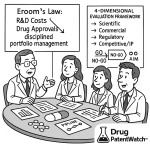
Drug development costs roughly double every nine years. That is Eroom’s Law, the inverse of Moore’s Law, and it describes an industry that has systematically gotten worse at what it does despite spending more. A new drug now costs upward of $800 million to bring to market, clinical trial attrition hovers near 90%, and the compounds that do reach patients increasingly treat the same conditions in the same ways.
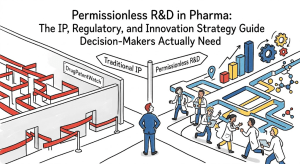
Permissionless R&D offers a structural counter to this trajectory. The concept, borrowed from open internet architecture and open-source software, holds that innovation accelerates when participants can build without seeking prior approval from a central authority. In pharmaceuticals, that means opening abandoned compounds, preclinical datasets, and assay libraries to external researchers; decentralizing clinical trial operations; and rethinking whether the current IND-to-NDA pipeline is the only viable path from molecule to market.
This pillar page argues that a pure, unmodified permissionless model is not deployable in drug development. The physical, biological, and safety constraints of this industry preclude it. What is deployable is a hybrid architecture that grafts permissionless principles onto the existing regulatory scaffold, preserving FDA and EMA oversight at the points where patient safety demands it while removing unnecessary friction everywhere else.
The audience here is pharma IP teams, portfolio managers, R&D leads, and institutional investors who need to understand both the strategic upside and the legal exposure this model creates. The analysis covers IP valuation, technology roadmaps for biologics and small molecules, regulatory pathway specifics, DeSci liability, AI inventorship risk, and concrete investment postures.
2. Eroom’s Law: The Economic Case for a New R&D Model
The Doubling Cost Curve
The pharmaceutical industry’s productivity problem has a name. Eroom’s Law (Eroom being Moore spelled backward, a deliberate inversion) describes the empirical observation that the number of new drugs approved per billion dollars of R&D spending has halved approximately every nine years since the 1950s. In 1950, a billion dollars of R&D (inflation-adjusted) produced roughly 40 approved drugs. By 2010, the same inflation-adjusted billion produced fewer than one.
The drivers are layered. Regulatory requirements have grown, trial sizes have expanded, target validation failure rates remain high, and the most accessible targets were mostly found decades ago. The remaining unmet needs tend to cluster in complex disease biology, rare conditions with small trial populations, and CNS indications where the blood-brain barrier complicates everything. None of these are easier to solve than the conditions industry cracked in its productive decades.
The cost figure most frequently cited, around $2.6 billion per approved drug when accounting for the cost of failures, comes from the Tufts Center for the Study of Drug Development. Even the more conservative U.S. Department of Health and Human Services estimate of $800 million to $1.3 billion per drug implies that the current model is approaching economic unsustainability for all but the largest asset classes.
The ‘Safe Harbor’ Attrition Problem
Roughly 90% of drug candidates entering Phase I trials never reach approval. Of those failures, the majority fail on efficacy rather than safety, meaning the target biology was not adequately validated before committing to human trials. This is not a regulatory failure. It is a scientific resource allocation failure. The IND system requires that a compound be safe enough to test in humans; it does not require that it be likely to work. Industry runs large, expensive trials on inadequately validated biology because the current permissioned system does not create incentives for sharing early-stage target-validation data across organizations.
Permissionless principles address this directly. If preclinical target-validation data, including negative results and assay failures, were openly accessible, the industry could collectively update its priors about which targets are likely to yield results. That is not a regulatory reform. It is an information architecture reform.
Key Takeaways: Eroom’s Law
The doubling cost curve is structural, not cyclical. It will not reverse without changing the information flow architecture of early-stage R&D. The question is not whether the industry needs a new model. The question is which elements of permissionless innovation can be extracted and applied without triggering the patient safety consequences that make full decentralization untenable.
3. What ‘Permissionless R&D’ Actually Means in a Drug Development Context
Core Definition and Origin
Permissionless innovation describes a system where anyone can participate and build without meeting predefined conditions or seeking prior approval from a central authority. The concept has its clearest expression in the design of the early internet, where the TCP/IP protocol was deliberately agnostic about who could connect and what they could build on top of it. This produced a combinatorial explosion of applications that no central planner could have designed.
In the blockchain context, permissionless has a more specific meaning: any node can join the network, validate transactions, or deploy contracts without identity verification or approval from an administrator. DeFi protocols like Uniswap and Aave operate on this basis. Anyone with a wallet can provide liquidity, execute trades, or borrow against collateral without a bank’s approval.
The policy literature, particularly work from Adam Thierer at the Mercatus Center, frames this as a default rule: allow experimentation unless harm is demonstrated, rather than requiring proof of safety before allowing anything new. This is the philosophical inverse of the precautionary principle that governs pharmaceutical regulation.
The Pharmaceutical Translation Problem
Software and financial protocols exist in digital space. Drug molecules exist in bodies. This distinction matters enormously when trying to translate permissionless principles across domains.
In software, a bad deployment can be patched. In a clinical trial, an adverse event cannot be unrun. In DeFi, a user who loses funds to a buggy smart contract bears the financial loss personally. In drug development, third parties, specifically patients, bear the physical consequences of inadequate testing. The asymmetry between private benefit (developer profit) and public risk (patient harm) is exactly what the regulatory framework was built to address.
This does not mean permissionless principles are inapplicable. It means they must be applied selectively, at the stages of the R&D process where errors are reversible or where the bottleneck is information rather than safety validation.
Where Permissionless Principles Are and Are Not Applicable
Permissionless principles apply cleanly to three stages of the drug development process: target identification and early computational modeling, where the stakes of being wrong are limited to wasted compute time; data sharing and open-access publication of preclinical results, including negative data; and the operational structure of clinical trials, specifically how patients are recruited, monitored, and retained.
They do not apply cleanly to human dosing decisions, to manufacturing quality control, or to the approval decision itself. Those stages involve irreversible patient safety exposure that requires centralized authority to function. The regulatory framework at those points is not a bureaucratic inefficiency. It is load-bearing infrastructure.
4. The IP Valuation Problem: Why Patent Architecture Is the Real Gating Factor
Patents as the Primary Asset Class in Pharma
No other major industry is as dependent on patent protection as pharmaceuticals. The reason is structural: the marginal cost of manufacturing a pill or a biologic, once the molecule and process are known, is far below the original R&D investment. Without 20-year exclusivity under 35 U.S.C. Section 154, the first generic or biosimilar entrant would price at marginal cost, and the originator would recover none of its development expenditure.
The Patent Term Extension provisions under the Hatch-Waxman Act (35 U.S.C. Section 156) extend effective exclusivity for up to five years to compensate for time lost to FDA review, subject to a maximum of 14 years of post-approval exclusivity. For a drug approved after a lengthy review, this extension is essential to recouping development cost.
The practical IP portfolio around a single brand drug is rarely a single patent. It typically consists of a composition-of-matter patent (covering the molecule itself), a method-of-use patent (covering specific indications), a formulation patent (covering the specific delivery mechanism), and a process patent (covering the manufacturing process). The layering of these patents, commonly called a patent thicket, extends effective market exclusivity well beyond the nominal 20-year term of the composition-of-matter patent. The Orange Book listing system for small molecules and the Biological Product Purple Book for biologics make these layered exclusivities visible to generic and biosimilar filers.
IP Valuation Methodology for Permissionless Innovation Contexts
When a company considers opening a compound or dataset to external developers under a permissionless or open-innovation model, the first analytical question is: what is the IP value at risk, and how does the proposed openness interact with that value?
The standard methodologies for pharmaceutical patent valuation are the risk-adjusted net present value (rNPV) model, the relief-from-royalty method, and the comparable transaction method. In an open-innovation context, the relevant question is not simply what a patent is worth in isolation but what the incremental value of external contribution might be, discounted by the probability that external work might either invalidate existing patents (prior art risk) or generate new IP claims that complicate ownership.
Risk-adjusted NPV for a compound under a ‘part open, part closed’ model requires explicitly modeling the probability that external researchers discover a new indication (incremental revenue potential), the probability that external publication creates prior art that blocks a method-of-use patent extension (IP erosion risk), the contractual structure governing ownership of downstream innovations by external contributors, and the regulatory pathway each potential new indication would require (full NDA/BLA vs. supplemental application).
The Goldcorp case is the canonical non-pharma example of this calculation. Goldcorp released its proprietary geological data and received 110 new site identifications in return, half of which were previously unknown to the company. Goldcorp retained ownership of the land. The data was the input; the mining rights were the asset. The pharmaceutical analog is releasing compound data while retaining composition-of-matter and key formulation patents.
Evergreening as a Defense Against Permissionless Erosion
Evergreening, the practice of filing secondary patents to extend effective exclusivity beyond the composition-of-matter expiration, is the dominant IP lifecycle management strategy in branded pharmaceuticals. A 2021 analysis of 100 top-selling drugs found that the median number of Orange Book-listed patents per drug had increased from around two in 1985 to more than four by 2005, with some blockbusters accumulating more than 100 distinct patent claims.
In a permissionless or open-innovation context, evergreening faces specific new risks. If external researchers working under an open-data arrangement identify a new formulation or indication and publish their findings before the originator files a patent application, that publication constitutes prior art that blocks the originator from patenting the improvement. Open-data agreements must therefore include explicit IP assignment clauses, publication embargo periods, and joint filing rights to preserve the originator’s ability to evergreen.
Biologics face a different evergreening architecture. Because biologics cannot be fully characterized chemically, the exclusivity framework relies on data exclusivity (12 years in the U.S. under the Biologics Price Competition and Innovation Act) rather than process patents alone. Biosimilar applicants must demonstrate analytical similarity, functional similarity, and pharmacokinetic similarity in clinical studies, and the complexity of the reference product’s manufacturing process creates its own barriers. For biologics under open-innovation arrangements, the key IP asset is the manufacturing process patent combined with regulatory data exclusivity, not the molecule composition patent.
Case Study: Cubicin and the Abandoned Compound Premium
Eli Lilly abandoned daptomycin in the 1980s due to muscle toxicity observed at the dosing regimens under evaluation. Cubist Pharmaceuticals acquired the rights, discovered that once-daily dosing eliminated the toxicity signal, and developed it into Cubicin, approved in 2003. Peak sales exceeded $1 billion annually before Merck’s acquisition of Cubist in 2015 for $9.5 billion.
The IP valuation lesson here is precise. Lilly’s abandonment decision was made on incomplete dosing data. The composition-of-matter patent had expired or was near expiry when Cubist acquired rights, but Cubist filed method-of-use patents on the once-daily regimen and on specific indications including skin and soft tissue infections and Staphylococcus aureus bacteremia. Those method-of-use patents, not a composition patent, were the primary IP asset. A permissionless model that opens abandoned compounds to external developers would generate similar value, provided the original rights holder retains the ability to assert patents on improvements or structures joint development agreements that assign those rights.
The same dynamic applies to Viagra (sildenafil). Pfizer’s initial development target was angina and hypertension. The erectile dysfunction indication emerged from patient self-reporting during Phase II trials. Pfizer’s method-of-use patent on sildenafil for erectile dysfunction (U.S. Patent 5,250,534 and its successors) generated revenue well beyond what the cardiovascular indication would have produced. The composition-of-matter patent and the ED indication patents created separate but complementary exclusivity periods, extending total market protection substantially beyond the original patent term.
Investment Strategy: IP Valuation
Portfolio managers evaluating companies that adopt open-innovation or permissionless data-sharing strategies should run a specific due diligence checklist. Confirm that the company has filed composition-of-matter patents before any open-data release. Review the IP assignment provisions in any external contributor agreements. Model the prior art exposure created by open publication timelines against the company’s evergreening patent filing calendar. For biologics, confirm that regulatory data exclusivity periods are intact and that manufacturing process know-how is protected by trade secret rather than patent where possible. A company that opens data without completing this IP triage is eroding its primary asset class.
5. Accelerating Discovery: Parallel Experimentation, Abandoned Compounds, and the False-Negative Problem
The Architecture of Parallel Experimentation
Traditional drug discovery is sequential. A lead compound is selected, optimized, advanced to preclinical, and then to Phase I before significant external input occurs. The total elapsed time from target identification to IND filing typically runs three to six years. During that period, every decision about which chemical scaffold to pursue, which assay to prioritize, and which indication to develop first is made by a small internal team operating on proprietary data.
Parallel experimentation changes this architecture. If target-validation data, hit compounds from HTS campaigns, and preclinical assay results are shared in near-real-time through open-access databases or consortium structures, multiple research groups can simultaneously explore the same target space using different chemical approaches. The parallel processing substantially reduces the probability that the single best approach for a given target is the one that happens to be in the originator’s internal pipeline.
The IT industry’s experience with open APIs provides the model. When Apple published its iOS SDK in 2008, it did not know which of the eventual 500,000 applications would become dominant. The permissionless architecture of the App Store allowed simultaneous exploration by thousands of developers, and the resulting selection pressure produced far more useful applications than any internal Apple team could have planned. The pharmaceutical analog requires more careful IP architecture, but the combinatorial logic is identical.
The False-Negative Problem and the ‘Abandoned Compound Premium’
The pharmaceutical industry’s internal R&D process systematically generates false negatives: compounds with genuine therapeutic value that are abandoned because they fail against the specific target, indication, or dosing regimen that the originator was testing. Estimates of the size of this abandoned compound library vary, but major pharmaceutical companies typically hold thousands of compounds with some preclinical data against which no current development program exists.
The false-negative problem arises from target-focused development. A compound that fails an angina indication may retain activity against other cardiovascular targets. A compound abandoned for hepatotoxicity at high doses may be tolerable and effective at lower doses against a different condition. The original development team, focused on a specific target and indication, often lacks both the incentive and the bandwidth to explore alternative applications.
Permissionless models address this through what might be called the abandoned compound premium: the incremental value generated when a compound with existing preclinical data is exposed to external researchers with different domain expertise. The premium is partly informational (external researchers may know target biology the originator does not) and partly commercial (the originator benefits from an indication discovery it did not have to fund).
Open-Source Drug Discovery: The OSDD Model and Its IP Architecture
India’s CSIR-led Open Source Drug Discovery consortium, launched in 2008 with a focus on Mycobacterium tuberculosis, operationalized a Wiki-based open research platform where participants contributed data, analyses, and compound screening results in real time. The motto, ‘affordable healthcare for all,’ captured the access-focused framing of the initiative, but the underlying IP architecture was more nuanced than pure open-source.
OSDD used a ‘viral clause’ approach borrowed from copyleft software licensing. Contributions to the platform were licensed under terms that required derivative works to remain open, preventing any single participant from capturing the collective research output as proprietary IP. New drugs emerging from the platform were intended to enter the public domain or be licensed on non-exclusive, royalty-free terms. This approach solved the incentive alignment problem for neglected disease R&D, where commercial market sizes are insufficient to support traditional patent-based development, but it is not directly transferable to developed-market therapeutics where commercial returns drive investment decisions.
The practical lesson for IP teams is that the OSDD model works when the downstream commercial market is too small for patent-based exclusivity to be economically meaningful. For diseases with large, commercially viable patient populations, the viral clause model would destroy the originator’s incentive to invest. The correct architecture for those indications is the ‘part open, part closed’ model: open preclinical data and structural biology, closed composition-of-matter and method-of-use patents.
Citizen Science and Its Limits
NIH’s citizen science initiatives and platforms like Foldit (protein structure prediction) and Stall Catchers (neurodegeneration data annotation) demonstrate that non-specialist participants can contribute useful scientific work under appropriate task design. Foldit players outperformed computational algorithms on certain protein folding problems. Stall Catchers participants annotated more data in a month than a professional team could have processed in years.
The limit of citizen science in drug development is the preclinical-to-clinical boundary. Citizen scientists can contribute meaningfully to computational tasks, data annotation, genomic analysis, and real-world outcome reporting. They cannot substitute for GLP toxicology studies, GMP manufacturing, or IRB-supervised clinical investigation. The appropriate use of citizen science in a permissionless R&D framework is in the pre-IND computational and data analysis stages, not in human subject research.
6. Cost Reduction Mechanisms: DCTs, MIDD, and Open-Source Data Science
Decentralized Clinical Trials: The Operational Architecture
Decentralized clinical trials (DCTs) shift core trial operations away from traditional clinical sites using telehealth, wearable biosensors, smartphone-based ePRO (electronic patient-reported outcome) platforms, and direct-to-patient drug shipment. The FDA issued final DCT guidance in September 2024, clarifying requirements for remote participant interactions, local healthcare provider involvement, and the use of digital health technologies for data collection.
The financial case for DCTs is specific and quantifiable. A 2023 study found that DCT elements in Phase II studies yield financial benefits up to five times the upfront investment, and in Phase III, up to 14 times. The mechanisms are reduced site overhead, faster patient recruitment (access to patients who cannot travel to trial sites), lower dropout rates due to reduced participant burden, and real-time data capture that eliminates the transcription errors and delays of paper-based data collection.
DCTs also expand the accessible patient population. Rare disease trials have historically struggled with recruitment because the patient population is geographically dispersed. A fully decentralized rare disease trial can recruit nationally or globally from day one without requiring patients to relocate or commute to a central site. This directly addresses one of the primary causes of clinical trial failure: insufficient enrollment.
The hybrid trial, which combines remote monitoring and digital data collection with periodic in-person visits for procedures that cannot be decentralized, represents the current operational standard. Hybrid trials exceeded traditional on-site trials in prevalence for the first time in 2023 and have continued to grow in share. They are not a concession to regulatory conservatism. They are the correct design for most therapeutic areas, combining the recruitment and retention advantages of decentralization with the clinical examination capabilities of site-based research.
Model-Informed Drug Development: The Time and Cost Arithmetic
Model-Informed Drug Development (MIDD) applies pharmacokinetic/pharmacodynamic (PK/PD) modeling, physiologically based pharmacokinetic (PBPK) modeling, and disease progression modeling to inform dose selection, trial design, and go/no-go decisions. The FDA formally supports MIDD as part of its benefit-risk framework and has issued guidance on its application across multiple drug classes.
The quantified impact is material. A 2024 PubMed analysis of MIDD application across 50 development programs found an annualized average saving of approximately 10 months of cycle time and $5 million per program. For large-molecule biologics, where Phase II-to-Phase III transition is particularly expensive and attrition is costly, MIDD-based dose optimization can reduce the number of Phase II cohorts required, compress the timeline between first-in-human and proof-of-concept, and improve the signal-to-noise ratio on efficacy endpoints before committing to Phase III investment.
PBPK modeling has specific applications in permissionless R&D contexts. When external researchers are evaluating abandoned compounds, PBPK models built on the original sponsor’s preclinical data allow computational dose optimization before any animal or human experiments are run. If the original sponsor shares PBPK model parameters along with compound data in an open-innovation arrangement, external developers can triage dosing hypotheses computationally at near-zero marginal cost.
Open-Source Data Science in Pharma: The Pharmaverse Architecture
The major branded pharmaceutical companies, including Roche, Novartis, GSK, Pfizer, and AstraZeneca, have progressively migrated clinical data analysis workflows from proprietary SAS-based systems to open-source R and Python tooling. The Pharmaverse consortium, an industry-wide collaboration, maintains curated R packages specifically designed for clinical trial data analysis and regulatory submission, including {admiral} for ADaM dataset derivation and {tfrmt} for table formatting.
The FDA accepts R-based analyses in regulatory submissions. The agency has actively collaborated with the R Consortium’s R Submissions Working Group to define appropriate validation frameworks. The practical impact is that the marginal cost of analytical tool development has dropped substantially. A single package developed within the Pharmaverse consortium is validated once and shared across all member organizations, eliminating the need for each company to independently validate identical functionality.
For IP teams, the open-source analytical shift creates a specific exposure. When analysis code is published as open-source, the analytical methodology is no longer proprietary. Competitors can replicate analytical approaches. In most cases this matters less than it might seem, because regulatory submissions compete on data quality, not analytical methodology. But in cases where a novel analytical approach confers a competitive advantage in demonstrating efficacy, the open-source publication of that methodology represents an IP trade-off that should be evaluated before contribution.
7. The Regulatory Reality: FDA, EMA, and Controlled Decentralization
The IND System as the Primary Permission Gate
The Investigational New Drug application is the statutory permission gate for human experimentation in the United States. Before a sponsor can administer an investigational compound to a human subject, 21 CFR Part 312 requires submission of animal pharmacology and toxicology data, manufacturing information including synthesis and formulation, and the clinical protocol with IRB approval documentation. The FDA has 30 days to place the IND on clinical hold; absent a hold notice, the sponsor may proceed.
The IND system is not primarily about chemistry. It is about establishing that there is a reasonable safety basis for human experimentation. That determination requires a human reviewer with the statutory authority to stop an unsafe trial. No permissionless architecture can substitute for this function. The relevant question is not whether the IND gate should be removed, but whether the 30-day review period could be shortened through pre-IND meeting efficiency, whether AI-assisted safety signal review could accelerate FDA response times, and whether the data required for IND filing could be generated more efficiently through open preclinical data sharing.
FDA Pathway Specifics: NDA, BLA, and 505(b)(2)
For small-molecule drugs, the New Drug Application (NDA) under 21 CFR Part 314 requires complete reports of clinical and nonclinical studies, full manufacturing and controls data, and proposed labeling. The standard review timeline is 10 months from filing; Priority Review is 6 months. The FDA has met its PDUFA (Prescription Drug User Fee Act) action date targets consistently in recent years, meaning the review process itself is not the primary source of delay in the current system.
The 505(b)(2) pathway is particularly relevant in permissionless and open-innovation contexts. A 505(b)(2) NDA relies partially or entirely on studies not conducted by the applicant, with a right of reference to the FDA’s findings of safety and effectiveness for a previously approved drug. This is the statutory mechanism for new indications, new formulations, and new dosing regimens for compounds with existing approval history. A developer who identifies a new indication for an abandoned compound with existing NDA data can file a 505(b)(2) NDA, potentially avoiding the full Phase I safety dataset requirement.
For biological products, the Biologics License Application (BLA) pathway differs structurally. The BPCI Act’s 12-year data exclusivity provision protects the reference product’s clinical data from use in biosimilar 351(k) applications for 12 years post-approval. This data exclusivity operates independently of patent status, meaning a biologic originator retains protection even after composition-of-matter patents expire, provided no third party has independently generated equivalent clinical data.
The Paragraph IV Pathway and Its Relevance to Permissionless IP
Generic manufacturers challenge branded drug patents through Paragraph IV certifications, filed with the ANDA (Abbreviated New Drug Application) under 21 CFR Part 314.50(i)(1)(i)(A)(4). A Paragraph IV certification asserts that the listed patent is invalid, unenforceable, or will not be infringed by the generic product. The certification triggers a 45-day window in which the originator can file an infringement suit, which automatically stays ANDA approval for 30 months unless the court rules sooner.
In an open-innovation context, the Paragraph IV mechanism creates specific risks. If an originator company shares compound data openly, including synthesis routes and analytical characterization, this information may be used by a generic filer to strengthen a Paragraph IV invalidity argument based on prior art or obviousness. The legal standard for obviousness under 35 U.S.C. Section 103 requires that the claimed invention would have been obvious to a person of ordinary skill in the art given the prior art at the time of filing. Open-data publication by the originator, if it precedes the patent filing date, constitutes prior art that a generic filer can cite.
IP teams must conduct a rigorous patent-filing-versus-data-release sequencing analysis before any open-innovation publication. The standard operating procedure is to file composition-of-matter patents and all intended method-of-use claims before any public data release, regardless of how the release is framed.
EMA: Centralized Procedure and the CHMP Assessment
The EMA’s centralized authorization procedure produces a single marketing authorization valid across all EU Member States and EEA countries, processed through the Committee for Medicinal Products for Human Use (CHMP). The review clock runs 210 days with specified stop-clock periods for applicant responses to questions.
The EMA’s approach to decentralized clinical trial elements is framed around patient safety, investigator inclusion, and risk-benefit evaluation. Its 2022 reflection paper on DCT elements identified remote consent procedures, home healthcare provider visits, and electronic data capture as acceptable within the regulatory framework, provided sponsors document the control framework adequately. The EMA has also been more explicit than the FDA about post-authorization safety study requirements in the context of novel trial designs, reflecting the European system’s stronger pharmacovigilance obligations under the 2010 pharmacovigilance legislation.
Regulatory Capture: The Incumbent Advantage
The policy literature on permissionless innovation includes a specific warning: large incumbents benefit from regulatory complexity because compliance costs are fixed and do not scale with firm size. A $50 billion pharmaceutical company can absorb the cost of a complex NDA filing that would bankrupt a startup with the same compound. This creates an incentive for incumbents to support regulatory expansion in the name of public safety while simultaneously benefiting from the barrier-to-entry effect.
This dynamic appears in the pharmaceutical industry’s response to biosimilar competition. The innovator biologics industry initially opposed the FDA’s interchangeability designation for biosimilars, which allows pharmacists to substitute an interchangeable biosimilar for the reference product without prescriber intervention. The primary objection was framed as patient safety, specifically immunogenicity risk from switching between products. The FDA’s subsequent approval of multiple interchangeable biosimilars, including Semglee (insulin glargine) and Cyltezo (adalimumab), with no demonstrated safety signal from switching, suggests the safety framing overstated the risk.
The regulatory capture risk is directly relevant to permissionless R&D policy. Proposals to open abandoned compound libraries, share preclinical data, or allow decentralized trial structures will face opposition framed as safety concerns. Evaluating those concerns requires separating genuine safety risk from incumbent interest in maintaining barriers to entry.
8. Risks That Cannot Be Papered Over: Safety, Quality, and Ethical Exposure
Patient Safety: The Irreversibility Constraint
The patient safety argument against permissionless pharma R&D is serious and deserves direct engagement rather than dismissal. The WHO’s ‘Medication Without Harm’ initiative estimates that unsafe medication practices cost $42 billion annually in avoidable harm. Thalidomide, approved in Europe in the late 1950s for morning sickness before adequate teratogenicity testing, caused limb defects in approximately 10,000 children. The drug’s non-approval in the United States, due to FDA reviewer Frances Kelsey’s insistence on adequate safety data, prevented equivalent harm domestically.
The lesson is not that the precautionary principle always produces the right outcome. The thalidomide response in the U.S. was correct but was also somewhat accidental: Kelsey’s objections were procedural as much as substantive. The lesson is that the consequences of inadequate safety testing are irreversible at the patient level and corrosive at the institutional level. A permissionless system that allowed inadequately tested compounds into clinical use would generate harms that no speed-to-market benefit could justify.
The technical mitigation here is better predictive toxicology, not reduced oversight. AI-based toxicity prediction models trained on large datasets of known toxicants can flag potential issues before human trials. Organ-on-a-chip models provide mechanistic toxicology data that conventional animal studies cannot. If these tools can reliably predict human toxicity, the IND safety data requirement becomes faster to generate rather than easier to bypass.
Reproducibility: The $28 Billion Problem
An estimated $28 billion annually in U.S. biomedical research investment is spent on preclinical work that cannot be replicated. The most rigorous analysis of this, from Freedman et al. (2015), attributed the reproducibility problem to multiple sources: flawed study design, poor statistical methodology, inadequate reporting of methods, and use of contaminated or misidentified cell lines.
A permissionless or open-science architecture could improve reproducibility by requiring public registration of preclinical protocols before execution (analogous to ClinicalTrials.gov for human studies), mandating deposition of raw data in publicly accessible repositories, and enabling independent replication by external researchers who have access to the same data and methods. Several journals, including PLOS Biology and eLife, have adopted registered reports formats that separate the methodological review from the results review, reducing publication bias toward positive results.
The reproducibility problem is a direct argument for more permissionless data sharing in preclinical research, not less. The current permissioned data architecture, where negative and null results are never published and methods are incompletely reported in journal articles, systematically produces unreliable literature that drives poor investment decisions in subsequent development stages.
Quality Control in Decentralized Manufacturing
Pharmaceutical manufacturing quality control operates under Current Good Manufacturing Practice (cGMP) regulations (21 CFR Parts 210 and 211 for drugs, 600 for biologics). cGMP requires documented procedures, qualified personnel, validated processes, calibrated equipment, and batch testing before release. These requirements apply to the manufacturing facility, not to the development organization. A permissionless development model does not change cGMP requirements for manufacturing; it changes who initiates the development and under what IP arrangement.
The genuine quality risk in decentralized or permissionless contexts arises in two specific scenarios. The first is contract manufacturing for investigational products by CDMOs without adequate oversight from the sponsoring organization, a governance failure rather than a structural one. The second is the proliferation of compounded drug preparations outside of approved manufacturing facilities, which is not a consequence of permissionless R&D per se but is relevant to the broader question of what happens when regulatory barriers are reduced.
The counterfeit drug problem, often cited in discussions of pharmaceutical quality risk, is primarily a supply chain and distribution problem rather than an R&D problem. Track-and-trace serialization requirements under the Drug Supply Chain Security Act (DSCSA) address this at the distribution level. A permissionless R&D model does not inherently create counterfeit drug exposure unless it is conflated with permissionless manufacturing and distribution, which are separate and distinct policy questions.
Ethics: Informed Consent and the Tuskegee Constraint
The Belmont Report principles (autonomy, beneficence, nonmaleficence, and justice) and the implementing regulations under 45 CFR Part 46 (the Common Rule) and 21 CFR Parts 50 and 56 establish the ethical framework for human subjects research. Informed consent is not a bureaucratic formality. It is a legal and moral requirement that participants understand the risks and benefits of participation and volunteer freely.
The U.S. Public Health Service Syphilis Study at Tuskegee, which ran from 1932 to 1972 and withheld penicillin from participants after it became the standard of care, produced the modern regulatory framework for human subjects protection. The Declaration of Helsinki (1964, revised multiple times through 2013) and the International Conference on Harmonisation Good Clinical Practice (ICH E6) guideline establish international standards that apply across regulatory jurisdictions.
Any permissionless R&D framework that applies to human subjects research must preserve IRB or ethics committee review, informed consent, and adverse event reporting. These are not elements of the permissioned system that can be decentralized without consequence. A DAO-governed clinical trial that bypasses IRB review is not an innovative trial design. It is a violation of federal law and international research ethics standards.
9. DeSci, DAOs, and the Liability Gap in Decentralized Drug Development
Decentralized Science: The Web3 R&D Architecture
Decentralized Science (DeSci) applies Web3 infrastructure to research funding and governance. The core components are decentralized autonomous organizations (DAOs) for governance and funding decisions, smart contracts for automated disbursement of research grants, tokenized IP (IP-NFTs) representing ownership stakes in research outputs, and blockchain-based data repositories for transparent and immutable research records.
VitaDAO, focused on longevity research, has funded multiple early-stage research projects through a governance token model where token holders vote on funding allocations. LabDAO provides shared compute and laboratory resources to researchers on an open-access basis. Molecule AG provides a protocol for tokenizing drug development IP as NFTs, allowing fractional ownership and enabling decentralized funding of preclinical research.
The DeSci model addresses a specific bottleneck in early-stage R&D: the funding gap between academic discovery and traditional venture capital or pharmaceutical company licensing. Most academic findings are too early-stage for VC investment but too commercially oriented for NIH grant funding. DeSci’s decentralized funding mechanism can bridge this gap by pooling capital from a large number of small investors who collectively have lower return requirements than institutional VCs.
DAO Liability: The Unresolved Legal Question
The legal status of DAOs in the context of pharmaceutical research is unresolved and carries material risk for participants. The core liability question is whether DAO token holders are members of a general partnership, making each jointly and severally liable for the DAO’s obligations, or whether the DAO’s smart contract structure provides liability insulation analogous to corporate limited liability.
A 2022 CFTC enforcement action against bZeroX (now Ooki DAO) held that DAO token holders who voted on governance proposals could be liable as unincorporated association members. A subsequent default judgment held Ooki DAO liable under the Commodity Exchange Act. The precedent is sector-specific and uncertain, but it demonstrates that token-based governance participation is not automatically liability-insulating.
For pharmaceutical research, the liability exposure is more severe than in DeFi. If a DAO-funded clinical study produces an adverse event, the question of who bears compensatory liability to the harmed participant is entirely unsettled law. Traditional clinical trial liability runs from the sponsor to the participant through a contract structure supported by clinical trial agreements and indemnification provisions. A DAO with pseudonymous token holders, no legal entity, and no conventional contractual structure has no clear mechanism for absorbing or defending against this liability.
Wyoming and Vermont have enacted DAO LLC statutes that allow DAOs to incorporate as limited liability companies, providing a legal entity structure for contracting, litigation, and liability purposes. Tennessee and Utah have followed. These structures mitigate but do not eliminate the liability exposure for research-focused DAOs, particularly where the research involves human subjects and therefore creates potential tort liability to participants.
IP-NFTs and Patent Ownership
Molecule AG’s IP-NFT protocol tokenizes research IP as non-fungible tokens, allowing fractional ownership and permissioned access to underlying research data and patent rights. The protocol has been used to tokenize preclinical research data for several early-stage drug candidates.
The legal question for pharmaceutical IP teams is whether an IP-NFT constitutes a valid assignment of patent rights under 35 U.S.C. Section 261, which requires written assignment signed by the patentee. A token transfer on a blockchain is not a signed writing in the conventional legal sense. The enforceability of IP-NFT transfers in U.S. patent law has not been tested in federal court. Until it is, pharmaceutical companies with material IP assets should treat IP-NFT structures as experimentally interesting but legally insufficient substitutes for conventional patent assignment agreements.
Investment Strategy: DeSci and DAO Risk
Institutional investors evaluating DeSci protocols should apply a distinct risk framework from standard biotech investment. The scientific assets may be early-stage and real; the legal infrastructure supporting IP ownership and liability management is not. Before allocating capital to a DAO-structured drug development vehicle, confirm that the DAO has incorporated as a legal entity in a jurisdiction with a DAO LLC statute, that the IP assignment from individual researchers to the DAO entity has been executed in writing, that the proposed research activities comply with applicable IND and IRB requirements if human subjects are involved, and that the protocol’s governance structure does not expose token holders to joint-and-several partnership liability.
10. Hybrid Models: The ‘Part Open, Part Closed’ Architecture in Practice
The Governance Framework
The most practically deployable permissionless R&D model in pharmaceuticals is not fully open and not conventionally closed. It is a structured hybrid that opens specific categories of research assets to external developers while retaining patent protection and development rights on the core commercial asset.
The governance framework for this model requires four components. First, an IP clearance protocol that ensures composition-of-matter and method-of-use patents are filed before any data release. Second, a contributor agreement that assigns IP rights in any external contributions back to the originator or to a specified joint ownership structure. Third, a publication embargo provision that delays external publication of findings until the originator has filed applicable patent applications. Fourth, a data licensing structure that defines what data can be used for what purposes, distinguishing between use for academic research, commercial development of non-competing products, and commercial development of competing products.
Johnson & Johnson’s Janssen Pharmaceutical has operated a model called ‘Janssen PathFinder’ that provides research funding and compound access to external academic and startup partners while retaining commercial rights through licensing arrangements. AstraZeneca’s Open Innovation program provides external researchers with compound libraries and assay data for academic research. GSK established the Open Lab at the Tres Cantos facility in Spain, which provides external researchers with access to compounds, equipment, and expertise for neglected disease research.
Technology Roadmap: Open Innovation for Biologics
Biologics present a more complex open-innovation architecture than small molecules because the primary IP asset is not just the molecular sequence but the manufacturing process, the formulation, and the clinical data. A biologics open-innovation roadmap requires specific sequencing.
At the target identification stage, structural biology data, including protein crystal structures deposited in the Protein Data Bank, is already effectively open. The public deposition of cryo-EM structures by academic groups and pharma collaborators has accelerated the structural characterization of targets that were previously intractable. AlphaFold2 and its successors have extended this further by enabling accurate structure prediction for proteins without experimental structures. This stage is already largely permissionless, and the industry has benefited from it.
At the lead identification stage, antibody sequence data is partially open through databases like the Observed Antibody Space (OAS) and SAbDab. Competitors can access this data to identify published sequences that bind the same target, but the composition-of-matter patents on specific antibodies and antibody-drug conjugates (ADCs) retain exclusivity on the specific molecules. The open sequence data accelerates the discovery of alternative molecules but does not infringe on the originator’s composition patent.
At the manufacturing and formulation stage, the process patents and manufacturing know-how become the primary IP defense. Biologic manufacturers invest heavily in process development, and the resulting process patents, combined with regulatory data exclusivity, provide protection that does not depend on molecular composition patents alone. The manufacturing know-how, which includes cell line development, purification sequences, and formulation stability data, is typically maintained as a trade secret rather than a patent, providing indefinite protection rather than the 20-year patent term.
For biosimilar developers evaluating reference products, the open-innovation question runs in reverse: which elements of the reference product’s manufacturing process are disclosed in public patent filings, and which are trade secret? The answer determines whether the biosimilar developer must independently develop the manufacturing process (expensive) or can rely on publicly disclosed process information (cheaper but requires design-around of process patents).
Technology Roadmap: Open Innovation for Small Molecules
Small-molecule open innovation has a more established history, partly because the IP landscape is more tractable and partly because the manufacturing complexity is lower.
The SARS-CoV-2 response produced several notable examples. The COVID Moonshot consortium, organized by PostEra, openly published all synthesis routes, binding data, and computational models for covalent SARS-CoV-2 protease inhibitors. The project operated on a fully open-data model with no patent filing, explicitly optimizing for speed over commercial exploitation. The lead compounds from this effort were advanced by Enamine and other contract research organizations under open-source licensing.
The Medicines for Malaria Venture (MMV) operates an open-access compound library, the Malaria Box, providing 400 compounds with confirmed anti-malarial activity to external researchers on request, with minimal IP restrictions. The model works because the commercial market for malaria treatments is too small for exclusivity to be economically rational for major pharmaceutical companies.
For commercially viable indications, the small-molecule open-innovation model requires more careful IP architecture, as described in the IP valuation section. The critical data points for any specific compound are the expiry dates of all Orange Book-listed patents, the remaining data exclusivity period (which may be shorter than patent life for products approved under certain pathways), and the existence of any method-of-use patents that might block generic entry even after composition expiry.
11. AI Inventorship: The Paragraph IV of the 2030s
The Legal Standard and Its Implications
U.S. patent law defines an inventor as a natural person (35 U.S.C. Section 100(f)). The Federal Circuit confirmed in Thaler v. Vidal (2022) that AI systems cannot be listed as inventors on U.S. patent applications. The UK Supreme Court reached the same conclusion in Thaler v. Comptroller-General of Patents (2023). The legal standard is settled in the major jurisdictions: patents require human inventorship.
The practical implication for AI-driven drug discovery is significant. When an AI system substantially contributes to the identification of a novel compound or the discovery of a new mechanism of action, the patent application must identify the human researchers who directed, refined, or interpreted the AI’s output as the inventors. If the AI’s contribution was so dominant that no human made a sufficient inventive contribution, the compound may be unpatentable.
This creates a specific due diligence question for any AI-assisted drug discovery program: what is the human contribution to each claimed invention? Programs that use AI for virtual screening or lead optimization, where human scientists direct the computational search and make final selection decisions, are generally on solid inventorship ground. Programs that use autonomous AI agents to design and test compounds with minimal human direction face a genuine risk that the resulting IP is unpatentable.
The AI Inventorship Risk in Permissionless Contexts
In a permissionless or open-innovation context, the AI inventorship problem is compounded. If an external developer uses an AI system to identify a new indication for an open-access compound, and the AI’s contribution is substantial, neither the original compound owner nor the external developer may have a clear patent claim on the new indication. The compound owner’s composition patent is unaffected, but the method-of-use patent on the new indication, which would be the primary IP asset for the external developer, may be invalid for lack of human inventorship.
The mitigation strategy is documentation-intensive but straightforward: maintain detailed records of every human decision in an AI-assisted discovery program. Document the design of the AI query, the human review and selection of AI-generated hypotheses, the experimental validation decisions, and the interpretation of results. Each of these constitutes a human inventive contribution that supports valid inventorship claims.
AI and Regulatory Submissions
The FDA’s 2024 draft guidance on ‘Considerations for Use of Artificial Intelligence to Support Regulatory Decision-Making for Drug and Biological Products’ established a risk-based credibility assessment framework for AI models used in regulatory submissions. The framework requires sponsors to document AI model selection, training data, performance testing, and uncertainty quantification before relying on AI outputs in an NDA or BLA submission.
The EMA’s Position Paper on AI in Medicines Development (2023) took a similar risk-stratified approach, distinguishing between low-risk AI applications (e.g., medical image analysis with human oversight) and high-risk applications (e.g., AI-driven clinical trial design without human review). Both agencies have signaled that AI-augmented submissions are acceptable within appropriate validation frameworks, while fully autonomous AI decision-making in critical regulatory contexts remains unacceptable.
Investment Strategy: AI Inventorship
Portfolio managers evaluating biotech companies with AI-driven discovery platforms should specifically audit the IP capture rate on AI-generated leads. A company that runs hundreds of AI-designed molecule campaigns but files few patents on the resulting compounds either has an IP strategy problem or an inventorship documentation problem. The correct benchmark is that every AI-generated lead that enters development should have a documented human inventorship basis supporting patentability, confirmed by IP counsel before the IND is filed.
12. Investment Strategy for Portfolio Managers and Institutional Investors
Portfolio Screening Criteria for Permissionless R&D Exposure
The permissionless R&D trend creates identifiable investment opportunities and risks across the pharmaceutical and biotech landscape. The screening criteria divide into three categories: companies that benefit from open-innovation arrangements, companies whose IP position is exposed by increasing data openness, and companies building infrastructure for the permissionless R&D ecosystem.
Companies positioned to benefit from open innovation include mid-size specialty pharma firms that can leverage external compound discovery at lower cost than internal programs. The archetypal example is a company with strong formulation and clinical development capabilities but limited medicinal chemistry capacity. These companies can acquire or in-license compounds from open-innovation arrangements at lower cost than building full internal discovery functions, provided they have the IP expertise to structure contributor agreements correctly.
Companies whose IP positions are exposed include originators of branded drugs with large, complex patent thickets that may be challenged under obviousness arguments using open-access structural biology data. AlphaFold2-generated protein structures are prior art once deposited in the public domain. If an originator’s composition-of-matter patent was filed after a sufficiently accurate AlphaFold prediction of the target’s structure was publicly available, the novelty of certain structure-based design claims may be challengeable.
Infrastructure companies in the permissionless R&D ecosystem include clinical data management platforms with DCT capabilities, AI-assisted toxicology screening services, and open-source pharmaceutical data science tool providers. These are picks-and-shovels investments that benefit from the adoption of permissionless principles regardless of which specific drugs succeed.
The IRA and Innovation Incentive Distortion
The Inflation Reduction Act’s drug price negotiation provisions create a specific distortion relevant to permissionless R&D. Small-molecule drugs become subject to Medicare price negotiation after 9 years of market exclusivity, while biologic drugs are not subject to negotiation until 13 years post-approval. This differential creates an explicit incentive to pursue biologic development over small-molecule development, despite biologics being more expensive to manufacture and less accessible in low-income markets.
Some analyses project that the IRA will reduce small-molecule drug development investment by 15 to 20% over the next decade. If this projection is accurate, permissionless and open-innovation models become relatively more important for small-molecule development, because reducing the cost of discovery partially compensates for the reduced expected exclusivity value of the resulting asset.
Portfolio managers should model IRA exposure explicitly when evaluating branded small-molecule assets. The relevant calculation is peak sales potential minus the net present value of price negotiation haircuts, discounted at an appropriate rate. For compounds with large Medicare patient populations, the negotiation haircut can materially reduce asset value. For compounds with primarily commercial (non-Medicare) patient populations or orphan drug designations, the IRA impact is lower.
Orphan Drug Designation and Open Innovation
Orphan Drug Designation (ODD) under the Orphan Drug Act (21 CFR Part 316) provides seven years of market exclusivity post-approval for drugs treating conditions affecting fewer than 200,000 U.S. patients. It also provides a 25% tax credit on qualified clinical trial expenses. For rare disease programs developed through open-innovation or OSDD arrangements, ODD is the primary commercial exclusivity mechanism, because the small patient population often means no composition-of-matter patent is necessary to deter generic competition.
The intersection of open-source drug discovery and ODD is strategic for rare disease developers. OSDD-developed compounds can enter orphan drug programs where the small market size limits generic competition naturally, the ODD exclusivity provides commercial protection during the exclusivity period, and the tax credit partially offsets development costs. This model works best for conditions where the standard-of-care is nonexistent or highly inadequate, limiting the reimbursement negotiating power of payers and making the market more defensible.
13. Key Takeaways by Segment
For IP Teams
File composition-of-matter patents and all intended method-of-use claims before releasing any compound data under open-innovation arrangements. Structure contributor agreements with explicit IP assignment back to the originator or defined joint ownership. Build publication embargo provisions into all external research arrangements. The AI inventorship issue requires proactive documentation of human inventive contributions throughout AI-assisted discovery programs. Treat IP-NFT transfers as legally experimental until federal courts resolve the Section 261 written assignment question.
For R&D Leads
MIDD is underutilized. Systematic application of PBPK and PK/PD modeling before Phase I can reduce Phase I cohort sizes and compress the timeline to proof-of-concept. DCT elements, particularly remote monitoring and direct-to-patient drug shipment, reduce dropout rates and accelerate enrollment in rare disease programs where patient geography is a barrier. Open-source data science tools (R, Python, Pharmaverse packages) are regulatory-submission-ready and eliminate redundant analytical tool development across the industry.
For Portfolio Managers
The permissionless R&D trend favors companies with strong development and commercialization capabilities over companies with discovery-heavy cost structures. The IRA small-molecule investment distortion makes orphan drug programs and biologic development relatively more attractive on a risk-adjusted basis. Infrastructure investments in DCT platforms, AI toxicology, and open-source clinical data management are picks-and-shovels plays that benefit from adoption trend rather than specific drug success. DeSci investments require a separate legal and IP due diligence framework from conventional biotech investment.
For Business Development and Licensing Professionals
The abandoned compound library is undervalued on most pharma balance sheets. A structured open-innovation program for compounds that have cleared basic safety testing but failed primary indication trials has identifiable upside through 505(b)(2) NDA filings on new indications. The option value of those compounds is not zero. OSDD-style viral clause licensing works for neglected disease indications where patent exclusivity adds limited value. Commercial indications require the ‘part open, part closed’ governance structure with explicit patent protection on the core commercial asset.
14. Actionable Recommendations by Stakeholder
Regulators (FDA, EMA)
Issue specific guidance on IP assignment requirements for open-innovation pharmaceutical research arrangements. The absence of agency guidance creates legal uncertainty that chills open-innovation adoption by risk-averse legal departments. Expand the pre-IND meeting program to accommodate early-stage academic and startup developers who lack conventional regulatory affairs infrastructure. Build AI-assisted safety signal review into the IND review process to reduce the 30-day review period for compounds with strong preclinical safety profiles. Pilot a regulatory sandbox for MIDD-heavy development programs that allows adaptive protocol amendments with expedited review.
Pharmaceutical Companies
Conduct a systematic audit of abandoned compound libraries against current target biology databases. Many compounds failed primary indications against targets that were subsequently de-risked by later science; those compounds deserve a second evaluation against validated current targets. Build a formal ‘part open, part closed’ IP governance framework before launching any open-innovation program. Without this framework, the default is either over-protection (no sharing, no benefit) or under-protection (sharing without adequate patent filing, IP erosion). Adopt DCT elements in all new Phase II and Phase III trials where the patient population and data type permit. The enrollment and retention advantages are well-documented and the regulatory pathway is clear.
Academic Researchers and Startups
Before contributing to any open-data or OSDD arrangement, obtain a clear written statement of what IP rights you are retaining, assigning, or licensing. The viral clause structures used in some OSDD programs may preclude patenting your contributions. Understand this before contributing. If developing a compound identified through open-data access, conduct a full freedom-to-operate analysis before filing an IND. The existence of open-access data on a compound does not mean the compound is free of third-party patent claims.
Institutional Investors
Require explicit AI inventorship documentation as a condition of investment in any AI-driven drug discovery program. Require evidence of patent filings on AI-generated leads before the IND stage. For DeSci and DAO-structured investments, require legal entity formation in a jurisdiction with a DAO LLC statute and confirm IP assignment documentation before committing capital. Model IRA exposure on all small-molecule investments with Medicare-heavy patient populations. The negotiation haircut is a known, quantifiable risk. Price it in.
This analysis was prepared for informational purposes. It does not constitute legal or investment advice. IP and regulatory strategies should be reviewed with qualified patent counsel and regulatory affairs professionals before implementation.
Data sources include FDA.gov, EMA.europa.eu, published peer-reviewed literature, Tufts CSDD, PubMed, the Mercatus Center, and primary patent registry data. Specific case studies draw on publicly available regulatory filings and licensing transaction records.