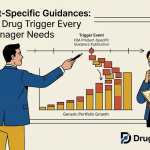
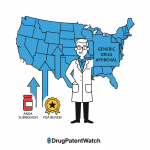
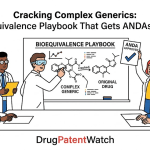
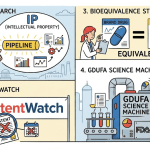
A published PSG makes an ANDA submission 3.8 times more likely, per FDA CDER research. That single statistic should reframe how your business development team monitors the FDA’s ‘Upcoming PSGs’ page.
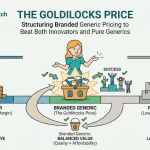
The bioequivalence pathway a PSG mandates is the single largest cost and timeline driver in your development budget. Translating that pathway into a ‘traffic light’ risk rating — green for in vitro, yellow for PK, red for clinical endpoint — is the fastest way to rank portfolio candidates.
PSGs are living documents. A ‘Minor’ revision that adds an in vitro option to a previously clinical-endpoint-only product can instantly transform a shelved project into a first-mover opportunity. This is not passive monitoring territory; it demands a dedicated competitive intelligence function.
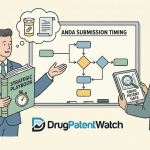
The GDUFA III pre-submission meeting program exists to solve the ANDA first-cycle approval crisis (historically 9-15% first-cycle success). Use it.
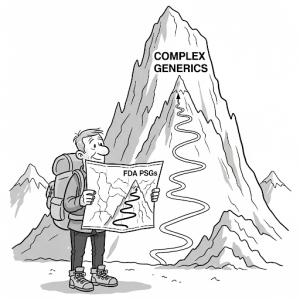
Generic Vivitrol’s 2023 approval and the multi-year Advair saga set the ceiling and the floor for what ‘success in complex generics’ looks like. The PSG illuminates the route; internal scientific capability determines whether you can actually walk it.
Section 1: What Makes a Generic Drug ‘Complex’ — And Why the Definition Carries a $50M Price Tag
Generic drugs account for roughly 90% of all prescriptions dispensed in the United States but just 18% of total prescription drug expenditure. In 2022, that pricing gap saved the U.S. healthcare system an estimated $408 billion. That model has worked reliably for simple, immediate-release oral solids for decades. The recipe was standard: characterize the active pharmaceutical ingredient, demonstrate bioequivalence via a clean pharmacokinetic study in healthy volunteers, file an ANDA, launch.
That era is closing. The low-margin, high-volume commodity generics market is saturated. The remaining white space — the products with little to no generic competition, sustained branded pricing, and high patient need — is almost entirely occupied by complex generics. These are the drugs that have resisted replication not because the underlying chemistry is secret, but because the science required to prove ‘sameness’ to the FDA is genuinely hard.
The FDA’s Regulatory Definition of Complexity (and Its Commercial Implications)
The FDA defines a complex generic drug product as one having a complex active ingredient, a complex formulation, a complex dosage form or route of administration, or being a complex drug-device combination product. That definition is concise. Its commercial implications are not.
Each category carries a distinct development burden, a distinct IP exposure, and a distinct set of FDA expectations:
Complex active ingredients include peptides, polymeric compounds, complex mixtures of APIs, and naturally derived substances. The defining challenge is molecular identity. For a small-molecule generic, ‘sameness’ is demonstrated by showing the API is chemically identical to the reference listed drug (RLD). For a complex active ingredient like glatiramer acetate — the active ingredient in Copaxone — you are proving sameness for a polypeptide mixture with no fixed molecular structure. The FDA has historically relied on a weight-of-evidence approach for these products, combining physicochemical characterization, immunological studies, and sometimes clinical data. The IP angle here is significant: manufacturers of complex-API products routinely hold composition-of-matter patents on the specific mixture profiles, particle size distributions, or polypeptide sequence ratios that define their product, creating overlapping layers of IP protection beyond the Orange Book-listed patents.
Complex formulations include liposomal drug products (e.g., doxorubicin liposome injection, the generic of Doxil), nanoparticle or nanocrystal suspensions, nanoemulsions, and sustained-release microsphere systems. The challenge is structural: the drug’s therapeutic activity depends not just on the API but on the precise physical architecture encapsulating it. A liposomal formulation’s mean vesicle size, lamellarity, surface charge, and lipid composition collectively determine drug release kinetics, biodistribution, and tolerability. Replicating those attributes without access to the innovator’s proprietary manufacturing process requires a reverse-engineering exercise that can run two to four years before a developer is even ready to design a BE study.
Complex dosage forms span modified-release oral formulations, topical and transdermal systems, parenteral depot formulations, and inhaled drug products. Topicals are a particularly instructive category because they expose the core regulatory problem: the drug acts locally at the skin, not systemically, which means blood-level PK studies cannot confirm therapeutic equivalence. For these products, the FDA requires either a direct clinical endpoint study or a validated in vitro surrogate — the latter being the subject of extensive GDUFA-funded research that has produced the In Vitro Release Testing (IVRT) and In Vitro Permeation Testing (IVPT) methodologies now specified in many topical PSGs.
Drug-device combination products — metered-dose inhalers, dry powder inhalers, pre-filled auto-injectors, long-acting injectables supplied as kits — add a mechanical engineering dimension to the pharmaceutical development challenge. For an MDI, the aerosol performance (droplet size distribution, plume geometry, dose delivery) depends on the formulation-device system as a unit. A generic developer cannot change the propellant or the valve design without potentially altering the aerodynamic particle size distribution (APSD) — the attribute that determines how deep into the lung the drug deposits. The FDA’s guidance for these products requires not just pharmaceutical characterization but a full comparative device analysis and, frequently, comparative use human factors studies conducted with the actual patient population.
These categories are not silos. A product like Vivitrol (naltrexone for extended-release injectable suspension) is simultaneously a complex formulation (PLG polymer microspheres), a complex route of administration (deep intramuscular injection with specific anatomical requirements), and a complex drug-device combination (the product is supplied as a kit with specific vials, a syringe, and two needles — all of which the FDA considers device constituent parts). The PSG for Vivitrol (PSG_021897) addresses each of these dimensions explicitly, which is precisely what makes it a more useful document than the earlier, thinner guidances for simpler products.
The Sameness Paradox: Proving Equivalence Without the Recipe
The core intellectual challenge of complex generic development is the Sameness Paradox: you must prove your product performs identically to the innovator’s product without access to the innovator’s formulation specifications, process parameters, or in-process controls.
This demands a two-phase approach. Phase one is reverse-engineering, or more precisely, characterization: using analytical techniques (X-ray diffraction, differential scanning calorimetry, dynamic light scattering, atomic force microscopy, etc.) to map the RLD’s critical quality attributes (CQAs) — the physical, chemical, biological, and microbiological properties that must be controlled within defined limits to ensure product quality. Phase two is forward engineering: developing your own manufacturing process that produces those same CQAs through a potentially entirely different process route.
The FDA’s PSG is the document that specifies which CQAs the agency considers critical, and what testing methodology it will accept as proof that you have matched them. Without a PSG, the developer is guessing which attributes matter and how to measure them. With a PSG, the scientific problem is bounded. It remains hard — sometimes extraordinarily hard — but it is defined.
IP Valuation Lens: How Patent Architecture Amplifies Complexity-Based Moats
For IP teams and portfolio managers, understanding the relationship between a drug’s scientific complexity and its patent architecture is essential for accurate asset valuation.
Innovator companies use complexity as a foundation for multi-layered patent protection. The base layer is typically a composition-of-matter patent on the API itself. Above that sits a formulation patent — often the most durable — covering the specific excipient system, particle size range, or polymer matrix. Drug-device combination products add device patents (covering the inhaler mechanism, the microsphere preparation method, or the auto-injector spring system) and, in some cases, method-of-use patents tied to the specific clinical indication or dosing regimen.
This architecture is sometimes called a ‘patent thicket,’ and it interacts directly with complexity in a commercially powerful way. A simple tablet with a single composition-of-matter patent expires cleanly on a known date. A complex formulation product may have the API patent expire in year X, the formulation patent expire in year X+4, the device patent expire in X+7, and a pediatric exclusivity running six months beyond the last patent. Each layer must be challenged individually via separate Paragraph IV certifications or design-around strategies. The cumulative effect is a de facto extension of market exclusivity well beyond what the patent office formally granted — a form of evergreening that is technically legal and commercially devastating for generic competition.
For portfolio managers valuing a branded complex drug franchise, the key question is not ‘when does the lead patent expire?’ but ‘what is the realistic date of first generic competition given the full patent, regulatory, and scientific landscape?’ Those can differ by five to ten years, and the delta represents billions in NPV for the brand holder and equivalent billions in forgone savings for payers.
Key Takeaways: Section 1
The FDA’s definition of complexity directly dictates development cost and timeline. Map a target product to all applicable complexity categories — not just the most obvious one — before scoping your ANDA program.
Patent thickets on complex products are an explicit business strategy, not a coincidence. Realistic IP valuation must model the full stack of Orange Book-listed and non-Orange Book patents plus any regulatory exclusivities.
The Sameness Paradox makes the PSG a mandatory strategic input, not optional regulatory reading. It defines the scientific target you are trying to hit and the FDA-endorsed method for proving you hit it.
Section 2: The PSG Program — From Ad Hoc Advisory to GDUFA-Funded Market Signal
The Pre-GDUFA Landscape: Educated Guesswork at $5M Per Guess
Before the FDA systematized its product-specific guidance program, ANDA development for complex products operated in a high-risk, low-information environment. A company would invest two to four years and several million dollars in formulation development and BE studies, only to receive a Complete Response Letter explaining that its study design, analytical methodology, or formulation approach did not meet agency expectations that had never been formally published.
The historical first-cycle approval rate for ANDAs has been dismally low — between 9% and 15%, compared with over 90% for innovator NDAs. The discrepancy is not a reflection of the quality of generic science. It reflects the absence of the pre-submission dialogue that NDA sponsors routinely conduct under the IND framework. Generic developers were, for most of the pre-GDUFA era, submitting applications cold.
The FDA formally launched the PSG program in 2007, with the explicit goal of providing science-based pathways where none existed, or clarifying more efficient alternatives to existing ones. The early program was useful but sporadic — guidances were published as agency resources permitted, with no committed schedule.
GDUFA I, II, and III: How User Fees Built the PSG Infrastructure
The Generic Drug User Fee Amendments of 2012 (GDUFA I) changed the program’s trajectory. Under GDUFA, the industry pays hundreds of millions in annual user fees; in return, the FDA commits to defined performance goals for ANDA review timelines and program development. The PSG program was a central commitment.
GDUFA-funded regulatory science research became the engine behind new and revised PSGs. The FDA used fee revenue to conduct and fund studies validating new in vitro methodologies — particularly for topical products and inhaled drug products — that would not otherwise have the scientific foundation to support a formal guidance recommendation. This research-to-guidance pipeline is what produced validated IVRT and IVPT methods for topical semi-solid products and the weight-of-evidence frameworks for orally inhaled drug products.
GDUFA III, negotiated for fiscal years 2023-2027, set the most ambitious PSG commitments to date. For non-complex new chemical entities approved by the FDA, the agency targets PSG issuance within two years of brand approval for 90% of products. For complex products — the more scientifically demanding category — the target is 75% within three years of brand approval. These are not aspirational goals; they are performance commitments against which the FDA is publicly accountable.
GDUFA III also formalized a meeting framework specifically designed to address the ANDA first-cycle approval problem. The new meeting types include PSG Teleconferences (for developers whose programs are already underway when a new or revised PSG is published), Pre-Submission PSG Meetings (allowing a developer to align with the FDA on a proposed scientific approach before filing), and Post-Submission PSG Meetings (for resolving scientific disputes that emerge during review). These meetings represent the FDA’s explicit attempt to import the NDA pre-submission dialogue model into the generic drug space — a tacit acknowledgment that the multi-cycle ANDA review paradigm was costing the industry and the healthcare system significant time and money.
The Drug Competition Action Plan: PSGs as Economic Policy Instruments
The FDA launched its Drug Competition Action Plan (DCAP) in 2017 with a clear mandate: remove barriers to generic drug development and market entry, particularly for complex products. PSGs are DCAP’s primary operational instrument.
Former FDA Commissioner Scott Gottlieb articulated the policy logic directly in 2017: improving the development process for generic copies of complex drugs is a key policy focus essential to fostering greater access to safe and effective generic medicines. The language is policy-speak, but the commercial implication is precise: when the FDA publishes or revises a PSG, it is not just providing technical guidance, it is actively lowering a market barrier.
This reframes the FDA’s ‘Upcoming Product-Specific Guidances’ page as a forward-looking market intelligence source. The products listed there are the markets the FDA is actively working to open to competition. For business development teams and portfolio managers, that page deserves the same attention as an FDA advisory committee calendar or an Orange Book patent expiration database.
A FDA CDER study quantified the market-signal effect directly: for non-new chemical entity drugs, the existence of a published PSG made the submission of an ANDA 3.8 times more likely. The publication of guidance does not just clarify the path — it triggers industry action.
Technology Roadmap: The PSG Research Pipeline Under GDUFA III
Understanding what the FDA is actively researching under GDUFA III science contracts gives pharma teams an 18-to-36-month preview of which PSGs will be issued or revised, and in what direction. The current GDUFA III research agenda identifies several priority areas:
Model-Integrated Evidence (MIE) is the highest-profile initiative. The FDA is funding research to develop and validate computational models — physiologically based pharmacokinetic (PBPK) models, computational fluid dynamics (CFD) models for inhaled products, and mechanistic absorption models — that can substitute for or supplement traditional in vivo BE studies. If the FDA validates a PBPK model for a specific complex injectable, a future PSG revision could allow sponsors to use that model in lieu of a costly parallel-design clinical study. The FDA has launched a dedicated MIE Industry Meeting Pilot Program to begin engaging sponsors on these approaches now. Companies building internal PBPK modeling capability today are positioning themselves to access lower-cost BE pathways when PSG revisions incorporating MIE recommendations arrive.
In vitro methodologies for topical products remain an active research area. The FDA has already validated IVRT (measuring drug release from the formulation into a receptor fluid) and IVPT (measuring drug permeation through excised human skin) for several topical product categories. Ongoing research aims to expand the product classes for which these methods are validated and standardized, reducing reliance on expensive comparative clinical endpoint studies for topical generics.
Bioequivalence for complex injectables, particularly long-acting injectable microsphere and implant formulations, is another priority. The challenge is designing in vitro drug release tests that correlate reliably with in vivo release profiles — a prerequisite for ever allowing an in vitro-only BE pathway for these products.
AI and machine learning tool integration is an explicit GDUFA III research goal. FDA-funded FY2024 contracts include work on ML algorithms for formulation optimization, batch release prediction, and BE study design optimization. This research will eventually inform PSG language around acceptable analytical methods and study designs.
Key Takeaways: Section 2
GDUFA III PSG commitments (90% of NCEs within two years, 75% of complex products within three years) give developers a predictable planning horizon for complex product entry decisions.
Pre-Submission PSG Meetings are the most underleveraged GDUFA III tool. They are specifically designed for proposing alternative scientific approaches — and gaining FDA alignment before spending $10-50M on a clinical endpoint study.
The GDUFA III research agenda is a preview of future PSG revisions. Teams tracking FDA-funded research contracts on PBPK modeling, IVRT/IVPT expansion, and MIE methodologies can anticipate which complex product BE pathways will be revised downward in cost and complexity.
Section 3: Decoding a PSG — A Strategist’s Analytical Framework
The Anatomy of a PSG: What Each Section Signals
A PSG is a structured document, and its structure is consistent enough that a trained analyst can extract core strategic signals within minutes. The FDA’s searchable PSG database (accessible at fda.gov) and the ‘Upcoming PSGs’ page are the primary sources. A standard PSG contains these sections:
The Bioequivalence Recommendations section is the document’s core. It specifies study type, study design (crossover vs. parallel, fasting vs. fed, single-dose vs. multiple-dose), subject population (healthy volunteers vs. patients), dose strength(s) tested, and the specific PK or PD endpoints the FDA will use to assess equivalence. Every element of this section translates directly to a development cost and timeline estimate.
Formulation Recommendations appear prominently for non-oral dosage forms. The Q1/Q2 sameness requirement — Q1 meaning the generic uses the same qualitative set of inactive ingredients as the RLD, Q2 meaning each is within approximately 5% of the RLD’s concentration — is a critical constraint for topical, ophthalmic, and some parenteral products. Q1/Q2 requirements narrow the formulation space significantly, which can be commercially advantageous (it validates your formulation approach if you’ve already achieved sameness) or a technical obstacle (if you cannot reverse-engineer the RLD’s excipient concentrations within the 5% tolerance). For semi-solid topicals, achieving Q1/Q2 sameness and then demonstrating acceptable IVRT performance is the standard two-step required to access the FDA’s in vitro-only BE pathway.
In Vitro Release Testing and Dissolution specifications describe the exact apparatus, dissolution medium, pH, temperature, sampling timepoints, and acceptance criteria the FDA expects. For oral modified-release products, dissolution profile comparison (f2 similarity factor) is the standard. For topicals, IVRT method specifications — Franz cell apparatus type, receptor fluid composition, membrane type, sampling timepoints — are specified in the PSG and must be followed precisely. Deviations from specified conditions create review risk even when the data are otherwise strong.
The Device and User Interface Assessment section, present in combination product PSGs, is frequently underestimated by teams with a pharmaceutical science background. For an inhaled product, this section typically requires a full comparative analysis of the proposed generic device versus the RLD device, covering external operating principles, dose delivery mechanism, resistance to airflow, and dose counter function. For injectable combination kits like Vivitrol, it requires a complete comparative analysis of syringe and needle components. Human factors studies — designed to demonstrate that the intended user can use the generic device as safely and correctly as the branded device — are increasingly required for products with complex administration procedures.
Additional Scientific Considerations covers product-specific requirements that don’t fit the standard categories: specific impurity profiles, extractable/leachable testing for container-closure systems, photostability requirements, or specific in vivo metabolite monitoring requirements.
The Traffic Light Framework: Translating BE Pathways Into Portfolio Risk Ratings
The required BE pathway is the single most important strategic data point in any PSG, because it governs whether a project is commercially viable given the target market’s revenue potential.
An in vitro-only BE pathway is the highest-value regulatory outcome in the complex generic space. It eliminates clinical trial cost, clinical trial timeline risk, and the ethical constraints of dosing patients with an unproven product. For the FDA to accept an in vitro pathway, the agency must have regulatory science evidence that the in vitro test results reliably predict in vivo therapeutic equivalence — which is why the GDUFA-funded research described in Section 2 matters so directly to commercial strategy. When a PSG specifies an IVRT-only pathway for a topical or an in vitro dissolution-only pathway for an oral modified-release product, it is drawing on that validated science to license a faster, cheaper development route. Estimated development cost for a pure in vitro program: $500K to $1.5M. Estimated timeline: 6 to 12 months of study work before ANDA submission.
A standard in vivo PK pathway requires a clinical study in healthy volunteers, measuring drug plasma concentration-time profiles and comparing them between test and reference products using the standard 80-125% confidence interval on AUC and Cmax. This is the industry’s bread-and-butter BE methodology. It is predictable, well-understood, and has a mature CRO infrastructure. The PSG’s specification of crossover vs. parallel design is commercially significant: a crossover design uses fewer subjects (each subject receives both products, serving as their own control), while a parallel design doubles the subject count but is required when washout periods are prohibitively long — as they are for long-acting injectables. Estimated cost for a standard PK study: $2M to $6M. Estimated timeline: 12 to 24 months.
A comparative clinical endpoint study is a full clinical trial in patients with the target disease, measuring a disease-specific outcome variable (lung function for an inhaled bronchodilator, skin clearance for a topical corticosteroid, etc.) to demonstrate equivalent therapeutic effect. These studies are required when no reliable in vitro or systemic PK surrogate for the drug’s local therapeutic effect exists. They are designed not for efficiency but for certainty — they represent the FDA’s fallback when the science of surrogate endpoints is not yet developed enough to support a less burdensome approach. Estimated cost: $10M to $50M or more. Estimated timeline: 36 to 60+ months. Pass/fail risk is non-trivial, and a failed clinical endpoint study can make an entire ANDA program unrecoverable. This is the ‘red light’ — not a stop sign, but a signal that only very large market opportunities justify the investment, and only the most scientifically rigorous teams should attempt them.
The commercial implication of this framework is direct: a $500M annual revenue product with a clinical endpoint requirement may generate a weaker return on development investment than a $200M product with an in vitro pathway, simply because of the cost and risk differential. Portfolio teams should build a risk-adjusted NPV model for each candidate that explicitly captures the BE pathway cost before any final go/no-go decision.
The PSG Revision Lifecycle: Active Monitoring as Offensive Strategy
The FDA classifies PSG revisions as editorial (no substantive change), minor (changes not considered major, including addition of alternative BE options), major (additional studies required), or critical (safety or effectiveness concerns requiring additional studies for all ANDAs, including approved ones).
The ‘minor’ revision category deserves special attention from competitive intelligence teams. A minor revision that adds a less burdensome BE alternative — for example, adding an IVRT option to a topical product that previously required a clinical endpoint study — is commercially equivalent to the FDA reducing the cost of market entry by $20-40M in a single document update. For a competitor who has been tracking FDA regulatory science research and anticipated this revision, the response should be immediate: pull the project off the shelf, initiate the IVRT studies, and file as quickly as the science allows. For a competitor who missed the signal, the first-mover advantage in that market is already gone.
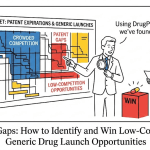
The practical tool for this monitoring is the FDA’s ‘Upcoming Product-Specific Guidances for Generic Drug Product Development’ page, updated on a rolling basis. Integration of this monitoring with patent expiry data (tracking which Orange Book patents are set to expire in 18-36 months) and commercial market data (current branded revenue, patient population, payer dynamics) creates a systematic early-warning system for complex generic opportunities. Platforms like DrugPatentWatch are built specifically to integrate these data streams.
Reading a PSG for Formulation Strategy Signals
Beyond the BE pathway, a PSG often contains formulation intelligence that is strategically useful for reverse-engineering prioritization.
Q1/Q2 requirements tell you the FDA has already concluded that excipient composition is critical to therapeutic equivalence. This narrows your reverse-engineering scope: the analytical priority is identifying the RLD’s exact excipient composition, not designing a novel formulation. High-performance liquid chromatography (HPLC), mass spectrometry, and nuclear magnetic resonance (NMR) spectroscopy are the standard analytical tools for this characterization work. Some CROs specialize in topical RLD characterization for exactly this purpose.
When a PSG specifies a specific in vitro test method in detail (apparatus type, medium, temperature, time points), it has typically done so because the FDA’s regulatory science team validated that method against the RLD and found it discriminating. This means the method is sensitive enough to detect formulation differences that would translate to performance differences in patients. A formulation that passes this specific test on the first attempt is, in the FDA’s scientific judgment, equivalent. One that fails means your formulation’s release kinetics don’t match the RLD — and you need to go back to the bench.
For combination products, PSG device requirements often contain language about ‘external operating principles’ — the observable mechanical characteristics of the device (actuation force, dose delivery per stroke, counter function) that must match the RLD device’s performance without necessarily replicating its internal engineering. This is design-around opportunity space: you can engineer a different mechanism that produces the same external performance characteristics, potentially creating proprietary device IP of your own in the process.
Pharma portfolio managers can build a structured PSG-based scoring system for complex generic candidates using four variables: BE pathway type (in vitro / PK / clinical endpoint), market size (current branded revenue), patent runway (years to first generic entry based on Orange Book analysis), and manufacturing capability alignment (does your shop have the technology platform for this product type?). Score each variable on a normalized scale, weight by your organization’s risk tolerance, and rank candidates. This converts an ad hoc portfolio review into a reproducible, defensible capital allocation process.
Section 4: From Guidance to Green Light — ANDA Strategy, Paragraph IV, and Market Entry
The ANDA First-Cycle Approval Problem and the GDUFA III Solution
A first-cycle ANDA approval rate of 9-15% is not an indicator of poor science in the generic industry. It is the predictable result of a system where developers submitted applications without the pre-submission regulatory dialogue that NDA sponsors routinely use to align with the FDA before filing.
The NDA model works as follows: a sponsor submits an IND, initiates Phase 1 through 3 studies under FDA oversight, receives Type B meetings at multiple development milestones, and by the time the NDA is filed, the agency and sponsor have already resolved most substantive scientific disputes. The result is a >90% first-cycle approval rate.
GDUFA III’s enhanced meeting program is designed to replicate this model for ANDA sponsors. The Pre-Submission PSG Meeting is the most commercially significant of the new meeting types. It allows a developer to present their proposed BE study design, formulation approach, or analytical methodology to the FDA before the ANDA is filed, with the explicit purpose of resolving scientific disputes in advance. For a company pursuing an alternative BE approach — for example, a novel PBPK model-based argument for bioequivalence, or a new in vitro permeation test method for a topical product — this meeting is not optional. Submitting a novel scientific approach cold, without prior agency alignment, is a path to a first-cycle CRL.
The PSG Teleconference mechanism addresses a specific timing problem: what happens when the FDA publishes or significantly revises a PSG after a developer’s ANDA is already well into development, or even after it has been submitted? The teleconference provides a rapid-response channel for discussing the impact of the revision on the existing program. This is particularly relevant for minor revisions that add new study requirements, where a developer needs to understand whether their existing data package satisfies the new requirements or whether supplemental studies are needed.
How PSG Publication Triggers Paragraph IV Waves
The interplay between PSG publication and Paragraph IV patent challenges is one of the most commercially significant dynamics in the complex generic industry, and it is systematically underanalyzed.
A Paragraph IV certification asserts that the patents listed in the Orange Book for the RLD are invalid, unenforceable, or will not be infringed by the generic product. Filing a Paragraph IV triggers an automatic 30-month stay on ANDA approval (while the innovator pursues patent infringement litigation), but the first filer receives 180-day market exclusivity upon winning the litigation — a period of sole generic competition that can be worth hundreds of millions of dollars for a high-revenue product.
Committing to a Paragraph IV litigation strategy requires two parallel confidence assessments: confidence that the legal challenge will succeed, and confidence that the ANDA will eventually be approved. For a simple generic, the regulatory confidence assessment is straightforward. For a complex generic, the regulatory uncertainty has historically been so high that it undermined the legal strategy — a company could spend $15-30M litigating patents only to discover that its ANDA was scientifically unapprovable.
A well-developed PSG eliminates this regulatory uncertainty. It tells the developer exactly what the FDA expects and how to demonstrate it. For a complex product, the publication of a PSG can be — and frequently is — the trigger that converts a Paragraph IV interest into a Paragraph IV commitment, because it provides the regulatory roadmap that makes the development investment justifiable alongside the litigation investment.
The pattern is observable in the ANDA filing data: Paragraph IV activity for complex products tends to cluster after PSG publication, not before. Business development teams tracking this pattern can use PSG publication dates, combined with patent expiry dates and competitive filing history, to predict when Paragraph IV activity is likely to accelerate for a specific product.
The 505(b)(2) Pathway as a PSG-Adjacent Strategy
Not every complex product falls cleanly into the ANDA framework. If the proposed generic cannot meet the strict ‘sameness’ requirements of Hatch-Waxman — for example, if the developer is using a different ester or salt of the API, or a meaningfully different formulation approach that delivers the same therapeutic effect — the appropriate regulatory vehicle may be a 505(b)(2) new drug application.
The 505(b)(2) pathway allows a sponsor to rely on published safety and efficacy data, or the FDA’s previous findings for the RLD, without referencing the innovator’s proprietary data directly. This is distinct from a traditional NDA (which requires a full independent evidence package) and a traditional ANDA (which requires strict sameness). The 505(b)(2) sits between them, requiring bridging studies to justify the differences from the RLD.
PSG review can help identify products where the 505(b)(2) pathway is the more realistic route. If a PSG’s BE requirements are so stringent — requiring Q1/Q2 sameness plus clinical endpoint studies — that the scientific constraints make an ANDA commercially unviable for your specific formulation approach, the 505(b)(2) pathway may allow you to demonstrate equivalent therapeutic benefit with a different formulation. The tradeoff is that a 505(b)(2) product may not receive an ‘AB’ (therapeutically equivalent) rating in the FDA’s Orange Book, which limits automatic substitution at the pharmacy. For some product categories, this is commercially acceptable; for others, it is prohibitive.
Price Erosion Modeling: Translating Generic Entry Into Cash Flow Projections
Once the regulatory and legal hurdles are cleared, the commercial outcome follows a well-documented pattern. Market research from HHS and FDA internal studies shows a consistent relationship between the number of generic competitors and the price reduction relative to the branded product:
The first generic entrant, protected by 180-day exclusivity, typically captures a price 30-39% below the brand. The brand often responds with authorized generic launches, which erode the exclusivity value but validate the market. As exclusivity expires and a second and third competitor enter, pricing drops to 50-70% below brand. At four to six competitors, the price is typically 80% below brand. Beyond seven competitors, pricing approaches commodity territory — 90% or more below brand.
This erosion curve is the commercial case for complex generics: because the technical barriers keep competitor counts low for longer, the premium pricing period extends. A complex generic that achieves first-to-market status in a market where the second competitor is three to five years behind — because the scientific and regulatory climb is genuinely that hard — sustains a much more favorable pricing environment than a simple generic where 10 competitors file within 18 months of the first ANDA.
The Vivitrol case illustrates this dynamic. The technical difficulty of replicating the PLG microsphere system, combined with the complexity of the parallel-design BE study required by the PSG, kept the market free from generic competition for years after the branded product’s lead patents expired. When the generic finally launched in 2023, it launched into a market that had remained premium-priced far longer than a simple generic product would have.
Key Takeaways: Section 4
PSG publication is the primary trigger for Paragraph IV filing waves in complex generics. Monitor PSG issuance dates as a leading indicator of when legal activity will escalate for a specific product.
GDUFA III pre-submission meetings are the structural fix for the 9-15% first-cycle ANDA approval rate. They exist to solve the problem that has historically cost developers years and hundreds of millions in preventable delay.
Price erosion in complex generics is slower and shallower than in commodity generics, because competitor counts stay low longer. This makes first-mover position more valuable — and justifies higher development investment — than in commodity markets.
Section 5: Case Studies — PSGs in Practice
Case Study 1: Vivitrol (Naltrexone for Extended-Release Injectable Suspension) — A PSG-Defined Pathway Through Multi-Layer Complexity
The Scientific Problem
Vivitrol is a monthly intramuscular injection used for opioid and alcohol dependence. Its active ingredient, naltrexone, is an established, off-patent compound. The complexity is entirely in the delivery system: biodegradable poly(lactide-co-glycolide) (PLG) polymer microspheres that encapsulate the drug and release it over approximately 30 days as the polymer degrades in vivo.
Replicating this system requires mastery of several interdependent variables. The PLG copolymer’s molecular weight and lactide/glycolide ratio control the degradation rate and therefore the release profile. The microsphere manufacturing process — typically a solvent evaporation or spray-drying technique — determines particle size distribution, drug loading, and encapsulation efficiency. Particle size distribution is not merely a quality attribute; it determines both the injectability of the suspension and the drug release rate. A narrow particle size range is a CQA that must be tightly controlled batch to batch. The product is also a kit: two vials (drug microspheres and diluent), a syringe, a preparation needle, and an administration needle. All of these components are device constituent parts under FDA regulations.
The PSG-Defined Pathway (PSG_021897)
The FDA’s guidance for naltrexone extended-release injectable suspension addresses each complexity layer explicitly. The BE recommendation mandates a single-dose, parallel-design in vivo study in healthy volunteers. The parallel design (one group receives test, another receives reference — no crossover) is required because the drug’s release profile extends over 30+ days, making a crossover washout period impractical. This design requires roughly double the subject count of a crossover study, which adds cost and recruitment time.
The PK assessment requirement covers four distinct AUC metrics: AUC from day 1 to day 10 (capturing early release kinetics), AUC from day 10 to day 28 (capturing sustained release), AUC from time zero to infinity (total systemic exposure), and Cmax. This four-metric approach is not bureaucratic thoroughness — it is scientifically necessary. A generic microsphere system that delivers the same total drug exposure but front-loads it in the first 10 days could produce adverse events (e.g., opioid withdrawal precipitation) that the sustained-release profile of the innovator product does not. The multi-metric AUC assessment is the only way to confirm that release kinetics match across the full 30-day profile.
The device assessment requirement states explicitly that the syringe and needles are device constituent parts. Applicants must conduct a complete comparative analysis of any differences in the user interface and demonstrate that the generic product can be expected to produce the same clinical effect and safety profile as the innovator when administered by healthcare professionals.
IP Valuation Context
Alkermes (the innovator) held overlapping patent protection covering the PLG polymer composition, the microsphere preparation process, the specific drug loading range, and the kit configuration. The process patents were particularly durable: even after composition patents expired, a generic developer had to invent a different manufacturing route that produced the same CQAs, which required significant process development investment. This is the commercially relevant form of process patent protection — not preventing generic entry indefinitely, but raising the technical cost of entry and extending the period of protected revenue.
Strategic Outcome
The FDA approved the first generic naltrexone extended-release injectable in July 2023. The approval validated two things: that the PSG’s multi-metric AUC requirement was achievable with appropriate study design, and that the device constituent part requirements could be met without replicating the innovator’s exact device engineering. For other long-acting injectable programs in development, this approval established a precedent that the complex-injectable PSG framework, while demanding, produces approvable ANDAs when executed rigorously.
Investment Strategy Note
For analysts covering the opioid treatment market: the generic Vivitrol launch represents the beginning of price competition in an $800M+ annual revenue branded market. The erosion curve will be slower than for simple generics given the manufacturing barriers (not every generic manufacturer can run a microsphere process), but the directional impact on Alkermes’ Vivitrol revenue is unambiguous. Models projecting protected revenue through 2025 and beyond needed revision at the point of this approval.
Case Study 2: Advair Diskus (Fluticasone Propionate/Salmeterol) — The PSG as Necessary but Not Sufficient Condition
The Technical Challenge
Advair Diskus is a dry powder inhaler (DPI) delivering a fixed-dose combination of an inhaled corticosteroid (fluticasone propionate) and a long-acting beta-agonist (salmeterol). It treats asthma and COPD. As of its peak, it generated over $3B in annual U.S. revenue.
The complexity is genuinely two-dimensional. The formulation challenge is producing a dry powder blend with the correct particle size distribution, cohesive/adhesive force balance between drug and carrier particles, and drug-drug ratio. The device challenge is designing a DPI mechanism that generates the correct turbulent airflow to deagglomerate the powder blend and produce an aerosol with the correct APSD — the distribution of aerodynamic particle sizes that determines whether inhaled drug deposits in the large airways, the small airways, or the oropharynx. The therapeutic effect of an inhaled corticosteroid depends on where in the lung it deposits; systemic PK data cannot capture this.
Regulatory Setbacks
The FDA’s guidance framework for orally inhaled drug products recommends a ‘weight of evidence’ approach: a battery of in vitro tests (APSD by cascade impaction, delivered dose uniformity, fine particle mass) combined with in vivo PK studies and, for some product categories, in vitro-in vivo correlation (IVIVC) validation. Meeting all of these requirements simultaneously, with a novel device design, proved extraordinarily difficult for multiple well-resourced competitors.
Mylan (now Viatris) received a Complete Response Letter for its generic Advair application in 2017. Hikma Pharmaceuticals received a CRL in 2018. Mylan’s management explicitly cited the delayed approval as a primary contributor to an 18% decline in North America net sales in its 2018 earnings call — a direct, quantified link between complex generic ANDA failure and publicly disclosed financial impact. The regulatory difficulty was real, and it had material consequences for a company that had bet development resources and capital market guidance on an approval that did not arrive as expected.
The Key Lesson for Strategists
The Advair case provides the essential counterpoint to the narrative that a PSG is all you need. Multiple world-class generic companies had access to the same regulatory guidance. All of them had sophisticated pharmaceutical development teams. None of them could quickly solve the device-formulation interaction problem to the FDA’s satisfaction. The PSG illuminated the target; the companies missed it because the target was genuinely difficult to hit.
The strategic implication: for the most technically demanding products, PSG-based opportunity assessment must include an internal capability gap analysis. The relevant questions are not just ‘what does the PSG require?’ but ‘do we have the aerosol engineering expertise to design a DPI device that produces the required APSD?’ and ‘do we have the cascade impactor infrastructure and expertise to generate the in vitro data package the PSG specifies?’ If the honest answer to either question is no, the opportunity is not really an opportunity for your organization, regardless of its market size.
IP Valuation Context
GSK’s Advair franchise was protected by an extensive patent portfolio spanning the fluticasone/salmeterol combination composition, the Diskus device mechanism (including the foil-blister dose strip and dose-counting mechanism), the specific powder blend formulation, and manufacturing process elements. The combination of scientific difficulty and patent breadth kept the product effectively protected for nearly a decade beyond the nominal composition-of-matter patent expiry. This is the textbook example of how scientific complexity and patent architecture compound each other to extend effective market protection far beyond what either factor would achieve independently.
Case Study 3: Copaxone (Glatiramer Acetate) — The Three-Front War and the Supreme Court Precedent
A Drug Defined by Structural Ambiguity
Copaxone (glatiramer acetate injection), developed by Teva Pharmaceuticals for relapsing-remitting multiple sclerosis, occupies a unique position in the complex generic landscape: it is an approved drug whose active ingredient cannot be fully characterized by any available analytical method. Glatiramer acetate is a random polypeptide mixture synthesized from four amino acids (glutamic acid, lysine, alanine, tyrosine) in proportions that produce a distribution of sequences and molecular weights. No two batches are molecularly identical. The ‘same’ product means statistically similar distribution profiles, not chemical identity.
This inherent ambiguity was central to Teva’s IP defense strategy. The company argued that the complexity of glatiramer acetate made it impossible to prove that a generic version had the same immunological and neurological activity, and therefore an ‘AB-rated’ interchangeable generic would never be approvable. The patent portfolio reinforced this argument with claims anchored to specific physicochemical properties (average molecular weight distributions, amino acid ratio ranges, specific optical rotation values) that Teva characterized as essential to therapeutic activity.
Teva v. Sandoz at the Supreme Court
The patent litigation between Teva and generic filers (Sandoz, Momenta Pharmaceuticals, and others) ultimately reached the U.S. Supreme Court not on the substance of glatiramer acetate’s chemistry but on a procedural question: what standard of appellate review applies to a district court’s factual findings underlying claim construction?
Teva’s patent used the term ‘average molecular weight’ without specifying which of three mathematically distinct averaging methods (number-average, weight-average, or z-average) applied. Teva’s experts testified at trial that a person of ordinary skill in the art would understand which method was intended. The district court credited this testimony and found the claim definite. The Court of Appeals for the Federal Circuit, applying de novo review to all aspects of claim construction, reversed — finding the claim indefinite.
The Supreme Court’s 2015 decision reversed the Federal Circuit. The majority held that while claim construction is a question of law reviewed de novo on appeal, any underlying factual findings that the district court relied upon to resolve claim ambiguity — typically established through expert testimony — must be reviewed under the ‘clear error’ deferential standard. The Federal Circuit had failed to apply this deference and was wrong to overturn the district court’s factual finding.
The ruling had lasting strategic consequences. Patent litigants now invest more heavily in building a strong factual record at the trial court level, using highly credentialed expert witnesses whose testimony, once credited by the district court, becomes very difficult to overturn on appeal. For generic filers challenging complex-product patents, this means that expert witness selection and trial strategy matter more, not less, than before Teva v. Sandoz.
Commercial Aftermath
Sandoz and Momenta eventually launched generic glatiramer acetate (20 mg/mL formulation) in 2015, following successful Paragraph IV litigation. Mylan launched its own version shortly after. The launches did not produce the clean price competition that commodity generic markets generate. Mylan noted in subsequent earnings calls that uptake was constrained by ‘distorted financial incentives within the specialty pharmacy marketplace’ — a reference to specialty pharmacy rebate structures and formulary positioning that effectively favored the branded product despite the generic’s availability. This commercial friction illustrates an under-discussed risk in complex generic strategy: even after clearing every scientific, regulatory, and legal hurdle, the commercial environment can impede actual market share capture.
Teva later launched a 40 mg/mL three-times-weekly formulation of Copaxone (compared to the daily 20 mg/mL original), shifting the prescribing base toward the higher-concentration product, which had a separate, later-expiring patent estate. This is a classic evergreening tactic: the manufacturer transitions patients to a reformulation that delays generic competition, even while the original formulation loses exclusivity. Generic companies that had invested in 20 mg/mL development found a shrinking prescribing base by the time they reached the market.
IP Valuation Context
The Copaxone saga quantifies the value of IP portfolio design in a complex-API context. Teva’s ability to extend effective exclusivity through reformulation — and to use the complexity of glatiramer acetate as a scientific argument against generic substitutability — produced years of additional protected revenue on a product whose base composition patents had long since expired. For valuation purposes, the Copaxone model demonstrates that the ‘effective exclusivity date’ for a complex product can diverge substantially from the ‘first patent expiry date,’ and that modeling only the latter produces systematically optimistic projections for generic entry and pessimistic projections for branded revenue duration.
Key Takeaways: Section 5
Vivitrol’s 2023 approval validates the multi-metric AUC approach for long-acting injectables. Developers of other microsphere or implant-based generics now have approval precedent for the PSG-specified BE framework.
Advair proves that PSG access does not substitute for internal scientific capability. Honest capability gap analysis is a prerequisite for any complex drug-device combination program.
Copaxone’s evergreening via the 40 mg formulation shift is a replicable brand-defense tactic. Generic developers should model not just the current RLD formulation but the innovator’s pipeline for reformulation-based IP extension.
Teva v. Sandoz elevated the importance of trial court factual record-building in Paragraph IV litigation. Expert witness strategy and trial-level investment matter more post-2015 than before.
Section 6: The Next Wave — MIE, AI, Advanced Manufacturing, and Global Harmonization
Model-Integrated Evidence: The Future of Complex Generic BE
The most consequential long-term shift in complex generic regulatory science is the move from exclusively empirical evidence — physical studies in labs and humans — toward computational evidence that supplements or replaces some of those studies.
Model-Integrated Evidence (MIE) encompasses the use of validated computational models to establish BE. The paradigm works when the model can reliably predict the in vivo behavior of a drug product from its measurable in vitro or physicochemical properties. For orally inhaled products, CFD models that simulate the patient’s airway geometry and airflow dynamics can predict lung deposition from the measured APSD of an inhaled formulation, potentially replacing or reducing reliance on scintigraphy studies. For oral modified-release products, PBPK models that simulate gastrointestinal transit and absorption can predict plasma concentration-time profiles from in vitro dissolution data, potentially allowing in vitro dissolution to substitute for an in vivo PK study for products where IVIVC has been established.
The FDA’s GDUFA III MIE research program is building the validation database that future PSG revisions will draw on. When the agency is satisfied that a specific model type reliably predicts in vivo performance for a specific product class, it will incorporate MIE as an accepted BE option in the relevant PSGs. Companies that have already built internal PBPK modeling expertise and are participating in the FDA’s MIE Industry Meeting Pilot Program will be positioned to deploy these approaches immediately when PSG revisions enable them, while competitors are still standing up the capability.
For IP and R&D teams, MIE also creates a new category of proprietary competitive advantage: a validated, product-specific computational model is itself a valuable internal asset. A company that has developed and validated a PBPK model for a specific complex injectable’s absorption and distribution may be able to use that model to accelerate multiple ANDA programs for products with similar PK profiles, amortizing the model development investment across a portfolio.
AI and Machine Learning: Formulation Optimization and Batch Prediction
Machine learning applications in complex generic development are moving from proof-of-concept to operational deployment. The most commercially impactful current applications include formulation optimization (using ML to predict which excipient compositions will achieve Q1/Q2 sameness and hit target IVRT profiles, reducing the number of bench experiments required), manufacturing process optimization (using ML to model the relationships between process parameters and CQA outcomes in continuous manufacturing or microsphere preparation), and stability prediction (using ML to forecast shelf-life failure modes from early-stage accelerated stability data).
The FDA is actively researching AI/ML tool integration in the BE assessment context, with GDUFA III research contracts funding work on ML-based analysis of in vitro dissolution datasets and classification of complex topical formulation equivalence. This research will eventually feed into PSG updates that specify ML-based analytical methodologies as acceptable approaches.
For companies running large complex generic portfolios, the strategic value of AI/ML is not primarily in any single application but in the compounding effect across the development cycle. Faster formulation screening, reduced batch failure rates, more efficient BE study designs — each of these individually saves months and millions; combined across a portfolio of 20-30 complex ANDA programs, they represent a material competitive advantage.
Advanced Manufacturing: Continuous Manufacturing and 3D Printing as Platform Strategies
Continuous manufacturing replaces the batch paradigm — discrete production runs with defined start and end points — with an integrated, uninterrupted flow-through process. For complex generics, its primary commercial value is quality consistency: continuous manufacturing with real-time process analytical technology (PAT) monitoring can detect and correct formulation or process deviations in-process rather than discovering them during batch release testing. For microsphere products, where batch-to-batch variability in particle size distribution is a chronic challenge, this quality advantage is directly tied to regulatory risk. A batch rejected for PSD non-conformance is a production loss, a yield problem, and potentially a supply disruption — all of which compound in a market where you may be one of only a few generic suppliers.
3D printing (additive manufacturing) of pharmaceutical dosage forms remains early-stage commercially, but its strategic trajectory is clear. The FDA approved the first 3D-printed tablet (Spritam, levetiracetam) in 2015. The technology’s pharmaceutical value proposition is precise control over internal tablet geometry, enabling novel drug release profiles — multilayer release kinetics, pulsatile delivery, concentration gradients — that are difficult or impossible to achieve with conventional manufacturing.
For generic developers, 3D printing represents a potential pivot in business model: from pure product replication (ANDA, AB-rated, compete on price) to differentiated reformulation (505(b)(2), potentially AB-rated or not, compete on clinical value). A 3D-printed version of an off-patent API with a demonstrably superior release profile — better tolerability, less frequent dosing, or improved dose titration — could command a price premium unavailable in commodity generic markets. The regulatory pathway for such a product would require clinical bridging data, but the IP position could be defensible (novel dosage form, novel manufacturing process) and the competitive moat potentially durable.
FDA-EMA Parallel Scientific Advice: Harmonization as a Capital Efficiency Tool
The regulatory requirements for complex generics differ between the U.S. and European Union in ways that force developers to run separate, sometimes duplicative, development programs for the two markets. This duplication is not trivial: if the FDA requires a specific cascade impactor protocol for APSD measurement and the EMA requires a different method, a company targeting both markets may need to run parallel analytical programs and potentially separate in vivo studies, adding $5-20M to the development budget for a single product.
The FDA-EMA Parallel Scientific Advice (PSA) pilot program, re-launched in recent years, directly targets this inefficiency. The program allows a developer to engage in a joint meeting with both agencies simultaneously, presenting its proposed development plan and receiving coordinated feedback. The goal is a harmonized study protocol that satisfies both regulators with a single evidence package.
For companies with genuinely global ambitions for their complex generic portfolios, the PSA program should be a standard component of development planning — not an afterthought. The optimal timing is early in development, before committing to a pivotal BE study design. A harmonized study design that produces a U.S.-approvable ANDA dataset and an EU-approvable marketing authorization application dataset from the same trial set is worth the upfront coordination cost many times over.
The PSA program also provides insight into where FDA and EMA scientific positions diverge, which is strategically useful even for companies initially targeting only one market. Understanding the European regulatory landscape for a product you’re developing for the U.S. can inform your IP freedom-to-operate analysis (European generic market entry by competitors affects your global competitive position even if you’re only selling in the U.S.) and your long-term portfolio extension plans.
Key Takeaways: Section 6
PBPK modeling and MIE capability are competitive advantages that compound across a portfolio. Building them now positions you to access next-generation PSG BE pathways before competitors who are standing up the capability later.
Continuous manufacturing for complex formulations (microspheres, liposomes, nanoparticles) reduces regulatory risk by improving CQA consistency — a quality argument with direct commercial value.
The FDA-EMA Parallel Scientific Advice program is a capital efficiency tool. For companies with global portfolios, running a harmonized joint consultation before pivotal study design can eliminate $5-20M per product in duplicative clinical work.
3D printing’s pharmaceutical value proposition is differentiated reformulation of off-patent APIs, not direct ANDA replication. This is a 505(b)(2) strategy, not an ANDA strategy, and should be evaluated on that basis.
Section 7: Building the Competitive Moat — IP Strategy, Evergreening Countermeasures, and Organizational Capabilities
How Innovators Use PSG Publication to Trigger Defensive IP Moves
Innovator companies monitor the FDA’s PSG program as closely as generic developers do, but with the opposite intent: identifying when the regulatory path for a competitor has cleared, and whether there are defensive IP or commercial actions that can delay or reduce the impact of generic entry.
Common defensive responses to PSG publication include filing continuation patents on formulation or process elements that the PSG makes commercially relevant (if the PSG specifies that Q1/Q2 sameness is required, the innovator may file claims on the precise excipient concentrations that define its product’s CQAs), challenging the scientific validity of the BE methods the PSG proposes (submitting citizen petitions to the FDA arguing that the proposed in vitro methods are inadequate to ensure therapeutic equivalence), launching authorized generic products ahead of or concurrent with the first generic entrant (capturing revenue in the generic tier and reducing the exclusivity value available to the Paragraph IV filer), and transitioning prescribers to a reformulated product with a later-expiring patent estate before the generic launches on the original formulation.
For generic developers, understanding these defensive responses is essential for realistic financial modeling. The Copaxone 40 mg shift is the archetype. Building a generic development program on the 20 mg/mL formulation without modeling the probability that prescribers shift to the 40 mg/mL formulation before launch — and without a parallel 40 mg/mL ANDA program — produced a shrinking market at the moment of generic entry. Sophisticated programs develop ANDAs for multiple strengths and formulations of the same RLD drug, hedging against reformulation-based evergreening.
Organizational Capabilities Required to Win in Complex Generics
The PSG analysis framework described throughout this piece assumes your organization can execute against the guidance requirements. That assumption is not always warranted, and honest capability mapping is a prerequisite for accurate portfolio prioritization.
The capabilities that separate successful complex generic developers from unsuccessful ones span several dimensions. Analytical science depth — the ability to characterize complex drug products at a molecular and structural level using techniques like cryogenic transmission electron microscopy (cryo-TEM) for liposomes, multi-angle light scattering (MALS) for polymer molecular weight, or scanning electron microscopy (SEM) for microsphere morphology — is foundational. Without this characterization capability, you cannot reverse-engineer the RLD’s CQAs, which means you cannot set rational formulation targets.
Process technology platform expertise matters equally. Each complex product category requires specific manufacturing technology: microsphere production requires spray drying or solvent evaporation reactor systems; liposome production requires high-pressure extrusion or microfluidic manufacturing; DPI formulation requires controlled milling and blending of micronized drug and carrier particles. These are not generic manufacturing competencies — they are specialized platform skills that require equipment investment, operator training, and process optimization effort measured in years.
For drug-device combination products, mechanical engineering and human factors expertise are as important as pharmaceutical science. A company without in-house DPI device engineering capability is dependent on third-party device partners, which complicates IP ownership, creates supply risk, and can slow development timelines when device modifications are needed to improve APSD performance.
Regulatory science capability — the ability to design creative, defensible BE approaches, engage productively with FDA in PSG meetings, and build compelling scientific packages for novel methodologies — is the integrating function that converts technical capability into regulatory outcomes. The best scientific work in the world fails if the ANDA package does not present it compellingly and completely.
Conclusion: The PSG as the Organizing Principle of Complex Generic Strategy
The FDA’s Product-Specific Guidance program has evolved from a sporadic advisory service into the central organizing instrument of complex generic drug development. GDUFA funding gave the program scale and predictability. The Drug Competition Action Plan gave it a policy mandate. The meeting frameworks of GDUFA III gave it an interactive dimension that makes pre-submission regulatory alignment standard practice rather than exception.
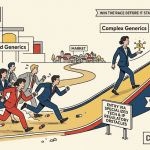
For generic developers and their investors, the PSG is simultaneously a technical blueprint, a market signal, a risk-rating instrument, and a prerequisite for rational Paragraph IV strategy. Its publication for a high-value complex product is the starting gun for a development race, and the companies that have been monitoring the FDA’s research agenda and upcoming guidance pipeline will already be running when that gun fires.
The case studies in this piece — Vivitrol’s validated approval, Advair’s cautionary tale about capability gaps, Copaxone’s three-front war — collectively define the parameters of what it takes to win in this space. Scientific rigor, regulatory sophistication, legal fortitude, and the organizational capability to deploy all three simultaneously are the requirements. The PSG tells you where to aim; everything else determines whether you can hit the target.
The next generation of complexity — MIE-enabled BE approaches, continuous manufacturing-enabled quality arguments, 3D-printed differentiated formulations, and globally harmonized development programs — is already taking shape in FDA research labs and GDUFA III commitment letters. The companies building those capabilities now, while the PSG program is still primarily grounded in conventional empirical evidence, will hold the competitive position when the framework shifts.
Frequently Asked Questions
What is the fastest way to identify high-priority complex generic opportunities using the PSG database?
Screen the FDA’s PSG database and Upcoming PSGs page against two filters simultaneously: products with a published or imminent PSG where the BE pathway is in vitro or standard PK (not clinical endpoint), and products where the nearest Orange Book-listed patent expiry is within 18-36 months. Overlay this with current branded revenue data and competitive ANDA filing history (available via DrugPatentWatch). Products that satisfy all three criteria — near-term patent expiry, accessible BE pathway, high current revenue — represent the highest-priority development targets. Rank remaining candidates by revenue size, weighting downward for clinical endpoint requirements.
When a PSG specifies Q1/Q2 sameness, how do we reverse-engineer the RLD’s excipient composition to within the 5% tolerance?
Standard analytical workflow: begin with the product label and any published literature on the formulation. For unlisted excipients, use HPLC with UV and charged aerosol detection for water-soluble excipients, gas chromatography for volatile components, NMR for polymer characterization, and ICP-MS for metal-based excipients. Several specialized CROs offer RLD de-formulation services for topical, ophthalmic, and semi-solid products. Plan 6-12 months for this characterization phase before initiating formulation development. The Q2 tolerance of approximately 5% is tight; target the RLD’s center concentration, not the boundary of the range, to provide formulation development headroom.
What is the practical process for requesting a Pre-Submission PSG Meeting under GDUFA III?
The FDA’s guidance on PSG meetings (published in the Federal Register in August 2024) specifies the formal request process. Submit a meeting request to the Office of Generic Drugs (OGD), identifying the specific PSG, describing the scientific issue you want to address, and explaining why your proposed approach differs from the PSG recommendation (or why you need clarification). Include a brief scientific justification and any supporting data. The FDA will schedule a teleconference or Type B meeting-equivalent session within committed timeframes under GDUFA III. The meeting package — your scientific rationale, data summary, and specific questions — should be submitted in advance of the meeting. Prepare to defend your approach with quantitative data, not narrative argument.
How should we model the commercial impact of an authorized generic launch by the brand on our Paragraph IV 180-day exclusivity period?
Build an authorized generic scenario into your base case, not your downside case. Innovator companies launch authorized generics to capture revenue in the generic tier and reduce the economic value of the 180-day exclusivity. If an authorized generic is launched at the same time as the first-filer’s generic, the 180-day period becomes a duopoly, not a monopoly — typically reducing the first-filer’s revenue capture by 30-50% relative to a monopoly period. The probability of an authorized generic launch is highest for products with very large branded revenues (>$500M annually), products where the brand has excess manufacturing capacity, and products where the innovator has lost Paragraph IV litigation. Adjust your 180-day exclusivity NPV modeling accordingly.
What are the criteria for determining whether a complex product should be pursued as an ANDA or a 505(b)(2)?
The ANDA pathway requires demonstrating that the proposed generic is the same as the RLD — same active ingredient, same dosage form, same route, same strength, same labeling, and bioequivalent. If your proposed product differs in any of these elements (different salt, different ester, different delivery device requiring different instructions for use, meaningfully different formulation where Q1/Q2 sameness is unachievable), the 505(b)(2) pathway is appropriate. The 505(b)(2) allows these differences but requires bridging data (typically clinical PK or pharmacodynamic studies) to support them. The commercial tradeoff: an AB-rated ANDA generic receives automatic pharmacy substitution; a 505(b)(2) product may or may not receive an AB rating, depending on whether it can demonstrate therapeutic equivalence to the RLD. For therapeutic substitution-dependent commercial models, AB rating is essential. For differentiated products competing on clinical attributes rather than price, the 505(b)(2) route may be preferable even without AB rating.
This analysis integrates public FDA regulatory documents, peer-reviewed literature, GDUFA commitment letters, SEC filings, and CDER research publications. For product-specific patent and ANDA filing data, DrugPatentWatch provides an integrated database combining Orange Book patent listings, ANDA filing history, and PSG tracking.