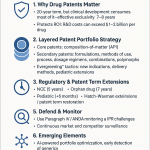
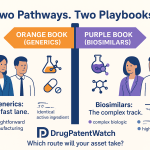
Pharmaceutical firms operate in an environment where patent expiration determines billion-dollar revenue shifts. Competitor analysis is the process of identifying, tracking, and neutralizing threats to market share through rigorous examination of the ‘Orange Book’ and ‘Purple Book’ listings. This discipline allows R&D leads and institutional investors to predict when a branded drug will lose exclusivity and how generic or biosimilar entrants will erode pricing power. The global pharmaceutical market, valued at over 1.48 trillion dollars, relies on these IP cycles. Without a granular understanding of a competitor’s filing strategy, a firm risks late-stage litigation or the sudden loss of a therapeutic franchise. This deep dive examines the mechanics of IP valuation, the technical roadmaps for biologic defense, and the regulatory hurdles that define the modern pharmaceutical landscape.
Technical Analysis of IP Moats and Biologic Exclusivity
The transition from small-molecule chemistry to complex biologics changed the nature of pharmaceutical competition. While small molecules face ‘Hatch-Waxman’ challenges, biologics are governed by the ‘Biologics Price Competition and Innovation Act’ (BPCIA). A primary competitor analysis must focus on the 12-year exclusivity period granted to reference products. This period is a core asset. Analysts track ‘interchangeability’ designations, which allow pharmacists to substitute a biosimilar for a branded biologic without physician intervention. Achieving this status requires rigorous clinical switching studies. A competitor that secures an interchangeability rating can capture 60% of a market within the first 18 months of launch. Firms now use ‘patent thickets’ to extend these windows. This involves filing dozens of secondary patents covering manufacturing processes, specific protein isoforms, and delivery devices. These filings create a dense layer of IP that generic manufacturers must litigate before entering the market.
The Adalimumab Case: IP Valuation as a Core Asset
AbbVie’s management of Adalimumab (Humira) provides the standard for IP valuation through thicketing. The firm secured over 130 patents covering the drug’s formulation, dosing, and manufacturing. The valuation of this IP was not tied to the molecule itself, which lost its primary patent years ago, but to the litigation costs and time required for competitors to clear the field. By 2023, the Adalimumab franchise was valued based on its ability to delay biosimilar entry through settlement agreements. Investors evaluate these assets by calculating the ‘weighted average lead time’ (WALT) of the patent portfolio. If a competitor can push entry by even 24 months through process patents, the net present value of the drug increases by billions. This valuation model assumes that any ‘Paragraph IV’ filing will result in at least 30 months of stayed litigation, providing a predictable revenue floor for the originator.
Key Takeaways
Biologic exclusivity relies on the 12-year BPCIA window and the density of the surrounding patent thicket.
Interchangeability is the primary driver of rapid market share erosion for branded biologics.
IP valuation is a function of litigation-induced delays rather than just the core composition of matter patent.
Manufacturing process patents are increasingly effective at blocking biosimilar competition due to the complexity of protein folding and cell line stability.
Investment Strategy
Institutional investors should prioritize firms with a high ratio of process patents to composition patents. This indicates a robust defense against biosimilars. When a competitor files a ‘Biosimilar User Fee Act’ (BsUFA) application, the market often overreacts. Analysts should instead look at the ‘Patent Dance’ proceedings under the BPCIA. If the originator has successfully defended its formulation patents in prior litigation, the risk of a successful ‘at-risk’ launch by a biosimilar player is low. Focus on firms that have secured ‘Interchangeable’ status, as these assets have significantly higher terminal value than standard biosimilars.
Mechanics of Market Entry and the Hatch-Waxman Framework
Small-molecule competition centers on the 180-day exclusivity period granted to the first generic filer who successfully challenges a patent. This is known as a ‘Paragraph IV’ certification. Competitor analysis in this space involves monitoring the ‘Orange Book’ for new ‘New Drug Applications’ (NDAs) and the subsequent ‘Abbreviated New Drug Applications’ (ANDAs). A firm that is first-to-file can command prices near the branded level for six months while facing zero generic competition. This window is the most profitable period in the generic lifecycle. Originators counter this through ‘authorized generics’ or ‘product hopping.’ Product hopping involves moving patients from an older drug to a slightly modified version with a longer patent life, such as a controlled-release formulation or a different salt form. This tactic effectively resets the patent clock and strands generic competitors who developed versions of the older, now obsolete molecule.
Paragraph IV Filing Strategy and Revenue Erosion Models
The valuation of a generic firm is often tied to its ‘Paragraph IV’ pipeline. This requires a technical roadmap that includes ‘Bioequivalence’ (BE) studies and ‘Stability Testing’ to ensure the generic performs identically to the reference drug. A successful challenge to a ‘Composition of Matter’ (COM) patent is rare. Most successful entries target ‘Method of Use’ or ‘Formulation’ patents. For example, if a branded drug has a patent on a specific crystalline polymorph, a generic competitor may develop an amorphous version to bypass the claim. Analysts use ‘Revenue Erosion Models’ to predict the impact of these entries. In a typical scenario, the entry of a second generic player drops the price to 50% of the branded cost. By the time five or more competitors enter, the price often falls to 5% to 10% of the original. Competitor analysis must therefore track not just the first filer, but the total number of ‘Tentative Approvals’ issued by the FDA.
Key Takeaways
The 180-day exclusivity period is the most critical asset for generic manufacturers.
Product hopping remains a primary defense for originators to migrate patient bases before patent cliffs.
Bypassing crystalline polymorph patents is a common technical path for generic market entry.
Revenue erosion is non-linear and accelerates rapidly once the third competitor enters the market.
Investment Strategy
Analysts should monitor ‘Citizen Petitions’ filed with the FDA. Originators often use these to raise technical concerns about a competitor’s generic formulation, delaying approval. A high volume of ‘Citizen Petitions’ against a specific ANDA suggests the originator views that competitor as a credible threat. Investors should look for generic firms with ‘internal API’ (Active Pharmaceutical Ingredient) manufacturing capabilities. These firms have lower COGS (Cost of Goods Sold) and can survive the ‘race to the bottom’ pricing that occurs after the 180-day exclusivity period ends. Avoid firms that rely solely on ‘Paragraph III’ filings, as these wait for patent expiry and offer no competitive advantage or exclusivity.
The pharmaceutical industry stands as one of the most competitive and rapidly evolving sectors in the global economy. With billions invested in research and development, regulatory challenges at every turn, and the constant pressure to innovate, pharmaceutical companies cannot afford to operate in isolation. Effective competitor analysis has become not merely advantageous but essential for survival and growth in this high-stakes environment. This comprehensive guide explores the intricacies of pharmaceutical competitor analysis, from fundamental concepts to advanced strategies that can transform competitive intelligence into market dominance. We’ll examine how leading companies leverage competitive insights to make critical decisions about pipeline investments, market entry strategies, and portfolio optimization, ultimately creating sustainable competitive advantages in an increasingly crowded marketplace.
What is Pharmaceutical C represent major competitive inflection points in pharmaceutical markets. The timing of a competitor’s approval, the specific label indications they receive, and any post-approval requirements can dramatically alter market dynamics. Companies that monitor competitors’ regulatory interactions gain early warning of these potential shifts. For instance, when a competitor receives a Complete Response Letter from the FDA, astute companies can analyze the issues identified and potentially adjust their own development programs to avoid similar pitfalls.
Patent Cliffs and Market Exclusivity Challenges
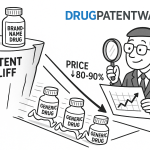
Patent cliffs represent existential threats to pharmaceutical companies, with billions in revenue potentially disappearing virtually overnight when exclusivity periods expire. Competitor analysis plays a pivotal role in helping companies navigate these treacherous transitions by providing critical intelligence about both generic/biosimilar entrants and branded competitors seeking to capitalize on market disruption.
For innovative pharmaceutical companies, understanding how competitors are preparing for your product’s loss of exclusivity is essential for developing effective lifecycle management strategies. Thorough competitor analysis can reveal which generic manufacturers are preparing entry, their historical launch patterns, pricing strategies, and manufacturing capabilities. Similarly, tracking which competitors are developing branded alternatives targeting your patient population helps companies anticipate market share erosion and develop appropriate defensive strategies.
Conversely, for companies developing generics or biosimilars, competitive intelligence about originator companies’ defensive strategies is equally valuable. Understanding which patent extension strategies originators typically employ, how they manage authorized generic launches, and how they reallocate commercial resources as patents expire can help generic manufacturers time their market entry more effectively and allocate resources more efficiently.
Beyond single-product analysis, comprehensive competitor monitoring helps pharmaceutical executives maintain a portfolio view of patent cliff exposure. By analyzing competitors’ pipelines relative to their patent expiration timelines, companies can identify potential acquisition targets with complementary portfolio characteristics. This perspective becomes increasingly important as the industry consolidates and companies seek to smooth revenue trajectories through strategic transactions.
Recent history is replete with examples of companies that either thrived or struggled through patent cliffs based partly on the quality of their competitive intelligence. Those that accurately forecasted generic entry scenarios, anticipated competitive responses, and developed robust contingency plans generally weathered these transitions more successfully than those caught unprepared by competitive developments.
The High Stakes of R&D Investments
With average development costs for new molecular entities exceeding $2.6 billion and probability of success from first-in-human trials to approval hovering around 12%, pharmaceutical R&D represents perhaps the highest-stakes investment decision-making in any industry. In this context, competitor analysis provides critical intelligence that can significantly improve R&D portfolio decisions.
Pharmaceutical R&D leaders face constant prioritization challenges across their portfolios. Comprehensive competitor analysis helps inform these decisions by revealing potential areas of future competitive intensity. If multiple competitors are pursuing similar mechanisms or targeting identical patient populations, expected returns may diminish substantially. Conversely, areas with limited competitive activity may offer greater commercial potential, all else being equal. This strategic insight allows pharmaceutical companies to allocate their finite R&D resources toward areas with more favorable competitive dynamics.
Beyond portfolio-level decisions, competitor analysis informs tactical choices throughout the drug development process. Understanding competitors’ clinical trial designs, patient selection strategies, and endpoint choices helps companies optimize their own development programs for competitive differentiation. Similarly, tracking competitors’ setbacks can reveal development risks that might otherwise remain hidden, allowing companies to adjust their own programs proactively.
The rise of external innovation has further elevated the importance of competitive intelligence in R&D strategy. As pharmaceutical companies increasingly source candidates through licensing, partnerships, and acquisitions, thorough evaluation of competitive dynamics becomes essential for asset valuation. Companies that accurately assess how competitive landscapes are likely to evolve can make more informed decisions about external innovation opportunities, avoiding overpayment for assets facing unfavorable competitive headwinds while moving decisively on those with advantageous competitive positioning.
Technology transfer and manufacturing strategy decisions likewise benefit from robust competitive analysis. Understanding competitors’ manufacturing capabilities, supply chain structures, and capacity expansion plans helps companies develop production strategies that maintain cost competitiveness while ensuring supply reliability. This perspective becomes particularly important for complex biologics and cell and gene therapies, where manufacturing represents a critical competitive differentiator.
Key Components of a Pharmaceutical Competitive Analysis
Product Portfolio Assessment
A comprehensive evaluation of competitors’ current product portfolios provides the foundation for effective pharmaceutical competitor analysis. This assessment goes far beyond simple listings of marketed products to encompass detailed analysis of product performance, positioning strategies, and portfolio rationalization decisions. Through systematic portfolio assessment, pharmaceutical companies gain insights into competitors’ strategic priorities, commercial capabilities, and potential future moves.
Product performance analysis examines sales trajectories, market share trends, and growth drivers across competitors’ portfolios. This quantitative assessment reveals which therapeutic areas competitors are emphasizing, where they’re gaining or losing ground, and how product interdependencies influence their strategic decisions. Sophisticated competitive intelligence operations supplement this analysis with qualitative insights about product perception among key stakeholders, promotional effectiveness, and real-world performance in different healthcare systems.
Portfolio composition analysis examines how competitors balance their investments across therapeutic areas, modalities, and risk profiles. Some competitors maintain focused portfolios in specific therapeutic areas, developing deep expertise and commercial synergies but accepting concentration risk. Others pursue diversification across multiple areas, sacrificing depth for breadth. Understanding these portfolio philosophies helps companies anticipate competitive reactions to market developments and identify potential partnership or acquisition opportunities.
Perhaps most valuable is the analysis of portfolio evolution over time. By tracking how competitors’ portfolios have changed through launches, acquisitions, divestitures, and discontinuations, companies can discern strategic patterns that may indicate future moves. If a competitor has systematically divested certain types of assets while acquiring others, this reveals shifting strategic priorities that may create either competitive threats or potential partnership opportunities.
Portfolio assessment also examines how competitors manage mature products approaching loss of exclusivity. Some companies aggressively defend these products through lifecycle management strategies, while others gradually reduce support while transitioning resources to growth assets. These patterns help predict how competitors will behave as key products in their portfolios approach patent expiration, allowing for more effective competitive planning.
Pipeline Analysis and Development Timelines
Pipeline analysis represents the forward-looking dimension of pharmaceutical competitor analysis, examining products in development that will shape future competitive landscapes. This component is particularly challenging given the limited public information available about early-stage programs and the inherent uncertainty in drug development. Nevertheless, comprehensive pipeline analysis provides crucial insights for strategic planning and competitive positioning.
The most basic level of pipeline analysis inventories competitors’ development programs across phases, tracking announced milestones and projected approval timelines. This cataloging exercise establishes the foundation for more sophisticated analytics that examine potential competitive convergence in specific patient populations. By mapping competitors’ pipeline assets against indication timelines, companies can identify future competitive bottlenecks where multiple products may reach similar patient populations simultaneously.
Clinical development strategy analysis examines competitors’ choices regarding patient populations, comparators, endpoints, and study designs. These choices reveal how competitors intend to differentiate their products and which patient segments they’re prioritizing. Particularly revealing are changes in development strategy over time, which often indicate either responsive moves to competitive developments or adjustments based on emerging clinical data.
Resource allocation across pipeline programs provides another valuable competitive signal. Which programs are receiving accelerated investment? Which are proceeding at standard pace? Which are experiencing unexplained delays? These patterns help pharmaceutical strategists identify competitors’ priority programs that may warrant heightened competitive attention. Similarly, tracking which pipeline programs competitors highlight in investor communications versus those they mention only in technical forums can reveal internal prioritization decisions.
A fundamental aspect of regulatory strategy evaluation is tracking which expedited programs competitors pursue and receive—breakthrough designation, accelerated approval, priority review, or fast track status. These designations not only accelerate development timelines but also signal regulators’ assessment of unmet need and therapeutic potential. Companies that systematically analyze which competitor programs receive these designations gain valuable intelligence about both regulatory priorities and product potential.
Label negotiation strategies represent another critical competitive dimension. By analyzing the evolution of competitors’ labels from initial submissions through final approvals, companies can identify which claims were successfully defended, which were modified, and which were rejected. This intelligence helps regulatory strategists anticipate challenges they might face with similar products and develop more effective label negotiation approaches.
Post-approval commitments reveal important information about both regulatory concerns and companies’ long-term evidence generation strategies. When competitors accept significant post-approval study requirements, this may indicate underlying regulatory concerns that could apply to similar products. Alternatively, voluntarily proposed post-approval studies often reveal competitors’ plans for label expansion or efforts to generate differentiating real-world evidence.
Regulatory strategy analysis becomes particularly valuable when examining competitors’ approaches in multiple markets simultaneously. Different companies prioritize different regions in their global regulatory strategy, with some pursuing near-simultaneous global submissions while others follow more sequential approaches. These patterns reveal geographic priorities that often correlate with broader corporate strategy. Similarly, analyzing how competitors adapt their regulatory strategies across markets reveals which evidence packages translate effectively across regulatory systems and which require market-specific approaches.
Pricing and Market Access Approaches
In an era of increasing price sensitivity and complex reimbursement landscapes, pricing and market access strategies have become critical competitive differentiators in pharmaceuticals. Comprehensive competitor analysis examines how rivals position their products with payers, which pricing strategies they employ in different markets, and how they adapt to evolving access challenges.
Value demonstration strategies represent the foundation of modern pharmaceutical pricing and access. Analyzing which value messages competitors emphasize with different stakeholders—economic arguments with payers, clinical outcomes with physicians, quality of life benefits with patients—reveals their strategic assessment of product strengths and stakeholder priorities. Similarly, examining which types of evidence competitors generate to support value claims (head-to-head trials, real-world evidence studies, economic models) indicates their confidence in different value dimensions.