The global pharmaceutical landscape in 2026 is no longer defined by the linear “West-innovates, East-manufactures” paradigm that dominated the early 21st century. Instead, the industry has entered a state of “structural resynthesis,” where the convergence of advanced generative artificial intelligence, aggressive legislative decoupling via the BIOSECURE Act, and a historic “patent cliff” has inverted traditional power dynamics.1 This report provides an exhaustive, senior-level analysis of the 2026 market, focusing on the sophisticated intellectual property (IP) strategies emerging from Chinese biotechs, the technical nuances of U.S. patent litigation, and the macroeconomic shifts reshaping investment and payer frameworks.
The 2026 Geopolitical Axis Shift: Beyond the “Fast Follower” Myth
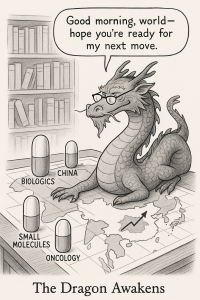
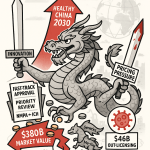
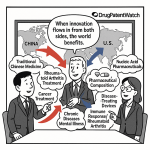
The prevailing narrative of the last decade positioned the United States as the undisputed architect of pharmaceutical innovation, with China serving primarily as a manufacturing depot and a high-volume consumer market. By the first quarter of 2026, data unequivocally dismantles this paradigm. The maturation of China’s “innovation economy” has resulted in a structural decoupling where Chinese biotechs now account for nearly 70% of global AI-driven drug discovery patent filings and approximately 32% of total global out-licensing deal value—a figure that has quadrupled since 2021.1
This shift is rooted in what analysts term “Data Gravity” and “Clinical Scale.” China surpassed the United States in total clinical trial volume in 2021 and has widened that lead annually, conducting approximately 7,700 trials in 2025 compared to roughly 6,200 in the U.S..1 This volume is supported by a regulatory environment that has compressed the First-in-Human (FIH) approval timeline to 87 days, compared to over 500 days in the pre-2015 era.1
Innovation Metric (2026)
United States
China
Share of Global Innovative Drug Candidates
36%
30%
AI-Driven Drug Discovery Patent Filings
22%
68%
First-in-Human (FIH) Approval Timeline
~180 Days
87 Days
Clinical Trial Volume (2025)
~6,250
~7,700
Licensing Deal Origination (>$1B)
33
35
The implications for global health are profound. One-third of the new compounds in U.S. pharmaceutical pipelines now originate from Chinese firms, reflecting a “pipeline gravity” that has shifted toward the East.2 This is not merely a volume play; the quality of Chinese innovation has reached a threshold where deals increasingly target first-in-class assets, such as Akeso’s ivonescimab and Legend’s cilta-cel, rather than “me-too” followers.4
The BIOSECURE Act: A Technical Deep Dive into Supply Chain Bifurcation
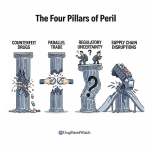
The enactment of the BIOSECURE Act on December 18, 2025, represents the most significant legislative intervention in the biopharma supply chain in forty years.6 While political rhetoric emphasizes “de-risking” and “friend-shoring,” the 2026 market reality is a complex bifurcation of the global Contract Research, Development, and Manufacturing Organization (CRDMO) ecosystem.
The Mechanics of Designation and the OMB List
The Act does not merely target specific companies; it establishes a rigorous process for identifying “Biotechnology Companies of Concern” (BCCs). By December 18, 2026, the Director of the Office of Management and Budget (OMB) is mandated to publish a comprehensive list of BCCs based on recommendations from the Department of Defense, the Justice Department, and Health and Human Services.6
To be designated a BCC, a company must satisfy three technical criteria:
Administrative Control: It must be subject to the governance or direction of a foreign adversary government.6
Functional Involvement: It must be involved in the manufacturing, distribution, or procurement of biotechnology equipment or services.6
National Security Risk: It must pose a threat through ties to foreign military or intelligence agencies, specifically concerning the collection or sharing of multiomic data without consent.6
The Safe Harbor and the “China Plus One” Reality Check
The Act provides a five-year safe harbor for existing contracts, allowing entities until 2032 to fulfill current agreements and transition to alternative suppliers.6 However, this “grandfather clause” has not prevented a massive strategic realignment. The “China Plus One” strategy—sourcing primarily from China while maintaining a secondary supplier elsewhere—has become the baseline requirement for Western pharmaceutical boards in 2026.8
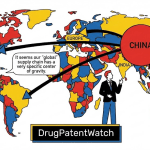
However, the 2026 supply chain remains anchored by Chinese chemical hegemony. China accounts for over 37% of the Asia-Pacific API CDMO market and serves as the structural foundation for basic chemicals, solvents, and reagents.8 The most critical “chokehold” exists at the level of Key Starting Materials (KSMs). For instance, if China were to restrict the export of 6-APA (6-aminopenicillanic acid), global production of penicillin and amoxicillin would collapse within weeks, as India’s antibiotic manufacturing capacity is essentially a downstream extension of Chinese fermentation capacity.8
The 2026 Patent Cliff: Mechanisms of Revenue Erosion and BPCIA Nuance
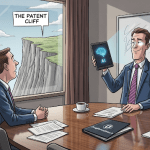
The year 2026 serves as “Day Zero” for a historic revenue chasm. Industry analysts estimate that approximately $200–$236 billion in annual sales will face generic or biosimilar entry by 2030.1 The 2026 cohort is particularly impactful, targeting high-volume diabetes, immunology, and cardiovascular franchises.
The Eliquis and Januvia Case Studies
Merck’s diabetes blockbuster, Januvia (sitagliptin), faces a definitive commercial end in 2026. Entry dates for generics are dictated by settlements that allow U.S. entry by May 2026, opening the floodgates for a massive volume of competitors.1 Similarly, Bristol Myers Squibb and Pfizer’s Eliquis (apixaban) has its original patent extended to November 21, 2026, meaning generic preparations—many of which have already secured tentative FDA approval—will enter the market immediately thereafter.10
Biologics Price Competition and Innovation Act (BPCIA) and the “Patent Dance”
For biologics, the erosion mechanism is governed by the BPCIA. Unlike the Hatch-Waxman Act for small molecules, the BPCIA involves a “patent dance”—a structured exchange of information between the biosimilar applicant and the brand sponsor.12 In 2026, the strategy of “evergreening by lawsuit” has reached its peak. Innovators build “patent thickets” of over 100 patents, covering everything from the molecular structure to the specific temperature of the bioreactor.12
However, the pressure from multiple biosimilar applicants—including Amgen, Sandoz, Samsung Bioepis, and Celltrion—has forced brand manufacturers into compromises. In the 2025–2026 window, settlements for Eylea (aflibercept) have already established launch dates for biosimilars in late 2026, effectively converting a “patent cliff” into a “patent slope”.12
Biosimilar Interchangeability: The 2026 Regulatory Convergence
A pivotal shift in 2026 is the FDA’s finalization of guidance that collapses the distinction between “biosimilarity” and “interchangeability”.14 Historically, developers were required to perform “switching studies”—alternating patients between the reference product and the biosimilar multiple times to prove no loss of efficacy.15
In 2026, the FDA now generally permits interchangeability designations based solely on comparative analytical and clinical data.16 This change is predicted to:
Reduce Development Costs: From $100–$300 million down to $75–$250 million.16
Accelerate Timelines: Saving 1.5 to 2 years in the development cycle.16
Enable Automatic Substitution: Allowing pharmacists to substitute biosimilars for reference products without prescriber intervention, subject to state laws.17
AI-Native Innovation: A Technology Roadmap for the 2026 Discovery Paradigm
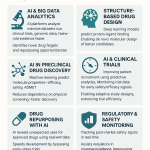
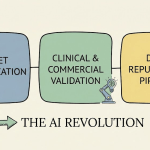
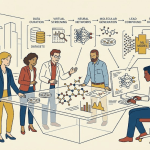
By 2026, the industry has moved beyond early deep learning architectures like Variational Autoencoders (VAEs) and Generative Adversarial Networks (GANs) for molecular generation.1 The new paradigm is defined by Diffusion Models and Flow Matching.
RFDiffusion3 and Atomic-Level Constraint Specification
The release of RFDiffusion3 in late 2025 has enabled the design of binders for specific epitopes with unprecedented precision.1 Unlike previous models that were limited to content or documentation, generative AI in 2026 is used to predict molecular interactions and optimize clinical trial design.18
AI-assisted protocol design is now estimated to reduce trial duration by approximately 10% and improve the probability of clinical success.19 However, challenges remain regarding data quality and the “black box” nature of these models, which can complicate regulatory approval.18
Predictive Patent Analytics and PTAB Strategies
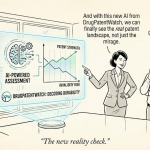
In 2026, the Patent Trial and Appeal Board (PTAB) has become a primary battlefield where AI-driven predictive insights are used to identify “weak” patents in a thicket.12 AI platforms analyze millions of patents to identify key assets and monitor generic drug patent events across 20+ countries simultaneously.20
This allows generic and biosimilar developers to:
Conduct High-Resolution FTO (Freedom to Operate) Analysis: Identifying specific salt forms or polymorphs that are vulnerable to Section 103 (obviousness) challenges.12
Anticipate “Product Hopping”: Monitoring brand manufacturer pipeline activities to anticipate shifts from an expiring tablet to a new subcutaneous or extended-release formulation.12
Optimize IPR (Inter Partes Review) Filings: Strategically timing challenges to key “crown jewel” composition-of-matter patents.21
IP Valuation Deep Dive: The Core Assets of the 2026 Leaders
In the 2026 market, valuation is increasingly tied to the resilience of an IP estate and the global translatability of clinical data.
Legend Biotech (NASDAQ: LEGN) and the CARVYKTI Franchise
Legend Biotech has cemented its status as the leader in multiple myeloma CAR-T therapy.23
IP Asset Valuation: The CARVYKTI franchise is anchored by the landmark Phase 3 CARTITUDE-4 study, which provided survival data used to update labels for earlier lines of therapy.23
Manufacturing as Moat: Legend completed the physical expansion of its Raritan facility in late 2025, making it the largest cell therapy manufacturing site in the U.S., with a capacity for 10,000 patients annually.23
2026 Outlook: The company expects company-wide operating profit in 2026, with a cash runway extending beyond the end of the year.23
Akeso, Inc. (HKEX: 9926) and Ivonescimab (PD-1/VEGF)
Akeso has pioneered the development of bispecific antibodies, with Ivonescimab (SMT112) serving as its primary value driver.
IP Asset Valuation: The licensing deal with Summit Therapeutics is valued at up to $5.0 billion, with $500 million in upfront payments already realized.24
Technical Edge: Ivonescimab combines PD-1 blockade with anti-angiogenesis (VEGF) into a single molecule, representing a potential first-in-class therapy.25
2026 Status: A Biologics License Application (BLA) was submitted to the U.S. FDA in early 2026 for the combination treatment of patients with EGFR-mutant NSCLC.26
Innovent Biologics (HKEX: 01801) and the Mazdutide Breakthrough
Innovent has successfully transitioned from an oncology-focused firm to a leader in cardiometabolic disease, primarily through its dual GCG/GLP-1 agonist, mazdutide.
IP Asset Valuation: Mazdutide is the first China-developed drug to have two Phase 3 studies published simultaneously in Nature.27
Clinical Efficacy: In the GLORY-1 and GLORY-2 studies, mazdutide 9mg demonstrated over 20% weight loss after one year of treatment, positioning it as a potent alternative to metabolic surgery.28
Commercial Roadmap: Innovent anticipates a product revenue target of RMB 20 billion by 2027, with mazdutide serving as a secondary growth engine alongside its PD-1 inhibitor, Tyvyt.30
Company
Key Asset
Primary Indication
2026 Value Catalyst
Legend Biotech
Carvykti
Multiple Myeloma
Operating Profitability 23
Akeso
Ivonescimab
NSCLC
U.S. FDA BLA Review 26
Innovent
Mazdutide
Obesity / T2D
NMPA Approval & NRDL Entry 27
Summit Pharma
SMT112
Oncology
Global Phase 3 Readouts 31
BeiGene
Zanubrutinib
Hematology
Sustained Global Market Share 4
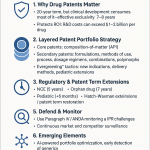
Technology Roadmap: A Comprehensive Strategy for Biologics Patenting
To secure long-term exclusivity in the 2026 environment, a “web of protection” strategy is mandatory. This involves filing for various claim types at different stages of the drug’s development.
Phase 1: The Crown Jewels (Composition of Matter)
Early filings must focus on the molecular structure. For biologics, this includes specific amino acid sequences, CDRs (Complementarity-Determining Regions) for antibodies, and post-translational modification profiles.21
Phase 2: Formulations and Dosing
As clinical data emerges, firms must file for specific ratios and dosages. Claiming a novel combination of APIs at precise, previously undisclosed ratios can confer novelty and overcome Section 103 rejections.32 In 2026, many Chinese firms are using salt-form patents and polymorph-specific claims to survive invalidation challenges at the CNIPA and USPTO.33
Phase 3: Manufacturing and Delivery Devices
The final layer of the thicket involves manufacturing processes (e.g., cell line optimization, purification methods) and delivery devices (e.g., auto-injectors). These patents are particularly valuable for extending the lifecycle of biologics beyond the initial 12-year data exclusivity period.10
The Non-Obviousness Crux (35 U.S.C. § 103)
The primary battleground is non-obviousness. Innovators must establish that a POSITA would have had no “motivation to combine” the prior art or would have had a “teaching away” from the specific invention.21 In 2025 and 2026, the Federal Circuit has reiterated that obviousness determinations must be supported by substantial factual evidence, rejecting conclusory or hindsight-based reasoning.35
The Payer Matrix: Reimbursement and Access in 2026
For payers, the 2026 landscape is defined by the implementation of the GLOBE and GUARD models, which represent a radical shift toward international reference pricing.
The GLOBE and GUARD Models
Announced by CMS in late 2025, these mandatory models aim to align U.S. drug prices with benchmarks from economically comparable countries like Japan, Germany, and the U.K..36
GLOBE (Medicare Part B): Slated to launch October 1, 2026, focusing on oncology, rheumatology, and immunology. It requires manufacturers to provide rebates if U.S. prices exceed the international benchmark.38
GUARD (Medicare Part D): Launching January 1, 2026, targeting oral oncology and chronic disease therapies. It aims to reduce point-of-sale costs for beneficiaries, though it may also drive Part D premium increases.37
The National Reimbursement Drug List (NRDL) in China
Conversely, the Chinese market is driven by the NRDL negotiation process. In early 2026, several innovative drugs—including seven from Innovent—were added to the NRDL, significantly broadening patient access in oncology and metabolic disease.41 The 2017–2026 data indicates that centralized price negotiation in China has improved medication utilization by over 4-fold while successfully containing cost growth for the healthcare system.42
Model
Target Setting
Key Therapeutic Areas
Start Date
GLOBE
Part B (Clinic/Outpatient)
Oncology, Immunology
Oct 1, 2026 39
GUARD
Part D (Pharmacy/Mail)
Antineoplastics, Antivirals
Jan 1, 2026 40
NRDL
Public Hospitals (China)
Multi-specialty
Jan 1, 2026 41
Contrarian Investment Strategy: Geopolitical Alpha and the Resilient Dragon
The 2026 investment landscape for Chinese biopharma is characterized by a significant “geopolitical risk premium.” However, for analysts willing to look beyond the political volatility of the BIOSECURE Act, the risk-reward ratio is increasingly attractive.
The Resilience of “AI-Native” Biotechs
Markets have recently recalibrated their enthusiasm for Chinese biopharma, becoming cautious about domestic innovators’ ability to turn into global players.43 This has created a valuation disconnect. While U.S. companies bleed billions litigating 20-year-old genus claims, Chinese innovators are “sprinting ahead” in bispecific antibodies and next-generation obesity drugs.44
Buy-the-Dip: Valuation Disconnects in 2026
As of January 2026, many leading Chinese biopharma stocks trade at a 40% to 50% discount to their global peers.4 For example, Legend Biotech trades at a significant intrinsic discount despite being the “undisputed leader” in multiple myeloma CAR-T therapy.45
The contrarian thesis for 2026 rests on three pillars:
Capital Efficiency: Preclinical and clinical testing costs in China remain ~70% of U.S. levels, while development can be 30% to 40% faster.4
Innovation Inversion: Multinational pharmaceutical companies are no longer just licensing “fast follower” programs; they are acquiring first-in-class assets to fill their own patent-cliff holes.4
BIOSECURE Overselling: The Act’s safe harbor until 2032 and the 365-day waiver mechanism provide a significant operational “off-ramp,” suggesting that the short-term market panic may be overblown.6
Key Takeaways for Global Payers
Biosimilar Interchangeability Mandate: The 2026 FDA policy shift toward automatic interchangeability designation for non-vaccine biosimilars is a pivotal event. Payers must adjust their utilization management protocols to favor these lower-cost alternatives, which can now be substituted at the pharmacy level with minimal friction.14
Most-Favored-Nation Pricing Realignment: The GLOBE and GUARD models will fundamentally change the net cost of Part B and Part D drugs. Payers should anticipate annual, unannounced accreditation surveys and heightened oversight of manufacturer rebates based on international benchmarks.38
The Cardiometabolic Competitive Landscape: The arrival of “China Solutions” for obesity—such as mazdutide—provides payers with significant leverage in price negotiations with Western manufacturers of GLP-1 therapies. The head-to-head data against semaglutide (Ozempic) suggests that the era of monopoly pricing for metabolic drugs is ending.27
Conclusion: The Unstoppable Momentum of a Unified Innovation Model
By early 2026, the pharmaceutical sector has reached a definitive inflection point. The maturation of AI, the resynthesis of the global supply chain, and the rise of a highly efficient Chinese innovation engine have created a more fragmented, but ultimately more productive, global health ecosystem.1
Success in this new era requires a move away from purely cost-efficient, just-in-time models toward building resilience through diversification.18 For investors, the “Dragon’s Ascendance” is not a threat to be feared but a signal of the globalization of innovation.4 The winners of 2026 will be those who can navigate the complexities of PTAB litigation, leverage the power of diffusion models in discovery, and successfully bridge the developmental gap between the world’s two largest pharmaceutical superpowers.
Effect of the national reimbursement drug list negotiation policy on utilization of negotiated anticancer drugs in Chinese public hospital: a quasi-natural experiment, accessed January 26, 2026, https://pmc.ncbi.nlm.nih.gov/articles/PMC12740921/