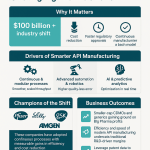
A drug that never reaches patients usually did not fail a safety test. In a systematic review of 115 published analyses on why promising drug candidates get shelved, “strategic business reasons” was the second most commonly cited cause, behind only inadequate efficacy, and ahead of safety problems.[1] Every one of those compounds already cleared at least Phase 1. Most have a safety file, a manufacturing process, and pharmacokinetic data that would cost tens of millions of dollars to reproduce. AI has not changed the chemistry of any of these molecules. It has changed how cheaply a company can find the ones worth a second look, and how quickly a licensing deal can turn that discovery into an approved medicine.
The Short Answer
Pharmaceutical companies abandon drug candidates for reasons that have nothing to do with whether the drug works. A merger consolidates two overlapping pipelines. A therapeutic area falls out of favor with a new CEO. A compound works but the addressable market is too small to justify a Phase 3 program. None of that destroys the underlying value of the molecule, and a growing set of AI platforms, licensing structures, and patent-intelligence tools now exist specifically to find and re-activate that value. The mechanics that decide who profits when a shelved compound reaches patients are legal and commercial, not scientific, and they run through composition-of-matter ownership, method-of-use patent strength, material transfer agreements, and, increasingly, whether a patent was even kept alive long enough to matter.
Strategic abandonment is common and measurable. A systematic review of 115 publications found 35 discussed strategic business reasons as a driver of drug abandonment, versus 59 citing inadequate efficacy and 28 citing safety.[1] A separate analysis of Phase-1-cleared compounds found 34% were abandoned for poor perceived economics against 38% for efficacy and 20% for safety.[1]
The federal government has run a matchmaking program for shelved drugs since 2012. NCATS’s Discovering New Therapeutic Uses program launched with three pharmaceutical partners and grew to eight companies contributing 58 previously shelved compounds to academic researchers.[2]
Daptomycin sat on Eli Lilly’s shelf for roughly a decade before Cubist Pharmaceuticals licensed it in 1997, redesigned the dosing regimen, and built Cubicin into a franchise that paid Lilly more than $333 million in royalties.[3][4]
Roivant’s Dermavant subsidiary paid GSK $330 million for a compound GSK’s own R&D chief described as a better strategic fit for another company; it became VTAMA, the first new topical chemical entity for psoriasis in 25 years.[5][6]
Not every AI-sourced rescue survives contact with the clinic or the market. Recursion Pharmaceuticals advanced a previously shelved cancer compound, REC-994, into Phase 1 for a rare vascular disease, then discontinued the program after the clinical data came back.[7] BioXcel Therapeutics won FDA approval for an AI-identified rescue drug, IGALMI, in 2022, then filed for Chapter 11 bankruptcy in August 2026 because commercial uptake never caught up to its debt load.[8][9]
Roughly 60% of US patents now lapse before their full 20-year term because the owner stops paying maintenance fees.[10] An early lapse on a pharmaceutical patent, cross-referenced against clinical trial status, is a usable signal that a compound has been strategically deprioritized, independent of any public announcement.
What “Strategically Abandoned” Actually Means
The language around this topic is imprecise on purpose. Companies rarely announce that a drug failed for spreadsheet reasons rather than scientific ones. But the academic and legal record on specific compounds is more candid than press releases.
Efficacy Failure vs. Strategic Deprioritization, By the Numbers
The most comprehensive attempt to quantify why drugs get shelved is a 2021 systematic literature review that screened 5,976 articles down to 115 for full analysis.[1] Sixty-six percent of the included articles discussed reasons for abandonment. Inadequate efficacy for the studied indication was the most common reason (59 articles), but strategic business reasons ranked second (35 articles), ahead of safety concerns (28 articles) and flawed research design (12 articles).[1] A separate estimate cited within that same review, covering drugs that had already cleared Phase 1 safety trials, found 38% were abandoned for inadequate efficacy, 34% for poor perceived economics, 20% for safety, and 9% for other reasons.[1] That 34% is the population AI-driven rescue platforms are built to mine: compounds with a completed safety record and no scientific reason they could not work somewhere else.
The Four Sub-Reasons Behind Strategic Abandonment
Within the 35 articles discussing strategic business reasons, the review identified four recurring drivers.[1] Poor market prospects, meaning a company’s own forecast concluded the drug would not sell enough to justify further investment, was the most cited (14 articles). Incompatibility with a company’s disease priorities followed (7 articles): Pfizer withdrew a supplemental application for Lyrica in anxiety after a portfolio review concluded the indication did not fit its priority list of oncology, pain, inflammation, Alzheimer’s, psychosis, and diabetes, despite Lyrica already being approved for other indications.[1] Industry consolidation through mergers and acquisitions was third (5 articles): Pfizer cut close to 20% of its development pipeline after acquiring Wyeth in 2009, in part to avoid running two anxiolytic programs, pregabalin and venlafaxine, inside one company.[1] The fourth driver, described in the literature as a “type II” decision error, covers cases where managers underestimate a drug’s actual value and kill a program that would have worked under different assumptions (6 articles).[1]
Sub-reason
Articles citing it
Illustrative example
Poor market prospects
14
Vaccine candidates abandoned over small addressable markets and thin margins[1]
Incompatibility with disease priorities
7
Pfizer’s withdrawn Lyrica anxiety application, outside its priority disease list[1]
Industry consolidation (M&A)
5
Pfizer’s post-Wyeth pipeline cuts, including imagabalin[1]
Type II decision errors (undervaluing a compound)
6
Compounds killed on since-revised assumptions about market size or class effects[1]
Two Definitions of “Abandoned” Pharma IP Teams Should Not Confuse
A compound can be abandoned in two entirely different senses, and conflating them leads to bad diligence. Clinical abandonment means a sponsor stopped development of the molecule itself, for any of the reasons above, while its patents may remain fully in force and enforceable. Patent abandonment is a distinct, USPTO-defined status: a granted patent that lapsed because the owner did not pay a required maintenance fee, entering the public domain regardless of whether the underlying drug is still being sold or developed.[11] A drug can be clinically alive and patent-abandoned, or clinically abandoned and patent-alive. For a company evaluating a repurposing target, the second question, not the first, determines whether a license is even required.
Why AI Changes the Economics of Finding These Compounds
The idea of mining old compound libraries for new indications predates any of the platforms now marketed as “AI-driven.” What has changed is the cost of running the search and the amount of data available to run it against.
From One Scientist’s Hunch to Systematic Screening
The two most famous drug repurposing stories, sildenafil’s pivot from an angina candidate to Viagra, and thalidomide’s path from a withdrawn sedative to a leprosy and multiple myeloma treatment, both originated from clinicians noticing an unexpected side effect and following up.[12] That model does not scale, because it depends on the right observation reaching the right person. A pharma library holding thousands of shelved compounds, sitting alongside decades of high-throughput screening data, is a search problem, not an intuition problem, once the data is structured well enough for a knowledge graph or a large language model to query it.[13] David Fajgenbaum, who found his own Castleman disease treatment by researching an approved transplant drug, has described the goal of his nonprofit Every Cure this way: no patient should be told nothing more can be done when a treatment is “sitting on the pharmacy shelf.”[14]
What’s Different About 2026 vs. 2012
The first systematic institutional effort to unlock shelved compounds, NCATS’s 2012 program, relied on manual matchmaking: NIH staff paired academic proposals with a fixed list of 58 compounds contributed by eight companies, governed by template legal agreements the agency had to negotiate up front.[2][15] The bottleneck was never a shortage of interesting biology; it was the time required for a human researcher to read enough literature and screen enough candidates to make a credible pitch. Today’s platforms replace that manual literature review with natural language processing across the full text of publications, patents, and trial registries, and replace a fixed 58-compound list with a query that can rank every approved drug in the country against every catalogued disease. Every Cure’s MATRIX platform ran exactly that kind of pilot in 2023, generating ranked repurposing scores across roughly 3,000 FDA-approved drugs against the full space of human diseases, in partnership with an NCATS-funded investigator at Penn State University.[16]
A Timeline of Institutional Attempts to Unlock Shelved Compounds
2011–2012: AstraZeneca/MRC and NCATS Launch
Two parallel efforts opened the field. The UK’s Medical Research Council and AstraZeneca launched the Mechanisms of Human Disease Initiative in 2011, posting data on 22 AstraZeneca compounds and drawing more than 100 research proposals from UK academics.[1] In May 2012, NCATS posted template collaborative research agreements and confidential disclosure agreements and opened its Discovering New Therapeutic Uses for Existing Molecules pilot with three partners: AstraZeneca, Eli Lilly, and Pfizer.[2][17] By the fall of 2012, five more companies, AbbVie (then part of Abbott), Bristol-Myers Squibb, GlaxoSmithKline, Janssen, and Sanofi, had joined, bringing the pool to 58 compounds that had already been tested in humans with acceptable safety profiles but were discontinued for lack of efficacy or for business reasons.[2] Chemist and industry commentator Derek Lowe, writing at the time, offered a characteristically direct assessment of the program’s prospects: “I’ve no idea what the chances for success might be.”[2]
What NCATS’s Compound Library Grew Into
The IP structure of the NCATS program was deliberately narrow: companies retained ownership of the original compound, while academic researchers who found a new use owned that specific application, with the sponsoring company holding an option to license it back.[15] Separately from the 58-compound pilot, NCATS also built out a broader NIH Chemical Genomics Center collection, which by the mid-2010s had grown to roughly 2,500 approved small-molecule drugs plus another 1,000 investigational compounds available for screening.[18] The two resources are often conflated in secondary coverage; the 58-compound pilot was industry-contributed and legally bespoke, while the larger collection is a public screening library, not a set of licensed rescue candidates.
The Roche/Broad Institute 300-Compound Collaboration
Roche ran its own version of the same idea at a larger scale, making 300 compounds that had either failed Phase 2 milestones or been shelved for strategic reasons available to Broad Institute researchers, with a structure under which any shared discovery triggered a joint decision on next steps between the companies.[1] Merck took a parallel but differently motivated approach, contributing small-molecule assets and associated IP to the Drugs for Neglected Diseases initiative under socially responsible licensing terms aimed at diseases with no commercial pathway at all.[1]
2022–2026: Every Cure and the MATRIX Platform
Every Cure, founded in 2022, represents the most systematized version of this model to date. The organization built its MATRIX platform (ML/AI-enabled Therapeutic Repurposing In eXtended uses) on top of the NIH’s Biomedical Data Translator Program, and received an initial three-year, $48.3 million contract from ARPA-H in February 2024 to develop it.[16][19] By early 2026, ARPA-H had committed up to $76 million more for a second phase, supporting preclinical work on at least 20 prioritized repurposing candidates and clinical trials for 10 of the most promising ones, on top of a $60 million commitment from TED’s Audacious Project and more than $130 million in total ARPA-H funding across both phases.[19][20] As of its own public reporting, Every Cure has advanced 14 repurposed drugs into active development across ultra-rare conditions and more common diseases including breast cancer.[21]
Case Studies: What Happens When the Right Compound Meets the Right Search
Daptomycin: Shelved Twice, Rescued Once, $333 Million in Royalties
Why Lilly Shelved It
Eli Lilly began clinical development of daptomycin, isolated from a soil bacterium, in 1985.[3] The initial program stopped after Phase 1 subjects showed signs of drug-induced muscle toxicity, at a time when the pharmacology of that side effect was poorly understood.[3] A federal court later examining the drug’s patent history found, in the related Hospira litigation, that Lilly’s decision to shelve the compound reflected commercial calculation as much as the safety signal: Lilly was already earning several hundred million dollars a year from vancomycin, the standard therapy the new compound would have competed against.[22][23]
What Cubist Changed and Owned
Cubist Pharmaceuticals licensed daptomycin from Lilly in 1997, more than a decade after the original program stopped, and redesigned the regimen around once-daily dosing to reduce the toxicity that had derailed Lilly’s trials.[3] Cubist built a portfolio of follow-on patents around that dosing schedule and around purification methods, while Lilly retained no ownership of the improvements; a 2015 Federal Circuit ruling in Cubist Pharmaceuticals v. Hospira upheld several of those follow-on patents against a generic challenge, while a parallel UK case later invalidated the European equivalents on obviousness grounds.[22][24][25] The commercial outcome nonetheless favored the original discoverer as well as the rescuer: Lilly received royalty payments exceeding $333 million on Cubicin sales over the life of the licensing agreement, even without owning the improvement patents.[4]
Tapinarof/VTAMA: GSK’s Divestiture Line Becomes a $330 Million Bet
The Licensing Chain
Tapinarof was not GSK’s own discovery. GSK had acquired the compound from Welichem Biotech, a Canadian company, in 2012, then held it through Phase 2.[6] In 2018, GSK’s R&D pipeline chief, John Lepore, announced the company would divest tapinarof along with other assets he described as “a better fit for other companies,” even while calling the molecule a potential first-in-class therapy.[6] Dermavant Sciences, part of Vivek Ramaswamy’s Roivant Sciences group, paid GSK £150 million upfront (about $191–$330 million depending on the currency conversion used in different disclosures) plus a milestone payment tied to FDA approval, while also assuming Dermavant’s remaining obligations to Welichem under the original 2012 deal.[26][27][28]
The Commercial Outcome
Dermavant took tapinarof through Phase 3 itself and won FDA approval for VTAMA cream in May 2022, becoming, according to the company, the first novel topical chemical entity for plaque psoriasis in 25 years.[27][28] The drug later gained a second indication in atopic dermatitis, and in 2024 Roivant agreed to sell Dermavant, including its full VTAMA franchise, to Organon.[29] The deal illustrates a pattern distinct from the daptomycin case: rather than in-licensing from a single distressed originator years after abandonment, Dermavant negotiated directly with GSK’s business-development team the same year the strategic decision to divest was made, converting a portfolio-fit judgment almost immediately into a fully financed Phase 3 program.
AZD4901: A Schizophrenia Program Becomes a PCOS Candidate
The Deal
AstraZeneca had explored neurokinin-3 receptor antagonists, a drug class including AZD4901, for psychiatric indications; the compound did not advance in that therapeutic area under AstraZeneca’s own priorities.[1] In January 2016, Millendo Therapeutics (then recently renamed from Atterocor) licensed worldwide rights to AZD4901 from AstraZeneca, renamed it MLE4901, and paired the deal with a $62 million Series B financing round to fund development toward a completely different indication: polycystic ovary syndrome.[30]
The Data
The underlying biology connecting an NK3 antagonist to PCOS was already published: NK3 receptor signaling drives the luteinizing-hormone pulsatility abnormalities characteristic of the condition, giving Millendo a genuine mechanistic rationale rather than a purely opportunistic license.[31] A Phase 2a trial (NCT01872078) evaluating three MLE4901 dose regimens in 65 PCOS patients was published in the Journal of Clinical Endocrinology and Metabolism, describing reductions in luteinizing hormone and testosterone secretion at all tested doses.[31] The case shows how a compound can be simultaneously a strategic failure in one indication and a scientifically well-supported candidate in another, without requiring any AI platform at all; it is the kind of match that today’s knowledge-graph systems are built to surface at scale rather than one licensing negotiation at a time.
Recursion and REC-994: When the AI Hit Doesn’t Survive the Clinic
The Discovery
Recursion Pharmaceuticals built its platform around large-scale robotic cell imaging combined with machine learning that can flag when a compound shifts a disease-relevant cell model back toward a healthy state, without requiring a pre-specified biological hypothesis.[32] Running that phenotypic screen against a library that included previously shelved compounds, Recursion identified REC-994, a compound originally developed for cancer, as a top-scoring hit for cerebral cavernous malformation, a rare neurovascular disease with no approved treatment.[32] In cell-based models, REC-994 reversed the specific cellular defects associated with the malformation.[32]
The Discontinuation
Recursion advanced REC-994 into a Phase 1 trial for cerebral cavernous malformation by 2023.[32] The program was subsequently discontinued after the clinical results came back, illustrating a distinction that gets lost in platform marketing: a computational hit and a cell-model confirmation are necessary steps toward a repurposed drug, not a substitute for a human trial. AI compresses the time and cost of generating a hypothesis worth testing. It does not change the underlying clinical trial success rates once that hypothesis reaches patients.
BioXcel and IGALMI: Approved, Then Bankrupt
What EvolverAI Found
BioXcel Therapeutics built its business explicitly around what it called a “drug re-innovation” model: applying machine learning to approved drugs and clinically validated candidates to identify new therapeutic indications, run through a proprietary discovery engine called EvolverAI.[33] The platform’s flagship output was BXCL501, a sublingual film formulation of dexmedetomidine, an anesthetic and sedative long used in intensive-care settings, repositioned for acute agitation in schizophrenia and bipolar disorder.[34] The FDA approved it as IGALMI in April 2022, and BioXcel launched it commercially that July.[34][35]
What Went Wrong After Approval
Regulatory approval did not translate into commercial traction. IGALMI’s rollout ran into slow hospital formulary reviews, restrictive institutional purchasing protocols, and the practical difficulty of shifting prescribers away from established agitation treatments.[9] BioXcel’s own board approved a “clinical reprioritization” in August 2023 that deemphasized the company’s AI drug-rescue capabilities, and by the third quarter of 2025 it had reduced its investment in EvolverAI altogether, letting an option for a broader AI collaboration lapse unexercised.[8] Cash reserves fell to $13.8 million by June 30, 2026, against $107.2 million owed to Oaktree-affiliated lenders, and the company missed an August 21, 2026 refinancing deadline.[36] BioXcel filed for Chapter 11 bankruptcy protection in the District of Delaware on August 27, 2026, alongside a signed asset purchase agreement naming Teva Pharmaceuticals as the stalking-horse bidder for substantially all of the company’s assets, including IGALMI.[8][37][38] The company has stated IGALMI remains commercially available and supplied to patients throughout the bankruptcy process.[37]
Compound
Original developer / reason shelved
Rescuer
Outcome
Daptomycin
Eli Lilly; Phase 1 toxicity signal plus stronger vancomycin economics[3][23]
Cubist Pharmaceuticals (licensed 1997)
Approved as Cubicin; $333M+ in royalties to Lilly[4]
Tapinarof
GSK; portfolio-fit divestiture decision[6]
Dermavant / Roivant
Approved as VTAMA (2022); Dermavant sold to Organon (2024)[27][29]
Phase 1 in cerebral cavernous malformation, later discontinued[32]
BXCL501 (dexmedetomidine)
Long-approved anesthetic/sedative; new indication identified via AI platform[33]
BioXcel Therapeutics
Approved as IGALMI (2022); company filed Chapter 11 (2026)[8][37]
The IP Mechanics of Unlocking a Shelved Compound
Why Pharma Companies Rarely Out-License on Their Own
The systematic review’s authors identified inadequate resources, not lack of interest, as the top barrier to repurposing: most companies employ few or no staff dedicated specifically to out-licensing discontinued compounds, so most shelved assets are simply never marketed to anyone.[1] Two cultural patterns compound the problem. “Not sold here” describes a business unit’s reluctance to let a compound it could not commercialize succeed under someone else’s label; “not invented here” describes the opposite bias, a skepticism toward external science that discourages in-licensing.[1] Both patterns mean that even a well-identified AI match still depends on finding an internal champion willing to push a licensing deal through a company that has already mentally filed the compound as dead.
Material Transfer Agreements: The Slowest Step
Before any research on a shelved compound can begin, academic or biotech researchers typically need a material transfer agreement covering use of the compound itself, plus a confidential disclosure agreement covering the underlying data.[1] Negotiations over these documents routinely stall on non-commercial-use restrictions, delayed-publication clauses meant to protect confidential information, and disputes over how any resulting IP will be split between the university, the researcher, and the originating company.[1] NCATS’s template agreements existed specifically to shortcut this negotiation, and the agency explicitly acted as what one contemporaneous report called a “trusted intermediary” between researchers and industry.[15]
Composition-of-Matter vs. Method-of-Use: What the Rescuer Actually Gets
The commercial ceiling on any rescued compound is set by patent architecture, not scientific merit. A rescuer that licenses a compound while its composition-of-matter patent is still in force, as Dermavant did with tapinarof, controls the strongest form of pharmaceutical exclusivity and can build a full commercial franchise around it.[6] A rescuer working with a compound whose composition-of-matter protection has already expired, as Cubist did with daptomycin, must rely on method-of-use and formulation patents around the new dosing regimen or delivery method, which are narrower, easier to design around, and more vulnerable to obviousness challenges of exactly the kind that succeeded against Cubist’s European patents.[24][25] The Roivant model, structuring newly licensed compounds into independent subsidiaries such as Dermavant, Axovant, and Urovant, exists in part because a clean composition-of-matter position is rare enough in this space that each asset benefits from a dedicated legal and regulatory strategy rather than being absorbed into a larger portfolio.[27]
When “Abandoned” Means the Patent Office, Not the Clinic
How USPTO Patent Abandonment for Nonpayment Actually Works
Under 35 U.S.C. § 41(b), a granted US utility patent requires maintenance fee payments at 3.5, 7.5, and 11.5 years after issuance, each with a six-month grace period available at a surcharge.[10][11] If neither the fee nor the surcharge is paid within that window, the patent lapses and enters the public domain, at which point anyone can practice the invention without a license.[11] A patent owner can petition for reinstatement, but only within a defined window, generally 24 months, and only by demonstrating the delay was unintentional; the USPTO can and does deny petitions where the record suggests otherwise.[11][39] Design and plant patents carry no maintenance fee obligation at all, so this mechanism applies specifically to utility patents, the category covering nearly all pharmaceutical composition and method claims.[11]
Roughly 60% of all US patentees now abandon their patents before the full 20-year term expires by declining to pay the escalating schedule of post-issuance maintenance fees, and the share maintaining a patent to full term has fallen to approximately 40%, near the lowest level recorded in the past two decades.[10]
Original Analysis: Patent-Lapse Timing as a Screening Signal
This is a calculated inference, not a reported finding: an early or unusually timed maintenance-fee lapse on a pharmaceutical patent, checked against the compound’s clinical trial status, is a structured data signal an AI screening pipeline can use to flag likely strategic abandonment even before any public announcement. A patent abandoned at its first 3.5-year checkpoint, on a compound with no active trial listed and no public statement of discontinuation, is a stronger candidate for a strategic-deprioritization label than a compound whose patent was maintained to the 11.5-year mark and then allowed to lapse only once generic competition made further payment pointless. Patent intelligence platforms such as DrugPatentWatch already track maintenance-fee status, assignment history, and Orange Book listing status at scale; treating early abandonment timing as a feature in a repurposing-candidate scoring model, rather than only a downstream freedom-to-operate check, is a natural extension of that data that most public repurposing-AI platforms do not appear to use as a primary signal today. The value of this signal comes with an important limitation: patent abandonment is a strong indicator of eroded commercial priority, but it says nothing about efficacy, and a full compound-level diligence review still requires checking clinical trial registries, publication records, and licensing history rather than patent status alone.
What Happened to the Programs Meant to Systematize This
NCATS’s 58 Compounds, More Than a Decade Later
Publicly available tracking of individual outcomes from the original 58-compound NCATS pilot is thin, which is itself consistent with a broader pattern the systematic review flagged: negative or inconclusive repurposing results are rarely published, because there is no commercial incentive and no legal requirement to do so.[1] Saracitinib, an oncology compound deprioritized after limited Phase 2 benefit, was one of the better-documented beneficiaries of the broader NCATS-adjacent repurposing ecosystem, advancing into investigation for Alzheimer’s disease and lymphangioleiomyomatosis through a combination of MRC, NIH, and NCATS-affiliated programs.[1] The program’s structural legacy matters more than any single compound’s fate: it established the template collaborative-research-agreement model that later repurposing initiatives, including Every Cure’s academic partnerships, have built on.[15][16]
Every Cure’s Portfolio So Far
Every Cure’s own reporting describes 14 repurposed drugs advanced across its portfolio as of its most recent public disclosures, spanning ultra-rare conditions such as Bachmann-Bupp syndrome, reported in only 20 patients worldwide, alongside programs targeting more prevalent diseases including breast cancer.[19][21] The organization’s second ARPA-H funding phase is explicitly structured around a numeric target: at least 20 candidates through preclinical validation and 10 through clinical trials over the funding period.[19] That level of specificity, rare in this field, gives outside observers an unusually clear benchmark against which to judge whether the systematic, disease-agnostic screening model outperforms the deal-by-deal licensing model exemplified by Roivant and Cubist.
The Failure Modes Nobody’s AI Slide Deck Shows
Scientific Validation Is Not Clinical Success
REC-994’s path from a promising phenotypic screening hit to a discontinued Phase 1 program is not an indictment of Recursion’s platform; it is a reminder that AI compresses the time and cost of generating a testable hypothesis without changing the underlying biology once human trials begin.[32] The systematic review’s data point that repurposed compounds carry roughly the same failure rate as any other compound once they reach later-stage trials, and possibly a higher one after already failing in a primary indication, applies with equal force to AI-sourced candidates as to serendipitously discovered ones.[1]
Clinical Success Is Not Commercial Success
BioXcel’s trajectory, from a celebrated AI-platform approval in 2022 to a Chapter 11 filing in 2026, is the sharper lesson for anyone evaluating this space commercially rather than scientifically.[8][37] IGALMI cleared the hardest part of the traditional value chain: FDA approval for a genuinely new indication of an old drug, using data BioXcel credited to its AI discovery engine.[34] What it could not overcome was slow institutional adoption inside hospitals and psychiatric facilities, a problem no algorithm was designed to solve.[9] A rescued compound’s commercial ceiling depends on the same formulary dynamics, prescriber inertia, and payer negotiations that govern any other launch, regardless of how the candidate was originally identified.
What This Means for Licensing Teams and Portfolio Strategists
Where AI Actually Adds Leverage
The clearest commercial leverage in this space belongs to whoever can move fastest from a computational match to a signed license, because the underlying compound has no exclusivity clock of its own once a competitor’s diligence team runs the same public data through a similar model. Dermavant’s speed advantage over a program like Cubist’s came from negotiating directly with GSK in the same window GSK announced its strategic decision, rather than waiting years for a compound to become known as available.[6][26] An AI system that continuously monitors pipeline discontinuation announcements, patent maintenance-fee status, and portfolio-restructuring disclosures across the industry, rather than waiting for a company to proactively list a compound as available, shifts that speed advantage from deal-sourcing intuition to a monitoring function that can run around the clock.
Diligence Should Separate Three Questions
Any organization evaluating a specific shelved compound should keep three questions analytically separate, because the answers rarely move together: was the compound abandoned for efficacy, safety, or strategic reasons; is the composition-of-matter patent still in force, lapsed for nonpayment, or expired on schedule; and does a credible, differentiated method-of-use claim exist for the new indication being considered. A compound that scores well on the first question and poorly on the second and third can still support a licensing deal, as the daptomycin case shows, but the deal terms and expected margin will look very different from a compound like tapinarof that scores well on all three.[3][6]
Methodology
The abandonment-reason statistics cited in this article come from a 2021 systematic literature review that screened 5,976 articles down to 115 for full-text analysis, using PRISMA reporting standards and two independent screeners with disagreements resolved by discussion.[1] That review’s own authors note its limitations: most included publications were descriptive or perspective pieces rather than rigorous primary studies, and the review excluded non-English sources and conference abstracts.[1] The patent-lapse framework in this article’s original-analysis section is a calculated inference built from published USPTO maintenance-fee statistics and general patent-abandonment mechanics; it has not been validated against a specific dataset of pharmaceutical patents and should be treated as a hypothesis for further diligence, not a proven predictive model. Case study facts and figures are drawn from company press releases, SEC filings, court opinions, and peer-reviewed publications as cited inline; where sources reported different dollar figures for the same transaction (for example, tapinarof’s licensing value in pounds versus dollars across different disclosures), the article notes the range rather than selecting a single figure.
Key Takeaways
Strategic business reasons, not just efficacy or safety, drive a substantial share of drug abandonment: 35 of 115 reviewed publications cited strategic reasons, and one cited estimate put poor perceived economics at 34% of abandonments among Phase-1-cleared compounds.[1]
Institutional programs to systematize access to shelved compounds date to 2011–2012 (AstraZeneca/MRC, NCATS) and have scaled up through 2026 with Every Cure’s ARPA-H-funded MATRIX platform, which has now received commitments exceeding $130 million.[2][19][20]
Real financial outcomes for rescued compounds span a wide range: Cubist’s daptomycin license produced more than $333 million in royalties to Eli Lilly, and Dermavant’s tapinarof license led to a $330 million-plus deal and a later sale to Organon.[4][29]
Not every AI-identified rescue succeeds. Recursion’s REC-994 reached Phase 1 before discontinuation, and BioXcel’s IGALMI reached FDA approval before the company filed for Chapter 11 bankruptcy in August 2026.[8][32][37]
Roughly 60% of US patents now lapse before their full term due to nonpayment of maintenance fees, a mechanic distinct from clinical abandonment that determines whether a license is even legally required to develop a shelved compound.[10][11]
FAQ
What is the difference between a “shelved” drug and a “failed” drug? A failed drug typically did not meet its efficacy or safety endpoints in the trial it was tested in. A shelved drug may have met those endpoints, or never been tested far enough to know, but was deprioritized for business reasons such as poor projected market size, a merger, or a shift in company disease priorities.[1] The terms are often used interchangeably in the literature, which is itself a source of confusion for anyone doing diligence on a specific compound.[1]
How many drug candidates are estimated to be sitting unused in pharmaceutical company libraries? No authoritative industry-wide count exists. The systematic review notes only that barriers to repurposing “were discussed as resulting in an unknown number of abandoned compounds stored in company vaults, with some suggesting they may number in the thousands.”[1] Individual programs give partial visibility: NCATS’s pilot alone drew from a pool that grew to 58 named compounds from eight companies.[2]
Who owns the patent on a drug candidate a company stopped developing? Ownership does not change simply because development stopped. The originating company generally retains its composition-of-matter and any method-of-use patents unless it assigns or licenses them, as GSK did with tapinarof and Eli Lilly did with daptomycin.[6][3] The exception is a patent that lapsed for nonpayment of maintenance fees, which enters the public domain regardless of the owner’s development plans.[11]
Is the NCATS Discovering New Therapeutic Uses program still active? The original 2012 pilot with its fixed 58-compound list was time-limited by design; NCATS has since folded the underlying philosophy into broader initiatives, including its Biomedical Data Translator Program, which now underpins newer platforms such as Every Cure’s MATRIX system.[15][16]
Does an AI company own the intellectual property when it identifies a new use for someone else’s abandoned drug? Not automatically. Under models like the original NCATS structure, the originating company keeps ownership of the compound itself while the researcher who identifies a new use owns that specific application, subject to a license-back option for the company.[15] Commercial AI platforms working on third-party compounds typically need to negotiate a method-of-use license or an outright compound purchase before they can capture commercial value from a discovery, rather than relying on the discovery alone.
What happened to BioXcel Therapeutics, and does it affect access to IGALMI? BioXcel filed for Chapter 11 bankruptcy protection in the US Bankruptcy Court for the District of Delaware on August 27, 2026, after missing a refinancing deadline on $107.2 million owed to Oaktree-affiliated lenders, and has proposed selling substantially all of its assets, including IGALMI, to Teva Pharmaceuticals as the stalking-horse bidder.[8][37] The company has stated IGALMI remains commercially available and supplied to patients throughout the bankruptcy process.[37]
How does a company typically license a shelved drug candidate from another company? The process usually starts with a confidential disclosure agreement covering data access, followed by a material transfer agreement covering the physical compound, and concludes with a licensing or asset-purchase agreement covering the patents and any regulatory filings.[1] Negotiations commonly stall over non-commercial-use restrictions, publication timing, and how future IP will be divided between the parties.[1]
What does it mean for a patent to be “abandoned” at the USPTO, and how is that different from a company discontinuing a drug? A patent is administratively abandoned when its owner fails to pay a required maintenance fee, at 3.5, 7.5, or 11.5 years after grant, within the payment window plus a six-month grace period.[10][11] This is entirely independent of whether the underlying drug candidate is still in active development; a company can keep developing a compound while inadvertently losing patent protection on it, or can maintain a patent for years after quietly discontinuing the drug.
Can a lapsed pharmaceutical patent be reinstated? Yes, but only within a defined window, generally within 24 months of the missed deadline, and only if the owner can show the delay in payment was unintentional; the USPTO evaluates each petition and can deny reinstatement if the record suggests otherwise.[11][39] Products made and sold by third parties during the lapsed period may be protected from later infringement claims even if the patent is eventually reinstated.[11]
What is Every Cure’s MATRIX platform, and how is it different from commercial AI drug discovery platforms? MATRIX (ML/AI-enabled Therapeutic Repurposing In eXtended uses) is a nonprofit, federally funded platform built to rank all approved drugs against all catalogued diseases simultaneously, rather than focusing on one company’s compound library or one therapeutic area.[16][19] Because Every Cure operates as a nonprofit funded primarily by ARPA-H and philanthropic sources rather than by commercial investors, it can pursue repurposing candidates with small patient populations that a for-profit platform would likely deprioritize on market-size grounds.[19][20]
References
Systematic literature review. (2021). Why promising drugs are shelved and barriers and facilitators to re-purposing them: A systematic literature review. medRxiv preprint. https://www.medrxiv.org/content/10.1101/2021.09.28.21264254.full.pdf
Genetic Engineering & Biotechnology News. (2012). NCATS Drug Repurposing Program Grows to Eight Pharmas, 58 Compounds. https://www.genengnews.com/topics/drug-discovery/ncats-drug-repurposing-program-grows-to-eight-pharmas-58-compounds/
Tedesco, K. L., & Rybak, M. J. (cited in) European Society of Clinical Microbiology and Infectious Diseases. The efficacy and safety of daptomycin: first in a new class of antibiotics for Gram-positive bacteria. ScienceDirect. https://www.sciencedirect.com/science/article/pii/S1198743X15600854
Systematic literature review (2021), citing royalty disclosure on Cubicin sales to Eli Lilly. https://www.medrxiv.org/content/10.1101/2021.09.28.21264254.full.pdf
FiercePharma. (2022). Dermavant looks to dethrone topical steroids with first FDA approval for Vtama in psoriasis. https://www.fiercepharma.com/pharma/dermavant-looks-dethrone-topical-steroids-first-ever-fda-approval-vtama-psoriasis
GSK. (2018). Roivant subsidiary Dermavant Sciences signs agreement with GSK to purchase rights to tapinarof. https://www.gsk.com/en-gb/media/press-releases/roivant-subsidiary-dermavant-sciences-signs-agreement-with-gsk-to-purchase-rights-to-tapinarof/
IntuitionLabs. (2026). AI Tools in Pharma R&D: 10 Essential Platforms for 2026. https://intuitionlabs.ai/articles/ai-tools-pharma-scientists-2026
Bondoro. (2026). Case Summary: BioXcel Therapeutics Chapter 11. https://bondoro.com/bioxcel-therapeutics/
Patently-O. (2026). Are Rising Maintenance Fees Shortening the Effective Patent Term? https://patentlyo.com/patent/2026/03/are-rising-maintenance-fees-shortening-the-effective-patent-term.html
Patent Sunset. (2026). What Happens When a Patent’s Maintenance Fees Go Unpaid? https://patentsunset.com/blog/what-happens-when-patent-maintenance-fees-go-unpaid
Doughty, A. AI Drug Repurposing: How ML Finds New Uses for Old Drugs. https://www.alisondoughty.com/insightlibrary/ai-drug-repurposing-how-machine-learning-is-finding-new-uses-for-existing-medicines
DrugPatentWatch. (2026). AI and Machine Learning in Drug Repurposing: The Complete Strategic and Technical Guide. https://www.drugpatentwatch.com/blog/the-role-of-artificial-intelligence-ai-and-machine-learning-ml-in-drug-repurposing/
Hopebuilding. (2024). How AI Can Help ‘Unlock Every Cure.’ https://hopebuilding.blog/2024/03/18/how-ai-can-help-unlock-every-cure/
NCBI Bookshelf. Policy Approaches and Legal Framework – Drug Repurposing and Repositioning. https://www.ncbi.nlm.nih.gov/books/NBK235864/
Every Cure. Every Cure to Receive $48.3M from ARPA-H to Develop AI-Driven Platform to Revolutionize Future of Drug Development and Repurposing. https://everycure.org/every-cure-to-receive-48-3m-from-arpa-h-to-develop-ai-driven-platform-to-revolutionize-future-of-drug-development-and-repurposing/
Sites.google.com (NCATS). Therapeutic Repurposing – NIH-NCATS Related Repurposing. https://sites.google.com/ncats.nih.gov/therapeutic-repurposing/references-further-reading/nih-ncats-related-repurposing
Drug Discovery World. (2020). Therapeutic Drug Repurposing, Repositioning and Rescue Part I: Overview. https://www.ddw-online.com/therapeutic-drug-repurposing-repositioning-and-rescue-part-i-overview-1463-201412/
Every Cure. Every Cure Set to Unlock up to $76M from ARPA-H to Advance AI-Identified Drug Repurposing Opportunities. https://everycure.org/phase2/
CNBC. (2026). Every Cure’s drug repurposing strategy isn’t what you think, and it could change rare disease treatment. https://www.cnbc.com/2026/03/27/every-cure-drug-repurposing-rare-disease-treatment.html
Every Cure. About Us. https://everycure.org/about/
Cubist Pharmaceuticals, Inc. v. Hospira, Inc., Federal Circuit opinion. https://www.courtlistener.com/opinion/3153978/cubist-pharmaceuticals-inc-v-hospira-inc/
United States Patent and Trademark Office, Patent Trial and Appeal Board filing referencing related Hospira litigation findings on Eli Lilly’s daptomycin discontinuation. https://ptacts.uspto.gov/ptacts/public-informations/petitions/1461164/download-documents
IPKat. (2016). A triple dose of defeat – three antibiotic patents of Cubist revoked in one trial. https://ipkitten.blogspot.com/2016/08/a-triple-dose-of-defeat-three.html
Robins Kaplan LLP. Cubist Pharms., Inc. v. Hospira, Inc. case summary. https://www.robinskaplan.com/newsroom/insights/cubist-pharms-inc-v-hospira-inc
MedCity News. (2022). FDA approves Roivant drug, the first novel topical plaque psoriasis med in 25 years. https://medcitynews.com/2022/05/fda-approves-roivant-drug-the-first-novel-topical-plaque-psoriasis-med-in-25-years/
Roivant Sciences Ltd. (2024). Organon to Acquire Dermavant including its Innovative Dermatologic Therapy, VTAMA. https://investor.roivant.com/news-releases/news-release-details/organon-acquire-dermavant-including-its-innovative-dermatologic/
FierceBiotech. (2016). Millendo Licenses Phase 2 Polycystic Ovary Syndrome (PCOS) Drug Candidate from AstraZeneca. https://www.fiercebiotech.com/biotech/millendo-licenses-phase-2-polycystic-ovary-syndrome-pcos-drug-candidate-from-astrazeneca
BioSpace. (2016). Millendo Therapeutics Announces Publication of Positive Phase 2a Data for MLE4901. https://www.biospace.com/millendo-therapeutics-announces-publication-of-positive-phase-2a-data-for-mle4901-for-the-treatment-of-polycystic-ovary-syndrome
IntuitionLabs. (2026). AI Tools in Pharma R&D: 10 Essential Platforms for 2026 (Recursion/REC-994 case study). https://intuitionlabs.ai/articles/ai-tools-pharma-scientists-2026
Inside Precision Medicine. (2024). The Pharma Phoenix: BioXcel Therapeutics Uses AI to Repurpose Shelved Drugs. https://www.insideprecisionmedicine.com/topics/informatics/the-pharma-phoenix-bioxcel-therapeutics-uses-ai-to-repurpose-shelved-drugs/
BioXcel Therapeutics. (2022). BioXcel Therapeutics Announces FDA Approval of IGALMI. https://ir.bioxceltherapeutics.com/news-releases/news-release-details/bioxcel-therapeutics-announces-fda-approval-igalmitm
BioXcel Therapeutics, Inc. Form 10-Q, FY2022. https://www.sec.gov/Archives/edgar/data/1720893/000155837022017592/btai-20220930x10q.htm
Securitas Global. (2026). BioXcel Therapeutics Files Chapter 11 With $107M in Debt, Teva Stalking-Horse Bid. https://www.securitasglobal.com/risk-perspectives/bioxcel-therapeutics-chapter-11-107m-debt-teva-bid/
Elevenflo. (2026). BioXcel Files Chapter 11, Lines Up $125M Teva Sale. https://elevenflo.com/blog/bioxcel-therapeutics-inc
Bloomberg Law. (2026). BioXcel Therapeutics Files for Ch. 11 Bankruptcy in Delaware. https://news.bloomberglaw.com/bankruptcy-law/bioxcel-therapeutics-files-for-ch-11-bankruptcy-in-delaware
United States Patent and Trademark Office. MPEP 2590 – Acceptance of Delayed Payment of Maintenance Fee in Expired Patent to Reinstate Patent. https://www.uspto.gov/web/offices/pac/mpep/s2590.html
DrugPatentWatch provides structured data on patent expirations, maintenance-fee and assignment status, Orange Book listings, and litigation history that supports exactly the kind of compound-level diligence described in this article. It is a data source for that diligence, not a substitute for reviewing the underlying clinical trial registries, court opinions, and regulatory filings cited above.