Formulary management is a nine-figure business problem dressed up as a clinical workflow. Every Pharmacy & Therapeutics (P&T) committee in the country is making multi-million-dollar tiering and substitution decisions using data that is, by design, out of date. The patent expiry spreadsheet. The quarterly report. The brand manufacturer’s word that their IP is iron-clad.
None of that is adequate anymore.
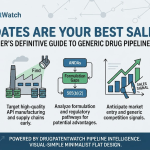
Drug patent API data feeds have matured into a category of their own, a real-time intelligence layer that connects the U.S. Patent and Trademark Office (USPTO), the FDA’s Orange Book, federal district court dockets, and Abbreviated New Drug Application (ANDA) pipelines into a single, queryable stream. When that stream flows directly into a pharmacy information system (PIS), a PBM’s claims engine, or a hospital’s ERP, the entire economics of formulary management shift. Organizations stop reacting to generic launches and start engineering for them.
This guide covers the complete operational picture: the architecture of pharmaceutical IP protection, the exact data fields that matter, and the specific workflows that payers, health systems, and pharmacies should be building right now.
Key Takeaways: What Decision-Makers Need Before Reading Further
A drug’s patent estate is not a single expiry date. It is a layered stack of composition-of-matter patents, formulation patents, method-of-use patents, process patents, and FDA-granted regulatory exclusivities, each with a different expiration and a different litigation risk profile. Treating any one layer as the whole picture produces budgets that miss by millions.
Paragraph IV certification filings, not patent expiration dates, are the primary trigger event for generic market entry timelines. An API that surfaces Paragraph IV filings in real time, cross-referenced with litigation docket status, is categorically more useful than any static Orange Book query.
The 180-day first-filer exclusivity period is the most mismodeled variable in payer financial forecasting. During this window, the price reduction is typically 20-30%, not the 80-85% that arrives with full multi-source generic competition. Forecasts that collapse these two phases into one overstate savings by a factor of three or more.
For biologics, the Biologics Price Competition and Innovation Act (BPCIA) ‘patent dance’ creates an entirely separate litigation choreography from Hatch-Waxman. Biosimilar entry timelines require tracking BPCIA notice-of-commercial-marketing periods, reference product exclusivity, and the 12-year data exclusivity clock, none of which appear in the Orange Book.
Evergreening tactics, including secondary patenting of polymorphic crystal forms, enantiomers, prodrugs, and fixed-dose combination formulations, account for a majority of active patent protection for top-selling small molecules. Without visibility into secondary patent filings, no formulary forecast is reliable past the composition-of-matter expiry date.
Integration is the differentiator. The raw data exists in public records. The advantage goes to organizations that wire patent intelligence directly into their operational systems rather than consulting it manually on an ad hoc basis.
Part I: The Formulary as a Financial Asset
Why Formulary Intelligence Is Primarily a Finance Problem
A formulary is presented to the world as a clinical document. It is, in practice, a capital allocation instrument. A large commercial health plan with three million members can carry $800 million or more in annual pharmacy benefit expenditures. A 1% improvement in generic capture rates, the percentage of prescriptions filled with the lowest-cost therapeutically appropriate option, translates directly to $8 million in retained margin at that scale.
Formulary committees are aware of this. What they lack is the data infrastructure to act on it systematically. The gap between a drug’s Orange Book patent expiry date and the actual date a generic product reaches pharmacy shelves averages 2.5 to 4 years when active patent litigation is present. That gap is not noise in a model. It is the primary variable the model should be built around, and it changes constantly as cases progress through the courts.
The organizations that close this gap structurally, not just on a case-by-case basis, are the ones whose pharmacy benefit costs grow at 2-3% annually while their peers report 6-8%.
Deconstructing the Formulary Tier Structure
Standard formulary architecture runs four to five tiers with a specialty designation that increasingly functions as its own sub-system.
Tier 1 holds preferred generics. Copayments are minimal, typically $0-$10, and utilization management requirements are low. The payer wants the highest possible share of prescriptions landing here.
Tier 2 carries preferred brand-name drugs alongside some non-preferred generics. Copayments run $30-$60 at commercial plans. A brand-name drug earns preferred Tier 2 placement through a rebate negotiation: the manufacturer agrees to return a percentage of gross revenue to the PBM, which passes through some portion to the plan sponsor.
Tier 3 holds non-preferred brands and some specialty generics. Copayments are punitive by design, $75-$120, intended to redirect prescribing toward lower-cost alternatives when a clinically equivalent option exists.
The specialty tier, sometimes split into Tiers 4 and 5 for oral vs. injected specialty drugs, covers products above a threshold cost per month, typically $700-$800. Drugs in this tier are subject to coinsurance rather than flat copays, meaning the member pays a percentage of the drug’s cost, not a fixed amount. A single specialty drug at 30% coinsurance can generate $3,000-$6,000 in monthly out-of-pocket liability for the patient.
Patent intelligence is relevant across every tier. The movement of a brand from Tier 2 to Tier 3 at generic availability is the single highest-leverage formulary event a plan can execute. Getting that move right, on day one of generic availability rather than at the next quarterly review, is worth real money.
The P&T Committee’s Data Problem
P&T committees operate on a review cycle that is fundamentally incompatible with the pace of patent litigation. A committee that meets quarterly, reviewing drugs whose patent statuses were last formally assessed two months ago, is making tiering decisions based on information that may be three to five months stale.
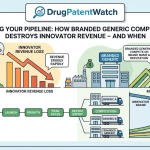
That lag has consequences. A Paragraph IV settlement that accelerates generic entry by six months can be publicly filed in a federal district court on a Tuesday morning. The average P&T committee learns about it at the next quarterly meeting. During those intervening months, the plan continues paying brand-level costs and brand-level rebates for a drug that could have been moved to Tier 3 immediately following the settlement.
The manual information-gathering problem compounds this. Individual committee members rely on manufacturer-submitted dossiers, which are, predictably, not optimized to highlight litigation risk to the brand. Clinical pharmacists track patent news through trade publications, alert services, and direct Orange Book queries, all of which require human synthesis. Financial analysts model generic entry based on historical analogues rather than current litigation-specific data.
None of this is the fault of the people involved. It is a structural data architecture failure, and it has a structural solution.
Part II: The Complete Architecture of Pharmaceutical Patent Protection
Composition-of-Matter Patents: The Core IP Asset
The composition-of-matter (CoM) patent covers the active pharmaceutical ingredient as a novel chemical entity. It is the highest-value IP in a drug’s portfolio and the one that analysts and competing manufacturers watch most closely. A CoM patent on a new molecular entity (NME) is typically filed 8-12 years before FDA approval, reflecting the time required for clinical development, and it carries a 20-year term from the filing date.
After accounting for patent term extensions (PTEs), which compensate for regulatory review time under 35 U.S.C. 156, the effective market exclusivity from a CoM patent for an NME is typically 10-14 years post-approval.
The IP valuation implications are direct. A drug with a CoM patent expiring in 2030 and no secondary patents or pending litigation carries a straightforward LOE (loss of exclusivity) timeline. A drug with a CoM patent expiring in 2030 surrounded by 15 secondary patents, three of which are under active Paragraph IV challenge, carries a litigation-adjusted LOE probability distribution that spans 2026 to 2033. The expected net present value (NPV) of the branded revenue stream varies by hundreds of millions of dollars depending on where you place your probability mass within that range.
Formulary teams modeling brand-to-generic transitions need to think in terms of LOE probability distributions, not point estimates.
Formulation and Delivery System Patents: The Evergreening Engine
Formulation patents cover the specific composition used to deliver the active ingredient, including controlled-release matrices, enteric coatings, lipid nanoparticle formulations, and specific excipient ratios. They are the primary tool of pharmaceutical evergreening.
The strategic objective is to shift patients from the soon-to-go-generic immediate-release (IR) formulation to a newer extended-release (ER) or modified-release (MR) version before LOE on the IR, then defend that ER formulation with secondary patents. AbbVie’s strategy with adalimumab (Humira) provides the canonical large-molecule analogue: the company built a patent estate exceeding 130 patents covering different formulation concentrations, delivery devices, and manufacturing processes, each filed to extend exclusivity beyond the original CoM protection.
For small molecules, the same logic applies at lower cost and complexity. Purdue Pharma’s extended-release oxycodone formulations, Allergan’s Namenda XR extension of memantine, and Actavis’s Rapaflo formulation around silodosin are all instances of formulation patents used to maintain brand revenue through an IR generic launch.
Formulary teams that do not track secondary formulation patents systematically will fail to anticipate these transitions. The patient population on the ER version often represents 60-70% of total branded volume by the time IR goes generic, having been shifted there by manufacturer patient assistance programs and prescriber marketing in the two to three years before IR LOE.
Method-of-Use Patents and Skinny Labeling: The Indication Carve-Out
A method-of-use patent protects a specific therapeutic application of a drug molecule. The FDA’s ANDA pathway allows a generic manufacturer to file a ‘skinny label,’ excluding patented indications from the generic’s approved labeling while obtaining approval for off-patent indications.
This creates a legally fraught commercial environment. The generic is approved and marketed for indication A. Physicians prescribe it, sometimes off-label, for indications A, B, and C. The brand manufacturer holds method-of-use patents for indications B and C and argues that any generic dispensing for those indications, even under the skinny label, constitutes induced infringement.
The GSK v. Teva litigation over carvedilol, ultimately resolved in 2022 with a $235 million verdict against Teva that was then vacated, illustrated how significant and unresolved this risk remains. For formulary managers, skinny label generics create a therapeutic interchange gray zone. The generic may be approved for most but not all of the brand’s indications, requiring the P&T committee to evaluate whether an automatic substitution rule is appropriate or whether indication-specific prior authorization is necessary.
An API that surfaces method-of-use patent coverage alongside the specific ICD-10 diagnosis codes mapped to those indications gives P&T committees the precision they need to make these calls correctly.
Patent Term Extensions and Pediatric Exclusivity: The Calendar Complications
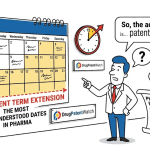
A PTE can add up to five years to a patent’s life to compensate for time lost during FDA regulatory review. The U.S. Patent and Trademark Office grants PTEs on a single patent per approved product, calculated at half the clinical development time plus the full regulatory review time, subject to a five-year cap and a maximum of 14 years of post-approval exclusivity.
Pediatric exclusivity, granted under the Best Pharmaceuticals for Children Act, adds six months to any existing patents and FDA-granted exclusivities when the manufacturer completes a qualifying pediatric study. Critically, it attaches to all listed patents, not just one. A drug with four Orange Book-listed patents, each expiring on different dates, gains six months on all four when pediatric exclusivity is granted. The Orange Book reflects these extensions in real time, but manual tracking across hundreds of formulary drugs makes keeping pace with these adjustments in financial models nearly impossible without automation.
The precise calculation of an adjusted patent expiry date, factoring in filing date, USPTO grant date, regulatory review time, PTE award, and pediatric exclusivity, is exactly the kind of deterministic but data-intensive task that API integration was designed to eliminate from human workload.
The 180-Day First-Filer Exclusivity: The Most Misunderstood Market Event
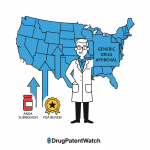
Under the Hatch-Waxman Act, the first ANDA applicant to file a Paragraph IV certification against each Orange Book-listed patent earns 180 days of market exclusivity. During this period, the FDA cannot approve any other ANDA for the same drug.
This exclusivity period is not a binary event. It is a distinct market phase with its own pricing and competitive dynamics. The first-filer typically prices their generic at 20-30% below the brand’s WAC, compared to the 80-90% discount that arrives when five or more generic manufacturers are in the market. For payers, the 180-day period is a transitional phase where generic substitution saves some money, but far less than the eventual steady state.
The 180-day clock starts when the first filer either obtains FDA approval and begins commercial marketing or forfeits exclusivity through one of several statutory triggers, including a court ruling that the challenged patent is invalid or not infringed. Forfeitures complicate the timeline and create what practitioners call ‘exclusivity bottlenecks,’ where no generic can launch until the first filer either markets or forfeits.
Tracking the status of 180-day exclusivity, including which company holds it, whether they have received tentative or final FDA approval, and whether any forfeiture trigger has been activated, is operationally critical for financial planning. A plan that models a full 85% price reduction at generic launch will badly overstate savings if the first filer holds exclusivity for the first six months and prices at only a 25% discount.
FDA Regulatory Exclusivities: The Parallel Protection System
FDA regulatory exclusivities run parallel to patents and are entirely independent of them. The key categories relevant to formulary planning are:
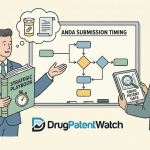
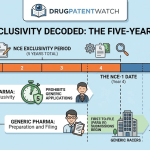
New chemical entity (NCE) exclusivity runs five years from the date of first FDA approval. During this period, the FDA cannot accept an ANDA referencing the NCE, meaning no generic can even enter the approval queue. For formulary forward-planning, NCE exclusivity defines the earliest possible date for generic ANDA submission, not the earliest approval date. Add typical ANDA review times, currently running 30-40 months for standard reviews, to calculate a realistic earliest-possible generic availability date.
New clinical investigation (NCI) exclusivity runs three years and covers approvals for new indications, new dosage forms, or new conditions of use where new clinical trials were required. Brand manufacturers use NCI exclusivity to protect ER formulation launches and combination products from immediate generic challenge.
Orphan drug exclusivity (ODE) runs seven years from approval for drugs treating diseases affecting fewer than 200,000 U.S. patients. ODE cannot be broken by a Paragraph IV filing, it simply blocks generic approval regardless of patent status. For formulary managers, ODE-protected drugs require a different analytical framework: the savings opportunity is biosimilar or orphan competitor entry, not small-molecule generic entry.
Biologics reference product exclusivity runs 12 years from biosimilar-accessible approval under the BPCIA. This is entirely separate from any biologic patent protection and represents the single largest exclusivity protection in U.S. pharmaceutical law. Adalimumab (Humira), despite having its CoM patent expire in 2016, was protected by this 12-year exclusivity through 2023 in the U.S. market.
Investment Strategy: IP Valuation as a Portfolio Signal
For portfolio managers and biotech analysts, the composition of a drug’s patent estate is a direct proxy for revenue durability. A drug supported only by a CoM patent expiring in three years with no active litigation and multiple ANDAs at tentative approval carries near-zero terminal value in the branded segment. A drug with a CoM expiry in three years but ten active Paragraph IV litigations, multiple secondary patents extending to 2032, and a pending pediatric exclusivity claim carries a probability-weighted revenue tail that a simple expiry date misses entirely.
The litigation resolution rate matters here. Historical data from IQVIA and academic analyses of Hatch-Waxman litigation show that brand manufacturers win approximately 59% of Paragraph IV cases that reach a final decision, though the majority settle with an authorized entry date before trial. Settlements, not court decisions, determine most generic launch dates. Settlement terms are frequently confidential, but ANDA approval dates and commercial launch signals are publicly observable through FDA databases and wholesale acquisition data.
A drug with three settled Paragraph IV cases where the settlement terms are unknown but the first-filer received tentative FDA approval 18 months ago, combined with an ‘at-risk’ launch signal from a distributor, produces a very specific probability distribution over the next 24-month revenue forecast. Organizations using patent API data to build these distributions systematically have a measurable analytical edge over those using only WAC data and press releases.
Part III: Patent API Architecture – What the Data Feed Actually Contains
The Orange Book as a Foundation Layer (and Its Limitations)
The FDA’s Orange Book, formally the publication Approved Drug Products with Therapeutic Equivalence Evaluations, is the baseline data source for pharmaceutical patent and exclusivity information. It lists patents submitted by NDA holders as covering each approved drug product, with patent numbers, expiry dates, and patent type codes (drug substance, drug product, method of use).
The Orange Book has well-documented structural limitations. NDA holders self-certify the relevance of listed patents, and courts have repeatedly found patents listed that do not actually cover the approved product. Pharmaceutical manufacturers have used strategic over-listing to inflate the apparent strength of a patent estate. Conversely, patents can be delisted following successful litigation, changing the generic’s legal landscape mid-course.
The Orange Book also does not contain: information on patent validity beyond what the NDA holder certifies, information on pending patent applications that could issue and be listed in the future, information on district court proceedings or outcomes, information on inter partes review (IPR) proceedings at the Patent Trial and Appeal Board (PTAB), or market signal data like at-risk launch indicators.
A quality patent API layer adds all of these dimensions to the Orange Book baseline.
ANDA Pipeline Data: The Leading Indicator
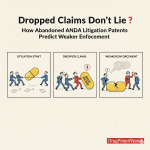
ANDA filings are the most predictive leading indicator of generic market entry. When a generic manufacturer files an ANDA with a Paragraph IV certification, they are explicitly stating their intent to market before the listed patents expire and challenging the validity or non-infringement of those patents. The filing itself triggers a 45-day window in which the NDA holder can sue, initiating a 30-month stay on FDA approval.
ANDA status data, sourced from FDA’s public ANDA database, tells a layered story. Tentative approval means the FDA has completed its review and found the application approvable, but final approval is blocked by unexpired patents or exclusivities. Tentative approval is the critical signal that the generic is manufacturing-ready and waiting only for legal clearance. A drug with 12 ANDAs at tentative approval, each filed with Paragraph IV certifications, is not a drug where a five-year exclusivity buffer exists in practice, regardless of what the Orange Book’s latest patent expiry date shows.
Tracking ANDA counts, Paragraph IV certification prevalence, tentative approval status, and the names of filers (which correlates with manufacturing scale and market entry commitment) transforms generic entry prediction from a point estimate into a probability curve.
Litigation Docket Integration: The Decisive Layer
Patent litigation docket data is where the analytical edge is sharpest and the data is hardest to systematically collect. Federal district court cases involving Hatch-Waxman litigation are filed primarily in the District of Delaware and the District of New Jersey, though any federal district court may have jurisdiction.
The legally significant events that occur within these dockets include: complaint filing (initiates the 30-month stay), Markman claim construction hearings (sets the scope of the patent claims being asserted), summary judgment motions (high-value events that can resolve the case without trial), district court final decisions, and notices of appeal.
Each of these events shifts the probability distribution of generic entry. A Markman ruling that narrows a brand manufacturer’s claim construction is a signal in the generic’s favor. A summary judgment ruling that finds patent claims invalid is an immediate green light for generic entry (subject to appeal). An appeal to the Federal Circuit adds 18-36 months to the timeline.
APIs that integrate PACER data and extract structured docket events, linking them to specific ANDAs and drugs, convert federal court proceedings into actionable formulary intelligence. This is technically challenging, which is why most manual approaches don’t attempt it, and why it represents the largest value differential between commodity patent data and premium patent intelligence services.
PTAB Inter Partes Review: The Patent Validity Parallel Track
The America Invents Act (2011) created the Patent Trial and Appeal Board (PTAB) inter partes review (IPR) as a faster, cheaper alternative to district court patent validity challenges. An IPR petition can be filed by any third party challenging the validity of an issued patent on grounds of anticipation or obviousness over prior art. PTAB institutes roughly 60-65% of petitions, and of those instituted, patents are invalidated fully or partially in approximately 70% of final written decisions.
The pharmaceutical industry has used IPR aggressively. A successful IPR on a key Orange Book-listed patent can eliminate a major barrier to generic entry without requiring a full district court trial. Critically, IPR proceedings can run in parallel with district court litigation, meaning the same patent can face a validity challenge at PTAB while an infringement case proceeds in Delaware.
For formulary modeling, a drug with a primary patent under active PTAB IPR, particularly one where the board has instituted review on a broad set of claims, carries materially higher LOE risk than its Orange Book expiry date implies. The probability of institution and the scope of instituted claims are publicly available in PTAB’s e-FOIA portal. An API that indexes PTAB proceedings alongside district court litigation provides a more complete picture of patent estate stability.
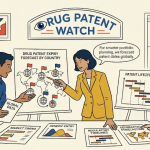
International Patent Offices: The Global IP Map
Large markets, particularly the European Patent Office (EPO), Japan Patent Office (JPO), and Canada’s patent system, maintain parallel patent filings for most major branded drugs. European patent decisions carry analytical value even for U.S. formulary planning for two reasons.
First, the EPO’s Boards of Appeal and the Unified Patent Court (UPC) have decided cases on the validity of pharmaceutical patents using the same molecular evidence and scientific arguments that will be used in U.S. proceedings. A European court ruling that a specific formulation patent lacks inventive step is relevant prior art and legal precedent that a U.S. district court may consider.
Second, brand manufacturers sometimes test litigation strategies in European courts before U.S. cases come to decision, using more favorable European claim construction frameworks or choosing markets where a loss is commercially less damaging. Tracking EPO opposition proceedings, which are publicly filed and decided by EPO Opposition Divisions, gives analysts a 12-18 month preview of arguments and evidence that will appear in U.S. proceedings.
What a Quality Patent API Delivers: Field-Level Specifications
A minimum viable patent intelligence feed for formulary automation should expose the following structured fields at the drug level:
At the drug identification level: NDA number, brand name, INN, therapeutic class (ATC code), formulation, route of administration, NDA holder, and all active NDC codes.
At the patent level: patent number, patent type code (substance/product/method of use), original expiry date, PTE-adjusted expiry date, pediatric exclusivity expiry date, litigation status flag, and a litigation-adjusted probable LOE date with confidence intervals.
At the ANDA pipeline level: count of filed ANDAs, count at tentative approval, count of Paragraph IV certifications filed, first-filer identity, first-filer ANDA approval status, 180-day exclusivity status, and authorized generic announcement flag.
At the litigation level: active cases with district, judge assignment, case phase, Markman hearing status, and most recent docket event with date.
At the PTAB level: active IPR proceedings with institution status, decision date, and claims at issue.
At the derived analytics level: LOE probability score, generic adoption rate forecast, 180-day exclusivity period date range, and post-exclusivity full market date.
A feed that delivers this structure, updated daily from source data, is the raw material for automated formulary workflows.
Part IV: The Payer’s Operational Playbook
Rebuilding the Budget Model from the LOE Distribution Up
The pharmacy benefit budget model at most health plans today works like this: pull last year’s spend by drug, identify which drugs go generic next year using Orange Book dates, apply an assumed generic discount, and subtract from trend. This is approximately correct for broad-strokes planning and deeply incorrect for any drug where the generic entry timeline is under litigation.
An API-driven model reconstructs this process around a probability-weighted LOE distribution for each drug. The conceptual logic is straightforward. For Drug X, the litigation-adjusted probable entry dates, drawn from ANDA pipeline data, docket status, and historical settlement analogues, produce a distribution: 10% probability of at-risk launch in Q2 2026, 40% probability of settlement-enabled entry in Q4 2026, 35% probability of post-litigation entry in Q1 2027, 15% probability of delay past Q2 2027.
The model then builds separate financial scenarios for each branch of that distribution, weights them by probability, and produces an expected value plus a range. The expected value goes into the budget. The range drives capital reserve decisions and risk flags for the CFO.
This approach catches the errors that kill reactive budget models. It will not project 2026 savings at 85% if the first-filer holds 180-day exclusivity and prices at 25% below WAC. It will not project savings starting in March if the litigation probability-weighted entry is Q4. It will model the authorized generic scenario separately, since AGs price differently from independent generics and affect the first-filer’s exclusivity utilization.
Rebate Negotiation: Using Litigation Data as Leverage
Brand manufacturers negotiate rebates by asserting the durability of their exclusivity. Their implicit argument is always some version of: ‘You need us on your formulary because generics are not coming anytime soon.’ Patent intelligence dismantles this argument when the data does not support it.
A payer negotiating a formulary position for a brand drug with active Paragraph IV litigation, a first-filer at tentative approval, and a PTAB IPR that has been instituted on the primary composition-of-matter patent is not in the same negotiating position as a payer working from a standard Orange Book spreadsheet. The litigation data converts vague manufacturer confidence into a quantifiable exclusivity risk premium.
The specific negotiating application: frame rebate negotiations in terms of the expected exclusivity period, not the patent expiry date. If the litigation-adjusted expected LOE is 22 months from contract signing, not the 42 months the Orange Book expiry implies, the contract term and rebate floor should reflect that shorter horizon. If the manufacturer resists a shorter rebate guarantee period, that resistance tells you something about their own internal litigation confidence assessment.
Payer negotiators who can walk into a meeting with a structured litigation risk brief, showing specific case docket status, judge and court history, and ANDA pipeline depth, shift the information asymmetry that brand manufacturers have traditionally exploited.
The goal of formulary automation is to make routine tiering adjustments in continuous time rather than at scheduled review intervals. This requires moving from committee-driven review cycles to rule-based event triggers that escalate to committee review only when human judgment adds value.
The trigger architecture should operate at three time horizons. The strategic horizon, 12-24 months out, is about watchlist construction and contract positioning. When the patent API signals that a top-spend drug has entered the high-probability LOE window, based on a combination of ANDA pipeline depth, litigation stage, and regulatory exclusivity expiry, the drug should automatically appear on the P&T strategic agenda with a pre-populated budget impact analysis.
The tactical horizon, 3-12 months out, is about operational preparation. This triggers the GPO notification process, the contracted pharmacy audit to confirm generic stocking plans, the physician communication program, and the update to prior authorization criteria to align with anticipated generic substitution rules.
The execution horizon, 0-90 days, triggers automatic tiering changes. When an ANDA receives final FDA approval and a commercial launch is confirmed through NDC registration or wholesale catalog data, the brand drug moves to Tier 3 and the generic lands on Tier 1 without waiting for the next scheduled P&T meeting.
Each trigger event writes to an audit trail that documents the data inputs, the rule invoked, and the action taken. This is not just good governance; it is the evidentiary record required for any downstream contract dispute where the timing of a formulary change is contested.
Specialty Pharmacy: Biosimilar Launch Modeling Under the BPCIA
For specialty drugs, the biosimilar entry timeline operates under a different legal framework than small-molecule Hatch-Waxman. The BPCIA created a complex multi-step process, colloquially called the ‘patent dance,’ that governs information exchange between biosimilar applicants and reference product sponsors before and after FDA approval.
The key structural differences from Hatch-Waxman that affect formulary planning:
The reference product exclusivity period is 12 years from FDA approval of the reference product, independent of any patent protection. A biosimilar cannot receive FDA approval until this exclusivity expires. For planning purposes, this means that for any biologic approved after 2010, the 12-year clock is the binding constraint, not the patent estate.
The BPCIA patent dance begins when the biosimilar applicant shares its aBLA (abbreviated Biologics License Application) with the reference product sponsor. The two parties then exchange patent lists and litigate a defined set of patents in an initial phase. A second wave of litigation can follow if the biosimilar applicant provides a 180-day notice of commercial marketing.
FDA approval of biosimilars is classified as either ‘biosimilar’ or ‘interchangeable.’ Interchangeable status requires a switching study demonstrating no increased risk from alternating between the reference product and the biosimilar. Only interchangeable biosimilars may be substituted automatically at the pharmacy level under state pharmacy substitution laws, which vary significantly by state.
For formulary managers at PBMs and health plans, biosimilar interchangeability status is the single most important field for determining whether automatic substitution is legally permissible. Medical benefit biosimilars, buy-and-bill drugs administered in physician offices and reimbursed under the medical benefit rather than the pharmacy benefit, face a different access and substitution landscape that requires coordination between the pharmacy and medical benefit management teams.
Key Takeaways: The Payer Segment
Litigation-adjusted LOE probability distributions, not point-estimate expiry dates, produce materially more accurate pharmacy benefit budgets. The error from using a static expiry date averages 4-8 months of projected savings and represents millions of dollars in misstated financial position at plan scale.
Paragraph IV docket stage is the most actionable leading indicator for rebate negotiation timing. When a Markman ruling favors the generic defendant or a PTAB IPR is instituted on the primary CoM patent, the brand manufacturer’s negotiating position weakens in real time. Payers with docket monitoring can exploit this timing.
180-day first-filer exclusivity creates a financially distinct market phase. Models must split the generic entry forecast into two sequential periods, the 180-day window and the full-competition period, to produce accurate savings projections.
Biosimilar interchangeability status governs pharmacy-level auto-substitution. For biologics on the specialty tier, tracking FDA’s Purple Book for interchangeability designations and each state’s pharmacy substitution statute is non-negotiable for compliant formulary automation.
Part V: The Hospital and Health System Playbook
Hospital IP Intelligence: Procurement as a Competitive Function
Hospital pharmacy procurement operates within a GPO contract structure that creates specific opportunities for patent intelligence to generate measurable value. A GPO negotiating drug supply contracts for several hundred hospitals is, in aggregate, one of the largest drug purchasers in any therapeutic category. Their contract terms, particularly the duration and price renegotiation triggers, are where patent intelligence creates leverage.
A GPO contract with a brand manufacturer typically runs one to three years. The contract pricing is negotiated upfront based on the anticipated competitive environment over that period. A brand manufacturer will push for a three-year term on a drug with 18 months of expected exclusivity, hoping to lock in favorable pricing before generic competition forces a renegotiation. A GPO with patent API intelligence can counter by insisting on a 12-18 month term with automatic price adjustment clauses tied to generic market entry events, or by building step-down pricing schedules into the contract that trigger automatically when a first-filer launches.
For hospital pharmacies at the institutional level, the procurement intelligence application focuses on inventory optimization. A hospital carrying 60 days of brand-name injectable supply when the generic launches has a $40,000-$200,000 inventory write-down problem, depending on the drug’s cost and volume. An API-integrated purchasing system that flags the 90-day and 30-day pre-launch windows allows the pharmacy to reduce PAR levels systematically, timing the transition to arrive at minimal brand inventory on launch day.
Therapeutic Interchange: Automating the Candidate Pipeline
Therapeutic interchange programs, where a generic or lower-cost alternative is dispensed in place of the prescribed brand-name drug under a P&T-approved protocol, produce some of the highest returns on any formulary initiative. The historical challenge has been the manual effort required to identify, evaluate, and gain committee approval for new interchange opportunities.
Patent API data automates the identification phase entirely. A hospital’s pharmacy information system, integrated with a patent data feed, can run continuous queries against its drug utilization database to identify brand-name drugs currently in the top quartile of expense with patent estates showing high LOE probability within 18 months. For each identified drug, the system can cross-reference the therapeutic class against existing generic alternatives with established bioequivalence records.
The output is an automatically ranked candidate list delivered to the P&T committee at each meeting cycle, with pre-populated budget impact data showing the projected savings from initiating an interchange protocol timed to generic availability. The committee’s time shifts from identification, which the system handles, to clinical evaluation of the proposed interchange, which requires their expertise.
A health system with 12 hospitals that runs this process consistently can expect to maintain an active pipeline of 20-35 pending interchange candidates at any given time, versus the 4-6 that most manual programs generate.
Drug Shortage Early Warning: Patent Signals in the Supply Chain
Patent events do not cause drug shortages directly, but they create the market conditions under which shortages become more likely, and they do so in ways that are predictable with 6-18 months of lead time.
At-risk launches, where a generic manufacturer markets their product before all patent litigation is resolved, create supply volatility. If the manufacturer subsequently loses at the Federal Circuit and is enjoined from continued sales, their product disappears from the market within weeks. If that manufacturer had captured 40% of the market during their at-risk period, a sudden supply removal can create an acute shortage for the remaining suppliers to absorb.
Brand manufacturers approaching LOE sometimes rationalize production of specific presentations, particularly non-standard vial sizes, low-volume parenteral formulations, or discontinued dosage strengths. Tracking where brand manufacturers have filed for NDA supplements to discontinue formulations, cross-referenced with FDA drug shortage database entries, creates an early signal system.
Pediatric formulations are disproportionately represented in shortage events following brand LOE, because generic manufacturers focus on adult commercial presentations and may delay or skip pediatric formulation development. For hospitals with significant pediatric patient populations, patent intelligence combined with ANDA filing data by formulation type can identify future shortage risk windows before they materialize.
Investment Strategy: Health System Considerations
Health system decision-makers evaluating patent intelligence technology should model ROI against three specific cost buckets. The first is inventory write-downs from brand-to-generic transitions that were not anticipated in time. A single large teaching hospital typically absorbs $500,000-$2 million in annual brand inventory losses from poorly timed generic transitions. Automated procurement alerts eliminate most of this.
The second is therapeutic interchange revenue, measured as the net cost avoidance from protocols implemented six months before generic availability versus at the time of generic launch. Programs implemented at the six-month mark capture a full six months of generic savings that the equivalent program implemented post-launch misses.
The third is GPO contract optimization. Contracts negotiated with accurate LOE intelligence, building in step-down pricing and shorter terms for drugs with high near-term generic probability, can reduce net drug acquisition costs by 3-8% per contract cycle versus static multi-year contracts negotiated from public WAC data alone.
Part VI: The Pharmacy Competitive Playbook
Retail Chains: Inventory Automation at Scale
For a large pharmacy chain operating 2,000-4,000 locations, the brand-to-generic inventory transition is a recurring logistical event that happens dozens of times per year. Managing each transition manually, with regional buyers monitoring Orange Book dates and manually adjusting purchase orders, is a high-overhead process with uneven execution quality across the network.
At-scale automation changes this. The patent API feed connects to the chain’s inventory management platform. For each drug approaching the launch window, the system automatically executes a phased order reduction: at T-90 days (assuming a confirmed or high-probability launch date), brand reorder quantities begin declining on a formula tied to weekly velocity and standard lead times. At T-30, brand ordering pauses except for specific customer reservations. At T-0, the system routes new prescriptions to the generic and the remaining brand inventory enters the returns process.
For the generic product, the system prepares in parallel. New NDC numbers are pre-loaded. Supply contracts with distributors are activated. Initial stocking quantities are calculated based on historical brand velocity and projected generic capture rates. The first generic order arrives on or within two days of launch.
The financial precision of this approach, executed at chain scale across all brand-to-generic transitions in a year, recovers working capital that otherwise sits in slow-moving brand inventory and captures the gross margin advantage that generics carry over brands from day one of availability.
Independent and Specialty Pharmacies: Price Intelligence and 180-Day Positioning
For independent pharmacies, the 180-day first-filer period represents a specific commercial opportunity. During this window, the first-filer generic is the only generic version available, priced 20-30% below WAC. Independent pharmacies that stock this product early can compete aggressively on cash-pay prices, particularly for popular maintenance medications where patients are price-sensitive and willing to shop.
The intelligence advantage comes from knowing, 90-180 days in advance, which company holds the 180-day exclusivity and when their FDA approval is expected. ANDA pipeline data shows the first-filer identity and approval status. Trade press and wholesale acquisition data provide commercial launch signals. An independent pharmacy that pre-positions a supply relationship with the first-filer distributor, and begins marketing to cash-pay patients in the therapeutic category, can capture disproportionate volume during the exclusivity window before price erosion converts the category to a commodity.
For specialty pharmacies, the equivalent intelligence play is biosimilar interchangeability monitoring. Specialty pharmacies that serve rheumatology, gastroenterology, and oncology practices with high biologic utilization need to know, in advance, which biosimilars have achieved interchangeability status for each reference product they dispense. The FDA’s Purple Book publishes interchangeability designations, but systematic cross-referencing against the specialty pharmacy’s patient population and the individual state substitution statutes under which each patient fills requires structured data tools.
Patient Communication and Adherence: The Downstream Value
Pharmacy teams with advance notice of brand-to-generic transitions have a meaningful window to execute proactive patient communication. The evidence on unplanned brand-to-generic switches is consistent: patients who learn about a substitution at the point of dispensing, without prior notice, are substantially more likely to refuse the generic, express concerns about efficacy, or contact their prescriber to request a brand-name override. All of these outcomes cost the patient and the payer money and reduce medication adherence.
Pharmacies with API-driven advance notice can build a patient communication workflow: identify patients who will be affected by a formulary or substitution change at the 60-day mark, send proactive messaging explaining the change and its cost implications, train pharmacy staff on common patient questions specific to the drug category, and brief the prescriber in advance so they are not surprised by the transition.
This workflow is not complex. It requires two inputs: a patient medication list and a patent intelligence feed. The ROI is measurable in refill adherence rates, reduction in brand-override prescriptions, and reduction in patient complaints to the pharmacy team.
Part VII: Building the Automated Formulary System – A Technical Roadmap
Phase 1: Data Layer and System Integration Architecture
The technical foundation of automated formulary intelligence is a reliable, standardized data integration between the patent API and the organization’s core operational systems. The specific systems vary by stakeholder type but share a common integration architecture.
The drug identifier mapping problem is the first technical challenge and the most commonly underestimated. Patent APIs organize data around NDA numbers, ANDA numbers, and patent numbers. Hospital and pharmacy systems use NDC codes at the 11-digit level. PBM claims systems use a combination of NDC and formulary drug codes. EHR medication databases use RxNorm identifiers. Reliable automated mapping across all of these identifier spaces, at the product formulation level not just the brand level, is a prerequisite for any downstream automation.
This mapping is not a one-time project. Biosimilar approvals add new NDCs daily. Generic approvals bring new ANDAs and NDCs. Brand manufacturers file for new presentations under existing NDAs. The mapping table requires continuous maintenance from a reliable reference source.
REST API integration with JSON payloads is the current standard for pharmaceutical data services. The integration architecture should include a local caching layer for high-frequency data fields (drug names, NDC identifiers, patent expiry dates), with a direct API call reserved for low-latency, event-driven fields (docket updates, ANDA approval status changes). Direct API calls for every drug in a formulary on a daily basis is architecturally inefficient and unnecessary; a push-notification or webhook pattern for significant status changes is the appropriate design for event-driven fields.
Phase 2: Business Logic Codification and Rule Engine Design
With data flowing, the rule engine translates patent intelligence into operational directives. The rule architecture should be tiered by urgency and stakeholder.
The strategic tier generates agenda items and analysis for P&T committee review with 12-24 months of lead time. Triggers include: first ANDA filed with Paragraph IV certification against a top-spend drug, PTAB IPR petition filed against a primary CoM patent, and regulatory exclusivity expiry dates entering the 18-month horizon. Outputs include: P&T agenda item with attached patent intelligence brief, preliminary budget impact model, and task assignment to the contracting team to review rebate agreement terms.
The tactical tier generates operational preparation tasks at the 3-12 month horizon. Triggers include: ANDA at tentative approval status, settlement announcement with defined generic entry date, and first-filer 180-day exclusivity period confirmed. Outputs include: physician notification template generation, EHR order set review, contracted pharmacy inventory preparation notification, and patient communication plan activation.
The execution tier manages real-time formulary changes. Triggers include: final ANDA approval and commercial launch confirmation. Outputs include: automatic formulary tier change in the plan’s formulary management system, PBM claims system routing update, and pharmacy network communication.
Each rule should specify: the data fields that trigger it, the logic condition required, the action taken, the system or person notified, and the audit log entry created. Rule documentation is as important as rule execution, both for compliance and for continuous refinement as the organization learns from outcomes.
Phase 3: User Interface Design for Clinical and Business Teams
System automation should reduce, not eliminate, human oversight. The interface layer surfaces the right information to the right person at the right time without requiring them to query the system manually.
The P&T committee interface functions as a pre-built agenda tool. At each scheduled meeting, committee members see a ranked watchlist of drugs with pending patent activity, sorted by financial impact. Each drug entry shows the current LOE probability score, the active litigation summary, the ANDA pipeline depth, and a projected budget impact range. Clicking into any drug surfaces the full patent estate map, active case list, and historical litigation timeline. The committee can annotate, assign actions, and approve or defer automations from within the interface.
The financial planning interface is built for pharmacy benefit analysts and budget owners. It shows real-time scenario planning tools where the analyst can adjust the LOE probability weights for any drug and immediately see the impact on the total pharmacy budget. The interface also surfaces year-to-date performance against LOE-based budget assumptions, flagging drugs where actual generic adoption is tracking above or below model.
The pharmacy operations interface integrates into the existing workflow of the PIS or pharmacy management system. Patent intelligence appears as a contextual flag alongside drug names in the dispensing workflow, not as a separate application requiring a separate login. A pharmacist dispensing a brand-name drug with a confirmed generic launch in 45 days sees a flag prompting them to note the upcoming transition for the patient. The operational overhead for front-line pharmacy staff is minimal.
Phase 4: Machine Learning Applications and Predictive Analytics
Rule-based automation handles deterministic scenarios well. The probabilistic scenarios, where the outcome of patent litigation is genuinely uncertain, where PTAB proceedings are in progress, where settlement negotiations are reportedly ongoing but unconfirmed, require a different analytical approach.
Machine learning models trained on historical Hatch-Waxman litigation data can generate litigation outcome probability scores at the case level. The predictive variables include: patent type (CoM patents are more frequently upheld than formulation patents), the specific district court and judge assignment (some judges have materially different decision rates in pharmaceutical patent cases), the number of patents asserted versus the number of patents challenged, whether the generic defendant has made a substantial non-infringement argument versus a validity argument (non-infringement arguments succeed at a higher rate), and the stage and outcome of any parallel PTAB proceedings on the same patents.
Generic adoption curve modeling represents a second machine learning application. Historical generic launches show that adoption velocity, the rate at which pharmacies and prescribers switch from brand to generic, varies significantly based on drug type, distribution channel, prescriber specialty, and payer formulary response. An ML model trained on historical adoption curves can forecast the adoption trajectory for an upcoming launch based on these variables, allowing the financial model to project not just when the generic launches but how quickly it will reach 80% market share.
Both applications require investment in model development, training data curation, and validation against held-out historical examples. But once developed, they provide a material advantage in forecast accuracy over rule-based and manual approaches, particularly for drugs with complex or contested patent estates.
Challenges and Structural Limitations
Automated formulary intelligence systems face four categories of structural challenge that implementation teams routinely underestimate.
Data quality degradation is endemic to any system relying on public-source data from multiple federal agencies. The FDA Orange Book has known inconsistencies in patent listing accuracy. PACER docket data requires parsing from unstructured court filings. USPTO patent term extension calculations require independent verification against the regulatory review record. A premium patent intelligence API provider addresses these issues through proprietary validation processes, but organizations should understand that even the best commercially available data requires ongoing quality monitoring and exception management.
Legal interpretation is not automatable. A docket entry showing that a court has denied a motion to dismiss a patent infringement case is factual data that an API can provide. Whether that ruling strengthens or weakens the brand manufacturer’s overall litigation posture is a legal judgment that requires a patent attorney with subject matter expertise in pharmaceutical law. The system should be designed to escalate legally ambiguous signals to human expert review, not to apply automated probability adjustments based solely on docket event type.
Organizational change resistance is the most common cause of delayed implementation value. P&T committees that have spent decades building expertise in clinical decision-making are not always receptive to algorithmic recommendations in their workflow. The implementation approach should position the tool as replacing administrative burden, not clinical judgment, and should demonstrate accuracy through a parallel-run validation period before removing any human decision point from the process.
Regulatory compliance for formulary changes varies by payer type. CMS-regulated plans, including Medicare Part D and Medicaid managed care, have specific rules about mid-year formulary changes and required beneficiary notifications. Automated tiering changes triggered by patent events must be reviewed against applicable regulatory requirements before implementation to ensure that automated execution does not create a compliance violation.
Part VIII: Specialty Drugs, Biologics, and the Next Frontier
Humira’s Patent Estate: A Case Study in Evergreening at Scale
AbbVie’s adalimumab (Humira) generated $21.2 billion in global net revenue in 2022, the last full year before biosimilar competition began in the U.S. The drug’s original CoM patent expired in 2016. The fact that Humira remained exclusively marketed in the U.S. until January 2023 is entirely a function of AbbVie’s secondary patent and litigation strategy.
AbbVie built a patent estate that, at its peak, listed over 130 Orange Book patents covering different aspects of adalimumab formulations, manufacturing processes, and methods of use. The patents were clustered around two key strategic innovations: a high-concentration, low-volume formulation that reduced injection volume and allowed citrate-free manufacturing, and specific antibody sequence elements. AbbVie’s litigation against each biosimilar applicant, combined with a series of settlements that granted authorized U.S. entry dates no earlier than January 2023, effectively extended revenue exclusivity by nearly seven years past CoM expiry.
The formulary implication for payers who tracked this patent estate carefully was straightforward: budget for full Humira spend through 2022, plan biosimilar transitions beginning Q1 2023, and model a phased price reduction as interchangeable biosimilar designations accumulated over 2023-2024. Payers without patent intelligence assumed earlier biosimilar entry based on the 2016 CoM expiry and either misstated their budget position or left rebate money on the table by negotiating as if biosimilar competition were imminent years before it actually arrived.
The same dynamic plays out, at smaller scale, across hundreds of biologics and specialty small molecules. The Humira case is illustrative in magnitude, not in uniqueness of strategy.
The GLP-1 Class: An Emerging Patent Landscape
Semaglutide (Ozempic, Wegovy) and tirzepatide (Mounjaro, Zepbound) are among the most commercially significant drugs in the pharmaceutical market as of 2025-2026. Both products command price points that make their patent estates and eventual LOE timelines critically important for payer budget modeling.
Novo Nordisk’s semaglutide faces its first significant patent challenges with composition-of-matter protection running through the late 2020s, though specific filing and expiry dates for individual patents in the U.S. market require current Orange Book query and ANDA pipeline monitoring. Multiple generic and biosimilar manufacturers have publicly signaled interest in the GLP-1 class. The regulatory pathway for semaglutide is complex: the oral tablet form (Rybelsus) follows a small-molecule ANDA pathway, while the injectable subcutaneous forms (Ozempic, Wegovy) may be classified as biological products requiring a 351(k) biosimilar pathway, a classification distinction with significant implications for the exclusivity timeline and the approval requirements for market entry.
For any organization building a 5-7 year pharmacy benefit financial model, the GLP-1 patent landscape is one of the highest-value tracking priorities. The potential LOE-driven price reduction on a drug class with this level of utilization and unit cost would represent one of the largest formulary savings events in modern managed care history.
Future State: The Real-Time Formulary
The organizational goal is a formulary that adjusts to market events in continuous time rather than at scheduled review intervals. This does not mean a formulary without clinical governance; it means a formulary where clinical governance is focused on the decisions that require it and where mechanical execution of those decisions happens automatically.
The technology stack required to reach this state exists today. Patent intelligence APIs provide the event stream. Rules engines translate events into actions. Formulary management systems accept API-driven updates. PBM claims adjudication systems can implement formulary changes on a defined effective date without manual intervention. EHR prescription routing tools update prescribers about formulary status at the point of prescribing.
The integration work is substantial but not novel. Every component has been deployed in production environments by the industry’s larger players. What is uncommon is the end-to-end integration that connects them all with patent intelligence as the originating signal.
Organizations that complete this integration will have a measurable and compounding advantage in pharmacy benefit cost management. The advantage compounds because early detection of generic entries, biosimilar launches, and therapeutic alternatives creates a cycle of timely action, measured outcomes, and model refinement that improves both the financial results and the analytical capability over time.
Frequently Asked Questions
How is a dedicated patent intelligence API different from a standard drug information database like Lexicomp or Micromedex?
Clinical drug information databases are built for prescribing and dispensing support. Their patent data is incidental and not maintained at the level of detail, timeliness, or structured analytical output that formulary automation requires. A clinical database may list an Orange Book expiry date. A patent intelligence API provides the full patent estate map, litigation status by case, ANDA pipeline depth, first-filer identity, PTAB proceeding status, and a litigation-adjusted LOE probability score, updated daily from source records. The operational use cases are different in kind, not just in degree.
Can a smaller regional plan or hospital afford this infrastructure?
The modular nature of API-based services means that an organization does not need to build a full end-to-end system to capture most of the value. A regional hospital can start with a single API integration that generates a weekly brand-to-generic conversion watchlist delivered to the P&T committee and the pharmacy buyer. This single output, requiring modest IT investment to build against a patent API, captures the majority of the procurement and interchange value. Full system integration is a multi-year roadmap, not a prerequisite for initial value.
What happens if a brand manufacturer launches an authorized generic?
An authorized generic (AG), a brand-name drug marketed as a generic by the originator company or a subsidiary, disrupts the standard 180-day first-filer economics. When an AG launches simultaneously with the first-filer generic, it competes directly with the first-filer during their exclusivity period and drives prices lower faster than the first-filer anticipated. AG launch signals are often visible in settlement agreement terms and in the brand manufacturer’s own SEC filings and trade press. A quality patent intelligence service tracks AG indicators and includes them in generic entry modeling.
How should organizations manage the risk of making formulary decisions based on incorrect or incomplete patent data?
No data source is perfect. The appropriate control is a system design that uses patent intelligence to trigger human review for high-stakes decisions rather than to automate those decisions directly without oversight. Automatic execution should be reserved for clearly defined, low-risk events, specifically, confirmed final ANDA approval and confirmed commercial launch. Probabilistic intelligence, like litigation outcome forecasts, should inform negotiations and budget models but should carry explicit confidence intervals and should be reviewed by qualified legal and clinical personnel before driving irreversible formulary decisions.
How should a payer treat the distinction between small-molecule generic entry and biosimilar entry for formulary purposes?
The two pathways require separate analytical frameworks. Small-molecule generics under Hatch-Waxman achieve ‘therapeutic equivalence’ designation through the Orange Book AB rating, and state pharmacy substitution laws allow automatic substitution at the pharmacy without prescriber intervention for AB-rated products. Biosimilars under the BPCIA require interchangeability designation specifically for automatic pharmacy-level substitution, and even with interchangeability, state substitution laws vary. Medical benefit biologics, reimbursed under the medical benefit rather than the pharmacy benefit, require a separate access strategy involving medical policy, prior authorization criteria, and prescriber engagement that is distinct from the formulary tiering approach used for pharmacy benefit drugs.
Conclusion: Patent Intelligence as Operational Infrastructure
Formulary management’s next competitive era belongs to organizations that treat pharmaceutical patent intelligence as operational infrastructure rather than as a research tool. The data exists in public records. The analytical framework is established. The API technology to make it programmable and real-time is commercially available and technically mature.
The gap between organizations that have systematically integrated this intelligence and those that have not shows up in pharmacy benefit cost trends, in rebate capture rates, in generic conversion speed, and in the accuracy of financial forecasts. These are not marginal differences. At the scale at which health plans, hospital systems, and pharmacy chains operate, systematic patent intelligence integration is worth tens of millions of dollars annually in recoverable cost.
The implementation path begins with a single decision: treat the probable generic entry date as the central variable in formulary planning, not an afterthought to the expiry date. Every subsequent investment in data, infrastructure, and process follows logically from that starting premise.
References
U.S. Food and Drug Administration. Orange Book: Approved Drug Products with Therapeutic Equivalence Evaluations. 44th Edition. Center for Drug Evaluation and Research, 2024.
U.S. Patent and Trademark Office. Patent Term Extension Database. Electronic access at USPTO.gov.
Grabowski, H., Long, G., and Mortimer, R. ‘Recent trends in brand-name and generic drug competition.’ Journal of Medical Economics, 2014; 17(3): 207-214.
Hemphill, C.S., and Sampat, B. ‘Drug patents at the Supreme Court.’ Science, 2012; 339(6126): 1386-1387.
Feldman, R. ‘May your drug price be ever green.’ Journal of Law and the Biosciences, 2018; 5(3): 590-647.
Congressional Budget Office. Research and Development in the Pharmaceutical Industry. April 2021.
IQVIA Institute for Human Data Science. Medicine Use and Spending in the U.S.: A Review of 2023 and Outlook to 2028. May 2024.
Grabowski, H., Guha, R., and Salgado, M. ‘Regulatory and patent barriers to biosimilar competition with special attention to the U.S. market.’ Journal of Health Economics, 2014; 35: 58-68.
Kesselheim, A.S., Avorn, J., and Sarpatwari, A. ‘The high cost of prescription drugs in the United States: Origins and prospects for reform.’ JAMA, 2016; 316(8): 858-871.
FTC v. Actavis, Inc., 570 U.S. 136 (2013). (Establishing the antitrust standard for reverse payment settlement agreements.)
Darrow, J.J., Avorn, J., and Kesselheim, A.S. ‘New FDA breakthrough-drug category: Implications for patients.’ New England Journal of Medicine, 2014; 370(13): 1252-1258.
DrugPatentWatch. Platform Documentation and API Reference, 2024. Available at drugpatentwatch.com.