A deep-dive reference for oral solid dosage strategy, patent lifecycle management, and formulation-based value creation.
1. The Multi-Unit Architecture: Why ‘Small’ Is a Platform Decision
Defining the Dosage Form: Technical Parameters and Regulatory Ambiguity
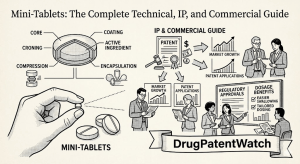
A mini-tablet is an oral solid dosage form with a diameter of 3 mm or less. Industry literature typically places the practical range between 1 mm and 4 mm, with sub-2.5 mm units sometimes classified functionally as ‘oral granules’ given their similarity to other multiparticulate systems. No binding regulatory definition currently exists in either FDA or EMA guidance. That gap is strategically useful, as it gives formulation teams latitude to define their technology platform in ways that maximize patentable differentiation.
What matters more than the diameter is the category: Multiple Unit Dosage Forms (MUDFs). The MUDF concept replaces a single monolithic object with dozens to hundreds of discrete subunits, each an independent drug delivery vehicle. A patient swallowing one hard gelatin or HPMC capsule receives, say, 60 individual 2 mg mini-tablets. Adjust the fill count to 30 and you have a 60 mg dose from the same manufacturing batch. That dose-by-count principle is the commercial fulcrum of the entire platform.
This is the first and most consequential insight: a mini-tablet is not a product, it is a bulk intermediate. Once a validated, GMP-manufactured bulk batch is produced, a single manufacturing campaign can generate clinical trial material for multiple dose cohorts, commercial-scale product for several SKUs, and the primary data set for CMC submissions across multiple regulatory regions. The operational leverage is substantial. Each dosage strength no longer requires a separate formulation development program, a separate stability study design, or separate manufacturing validation runs, because the core intermediate is identical across all of them.
The final packaging step (counting into capsules or sachets) decouples from the core tablet production. This makes the platform compatible with ‘make-to-order’ supply chain logic in a way that conventional tablets, which require separate compression batches for each strength, cannot match.
The Multiparticulate Taxonomy: Where Mini-Tablets Fit
To position mini-tablets accurately within the formulation landscape, it helps to map the full multiparticulate taxonomy. Pellets, produced by extrusion-spheronization or layering onto nonpareil seeds, dominate the controlled-release segment of modified-release oral products. Granules cover the sub-millimeter range. Orally Disintegrating Tablets (ODTs) address swallowability via a different mechanism: rapid disintegration in the mouth. Minitablets occupy a distinctive technical niche: manufactured by direct compression or granulation-plus-compression (not extrusion), with geometric regularity that makes functional coating far more reproducible than it is on spheronized pellets or irregular granules.
The manufacturing pathway distinction matters commercially. Pellets require extrusion-spheronization equipment, specialist operators, and often solvent-handling infrastructure. Mini-tablets use rotary tablet presses with specialized tooling, the same core equipment that produces standard tablets. That infrastructure overlap reduces capital expenditure for a company with existing tablet manufacturing capacity. It also simplifies regulatory submissions: the press type, tooling specs, compression parameters, and blend properties are familiar territories for CMC teams, while pellet processes introduce polymer extrusion parameters that can complicate process validation narratives.
Key Takeaways: Section 1
The mini-tablet’s commercial value rests on its status as a standardized bulk intermediate, not a finished product. One batch, multiple strengths. The MUDF architecture also decouples production scheduling from demand variability. For IP teams, the lack of a formal regulatory definition creates room to claim a formulation as novel; for manufacturing teams, the compatibility with existing tableting infrastructure lowers the capital threshold for adoption.
Investment Strategy Note
Companies entering the mini-tablet space for the first time should audit existing tablet press capacity before projecting CapEx. Multi-tip tooling for a 2 mm die can be retrofitted onto many standard Korsch or Fette machines. The incremental capital required for a development-scale program (one instrumented press with multi-tip tooling, a fluid bed coater for functional coating work) is often under $2M, a low entry cost relative to the IP and LCM upside described in Section 7.
2. Patient-Centricity Data: Pediatrics, Geriatrics, and the Adherence Economics
The Swallowability Evidence Base for Pediatric Populations
The clinical case for mini-tablets in children is not theoretical. A prospective crossover study by Miyazaki et al. demonstrated that 2 mm uncoated mini-tablets achieved comparable or higher acceptance rates than syrup in children aged 6 months to 6 years. In the 6-to-12-month cohort, which is the most technically demanding population for any oral solid, 100% of subjects swallowed the mini-tablets without incident. That result should get the attention of any pediatric formulation team still defaulting to liquid suspensions.
The mechanistic reason is intuitive once stated: at 2 mm, the mini-tablet is smaller than most food particles a child in that age bracket routinely swallows. The psychological resistance and motor challenge that makes a 10 mm tablet difficult to swallow disappear. The dosage form can be dispersed into soft food (applesauce, yogurt, pureed fruit) or a small volume of liquid, which embeds medication administration into a routine mealtime context and removes the confrontational dynamic that degrades adherence in pediatric settings.
Liquid formulations, the current clinical gold standard for this population, carry four compounding disadvantages: taste masking is technically difficult for many APIs (especially bitter BCS Class II or IV compounds), shelf stability requires antimicrobial preservatives that carry their own safety concerns, volume-based dosing introduces proportional error at the caregiver level, and the supply chain for liquid formulations requires cold chain or specialized packaging not needed for solid forms. A stable, taste-masked mini-tablet in a sachet or capsule eliminates all four.
The WHO’s 2011 guidance ‘Development of Paediatric Medicines: Points to Consider in Pharmaceutical Development’ explicitly called for more age-appropriate solid oral dosage forms, naming mini-tablets as a technology warranting serious development investment. That guidance shaped subsequent regulatory frameworks at both the FDA and EMA and has been used by companies successfully to justify the choice of mini-tablet over liquid in Paediatric Investigation Plans (PIPs).
Geriatric Adherence: Polypharmacy, Dysphagia, and the Case for Consolidation
The adherence problem in geriatric patients is structurally different from the pediatric case. Where pediatric non-adherence is often acute and caregiver-dependent, geriatric non-adherence is chronic, cognitively mediated, and compounded by polypharmacy. The average Medicare patient in the United States manages 4 to 5 concurrent chronic conditions and takes 10 or more prescription medications daily. Pill burden at that scale produces intentional non-adherence (patients choosing not to take a medication due to complexity or side effects) and unintentional non-adherence (confusion about dosing schedules, missed doses). Both have direct clinical and economic consequences.
Mini-tablets address the geriatric adherence problem through fixed-dose combination (FDC) consolidation. A single capsule can contain 2, 3, or 4 distinct mini-tablet populations, each carrying a different API with its own release profile. The clinical effect is a regimen of multiple medications condensed into one swallowing event. For a patient with hypertension, dyslipidemia, and type 2 diabetes requiring 4 separate agents, a well-designed mini-tablet FDC can collapse that to a single morning capsule and a single evening capsule.
Studies on tablet size preference in older adults show that a diameter below 7 mm is preferred for ease of swallowing, with dysphagia becoming clinically significant in patients requiring sizes above 8 mm. Many patients with Parkinson’s disease, stroke sequelae, or head and neck cancer have dysphagia severe enough that any conventional-size tablet is functionally inaccessible. Mini-tablets at 2-3 mm diameter, sprinkled onto food, represent the practical floor of oral solid dosage accessibility in these patients.
Caregiver Error and the Precision Advantage
Dosing accuracy in pediatric liquid administration degrades sharply under real-world conditions. Studies of caregiver measurement technique show error rates ranging from 25% to over 50% when caregivers use standard oral syringes at home, particularly for doses below 2 mL. Counting out four or six mini-tablets into a teaspoon of applesauce is a discrete, binary task, either a mini-tablet is on the spoon or it is not. That task structure is inherently less error-prone than volume measurement under stress conditions (nighttime dosing, distressed child, poor lighting).
Chewing behavior in children aged 2-8 years complicates the swallowability data. Spomer et al. documented a subset of children in this age bracket who chewed mini-tablets rather than swallowing them, which reduced measured swallowability scores compared to fine granules. This is not an argument against mini-tablets; it is a formulation design specification. A taste-masked coating that is durable enough to survive brief contact with teeth, while still dissolving rapidly in the stomach, is the engineering challenge that coating scientists need to solve for this population. The Eudragit E family of polymers has been used to this end, providing a pH-independent, rapidly dissolving coating that is mechanically adequate for moderate chewing forces.
Key Takeaways: Section 2
Acceptability data for 2 mm mini-tablets is robust down to 6 months of age. Liquid formulations are not the safer default; they carry stability, accuracy, and taste challenges that mini-tablets resolve. The geriatric adherence case rests on FDC consolidation, where mini-tablets outperform any single-layer tablet technology by enabling multi-API loading with independent release profiles per component.
3. Manufacturing Science: Direct Compression, Granulation Routes, and Multi-Tip Tooling
Powder Physics at the 2 mm Die
The transition from a standard 8-10 mm tablet to a 2 mm mini-tablet is not merely a scaling operation. The die cavity volume at 2 mm is approximately 6 microliters, compared to roughly 500 microliters for a standard round tablet. At that scale, powder flow properties that are ‘acceptable’ for a large tablet become ‘critical’ for a mini-tablet. Even minor flowability deficits, measured by Carr Index or Hausner Ratio, translate directly into die fill variability, which translates into weight variation, which translates into content uniformity failures.
Three primary manufacturing routes exist. Direct compression (DC) is the simplest: blend API with excipients, compress. It avoids solvents and heat, making it the preferred route for moisture-sensitive or thermolabile APIs. The constraint is that DC requires a blend with excellent flowability (typically a Carr Index below 15) and sufficient compressibility to form a cohesive tablet under low-to-moderate compression force. Because multi-tip punches are mechanically fragile at the tip level, compression forces above approximately 5-8 kN per tip are inadvisable. That force ceiling limits the feasibility of DC for high-drug-load formulations with a poorly compressible API.
Wet granulation addresses poor flowability and compressibility but introduces process complexity and cost. The wet mass must be granulated at a scale that produces granules small enough to flow into a 2 mm die, typically targeting granule d90 below 300 microns. Over-granulation, a common scale-up failure mode, produces granules that are too large for the die, causing uneven fill and high weight variation. Granule size distribution control, managed through wet massing endpoint detection and mill screen selection, is a primary process development objective in wet granulation for mini-tablets.
Dry granulation (roll compaction) splits the difference: it improves powder flow through densification without introducing liquid. The ribbon properties, defined by gap width, roll speed, and applied force, must be controlled tightly because ribbon hardness determines granule friability, which in turn affects the flow and compressibility of the final granule blend. Process development teams working with roll compaction for mini-tablet production should treat ribbon tensile strength as a critical process parameter, not just a monitoring metric.
Multi-Tip Tooling: Commercial Viability and Mechanical Risk
Multi-tip tooling converts a single press station into a multi-cavity production unit. A punch body holding 24 tips at 2 mm diameter produces 24 mini-tablets per station per turret rotation. On a 36-station press running at 60 rpm, that yields over 86,000 mini-tablets per minute, enough to fill approximately 1,400 capsules per minute at a 60-unit fill count. That output rate is what makes commercial-scale mini-tablet production economically viable.
The mechanical risk is real. The aspect ratio of a 2 mm tip machined to the height required for a standard B-tooling punch body is high enough that off-axis forces during compression can induce tip fracture. Fette Compacting’s TRI.EASY toolbox system, introduced to address this, provides a controlled-environment transport and storage format that eliminates the casual handling (loose tools in a tray, repeated manual insertion) that creates lateral stresses. Korsch’s XL 100 and XL 200 series presses have been configured with multi-tip inserts and force monitoring per station, enabling real-time detection of tip breakage through sudden force deviation at a specific station.
Tooling wear in mini-tablet production is accelerated relative to standard tableting because the contact stress per unit area is higher at small diameters, and because abrasive excipients (microcrystalline cellulose, dicalcium phosphate) act proportionally more aggressively on small tip geometry. Tooling lifecycle analysis, tracking tip dimensional change across production runs using profilometry, should be part of any commercial process qualification protocol.
The formulation-tooling interface demands cross-functional design. A formulation with marginal compressibility that requires 12 kN per tip to achieve target hardness will fracture multi-tip punches. This is not primarily a tooling problem; it is a formulation design constraint that must be set at the start of development. Setting a compression force specification ceiling (not just a target) as a formal QTPP (Quality Target Product Profile) parameter during the Define phase of development prevents the expensive discovery, during tech transfer, that the formulation is incompatible with commercial tooling.
Equipment Ecosystem: Press Selection and Scale-Up Considerations
For early development work, single-station instrumented presses retrofitted with multi-tip tooling are standard. They provide force-displacement data per compression event and allow characterization of the compressibility envelope before committing to a rotary press campaign. Fette’s FE55 and Korsch XP 1 are commonly used in this role.
Commercial-scale presses for mini-tablet production typically run with 36 or more stations and multi-tip inserts providing at least 16 tips per station. Pre-compression is important: the two-stage compression sequence (a light pre-compression followed by main compression) allows air to escape from the die before the primary consolidation event, reducing capping and lamination, both of which are failure modes that scale with die depth-to-diameter ratio.
Key Takeaways: Section 3
Manufacturing feasibility for mini-tablets is determined at the powder physics level, not the equipment level. Compressibility and flowability targets must be set as design constraints before formulation optimization begins, not after. Multi-tip tooling enables commercial output rates but requires formulations that achieve tablet hardness targets at force levels below the tooling fracture threshold. Scale-up risk is manageable with QbD design space work in development.
Investment Strategy Note
Companies evaluating a CDMO for mini-tablet development should require a site visit that includes a working demonstration of multi-tip tooling operation at scale, not just development-scale equipment. Many CDMOs claim mini-tablet capability but have 8-tip tooling on a lab press. Commercial capability requires 16-to-24-tip inserts on a rotary press with in-station force monitoring. Ask to see tooling lifecycle data and weight variation data from a production run before signing a development agreement.
4. Quality Systems: Content Uniformity, PAT, and the Path to Continuous Manufacturing
The Fill Count Error Problem: A Unique Risk in Mini-Tablet Products
Content uniformity in conventional tablets is governed by USP <905> (Uniformity of Dosage Units). For a standard tablet, the primary driver of non-uniformity is blend non-homogeneity (poor API distribution in the powder bed). For mini-tablet capsules and sachets, two distinct failure modes exist: per-unit non-uniformity (variation in API content across individual mini-tablets) and fill count error (the wrong number of mini-tablets delivered per capsule or sachet).
Fill count error is disproportionately dangerous at low fill numbers. A patient prescribed 4 mini-tablets per capsule receiving 3 or 5 units has a dose error of 25%. At 2 units prescribed, a single miscount is a 50% dose error. The technical problem is that standard gravimetric check-weighing of filled capsules cannot distinguish a correct fill from a miscount because the weight of one or two mini-tablets sits within the standard deviation of the empty capsule shell mass variation. Monte Carlo simulation work published in 2023 quantified this explicitly: for a 4-unit fill, the probability of a fill count error going undetected by gravimetric check-weighing alone was non-trivial at standard capsule shell weight tolerances.
The engineering solution is vision-based counting systems integrated into the capsule filling line, combined with 100% in-line check-weighing at a scale resolution adequate to detect single-unit discrepancy. Some manufacturers are implementing X-ray count verification at the case level, providing a sampling-based audit layer on top of in-line counting. These are not optional systems for low-unit fills; they are critical control requirements that should be designed into the process, not bolted on post-approval.
Near-Infrared Spectroscopy for Blend and Process Monitoring
Process Analytical Technology (PAT) has been FDA-endorsed since the 2004 guidance ‘PAT: A Framework for Innovative Pharmaceutical Development, Manufacturing, and Quality Assurance.’ For mini-tablet production, NIR spectroscopy is the anchor monitoring tool. An NIR probe positioned in the press feed frame provides continuous measurement of blend composition in the material flowing into the die. When calibration models are properly developed and validated, the system detects API concentration deviations in real time, before a non-conforming mini-tablet is compressed.
NIR for blend monitoring requires a robust chemometric model, typically a Partial Least Squares (PLS) model built on a calibration set that spans the expected range of API concentration, blend composition variation, and temperature. The model must be validated against independent test sets and periodically recalibrated as raw material suppliers or grades change. Calibration maintenance is a chronic resource requirement that companies underestimate when planning PAT implementation.
The feed frame itself introduces a segregation risk specific to mini-tablet production. The paddle wheel or gravity-feed mechanisms in conventional feed frames were designed for granule sizes of 200-600 microns. Mini-tablet feed from a granule intermediate operates in this range, but if DC is used without granulation, fine particle blends can segregate in the feed frame over a production run, creating temporal concentration drift detectable only by NIR monitoring. This is a process design issue: feed frame geometry selection should be validated against blend flow properties before commercial batch manufacture begins.
Real-Time Release Testing and the Regulatory Case for RTRT
Real-Time Release Testing (RTRT), described in ICH Q8(R2), allows a manufacturer to substitute manufacturing process data for some or all end-product testing, provided that the process data are sufficient to confirm that the product meets its specification. For mini-tablets, achieving RTRT status for content uniformity requires demonstrating that in-process NIR blend monitoring data is predictive of final unit content across a statistically adequate number of batches.
RTRT for coated mini-tablets is technically more demanding. Functional coating performance (dissolution rate, release profile) must be monitored in real time during the coating process. Optical Coherence Tomography (OCT) is emerging as the leading technology for this: in-line OCT probes inserted into a fluid bed coater can measure individual coating layer thickness on mini-tablets and pellets as the process runs, providing a real-time substitute for end-of-coating dissolution testing. Published data from 2023 coating process monitoring studies show that OCT-derived coating thickness measurements correlate with dissolution performance at R-squared values above 0.95 for standard pH-dependent polymer systems.
RTRT approval from FDA or EMA for a mini-tablet product is a competitive moat: it shortens batch release cycle time from days to hours, reduces the analytical labor cost per batch, and creates a body of validated process understanding that generic challengers cannot easily replicate.
Continuous Manufacturing: Mini-Tablets as the Ideal Intermediate
The FDA’s 2019 Guidance for Industry on Continuous Manufacturing defines continuous manufacturing (CM) as a process in which materials are added and products are removed simultaneously, in a continuous flow, with sufficient in-process controls to assure consistent quality. For solid oral dosage forms, CM implementations typically connect continuous blending, continuous wet or dry granulation, continuous tableting, and continuous coating into an integrated line.
Mini-tablets fit CM logic better than most solid dosage forms. The standardized intermediate concept, where a bulk mini-tablet batch feeds multiple downstream packaging configurations, maps directly onto the CM model of a continuous upstream production process feeding a flexible downstream packaging operation. The PAT infrastructure required for CM, continuous NIR blend monitoring, in-line force monitoring on the press, real-time dissolution monitoring in the coater, is the same infrastructure described above for quality system implementation. Building a robust PAT system for a batch mini-tablet process is, in effect, building the monitoring backbone for a future CM line.
Key Takeaways: Section 4
Content uniformity in mini-tablet products requires specific engineering controls not needed for conventional tablets, particularly vision-based fill count verification for low-unit dosage capsules. NIR-based PAT is the standard for blend monitoring and the gateway to RTRT. RTRT status is a competitive differentiator that shortens release timelines and raises the technical bar for generic challengers. Robust PAT implementation is also the foundation for continuous manufacturing conversion.
5. Functional Coatings and Combination Product Architecture
Taste-Masking: The Palatability Engineering Problem
For pediatric and geriatric formulations, a taste-masked mini-tablet coating must solve three simultaneous requirements: it must be thick enough and impermeable enough to prevent API dissolution during oral transit (typically 5-15 seconds in the mouth for a mini-tablet sprinkled onto food), it must dissolve or disintegrate rapidly under stomach conditions so that dissolution and absorption kinetics are not meaningfully delayed, and it must be mechanically robust enough to survive brief chewing without rupture.
Ammonio methacrylate copolymer (Eudragit RS/RL) at low weight gains (4-6% w/w) has been used successfully for taste-masking mini-tablets in pediatric studies. The coating is pH-independent and slightly permeable, which limits drug dissolution in the buccal environment while allowing adequate release in the GI tract. For highly water-soluble APIs (BCS Class I and III), even a 4% coating weight gain may be insufficient, requiring either higher coating levels or a combination of taste-masking polymer with a pore-forming agent titrated to achieve target in vitro dissolution without sacrificing palatability.
Hypromellose (HPMC) with plasticizers (triethyl citrate, polyethylene glycol) is a standard immediate-release coating polymer. It does not provide meaningful taste masking at typical weight gains (2-4%) but is appropriate as a cosmetic coat, improving appearance and reducing dust without affecting pharmacokinetics. Selecting between taste-masking polymer systems and cosmetic coating depends on the API’s taste profile (a solubility-driven parameter) and the target population’s tolerance for bitter taste.
Enteric Coating: pH Threshold Engineering and Polymer Selection
pH-triggered enteric polymers protect acid-labile APIs in the stomach or prevent gastric mucosal irritation from drugs like NSAIDs. The two dominant polymer classes are polymethacrylates (Eudragit L, S series) and cellulose derivatives (hydroxypropyl methylcellulose acetate succinate, HPMCAS; cellulose acetate phthalate, CAP).
Eudragit L 30 D-55 dissolves above pH 5.5, targeting small intestinal release. Eudragit S 100 requires pH above 7.0, targeting ileocolonic delivery. The selection between these (or a blend of the two, commonly used to produce a sigmoid dissolution profile across the intestinal pH gradient) depends entirely on the intended site of absorption and the API’s stability-versus-pH profile.
For mini-tablets, the coating weight gain required to achieve acid resistance is typically lower than for large tablets, because the surface-area-to-volume ratio is higher. At 2 mm diameter, the high surface-to-volume ratio means that a given weight gain of polymer covers the unit more completely and with a more uniform film thickness than it does on a 10 mm tablet. This has a practical process advantage: lower polymer weight gains reduce coating time and polymer cost, and reduce the risk of coating-related dissolution variability from film thickness non-uniformity.
The fluid bed Wurster process is the standard coating method for small particles and mini-tablets. The Wurster insert creates an air classification zone that keeps mini-tablets separated and moving past the spray nozzle repeatedly in a controlled sequence, producing a more uniform coating layer than a pan coater can achieve on particles this small. Process parameters (inlet air temperature, spray rate, atomization pressure, product temperature) must be optimized as a set, with product temperature maintained at 15-20 degrees C above the polymer’s minimum film formation temperature to ensure continuous film formation without agglomeration.
The combination product capability of mini-tablets is its most commercially distinctive feature. When APIs are chemically incompatible (oxidative cross-reactivity, pH-mediated hydrolysis, moisture transfer), a single tablet formulation requires physical separation through complex bi-layer or tri-layer tableting, which carries its own manufacturing challenges. Mini-tablets solve this through physical separation at the unit level: each API gets its own mini-tablet population with its own protective coating.
A well-designed FDC capsule can contain immediate-release mini-tablets of drug A, enteric-coated mini-tablets of drug B (avoiding gastric irritation), and sustained-release mini-tablets of drug C. The three populations are produced and coated separately, then combined by count in the capsule filling step. Quality control testing must treat each population as an independent subunit, with its own in-process specifications for weight, hardness, and dissolution, before the final capsule fill is characterized as a product.
The clinical and commercial archetype for this approach is the polypharmacy cardiovascular capsule: combining a thiazide diuretic, a beta-blocker (as a controlled-release population), a statin, and a low-dose aspirin (as an enteric-coated population to prevent gastric bleeding). Each component has different release requirements, different stability constraints, and is incompatible with at least one of the others in a blended matrix. The mini-tablet-in-capsule architecture solves all of these simultaneously, which bi-layer or tri-layer tablet technology cannot do cleanly beyond two incompatible layers.
Key Takeaways: Section 5
Taste-masking coating selection is driven by API water solubility and target patient population; Eudragit RS/RL at low weight gains is the workhorse system for pediatric mini-tablets. The high surface-area-to-volume ratio of mini-tablets reduces the coating polymer weight gain required for enteric protection, which translates directly to cost and process time savings. Multi-API FDC architecture using distinct mini-tablet populations resolves compatibility problems that defeat conventional bi-layer tableting.
6. Pharmacokinetic Advantages: Cmax Control, AUC Predictability, and NTI Drug Rescue
Gastric Emptying Physics: Why MUDFs Outperform Single-Unit Forms
The pharmacokinetic variability of a conventional tablet is dominated by gastric emptying rate, specifically the timing of the tablet’s passage through the pyloric sphincter. The pylorus operates a gating mechanism: objects larger than approximately 2 mm in diameter are retained in the stomach until the ‘housekeeper wave’ (migrating motor complex, MMC) sweeps them into the duodenum. A large tablet is retained and exits as a bolus, often hours after ingestion, with the timing highly dependent on whether food is present, the caloric density of that food, physical activity, and individual gastric motility. The result is high intra-subject and inter-subject variability in Tmax (time to maximum plasma concentration) and Cmax for drugs with narrow absorption windows or high first-pass metabolism.
Mini-tablets at 2-3 mm diameter sit at or below the pyloric diameter threshold. When the capsule shell dissolves in the stomach (typically within 5-15 minutes for a standard gelatin capsule), the mini-tablets disperse throughout the gastric contents and empty through the pylorus in a manner that more closely resembles liquid or semi-solid gastric transit. The emptying is gradual and distributed over time rather than all-or-nothing, producing a flatter, more extended absorption profile with a lower, earlier Cmax and a more consistent AUC.
Measured pharmacokinetically, this translates to reduced Cmax/AUC ratios (a lower peak-to-exposure ratio, indicative of more controlled absorption) and reduced coefficient of variation for Cmax across a patient population. Published comparative bioavailability studies for metoprolol succinate extended-release pellet formulations (the multiparticulate benchmark) versus monolithic controlled-release tablets demonstrated CV reductions of 20-35% for Cmax in fed versus fasted state comparisons. Mini-tablets with similar size characteristics are expected to show comparable or better food effect attenuation.
Dose Dumping: The Single Mechanical Failure Risk of Monolithic CR Tablets
Controlled-release monolithic tablets depend on a single rate-controlling element, either a matrix hydrophilic polymer system (HPMC-based) or a membrane coating (ethylcellulose or Eudragit RS/RL). If that element fails, whether from a manufacturing defect, mechanical damage during transit, or patient chewing, the entire dose releases immediately. For high-potency drugs or drugs with narrow therapeutic indices, this is a patient safety event.
The regulatory consequence of dose dumping risk is significant. FDA and EMA require alcohol-induced dose dumping studies for opioid extended-release products following incidents in which patients taking alcohol with opioid CR tablets experienced rapid full-dose release and fatalities. The regulatory burden for demonstrating alcohol resistance in a monolithic CR opioid tablet is substantial: in vitro studies at four alcohol concentrations, in vivo data in some cases, and a labeling statement that warnings exist even after in vitro evidence is satisfactory.
A multi-unit CR system, including CR-coated mini-tablets, reduces this risk structurally. The dose is distributed across hundreds of independent units. Even if a subset of units fails their release-rate control, the kinetic contribution of that subset to the total release profile is proportionally small. A study in which 10% of a 200-unit mini-tablet capsule fill underwent immediate release would produce a pharmacokinetic profile indistinguishable from a well-designed immediate-release-plus-extended-release bimodal system, not a dose-dumping event. That structural safety advantage is a legitimate and regulatorily recognized differentiator.
NTI Drug Rescue: From Abandoned Compounds to Viable Products
Narrow Therapeutic Index drugs, defined in Orange Book terms as products requiring therapeutic drug monitoring (TDM) or those for which small differences in dose or blood concentration lead to serious therapeutic failures or adverse drug reactions, represent an underexploited area for mini-tablet reformulation. Current NTI oral products include tacrolimus, cyclosporine, digoxin, lithium carbonate, theophylline, phenytoin, warfarin, levothyroxine, and carbamazepine.
For several of these, the current oral formulations carry a Food Effect classification or a Narrow Bioequivalence standard specifically because of high pharmacokinetic variability in the existing dosage form. Tacrolimus immediate-release capsules (Prograf, Astellas Pharma), for instance, carry a Cmax CV of approximately 40-50% in transplant recipients. That variability is managed clinically through TDM, dose adjustment, and strict labeling requirements (taken on an empty stomach, no grapefruit). Astellas developed Envarsus XR (tacrolimus extended-release tablets) and LCP-Tacro (a multiparticulate extended-release formulation) specifically to reduce this variability; the multiparticulate format achieved Cmax reductions of approximately 30-40% versus the immediate-release capsule with equivalent AUC.
IP Valuation: Tacrolimus Extended-Release as a Case Study
Tacrolimus IR (Prograf) lost composition-of-matter patent protection by the mid-2000s, and generic IR capsules are widely available. Astellas’ Envarsus XR carries formulation and method-of-use patents protecting the reduced-variability extended-release profile. U.S. Patent No. 9,283,218 claims the specific multiparticulate formulation; additional patents cover the use of the formulation to reduce peak-trough fluctuation in transplant patients and the specific dosing algorithm for conversion from IR to XR.
This patent architecture, protecting not the molecule but the precision of its delivery, is the model for NTI drug reformulation IP strategy. The composition-of-matter IP is gone, but the clinical benefit of a formulation that reduces dose-dumping risk, flattens PK variability, and enables less frequent TDM is real, patentable, and commercially defensible. A mini-tablet reformulation of an NTI drug that demonstrably reduces Cmax CV, with properly constructed claims on the formulation, the release profile parameters, and the method of use in TDM-monitored populations, can generate 10 or more years of additional exclusivity from a molecule whose original patent protection expired years ago.
Key Takeaways: Section 6
The PK advantage of mini-tablets over single-unit dosage forms is mechanistically grounded: distribution across the gastric diameter threshold produces predictable, gradual emptying and absorption rather than all-or-nothing bolus transit. For NTI drugs, reformulation into a mini-tablet multiparticulate system is both a clinical safety improvement and a patent-generating lifecycle event. The tacrolimus extended-release case shows the commercial value of this strategy: a composition-of-matter-expired molecule generating sustained revenue under formulation and method-of-use patent protection.
Investment Strategy Note
Identify NTI drugs within 5 years of their last active Orange Book patent expiry (including pediatric exclusivity) where the existing dosage form has an annotated Food Effect or high Cmax CV. These are prime targets for a mini-tablet reformulation program that generates new IP and creates a differentiable commercial product. Focus on drugs without existing multiparticulate extended-release formulations, where the competitive white space is cleanest.
7. IP Valuation: Mini-Tablet Patent Thickets and Lifecycle Extension Economics
The Patent Thicket Architecture for a Mini-Tablet Product
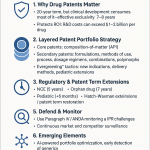
A well-constructed mini-tablet IP portfolio is built across five distinct claim categories, each covering a different layer of the product and process. Together, they constitute a patent thicket: a defensive structure that makes generic entry expensive, slow, and technically difficult, not because any single patent is impenetrable, but because the cumulative burden of challenging the entire thicket is prohibitive.
The five layers are as follows. The formulation patent claims the specific blend of API and excipients in the mini-tablet core, including the weight ratio of critical excipients (e.g., specific grades of MCC, specific croscarmellose sodium concentrations), the target mini-tablet physical properties (hardness range, disintegration time), and the resulting in vitro dissolution profile. The process patent claims the manufacturing parameters that achieve those physical properties: the multi-tip tooling configuration, the compression force range, the granulation endpoint parameters (if granulation is used), and the coating weight gain target with its allowed variance. The coating patent claims the polymer system used for taste-masking, enteric protection, or controlled release, including the specific polymer-plasticizer ratio and the resulting coating layer properties (thickness, dissolution trigger pH, release rate parameters). The combination patent claims the FDC architecture if multiple APIs are combined, specifying the ratio of mini-tablet populations, the resulting in vitro drug release pattern, and the clinical benefit (reduced food effect, reduced dosing frequency, improved tolerability). The method-of-use patent claims the specific therapeutic indication, patient population, and dosing regimen for which the mini-tablet formulation has been clinically validated, including pediatric age ranges if PREA or PIP studies have been conducted.
Each layer requires different data to support and defend. Formulation and process patents are strongest when backed by Quality by Design (QbD) process characterization data that defines a design space, not just a target operating point. Method-of-use patents are strongest when backed by clinical efficacy or adherence data in the claimed population, ideally from an FDA- or EMA-required pediatric or geriatric study.
Evergreening: Technical Legitimacy and Regulatory Posture
The term ‘evergreening’ is used pejoratively in policy discussions to describe any patent filing that extends exclusivity without meaningful clinical benefit. For mini-tablet reformulations, the distinction between legitimate lifecycle extension and regulatory gaming rests on clinical evidence. A taste-masked, controlled-release mini-tablet formulation for a pediatric population, validated in a PREA-required pediatric clinical program with documented improvements in adherence and dosing accuracy compared to the prior formulation, is not regulatory gaming. It is exactly what the FDA’s 6-month pediatric exclusivity incentive under BPCA was designed to reward.
The defensibility of an evergreening strategy in litigation follows the same logic. In Paragraph IV patent challenges, generic challengers must demonstrate that the patent is invalid or not infringed. Formulation patents supported by robust experimental data (showing the functional relationship between formulation variables and clinical performance) are harder to invalidate on obviousness grounds than patents with thin experimental support. A process patent backed by full QbD design space characterization, including failure mode analysis, is effectively non-infringing by design around: any generic manufacturer attempting to produce an equivalent product by a different process must contend with the fact that the only practical way to achieve the required product quality attributes may run through the patented process space.
IP Valuation Methodology for Mini-Tablet Platform Assets
For institutional investors and M&A deal teams, valuing a mini-tablet platform IP portfolio requires a modified rNPV (risk-adjusted Net Present Value) approach that treats each patent layer as an independent probability-weighted cash flow extension.
Start with the base case: the originator molecule’s revenue forecast under its current composition-of-matter patent term. Subtract the generic erosion curve (typically 80-90% revenue loss within 24 months of patent expiry for a challenged product). Then build the incremental case: the mini-tablet reformulation’s projected revenue, discounted by the probability that each patent layer in the thicket survives a Paragraph IV challenge or IPR (Inter Partes Review). Each patent layer has a different survival probability: formulation patents for truly novel release profiles have strong precedent for survival; process patents with thin experimental support have lower survival probability; method-of-use patents for broad therapeutic use claims are frequently challenged successfully, while method-of-use claims limited to specific patient subpopulations or dosing regimens have better survival rates.
The sum of risk-adjusted cash flows across all patent layers, minus the cost of the clinical development programs required to generate the supporting data, is the IP value of the mini-tablet platform asset. For a drug with $1B in annual revenues approaching patent expiry, even a 3-year extension in effective exclusivity at 70% revenue retention represents $2.1B in incremental NPV at standard discount rates. That far exceeds the typical cost of a mini-tablet reformulation program ($30-100M from development through regulatory submission), giving a favorable return on IP investment.
Key Takeaways: Section 7
The mini-tablet patent thicket consists of five distinct, stacked claim categories: formulation, process, coating, combination, and method of use. The clinical data generated in PREA or PIP programs is the evidentiary backbone of the most defensible patent layers. IP valuation should apply rNPV methodology to each patent layer separately, recognizing that survival probability differs by claim type. For a $1B-revenue drug, even a 3-year effective exclusivity extension justifies a development investment 10-20x the typical reformulation program cost.
8. Clinical Case Studies with IP Annotations
Case 1: Acetylsalicylic Acid Mini-Tablets in Pediatric Kawasaki Disease
A retrospective Japanese case series evaluated 3 mm, 10 mg aspirin mini-tablets in children aged 1-4 years diagnosed with Kawasaki disease, a condition requiring prolonged high-dose salicylate therapy. All subjects received 100% of prescribed doses over treatment durations exceeding two months. Zero adverse ingestion events were reported.
The IP context: aspirin is off-patent by many decades. The commercial opportunity here is not exclusivity protection for ASA itself but the formulation technology. A company that patents the specific 3 mm, 10 mg pediatric aspirin mini-tablet formulation with supporting pediatric acceptability and PK data can establish a branded pediatric aspirin product in a therapeutic area where the alternative is crushing adult tablets, a practice with documented dose accuracy problems. The pediatric exclusivity incentive under BPCA, if a Pediatric Written Request is fulfilled, adds 6 months of OTC or prescription exclusivity. Given aspirin’s generic status, the real value is in the formulation patent protecting the dosage form against generic mini-tablet copy products.
Case 2: Rivastigmine Mini-Tablets for Alzheimer’s Disease
An ongoing multi-center observational trial (ClinicalTrials.gov NCT06828289) is evaluating rivastigmine in a mini-tablet format for mild-to-moderate Alzheimer’s disease. The explicit development rationale is addressing dysphagia in elderly patients and reducing the GI side effect profile (nausea, vomiting) through an optimized release profile.
IP context: rivastigmine (Exelon) is a Novartis asset whose core composition-of-matter patent expired in 2006. Generic rivastigmine capsules and patches are widely available. A mini-tablet formulation with a demonstrated reduction in GI adverse effects, validated in a properly powered clinical study, would support both a formulation patent (covering the specific extended-release mini-tablet architecture) and a method-of-use patent (covering the use of the formulation to reduce the incidence of nausea and vomiting in a defined dose range). If the formulation achieves bioequivalent AUC with a statistically significant reduction in Cmax and corresponding reduction in GI events, that clinical data makes the method-of-use claim commercially defensible and meaningful from a payer value proposition standpoint.
IP Valuation: Rivastigmine’s current branded transdermal patch (Exelon Patch) generated approximately $300M annually before losing exclusivity. A differentiated oral mini-tablet for patients who cannot use or tolerate patches, supported by GI tolerability clinical data and formulation patents, could capture a meaningful niche in the $5B+ Alzheimer’s drug market with a 5-to-8-year exclusivity runway under formulation patent protection.
Case 3: Metoprolol Succinate Extended-Release Pellets as the Multi-Particulate Commercial Precedent
Metoprolol succinate extended-release tablets (Toprol-XL, AstraZeneca) is the benchmark commercial success story for multiparticulate oral drug delivery. The product uses polymer-coated pellets filled into a scored tablet that rapidly disintegrates, releasing the pellets. The pellet coating controls drug release over 24 hours. This architecture achieved FDA approval in 1992 and generated over $1B in annual peak revenues.
The AstraZeneca IP strategy for Toprol-XL covered the pellet-based extended-release architecture through multiple formulation patents, process patents on the specific polymer coating system, and method-of-use patents for once-daily beta-blocker therapy in heart failure. When the core composition-of-matter patent for metoprolol succinate expired, generics challenged the formulation patents in Paragraph IV proceedings. AstraZeneca successfully enforced key formulation patents, delaying generic entry for several years beyond the composition-of-matter expiry. This delayed entry added over $1B in cumulative revenue.
For mini-tablet developers, this case validates the commercial logic of formulation patent thickets for multiparticulate systems: even when the API is off-patent, the dosage form architecture can sustain exclusivity meaningful enough to justify the development and litigation investment.
Case 4: Cardiovascular Polypill Using Mini-Tablet-in-Capsule Technology
A formulation study published in the clinical literature described a four-drug cardiovascular FDC capsule combining immediate-release hydrochlorothiazide and simvastatin populations with sustained-release metoprolol succinate and aspirin populations in a single hard gelatin capsule. The four APIs are chemically incompatible in a conventional blend; hydrochlorothiazide and aspirin cannot be co-processed without degradation under certain humidity conditions. The mini-tablet-in-capsule architecture resolves this by keeping each population physically separated until dissolution.
The IP architecture for such a product would layer claims on each individual mini-tablet formulation, the combination of specified populations at specified ratios, the capsule fill process parameters required to achieve content uniformity across all four API populations, and the method of use for secondary cardiovascular prevention in a high-risk patient population. The combination patent (covering the specific 4-component mix) is the highest-value claim because it is the least replicable by competitors.
Key Takeaways: Section 8
Clinical case studies confirm the pediatric and geriatric efficacy of mini-tablets across multiple therapeutic areas. IP annotation of each case shows that commercial value lies not in API exclusivity (often expired) but in formulation patents, combination patents, and method-of-use claims built on clinical evidence. The metoprolol succinate/Toprol-XL precedent confirms that multiparticulate formulation patents can sustain commercially significant exclusivity well beyond composition-of-matter expiry.
9. Regulatory Roadmap: PREA, BPCA, EMA Paediatric Regulation, and Submission Strategy
U.S. Pediatric Regulatory Framework: PREA Mandates and BPCA Incentives
The Pediatric Research Equity Act (PREA), codified at 21 U.S.C. 355a, requires companies filing NDAs or BLAs for drugs likely to be used in pediatric patients to conduct pediatric studies and submit results with the application. Failure to comply can block approval. The Best Pharmaceuticals for Children Act (BPCA) creates a voluntary pathway: if the FDA issues a Written Request for pediatric studies and the company completes them, an additional 6 months of exclusivity is added to all existing Orange Book patents and exclusivity periods, regardless of whether the studies support a pediatric labeling claim.
For a mini-tablet reformulation program, PREA and BPCA create a structured development pathway. The Initial Pediatric Study Plan (iPSP) filed with the NDA must include the company’s age-appropriate formulation strategy. A well-designed iPSP citing the established clinical evidence for mini-tablet acceptability in the target age range (6 months to 6 years, or 6 to 12 years, depending on indication) and proposing a mini-tablet clinical trial design is reviewed by FDA’s Office of Pediatric Therapeutics. Early FDA engagement on the iPSP, through Type B meetings or written responses to iPSP submissions, can validate the mini-tablet formulation choice and reduce late-stage CMC risk.
The 6-month BPCA exclusivity extension is attached to all existing patents listed in the Orange Book for the product. If a drug has formulation patents with 8 years remaining when the BPCA exclusivity is earned, those patents’ terms extend by 6 months. For a drug generating $500M annually, that 6 months is worth $250M in pre-generic revenue, easily justifying a pediatric clinical program costing $20-50M.
EMA Framework: PIPs, the Paediatric Committee, and Formulation Guidance
The EMA’s Paediatric Regulation (EC No 1901/2006) requires submission of a Paediatric Investigation Plan (PIP) for all new medicines and new indications, with some exceptions. The PIP must describe the studies, measures, and formulations that ensure the medicine is developed appropriately for pediatric populations. Compliance with the agreed PIP is required for EU marketing authorization.
EMA’s Guideline on pharmaceutical development of medicines for paediatric use (EMA/CHMP/QWP/805880/2012) and the Paediatric Committee’s reflection papers on specific dosage forms provide explicit endorsement of mini-tablets as age-appropriate solid oral dosage forms. The guidelines note that oral solid multiparticulate formulations ‘are likely to be considered suitable’ from infancy onward when clinical acceptability data support this, and that extemporaneous liquid preparations should be avoided when a more stable, accurate solid alternative is available. This language directly supports the regulatory narrative for mini-tablets in a PIP: the company is using the dosage form that the EMA’s own guidelines favor over the liquid alternative.
Paediatric Reward (an extension of supplementary protection certificate or SPC duration) is available for products complying with an agreed PIP. SPC extension provides up to 6 months of additional exclusivity in EU member states. Combined with U.S. BPCA extension, a mini-tablet pediatric development program can add up to 12 months of combined U.S./EU exclusivity, with symmetric value in both major markets.
CMC Strategy for Mini-Tablet NDA/ANDA Submissions
For a branded NDA, the CMC section for a mini-tablet product is more complex than for a conventional tablet due to the need to characterize individual mini-tablet subpopulations, the fill process, the multi-tip tooling performance, and any functional coatings. The following components require specific attention.
Drug Product Specification: in addition to standard tablet tests (description, identification, assay, dissolution, content uniformity), mini-tablet specifications must address individual unit weight variation, tablet hardness (relevant to coating adhesion), and, for FDC products, content uniformity per API per unit. USP <905> content uniformity testing requires a minimum of 30 units sampled from multiple fills for products with low fill numbers.
Process Validation: the validation protocol must demonstrate that the multi-tip tooling produces statistically equivalent mini-tablets across all tips. Per-tip weight monitoring data from the press, with statistical analysis confirming equivalence across tips within a run and across runs, is standard regulatory expectation. Regulatory agencies have cited inadequate per-tip characterization as a deficiency in 505(b)(1) applications for mini-tablet products.
For ANDA filers, demonstrating bioequivalence to an innovative mini-tablet product is more complex than for a conventional tablet. If the reference listed drug (RLD) is a multiparticulate, FDA may require in vitro dissolution equivalence across multiple pH conditions (pH 1.2, 4.5, 6.8) in addition to in vivo BE studies. The higher technical bar for ANDA approval creates a longer runway between NDA approval and first generic entry for mini-tablet products compared to conventional tablets.
Key Takeaways: Section 9
PREA/BPCA in the U.S. and the EMA Paediatric Regulation create financial incentives (exclusivity extension) and regulatory mandates (iPSP/PIP) that align with mini-tablet development programs. The combined 12-month exclusivity extension across U.S. and EU markets creates measurable NPV from pediatric program investment. ANDA filers face higher technical barriers for mini-tablet bioequivalence demonstration, lengthening the effective exclusivity period beyond the nominal patent term.
10. Market Sizing and Commercial Dynamics
Oral Solid Dosage Market and Multiparticulate Segment
The global oral solid dosage pharmaceutical market was valued at approximately $678B in 2023 and is projected to reach $1.2T by 2032, growing at a CAGR of roughly 6.5%. Tablets account for the majority of OSD revenue, followed by capsules. The multiparticulate drug delivery system segment, which includes pellets, granules, and mini-tablets, is growing faster than conventional tablets: the broader multiparticulate segment is projected to expand at a CAGR of approximately 8.5-9% through 2030, driven by the same chronic disease burden and aging population dynamics that are straining conventional formulation approaches.
The pediatric drugs market specifically is growing at a CAGR above 12%, reflecting both increasing prevalence of chronic childhood conditions (including oncologic, neurologic, and metabolic diseases in children) and the regulatory-mandated expansion of labeled pediatric uses for marketed drugs. The Orally Disintegrating Tablet segment, which addresses the same swallowability problem via a different mechanism, had a projected market size above $25B in 2025. Mini-tablets compete and co-exist with ODTs: for patients who can cooperate with oral dosing and can receive the drug in food, mini-tablets offer superior dose accuracy and a more extensive functional coating toolkit.
Competitive Dynamics: CDMOs and Branded Innovators
The CDMO landscape for mini-tablet development includes Catalent (which has published extensively on mini-tablet formulation and has dedicated mini-tablet production capacity), Evonik (which supplies functional coating polymers and has formulation development partnerships), and Recipharm. Several European CDMOs, including Alfred E. Tiefenbacher and Novaliq, have specific pediatric formulation capabilities that include mini-tablet development. The concentration of CDMO capacity in Europe reflects the EMA’s relatively advanced regulatory framework for pediatric formulation, which created earlier commercial demand.
For innovator companies considering a mini-tablet lifecycle program, the build-versus-partner decision involves three variables: the timeline to commercial production, the IP ownership structure of CDMO-developed innovations, and the capital efficiency of dedicated internal capacity versus cost-per-batch CDMO pricing. For a program expected to produce 5 or more commercial SKUs from a single mini-tablet intermediate, internal capacity eventually becomes cost-competitive with CDMO pricing. For a one-or-two-SKU lifecycle extension program, CDMO partnership with a carefully structured IP ownership agreement (all formulation IP stays with the innovator) is typically more capital-efficient.
Key Takeaways: Section 10
The multiparticulate market is growing above the OSD average rate, and the pediatric drugs segment is growing at more than twice the OSD average. Mini-tablets sit at the intersection of both high-growth segments. CDMO capacity for mini-tablet manufacturing is available but concentrated; IP ownership terms in CDMO development agreements require careful negotiation to protect the innovator’s LCM strategy.
11. 3D Printing and Digital Health: The Next Formulation Frontier
3D Printing: Point-of-Care Manufacturing and the N-of-1 Dose
FDA approved the first 3D-printed drug product, SPRITAM (levetiracetam, Aprecia Pharmaceuticals) in 2015. SPRITAM uses ZipDose technology, a powder-bed binder-jetting process that creates a rapidly disintegrating tablet with a porous architecture that allows very high drug loading at low mechanical force. The clinical value was straightforward: high-dose antiepileptic therapy in a tablet that disintegrates with a small volume of liquid, addressing dysphagia in a patient population prone to swallowing difficulties.
3D printing’s relevance to mini-tablets is convergent rather than competitive. The most likely clinical implementation is not 3D-printed mini-tablets per se, but 3D-printed carriers containing pre-manufactured mini-tablets as the API-delivery subunit. A hospital pharmacy 3D printer could receive a digital prescription for a non-standard dose of drug X in a pediatric patient and print a rapidly-disintegrating disc or capsule-shaped object containing a specified count of standard-grade mini-tablets embedded in an excipient matrix. The dose precision comes from the mini-tablet count; the patient convenience comes from the 3D-printed carrier’s dissolution behavior.
This approach separates the quality-controlled pharmaceutical manufacturing step (making the GMP mini-tablets) from the patient-specific dosing step (embedding the correct count in a carrier at point of care), a regulatory bifurcation that requires careful handling but is not structurally different from how pharmacy-compounding and manufacturer-supplied active ingredients are already treated under existing U.S. and EU regulatory frameworks. The FDA’s 2023 Technical Considerations for 3D-Printed Devices and the emerging EU compounding framework both provide conceptual space for this model, though specific guidance for drug-embedded 3D-printed carriers at point of care remains pending.
Digital Pills and the Ingestible Sensor Ecosystem
Abilify MyCite (aripiprazole + ingestible sensor, Otsuka/Proteus) received FDA approval in 2017 as the first digital medicine. The system embeds a copper-magnesium galvanic cell sensor in the tablet; gastric fluid activates the sensor, which transmits a signal to a wearable patch, which relays confirmation of ingestion to a patient-facing app and authorized clinician dashboard. The regulatory pathway was a combination product: drug-device combination, reviewed through CDER with device components reviewed under CDRH consultation.
For mini-tablet products, the digital pill architecture is technically feasible at the individual unit level only if sensor miniaturization reaches sub-2 mm. Current ingestible sensor technology requires a 4-6 mm tablet body to accommodate the sensor component without compromising drug content uniformity. The near-term implementation for mini-tablet FDC regimens is a hybrid: one or two sensor-containing mini-tablet-sized units mixed with standard therapeutic mini-tablets within the same capsule. The sensor unit confirms ingestion of the capsule; the therapeutic units deliver the dose. The patient cannot separate them without opening the capsule, which is detectable (the capsule would not be weight-conforming at intact inspection).
The commercial model for digital medicine is value-based contracting. Payers increasingly want objective adherence data as a condition of premium pricing. A mini-tablet polypharmacy product for heart failure or HIV management that includes ingestion verification could justify a significant price premium over the same drug in a conventional formulation, backed by an outcomes contract guaranteeing hospitalization reduction at target adherence rates. Several payers in the UK, Germany, and select U.S. managed care organizations have expressed interest in outcomes-based pricing for adherence-enhancing digital medicine products since the Abilify MyCite approval created the regulatory precedent.
Key Takeaways: Section 11
3D printing is most relevant to mini-tablets as a point-of-care carrier technology, not a substitute manufacturing process. The mini-tablet’s value in this context is as the quality-controlled, dose-precise subunit that a pharmacy-level 3D printer embeds in a patient-specific carrier. Digital pill technology integration with mini-tablet FDC products enables outcomes-based contracting with payers, potentially the highest-value commercial model for complex multi-drug polypharmacy regimens.
12. Investment Strategy Appendix
Screening Criteria for Mini-Tablet LCM Opportunities
Analysts evaluating a pharmaceutical company’s LCM pipeline for mini-tablet-related value creation should apply the following screening criteria:
The first filter is composition-of-matter patent expiry horizon. Target drugs with 4-8 years remaining before loss of exclusivity (LOE). Too far out, and the LCM program’s value is not yet in the forecast. Too close, and there is insufficient development time to file and prosecute formulation patents before the LOE.
The second filter is existing formulation limitations. Look for products where the current dosage form has documented patient acceptability problems: pediatric liquid formulations with taste masking or stability issues, conventional tablets with a strong Food Effect (defined as greater than 20% difference in Cmax or AUC between fed and fasted states), or monolithic controlled-release products with published dose dumping risk or high inter-patient PK variability.
The third filter is regulatory program opportunity. Confirm that an iPSP or PIP has not yet been filed (or that the filed plan uses a liquid formulation as the pediatric vehicle, which can be superseded by a more appropriate solid form). The BPCA Written Request database (accessible at FDA.gov) lists outstanding Written Requests; if a drug you are evaluating has an outstanding WR with no completed studies, that is a window for a mini-tablet reformulation to satisfy the WR and capture the exclusivity extension.
The fourth filter is patent landscape white space. Use a tool such as DrugPatentWatch to map existing formulation patents for the target drug. Assess whether the mini-tablet formulation approach you are contemplating falls within the scope of existing claims. If the white space is clear, proceed to design around analysis with patent counsel. If competitive filings are dense, quantify the workaround cost before committing development resources.
M&A Valuation Implications
For deal teams assessing acquisition targets whose pipeline includes mini-tablet platform assets, the IP valuation methodology in Section 7 applies directly. The key due diligence questions are: what is the expiry date of each patent in the formulation thicket, has any patent been subject to IPR petition and what was the outcome, is the clinical data supporting method-of-use claims published in peer-reviewed literature (which strengthens validity arguments in litigation), and does the CMC dossier contain sufficient QbD characterization to support the process patent claims in litigation discovery?
Platform assets (a validated mini-tablet manufacturing process and formulation toolkit applicable to multiple drugs) should be valued as a multiple of the discounted cash flows they can generate across all potential applications, not just the current commercial product. A CDMO or contract formulator with validated mini-tablet capability, a process patent on multi-tip tooling optimization, and coating patents on a proprietary taste-masking system has a platform value that extends well beyond any individual drug application. Transactions in the specialty CDMO space have been completed at EBITDA multiples of 15-25x when the target has validated complex formulation capabilities with defensible IP; mini-tablet platform assets with proven commercial-scale output and regulatory precedent (one approved NDA or equivalent) sit at the upper end of that range.
Key Takeaways: Section 12
LOE horizon, formulation limitation severity, open regulatory program windows, and patent white space are the four filters for identifying high-value mini-tablet LCM targets. BPCA/Paediatric Reward exclusivity extension is a monetizable asset with predictable NPV. Platform CDMO assets with mini-tablet capability and defensible process IP command premium EBITDA multiples in M&A transactions.
13. Key Takeaways by Segment
For Formulation Scientists and R&D Teams
Mini-tablets are a standardized bulk intermediate, not a finished product. Design the formulation around the compression force ceiling imposed by multi-tip tooling, not the other way around. Set Carr Index targets, compressibility targets, and force specifications as QTPP parameters at project initiation. PAT implementation (NIR blend monitoring, force-per-station monitoring, OCT coating thickness) should be designed into the process from the start; retrofitting PAT after commercial launch is significantly more expensive and time-consuming.
For IP Teams
Build a five-layer patent thicket: formulation, process, coating, combination, and method of use. The method-of-use layer requires clinical data for defensibility; tie its prosecution timeline to the completion of the PREA or PIP clinical program. Monitor competitive patent filings using DrugPatentWatch or equivalent: a cluster of formulation, process, and method-of-use filings around a single API by a competitor signals a platform strategy commitment, not just a product development project.
For Regulatory Affairs Teams
File the iPSP early and nominate mini-tablets explicitly as the pediatric formulation vehicle with supporting acceptability literature. Use EMA reflection paper language in the PIP submission to pre-empt PDCO objections to solid dosage forms in young children. Build the RTRT regulatory strategy in parallel with the standard batch release dossier; RTRT approval for content uniformity is achievable for mini-tablet products with robust NIR characterization and is a competitive advantage that generic challengers cannot easily replicate.
For Institutional Investors
The highest NPV opportunities in mini-tablet lifecycle management are NTI drug reformulations (reducing documented PK variability, enabling formulation and method-of-use patents on a composition-of-matter-expired molecule) and pediatric reformulation programs with open BPCA Written Requests (capturing the 6-month exclusivity extension from a program that typically costs less than the incremental revenue it protects). Screen for drugs with LOE within 4-8 years, a documented food effect or high Cmax CV, and no existing multiparticulate formulation patent coverage.
For real-time patent expiry tracking, Paragraph IV filing alerts, and competitive formulation patent landscape analysis, DrugPatentWatch provides the data infrastructure required to execute the strategies described in this report.
Original source article: DrugPatentWatch Blog, July 29, 2025. This document represents a substantially expanded, independently researched derivative work for informational and analytical purposes.