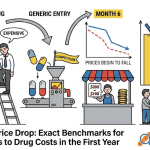
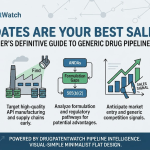
The generic drug market runs on a brutal arithmetic. Generics account for 90% of U.S. prescriptions but only 13%-22% of total drug spending. That ratio — call it the 90/13 paradox — means the average revenue per prescription is structurally low from day one. When six or more generic manufacturers compete for the same molecule, the average manufacturer price falls by 95% relative to the reference listed drug (RLD). With two competitors, the drop is 54%. With one, 39%.
This is not a commodity problem that can be solved with operational tweaks. It is a structural fact of the market design created by Hatch-Waxman. The companies that generate durable margins in this sector do so by reaching market before the price collapses, by developing products difficult enough to replicate that competition stays thin, or by using IP strategy to reset the competitive clock. Everything else is noise.
The practical implication for R&D leads and portfolio managers: the selection of which ANDA to pursue matters as much as the execution of it. A molecule with two generic applicants already approved is a manufacturing exercise. A molecule with a defensible Paragraph IV certification filing opportunity and a thin patent cluster is a business opportunity.
II. Market Size, Growth Vectors, and the $350 Billion Patent Cliff
The global generic drug market was valued at $445.62 billion in 2024. Projections from Precedence Research place it at $728.64 billion by 2034, a CAGR of 5.04%. Custom Market Insights puts the 2034 figure higher, at $926.54 billion, at a CAGR of 6.55%. The U.S. segment alone, valued at $139.03 billion in 2024, is projected to reach $231.69 billion by 2034.
Those top-line figures matter less than understanding what is driving them. The core driver through 2029 is $350 billion in branded revenue at risk from patent expirations. Among the products facing loss of exclusivity in late 2025: Novartis’s Entresto (sacubitril/valsartan), AstraZeneca’s and Boehringer Ingelheim’s Tradjenta (linagliptin), and Actelion’s Opsumit (macitentan).
Entresto’s IP Profile as a Case Study in Patent Cluster Complexity
Entresto generated roughly $7 billion in global revenue in 2023. Its Orange Book listing includes patents on the sacubitril/valsartan co-crystal salt (the active moiety), formulation patents, and method-of-treatment patents covering specific patient subpopulations. Novartis has pursued overlapping patent protection across the compound, its synthesis routes, and its specific crystalline forms — a layered exclusivity strategy called evergreening. Generic challengers filing Paragraph IV ANDAs against Entresto face the task of invalidating or designing around multiple independent patent families rather than a single composition-of-matter claim.
The IP valuation of Entresto as a branded asset rests primarily on the compound patent expiring in 2026, with method-of-use extensions potentially running to 2028 or beyond depending on patent term extension (PTE) grants under 35 U.S.C. § 156. For the generic applicant, a successful Paragraph IV outcome during the 180-day exclusivity window would capture a duopoly share of a multi-billion-dollar market at prices 15%-25% below brand, before multi-generic erosion drives prices toward 80%-90% below brand.
Tradjenta: The DPP-4 Cluster and Pediatric Exclusivity Complications
Tradjenta’s IP stack is representative of a different class of problem. The core compound patent for linagliptin expired, but Boehringer and Lilly pursued pediatric exclusivity extensions that add six months of additional market protection — a regulatory tool, not a patent, but one that delays generic approval just as effectively. Generic challengers must account for these Pediatric Exclusivity (PE) periods, which appear in the Orange Book as exclusivity codes rather than patent expiration dates, and time ANDA submissions accordingly.
Opsumit and the Orphan Drug Exclusivity Overlay
Macitentan for pulmonary arterial hypertension carries Orphan Drug Exclusivity (ODE) — seven years of FDA exclusivity for drugs treating rare diseases — stacked on top of compound patent protection. The interaction between ODE and Paragraph IV rights creates significant uncertainty for generic filers: a successful patent challenge does not override ODE. Generic applicants must wait for the ODE period to expire before the FDA can approve a generic, regardless of patent litigation outcomes. This makes the IP due diligence on orphan-designated drugs categorically different from standard small-molecule ANDA targets.
Growth by Therapeutic Segment
Oncology represents the fastest-growing segment within generics, driven by the wave of cancer drug LOEs and the extraordinary cost burden of branded oncology products on payers and patients. Cardiovascular and respiratory generics, while more mature, maintain large volume bases because of chronic disease prevalence. The chronic disease driver is structural: aging demographics in North America, Europe, and Asia-Pacific sustain demand regardless of economic cycles.
Key Takeaways: Market Size and Growth
The $350 billion patent cliff through 2029 is not evenly distributed. The highest-value opportunities cluster in molecules with complex IP landscapes — Paragraph IV targets where a successful challenge yields 180-day exclusivity on a multi-billion-dollar franchise. The global CAGR of 5%-6.5% tells you the market is growing; it does not tell you which products within it will generate acceptable margins. Portfolio construction requires molecule-level IP analysis, not just market-level revenue projections.
III. The ANDA Process as a Profit Engine, Not Just a Regulatory Hurdle
The Abbreviated New Drug Application process, established under the Drug Price Competition and Patent Term Restoration Act of 1984 (Hatch-Waxman), exempts generic applicants from the full clinical safety and efficacy package required by an NDA. That exemption exists because the RLD’s clinical data already demonstrates the therapeutic class’s safety and efficacy. The ANDA applicant instead demonstrates that its product is bioequivalent to the RLD.
Bioequivalence in the FDA framework means that the 90% confidence interval for the ratio of geometric means of Cmax and AUC for the generic versus the reference product falls within 80%-125%. That interval is narrower than it looks in practice, because the study must be powered to detect differences at the 10% level while accommodating the biological variability inherent in human pharmacokinetics. Studies typically enroll 24-36 healthy adult volunteers, with crossover designs used to reduce inter-subject variability. For high-variability drugs (HVDs), where intra-subject variability in Cmax exceeds 30%, FDA allows scaled average bioequivalence (SABE) with reference scaling, which widens the acceptance criterion for Cmax while maintaining the standard interval for AUC.
The ANDA submission package must document: active and inactive ingredient identity and composition, the complete manufacturing process and controls, primary and accelerated stability data covering 6-12 months at minimum, bioequivalence study reports including raw pharmacokinetic data, and labeling identical to the RLD with permissible differences for inactive ingredient disclosure. CGMP compliance certification is embedded in the application through 21 CFR 314.50(d)(1).
GDUFA II performance goals set the target for FDA to issue an action (complete response or approval) on 90% of original ANDAs within 10 months of filing. In practice, the median time from ANDA submission to approval has been closer to 36-48 months for complex products, particularly those requiring additional bioequivalence studies, amendments, or responding to manufacturing-related deficiencies.
Complete Response Letters and Their Cost
A Complete Response Letter (CRL) signals that the FDA cannot approve the application as submitted. CRLs cost money in two ways: the direct cost of addressing deficiencies (additional studies, manufacturing remediation, updated labeling) and the opportunity cost of delayed market entry. For a molecule approaching 180-day exclusivity eligibility, a CRL that pushes approval past the exclusivity trigger period can eliminate the most profitable window entirely. Robust pre-submission preparation — including early use of Product-Specific Guidances (PSGs), pre-ANDA meetings with FDA under GDUFA II, and thorough quality assurance review of the entire dossier before submission — is the primary lever for avoiding CRLs.
GDUFA III and the Evolving Fee Structure
GDUFA III, which governs generic drug user fees from FY2023 through FY2027, introduced a tiered facility fee structure and increased emphasis on risk-based inspection scheduling. Facilities with histories of import alerts or consent decrees pay higher fees and receive more frequent inspections. The practical implication for generic manufacturers operating API or finished dosage form (FDF) sites in India or China: maintaining a clean inspection record is not just a quality imperative, it is a direct cost driver.
IV. Paragraph IV Filings: The High-Stakes IP Chess Match
The Paragraph IV certification is the most consequential legal act available to a generic drug developer. It is a formal assertion to FDA — certified by the applicant’s authorized representative — that a listed patent is invalid, unenforceable, or will not be infringed by the manufacture, use, or sale of the generic drug. Filing an ANDA with a Paragraph IV certification triggers an immediate notice requirement: the generic applicant must notify both the patent holder and the NDA holder within 20 days of FDA’s acknowledgment letter.
If the NDA holder files a patent infringement suit within 45 days of receiving that notice, FDA must stay approval of the ANDA for 30 months, or until a final district court decision finding the patent invalid, unenforceable, or not infringed, whichever comes first. This 30-month stay represents hundreds of millions to billions of dollars in protected branded revenue for the innovator — which is precisely why NDA holders nearly always sue within the 45-day window, regardless of the strength of their patent position.
The 180-Day Exclusivity Mechanics
The first generic applicant to submit a substantially complete ANDA with a Paragraph IV certification earns eligibility for 180-day exclusivity — but eligibility is not the same as entitlement. The 180-day clock starts from the earlier of: (1) commercial marketing of the first approved generic, or (2) a court decision holding the relevant patent invalid, unenforceable, or not infringed. The FDA cannot approve any other generic ANDA for the same drug during this 180-day window.
Multiple applicants can share first-filer status if they submit on the same date. This shared exclusivity scenario — common for high-value Paragraph IV targets — splits the economic benefit across all first filers but still provides a meaningful duopoly window before multi-generic competition begins.
Forfeiture Events
Congress has enumerated circumstances under which first-filer exclusivity can be forfeited, removing one of the most valuable prizes in generic drug development. Forfeiture triggers include: failure to market within 75 days of FDA approval (or a court decision, whichever is earlier), withdrawal of the ANDA, amendment changing the certification from Paragraph IV to Paragraph III, and failure to obtain tentative approval within 30 months of filing if the delay is due to ANDA deficiencies. The forfeiture provisions exist to prevent “parking” — where a first filer sits on its exclusivity without launching, blocking all subsequent generic entry.
Patent Certification Strategy for Complex IP Landscapes
Most Orange Book-listed drugs carry multiple patents across compound claims, formulation claims, method-of-use claims, and metabolite claims. The generic applicant must certify separately to each listed patent. For a drug like Entresto, which lists patents covering the supramolecular co-crystal, specific polymorphic forms, and specific treatment indications, the strategic question is which patents to challenge with Paragraph IV certifications versus which to accept with Paragraph III certifications (agreeing to wait for expiration).
A Paragraph IV challenge on a formulation patent — while the compound patent is accepted under Paragraph III — can yield earlier market entry on a reformulated product without triggering the full 30-month stay on the compound claim. This requires close coordination between IP litigation counsel and the formulation chemistry team, who must design the generic product to genuinely not infringe the challenged formulation patent while maintaining bioequivalence to the RLD.
Section viii Carve-outs
Where a listed patent covers only a specific method-of-use not included in the generic’s proposed labeling, the applicant can file a Section viii statement instead of a Paragraph IV certification. The Section viii approach allows the generic to launch without triggering the 30-month stay on method-of-use patents, as long as the skinny label — omitting the patented indication — does not create substantial risk of contributory infringement. The GlaxoSmithKline v. Teva litigation (the coreg case) complicated this strategy by finding that even a skinny label could constitute induced infringement if the generic manufacturer’s promotional materials or instructions encouraged the patented use. IP teams must now conduct pre-launch promotional review to ensure the carved-out label is genuinely clean.
Key Takeaways: Paragraph IV Strategy
The 180-day exclusivity window is the single highest-return opportunity in generic drug development. Capturing it requires first-filer status, which requires comprehensive Orange Book surveillance, rapid ANDA formulation, and patent challenge readiness before competitors reach the same target. Maintaining that exclusivity through forfeiture avoidance requires operational readiness to launch within 75 days of approval. Section viii carve-outs are a viable tactic for method-of-use patents but carry post-GSK v. Teva litigation risk that requires careful promotional review.
V. IP Valuation in Generic Drug Development
IP valuation in the generic drug context operates differently from brand-side pharmaceutical IP valuation. For an innovator, the patent portfolio’s worth is its ability to sustain exclusivity and pricing power. For a generic developer, IP value is measured by how quickly and cleanly a patent landscape can be cleared, and what market position that clearance enables.
The Three-Asset Framework for Generic IP Valuation
Generic drug IP assets fall into three categories, each valued by a different methodology.
The first category is Paragraph IV challenge success probability. This is typically assessed using a decision-tree model that assigns probability-weighted values to litigation outcomes (validity, enforceability, non-infringement) for each challenged patent, then applies those probability weights to the NPV of the 180-day exclusivity period. Inputs include the patent’s claim scope relative to the generic’s formulation, the strength of prior art for invalidity challenges, and the track record of the NDA holder’s litigation counsel in the relevant district. Delaware, New Jersey, and the Southern District of New York see the bulk of Hatch-Waxman litigation. Win rates vary by patent type: formulation patents have historically been more vulnerable to invalidity challenges than composition-of-matter claims, but data from FTI Consulting and other litigation analytics firms show that outcome distributions have shifted with post-AIA IPR proceedings.
The second category is the ANDA itself as an approvable asset. Once a substantially complete ANDA is on file with FDA, particularly one with Paragraph IV certification and first-filer status, it has transaction value. ANDA portfolios routinely change hands in pharma M&A. The ANDA asset’s value depends on approval probability, time to approval, market size at entry, anticipated competition, and remaining exclusivity period. For complex ANDAs with tentative approval and first-filer status, the acquisition premium is substantial.
The third category is formulation IP developed during the ANDA process. Generic developers who solve a hard bioequivalence problem — a poorly soluble BCS Class II or IV compound, or a complex modified-release system — often hold proprietary formulation know-how that cannot be easily replicated. While this know-how typically does not qualify for patent protection without a meaningful inventive step, it creates a practical competitive moat. Companies that have solved the bioequivalence problem once have a head start on any competitor attempting the same product.
Evergreening Tactics and Their Relevance to Generic IP Valuation
Branded manufacturers extend effective exclusivity through evergreening: filing secondary patents on new formulations, new salts, new polymorphic forms, enantiomers, metabolites, or new methods of use. The generic developer’s IP due diligence must map the full evergreening architecture to assess true clearance risk. A drug’s compound patent may expire in 2026, but if the NDA holder has successfully filed and listed formulation patents running to 2031, the practical entry barrier extends five years beyond what a simple Orange Book search suggests.
Common evergreening mechanisms include: controlled-release formulation patents (often generating new U.S. listings under a new NDA for the extended-release product), new salt patents (converting a free acid to a sodium salt, for example, when the original compound patent covers only the free acid), prodrug patents (claiming a new molecular entity that converts in vivo to the original active drug), and new indication patents supported by supplemental NDAs. Each of these generates a new Orange Book listing with potentially new Paragraph IV challenge obligations.
Supplementary Protection Certificates in Europe
The European equivalent of patent term extension is the Supplementary Protection Certificate (SPC), which can extend effective patent protection for up to five additional years beyond patent expiry, with a further six-month extension for pediatric studies. SPCs are granted per member state, and their validity has been the subject of significant CJEU litigation — most recently around the question of whether SPCs can be granted for combination products and whether manufacturing for export to non-EU markets infringes an SPC (the SPC manufacturing waiver, now harmonized across the EU). Generic developers with European ANDA equivalents (Article 10 applications) must map SPCs separately from the underlying compound patent, as SPC expiry dates vary by jurisdiction.
Key Takeaways: IP Valuation
For generic developers, the primary IP valuation metric is probability-weighted NPV of the 180-day exclusivity window. Secondary valuation accrues to the ANDA as a transaction asset and to proprietary formulation know-how. Evergreening analysis must extend beyond the core Orange Book compound patent to map the full secondary patent cluster, SPC coverage in Europe, and pediatric exclusivity extensions in both jurisdictions.
VI. Formulation Innovation: Complex Generics, Super Generics, and the Nanotechnology Frontier
The segment of generic drug development with the most durable margin profile is not standard oral solid dosage forms — those markets commoditize rapidly. The durable margin comes from products where the formulation itself is the technical barrier to competition.
What the FDA Defines as a Complex Product
The FDA uses four categories to define complex drug products: complex active ingredients (peptides, polymeric mixtures, complex mixtures), complex formulations (liposomes, microspheres, modified-release systems), complex routes of administration (topical, transdermal, nasal, ophthalmic, otic, rectal, vaginal), and complex drug-device combinations (inhalers, auto-injectors, prefilled syringes). Each category carries its own bioequivalence standard, often requiring demonstration of not just pharmacokinetic bioequivalence but functional sameness — measuring drug deposition in the lung for inhaled products, or skin permeation profiles for transdermals, or in vitro drug release patterns for extended-release injectables.
Technology Roadmap: Modified-Release Oral Dosage Forms
Modified-release formulations — extended-release (ER), delayed-release (DR), and pulsatile-release systems — use drug release-controlling mechanisms to produce pharmacokinetic profiles that differ from immediate-release versions. The release mechanism may be matrix-based (the drug is dispersed in a polymer that swells and erodes), membrane-coated (the drug is contained in a coated bead or tablet that releases through diffusion), or osmotic (the OROS system, patented by ALZA and now off-patent, uses osmotic pressure to drive drug through a laser-drilled hole at a controlled rate).
For generic developers, the bioequivalence challenge for ER formulations is multifold: in vivo bioequivalence studies must typically include both fed and fasted conditions, because food effects on ER release mechanisms can differ between the RLD and the generic. FDA’s guidance on extended-release oral dosage forms also requires that the generic’s in vitro dissolution profile be similar to the RLD’s profile across multiple pH conditions — typically pH 1.2, 4.5, and 6.8 — with similarity determined by the f2 statistical test (f2 ≥ 50 indicates similar profiles). Demonstrating Q3 similarity (similar dissolution rate and extent at the microscopic level) requires characterizing the microstructure of the drug release mechanism, not just the macroscopic release profile.
Technology Roadmap: Inhaled Drug Products
Inhaled products — dry powder inhalers (DPIs), metered-dose inhalers (MDIs), and nebulized solutions — represent one of the most technically demanding categories in generic development. Bioequivalence for inhaled products requires a demonstration of sameness across multiple levels: the drug’s aerodynamic particle size distribution (APSD) measured by cascade impaction, the device’s formulation-device interaction producing equivalent lung deposition, and in some cases PK/PD studies or clinical endpoint studies where in vitro characterization is insufficient.
The generic inhaler must also be device-equivalent — it must function in a way that a patient switching from the RLD would use it correctly with no additional training. This device equivalence requirement, combined with APSD matching, explains why generic inhalers take 7-10 years to develop from project initiation to approval. Teva’s generic version of AstraZeneca’s Symbicort (budesonide/formoterol MDI) required nearly a decade of development and multiple FDA interactions before approval.
Super Generics: Beyond Bioequivalence
Super generics are products that are pharmaceutically equivalent or related to an RLD but offer a meaningfully improved clinical profile. Abraxane (nab-paclitaxel), developed by Celgene (now Bristol Myers Squibb), is the canonical example: it uses albumin-bound nanoparticle technology to deliver paclitaxel without Cremophor EL, the solubilizing agent in original Taxol that caused severe hypersensitivity reactions requiring premedication. Abraxane achieved a substantially higher maximum tolerated dose, eliminating the hypersensitivity issue while improving tumor drug exposure.
Super generics typically require a 505(b)(2) NDA rather than an ANDA, because they differ from the RLD in formulation or delivery mechanism in ways that require some new clinical data — but they can reference the RLD’s existing safety and efficacy data to reduce the clinical burden compared to a full NDA. The 505(b)(2) pathway allows for a period of three years of new clinical investigation exclusivity if the approval required new studies, or five years of new chemical entity exclusivity if the active moiety has not previously been approved. This regulatory exclusivity provides a margin-protection mechanism unavailable to standard ANDAs.
Nanotechnology in Generic Drug Development: Specific Applications
Nanoparticle drug delivery has moved well beyond theoretical promise in the generic context. The relevant platform technologies and their specific generic applications:
Nanoparticle albumin-bound (nab) technology, as in Abraxane, has been applied to a range of cytotoxics with poor aqueous solubility. The key IP consideration is that the nab technology itself is proprietary, so generic developers must either license it, develop alternative nanoparticle platforms, or wait for the technology patents to expire.
Solid lipid nanoparticles (SLNs) and nanostructured lipid carriers (NLCs) improve bioavailability for BCS Class II and IV compounds by presenting the drug in a pre-solubilized lipid matrix that bypasses the dissolution rate-limiting step in GI absorption. Generic applicants using these platforms for poorly soluble molecules must demonstrate that the nanoparticle formulation produces a pharmacokinetic profile within the standard bioequivalence window relative to the branded product — which itself may use a different solubilization approach.
Cyclodextrin complexation, one of the older nanotechnology-adjacent solubilization approaches, improves aqueous solubility of hydrophobic drugs through inclusion complex formation. Several cyclodextrin types are available with FDA-accepted safety profiles, enabling formulation developers to improve bioavailability of BCS Class II compounds without novel excipient safety concerns.
Key Takeaways: Formulation Innovation
Standard oral solid generics face multi-generic competition within 12-18 months of first generic entry and lose 80%-90% of brand price within two years. Complex generics — inhaled products, modified-release systems, transdermal patches, liposomal injectables, drug-device combinations — maintain thinner competitive fields for 5-10 years because the formulation barrier is high. Super generics using the 505(b)(2) pathway can secure regulatory exclusivity on top of formulation difficulty. For portfolio managers, the capital allocation question is whether the longer development timeline and higher R&D cost for complex products justifies the superior margin profile. The data generally says yes, particularly for inhaled products and injectable microspheres.
VII. Biosimilars: The High-CAGR Frontier and Its Regulatory Architecture
Biosimilars occupy a distinct regulatory and commercial space from small-molecule generics. The global biosimilar market was valued at $26.5 billion in 2024 and is projected to reach $185.1 billion by 2033, a CAGR of 24.1% — roughly four times the growth rate of the conventional generic market. That differential reflects the size of the biologic drug revenues at risk from LOE and the relative scarcity of biosimilar competition in most categories.
The Biosimilar Approval Pathway: Stepwise Totality of Evidence
Unlike small-molecule ANDAs, which rely primarily on pharmacokinetic bioequivalence studies, biosimilar approval under 351(k) of the PHS Act (as amended by the BPCIA) requires a stepwise totality-of-evidence approach. The FDA does not assess biosimilarity through a single endpoint; instead, it evaluates the totality of analytical, nonclinical, and clinical data.
The analytical foundation is extensive physicochemical and functional characterization: primary structure (amino acid sequence), higher-order structure (secondary and tertiary structure, glycosylation patterns), post-translational modifications, charge variants, aggregation profiles, and in vitro biological activity assays. The FDA expects biosimilar developers to resolve analytical differences through a risk-based fingerprint analysis framework: any structural difference must be assessed for its potential impact on clinical performance before clinical studies are designed.
Nonclinical studies are generally limited to comparative pharmacology and toxicology studies in relevant animal models, focusing on immunogenicity signals and toxicokinetic comparability. Full repeat-dose toxicology packages are not required if the analytical and in vitro data are sufficiently robust.
Clinical comparability studies focus on pharmacokinetics and pharmacodynamics (PK/PD) in sensitive patient or healthy volunteer populations, followed by clinical safety and efficacy data if residual uncertainty remains after PK/PD demonstration. The FDA has increasingly accepted biosimilarity determinations without a full Phase III clinical endpoint trial when the PK/PD bridge is robust and the analytical package resolves the fingerprint with no meaningful residual uncertainty.
Biosimilar Interchangeability: The Commercial Differentiator
Biosimilar interchangeability is the regulatory designation that allows pharmacists in U.S. states with interchangeability substitution laws to substitute an interchangeable biosimilar for the reference biologic without prescriber intervention — analogous to the automatic substitution that occurs with small-molecule generics under most state pharmacy laws. Interchangeability requires an additional demonstration beyond biosimilarity: the applicant must show that alternating or switching between the biosimilar and the reference product does not result in greater risk than using the reference product alone. This switching study — typically a three-period crossover design with immunogenicity and safety as primary endpoints — adds 12-18 months and substantial cost to the development program.
Boehringer Ingelheim’s Cyltezo (adalimumab-adbm) was the first interchangeable biosimilar to AbbVie’s Humira approved in the U.S. The commercial significance of interchangeability status has proven more limited than initially expected, because most states already permit non-interchangeable biosimilar substitution by pharmacists under expanded substitution laws. The biosimilar interchangeability designation still matters at the pharmacy benefit manager (PBM) level, where some formulary contracts specify interchangeable-only substitution, and at the health system level, where procurement committees use it as a quality signal.
The Biologic Patent Dance: 12-Year Exclusivity and the BPCIA Litigation Framework
The BPCIA created a reference product exclusivity period of 12 years from the date of first licensure of the reference biologic — compared to 5 years for small-molecule new chemical entities. No 351(k) application for a biosimilar to that reference product may be approved during this period. The BPCIA also created a formal patent dispute resolution process: the “patent dance,” a multi-step information exchange and negotiation process between biosimilar applicant and reference product sponsor, designed to resolve patent disputes before launch rather than through emergency injunctions.
The patent dance is optional from the biosimilar applicant’s perspective after the Supreme Court’s 2017 ruling in Sandoz v. Amgen — but waiving the dance has procedural consequences. Applicants who waive may face immediate PI motions from the reference product sponsor at launch. Most biosimilar developers engage in a modified patent dance, selectively providing information to structure the litigation posture.
The complexity and cost of the patent dance — which can involve licensing discussions over dozens of biologic manufacturing patents — makes biosimilar IP due diligence a substantial undertaking. Biologic manufacturing patents covering upstream cell culture processes, downstream purification methods, and formulation compositions are all potential litigation targets. The first 351(k) applicants for reference biologics with large manufacturing patent clusters (Humira’s adalimumab, AbbVie’s list exceeded 130 patents at one point) spent 3-5 years in patent negotiations before reaching market.
Biosimilar Market Entry Timing and Commercial Strategy
The financial model for biosimilar entry differs from small-molecule generics in one critical respect: biosimilars launch at 50%-60% of reference product price, not 80%-85%. The price discount is limited by the higher cost of goods for biologics (which require cell culture, protein expression, and complex purification versus small-molecule synthesis) and by the more complex market dynamics, which include patient assistance programs from reference product sponsors designed to maintain brand market share.
Sandoz, Pfizer’s Hospira unit, Amgen, Samsung Bioepis, and Formycon have pursued large-portfolio biosimilar strategies, attempting to build scale across multiple reference products to amortize the high development and analytical infrastructure costs. Smaller specialty biosimilar developers tend to focus on single high-value targets — a reference product with a sufficiently large market and a manageable patent portfolio.
Key Takeaways: Biosimilars
The biosimilar opportunity is large (24.1% CAGR through 2033) but requires capabilities that most generic manufacturers do not have: large-scale mammalian cell culture, analytical comparability assessment for complex glycoproteins, and BPCIA litigation management. The clinical and analytical development cost for a biosimilar ranges from $100 million to $250 million, versus $2-10 million for a conventional ANDA. Interchangeability status adds cost but has proven less commercially decisive than expected. The most defensible positions in biosimilars are built through early 351(k) filing, comprehensive patent dance preparation, and manufacturing cost competitiveness.
VIII. Cost-Efficient R&D and Manufacturing: The Engineering Edge
Manufacturing cost in generic drug development is not a fixed percentage of revenue — it is the primary variable that determines whether a product is viable after multi-generic price erosion. The companies that survive 95% price erosion on a molecule are those who drove COGS below the point where margins remain positive at that price level.
Lean Manufacturing in Pharmaceutical Environments: Technical Specifics
Lean manufacturing in pharma is not a management philosophy — it is a set of engineering tools applied to specific process parameters. Value Stream Mapping (VSM) identifies every step in the manufacturing process and classifies it as value-adding (directly contributing to product quality or patient outcome), necessary non-value-adding (regulatory or compliance requirement), or pure waste (rework, waiting, excess inventory). In a typical oral solid dosage form plant, blending, granulation, compression, and coating are value-adding steps; equipment cleaning verification waits and batch release testing holds are necessary non-value-adding; over-production and raw material quarantine delays are waste targets.
Just-In-Time production planning reduces the time materials spend in inventory between receipt and use. In pharma, where raw material has a shelf life and API can degrade over time, excess inventory is not just working capital waste — it is quality risk. JIT implementation requires reliable multi-sourced API supply (discussed in Section IX) and close synchronization with demand sensing models.
Batch size optimization balances several competing objectives: regulatory filings specify validated batch sizes, so changes require post-approval supplements (PAS) in the U.S. or variations in Europe. Smaller batch sizes reduce inventory risk and improve response time to demand shifts but increase overhead cost per unit. Continuous manufacturing (CM) — where the batch concept is replaced by time-based lot definition — allows for flexible production volumes while maintaining validated process parameters. The FDA has issued guidance on continuous manufacturing that creates a regulatory pathway for CM implementation, and several generic manufacturers, including Hikma and Amneal, have validated CM lines for high-volume oral solid products.
Materials Yield Optimization: The Chemical Engineering Dimension
For API synthesis (relevant to generic manufacturers with backward-integrated API operations), materials yield directly determines cost of goods at the molecular level. Yield optimization involves identifying the lowest-yielding synthetic steps and systematically addressing their chemistry: improving reaction selectivity, reducing byproduct formation, optimizing solvent and catalyst choice, and improving isolation efficiency during workup.
Volumetric efficiency — the concentration at which the API synthesis can be run without precipitation or viscosity problems that reduce mixing effectiveness — determines how much product can be produced per unit of reactor volume. Doubling the volumetric efficiency effectively doubles the capacity of an existing reactor train without capital expenditure. Cycle time compression, eliminating unnecessary operations and shortening the duration of rate-limiting steps, reduces the time each reactor is occupied and increases throughput without adding equipment.
CDMO Strategy: When to Outsource vs. Internalize
The make-vs-buy decision for process development and manufacturing is strategic, not just financial. CDMOs specializing in generic development offer platform analytical methods that can validate assays for 80% of compounds in under six weeks, compared to 14 weeks for sponsors developing novel methods. That 2.5x acceleration in analytical timelines directly compresses the overall ANDA development schedule.
The capital cost advantage of CDMO partnerships is substantial: avoiding in-house laboratory build-out can reduce capital expenditure by up to 60%. For a generic developer building a complex injectable or inhaled product program, the cost of a suitable manufacturing facility (particulate control, sterile fill-finish, or specialized blending equipment) often exceeds $50 million. CDMO partnership converts that capital expenditure into variable cost, preserving capital for pipeline investment.
The trade-off is intellectual property exposure. Generic formulation know-how developed at a CDMO sits in a facility that also serves competitors. Robust Technology Transfer Agreements, confidentiality provisions, and clear ownership clauses for any IP developed during the engagement are non-negotiable. Some generic developers address this by using CDMOs for development-scale work and bringing commercial manufacturing in-house only after IP is locked and product-specific know-how is documented internally.
Key Takeaways: Manufacturing
Manufacturing cost competitiveness for generic products is not achieved through a single initiative — it requires parallel work on process engineering (yield, volumetric efficiency, cycle time), lean manufacturing (waste elimination, JIT), batch size optimization (including CM implementation for high-volume products), and strategic sourcing (CDMO partnerships where capital cost savings justify the IP trade-off). The companies with the lowest COGS at six-competitor market saturation are those that made these investments during the product development phase, not after.
IX. Analytical Method Development: Cutting Validation Costs Without Cutting Corners
Analytical method development and validation is one of the most significant hidden cost centers in ANDA development. Every ANDA requires validated methods for identity, assay, impurity profiles (known and unknown degradation products, process impurities, residual solvents), dissolution, and physical characterization. For a complex formulation or combination product, the analytical package can run to dozens of validated methods.
The Five-Parameter Framework: Identity, Strength, Quality, Purity, Potency
FDA requires that analytical testing confirm five attributes for each generic product. Identity confirms the active ingredient is correctly characterized and distinguishable from known impurities or related compounds. Strength confirms that the product contains the labeled amount of active ingredient within acceptance criteria (typically ±5% for solid oral dosage forms). Quality encompasses physical characteristics: tablet hardness, disintegration, dissolution profile conformance. Purity covers impurity profiles, including related substances (process impurities and degradation products) below ICH-specified thresholds: 0.05% for genotoxic impurities (assessed under ICH M7), 0.10% or 1.0 mg/day (whichever is lower) for reporting thresholds under ICH Q3A/Q3B. Potency covers in vitro biological activity for biologics and bioassay data for products where chemical assay is insufficient to characterize therapeutic activity.
Risk-Based Method Development
FDA’s ICH Q8(R2) guidance on pharmaceutical development supports a risk-based approach to analytical method development, where the intensity of method validation work is proportional to the criticality of the quality attribute being measured. For a well-characterized small molecule with established assay technology (HPLC-UV), the method validation package can often leverage existing compendial methods with minor modifications, reducing validation burden significantly. For a complex molecule with a difficult chromatographic separation, novel methodology development is required, but even here, structuring the validation according to the Quality by Design (QbD) principles in ICH Q8 — defining method operable design regions (MODRs) rather than single-point conditions — reduces the probability of method failure during routine use.
Automation in Analytical Validation
Automated dissolution testing, automated HPLC systems with robotic sample preparation, and software-controlled data integrity workflows reduce both the time and the human error rate in analytical validation. Automation in analytical method validation can reduce overall validation timelines by 30%-50% for standard methods, with larger gains for high-throughput dissolution profiling required for modified-release products (where a complete dissolution profile at multiple pH conditions is required for f2 analysis). The capital investment in laboratory automation is typically recovered through validation cost savings on the first two to three product programs.
Q1/Q2/Q3 Sameness and Similarity: The Regulatory Expectation
For most ANDAs, FDA expects the generic formulation to be Q1/Q2 same as the RLD: the same qualitative (Q1) and quantitative (Q2) inactive ingredient composition. Where the generic uses a different inactive ingredient composition, the applicant must conduct additional in vitro testing and potentially in vivo studies to demonstrate that the inactive ingredient differences do not affect bioequivalence. Q3 similarity — similar microstructure at the particulate level — is required for complex formulations like modified-release systems and suspension products where the drug release mechanism depends on formulation architecture. Demonstrating Q3 similarity requires characterization tools beyond standard HPLC and dissolution testing: dynamic light scattering for particle size distributions, differential scanning calorimetry for solid-state form characterization, and scanning electron microscopy for microstructural visualization.
X. Supply Chain Resilience: De-risking the India-China API Dependency
The generic drug supply chain has a structural vulnerability that no amount of operational excellence within a manufacturing facility can fully mitigate: the concentration of API production in India and China. The U.S. imports approximately 46% of its finished generic drugs from India. India, in turn, sources up to 90% of its key starting materials (KSMs) and APIs from China. When a single event disrupts that chain — a Chinese provincial environmental enforcement action, an Indian facility receiving an FDA import alert, a pandemic, or a geopolitical trade disruption — the effect propagates through the entire supply network.
Tariff Exposure and Its Impact on Generic Viability
Proposed U.S. tariffs on pharmaceutical imports from India and China create a direct cost impact on generic manufacturers already operating near margin limits. A generic product selling at 15% of brand price with a 5% net margin has essentially no buffer to absorb a 10%-25% tariff on API costs without either raising prices (difficult in a competitive generic market with pharmacy benefit management contracts) or exiting the product. The tariff risk is most acute for sterile injectable generics, which tend to have the lowest price points, the most complex manufacturing requirements, and the fewest alternative suppliers globally.
Multi-Sourcing Architecture
The structural response to API concentration risk is a multi-tiered sourcing model with pre-qualified alternative suppliers for every critical raw material. The operational requirements of multi-sourcing are non-trivial: each alternative API source requires its own validation against the drug substance specification (identity, purity, particle size distribution, polymorphic form), and any change in API source for an approved ANDA requires FDA notification — either a Comparability Protocol submission under a Prior Approval Supplement (PAS) or, for well-characterized changes, an Annual Report filing.
Multi Echelon Inventory Optimization (MEIO) models support inventory management across a multi-sourced supply network, balancing the working capital cost of safety stock against the operational cost of supply disruptions. For generic manufacturers with 100+ product portfolios, implementing MEIO at scale requires digital infrastructure investment: real-time inventory visibility systems, API specification databases that allow rapid sourcing decisions, and supplier performance tracking systems that flag potential disruptions before they materialize.
Cybersecurity as Supply Chain Risk
The 2024 Change Healthcare cyberattack disrupted prescription processing for thousands of pharmacies and generic manufacturers for weeks. The 2017 NotPetya malware attack on Merck (which had limited generic operations but demonstrated the scale of pharmaceutical sector vulnerability) caused $870 million in damages and halted manufacturing at multiple sites. These events established that cybersecurity is not an IT department issue — it is a supply chain continuity issue. Manufacturing execution systems (MES), laboratory information management systems (LIMS), and enterprise resource planning (ERP) systems all represent attack surfaces with direct operational consequences if compromised.
Reshoring and Geographic Diversification
The long-term strategic response to geopolitical supply chain risk is manufacturing geographic diversification. Several U.S. generic manufacturers have announced or accelerated reshoring initiatives: moving API synthesis for essential medicines (antibiotics, sterile injectables for hospital use) to U.S. or European facilities. The cost of reshored production is typically 20%-40% higher than Asian-sourced production due to labor and infrastructure costs, but government procurement preferences for domestically sourced essential medicines (under NDAA Section 2533 for DoD pharmaceutical procurement and proposed FDA essential medicines criteria) can offset the cost premium through preferential contract awards.
Key Takeaways: Supply Chain
The India-China API concentration is a systemic risk, not a company-specific risk. Individual generic manufacturers can mitigate their exposure through multi-sourcing, geographic diversification, and MEIO-based inventory management, but cannot eliminate the systemic vulnerability. The companies with the most resilient supply chains will have pre-qualified alternative API sources for their top 20% of revenue-generating products, digital real-time inventory visibility, and at least one geographically diversified manufacturing or API synthesis option for their most critical molecules.
XI. Pricing Strategy: Dynamic Models for a Market That Moves Against You
Generic drug pricing is not a cost-plus exercise. The price of a generic product reflects the competitive position of that product in a market that can shift from a duopoly to 12-competitor saturation over 24 months. Static pricing models fail in this environment.
Price Erosion Quantified
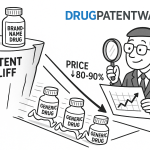
One generic competitor: average manufacturer price falls 39% below brand. Two competitors: 54% below brand. Six or more: 95% below brand. This price erosion curve is deterministic and rapid. The first generic typically enters at 80%-85% of brand price during the exclusivity window, then drops to 50% within weeks of multi-generic entry, then continues declining as manufacturers reduce price to maintain volume contract positions with PBMs.
The PBM Dynamic and Formulary Positioning
Pharmacy benefit managers control formulary tier positioning for the majority of commercially insured U.S. lives. Generic drugs that achieve preferred formulary tier positioning — typically Tier 1 (lowest copay) — receive substantially higher prescription volumes than non-preferred generics. PBMs award preferred positioning through competitive bidding: manufacturers offer rebates or price concessions in exchange for preferred tier status. For generic manufacturers with multiple products in the same therapeutic class, portfolio bidding (offering rebates across the entire portfolio rather than individual products) provides negotiating leverage unavailable to single-product developers.
Tiered Pricing for Multi-Competitor Markets
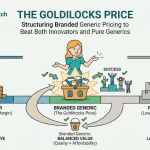
A rational generic pricing strategy accounts for the likely competitive structure at each stage of the product lifecycle. During 180-day exclusivity: price at 80%-85% of brand to maximize duopoly revenue. At first multi-generic entry: adjust to 50%-60% of brand to maintain volume. At 6+ competitor saturation: price at the market-clearing level that sustains positive margin, which varies by product’s COGS structure.
Market-based pricing — continuously monitoring competitor pricing through wholesale acquisition cost (WAC) benchmarks and adjusting accordingly — is the baseline. Volume-based pricing with PBM contracts locks in revenue predictability at lower margins. Loss-leader pricing on a mature, commoditized generic to maintain PBM relationship may be justified if it preserves formulary position for higher-margin products in the same portfolio.
The Inflation Reduction Act’s Impact on Generic Economics
The Inflation Reduction Act’s Medicare drug price negotiation provisions primarily target high-spend branded products, but the downstream effect on generics is real. By reducing the price differential between negotiated brand prices and generics for Medicare-covered drugs, IRA narrows the cost savings that generics provide — which reduces the financial incentive for Medicare Part D plans to aggressively promote generic utilization. Simultaneously, IRA’s inflation rebate provisions for branded drugs may reduce branded price increases, further compressing the absolute price difference that makes generic entry financially attractive. For small-molecule generics of recently negotiated drugs, the economics of ANDA investment need to be recalculated against an IRA-adjusted brand price baseline.
XII. Market Access, Prescriber Education, and the Generics Paradox
The generics paradox is well-documented in the academic literature: brand drug prices in the U.S. frequently do not decrease — and sometimes increase — after generic entry. The mechanism is prescriber and patient inertia, brand loyalty maintained through patient assistance programs, and health system formulary inertia. This paradox has a direct market access implication: bioequivalence is necessary but not sufficient for commercial success.
Prescriber Education Requirements
Physician skepticism toward biosimilar interchangeability (and to a lesser extent toward complex generic substitution) remains a market access barrier in the post-GSK v. Teva environment. Prescribers who observed the litigation around skinny labels became more cautious about generic prescribing for drugs with multiple indications, concerned about inadvertent off-label use through substitution. Generic manufacturers addressing this issue must invest in medical affairs infrastructure capable of directly educating prescribers about the regulatory framework for complex generic approval and the specific clinical evidence supporting the generic’s interchangeability.
Formulary Access and Step Therapy
Health plan step therapy protocols — requiring patients to fail on a generic before accessing a branded drug — are one of the most effective market access tools for generic manufacturers, but they require active engagement with health plan medical directors and pharmacy and therapeutics (P&T) committees. Generic manufacturers that provide HEOR (health economics and outcomes research) data quantifying the cost savings and equivalent clinical outcomes of their products relative to branded alternatives give P&T committees the evidence base to implement step therapy policies.
The Biosimilar Adoption Lag
The U.S. biosimilar adoption rate remains below European levels despite comparable regulatory standards. Multiple adalimumab biosimilars were approved and launched in 2023, yet AbbVie’s Humira maintained over 80% of its market share through the launch period through a combination of patient assistance programs, rebate-based formulary protection, and citrate-free formulation differentiation. The biosimilar developers who gained market share most quickly were those with health system procurement contracts negotiated ahead of launch and PBM formulary agreements that positioned biosimilars as the default option for new patient starts.
XIII. AI, Machine Learning, and 3D Printing in Generic Drug Development
AI/ML in Formulation Optimization
Machine learning models trained on existing bioequivalence datasets can predict, with meaningful accuracy, the formulation parameters most likely to produce a passing bioequivalence study for a given molecule. Models incorporating physicochemical descriptors (logP, pKa, aqueous solubility, permeability), API particle size distribution, excipient compatibility data, and existing dissolution profiles can identify formulation hypotheses that reduce the number of failed bioequivalence studies in development — each of which costs $200,000-$500,000 in study conduct alone.
Generative AI tools applied to crystal engineering can predict polymorphic form stability and identify conditions for producing the target crystalline form reliably at manufacturing scale. For BCS Class II molecules where the polymorphic form is a critical quality attribute, this predictive capability reduces the risk of form conversion during processing.
AI in Regulatory Document Preparation
Large language models trained on FDA guidance documents, previous ANDAs, and bioequivalence study reports are being piloted by several large generic manufacturers to accelerate preparation of the ANDA technical dossier. The quality section of an ANDA (Module 3 in the CTD format) is highly formulaic; LLM-assisted drafting can reduce preparation time for standard ANDAs by 30%-40%, freeing regulatory affairs scientists for the technical judgment work that requires human expertise.
3D Printing: Personalized Dosing and Complex Release Systems
FDA has approved a 3D-printed drug product — Aprecia’s Spritam (levetiracetam), which uses powder bed fusion printing to create a highly porous tablet that disintegrates rapidly with water. The commercial application of 3D printing in generic development is primarily in two areas: patient-specific dosing (producing tablets in non-standard strengths for pediatric or geriatric patients who cannot use standard commercial dosages) and complex multi-compartment dosage forms that produce pulsatile or sequential release profiles impossible to achieve with conventional tablet or capsule manufacturing.
The regulatory pathway for 3D-printed generics requires FDA to classify the product and its manufacturing technology under existing ANDA frameworks, but the agency has not yet issued specific guidance for 3D printing in ANDA submissions. Companies pursuing 3D-printed generic strategies should engage with FDA through pre-ANDA meetings to establish expectations for the manufacturing description and process validation sections of the submission.
XIV. International Regulatory Pathways: FDA, EMA, and Global Dossier Strategy
EMA Article 10 and Centralized Procedure Access
In Europe, generic drug approval follows Article 10 of Directive 2001/83/EC, the EU equivalent of the ANDA pathway. The applicant references the summary of product characteristics (SmPC) of the reference medicinal product and demonstrates bioequivalence using EMA product-specific bioequivalence guidelines — which exist for over 600 drug products and specify study design, acceptance criteria, and dissolution testing requirements.
For reference products authorized through the centralized EMA procedure (which includes most biotechnology-derived products and several high-profile small molecules), generic applicants have automatic access to the centralized procedure for their Article 10 application. This allows a single dossier reviewed by the Committee for Medicinal Products for Human Use (CHMP) to generate marketing authorization in all 27 EU member states simultaneously. Decentralized and mutual recognition procedures are available for non-centrally authorized reference products, allowing approval in a primary reference member state (RMS) with subsequent recognition by concerned member states (CMS).
Common Technical Document and Global Dossier Efficiency
The ICH Common Technical Document (CTD) format — with Modules 1-5 covering regional administrative data, summaries, quality, nonclinical, and clinical — is accepted by FDA, EMA, and most ICH member regulatory authorities globally. A generic developer building a CTD-format ANDA for FDA can reuse Modules 3-5 substantially unchanged for EMA and most national regulatory submissions, with Module 1 adapted for regional requirements. This global dossier strategy reduces total regulatory preparation cost by 40%-60% compared to preparing separate dossiers for each jurisdiction.
WHO Prequalification for Emerging Market Access
For generic manufacturers targeting low- and middle-income markets, WHO Prequalification (PQ) — a quality standard assessment run by the World Health Organization — is frequently required for participation in international procurement (UN agencies, Global Fund, PEPFAR). WHO PQ uses many of the same technical standards as FDA and EMA (GMP, bioequivalence requirements) but includes additional post-market surveillance requirements and site inspection schedules. A generic manufacturer with FDA or EMA approval for a product can apply for WHO PQ referencing the FDA/EMA regulatory history, which significantly shortens the WHO assessment timeline.
XV. Investment Strategy for Institutional Analysts
Institutional investors evaluating generic and specialty pharmaceutical companies should apply a framework that explicitly accounts for the structural features of the generic drug business model, which differs materially from branded pharmaceutical investing.
ANDA Pipeline as Balance Sheet Asset
A portfolio of filed ANDAs with Paragraph IV certifications and first-filer status should be treated as a balance sheet asset with explicit probability-weighted value. The key inputs to this valuation are: probability of litigation success (assessed based on patent quality and challenger’s IP position), NPV of 180-day exclusivity window (based on RLD market size, expected competitive discount, and anticipated exclusivity duration), probability of FDA approval within the GDUFA performance timeline, and time-to-market given the current litigation posture.
Generic drug companies with large Paragraph IV first-filer portfolios but thin ANDA approval success rates (measured by CRL frequency) represent a discounted opportunity: the pipeline value is underrealized because of execution risk in regulatory affairs. Companies with clean FDA inspection records, low CRL rates, and first-filer positions on multiple high-value molecules command deserved premium valuations.
Complex Generic Pipeline Premium
Complex generic programs — inhaled products, injectables, biosimilars — justify a premium over standard small-molecule ANDA pipelines on a risk-adjusted basis. The development cost is higher and the timeline longer, but the competitive moat is significantly more durable. Analysts should look for companies with institutional expertise in complex product categories (validated manufacturing sites, experienced regulatory affairs teams with complex product approvals, established bioequivalence study capabilities) rather than simply counting complex ANDA filings.
Supply Chain Risk Discount
Generic manufacturers with heavy API sourcing concentration in a single geography — particularly India or China — should carry a supply chain risk discount proportional to the revenue concentration of products dependent on that single-source API. FDA import alert history for API suppliers is publicly available and should be incorporated into supply chain risk assessment.
Biosimilar CAGR Premium
Companies with approved or near-approval biosimilar programs in high-revenue reference product categories (adalimumab, ustekinumab, bevacizumab, ranibizumab, etanercept) are positioned in the highest-growth segment of the generic market. The 24.1% CAGR for biosimilars through 2033 is driven by the compounding effect of new reference product LOEs and the gradual market share capture that accelerates as prescribers gain familiarity with specific biosimilar brands. Biosimilar market share in the U.S. tends to follow an S-curve: slow initial uptake (12-18 months), followed by rapid adoption acceleration once formulary positioning is established, then plateau near 60%-80% market share penetration for well-positioned biosimilar brands.
IRA Watch List
The IRA’s negotiation provisions target drugs selected for Medicare price negotiation, with the first wave of negotiated prices effective January 2026. Generic developers should assess whether any of their pipeline targets are already subject to IRA price negotiations, as negotiated prices reduce the absolute economic value of the generic discount and may alter the competitive entry calculus for ANDAs on those molecules.
XVI. Key Takeaways by Segment
Regulatory and IP Strategy
The ANDA process rewards preparation: pre-ANDA meetings, early use of Product-Specific Guidances, comprehensive patent mapping, and clean bioequivalence study design all reduce CRL probability. Paragraph IV certifications with first-filer status remain the highest-return IP positions in generic drug development. The BPCIA patent dance for biosimilars requires earlier legal engagement and more extensive IP due diligence than Hatch-Waxman Paragraph IV challenges.
Formulation and Manufacturing
Complex generics — inhaled products, modified-release injectables, liposomal systems, drug-device combinations — provide the most durable competitive positions because formulation difficulty limits competitor entry for 5-10 years. Manufacturing cost competitiveness at 95% price erosion requires process engineering investment during product development, not operational improvement after market entry. CDMO partnerships reduce capital requirements but require tight IP protection provisions.
Supply Chain
The India-China API dependency is a systemic risk that requires explicit multi-sourcing architecture, pre-qualified alternative suppliers, and digital real-time visibility across the supply network. Cybersecurity is a supply chain continuity risk, not just an IT risk. Geographic diversification of manufacturing, even at higher cost, reduces catastrophic supply disruption exposure for essential medicines.
Commercial and Market Access
Formulary positioning through PBM engagement is as important as regulatory approval for commercial success. The generics paradox — brand prices not falling after generic entry — is addressable through prescriber education and HEOR data that support step therapy implementation by P&T committees. Biosimilar market access requires pre-launch health system procurement contracts and PBM formulary agreements negotiated before launch.
Technology and Future Positioning
AI/ML in formulation development reduces bioequivalence study failure rates and dossier preparation timelines. 3D printing enables complex multi-compartment dosage forms and personalized dosing capabilities that standard manufacturing cannot produce. Companies building data science and automation capabilities now will have structural development timeline advantages within 5-7 years.