The global generic drug market stands at a strategic inflection point, poised for robust expansion while simultaneously confronting unprecedented challenges that are fundamentally reshaping its competitive landscape. This report provides a comprehensive framework for conducting an effective market analysis of this dynamic sector. It deconstructs the market into its core components, offers a structured four-pillar methodology for analysis, and provides forward-looking strategic imperatives for key stakeholders.
The market is projected to grow from a baseline of approximately $450-$500 billion in the mid-2020s to over $700 billion by the early 2030s, driven by a sustainable compound annual growth rate (CAGR) in the range of 5% to 8%.1 This growth is propelled by powerful, long-standing tailwinds: an impending “patent cliff” set to release over $200 billion in branded drug sales into the competitive sphere, the unrelenting global pressure for healthcare cost containment, and the rising prevalence of chronic diseases demanding affordable, long-term therapeutic options.1
However, this growth is not uniform. The market is bifurcating into two distinct business models: a “Volume Operations” model for simple, commoditized generics, where success hinges on scale and cost efficiency, and a “Science & Technology” model for complex generics and biosimilars, where success is driven by innovation, R&D prowess, and mastery of intricate regulatory science. This shift to complexity is the single most important trend defining the industry’s future.
Furthermore, the global market is fragmenting into a mosaic of distinct regional ecosystems. Policy earthquakes, such as the Inflation Reduction Act (IRA) in the United States and the Volume-Based Procurement (VBP) system in China, have rendered a one-size-fits-all global strategy obsolete. Success now requires a portfolio of highly tailored regional strategies that navigate divergent pricing, reimbursement, and regulatory environments.
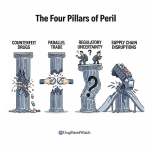
To navigate this landscape, this report presents a Four-Pillar Framework for Analysis:
Pillar 1: Patent Intelligence and Opportunity Identification: Mastering the analysis of the intellectual property landscape to identify viable commercial opportunities and forecast the timing and structure of new market formation.
Pillar 2: Regulatory Acumen and Pathway Analysis: Developing a deep understanding of the divergent and costly approval processes in key global markets, recognizing that regulatory efficiency is a primary competitive advantage.
Pillar 3: Competitive Landscape and Strategic Positioning: Analyzing the key players, their portfolio strengths, and the strategies they employ to compete, understanding that actions like M&A and vertical integration are direct responses to fundamental market pressures.
Pillar 4: Economic Dynamics and Risk Mitigation: Modeling the predictable patterns of price erosion and understanding the profound risks associated with fragile global supply chains and intense manufacturing pressures.
For stakeholders, the strategic imperatives are clear. Manufacturers must innovate to escape commoditization, build resilient supply chains, and master the art of regional strategy. Investors must look beyond current revenues to assess pipeline complexity and regulatory acumen. Policymakers must balance cost-containment with the need for a sustainable market that incentivizes competition and ensures a reliable supply of essential medicines. The era of the simple generic is ending; the future belongs to those who can master complexity.
Part I: The Global Generic Drug Market Landscape
This part establishes the foundational context for the analysis. It moves beyond simple data recitation to build a narrative about the market’s fundamental character: a mature yet robustly growing sector defined by its immense economic contribution and the powerful, often conflicting, forces shaping its future.
Section 1.1: Market Dimensions and Growth Trajectory
A comprehensive analysis of the generic drug market begins with a defensible and nuanced understanding of its size and growth drivers. This requires synthesizing data from multiple sources, deconstructing the discrepancies between them, and appreciating the core economic value proposition that underpins the sector’s enduring importance.
Synthesizing Market Size and Forecasts
Quantifying the precise size and growth rate of the global generic drug market is a complex task, with leading market research firms offering a range of projections. This variance is not a data flaw but a critical strategic indicator of the fundamental uncertainties shaping the industry.
Precedence Research forecasts growth from $445.62 billion in 2024 to $728.64 billion by 2034, reflecting a compound annual growth rate (CAGR) of 5.04%.2
Grand View Research estimates growth from $361.7 billion in 2022 to $682.9 billion by 2030, at a more aggressive CAGR of 8.3%.3
BCC Research projects growth from $435.3 billion in 2023 to $655.8 billion by 2028, implying the highest CAGR of 8.5%.1
Vision Research Reports calculates growth from $515.07 billion in 2025 to $775.61 billion by 2033, at a CAGR of 5.25%.5
NovaOne Advisor projects growth from $465.19 billion in 2023 to $779.68 billion by 2033, at a CAGR of 5.3%.6
A synthesized analysis of these varied forecasts suggests the market will expand from a baseline of approximately $450-$500 billion in the mid-2020s to well over $700 billion by the early 2030s, with a blended, sustainable CAGR in the 5% to 8% range.1 The significant variation in these forecasts stems from different methodologies and assumptions regarding key market-shaping events. Factors contributing to these discrepancies include the inclusion or exclusion of the rapidly growing biosimilars market, different assumptions about the severity of price erosion rates, and varying timelines for the market impact of major patent expiries.1
This “forecast delta” between conservative and optimistic projections is a quantifiable measure of the risk and opportunity tied to these macro-factors. An analyst can use this range to model best-case and worst-case scenarios for a product’s potential return on investment (ROI), transforming the variance itself into a powerful analytical tool. For instance, a business case can be stress-tested against a low-growth scenario (reflecting severe price erosion and delayed biosimilar uptake) and a high-growth scenario (reflecting successful complex generic launches and stable pricing).
Global Generic Drug Market Forecast Synthesis (2024-2034)
Research Firm
Base Year & Value (USD B)
Forecast Year & Value (USD B)
CAGR (%)
Forecast Period
Key Methodological Notes
Precedence Research
2024: $445.62
2034: $728.64
5.04%
2025-2034
Segments include Drug, Brand, RoA, Therapeutic Application 2
Vision Research Reports
2025: $515.07
2033: $775.61
5.25%
2025-2033
Includes historical data from 2018-2024 5
NovaOne Advisor
2023: $465.19
2033: $779.68
5.3%
2024-2033
Segments include Drug Type, Brand, Route of Administration 6
Grand View Research
2022: $361.7
2030: $682.9
8.3%
2023-2030
Attributes growth to increasing ANDA approvals and launches 3
BCC Research
2023: $435.3
2028: $655.8
8.5%
2023-2028
Highlights supportive policies and physician attitudes 4
Synthesized Estimate
Mid-2020s: $450 – $500
Early 2030s: $700 – $800
5% – 8%
~2024-2034
Blended forecast accounting for variance in biosimilar inclusion and price erosion models 1
Core Economic Drivers
The market’s robust growth is not speculative; it is anchored in powerful, long-term economic and demographic trends.
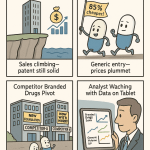
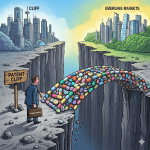
The Patent Cliff: A primary and recurring driver is the expiration of market exclusivity for blockbuster branded drugs. This “patent cliff” continuously opens up new opportunities for generic manufacturers.2 An impending wave of expirations is set to release over $200 billion in branded drug sales into the competitive sphere, providing a steady pipeline of high-value targets.1 Similarly, patents for over $217 billion worth of original products, including biologics and complex formulations, are expected to expire in the near future, creating significant opportunities.2
Healthcare Cost Containment: Around the globe, governments, insurers, and patients face unrelenting pressure to manage rising healthcare costs. Generic drugs are a cornerstone of this effort, offering bioequivalent alternatives that are typically 80-85% cheaper than their branded counterparts.6 This cost-effectiveness makes them an indispensable tool for payers and policymakers seeking to reduce pharmaceutical expenditure and ensure the sustainability of healthcare systems.2
Rising Prevalence of Chronic Disease: The increasing global incidence of chronic conditions—such as cardiovascular disease, diabetes, cancer, respiratory disorders, and neurological conditions—is a major demographic tailwind.1 These diseases often require long-term or lifelong medication, making the affordability of generics crucial for patient adherence and access to care. As the global population ages, the burden of these non-communicable diseases (NCDs) is expected to grow, further solidifying the demand for low-cost generic therapies.8
The Evolving Value Proposition: From Cost-Saver to System Cornerstone
The role of generic drugs has evolved far beyond that of a simple, cheap alternative. They are now a fundamental component of healthcare system sustainability and patient access worldwide. In mature markets like the United States, their role is dominant; generics account for over 90% of all prescriptions filled, yet they represent only about 18% of total prescription drug spending.1
The economic impact of this high-volume, low-cost model is staggering. Over the past decade, the use of generic and biosimilar medicines has saved the U.S. healthcare system an estimated $3.1 trillion, with savings of $445 billion in 2023 alone.1 This demonstrates that generics are not merely a market segment but a critical economic lever that enables health systems to reallocate vast resources toward medical innovation, infrastructure, and other patient care priorities. Their value proposition is thus twofold: providing direct savings to patients and payers, and creating the financial headroom necessary for the broader healthcare ecosystem to function and innovate.
Section 1.2: Market Segmentation: Deconstructing the Opportunity
To conduct an effective analysis, the monolithic “generic drug market” must be deconstructed into its constituent parts. A granular view by therapeutic area, route of administration, drug complexity, and distribution channel is essential for identifying where value is concentrated, where the most significant growth is occurring, and where strategic resources should be allocated.
By Therapeutic Area (TA)
The distribution of value across therapeutic areas reveals a market in transition, shifting from high-volume chronic care mainstays to high-value specialty treatments.
Dominant Segments: Historically, cardiovascular diseases have represented the largest segment by revenue, a position built on the immense volume of prescriptions for chronic conditions like hypertension and high cholesterol.3 Data from 2024 indicates that cardiovascular therapies retained a 22.50% share of revenue.14 The Central Nervous System (CNS) is also frequently cited as a dominant market segment.16
High-Growth Segments: The oncology segment is consistently identified as the fastest-growing area, with a projected CAGR of 6.6%.2 This rapid growth is fueled by the loss of exclusivity for many high-cost branded oncology products and the immense global need for more affordable cancer treatments.2 The expiration of patents on oncology biologics, in particular, is creating significant opportunities for biosimilar developers.3
The shift in therapeutic area leadership from high-volume cardiovascular drugs to high-value oncology drugs is more than an epidemiological story; it is a direct reflection of the industry’s strategic pivot. Cardiovascular generics, such as statins and antihypertensives, are typically simple, oral solid-dose drugs that have been generic for years, leading to market saturation and intense price competition where market share is driven by volume.3 In contrast, many modern oncology drugs are complex injectables or biologics that require sophisticated biosimilars to replicate.3 Therefore, the high growth rate in oncology generics is directly tied to the patent expiry of these high-value, complex branded products.3 Tracking the fastest-growing therapeutic areas provides a clear roadmap to where the most lucrative and scientifically challenging generic and biosimilar opportunities are emerging. The analytical focus thus shifts from “which diseases are most prevalent?” to “which
high-value branded drugs are losing patent protection?”
By Route of Administration (RoA)
Analyzing the market by route of administration provides a direct lens into product complexity and, by extension, potential profitability.
Dominant Segment: The oral route of administration (including tablets and capsules) remains the largest market segment, capturing an estimated 65-66% of revenue.5 This dominance is a legacy of the generics industry’s historical focus on easily replicable oral solid dosage forms, which offer patient convenience and ease of administration.6
High-Growth Segments: Injectables represent a significant and rapidly growing segment.6 The existence of large, distinct markets for “Generic Sterile Injectables” and the broader “Generic Injectable Market” underscores their importance.2 Inhalable products are also identified as being poised for the fastest growth in the coming years.14
While therapeutic area indicates market need, the route of administration often indicates market complexity and potential profitability. The strategic migration from simple oral solids to more complex injectables, topicals, and inhalers is a deliberate move to enter markets with higher manufacturing complexity, more stringent regulatory hurdles, and consequently, fewer competitors and less severe price erosion. Oral solids are the most common and easiest to replicate, leading to hyper-competition.17 In contrast, sterile injectables require specialized, capital-intensive manufacturing facilities and rigorous aseptic processes, creating a high barrier to entry.1 As a result, the price decay for complex products like injectables and inhalers is significantly slower than for oral solids.19 A company’s portfolio position in the injectables or inhalables segment is therefore a strong indicator of its technical capabilities and its ability to command and sustain higher margins.
By Drug Complexity
The most critical segmentation for strategic analysis is by drug complexity, as it reveals a fundamental bifurcation of the entire industry.
Simple/Pure Generics: This segment, which consists of products that are chemically identical to their reference counterparts, continues to hold the largest share of the market, with estimates ranging from 53% to over 68%.2 However, this is a mature space that is becoming increasingly saturated, leading to intense price competition.3
Complex/Specialty Generics & Biosimilars: This is where the most significant and profitable growth is now concentrated.1 This category includes products with complex formulations (e.g., liposomes), complex delivery systems (e.g., transdermal patches), drug-device combinations (e.g., inhalers), and biosimilars.1 The biosimilars market, in particular, is a high-growth frontier, projected to expand at a CAGR of over 15-17%—a rate that far outpaces the overall generics market.18
The generic drug industry is no longer a monolith. It is cleaving into two distinct sub-industries with different business models. The first is a “Volume Operations” business centered on simple generics, where success is dictated by extreme cost efficiency, massive scale, and supply chain mastery. The second is a “Science & Technology” business focused on complex generics and biosimilars, where success depends on R&D investment, scientific innovation, advanced manufacturing capabilities, and the ability to navigate complex regulatory science. The investment required highlights this divide: the development cost for a single biosimilar can range from $100 million to $250 million, whereas the regulatory filing fees for a simple generic are a few hundred thousand dollars.18 An effective market analysis must therefore evaluate these two segments using entirely different metrics: for simple generics, the key performance indicators are cost-of-goods-sold (COGS) and operational efficiency; for complex generics and biosimilars, they are R&D pipeline strength and speed-to-market.
By Distribution Channel
The channels through which generics reach patients are also evolving, with disruptive new models challenging the status quo.
Dominant Segments: Hospital pharmacies and retail pharmacies remain the primary distribution channels.10 Hospitals are key consumers due to their institutional need for cost-effective therapeutic options to manage large patient volumes and control budgets.7 Retail pharmacies serve as the main interface for the majority of outpatient prescriptions.
Emerging Channel: Online pharmacies are projected to be the fastest-growing distribution segment.3 The launch of ventures like the Mark Cuban Cost Plus Drugs Company (MCCPDC) is a major disruptive force in the U.S. market.3 By offering a wide range of generic drugs at a transparent, low-cost “cost-plus” price directly to patients, these entities are challenging the traditional, opaque pricing models.1
The rise of transparent, cash-pay online pharmacy models represents a direct threat to the intricate and often inefficient pricing system driven by Pharmacy Benefit Managers (PBMs) in the United States. The traditional model involves PBMs negotiating confidential rebates with manufacturers, a system that can create perverse incentives to favor higher-priced drugs to secure larger rebates.23 This can lead to situations where patients with insurance pay more out-of-pocket than the actual cash price of a generic drug.23 By bypassing this entire layer, online platforms empower consumers with price transparency and exert direct downward pressure on prices. As this channel grows, it could force a structural shift in the U.S. market, compelling manufacturers to adopt more transparent pricing strategies and potentially weakening the immense negotiating power of PBMs.
Part II: The Four Pillars of Effective Generic Market Analysis
This section provides a structured, actionable framework for conducting a robust generic drug market analysis. Each of the four pillars represents a critical domain of inquiry that must be mastered to develop a comprehensive market view and identify winning opportunities. Success in this industry is not accidental; it is the result of a deliberate, integrated strategy built upon these foundational elements.
Section 2.1: Pillar 1 – Patent Intelligence and Opportunity Identification
The foundational step of any generic drug strategy is the identification of viable commercial opportunities. This requires a meticulous and proactive analysis of the complex intellectual property (IP) landscape to determine when a branded drug’s monopoly will end and a generic can legally enter the market.
Decoding Patent Expiry and Market Exclusivity
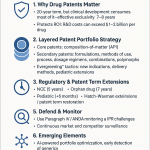
The primary catalyst for generic market entry is the expiration of a brand-name drug’s patents and other forms of market exclusivity.13 However, a successful analysis requires moving far beyond a simple lookup of a single patent expiry date. Brand-name companies employ sophisticated lifecycle management strategies to delay generic competition. These include building “patent thickets”—dense webs of overlapping patents covering not just the active molecule but also formulations, methods of use, and manufacturing processes—and filing “add-on patents” for minor modifications to the drug.13
Therefore, a rigorous analysis must involve meticulously mapping the entire patent portfolio of the target reference drug. This process includes identifying all relevant patents, assessing their strength and validity, determining which patents might be challenged, and anticipating potential litigation.13 Specialized competitive intelligence platforms, such as DrugPatentWatch, are invaluable tools for this endeavor, providing data on patent statuses, litigation history, and competitor activity, which are essential for accurate market entry forecasting.13
Navigating U.S. Patent Litigation (The Hatch-Waxman Act)
In the United States, the competitive landscape is uniquely shaped by the 1984 Drug Price Competition and Patent Term Restoration Act, commonly known as the Hatch-Waxman Act.13 This legislation created the Abbreviated New Drug Application (ANDA) pathway, which allows generic manufacturers to gain approval by relying on the innovator’s original safety and efficacy data.25
A key strategic element within this framework is the “Paragraph IV” (P-IV) certification. A generic firm filing an ANDA can use a P-IV certification to assert that a patent listed for the brand-name drug is invalid, unenforceable, or will not be infringed by the generic product.13 This filing is considered a technical act of patent infringement, giving the brand company 45 days to sue the generic applicant. If a lawsuit is filed, it automatically triggers a 30-month stay on the FDA’s ability to grant final approval to the ANDA, giving the brand company a period of protection while the litigation proceeds.13
This process represents a high-stakes strategic gamble. The reward for the “first-to-file” generic applicant that successfully challenges a patent is a 180-day period of marketing exclusivity.1 During this period, the first filer is the only generic on the market, creating a temporary and highly lucrative duopoly with the brand-name drug. For an analyst, tracking P-IV filings and the subsequent litigation is critical. These events are strong signals of a company’s strategic intent and risk appetite, and their outcomes are paramount for forecasting the timing and competitive structure of new generic market formation.
Pipeline Analysis: Forecasting Future Competition
A robust market analysis must be forward-looking, assessing not only the current market but also the pipeline of upcoming generic and biosimilar products to anticipate future competitive dynamics.
The goal is to understand the density of competition for a specific drug before it even arrives.
Data Sources: Key resources for this analysis include the FDA’s own publications, such as its monthly and quarterly reports on GDUFA program activities, which provide data on ANDA submissions.26 Additionally, specialized industry intelligence providers like IPD Analytics and Serve You Rx publish detailed pipeline reports that highlight late-stage drugs, forecast potential launch dates, and provide sales data for the reference brand drugs, which serves as a proxy for the size of the market opportunity.27
Key Metrics to Track:
The number of ANDAs filed for a specific reference drug.
The status of any “first-to-file” P-IV litigation.
Expected approval and launch timelines for both generic and biosimilar competitors.29
The estimated U.S. sales of the reference brand drug, which indicates the size of the prize for which competitors are vying.29
The density of the pipeline for a specific drug is a direct leading indicator of the velocity and depth of price erosion that will occur upon launch. Price erosion is directly and predictably correlated with the number of generic competitors in a market.21 By combining data on the number of pipeline applicants with established price erosion models, an analyst can build a powerful predictive tool. For example, if a blockbuster drug like Stelara (Ustekinumab) has multiple biosimilar applicants in the pipeline, as reports indicate 29, one can confidently forecast intense price competition and rapid margin compression shortly after the first biosimilar launch. Conversely, if a complex generic product has only one or two ANDA filers, the analyst can project a more controlled price decline and a longer period of sustained profitability for those early entrants. This transforms pipeline analysis from a simple list of upcoming drugs into a predictive engine for future market profitability.
Section 2.2: Pillar 2 – Regulatory Acumen and Pathway Analysis
Mastery of the complex, costly, and increasingly divergent regulatory approval processes across key global markets is not merely a compliance exercise; it is a core competitive competency. An effective market analysis must deeply scrutinize these pathways, as they dictate the cost, timeline, and ultimate feasibility of bringing a generic product to market.
The U.S. FDA Approval Gauntlet (ANDA Process)
The primary pathway for generic drug approval in the U.S. is the Abbreviated New Drug Application (ANDA), or 505(j), process.25 It is termed “abbreviated” because it allows applicants to rely on the safety and efficacy findings of an already-approved brand-name drug, known as the Reference Listed Drug (RLD), thereby avoiding the need to conduct new, costly, and duplicative preclinical and clinical trials.25
Core Requirements: To gain approval, an ANDA must provide comprehensive data demonstrating that the generic product is therapeutically equivalent to the RLD. This means it must have the same active ingredient(s), dosage form, strength, route of administration, and, with certain permissible exceptions, labeling.33 The scientific cornerstone of the ANDA is the bioequivalence (BE) study. These studies, typically conducted in healthy volunteers, must demonstrate that the rate and extent of absorption of the generic drug are not significantly different from those of the RLD, ensuring it performs in the same way in the human body.33
The GDUFA Effect: The regulatory landscape was reshaped by the Generic Drug User Fee Amendments (GDUFA), first signed into law in 2012.24 GDUFA’s purpose was to provide the FDA with resources, funded by industry-paid user fees, to accelerate the review of generic drug applications and reduce a long-standing backlog. While GDUFA has successfully made review times more predictable, it has also introduced significant, non-refundable, upfront costs. For fiscal year 2025, these fees are substantial: an ANDA filing fee of $321,920, a Drug Master File (DMF) fee of $95,084, and large annual program and facility fees that can exceed $1.8 million for a large company.21 These fees must be factored into the ROI calculation for any potential product, as they create a high financial barrier to entry, making smaller or niche products less economically viable.21
The Review Cycle: The ANDA review is a multi-phase process. After electronic submission, the FDA’s Division of Filing Review assesses the application for completeness.36 If accepted, it undergoes detailed review by various scientific disciplines. If deficiencies are found, the FDA may issue Information Requests (IRs) or, at the end of the cycle, a Complete Response Letter (CRL) that lists all issues that must be resolved.33 The applicant must then respond to the CRL and resubmit. The entire process can take around 30 months, although GDUFA performance goals aim for a 10-month review for standard applications.21
The European EMA Labyrinth
The European Union presents a more complex regulatory environment with multiple pathways to market authorization. A generic Marketing Authorisation Application (MAA) can be submitted once the reference medicinal product’s period of data and marketing protection has expired, which is typically 10 or 11 years from the reference product’s first authorization.37
Multiple Pathways: Unlike the single federal pathway in the U.S., Europe offers several routes:
Centralised Procedure (CP): A single application is submitted to the European Medicines Agency (EMA). A positive opinion from the Committee for Medicinal Products for Human Use (CHMP), followed by authorization from the European Commission, grants a marketing authorization valid in all EU member states.38 The CP is mandatory for certain drug classes (e.g., cancer, diabetes, neurodegenerative disorders) and for any generic version of a product that was originally approved via the CP.39
Decentralised Procedure (DCP): For a drug not yet authorized anywhere in the EU, a company can apply for simultaneous authorization in several chosen member states, with one state acting as the Reference Member State.38
Mutual Recognition Procedure (MRP): If a drug has already received a national marketing authorization in one EU member state, the company can request that other member states mutually recognize that approval.38
Hybrid Applications: This pathway is used when a proposed generic medicine is based on a reference product but has a different strength, route of administration, or a slightly different therapeutic indication. These applications require the submission of some additional preclinical or clinical data to bridge the differences with the reference product.37
Global Regulatory Divergence and Harmonization Challenges
While the overarching goal of the FDA and EMA is the same—to ensure safe and effective medicines—their specific data requirements, review processes, and timelines can differ significantly.21 This regulatory divergence is a major operational challenge for global generic manufacturers. Differences in BE study requirements (e.g., fasting versus fed state studies), statistical analysis methods for highly variable drugs, and criteria for granting “biowaivers” (which allow BE studies to be waived for certain well-characterized drugs) can prevent a company from using a single development program for both markets.21
This forces manufacturers to run separate or additional studies, stagger product launches across regions, and duplicate regulatory affairs efforts, all of which increase costs and complexity.21 A study comparing the FDA and EMA found a 95% concordance in final approval decisions, but this masks a critical issue: the timing of those approvals can differ by several years.21 This lag can completely upend a product’s business case.
In the modern generic market, a company’s regulatory affairs department is not a back-office cost center but a strategic weapon. The first generic to market typically captures the largest market share and enjoys the highest prices before erosion begins.13 A multi-year delay in a major market like Europe or the U.S. means forfeiting this critical first-mover advantage and launching into a market where prices may have already started their steep decline due to the entry of other competitors. Therefore, the ability to efficiently navigate these divergent global pathways, design clinical programs that can satisfy multiple regulators simultaneously, and achieve coordinated global launches is a significant competitive advantage. An analyst evaluating a generic company should scrutinize its track record of securing parallel approvals in the U.S. and EU as a key indicator of its operational excellence and strategic capability.
Comparative Analysis of Major Regulatory Pathways (FDA vs. EMA)
Attribute
United States (FDA)
European Union (EMA & National Authorities)
Primary Application Type
Abbreviated New Drug Application (ANDA) 25
Marketing Authorisation Application (MAA) 37
Legal Basis
Hatch-Waxman Act (505(j) pathway) 17
Article 10(1) of Directive 2001/83/EC 40
Core Requirement
Bioequivalence to a Reference Listed Drug (RLD) 33
Bioequivalence to a Reference Medicinal Product 40
Key Exclusivity Periods
180-day market exclusivity for first successful P-IV filer 13
“8+2+1” Rule: 8 years of data exclusivity + 2 years of market protection (+1 year for new indication) for the reference product 37
User Fee Structure
GDUFA Fees (ANDA Filing, Program, Facility) 21
EMA Fees (for Centralised Procedure) and National Fees 42
~10-30 months, depending on complexity and GDUFA goals 21
Centralised Procedure: 210 days (plus clock stops for applicant responses) 42
Section 2.3: Pillar 3 – Competitive Landscape and Strategic Positioning
This pillar moves the analysis from identifying opportunities to evaluating the players competing for them. A thorough market assessment requires a deep understanding of who the key competitors are, the strengths and weaknesses of their product portfolios, and the overarching strategies they employ to gain market share and sustain profitability in a fiercely competitive environment.
Identifying and Profiling Key Players
The global generic drug market is a dynamic arena populated by a mix of specialized generic giants, the generic divisions of large integrated pharmaceutical companies, and a growing number of manufacturers from emerging economies.
The Leaders: The market is led by a cohort of well-established companies. Key players consistently cited in industry analyses include Teva Pharmaceutical Industries, Sandoz (spun off from Novartis), Viatris (the entity formed by the merger of Mylan and Pfizer’s Upjohn unit), Sun Pharmaceutical Industries, Fresenius Kabi, Cipla, and Dr. Reddy’s Laboratories.4
Revenue and Ranking: Based on 2023 generic segment revenue, the top three players were Sandoz ($9.64 billion), Teva ($8.73 billion), and Sun Pharma ($5.7 billion).43 It is crucial for an analyst to distinguish between a company’s total pharmaceutical revenue and its specific generic revenue, as many of the largest “pharma” companies, such as Johnson & Johnson, Roche, and Pfizer, are primarily innovators, although some, like Pfizer (through Upjohn/Viatris) and Novartis (through Sandoz), have or had very significant generic operations.46
Geographic Strength: The competitive landscape is heavily influenced by geography. While U.S. and European firms have historically been leaders, manufacturers from India and China have become dominant forces, particularly in terms of production volume and the number of ANDAs filed with the FDA. India, often called the “pharmacy of the world,” is the largest global supplier of generics by volume, a status built on a vast, cost-efficient manufacturing base and a highly skilled workforce.1
Portfolio Strength Analysis
A competitor’s true strength and strategic direction are revealed not by its total revenue, but by the composition and performance of its generics portfolio. An effective analysis must dissect this portfolio to assess its diversity, complexity, and market share.48 The key analytical questions to ask are:
Diversity: How many therapeutic areas does the portfolio cover? A broad portfolio spanning multiple areas, such as cardiovascular, CNS, and oncology, can mitigate risks from market fluctuations or intense competition in a single category.48
Complexity: What is the mix of simple generics versus complex products like injectables, topicals, inhalers, and biosimilars? A strong position in complex generics indicates higher technical capability, stronger barriers to entry, and the potential for more durable profits.48
Market Share: What is the company’s market share in key geographic regions like the U.S. and Europe? This highlights where the company is strongest and where it may have competitive gaps.48
For example, Teva is known for its massive and diverse portfolio of over 550 products, with key generics including copycat versions of EpiPen and Truvada, and a strong presence across CNS, respiratory, and oncology.49
Sandoz has established itself as a leader in higher-value products, particularly biosimilars and complex oncology injectables.46
Sun Pharma, an Indian powerhouse, has a formidable presence in both branded and unbranded generics, with a focus on therapy areas like dermatology, psychiatry, cardiology, and ophthalmology.49
Analyzing Competitive Strategies
Generic manufacturers employ several core strategies to navigate the market’s intense pressures. These strategies are not independent choices but are deeply interconnected responses to the fundamental forces of buyer consolidation, price erosion, and supply chain fragility.
First-Mover Advantage: Timing of market entry is arguably the most critical factor for success. The first generic manufacturer to launch a product can capture a massive portion of the market share, an advantage that can persist for years.13 This is because pharmacies are less likely to stock multiple versions of the same molecule, making the first generic to arrive the default choice.41 Companies therefore meticulously plan their development and regulatory activities to be ready for launch the very moment a key patent expires.41
Mergers & Acquisitions (M&A): Consolidation is a primary strategy to “become bigger and better”.51 In a market where buyers (such as large pharmacy chains and PBMs) are also highly consolidated, scale provides manufacturers with greater leverage in price negotiations. M&A can be a rapid way to achieve this scale, expand a product portfolio, and enter new geographic markets.2 The creation of Viatris through the merger of Mylan and Pfizer’s Upjohn unit is a prime example of this strategy in action.3
Vertical Integration: To “eliminate the middlemen” and de-risk fragile supply chains, many companies are pursuing vertical integration.51 This can involve backward integration into the manufacturing of active pharmaceutical ingredients (APIs) to reduce dependence on external, often overseas, suppliers, or forward integration to gain more control over distribution.51 This strategy directly addresses the risks of supply disruptions and quality issues associated with a long and fragmented global supply chain.52
Developing Higher-Value Generics: As the market for simple oral solids becomes a low-margin, commoditized business, a core survival strategy is to invest in innovation and move up the value chain.51 This involves focusing R&D efforts on creating differentiated, high-value products like complex generics and biosimilars, where scientific and regulatory barriers limit competition and allow for more sustainable profitability.1
When analyzing a competitor, it is essential to view their strategic actions—such as a major acquisition, the construction of a new API plant, or the launch of a biosimilar—not in isolation, but as deliberate moves on a strategic chessboard. These actions are direct responses to the fundamental market forces of price pressure from consolidated buyers, margin erosion from intense competition, and supply chain fragility from over-reliance on offshore manufacturing.
Top 10 Global Generic Drug Manufacturers: Revenue, Strategy & Portfolio Focus
Section 2.4: Pillar 4 – Economic Dynamics and Risk Mitigation
This final pillar addresses the underlying economic engine of the generics market and the critical risks that can derail a product’s success. An effective analysis must model the powerful forces of price erosion, understand the complex role of payers and reimbursement systems, and rigorously assess the operational risks inherent in global manufacturing and supply chains.
Modeling Price Erosion
The decline in a generic drug’s price following its market entry is not random; it is a predictable phenomenon driven primarily by the number of competitors. This price decay typically follows a scalloped curve, falling sharply as new entrants arrive before eventually flattening out at a fraction of the original brand price.19
The Predictable Decay Curve: The data consistently shows a strong correlation between the number of competitors and the depth of price reduction:
With one generic competitor, the price typically drops by 30% to 39% compared to the pre-expiry brand price.21
With two competitors, the price falls further, by approximately 54%.32
With three to five competitors, the price plummets by 60% to 70%.8
In highly competitive markets with six or more competitors, the price can be slashed by over 95%, leaving razor-thin margins.21
The “Bounce” Phenomenon: In some instances, particularly for products with high manufacturing costs, aggressive price competition can drive the market price below the cost of production. This forces some manufacturers to exit the market, reducing supply. The subsequent decrease in competition can cause the price to temporarily “bounce” back up, before declining again if and when manufacturers re-enter the now more profitable market.19
This predictable erosion is a core input for any financial model of a generic product. By combining the pipeline analysis from Pillar 1 (to forecast the number of entrants over time) with this erosion data, an analyst can build a sophisticated time-series forecast of a product’s price, revenue, and profitability trajectory.
Generic Drug Price Erosion Model
Number of Generic Competitors
Approximate Generic Price as % of Pre-Expiry Brand Price
Approximate Price Reduction vs. Brand Price
1
61% – 70%
30% – 39% 21
2
~46%
~54% 32
3
~30% – 40%
~60% – 70% 8
4
~21%
~79% 32
5
~15% – 25%
~75% – 85% 31
6+
< 5%
> 95% 32
The Role of Payers and PBMs (U.S. Focus)
In the United States, the path from manufacturer to patient is not a simple line. It is mediated by powerful intermediaries, primarily payers (insurers) and Pharmacy Benefit Managers (PBMs), whose actions significantly influence pricing and market access.
The System: PBMs are third-party administrators that design and manage prescription drug programs on behalf of health insurers, large employers, and government entities.23 They perform several key functions, including creating formularies (lists of covered drugs), negotiating discounts and rebates with drug manufacturers, and processing prescription claims.23
The Perverse Incentive: The PBM business model, which often involves retaining a portion of the rebates negotiated with manufacturers, can create a perverse incentive to favor higher-priced branded drugs over cheaper generics. A larger rebate on a high-priced drug can be more profitable for the PBM than the smaller (or non-existent) rebate on a low-priced generic.23 This can lead to counterintuitive formulary placements and patient cost-sharing, where a patient’s out-of-pocket copay for a generic drug, when processed through their insurance, can be significantly higher than the simple cash price at the pharmacy.23 This dynamic can limit the uptake of generics and complicates market access strategies for manufacturers, who must navigate these complex economic relationships to get their products onto formularies.23
Supply Chain Resilience and Manufacturing Excellence
The economic pressures of the generic market have created a long, complex, and fragile global supply chain that represents a significant operational risk.
The Challenge: The generic industry is heavily reliant on overseas manufacturing to maintain low costs. Over 70% of the active pharmaceutical ingredients (APIs) for drugs sold in the U.S. market are sourced from abroad, primarily from India and China.12 This geographic concentration creates a critical vulnerability to disruptions, whether from geopolitical events, natural disasters, or quality control failures at a key facility.
Quality and Compliance Risks: The relentless downward pressure on prices can strain manufacturers’ quality systems. When margins are razor-thin, there is less financial capacity for investment in robust quality management, redundant supply lines, or advanced manufacturing technologies.51 This can lead to lapses in Current Good Manufacturing Practices (cGMP), resulting in product recalls, regulatory actions, and supply disruptions. The nitrosamine impurity crisis, which began in 2018, is a stark case study. The contamination, traced to specific chemical synthesis processes in API facilities in China and India, led to global recalls of widely used drugs and forced regulators to impose stringent new requirements for impurity testing and mitigation. This unforeseen event added significant, unbudgeted costs and complexity for manufacturers across the industry.21
Drug Shortages: The confluence of thin margins prompting market exits, quality failures leading to production halts, and fragile supply chains leads to a persistent problem of drug shortages, which disproportionately affect low-cost generic medicines.11 These shortages are not just an industry problem; they cause direct patient harm through delayed treatments and medication errors, and they impose immense financial and logistical strain on hospitals forced to manage them.21
The intense price erosion that defines the generic market and the fragility of its supply chain are two sides of the same coin. The market has been relentlessly optimized for the lowest possible cost, which has inadvertently created an economic model that is brittle and prone to failure. The low prices that benefit payers in the short term create long-term systemic risks. Therefore, an effective market analysis must assess not just a product’s potential price point, but also the stability and resilience of its supply chain. A low price is meaningless if the drug is unavailable.
Part III: The Future of the Generic Drug Market: Strategic Imperatives
The generic drug industry is undergoing a profound transformation. The historical model, built on high-volume production of simple oral solids, is giving way to a new era defined by scientific complexity, technological disruption, and geographic fragmentation. This final part provides a forward-looking analysis of the key trends reshaping the industry and outlines actionable recommendations for stakeholders seeking to thrive in this new landscape.
Section 3.1: The Unstoppable Shift to Complexity
The most significant strategic trend in the industry is the deliberate and necessary migration away from commoditized simple generics toward more scientifically demanding, higher-value, and more profitable products. This “flight to complexity” is not a choice but a strategic imperative for survival and growth.
The Complex Generics Frontier
The market for simple, oral solid generics is saturated, leading to hyper-competition and severe price erosion that has rendered many products unprofitable.1 The future of sustainable growth lies in complex generic products. This category includes sterile injectables, long-acting depot injections, transdermal patches, inhalation products, and drug-device combinations.1 These products present significant scientific, manufacturing, and regulatory hurdles that act as natural barriers to entry. The result is a market with fewer competitors, a slower rate of price decay, and the potential for more durable and attractive profit margins.1 Success in this space requires a fundamental shift in corporate capabilities, from a focus on cost-cutting to a focus on R&D and scientific innovation.
The Biosimilar Revolution
The most lucrative and challenging frontier in the off-patent market is the biosimilar revolution. Biosimilars are highly similar, but not identical, versions of complex biologic drugs.
Market Growth: The biosimilar market is the fastest-growing segment of the off-patent world, with a projected CAGR of 15-17%, a rate that dramatically outpaces the traditional generics market.18 The global market is forecast to reach approximately $73-$76 billion by 2030, up from around $20-$27 billion in the early 2020s.18
Key Drivers: This explosive growth is fueled by the patent expirations of many of the world’s best-selling biologic drugs—including blockbusters like Humira (adalimumab), Stelara (ustekinumab), and Remicade (infliximab)—and the immense need for more affordable treatments for cancer, autoimmune disorders, and other chronic diseases.18
High-Stakes Development: The path to market for a biosimilar is far more arduous and expensive than for a simple generic. The development cost for a single biosimilar can range from $100 million to $250 million.18 This is due to the need for extensive analytical studies to demonstrate “high similarity” to the reference biologic, as well as comparative clinical trials to confirm no clinically meaningful differences in safety and efficacy. This high-risk, high-reward environment effectively limits the competitive field to large, well-capitalized companies with deep scientific expertise.1
The biosimilar market operates as a hybrid of generic and innovator dynamics. While biosimilars ultimately compete on price like generics, their high development costs, complex science, and the need for significant marketing and educational efforts to build physician and patient trust make their commercialization strategy more akin to launching a branded drug. Physicians may have concerns about switching stable patients to a biosimilar, a challenge not typically faced by simple generics that are considered fully interchangeable.56 Therefore, a biosimilar market analysis cannot simply apply a standard generic price erosion model. It must incorporate elements of a branded drug launch analysis, including assessing physician sentiment, payer formulary strategy, and the effectiveness of the manufacturer’s educational and marketing outreach.
Section 3.2: The Impact of Disruptive Forces
The rules of the game for the generic drug market are being fundamentally altered by powerful external shocks, from transformative government policies to disruptive new technologies.
Regional Policy Earthquakes
The era of a uniform global strategy for generic drugs is over. The market has fractured into a series of distinct regional ecosystems, each governed by its own unique and powerful policy drivers. A successful global player must now operate as a federation of specialized regional businesses.
United States Inflation Reduction Act (IRA): Enacted in 2022, the IRA represents a seismic shift in the U.S. pharmaceutical market. By empowering the government to negotiate a “maximum fair price” for high-expenditure drugs covered by Medicare, the law directly reduces the potential profitability of the very branded drugs that are the most attractive targets for generic entry.1 If the price of a brand-name drug is already significantly lowered by negotiation before a generic can launch, the economic incentive for a generic company to invest in development and litigation is severely diminished. The IRA’s “pill penalty,” which subjects small-molecule drugs (pills and tablets) to price negotiation several years earlier than biologics, further disincentivizes investment in these products, threatening to shrink the future pipeline of both new brands and their subsequent generics.1
China’s Volume-Based Procurement (VBP): This centralized national procurement system has radically reshaped the Chinese market. The VBP policy leverages the government’s immense purchasing power by guaranteeing massive sales volume to the winning bidders in exchange for dramatic price reductions, which often exceed 50-90%.1 Success in China’s generic market now hinges almost entirely on winning VBP tenders, a process that demands extreme pricing discipline and hyper-efficient manufacturing. This intense pressure is forcing a strategic pivot among Chinese firms, away from simple price competition and toward innovation to create products that are not subject to VBP.1
The stark divergence between the U.S. IRA, which may reduce generic market entry, and China’s VBP, which mandates it through a winner-take-all tender system, means that a single global product strategy is no longer viable. A product that is economically attractive in one market may be completely unviable in another. Portfolio and investment decisions must now be made on a rigorous, region-by-region basis.
Technological Acceleration
Technology is no longer a peripheral concern but a central driver of competitive advantage, redefining efficiency, quality, and speed-to-market.
Artificial Intelligence (AI) and Machine Learning (ML): AI is moving from hype to reality in the pharmaceutical industry. AI-powered algorithms can accelerate generic development by rapidly analyzing vast datasets to extract scientific knowledge from publications and patents, optimize drug formulations, and predict the outcomes of bioequivalence studies, thereby reducing the need for costly and time-consuming lab work.5
Continuous Manufacturing (CM): CM represents a paradigm shift from traditional, slow, batch-based production to a seamless, integrated, and automated flow. This advanced manufacturing approach can reduce a factory’s footprint, lower capital and operational costs, and, most importantly, enhance product quality and consistency through real-time monitoring and control.1 Adopting CM is a key strategy for improving manufacturing excellence and building a more agile and resilient supply chain.
Digital Health and Distribution: The convergence of drugs and technology is creating new frontiers. The rise of digital health tools, such as software-enabled inhalers or auto-injectors that track patient usage, creates new challenges and opportunities for generic manufacturers, who must decide whether to replicate, license, or innovate upon these digital components.59 Simultaneously, the growth of direct-to-consumer online pharmacies is disrupting traditional distribution channels and introducing radical price transparency, putting further pressure on established pricing models.3
Section 3.3: Actionable Recommendations for Stakeholders
Synthesizing this comprehensive analysis yields a clear set of strategic imperatives for key market participants.
For Generic Manufacturers
Innovate or Evaporate: Aggressively shift the portfolio mix away from the hyper-competitive simple generics space and toward higher-value, more defensible products like complex generics and biosimilars. This is the primary path to escaping commoditization and achieving sustainable profitability.1
Build the Supply Chain of the Future: Treat supply chain resilience as a core competitive advantage. Invest in robust, agile, and transparent supply chains through strategies like vertical integration into API manufacturing, selective onshoring of critical production, and the adoption of advanced manufacturing technologies like Continuous Manufacturing.1
Embrace Digital and Data: Integrate digital tools and data analytics across the entire value chain. Use AI to accelerate R&D and optimize formulations. Use automation and real-time data to enhance manufacturing quality and efficiency. Use digital channels and data analysis to refine commercial and distribution strategies.57
Master the Art of Partnership: The complexity of the modern market necessitates collaboration. Engage in strategic partnerships with technology companies to access cutting-edge AI and manufacturing platforms, with academic institutions to fuel early-stage R&D, and with local players in key emerging markets to navigate unique regulatory and commercial environments.1
For Investors and Analysts
Look Beyond the P&L: Evaluate generic companies based on the strength, complexity, and future potential of their R&D pipeline, not just on current sales figures. A company’s investment in complex generics and biosimilars is a leading indicator of its future growth potential.
Assess Regulatory and Geographic Acumen: A company’s track record in successfully and efficiently navigating the divergent pathways of the FDA and EMA, and its stated strategy for critical, policy-driven markets like the U.S. and China, are crucial indicators of its management quality and future success.
Scrutinize Supply Chain Robustness: In an era of persistent drug shortages, a company’s investment in manufacturing quality, vertical integration, and supply chain diversification should be viewed as a key risk mitigation factor that adds tangible value.
Model Policy Impact: Financial models must evolve beyond simple price erosion curves. They must explicitly account for the long-term, product-level impact of transformative policies like the U.S. IRA and China’s VBP on market size and profitability.
For Policymakers
Balance Cost-Containment with Sustainability: Design pricing and reimbursement policies that achieve healthcare savings without destroying the underlying economic incentive for generic and biosimilar development. Robust market competition, not just price controls, is the most effective long-term driver of lower drug costs.1
Reward Reliability, Not Just Low Price: Reform government procurement systems, such as tenders, to move from simplistic “winner-take-all” models based solely on the lowest price to more sophisticated “multi-winner” models that also assign value to supply chain security, manufacturing quality, and a company’s reliability record. This will help maintain a healthy and competitive supplier base and reduce the risk of drug shortages.1
Promote Global Regulatory Harmonization: Continue and accelerate efforts to align global regulatory requirements for generic and biosimilar approval across major jurisdictions. Reducing duplicative scientific and administrative burdens on manufacturers will lower development costs, increase efficiency, and ultimately accelerate patient access to affordable medicines worldwide.1
Overview of the European Medicines Agency’s Development of Product‐Specific Bioequivalence Guidelines – PMC – PubMed Central, accessed August 3, 2025, https://pmc.ncbi.nlm.nih.gov/articles/PMC6175295/