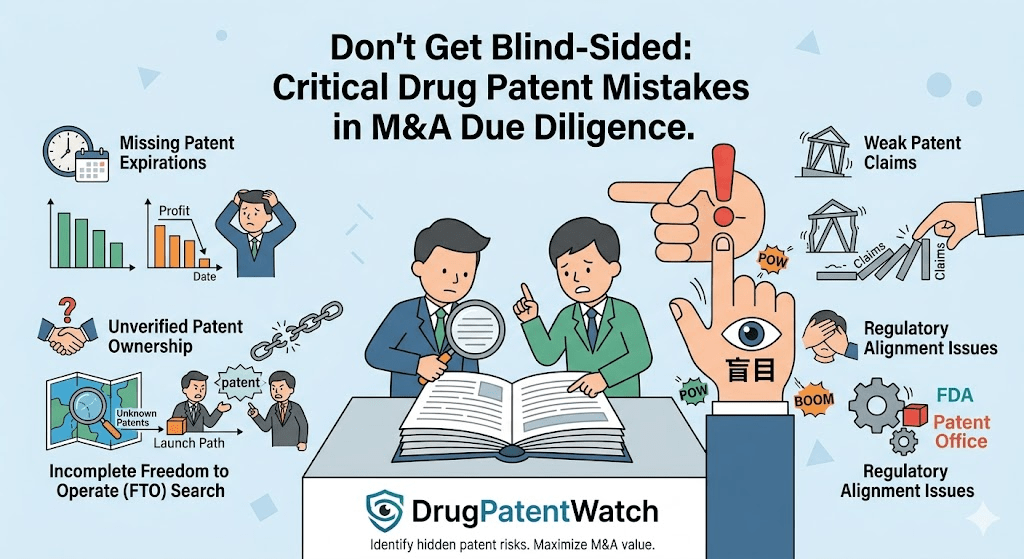
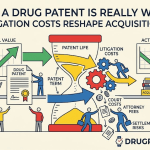
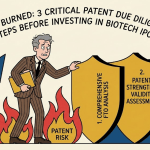
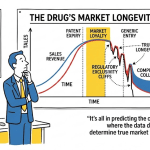
When Pfizer paid $11.6 billion for Array BioPharma in 2019, analysts praised the deal’s logic. Two years later, generic manufacturers filed Paragraph IV certifications against Braftovi and Mektovi patents that Pfizer’s teams had assessed as durable. The patents held — but the episode illustrated a recurring pattern in pharmaceutical M&A: patent portfolios that look airtight at signing become contested the moment a deal closes and generic manufacturers smell blood.
Drug patent due diligence is one of the most technically demanding disciplines in corporate finance. It sits at the intersection of chemistry, patent law, FDA regulatory strategy, and competitive intelligence. Most M&A teams are strong in two of those four areas. The gaps cost acquirers billions.
This guide covers the specific, recurring patent mistakes that erode deal value in pharmaceutical acquisitions — from misreading Orange Book listings to missing formulation patent expiration dates, from underestimating Paragraph IV litigation to misunderstanding pediatric exclusivity. Every section targets a real failure mode that has destroyed value in documented transactions.
The stakes are not abstract. The FDA’s Orange Book currently lists over 100,000 patent and exclusivity records across more than 17,000 approved drug products. A single misread entry can shift a $2 billion revenue forecast by 40%.
What Is Drug Patent Due Diligence and Why Does It Differ From Standard IP Review?
Standard IP due diligence in technology M&A asks whether patents are valid, enforceable, and owned by the seller. Pharmaceutical patent due diligence asks all of those questions and then adds a set of sector-specific questions that most generalist IP counsel never encounters.
The pharmaceutical patent system does not function like any other industry’s patent system. The FDA’s Orange Book (officially the Approved Drug Products with Therapeutic Equivalence Evaluations) creates a government-curated register of patents that brand manufacturers believe cover listed drugs. Generic manufacturers must certify their relationship to each listed patent before receiving approval. That certification triggers litigation rights, stay provisions, and first-filer exclusivities — a regulatory scaffold that generic manufacturers use as aggressively as brand companies use patent prosecution.
A technology company’s patent review asks: can a competitor design around this patent? A pharmaceutical patent review must ask: can a generic manufacturer design around this patent, certify to the FDA that they have done so, survive a 30-month litigation stay, and launch at-risk before final judgment? Those are different questions that require different expertise.
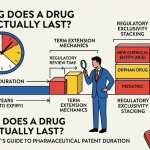
The second major difference is regulatory exclusivity. FDA-granted exclusivities — five-year new chemical entity exclusivity, three-year new clinical investigation exclusivity, seven-year orphan drug exclusivity, six-month pediatric exclusivity — are not patents. They run on different timelines, expire at different dates, and provide different scopes of protection. A drug asset whose last patent expires in 2026 but retains six-month pediatric exclusivity through 2027 has a materially different competitive profile than it appears on a patent-only analysis.
The third difference is portfolio architecture. Brand manufacturers deliberately construct patent estates with multiple patent types covering the same drug: compound patents, formulation patents, method-of-use patents, metabolite patents, polymorph patents, and process patents. Each has a different expiration date. Generic manufacturers can and do design around specific patent layers while challenging others. An acquirer who sees ‘2031’ on one patent without understanding the full portfolio architecture may be purchasing an asset whose practical exclusivity ends in 2027.
The Orange Book: What It Contains, What It Omits, and Why Both Matter
The Orange Book lists patents that, according to the holder, claim the approved drug or a method of using it. Brand manufacturers self-certify these listings. The FDA does not independently verify that listed patents are valid, that they actually cover the approved product, or that they were listed in good faith.
That self-certification creates two problems for acquirers. First, some listed patents are weak, narrow, or arguably do not cover the approved drug product at all. They are listed because listing creates litigation leverage — a 30-month stay against any generic that does not Paragraph III around them. An acquirer inheriting a portfolio of questionable Orange Book listings is inheriting a litigation strategy, not a patent portfolio.
Second, and less understood, the Orange Book omits biologic drugs entirely. Biologics approved under the Biologics Price Competition and Innovation Act (BPCIA) follow a different pathway governed by a different exclusivity regime and a different patent dance process. The Purple Book, maintained separately, covers biologic reference products and biosimilar designations. An acquirer analyzing a mixed portfolio of small-molecule drugs and biologics needs two separate analytical frameworks.
Tools like DrugPatentWatch aggregate Orange Book data, patent expiration timelines, and ANDA filing histories into searchable databases. For any pharmaceutical M&A transaction, DrugPatentWatch serves as a baseline data layer — the starting point, not the ending point, of patent due diligence. The database allows acquirers to quickly identify which competitors have filed ANDAs against a target’s products, what patent certifications they have made, and what litigation history exists. What it cannot do is assess patent claim scope, litigation outcome probability, or the commercial behavior of individual generic manufacturers post-launch.
How Generic Entry Timelines Are Actually Determined: The Four-Step Framework
Generic entry is not simply a function of patent expiration. It follows a four-step determination that most financial models oversimplify:
Step 1: Identify the last-expiring Orange Book patent with no legitimate design-around path. This is harder than it sounds. Formulation patents can be designed around. Method-of-use patents only block generics that include the patented indication on their label — a generic can carve out the indication and still sell. Compound patents are harder to design around but not impossible when stereoisomers or metabolites are involved.
Step 2: Add any applicable FDA exclusivities that extend beyond the last patent. Pediatric exclusivity adds six months to whatever IP protection existed, whether from patents or other exclusivities. Orphan drug exclusivity provides seven years from approval. New chemical entity exclusivity runs five years from NDA approval. These stack with patents in complex ways.
Step 3: Assess the Paragraph IV litigation landscape. If one or more ANDAs have been filed with Paragraph IV certifications, the 30-month stay has probably already begun. If the stay has expired or been lifted, a generic manufacturer may be positioned to launch at-risk. If a settlement has been reached, the settlement terms — including permitted generic entry dates — must be obtained and modeled.
Step 4: Evaluate the first-filer exclusivity holder’s commercial intentions. The Hatch-Waxman Act grants 180-day exclusivity to the first Paragraph IV filer if they successfully challenge the patent. That first filer can delay subsequent generics from entering. Whether they will launch immediately, wait, or forfeit exclusivity through failure to launch depends on their commercial situation, their relationship with the brand company, and whether an authorized generic is in the market.
Financial models that skip step 3 or step 4 are directionally unreliable. In practice, most acquirer models that fail do so at step 3 — they model patent expiration but not litigation status, and litigation is where actual entry timing is set.
The Top Eight Patent Due Diligence Mistakes That Destroy Deal Value
Mistake 1: Treating Patent Expiration Dates as Generic Entry Dates
The most common error in pharmaceutical M&A models is using the last Orange Book patent expiration date as the assumed generic entry date. This error runs in both directions — it can overestimate exclusivity or underestimate it.
Overestimation happens when acquirers see a patent with a 2030 expiration and model 2030 as the generic entry date, without checking whether Paragraph IV certifications have already been filed and litigation is underway. In that scenario, the real effective exclusivity period may end in 2026 — the moment a Paragraph IV filer wins at trial or the 30-month stay expires without a court order, whichever comes first. An acquirer paying a 12x revenue multiple on a 2030 patent expiration assumption, when the actual commercial exclusivity ends in 2026, has overpaid by a substantial margin.
Underestimation happens when acquirers model patent expiration without accounting for regulatory exclusivities that run beyond it. A drug compound patent that expires in 2025 but carries six-month pediatric exclusivity through 2026 and has no Paragraph IV certifications may have a cleaner runway than its patent map suggests.
The fix is to run the four-step framework above for every revenue-material product in the target’s portfolio. For any product above a materiality threshold — typically 5-10% of target revenues — this analysis should include review of all filed ANDAs, all Paragraph IV certifications, all active litigation, and all settlement agreements.
Mistake 2: Misreading the Orange Book’s Patent Type Listings
The Orange Book classifies listed patents by type: drug substance (DS), drug product (DP), method of use (MU), and combinations. This classification matters enormously for generic entry analysis, and acquirers who do not understand it routinely misread exclusivity.
Drug substance patents cover the active pharmaceutical ingredient — the compound itself. These are typically the strongest patents. A generic manufacturer who wishes to sell the same molecule must either design around the compound patent (unusual for small molecules, more common for prodrugs and metabolites) or wait for it to expire.
Drug product patents cover the formulation — the specific combination of the active ingredient with excipients, delivery systems, and physical forms. Extended-release formulations, for example, typically have separate formulation patents beyond the compound patent. Generic manufacturers can and routinely do design around formulation patents by developing alternative formulations. An extended-release formulation patent that expires in 2031 may be circumvented by a generic that develops its own extended-release mechanism and files a Paragraph IV against it.
Method-of-use patents cover a specific FDA-approved indication. The FDA allows generic manufacturers to ‘carve out’ a patented indication from their label while still selling the generic for non-patented indications. A generic labeled only for the non-patented indication can legally compete with the brand for the patented indication through physician prescribing behavior — doctors may prescribe the generic for the patented indication even though the label does not list it. This is called ‘skinny labeling’ or ‘section viii carve-outs.’ Brand manufacturers have challenged this practice under the theory of inducement of infringement, with mixed litigation results.
An acquirer whose financial model assumes that a method-of-use patent fully protects revenues through its expiration date may be mispricing assets where carve-out is commercially viable.
Mistake 3: Ignoring Inter Partes Review Exposure
Since the America Invents Act created inter partes review (IPR) in 2012, generic manufacturers and hedge funds have used the Patent Trial and Appeal Board (PTAB) to challenge pharmaceutical patents outside of district court. IPR proceedings are faster than district court litigation, less expensive, and apply a different legal standard — a ‘preponderance of the evidence’ standard rather than the ‘clear and convincing’ evidence standard required to invalidate patents in district court.
The institution rate for IPR petitions against pharmaceutical patents declined from early peaks above 80% but remained above 50% for many years. The partial-institution reforms following SAS Institute v. Iancu changed procedure, but PTAB remains a meaningful threat to pharmaceutical patent validity. Kyle Bass’s Coalition for Affordable Drugs, which filed IPR petitions explicitly to profit from short positions in brand manufacturers, demonstrated that IPR is a financially motivated tool available to any party, not just generic manufacturers.
An acquirer that reviews district court litigation history but does not check for pending or completed IPR proceedings against the target’s key patents is missing a material risk category. PTAB petitions are public and searchable on the USPTO’s Patent Center. They should be included in every patent due diligence review.
The practical impact: an Orange Book patent that has survived district court challenges but faces a pending IPR petition has a risk profile fundamentally different from one that has not been challenged. Patent claims invalidated at PTAB can remove the 30-month stay trigger, eliminate the patent from the Orange Book, and expose the asset to immediate generic competition.
When a brand manufacturer faces generic competition, they often launch an authorized generic — a version of their own drug sold under a generic label, typically through a licensing partner. Authorized generics compete with independent generic manufacturers during the 180-day first-filer exclusivity period, significantly eroding the economics that first-filer generics were designed to capture.
From an acquirer’s perspective, authorized generic strategies matter for two reasons.
First, the target may operate authorized generic programs that generate revenue post-patent expiration. These programs have specific contractual terms, profit-sharing arrangements, and termination provisions. An acquirer who does not review authorized generic agreements may model this revenue incorrectly — or miss that the agreements terminate on change of control.
Second, the target may face authorized generic competition from the originator after a Paragraph IV challenge succeeds. If the acquirer’s asset is a generic manufacturer, the 180-day exclusivity period that appears to protect first-mover advantage in financial models may be structurally undermined by a brand-authorized generic entry.
The FTC has studied authorized generics extensively. Their 2011 report found that brand manufacturers launch authorized generics in response to roughly 70% of successful Paragraph IV challenges. Any generic asset in an M&A target portfolio should be modeled with and without authorized generic competition during the 180-day window.
The Best Pharmaceuticals for Children Act grants six months of additional exclusivity to manufacturers who conduct FDA-requested pediatric studies, even if those studies find that the drug is not safe or effective in children. This exclusivity attaches to the underlying patent or regulatory exclusivity — it extends all exclusivities that would otherwise expire, simultaneously, by six months.
The mechanics matter. Pediatric exclusivity does not create new exclusivity — it extends existing exclusivity. If a drug has a compound patent expiring December 31, 2026 and no other IP, pediatric exclusivity pushes effective generic entry to June 30, 2027. If the same drug has both a compound patent (2026) and a formulation patent (2028), pediatric exclusivity pushes the formulation patent protection to June 30, 2028. That is an additional six months of exclusivity worth hundreds of millions of dollars on a major branded drug.
Acquirers frequently miss pediatric exclusivity in one of two ways: they see it in the Orange Book listing but fail to apply it correctly to the revenue model, or they do not check whether the target has a pending pediatric written request from the FDA that, if fulfilled, would extend the asset’s exclusivity beyond what current filings show.
The FDA maintains a public list of all pediatric written requests, studies conducted, and exclusivities granted. This list should be reviewed for every major product in an acquisition target’s portfolio.
Mistake 6: Overlooking Patent Term Adjustments and Extensions
Two mechanisms can extend a patent’s expiration date beyond its original term: patent term adjustment (PTA) and patent term extension (PTE).
Patent term adjustment compensates patent holders for delays in USPTO examination that were caused by the USPTO, not the applicant. PTAs are calculated automatically and appear on issued patents, but they must be checked against Orange Book listings because early financial models often use the base 20-year term and ignore PTAs. A pharmaceutical compound patent with a two-year PTA may expire in 2032 rather than 2030 — a two-year difference that can be worth $500 million in revenues for a major brand drug.
Patent term extension under the Hatch-Waxman Act compensates brand manufacturers for regulatory review time at the FDA. The extension can add up to five years to one patent per approved drug product. It requires a PTE application submitted within 60 days of FDA approval. The maximum post-extension term is 14 years from FDA approval.
PTE calculations are particularly important for drugs that had long regulatory review periods. A drug approved in 2018 after seven years of regulatory review might be eligible for a five-year PTE, extending its compound patent to a date that does not appear on the face of the original patent. An acquirer who does not check for pending or granted PTE applications may significantly underestimate the IP protection period for recently approved drugs.
Both PTA and PTE data are publicly available through the USPTO and FDA. DrugPatentWatch aggregates much of this data but PTE application status should be verified directly with the USPTO’s Patent Center for any material asset.
Mistake 7: Treating Hatch-Waxman Settlements as Done Deals
When brand and generic manufacturers reach patent litigation settlements, those settlements typically include an agreed-upon generic entry date — often significantly before the last patent expiration, in exchange for the generic manufacturer dropping its patent challenge. These ‘pay-for-delay’ or ‘reverse payment’ settlements were presumptively valid for decades before FTC v. Actavis (2013), in which the Supreme Court held that such settlements can violate antitrust law if the reverse payment is large and unjustified.
From a due diligence perspective, Hatch-Waxman settlements create three distinct risk categories. First, the settlement might be challenged by the FTC or DOJ on antitrust grounds, potentially voiding the agreed generic entry date and exposing the brand to earlier or later generic entry depending on the outcome. Second, the settlement may have been structured around patents that have since been invalidated by other means (IPR, subsequent litigation), potentially rendering the settlement’s patent assumptions incorrect. Third, the settlement typically grants specific rights to specific generic manufacturers — if a second generic manufacturer that was not party to the settlement subsequently files an ANDA with Paragraph IV certifications, a new litigation cycle begins.
Acquirers need to obtain and read every patent litigation settlement agreement for material products. Change-of-control provisions in these agreements can affect their validity or trigger renegotiation rights. A settlement that grants a permitted generic entry date of 2029 but includes a change-of-control termination clause is not what it appears on the revenue model.
Mistake 8: Failing to Map the Full Patent Cliff Timeline Across the Portfolio
Individual product patent analysis is necessary but not sufficient. The acquirer also needs a portfolio-level patent cliff map that shows the cumulative revenue exposure by year as products lose exclusivity.
This matters for acquirers for two reasons. First, concentrated patent cliffs — where multiple major products lose exclusivity within a two-to-three year window — create cash flow dynamics that affect debt service capacity, pipeline investment capacity, and the target’s ability to execute on its post-acquisition strategy. An acquirer who prices each product correctly but misses the correlation of their expiration dates can misjudge the combined impact.
Second, portfolio-level patent maps expose strategic vulnerabilities that product-level analysis misses. A target that has solved its patent cliff problem by acquiring pipeline assets needs to be assessed on those pipeline assets’ patent positions, not just the marketed portfolio. If pipeline assets A, B, and C are meant to replace the revenue from losing exclusivity on products X, Y, and Z, the acquirer needs patent due diligence on both sets.
Paragraph IV Litigation: How ANDA Challenges Reshape Deal Valuations
A Paragraph IV certification is a generic manufacturer’s declaration to the FDA that a listed Orange Book patent is invalid, unenforceable, or will not be infringed by the proposed generic product. Filing a Paragraph IV is an act of patent challenge, not just a regulatory submission. It triggers a legal mechanism that defines much of the competitive landscape for pharmaceutical products in the United States.
When a brand manufacturer receives notice of a Paragraph IV filing and sues within 45 days, a 30-month stay automatically prevents the FDA from approving the generic application. The brand manufacturer gets 30 months to litigate. If the brand wins, the generic is blocked until the patent expires. If the generic wins or the stay expires without a court order blocking generic entry, the FDA can approve the application and the generic can launch, including before the patent expires.
‘The average time from first Paragraph IV filing to market entry for small-molecule drugs has been approximately 2.7 years — meaning the 30-month stay is often consumed almost entirely by litigation without final resolution.’ — IQVIA Institute for Human Data Science, Medicine Use and Spending in the U.S., 2022.
How to Read an ANDA Litigation History in Due Diligence
Every Paragraph IV challenge creates a public record. ANDA filer notifications are sent to brand manufacturers and can be tracked through court filings in the relevant district (most pharmaceutical patent litigation is filed in the District of Delaware or the District of New Jersey). Court dockets are searchable on PACER.
A thorough ANDA litigation review for due diligence covers four areas:
Active stays: Is a 30-month stay currently in place? When does it expire? Has the court issued any orders affecting the stay? A stay that expires in six months without a trial date scheduled is a flag — the brand company is running out of litigation time.
Filed-but-unlittigated ANDAs: Has a Paragraph IV been filed for which the brand company did not sue within 45 days? If so, the stay was not triggered, the generic can receive FDA approval without a stay, and entry can occur when the FDA grants tentative or final approval. Non-suit within 45 days is uncommon but it has happened when brand companies assessed that suing would be futile or counterproductive.
Post-trial status: If patent litigation went to trial, what was the outcome? A finding of invalidity or non-infringement eliminates that patent’s Orange Book listing and its blocking effect. A finding for the brand manufacturer establishes validity for that generic manufacturer but does not necessarily bind subsequent filers.
Settlement terms: As discussed above, every settlement agreement should be reviewed for entry date provisions, change-of-control clauses, authorized generic commitments, and royalty arrangements.
The First-Filer Advantage: When 180-Day Exclusivity Changes Deal Economics
The first generic manufacturer to file a Paragraph IV certification against a brand drug’s patents earns 180 days of market exclusivity once it launches — no other generic can receive final FDA approval until those 180 days expire. This exclusivity period makes the first-filer position commercially significant: first-filer generics typically price at 80-90% of brand at launch, compared to 30-40% of brand once multiple generics compete.
For an acquirer evaluating a generic manufacturer, the first-filer pipeline is one of the most valuable IP assets in the portfolio — sometimes more valuable than marketed products. The 180-day exclusivity creates protected periods of high-margin generic sales on major brand drugs.
Valuing first-filer positions requires assessing: whether the litigation is won or settled, what the authorized generic landscape will look like during the exclusivity period, the brand manufacturer’s typical pricing response, and whether the first-filer position is shared with other filers who filed on the same day (multi-filer situations split the effective exclusivity period commercially, though not legally).
Acquirers who value generic pipelines based only on ANDA count without mapping first-filer positions systematically undervalue or overvalue the pipeline depending on the asset mix.
Paragraph IV Strategy Differences by Therapeutic Category
The intensity of Paragraph IV activity varies significantly by therapeutic category. High-revenue small-molecule drugs in oncology, cardiology, central nervous system, and metabolic disease face the most aggressive challenges. The economics are straightforward: a billion-dollar drug generates enormous litigation incentive for generic manufacturers who can capture even 5-10% of revenues during a 180-day exclusivity period.
Specialty drugs with complex delivery systems (inhalers, transdermal patches, intravitreal injections) are harder to challenge because formulation complexity creates multiple patent layers that are individually harder to design around. Accordingly, Paragraph IV activity against specialty formulations tends to be lower, and the few challenges that are filed tend to face better odds for the brand manufacturer.
Biologic drugs covered by the BPCIA follow the ‘patent dance’ rather than the Paragraph IV mechanism. The patent dance requires biosimilar applicants and reference product sponsors to exchange information about the biosimilar product and potentially relevant patents, negotiate a patent resolution mechanism, and potentially litigate. The dynamics are different from Hatch-Waxman and require separate analysis.
Biologics and the BPCIA Patent Dance: What Brand and Biosimilar Acquirers Must Know
The Biologics Price Competition and Innovation Act of 2010 created the biosimilar approval pathway and the IP dispute resolution process for biologic drugs. An acquirer buying a reference biologic manufacturer faces different patent risks than one buying a small-molecule brand, and an acquirer buying a biosimilar developer faces a categorically different pipeline valuation challenge.
Reference Product Exclusivity vs. Patent Protection: The 12-Year Clock
The BPCIA grants twelve years of reference product exclusivity from the date of first licensure. During this period, the FDA cannot approve a biosimilar application that references the innovator biologic. This is a regulatory exclusivity, not a patent — it cannot be challenged through inter partes review or Paragraph IV equivalent mechanisms. It runs regardless of patent status.
For acquirers of reference biologic manufacturers, the practical implication is that an asset with fifteen years of patent protection but only four years remaining on its twelve-year reference product exclusivity has a different competitive risk profile than it appears. Biosimilar manufacturers that filed applications based on the exclusivity endpoint may have completed or be nearly completing their development and regulatory work. The transition from full pricing to biosimilar competition can happen quickly once reference product exclusivity expires.
An acquirer who models biosimilar entry based on the last compound patent expiration — as if the BPCIA were identical to Hatch-Waxman — will overestimate the reference biologic’s exclusivity runway in some cases and underestimate it in others, depending on the overlap of the twelve-year clock and patent term.
The Patent Dance Mechanics and Their Due Diligence Implications
The BPCIA’s patent dance is optional for biosimilar applicants. A biosimilar applicant can choose to share their aBLA application with the reference product sponsor, triggering a structured exchange of patent lists and potential licensing discussions. Alternatively, the applicant can skip the dance and simply notify the reference product sponsor 180 days before commercial launch, at which point the sponsor can sue for injunctive relief.
The Supreme Court’s Sandoz Inc. v. Amgen Inc. (2017) decision confirmed that biosimilar applicants can opt out of the dance, reducing the dance’s practical significance. Many biosimilar developers now skip the dance and rely on the 180-day notice mechanism.
For acquirers of reference biologic manufacturers, this means that the first formal signal of an impending biosimilar launch may be a 180-day notice, not an aBLA filing. The company may have less warning than a Hatch-Waxman timeline would suggest. Acquirers should review whether the target has received any BPCIA notices, has active BPCIA litigation, or has received any informal communications from biosimilar developers.
Biosimilar Pipeline Valuation: The Five Commercial Risk Factors
Valuing a biosimilar developer’s pipeline requires five specific assessments that differ from small-molecule generic pipeline valuation:
Manufacturing complexity: Biologics manufacturing requires specialized bioreactor capacity, cell line development, and analytical characterization capabilities. A biosimilar developer with manufacturing cost disadvantages relative to the originator will struggle to compete on price in a market with multiple biosimilar entrants.
Interchangeability designation: An FDA interchangeability designation allows a pharmacist to substitute the biosimilar for the reference product without physician intervention. This designation requires additional switching studies. Biosimilars without interchangeability are disadvantaged in formulary negotiations relative to those with it. An acquirer valuing a biosimilar pipeline without checking interchangeability status is missing a commercial differentiator.
Reference product remaining market size: If a reference biologic has already attracted three or four biosimilar competitors, the incremental value of a fifth biosimilar entrant may be minimal. Biosimilar markets that look large based on originator revenues contract rapidly with multi-entrant competition.
Contracting strategy: Health system formulary contracts and PBM rebate arrangements drive biosimilar market share in the United States to a greater extent than in Europe. A biosimilar developer without a credible contracting strategy for the major PBMs and integrated delivery networks may be unable to compete despite regulatory approval.
Litigation readiness: Even after FDA approval, reference product sponsors can and do sue biosimilar developers for patent infringement. The acquirer needs to assess whether the biosimilar developer has freedom-to-operate opinions, clearance for all relevant reference product patents, and adequate litigation reserves.
FDA Exclusivity Types and Their Due Diligence Checklist
FDA exclusivities are independent of, and additive to, patent protection. They are administratively granted, specific in duration, and listed in the Orange Book (for small molecules) or Purple Book (for biologics). Every major acquisition target’s products need an exclusivity audit separate from their patent audit.
New Chemical Entity (NCE) Exclusivity: What the 5-Year Clock Actually Blocks
NCE exclusivity prevents any ANDA or 505(b)(2) application that references the NDA holder’s drug from being submitted to the FDA for five years from the date of approval. After four years, Paragraph IV certifications can be submitted, but the drug cannot be approved until the full five years have run (absent a successful Paragraph IV challenge that allows approval after 7.5 years total).
For an acquirer, NCE exclusivity on a recently approved drug can be highly valuable — it blocks not just approval but submission, which delays the entire Paragraph IV litigation clock. An acquirer who models a 2022-approved drug as facing generic competition in 2026 without checking whether NCE exclusivity was granted may be modeling a scenario that is legally impossible. The correct answer might be 2027 at the earliest (five-year NCE exclusivity) or later if strong patent protection layered on top.
New Clinical Investigation (3-Year) Exclusivity and Its Narrow Scope
Three-year exclusivity applies to NDA supplements that contain reports of new clinical investigations essential to approval — new indications, new dosage forms, new routes of administration, or new populations. It is narrower than NCE exclusivity: it blocks approval of ANDAs referencing the specific change, not the entire drug. A generic manufacturer can still receive approval for the original indication during a three-year exclusivity period covering a new indication supplement.
Acquirers frequently overestimate three-year exclusivity protection because they do not understand its narrow scope. If a brand manufacturer secured three-year exclusivity for a new formulation but the original formulation’s IP has expired, a generic can enter for the original indication even while the new formulation is protected. The revenue model must reflect this granularity.
Orphan Drug Exclusivity: The Seven-Year Franchise and Its Limitations
Orphan Drug Act exclusivity grants seven years of market exclusivity for drugs approved for rare diseases affecting fewer than 200,000 US patients. During orphan drug exclusivity, the FDA cannot approve a ‘same drug’ for the same orphan indication. This exclusivity has fueled the rare disease M&A market — acquirers pay substantial premiums for drugs with orphan designations and unexpired exclusivity.
The due diligence risk with orphan exclusivity is the ‘same drug’ definition and the ‘clinically superior’ exception. A competitor can receive FDA approval for the same orphan indication if they can demonstrate clinical superiority — greater efficacy, greater safety, or major contribution to patient care relative to the approved product. This clinical superiority pathway has been used successfully multiple times to break through ostensibly protected orphan drug franchises.
AveXis’s Zolgensma (onasemnogene abeparvovec), approved in 2019 for spinal muscular atrophy, received orphan drug designation. Biogen’s Spinraza (nusinersen) was already approved for the same indication. The FDA navigated the clinical superiority analysis to approve both products, reflecting the reality that orphan exclusivity for gene therapies and established small-molecule or antisense drugs in the same indication does not categorically preclude multi-product markets.
An acquirer paying for orphan drug exclusivity as a durable competitive moat needs an honest assessment of the clinical superiority risk from both currently-in-development competitors and the broader therapeutic class pipeline.
Priority Review Vouchers: Monetizable Assets Hidden in the Patent Estate
Priority review vouchers (PRVs) granted under the rare pediatric disease program, tropical disease program, or medical countermeasure program represent transferable assets worth $100-200 million each in secondary market transactions. They are not listed in the Orange Book, are not patents, and are not exclusivities — they are FDA-issued vouchers that allow the holder to request priority review for any NDA or BLA submission.
PRVs appear on the FDA’s publicly available PRV tracking lists. Any pharmaceutical M&A target that has received approvals qualifying for PRV grants should be checked for unredeemed vouchers. Acquirers who do not know to look for PRVs may be acquiring a $100-200 million asset without pricing it into the deal. Conversely, acquirers who see a PRV in a pipeline model but do not verify its actual issuance and transferability may be pricing a speculative asset as if it were certain.
Change-of-Control Provisions in Licensing and Collaboration Agreements
Many pharmaceutical companies hold rights to their key products not through outright ownership but through in-licensing arrangements with academic institutions, other pharmaceutical companies, or biotech partners. These agreements routinely contain change-of-control provisions that can terminate the license, require renegotiation, or trigger payments upon acquisition.
What Happens to In-Licensed Patent Rights on Acquisition?
A change-of-control provision in a license agreement might:
Terminate the license entirely, reverting rights to the licensor. This is the worst-case scenario — an acquirer could complete a transaction only to find that the most valuable patent rights in the target’s portfolio have reverted to a third party.
Require the licensor’s consent to assignment, giving the licensor leverage to renegotiate royalty rates or milestone terms as a condition of approving the acquisition.
Trigger accelerated milestones or royalty escalation, immediately increasing the cost structure of the licensed product post-acquisition.
Transfer automatically without restriction — the ideal outcome from an acquirer’s perspective.
Generic drug companies operate large portfolios of product-specific IP under license from API manufacturers, formulation technology companies, and institutional inventors. The scale of these arrangements means that a large generic company acquisition can involve dozens of licenses with individual change-of-control provisions that require systematic review.
University and NIH License Agreements: The March-In Rights Problem
Patents that originated from government-funded research may be subject to the Bayh-Dole Act’s march-in rights provisions. Under Bayh-Dole, the federal government retains the right to require the patent holder to license the invention to third parties if the holder is not taking adequate steps to achieve practical application, or if action is necessary to meet health or safety needs.
The march-in rights have never been exercised by any federal agency in the forty-five years since Bayh-Dole’s enactment. But the NIH’s January 2024 draft framework for march-in rights consideration, which for the first time included pricing concerns as a potential trigger, raised the question of whether march-in rights could be invoked against high-priced drugs that originated from government-funded research.
For an acquirer of a company holding Bayh-Dole licensed patents, the march-in risk should be assessed: how much of the target’s revenue derives from government-funded patents, what pricing commitments were made in the original license, and whether the current political environment suggests regulatory appetite for march-in proceedings.
The Patent Cliff Forecast: Building a Defensible Generic Entry Timeline Model
A defensible patent cliff model for an acquisition target includes six data layers that most financial advisory models omit, simplify, or conflate.
Layer 1: Orange Book Patent Expiration Dates with PTA and PTE Adjustments
Pull every patent for every listed product from the Orange Book. Apply patent term adjustments from the issued patent face. Check for granted or pending patent term extensions through the FDA’s Orange Book and USPTO records. Build a table of adjusted expiration dates by patent type for each product.
Layer 2: FDA Exclusivity End Dates
Pull all Orange Book exclusivity listings. Apply six-month pediatric exclusivity to the adjusted patent expiration dates where applicable. Note NCE exclusivity submission and approval blocks. Note orphan drug exclusivity scope and expiration. Cross-check Purple Book for any biologic products.
Layer 3: Current ANDA and aBLA Filing Status
Use DrugPatentWatch, FDA’s Orange Book ANDA list, and PACER court filings to identify all active ANDA filers by product. Determine paragraph certification type for each filer. Identify first filers and determine whether they have paragraph IV certifications. Note any FDA tentative approvals (which indicate a generic is ready to launch pending litigation resolution or exclusivity expiry).
Layer 4: Active Litigation Timeline
For each Paragraph IV certification, determine litigation status, 30-month stay status and expiration date, trial date if scheduled, and any preliminary injunction orders. Note cases where the brand has not sued within 45 days. Note cases where a motion for summary judgment of invalidity or non-infringement is pending.
Layer 5: Settlement Terms
Obtain all executed Hatch-Waxman settlements. Map permitted generic entry dates. Note any authorized generic commitments. Review change-of-control provisions. Assess FTC filing status and any pending antitrust review of settlements.
Layer 6: IPR and PTAB History
Search USPTO Patent Center for all IPR petitions against Orange Book-listed patents. Note institution decisions, final written decisions, and any appeals. An IPR final written decision invalidating patent claims is typically immediately effective — the Orange Book listing does not persist after a PTAB invalidity ruling that is not stayed on appeal.
With these six layers populated, the model can produce a range of generic entry scenarios: base case (no successful challenges, patents hold through expiration), bear case (active Paragraph IV filer wins at trial or on summary judgment), and optimistic case (all challengers settle on terms favorable to the brand). The range of these scenarios, weighted by probability, produces the defensible revenue model that acquirers need to price the asset correctly.
Specialty Drug Patent Strategies: Extended-Release, Combination Products, and Delivery Systems
Specialty drug manufacturers have developed sophisticated patent extension strategies that go beyond basic compound patents. Understanding these strategies is essential for assessing the practical exclusivity of specialty drug assets in acquisitions.
Extended-Release Formulation Patents: How Long Do They Actually Hold?
Extended-release (ER) formulations add years of effective exclusivity beyond compound patent expiration. AstraZeneca’s Nexium (esomeprazole) maintained significant market share years after its compound patent expired through ER formulation changes. Allergan’s Namenda XR (memantine ER) extended the Namenda franchise several years beyond the IR formulation’s patent expiration.
The generic challenge to ER formulation patents follows a different technical path than compound patent challenges. Generic developers must demonstrate that their ER formulation achieves bioequivalence to the brand without infringing formulation patents. The technical complexity of demonstrating bioequivalence for complex ER systems while designing around formulation patents is significant — this is why ER formulation patents tend to hold longer than compound patents in practice, even when they would appear legally vulnerable.
For an acquirer, ER formulation patents should be assessed on their technical design-around difficulty, not just their legal validity. A patent that is technically design-around-resistant provides practical exclusivity regardless of its theoretical legal vulnerability.
Combination Product Patents and the ‘50% Rule’ Misconception
Fixed-dose combination drugs — products that combine two or more active ingredients in a single dosage form — often carry patents on the combination itself, distinct from the patents on the individual components. If both components are off-patent, the combination patent may be the only Orange Book-listed protection.
A common misconception is that generic manufacturers will quickly challenge combination product patents because the individual components are generic. This underestimates the technical difficulty of demonstrating bioequivalence for the combination while potentially navigating formulation design challenges. The regulatory complexity of receiving FDA approval for a combination ANDA also creates barriers that extend practical exclusivity.
An acquirer should assess combination product patents both for their legal strength and for the practical time-cost barrier facing potential generic challengers. The two assessments often diverge — a legally weak combination patent may still provide several years of practical exclusivity because no generic manufacturer finds the regulatory investment worthwhile for the market size.
Device-Drug Combination Patents: The Orphaned IP Problem
Drug-device combination products — auto-injectors, prefilled syringes, drug-eluting stents, metered-dose inhalers — involve patents on both the drug component and the device component. The device patents are typically not listed in the Orange Book but are still potentially infringed by a biosimilar or generic that uses the same device design.
An acquirer of a drug-device combination product must review device patents separately from Orange Book patents. Device patents assigned to the medical device component manufacturer, licensed to the pharmaceutical company, create the same change-of-control risks as pharmaceutical licensing agreements. They also create distinct invalidity and non-infringement analysis that may require device IP specialists rather than pharmaceutical patent specialists.
The AstraZeneca inhaler portfolio is the canonical example. Symbicort (budesonide/formoterol fumarate) faced ANDA challenges to the drug formulation patents while the inhaler device itself was protected by separate patents. The interplay between these two patent sets defined the competitive timeline for inhaled combination products in a way that requires integrated analysis.
Geographic Patent Arbitrage: Why US Patent Expiration Dates Differ from EU and ROW
Multinational pharmaceutical M&A involves patent portfolios with different expiration dates in different jurisdictions. A compound patent that expires in the United States in 2027 may expire in Europe in 2025 or 2030, depending on supplementary protection certificate (SPC) status.
Supplementary Protection Certificates and Their US Patent Term Extension Equivalents
In the European Union, supplementary protection certificates (SPCs) function similarly to US patent term extensions. They extend the effective protection of a qualifying compound patent to compensate for regulatory review time, with a maximum extension of five years and a maximum total protection (patent plus SPC) of 15 years from first marketing authorization in the EU.
An acquirer whose financial model relies on a global revenue base must map SPC expiration dates by jurisdiction separately from US patent expiration dates. A product with a US patent expiring in 2028 but an EU SPC expiring in 2026 faces a two-year earlier onset of European generic competition than US-centric analysis would suggest. For products where European revenues represent 30-40% of total revenues, this discrepancy materially affects deal valuation.
Data Exclusivity Differences in Key Markets
Data exclusivity periods also differ by jurisdiction. The EU grants eight years of data exclusivity and two years of market protection (the ‘8+2’ system) for new chemical entities approved through the centralized procedure. Japan grants eight years of data exclusivity. The United States grants five-year NCE exclusivity. These differences mean that a product whose US data exclusivity has expired may still have EU or Japanese data exclusivity protection that blocks regulatory approval of generic applications in those markets.
For acquirers of companies with significant non-US revenues, jurisdictional data exclusivity mapping should be part of the standard IP due diligence package, not an afterthought.
Competitive Intelligence: What Patent Filings Reveal About a Target’s Pipeline Strategy
Patent applications — particularly published applications that have not yet issued as patents — reveal a manufacturer’s pipeline strategy, technology platforms, and defensive patent activity. An acquirer who reads only issued patents misses the competitive intelligence value of patent application analysis.
How to Use Patent Application Filings to Map a Target’s R&D Direction
US patent applications are published 18 months after their priority date. Between priority date and publication, they are not publicly visible. After publication, they are searchable on the USPTO’s Patent Center and on commercial databases including DrugPatentWatch, Derwent Innovation, and PatSnap.
Patent application clusters reveal technology bets. A company filing twenty applications around a specific crystalline polymorph of a drug molecule is signaling that they are actively trying to extend IP protection for that drug through solid-state chemistry. A company with no patent applications in a therapeutic area they claim to be entering may have a pipeline that is entirely dependent on in-licensed IP — a different risk profile from a company that generates its own IP.
Continuation and continuation-in-part application filings are particularly informative. Brand manufacturers file continuations to maintain pending claims and adapt their patent coverage to what generic manufacturers are doing. An active continuation strategy indicates that a brand company is actively managing its patent estate against generic threats. Acquirers who inherit a brand portfolio with a robust continuation practice inherit a defensible, actively managed IP program. Acquirers of brands that have stopped filing continuations may be inheriting a static portfolio that is not positioned to adapt to generic challenge strategies.
What Competitors’ Patent Filings Reveal About Challenges to the Target’s Products
Generic manufacturers and specialty generic companies also file patents — on their own formulations, process improvements, and synthesis methods. These filings can signal which products they are preparing to challenge. A generic manufacturer filing multiple process patents on the synthesis of a compound that is still under brand exclusivity is preparing to manufacture that compound before the opportunity exists to sell it commercially.
Patent watchers who monitor generic manufacturer patent filings as a leading indicator of upcoming ANDA submissions can provide acquirers with early warning that a targeted product will face generic challenges shortly after deal close. This competitive intelligence layer is available to sophisticated acquirers who prioritize it but invisible to those who review only the target’s own IP.
M&A Deal Structures Designed to Manage Patent Risk
When patent risk is quantified but not resolved, deal structure can allocate it between buyer and seller rather than forcing the buyer to absorb it entirely or the deal to fail.
Milestone-Based Deal Structures Tied to Patent Litigation Outcomes
A deal in which a portion of the purchase price is contingent on the outcome of pending Paragraph IV litigation allocates patent litigation risk more rationally than a fixed purchase price. If the brand patent holds in litigation, the acquirer pays the full contingent amount. If the patent is invalidated and generic entry occurs earlier than modeled, the contingent payment is reduced or not triggered.
The legal and commercial complexity of contingent value rights (CVRs) and earn-out structures tied to patent outcomes is substantial. CVR terms must be precisely defined — what constitutes a ‘favorable’ litigation outcome, how to handle settlements that fall between complete brand victory and complete generic victory, and how to account for authorized generic entry during an exclusivity period that technically favors the brand but erodes economics. These structures require close legal drafting and financial modeling sophistication on both sides.
Representations and Warranties Insurance in Pharmaceutical Patent Deals
Representations and warranties (R&W) insurance provides coverage for breaches of seller representations about the target’s patent portfolio. R&W insurance for pharmaceutical transactions is available but underwriters apply specialized exclusions and sublimits for known patent risks.
An acquirer who identifies a material patent risk during due diligence and discloses it during R&W insurance underwriting will face exclusions or sublimits for that specific risk. The insurance will cover unknown patent risks — misrepresentations the seller made about patent status that the buyer had no reason to discover. It will not cover risks that were knowable and known.
For pharmaceutical transactions, R&W underwriters typically engage their own patent counsel to review the target’s Orange Book, litigation history, and ANDA landscape. Their assessment of what is ‘known’ versus ‘unknown’ can differ from the buyer’s assessment. The scope of R&W insurance coverage for patent-related risks should be reviewed carefully and not assumed to be comprehensive.
Oncology Patent Due Diligence: Why It Requires a Separate Framework
Oncology represents the highest-value, highest-risk segment of pharmaceutical M&A. Cancer drugs have the largest revenues, the most aggressive generic challengers, and some of the most complex patent litigation. They also have unique regulatory characteristics that affect patent due diligence.
Breakthrough Therapy Designation and Its Effect on Exclusivity
FDA Breakthrough Therapy designation accelerates clinical development and review of drugs that show early clinical evidence of substantial improvement over existing therapies. Breakthrough designation itself does not grant additional exclusivity. But drugs that receive Breakthrough designation are more likely to be approved on accelerated timelines, which affects the regulatory review period and therefore patent term extension calculations.
An oncology drug that received Breakthrough designation and was approved in twenty-four months of Phase III initiation has a shorter regulatory review period than one that took seven years. The PTE calculation for the faster-approved drug will yield a shorter extension. An acquirer who applies a default PTE assumption to a Breakthrough-designated drug may overestimate its IP protection period.
Combination Oncology Regimens and Labeling Patent Risks
Oncology drugs are increasingly used in combination with other agents, whether on-label or off-label. When a method-of-use patent covers a specific combination regimen that is on-label, that patent can block generic entry for that specific indication even after the compound patent expires. When the combination is off-label, the method patent’s blocking effect depends on inducement of infringement arguments — the same skinny labeling analysis that applies to any method-of-use patent.
Bristol-Myers Squibb’s Opdivo (nivolumab) and its combination use with Yervoy (ipilimumab) generated patent filings covering the combination regimen. When acquirers evaluate checkpoint inhibitor portfolios, the combination regimen patent landscape is a separate and material IP layer that requires specific analysis beyond the monotherapy compound patents.
Immuno-Oncology Patent Clustering: The Blocking Patent Problem
The immuno-oncology field involves foundational patents held by academic institutions (the University of California’s CTLA-4 patents licensed to Bristol-Myers Squibb, Dana-Farber’s PD-1 patents licensed to Merck) layered with manufacturer-specific patents on antibody sequences, manufacturing processes, and clinical methods. This creates a dense patent thicket where any new entrant must navigate both foundational and incremental IP.
An acquirer of an immuno-oncology program must assess both the target’s own IP and its freedom to operate under third-party foundational patents. If the program infringes foundational patents that have not been licensed, the acquirer is buying a litigation liability as well as a commercial asset. Freedom-to-operate opinions for immuno-oncology programs should be required in any acquisition due diligence package.
Case Studies: Transactions Where Patent Due Diligence Determined Deal Outcomes
Case Study: AbbVie’s Humira Patent Estate and the Biosimilar Wave
AbbVie built one of the most extensive patent estates in pharmaceutical history around Humira (adalimumab). The company filed over 130 patents covering the compound, formulation, manufacturing process, and methods of use. The declared purpose was to create a multi-layered patent thicket that would delay biosimilar competition long after the original compound patent’s expiration.
Amgen launched the first US Humira biosimilar (Amjevita) in January 2023 under a settlement agreement that established a specific US launch date years after EU biosimilar competition had already begun. Acquirers who attempted to model AbbVie or its rheumatology franchise in the 2017-2020 period faced a genuinely difficult challenge: the patent thicket was formidable, but the settlement strategy for managing biosimilar entry was only partially visible, and the specific terms of individual biosimilar settlements took years to become public.
The lesson for due diligence: patent thickets around blockbuster drugs deserve dedicated IP litigation counsel review, not just Orange Book data aggregation. The gap between listed patents and effective exclusivity in such situations can span five or more years, with enormous revenue consequences.
Case Study: Allergan’s Restasis and the Tribe Patent Transfer Controversy
In 2017, Allergan transferred patents for Restasis (cyclosporine ophthalmic emulsion) to the Saint Regis Mohawk Tribe in exchange for a licensing arrangement under which Allergan paid the tribe royalties. The stated purpose was to assert tribal sovereign immunity against IPR petitions at the PTAB, since sovereigns are not subject to PTAB jurisdiction in the same way as private parties.
The Federal Circuit ultimately ruled against this strategy, holding that the transfer did not confer sovereign immunity upon the patents in the IPR context. The episode illustrates how brand manufacturers have pursued creative IP strategies that can affect patent due diligence — and how those strategies can fail.
For acquirers, this case underscores the need to review not just what patents are owned but how they are owned, whether there are any unconventional ownership or licensing structures affecting their status, and whether any IP strategy being pursued by the target is based on untested legal theories.
Case Study: Bristol-Myers Squibb’s Plavix Settlement and Its Antitrust Aftermath
The 2001 settlement between Bristol-Myers Squibb and Apotex over Plavix (clopidogrel bisulfate) became a textbook example of reverse payment settlement risk. BMS paid Apotex to delay generic entry. The FTC challenged the settlement. After years of antitrust litigation, BMS and its co-defendant Sanofi paid $125 million to resolve the antitrust claims.
Separately, Apotex launched at-risk in 2006 after settlement negotiations broke down, generating over $100 million in revenues in a matter of weeks before a preliminary injunction halted sales. The episode caused BMS’s stock to fall approximately 30% in a single day.
For any acquirer evaluating a brand pharmaceutical portfolio with pending Paragraph IV litigation, the Plavix case establishes the template for worst-case scenarios: settlement negotiations fail, generic launches at-risk, court does not grant immediate injunctive relief, and revenues are irreversibly lost in the period before final litigation resolution.
What This Means for Private Equity Acquirers vs. Strategic Pharmaceutical Acquirers
Private equity and strategic pharmaceutical acquirers approach patent due diligence from fundamentally different resource positions and risk tolerances.
Private Equity Patent Due Diligence: The Resourcing Problem
PE firms typically engage external counsel and consultants for pharmaceutical IP due diligence rather than maintaining in-house pharmaceutical patent specialists. This creates resourcing gaps. External counsel can review the patent list, but they may not have the sector-specific knowledge to assess paragraph IV litigation probability, formulation design-around feasibility, or the commercial behavior of specific generic manufacturers.
The most common PE failure mode in pharmaceutical IP due diligence is relying on legal counsel for commercial risk assessments. Patent counsel can tell you whether a claim is likely valid. They typically cannot tell you how many months of exclusivity that validity translates to in a competitive market with five generic applicants, an authorized generic program, and a first-filer whose economics depend on launching quickly.
PE firms that execute pharmaceutical acquisitions successfully typically augment legal counsel with commercial due diligence specialists who understand competitive generic dynamics, authorized generic strategy, and revenue erosion curves by therapeutic category. The combined team costs more but produces a materially more accurate financial model.
Strategic Acquirer Patent Due Diligence: The Overconfidence Problem
Strategic pharmaceutical acquirers have in-house patent counsel and regulatory expertise. The risk for strategic acquirers is the opposite of the PE problem: overconfidence in their own assessments, insufficient outside review of the target’s IP, and acquiescence in seller-provided patent analyses.
A large pharmaceutical company’s in-house IP team is expert in their own patent prosecution style and their own litigation approaches. They may underestimate how a different company’s patent estate — filed under different prosecution strategies, by different outside counsel, against a different generic challenge landscape — performs in litigation. Strategic acquirers should supplement their in-house review with independent outside counsel who have not worked with either party and can assess the target’s patents without institutional bias.
Pricing the Patent Risk: A Framework for Adjusting Pharmaceutical Acquisition Models
Patent risk in pharmaceutical M&A is quantifiable, not just qualitative. A robust acquisition model adjusts revenue projections for patent risk using probability-weighted scenario analysis rather than binary assumptions.
The Four-Scenario Model for Patent-Exposed Revenue Streams
For each major product with material patent risk, build four scenarios:
Scenario A — Full IP holds: Patent protection runs to expiration, no successful generic challenges, revenues erode on brand’s own promotional timeline. Revenue: 100% of base case.
Scenario B — Late generic entry: One generic enters 12 months before the last patent expiration following a successful Paragraph IV challenge. Revenue: 70-80% of base case depending on therapeutic category and authorized generic response.
Scenario C — Mid-term generic entry: 30-month stay expires without court order, first-filer launches at-risk. Revenue: 50-65% of base case, reflecting 90% revenue erosion in months 3-6 after generic entry.
Scenario D — Early catastrophic generic entry: IPR invalidation or district court invalidity finding before 30-month stay expires, immediate multi-generic entry. Revenue: 30-45% of base case.
Weight each scenario by probability based on the litigation analysis, ANDA filing history, and patent strength assessment. Sum the probability-weighted revenues to produce an expected value. Run sensitivity analysis on the scenario probabilities to establish a range of reasonable valuations.
This framework makes the patent risk explicit and negotiable. If a seller disagrees with the probability weights, the disagreement is specific and quantified rather than general and qualitative. The resulting negotiation produces more efficient deal outcomes than binary ‘patent holds or doesn’t’ analyses.
Key Takeaways
Patent expiration dates in the Orange Book are not generic entry dates. Litigation status, settlement terms, and first-filer exclusivity dynamics set actual entry timing.
FDA exclusivities — NCE, orphan drug, pediatric, and three-year clinical — are independent of and additive to patent protection. Both must be mapped separately.
Patent term adjustments and patent term extensions can add years to a patent’s effective life beyond what Orange Book listings show. Both must be verified for every material product.
IPR petitions at the PTAB represent a distinct and underweighted risk category that operates on a faster timeline and lower invalidity standard than district court litigation.
Hatch-Waxman settlements require review of change-of-control provisions, antitrust compliance status, and authorized generic commitments — not just the permitted entry date.
Biologics IP is governed by the BPCIA, not Hatch-Waxman. The twelve-year reference product exclusivity clock, the patent dance mechanics, and biosimilar interchangeability designation all require different analytical frameworks.
In-licensing agreements for key patent rights routinely contain change-of-control provisions. Failure to identify and review these provisions has terminated licenses upon acquisition close.
Pediatric exclusivity extends all underlying IP by six months simultaneously — it is consistently miscalculated in financial models.
Geographic patent analysis must be done jurisdiction by jurisdiction. US, EU (with SPC), and Japan have different effective exclusivity periods for the same product.
DrugPatentWatch and similar databases are baseline data sources, not comprehensive due diligence. They provide the starting map; the actual work is interpreting what the map reveals.
FAQ: Pharmaceutical Patent Due Diligence
Q1: What is a Paragraph IV certification and why does it trigger litigation?
A Paragraph IV certification is a statement by a generic drug applicant to the FDA declaring that an Orange Book-listed patent is invalid, unenforceable, or will not be infringed by the proposed generic product. Filing it is legally treated as an act of patent infringement, which gives the brand manufacturer the right to sue immediately and trigger a 30-month automatic stay of FDA approval for the generic. The mechanism was created by the Hatch-Waxman Act to give both parties a structured litigation pathway before generic entry occurs.
Q2: How does pediatric exclusivity affect a drug’s patent cliff forecast?
Pediatric exclusivity attaches six months to the end of any existing patent or regulatory exclusivity for a drug where the manufacturer completed FDA-requested pediatric studies. It does not create new protection — it extends all current protections by six months simultaneously. A drug with both a compound patent and a formulation patent receives a six-month extension on the formulation patent (the later-expiring one), not six months on each. The extension applies whether or not the pediatric studies produced positive results.
Q3: What is the difference between patent term adjustment and patent term extension?
Patent term adjustment compensates for USPTO examination delays caused by the Patent Office. It is calculated automatically and appears on the issued patent. Patent term extension compensates for FDA regulatory review delays. It requires a separate application to the USPTO, filed within 60 days of FDA approval, and can add up to five years to one qualifying patent per approved drug. Both can extend a pharmaceutical patent beyond its base 20-year term and must be independently verified in due diligence.
Q4: Can generic manufacturers launch before a patent expires?
Yes. An ‘at-risk launch’ occurs when a generic manufacturer launches commercially after receiving FDA approval but before the underlying patent expires or is finally adjudicated invalid. The generic manufacturer accepts the financial risk of a damages award if the court subsequently finds the patent valid and infringed. Teva’s at-risk launch of generic Plavix in 2006 generated over $100 million in revenues before a court issued an injunction.
Q5: What is an authorized generic and how does it affect brand revenue forecasts?
An authorized generic is a version of a brand drug sold under a generic label by or under license from the brand manufacturer. It competes with independent generic manufacturers during the 180-day first-filer exclusivity period, because authorized generics are not subject to that exclusivity restriction. Brand manufacturers launch authorized generics to capture some of the revenue that would otherwise go entirely to the first-filer generic. For acquirers, authorized generic programs produce post-loss-of-exclusivity revenues that partially offset brand revenue decline, but these revenues have different margin profiles and contractual structures that must be modeled separately.
Q6: How does inter partes review differ from district court patent litigation?
IPR is a PTAB proceeding that challenges patent validity based on prior art. It applies a ‘preponderance of the evidence’ invalidity standard, is resolved faster than district court cases (typically 12-18 months), and has historically produced higher invalidity rates for challenged claims. District court litigation uses a ‘clear and convincing’ standard and can address both validity and infringement. A patent that survives district court challenge may still be vulnerable to IPR, and vice versa.
Q7: What is the BPCIA patent dance and can biosimilar applicants skip it?
The BPCIA patent dance is a structured information-exchange process between biosimilar applicants and reference product sponsors that is intended to identify relevant patents and resolve disputes before commercial launch. The Supreme Court held in Sandoz v. Amgen (2017) that the dance is optional — biosimilar applicants can bypass it and simply provide 180-day pre-launch notice to the reference product sponsor. Most biosimilar developers now evaluate whether to dance on a case-by-case basis, weighing the tactical benefits of early patent dispute resolution against the strategic cost of revealing product details.
Q8: How should acquirers evaluate orphan drug exclusivity in M&A?
Orphan drug exclusivity blocks FDA approval of a ‘same drug’ for the same rare disease indication for seven years from approval. The key due diligence questions are: whether the seven-year clock has begun and how much time remains; whether any competitor has a drug that could qualify as ‘clinically superior,’ which is the exception to orphan exclusivity that allows a competing product to receive approval; whether the orphan designation covers all relevant indications or only a subset; and whether competitors are pursuing the same indication under different molecular mechanisms that would not trigger the ‘same drug’ analysis.
Q9: What change-of-control provisions in pharmaceutical licensing agreements are most likely to disrupt an acquisition?
The most disruptive provisions include outright termination rights upon change of control, consent-to-assignment requirements that give the licensor negotiating leverage, royalty escalation triggers, and milestone acceleration clauses. University and institutional licenses are particularly likely to contain consent-to-assignment requirements because academic institutions negotiate these rights to control who ultimately commercializes their research. Government licenses under Bayh-Dole add the additional complexity of march-in rights considerations.
Q10: How should acquirers use DrugPatentWatch in pharmaceutical M&A due diligence?
DrugPatentWatch serves as a baseline data aggregation tool for Orange Book patent data, ANDA filing histories, Paragraph IV certification records, and generic launch timelines. It allows acquirers to rapidly identify competitive threats, patent expiration timelines, and litigation histories for any listed drug product. The platform’s value is in accelerating initial patent landscape mapping and surfacing issues that require deeper analysis. It should be treated as the starting point for due diligence — identifying which products and patents require detailed review by specialized counsel — not as a substitute for that review. For material assets, analysis should proceed from DrugPatentWatch data to USPTO Patent Center verification, PACER court record review, and expert IP counsel assessment of specific patent claims and litigation outcomes.
References
IQVIA Institute for Human Data Science. (2022). Medicine Use and Spending in the U.S.: A Review of 2021 and Outlook to 2026. IQVIA Institute.
U.S. Food and Drug Administration. (2023). Approved Drug Products with Therapeutic Equivalence Evaluations (Orange Book), 43rd Edition. FDA.
U.S. Food and Drug Administration. (2023). Purple Book: Database of Licensed Biological Products. FDA. https://purplebooksearch.fda.gov/
Federal Trade Commission. (2011). Authorized Generic Drugs: Short-Term Effects and Long-Term Impact. FTC.
Federal Trade Commission. (2010). Pay-for-Delay: How Drug Company Pay-offs Cost Consumers Billions. FTC.
Actavis, Inc. v. FTC, 570 U.S. 136 (2013). United States Supreme Court.
Sandoz Inc. v. Amgen Inc., 582 U.S. 1 (2017). United States Supreme Court.
SAS Institute Inc. v. Iancu, 584 U.S. 357 (2018). United States Supreme Court.
Hatch-Waxman Act (Drug Price Competition and Patent Term Restoration Act of 1984), Pub. L. 98-417.
Biologics Price Competition and Innovation Act of 2010, Pub. L. 111-148, Title VII.
America Invents Act of 2011, Pub. L. 112-29.
Best Pharmaceuticals for Children Act, Pub. L. 107-109 (2002).
Orphan Drug Act, Pub. L. 97-414 (1983).
Bayh-Dole Act (University and Small Business Patent Procedures Act), Pub. L. 96-517 (1980).
U.S. Food and Drug Administration. (2024). Draft Framework for Evaluating Whether March-In Is Warranted. Department of Health and Human Services. https://www.hhs.gov
DrugPatentWatch. (2024). Pharmaceutical patent intelligence and ANDA tracking database. https://www.drugpatentwatch.com
USPTO Patent Center. (2024). Inter Partes Review petition and decision database. United States Patent and Trademark Office. https://patentcenter.uspto.gov
Grabowski, H., Guha, R., & Salgado, M. (2014). Biosimilar competition: Lessons from Europe. Nature Reviews Drug Discovery, 13(2), 99–100. https://doi.org/10.1038/nrd4210
Carrier, M. A. (2016). Pay-for-delay settlements: A nuanced antitrust approach. UC Davis Law Review, 49, 1781.
Keyhani, S., Wang, S., Hebert, P., Carpenter, D., & Anderson, G. (2010). US generic drug market. Health Affairs, 29(9), 1593–1598. https://doi.org/10.1377/hlthaff.2009.0938