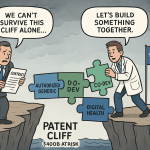
The global pharmaceutical sector is undergoing a massive redistribution of capital. Between 2025 and 2030, an estimated $236 billion to $400 billion in annual brand-name drug revenue is at risk of disappearing as approximately 70 high-revenue products lose market exclusivity.1 This shift is not a sudden event but a structural reality dictated by expiration dates filed with the U.S. Patent and Trademark Office (USPTO).3 Procurement departments that once functioned as reactive cost centers now act as strategic intelligence units. These teams manage $2.6 trillion in projected global medicine spending while navigating a landscape defined by 15% import tariffs, 30% increases in active pharmaceutical ingredient (API) costs, and the rapid integration of artificial intelligence into supply chains.4
The Macro Environment of 2026
The pharmaceutical industry operates within a volatile geopolitical framework. Regulatory shifts in the U.S. have moved toward protectionism, with the federal government using executive authority to lower domestic drug prices while pressuring other nations to pay more for innovation.4 This creates material risk across cost structures, research and development (R&D) priorities, and launch economics.4
Trade policies effective in 2025 and 2026 include 15% tariffs on pharmaceutical imports and incentives for U.S.-first production.4 Analysts estimate these tariffs alone add $13 billion to $19 billion in annual costs to the industry.4 Some of this burden is likely passed through to consumers, but the primary result is a massive push for reshoring manufacturing operations.4 Companies have pledged more than $350 billion in U.S. manufacturing investment to mitigate these levies.4
Trade Force
Procurement Impact
Projected Cost/Investment
General Pharma Tariffs
Higher input costs for globally manufactured drugs
$13B – $19B Industry Cost
Reshoring Incentives
Shift from global to domestic sourcing
$350B Planned Investment
55% Chinese Import Tariff
Sudden supply chain disruption for China-sourced APIs
Variable
Reciprocal Tariffs (India/EU)
Price inflation for generic and branded imports
20% – 27% Tariff Rate
Source: 4
Federal agency funding is also under pressure. Budget reductions at the Food and Drug Administration (FDA) and the National Institutes of Health (NIH) constrain scientific capacity.4 These funding gaps risk slowing early-stage research and creating delays in drug approvals.4 Public health priorities are being redirected toward chronic disease and lifestyle interventions, while support for modalities like mRNA has seen reductions via canceled projects and new evidence standards.4
The Logic of Patent Cliff 2.0
The current wave of patent expirations, often called Patent Cliff 2.0, is three times larger than the previous wave in 2016.2 One-sixth of the entire industry’s annual revenue faces the threat of generic or biosimilar competition.3 This is not a scattered event but a concentrated storm affecting oncology, diabetes, and immunology.1
Leading firms face immense financial exposure. More than 30% of the collective revenues of Bristol Myers Squibb (BMS), Pfizer, and Regeneron are at risk.1 BMS faces the steepest proportional cliff, with 47% of its revenues at risk by 2030.3 Eliquis and Opdivo alone represent approximately 45% of total BMS revenue.3
Blockbuster Expiry Roster
The impact of a patent cliff is immediate and severe. Branded drugs can lose up to 90% of their market share within months of generic entry for small molecules.1 For biologics, the decline is typically 30% to 70% in the first year.1
Drug Name
Brand Owner
Peak Annual Sales
Estimated Expiry
Keytruda
Merck
~$30B
2028
Eliquis
BMS / Pfizer
>$18B
2026-2028
Stelara
Johnson & Johnson
>$10B
2025
Eylea
Regeneron
>$9B
2025
Xarelto
Bayer / J&J
$4.5B – $6.4B
2025-2026
Trulicity
Eli Lilly
~$7B
2027
Source: 1
Merck’s Keytruda is a primary case study for defensive strategy. Generating nearly $30 billion in 2024, its intravenous version faces core patent expiration in 2028.1 Merck is migrating approximately 40% of its patient base to a subcutaneous version.2 This new delivery technology has patents that could protect revenue until 2042.2 Merck spent $1 billion on this conversion program, which analysts expect to yield an ROI of over 1,000% by preserving $12 billion in annual revenue.2
Price Erosion and Competitor Dynamics
The severity of revenue loss depends on the number of generic competitors. A temporary duopoly between the brand and a single generic challenger usually results in a price reduction of 15% to 25%.2 When three competitors enter, prices drop 20% to 50%.2 In markets with 10 or more generic entries, prices can fall 70% to 95%, leading to full commoditization.2
Twelve months after generic entry, prices typically drop 66%.2 After two years, they are often 74% lower than the original brand price.2 This makes the timing of procurement decisions vital for both payers and generic manufacturers.
The Legal Engine of Market Disruption
Drug procurement decisions are governed by the Hatch-Waxman Act, which balances innovation incentives with the need for affordable medication.11 The legal mechanism for challenging a patent is the Paragraph IV certification.11 When a generic firm files an Abbreviated New Drug Application (ANDA) with this certification, it signals an intent to enter the market before patent expiration.11
The first generic company to file a “substantially complete” ANDA with a Paragraph IV certification is eligible for 180 days of market exclusivity.11 This window is the primary target for generic manufacturers because it allows for pricing that is significantly higher than the eventual post-exclusivity market price.12 For a blockbuster drug with $2 billion in annual sales, this 180-day window can yield $600 million to $800 million in revenue.12
The 30-Month Stay and Stability Wall
When an innovator files a patent infringement lawsuit in response to a Paragraph IV notice, an automatic 30-month stay on FDA approval for the generic is triggered.11 This provides a predictable window of continued exclusivity for the brand company.11
Procurement teams use platforms like DrugPatentWatch to monitor these windows and identify “Section viii” carve-out opportunities.13 These carve-outs allow a generic to launch for unpatented indications while the brand retains protection for others.13 Success requires activity to begin 18 to 36 months upstream of the planned market launch.2
A “stability wall” exists in drug development: one year is required to generate the stability data needed to prove efficacy, and another year is required for regulatory review and approval.2 Service providers and API suppliers target drugs 36 months before patent expiration to offer stability optimization services before this wall is reached.2
Sourcing Resilience and API Dependency
The pharmaceutical supply chain is at a crossroads in 2026. Decades of prioritizing efficiency through globalization have created fragile networks.8 The industry faces extreme stress in antibiotic supplies due to shortages of APIs.5 The World Health Organization (WHO) lists antibiotic shortages as a top-five global drug shortage issue, with 80% of antimicrobial shortages lasting more than six months.5
The China-India Nexus
China and India produce approximately 70% of the world’s antibiotic APIs.5 The U.S. sources up to 25% of all APIs from China.14 Furthermore, APIs are manufactured from chemical intermediates, and China makes over 70% of these intermediates.5 India, while a major API producer, depends on China for 70% of its intermediate needs.5
Supply Chain Metric
Status in 2025-2026
API Production Concentration
China and India (70% of global total)
Chemical Intermediate Source
China (70% of global total)
API Production Cost Increase
25% – 30% rise between 2022 and 2025
EU Intermediate Dependency
70% sourced from imports
U.S. Generic API Dependency
>80% sourced from imports
Source: 5
Shortages in 2025 are driven by higher energy prices, wages, and raw material costs.5 Environmental enforcement has led to plant closures in China, while India occasionally limits exports to secure its local supply.5 In the U.S., 60% of drug shortages link back to just three factories in Asia.5
The Strategy of Diversification
Resilience is replacing pure cost-efficiency in supply chain management. Procurement leaders are shifting from single-sourcing to multi-regional sourcing.15 Those relying on a single Indian API producer saw production halts in 2024, while companies with dual EU and Asian suppliers maintained service levels above 95%.15
Building a resilient supply chain requires a “critical materials register” to catalog supplies based on operational impact, lead times, and geographic concentration.16 Organizations use DrugPatentWatch to find API manufacturers and study patent timelines to secure supply years before a brand-name patent expires.13 When a patent cliff becomes common knowledge, the best API suppliers have often already been locked into exclusive contracts.13
Artificial Intelligence in the Pharma Value Chain
AI has moved from an experimental tool to a core strategy for operational resilience. Global spending on AI in healthcare is projected to reach $188 billion by 2030, a 37% compound annual growth rate.7 In 2025, novel modalities accounted for 30% of FDA approvals, often supported by AI-enabled drug discovery.4
Accelerating R&D and Clinical Trials
Pharma companies invest heavily in AI to reduce drug development costs and timelines.7 Amgen utilizes a machine learning platform called ATOMIC to select clinical trial sites, which has doubled its enrollment speed.7 Sanofi is deploying an AI tool named Muse to reduce recruitment timelines from months to minutes by automating content creation for diverse populations.7
Diagnostic Precision: Harvard scientists developed CHIEF, an AI model that detects cancer with nearly 96% accuracy across multiple tumor types.7
Cost Containment: A top-10 pharma company expects to save $1 billion in development costs over five years through AI.7
Workforce Efficiency: Generative AI nurses, marketed at $9 per hour, outperform human staff in bedside manner and education.7
Smart Manufacturing and Digital Twins
Manufacturing is shifting from reactive models to predictive networks.4 Gilead is investing $32 billion in a U.S. manufacturing hub utilizing autonomous robotics and digital monitoring.4 Roche has used autonomous recipe management to halve technology transfer time.4
Electronic Batch Records (EBR) and IoT sensors allow firms to identify deviations faster.15 One case study involving BioNova showed that pre-arranged logistics and automated decision rules allowed the company to respond to a port strike within 24 hours, resulting in zero missed deliveries at a cost of $0.08 per unit versus a potential lost-sales cost of $1.40 per unit.15
Digital Procurement Infrastructure
Legacy enterprise resource planning (ERP) systems act as a bottleneck in modern procurement. While 83% of pharmaceutical companies leverage cloud computing, only 40% have fully migrated their operations.13
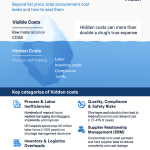
“The true cost of pharmaceutical procurement extends far beyond the sticker price. It is a multi-layered calculus of direct expenditures and submerged operational burdens. For example, 7.1% of all pharmaceutical stock is lost within the supply chain, representing over $10 billion in annual waste.” 13
Cloud Migration and API Integration
Modern e-procurement systems integrate with IoT sensors to track cold chains in real-time.13 If a vaccine batch exceeds temperature limits during shipping, the system can automatically flag it for quarantine.13 Cloud systems also simplify compliance with 21 CFR Part 11 and Good Manufacturing Practices (GMP) through automated audit trails.13
Procurement teams use DrugPatentWatch to integrate patent intelligence into their ERP systems.13 This creates a “single source of truth” for spend analysis and supplier management.13
SAP and Oracle ERP Landscapes
Enterprise giants like SAP S/4HANA and Oracle ERP Cloud offer end-to-end systems for large pharma. SAP Ariba, integrated with S/4HANA, manages the complexities of API procurement by verifying regulatory documents and CMO qualification status.19
The Supplier 360 dashboard in SAP allows buyers to view GxP-relevant certificates and DMF references.20 Integration with SAP Ariba Supplier Risk provides 24/7 monitoring for geopolitical risks, cyber threats, and sanctions list changes.20 For mid-sized firms, flexible cloud ERPs like Oracle NetSuite or Microsoft Dynamics 365 provide inventory control and quality management aligned with FDA requirements.19
ESG and Regulatory Compliance
Sustainability is no longer a peripheral concern; it is a business imperative. Companies that prioritize environmental and social responsibility attract conscious consumers and comply with evolving regulations.21
CSRD and CSDDD Regulations
The EU’s Corporate Sustainability Reporting Directive (CSRD) and Corporate Sustainability Due Diligence Directive (CSDDD) are transforming disclosure requirements.22 The CSRD affects approximately 50,000 EU companies and 10,000 non-EU businesses.22
Wave
Compliance Year
Target Companies
Wave 1
2025
Large companies already under NFRD
Wave 2
2026
Large EU companies meeting size/turnover thresholds
Wave 3
2027
Listed SMEs (with opt-out available)
Wave 4
2029
Non-EU companies with €150M EU turnover
Source: 22
Mandatory CSRD reporting applies to companies with more than 1,000 employees and a net turnover exceeding €450 million.23 These firms must perform a “double materiality assessment” to analyze how they affect the environment and how sustainability risks impact their financial performance.22
Supply Chain Due Diligence
The CSDDD mandates that companies address risks in their supply chains, including human rights and environmental violations.24 To demonstrate products are deforestation-free under the EU Deforestation Regulation (EUDR), companies must trace commodities back to the exact plot of land.24
Enforcement of the CSDDD begins in 2028 for companies with 3,000+ employees and turnover exceeding €900 million.25 Procurement leaders must integrate sustainability metrics into supplier evaluations and long-term contracts.21 A proactive approach positions a company as a leader in sustainable practices and improves stakeholder trust.22
Value-Based Procurement and Payer Strategies
The healthcare sector is shifting from volume-based purchasing to models that prioritize outcomes and cost-effectiveness.26 Value-based procurement (VBP) focuses on the medical device as an enabler of improved patient care.27
Outcome-Based Contracts
Value-based contracting (VBC) ties the price or reimbursement of a drug to its real-world performance.28 This aligns payment with health outcomes rather than just prescriptions filled.28 The CMS Cell and Gene Therapy Access Model is a major federal initiative launching in 2025 to test outcomes-based agreements for sickle cell therapies.28
Payer Leverage and the Patent Cliff
Payers use the patent cliff as a powerful mechanism for cost containment.29 In 2022, generic and biosimilar drugs saved the U.S. healthcare system $408 billion.29 Generics account for 90% of prescriptions but only 13.1% of drug spending.29
Payers construction multi-year formulary strategies that anticipate generic entry. By understanding manufacturer defensive tactics like “product hopping,” payers can secure deeper rebates in the years leading up to the cliff.29
Kaiser Permanente’s success with biosimilars is a benchmark for the industry. By transitioning 90% of its patients to the biosimilar Amjevita, Kaiser saved $300 million in one year.30 This was achieved through an integrated care model where physicians lead the evidence-based approach to medicine.31
M&A and Portfolio Reprioritization
Life sciences M&A is poised for transformation in 2026. Dealmaking in 2025 shifted toward acquisitions of single or smaller portfolios of clinical assets.32 Buyers prioritized late-stage, de-risked assets aligned with core growth priorities.33
Internal Rate of Return (IRR) Benchmarks
Returns on pharma R&D are improving after a decade of decline. The forecast average IRR for the top 20 biopharma companies grew to 5.9% in 2024.34 This growth is driven by high-value products in late-stage pipelines, particularly for obesity and diabetes.34
Average Peak Sale: Forecast average peak sale for new drugs increased to $510 million.34
R&D Cost: The average cost to bring a drug to market reached $2.23 billion in 2024.34
Novel Mechanisms: Investing in novel mechanisms of action (MoAs) leads to higher returns. These drugs make up 23.5% of pipelines but are projected to generate 37.3% of revenue.34
Strategic Consolidation
M&A volumes fell 12% in 2025, but aggregate deal values surged due to nine transactions exceeding $10 billion.33 Companies are narrowing their therapeutic focus and investing selectively in innovation.33 Strategic M&A is vital for pipeline replenishment as patent cliffs threaten revenue streams.34 A shift toward smaller-scale, early-stage acquisitions focused on innovation is replacing large-scale acquisitions intended to “plug gaps”.34
The Road to 2030
By 2030, procurement will be a proactive, insight-led partner to the business.36 Orchestration tools will connect workflows across platforms, and AI will handle time-consuming tasks like revalidating supplier data and risk assessments.36
Procurement functions must develop a culture of continuous learning to address the talent gap in digital technology and sustainability.21 Business processes will likely operate two times faster than they do today, enabling more agile responses to geopolitical tensions and price volatility.36
The decisions made today regarding API sourcing, AI integration, and patent intelligence will determine the survivors of Patent Cliff 2.0. Aligning category strategies with geopolitical realities is no longer a secondary objective; it is the core of pharmaceutical survival.
Key Takeaways
The 15% tariff on pharmaceutical imports adds up to $19 billion in annual costs, driving a $350 billion investment in domestic U.S. manufacturing.4
Between 2025 and 2030, $236 billion to $400 billion in revenue is at risk. Top firms like BMS have nearly 50% of their revenue tied to drugs facing expirations.2
China and India produce 70% of antibiotic APIs. In 2025, 60% of drug shortages were traced back to just three Asian factories, making diversification essential.5
AI is delivering massive ROI, with platforms like ATOMIC doubling clinical trial enrollment speed and one top-10 firm projecting $1 billion in development savings.7
Large pharma companies must cut $32 billion in expenses by 2030 to offset pricing reform and the impacts of the U.S. Inflation Reduction Act (IRA).4
FAQ
How does Paragraph IV certification create a competitive advantage for generic manufacturers? The first generic company to file a “substantially complete” ANDA with a Paragraph IV certification is eligible for 180 days of market exclusivity. This window allows the generic firm to capture significant market share with higher pricing before the market becomes commoditized with multiple competitors.11
What are the primary drivers of API price increases in 2026? API production costs rose 25% to 30% between 2022 and 2025. Drivers include energy and chemical input inflation, stricter environmental regulations in China and India leading to plant closures, and geopolitical trade tensions including the 15% U.S. tariff on imports.5
How is Kaiser Permanente achieving higher biosimilar adoption rates than the national average? Kaiser Permanente transitioned 90% of its patients to the biosimilar Amjevita within one week. Its success is driven by an integrated care model where physician-led teams use evidence-based medicine, and where manufacturer rebates do not influence formulary decisions.30
What are the mandatory size thresholds for companies under the EU’s CSRD? As of late 2025, mandatory CSRD reporting applies to companies with more than 1,000 employees and a net annual turnover exceeding €450 million. This includes both EU companies and non-EU companies with substantial activity in the EU.23
How can AI speed up the patient recruitment process for clinical trials? AI tools like Sanofi’s Muse and Amgen’s ATOMIC use machine learning to analyze scientific literature and real-world evidence. This allows teams to identify optimal patient profiles and select study sites with the highest enrollment potential, reducing strategy creation from months to minutes.7