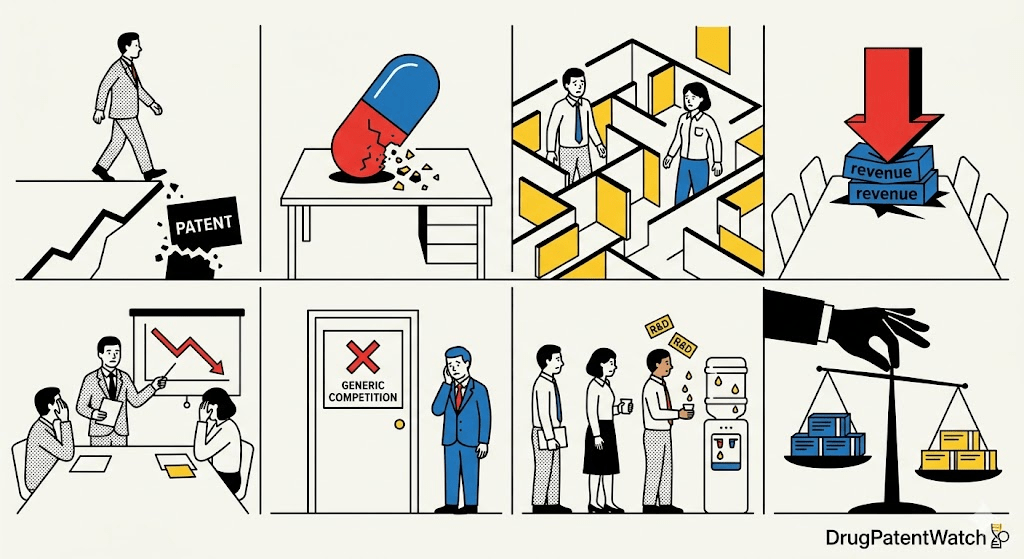
The pharmaceutical industry generates roughly $1.5 trillion in global revenues each year. It has survived opioid litigation, the Vioxx recall, and twenty years of incremental patent reform. But the stack of pressures bearing down on branded drug companies between now and 2030 is different in character — not one storm, but eight arriving simultaneously.
This is not a story about whether large pharma will survive. It will. The story is about which companies emerge on the other side with intact pricing power, defensible pipelines, and operating models that make sense in a world where the U.S. government has decided it is no longer willing to fund the rest of the planet’s pharmaceutical innovation at a 300% markup. The companies that read this moment clearly will gain ground. The ones that treat each of the following eight problems as a temporary headwind are going to have a very bad decade.
What follows is a systematic breakdown of each structural problem, grounded in real companies, real litigation, real regulatory events, and real revenue data.
Problem 1: The $300 Billion Patent Cliff — The Largest in Pharmaceutical History
Patent cliffs are not new. The 2011-2013 wave erased roughly $100 billion in branded revenues as Lipitor, Plavix, Singulair, and a dozen other blockbusters lost exclusivity. The industry survived that cycle by pushing prices higher on surviving drugs and buying time through secondary patents and authorized generics.
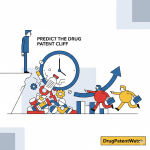
The cliff arriving between 2025 and 2030 is three times larger in absolute terms. Between 2025 and 2030, more than $300 billion in prescription drug revenues will lose patent exclusivity — about one-sixth of the industry’s annual revenue. Nearly 200 drugs will see their patents expire in this window, including about 70 blockbusters generating over $1 billion each in annual sales.
The numbers at the individual company level are starker. Five of the top ten pharmaceutical firms face exposure exceeding 50% of their current revenue. What makes this cliff particularly treacherous is its composition: unlike previous patent expirations that primarily involved small-molecule drugs, many of the brand-name drugs losing market exclusivity are biologic products, manufactured from living cells.
The anchor drug in this story is Merck’s Keytruda. Keytruda, the world’s best-selling drug, generated $29.5 billion in 2024 revenue — about 56% of Merck’s entire business. When the IV formulation’s key patents expire in 2028, Merck faces losing more than half its revenue from a single event. Biosimilar manufacturers including Amgen, Samsung Bioepis, and Bio-Thera Solutions are already preparing their entries.
Bristol-Myers Squibb’s situation is no less acute. By 2030, an estimated 47% of BMS revenues are at risk. Eliquis ($13 billion) and Opdivo ($9 billion) together represent about 45% of total revenues. BMS had hoped to fight the Eliquis clock through aggressive litigation, but courts have not cooperated. BMS has announced cost restructuring programs explicitly linked to anticipated Eliquis revenue decline. IP valuation note: Eliquis represents the largest single near-term patent cliff event in pure revenue terms.
Novartis faces the same dynamic on a shorter timeline. Novartis faces immediate pressure as Entresto, its heart failure blockbuster, confronts generic competition arriving in mid-2025. The company has worked to shift patients toward newer therapies, but brand loyalty in heart failure is hard to manufacture quickly.
How Patent Cliffs Actually Damage Revenue
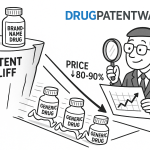
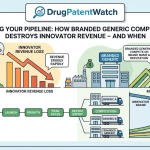
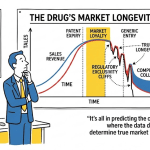
The mechanism of destruction is well-understood and swift. Sales of the branded drug can plummet by as much as 80% to 90% within the first 12 to 18 months of generic or biosimilar entry. Competitors can capture the majority of the market in a matter of months. The original manufacturer is forced to slash prices to compete, crushing profit margins.
Financial markets price this in early. The stock price of an exposed company often begins to decline 12 to 24 months before the actual loss of exclusivity. Analysts issue downgrades, and investor confidence wanes, leading to significant stock volatility.
Tools like DrugPatentWatch give competitive intelligence teams an earlier warning by tracking patent term dates, litigation filings, FDA Paragraph IV certifications, and exclusivity expirations across the full branded portfolio. For a company with $5 billion riding on a single molecule, knowing the exact litigation posture of every generic filer eighteen months before first commercial entry is the difference between an orderly defense and a revenue ambush.
Knowing about the cliff does not make it smaller. AbbVie knew precisely when Humira’s patents would begin expiring. Sales fell from $14 billion in 2023 to about $9 billion in 2024. This shows that while a patent thicket can buy you time, it cannot prevent the cliff. The strategy AbbVie executed — using that window to build Skyrizi and Rinvoq into $11 billion franchise — is the exception, not the template. Most companies do not have a pair of next-generation follow-ons waiting in the wings at clinical proof-of-concept when the primary patent expires.
Small Molecules versus Biologics: Different Cliffs
One nuance that is systematically mispriced in pharma strategy decks: the revenue erosion curve for a biologic after loss of exclusivity is much shallower than for a small molecule. Biosimilars require more complex manufacturing, the interchangeability designation is harder to obtain, and payer formulary switches take time. For a drug like Stelara, J&J saw its sales drop 41% in 2025 after losing exclusivity, which is steep, but nothing like the 90% drops we see in small molecules. This difference in erosion curves means your forecasting models must be modality-specific. If you apply a small-molecule cliff model to a biologic, your valuation will be off by billions.
The implication for Merck and BMS is that the Keytruda and Opdivo cliffs, while enormous in absolute dollar terms, will unfold more slowly than Merck’s Januvia and Janumet cliffs in 2026. That gives leadership teams slightly more time to execute — but only slightly.
Problem 2: Medicare Drug Price Negotiation — The IRA Rewrites the Revenue Model
For two decades, the Medicare Part D noninterference clause prevented CMS from negotiating drug prices directly. The Inflation Reduction Act, signed into law in August 2022, dismantled that firewall. The IRA requires the Secretary to negotiate prices for certain single-source chemical drugs and biologics covered under Medicare Parts D and B. To be selected for negotiation, a chemical drug cannot have a marketed generic substitute and must have been approved by FDA for at least 7 years.
The first round of negotiations produced maximum fair prices for ten drugs, effective January 2026. In August 2024, CMS announced negotiated prices for the first 10 drugs selected for negotiation, and these prices will go into effect in 2026. The program scales aggressively from there. Following 2027, the Secretary will choose 15 additional drugs from among the most expensive Part D and Part B drugs. For 2029 and subsequent years, the Secretary will select an additional 20 drugs among the costliest Part D and Part B drugs.
The oncology pipeline faces particular exposure. One of the drugs selected for the first round of negotiations, Imbruvica, is a common oncology drug. More oncology drugs are expected to be selected for negotiation as the program expands in subsequent years.
The ‘Pill Penalty’ Problem
The most acute structural distortion in the IRA is not the negotiation itself — it is the timeline asymmetry between small molecules and biologics. Small-molecule drugs become eligible for negotiation nine years after FDA approval; biologics are not eligible until thirteen years. Because chemical drugs are subject to price negotiation earlier than biologics, the IRA could make biologics development comparatively more attractive for investment. A 2022 survey by PhRMA found 63% of responding member companies planned to shift R&D focus away from small molecules in response to the IRA and 95% to develop fewer uses for new medicines.
This is not a theoretical risk. Novartis recently announced the discontinuation of research on several early-stage cancer drug candidates, as their development is no longer financially viable due to the IRA. Other pharmaceutical companies, such as AstraZeneca, have also announced delayed releases of cancer drugs in response to the IRA, and have reported further reprioritization of small drugs more generally. Seventy-eight percent of companies reported that they expect to cancel early-stage pipeline projects.
The IRA also introduces a second mechanism of revenue pressure through inflation rebates. The IRA caps the annual price increases of branded prescription drugs paid by Medicare at the level of inflation. As half of Medicare Part D covered drugs experienced annual price increases higher than inflation from 2018 to 2020, this change is significant.
Legal Challenges Have Largely Failed
The industry’s instinct was to litigate. It has not worked well. Pharmaceutical companies, including AstraZeneca, filed lawsuits challenging the constitutionality of the IRA’s negotiation provisions. However, in May 2025, the 3rd US Circuit Court of Appeals upheld a lower court ruling dismissing AstraZeneca’s challenge. The court found that the company failed to demonstrate a specific injury or a violation of its constitutional rights. This ruling is a significant victory for the Biden-era policy and sets a precedent for similar cases brought by other drugmakers.
The BCG analysis of lifetime revenue impact is sobering. The average small molecule’s lifetime revenue will drop by 5% to 6% and that of biologics by 3% to 4%. Given that the cost base will not change, the impact on net present value is likely to be twice as much. Certain therapeutic areas, such as oncology and metabolic disorders, have proportionately more older patients and are thus going to be more affected than others.
There is one genuine silver lining. Capping patients’ annual out-of-pocket costs at $2,000 is the IRA’s clearest and most direct benefit for patients. For certain disease areas with significant patient drop-off, volumes could increase 15% to 30%. Drugs in chronic therapeutic categories with high patient cost barriers — rheumatology, oncology, metabolic disease — may see meaningful volume increases that partially offset the negotiated price reduction. “Partially” is doing a lot of work in that sentence.
Problem 3: The Most-Favored-Nation Executive Order — Washington Gets Aggressive
If the IRA was the legislative price ceiling, the Trump administration’s May 2025 executive order was the executive branch bringing a crowbar. Signed on May 12, 2025, the executive order titled ‘Delivering Most-Favored-Nation Prescription Drug Pricing to American Patients’ seeks to reduce U.S. drug prices by requiring manufacturers to offer the United States most-favored-nation pricing.
The justification is blunt. The United States has less than five percent of the world’s population and yet funds around three quarters of global pharmaceutical profits. This is described as a purposeful scheme in which drug manufacturers deeply discount their products to access foreign markets, and subsidize that decrease through enormously high prices in the United States.
CMS moved quickly. HHS expects each manufacturer to commit to aligning U.S. pricing for all brand products across all markets that do not currently have generic or biosimilar competition with the lowest price of a set of economic peer countries. The MFN target price is the lowest price in an OECD country with a GDP per capita of at least 60% of the U.S. GDP per capita.
By late 2025, the White House was announcing individual deals. Nine manufacturers signed agreements, including Amgen, Bristol Myers Squibb, Boehringer Ingelheim, Genentech, Gilead Sciences, GSK, Merck, Novartis, and Sanofi. The agreements reduce prices on drugs that treat numerous costly and chronic conditions, including type two diabetes, rheumatoid arthritis, multiple sclerosis, asthma, COPD, hepatitis B and C, HIV, and certain cancers.
The GLP-1 deals were the headline. Ozempic and Wegovy will fall from $1,000 and $1,350 per month, respectively, to $350 when purchased through TrumpRx. Zepbound will fall from $1,086 per month to an average of $346. Whether the TrumpRx direct-purchase channel gains meaningful volume remains to be seen, but the pricing data is now public, creating a reference point that affects every negotiation downstream.
The Tariff Threat Adds Another Layer
The MFN order was not issued in isolation. An April 2026 Executive Order links tariff relief and other benefits to manufacturers’ willingness to enter into MFN pricing and domestic production agreements while establishing significant tariffs on companies that decline to do so. CMS has also proposed two MFN payment models, referred to as the GLOBE Model for certain drugs payable under Medicare Part B and the GUARD Model for certain drugs payable under Medicare Part D.
This creates a coercive structure: agree to lower prices, or face tariffs that raise your cost base while simultaneously being shut out of formulary positioning. The legal durability of these mechanisms remains contested, but the signal is unmistakable. Washington is no longer treating U.S. drug prices as a private market outcome. It is treating them as a policy variable.
Problem 4: The Biosimilar Wave — Formulary Wars and Private-Label Competition
Biosimilar competition is fundamentally different from generic competition, and the industry spent years assuring investors that biologics were structurally protected. That thesis is proving too optimistic. The Humira experience — in which AbbVie assembled a 136-patent thicket around adalimumab and used it to extract settlement agreements from every biosimilar manufacturer — was the high-water mark of biologic patent defense. It will not be repeated at that scale.
The timeline: The global biosimilar market grew to $30.3 billion in 2024 with a CAGR of 14%, buoyed by a record 28 EMA approvals and 18 FDA approvals in that year alone. This is not a cottage industry anymore.
The Humira post-LOE story is now complete enough to draw lessons. Humira peaked in 2021 with $22 billion in sales. In the advanced rheumatoid arthritis segment, the branded drug’s share of use fell from 22% overall in Q4 2023 to 16% in Q4 2024, while biosimilar share grew from 3% to 10% in the same period.
The turning point was formulary. Until April 2024, adalimumab biosimilar uptake remained stagnant at 2% to 3%. The three largest pharmacy benefit managers, which control 80% of prescriptions dispensed in the United States, maintained the reference product on formulary. In April 2024, CVS Caremark changed its adalimumab formulary coverage policy, preferring private-label biosimilars and excluding the reference product.
“We believe the biggest headwind to large pharma revenue growth over the next five years is loss of exclusivity,” wrote William Blair analysts in a 2025 report estimating that aggregate sales of drugs losing patent protection would erode from $162.8 billion in 2025 to just $67 billion in 2029 [William Blair, 2025].
The Private-Label Biosimilar Model Changes the Economics
CVS’s private-label approach — branded as Cordavis — introduced a new variable that branded manufacturers had not fully modeled. Rather than simply preferring a competitor’s biosimilar, the PBM created its own branded version of the biosimilar, further commoditizing the market. Express Scripts and Optum Rx followed with their own private-label structures.
The private-label biosimilar approach has since been adopted by the other two major PBMs, offering promise for biosimilar uptake, but seemingly only under the terms of the private-label arrangements. The practical result: biosimilar manufacturers who cannot negotiate private-label partnerships with a major PBM have limited market access regardless of their clinical profile or pricing.
The ustekinumab (Stelara) situation is the current case study. For the past few years, Stelara was J&J’s top seller, earning $10.4 billion in 2024. Now that seven ustekinumab biosimilars are commercially available, manufacturers are paying close attention to how the market responds. Market penetration of adalimumab biosimilars was initially slow due primarily to AbbVie’s masterful payer contracting strategy. J&J, on the other hand, has so far focused more on litigation than contracting. That choice is now a liability.
According to MMIT research conducted in May 2025, net cost is far and away the most important factor for payers deciding which ustekinumab biosimilars to add to formularies. The remaining biosimilars debuted with list prices ranging from 80% to 90% below Stelara’s pricing. A branded drug competing at 10-20% of its own list price is not a sustainable business model.
Product Hopping and Its Limits
The standard defensive play after biosimilar entry is “product hopping” — shifting prescriptions to a next-generation molecule before the cliff. J&J’s Tremfya (guselkumab) is the intended successor to Stelara. AbbVie executed this successfully with Skyrizi and Rinvoq replacing Humira. AbbVie’s Skyrizi surpassed the originator product, Humira, to become the company’s top sales driver for the first time in Q3 2024. In Q3 2024, Skyrizi sales increased by 50.8% globally, while Humira’s worldwide revenues fell by 37.2%.
But AbbVie had a decade of runway before Humira’s main U.S. patents began falling. Most companies running biosimilar defense strategies in 2025-2028 do not have that luxury.
Problem 5: R&D Productivity Collapse — $3.5 Billion Per Approved Drug and Falling Returns
The core mathematics of pharmaceutical R&D have deteriorated over five decades. Eroom’s Law — a deliberate inversion of Moore’s Law — describes how the number of new drugs approved per billion dollars of R&D spending has halved roughly every nine years since 1950. The trend is not reversing.
Rising research and development costs, currently exceeding $3.5 billion per novel drug, reflect a five-decade decline in pharmaceutical R&D efficiency. Despite recent stabilization, the pharmaceutical industry continues to face challenges, particularly due to elevated late-stage clinical attrition, suggesting that a sustained turnaround in R&D efficiency remains elusive.
The failure rate in clinical development is the proximate cause. Nine out of ten drug candidates that have entered clinical studies fail during Phase I, II, or III clinical trials and drug approval. The 90% failure rate is for drug candidates that are already advanced to Phase I clinical trial.
Clinical trial costs have surged independently of the failure rate. Phase III trials completed in 2024 cost an average of $36.58 million, representing a 30% increase from the $28.15 million average in 2018. Data collection requirements have exploded with a 283.2% increase in Phase III trial data points over the last decade. Trial delays have become increasingly common, with delayed start dates rising from 4.5% in 2003 to 21.8% in 2024.
The industry is spending more and getting proportionally less. Over 10,000 drug candidates are at various stages of clinical development. Pharma companies are spending over $300 billion on R&D annually. By the end of the decade, R&D margins are expected to decline significantly, from 29% of total revenue down to 21%.
Deloitte’s IRR Data Tells the Real Story
According to a Deloitte report, the internal rate of return for the top 20 biopharma companies rose to 5.9% in 2024, marking a 1.6 percentage point increase from the previous year. In 2024 alone, companies spent $7.7 billion on clinical trials for assets that ultimately failed to reach approval.
A 5.9% IRR on a $300 billion R&D spend sounds survivable until you consider the cost of capital, the patent-protected revenue window compression from the IRA, and the fact that the $7.7 billion in failed Phase III costs represents only the direct clinical spend — not the years of preclinical work or opportunity cost of capital tied up in programs that never made it.
The Small Molecule Problem Is Structural
The IRA’s “pill penalty” (the 9-year versus 13-year negotiation eligibility gap for small molecules versus biologics) is making the R&D productivity crisis worse by distorting which programs get funded. A drug that achieves FDA approval and then faces mandatory price negotiation at year nine has an NPV that is materially lower than the same drug would have carried before the IRA. When 78% of companies say they expect to cancel early-stage pipeline projects because of this, the impact on the innovation pipeline is not hypothetical — it is a present-tense reduction in the number of drugs that will be available to patients a decade from now.
Problem 6: Supply Chain Fragility — Tariffs, Concentration Risk, and 270 Active Drug Shortages
The pharmaceutical supply chain’s geographic concentration is a structural vulnerability that predates COVID-19 and has worsened since. Between 2018 and 2023, 258 unique active ingredients entered national shortages in the U.S., representing nearly 2,000 individual drug products. According to USP’s 2025 Annual Drug Shortage Report, 89% of drug shortages in 2024 carried over from the previous year, with more than 40 lifesaving drugs in shortage for over three years.
Four systemic drivers underlie these shortages: low pricing that discourages investment, geographic concentration of manufacturing (particularly in China and India), process complexity, and quality failures.
The tariff layer added in 2025 compounded the problem. The newly announced U.S. tariffs on pharmaceutical imports will directly increase the cost of APIs, especially those sourced from major suppliers such as India and China; this is likely to result in higher input costs for U.S.-based manufacturers. Several firms reported API cost increases of 12% to 20%, particularly in widely used molecules such as amoxicillin, acetaminophen, and metformin.
Brand-name manufacturers are somewhat insulated relative to generic producers. Generic sterile injectable drugs — like chemotherapy medications and IV saline — are particularly vulnerable due to their complex manufacturing processes and low profit margins. In contrast, brand-name drug manufacturers — with higher margins and more domestic facilities — may be better positioned to absorb the impact of potential tariffs. But “better positioned” is a relative term. Johnson & Johnson disclosed an estimated $400 million tariff charge for 2025, primarily affecting its medtech business.
The API Concentration Problem
The vulnerability is not limited to finished drugs. Active pharmaceutical ingredients — the chemically active components of every drug — are concentrated in a small number of manufacturing facilities abroad. Geographic concentration of API manufacturing in China, India, and Europe, as well as misaligned incentives, high regulatory burdens, and weak oversight measures by U.S. agencies and foreign entities, have all contributed to a fragile supply chain.
The vast majority of drugs consumed in the U.S., including essential antibiotics and antivirals, have no domestic source of APIs. Should the supply of APIs be disrupted, either intentionally or unintentionally, the consequences could be severe.
Branded pharma companies building twenty-year commercial strategies around molecules that depend on single-source API manufacturers in a country with which the U.S. government is engaged in active trade conflict are taking on a geopolitical risk that does not show up cleanly in their SEC filings.
Reshoring Is Real but Slow
Both Eli Lilly and Novo Nordisk have committed to significant U.S. manufacturing expansions under their MFN pricing agreements — Lilly at over $27 billion and Novo Nordisk at an additional $10 billion. J&J highlighted a $55 billion investment plan to expand U.S.-based manufacturing capacity. These are genuine commitments, but manufacturing capacity takes years to build, validate, and scale. The tariff disruptions happening now will not be resolved by facilities that come online in 2028 or 2030.
DrugPatentWatch’s supply chain tracking tools have become an input into this analysis, helping teams identify which molecules have single-source API suppliers in at-risk geographies, and which have multiple qualified manufacturers across different regulatory regimes. That kind of upstream patent and supply chain intelligence is increasingly a business-critical function, not an IP research luxury.
Problem 7: The M&A Treadmill — Buying Revenue You Can’t Afford to Build
The pharmaceutical industry’s dependence on acquisitions to fill pipeline gaps is well-documented. What has changed in the last three years is the economics of that dependence: higher interest rates, compressed biotech valuations, and increasingly restrictive antitrust review have made the M&A treadmill more expensive to run while the need for external innovation has increased.
The scale of the problem: Emerging biopharma companies account for 70% of the clinical-stage industry pipeline, while 60% of their assets are unpartnered. Biotech valuations remain suppressed, making public targets more affordable. Two-thirds of public biotechs are under-capitalized with less than 12 months of cash runway.
In theory, suppressed biotech valuations are a buyer’s market for large pharma. In practice, the math has complications. The average dollar value of biopharma M&A deals nosedived 51% last year to $92 billion from $186 billion the previous year, as buyers increasingly sought ‘bolt-on’ acquisitions of under $5 billion in therapeutic areas that matched or complemented their own.
The largest deal of 2024 — Vertex’s acquisition of Alpine Immune Sciences for $4.9 billion — is a telling data point. In a different rate environment, with a different patent cliff profile, that deal would have been a mid-sized tuck-in. The fact that it was the year’s largest deal reflects how cautious large pharma became about committing to expensive late-stage assets whose NPV was being compressed by the IRA.
The 2025 Resurgence and Its Limits
The resurgence of biopharma M&A in 2025 marked one of the most decisive strategic shifts the life sciences sector has witnessed in a decade. After a cautious 2024 defined by capital discipline and delayed dealmaking, pharmaceutical majors returned to the acquisition table with renewed urgency. But this time, the objective was patent depth — the structured acquisition of assets backed by deep pharmaceutical intellectual property, durable drug exclusivity, and defensible pharmaceutical-patent estates.
Johnson & Johnson’s $14.6 billion acquisition of Intra-Cellular Therapies in early 2025 was the clearest signal that large pharma was willing to spend again on assets with near-term commercial potential. J&J needed revenue to replace the coming Stelara cliff. Intra-Cellular’s Caplyta, already approved for depression and bipolar disorder, gave them a building commercial brand with room to grow.
The problem with M&A as a primary pipeline strategy is that it is competitively self-defeating at scale. Every large-cap pharma company with a patent cliff in 2027-2030 is looking at the same pool of clinical-stage biotechs. Bidding wars for late-stage oncology assets have become standard. The winning bidder often pays a price that captures most of the expected NPV for the target’s shareholders, leaving minimal value creation for the acquirer. McKinsey’s analysis of pharma M&A returns over the past decade supports this: large platform acquisitions have consistently underperformed bolt-on deals in terms of total shareholder return.
The China Biotech Option Is Complicated
China is becoming an increasingly important R&D target for companies seeking to license-in antibody-drug conjugates and other novel oncology treatments. However, the U.S. BIOSECURE Act, set to come into force in 2032, poses a challenge to China’s life sciences innovation economy. Companies licensing Chinese ADC programs today are building a dependency they may have to unwind within a decade.
Problem 8: PBM Power and Formulary Control — The Invisible Tax on Branded Drug Revenue
Pharmacy benefit managers are the least understood and most consequential intermediary in the U.S. drug distribution system. Three PBMs — Express Scripts (Cigna), CVS Caremark, and OptumRx (UnitedHealth Group) — collectively manage approximately 80% of commercial and government-sponsored pharmacy benefits in the United States. They decide what gets covered, at what tier, and at what effective net price after rebates.
For a branded drug company, the PBM relationship is existential. A formulary exclusion by even one of the three major PBMs can reduce a drug’s commercial volume by 20-30%. An exclusion by all three is effectively a market withdrawal for most patient populations.
The rebate system is the mechanism through which PBMs extract revenue from branded manufacturers. In exchange for preferred formulary positioning, branded manufacturers pay rebates — often 30-60% of list price for drugs in competitive categories. The drug company books gross revenue at list price, reports net revenue after rebates, and the spread becomes the PBM’s margin. This system has been operating quietly for decades, but its effects are now amplified by several concurrent trends.
Rebate Cliffs When List Prices Fall
The MFN executive order creates a specific rebate problem. Branded manufacturers who agree to lower list prices — as Eli Lilly, Novo Nordisk, Merck, and others have done under the TrumpRx framework — face a structural conflict. Their rebate obligations to PBMs for formulary placement were negotiated on the basis of their prior list prices. If list prices fall 60-70%, the absolute dollar value of those rebates falls, and PBMs have less financial incentive to maintain formulary preference for those drugs. The net price after rebates could end up lower than either party intended.
The GLP-1 Formulary Battle
The GLP-1 category — Ozempic, Wegovy, Zepbound, Mounjaro — illustrates how PBM formulary decisions can reshape an entire therapeutic category within months. PBMs have oscillated between including and excluding various GLP-1 agents as they negotiate rebate agreements and patient access frameworks. Novo Nordisk’s Ozempic holds about 60% of the GLP-1 market for diabetes, but Wegovy (the same molecule, semaglutide, at a higher dose for obesity) faces more formulary resistance because obesity coverage remains patchier than diabetes coverage.
Eli Lilly’s Zepbound (tirzepatide for obesity) has gained ground with more aggressive PBM contracting. The commercial battle between these two companies is being fought less in clinical trial data rooms and more in PBM rebate negotiations where the public has no visibility.
PBM Reform Is Coming — Slowly
Both the IRA and multiple executive orders have included PBM transparency provisions. The MFN executive order explicitly calls for eliminating middlemen and enabling direct-to-patient sales — the TrumpRx mechanism — as a way to reduce PBM capture of the rebate spread. Eliminating middlemen, such as pharmacy benefit managers, and enabling direct-to-patient sales could disrupt traditional distribution models. For established firms, compliance may require restructuring commercial operations, including patient support programs, channel strategies, and pricing transparency initiatives.
Congressional reform efforts on PBM transparency have stalled repeatedly. The three major PBMs are subsidiaries of diversified healthcare conglomerates with significant lobbying infrastructure. A comprehensive rebate reform that would genuinely restructure how net prices are calculated and disclosed has not advanced past committee in multiple sessions.
For branded pharma, the practical implication is that PBM dynamics must be modeled explicitly in commercial planning. A drug with a 55% list-to-net discount in a competitive category faces fundamentally different economics than a drug in an uncontested therapeutic space. Those economics shift again when formulary policy changes mid-contract cycle, as the Humira experience demonstrated.
How These Eight Problems Interact
Reading these problems in sequence understates their combined effect. They are not independent — they interact and amplify each other.
A company facing a major patent cliff (Problem 1) needs to acquire external innovation to fill the gap (Problem 7). But the assets it can acquire are priced assuming pricing power that the IRA (Problem 2) and MFN order (Problem 3) are eroding. The drug it brings in may still be viable, but its launch will run through PBMs (Problem 8) who are actively restructuring formularies to favor lower-cost alternatives. Meanwhile, the clinical programs internally (Problem 5) are slower and more expensive than projected, and the supply chain for both the legacy product and the pipeline asset has geographic concentration risk (Problem 6) just as tariffs are raising input costs.
The companies navigating this environment most successfully share a few characteristics: they have next-generation assets already well into clinical development, not just in discovery; their patent estates are dense and multi-layered rather than dependent on a single composition-of-matter patent; and their commercial teams are modeling net price rather than list price in every financial projection.
Intelligence infrastructure matters here too. Companies that have real-time visibility into competitor patent filings, generic and biosimilar development timelines, FDA application activity, and litigation status have a meaningful analytical advantage over companies relying on periodic proprietary research reports. Resources like DrugPatentWatch provide exactly this function — continuous monitoring of patent term dates, Paragraph IV certification activity, inter partes review filings, and FDA data, allowing strategy teams to identify threats and opportunities before they become headline news.
AbbVie’s Playbook — and Why It Won’t Generalize
AbbVie is the most-cited example of successful patent cliff management. After Humira peaked at $22 billion in 2021, the company had simultaneously: a dense patent thicket that extracted settlement agreements buying years of additional exclusivity; a next-generation pipeline (Skyrizi, Rinvoq) already at late-stage development; and a commercial infrastructure capable of onboarding two successor products simultaneously. AbbVie has successfully tapered its reliance on Humira: from 39% of revenues in 2022 to 9% expected in 2025, while the next generation is rising from 14% to 43% in the same period.
What that summary obscures is the decade-long setup required to execute that transition. AbbVie licensed Skyrizi from AbbVie’s own pipeline and Rinvoq from predecessor Pharmacyclics’ compound library. The company spent $18 billion in the 2015-2018 period building and acquiring those programs. The 2025 outcome is the result of decisions made when Humira was still at $12 billion in annual sales and had eight years of comfortable exclusivity remaining.
Merck is attempting an analogous transition from Keytruda, but the scale differential is daunting. Merck’s non-Keytruda pipeline needs to generate $20-25 billion in annual revenue by 2032 to replace what Keytruda will lose. No single drug in its pipeline is currently projected to achieve that. The company has made acquisitions — Prometheus Biosciences ($10.8 billion, 2023), Harpoon Therapeutics ($680 million, 2023), EyeBio ($3 billion, 2024) — but none individually fills the gap.
What the Data Actually Suggests About Strategic Priorities
Given the compounding nature of these eight problems, the strategic priorities that emerge from the data are not subtle.
First: Get the IP Timeline Right
The single highest-value investment a branded pharmaceutical company can make right now is in comprehensive, ongoing patent term analysis across its entire portfolio and every relevant competitor filing. The difference between knowing about a generic filer’s Paragraph IV certification in week two versus week twelve can be worth hundreds of millions of dollars in litigation strategy and commercial planning.
Generic and biosimilar applicants do not announce their intentions through press releases. They file ANDA applications with FDA, submit Paragraph IV certifications challenging specific patents, and begin clinical or manufacturing validation work years before a product launch. All of this activity has a patent and regulatory document trail that can be monitored systematically. The companies with the best intelligence systems will react faster, litigate smarter, and plan commercial transitions earlier.
Second: Model Net Price, Not List Price
Every financial model that uses list price as the revenue input is wrong. Gross-to-net spreads in specialty pharma now routinely reach 50-70% in competitive categories. A drug with a $100,000 annual list price and a 60% gross-to-net adjustment generates net revenue of $40,000 — and that net price is the one that matters for profitability, for IRA negotiation reference prices, and for MFN pricing benchmarks.
Third: Pipeline Depth Is Not Pipeline Width
The instinct to fill a pipeline void by adding programs is understandable but counterproductive when R&D resources are fixed. Pharma companies are doubling down on research investments, with over $300 billion spent on R&D annually. R&D margins are expected to decline significantly, from 29% of total revenue down to 21% by the end of the decade. Running more clinical programs on a declining margin base means each program gets fewer resources, which correlates with higher Phase III attrition.
The better discipline is: fewer programs, better-resourced, with more rigorous go/no-go decision-making at Phase II. The companies generating the best Phase III success rates right now are not the ones with the widest pipelines — they are the ones with the most disciplined target selection and biomarker strategies at Phase I.
Fourth: Build Commercial Infrastructure for Lower Prices
The pricing environment of 2030 will be structurally different from 2020. MFN pricing, IRA negotiated prices, PBM formulary dynamics, and biosimilar competition will collectively produce a lower average net price per unit for branded drugs across most major therapeutic categories. Companies building commercial operations on the assumption that list price increases will compensate for volume pressure will be surprised.
The operational response is not simply cost-cutting — it is redesigning the commercial model for higher volume at lower per-unit economics. Novo Nordisk’s GLP-1 strategy was built around this; the company’s manufacturing scale and direct-to-patient infrastructure give it cost advantages that smaller, premium-priced players cannot match.
Key Takeaways
The patent cliff is real, large, and concentrated. More than $300 billion in branded revenue will lose exclusivity between 2025 and 2030. Five of the top ten pharmaceutical companies face 50%+ revenue exposure. Keytruda’s 2028 biosimilar entry alone represents more revenue at risk from a single drug than any prior pharmaceutical history.
The IRA is now settled law. Courts have upheld it. The first ten negotiated drug prices go live in January 2026. The program expands to 15 additional drugs by 2027 and 20 more annually after 2029. Small-molecule drugs face negotiation eligibility four years earlier than biologics, creating a structural incentive to shift R&D toward biologics and away from oral therapies.
The MFN executive order adds another pricing ceiling. Nine major manufacturers have already signed direct pricing agreements under TrumpRx. The April 2026 executive order links tariff relief to MFN compliance, creating financial penalties for non-participation. The combined IRA-MFN framework represents a bipartisan, dual-branch consensus that U.S. drug prices will come down.
Biosimilar market penetration is accelerating. PBM formulary exclusions of reference biologics — beginning with Humira in April 2024 — are the mechanism. Private-label biosimilar programs add an additional competitive layer. Companies relying on payer inertia to defend branded biologic revenues after LOE are taking on more risk than their models reflect.
R&D productivity at 5.9% IRR is marginally viable. The industry spent $7.7 billion in 2024 on clinical programs that did not reach approval. Phase III trial costs are up 30% since 2018. The IRA’s small-molecule disincentive is already producing pipeline cancellations. The companies with the best risk-adjusted development returns are those with the most disciplined biomarker selection at Phase I.
Supply chain geography is a business risk. 270 active drug shortages as of mid-2025, with 89% carried over from 2024. API concentration in China and India, combined with tariffs of 10-200% on pharmaceutical imports, creates a cost and availability risk that has no quick fix. Reshoring investments announced in 2025 will not produce meaningful capacity until 2028 at the earliest.
M&A cannot solve the pipeline problem at scale. The pool of late-stage biotech assets is competitive and expensive. Bidding wars for oncology and metabolic disease programs routinely capture NPV for sellers, not buyers. The better strategy is earlier-stage licensing and platform investment, combined with more selective internal program prioritization.
PBMs remain the most undermodeled commercial variable. Three organizations control 80% of U.S. prescription formulary decisions. Their rebate architecture, private-label biosimilar programs, and formulary exclusion policies are the most direct near-term drivers of branded drug volume. Companies that treat PBM relationships as a commercial afterthought will discover this at quarterly earnings calls.
FAQ
Q1: How does the IRA’s ‘pill penalty’ actually affect drug development decisions right now, not just theoretically?
The pill penalty — the IRA provision making small-molecule drugs eligible for Medicare price negotiation at year nine versus year thirteen for biologics — is already changing capital allocation at major pharma companies. Novartis has discontinued several early-stage small-molecule cancer programs that are no longer financially viable under the revised NPV assumptions. AstraZeneca has delayed cancer drug releases and reprioritized its pipeline away from small molecules. A PhRMA survey found 63% of member companies planned to shift R&D focus away from small molecules, and 78% expected to cancel early-stage projects. The pipeline impact of those decisions will show up as a shortage of novel oral therapies reaching patients in 2030-2035. The irony is that oral drugs are often more accessible to patients than injectable biologics — so a policy designed to lower drug prices may end up reducing access to the modality most convenient for patients.
Q2: What does a Paragraph IV certification actually mean, and why should a branded pharma commercial team care about it?
A Paragraph IV certification is a formal notice filed by a generic or biosimilar manufacturer with the FDA stating that it believes a specific listed patent is invalid, unenforceable, or will not be infringed by its product. Under the Hatch-Waxman Act, filing a Paragraph IV certification triggers an automatic 30-month stay of FDA approval if the branded manufacturer files an infringement lawsuit within 45 days. This gives the branded company time to litigate. The commercial team cares because a Paragraph IV filing is the first public signal that a competitor intends to launch before patent expiration. That filing triggers the litigation clock, begins the countdown to potential market entry, and — when tracked across all pending ANDAs — provides the clearest possible view of which of the company’s revenue lines are under active legal challenge. Tools like DrugPatentWatch monitor these filings in real time, giving companies the intelligence they need to decide whether to litigate, negotiate a settlement, or begin accelerating the commercial transition to a successor product.
Q3: How is the TrumpRx direct-to-consumer channel actually changing commercial dynamics for branded pharma?
TrumpRx is a direct-purchase mechanism that allows patients to buy participating drugs at MFN prices without going through a PBM. The pricing is real: Ozempic at $350 per month versus $1,000 list, Wegovy at $350 versus $1,350, and Epclusa at $2,425 versus $24,920. The commercial implication is less obvious: direct-to-consumer pricing at MFN levels creates a public reference price that affects every other pricing negotiation the manufacturer has. A PBM negotiating a rebate contract for Ozempic now knows the floor price. Medicaid drug pricing is calculated as a percentage of best price — so if TrumpRx sales qualify as “best price,” Medicaid rebates increase automatically. Manufacturers who participate in TrumpRx need to model its interaction with their existing rebate structures, best price calculations, and 340B program obligations before signing. Several participants appear to have done this arithmetic; others may be discovering complications post-announcement.
Q4: What is a ‘patent thicket,’ and does building one still work as a defensive strategy after Humira?
A patent thicket is a dense cluster of overlapping patents covering different aspects of a single drug — the active compound, the formulation, the delivery device, the manufacturing process, specific dosing regimens, specific patient populations, and combinations with other drugs. AbbVie assembled 136 such patents around Humira (adalimumab), then used the threat of infringement litigation to negotiate settlement agreements with every biosimilar manufacturer that gave AbbVie exclusive U.S. rights until 2023 — years after the core composition-of-matter patent had expired. The thicket bought AbbVie roughly five years of additional exclusivity and tens of billions in revenue it would not otherwise have received. The strategy still works, but the legal environment has tightened. The FTC and DOJ have increased scrutiny of pharmaceutical patent settlements. Several settlements have been challenged as anticompetitive. The USPTO has also become more aggressive in inter partes review proceedings that can invalidate secondary patents. Patent thickets remain a viable strategy, but the margin for error has narrowed, and the settlement terms that would have passed antitrust review in 2015 may not in 2025.
Q5: If biosimilar uptake was slow for Humira, why should branded manufacturers be more worried about biosimilar competition going forward?
The Humira biosimilar uptake story was misleadingly slow in its first year because PBMs maintained the reference product on formulary while they developed their private-label biosimilar programs. Once CVS Caremark removed Humira from its formularies in April 2024 in favor of private-label biosimilars, the switch happened rapidly — CVS converted 97% of its commercial Humira users within months. Express Scripts and OptumRx followed with their own private-label ustekinumab biosimilar programs in 2025. The lesson is not that biosimilar uptake is slow — it is that PBM formulary decisions are the rate-limiting factor, and those decisions can shift very quickly when PBMs have a financial incentive to move. The private-label biosimilar model gives PBMs a direct economic stake in driving biosimilar adoption, which the traditional rebate model did not. Future biosimilar launches will face more aggressive formulary management earlier in the product lifecycle, which compresses the revenue window for reference biologics more than the Humira experience suggests.
Citations
American Society of Health-System Pharmacists. (2025). Current drug shortages data. ASHP. https://www.ashp.org/drug-shortages/current-shortages
BCG. (2023). Navigating the Inflation Reduction Act’s Impact on Drug Pricing and Innovation. Boston Consulting Group. https://www.bcg.com/publications/2023/navigating-inflation-reduction-act-impact-on-drug-pricing-innovation
Biopharma Dive. (2025, July 21). Apples to apples: Stelara biosimilars and the fight for market share. https://www.biopharmadive.com/spons/apples-to-apples-stelara-biosimilars-and-the-fight-for-market-share/753098/
BioSpace. (2025, February 19). 5 Pharma Powerhouses Facing Massive Patent Cliffs — And What They’re Doing About It. https://www.biospace.com/business/5-pharma-powerhouses-facing-massive-patent-cliffs-and-what-theyre-doing-about-it
BioSpace. (2025, March 26). Humira Biosimilars Gain Ground as Doctors Adjust and New Therapies Rise. https://www.biospace.com/business/humira-biosimilars-gain-ground-as-doctors-adjust-and-new-therapies-rise
Center for Biosimilars. (2025, December 17). Top 5 Most-Read Biosimilar News of 2025. https://www.centerforbiosimilars.com/view/top-5-most-read-biosimilar-news-of-2025
Clinical Leader. (2025, January 29). Biopharma R&D Faces Productivity and Attrition Challenges in 2025. https://www.clinicalleader.com/doc/biopharma-r-d-faces-productivity-and-attrition-challenges-in-2025-0001
Congressional Research Service. (2024). Medicare Drug Price Negotiation Under the Inflation Reduction Act: Industry Responses and Potential Effects. R47872. https://www.congress.gov/crs-product/R47872
Congressional Research Service. (2025). Most-Favored-Nation Prescription Drug Pricing Executive Order: Legal Issues. LSB11319. https://www.congress.gov/crs-product/LSB11319
DeepCeutix. (2026, February 2). $300 Billion in Pharma Revenue Loses Patent Protection by 2030. https://deepceutix.com/insights/patent-cliff-reformulation
Deloitte. (2024). Measuring the return from pharmaceutical innovation 2024. Deloitte LLP. Cited via TechTarget. https://www.techtarget.com/pharmalifesciences/news/366621118/Pharma-RD-returns-improve-amid-rising-costs-competition
Drug Discovery News. (2026, February 24). Blockbuster drugs face a massive patent cliff in 2026. https://www.drugdiscoverynews.com/blockbuster-drugs-face-a-massive-patent-cliff-in-2026-17019
DrugPatentWatch. (2026, March 2). The Drug Patent Cliff Blind Spot: Why Your BD Team Is Always 12 Months Late. https://www.drugpatentwatch.com/blog/the-drug-patent-cliff-blind-spot-why-your-bd-team-is-always-12-months-late/
DrugPatentWatch. (2026, March 10). The Patent Cliff Playbook: Pharmaceutical IP Valuation, Generic Entry Timing, and Biosimilar Strategy. https://www.drugpatentwatch.com/blog/patent-expirations-seizing-opportunities-in-the-generic-drug-market/
EY. (2025). Navigating pharma loss of exclusivity. Ernst & Young. https://www.ey.com/en_us/insights/life-sciences/navigating-pharma-loss-of-exclusivity
Federal Register. (2025, November 28). Medicare Program; Inflation Reduction Act Medicare Drug Price Negotiation Program Final Guidance. FR Doc. 2025-21501. https://www.federalregister.gov/documents/2025/11/28/2025-21501
Fernald, K. D. S., Förster, P. C., Claassen, E., & van de Burgwal, L. H. M. (2024). The pharmaceutical productivity gap: Incremental decline in R&D efficiency despite transient improvements. Drug Discovery Today, 29(11), 104160. https://doi.org/10.1016/j.drudis.2024.104160
GAO. (2025, April 28). Inflation Reduction Act of 2022: Initial Implementation of Medicare Drug Pricing Provisions. GAO-25-106996. https://www.gao.gov/products/gao-25-106996
Holland & Knight. (2025, June 18). U.S. Pharmaceutical Manufacturing and Supply Chain: 2025 Risks, Opportunities for Stakeholders. https://www.hklaw.com/en/insights/publications/2025/06/us-pharmaceutical-manufacturing-and-supply-chain-2025-risks
IQVIA. (2025, January). Biopharma M&A: Outlook for 2025. https://www.iqvia.com/locations/emea/blogs/2025/01/biopharma-m-and-a-outlook-for-2025
IQVIA Institute. (2025, June 17). Global Trends in R&D 2025: Signs of Higher Efficiency and Productivity. https://www.iqvia.com/blogs/2025/06/global-trends-in-r-and-d-2025-signs-of-higher-efficiency-and-productivity
ITIF. (2025, February 25). The Inflation Reduction Act Is Negotiating the United States Out of Drug Innovation. https://itif.org/publications/2025/02/25/the-inflation-reduction-act-is-negotiating-the-united-states-out-of-drug-innovation/
MedPath. (2025, February 19). Clinical Trial Complexity Drives 30% Cost Increase: Industry Faces Growing Challenges in Drug Development. https://trial.medpath.com/news/f9da185685ce1a58/clinical-trial-complexity-drives-30-cost-increase-industry-faces-growing-challenges-in-drug-development
Pharmaphorum. (2025, June 16). US drug pricing overhaul: The Inflation Reduction Act and the Executive Order on Most-Favoured-Nation drug pricing in focus. https://pharmaphorum.com/sales-marketing/us-drug-pricing-overhaul-inflation-reduction-act-ira-and-executive-order-eo-most
PharmaSource. (2025, July 25). How Geopolitical Tensions Disrupted Pharma Supply Chains in Q3 2025. https://pharmasource.global/content/guides/category-guide/geopolitical-tensions-persist-disrupting-supply-chains-and-fuelling-global-market-volatility-in-q3-2025/
Pharmaceutical Technology. (2026). Drug Shortages Explained: Inside the Broken Supply Chain. https://www.pharmtech.com/view/drug-shortages-explained-inside-the-broken-supply-chain
PharmaVoice. (2026, January 30). How Big Pharma is navigating a $300 billion patent cliff. https://www.pharmavoice.com/news/big-pharma-navigating-patent-cliff-300-billion-jnj-merck-abbvie/810915/
PMC. (2022). Why 90% of clinical drug development fails and how to improve it? https://pmc.ncbi.nlm.nih.gov/articles/PMC9293739/
PMC. (2025). Negotiating Medicare Drug Prices: A New Attempt to Control Purchase Prices. https://pmc.ncbi.nlm.nih.gov/articles/PMC12179530/
PMC. (2025). Will the emerging private-label market access channel help or hinder biosimilar market access? https://pmc.ncbi.nlm.nih.gov/articles/PMC12288720/
Sidley Austin LLP. (2026, April). Most-Favored-Nation Drug Pricing Policy: Executive Actions, Manufacturer Agreements, and Growing Congressional Scrutiny. https://www.sidley.com/en/insights/newsupdates/2026/04/most-favored-nation-drug-pricing-policy-executive-actions-manufacturer-agreements
USP. (2025). Annual Drug Shortage Report 2025. United States Pharmacopeia. https://www.usp.org/supply-chain/drug-shortages
White House. (2025, May 12). Delivering Most-Favored-Nation Prescription Drug Pricing to American Patients. Executive Order 14297. https://www.whitehouse.gov/presidential-actions/2025/05/delivering-most-favored-nation-prescription-drug-pricing-to-american-patients/
White House. (2025, November 6). Fact Sheet: President Donald J. Trump Announces Major Developments in Bringing Most-Favored-Nation Pricing to American Patients. https://www.whitehouse.gov/fact-sheets/2025/11/fact-sheet-president-donald-j-trump-announces-major-developments-in-bringing-most-favored-nation-pricing-to-american-patients/
White House. (2025, December 19). Fact Sheet: President Donald J. Trump Announces Largest Developments to Date in Bringing Most-Favored-Nation Pricing to American Patients. https://www.whitehouse.gov/fact-sheets/2025/12/fact-sheet-president-donald-j-trump-announces-largest-developments-to-date-in-bringing-most-favored-nation-pricing-to-american-patients/
William Blair. (2025). Patent cliff exposure analysis: Large-cap pharmaceutical companies. William Blair & Company. Cited via BioSpace (2025, February 19).
ZS Associates. (2025, August 13). Navigating pharma supply disruptions and U.S. policy shifts. https://www.zs.com/insights/us-pharma-policy-strategies-to-future-proof-your-supply-chain