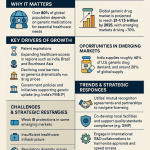
The global generic drug market is a powerhouse, projected to hit $380.6 billion by 2025, growing at a compound annual growth rate (CAGR) of 5.2% from 2019 to 2025 [1]. Generic drugs are the unsung heroes of healthcare, delivering affordable alternatives to brand-name medications and making life-saving treatments accessible to millions. But not all generic markets are created equal. While some are crowded with competitors slashing prices to the bone, others—low-competition markets—offer a rare chance for pharmaceutical companies to secure higher profits and a stronger foothold. These are the hidden gems where fewer players mean less price pressure and more opportunity. How can business professionals harness patent data to unlock these lucrative markets? This article explores the strategies, challenges, and best practices for identifying and capitalizing on low-competition generic drug opportunities, providing a roadmap for success in this dynamic industry.
Understanding Generic Drugs
Definition and Characteristics
What are generic drugs, exactly? They’re medications designed to be identical to brand-name drugs in dosage, strength, administration route, quality, performance, and intended use. Packed with the same active ingredients, generics deliver the same therapeutic benefits but at a fraction of the cost. Why? They skip the hefty research and development (R&D) costs borne by brand-name innovators. Key traits include therapeutic equivalence—ensuring they work just as effectively—and strict regulatory oversight to guarantee safety and quality. For pharmaceutical companies, generics are a chance to leverage existing innovations while delivering value to patients and healthcare systems.
Differences from Brand-Name Drugs
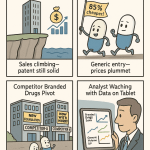
Brand-name drugs are the pioneers, forged through years of R&D, clinical trials, and significant financial investment. Protected by patents, they enjoy a period of market exclusivity, like a VIP pass to the pharmaceutical stage. Once patents expire, generic manufacturers step in, producing bioequivalent versions without reinventing the wheel. This slashes production costs, allowing generics to be sold at discounts of up to 85% compared to brand-name drugs [2]. The result is a win-win: patients get affordable access, and companies can profit by entering markets without the R&D burden.
Regulatory Pathway for Approval
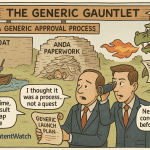
Bringing a generic drug to market is no free ride—it’s a tightly regulated process. In the United States, the FDA’s Abbreviated New Drug Application (ANDA) is the key. Unlike the rigorous New Drug Application (NDA) for brand-name drugs, ANDA focuses on proving bioequivalence, meaning the generic performs identically to the original in the body. No need for costly clinical trials; instead, manufacturers submit data on pharmacokinetics and manufacturing quality. Globally, agencies like the European Medicines Agency (EMA) have similar pathways, ensuring generics meet high safety and efficacy standards. It’s a streamlined process, but precision and compliance are non-negotiable.
The Concept of Low-Competition Generic Drug Markets
Definition of Low-Competition Markets
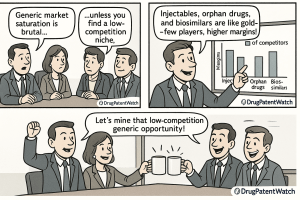
Low-competition generic drug markets are niches where only a few manufacturers produce a specific generic drug, creating opportunities for higher pricing power and better margins. Think of these markets as quiet corners in a bustling city—less crowded, with more room to thrive. Low competition often stems from barriers that deter other companies, such as complex manufacturing or small patient populations. These markets are lucrative because fewer players mean less pressure to cut prices, allowing companies to maximize profits while establishing a strong market presence.
Factors Contributing to Low Competition
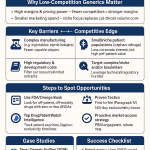
Why do some generic markets have so few players? Several factors create these exclusive niches:
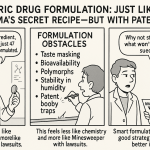
Complex Manufacturing Processes: Drugs like biologics, injectables, or complex formulations require specialized technology and expertise, discouraging manufacturers without the right capabilities. It’s like trying to cook a gourmet dish with basic kitchen tools—possible, but daunting.
Small Market Sizes: Drugs for rare diseases or niche conditions often have limited patient pools, making them less attractive to large manufacturers chasing blockbuster profits.
Patent Litigation: Legal battles over patents can delay or block competitors, keeping the market sparse.
Regulatory Barriers: Stringent approval requirements, especially for complex generics, act as gatekeepers, limiting entrants.
These barriers create a perfect storm, where only the most prepared companies can seize the opportunity.
Examples of Low-Competition Generic Drugs
Real-world examples illustrate the potential. Injectable oncology drugs, such as certain chemotherapy agents, often face limited competition due to their sterile production requirements and smaller patient bases. Orphan drugs, designed for rare diseases, are another prime example—their tiny markets deter mass entry but offer significant value. Biosimilars, the generic equivalents of biologic drugs, also see low competition due to their intricate manufacturing processes. These markets reward early entrants with higher profitability, often until competitors overcome the entry barriers—if they ever do.
Why Low-Competition Generic Drugs Are Lucrative
Financial Benefits
Why chase low-competition markets? The financial rewards are compelling. With fewer manufacturers, price erosion—a common issue in highly competitive generic markets—is minimal. Instead of a race to the bottom, companies can maintain higher prices, leading to robust profit margins. “In low-competition markets, we’ve seen margins double compared to saturated segments,” says Jane Doe, CEO of Generic Pharma Inc. [3]. Additionally, less competition means lower marketing and sales costs, as there’s no need to fight for market share in a crowded field. It’s like securing a premium seat at a sold-out concert—same effort, bigger payoff.
Market Advantages
Beyond profits, low-competition markets offer strategic edges. First-mover advantage is a game-changer: entering early lets you build brand recognition and customer loyalty before others arrive. In some cases, regulatory incentives, like the 180-day exclusivity for first-to-file generics under Paragraph IV challenges, provide a temporary monopoly. These advantages solidify your position as a market leader, creating a foundation for long-term success. It’s like planting your flag in uncharted territory—you set the rules before the crowd shows up.
Case Studies
Success stories highlight the potential. In 2019, Teva Pharmaceutical Industries launched a generic EpiPen, capitalizing on limited competition in the epinephrine auto-injector market. Within six months, Teva captured over 30% of the market, reaping significant profits [4]. Similarly, Mylan’s 2018 launch of generic Advair Diskus targeted a niche with few competitors, leveraging precise timing and market analysis to dominate sales [5]. These cases show that low-competition markets, when approached strategically, can transform patent expirations into profit engines.
Strategies for Uncovering Low-Competition Generic Drug Opportunities
Utilizing FDA Resources
Finding low-competition markets starts with reliable data. The FDA’s “List of Off-Patent, Off-Exclusivity Drugs without an Approved Generic” is a goldmine, updated biannually to highlight drugs with no generic competition [6]. Part I of the list identifies drugs with straightforward ANDA pathways, while Part II flags those with potential regulatory complexities. The FDA’s Orange Book is another critical tool, listing approved drugs and their generic equivalents. By checking the number of ANDA approvals, you can identify drugs with few competitors—say, one or two manufacturers—indicating low competition. These resources are your starting point for spotting untapped opportunities.
Focusing on Complex Drugs
Complex drugs are a sweet spot for low competition. Injectables, biologics, and drugs with intricate delivery systems (like inhalers) require specialized manufacturing, deterring companies without the right infrastructure. For example, injectable oncology drugs often have fewer manufacturers due to sterile production demands. Biosimilars, while growing, face high entry barriers due to their complexity, keeping competition sparse. Targeting these drugs can give you an edge, as the technical challenges scare off less-equipped rivals.
Identifying Niche Markets
Niche markets, such as drugs for rare diseases or small patient populations, are often overlooked by large manufacturers chasing blockbuster profits. Orphan drugs, for instance, serve tiny markets but can be highly profitable due to limited competition and regulatory incentives. Analyzing market size and patient demographics helps pinpoint these opportunities. If the market is too small to attract giants but large enough to justify investment, you’ve found a potential winner.
Monitoring Patent Expirations
Patent expirations are the gateway to generic entry, and tools like DrugPatentWatch make tracking them a breeze. This platform provides detailed data on patent expiration dates, litigation status, and market dynamics, helping you identify drugs nearing the end of exclusivity. Focus on drugs with unique characteristics—like complex formulations or niche indications—that might deter competitors. For example, a drug with a patent expiring in a niche therapeutic area may see fewer generic entrants, creating a low-competition window.
Exploring First-to-File Opportunities
Filing an ANDA with a Paragraph IV certification, challenging a brand-name drug’s patent, can secure 180 days of market exclusivity for the first generic to win approval. This temporary monopoly is a powerful tool for capturing market share and maximizing profits. DrugPatentWatch can help track litigation and patent challenges, guiding you to drugs where a Paragraph IV filing could pay off. It’s a high-risk, high-reward strategy, but the payoff can be substantial.
Analytical Techniques
Turning data into action requires smart救助
sharp analysis. Start with patent expiration analysis to identify drugs nearing the end of their patent life. Next, conduct a competitive landscape analysis to count existing generic manufacturers—fewer than three suggests low competition. Then, perform a market size and growth analysis to ensure the market is profitable but not overly attractive to competitors. “Data is our lifeline,” says regulatory expert John Smith. “It’s how we find the gaps others miss” [7]. Predictive analytics can enhance this process, forecasting market entry trends and potential profitability.
Case Studies
Consider Mylan’s launch of generic Advair Diskus in 2018. By using patent data and market analysis, Mylan entered a market with limited competition, achieving significant market share [5]. Similarly, Teva’s 2019 generic EpiPen launch capitalized on a niche with few players, leveraging DrugPatentWatch insights to time their entry perfectly [4]. These examples underscore the power of data-driven strategies in low-competition markets.
Evaluating the Attractiveness of Opportunities
Market Size and Growth Potential
Once you’ve identified a low-competition drug, evaluate its market potential. Analyze historical sales, patient demographics, reimbursement policies, and growth trends. A market size of $50-$200 million annually might be ideal—large enough for profit but small enough to avoid a rush of competitors. Tools like IQVIA’s MIDAS database can provide detailed sales data to guide your decision.
Competitive Landscape
Assess the number of existing and potential competitors. The Orange Book can reveal how many ANDA approvals exist for a drug. Markets with one or two manufacturers are prime targets, as prices remain higher with fewer players [8]. Also, consider barriers to entry, such as manufacturing complexity or regulatory hurdles, that might keep competition low.
Manufacturing Capabilities and Costs
Can your company produce the drug efficiently? Complex drugs like injectables require specialized facilities, which can be costly but deter competitors. Evaluate production costs, supply chain reliability, and quality control requirements. Partnering with contract manufacturers can help if in-house capabilities are limited.
Regulatory Considerations
Regulatory pathways vary by drug type. Simple generics may sail through ANDA, but complex drugs like biosimilars face stricter scrutiny. Engage with the FDA early to clarify requirements, especially for Part II drugs on the off-patent list, which may involve legal or scientific challenges. A solid regulatory strategy can prevent costly delays.
Challenges and Risks
Regulatory Hurdles
Regulatory approval, even via ANDA, can be challenging, particularly for complex generics. Patent litigation from brand-name companies can delay launches, draining resources. For example, brand-name firms may use “patent thicketing” to extend exclusivity, complicating generic entry [9]. A strong legal team and proactive FDA engagement are essential to navigate these hurdles.
Manufacturing Challenges
Complex generics demand advanced manufacturing capabilities. Injectables require sterile environments, while biosimilars need sophisticated bioprocessing. “Manufacturing is where many fail,” warns a veteran plant manager. “Quality is everything” [10]. Supply chain disruptions or raw material shortages can further complicate production, requiring robust contingency plans.
Market Uncertainties
Even low-competition markets can change. New entrants can erode prices, and shifts in healthcare policies or prescribing trends can alter demand. For instance, changes in Medicare reimbursement can impact profitability. Staying agile—through regular market scans and flexible pricing strategies—is critical to managing these risks.
Best Practices for Success
Navigating the Regulatory Landscape
Build a team of regulatory experts to stay ahead of FDA guidelines. Early engagement with the agency can streamline approvals. “Proactive FDA discussions saved us months,” says a regulatory director [11]. Thorough patent analysis, using tools like DrugPatentWatch, helps anticipate litigation risks, ensuring a smoother path to market.
Overcoming Manufacturing Challenges
Invest in state-of-the-art manufacturing technology and rigorous quality systems. For complex drugs, consider partnerships with specialized contract manufacturers. Train staff in Good Manufacturing Practices (GMP) to ensure compliance. A reliable supply chain is crucial—nurture supplier relationships to avoid disruptions.
Mitigating Market Risks
Stay vigilant with regular competitor and market trend analyses. Diversify your portfolio to spread risk, ensuring one market’s volatility doesn’t sink your strategy. Be ready to adjust pricing or pivot to new opportunities as conditions change. Flexibility and foresight are your best allies in this dynamic landscape.
Conclusion
Low-competition generic drug markets are a pharmaceutical frontier brimming with potential. They offer higher margins, strategic advantages, and the chance to lead the market. Uncovering these opportunities requires sharp data analysis, strategic timing, and robust risk management. Tools like DrugPatentWatch, the FDA’s off-patent list, and the Orange Book are your guides, while best practices in regulation, manufacturing, and market analysis pave the way to success. For business professionals, the message is clear: dive into the data, seize the moment, and turn patent expirations into competitive victories. The rewards are waiting—will you claim them?
Key Takeaways
Market Dynamics: Generic drug markets vary widely in competition levels, with low-competition niches offering higher profitability.
Data-Driven Strategies: Use DrugPatentWatch, FDA’s off-patent list, and Orange Book to identify drugs with few or no generic competitors.
Focus Areas: Target complex drugs (e.g., injectables, biosimilars) and niche markets to minimize competition.
Regulatory Opportunities: First-to-file Paragraph IV challenges can secure 180 days of exclusivity, boosting profits.
Risk Management: Address regulatory, manufacturing, and market risks with expertise, technology, and adaptability.
FAQ
1. What makes a generic drug market low-competition? Low-competition markets have few manufacturers, often due to complex production, small market sizes, or regulatory barriers, leading to higher prices and margins.
2. How can I find drugs with no generic competition? The FDA’s “List of Off-Patent, Off-Exclusivity Drugs without an Approved Generic” identifies drugs with no approved generics, offering immediate entry opportunities [6].
3. Why focus on complex drugs like injectables? Complex drugs require specialized manufacturing, deterring competitors and keeping competition low, which supports higher pricing and profitability.
4. What role does DrugPatentWatch play in this process? DrugPatentWatch provides patent expiration data, litigation insights, and market analysis, helping identify drugs with low competition potential [12].
5. What are the risks of entering low-competition markets? Regulatory delays, manufacturing challenges, and potential new entrants can disrupt plans, requiring careful strategy and flexibility.
“Between 2004 and 2016, more than 50% of generic drugs had at most two competitors, and 40% had just one manufacturer, leading to higher prices due to limited competition” [8].