The pharmaceutical industry has spent much of the past decade performing a kind of collective memory erasure about small molecules. Gene therapies, monoclonal antibodies, cell-based treatments, RNA therapeutics: these are the therapies that fill the conference agendas and capture the venture capital. They deserve much of the attention they get. But the framing they create is misleading, and for an IP professional, R&D strategist, or institutional investor, the misconception carries real financial cost.
Small-molecule drugs currently account for approximately 60% of total global pharmaceutical sales, with a combined market value around $550 billion annually. They are the dominant modality for the treatment of hypertension, type 2 diabetes, bacterial and viral infections, most psychiatric disorders, and the majority of oncology indications. They generate the generic savings that keep healthcare systems solvent: in the U.S. alone, generics filled over 80% of all prescriptions in 2023 and delivered $445 billion in system-wide savings. To call this a declining market is not just wrong; it is analytically dangerous.
This guide is not a defense of small molecules. It is a technical and strategic deep dive for professionals who need to understand the IP architecture, the development economics, the generic entry mechanics, and the new modalities that are redefining what a small molecule can do. The goal is to equip you with the analytical framework to make better decisions about portfolio strategy, patent due diligence, M&A valuation, and competitive positioning.
Market Scale and Growth Trajectory
The API Market by Numbers
The global small-molecule active pharmaceutical ingredient (API) market was valued at $194.96 billion in 2024. Depending on the analytical house, projections for 2034 range from $331.56 billion (BioSpace/Precedence Research) to $341.6 billion (GlobalMarket Insights), reflecting a compound annual growth rate of roughly 5.45% to 5.8%. For context, the global biologics market had a 2022 valuation of $348 billion and is projected to reach $620 billion by 2032 at a 6% CAGR. The two markets are growing at nearly identical rates. What differs is the narrative assigned to each.
$550B
Annual small molecule pharma sales (2023)
60%
Share of total global pharma sales
$445B
U.S. generic drug savings, 2023
5.6%
API market CAGR, 2025–2034
One distinction worth noting: the API market figure is a manufacturing and chemistry measure, not a total revenue measure. It captures the value of synthesized active ingredients before formulation, distribution, and retail margins. The total end-market revenue for small-molecule drugs, including branded and generic products across all distribution channels, substantially exceeds the API market valuation. The $550 billion global sales figure is the more relevant commercial comparator.
Therapeutic Area Breakdown and IP Concentration
Oncology holds the largest share of the small-molecule API market at approximately 27% in 2024. This is driven by continuous regulatory approvals for targeted kinase inhibitors, PARP inhibitors, CDK4/6 inhibitors, and the emerging class of targeted protein degraders. Cardiovascular drugs account for roughly 20.6%, a reflection of sustained demand for lipid-modifying agents, antihypertensives, and anticoagulants. Central nervous system (CNS) therapeutics and anti-infectives together account for another significant share, with CNS representing a particular growth area given the blood-brain barrier penetration advantages that small molecules hold over biologics.
From an IP standpoint, oncology small molecules carry the densest patent portfolios. A kinase inhibitor approved in the past decade is routinely protected by a composition-of-matter (CoM) patent on the base compound, one or more patents on specific crystalline polymorphs, method-of-use (MoU) patents covering particular tumor types and biomarker-defined patient populations, formulation patents covering specific salt forms or dosage strengths, and process patents on the synthetic route. A generic manufacturer targeting any of these assets must either wait out the full patent stack or mount a credible Paragraph IV challenge against every relevant Orange Book-listed patent. That is not a trivial exercise.
Key Takeaways — Market Scale
The small-molecule API market will exceed $330 billion by 2034 at a 5.5-5.8% CAGR, growing at nearly the same rate as biologics but from a much larger installed revenue base.
Oncology (27% share) and cardiovascular (20.6%) are the highest-IP-density segments; generic challengers in these areas face stacked patent portfolios, not single-patent hurdles.
The $445 billion in U.S. generic savings in 2023 is a direct consequence of small-molecule manufacturing economics. No equivalent biosimilar impact exists at this scale.
Total end-market small-molecule revenue ($550 billion) dwarfs the API market figure. Investors pricing small-molecule platforms purely on API market data are working from an incomplete denominator.
Investment Strategy — Market Positioning
For a buy-side analyst or portfolio manager, the first-order insight is this: small-molecule companies are systematically undervalued relative to their revenue stability and growth profile because the market narrative overweights biologics. A fund with a diversified pharma mandate that is underweight small-molecule generic and specialty players is implicitly accepting narrative risk rather than fundamental risk.
Specialty small-molecule companies with strong oncology IP (multiple patent layers, remaining CoM life of 8-plus years) carry defensible revenue streams that discount favorably under DCF models.
Generic manufacturers with first-to-file (FTF) status on high-value targets represent binary upside events when Paragraph IV litigation resolves in their favor.
API manufacturers serving the GLP-1 oral small-molecule race (covered in Section 6) are a 2025-2028 capacity bet that has not been fully priced.
Physicochemical Properties as Commercial Determinants
Molecular Architecture: What the Numbers Actually Mean
A small molecule is conventionally defined as a chemically synthesized compound with a molecular mass below 1 kilodalton (kDa), typically composed of 20 to 100 atoms. Most approved oral drugs comply with Lipinski’s Rule of Five: molecular weight under 500 Da, log P (lipophilicity) under 5, no more than 5 hydrogen bond donors, and no more than 10 hydrogen bond acceptors. These parameters are predictors of oral absorption, though a meaningful cohort of approved drugs now violates one or more Lipinski criteria, particularly in oncology and antifungal classes.
Biologics occupy a completely different size regime: 5,000 to 50,000 atoms per molecule, molecular weights typically in the 15 kDa (peptide) to 150 kDa (monoclonal antibody) range. This is not a minor quantitative difference; it is a qualitative one. Size determines route of administration, tissue distribution, metabolic pathway, dosing frequency, manufacturing complexity, and, critically, the types of molecular targets accessible. Conflating these two modalities in a portfolio discussion without accounting for these differences produces incorrect risk assessments.
Oral Bioavailability as a Commercial Moat
The oral route of administration is the single most commercially consequential property a drug can have. Patient adherence to oral regimens is measurably higher than to injectable regimens for chronic conditions, and the supply chain, cold-chain, and patient monitoring costs associated with oral drugs are substantially lower. This is not a soft preference; it is a quantifiable revenue driver. Market data consistently shows that when an oral alternative becomes available in a therapeutic area previously served only by injectables, the oral product captures a disproportionate share of new patient starts, even at comparable or slightly higher price points.
This dynamic explains the intense competitive activity around oral GLP-1 receptor agonist small molecules in 2024-2026. Novo Nordisk’s semaglutide (Ozempic, Wegovy) and Eli Lilly’s tirzepatide (Mounjaro, Zepbound) are subcutaneous injectables that together generated over $30 billion in 2024 revenues. Pfizer, Lilly, and a cohort of smaller biotech companies are all pursuing oral small-molecule GLP-1 agonists, knowing that the first oral entrant with a comparable efficacy and safety profile would command an enormous first-mover premium. Pfizer’s danuglipron failed to advance due to tolerability concerns in 2024, but the competitive race has not slowed; it has intensified. The oral bioavailability premium is the reason that race exists at all.
Blood-Brain Barrier Penetration and the CNS Opportunity
The blood-brain barrier (BBB) is a selective permeability system that excludes the vast majority of biologic molecules. Monoclonal antibodies do not cross the BBB under normal physiological conditions. Gene therapy delivery to the CNS requires specialized viral vectors and intrathecal or intracerebroventricular administration. Antisense oligonucleotides can be delivered intrathecally but carry their own pharmacokinetic limitations. Small molecules, particularly those optimized for CNS penetration with low molecular weight, high lipophilicity, low hydrogen bond donor count, and minimal P-glycoprotein efflux, cross the BBB efficiently and reach therapeutic concentrations in brain parenchyma.
This is a structural, not temporary, advantage. The entire pharmacopoeia of psychiatry (antidepressants, antipsychotics, anxiolytics, mood stabilizers) is composed of small molecules. The major approved treatments for Alzheimer’s disease symptoms (donepezil, memantine), Parkinson’s disease (levodopa/carbidopa, dopamine agonists), epilepsy, and multiple sclerosis (the oral agents siponimod, cladribine, ozanimod) are all small molecules. Biologics can modulate peripheral immune responses with indirect CNS benefits, but direct CNS target engagement at scale remains a small-molecule domain.
Access to enzymes, transcription factors, nuclear receptors
Manufacturing
Chemical synthesis; scalable
Living cells; variable batch quality
COGS $5/pack vs. $60/pack; generic entry economics viable
Cold chain
Not required (most)
Required (2-8°C or frozen)
Access in low-income markets favors oral small molecules
Statutory exclusivity (U.S.)
5 years (NCE); 3 years (new indication)
12 years (BPCIA)
Shorter exclusivity window; IP layering is essential
Immunogenicity
Low (haptens excepted)
Moderate to high
Small molecules rarely generate anti-drug antibodies
Generic competition
ANDA-based; chemistry-equivalent
BLA-based; no interchangeability presumption without FDA designation
Small molecule generic entry is faster and cheaper to execute
Key Takeaways — Physicochemistry
Molecular weight below 500 Da, combined with optimized lipophilicity and hydrogen bonding parameters, creates oral bioavailability. That single property is responsible for most of the market penetration advantage small molecules hold over biologics in chronic disease management.
BBB penetration is structurally restricted to small molecules for the foreseeable future. Any company building a CNS pipeline is, by scientific necessity, building a small-molecule pipeline.
Manufacturing cost differences ($5/pack vs. $60/pack) are not incremental; they are the foundational economics of generic drug markets. Biosimilar economics cannot replicate them.
The shorter U.S. statutory exclusivity period (5 years vs. 12 years for biologics) makes evergreening strategy, patent layering, and lifecycle management non-optional for any branded small-molecule asset with meaningful revenue potential.
Development Economics and Investment Dynamics
The NPV Paradox and IPO Behavior
The financial literature on drug development consistently models a higher net present value (NPV) for biologic programs than for small-molecule programs. One frequently cited analysis estimates the average NPV of a preclinical biologic program at $104 million versus $37 million for a small-molecule program, with internal rate of return (IRR) also favoring biologics. On this basis, a rational capital allocator should systematically overweight biologics. And yet, small-molecule companies comprise the majority of pharmaceutical IPOs by count.
The resolution of this apparent paradox lies in time-to-milestone dynamics and investor liquidity horizons. An NPV model captures the full risk-adjusted lifecycle value of a drug program, discounted to present value over a 15-to-20-year development, approval, and commercialization window. A venture capital fund operating on a 10-year fund life, or a crossover investor seeking a 3-to-5-year exit, does not access that full NPV. What they access is the value at the moment of their exit, which is typically a clinical milestone (Phase 2 readout, Phase 3 initiation) or an M&A transaction. Small-molecule programs generally reach these milestones faster and with lower capital requirements per milestone than biologic programs. The result is that the small-molecule company offers a more attractive return-on-investment over the investor’s actual time horizon, even if the ultimate commercial value of the molecule is lower.
This is not a market failure. It is a rational response to the practical constraints of investment fund structures. For institutional investors with a longer horizon, or for large-cap pharma companies with in-house development capabilities, the higher NPV of biologics may be the correct lens. For early-stage venture and growth equity, the small-molecule program’s more forgiving capital efficiency and faster milestone cadence create a genuinely superior investment profile for many fund types.
Manufacturing Cost as a Structural Competitive Moat
The cost-of-goods-sold (COGS) differential between small molecules and biologics is one of the most consequential economic facts in the pharmaceutical industry, and it is consistently underappreciated in commercial strategy discussions. Boston Consulting Group data places the average production cost for a small-molecule drug at approximately $5 per pack, versus $60 per pack for a biologic. A separate analysis shows that a daily defined dose of a biologic costs roughly 22 times more to produce than a daily defined dose of a small molecule.
These are manufacturing-level cost differentials, before any commercial margin, distribution, or pharmacy benefit management (PBM) spread. They explain why generic small-molecule drugs can be sold profitably at pennies per tablet: the production cost structure accommodates it. No equivalent biosimilar economics exist. A biosimilar that achieves a 30% price discount to its reference biologic still costs 15 times more per dose to produce than a generic small molecule. The healthcare system savings from biosimilar adoption, while real and important, cannot approach the scale of generic small-molecule savings.
For a branded originator managing a small-molecule asset approaching patent expiry, this same cost structure is a threat. A generic entrant can profitably undercut the branded price by 80% or more at launch, and by 90% or more once five or six generic competitors are in the market. This is Hatch-Waxman working as designed, and the branded company’s only durable response is a lifecycle management strategy that either extends IP exclusivity (covered in Section 4) or captures the generic market itself through an authorized generic.
IP Valuation Context: Manufacturing Process Patents
Process patents, covering the synthetic route to an API, are a frequently overlooked component of a small-molecule asset’s IP value. Unlike composition-of-matter patents, process patents do not block a generic competitor from making the same molecule by a different route. Their strategic value lies in three areas: (1) they can make an alternative synthesis route prohibitively expensive or technically difficult, effectively raising barriers to entry even without a blocking CoM patent; (2) they generate licensing revenue from CDMOs and contract manufacturers who have not independently developed equivalent process IP; and (3) they are often used in patent thicket strategies to add litigation risk for generic filers, forcing settlement negotiations even when the underlying composition-of-matter patent is vulnerable to invalidation.
In M&A due diligence, process patents for a late-stage or approved asset should be valued separately from the CoM and MoU patents. An asset with a weak CoM patent but a genuinely novel, defensible process patent may retain meaningful competitive protection even after a successful Paragraph IV challenge on the composition claims. This requires a technical assessment of the manufacturing economics of alternative synthetic routes, not just a legal review of claim validity.
The CDMO Ecosystem as Strategic Partner
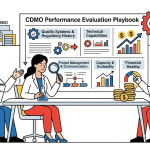
The outsourced manufacturing segment accounted for 61.8% of the small-molecule API market in 2024. Contract development and manufacturing organizations (CDMOs) are no longer a cost-reduction play; they are the primary source of specialized manufacturing IP for many drug categories. High-potency API (HPAPI) synthesis, required for cytotoxic oncology drugs, targeted covalent inhibitors, and the payloads of antibody-drug conjugates (ADCs), is a capability held by a relatively small number of CDMOs globally. Containment systems, occupational exposure limits (OELs), and analytical characterization requirements for compounds with OELs below 1 microgram per cubic meter of air require capital investment that most pharma companies have chosen to outsource rather than build in-house.
The demand for HPAPI synthesis is growing materially, driven by the ADC market, which grew from approximately $3 billion in 2020 to an estimated $10-12 billion in 2024 with projections toward $25-30 billion by 2030. Every ADC consists of a biologic antibody component and a small-molecule cytotoxic payload, connected by a chemical linker. The payload and the linker are both small molecules; their synthesis and the conjugation process require HPAPI-grade manufacturing infrastructure. The ADC boom is, in structural terms, also a small-molecule manufacturing boom.
Key Takeaways — Development Economics
The NPV gap between biologics and small molecules in financial models does not translate directly into superior investor returns when fund-life constraints and time-to-milestone realities are factored in. Small molecules dominate the pharma IPO market for rational economic reasons.
A $5/pack vs. $60/pack manufacturing cost differential is the engine of the generic drug economy. No equivalent exists in the biosimilar market, and none is likely to emerge in the foreseeable future.
CDMOs holding HPAPI synthesis capability are structurally positioned as critical partners for the ADC market, which requires small-molecule payload and linker chemistry at scale. This is an underappreciated intersection of biologic and small-molecule manufacturing demand.
Process patent valuation deserves dedicated analysis in M&A due diligence. Synthetic route IP can extend competitive protection well beyond the expiry of primary composition-of-matter claims.
Investment Strategy — Development Economics
CDMOs with certified HPAPI suites, validated conjugation capabilities, and a track record of ADC payload synthesis represent a high-confidence infrastructure play on the ADC market’s growth, without direct exposure to binary clinical outcomes.
Small-molecule companies in Phase 1 or early Phase 2 with a clearly defined first-in-class mechanism, a clean IP position (recent CoM filing with broad claims, no blocking prior art), and a biomarker-defined patient population present the cleanest risk/return profiles for crossover investors targeting a Phase 3 initiation or M&A exit.
Branded small-molecule companies with assets 3-5 years from patent expiry should be assessed for authorized generic readiness, co-pay program infrastructure, and PBM contracting capability. Those without a lifecycle management plan in execution are systematically overvalued at their current branded revenue multiples.
The Intellectual Property Architecture of Small Molecules
Hatch-Waxman vs. BPCIA: The Statutory Exclusivity Gap
U.S. pharmaceutical IP operates under two parallel legislative regimes. The Drug Price Competition and Patent Term Restoration Act of 1984, known as Hatch-Waxman, governs small-molecule drugs and generic entry. The Biologics Price Competition and Innovation Act of 2009 (BPCIA), enacted as part of the Affordable Care Act, governs biologics and biosimilar entry. The two statutes create meaningfully different competitive environments.
Under Hatch-Waxman, a new chemical entity (NCE) receives 5 years of data exclusivity from the date of FDA approval, during which the agency cannot accept or review abbreviated new drug applications (ANDAs) for generic versions. A drug approved under a supplemental NDA for a new clinical investigation (a new indication, new formulation, or new patient population) receives 3 years of exclusivity covering that specific change. Pediatric exclusivity, available for drugs that complete FDA-requested pediatric studies, adds 6 months to any existing regulatory exclusivity period, including the Hatch-Waxman exclusivity and any Orange Book-listed patent terms. This pediatric exclusivity provision, while modest, is reliably used by originators and adds roughly $400-600 million in protected revenue for a typical blockbuster, making it one of the highest-return regulatory investments available.
Under BPCIA, a reference biologic receives 12 years of exclusivity before the FDA can approve a biosimilar for marketing. This is a substantially longer protection window, justified at the time of enactment on the grounds that biologic patents are harder to secure and easier to design around than small-molecule patents. A rigorous study of FDA-approved therapeutics from 2009 to 2023 found that the opposite is true in practice: biologics carry a median of 14 patents each, compared to a median of 3 patents for small-molecule drugs. The median time to biosimilar market entry for a biologic in that cohort was 20.3 years from approval, versus 12.6 years for a small-molecule drug to face generic competition. The legislative premise and the market reality point in opposite directions.
‘Biologics were protected by a median of 14 patents (IQR: 5-24) compared to 3 patents (IQR: 2-5) for small-molecule drugs. The median time to biosimilar competition was 20.3 years, compared to 12.6 years for small-molecule drugs.’Analysis of FDA-approved therapeutic agents, 2009-2023. Manuscript, London School of Economics, 2024.
For an IP strategist at a small-molecule company, the policy gap between a 5-year and 12-year statutory exclusivity window is the defining constraint of their professional life. It is the primary reason that every tool in the lifecycle management arsenal, from polymorph patents to method-of-use filings to pediatric exclusivity, gets deployed on any asset with meaningful commercial scale. Understanding the architecture of those tools is not optional; it is foundational.
Composition-of-Matter vs. Method-of-Use Claims: A Technical Comparison
The two most important patent claim types in small-molecule pharmaceutical IP are composition-of-matter (CoM) and method-of-use (MoU) claims. They protect different things, carry different strategic values, and present different vulnerabilities to generic challenge.
A CoM patent claims the molecule itself, typically defined by its chemical structure. It is the broadest and most valuable form of protection because it blocks any competitor from making, using, or selling that specific compound, regardless of the indication or use. An approved generic entrant cannot manufacture the identical API without a valid license or an expired (or invalidated) CoM patent. CoM patents are typically filed during early drug discovery, often before the full therapeutic potential of the compound is understood, and receive a 20-year term from the filing date. Given the average 10-12-year development timeline from filing to approval, effective post-approval CoM protection is often only 8-10 years. This is where patent term extension (PTE) under Hatch-Waxman, capped at 5 years and restoring up to 14 total years of post-approval life, becomes critical for any major asset.
An MoU patent claims a specific use of the compound, such as treating a particular disease, or treating a particular patient population defined by a genetic biomarker, or using the drug in a specific dosing regimen. MoU patents are weaker than CoM patents because a generic manufacturer can carve out the protected indication from its label, a practice known as skinny labeling. FDA regulations permit an ANDA filer to omit a patented use from its proposed label, and courts have held that this carve-out is generally sufficient to avoid infringement of an MoU patent, as long as the generic is not otherwise actively inducing infringing use. The practical effect of skinny labeling is that MoU patents primarily protect the branded product’s position in the specific labeled indication, not the underlying molecule.
The strategic implication is clear: CoM patents are the crown jewels of a pharmaceutical portfolio. Their invalidation or expiry is the event that unlocks generic competition. MoU patents are supporting fortifications. They cannot substitute for a valid CoM patent in blocking generic entry, but they can complicate the generic manufacturer’s label strategy, create litigation risk, and support a premium pricing argument in formulary negotiations for the branded product’s specific indications.
Evergreening: A Full Technical Roadmap
Evergreening refers to the practice of obtaining additional patents on incremental modifications to an existing drug, extending the effective period of market exclusivity beyond the term of the original composition-of-matter patent. It is the most controversial and strategically consequential practice in pharmaceutical IP management. Critics argue it impedes generic competition and raises drug prices; proponents argue it incentivizes continued investment in formulation science, novel delivery systems, and new therapeutic applications. Both positions contain elements of truth, and neither resolves the practical question of how to execute a defensible lifecycle management strategy.
The following is a technical roadmap of the primary evergreening mechanisms, organized by patent type, typical timing relative to original CoM expiry, defensibility in Paragraph IV litigation, and the key scientific requirements for each approach.
Phase 1: CoM Filing
The original CoM patent is filed, typically covering the free base or a specific salt form of the compound. This is the primary protection and the generic challenger’s primary target. Filing of the CoM patent starts the 20-year clock.
Phase 2: Salt & Polymorph
Separate patents are filed on pharmaceutically preferred salt forms (hydrochloride, mesylate, maleate) and specific crystalline polymorphs of the API. Polymorph patents are among the most litigated in generic entry cases. To be defensible, they must demonstrate a non-obvious physical or pharmaceutical advantage (superior stability, improved bioavailability, reduced hygroscopicity) rather than simply documenting the existence of a crystalline form that any skilled chemist would discover. Courts have invalidated numerous polymorph patents on obviousness grounds when no performance advantage was demonstrated.
Phase 3: Formulation
As clinical development advances, formulation-specific patents are filed covering modified-release technologies (extended-release matrix, osmotic pump, enteric coating), specific particle size distributions (nanoparticle formulations that improve bioavailability of BCS Class II/IV compounds), dosage form patents (orally disintegrating tablet, transdermal patch), and combination product patents (fixed-dose combinations with complementary active ingredients). Combination patents are particularly durable because they protect a specific co-formulation that a generic ANDA filer must match precisely, while skinny labeling away the combination use is often impractical if the combination is the primary clinical indication.
Phase 4: MoU & Dosing Regime
Method-of-use patents covering new indications, new patient populations (biomarker-defined subgroups, pediatric populations), and optimized dosing regimens are filed as clinical data matures. Pediatric exclusivity, triggered by completion of FDA-requested pediatric studies, adds 6 months to any outstanding patent or data exclusivity. This is almost universally pursued for high-revenue assets because the cost of pediatric studies is dwarfed by the revenue protected.
Phase 5: Active Metabolite
If the original compound has a pharmacologically active metabolite, a separate CoM patent can be filed on the metabolite itself. If the metabolite is developed as a standalone drug with its own NDA, it receives a fresh 5-year NCE exclusivity period. Escitalopram (the active enantiomer of citalopram) is the canonical example: AstraZeneca/Lundbeck filed a separate NDA for the single enantiomer as citalopram approached patent expiry, obtaining new exclusivity and enabling a prescriber switch campaign.
Phase 6: PTE & Supplementary Protection
In the U.S., the patent owner can apply for Patent Term Extension (PTE) under 35 U.S.C. Section 156, restoring up to 5 years of the patent term lost to regulatory review, capped so that remaining post-approval patent life does not exceed 14 years. One PTE per product is allowed. In Europe, the equivalent mechanism is the Supplementary Protection Certificate (SPC), which can extend protection for up to 5 years beyond the base patent term. The interplay between PTEs, SPCs, and multi-country IP strategy is a significant source of complexity and competitive opportunity.
Phase 7: Authorized Generic
An authorized generic (AG) is the branded manufacturer’s own generic version, sold under the generic INN name but manufactured under the existing NDA. The originator can launch an AG at or immediately after the first generic entrant’s 180-day exclusivity period begins, effectively competing with the first-to-file generic filer and capturing share of the generic market. AG strategy requires pre-positioning of a CDMO manufacturing relationship or in-house generic manufacturing capability, and a PBM/wholesaler contracting strategy calibrated to the AG’s net price.
The efficacy of evergreening as a legal strategy depends entirely on the scientific substance behind the patents. Courts applying the KSR obviousness standard have shown consistent willingness to invalidate secondary patents that represent the predictable application of known pharmaceutical science. A polymorph that any skilled formulation scientist would characterize, or a once-daily modified-release formulation of a drug that was twice-daily in its original form, faces a substantial obviousness challenge. Patents that survive litigation are those anchored in genuine non-obvious scientific findings: an unexpected bioavailability benefit from a specific polymorphic form, a demonstrably superior stability profile, or a novel mechanism of action in a new indication that was not predictable from the drug’s known pharmacology.
Key Takeaways — IP Architecture and Evergreening
The median time to generic competition for a small-molecule drug is 12.6 years from approval, a figure that reflects both the 5-year statutory exclusivity floor and the patent layering strategies deployed by originators. Investors modeling generic entry should use 10-14 years as the realistic range for well-managed assets, not the statutory 5 years.
Composition-of-matter patents are the primary target of any Paragraph IV challenge. All other patent types in a small-molecule portfolio are secondary defenses that a skilled generic counsel will attempt to carve around or invalidate. The CoM patent’s remaining term and claim strength are the single most important variables in any generic entry timeline model.
Polymorph and formulation patents are highly litigated and frequently invalidated on obviousness grounds. Their value in a portfolio depends on demonstrated performance advantages, not merely on the existence of a crystalline form or a modified-release version.
Pediatric exclusivity is among the highest-return regulatory investments available to a branded company. The 6-month extension on a drug generating $2-4 billion annually represents $1-2 billion in protected revenue at a cost of conducting pediatric studies typically in the $20-50 million range.
Investment Strategy — IP Architecture
When evaluating a branded small-molecule company, map the full Orange Book patent stack: CoM expiry, MoU patents by indication, formulation patents by delivery system, and any active pediatric exclusivity. The gap between CoM expiry and the last expiring secondary patent is the true measure of the evergreening runway, and it should be stress-tested against a realistic Paragraph IV challenge timeline (typically 30 months from suit filing under Hatch-Waxman, plus appellate litigation).
Assets where the CoM patent has already expired but secondary patents remain carry a specific risk profile: they are protected by patents that generic counsel will prioritize for IPR petitions and Paragraph IV challenges, and whose validity the federal circuit has shown consistent skepticism toward. These assets should trade at a discount to their apparent remaining exclusivity duration.
Generic companies with FTF status on a high-value target represent binary event risk: a favorable litigation outcome triggers the 180-day exclusivity period and the associated revenue peak; an adverse outcome eliminates the exclusivity premium. Sizing these positions requires a realistic probability-weighted litigation assessment, not a binary bet on outcome.
Case Studies in Small Molecule IP Strategy
Lipitor (Atorvastatin): IP Valuation and the Patent Cliff Playbook
Pfizer’s atorvastatin, marketed as Lipitor, generated over $125 billion in cumulative global revenues over a 14-year commercial life before its primary U.S. patent expired in 2011. It was, at its peak, the world’s best-selling drug by annual revenue, reaching approximately $13 billion annually in 2006. Its trajectory after patent expiry is one of the most studied cases in pharmaceutical commercial strategy.
IP Valuation: Atorvastatin / Lipitor
The primary CoM patent for atorvastatin (Warner-Lambert, later Pfizer) was U.S. Patent 4,681,893, which expired in March 2010 (with pediatric exclusivity extending practical protection to November 2011 in the U.S.). The Orange Book listed several secondary patents covering the atorvastatin calcium salt form and specific crystalline polymorphs (Polymorph Form I), which were aggressively litigated by generic filers. Ranbaxy Laboratories filed the first Paragraph IV ANDA in 2002, triggering 30-month litigation stay. After protracted litigation and a settlement that granted Ranbaxy a delayed-entry authorized window, Ranbaxy launched a generic in November 2011 simultaneously with Pfizer’s authorized generic.
The economic value of the 6-month pediatric exclusivity extension on atorvastatin was approximately $1.5-2 billion in additional protected revenue at 2010-2011 sales rates. The IP valuation lesson: secondary patents (polymorph, salt form) were worth litigating not because they were ultimately upheld, but because the 30-month litigation stay itself protected $8-10 billion in annual revenues. In this context, even a patent with a 30-40% probability of surviving litigation had a positive expected value in terms of protected revenue. This is the litigation option value of the patent thicket strategy.
Pfizer’s lifecycle management response to the atorvastatin cliff combined legal delay through patent litigation, pre-expiry market saturation through direct-to-consumer advertising, a co-pay program that brought Lipitor’s out-of-pocket cost for commercially insured patients below the generic co-pay, and a strategic authorized generic launch timed to coincide with Ranbaxy’s 180-day exclusivity period. The authorized generic effectively split the first-mover generic market, reducing Ranbaxy’s 180-day exclusivity windfall and establishing Pfizer’s manufacturing infrastructure in the generic market segment.
The revenue decline post-expiry was steep, as it always is for statins, but Pfizer managed the transition more effectively than any prior blockbuster manufacturer had achieved. The lesson is not that Pfizer stopped the cliff; it is that thoughtful pre-expiry positioning and a willingness to cannibalize the branded product with an authorized generic are more effective than attempting to maintain branded pricing in the face of aggressive generic competition.
Sildenafil (Viagra/Revatio): The Method-of-Use Pivot and IP Architecture
Pfizer’s sildenafil is the most-cited example of drug repurposing in pharmaceutical history, and it repays careful attention from an IP strategy perspective. The compound was originally synthesized as a phosphodiesterase type 5 (PDE5) inhibitor targeting angina pectoris. Phase I trials in the early 1990s showed limited cardiovascular efficacy but consistent reports of penile erection in male subjects. Pfizer recognized the commercial significance of this off-target effect, redirected development toward erectile dysfunction (ED), and obtained FDA approval for Viagra in March 1998.
IP Valuation: Sildenafil (Viagra / Revatio)
The original CoM patent on sildenafil (U.S. 5,250,534, filed 1992) claimed the compound and related PDE5 inhibitors broadly. The MoU patent covering the treatment of erectile dysfunction (U.S. 6,469,012) was separately obtained and provided crucial additional protection. When the CoM patent expired in 2012 in most major markets, generic sildenafil for ED entered rapidly. However, Pfizer had separately obtained orphan drug designation and FDA approval for sildenafil citrate (Revatio) in 2005 for pulmonary arterial hypertension (PAH), with its own new clinical data package, new regulatory exclusivity period, and separate method-of-use patent coverage. The PAH franchise extended the commercial life of the sildenafil molecule substantially beyond the ED patent cliff and created a separate, defensible revenue stream.
The IP valuation insight: a single chemical entity can support multiple fully independent franchise valuations if the clinical development strategy is managed to generate distinct regulatory submissions and MoU patent filings for each indication. The sildenafil molecule had a different IP value profile as an ED drug (primary CoM patent plus MoU) versus a PAH drug (independent NDA, orphan drug exclusivity, separate MoU). These were additive, not overlapping, sources of value.
The sildenafil story illustrates a principle that applies broadly to medicinal chemistry portfolios: a compound developed for one indication may have pharmacological activity in entirely different disease contexts, and the ability to identify and pursue those secondary indications generates independent IP protection for each. The practical requirement is a systematic secondary pharmacology screening program that tests compounds across a broad target panel, combined with a clinical development organization capable of running simultaneous programs in multiple therapeutic areas. Companies that run this playbook well generate compound value that is multiples of what is captured by the initial development program.
The Oral GLP-1 Race: IP Architecture in Real Time
The competitive race to develop an oral small-molecule GLP-1 receptor agonist is the most commercially consequential small-molecule development program of the 2024-2028 period. The injectable GLP-1 market (semaglutide, tirzepatide, liraglutide) exceeded $30 billion in 2024 revenues. An oral small molecule that delivers comparable glycemic control and weight reduction, without the cold chain, injection training, and injection site reaction constraints of current agents, would be a rational candidate for the fastest-growing drug in pharmaceutical history.
The IP landscape for oral GLP-1 small molecules is being written in real time. Novo Nordisk’s oral semaglutide (Rybelsus) is a peptide, not a small molecule, requiring specialized permeation enhancement technology (the Emisphere SNAC absorption enhancer, separately patented). True oral small-molecule GLP-1 agonists are distinct: they are non-peptide compounds that directly agonize the GLP-1 receptor, synthesized by conventional medicinal chemistry. Pfizer’s danuglipron and lotiglipron both advanced to clinical development before tolerability issues terminated the programs. Structure-activity relationship (SAR) data from failed programs does not expire with the program; it becomes prior art that constrains patent filing strategy for subsequent programs.
The companies that file CoM patents on genuinely novel small-molecule GLP-1 agonist chemotypes, with demonstration of differentiated tolerability and once-daily dosing convenience, will hold the most valuable pharmaceutical IP estate of the next decade. The patent thicket for a successful oral GLP-1 small molecule will encompass the base compound CoM, specific agonist conformational series, co-crystal forms optimized for stability, modified-release formulations addressing the tolerability profile that drove tolerability-based failures, and method-of-use patents covering specific body weight reduction endpoints (the FDA weight management indication language) and cardiovascular risk reduction indications that have proven commercially important for the injectable class.
Key Takeaways — Case Studies
The Lipitor lifecycle management playbook (authorized generic, co-pay program, pre-expiry DTC saturation) has become the standard template. Its success was not accidental; it required pre-expiry positioning that began 3-5 years before CoM expiry. Companies that start lifecycle planning 12 months before expiry are too late.
Method-of-use expansion into a second independent indication generates independent regulatory exclusivity, potentially independent orphan drug status, and a separately defensible IP estate. This is not just a lifecycle management tactic; it is a full franchise extension strategy that the sildenafil/Revatio precedent validates quantitatively.
The oral GLP-1 small-molecule race represents the largest near-term CoM patent opportunity in pharmaceutical development. The first company to file broad, enabling claims on a non-peptide, orally bioavailable GLP-1 receptor agonist chemotype with demonstrated clinical tolerability will hold an IP position worth tens of billions of dollars in protected revenue.
Patent thicket litigation option value (the revenue protected by a 30-month Hatch-Waxman stay, even from a patent with moderate invalidity risk) should be modeled explicitly in patent portfolio valuations, not treated as a binary valid/invalid determination. A patent with a 40% survival probability on a $5 billion/year drug has positive expected litigation value even if it ultimately loses.
Generic Drug Strategy and the Paragraph IV Playbook
First-to-File Advantage and the 180-Day Exclusivity Economics
The most strategically valuable position in the U.S. generic drug market is first-to-file (FTF) status on a high-revenue branded product. Under Hatch-Waxman, the first ANDA applicant to certify that a specific Orange Book-listed patent is invalid or not infringed (a Paragraph IV certification) earns 180 days of generic market exclusivity from the date of first commercial marketing. During this period, FDA cannot approve a subsequent ANDA for the same product. The FTF exclusivity period is the most lucrative position in generic pharmaceuticals because the FTF generic typically prices at 15-30% below the brand (versus 80-90% below brand once five or more generics are competing), while capturing 50-80% of the prescription volume in the first weeks after launch.
The revenue peak during a 180-day exclusivity period for a blockbuster small molecule can be extraordinary. Generic sildenafil’s FTF launch in 2017 generated several hundred million dollars in revenue for the first filer within the 180-day window. Generic imatinib (Gleevec, $4.7 billion at peak branded sales) generated comparable FTF revenues. For a generic company, a single successful FTF position on a multi-billion-dollar drug can justify the entire annual R&D budget and litigation cost program.
Patent Challenge Strategy: Paragraph IV Litigation and IPR
A Paragraph IV certification is a declaration that specific Orange Book-listed patents are either invalid or not infringed by the ANDA filer’s proposed product. Filing this certification constitutes a technical act of infringement under U.S. law, giving the branded company the right to file suit within 45 days and triggering a 30-month FDA review stay. The generic company cannot receive final ANDA approval during this period unless the court rules the patent invalid or non-infringed before the 30 months expire.
Patent challenge strategy requires a sequential analysis. The first step is identifying which Orange Book-listed patents are most vulnerable, prioritizing CoM patents with narrow claims, prior art identified from published SAR literature, and foreign patent prosecution histories that show claim scope surrendered during examination. The second step is assessing whether a non-infringing generic formulation is feasible (different polymorph, different synthetic route, different excipient system). The third step is evaluating the parallel pathway of inter partes review (IPR) petitions at the Patent Trial and Appeal Board (PTAB). IPR allows a third party to challenge the validity of an issued patent on prior art grounds before an expert administrative tribunal, with a one-year statutory deadline for institution decision. Generic manufacturers have used IPR strategically to invalidate secondary patents (polymorph, formulation) that block market entry even after the primary CoM patent expires.
The most sophisticated generic litigation strategies combine a Paragraph IV challenge to the CoM patent (targeting invalidity on the grounds of obviousness over prior art SAR data) with simultaneous IPR petitions against secondary formulation and polymorph patents (targeting anticipation or obviousness based on pharmaceutical science literature), and a non-infringement design-around for any remaining MoU patent claims that cannot be challenged on validity grounds. This multi-front strategy is resource-intensive but necessary when facing a well-constructed patent thicket.
The Healthcare Savings Economics of Generic Small Molecules
U.S. generic drugs delivered $445 billion in savings to the healthcare system in 2023, filling more than 80% of all prescriptions. These figures deserve unpacking. The $445 billion figure represents the difference between the cost of the generic drugs actually dispensed and what those same prescriptions would have cost at branded prices. It is a measure of price erosion efficiency, not of absolute drug spending. For payers, pharmacy benefit managers, and health systems, this savings pool is the primary mechanism by which the U.S. healthcare system remains financially viable at its current prescription volume.
No biosimilar savings program exists at remotely comparable scale. Biosimilar penetration in the U.S. remains below 40% for most reference products, hobbled by payer formulary structures, physician resistance, and the absence of a defined interchangeability standard that functions the way ANDA substitution operates at the pharmacy level. The FDA’s biosimilar interchangeability designation, intended to allow pharmacist substitution without physician consultation, has been granted to a small and slowly growing number of products. Until biosimilar interchangeability functions as smoothly as generic ANDA substitution, biosimilar savings will remain a fraction of small-molecule generic savings.
Key Takeaways — Generic Strategy
FTF status on a multi-billion-dollar branded drug is the single highest-return position in generic pharmaceuticals. The 180-day exclusivity window generates revenue at 15-30% below brand pricing while the ANDA filer holds 50-80% market share, a brief but extremely profitable monopoly on the generic market.
A well-executed patent challenge strategy addresses CoM patents through Paragraph IV certification, secondary patents through IPR petitions, and remaining MoU patents through design-around formulations or skinny labeling. Each of these is a distinct legal and technical exercise that requires integrated management.
The $445 billion in 2023 U.S. generic savings is the structural foundation of the Hatch-Waxman system working as designed. It is also the clearest quantitative evidence that no equivalent mechanism exists for biologics at comparable scale, and none is likely to emerge in the medium term.
Investment Strategy — Generic Entry
Track the Paragraph IV filing landscape on major small-molecule drugs with approaching CoM expiries using patent watch databases. A surge in ANDA filings with Paragraph IV certifications on a specific product is a leading indicator of aggressive generic entry timing; branded companies that have not pre-positioned a lifecycle management response at this stage are structurally exposed.
For generic company equities, the litigation status of FTF positions is the primary near-term revenue driver. Generic companies that have resolved litigation favorably and hold clear FTF status on a drug with $2 billion or more in annual branded sales represent high-conviction near-term revenue events. Size positions accordingly relative to fund constraints.
IPR petition activity at PTAB is publicly tracked and is an early signal of generic companies’ target prioritization. A cluster of IPR petitions against a branded company’s secondary patent estate, without accompanying Paragraph IV filings, often signals that the generic company is clearing legal obstacles before committing to the full ANDA filing and litigation process.
Next-Generation Small Molecule Modalities
PROTACs: Mechanism, Clinical Landscape, and IP Strategy
Proteolysis Targeting Chimeras (PROTACs) represent the most technically sophisticated development in small-molecule drug design in the past two decades. A PROTAC is a bifunctional molecule: one end binds the target protein of interest (the ‘warhead’ moiety), and the other end binds an E3 ubiquitin ligase. By physically bringing the target protein and the E3 ligase into proximity, the PROTAC causes the target protein to be ubiquitinated and subsequently degraded by the cell’s proteasome. The target protein is not merely inhibited; it is eliminated from the cell.
The pharmacological implications are substantial. First, the catalytic mechanism of degradation means that a single PROTAC molecule can degrade multiple copies of the target protein before being released, producing a sub-stoichiometric activity profile that conventional occupancy-based inhibitors cannot achieve. Second, because protein degradation targets the entire protein rather than a specific binding domain, PROTACs can target proteins that lack a druggable active site pocket, the “undruggable” proteome that has frustrated conventional small-molecule discovery for decades. Transcription factors like MYC, RAS family proteins, and structural scaffolding proteins that have not yielded to traditional inhibitor approaches are potential PROTAC targets. Third, when the target protein resurfaces through new synthesis, the same PROTAC molecules remaining in the cell can degrade it again, creating a sustained depletion effect that outlasts the pharmacokinetic half-life of the compound.
The IP landscape for PROTACs is maturing rapidly. The foundational technology was developed primarily at Yale University (Craig Crews’ laboratory), and the early PROTAC platform patents have been broadly licensed through Arvinas, which Crews co-founded. Arvinas holds one of the broadest PROTAC patent estates, including claims covering the general PROTAC concept, specific E3 ligase recruiter moieties (cereblon-targeting thalidomide analogs and CRBN-binding IMiDs; VHL ligand-based recruiters), and specific target-protein degrader compositions covering the androgen receptor (ARV-110, now bavdegalutamide, in clinical development for prostate cancer) and the estrogen receptor (ARV-471, vepdegestrant, in Phase 3 for breast cancer). Competitors including Kymera Therapeutics, C4 Therapeutics, Nurix Therapeutics, and AstraZeneca’s internal PROTAC program must design around Arvinas’s core claims while building their own IP estates around novel recruiter moieties, novel degrader chemotypes, and novel target-warhead combinations.
IP Valuation Context: PROTAC Platform Companies
Valuing a PROTAC platform company requires separate assessment of three IP layers. The first is the platform IP: does the company hold claims to general PROTAC architecture elements (bifunctional molecule structure, specific linker chemistries, specific E3 ligase recruiter categories) that would require licensing from any competitor developing a PROTAC for the same targets? The second is the target-specific IP: are the composition claims on specific degrader molecules broad enough to block obvious medicinal chemistry variations, or are they narrow enough that a competitor could design around them with a structurally distinct degrader targeting the same protein? The third is the clinical data package: for advanced-stage assets, the clinical data itself generates regulatory exclusivity independent of patent coverage, providing protection floor even if the composition patents are successfully challenged.
Companies with platform-level IP (Arvinas, Kymera) command a premium to NAV relative to companies with only target-specific PROTAC IP, because the platform IP generates licensing revenue across multiple programs and creates a structural barrier for any competitor working in the PROTAC modality within the licensed target space. Platform IP also provides defensive protection against reverse challenges: a company holding broad platform claims can threaten to countersue a generic entrant or biosimilar filer who attempts to design a PROTAC for the same target using similar degrader architecture.
Molecular Glues: A Distinct Mechanism with Distinct IP Considerations
Molecular glues are a mechanistically distinct class of targeted protein degraders. Unlike PROTACs, which are explicitly bifunctional molecules, molecular glues are typically small, single-domain compounds that work by stabilizing protein-protein interactions (PPIs) rather than by bridging a target protein to an E3 ligase through a designed linker. Specifically, molecular glues stabilize the interaction between an E3 ligase substrate receptor and a neo-substrate (a protein that would not normally be the ligase’s substrate), causing the neo-substrate to be ubiquitinated and degraded.
The distinction matters for IP purposes. PROTAC patents typically claim the bifunctional molecular structure and the warhead-linker-recruiter architecture. Molecular glue patents must claim a more diverse set of chemotypes, because molecular glues do not share a common structural scaffold. This makes molecular glue IP harder to build into broad platform claims and easier to design around, but it also means that a genuinely novel molecular glue can receive broad CoM protection without the constraint of designing around existing PROTAC architecture claims.
Bristol Myers Squibb’s iberdomide and mezigdomide (both IMiD-derived molecular glues targeting IKZF1/3 zinc finger transcription factors) are the most clinically advanced approved molecular glues in oncology. Novartis’s CFT8634 (targeting BRD9 via molecular glue mechanism) and multiple programs at C4 Therapeutics represent the expanding pipeline. The regulatory precedent for molecular glue approval, and the label language that will accompany the first approvals, will have significant IP implications for how method-of-use claims are written in subsequent filings.
Covalent Inhibitors and the Warhead Patent Strategy
Covalent inhibitors are small molecules that form a permanent or slowly reversible covalent bond with a specific amino acid residue in the target protein’s binding site. The reactive chemical group responsible for covalent bond formation is called a warhead. Acrylamide warheads forming covalent bonds with cysteine residues are the most common class, validated by the FDA-approved BTK inhibitors ibrutinib (Imbruvica, AbbVie/Janssen) and its successor acalabrutinib (Calquence, AstraZeneca) and zanubrutinib (Brukinsa, BeiGene). KRAS G12C inhibitors sotorasib (Lumakras, Amgen) and adagrasib (Krazati, Mirati/BMS) use a similar covalent mechanism targeting the mutant cysteine at position 12 of KRAS.
The warhead chemistry is itself patentable, and the IP landscape around specific cysteine-reactive warhead chemotypes has become competitive. Amgen’s sotorasib patent estate includes claims covering not just the specific sotorasib molecule but also the class of GDP-locked covalent KRAS G12C inhibitors that bind the mutant protein in its inactive conformation. Mirati (now BMS) designed adagrasib around these claims with a structurally distinct molecule and a different molecular docking geometry, while still achieving covalent KRAS G12C engagement. The result is a market with two competing covalent KRAS G12C inhibitors with separate patent estates, different selectivity profiles, and different clinical activity data in post-sotorasib-resistant settings.
Technology Roadmap: Small Molecule Innovation 2025-2035
2025-2026
PROTAC Phase 3 readouts: Arvinas’s vepdegestrant (ARV-471) Phase 3 data in ER+/HER2- breast cancer expected; outcome will determine whether PROTACs can compete head-to-head with approved CDK4/6 inhibitors and fulvestrant in the first-line setting. First oral small-molecule GLP-1 agonist Phase 2 data expected from multiple programs. Covalent KRAS G12C inhibitor resistance mechanisms studied in post-sotorasib settings; next-generation KRAS inhibitors addressing G12C and non-G12C mutations in development.
2026-2027
Molecular glue FDA approvals establish regulatory precedent for the class; label language and clinical endpoint definitions will shape method-of-use patent strategy for subsequent filings. First PROTAC IND filings for CNS indications (neurodegeneration targets) anticipated; BBB penetration for bifunctional molecules with molecular weight typically above 700 Da requires specialized delivery strategies. AI-generated hit-to-lead campaigns for novel target classes begin producing first IND candidates from fully autonomous discovery pipelines.
2027-2029
Oral GLP-1 small-molecule approvals expected for first successful program; NDA filing will crystallize the CoM patent landscape and trigger FTF ANDA racing. Macrocyclic peptide-small molecule hybrids (beyond Rule of Five compounds with oral bioavailability) begin reaching Phase 2; formulation technologies enabling oral absorption of MW 600-1000 Da compounds (spray-dried dispersions, lipid-based formulations, permeation enhancers) become standard. Next-generation PROTACs with degradation selectivity engineered through ternary complex modeling reach clinical stage.
2029-2032
Patent expirations for first-wave oncology small molecules (ibrutinib, osimertinib, palbociclib) drive major Paragraph IV challenges; ANDA filing activity on these assets will define the generic pipeline for 2030-2035. PROTAC biosimilar equivalency questions emerge: can a generic ANDA apply to a PROTAC, or does the bifunctional mechanism require a full 505(b)(2) or NDA submission? FDA guidance anticipated. Oral PCSK9 small-molecule inhibitors, if successful in clinical development, represent the next major cardiovascular IP estate.
2032-2035
Second-generation oral GLP-1 small molecules with improved tolerability and combination cardiometabolic profiles reach regulatory review. First true AI-discovered small-molecule drugs (identified, optimized, and clinically validated through fully autonomous AI pipelines) complete Phase 3 trials; their IP ownership structures (AI system output vs. human inventor attribution) will be subject to ongoing USPTO and EPO policy evolution. Degrader-antibody conjugates (DACs), combining PROTAC payloads with targeting antibodies, begin Phase 1; these are simultaneously biologics and small-molecule IP assets requiring dual prosecution strategy.
Key Takeaways — Next-Generation Modalities
PROTACs have demonstrated clinical proof-of-concept in oncology. The 2025-2026 Phase 3 data from Arvinas’s vepdegestrant will determine whether the modality can displace established standards of care or must define new niches. The IP landscape is already mature at the platform level; competitive differentiation must come from novel target-warhead combinations and clinical superiority data.
Molecular glues have a distinct IP profile from PROTACs: no broad platform claims constrain the space, but the chemotype diversity makes building a portfolio-blocking IP position harder. First-mover advantage in specific target-glue combinations is the primary IP strategy.
Covalent inhibitor patent strategy centers on warhead chemotype claims combined with target engagement selectivity data. The KRAS inhibitor market is the cleanest current example of two competing covalent inhibitors with non-overlapping patent estates competing on clinical differentiation rather than IP exclusivity.
Oral GLP-1 small molecules represent the largest near-term new CoM patent opportunity in the industry. The first clinical successes will trigger a patent filing and litigation race that may be the defining IP story of the 2026-2032 period.
Investment Strategy — Next-Generation Modalities
PROTAC platform companies (Arvinas, Kymera) with Phase 3 assets and broad platform IP represent a 2025-2027 binary event opportunity. Position sizing should account for Phase 3 success rates in the relevant indication, not just the potential market size of the target indication. PROTAC Phase 3 track record is still being established.
CDMOs with HPAPI synthesis capability and PROTAC/molecular glue manufacturing experience (complex multi-step synthesis, bifunctional molecule conjugation, analytical characterization of bifunctional compounds) are infrastructure plays on the entire degrader pipeline regardless of which specific molecules succeed clinically.
AI-driven discovery companies with proprietary training datasets for specific target classes (validated binding data, ADMET outcomes) hold a durable information advantage over competitors using public datasets. The IP of these companies lies as much in their data assets and model architectures as in any specific compound they file. Valuation models that treat them purely as drug development companies miss the platform licensing value.
AI-Driven Discovery and the R&D Reinvention
How Machine Learning Is Changing the Hit-to-Lead Timeline
The application of machine learning to small-molecule drug discovery is not a promise about the future; it is a current operational reality at every major pharmaceutical company and a growing cohort of AI-native drug discovery companies. The primary areas of ML application, each with distinct IP implications, are target identification, hit generation from virtual screening or generative chemistry, ADMET (absorption, distribution, metabolism, excretion, and toxicity) prediction, and lead optimization.
Target identification using ML applies graph neural networks and natural language processing to genomic, proteomic, and clinical database integration to identify disease-associated proteins with pharmacological tractability. This is primarily a competitive intelligence and internal prioritization tool; the output is a target prioritization decision, not a patentable molecule. Hit generation is where ML creates direct IP value. Generative chemistry models (variational autoencoders, graph-based generative models, diffusion models trained on 3D protein-ligand structures) can produce novel chemical structures predicted to bind a specific target with high affinity and selectivity. These AI-generated structures are novel chemical entities eligible for CoM patent protection, provided they meet the standard patentability criteria of novelty and non-obviousness relative to prior art.
ADMET prediction is arguably the most commercially impactful current ML application. A compound with excellent target affinity that fails due to poor metabolic stability, CYP3A4 inhibition, hERG channel activity (cardiac toxicity risk), or inadequate aqueous solubility is worthless clinically and must be redesigned. ML models trained on large ADMET datasets can predict these liabilities from molecular structure with accuracy that, for certain properties, is approaching experimental assay reliability. Deploying these models early in the hit-to-lead phase dramatically reduces the number of compounds that must be synthesized and tested, reducing cost and compressing timelines.
AI Company IP Valuation: Data Moats and Model Architecture
IP Valuation Framework: AI-Native Drug Discovery Companies
Valuing an AI-native drug discovery company requires a three-component IP framework. The first component is proprietary data: does the company hold experimental datasets (binding data, selectivity panels, ADMET assay results, in vivo pharmacology) that are not available through public databases and that provide a training advantage for their ML models? Proprietary experimental data is not patentable, but it is a durable competitive moat because it cannot be replicated without repeating the underlying experiments. The second component is model architecture IP: are the company’s ML models built on novel algorithmic approaches that are themselves protectable through trade secret or, in some jurisdictions, software patents? Architecture IP is typically weaker than data IP because model architectures tend to be independently invented and published in the academic literature on short timelines. The third component is compound IP: are the AI-generated compounds filing for CoM patents that are genuinely novel and non-obvious over prior art? Companies whose AI output is commercially valuable must file and defend conventional pharmaceutical patents on the compounds themselves. AI generation does not create any special IP protection; the output must meet the same patentability standards as any other drug candidate.
Insilico Medicine, Recursion Pharmaceuticals, Exscientia (now Recursion), and Schrödinger represent different points on the data/model/compound IP spectrum. Any valuation that assigns significant enterprise value to an AI drug discovery company must specify which of these three components is driving that value and how durable each component is relative to the company’s competitive set.
Key Takeaways — AI Discovery
ML-driven hit generation and ADMET prediction are current operational tools, not future aspirations. Companies that have integrated them into their discovery workflows have demonstrably shorter hit-to-IND timelines and lower per-compound attrition in early development.
AI-generated compounds receive standard CoM patent treatment: the molecule must be novel and non-obvious over prior art to receive protection. AI authorship has no effect on patentability standards, and current USPTO guidance holds that AI systems cannot be listed as inventors. Human inventors who direct the AI process and make material creative contributions to the inventive concept must be identified.
Proprietary experimental training data is the most durable competitive moat in AI drug discovery. Model architecture advantages erode quickly as algorithms publish in the open literature. Data advantages persist until a competitor runs equivalent experiments.
CDMOs as Strategic IP Partners: A Deeper Analysis
Beyond Manufacturing: IP Generation at the CDMO Interface
The conventional framing of the pharma-CDMO relationship positions the CDMO as a service provider executing manufacturing processes developed by the drug originator. This framing is increasingly inadequate. Leading CDMOs generate substantial process IP in the course of routine development and scale-up work, and the question of who owns that IP has become a material commercial and legal issue.
When a CDMO develops an improved synthetic route to an API, a novel salt form with superior processability, or a proprietary formulation technology that enables oral bioavailability of a BCS Class IV compound, the resulting IP may be independently patentable. Contractual arrangements between pharmaceutical companies and CDMOs must address upfront whether process improvements, new polymorph forms discovered during scale-up, and formulation innovations belong to the drug originator, the CDMO, or some shared arrangement. A CDMO that retains process IP from client engagements can potentially license that IP to other clients, including the originator’s competitors. Drug companies that allow blanket CDMO IP retention in manufacturing service agreements are creating a structurally disadvantaged IP position.
The ICH Q12 regulatory framework provides a structured mechanism for this IP to be captured and used strategically. ICH Q12 introduced the concept of ‘Established Conditions’ (ECs): elements of the manufacturing process that are defined in the regulatory submission and are legally binding for product quality assurance. By carefully defining which process parameters are ECs and which are subject to post-approval change management via notification (as opposed to Prior Approval Supplements), a company can build operational flexibility into its manufacturing process while using the EC framework to protect proprietary process innovations from regulatory disclosure requirements that would make them public knowledge.
A case study in the pharmaceutical engineering literature demonstrates how a small-molecule manufacturer used ICH Q12 to classify a specific purification step as a ‘Notification Moderate’ change (requiring regulatory notification but not prior approval) rather than a Prior Approval Supplement. This reclassification reduced the timeline for implementing a cost-saving manufacturing improvement from a potential 18-24 month regulatory review to a notification filing. Over the product’s commercial lifetime, this operational flexibility compounds into significant COGS reduction and manufacturing agility that competitors without equivalent ICH Q12 planning cannot replicate quickly.
Key Takeaways — CDMOs and Manufacturing IP
CDMO contracts must address IP ownership for process innovations, polymorph discoveries, and formulation advances discovered during manufacturing scale-up. Default contractor IP retention clauses in standard service agreements create significant competitive risk for drug originators.
ICH Q12 Established Conditions planning is a regulatory mechanism for protecting proprietary manufacturing innovations and maintaining post-approval operational flexibility. Companies that deploy ICH Q12 proactively during the NDA filing stage, rather than retrofitting it post-approval, capture substantially more operational benefit from the framework.
CDMOs with HPAPI synthesis suites, ADC payload manufacturing capability, and validated PROTAC synthesis experience command significant pricing power and are capacity-constrained. Long-term manufacturing agreements with these CDMOs represent strategic supply security for the growing HPAPI pipeline.
Frequently Asked Questions
Why do small-molecule companies dominate pharma IPOs if biologics have a higher NPV?
The answer is time horizon mismatch. NPV models capture a 15-to-20-year lifecycle value, discounted to present. Venture and growth equity investors operate on 5-to-10-year fund lives and exit at clinical milestones, not at full commercial maturity. A small-molecule program reaches Phase 2 readout at lower capital cost and in less time than a biologic program, producing a more accessible milestone for a liquidity event. The small-molecule company’s IPO is a vehicle for the investor to exit at that milestone. The full NPV is irrelevant to a fund that exits before it is realized.
What is the practical difference between a Paragraph IV certification and an IPR petition for challenging a pharmaceutical patent?
A Paragraph IV certification is filed as part of an ANDA and is a declaration that a specific Orange Book-listed patent is invalid or not infringed by the proposed generic product. Filing it constitutes technical infringement and triggers the branded company’s right to file suit within 45 days, which triggers a 30-month FDA review stay. The challenge proceeds in federal district court under standard litigation rules. An IPR petition, by contrast, is filed at the Patent Trial and Appeal Board (PTAB) and challenges patent validity on prior art grounds before an expert administrative tribunal. PTAB proceedings are faster (12-18 months to final written decision vs. 2-4 years for district court litigation) and have historically been more favorable to challengers. Generic manufacturers use both pathways in parallel for different patents in a branded company’s Orange Book stack: Paragraph IV for the CoM patent that is the primary block to entry, and IPR for secondary polymorph and formulation patents that are more vulnerable on prior art grounds.
Can a PROTAC or molecular glue receive a standard ANDA when its patent expires, or does the bifunctional mechanism require a different regulatory pathway?
This remains an open regulatory question. ANDAs are available for drug products that are pharmaceutically equivalent and bioequivalent to an approved reference listed drug. For conventional small molecules, pharmaceutical equivalence means the same active ingredient, dosage form, route of administration, and strength. For a PROTAC, the ‘active ingredient’ is the bifunctional molecule; a generic PROTAC with the same structure would theoretically qualify for an ANDA. However, the mechanism-of-action complexity and the precision of the ternary complex pharmacology raise questions about whether bioequivalence testing (area under the curve, maximum concentration) adequately captures therapeutic equivalence. FDA has not issued specific guidance on this question as of early 2026. The more likely pathway for the first PROTAC generic challenges will be 505(b)(2) NDAs, which allow the applicant to rely on some FDA safety and efficacy findings for the reference drug while conducting new studies. Formal FDA guidance is expected before the first PROTAC patent expiry events, which are approximately a decade away for the earliest-filed composition claims.
How should M&A due diligence teams assess a small-molecule asset’s true remaining exclusivity when the primary CoM patent has already expired?
Post-CoM expiry valuation requires a full patent stack audit combined with a litigation probability assessment for each remaining patent. The audit should identify all Orange Book-listed patents by type (polymorph, formulation, MoU, process), map each patent’s remaining term after any PTE or pediatric exclusivity application, and assess the Paragraph IV challenge and IPR vulnerability of each based on the claims’ breadth, the identifiable prior art, and the Federal Circuit’s track record with similar claim types. A realistic model then applies probability-weighted timelines to each patent’s invalidation or design-around, summed to produce a probability distribution for effective remaining exclusivity. An asset with three secondary patents each carrying a 60% probability of surviving a full challenge has a substantially lower expected exclusivity duration than its nominal patent expiry dates suggest.
What does biosimilar interchangeability mean, and why does it matter less than generic ANDA substitution for small molecules?
FDA biosimilar interchangeability designation means the agency has determined that a biosimilar can be substituted for the reference biologic at the pharmacy level without the prescribing physician’s involvement, with the expectation that the patient will receive the same clinical result. In contrast, an ANDA-approved generic small molecule is automatically substitutable for the branded reference listed drug at any pharmacy in the U.S., absent a ‘dispense as written’ notation. Pharmacists routinely substitute generics for branded small-molecule drugs without any individual prescriber action. This automatic, system-wide substitution is the mechanism that drives generic penetration from near-zero to 80% market share within weeks of a major generic launch. Biosimilar interchangeability, even when designated, does not produce equivalent substitution rates because payer formulary design, physician prescribing habits, and patient inertia create friction that the automatic substitution mechanism eliminates for small-molecule generics. The practical result is that generic small-molecule competition generates more rapid price and market share erosion than biosimilar competition, even with full interchangeability designation.
What makes oral GLP-1 small molecules a more significant IP opportunity than simply the next iteration of the GLP-1 market?
The injectables market for semaglutide and tirzepatide is genuinely enormous, but it is bounded by injection barrier effects: patients who decline injections for chronic weight management represent a large untapped pool. An oral small-molecule GLP-1 agonist that achieves equivalent or near-equivalent efficacy removes the injection barrier for that pool. The CoM patent opportunity is thus not incremental to the existing market; it is access to a substantially larger addressable patient population that the current injectable franchise cannot reach at scale. The IP value of the first successful oral GLP-1 small molecule is accordingly not capped by the current GLP-1 market size but by the much larger potential market including injection-averse patients. That distinction drives the strategic premium on any oral GLP-1 program with a clean CoM position and credible Phase 2 efficacy data.
Sources and References
Small Molecule API Market projections: BioSpace/Precedence Research (2024); GlobalMarket Insights (2024) — Small Molecule API Market Size & Share Report, 2025-2034.
Biologics market: Grand View Research global biologics market report (2023).
Manufacturing cost differential: Boston Consulting Group, ‘What Does and Does Not Drive Biopharma Cost Performance’ (2017); ResearchGate comparative cost analysis.
U.S. generic savings: Association for Accessible Medicines (AAM) Generic Drug Access and Savings Report, 2024 edition (2023 data).
Patent count and exclusivity duration: LSE Health Working Paper, ‘Differential Legal Protections for Biologics vs. Small-Molecule Drugs,’ 2024.
GLP-1 market revenues: Novo Nordisk and Eli Lilly annual reports (FY2024).
Lipitor lifecycle management: ResearchGate, ‘Managing the Challenges of Pharmaceutical Patent Expiry: A Case Study of Lipitor’ (2016).
Sildenafil history: Wikipedia / primary regulatory documents (FDA NDA 20-895, Viagra; FDA NDA 21-845, Revatio).
AI drug discovery: Insilico Medicine, Recursion Pharmaceuticals, Schrödinger company disclosures; Nature Machine Intelligence (2023).
Biosimilar interchangeability: FDA Biosimilar Product Information database; Health Affairs, ‘Changes in Biologic Drug Revenues After Administrative Patent Challenges’ (2024).