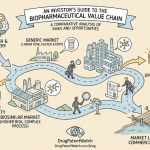
1. Why Extrapolation Is the Most Valuable Two Words in Biosimilar Development
Biologics occupy a peculiar place in the pharmaceutical economy. They are among the most clinically transformative medicines ever made, and they are priced accordingly. Adalimumab (AbbVie’s Humira), before biosimilar entry began reshaping its U.S. market dynamics, had list prices exceeding $84,000 per patient annually. Rituximab, tocilizumab, ustekinumab: the pattern holds across therapeutic categories. The R&D investment required to originate these molecules is real. So is the burden they place on payers and the patients who cannot afford them.
The biosimilar pathway exists to break that equation. But the pathway only delivers its promised economics if a biosimilar developer can access the full commercial footprint of the reference product. Adalimumab is approved for eleven indications in the U.S., spanning rheumatoid arthritis, plaque psoriasis, Crohn’s disease, hidradenitis suppurativa, and juvenile idiopathic arthritis, among others. If each indication required a fully-powered Phase III trial, development costs would be $500 million or more per program. The math no longer works. Biosimilar development ceases to be commercially viable. Drug companies stop entering. Prices stay high.
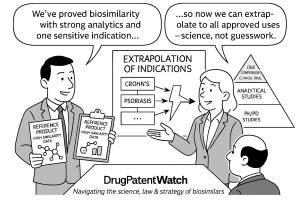
Extrapolation of indications solves this problem. It is the regulatory mechanism by which a biosimilar approved on the basis of data from one or two carefully chosen conditions gets those findings extended across the full label. Done correctly, a developer conducts a single confirmatory trial in the most scientifically sensitive indication and then argues, through a data-rich scientific justification package, that the established biosimilarity applies to every other approved use of the reference product.
That is the value proposition in regulatory terms. In financial terms, extrapolation can be the difference between a biosimilar program worth launching and one worth abandoning. Analysts pricing biosimilar assets in early-stage company valuations need to treat extrapolation status, and the probability of achieving it, as a first-order variable. IP teams at originator companies have understood this for years, which is why the patent thickets protecting individual indications have grown so dense.
This article covers the full technical and commercial architecture of biosimilar extrapolation: the science regulators require, the legal obstacles developers face, the IP valuation mechanics at stake in each major molecule, and the strategic decisions that determine whether a biosimilar program captures its addressable market or gets stranded at a partial label.
Key Takeaways: Section 1
Extrapolation is the economic engine of the biosimilar market. Without it, the per-indication trial cost burden would make most biosimilar programs uneconomical, removing competitive pressure from originator pricing. IP teams should treat extrapolation probability as a direct input to asset valuation, not a post-approval footnote.
2. What a Biosimilar Actually Is: The Technical Foundation {#what-is-a-biosimilar}
2.1 The Manufacturing Gap Between Small Molecules and Biologics
A generic drug and its reference product are chemically identical. Aspirin is aspirin. Metformin is metformin. Regulators require bioequivalence, not a separate demonstration of clinical efficacy, because the molecule and its behavior in the body are definitionally the same.
Biologics do not work that way. A monoclonal antibody like trastuzumab is not a discrete chemical structure defined by a single empirical formula. It is a glycoprotein with a molecular weight of roughly 148 kDa, compared to about 180 Da for aspirin. Its three-dimensional shape, its disulfide bond architecture, and the sugar chains attached to specific sites on its Fc region all influence how it binds its target, how long it persists in circulation, and how the immune system responds to it. That three-dimensional structure emerges from a living manufacturing system: typically a Chinese hamster ovary (CHO) cell line grown in a highly controlled bioreactor environment.
The CHO cell line is itself proprietary. The culture media formulation, the fed-batch or perfusion strategy, the harvest conditions, the downstream purification train of chromatography and filtration steps: all of these process parameters influence the molecular attributes of the finished protein in ways that cannot be fully replicated by an independent manufacturer who does not have access to the originator’s cell bank. Post-translational modifications, particularly the N-glycosylation pattern at the Asn-297 residue of the Fc region, can shift meaningfully across manufacturing conditions. These glycoforms affect Fc gamma receptor binding, ADCC activity, complement activation, and serum half-life.
The legal and regulatory consequence is direct: it is scientifically impossible to produce an identical copy of a reference biologic. A biosimilar is, by definition, similar rather than identical. The question regulators ask is not whether the biosimilar is identical, but whether any residual differences between the two molecules are clinically meaningful. The “no clinically meaningful differences” standard, embedded in the U.S. Biologics Price Competition and Innovation Act (BPCIA) and mirrored in EMA guidance, defines the regulatory bar.
2.2 The Totality of Evidence Pyramid
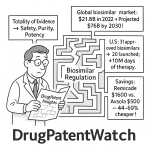
Regulatory agencies operationalize the ‘no clinically meaningful differences’ standard through what they call the ‘totality of the evidence.’ This is a hierarchical, stepwise evidence package where each layer of data reduces residual uncertainty about the similarity of the two products.
The base of the pyramid is the most sensitive and informative: physicochemical and functional analytical characterization. Above that sits non-clinical data, including in vitro mechanistic assays and, where still required, in vivo toxicology. The next level is clinical pharmacology, primarily pharmacokinetic (PK) and pharmacodynamic (PD) equivalence studies in humans. At the apex is the confirmatory clinical efficacy and safety trial, which by the time it is run, should be confirming biosimilarity that the analytical and PK data have already established with high confidence.
The FDA’s guidance document ‘Scientific Considerations in Demonstrating Biosimilarity to a Reference Product’ (2015) introduced a concept that has become the conceptual framework for the entire field: the biosimilar data package is most valuable when the analytical layer is so thorough that it ‘fingerprints’ both molecules at a resolution fine enough to predict clinical behavior. A biosimilar submission that arrives with a thin analytical package but a large clinical trial is, from a regulatory science standpoint, less compelling than one with an exhaustive analytical characterization that makes the clinical trial largely confirmatory.
This matters for extrapolation directly. A developer who has demonstrated, through dozens of orthogonal analytical methods, that the biosimilar’s structural and functional attributes fall within the natural variability range of the reference product has already made the strongest possible case that the molecule will behave the same way regardless of the disease context it is deployed in. Extrapolation, at that point, is not a leap; it is a logical extension of what the molecular data already show.
Key Takeaways: Section 2
A biosimilar is not a generic. Its approval pathway requires a layered, totality-of-evidence approach where analytical characterization is the highest-value layer. The investment a developer makes in analytical infrastructure directly determines how defensible the extrapolation argument will be.
3. The Mechanics of Extrapolation: Totality of Evidence in Full Technical Detail
3.1 The Core Regulatory Principle
Extrapolation is the approval of a biosimilar for one or more indications held by the reference product, without direct clinical studies in those specific indications. The BPCIA authorizes the FDA to grant such approval when ‘sufficient scientific justification’ supports it (42 U.S.C. 262(k)(3)). The EMA’s CHMP Guideline on Similar Biological Medicinal Products uses comparable language: extrapolation ‘may be possible’ if ‘adequately justified.’ Both frameworks share the same structural logic: biosimilarity demonstrated in one clinical context can extend to other contexts when the mechanism of action, pharmacokinetics, safety profile, and immunogenicity risk are scientifically coherent across those contexts.
Regulators treat this as a case-by-case determination. There is no automatic extrapolation. The biosimilar sponsor must build an affirmative case, addressing each element of the justification framework in sufficient depth to eliminate residual uncertainty.
3.2 Analytical and Physicochemical Characterization: The Molecular Fingerprint
State-of-the-art analytical science now permits a resolution of structural comparison that would have been unimaginable a decade ago. A mature biosimilar analytical package covers the following categories systematically.
Primary structure analysis uses peptide mapping coupled with high-resolution liquid chromatography-mass spectrometry (LC-MS/MS) to confirm that the amino acid sequence of the biosimilar is identical to the reference product. Any unexpected sequence variants, including amino acid substitutions, deamidation at asparagine residues, or oxidation at methionine residues, must be identified and quantified.
Higher-order structure (HOS) assessment uses a battery of orthogonal techniques: circular dichroism (CD) spectroscopy to probe secondary and tertiary folding, Fourier transform infrared spectroscopy (FTIR) to compare secondary structure elements, differential scanning calorimetry (DSC) to assess thermal stability as a proxy for conformational integrity, and hydrogen-deuterium exchange mass spectrometry (HDX-MS) to map solvent accessibility across the protein surface. Any HOS difference flags a potential functional concern.
Glycan profiling is among the most technically demanding and commercially important components of the package. For IgG1 monoclonal antibodies, the major N-glycosylation site at Asn-297 in the Fc CH2 domain carries a complex biantennary glycan whose composition, particularly the presence or absence of core fucose, galactose, sialic acid, and bisecting GlcNAc, directly governs ADCC potency through differential affinity for Fc gamma receptor IIIa. A biosimilar with a higher proportion of afucosylated glycoforms will have measurably higher ADCC activity. This is not automatically disqualifying, but it must be fully characterized, its functional consequences must be assessed, and the developer must argue that any observed difference does not constitute a clinically meaningful distinction.
Biological activity assays cover target binding (measured by surface plasmon resonance, SPR, or biolayer interferometry, BLI, for equilibrium and kinetic binding constants), receptor-ligand blocking activity in cell-based assays, Fc-mediated effector functions (ADCC, ADCP, CDC where relevant), and FcRn binding for half-life prediction. For each function relevant to the MoA across any approved indication, the developer must show equivalence. If an indication involves a mechanism not covered by the assays run in the analytical package, that gap will surface during regulatory review and likely require additional data.
Purity and impurity profiling rounds out the analytical section. This covers aggregation (measured by size-exclusion chromatography coupled with multi-angle light scattering, SEC-MALS), charge variants (by capillary isoelectric focusing or imaged capillary isoelectric focusing), fragmentation, and process-related impurities including host cell proteins (HCPs) and residual DNA.
The breadth and depth of this analytical package directly supports extrapolation. A biosimilar that has been characterized to this resolution, and whose attributes have been shown to fall within the natural lot-to-lot variability of the reference product across multiple batches and geographies, has essentially proven at the molecular level that the two products are functionally interchangeable. The clinical confirmation study then becomes what it should be: a high-powered verification of what the analytics already predict, not the primary evidence of biosimilarity.
3.3 Non-Clinical Data: Evolving Expectations
Both the FDA and EMA have progressively reduced their reliance on animal toxicology data in biosimilar packages where analytical and functional characterization is robust. The ICH S6(R1) guideline on preclinical safety evaluation of biotechnology-derived pharmaceuticals, issued in 2011, codified the risk-based approach: non-clinical studies for biosimilars should be designed to address specific residual uncertainties from the analytical data, not run as a standard battery. Regulators will still request in vivo repeat-dose toxicology in a pharmacologically relevant species if analytical data shows an unexplained difference in a biologically active attribute, or if the molecular complexity of the molecule limits the predictive value of in vitro assays.
For most well-characterized monoclonal antibodies targeting well-validated receptors (TNF-alpha, VEGF, CD20, HER2, IL-12/23), extensive non-clinical in vivo programs are rarely required in the current regulatory environment, provided the in vitro functional data is comprehensive and concordant.
3.4 Clinical Pharmacology: PK and PD Equivalence
A pharmacokinetic equivalence study in healthy volunteers is the standard first human data point for biosimilar development. The study compares the concentration-time profile of the biosimilar and reference product following a single dose, typically by subcutaneous or intravenous administration depending on the reference product’s route. The pre-specified equivalence margins for the primary PK parameters, AUC(0-inf) and Cmax, are 80-125% for the 90% confidence interval on the geometric mean ratio.
These margins are not arbitrary. They derive from the bioequivalence standards used for small-molecule drugs, adapted for the higher inherent variability of biological products. Meeting these margins in a well-designed study in healthy volunteers provides a strong basis for arguing that the two molecules will achieve equivalent drug exposure in patients across any indication, absent specific disease-related factors that would alter clearance or distribution.
Population pharmacokinetic (PopPK) modeling extends the value of this study. By fitting individual PK data to a structural model that includes covariates (body weight, albumin, baseline disease severity, concomitant immunosuppression), the developer can simulate drug exposure in patient populations that were not directly studied, including those corresponding to extrapolated indications. A PopPK analysis demonstrating that exposure in Crohn’s disease patients is predicted to be equivalent to that in RA patients, given the same dose and regimen, strengthens the extrapolation argument considerably.
Where a clinically validated pharmacodynamic biomarker exists, a combined PK/PD study adds a second tier of human equivalence data. The G-CSF receptor pathway provides the clearest example: neutrophil count over time is a directly measurable, biologically interpretable endpoint that links drug exposure to pharmacological effect. For filgrastim biosimilars, PK/PD equivalence in healthy subjects is sufficient to support the clinical package because the MoA operates through the same receptor-ligand interaction regardless of the disease context.
3.5 Clinical Immunogenicity Assessment: The Anti-Drug Antibody Framework
Immunogenicity is the component of the biosimilar package that attracts the most clinical stakeholder skepticism and receives the most regulatory scrutiny in the context of extrapolation. The concern is legitimate: an immune response to a biologic can range from clinically silent (non-neutralizing, transient antibodies with no effect on PK or efficacy) to clinically consequential (neutralizing antibodies that abrogate drug effect and accelerate clearance) to rare but serious (cross-reactive antibodies that neutralize an endogenous protein, as occurred with pure red cell aplasia in some epoetin alfa products).
The standard immunogenicity assessment protocol follows a three-tier hierarchy: a highly sensitive screening assay to detect any anti-drug antibody (ADA) response, a confirmatory assay to eliminate false positives, and a characterization assay to determine whether confirmed ADAs are neutralizing. ADA incidence and titer are then compared between the biosimilar and reference product arms of the confirmatory clinical trial.
For extrapolation, the question is whether the immunogenicity profile observed in the studied indication predicts the immunogenicity profile in the extrapolated indications. Developers must address several variables in their justification. Disease state affects immune competence: patients with active rheumatoid arthritis are on immunosuppressive background therapy (typically methotrexate) that reduces ADA formation rates. Patients with plaque psoriasis typically are not. Patients with inflammatory bowel disease have a mucosal immune system in a pathologically activated state. The justification must explain why immunogenicity data from one of these populations can be considered representative of the risk in the others.
The standard response draws on reference product clinical trial data, which provides cross-indication immunogenicity comparisons for the originator molecule, and on the mechanistic argument that if the two molecules are analytically highly similar, the immunogenic risk should be proportionally similar across patient types. Post-marketing pharmacovigilance commitments supplement this argument by providing a regulatory mechanism to detect any unexpected immunogenicity signal in the extrapolated populations after launch.
3.6 Constructing the Scientific Justification
The scientific justification for extrapolation is a structured regulatory document, not a simple narrative. Regulators expect it to address four elements in sequence.
First, the MoA analysis: what is the mechanism of action of the reference product in each proposed extrapolated indication, is it the same mechanism active in the studied indication, and does the biosimilar data demonstrate equivalent performance in each mechanistic component. If the MoA involves both receptor blockade and Fc-mediated effector function, both must be covered. If the reference product has a different receptor target in one indication than in another (rare but possible for products with pleiotropic biology), that difference invalidates extrapolation to the divergent indication.
Second, the PK and biodistribution analysis: are there patient-population-specific factors in the extrapolated indications that would alter drug exposure in a clinically meaningful way, and is the evidence sufficient to conclude that exposure will be equivalent to that in the studied population at the approved dose. Target-mediated drug disposition (TMDD) is particularly relevant here. For products where antigen-mediated clearance is quantitatively significant, differences in target expression across disease states (e.g., soluble versus membrane-bound TNF concentrations in RA versus IBD) must be modeled.
Third, the immunogenicity risk assessment across all extrapolated indications. As discussed above, this requires cross-indication analysis of reference product immunogenicity data and a mechanistic argument for why the biosimilar’s immunogenic risk is not expected to differ meaningfully.
Fourth, the safety and efficacy profile comparison: are there indication-specific safety concerns for the reference product that require direct clinical evidence to resolve for the biosimilar, and is the known efficacy profile consistent with the extrapolation argument. Known indication-specific toxicities, such as the higher infection risk in patients with IBD on biologics versus patients with RA, must be acknowledged and addressed, typically by reference to the originator’s post-marketing safety database.
Key Takeaways: Section 3
The analytical characterization layer is the highest-value investment in the extrapolation argument. A biosimilar developer who under-invests in analytical science and attempts to compensate with a larger clinical program has the regulatory strategy backwards. The extrapolation justification is a structured four-part argument covering MoA, PK/biodistribution, immunogenicity, and safety, each of which must be addressed with evidence, not assertion.
4. Global Regulatory Frameworks: A Jurisdiction-by-Jurisdiction Playbook
4.1 United States: FDA and the BPCIA Framework
The BPCIA, enacted as part of the Affordable Care Act in 2010, created the 351(k) pathway under the Public Health Service Act for biosimilar and interchangeable biosimilar applications. The FDA did not approve its first biosimilar until March 2015, leaving the agency nearly a decade behind the EMA. That late start came with an advantage: the FDA could build its framework with the benefit of observing more than a decade of European experience.
The FDA’s core biosimilar guidance suite now spans more than a dozen documents, but the foundational text remains ‘Scientific Considerations in Demonstrating Biosimilarity to a Reference Product’ (2015, updated 2019). Its key principle for extrapolation: the developer must provide ‘sufficient scientific justification for extrapolating clinical data to support a determination of biosimilarity for each condition of use for which licensure is sought.’ The agency evaluates extrapolation requests case-by-case, and the standard is the same totality-of-evidence framework applied to biosimilarity itself.
The FDA has built out its regulatory touchpoint infrastructure for biosimilar developers through four meeting types. The Biosimilar Initial Advisory (BIA) meeting is an early-stage consultation where a developer can discuss a proposed development program before committing to it. The Biosimilar Biological Product Development (BPD) Type 1, 2, 3, and 4 meetings follow the formal IND/BLA submission timeline, covering critical issues (Type 2), questions with responses submitted in advance (Type 3), and administrative logistics (Type 4). Using this infrastructure to get prospective regulatory input on the extrapolation strategy is not optional; it is the mechanism by which developers de-risk programs worth hundreds of millions of dollars.
One regulatory distinction unique to the U.S. is the interchangeability designation. A biosimilar that achieves interchangeability has met a higher evidentiary standard: it must be shown that the product can be expected to produce the same clinical result as the reference product in any given patient, and for products administered more than once, the risk of alternating between the biosimilar and the reference product must not be greater than the risk of using the reference product without alternation. The first interchangeable biosimilar in the U.S. was Civica/Viatris’ Semglee (insulin glargine-yfgn), designated interchangeable in July 2021. For multi-indication reference products, interchangeability is assessed across all labeled indications.
4.2 European Union: EMA and the Pioneer Framework
The EMA approved Omnitrope (somatropin, Sandoz) in April 2006, making the EU the first major market with an operational biosimilar regulatory framework. That two-decade head start means the EMA has reviewed and approved more than 80 biosimilars, accumulated the largest regulatory dataset on extrapolation outcomes, and has had time to refine its guidelines through multiple iterations.
The primary governance document is the CHMP Guideline on Similar Biological Medicinal Products Containing Biotechnology-Derived Proteins as Active Substance: Non-Clinical and Clinical Issues (EMA/CHMP/BMWP/42832/2005 Rev1, 2014). The overarching philosophical position of the EMA on extrapolation is straightforward: if the comprehensive similarity exercise has been completed with rigor and the scientific justification is persuasive, extrapolation is the expected outcome. It is not a bonus; it is the logical endpoint of a well-executed program.
The EMA places particular weight on the analytical characterization layer. Its technical guideline on bioanalytical method validation for immunochemistry assays, combined with the ICH Q6B guideline on specifications for biotechnological products, defines the analytical standard. EMA reviewers have, in published assessment reports, been explicit about cases where analytical similarity was so high that it reduced the evidentiary weight required from the clinical trial. This risk-based approach, where clinical requirements flex downward as analytical confidence rises, creates a direct incentive for developers to maximize investment in analytical science.
The EMA’s Scientific Advice procedure provides a formal mechanism for biosimilar developers to receive written questions-and-answers guidance from the CHMP before submitting a Marketing Authorisation Application (MAA). This process is heavily used by experienced biosimilar developers and materially affects the design of development programs. For complex molecules or novel extrapolation scenarios, engaging scientific advice two to three years before the anticipated MAA submission is standard practice.
A practical distinction between the EMA and FDA frameworks is the EMA’s European Public Assessment Report (EPAR), which is publicly available upon approval. EPARs contain the detailed scientific rationale behind the agency’s extrapolation decisions, including the specific weaknesses identified in the justification package and how they were addressed. Reading EPARs for approved biosimilars in the same class as a molecule under development is among the highest-value competitive intelligence activities available to a biosimilar development team.
4.3 Health Canada: Independent Review with EMA-Aligned Principles
Health Canada’s regulatory pathway for biosimilars, governed by the ‘Information and Submission Requirements for Biosimilar Biologic Drugs’ guidance document (2016, revised 2021), is conceptually aligned with the EMA framework. Health Canada accepts the totality-of-evidence approach and grants extrapolation based on the same scientific justification framework.
The practical distinction is that Health Canada conducts its own independent technical review. A dossier that received full extrapolation approval from the EMA cannot be assumed to receive equivalent treatment from Health Canada without additional analysis. The agency has, in specific cases, applied more conservative extrapolation standards, particularly when residual immunogenicity uncertainties were present or when the disease-specific MoA argument was not fully developed for Canadian populations. Developers with global regulatory strategies must treat Health Canada as a distinct decision-maker requiring a tailored justification, not a rubber stamp on the EMA outcome.
Health Canada also has a formal pre-submission meeting process. Given the Canadian market size relative to the EU or U.S., most developers incorporate Health Canada reviews into a global regulatory plan rather than treating Canada as a standalone program. The regulatory filing timeline is typically 12-18 months after the EMA submission, allowing developers to incorporate CHMP feedback into the Health Canada package.
4.4 Japan’s PMDA: Bridging Data and Ethnic Pharmacology
Japan’s Pharmaceuticals and Medical Devices Agency (PMDA) has a well-defined biosimilar guideline harmonized with EMA principles. Extrapolation is accepted within the PMDA framework and has been granted for multiple products.
The PMDA-specific consideration is the possibility of ethnic differences in PK and immunogenicity. Japanese regulatory guidance retains the option to require bridging PK studies in Japanese subjects if there is reason to believe that ethnic pharmacological differences could produce clinically meaningful differences in drug exposure or immune response. This reflects a longstanding principle in Japanese drug regulation that has applied to small molecules as well, though its application in biosimilars has been case-dependent rather than automatic.
In practice, many biosimilar developers use PK bridging data generated in Japanese subjects within the main clinical pharmacology study, rather than running a separate bridging program, by including stratified Japanese subject cohorts in the primary PK/PD study. The PMDA has accepted this approach where the PK equivalence is demonstrated in the Japanese subgroup with appropriate statistical confidence.
The PMDA has also developed its own scientific consultation system, which operates analogously to FDA’s BPD meetings and EMA’s Scientific Advice procedure. For developers with significant Japanese market ambitions, PMDA consultation should begin during the Phase I design phase to align on Japanese-specific data requirements before the study is locked.
4.5 Australia’s TGA: Practical Alignment with European Standards
The Therapeutic Goods Administration (TGA) has explicitly stated in its biosimilar guidance that data packages prepared for EMA or FDA submission are generally considered applicable for TGA review. This near-mutual recognition policy makes Australia a relatively low-incremental-cost market for developers who have already prepared comprehensive global dossiers.
The TGA accepts extrapolation on the same scientific basis as the EMA and FDA. Its guidance, ‘Evaluation of Biosimilars’ (updated 2020), mirrors the totality-of-evidence framework and references EMA guidelines directly. Australian regulatory timelines run approximately 12 months for a standard biosimilar review, and the agency has been responsive to using EMA assessment reports as reference documents during its own review, reducing duplication.
4.6 WHO Prequalification: Global Access and the Emerging Market Standard
The WHO Prequalification Program for biotherapeutic products, established to extend quality-assured biologic access to low- and middle-income countries (LMICs), has become a critical pathway for biosimilars of priority oncology medicines. WHO’s ‘Guidelines on Evaluation of Similar Biotherapeutic Products (SBPs)’ (2009, updated 2022) defines the global minimum standard and explicitly supports extrapolation.
WHO prequalification has been granted for rituximab and trastuzumab biosimilars from multiple manufacturers, enabling national regulatory authorities (NRAs) in LMICs to reference the WHO assessment in lieu of conducting independent technical reviews. This mechanism directly addresses the regulatory capacity gap in sub-Saharan Africa, South and Southeast Asia, and parts of Latin America, where NRAs often lack the scientific resources to evaluate a complete biosimilar dossier independently.
For biosimilar developers with ambitions beyond high-income markets, WHO prequalification of key oncology biosimilars is a commercially important strategic milestone, particularly as international procurement organizations like UNICEF and the Medicines Patent Pool condition bulk purchasing on WHO prequalification status.
For portfolio managers evaluating biosimilar-focused companies, the number of jurisdictions in which a biosimilar holds marketing authorization with full extrapolation is a direct proxy for total addressable revenue. A biosimilar with U.S. FDA approval across all reference product indications, EMA approval, and Health Canada approval covers roughly 65% of the global biologic market by value. Add PMDA and TGA coverage and the figure approaches 75%. Companies with programs engineered for global regulatory success, including early-stage PMDA and Health Canada engagement, command a valuation premium over those optimizing for a single market.
Key Takeaways: Section 4
The FDA and EMA share the same scientific framework for extrapolation but differ in their procedural mechanisms and stylistic emphasis. Health Canada, PMDA, and TGA each require independent evaluation with specific local considerations. WHO prequalification is the mechanism for LMIC access and a distinct commercial lever. Regulatory jurisdiction coverage breadth maps directly to addressable market size.
5. Drug-Specific Case Studies and Their IP Valuations
5.1 Filgrastim: Zarxio, the Template
The Reference Product and Indication Landscape
Amgen’s Neupogen (filgrastim) is a recombinant human granulocyte colony-stimulating factor (G-CSF) indicated for five conditions: chemotherapy-induced neutropenia, bone marrow transplantation support, peripheral blood progenitor cell mobilization, severe chronic neutropenia, and HIV drug-induced neutropenia. Its mechanism, stimulation of neutrophil production via the G-CSF receptor (G-CSFR / CD114), is identical across all five indications. There is no indication-specific MoA complexity.
Sandoz’s Zarxio: Extrapolation Execution
Sandoz’s Zarxio (filgrastim-sndz) received FDA approval in March 2015, the first U.S. biosimilar approval under the BPCIA pathway. Sandoz conducted its pivotal confirmatory clinical trial in breast cancer patients receiving myelosuppressive chemotherapy, a population considered highly sensitive because the absolute neutrophil count (ANC) nadir is measurable, objective, and clinically meaningful. The primary endpoint, duration of severe neutropenia in Cycle 1, demonstrated equivalence to Neupogen.
The FDA granted extrapolation to all five Neupogen indications. The scientific justification was clean: a single well-characterized receptor mediates all five indications, PK equivalence was established in healthy volunteers with ANC as a pharmacodynamic readout, and the analytical package demonstrated a high degree of structural and functional similarity to the reference product. The MoA argument required no complexity; filgrastim does exactly one thing (activate G-CSFR to stimulate neutrophil production) in all five clinical contexts.
IP Valuation: Neupogen/Zarxio
Amgen held a relatively lean patent estate on filgrastim by the time Zarxio launched. The composition-of-matter patent on filgrastim itself had expired. Method-of-use protections were limited and did not create the multi-indication patent thicket that became standard practice for later-generation biologics. Sandoz launched Zarxio at a roughly 15% discount to Neupogen’s list price at launch, subsequently deepening discounts as additional filgrastim biosimilars entered the market (Pfizer’s Nivestym, Apotex’s Grastofil via the Canadian market, and others).
By 2023, the combined U.S. filgrastim biosimilar market had displaced Neupogen to below 5% of total G-CSF prescriptions by volume. The IP architecture of Neupogen, specifically its lack of robust method-of-use patent coverage across its five indications, allowed full biosimilar competition to proceed across the entire label without skinny-label constraints. This case is the template for what biosimilar competition looks like when extrapolation is scientifically clean and IP obstacles are minimal.
For investors, the Zarxio case established that first-mover biosimilar approvals do not maintain price premium for long. The 15% launch discount collapsed to 40-60% within three years of multi-source competition. Early-entry pricing assumptions in biosimilar financial models should account for the historical speed of competitive erosion in simple G-CSF-class molecules.
5.2 Infliximab: The Extrapolation Stress Test
The Reference Product and Indication Landscape
Janssen’s Remicade (infliximab) is a chimeric (human/murine) IgG1 monoclonal antibody targeting tumor necrosis factor-alpha (TNF-alpha). It carries FDA approval for seven indications: rheumatoid arthritis (in combination with methotrexate), Crohn’s disease, ankylosing spondylitis, psoriatic arthritis, plaque psoriasis, pediatric Crohn’s disease, and ulcerative colitis. TNF-alpha blockade is the shared mechanism across all seven.
Infliximab’s global revenue peaked at approximately $9.2 billion in 2017 across Janssen and MSD geographies. Even after biosimilar entry began in the EU (2013) and the U.S. (2016), the molecule remains one of the highest-revenue biologics in the market, with total estimated 2024 global revenues still exceeding $4 billion including both originator and biosimilar versions.
Celltrion’s Inflectra: Navigating the IBD Extrapolation Debate
Celltrion conducted its confirmatory clinical trial for CT-P13 (infliximab-dyyb, branded Inflectra in the U.S. and Remsima in Europe) in patients with rheumatoid arthritis and ankylosing spondylitis. The pivotal PLANETRA and PLANETAS studies demonstrated clinical equivalence to Remicade in these indications.
The EMA approved CT-P13 in September 2013 with full extrapolation to all Remicade indications, including Crohn’s disease and ulcerative colitis. The CHMP’s extrapolation rationale centered on the mechanistic argument that TNF-alpha is the dominant pathological driver across all seven approved conditions, and that CT-P13’s analytical and functional characterization, including equivalent TNF-alpha neutralization activity and comparable Fc-mediated effector functions, established the same mechanism of action at the molecular level.
The FDA’s Advisory Committee reviewed the U.S. BLA for Inflectra in February 2016. Gastroenterologists testified in opposition, arguing that IBD involves mucosal immune mechanisms not fully captured by the RA/AS trial design, and that immunogenicity behavior in IBD patients might differ from RA patients. The Advisory Committee voted 21-3 in favor of extrapolation to all Remicade indications. The FDA approved Inflectra in April 2016 with full extrapolation.
The post-approval evidence has since validated the regulatory decision. Multiple real-world evidence studies and switching studies, including the NOR-SWITCH randomized controlled trial (n=481, Norwegian 2017), demonstrated no difference in disease worsening or immunogenicity outcomes between patients maintained on Remicade and those switched to CT-P13 across Crohn’s disease, ulcerative colitis, and the other indications. The IBD extrapolation, which was the most contested regulatory decision in U.S. biosimilar history at the time, proved scientifically correct.
IP Valuation: Remicade/Infliximab Biosimilars
Janssen’s Remicade IP estate was among the most aggressively maintained in the biologic space. At U.S. biosimilar entry in 2016, the Orange Book listed more than 50 patents covering infliximab, including composition-of-matter patents (expired by then), manufacturing process patents, formulation patents, and critically, method-of-use patents covering specific indications. J&J ultimately entered into licensing agreements with Pfizer (Inflectra/Ixifi) and Merck (Renflexis) that allowed U.S. market entry at negotiated royalty rates, rather than litigating each patent to conclusion.
These license agreements included royalty terms that kept the infliximab biosimilar net price reductions modest by generic standards: initial U.S. list price discounts were approximately 35%, substantially lower than the 70-80% discounts seen in the EU where biosimilar market penetration reached 70%+ of infliximab volume within four years of first entry. The U.S. discounting trajectory has been slower, in part because J&J aggressively defended Remicade’s market position through rebate contracts with pharmacy benefit managers (PBMs) and hospital group purchasing organizations (GPOs), as documented in a 2023 U.S. Senate Finance Committee investigation.
For IP teams at originator companies, the infliximab case demonstrates the value of broad method-of-use patent coverage as a market-extension strategy. The method-of-use patent portfolio on infliximab extended effective commercial exclusivity by years beyond the primary molecule patent, and even after biosimilar entry, the IP-leveraged rebate contracting strategy preserved significant revenue share. Conversely, for biosimilar developers and their investors, the infliximab case is a warning that full regulatory extrapolation and full commercial extrapolation are not the same thing.
5.3 Adalimumab: The Most Valuable Extrapolation Battle in Pharma History
The Reference Product and Indication Landscape
AbbVie’s Humira (adalimumab) is the most commercially successful drug in pharmaceutical history, with cumulative revenues exceeding $200 billion. It is a fully human IgG1 monoclonal antibody targeting TNF-alpha, with eleven FDA-approved indications spanning rheumatoid arthritis, plaque psoriasis, Crohn’s disease, ulcerative colitis, ankylosing spondylitis, psoriatic arthritis, juvenile idiopathic arthritis, hidradenitis suppurativa, non-infectious intermediate uveitis, and pediatric Crohn’s disease.
The breadth of the Humira indication label is itself a product of deliberate lifecycle management strategy. Each new indication added revenue runway and, critically, established new method-of-use patent claims that AbbVie could use to block biosimilar competition in those specific indications.
The Patent Thicket: AbbVie’s Defensive Architecture
AbbVie’s patent portfolio for adalimumab is the definitive example of a pharmaceutical patent thicket. By 2023, the company held or had held more than 250 U.S. patents related to adalimumab, covering the molecule itself, its manufacturing process, its citrate-free and acetate-buffered formulations, its prefilled syringe device, its auto-injector device, its dosing regimens, and its use in each individual indication. The primary composition-of-matter patent on adalimumab expired in December 2016. AbbVie extended effective U.S. market exclusivity until January 31, 2023, by negotiating settlement agreements with biosimilar developers that deferred U.S. launch dates in exchange for licenses to the broader patent estate.
The economic value of this delay, from the earliest possible U.S. biosimilar entry (which could have occurred as early as 2017 based on composition-of-matter expiry) to the actual first launches in January 2023, was estimated by IQVIA at approximately $6 billion in additional annual revenues for AbbVie in the U.S. alone. This is the quantified value of a fully executed method-of-use patent and settlement strategy applied to a multi-indication biologic.
The Adalimumab Biosimilar Market: Extrapolation in a Crowded Field
As of 2025, nine adalimumab biosimilars have received FDA approval in the U.S. All nine achieved full extrapolation across all eleven Humira indications. The scientific justification across all submissions converged on the same MoA argument: TNF-alpha neutralization is the central mechanism of action in every indication, the analytical characterization demonstrated high molecular similarity to Humira, and PK equivalence was established in healthy volunteer studies.
The competitive dynamics in the U.S. adalimumab biosimilar market are illustrative of the commercial challenges that can persist even when full extrapolation is achieved. AbbVie’s rebate-based contracting strategy, built around the citrate-free low-concentration formulation introduced with Hyrimoz CF and competing biosimilars’ own pricing strategies, has produced a market where net price reductions are concentrated among products that achieve preferred formulary status with major PBMs. Gross-to-net discounts on Humira have expanded to 70%+ by list price, while net prices have fallen roughly 50% from peak. Full extrapolation across eleven indications was a necessary condition for market participation; it was not sufficient to guarantee commercial success without a parallel commercial strategy.
IP Valuation: AbbVie / Humira
AbbVie’s enterprise value is structurally dependent on post-Humira revenue diversification, which it has pursued through the acquisitions of Allergan (2020, $63 billion), Pharmacyclics (2015, $21 billion), and its internal development of immunology successors risankizumab (Skyrizi) and upadacitinib (Rinvoq). The IP value of the Humira estate itself has largely transferred from the molecule patents to the settlement agreements and the accumulated know-how embodied in the citrate-free, high-concentration device platform.
For biosimilar developers, the IP valuation lesson from adalimumab is that method-of-use patent coverage across multiple indications creates compounding settlement leverage. Each additional indication on the reference product label is a potential patent claim that delays and increases the cost of biosimilar entry. Developers targeting molecules with narrow indication labels face a structurally lower IP barrier to full extrapolation. Developers targeting broad-label molecules like adalimumab face a settlement negotiation as much as a regulatory process.
5.4 Trastuzumab: Oncology Extrapolation and the HER2 Precision Medicine Complication
The Reference Product and Indication Landscape
Roche/Genentech’s Herceptin (trastuzumab) targets HER2 (human epidermal growth factor receptor 2) and carries FDA approval for three indications: HER2-overexpressing breast cancer (adjuvant and metastatic), HER2-overexpressing metastatic gastric or gastroesophageal junction adenocarcinoma, and HER2-overexpressing early breast cancer. Its mechanism involves both direct interference with HER2 signaling and Fc-mediated ADCC.
The ADCC component of trastuzumab’s mechanism has been the central complication for biosimilar extrapolation. Because ADCC activity is sensitive to Fc glycosylation, particularly core fucosylation levels, and because different manufacturing platforms produce different glycoform distributions, regulators have required biosimilar developers to characterize Fc-effector function rigorously and to demonstrate that any difference in ADCC activity relative to Herceptin does not translate into a clinically meaningful difference in the oncology setting.
Extrapolation to Gastric Cancer: A Distinct MoA Question
The gastric/GEJ indication introduced a specific complexity: the role of ADCC in HER2-positive gastric cancer treatment has been less clearly characterized than in breast cancer. Some published analyses have suggested that Fc-gamma receptor polymorphisms, which affect the strength of the ADCC response, are associated with differential clinical outcomes in gastric cancer patients. If ADCC is a more important component of the MoA in gastric cancer than in breast cancer, then a biosimilar with modestly different ADCC potency could have differential efficacy in the two settings.
Regulatory agencies have generally accepted extrapolation to the gastric indication for trastuzumab biosimilars where the ADCC characterization demonstrated functional similarity within the reference product’s natural batch variability. The FDA’s position, consistent across its trastuzumab biosimilar approvals (Herzuma, Ogivri, Trazimera, Kanjinti, Ontruzant), has been that the analytical data on Fc function is sufficiently robust to support the MoA argument across indications.
IP Valuation: Roche / Trastuzumab
Roche’s trastuzumab patent estate was substantially thinner than AbbVie’s adalimumab portfolio. The primary composition-of-matter patent expired in the U.S. in 2019, and U.S. biosimilar entry was cleared for December 2019. Unlike the adalimumab situation, Roche did not achieve a multi-year settlement-based delay across all biosimilar developers. Multiple trastuzumab biosimilars launched near-simultaneously in the U.S. and have achieved significant market penetration, particularly in the hospital oncology setting where GPO contracting favors biosimilar adoption.
The commercial lesson: a lean method-of-use patent estate allows faster, more competitive biosimilar entry, collapses originator pricing faster, and gives biosimilar developers a cleaner path to full extrapolation without the settlement overhang that characterized adalimumab.
Key Takeaways: Section 5
Filgrastim is the template for clean extrapolation with minimal IP friction. Infliximab established that complex autoimmune indications including IBD are scientifically appropriate for extrapolation, but that originator rebate contracting can limit commercial value even after full regulatory extrapolation is achieved. Adalimumab demonstrated the extreme commercial leverage of method-of-use patent thickets and settlement agreements. Trastuzumab introduced ADCC-mediated MoA complexity into the extrapolation analysis, which has become the standard reference for next-generation antibody biosimilar programs.
Investment Strategy Note: IP Estate Valuation as Extrapolation Delay Predictor
Analysts pricing biosimilar development programs should model IP estate depth as a proxy for time-to-commercial-extrapolation, not merely time-to-approval. A biosimilar that receives full FDA extrapolation across all indications but is commercially constrained to a subset of those indications by originator rebate contracts and skinny-label litigation risk will underperform its addressable market model. The relevant valuation input is fully-accessed indications at commercial launch, which is a function of both regulatory extrapolation status and IP/settlement landscape resolution.
6. The IP Architecture Problem: Patent Thickets, Skinny Labels, and Strategic Countermoves
6.1 How Patent Thickets Are Built
A pharmaceutical patent thicket is the accumulation of overlapping patent claims across multiple dimensions of a single drug product, engineered to extend the effective period of market exclusivity beyond the primary composition-of-matter patent expiry. For biologics, the dimensions of patentable subject matter are significantly broader than for small molecules. They include the sequence of the biologic itself, variants and fragments, production cell lines and culture methods, downstream purification processes, formulation compositions (excipients, pH, concentration, buffering), delivery device designs, dosing regimens, and methods of treatment for each indication.
The method-of-use patent is the most powerful tool in the biologic patent thicket arsenal for the purposes of indication-blocking. A method-of-use claim is constructed as: ‘A method of treating [disease X] in a patient in need thereof, comprising administering [drug Y] at a dose of [Z] by [route].’ Each approved indication of a multi-indication biologic is a potential method-of-use claim. Filing separate continuation applications for each indication as it is approved allows an originator to layer new patent claims over the same underlying molecule throughout its clinical development lifecycle.
The Hatch-Waxman analog for small-molecule generics, which permits carve-out of patented indications via a Section viii statement, has been adapted for biologics under the BPCIA as the skinny label mechanism. But the practical complexity is substantially greater for biologics than for small molecules, for reasons detailed below.
6.2 The Skinny Label: Mechanism and Commercial Limitations
A biosimilar skinny label is a carve-out of method-of-use-patented indications from the proposed biosimilar label at the time of marketing authorization application. The mechanism allows a biosimilar to obtain approval and launch commercially for the unpatented indications, deferring the patented indications until the relevant method-of-use patents expire or are successfully challenged.
The commercial limitations of skinny labels are significant and have constrained the realized market access of several U.S. biosimilar launches.
The first limitation is physician and payer confusion. When a biosimilar’s label does not list an indication that the reference product’s label does, prescribers and pharmacy directors may incorrectly interpret the omission as a clinical limitation rather than a patent-driven legal constraint. Hospital formulary committees that rely on label review for therapeutic equivalence determinations may decline to list the biosimilar as an alternative for the omitted indications.
The second limitation is induced infringement risk. In the GlaxoSmithKline LLC v. Teva Pharmaceuticals USA, Inc. case (Federal Circuit, 2021), a panel held that Teva could be liable for induced infringement of a method-of-use patent even where the infringing use was not listed on Teva’s skinny label, because Teva’s marketing materials for the unpatented indications allegedly encouraged use of the drug in a way that would inevitably lead to some patients receiving it for the patented indication. This ruling has created substantial legal uncertainty around the skinny label strategy for biologics, where multi-indication products are routinely prescribed across their full label by the same physicians.
The third limitation is formulary positioning. PBMs and hospital GPOs typically conduct formulary reviews at the class level. A biosimilar that is approved for only two of five indications held by the reference product cannot be positioned as a full therapeutic equivalent, limiting its ability to achieve preferred formulary status that drives volume.
6.3 Paragraph IV Filing Analog: The Patent Dance
The BPCIA’s patent resolution mechanism, commonly called the ‘patent dance,’ requires a biosimilar applicant to provide the reference product sponsor with a copy of the biosimilar BLA and detailed manufacturing information 20 days after FDA notification that the application has been accepted for review. The reference product sponsor then identifies patents it believes could be infringed. The parties exchange patent lists and litigation positions in a structured timeline that can result in a 30-month stay on approval while patent litigation proceeds, analogous to the Paragraph IV certification mechanism for small-molecule ANDAs.
Unlike the Paragraph IV process for small molecules, the patent dance has been characterized by extensive litigation over process compliance itself. Reference product sponsors have litigated whether a biosimilar applicant’s failure to fully participate in the dance (e.g., by declining to provide manufacturing information) triggers the 30-month stay. Courts have issued varying rulings, and the Supreme Court’s 2017 Sandoz v. Amgen decision clarified several aspects of BPCIA mechanics but left others unresolved.
For developers of complex multi-indication biosimilars, the patent dance is not a single event but an iterative process across multiple patent families covering multiple indications. The IP team’s work, mapping each method-of-use patent to each indication, assessing validity and infringement risk, and developing non-infringement or invalidity arguments for each, is a core competency that directly determines the commercial viability of the biosimilar launch.
6.4 Evergreening Tactics: Formulation and Device Patents
Originator companies have become highly sophisticated at using formulation and device patents to extend protection beyond method-of-use coverage. AbbVie’s introduction of the citrate-free, low-concentration, and high-concentration adalimumab formulations before biosimilar entry generated new patent claims on these formulations that required biosimilar developers to either match the formulation (and potentially infringe) or develop an alternative (with regulatory implications for switching patients and potential PK differences to address). Device patents on the autoinjector design created parallel IP constraints.
The regulatory response to the formulation problem has been that biosimilar developers can seek approval for multiple formulations of the same biosimilar, including a citrate-free version, if they can demonstrate analytical and clinical similarity of the alternative formulation to the reference product being compared. This generates additional development cost and regulatory complexity but allows developers to compete on the full commercial platform, not just the original formulation.
Key Takeaways: Section 6
Patent thickets are the primary commercial threat to the value of regulatory extrapolation. Method-of-use patent coverage of individual indications creates skinny-label risk that limits commercial access even after full regulatory approval. The GlaxoSmithKline v. Teva precedent has increased induced infringement risk in multi-indication products, making skinny label carve-outs legally riskier than they were before 2021. IP team integration with regulatory strategy at the program initiation stage is not a compliance function; it is a direct driver of product valuation.
7. Building an Extrapolation Dossier: A Technology Roadmap for Developers
The foundation of any biosimilar extrapolation strategy is an exhaustive characterization of the reference product before development of the biosimilar cell line begins. This phase, often called ‘reverse engineering’ or ‘innovator comparability,’ requires procurement of multiple reference product lots from all major markets (U.S., EU, Japan) over an extended time period to capture natural lot-to-lot variability.
The goal is to define the reference product’s Critical Quality Attribute (CQA) ranges and, specifically, to understand which attributes are tightly controlled (low variability), which are moderately variable, and which vary substantially across lots and geographies. The biosimilar’s manufacturing target should be defined as the center of the reference product’s observed variability range for each CQA. This positioning minimizes the risk that any observed biosimilar-reference product difference in a single attribute will exceed the natural variability of the reference product itself, which is the standard for analytical similarity in FDA guidance.
The analytical platform required for this work includes the full suite of methods described in Section 3.2 above. Investment in a state-of-the-art analytical infrastructure at program initiation, including HDX-MS capability, high-resolution glycan analysis by capillary electrophoresis and HPLC, and SPR-based binding kinetics, is a prerequisite for competitive biosimilar development at this level of analytical depth. The data generated in this phase feeds directly into the CQA target ranges that define the manufacturing process development objectives and the analytical similarity package that anchors the extrapolation justification.
For multi-indication reference products, this phase should also include an indication-by-indication MoA analysis. For each approved indication, the developer should document: the primary molecular target, the downstream signaling pathway modulated, the relative contributions of direct receptor antagonism versus Fc-effector function, the availability of pharmacodynamic biomarkers for that indication, and the known immunogenicity profile of the reference product in that patient population. This analysis becomes the framework for the scientific justification document.
7.2 Phase 2: Cell Line Development and Manufacturing Process Design (Years 1-3)
Cell line selection and development is the single most consequential decision in biosimilar manufacturing, as the cell line is the primary determinant of glycosylation profile and, through it, Fc-effector function. For biosimilars where ADCC is a relevant MoA component (trastuzumab, rituximab, cetuximab), the cell line must be selected or engineered to produce a glycoform distribution that matches the reference product’s core fucosylation, galactosylation, and sialylation profile within the acceptable range.
The manufacturing process design phase, spanning upstream bioreactor development and downstream purification process design, must be validated using the CQA targets established in Phase 1. The process validation strategy should be informed by a Design of Experiments (DoE) approach that systematically maps the relationship between process parameters (temperature, pH, dissolved oxygen, feeding strategy, harvest timing) and product quality attributes. This generates the process understanding data that regulators expect to see in the quality section of the biosimilar BLA.
The technology roadmap for the analytical similarity comparison is initiated in parallel. As biosimilar drug substance lots are produced from the validated manufacturing process, they are compared to the reference product lots procured in Phase 1 using the full analytical suite. The resulting analytical similarity report, which documents attribute-by-attribute comparisons with statistical analysis of whether observed differences fall within the reference product’s natural variability, is the core of the quality section of the regulatory submission.
7.3 Phase 3: Clinical Pharmacology Development (Years 2-4)
The clinical pharmacology program is typically initiated once manufacturing process development has produced multiple consistent biosimilar lots whose analytical profiles meet the CQA targets. The PK/PD equivalence study in healthy volunteers, described in Section 3.4, is the central study in this phase.
Study design decisions include the route of administration (subcutaneous or intravenous, matching the reference product), dose selection (typically a dose that produces a measurable PK profile without excessive adverse events in healthy subjects), sample size determination (based on the expected intra-subject PK variability of the reference product and the pre-specified equivalence margins), and PD endpoint selection where applicable.
Immunogenicity assay development and validation should run in parallel with the PK/PD study design. The ADA assay must be validated according to FDA and EMA immunogenicity assay guidance before the first clinical sample is analyzed. This means the assay development and validation program typically needs to begin 12-18 months before the planned first patient enrollment.
Post-hoc PopPK modeling of the Phase I PK data, incorporating available covariate data and reference product clinical trial PK data from published literature, should be completed before the start of the confirmatory clinical trial. The PopPK model produces the simulation data needed to address the PK comparability argument for each extrapolated indication.
Indication selection for the confirmatory trial is a strategic decision with direct regulatory and commercial consequences. The selected indication must meet the ‘sensitive population’ criterion, meaning it must be one where:
Any clinically meaningful difference between the biosimilar and the reference product would be detectable with the study’s design and sample size. This requires a steep dose-response relationship, well-validated objective endpoints, and a patient population with sufficient disease activity at baseline to allow differentiation.
The MoA is well-characterized and known to be the same as in the proposed extrapolated indications, so that data from the studied indication can credibly bridge to the others.
The immunogenicity environment is representative of or more challenging than the environments in the extrapolated indications, so that establishing comparable immunogenicity in the studied population provides a conservative estimate of the risk in the others.
Trial design parameters include the randomization ratio (1:1 biosimilar to reference product in most cases), stratification factors (baseline disease activity, body weight for weight-based dosing, prior biologic exposure, concomitant immunosuppression use), the primary endpoint and its statistical analysis plan (typically an equivalence test on a validated disease activity measure, such as ACR20 response rate for RA or PASI 75 for psoriasis), the pre-specified equivalence margin (usually +/-15% on the response rate difference or a pre-defined confidence interval on the ratio), and the duration of follow-up for immunogenicity assessment (typically one year for a robust ADA characterization).
The immunogenicity data from the confirmatory trial is among the most carefully reviewed elements of the extrapolation package. The trial must generate sufficient ADA-positive patient observations to permit a meaningful comparison between arms, which is one of the reasons large patient populations and longer follow-up periods strengthen the extrapolation case. Trials with very low overall ADA rates (common in patients on immunosuppressive background therapy) can leave residual regulatory uncertainty about whether the observed low ADA rates are informative about immunogenicity risk in populations not on background immunosuppression.
7.5 Phase 5: Extrapolation Justification Writing and Pre-Submission Regulatory Engagement
The scientific justification for extrapolation should be drafted as a standalone module within the Common Technical Document (CTD) structure, cross-referencing the analytical similarity data, PK/PD equivalence data, confirmatory clinical trial results, and immunogenicity data. It should be written to address each element of the four-part justification framework (MoA, PK/biodistribution, immunogenicity, safety/efficacy) in explicit, mechanistically detailed prose, not as a summary but as a fully argued scientific document.
Pre-submission meetings with FDA (Type 2 BPD meeting) and EMA (pre-submission Scientific Advice) should be requested at least 12 months before the planned BLA/MAA submission. The agenda for these meetings should include a presentation of the proposed extrapolation justification with specific questions about any elements where the developer has residual uncertainty about regulatory acceptability. Getting written regulatory feedback on the extrapolation argument before submission is the single most effective risk mitigation step available.
Following approval with full extrapolation, the post-approval RWE program should be designed before launch, not after. The program should include registry studies or retrospective database analyses in each major extrapolated indication, with sample sizes sufficient to detect any unexpected safety signal at a clinically relevant incidence rate. Patient-reported outcome (PRO) data collected within these studies adds a commercial dimension, providing the comparative effectiveness evidence that payers increasingly require for formulary decisions.
Any Post-Marketing Requirement (PMR) studies specified by the FDA as a condition of approval must be completed on schedule. Failure to complete PMR studies on the agreed timeline is a regulatory relationship failure that can complicate future submissions and has been publicly noted by the FDA in warning letters and agency communications.
Key Takeaways: Section 7
The technology roadmap for biosimilar extrapolation runs six years from initiation to approval in the fastest execution scenarios. Each phase has specific technical deliverables that feed the extrapolation argument. Analytical investment in Phase 1 and 2 reduces clinical risk in Phases 4 and 5. Pre-submission regulatory engagement is the highest-return risk mitigation investment available, particularly for complex multi-indication extrapolations.
8. Common Failure Modes: When the Evidence Bridge Collapses
8.1 The MoA Ambiguity Problem
The most common reason regulators deny or restrict biosimilar extrapolation is insufficient clarity about the mechanism of action in the proposed extrapolated indication. This failure mode manifests in several ways.
The first is incomplete functional characterization. If a biologic has multiple known biological activities (receptor blockade, ADCC, complement activation, direct apoptosis induction), and the biosimilar’s analytical package covers only the dominant mechanism while leaving secondary mechanisms uncharacterized or inadequately compared, regulators will identify the gap. For rituximab, which mediates B-cell depletion through ADCC, complement-dependent cytotoxicity (CDC), and direct apoptosis via cross-linking of CD20, the analytical package must demonstrate equivalent activity in all three pathways because the relative contributions of each mechanism differ across indications (hematological malignancies versus autoimmune diseases).
The second is indication-specific mechanism divergence. Some biologics have genuinely different pharmacological effects in different diseases that are not fully captured by a single-mechanism description. Extrapolation proposals that do not acknowledge this complexity and provide targeted justification for each divergent indication will fail regulatory review.
The third is a mismatch between the studied indication and the MoA argument for extrapolation. If a developer conducts the confirmatory trial in an indication where MoA component A is dominant, but proposes extrapolation to an indication where MoA component B is dominant, regulators will identify the mismatch. The studied indication must be selected to validate the mechanisms that are most relevant across the full set of proposed extrapolated indications.
8.2 Pediatric Extrapolation: The Developmental Biology Barrier
Extrapolation from adult biosimilar data to pediatric indications held by the reference product is the highest-risk extrapolation scenario in routine biosimilar development. The core biological issue is that the developing human, from neonate to adolescent, has systematically different pharmacokinetics from adults. Hepatic metabolic enzyme activity (CYP enzymes for small molecules; FcRn expression for IgG biologics governing half-life), renal filtration rates, body composition ratios affecting volume of distribution, and immune system maturation state all change non-linearly across pediatric age groups.
For IgG monoclonal antibodies, FcRn-mediated recycling is the primary determinant of serum half-life. FcRn expression levels and the proportion of total IgG undergoing recycling differ between adults and pediatric patients, particularly in neonates and young infants, potentially altering both half-life and steady-state exposure. A PopPK model built on adult PK data cannot reliably predict pediatric exposure without pediatric-specific covariate data.
The FDA’s Pediatric Research Equity Act (PREA) requirement for pediatric studies, and the EMA’s Pediatric Regulation (EC No 1901/2006) mandating Pediatric Investigation Plans (PIPs), create regulatory obligations to generate pediatric-specific data for biosimilars that seek approval in pediatric indications. Full pediatric extrapolation from adult data alone is rarely accepted; the standard requires at minimum a pediatric PK study with PK data from relevant age groups and a justification that the observed exposure matches adult exposure at the weight-adjusted dose.
8.3 Immunogenicity in High-Risk Populations
Regulatory agencies have denied or conditioned extrapolation requests when the immunogenicity argument for an extrapolated indication has not been adequately developed. The highest-risk scenarios are those where the extrapolated indication involves a patient population whose immune status is systematically different from the studied population.
The prototypical high-risk scenario is extrapolation from an indication with routine concomitant immunosuppression (e.g., RA patients on methotrexate) to an indication where patients receive the biologic as monotherapy (e.g., some psoriasis patients). Methotrexate is known to suppress ADA formation for TNF inhibitors, substantially reducing the ADA incidence in RA patients compared to what would be expected in the same patients without background immunosuppression. If the confirmatory trial was conducted entirely in patients on methotrexate, the observed ADA incidence is not representative of the monotherapy immunogenicity risk.
Addressing this gap requires either: (a) inclusion of a monotherapy cohort in the confirmatory trial, (b) a separate immunogenicity bridging study in a monotherapy population, or (c) a literature-based justification using reference product monotherapy immunogenicity data that explains why the biosimilar’s immunogenicity risk in monotherapy is not expected to differ from the reference product’s known monotherapy immunogenicity profile. Regulators have accepted all three approaches, but they have also cited the absence of any of them as a basis for restricting extrapolation to indications where the studied immunosuppressive background is representative.
8.4 Manufacturing Change Post-Approval: The Comparability Exercise
A failure mode that develops after initial approval rather than during the submission review process is the manufacturing change that breaks the analytical comparability bridge. Biosimilar manufacturers, like originator manufacturers, routinely make manufacturing changes to improve yield, reduce cost, or address process robustness issues. Each change that affects a CQA requires a comparability exercise to demonstrate that the pre-change and post-change product remain biosimilar to the reference product.
If a manufacturing change produces a product with a different glycoform distribution, altered charge variant profile, or changed aggregation level, and the new product’s attributes no longer fall within the reference product’s natural variability range, the developer may need to conduct additional analytical or clinical studies to re-establish comparability. If the change affects an attribute relevant to the MoA for an extrapolated indication, the regulatory consequence can include a label restriction on the extrapolated indication pending additional data.
This risk is managed through pre-change comparability planning, ideally with regulatory consultation before the change is implemented, and through robust analytical controls that monitor CQAs across the manufacturing lifecycle.
Key Takeaways: Section 8
The four most common extrapolation failure modes are: incomplete multi-mechanism functional characterization, pediatric extrapolation without age-appropriate PK data, immunogenicity data from a concomitant immunosuppression population being applied to a monotherapy indication, and post-approval manufacturing changes that shift CQAs outside the acceptable comparability range. Each failure mode has a specific technical mitigation, and each mitigation should be planned before the regulatory submission is filed.
9. Investment Strategy: How Extrapolation Data Moves Asset Valuations
9.1 Probability-Weighted Extrapolation Coverage as a Valuation Input
The standard discounted cash flow (DCF) model for a biosimilar asset assigns revenue projections based on market share assumptions within each indication. A biosimilar program targeting a reference product with five indications should not assign equal probability of access to all five indications at launch. The extrapolation probability varies by indication based on MoA clarity, pediatric status, immunogenicity risk, and IP estate status.
A more rigorous valuation model assigns a probability-weighted extrapolation coverage score to each indication at each stage of development. This score is a composite of the MoA similarity probability (how clearly does the scientific justification cover this indication), the IP clearance probability (what is the estimated probability that method-of-use patent protection will have expired or been settled at launch), and the regulatory precedent weight (has the FDA or EMA previously granted extrapolation to this specific indication for a comparable molecule).
A biosimilar program with a mean probability-weighted extrapolation coverage score of 0.75 across all reference product indications is worth substantially more than one with a score of 0.45, independent of the development stage, because the revenue ceiling is proportionally higher.
9.2 Regulatory Precedent and the Portfolio Diversification Argument
For biosimilar-focused companies with multi-asset portfolios, regulatory precedent for extrapolation across a class of molecules (e.g., TNF inhibitors) has portfolio-level value that does not appear in single-asset models. Each time the FDA or EMA grants extrapolation to an IBD indication for an infliximab biosimilar, the probability of achieving the same extrapolation for the next infliximab biosimilar increases. Companies that can translate that regulatory knowledge into efficient late-entry submissions, leveraging established precedents rather than re-litigating the scientific arguments, have a systematic competitive advantage.
This is particularly relevant for emerging market biosimilar developers who have built deep reference product characterization capabilities and are entering markets where regulatory agency track records on specific extrapolation decisions are less established. The WHO prequalification pathway, which references established EMA and FDA precedents, creates a mechanism for translating developed-market regulatory success into LMIC market access.
9.3 Real-World Evidence Generation as a Valuation Driver
RWE programs that confirm the performance of biosimilars in extrapolated indications have direct commercial value that flows into asset valuations through two channels. The first is formulary positioning: payers and hospital GPOs use RWE to support therapeutic equivalence determinations in indications where direct clinical trial data is absent. A biosimilar with a published, large-sample RWE confirmation of equivalence in an extrapolated indication commands stronger formulary negotiating leverage than one without. The second is physician confidence: KOL surveys consistently show that physician adoption of biosimilars in extrapolated indications accelerates after peer-reviewed RWE publications in high-impact journals. Higher physician adoption rates drive market share growth and revenue duration.
RWE generation has a well-defined ROI for biosimilar programs in high-value multi-indication markets. A modestly-sized registry study (n=300-500 per indication) costing $5-10 million to execute can deliver a peer-reviewed publication that accelerates formulary access and increases prescriber confidence in an indication worth $50-200 million annually in addressable revenue. The return on this investment, measured in additional revenue from improved formulary positioning and physician adoption, is typically positive within two years of publication.
9.4 The Interchangeability Premium
For U.S.-focused biosimilar investors, the interchangeability designation carries a specific commercial premium worth modeling explicitly. An interchangeable biosimilar can be substituted at the pharmacy level without prescriber intervention, subject to state substitution laws. As of early 2025, most states have enacted laws permitting pharmacist-level substitution of interchangeable biosimilars with notification to the prescriber, analogous to generic drug substitution.
The commercial value of interchangeability is highest for self-administered products (subcutaneous injections, prefilled syringes) where pharmacy-level substitution is the primary channel. For hospital-administered products, the purchasing decision is typically at the GPO or formulary committee level, where interchangeability designation is less operationally critical. Biosimilar programs targeting reference products with significant retail pharmacy market share (adalimumab, etanercept) should include an interchangeability development plan in their regulatory strategy and factor the interchangeability revenue premium into their financial models.
Key Takeaways: Section 9
Probability-weighted extrapolation coverage is the correct input to biosimilar asset valuation, not face-value indication count. RWE generation has quantifiable ROI in high-value extrapolated indication markets. Interchangeability carries a commercial premium in retail pharmacy-driven markets. IP estate analysis is a direct input to commercial extrapolation probability, separate from and potentially more constraining than the regulatory extrapolation probability.
10. Future Trends: RWE, AI/ML Predictive Immunogenicity, and Next-Generation Molecules
10.1 Real-World Evidence as a Prospective Approval Tool
The use of RWE in biosimilar label expansion is currently limited to post-marketing commitments and commercial evidence generation. The logical next step, already being explored in discussions between regulators and industry, is allowing RWE to substitute for a new clinical study when a biosimilar seeks to add an indication that was excluded from the original label due to patent constraints.
The scenario: a biosimilar launches with a skinny label excluding one indication because a method-of-use patent is still active. The patent expires four years post-launch. In those four years, substantial off-label use of the biosimilar in the excluded indication has been documented through electronic health record (EHR) data, and published analyses of this data demonstrate outcomes equivalent to the reference product. Should the developer be required to conduct a new clinical trial to add the indication to the label, or can the accumulated RWE substitute?
The FDA has signaled openness to this question through its Real-World Evidence Framework and its Considerations for the Design, Conduct, and Analysis of Observational Studies Using Real-World Data guidance. The evidentiary standard for RWE-supported label expansion would require prospectively-designed observational studies with pre-specified endpoints and analytical plans, not retrospective mining of convenience databases. But the regulatory pathway for RWE-based label expansion of biosimilars is within the near-term policy horizon and would materially reduce the development cost of completing biosimilar indication coverage.
10.2 AI/ML in Predictive Immunogenicity Assessment
Machine learning models trained on protein sequence, three-dimensional structural data, HLA haplotype distributions, and clinical immunogenicity outcomes are already being used in early-stage biologic development to predict immunogenic potential. Their application to biosimilar extrapolation is direct: if a validated ML model can predict, from the biosimilar’s sequence and structural attributes, that its immunogenic risk profile is equivalent to the reference product’s across multiple patient population HLA backgrounds, that prediction strengthens the immunogenicity risk justification for extrapolation.
Current ML-based immunogenicity prediction tools, including EpiMatrix, JanusMatrix, and IEDB-derived epitope mapping frameworks, operate primarily at the T-cell epitope prediction level. They identify peptide sequences within a protein that are likely to bind HLA class II molecules and activate CD4+ T-helper cells, which are the primary drivers of ADA formation. A biosimilar with no new T-cell epitopes relative to the reference product, confirmed through in silico analysis and orthogonally by in vitro dendritic cell assays, has a strong mechanistic argument that its immunogenic potential is equivalent to the reference product’s.
Regulatory agencies have not yet formally accepted in silico immunogenicity predictions as a standalone basis for extrapolation. The FDA’s guidance on immunogenicity assessment for therapeutic protein products (2014) treats in silico tools as hypothesis-generating rather than confirmatory. But the evidentiary weight of these tools is increasing as the validation datasets grow and the predictive accuracy improves. Within a five-to-seven year horizon, a well-validated in silico immunogenicity assessment may function as a supporting data layer in the extrapolation justification, potentially reducing the required clinical immunogenicity sample size when the in silico prediction strongly favors equivalence.
10.3 Next-Generation Molecules: ADCs, Bispecifics, and the Extrapolation Challenge
The current biosimilar pipeline focuses on first-generation monoclonal antibodies whose mechanisms are well-understood and whose structural characterization tools are mature. The next wave of biosimilar development will encounter substantially more complex reference molecules.
Antibody-drug conjugates (ADCs), of which Roche’s Kadcyla (ado-trastuzumab emtansine) and AstraZeneca/Daiichi Sankyo’s Enhertu (trastuzumab deruxtecan) are the leading examples, combine a monoclonal antibody targeting domain with a cytotoxic payload linked via a chemical linker. The biosimilarity exercise for an ADC biosimilar requires characterizing not just the antibody component but the linker-payload conjugation ratio (drug-to-antibody ratio, DAR), the site-specificity of conjugation, the stability of the linker under physiological conditions, and the potency of the payload. The extrapolation argument for an ADC biosimilar must cover the antibody-mediated targeting function, the linker-payload release mechanism, and the cytotoxic potency of the released payload.
Bispecific antibodies, such as Roche’s Hemlibra (emicizumab) and Amgen’s Blincyto (blinatumomab), engage two distinct targets simultaneously. A biosimilar of a bispecific antibody must demonstrate equivalent binding affinity and specificity for both targets, which requires a more complex analytical program and a more nuanced MoA justification for extrapolation. If the bispecific’s two targets mediate different biology in different approved indications, the extrapolation justification must address both arms of the molecule’s function in each clinical context.
Neither ADC nor bispecific biosimilar regulatory precedents exist yet in the U.S. or EU at scale. The regulatory agencies are actively developing guidance frameworks. ICH Q12 on technical and regulatory considerations for pharmaceutical product lifecycle management provides some relevant principles, and the FDA’s Complex Drug Substance guideline framework is being adapted for biologic complexes. Developers targeting ADC or bispecific biosimilars will need to engage regulatory agencies earlier, more frequently, and with more detailed scientific justifications than are currently standard for monoclonal antibody biosimilars.
10.4 Global Regulatory Harmonization: The ICH Q5 Revision and Its Consequences
The International Council for Harmonisation’s Q5 series of guidelines on biological medicinal products is currently undergoing revision, with the Q5E revision on comparability of biotechnological products being the most directly relevant to biosimilars. The revised Q5E is expected to update comparability principles in light of the advanced analytical tools now available and to provide clearer guidance on the application of these principles to biosimilarity assessments.
The ICH Q5 revision process involves participation from FDA, EMA, PMDA, Health Canada, and industry associations. A more harmonized Q5E standard would reduce the currently existing differences in data requirements between jurisdictions, particularly the minor variations in analytical method preferences and statistical analysis approaches that currently require developers to adapt their analytical packages for different regional submissions. Full harmonization would allow a single analytical package to satisfy all major regulatory markets, reducing development costs and time for global biosimilar programs.
The commercial consequence of deeper ICH harmonization is that geographic diversification of biosimilar revenue becomes less costly. Developers currently performing market-specific adaptations of their analytical packages could redirect that resource to additional indication coverage or post-marketing RWE generation.
Key Takeaways: Section 10
RWE-supported label expansion is the near-term policy development with the highest potential to reduce biosimilar development costs for indication completion. AI/ML-based immunogenicity prediction will improve as a supporting tool for extrapolation justification over a five-to-seven year horizon. ADC and bispecific biosimilars will require extrapolation frameworks that do not yet exist, creating a first-mover regulatory strategy opportunity for developers who engage agencies proactively on these complex molecules. ICH harmonization will reduce per-market analytical adaptation costs for global programs.
11. Master Key Takeaways
Extrapolation is the economic foundation of the biosimilar market. Without it, per-indication clinical trial costs would make most biosimilar programs financially unviable, eliminating competitive pressure on originator pricing. The concept is scientifically sound and regulatory-precedent-backed across more than 15 years of global experience.
The analytical characterization layer is the highest-leverage investment in the extrapolation argument. A developer who builds a state-of-the-art analytical platform in Phase 1 will have a more defensible extrapolation case than one who relies on large clinical trials to compensate for thin analytical data. Regulators explicitly prefer the analytically-rich approach.
The four-part justification framework governs every extrapolation decision globally. MoA comparability, PK/biodistribution equivalence across populations, immunogenicity risk comparability, and safety/efficacy profile consistency must each be addressed with evidence. The absence of a developed argument for any one element is sufficient grounds for regulatory denial or restriction.
Patent thickets create commercial extrapolation barriers independent of regulatory approval. Full FDA or EMA extrapolation does not guarantee commercial access to all indications at launch. Method-of-use patents, settlement agreements, and originator rebate contracting can constrain effective market access to a subset of the approved indication set. IP estate analysis must be an integral part of development planning from program initiation.
The skinny label is a legally riskier strategy post-GlaxoSmithKline v. Teva. The induced infringement precedent from the Federal Circuit has increased the legal exposure of skinny labels in multi-indication biologics. Developers should model skinny label scenarios explicitly, including induced infringement litigation costs and probability, in their financial projections.
Pediatric extrapolation requires age-specific PK data. Full extrapolation from adult data to pediatric indications is rarely accepted by major regulators without at minimum a pediatric PK bridging study in the relevant age groups. PREA and the EMA’s Pediatric Regulation create mandatory data obligations that must be planned from program initiation.
RWE generation is a commercial investment with quantifiable ROI. A well-designed post-approval registry study confirming biosimilar performance in an extrapolated indication typically delivers positive return within two years through improved formulary positioning and physician adoption.
Next-generation molecule biosimilars require new extrapolation frameworks. ADC and bispecific biosimilar development will require extrapolation arguments covering multiple mechanisms of action simultaneously. Early regulatory engagement on these frameworks is the primary risk mitigation available to first-mover developers.
12. Frequently Asked Questions
Is extrapolation scientifically valid, or is it a cost-cutting shortcut?
It is scientifically valid. The premise of extrapolation is that if two molecules are demonstrated to be highly similar at the structural and functional level, and if their mechanism of action is the same across the conditions being treated, their clinical behavior will be the same. This is not an assumption; it is a logical consequence of the molecular evidence. The clinical trial in the studied indication is a confirmatory step, not the primary evidence of biosimilarity. The analytical characterization is. The post-NOR-SWITCH data from infliximab biosimilar switching, the eight-year European performance record of CT-P13 across all Remicade indications including IBD, and the accumulated real-world data from more than 200 approved biosimilars globally confirm that the extrapolation framework produces clinically safe and effective outcomes.
Why do biosimilar labels sometimes exclude indications that the reference product has?
The omission is a legal constraint, not a scientific one. Method-of-use patents on specific indications can remain active after the primary composition-of-matter patent has expired. A biosimilar developer cannot legally market its product for a use that is covered by an active patent held by the originator. The biosimilar’s label is carved out to exclude those indications, producing a ‘skinny label.’ The biosimilar’s molecule is fully capable of treating those conditions; the patent constraint prevents its formal promotion for those uses until the relevant patents expire or are successfully challenged.
How does the FDA’s interchangeability designation affect extrapolation?
Interchangeability requires a higher evidentiary standard than standard biosimilar approval: specifically, data demonstrating that alternating between the biosimilar and the reference product does not produce a greater safety or efficacy risk than maintaining a patient on the reference product. For products approved across multiple indications by extrapolation, the interchangeability assessment covers all approved indications. A biosimilar that achieves interchangeability designation has the highest level of regulatory confidence in its equivalence to the reference product across the full indication set.
What is the most important single study in a biosimilar development program?
The analytical similarity study, not the clinical trial. The confirmatory clinical trial is the apex of the evidence pyramid, but it is not the most information-dense or the most differentiating piece of the package. A high-resolution analytical comparison demonstrating that the biosimilar’s structural and functional attributes fall within the natural variability range of the reference product, conducted across dozens of orthogonal analytical methods and multiple biosimilar and reference product lots, is the data that regulators find most probative. The clinical trial confirms what the analytical data already predicts. Developers who under-invest in analytical science and over-invest in clinical trials have the resource allocation backwards.
What happens if a biosimilar’s manufacturing process changes after approval?
Any manufacturing change that could affect a product quality attribute requires a comparability exercise under ICH Q5E principles. The developer must demonstrate that the pre-change and post-change product remain analytically comparable, and that the post-change product continues to fall within the acceptable comparability range relative to the reference product. If the change affects an attribute relevant to the mechanism of action in an extrapolated indication, additional data may be required to maintain the extrapolation approval. Post-approval manufacturing changes are a routine part of the biosimilar lifecycle and managing them successfully requires the same analytical platform built for the original approval.
Can a biosimilar developer use a competitor’s approved extrapolation precedent to support their own extrapolation application?
Indirectly, yes. Regulatory precedent carries weight in the sense that agency review teams are aware of prior extrapolation decisions for comparable molecules and may apply the same reasoning to a new application. Developers should explicitly reference prior approvals for the same reference product in their scientific justification as supporting evidence that the regulatory framework has previously found the MoA argument sufficient for the extrapolated indications. However, every application is reviewed on its own data. A competitor’s clean extrapolation approval does not eliminate the obligation to generate and present the required evidence for the new submission.
13. References
U.S. Food and Drug Administration. Scientific Considerations in Demonstrating Biosimilarity to a Reference Product: Guidance for Industry. FDA: Silver Spring, MD, 2015 (updated 2019).
Biologics Price Competition and Innovation Act of 2009, 42 U.S.C. 262.
U.S. Food and Drug Administration. Questions and Answers on Biosimilar Development and the BPCIA. FDA: Silver Spring, MD, 2021.
U.S. Food and Drug Administration. FDA Briefing Document: BLA 125553, Zarxio (filgrastim-sndz), Sandoz Inc. Oncologic Drugs Advisory Committee Meeting, January 7, 2015.
U.S. Food and Drug Administration. FDA Briefing Document: BLA 125544, CT-P13 (infliximab biosimilar), Celltrion Inc. Arthritis Advisory Committee Meeting, February 9, 2016.
European Medicines Agency, CHMP. Guideline on Similar Biological Medicinal Products Containing Biotechnology-Derived Proteins as Active Substance: Non-Clinical and Clinical Issues. EMA/CHMP/BMWP/42832/2005 Rev1, June 2014.
European Medicines Agency. Concept Paper on the Revision of the Guideline on Similar Biological Medicinal Products. EMA/CHMP/BMWP/572643/2011, December 2012.
Health Canada. Guidance Document: Information and Submission Requirements for Biosimilar Biologic Drugs. Health Canada, 2016, revised 2021.
Therapeutic Goods Administration. Evaluation of Biosimilars. Australian Government Department of Health, 2020.
World Health Organization. Guidelines on Evaluation of Similar Biotherapeutic Products (SBPs). WHO Technical Report Series No. 977, Annex 2, 2013, updated 2022.
Azevedo, V.F., et al. Confidence in extrapolated indications for biosimilar monoclonal antibodies: a survey of physicians in the European Union. Eur J Clin Pharmacol, 73(9):1075-1081, 2017.
Feldman, R. & Wang, A. The role of skinny labels in prescription drug competition. J Law Biosci, 5(3):564-602, 2018.
GlaxoSmithKline LLC v. Teva Pharmaceuticals USA, Inc., 7 F.4th 1320 (Fed. Cir. 2021).
Schiestl, M., et al. Acceptable changes in quality attributes of glycosylated biopharmaceuticals. Nat Biotechnol, 29:310-312, 2011.
Yoo, D.H., et al. (NOR-SWITCH Study). A randomised, double-blind, phase III study to evaluate the efficacy and safety of CT-P13 compared with innovator infliximab in patients with active rheumatoid arthritis. Ann Rheum Dis, 76(1):58-64, 2017.
ICH. Q6B: Specifications: Test Procedures and Acceptance Criteria for Biotechnological/Biological Products. ICH, 1999.
ICH. Q5E: Comparability of Biotechnological/Biological Products Subject to Changes in Their Manufacturing Process. ICH, 2004.
U.S. Senate Finance Committee. Insulin: Examining the Factors Driving the Rising Cost of a Century-Old Drug. Senate Finance Committee Report, January 2021. (Referenced for PBM rebate contracting context.)
IQVIA Institute for Human Data Science. Biosimilars in the United States 2023-2027: Competition, Savings, and Sustainability. IQVIA Institute, 2023.
Declerck, P.J., et al. Biosimilars: considerations for practice. Nat Rev Drug Discov, 16(8):554-564, 2017.
This article was produced for informational purposes by pharmaceutical intelligence analysts. It does not constitute legal, regulatory, or investment advice. Regulatory pathways, patent landscapes, and market conditions described herein reflect publicly available information and are subject to change. Consult qualified legal and regulatory counsel before making business decisions based on this material.