The pharmaceutical supply chain is a complex, multi-tiered network that historically has been optimized for efficiency and cost reduction above all else. For decades, this model operated with a quiet, almost invisible success, ensuring a steady flow of medicines to patients worldwide. However, the COVID-19 pandemic did more than just disrupt this system; it served as a profound global reckoning, unmasking systemic fragilities that had long been overlooked. This report delves into the lessons learned from that crisis, examining how the industry’s foundational principles were challenged, how leading companies pivoted, and what strategic frameworks must now be adopted to build a truly resilient future.
The Great Reckoning: How a Global Crisis Unmasked a Fragile System
The Paradox of Globalization and the “Just-in-Time” Imperative
For much of the late 20th and early 21st centuries, the pharmaceutical industry embraced the globalization of its supply chains. This strategy, characterized by outsourcing and offshoring, allowed companies to leverage lower costs and relaxed regulatory environments in distant manufacturing hubs, leading to significant cost reductions and expanded market access.1 At the heart of this operational philosophy was the “Just-in-Time” (JIT) model, a concept celebrated for its ability to minimize inventory, reduce waste, and streamline operations.3 This approach, pioneered in other industries, became a dominant paradigm in pharma, as companies strived to eliminate the high costs associated with holding excess stock.4
The success of the JIT model, however, was fundamentally predicated on an unstated assumption: that the global environment would remain stable and predictable. It was a strategy optimized for one variable—cost—at the expense of another—resilience. This lean structure lacked the buffering capacity and redundancy necessary to withstand unexpected shocks.3 When the pandemic unleashed unprecedented volatility in the form of demand spikes, border closures, and staff shortages, this foundational assumption was completely invalidated.5 The pandemic did not create the inherent risks in the pharmaceutical supply chain; it merely made their consequences painfully and expensively visible. For many, the strategic decision to prioritize cost efficiency over a more robust, albeit more expensive, system became a matter of explaining why there were no supplies at all, rather than justifying the purchase of some that went unused.5
Exposing the Single-Source and Geographic Chokepoints
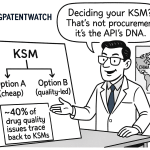
The reliance on a limited number of countries for critical raw materials emerged as a central point of failure. The globalization of the supply chain, while beneficial for cost, led to a geographical concentration of manufacturing, particularly for Active Pharmaceutical Ingredients (APIs) and Key Starting Materials (KSMs).1 A handful of nations, most notably China and India, became the de facto global suppliers for a vast portion of the world’s drug production.7 For instance, India, a global leader in generic drug manufacturing, is heavily dependent on China for up to 80% of its APIs.8 This creates a domino-like risk: if China falters, India follows, and the rest of the world is left scrambling for essential medicines.8 This concentration of production means that a staggering 87% of FDA-registered API manufacturing facilities for generic drugs are located outside the United States.1
The consequences of this “single point of failure” are no longer theoretical. The article points to a dramatic real-world example in which a single plant shutdown in India due to safety violations—including “freshly torn-up documents doused with acid”—resulted in a nationwide shortage of a critical chemotherapy drug in the U.S..8 This demonstrates that the fragility of the system is a national security and public health crisis. Furthermore, it reveals that many drugs stamped “Made in America” or “Made in India” are, in fact, “chemically Chinese in origin,” eroding a country’s sovereignty over one of its most essential industries.8 The vulnerability of the system is alarming, with many essential drugs produced in only one or two plants globally, often in regions with weaker oversight and a higher risk of disruption.8
A Cascade of Failures: From Clinical Trials to the Last Mile
The pandemic’s ripple effects exposed the interconnectedness of the entire healthcare ecosystem, from early-stage research to patient-facing care. The crisis caused a cascade of failures that extended far beyond manufacturing disruptions. Clinical trials, the very engine of innovation, were severely impacted, with over 350,000 trials disrupted globally.10 Social distancing measures and travel restrictions caused a significant decrease in patient recruitment and retention for on-site research.10 Study personnel faced immense operational challenges, including delays in filing, obtaining “wet signatures,” and recording protocol deviations, as many transitioned to remote work.10
This disruption of the R&D pipeline has a critical, long-term implication that the industry is still grappling with. Delays in clinical trials inevitably postpone regulatory submissions and approvals, which in turn delays the market entry of new therapies. This creates a future “supply gap” for new medicines, a hidden vulnerability that will persist long after the immediate crisis has passed. The problem is not merely about the shortage of yesterday’s drugs, but about the delayed availability of tomorrow’s breakthroughs. On the consumption side, widespread shortages of essential supplies like personal protective equipment (PPE) and critical drugs for routine care led to delayed care, rationing, and increased risk of patient mortality.12 This highlighted that a supply chain failure is not just a commercial or logistical problem; it has direct, life-or-death consequences for patients.
The Strategic Pivot: Rebuilding from the Ground Up
The Mindshift from “Just-in-Time” to “Just-in-Case”
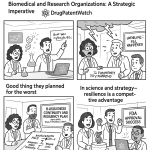
The lessons of the pandemic have prompted a fundamental mindshift within the pharmaceutical industry. The post-pandemic landscape requires a pivot away from a singular focus on cost-first “Just-in-Time” (JIT) to a “Just-in-Case” (JIC) model that prioritizes resilience and redundancy.3 This involves a number of strategic shifts, including the strategic stockpiling of critical components, increasing on-hand inventory, and building in purposeful slack throughout the system.15 While this approach inherently increases holding costs, it is a calculated investment to mitigate the far greater financial and reputational risks of a major supply disruption.
The financial calculus of this shift is not as simple as comparing inventory costs. It is a strategic exercise that requires quantifying “Value at Risk.” As an example, Johnson & Johnson has developed a resilience program that quantifies “Value at Risk” by measuring the potential impact of a node disruption in terms of net trade sales.17 This approach illustrates that the JIC premium is not an expense but an insurance policy. It protects against catastrophic losses that go far beyond a single missed sale, including millions of dollars in lost revenue, irreversible reputational damage, and potential legal liability. Explaining the value of a surplus to a department head becomes infinitely easier than explaining why there were no supplies at all.5
Lessons from the Front Lines: Case Studies in Corporate Adaptation
The crisis was a test of adaptability, and leading pharmaceutical companies responded with remarkable agility, providing a blueprint for the future.
Pfizer/BioNTech: The collaboration between these two companies, and their ability to rapidly scale production of a novel mRNA vaccine, stands as a triumph of modern logistics. They leveraged a multi-sourcing strategy, utilized supply reallocation across borders, and even implemented “purposeful overproduction” to ensure vaccine supply and maintain a buffer against unforeseen disruptions.16 This was all managed within a complex, temperature-sensitive cold chain that was tracked 24/7 with thermal sensors and AI, enabling end-to-end visibility and responsiveness.16
Moderna: This company was a case study in building a resilient organization from the ground up. Moderna was built as a “digital organization,” leveraging artificial intelligence and other digital resources to accelerate its operations, manage processes, and ensure quality from research through manufacturing.19 This technological foundation enabled them to rapidly respond to the pandemic, developing a vaccine in months, a process that traditionally takes years.20
Sanofi: This company demonstrated a powerful new model of competitive collaboration. Recognizing the urgency of the global situation, Sanofi leveraged its manufacturing infrastructure and expertise to produce vaccines for rivals BioNTech and Johnson & Johnson.21 This was done while still pursuing its own vaccine candidates. This spirit of industry solidarity prioritizes the greater public health goal, recognizing that a stable, functional ecosystem benefits everyone in the long run.21
Merck: Merck’s response to the pandemic included a comprehensive supply and access strategy for its oral antiviral treatment. In addition to commercial agreements with governments, the company signed voluntary license agreements with generic manufacturers and the Medicines Patent Pool.23 This approach helped ensure timely and broad global access, particularly for low- and middle-income countries. It demonstrated a willingness to prioritize global health over a strict proprietary model, fostering trust and a positive reputation.
These case studies challenge the traditional view of a hyper-competitive, proprietary industry. They demonstrate that in a global crisis, a company’s long-term reputation and social license to operate may be more valuable than short-term market share. This collaborative approach fosters trust and could lead to future partnerships, which are a vital component of a resilient supply chain ecosystem.24
Rebalancing the Scale: The New Calculus of Near-shoring and Friend-shoring
The single-source and geographic concentration vulnerabilities exposed by the pandemic have led to a strategic re-evaluation of global supply chains.14 The new paradigm is a shift toward a hybrid “China plus one” or “China plus many” strategy, where companies maintain some operations in China to serve the local market but strategically add facilities elsewhere.25 This movement is being driven by “near-shoring”—relocating production closer to end markets—and “friend-shoring”—sourcing from politically stable allied nations.14
However, the economic case for this rebalancing is far from simple. While it reduces geopolitical and logistical risks, it introduces a significant strategic tension between profitability and public health security. The cost of manufacturing in the United States, for instance, is on average 30 to 50% higher than in China, India, or Mexico.1 Furthermore, the low prices of many generic medicines, which are often the most critical in a public health crisis, undermine the business case for geographic diversification. The “switching costs” and economic resources required to establish new facilities are often too high for the limited return on investment.1 The answer, therefore, is not a complete overhaul but a gradual, tactical redistribution of risk. This is a complex, nuanced decision that C-suite leaders must navigate, balancing the need for security with the pressure to remain competitive on price.
The Resilient Enterprise: Frameworks for Future-Proofing
Data and Intelligence as the New Foundation
Leveraging Patent and Competitive Intelligence for a Proactive Edge
Intellectual property (IP) is no longer a purely legal concern; it is a central pillar of supply chain resilience and competitive strategy.27 Patents grant companies the freedom to operate, protect their massive R&D investments, and provide a period of market exclusivity to recoup those costs.27 But beyond this defensive role, IP data, particularly from patent-pending applications, can be leveraged as a rich source of strategic intelligence.29
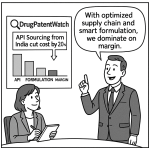
By systematically analyzing a competitor’s patent filings, a company can gain early insights into their emerging technologies, R&D focus, and future product pipelines.29 This transforms IP analysis from a reactive, defensive tool into a powerful driver of offensive innovation. A company can use this data to identify “white spaces”—therapeutic areas with limited patent activity but significant potential—and strategically guide R&D investments toward less crowded fields.29 Real-time monitoring of patent expirations and litigation updates, provided by platforms like
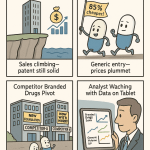
DrugPatentWatch, is invaluable for identifying opportunities for early generic entry and for timing market entry strategies to coincide with a patent expiration.31 The analysis of a competitor’s Phase III trial delay, for example, combined with a slowdown in their patent filings, can reveal a clear window of opportunity to accelerate a company’s own clinical timeline.30 This is a direct example of transforming raw data into a tangible competitive advantage.
The Rise of AI, Predictive Analytics, and End-to-End Visibility
A lack of visibility into the multi-tiered supply chain was a critical vulnerability exposed by the pandemic.2 The future of resilience lies in leveraging advanced technology to gain end-to-end transparency. AI and predictive analytics are at the forefront of this shift. They can be used to forecast demand by analyzing market data, public sentiment, and sales records, which helps companies avoid overstocking or stockouts.33
This technological integration allows for a powerful reconciliation of the “lean” and “resilient” supply chain models. The JIT model was fragile because it lacked real-time data and foresight.5 AI-driven predictive analytics provides the foresight to anticipate demand fluctuations and spot supplier issues before they become disruptions.33 This enables companies to operate with leaner inventory levels because they can forecast with greater accuracy and react with greater speed.3 It eliminates the need for the zero-sum trade-off between efficiency and resilience and instead makes them complementary forces. AI also helps manage supplier risk by continuously monitoring external factors like financial health, political instability, and weather, spotting potential issues early.33
Modernizing Manufacturing and Logistics
Continuous Manufacturing: The Answer to Agility and Quality?
The traditional batch manufacturing process, characterized by numerous separate operations and long hold times, is slow, costly, and rigid.35 Continuous manufacturing (CM), where a pharmaceutical product is produced nonstop in a single, uninterrupted process, offers a profound shift.36 CM reduces production times from weeks to days, lowers waste, and improves product quality by reducing the risk of human error.36 Its modular design provides agility, allowing companies to scale production up or down in response to demand simply by adjusting the run time.36
The adoption of CM is not just a manufacturing efficiency play; it is a strategic maneuver that can directly impact a drug’s time to market and a company’s bottom line. According to an FDA self-audit, applications for products using CM were approved, on average, nine months faster and entered the market twelve months faster than comparable batch applications.37 This faster time to market provides a tangible competitive advantage, allowing a company to capture market share and revenue earlier. The FDA’s promotion of CM signals a clear regulatory alignment with this technology as a key to improving product quality and mitigating drug shortages.36 Companies like Pfizer, Eli Lilly, and GSK have already adopted CM processes for a variety of products.39
Blockchain and the Promise of Immutable Traceability
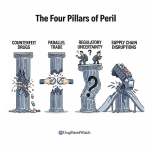
Counterfeit drugs pose a grave and pervasive threat to patient safety and are a major vulnerability in complex, multi-tiered supply chains.41 The lack of transparency in these networks makes it difficult to trace a product’s origin and allows counterfeit goods to enter the system.2 Blockchain technology, with its immutable and transparent ledger, offers a powerful solution for end-to-end traceability.43
The value of blockchain extends beyond simply fighting counterfeits; it addresses the core issue of trust and transparency. It creates a single, verifiable source of truth that all stakeholders—from raw material suppliers to pharmacies—can access.43 This not only helps combat counterfeits by tracking each product’s journey but also strengthens regulatory compliance and simplifies audits.43 The
MediLedger consortium, which includes major companies like Pfizer and Merck, is a real-world example of this technology in action, working to track and trace prescription drugs and prevent diversion.43 By integrating with other emerging technologies like IoT sensors, blockchain can enable real-time monitoring of a product’s condition and movement during transit, ensuring that it is handled correctly and securely.43
The Ecosystem Approach: Collaboration and Policy
Public-Private Partnerships and the Role of Government
The pandemic demonstrated that companies cannot solve systemic supply chain issues alone. Governments have a critical role to play in fostering resilience.44 In the U.S., the CARES Act was passed to enhance the FDA’s ability to identify, prevent, and mitigate drug shortages by requiring manufacturers to notify the agency of potential disruptions and create risk management plans.45 Additionally, executive orders have sought to establish a Strategic Active Pharmaceutical Ingredients Reserve (SAPIR) to stockpile critical APIs and encourage domestic production.46
However, these well-intentioned policies can introduce new complexities and legal risks. The executive order on SAPIR, for instance, is silent on whether the stockpiling of APIs will be accompanied by licensing or other agreements with intellectual property rights holders.47 This creates a significant legal pitfall. A government could stockpile a patented API, but without a licensing agreement, it may not have the legal right to formulate and use the finished product in an emergency. This highlights the crucial role of legal teams in anticipating and mitigating these complex IP and regulatory challenges.48
Fortifying the Chain: The Importance of Legal and IP Strategy
Supply chain resilience is a legal and strategic challenge as much as it is an operational one.48 The fragmentation of risk perception across an organization, where different departments prioritize risks differently, can lead to siloed and ineffective risk management.50 Overcoming this requires a unified, cross-functional risk management framework that leverages a holistic view of vulnerability.
A company’s legal and IP strategy must be integrated into its overall supply chain resilience plan. Legal teams are essential for proactively managing supplier agreements, protecting intellectual property from theft or infringement, navigating antitrust risks, and ensuring compliance with a complex web of international regulations.48 The ability to draft robust contract clauses related to force majeure, or to assist with compliance for “Buy American” requirements, is no longer an ancillary function but a core competency for maintaining supply continuity.48 A collaborative approach to risk assessment and management, which pulls data from all departments—from R&D to legal—is essential for building a truly resilient system.50
Strategic Outlook and Key Takeaways
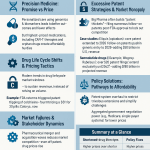
The pharmaceutical industry stands at a critical juncture. The pandemic exposed the deep-seated fragilities of a system optimized for a predictable world. The lessons learned have moved the industry from a reactive, crisis-driven mindset to a proactive, strategic one. The focus is no longer just on recovering from a shock but on building a system that is inherently resilient.14 This will require a hybrid model that balances the efficiencies of globalization with the security of regionalization, enabled by technology and underpinned by a more collaborative ecosystem.
There is no silver bullet, and the core challenge remains the tension between cost, speed, and security.51 However, the path forward is clear: the most successful companies will be those that move beyond a simple cost-cutting mentality and invest in the capabilities that provide long-term value and business continuity. This is the central ROI proposition of building a truly resilient enterprise.
Key Takeaways
The End of “Just-in-Time” as an Absolute: The pandemic demonstrated that a supply chain strategy optimized solely for cost efficiency and waste minimization is fundamentally fragile. The future requires a mindshift to a “Just-in-Case” model that prioritizes redundancy and strategic stockpiling of critical inventory to ensure business continuity.
Diversification is a Strategic Imperative: The over-reliance on a few geographic regions for APIs and other critical inputs creates a strategic chokepoint. While a full reversal is not economically viable in the short term, a gradual rebalancing toward “near-shoring” and “friend-shoring” is a vital long-term strategy to mitigate geopolitical and logistical risks.
Data is the New Foundation of Resilience: End-to-end supply chain visibility is no longer a luxury but a necessity. Leveraging AI, predictive analytics, and real-time monitoring can provide the foresight to anticipate disruptions before they occur, allowing companies to operate with greater agility and confidence.
IP and Competitive Intelligence are Strategic Tools: Intellectual property, when analyzed proactively, becomes a powerful source of competitive intelligence. It can reveal a competitor’s strategic direction and identify “white spaces” for innovation, allowing a company to make data-driven decisions that generate a tangible competitive advantage.
Technology Drives Agility and Quality: Modern manufacturing technologies like continuous manufacturing offer a path to reconciling the tension between efficiency and resilience. By reducing production times, improving quality, and enabling easier scale-up, CM can provide a significant competitive edge and a faster time to market.
Collaboration and Policy are Essential: Systemic issues require systemic solutions. The future of pharmaceutical supply chain resilience will be built on a foundation of public-private partnerships, where governments and industry work together to fortify the system. Legal and IP teams must be at the table to navigate complex regulatory and IP challenges that can arise from these collaborations.
Frequently Asked Questions (FAQs)
What is the single greatest barrier to achieving supply chain resilience, and how can my organization overcome it?
The single greatest barrier is often a deep-seated cultural and organizational mindset that views supply chain as a cost center rather than a strategic asset. Many companies have historically prioritized short-term cost savings over long-term risk mitigation. Overcoming this requires a fundamental shift in perspective, led by the C-suite, to a holistic risk management framework. This involves quantifying the potential “Value at Risk” associated with a disruption—not just in terms of lost revenue, but in terms of patient outcomes, brand reputation, and shareholder trust. By making the business case for resilience in a language the board understands (ROI), an organization can secure the necessary investment and foster a culture of proaction.
How do current geopolitical shifts, such as new tariffs, affect the long-term viability of near-shoring strategies?
New tariffs and geopolitical tensions, while presenting short-term challenges like increased costs and longer lead times, reinforce the long-term viability of near-shoring and friend-shoring. These policies make the cost-benefit analysis of globalized sourcing more complex and less favorable. For example, a significant tariff on imported APIs could make domestic manufacturing—despite its higher base costs—a more economically competitive option. While a complete overhaul is not feasible, these geopolitical shifts serve as a powerful catalyst for a strategic, gradual re-distribution of the supply base, ensuring that a company is not held hostage by a single country’s political or economic decisions.
Beyond technology, what is the most critical cultural or organizational shift required to build a resilient supply chain?
The most critical cultural shift is to move from a siloed, fragmented approach to an integrated, collaborative one. A study found that different actors in the supply chain—from R&D to regulators—prioritize risks based on their specific role, leading to ineffective, disconnected strategies. Building resilience requires breaking down these silos. This means creating cross-functional teams with representatives from R&D, legal, IP, business development, and operations who have a shared understanding of risk and a unified strategy. A central “nerve center” for risk management, leveraging data from all departments, is key to fostering this collaboration.
How can IP data be leveraged to manage risks beyond patent expiration, such as regulatory and geopolitical volatility?
IP data can be leveraged to manage a wide range of risks beyond just patent expiration. For example, by analyzing a competitor’s patent filings, an organization can gain a deeper understanding of their strategic direction and R&D focus. This intelligence can help a company predict how a rival might respond to a new tariff or a regulatory change, allowing them to proactively adjust their own strategy. Furthermore, analyzing patent filings in a specific country or region can reveal a competitor’s investment and market-entry plans, providing a valuable heads-up on potential future competitive threats or opportunities in a specific market.
Is it possible to be both “lean” and “resilient,” or is that a fundamental contradiction?
Historically, this has been viewed as a fundamental contradiction, but the advent of new technologies is challenging that assumption. In a traditional supply chain, being “lean” (minimizing inventory and redundancy) came at the direct expense of “resilience” (the ability to withstand shocks). However, by leveraging AI and predictive analytics, a company can operate with leaner inventory levels while maintaining or even increasing its resilience. The technology provides the foresight to anticipate demand fluctuations and spot supplier issues before they become disruptions, allowing a company to react with greater speed and precision. The contradiction between lean and resilient is no longer a zero-sum trade-off; it is a manageable tension that can be optimized through strategic investment in data and technology.
Supply Strain: Cold Chains, China, and Climate in the Pharma Risk Equation – Boston Common Asset Management, accessed September 1, 2025, https://bostoncommonasset.com/supply-strain/