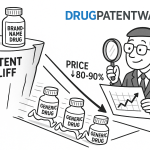
When Pfizer launched atorvastatin (Lipitor) in 1997, it did not simply sell a cholesterol drug. It built, over the next fourteen years, the most commercially successful pharmaceutical product in history — generating more than $125 billion in cumulative global sales before its U.S. patent expired in November 2011 [1]. Within six months of that expiration, atorvastatin’s U.S. price had collapsed by more than 80 percent. Pfizer’s U.S. revenues from the product fell from $5.6 billion annually to under $1 billion within two years [2].
Pfizer knew the cliff was coming. Every pharmaceutical company with a blockbuster product knows it is coming. What separates companies that manage the descent from companies that are simply consumed by it is whether they built the structural defenses — legal, regulatory, clinical, and commercial — before the primary patent expired, not after.
This article is the playbook for doing exactly that. It covers the full spectrum of patent defense tactics deployed by the pharmaceutical industry’s most effective IP strategists: from the mechanics of the Orange Book and 30-month stays to the layered formulation patent strategy, from authorized generics and pediatric exclusivity to biosimilar patent thickets, PTAB preparation, and global exclusivity coordination. Each section includes real cases where the tactics worked, cases where they failed, and the specific decision points that made the difference.
The goal is not to offer a theoretical survey of pharmaceutical IP law. It is to give the professionals responsible for protecting these franchises a concrete, evidence-based framework they can apply today.
Part One: Know the Terrain Before You Build the Defense
What a Blockbuster Drug Actually Puts at Risk
The word “blockbuster” in pharmaceuticals conventionally describes a drug generating at least $1 billion in annual sales. In practice, the most strategically significant products sit well above that threshold — products like Humira ($21 billion in 2022 global revenues), Keytruda ($17.2 billion in 2022), and Eliquis ($11.8 billion in 2022 U.S. revenues alone) [3]. For these products, each year of exclusivity preserved translates directly into billions of dollars of revenue, and each month of delay in generic or biosimilar entry carries nine-figure commercial consequences.
Patent defense for a blockbuster is a different problem from patent defense for a product with $200 million in annual sales. At $200 million, a single Paragraph IV challenge from a well-funded generic manufacturer is manageable litigation. At $5 billion, you are simultaneously managing multiple ANDA filers, PTAB IPR petitions targeting your core patents, payer pressure to steer patients toward therapeutic alternatives, and a business development team demanding acquisitions to fill the pipeline gap that patent loss will create. The scale changes everything — the resources available for defense, the intensity of the attack, and the consequences of each legal decision.
Understanding what you are protecting, and at what level of precision, is the first step. This means knowing not just the product’s annual revenues but its net present value over the remaining exclusivity period, the realistic price erosion curve after generic or biosimilar entry, the timeline to maximum generic competition, and the specific patents on which that exclusivity depends.
Companies that conduct this analysis rigorously — building a patent-by-patent NPV model for each major product — discover that their exclusivity is more concentrated than they assumed. Often, two or three patents account for 80 percent of the legal barrier to generic entry. Attackers know this too. The defense must start with identifying those two or three patents and hardening them before the challenge arrives.
The Patent Life Clock and Where Time Actually Goes
A U.S. utility patent grants twenty years of exclusivity from the application’s filing date [4]. For pharmaceutical products, the practical exclusivity window is shorter than that figure suggests. A drug candidate filing for patent protection in Phase I clinical trials — roughly seven to ten years before FDA approval — will have a patent that expires seven to ten years post-launch, not twenty. The regulatory review period consumes the buffer that was built into the twenty-year term.
Patent Term Extension (PTE) under 35 U.S.C. § 156 addresses this gap by allowing restoration of up to five years of patent life lost to FDA review, subject to a hard cap: the total remaining patent life after extension cannot exceed fourteen years from the date of FDA approval [5]. Most new molecular entities receive some PTE. The strategic question is not whether to apply but which patent to extend — a decision that requires mapping the entire patent portfolio, not just the primary composition-of-matter patent, and selecting the extension that produces the maximum commercial benefit.
This decision gets made once, within sixty days of FDA approval, and it cannot be undone. A company that misses the sixty-day window forfeits the PTE entirely. A company that applies PTE to the composition-of-matter patent without recognizing that a separately filed formulation patent already extends past the PTE endpoint has wasted the extension. The choice requires systematic analysis: map every patent covering the product, model their expiration dates with and without PTE, and identify the configuration that pushes effective exclusivity as far forward as possible.
The PTE application is mechanically straightforward. The strategic analysis behind it is not. Companies that treat it as a legal administration task — handled by the prosecution firm without commercial input — routinely make suboptimal choices.
The Orange Book as Strategic Document
The FDA’s Orange Book — formally titled “Approved Drug Products with Therapeutic Equivalence Evaluations” — is one of the most consequential public documents in pharmaceutical commercial strategy [6]. Every patent that an NDA holder lists in the Orange Book as claiming the approved drug or a method of using it becomes a potential trigger for a Paragraph IV certification and, if the NDA holder files suit within 45 days of receiving notice, a 30-month stay of generic approval.
The Orange Book is simultaneously your shield and your map. It is your shield because every listing creates a legal barrier that a generic must certify around or challenge. It is your map because every competitor can read it — generic manufacturers, biosimilar developers, payers, investors, and hedge funds running short positions all monitor Orange Book listings continuously.
Platforms like DrugPatentWatch aggregate Orange Book data, presenting it in analytically useful formats: per-product patent expiration timelines, Paragraph IV challenge histories, litigation outcomes, and comparative patent position analysis across therapeutic classes. What any trained analyst can extract from DrugPatentWatch in thirty minutes is a reasonably complete picture of when your primary exclusivity barriers expire, which have already been challenged, and which appear most vulnerable. If a competitor’s analyst can build that picture, so can yours — and so can the short seller writing the note that moves your stock price.
The Orange Book listing decision therefore demands rigorous analysis, not reflexive breadth. List every patent that genuinely claims the drug or a method of using it. Do not list patents whose claims, honestly construed, do not read on the approved product — courts and the FDA have increasingly scrutinized improper listings, and the Federal Trade Commission has indicated that anticompetitive Orange Book listings can constitute Section 2 Sherman Act violations [7]. Within those constraints, list broadly, because the commercial value of a 30-month stay on a $5 billion drug dwarfs the legal cost of defending a legitimate patent claim in litigation.
Part Two: The Composition-of-Matter Foundation and Its Limits
Why the Primary Patent Is the Beginning, Not the End
The composition-of-matter (COM) patent on a new drug’s active ingredient is the strongest protection available. It covers the molecule itself — its chemical structure, its salts, its stereoisomers, and in some cases the genus of related compounds within which it sits. A COM patent in the Orange Book means a generic manufacturer cannot legally make, use, or sell the active ingredient without infringing, regardless of formulation or indication.
COM patents are also the first to expire and the first to be challenged. Because they are filed early in development — often before clinical trials begin, when the molecule is first synthesized — they have consumed significant patent term by the time the drug reaches market. On a drug approved twelve years after initial synthesis, the COM patent has twelve years of its twenty-year term gone. With PTE, the remaining commercial exclusivity on the COM patent alone might extend to fourteen years post-approval. Without PTE, it could be as short as eight.
This is why building on top of the COM patent is not optional. Companies that rely solely on composition-of-matter protection are building their commercial franchise on a foundation that will be legally accessible to generic competition within eight to twelve years of launch. The companies that defend franchises effectively have already built the next layer before the COM patent expires.
The strategic question is not whether to file secondary patents but which ones to file, at what stage of development, and with what claim scope. Each category of secondary protection — formulation, method-of-use, process, device — serves different purposes and carries different vulnerability profiles.
Formulation Patents: The Most Commercially Durable Layer
Formulation patents cover the physical product rather than the molecule — the specific combination of active ingredient and excipients, the release mechanism, the dosage form, the drug delivery system. Because they are filed later than COM patents, often during or after Phase II or Phase III trials when the commercial formulation is defined, they expire later. That staggered expiration is the fundamental mechanism of the “patent cliff” — when the COM patent falls, formulation patents hold the line.
The commercial value of formulation patents depends on two factors that most patent strategy discussions underweight: the strength of the claims and the clinical significance of the formulation innovation.
Strong formulation patent claims are specific to the actual commercial product, fully supported by experimental data in the specification, and filed with prosecution strategy that anticipates the design-around attempts most likely to be made by generic manufacturers. A formulation claim that covers “an extended-release matrix comprising atorvastatin and a release-controlling polymer” without specifying the polymer’s molecular weight range, the compression force used in manufacturing, or the resulting dissolution profile will be designed around in eighteen months by any competent generic R&D team.
Clinically significant formulation innovations are ones that prescribers and payers recognize as genuinely superior to the original formulation. Once-daily dosing versus twice-daily. Abuse-deterrent properties that reduce misuse and diversion. Temperature-stable formulations that eliminate cold-chain requirements. These innovations generate not just patents but clinical data supporting formulary differentiation — making it harder for payers to simply substitute the generic of the original formulation.
Pfizer’s experience with atorvastatin illustrates what happens in the absence of a strong formulation strategy. The drug was approved in its original immediate-release formulation and never produced a commercially successful second-generation product. When the COM patent expired, the generic erosion was immediate and total. In the eighteen months following generic entry, atorvastatin lost over 80 percent of its branded prescription volume [2]. A fully built formulation patent strategy does not prevent this outcome entirely, but it creates a product tier — the branded next-generation formulation — that commands a premium even after the original formulation is generic.
Method-of-Use Patents: Protecting What the Drug Does, Not What It Is
A method-of-use patent covers the way a drug is used rather than what the drug is. In pharmaceutical practice, this means patents on specific dosing regimens, therapeutic indications, patient selection criteria (including biomarker-defined patient populations), combination therapy protocols, and treatment algorithms.
Method-of-use patents in the Orange Book create a mechanism called the “skinny label” — a generic manufacturer can seek approval of its product with a label that omits the patented indication, avoiding direct infringement of the method-of-use patent while still accessing the non-patented portions of the market. This limits, but does not eliminate, the commercial impact of a method-of-use patent.
The strategic value of method-of-use patents depends on which indications they cover. If the patented indication accounts for 10 percent of prescriptions, a skinny-label generic captures 90 percent of the market without infringing. If the patented indication accounts for 70 percent of prescriptions — because the drug’s principal clinical use evolved toward that indication after launch — the skinny-label generic faces a genuinely constrained market.
This creates a filing priority principle: file method-of-use patents on the indications that will become commercially dominant, not just the initial approved indication. A drug approved for hypertension that turns out to generate most of its revenue from a specific high-risk cardiovascular patient population should have a patent on that population-specific use if the prescribing pattern or patient characteristics are novel and non-obvious relative to the prior art.
Bristol Myers Squibb’s patent on the use of apixaban (Eliquis) in atrial fibrillation patients with specific renal impairment profiles — a more specific population than the broad AF indication — extended meaningful protection beyond the compound’s initial patent position [8]. The claim was specific to a patient population that turned out to account for a significant portion of high-value Eliquis prescriptions, making the skinny-label option genuinely less attractive for generic competitors.
Process Patents: Undervalued but Increasingly Critical
Process patents cover how a drug is manufactured rather than what the drug is or does. In small-molecule pharmaceuticals, the conventional view has been that process patents provide limited protection because generic manufacturers can synthesize the active ingredient by an alternative route that does not infringe. For most small molecules with multiple viable synthesis routes, this is accurate.
But process patents matter more in three specific contexts. First, when the commercial synthesis route is genuinely novel and provides significant efficiency advantages over alternatives — the alternatives are technically feasible but substantially more expensive or slower. If a generic manufacturer must use a synthesis route that adds $30 to $50 per kilogram to API manufacturing cost, the resulting economic disadvantage affects its ability to compete at the lowest price tiers.
Second, in biologics and complex drug-device combinations, where the manufacturing process is functionally inseparable from the product. A biologic manufactured by a different cell line under different culture conditions is not the same product as the reference biologic, even if its primary amino acid sequence is identical. The glycosylation pattern, aggregation profile, and trace impurities differ — which is precisely why the FDA requires biosimilar manufacturers to demonstrate equivalence rather than identity. Process patents on biologic manufacturing methods are therefore more durable defenses than in small-molecule chemistry.
Third, in API manufacturing for controlled substances and complex generics, where the DEA Schedule and specific manufacturing facility requirements constrain the number of facilities capable of manufacturing the API. A process patent that restricts generic API manufacturing to expensive or difficult routes can delay market entry even after the product patents are challenged or expired.
Part Three: The Hatch-Waxman Battlefield
The Paragraph IV Machine: How Generic Manufacturers Attack
The Abbreviated New Drug Application process created by the Hatch-Waxman Act of 1984 allows generic manufacturers to seek approval of a generic version of an approved drug by referencing the innovator’s safety and efficacy data — without conducting independent clinical trials [9]. The ANDA applicant must certify its relationship to each Orange Book patent in one of four ways. A Paragraph I certification says the patent has expired. A Paragraph II certification says the patent will expire before the requested approval date. A Paragraph III certification says the applicant will not seek approval until the patent expires. A Paragraph IV certification says the patent is either invalid or will not be infringed by the generic product.
The Paragraph IV certification is the declaration of war. Upon filing, the ANDA applicant must notify the NDA holder and the patent owner. If the NDA holder files a patent infringement suit within 45 days, the FDA cannot approve the ANDA for 30 months — regardless of the suit’s merits [9]. That 30-month stay is the primary financial objective of the Orange Book listing strategy: it buys time regardless of ultimate outcome.
Generic manufacturers have professionalized Paragraph IV filing into a distinct business discipline. The first ANDA filer with a Paragraph IV certification receives 180 days of generic exclusivity after commercial launch — a government-granted period during which no other generic manufacturer can be approved for the same product [10]. For a drug with $3 billion in annual U.S. revenues, the 180-day first-filer exclusivity is worth approximately $900 million to $1.2 billion in generic sales, against which the cost of Hatch-Waxman patent litigation ($10 to $30 million per party) is marginal. The expected value of filing is almost always positive for the first filer.
This economics structure means that large-revenue products will be challenged. The question for the innovator is not whether to expect a Paragraph IV filing but how to make that filing expensive, slow, and uncertain for the challenger.
The 30-Month Stay: Its Value and Its Limits
The 30-month stay is worth between $2.5 billion and $7.5 billion in preserved revenues for most blockbuster drugs, depending on annual revenue and the timing of the stay relative to other patent expirations. Its limitations are equally important to understand.
First, the stay runs from the date the NDA holder receives notice of the Paragraph IV certification — not from the date of ANDA filing or the date of the suit. Generic manufacturers have sometimes deliberately delayed providing notice of Paragraph IV certifications, which technically delays the start of the stay clock and aligns generic approval timing with their preferred commercial launch dates.
Second, the stay is per-ANDA, per-patent. If the NDA holder receives Paragraph IV certifications from five different generic manufacturers, each valid suit filed within 45 days triggers a separate 30-month stay per ANDA. Multiple stays running in parallel can be valuable — if any one of them results in a favorable judgment before expiration, the product may achieve full litigation victory. But stays do not prevent the FDA from completing its approval review; they only delay final approval. If the 30-month period expires before the litigation resolves, the FDA can approve the generic.
Third, a court can shorten or eliminate the stay if it finds the litigation frivolous or if the NDA holder fails to engage in good-faith prosecution of the case. Courts have occasionally shortened stays when NDA holders appeared to be using litigation primarily to extend the delay rather than to genuinely enforce a valid patent.
Within these constraints, the 30-month stay is the most powerful defensive mechanism in the Hatch-Waxman system. The litigation strategy that follows determines how much of the remaining exclusivity it ultimately preserves.
Building a Litigation-Ready Patent Portfolio
A patent that survives Paragraph IV litigation is not merely a patent that was granted by the USPTO. It is a patent whose prosecution history is clean, whose claims are specifically supported by robust experimental data, whose prior art was identified and distinguished during examination, and whose infringement theory against the specific generic product is coherent without relying on the doctrine of equivalents.
The failure mode most commonly exploited in Paragraph IV litigation is prosecution history estoppel. During patent prosecution, applicants routinely narrow claims to distinguish prior art identified by the examiner. Those narrowing amendments create legal estoppel — the applicant cannot argue, in later litigation, that the generic product infringes the claimed invention through the doctrine of equivalents in the area surrendered. Generic counsel specifically searches prosecution histories for these admissions, because estoppel is cleaner and faster to establish than invalidity based on prior art.
A practical defense against prosecution history estoppel starts during prosecution. When an examiner cites prior art requiring claim narrowing, the response should narrow claims to the minimum extent necessary, with explicit language in the response distinguishing the prior art on specific structural grounds rather than broad functional ones. Broad functional distinguishing arguments (“this invention achieves better results than prior art”) often create wider estoppel than the amendment itself.
Claim drafting quality also affects the litigation-readiness of formulation patents in ways that are not obvious during prosecution. A claim that covers “a pharmaceutical composition comprising compound X in an amount effective to treat condition Y” provides less litigation support than a claim covering “a pharmaceutical composition comprising compound X at 50 to 200 mg, hydroxypropyl methylcellulose at 15 to 25% by weight, and microcrystalline cellulose at 40 to 60% by weight, wherein the composition exhibits a dissolution rate of 80% in 60 minutes in pH 6.8 phosphate buffer.” The latter claim is harder to establish infringement on, but when infringement is established, it is much harder for the generic to design around without changing a commercially critical product characteristic.
First-Filer Dynamics and Authorized Generic Strategy
The 180-day first-filer exclusivity creates an asymmetric dynamic between the first generic manufacturer and all subsequent filers. The first filer bears the litigation risk and cost; all subsequent filers free-ride on the resulting market opening without bearing either cost. This has led some generic manufacturers to develop a specific strategy: file a Paragraph IV, trigger the 30-month stay, engage in settlement negotiations, and seek a “first-filer deal” in which the innovator pays for the generic’s patent challenge via a reverse payment settlement that includes agreed-upon market entry timing.
The Supreme Court’s 2013 decision in FTC v. Actavis established that reverse payment settlements — in which the innovator pays the generic to delay entry — can be anticompetitive under the Sherman Act if their net effect is to maintain supracompetitive pricing [11]. The decision did not ban these settlements but subjected them to rule-of-reason antitrust analysis. In practice, reverse payment settlements continue, but they are structured more carefully, often as authorized generic licenses (the innovator pays by granting the generic a license to sell an authorized generic, rather than cash) rather than direct cash payments.
The authorized generic strategy gives the innovator a distinct lever in the first-filer dynamic. An authorized generic — a version of the brand product sold under the generic name, manufactured by the brand or a licensed partner, typically priced at a significant discount to brand — captures a portion of the generic market while preserving the innovator’s manufacturing economics on that volume. Crucially, it competes with the first-filer generic during the 180-day exclusivity window, reducing the economic value of that window for the generic manufacturer.
Sanofi deployed an authorized generic strategy for Plavix (clopidogrel) after its patent expired in 2012, capturing meaningful volume in the generic market rather than ceding it entirely to Mylan and other ANDA filers [12]. The authorized generic did not preserve branded Plavix’s market position — nothing does, after full generic entry — but it captured margin on volume that would otherwise have been lost entirely.
Part Four: The Secondary Patent Toolkit
Pediatric Exclusivity: The Highest ROI Activity in Pharmaceutical IP
The Best Pharmaceuticals for Children Act allows the FDA to issue Written Requests to sponsors, asking them to conduct pediatric studies of their approved drugs [13]. If the sponsor completes those studies and submits the results within the prescribed timeframe — regardless of whether the pediatric indication is approved — the FDA grants six months of exclusivity appended to every Orange Book patent for the product.
The arithmetic of pediatric exclusivity is one of the clearest ROI calculations in pharmaceutical strategy. Conducting the pediatric studies costs, on average, $20 to $50 million and takes two to four years. On a drug with $2 billion in annual U.S. revenues, six months of preserved exclusivity is worth approximately $1 billion in revenue — against which roughly 80 to 90 percent would otherwise have been lost to generic erosion within the first year. The net present value of a successful pediatric exclusivity grant is typically $100 to $400 million, against a study cost of $30 million. Very few R&D or IP investments generate returns of this magnitude with this degree of certainty.
The critical variable is timing. The six months of pediatric exclusivity attach to every Orange Book patent currently listed at the time of the grant. A pediatric exclusivity grant that arrives after all Orange Book patents have expired attaches to nothing and provides no commercial benefit. The pediatric studies must be initiated early enough that results can be submitted while at least one Orange Book patent remains in force — ideally the one with the latest natural expiration date.
Companies that maximize pediatric exclusivity value typically initiate the Written Request process three to five years before their primary patent’s projected expiration, complete the studies within two to three years, and submit results with sufficient time to receive the grant while the relevant patents are still in force. Companies that treat pediatric studies as a post-hoc compliance item — initiating them eighteen months before patent expiration — frequently find that the exclusivity grant arrives too late to attach.
AstraZeneca’s pediatric exclusivity grants on esomeprazole (Nexium) and rosuvastatin (Crestor) each extended those franchises’ exclusivity by six months — worth hundreds of millions of dollars each in preserved revenue on products that were already facing organized Paragraph IV campaigns [14]. The studies were initiated early enough, and the clinical programs were sufficiently robust, to produce clean results and timely grants. The ROI was documented in subsequent investor presentations, making it one of the clearest public examples of pediatric exclusivity as a commercial strategy rather than a regulatory obligation.
Orphan Drug Exclusivity: Seven Years on a Protected Segment
The Orphan Drug Act grants seven years of market exclusivity for drugs approved for rare diseases — defined as conditions affecting fewer than 200,000 U.S. patients [15]. Orphan exclusivity blocks FDA approval of “the same drug” for “the same indication,” a standard that is more limited than it appears: a second company can still get approval of the same molecule for a different indication, and the original sponsor can market the drug off-label without restriction.
Within its scope, orphan exclusivity is structurally stronger than patent protection for one reason: it cannot be challenged through Paragraph IV. A generic manufacturer that successfully invalidates a composition-of-matter patent through a Paragraph IV challenge can still be blocked by orphan exclusivity on the approved indication. The orphan bar requires a separate regulatory pathway — demonstrating clinical superiority — rather than patent invalidity.
For blockbuster drugs that happen to have rare disease presentations, orphan designation creates an asymmetric defensive benefit. A molecule approved for a large-market indication that also has genuine utility in a rare disease sub-population can seek orphan designation for the rare disease indication, protecting that market segment with a seven-year exclusivity that generic challengers cannot attack through the ANDA process.
This tactic requires genuine rare disease utility. The FDA has scrutinized orphan drug applications for large-market drugs attempting to carve out small patient populations through narrow claim definitions. Applications that re-define patient populations not on the basis of clinical need but on the basis of regulatory convenience invite enforcement action.
New Chemical Entity Exclusivity and the Five-Year Floor
When the FDA approves a drug containing a new molecular entity — an active moiety that has not previously been approved — it grants five years of data exclusivity during which no ANDA referencing the innovator’s safety and efficacy data can be accepted [16]. This creates a hard floor on generic entry timing even if the COM patent were somehow to expire or be invalidated within the first five years.
The five-year NCE exclusivity operates as an absolute barrier: no Paragraph IV certification can even be filed during the first four years after approval, and approval cannot occur until the full five years have elapsed. For a drug with an unusually short or weak COM patent position — through late filing or a narrow claim scope — NCE exclusivity ensures at minimum five years of uncontested market exclusivity.
The three-year new clinical investigation exclusivity — available for new formulations, dosing regimens, or indications supported by new clinical studies — is less protective but still commercially significant [17]. For a second-generation formulation developed through the 505(b)(2) pathway, three years of data exclusivity prevents ANDA filers from referencing the new formulation’s clinical data, requiring biosimilar and generic manufacturers to conduct independent studies if they want to target the new formulation directly.
For blockbuster franchise defense, the three-year exclusivity provides a commercially meaningful window for second-generation products to establish market position before generic competition begins. If a once-weekly version of a drug that was originally approved as a once-daily formulation can be approved and achieve significant formulary penetration during its three-year exclusivity window, it may retain meaningful market share even after the window closes — particularly if prescribers associate the once-weekly dosing with superior adherence outcomes that payers recognize as clinically and economically valuable.
Part Five: The Biosimilar Defense for Biologic Blockbusters
Why the Biologic Moat Is Structurally Different
Biologic drugs face a fundamentally different competitive dynamic than small-molecule pharmaceuticals. The structural complexity of proteins, antibodies, and other biologic molecules means that no generic manufacturer can simply replicate a biologic by following a published synthesis route. Biosimilar development requires independent development of a manufacturing process capable of producing a protein with the same amino acid sequence, folding properties, glycosylation pattern, aggregation characteristics, and immunogenicity profile as the reference product — without having access to the originator’s cell lines or proprietary manufacturing parameters.
The FDA’s approval standard for biosimilars — “no clinically meaningful differences” from the reference product in terms of safety, purity, and potency — requires extensive analytical and clinical data that costs $100 to $300 million to generate, over development timelines of seven to twelve years [18]. The barrier to entry for biologic competition is therefore partly patent, partly manufacturing complexity, and partly regulatory cost — three independent moats that each require a different defense strategy.
The twelve years of data exclusivity that the Biologics Price Competition and Innovation Act (BPCIA) grants to reference biologics recognizes this complexity [19]. During the first four years, no biosimilar application can even be filed. During years four through twelve, applications can be filed but not approved. This exclusivity floor is longer than the five-year NCE exclusivity for small molecules, reflecting the greater development investment required and the complexity of the regulatory comparability exercise.
Understanding the interaction between data exclusivity and patent protection is the first step in biologic franchise defense. If key patents extend well beyond the twelve-year data exclusivity period, the limiting factor for biosimilar entry is patents, and the defense is patent-focused. If key patents expire before the twelve-year mark, the data exclusivity itself provides the primary protection during the middle years, and patent strategy needs to create coverage for the period after exclusivity ends.
Building the Biologic Patent Stack: Lessons From Humira, Remicade, and Enbrel
The three most analyzed biosimilar patent defense cases in pharmaceutical history — AbbVie’s adalimumab (Humira), Johnson & Johnson’s infliximab (Remicade), and Amgen’s etanercept (Enbrel) — each illustrate a different dimension of effective biologic patent strategy.
AbbVie’s adalimumab defense, discussed in detail elsewhere in this publication’s coverage, is the canonical example of the patent thicket approach: a deliberate strategy of filing patents across every commercially relevant dimension of the product — formulations, dosing regimens, patient populations, antibody production methods, device designs — to create a portfolio that no single biosimilar developer can navigate without triggering multiple patent challenges simultaneously. By the time U.S. biosimilar entry became legally possible in January 2023, AbbVie had accumulated more than 140 Orange Book patents covering Humira [20]. The commercial result was that AbbVie negotiated the terms of biosimilar entry rather than having them dictated by the market.
Johnson & Johnson’s infliximab experience was materially different. Remicade’s key composition-of-matter and method-of-use patents expired in the United States between 2014 and 2018. The biosimilar patent litigation with Pfizer (Inflectra) and Samsung Bioepis (Renflexis) resolved through license settlements that allowed biosimilar entry on J&J’s preferred terms — delayed but not prevented. What preserved Remicade’s market position longer than patent protection alone was the contracting strategy J&J deployed with hospital systems and integrated delivery networks: exclusive formulary contracts that made Remicade the preferred infliximab product at institutions that collectively accounted for a significant share of infliximab prescriptions [21]. Those contracting strategies attracted significant antitrust scrutiny — the FTC and the New Jersey Attorney General eventually reached settlements requiring modifications — but they illustrate how commercial strategy supplements patent strategy in biologic franchise defense.
Amgen’s etanercept (Enbrel) defense highlights the value of manufacturing complexity as an independent barrier. Etanercept’s structure — a fusion protein requiring specific production in Chinese hamster ovary cells under precise culture conditions — proved unusually difficult to replicate at biosimilar quality. Multiple biosimilar developers spent years attempting to demonstrate analytical and clinical biosimilarity. Sandoz’s etanercept biosimilar (Erelzi) received FDA approval in 2016 but achieved modest market penetration relative to the biosimilars in some other product classes, partly because payer and provider momentum behind the established brand was reinforced by clinical familiarity and partly because the switching data from the reference product was genuinely more complex than in other biologic categories [22].
The Patent Dance: Strategy Within the BPCIA Process
The BPCIA created a structured information exchange mechanism — colloquially called the “patent dance” — between reference product sponsors and biosimilar applicants [19]. The process begins when the biosimilar applicant shares its application and manufacturing information with the reference product sponsor. The sponsor reviews this information and identifies patents it believes would be infringed by the commercial biosimilar. The parties then negotiate which patents will be litigated in an immediate “first phase” and which will be reserved for litigation triggered by a notice of commercial marketing.
The patent dance is voluntary for the biosimilar applicant — it can opt out by simply providing notice of commercial marketing and accepting that all relevant patents can be asserted simultaneously. Reference product sponsors cannot force participation. When biosimilar applicants do participate, however, the information exchange creates a genuine intelligence opportunity for the sponsor: reviewing the applicant’s manufacturing process and analytical methods reveals exactly which aspects of the biosimilar differ from the reference product, which patent claims have the strongest infringement theories, and which manufacturing approaches the applicant is using that might be vulnerable to process patent claims.
This intelligence function is the patent dance’s most underappreciated strategic dimension. Reference product sponsors that treat the patent dance as a litigation-triggering mechanism — focused only on which patents to assert in the first phase — miss the manufacturing intelligence value that informs both the litigation strategy and future patent filing decisions. If the biosimilar applicant’s manufacturing process reveals a specific approach to cell culture optimization, that approach may itself be patentable in a continuation filing, creating a new defensive patent based on knowledge obtained through the dance.
Interchangeability and the Formulary Defense
An interchangeable biosimilar has demonstrated, through additional switching studies, that it can be substituted for the reference product by a pharmacist without prescriber intervention — the biologic equivalent of automatic generic substitution at the pharmacy counter [23]. For reference product sponsors, interchangeable designation for a competing biosimilar substantially reduces the prescriber-level friction that has historically limited biosimilar uptake.
The strategic response to interchangeability risk involves two complementary approaches. The first is formulation complexity. A reference product formulated at a specific concentration for subcutaneous self-injection, in a specific device, at a specific dose volume, creates a biosimilar interchangeability hurdle that requires the biosimilar applicant to match all of these parameters in addition to demonstrating analytical and clinical similarity. If the reference product sponsor introduces a new, technically superior device — an autoinjector with safety features, a pre-filled syringe with improved needle technology — the biosimilar’s interchangeability studies must match the updated reference product, extending the development timeline.
The second approach is post-approval development. A reference product that undergoes legitimate manufacturing process improvements after biosimilar applications have been filed creates a moving target for the interchangeability comparability exercise. Process improvements that change the reference product’s analytical profile — even subtly — require biosimilar applicants to demonstrate equivalence to the new profile. The FDA requires sponsors to justify post-approval manufacturing changes on quality grounds rather than as competitive tactics; deliberate change-for-the-sake-of-complication invites regulatory scrutiny. But within the bounds of genuine quality improvement, manufacturing evolution is both legitimate and strategically relevant.
Part Six: PTAB, IPR, and the Post-Grant Challenge Threat
How the America Invents Act Rewired Pharmaceutical Patent Defense
The America Invents Act of 2011 created the Patent Trial and Appeal Board and with it a new mechanism for challenging granted patents: the inter partes review [24]. IPR allows any third party — not just an accused infringer — to challenge the validity of a granted patent based on prior art, with a proceeding that must be completed within eighteen months of institution and that applies standards that have historically resulted in higher invalidity rates than district court proceedings.
For pharmaceutical patents, the IPR regime changed the strategic calculus in two directions simultaneously. For generic and biosimilar manufacturers, IPR provides a faster, cheaper forum to challenge pharmaceutical patents outside the Hatch-Waxman litigation process — with the additional option of filing IPR petitions against patents not listed in the Orange Book, which cannot be challenged through Paragraph IV. For reference product sponsors, IPR created a threat that requires explicit preparation: patents that were filed and granted without specific attention to IPR vulnerability may not survive the first petition.
PTAB instituted challenges in approximately 67 percent of IPR petitions filed through 2022, and among those instituted, found at least some claims unpatentable in approximately 79 percent of final written decisions [25]. These aggregate statistics hide significant variation across technology areas, patent quality levels, and petition quality — but they confirm that a pharmaceutical patent facing an IPR petition has a materially elevated risk of invalidation relative to the pre-AIA landscape.
The implications for patent prosecution are direct. Filing pharmaceutical patents with IPR vulnerability in mind means: addressing the prior art combinations most likely to be cited in an IPR petition explicitly during prosecution; avoiding broad functional claim language that invites prior art attacks on the expanded claim scope; and maintaining detailed experimental support for every claimed limitation, because the PTAB reviews written description support under a standard that emphasizes what is actually taught by the specification rather than what might be inferred.
Pre-Filing Vulnerability Analysis: The Preparation No One Does Early Enough
The most effective preparation for an IPR petition is a vulnerability analysis conducted before the patent becomes commercially critical — ideally during prosecution, and at minimum before the drug achieves blockbuster status and the patent becomes a high-value target.
A thorough IPR vulnerability analysis examines every independent claim in a pharmaceutical patent against the prior art landscape most likely to be cited by a petitioner, applies the PTAB’s claim construction standard (which has historically been somewhat broader than district court claim construction, though recent rule changes have narrowed the gap), and identifies the argument structure most likely to support a petition for inter partes review.
The analysis should be conducted by a team separate from prosecution counsel — ideally, outside litigation counsel with specific PTAB experience who can view the patent with the same adversarial perspective that a petitioner’s counsel would apply. Prosecution counsel who drafted the patent are structurally unlikely to identify its weaknesses with the same objectivity.
Where the vulnerability analysis identifies weak claims, there are two responses. If the patent application is still pending, file continuation claims that are better scoped to avoid the identified vulnerabilities. If the patent has already been granted, consider requesting ex parte reexamination to amend claims — accepting some claim narrowing before an IPR petition forces it — in exchange for a cleaner prosecution record that is harder to attack.
The timing of voluntary reexamination relative to anticipated commercial entry is strategic. A company that strengthens its patents through voluntary reexamination three years before expected generic entry produces a cleaner prosecution record that an IPR petitioner will find harder to exploit. A company that waits until an IPR petition has been filed has fewer options and higher costs.
Responding to an IPR Petition: The First 90 Days
When an IPR petition is filed, the patent owner has three months to file a Patent Owner Preliminary Response (POPR) — one of the most consequential documents in the entire IPR proceeding [26]. The POPR is submitted before the PTAB decides whether to institute the trial. A compelling POPR can prevent institution entirely, ending the challenge before it begins. A weak or absent POPR gives the PTAB only the petitioner’s perspective when making the institution decision.
The POPR has historically been underinvested. Many patent owners, realizing that the POPR cannot introduce new claim amendments (only arguments), have treated it as a preliminary skirmish before the real fight at trial. More recent PTAB practice suggests this view is incorrect: denial of institution at the POPR stage occurs in meaningful percentages of petitions, and the grounds for denial — particularly the discretionary denial standards under 35 U.S.C. § 325(d) (prior art previously considered during prosecution) and the Fintiv factors (interaction with parallel district court litigation) — reward a sophisticated preliminary response.
The most effective POPR strategies for pharmaceutical patents pursue three objectives simultaneously. First, establish that the cited prior art was already considered during prosecution, supporting discretionary denial under § 325(d). Second, demonstrate that the claim construction applied by the petitioner is incorrect — if the claims are properly construed, the cited prior art does not anticipate or render them obvious. Third, file motions to amend (or notice of intent to amend) preemptively, demonstrating that even if the board is inclined to institute, the patent owner has an amendment strategy that would result in patentable claims surviving trial.
A parallel consideration is the interaction between IPR proceedings and Hatch-Waxman district court litigation. If a Paragraph IV challenge and an IPR petition are filed simultaneously — as they frequently are — the district court litigation may be stayed pending the IPR outcome, or it may proceed in parallel. The PTAB’s Fintiv analysis considers the stage and schedule of parallel district court litigation when deciding whether to institute an IPR. Filing a district court suit early and aggressively pursuing the litigation schedule can support a Fintiv argument for IPR denial.
Part Seven: Global Defense — The Markets Beyond U.S. Borders
Europe’s Supplementary Protection Certificate: Your Best Tool You May Be Misusing
The European Union’s Supplementary Protection Certificate (SPC) system compensates pharmaceutical innovators for patent life lost during EU regulatory review — analogous to U.S. PTE but administered by national patent offices in each EU member state rather than centrally [27]. An SPC can extend patent protection for a pharmaceutical product for up to five years beyond the basic patent’s expiration date, with a possible additional six months for pediatric extension under the EU Pediatric Regulation.
The SPC calculation is mechanically specific: the extension duration equals the period between the date of filing the basic patent application and the date of the first marketing authorization in the EU, minus five years. If that calculation produces more than five years, the SPC is capped at five years. If it produces a negative number (meaning the product was authorized within five years of the patent filing), no SPC is granted.
The strategic value of SPCs is enormous. On a biologic with EUR 3 billion in annual EU revenues, a five-year SPC extension is worth EUR 7.5 to 10 billion in preserved revenue against a competitive landscape that has historically seen significant biosimilar price erosion in European markets (averaging 40 to 70 percent list price reduction within three to four years of biosimilar entry [28]). The SPC application must be filed within six months of the first EU marketing authorization — a window that demands the same proactive management as the U.S. PTE 60-day clock.
Critically, SPCs are national instruments. A single EU marketing authorization can generate twenty-seven separate SPC applications, one per member state, each administered by the national patent office. The basic patent must be valid in each country for an SPC to be granted there. If the basic patent is invalidated in Germany but not France, the SPC in Germany falls, but the SPC in France continues. This national fragmentation creates both risk — attacks on the basic patent in high-revenue markets require separate defense — and opportunity — a narrow invalidity finding in one jurisdiction does not automatically spread across the EU.
China’s Pharmaceutical Patent Linkage: The System Still Learning to Walk
China’s pharmaceutical patent linkage system, established in 2021 through amendments to its Drug Administration Law and an accompanying administrative regulation, creates a framework analogous in structure — though not in specifics — to Hatch-Waxman [29]. The National Medical Products Administration maintains a registry of patents covering approved drugs, similar in concept to the U.S. Orange Book. Generic and biosimilar applicants must certify their relationship to listed patents. A stay of up to nine months applies if the innovator brings an administrative or judicial patent challenge within a specified timeframe.
The nine-month stay is substantially shorter than the U.S. 30-month stay, reducing its commercial value as a revenue preservation mechanism. But for drugs with significant Chinese market exposure — increasingly common as China’s pharmaceutical market grows toward an estimated $200 billion by 2030 [30] — even nine months of stayed generic approval is worth hundreds of millions of dollars on major products.
Chinese patent linkage is still developing its enforcement culture. The administrative proceedings associated with linkage challenges are genuinely new — only a few years of precedent exist — and the Chinese courts handling parallel patent infringement actions have been building pharmaceutical patent expertise more rapidly than many observers expected. Companies with Chinese revenues above $500 million should invest in Chinese patent prosecution quality and Chinese patent linkage strategy with the same seriousness they give to their U.S. and European IP programs.
The specific challenge in China is claim scope. Chinese patent law applies standards for novelty, inventive step, and written description that diverge in specific ways from U.S. and European standards. Claims that are valid in the U.S. and Europe may be narrower or weaker in China due to different claim construction standards and different approaches to the role of examples in determining claim scope. Companies that file Chinese patents by translating their U.S. or European applications without adapting claim strategy for the Chinese legal environment are frequently surprised by the weakness of their resulting Chinese positions.
Japan, South Korea, and the Asia-Pacific Exclusivity Map
Japan’s pharmaceutical patent and data exclusivity system provides data exclusivity (called “re-examination exclusivity”) for new drugs for eight years from initial approval [31]. Patent term extension in Japan can restore up to five years of patent life for time lost during regulatory review, calculated on a product-by-product basis. Japan represents the second or third largest pharmaceutical market globally, with annual revenues exceeding $100 billion, making SPC-equivalent extensions in Japan worth material amounts for major blockbusters.
South Korea has implemented its own pharmaceutical patent linkage system through the Korea-U.S. Free Trade Agreement commitments and has developed a data exclusivity framework providing six years of protection for new chemical entities. The Korean market is growing in strategic importance as its biopharmaceutical sector develops both as a consumer of reference products and as a producer of biosimilars — including Samsung Bioepis, which has developed biosimilar versions of adalimumab, infliximab, etanercept, and bevacizumab, among others.
Australia, Canada, and Brazil each present distinct exclusivity frameworks with different term lengths, eligible product definitions, and enforcement mechanisms. A fully integrated global patent strategy for a blockbuster drug requires country-by-country analysis for every market contributing more than $50 million annually, with patent prosecution, regulatory filing timing, and SPC or PTE equivalent applications coordinated across jurisdictions.
The common failure mode in global pharmaceutical patent strategy is treating international prosecution as an afterthought — filing PCT applications, nationalizing in standard markets, and leaving local prosecution to country-specific agents without substantive strategic direction from the brand’s IP team. The resulting patents are technically valid but commercially thin: broad claims that the local patent office accepted but that will not withstand challenge when the generic manufacturer’s local counsel conducts its invalidity analysis.
Part Eight: The Franchise Defense Program — Building the Full System
The Six-Year Warning: When Defense Must Begin
Effective pharmaceutical patent defense begins at least six years before the primary patent’s projected expiration — ideally eight to ten years before. Companies that start the process three years before expiration are defending a position, not building one. The distinction is critical.
Six years before primary patent expiration, the actions available are broad: new formulation development can still complete clinical trials, file for approval, and establish market position before the primary patent expires; pediatric studies can be initiated with time to complete, submit, and receive the exclusivity grant while relevant patents remain in force; continuation applications can be filed on commercial-product claim sets that will expire later than the parent; and PTAB vulnerability analysis can inform continuation claim drafting rather than emergency post-grant response.
Three years before primary patent expiration, the options narrow sharply: a new formulation entering development now will not receive approval before the primary patent expires; pediatric study initiation may be too late for the grant to attach to the primary patent; and continuation applications filed now will be prosecuted against a prior art landscape that includes the commercial product itself as disclosure.
The planning tool that makes this timeline concrete is a patent defense roadmap: a product-specific document mapping every Orange Book patent by expiration date, every available exclusivity mechanism by initiation deadline, every secondary patent filing opportunity by window, and every anticipated generic or biosimilar challenge by projected date. Companies that maintain this document, update it annually, and use it to drive capital allocation decisions are the companies that have options when the challenge arrives.
Cross-Functional Integration: Why IP Cannot Be Siloed
Patent defense for a blockbuster drug is not a legal function. It is a cross-functional program that requires coordination between IP, regulatory affairs, clinical development, commercial, and finance — functions that, in most pharmaceutical companies, operate with limited lateral communication on a day-to-day basis.
The IP team may identify a valuable continuation filing opportunity related to a new dosing regimen, but if clinical development has not defined that regimen in a patent-quality specification, the continuation cannot be filed. The regulatory team may be preparing a supplemental NDA for a new indication, but if IP has not reviewed the indication for method-of-use patentability, the patent window closes when the sNDA publishes. The commercial team may be negotiating formulary contracts that include clauses affecting the authorized generic launch option, but if IP and commercial have not discussed the authorized generic strategy, the contract may inadvertently constrain options.
The structural solution is a franchise defense team — a standing cross-functional group with representation from each relevant function, meeting quarterly to review the patent defense roadmap, assign responsibilities for each near-term action item, and escalate resource decisions to senior leadership. This is not a novel governance idea; it is simply the implementation of what every pharmaceutical company’s IP strategy documents claim to do but few actually execute with discipline.
Using Competitive Intelligence to Stay Ahead
Knowing your own patent position is necessary. Knowing your competitors’ positions is what turns defense into strategy.
Patent analytics platforms, including DrugPatentWatch, provide the intelligence infrastructure for understanding the competitive landscape in your therapeutic area: which competitors have patents that overlap with your own product claims (creating potential licensing exposure), which generic manufacturers are accumulating ANDA filings in your product class, which Paragraph IV certifications have been filed against comparable products that may signal the attack strategy against yours, and which biosimilar developers are building manufacturing capacity for reference products in your class.
DrugPatentWatch’s patent landscape analysis tools allow IP and strategy teams to map competitor patent portfolios by molecule, therapeutic class, or filing jurisdiction — giving visibility into whether a specific generic manufacturer’s Paragraph IV strategy in your area has already been validated by successful litigation against a competitor’s similar patent, which is a direct signal that your analogous patent faces elevated risk.
Beyond competitive awareness, patent analytics enables proactive freedom-to-operate analysis for your own second-generation products: before investing $200 million in clinical development of a new formulation, understanding whether a competitor or a non-practicing entity holds patents that could block commercialization of that formulation is essential. Finding a blocking patent during clinical development is manageable. Finding it after FDA approval is catastrophic.
The Business Case Framework: Connecting IP Investments to Commercial Outcomes
Patent defense investments compete for capital against R&D programs, commercial promotion, manufacturing capacity, and M&A. The business case for each investment must be stated in financial terms that the capital allocation process can evaluate.
The framework for pharmaceutical IP defense investment NPV is conceptually straightforward:
Investment value = (Revenue preserved by extended exclusivity) x (Probability that extension holds against challenge) – (Cost of investment) – (Risk-adjusted cost of failure scenarios)
A pediatric exclusivity study on a $3 billion product costs $35 million and has an approximately 85 percent probability of producing a timely grant, based on historical completion rates for initiated studies [32]. If the grant preserves six months of exclusivity worth $1.5 billion in revenue against 80 percent generic erosion, the expected value is (0.85 x $1.2 billion) – $35 million = approximately $985 million net present value. No rational capital allocation process would reject this investment.
A continuation filing costs $25,000 in prosecution fees and has a 60 to 80 percent grant rate for applications from a well-drafted parent. If the resulting patent adds eighteen months of defensible exclusivity on a $2 billion product, the expected NPV calculation produces returns in the hundreds of millions of dollars against an investment of tens of thousands. The asymmetry is extreme.
These calculations are obvious in retrospect. They are often not obvious to the finance teams that approve IP budgets, because IP investments are presented as legal expenses rather than revenue protection investments with quantifiable expected returns. The IP function that presents its budget in this framework — not “we need $15 million for prosecution and litigation” but “here is the revenue at risk, here is the expected return on each specific investment, and here is the consequence of not making each investment” — wins more resources and makes better decisions with the resources it gets.
Part Nine: When the Cliff Arrives — Managing the Transition
The Pre-Expiration Commercial Playbook
Patent strategy does not end when the primary patent expires. The twelve to eighteen months before expiration are among the most commercially consequential in a blockbuster drug’s life cycle — a period during which the brand team’s actions heavily influence whether the post-patent erosion is 30 percent in the first year or 85 percent.
The key actions in the pre-expiration window involve four dimensions: pricing strategy, formulary positioning, authorized generic launch timing, and prescriber retention.
On pricing, the conventional approach of maintaining brand pricing through expiration — treating the list price as a brand equity signal — is increasingly being replaced by a managed pricing descent that captures patients who would otherwise switch to generic at the first price signal. A brand that begins controlled price reductions in the months before expiration retains patients whose insurer had not yet triggered mandatory generic substitution, while the full-price authorized generic or brand captures patients whose formulary position allows brand preference.
On formulary positioning, the pre-expiration window is the last period in which the brand has full pricing leverage in payer negotiations. Contracts signed in the eighteen months before expiration will govern formulary position through the first two to three years of generic availability. Brands that negotiate preferred formulary position for their second-generation product or authorized generic during this window fare materially better post-expiration than brands that simply accept the formulary displacement that comes with generic availability.
The Authorized Generic Decision: Economics and Timing
Whether to launch an authorized generic, when to launch it, and at what price are among the most consequential decisions in the pre-expiration commercial playbook. The authorized generic changes the economics of Paragraph IV challenge for future products; it captures revenue on generic-displaced volume; and it demonstrates to payers that the innovator is not simply defending list prices at the expense of access.
The timing of the authorized generic launch relative to the first-filer generic’s 180-day exclusivity window is the critical variable. An authorized generic launched simultaneously with the first-filer generic during the 180-day window competes directly with the first filer — capturing perhaps 40 to 60 percent of the pharmacy switching volume that the first filer would otherwise capture exclusively. An authorized generic launched after the 180-day window has expired competes in a fully generic market, where its economics are less differentiated.
The decision to compete with the first-filer generic during the 180-day window is commercially aggressive and carries antitrust risk if the authorized generic is perceived as a mechanism to divide markets or suppress competition rather than genuinely compete. The FTC monitors authorized generic launch timing and pricing for behavior that effectively recreates the economic outcome of a reverse payment settlement without the formal payment. A genuinely competitive authorized generic — priced to compete on the merits rather than coordinated informally with the first filer — is legally sound and commercially valuable.
Post-Expiration Franchise Management: What Survives
After full generic entry — multiple generic manufacturers, pharmacy-level substitution, PBM-mandated generic substitution — the branded product retains meaningful revenue from three sources: patients whose physicians have written “dispense as written” prescriptions and whose payers honor that preference; patients in institutional settings (hospitals, long-term care facilities) that have contracted for brand product as preferred; and international markets where generic entry occurs later or where the brand retains formulary position through country-specific contracting.
The brands that retain meaningful post-generic revenue are those that spent the pre-expiration years building three specific assets: a clinical differentiation story that prescribers believe in and can articulate to formulary committees; a second-generation product with genuine clinical benefit and separate exclusivity; and a global commercial footprint in markets where exclusivity extends beyond U.S. expiration. These assets are built over years, not quarters, which is why the planning horizon for post-generic franchise management must be identical to the planning horizon for patent defense: six to ten years before primary patent expiration.
Part Ten: The Integrated Defense — What the Best Companies Do Differently
The AbbVie Model: Extreme Version, Universal Lessons
AbbVie’s defense of adalimumab (Humira) will be studied in pharmaceutical IP courses for decades. It combined every available defense mechanism — composition-of-matter protection, formulation patents on high-concentration formulations, method-of-use patents on specific patient populations and dosing regimens, device patents on the autoinjector, manufacturing process patents on antibody production — into a portfolio that no single biosimilar developer could circumvent without triggering litigation across multiple patent families [20].
The lessons from the Humira defense are not that every pharmaceutical company should attempt to build a 140-patent portfolio. They are more specific:
The defense must start early. AbbVie’s formulation and device patent filing program for Humira began ten to twelve years before U.S. biosimilar entry. Companies that start building secondary patent layers in the final three years of exclusivity are building after the windows for the most valuable protection have already closed.
Claim diversity matters. A portfolio with 140 patents covering one narrow aspect of the product provides less defense than a portfolio with 30 patents covering formulations, dosing, devices, patient populations, and manufacturing. Multiple independent bases for exclusivity force challengers to litigate in multiple directions simultaneously.
Settlement is a tool, not a failure. AbbVie settled with every major biosimilar developer — Amgen, Samsung Bioepis, Sandoz, Boehringer Ingelheim — granting U.S. market entry dates ranging from 2023 to 2025 in exchange for license payments and market constraints. Settlement allowed AbbVie to control the terms of biosimilar entry rather than having them imposed by court decisions. The patent position created the leverage; the settlement captured its commercial value.
The Gilead Model: HIV Combination Strategy as Patent Defense
Gilead Sciences’ management of its HIV franchise — the progression from single agents (tenofovir, emtricitabine) to two-drug combinations (Truvada) to four-drug single-tablet regimens (Atripla, Stribild, Genvoya, Biktarvy) — represents a different but equally effective approach to blockbuster defense [33]. Rather than defending a single product through layered patents, Gilead continuously advanced the standard of care in HIV treatment, with each new combination product generating new clinical data, new regulatory approvals, new Orange Book listings, and new exclusivity periods.
Each new single-tablet regimen integrated newer-generation agents (newer integrase inhibitors, newer boosters, reformulated tenofovir variants) that had their own independent patent positions, while the combination itself generated combination-specific method-of-use patents. By the time Truvada’s composition-of-matter patents came under serious generic challenge — the first Paragraph IV challenges were filed in 2015 [34] — Tenofovir alafenamide (TAF, marketed in Genvoya and Descovy) had already positioned itself as the superior backbone for HIV treatment, with better bone and renal safety profiles documented in Phase III trials.
The clinical advancement was genuine — it was not a reformulation of minimal benefit — and that clinical legitimacy is what made the patent defense commercially sustainable. Prescribers and payers who believed in the clinical superiority of TAF-based regimens over TDF-based regimens maintained formulary position for Gilead’s newer products even as generic TDF-based products entered the market. The patent defense worked because it was supported by the clinical differentiation story.
Novo Nordisk’s Semaglutide Architecture: Building the Next Moat While Defending the Current One
Novo Nordisk’s management of its semaglutide franchise — from once-weekly injectable Ozempic to daily oral Rybelsus to once-weekly injectable Wegovy (same molecule, higher dose, obesity indication) — shows how a single molecule can generate multiple independent commercial products with distinct patent positions, distinct regulatory exclusivities, and distinct competitive timelines [35].
Ozempic (semaglutide 0.5 and 1 mg injection, diabetes) and Wegovy (semaglutide 2.4 mg injection, obesity) share the same active ingredient but have distinct formulations, distinct indications, distinct Orange Book listings, and distinct competitor sets. The obesity indication for Wegovy generated new method-of-use patents on the use of semaglutide for weight management in specific patient populations, with a separate exclusivity period from Ozempic’s diabetes indication. Rybelsus (oral semaglutide) required independent formulation technology — the SNAC absorption enhancement system — that generated formulation patents extending well beyond the composition-of-matter patent on the semaglutide peptide itself.
A biosimilar developer targeting injectable semaglutide in diabetes faces a set of Orange Book patents. A biosimilar developer targeting the obesity indication faces different, later-expiring method-of-use patents. An ANDA developer targeting oral semaglutide faces the SNAC formulation patents and three years of data exclusivity from the oral formulation’s NDA approval. Each product line has an independent defense, while Novo Nordisk benefits from the scale economics of a single manufacturing platform serving multiple commercial products.
This franchise architecture — designed before the primary molecule’s COM patent would have been challenged, executed through strategic clinical development and regulatory filing rather than purely through patent prosecution — is the model that pharmaceutical IP strategists should study most carefully. It combines genuine clinical innovation with systematic exclusivity engineering in a way that is difficult to characterize as anticompetitive delay and difficult for any single challenger to attack comprehensively.
What Every Company Can Extract From These Cases
The Humira, HIV, and semaglutide models are large-company examples with large-company resources. But the principles they embody are not resource-dependent:
Start defense before you need it. AbbVie’s formulation patents were filed when Humira was already generating billions in revenue and its COM patent had years remaining. The filing was prospective, not reactive.
Build multiple independent bases for exclusivity. Patent diversity — across formulations, indications, devices, processes — forces challengers to mount multiple simultaneous attacks, increasing cost and extending timelines.
Align clinical development with IP development. The most durable patent defenses are built on genuine clinical innovations — new indications, superior dosing, genuinely better formulations — that prescribers and payers believe in independently of the patent argument.
Use competitive intelligence to monitor and anticipate. None of these companies was surprised by their first biosimilar or generic challenge. They tracked competitor development programs, ANDA filings, and biosimilar application timelines using the same public data sources — patent publications, FDA databases, PTAB filings, and platforms like DrugPatentWatch — that their challengers used to plan their attacks.
Conclusion
Patent defense for a blockbuster drug is not a single tactic. It is a system — a coordinated program of filing strategy, regulatory timing, clinical development, competitive intelligence, and commercial planning that must be built across a timeline of five to ten years to produce the defensive layers that matter when the primary patent falls.
Companies that wait until the Paragraph IV certification arrives to think seriously about their patent position are companies that have already lost the most valuable part of the defense. The 30-month stay buys time, but only for a defense that is ready to use it. Pediatric exclusivity is worth billions, but only if the studies were started early enough. Continuation claims are only available while the parent application is pending. Second-generation formulations only create meaningful market separation if they were approved and establishing prescriber loyalty before the original formulation went generic.
Every blockbuster drug faces this dynamic. The ones that navigate it — that convert a patent cliff into a managed slope and maintain premium pricing power through the transition — are the ones whose IP teams, clinical teams, regulatory teams, and commercial teams are operating from the same roadmap, years before the clock runs out.
Key Takeaways
Patent defense is a system, not a tactic. A single Paragraph IV suit protects nothing on its own. The defense that works is a coordinated program of secondary patents, regulatory exclusivity tools, authorized generic planning, and commercial franchise management built across a five-to-ten-year horizon before primary patent expiration.
Start the defense clock at approval, not at the first Paragraph IV notice. Pediatric exclusivity studies, continuation applications, and 505(b)(2) second-generation products all have initiation windows that close years before the primary patent expires.
Patent Term Extension, pediatric exclusivity, and orphan drug designation are high-ROI tools. Their returns — measured in hundreds of millions to billions of dollars of preserved revenue — dwarf their costs by orders of magnitude. Systematic deployment is not optional for a well-managed blockbuster franchise.
Formulation patents extend the commercial franchise beyond the molecule. The best formulation patents are filed on genuinely superior second-generation products that prescribers will advocate for independently of the patent argument.
PTAB IPR proceedings have fundamentally changed pharmaceutical patent vulnerability. Proactive IPR vulnerability analysis — conducted before patents become commercially critical — is now a standard component of pharmaceutical IP management.
The biosimilar moat requires more than patents. Manufacturing complexity, interchangeability hurdles, and commercial contracting strategies all supplement patent protection for biologic franchises.
Competitive intelligence is the foundation of strategic defense. Systematic monitoring of Orange Book listings, ANDA filings, PTAB petitions, and competitor patent publications — using platforms like DrugPatentWatch — converts public data into actionable intelligence before attacks materialize.
Global exclusivity coordination is non-negotiable for major franchises. European SPCs, Chinese patent linkage, Japanese PTE equivalents, and country-specific prosecution quality each require dedicated resources proportionate to the revenues they protect.
Connect IP investments to financial outcomes. Patent defense investments that are presented as revenue protection programs with quantifiable expected returns get funded. Those presented as legal overhead get cut.
Frequently Asked Questions
Q1: How do you prioritize between multiple secondary patents when prosecution resources are limited?
Prioritization starts with revenue exposure and challenge probability, not claim strength alone. A formulation patent covering a product feature that accounts for 40 percent of prescriptions and that a major generic manufacturer has a documented track record of challenging is the first priority, regardless of how technically strong you believe the claims to be. The second dimension is replacement optionality: if this patent is invalidated and no continuation or alternative coverage exists, what is the fallback? Patents with no coverage redundancy below them get priority over patents with parallel coverage. The third dimension is time sensitivity: continuation applications that must be filed before a parent application issues cannot wait for the next quarterly budget review. Most pharmaceutical companies do not have a documented priority framework for secondary patent prosecution, which means decisions get made reactively. Building and maintaining that framework — updated annually with revenue exposure data from the commercial team — is one of the highest-leverage activities an IP team can invest in.
Q2: What is the practical difference between a composition-of-matter patent and a formulation patent in a Paragraph IV challenge?
In a Paragraph IV challenge, a composition-of-matter patent is typically attacked on invalidity grounds — prior art, obviousness — because the generic’s ANDA product contains the same active ingredient by definition, making non-infringement difficult to argue. A formulation patent is more often challenged on non-infringement grounds — the generic’s formulation uses different excipients, different manufacturing conditions, or a different release mechanism that the generic argues does not infringe the patented claims. The litigation dynamics differ substantially: invalidity challenges require prior art searches and expert testimony on the state of the art; non-infringement challenges require detailed analysis of the generic’s ANDA and product specifications against the patent claims. For the innovator, the litigation strategy for a COM patent focuses on anticipation and obviousness defenses, while the strategy for a formulation patent focuses on claim construction and infringement analysis of the specific generic product. Companies that treat both types of patent challenges with the same litigation template miss the strategic difference and spend resources incorrectly.
Q3: When does an authorized generic strategy actually reduce Paragraph IV challenges on future products?
The authorized generic deterrence effect operates through the economics of first-filer exclusivity. The 180-day first-filer exclusivity is most valuable when the first-filer generic has the market to itself during that window — capturing 80 to 90 percent of new prescription volume at near-brand pricing. When an innovator consistently launches authorized generics into the 180-day window, first filers find themselves competing on price with the innovator’s own generic, reducing the exclusivity window’s value by 30 to 50 percent. If first-filer value declines systematically for a specific innovator’s products, the expected ROI on Paragraph IV challenges against that innovator falls, and some potential filers will conclude that the litigation risk outweighs the generic profit potential. This deterrence effect is probabilistic, not absolute — a product with $5 billion in annual revenues will attract challenges regardless — but for mid-sized products in the $500 million to $2 billion range, it meaningfully shifts the competitive dynamics. Companies should model the expected authorized generic deterrence value as a component of the authorized generic business case.
Q4: How should a pharmaceutical company handle a situation where its key patent receives both an IPR petition and a Paragraph IV certification simultaneously?
Simultaneous IPR and Paragraph IV proceedings — increasingly common for high-value pharmaceutical products — require coordinated strategy across two legal forums with different timelines, standards, and tactical tools. The immediate priority is the IPR Patent Owner Preliminary Response, due within three months of the IPR petition: invoke the Fintiv factors to argue that the pending Paragraph IV district court litigation warrants IPR denial, because the court proceeding will resolve the same validity issues on a timeline that may not be substantially slower than the PTAB’s eighteen-month trial track. If the PTAB institutes despite a strong POPR, consider the strategic value of filing a motion to amend claims — an option available in IPR but not in district court — to produce a narrowed but stronger claim set that survives IPR and is then litigated in district court. Coordinating claim amendment strategy across both proceedings requires explicit communication between IPR counsel and Hatch-Waxman district court counsel, who may have different views on whether claim narrowing in IPR helps or hurts the district court position. This coordination rarely happens organically; it requires explicit direction from the client that both teams must strategize together.
Q5: What does effective global patent defense look like for a company with resources concentrated in the U.S. market?
For companies with limited global IP resources, the practical answer is triage by revenue contribution and patent cliff timing. Start with a market-by-market revenue analysis for the top ten international markets: which contribute more than $100 million annually to the blockbuster product’s global revenues, and which face patent or exclusivity expiration in the next five years? These markets are the first priority for dedicated international prosecution investment and SPC or PTE equivalent filings. For markets below that threshold, the cost-benefit of bespoke prosecution strategy is less clear, and relying on PCT-based national phase prosecutions with qualified local agents — rather than intensive prosecution management from headquarters — is typically appropriate. The specific investments to prioritize in high-revenue international markets are: SPC filing timing and term optimization in EU member states; patent linkage registration in China, South Korea, and Japan; and local freedom-to-operate analysis for second-generation products before clinical investment is committed. Companies that centralize all international patent strategy in a U.S.-based team without local legal input from the major ex-U.S. markets consistently underestimate the divergence in local patent law that affects claim validity and infringement standards.
Citations
[1] Pharmaceutical Research and Manufacturers of America. (2012). Pharmaceutical industry profile 2012. PhRMA.
[21] State of New Jersey v. Johnson & Johnson, No. 3:19-cv-14146 (D.N.J. 2021).
[22] IQVIA. (2022). Biosimilar adoption patterns in the United States: Etanercept market share analysis. IQVIA Institute Report.
[23] U.S. Food and Drug Administration. (2019). Considerations in demonstrating interchangeability with a reference product: Guidance for industry. FDA.
[24] Leahy-Smith America Invents Act, Pub. L. 112-29, 125 Stat. 284 (2011).
[26] 35 U.S.C. § 313 (2023). Preliminary response to petition. United States Code.
[27] Regulation (EC) No 469/2009 of the European Parliament and of the Council concerning the supplementary protection certificate for medicinal products. Official Journal of the European Union.
[28] IQVIA. (2022). Biosimilar adoption patterns in Europe: Price and market share dynamics. IQVIA Institute Report.
[29] National Medical Products Administration (China). (2021). Measures for the implementation of the early resolution mechanism for drug patent disputes. NMPA.
[30] IQVIA Institute for Human Data Science. (2023). The global use of medicines 2023: Outlook to 2027. IQVIA.
[31] Japan Pharmaceutical Manufacturers Association. (2022). Data book 2022: Japanese pharmaceutical market statistics and regulatory framework. JPMA.
[32] U.S. Food and Drug Administration. (2023). Pediatric exclusivity summary: Written request completion rates and exclusivity grants FY2010–2022. FDA.
[33] Gilead Sciences Inc. (2022). Annual report 2022: HIV portfolio and franchise development strategy. Gilead Sciences.