The global biopharmaceutical sector has entered a period of profound structural realignment, characterized by the end of the pandemic-driven liquidity cycle and the onset of a new era defined by precision capital allocation, therapeutic specialization, and regulatory adaptation. At the epicenter of this transformation stands Pfizer Inc., a corporate titan attempting to navigate one of the most complex strategic pivots in modern industrial history. By early 2026, the narrative surrounding Pfizer has shifted decisively from its role as the world’s “COVID-19 savior” to a more rigorous, financially disciplined entity grappling with the looming specter of a massive patent cliff while simultaneously executing high-stakes bets on oncology and metabolic disease.
This report provides an exhaustive, forensic analysis of Pfizer’s operational and strategic positioning as of the first quarter of 2026. It dissects the company’s financial architecture following the recalibration of its 2026 guidance, evaluates the integration of the $43 billion Seagen acquisition, and scrutinizes the aggressive entry into the obesity market via the purchase of Metsera. Furthermore, leveraging the intellectual property frameworks utilized by industry authorities, we quantify the “effective patent life” risks threatening Pfizer’s legacy cash flows—specifically the imminent loss of exclusivity (LOE) for blockbusters such as Eliquis, Ibrance, and Xtandi.
Strategic Outlook: Pfizer’s transformation is no longer contingent on “pandemic dividends” but on operational efficiency and therapeutic dominance in high-barrier markets. The company’s ability to execute on the Padcev label expansion and the MET-097i obesity launch will determine if it can successfully navigate the “Valley of Death” between legacy LOEs and future blockbusters.
Section 1: The Macro-Financial Architecture
The financial landscape of Pfizer in late 2025 and entering 2026 is defined by a transition from volatility to disciplined execution. The “COVID windfall” era has ended, and the company is now operating under a strict regime of cost containment and margin expansion, necessitated by a revenue baseline that has reset to pre-pandemic norms, adjusted for inflation and significant acquisitions.
1.1 The Post-COVID Reset: Q3 2025 Performance Analysis
The third quarter of 2025 served as a critical proof point for Pfizer’s operational stability. The company reported revenues of $16.7 billion, representing a 7% year-over-year operational decline.1 While headline contraction often alarms generalist investors, a granular analysis reveals the underlying health of the core business. The decline was driven almost entirely by the expected contraction in COVID-19 products (Comirnaty and Paxlovid), which have transitioned from growth drivers to steady-state endemic franchises. Crucially, the non-COVID portfolio grew by 4% operationally1, signaling that the legacy and new launch portfolios are gaining traction despite macroeconomic headwinds.
This bifurcation of revenue streams—COVID vs. Non-COVID—is essential for accurate valuation. The COVID franchise, once generating over $50 billion annually, is now stabilizing at a run rate of approximately $5–$6 billion per year.2 This stabilization reduces volatility and allows the market to value Pfizer based on its core biopharmaceutical growth engine.
Driven by lower COVID infection rates and narrower vaccine recommendations.1
Biopharma Revenue
$16.3 Billion
(6%)
(7%)
Demonstrates core business resilience in Oncology and Specialty Care.1
Reported Diluted EPS
$0.62
(21%)
N/A
Impacted by one-time charges, including $1.35 billion for 3SBio in-licensing.1
Adjusted Diluted EPS
$0.87
(18%)
N/A
Beat expectations significantly (Forecast was ~$0.66).3
Adj. Cost of Sales
23.9% of Rev
-4.7 pts
N/A
Favorable change in sales mix (less low-margin Paxlovid).1
The earnings beat—$0.87 adjusted EPS versus a forecast of $0.66—was a function of aggressive cost management and favorable product mix shifts.3 As low-margin COVID therapeutics comprise a smaller percentage of the revenue pie, Pfizer’s gross margins are structurally improving. The company is on track to deliver approximately $7.2 billion in net cost savings by the end of 20271, a massive restructuring effort designed to protect profitability during the approaching LOE years.
1.2 The 2026 Guidance Shock: Navigating the Trough
While 2025 ended on a note of “solid execution,” the guidance for 2026 provided in December 2025 triggered a negative market reaction, highlighting the fragility of investor sentiment in the face of structural headwinds. Pfizer forecasted full-year 2026 revenues of $59.5 to $62.5 billion, a reduction from the revised 2025 baseline of ~$62.0 billion.2 This forecast effectively signaled that the “trough” revenue year had been pushed out, requiring investors to endure another year of contraction before the growth from new assets could fully materialize.
Drivers of the 2026 Revenue Contraction:
COVID-19 Erosion: Revenues from COVID products are expected to fall by another $1.5 billion in 2026, settling around $5.0 billion.2 This confirms the view that COVID-19 will be a durable but shrinking contributor to the top line.
Loss of Exclusivity (LOE): The “Patent Cliff” is no longer theoretical. Pfizer anticipates a negative revenue impact of $1.5 billion in 2026 specifically due to generic and biosimilar competition.2 This is the leading edge of a much larger LOE wave expected in 2027 and 2028.
Tax Rate Headwinds: The effective tax rate on adjusted income is projected to jump from ~11% in 2025 to ~15% in 2026.2 This creates a significant drag on EPS, which is guided to a range of $2.80 to $3.00, down from the 2025 guidance of $3.00–$3.15.2
The 2026 guidance reveals a company in a “squeeze.” Revenue is compressed by LOEs and fading COVID sales, while the bottom line is pressured by higher taxes and the dilutive impact of recent acquisitions (Metsera and 3SBio). However, the operational growth of the non-COVID portfolio is projected at 4%, suggesting that the underlying engine—fueled by Padcev, Vyndaqel, and Nurtec—is performing, albeit struggling to fully offset the headwinds.4
1.3 Capital Allocation: The Discipline of De-leveraging
Pfizer’s capital allocation strategy has shifted from the aggressive M&A phase (Seagen, Biohaven, GBT) to a phase of balance sheet repair and dividend sustainability. This shift is critical for maintaining its investment-grade credit rating and supporting the dividend, which yields over 6% in this period—a key attraction for value investors.
Dividends: The company returned $7.3 billion to shareholders in the first nine months of 2025.5 Maintaining the dividend yield is a critical defense mechanism for the stock price as growth investors remain on the sidelines.
Share Repurchases: Notably, there were zero share repurchases in 2024 and 2025, and none are anticipated for 2026.2 This signals a prioritization of debt reduction (gross leverage target of 2.7x) and internal R&D funding over financial engineering.7
R&D Investment: Despite cost cuts, R&D spend remains robust, projected at $10.5–$11.5 billion for 2026.2 This “ring-fencing” of innovation capital is essential for the oncology and obesity pivots.
Section 2: The Oncology Juggernaut (The Seagen Dividend)
If the pre-2020 Pfizer was defined by primary care blockbusters like Lipitor and Lyrica, the Pfizer of 2026 is rapidly becoming an oncology-specialized powerhouse. The $43 billion acquisition of Seagen is the cornerstone of this transformation, shifting the portfolio’s center of gravity from small molecules to biologics, specifically Antibody-Drug Conjugates (ADCs). This move was not merely an expansion of the pipeline but a fundamental alteration of the company’s scientific DNA.
2.1 The ADC Revolution and Padcev Dominance
The integration of Seagen has provided Pfizer with a leading position in the ADC modality—a technology that delivers cytotoxic payloads directly to tumor cells, offering a “smart bomb” approach compared to systemic chemotherapy. This technology platform is rapidly becoming the standard of care across multiple solid tumor types, and Pfizer’s early dominance here provides a significant competitive moat.
Padcev (Enfortumab Vedotin): This Nectin-4 directed ADC has emerged as the crown jewel of the acquisition.
Performance: In Q3 2025, Padcev delivered meaningful growth, becoming the standard of care in first-line locally advanced/metastatic urothelial cancer (la/mUC) in combination with Keytruda (pembrolizumab).8 The synergy between the ADC and the checkpoint inhibitor has redefined the treatment algorithm for bladder cancer.
Clinical Catalyst: Unprecedented survival results from the Phase 3 EV-303 trial in muscle-invasive bladder cancer (MIBC) have opened a massive new addressable market. The ability to treat cisplatin-ineligible patients in the perioperative setting could double the U.S. patient population for the drug.7
Market Share: Pfizer currently holds ~55% share among cisplatin-ineligible patients and 45-50% in cisplatin-eligible patients in the metastatic setting.10
Sigvotatug Vedotin (Integrin Beta-6 ADC):
This asset represents the next wave of ADC innovation. Currently in Phase 3 trials (Be6A LUNG-01 and -02) for non-small cell lung cancer (NSCLC), sigvotatug vedotin targets integrin beta-6, a protein overexpressed in many solid tumors but limited in healthy tissue.11 Success here would unlock the lucrative lung cancer market, diversifying Pfizer’s ADC footprint beyond bladder and breast cancer.
2.2 Portfolio Shift: From Small Molecules to Biologics
Pfizer’s long-term strategy involves a fundamental alteration of its revenue composition. By 2030, the company anticipates that biologics will contribute approximately 65% of Oncology revenues, a staggering increase from just 6% in 2023.13 This shift is strategic on two fronts:
IP Durability: As noted by DrugPatentWatch methodologies, biologics generally enjoy a longer “effective patent life” due to the complexity of manufacturing biosimilars and the regulatory hurdles for competitors, creating a wider “moat” than small molecules.14
2.3 The 3SBio Deal: Strengthening the IO Backbone
To complement its ADC dominance, Pfizer executed a strategic in-licensing deal with China’s 3SBio for a PD-1 x VEGF bispecific antibody (PF-08634404).1 This asset is designed to attack tumors via two pathways simultaneously (immune checkpoint inhibition and angiogenesis inhibition).
Strategic Rationale: This move is a direct counter to competitors like Summit Therapeutics, whose PD-1/VEGF bispecific ivonescimab has shown potential to outperform Keytruda in head-to-head trials.15 By securing this asset, Pfizer insulates its oncology portfolio against the next generation of immuno-oncology (IO) disruption.
2.4 Competitive Landscape: The Battle of the Giants
Pfizer’s oncology ambitions place it in direct conflict with industry heavyweights like AstraZeneca and Merck.
AstraZeneca: Currently leads the ADC space with Enhertu (HER2-directed) and has a deeper, broader pipeline. AstraZeneca’s revenue growth is outpacing Pfizer’s, driven by its oncology dominance.16
Merck: Heavily reliant on Keytruda, which faces LOE in 2028. Merck is aggressively pursuing ADCs through partnerships (e.g., Daiichi Sankyo) to diversify its portfolio.15
Pfizer’s Edge: While AstraZeneca has breadth, Pfizer’s concentration in Nectin-4 (Padcev) and Integrin Beta-6 (Sigvotatug) gives it leadership in specific niches. The 3SBio deal also gives Pfizer a potential “Keytruda replacement” asset that Merck currently lacks internally.15
Section 3: The Metabolic Pivot (Metsera and Obesity)
Perhaps the most aggressive strategic maneuver in Pfizer’s recent history is the entry into the obesity market via the acquisition of Metsera. After the clinical failure of its internal oral GLP-1 candidate, danuglipron (due to liver enzyme and tolerability issues), Pfizer faced a binary choice: cede the largest drug class in history ($150B by 2030) to Lilly and Novo Nordisk, or buy its way back in. It chose the latter.
3.1 The Acquisition War: Pfizer vs. Novo Nordisk
In late 2025, Pfizer completed the acquisition of Metsera for an enterprise value of approximately $7.0 billion upfront, with contingent value rights (CVRs) pushing the total potential deal value significantly higher.17
The Bidding War: This transaction was not straightforward. Novo Nordisk launched a hostile counter-bid ($9–$10 billion) to acquire Metsera, likely a defensive move to “kill” a competitor. Pfizer prevailed largely because it offered regulatory certainty—antitrust regulators (FTC) would have likely blocked Novo (already dominant in obesity) from acquiring a potent rival, whereas Pfizer is a new entrant to the space.18
Deal Structure: $65.60 per share cash + CVRs up to $20.65 tied to Phase 3 milestones.20
3.2 The Asset: MET-097i (The “Monthly” Differentiator)
Metsera’s lead asset, MET-097i, is an ultra-long-acting injectable GLP-1 receptor agonist. The critical differentiator is its half-life, which allows for once-monthly dosing.
Clinical Data: In Phase 2b trials (VESPER-1), MET-097i demonstrated 14.1% placebo-adjusted weight loss over 28 weeks.21
Comparability: This efficacy is comparable to Eli Lilly’s Zepbound (tirzepatide) and Novo’s Wegovy (semaglutide), but the monthly dosing schedule offers a significant convenience advantage over the weekly incumbents.
Tolerability: Early data suggests a potentially “best-in-class” tolerability profile, with lower rates of gastrointestinal side effects (nausea/vomiting) compared to competitors.21
3.3 Strategic Implications: The “Consumer” Model
Pfizer CEO Albert Bourla has explicitly likened the obesity market to the launch of Viagra—a market driven by consumer demand and cash-pay dynamics (estimated at 30% of the market).23
Manufacturing Scale: One of Pfizer’s historic strengths is manufacturing capacity. The supply constraints plaguing Lilly and Novo create an opening. If Pfizer can leverage its sterile injectable manufacturing network to guarantee supply of a monthly option, it can capture significant share even as a third entrant.
Timeline: Phase 3 trials are initiating in late 2025/early 2026, with a potential market entry around 2028.18 This timeline means Pfizer will miss the initial “gold rush” but aims to arrive with a superior product (monthly dosing) just as the market matures and supply stabilizes.
Section 4: Navigating the Patent Cliff (2025–2030)
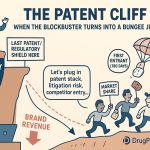
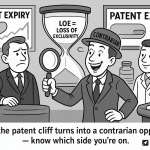
The “Patent Cliff” is the defining existential threat for Pfizer’s current decade. Between 2025 and 2030, the industry faces a loss of approximately $236 billion to $400 billion in branded revenue due to expirations.25 Pfizer is among the most exposed majors.
4.1 Key Assets at Risk
Utilizing insights aligned with DrugPatentWatch analytics, we identify the following high-risk assets:
Table 2: Pfizer Blockbusters Facing Loss of Exclusivity (LOE)
Drug
Indication
Expiration Risk Window
Revenue at Risk (Est.)
Status & Analysis
Eliquis (Apixaban)
Anticoagulant
2027–2029 (US)
~$10B+ (Global)
Critical. Generics expected April 2028 in US. IRA pricing pressure also impacting revenue prior to LOE. 27
Ibrance (Palbociclib)
Breast Cancer
2027
~$4B+
High. Facing competitive pressure from Novartis’ Kisqali and Lilly’s Verzenio even before LOE. 29
Xtandi (Enzalutamide)
Prostate Cancer
2027
~$1B+
Moderate. Some extensions possible via new formulations, but core patents expiring. 29
Xeljanz (Tofacitinib)
Rheumatoid Arthritis
2025–2026 (EU/US)
~$1B+
Imminent. Already facing erosion; formulation patents (XR) may extend partial franchise to 2034 but generic entry expected 2028. 30
Inlyta (Axitinib)
Renal Cancer
2025
<$1B
Immediate. Generic entry expected soon. 31
4.2 The “Effective Patent Life” Erosion
The concept of “Effective Patent Life”—the actual time a drug enjoys market exclusivity after R&D and regulatory delays—is crucial here. For Eliquis and Ibrance, the effective life is being squeezed from both ends:
Back End: Patent expirations and legal challenges (Inter Partes Reviews).
Front End (Commercial): The Inflation Reduction Act (IRA) acts as a pseudo-patent cliff. Eliquis and Ibrance were among the first drugs selected for Medicare price negotiation.27 This government-mandated price reduction degrades the revenue tail of these assets before generics even enter the market.
Defensive Strategy:
Pfizer is employing a classic “Lifecycle Management” defense. For Ibrance, the shift is toward new combinations (e.g., with vepdegestrant). For Eliquis, there is little defense against the LOE; the strategy is purely replacement via the pipeline (e.g., marstacimab for hemophilia, though Beqvez failed). The $1.5 billion LOE impact cited in the 2026 guidance is just the first installment of this erosion.2
Section 5: Strategic Rationalization (The “Kill” List)
A distinguishing feature of Pfizer’s 2026 strategy is an unprecedented ruthlessness in portfolio rationalization. Under the pressure of the 2026 revenue dip, management has abandoned “science projects” to focus on return on investment (ROI). This “kill list” is as important to the company’s future as its acquisition list, as it reallocates resources from low-probability assets to high-conviction bets.
5.1 The Oxbryta Debacle (Sickle Cell)
In September 2025, Pfizer voluntarily withdrew Oxbryta (voxelotor) from worldwide markets due to safety data showing an imbalance in vaso-occlusive crises and fatal events.33
Financial Impact: This is a massive capital destruction event. Oxbryta was the centerpiece of the $5.4 billion acquisition of Global Blood Therapeutics (GBT) in 2022. The withdrawal necessitates huge impairments and effectively wipes out the value of that deal.35
Strategic Signal: The swift withdrawal—despite the high sunk cost—signals a risk-averse regulatory posture. Pfizer is unwilling to fight uphill safety battles for niche indications while it has bigger fish to fry in Oncology and Obesity.
5.2 The Exit from Hemophilia Gene Therapy
Perhaps even more telling is the commercial discontinuation of Beqvez (hemophilia B gene therapy) in early 2026. Despite receiving FDA approval in 2024, Pfizer ceased all development and commercialization, citing “limited interest” from patients and doctors.36
The “One-and-Done” Dilemma: The commercial failure of Beqvez (priced at ~$3.5M) underscores the structural difficulties of the gene therapy business model. Patients and payers are hesitant to embrace high-cost, irreversible therapies when standard-of-care (factor replacement/bispecifics) is effective and manageable.
Broad Retreat: This move, coupled with the termination of the Sangamo hemophilia A partnership and the Duchenne gene therapy failure, marks Pfizer’s effective exit from the gene therapy modality.38 The company has pivoted resources to Hympavzi (marstacimab), a non-factor biologic that fits the traditional pharma recurring-revenue model better than gene therapy.
5.3 Cost Realignment: $4 Billion and Counting
Pfizer has committed to a sweeping cost realignment program. Having already achieved $4.0 billion in net cost savings through 2024, the company anticipates an additional $500 million in savings in 2025.39 This involves significant workforce reductions, including layoffs in manufacturing sites in Ireland and R&D centers in the U.S..40
Manufacturing Optimization: Phase 1 of the Manufacturing Optimization Program is on track to deliver initial savings in late 2025, contributing to a total of $1.5 billion in savings by 2027.41 This reflects a shrinking of the COVID-era manufacturing footprint to match the new demand reality.
Section 6: Political and Regulatory Headwinds
The operating environment in 2026 is heavily influenced by the populist healthcare policies of the U.S. Administration (referenced as current in the provided snippets).
6.1 The “Most Favored Nation” Deal
In September 2025, Pfizer signed a landmark voluntary agreement with the U.S. government.42
The Stick: The administration threatened massive tariffs on pharmaceutical imports and potential “Most Favored Nation” (MFN) executive orders that would peg U.S. prices to lower international benchmarks.
The Carrot: A three-year exemption from future tariffs and “business clarity.”
The Cost: Pfizer agreed to provide Medicaid programs with access to MFN pricing, offer deep discounts (up to 80% on Eucrisa, 40% on Xeljanz) via a direct-to-consumer platform (“TrumpRx”), and committed $70 billion to U.S. manufacturing and R&D.43
Implication: This deal trades margin for volume and certainty. While it compresses net pricing on older assets like Xeljanz, it protects the supply chain of new launch assets from debilitating tariffs. It is a calculated hedge to preserve the oncology launch trajectory.
While Oncology and Obesity grab the headlines, Pfizer’s resilience depends on a diversified mid-to-late stage pipeline.
7.1 Vaccines: The mRNA Combination Quest
Pfizer and BioNTech are racing to launch a combination Influenza/COVID-19 mRNA vaccine.
Status: Phase 3 trials showed robust Influenza A and COVID responses but missed non-inferiority endpoints for Influenza B.45
Adjustment: The companies are reformulating to improve Influenza B immunogenicity. A pivotal Phase 3 trial for the adjusted formulation is imminent, targeting a 2026/2027 launch.46
Opportunity: This “pan-respiratory” shot is the key to revitalizing the vaccine franchise. If successful, it could convert the fatigue-prone COVID booster market into a steady annual “seasonal” market.
7.2 Immunology and Inflammation (I&I)
Velsipity (Etrasimod): Launched for Ulcerative Colitis (UC).
Positioning: An oral S1P modulator positioned before biologics.
Launch Trajectory: Gaining formulary access but facing a crowded market (competitors include BMS’s Zeposia and AbbVie’s Rinvoq). Pfizer highlights it as a key growth driver for the non-COVID portfolio in 2025/2026.47
Litfulo (Ritlecitinib): First-in-class treatment for severe alopecia areata.
Status: Sales are ramping up, driven by high unmet need in a patient population with few approved options.12
Section 8: DrugPatentWatch Integration – The IP Strategy
Integrating the analytical frameworks often championed by DrugPatentWatch, we can decode Pfizer’s defensive IP strategy:
The “Patent Thicket” Approach: For biologics like Padcev and the new Metsera assets, Pfizer is likely pursuing a “thicket” strategy—layering formulation, dosing, and manufacturing process patents to extend exclusivity well beyond the composition-of-matter expiry. This is critical for ADCs, where the complexity of the linker-payload manufacturing offers additional IP fortifications.
Authorized Generics: As Eliquis approaches its cliff, we can anticipate Pfizer deploying “Authorized Generics” strategies to retain some revenue share during the initial generic entry phase, a tactic successfully used with Lipitor in the past.48
Biosimilar Defense: The Ibrance defense relies on shifting the standard of care. By combining Ibrance with next-gen degraders (vepdegestrant), Pfizer aims to make the Ibrance monotherapy (and its future generics) clinically obsolete before the patent actually expires.
Conclusion: The “Buy, Build, and Cut” Strategy
Pfizer in 2026 is a company radically different from the one that entered the decade. It has effectively utilized its COVID-19 cash windfall to purchase a new future, replacing a declining infectious disease and primary care empire with a specialized Oncology and Metabolic fortress.
The strategy is clear:
Buy: Acquire high-barrier, biologic assets (Seagen, Metsera) that are resistant to rapid commoditization.
Build: Invest heavily ($11B/year) in clinical development to expand labels for these acquired assets (e.g., Padcev in MIBC, MET-097i in obesity).
Cut: ruthlessly eliminate “dead weight”—whether it be underperforming gene therapies (Beqvez) or safety-compromised acquisitions (Oxbryta)—and slash operational costs ($4B+) to preserve margins.
Verdict: The 2026 guidance dip is a necessary “clearing event.” If Pfizer’s execution on the Padcev expansion and the Metsera obesity launch holds true, the company is undervalued relative to its long-term cash flow potential. However, the margin for error is non-existent. The patent cliff provides a hard deadline; the pipeline must deliver replacement revenue faster than the LOEs (and the U.S. government) can erode it.
FAQ
Q: Why did Pfizer withdraw Oxbryta?
A: Pfizer voluntarily withdrew Oxbryta (voxelotor) globally in September 2025 after post-marketing clinical data revealed an imbalance in vaso-occlusive crises (VOCs) and fatal events in patients treated with the drug compared to placebo. The company determined the benefit-risk profile was no longer favorable.
Q: What is the significance of the Metsera acquisition?
A: The ~$10B acquisition of Metsera provides Pfizer with a competitive entry into the $150B obesity market. The lead asset, MET-097i, offers a potential once-monthly injectable dosing schedule, differentiating it from the weekly options currently dominated by Eli Lilly (Zepbound) and Novo Nordisk (Wegovy).
Q: How is the Seagen integration performing?
A: The integration is performing ahead of expectations. The Seagen portfolio contributed ~$3.4 billion in revenue in 2024, and assets like Padcev are seeing double-digit growth. The acquisition has fundamentally shifted Pfizer’s oncology pipeline toward Antibody-Drug Conjugates (ADCs).
Q: Why did Pfizer discontinue the Beqvez gene therapy?
A: Despite FDA approval, Pfizer discontinued Beqvez for hemophilia B due to “limited interest” from patients and physicians. The uptake of expensive, one-time gene therapies has been sluggish across the industry, as patients are often satisfied with existing effective treatments.
Q: What is the impact of the U.S. Administration’s policies on Pfizer?
A: Pfizer signed a voluntary agreement with the administration in late 2025. In exchange for a 3-year exemption from pharmaceutical tariffs, Pfizer agreed to offer “Most Favored Nation” pricing to Medicaid, provide steep discounts via a direct-to-consumer platform, and commit to significant U.S. manufacturing investments.
Key Takeaways
Financial Transition: Pfizer faces a revenue trough in 2026 ($59.5–$62.5B) due to COVID erosion and LOEs, but the non-COVID core is growing at ~4%.
Oncology Dominance: The Seagen acquisition has successfully positioned Pfizer as a leader in ADCs, with Padcev serving as a massive growth engine in bladder cancer.
Obesity Catch-Up: The Metsera acquisition is a bold, high-stakes bet on next-gen obesity treatments, targeting a 2028 market entry with a monthly injectable.
Portfolio Ruthlessness: Pfizer is actively pruning its portfolio, exiting the gene therapy space (Beqvez) and writing off the $5.4B GBT acquisition (Oxbryta) to focus capital on higher-return assets.
Patent Cliff Reality: The company faces ~$1.5B in LOE headwinds in 2026 alone, with major expirations for Eliquis and Ibrance looming in 2027–2028, necessitating flawless pipeline execution.