1. Introduction: Reshaping the Future of Pharmaceutical Innovation
The pharmaceutical industry stands at a pivotal juncture, grappling with the inherent complexities and inefficiencies of traditional drug discovery. This arduous process is characterized by exorbitant costs, protracted timelines, and a dishearteningly low success rate. On average, only about 10% of drugs that enter clinical trials ultimately achieve regulatory approval, often due to high attrition rates stemming from safety concerns and a lack of efficacy.1 The entire journey from initial concept to market can span 10 to 15 years, with the cost of bringing a single new medication to market frequently exceeding $2.6 billion.3 This sequential, resource-intensive pipeline, encompassing target identification, hit discovery, lead optimization, preclinical testing, and lengthy clinical trials, demands vast investments in both time and capital.1
This recurring challenge of high costs, lengthy timelines, and low success rates represents a significant economic bottleneck for the pharmaceutical industry. The immense investment and inherent risk associated with each drug candidate mean that even marginal improvements in efficiency or success rates can translate into billions of dollars in savings, accelerated market entry, and ultimately, faster patient access to critical therapies. This profound economic pressure serves as a primary, undeniable driver for the industry’s rapid and widespread adoption of artificial intelligence (AI). This bottleneck directly impacts both the accessibility of new medicines for patients globally and the financial sustainability of R&D-intensive pharmaceutical companies. AI’s promise to alleviate this pressure is precisely why its integration is not just a technological trend but a strategic and economic imperative for the sector.
The dawn of AI in pharma signals a transformative paradigm shift. Artificial intelligence and its subsets, machine learning (ML) and deep learning (DL), are emerging as transformative forces, offering unprecedented potential to address the persistent challenges of traditional drug discovery.1 By enhancing data analysis and predictive modeling, AI is revolutionizing drug development.2 Generative AI, in particular, is proving transformational, capable of accelerating the design and development of medicines by simulating complex biological systems and efficiently evaluating vast datasets.8 It distinguishes itself by its ability to generate entirely new information based on patterns learned from existing data, moving beyond mere analysis.9
The research consistently contrasts traditional drug discovery methods, often characterized as “trial-and-error” 2, with AI’s capacity for “predictive modeling” 2 and “precision”.8 This highlights a fundamental shift in the underlying scientific methodology of drug discovery, moving from exhaustive, often serendipitous, empirical testing towards intelligent, data-driven hypothesis generation, virtual validation, and targeted experimentation. The cause of this paradigm shift is AI’s unparalleled ability to analyze vast datasets with speed and accuracy.8 The effect is the enablement of predictive precision, which in turn leads to the tangible benefits of reduced time, cost, and risk throughout the drug development lifecycle.
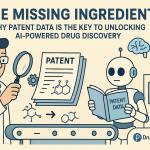
This report will delve into how Artificial Intelligence, by strategically leveraging the rich, structured, and often underutilized information contained within pharmaceutical patent data, can not only profoundly accelerate drug discovery but also critically inform the generation of novel molecular entities. This integration is key to ensuring the intellectual property originality and patentability of newly discovered compounds, thereby safeguarding market exclusivity and fostering sustainable innovation in the fiercely competitive pharmaceutical landscape.
2. The AI Revolution in Pharmaceutical R&D: A Multi-faceted Transformation
AI’s influence is pervasive, enhancing virtually every stage of the drug development pipeline, from the earliest phases of target identification and drug design to the optimization of complex clinical trial strategies.13
From Target to Therapy: AI’s Multifaceted Role Across the Drug Discovery Pipeline
Target Identification & Validation: AI models excel at analyzing vast genomic, proteomic, and transcriptomic datasets to uncover novel druggable targets with significantly higher speed and accuracy than traditional methods.7 This capability reduces the time required for target validation and enhances the precision of therapeutic target selection, even identifying non-obvious targets through computational predictions.7
Hit Discovery & Lead Optimization: AI systems can virtually screen and predict the properties of millions of compounds in a fraction of the time required for traditional experimental assays.6 They assess critical features like binding affinities, molecular stability, and ADMET (absorption, distribution, metabolism, excretion, and toxicity) profiles with high precision.6 This dramatically improves efficiency and accuracy in lead optimization, reducing costly failures by predicting how molecular modifications impact drug properties.6
De Novo Drug Design: Generative AI models, including Generative Adversarial Networks (GANs), Variational Autoencoders (VAEs), and Transformer models, are capable of designing entirely new molecules from scratch. These “de novo” designs possess desired properties such as efficacy, safety, and optimized solubility or bioavailability, allowing researchers to move beyond simply screening existing compounds to creating bespoke molecules tailored to combat specific diseases.8
Preclinical Testing & Synthesis: AI contributes by training predictive models on extensive toxicology databases, simulating compound activity within the human body, and hypothesizing less toxic analogs of promising leads.9 Furthermore, AI can generate effective and cost-saving chemical synthesis routes for new compounds, forecasting optimal reagents and conditions to minimize trial-and-error in the lab.9
Clinical Trials: AI supports the efficient design of clinical trials by identifying optimal dosing regimens, patient populations, and biomarkers to measure efficacy.7 It can also generate simulated patient cohorts for rare diseases and augment image data for training diagnostic models.9 AI’s predictive capabilities help reduce Phase II/III trial failures by anticipating drug response variability and enhancing recruitment efficiency.7
Drug Repurposing: AI accelerates the identification of new therapeutic uses for existing drugs, significantly reducing R&D costs and shortening clinical trial timelines due to existing safety data.7
While the available information effectively details AI’s impact on individual stages of drug discovery, the profound revolution truly manifests in how AI’s efficiencies compound across the entire pipeline. For instance, more accurate target identification leads to the design of more promising lead compounds, which in turn results in more efficient and successful clinical trials. This creates a powerful positive feedback loop, dramatically shortening the overall “concept to clinic” turnaround time and increasing the probability of success at each subsequent stage. AI’s effective application at an upstream stage, such as target identification, causes a ripple effect of improvements in downstream stages like lead optimization, preclinical testing, and clinical trials. This synergistic effect leads to a multiplicative increase in overall efficiency, accuracy, and success rates across the entire drug development continuum.
Key AI Architectures and Their Applications
AI in drug discovery leverages a diverse collection of computational methods, including machine learning, deep learning, graph neural networks (GNNs), and natural language processing (NLP).6
Graph Neural Networks (GNNs): Architectures such as GCNs, GATs, RWGNN, DTI-HETA, and MSGNN-DTA, are particularly powerful for molecular modeling. They directly learn from the graph-based structure of molecules, capturing complex relationships between atoms and bonds to predict target identification, drug-target interaction (DTI), and binding affinity.1
Transformer Architectures: Including BERT, Mol-BERT, LEP-AD, and Transformer-BERT, are utilized for target identification, molecular property prediction, toxicity prediction, and binding affinity prediction.1
Generative Models: Generative Adversarial Networks (GANs) and Variational Autoencoders (VAEs) are fundamental to de novo drug design, generating novel molecular structures and virtual libraries.7
Meta-Learning: Applied in models like Meta-GAT for DTI prediction, proving especially valuable in low-data scenarios.1
Large Language Models (LLMs): Increasingly used to extract insights from biomedical literature, summarize recent research, suggest new research ideas, and support scientific writing and regulatory reporting.4 They can also interface with chemical databases and patent repositories, aiding in the identification of promising existing compounds.4
The research clearly delineates various AI architectures and their specific applications. This is not merely a list of tools; it underscores that different AI models are specialized for distinct, complex tasks within the intricate drug discovery workflow. Furthermore, the mention of LLMs interfacing with chemical and patent databases suggests a powerful synergy where different AI types can be integrated to work collaboratively, creating a more comprehensive and robust solution than any single model could achieve. The pharmaceutical industry is not adopting a singular “AI solution” but rather a sophisticated suite of specialized AI tools. This integrated approach allows for the optimization of specific challenges at each stage of drug development, leading to a more robust, adaptable, and ultimately more successful R&D ecosystem.
Table 1: Key AI Applications Across the Drug Discovery Pipeline
Accelerated identification of new therapeutic uses, Reduced R&D costs, Shortened clinical trial timelines
7
Regulatory & Literature Analysis
Large Language Models (LLMs)
Summarization of scientific literature, Suggestion of new research ideas, Support for scientific writing and regulatory reporting, Patent analysis
4
3. The Strategic Imperative of Pharmaceutical Patent Data
Safeguarding Innovation: Understanding Patent Types and Their Critical Role
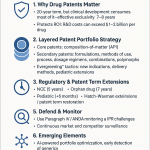
Pharmaceutical patents are legal instruments granted to inventors or companies, providing exclusive rights to produce, use, and sell their innovation for a specified period, typically 20 years from the filing date.18 These patents are not merely legal formalities; they are fundamental to encouraging sustained investment in research and development, allowing companies to recoup the immense costs associated with novel drug discovery and lengthy clinical trials, thereby providing a crucial period of market exclusivity.18
The available information consistently emphasizes patents as crucial and essential for safeguarding innovation and enabling companies to recoup R&D costs.18 This goes beyond a mere legal right; it represents the economic bedrock upon which the entire pharmaceutical business model is built. Without the promise of market exclusivity and the ability to generate returns on investment, the multi-billion dollar, decade-long commitment to drug discovery would be largely untenable for private enterprises. The current patent system, despite ongoing debates and challenges regarding access to affordable medication 18, is inextricably linked to the pharmaceutical industry’s capacity and incentive to innovate. Any significant disruption to patentability, such as the legal ambiguities surrounding AI inventorship, directly threatens the industry’s investment incentives and, consequently, the development of new, life-saving medicines.
Here are the key types of pharmaceutical patents:
Product Patents: These are perhaps the most common, protecting a specific medical product, including active ingredients (chemical structures, genetic sequences) and their formulations.18 They are crucial for safeguarding new drugs.18
Process Patents: These focus on protecting the innovative methods of producing a pharmaceutical product, such as manufacturing procedures or chemical processes that enhance efficiency.18
Use Patents (Method of Use): These protect specific new therapeutic uses for a known product. This encourages repurposing existing medications for new conditions, contributing to improved healthcare outcomes.18
Formulation Patents: These protect the unique combination of ingredients in a drug, including special carriers, delivery mechanisms, or packaging that optimize performance, efficacy, or patient compliance.18
Combination Patents: These cater to drugs that combine multiple active ingredients to create a new therapy, protecting synergistic approaches for complex diseases.18
Biomarker Discovery/Application Patents: These protect the discovery of novel biomarkers instrumental for a therapy, or unique methods of utilizing existing biomarkers to enhance drug efficacy or identify suitable candidates.23
Genetic Material Patents: While natural genes cannot be patented, synthesized unique versions of genes or novel methods for their utilization can be protected.23 Diagnostic processes tied to specific therapeutic approaches are also often patentable.23
Competitive Intelligence: Patent Data as a Window into Competitor R&D
Systematic patent monitoring serves as a powerful early warning system for competitive threats. By identifying new patent filings in areas of interest, organizations can detect emerging competitive products years before they enter clinical trials or receive regulatory approval.24 This intelligence allows for informed decisions about R&D investments, potentially redirecting resources to more promising or less crowded therapeutic areas, and facilitates accurate forecasting of market dynamics.24
AI-powered competitive intelligence (CI) extends beyond basic tracking to anticipate market developments, identify potential opportunities, and provide data-driven insights for strategic planning.25 These AI systems aggregate both structured data (clinical trials, patents, regulatory filings) and unstructured sources (news, social media), leveraging Natural Language Processing (NLP) to process and extract insights from vast amounts of text-based data.25
The research explicitly describes patent monitoring as an “early warning system” 24 and AI-powered CI as enabling companies to “adjust their strategies, sometimes months ahead of market announcements”.25 This signifies a fundamental shift in competitive intelligence from a reactive function (responding to competitor moves) to a proactive strategic capability. It empowers companies not just to respond to competitors but to anticipate their actions, identify market gaps, and strategically shape their own R&D and market positioning. The cause is the public availability of patent applications (typically 18 months after filing 24) combined with AI’s advanced capability to rapidly process, analyze, and interpret this vast and complex data.24 The effect is the ability to gain a crucial “time advantage” 26 over less vigilant competitors, leading to “data-driven decisions that drive competitive advantage” 24 and the identification of “white spaces” 24 for innovation.
Table 2: Essential Pharmaceutical Patent Types and Their Strategic Role
Patent Type
What it Protects (Description)
Strategic Role/Importance
Relevant Snippet IDs
Product Patent
Active ingredient, chemical structure, genetic sequence, and formulations of a drug
Core market exclusivity, safeguarding new drugs, competitive edge
18
Process Patent
Innovative manufacturing procedures or chemical processes for producing a pharmaceutical product
Production efficiency, cost reduction, exclusive production methods
18
Use Patent
Specific new therapeutic uses for a known product (e.g., repurposing existing drugs for new conditions)
Encourages drug repurposing, extended market life, improved healthcare outcomes
18
Formulation Patent
Unique combination of ingredients, special carriers, delivery mechanisms, or packaging that optimizes drug performance
Enhanced drug efficacy, patient compliance, product stability, extended market exclusivity
18
Combination Patent
Drugs that combine multiple active ingredients to create a new therapy
Protection for synergistic treatments, beneficial for complex diseases
18
Biomarker Discovery/Application Patent
Discovery of novel biomarkers instrumental for a therapy, or unique methods of utilizing existing biomarkers
Diagnostic value, patient stratification, enhancing drug efficacy
23
Modified Genetic Material Patent
Synthesized unique versions of a gene or novel methods for its utilization; diagnostic processes tied to therapeutic approaches
Foundation for future biologics and gene therapies, protection of novel genetic applications
23
4. Synergy in Action: AI-Driven Novel Drug Generation and Patent Intelligence
De Novo Design: AI’s Ability to Create Novel Molecular Structures
Generative AI marks a profound shift from prediction to creation, enabling the design of entirely new molecular structures from scratch, unconstrained by evolutionary history and with no direct precedent in nature.10 These advanced algorithms are trained on massive libraries of known molecules and their properties, allowing them to learn the fundamental principles of chemistry and biology.10
AI excels at exploring the immense chemical design space, estimated to contain around 10^60 potential drug-like molecules – a realm far beyond human or traditional screening capabilities.10 This allows AI to identify promising candidates with astonishing speed and precision, often overlooking what human designers might miss.10 Companies like Insilico Medicine utilize generative chemistry modules, such as Chemistry42, which employ structure-based drug design (SBDD) workflows to generate vast libraries of virtual structures. This process is often iterative, with human scientists providing feedback on optimizing virtual screening and refining compound structures.28
While many AI applications in drug discovery focus on optimizing existing processes or refining known compounds 6, the concept of
de novo drug design 10 represents a qualitative leap. Here, AI is not merely improving upon existing knowledge but creating entirely novel molecular entities. This fundamentally redefines the starting point of drug discovery, shifting from a process of screening and modifying pre-existing compounds to one of bespoke, intelligent design. This creative capacity of generative AI could lead to the discovery of drug candidates with unprecedented mechanisms of action or entirely new property profiles. This holds immense potential for addressing previously “undruggable” targets, tackling rare and neglected diseases more effectively 8, and opening up entirely new therapeutic avenues that were previously inaccessible through traditional methods.
Novelty Screening and Prior Art Avoidance: Leveraging Patent Data to Ensure IP Originality
A critical challenge in AI-driven drug discovery is the risk that AI systems, trained on vast public databases, may inadvertently replicate prior art, thereby jeopardizing the novelty requirement for patent eligibility.14
AI algorithms are being developed to directly address this by assessing patent novelty. They achieve this by comparing newly generated molecular structures or claims with cited prior art documents, mimicking the rigorous process undertaken by human patent examiners.29 Generative models, in particular, demonstrate reasonable accuracy in these predictions and can provide interpretable explanations for their novelty assessments.29 AI-powered Natural Language Processing (NLP) engines play a crucial role in assessing target novelty and disease association scoring. They analyze millions of data files, including patents, scientific publications, grants, and clinical trial databases, to identify unique opportunities and potential overlaps.28
Advanced multi-agent AI frameworks, such as PatentFinder, are specifically designed to analyze patent claims and molecular structures collaboratively. These tools generate highly interpretable infringement reports, significantly outperforming baseline Large Language Model (LLM) methods in accuracy.30 They also facilitate the construction of specialized datasets, like MolPatent-240, for robust evaluation of patent protection.30
The very speed and scale at which AI can generate novel molecular entities 8 inherently increase the risk of inadvertently creating compounds that lack true novelty or infringe upon existing patents.14 The available information highlights that AI is now being specifically deployed to counter this heightened risk by performing sophisticated, automated novelty and prior art checks.28 This establishes a critical feedback loop: AI accelerates the discovery process, and simultaneously, AI helps manage the complex intellectual property (IP) challenges that arise from this acceleration. The cause is the high volume and rapid generation of molecular entities by AI, coupled with the vast and ever-growing landscape of prior art. The effect is the imperative for AI-powered patent intelligence tools to ensure novelty and avoid infringement. This, in turn, causes a significant reduction in the risk of patent rejection, costly litigation, and wasted R&D efforts, thereby streamlining the path to market.
Competitive Landscape Analysis: AI-Powered Insights from Patent Filings
AI patent analytics significantly enhances the accuracy and efficiency of analyzing thousands of patents, enabling the rapid identification of relevant patterns, structural similarities, and key differences that might be imperceptible to a human analyst.27 These systems can automatically categorize patents based on technology areas, assess the strength and novelty of patent claims, and even predict the potential market impact of a patent.27 Continuous monitoring of patent filings provides real-time alerts on new patents relevant to a company’s operations, allowing businesses to proactively adjust strategies and stay ahead of competitors.27
AI can uncover hidden opportunities within the patent landscape, such as identifying technological “white spaces” – areas with limited patent activity but significant therapeutic potential – for future innovation.24 It also aids in discovering potential licensing or acquisition targets by analyzing competitor patent portfolios.27 Platforms like DrugPatentWatch offer comprehensive functionalities for competitive intelligence, including tracking competitor R&D pipelines, identifying emerging technology trends, forecasting potential product launches, and mapping competitor technology platforms.24 These platforms provide granular data on litigation, patent expirations, and drugs currently in development, offering a holistic view of the competitive landscape.31
The sheer volume and complexity of global patent data 1 make manual analysis an overwhelming and often incomplete task, leading to “fragmented, reactive competitive intelligence approaches”.25 AI transforms this “big data” challenge into a strategic advantage by providing “actionable insights” 25 that human analysts alone cannot achieve. This enables a shift from simply collecting data to generating predictive and prescriptive intelligence. AI-powered patent intelligence fundamentally shifts competitive strategy from reactive observation to proactive market shaping. By identifying “white spaces” 24 and optimizing R&D investments 24, companies can strategically position themselves for market leadership, reduce redundant efforts, and maximize their return on R&D investments.
5. Unlocking Value: Benefits of Integrating AI and Patent Data
Accelerated Timelines and Cost Efficiencies
AI has the potential to dramatically cut drug discovery timelines by up to 50%, reducing the traditional 10-15 years to as little as five years.3 This acceleration is critical for diseases where time is of the essence, such as cancer or rare genetic disorders.3 Furthermore, AI can reduce overall R&D costs by up to 40%, primarily by reducing the number of failed experiments, streamlining lab work, and identifying promising drug candidates faster.3 Every failed candidate represents tens or hundreds of millions of dollars in wasted investment, which AI helps to mitigate.4
Notable examples include Insilico Medicine’s journey, which saw an AI-designed drug progress from target identification to preclinical candidate in just 18 months, significantly faster than the industry average of 5-6 years.5 This efficiency gain can shorten the overall development time by months or even years.4 The compelling quantitative data regarding cost and time reductions 3 is not merely about achieving individual project savings; it signifies a systemic improvement in the Return on Investment (ROI) for the entire drug development enterprise. Shorter timelines mean earlier market entry, which extends the effective patent life of a drug 4 and thereby maximizes its revenue generation potential. Concurrently, significant cost reductions free up substantial capital that can be reinvested into further research, or potentially used to reduce drug prices for consumers. AI’s efficiency gains (the cause) directly lead to reduced R&D costs and shortened development timelines (the direct effects). These direct effects, in turn, cause a substantial improvement in the overall ROI for pharmaceutical companies, making drug development a more financially viable and attractive endeavor.
Enhanced Drug Candidate Novelty and Efficacy
Generative AI is capable of designing novel molecules with precisely desired properties, including optimized efficacy and safety profiles.8 This goes beyond traditional screening by creating bespoke compounds tailored to specific targets.10 AI-driven de novo design can generate diverse chemical libraries with optimized binding affinities, leading to improved drug-likeness and reduced toxicity even before compounds reach the synthesis bench.6 Crucially, AI can also strengthen patent applications by generating thousands of examples or “species” that can be included to support broader claims. Instead of a handful of examples, companies can now include hundreds, many of which are AI-produced, significantly enhancing the scope and robustness of the patent application.35
While the immediate benefits of AI in drug discovery often focus on speed and cost reduction, the available information highlights an equally significant impact: the enhancement of quality (efficacy, safety, drug-likeness) and scope (generating numerous examples for broader patent claims). This indicates that AI is not merely accelerating the production of drugs, but potentially facilitating the discovery and development of better drugs that are also more comprehensively protected by intellectual property. This dual capability allows pharmaceutical companies to pursue more ambitious and complex drug targets, knowing that AI can assist not only in navigating the vast chemical space to find promising candidates but also in securing robust and defensible patent protection for these novel innovations.
Informed Strategic Decision-Making and Market Positioning
Patent intelligence, particularly when powered by AI, enables more effective allocation of R&D resources by identifying promising areas for investment and potential pitfalls to avoid.26 It helps identify crucial “white spaces” – therapeutic targets or delivery approaches with limited existing patent coverage but significant therapeutic potential. These areas often represent the most attractive opportunities for pharmaceutical innovation, offering the possibility of substantial returns with reduced competitive pressure.24 AI-powered competitive intelligence supports major strategic decisions, including potential mergers and acquisitions (M&A), licensing agreements, and market entry strategies, by providing predictive insights into clinical trial success rates, regulatory hurdles, and early M&A signals.25
Traditional competitive intelligence often involves reactive observation. However, AI, by integrating patent data with other diverse intelligence sources such as clinical trial registrations, scientific publications, and regulatory submissions 24, transforms this into a proactive, predictive, and highly agile strategic function. Companies can anticipate market shifts, identify unmet medical needs, and strategically position themselves for market leadership rather than simply reacting to competitor moves. AI’s capacity for advanced analytics on vast, integrated datasets (the cause) leads to the ability to move beyond basic competitive monitoring to sophisticated “strategic decision support”.25 This, in turn, causes improved market positioning, reduced competitive risks, and optimized resource allocation, ultimately driving sustained growth and innovation.
Case Studies and Success Stories
Insilico Medicine: A leading example is Insilico Medicine, which leveraged its AI platform to identify a novel target for aging-related diseases. Their AI-designed drug, INS018_055, advanced from target discovery to preclinical candidate nomination in just 18 months, a timeline significantly faster than industry averages of 5-6 years.5 This drug has since successfully completed a Phase IIa clinical study, demonstrating favorable pharmacokinetic and safety profiles, and even unexpected dose-dependent efficacy for idiopathic pulmonary fibrosis.5 This case provides crucial real-world validation of AI’s potential in drug development.
Halicin: In 2020, an AI system made headlines by identifying a powerful new antibiotic, halicin, which proved effective against several drug-resistant bacteria. This discovery was achieved in a matter of days, a task that would traditionally have taken years of laboratory work.10
While projections and promises about AI’s potential are abundant, concrete case studies, particularly the progression of Insilico Medicine’s INS018_055 into clinical trials 5, provide crucial validation that AI is transitioning “from hypothetical to reality”.5 These examples demonstrate that AI is not merely a theoretical concept or a supportive tool, but a practical, transformative force capable of delivering tangible and significant results in the complex domain of drug discovery. The existence of such success stories builds critical confidence among investors, pharmaceutical executives, and the broader scientific community, thereby driving further adoption, strategic partnerships, and substantial investment in AI-driven R&D initiatives.3
6. Navigating the Complexities: Challenges and Ethical Considerations
The Inventorship Conundrum: Human Contribution in AI-Assisted Inventions
A significant legal and ethical challenge arises from the current intellectual property (IP) landscape: under existing laws in most jurisdictions, an AI cannot legally be named as an inventor on a patent; inventorship remains strictly human-centric.10 The U.S. Patent and Trademark Office (USPTO) 2024 guidance clarifies that AI-assisted inventions can be patentable, but only if a human provides a “significant contribution” to either the conception or reduction to practice of the invention.10 Simply owning or overseeing an AI system is insufficient for claiming inventorship; active human involvement is paramount.10
Examples of “significant human contribution” include designing or training an AI system for a specific problem, providing targeted prompts, or applying human judgment and expertise to evaluate, select, and refine AI-generated outputs.35 Companies are advised to maintain meticulous records documenting human contributions throughout the entire discovery process, akin to the detailed lab notebooks once required in a “first to invent” patent system.10 Furthermore, the widespread access to AI has implicitly raised the standard for what is considered “non-obvious” in patent law, potentially making it harder to prove that innovations are non-obvious and therefore patentable.35
The core issue at play is not merely who receives credit, but how the fundamental legal concept of “invention” itself is being redefined by the advent of increasingly autonomous AI capabilities. The “significant human contribution” requirement 10 highlights a growing tension between traditional human-centric IP law and the advanced, often opaque, generative capabilities of AI. The “black box problem” 10, where the internal workings of complex AI models are difficult to interpret, further complicates the ability to demonstrate human conceptual input. This legal ambiguity creates considerable uncertainty and risk for pharmaceutical companies investing heavily in AI-driven R&D. It necessitates the adoption of meticulous documentation practices and potentially new contractual agreements 35 to safeguard intellectual property. Ultimately, this evolving landscape raises profound questions about whether current IP frameworks are adequately incentivizing innovation in an era where machines are increasingly contributing to inventive steps.
Data Quality, Interpretability, and Bias: Ensuring Robust and Ethical AI Models
The performance of AI models is intrinsically linked to the quality of their training data; poor data quality, lack of availability, and limited interoperability across diverse datasets can severely hamper the growth and effectiveness of AI in drug discovery.4 Many complex AI models, particularly deep learning architectures, often function as “black boxes,” making it challenging to understand the reasoning behind their predictions and decisions.10 This lack of interpretability is a critical barrier for regulatory acceptance and building trust among scientific and medical stakeholders.43 The field of Explainable AI (XAI), with techniques like SHAP and LIME, is gaining traction to address this.43 A significant ethical concern is the potential for AI models to inherit and perpetuate biases if trained on unrepresentative or skewed datasets.14 Such algorithmic biases can lead to inequitable outcomes in drug design, patient stratification, or clinical trial recruitment, raising serious ethical and regulatory implications.14
The challenges of data quality, model interpretability, and algorithmic bias are not isolated issues; they are deeply interconnected and collectively form the foundational pillars of trustworthy AI, particularly within a highly regulated and patient-centric industry like pharmaceuticals. If the underlying data is of poor quality, the models will inevitably be unreliable; if the models are uninterpretable, their predictions cannot be validated or fully trusted by human experts or regulators; and if they are biased, they risk perpetuating health disparities and undermining ethical principles. Addressing these issues comprehensively is paramount for widespread adoption and achieving regulatory approval. Inadequate data quality (the primary cause) directly leads to the development of biased or unreliable AI models (a significant effect). These flawed models, in turn, cause substantial regulatory and ethical hurdles, potentially hindering the widespread adoption of AI in critical drug discovery phases and ultimately reducing the potential ROI for pharmaceutical companies.
Regulatory Frameworks: Evolving Guidelines from Bodies like the USPTO and FDA
Regulatory bodies, such as the U.S. Food and Drug Administration (FDA), are actively developing frameworks and guidance to evaluate AI research tools and the data they generate.44 The FDA published a draft guidance in 2025 titled, “Considerations for the Use of Artificial Intelligence to Support Regulatory Decision Making for Drug and Biological Products,” signaling a proactive approach to this evolving field.45 Key regulatory challenges include validating AI models whose behaviors may change over time (known as “model drift”), ensuring strict data integrity in accordance with ALCOA+ principles (Attributable, Legible, Contemporaneous, Original, Accurate, Complete, Consistent, Enduring, and Available), and demanding explainability for AI-driven decisions.43 Continuous learning models, while powerful, are viewed skeptically by regulators unless robust mechanisms for tracking and auditing modifications are in place.43 The concept of “dynamic validation” and “predetermined change control protocols” are emerging to address these concerns.43
AI technology is advancing at an “incredibly fast” pace 46, constantly pushing the boundaries of what’s possible in drug discovery. In contrast, regulatory frameworks, by their nature, are designed for stability and thoroughness, and thus are inherently slower to adapt to rapid technological shifts.42 This disparity creates a period of “regulatory ambiguity and risk aversion” 12, which can significantly slow down the adoption and scaling of AI solutions in the pharmaceutical industry. While the FDA’s 2025 guidance 45 is a crucial step, the industry must remain agile and proactive in anticipating and adapting to evolving guidelines. The speed mismatch between AI development and regulatory adaptation means that pharmaceutical companies cannot afford to wait for fully mature regulations. Instead, they must proactively engage with regulatory bodies, adopt “Explainability by Design” 43 principles in their AI development, and build robust internal governance frameworks to ensure future compliance and avoid costly delays in drug approval processes.
Data Privacy and Security in AI-Driven Pharma
The integration of AI technologies, which often rely on vast amounts of sensitive health data, brings forth significant challenges in ensuring data privacy and security within the pharmaceutical industry.47 Ethical AI practices are paramount not only for legal compliance but also for safeguarding patient rights and fostering responsible innovation.49 This includes addressing heightened cybersecurity risks and complex data privacy challenges.50 Compliance with stringent data protection laws, such as HIPAA (Health Insurance Portability and Accountability Act) and regulations like 21 CFR Part 50 (Protection of Human Subjects) and 45 CFR Part 46 (Common Rule), is crucial.44 This necessitates the development of robust governance frameworks, specialized data protection offices, and secure data-sharing protocols to preserve patient confidentiality while enabling data-driven innovation.44
Beyond mere legal compliance, ensuring robust data privacy and security measures 44 is fundamental to maintaining patient trust. In the pharmaceutical sector, access to vast, sensitive datasets—including genomic profiles, electronic health records, and clinical trial data—is indispensable for training and validating AI models. Without public and patient trust in how their data is handled and protected, the willingness to share such information will diminish, severely hampering the ability to collect and leverage the necessary data for AI-driven drug discovery. A lack of robust data privacy and security measures (the cause) directly leads to eroded patient and public trust (a significant effect). This erosion of trust, in turn, causes reduced data availability for AI model training and increased regulatory scrutiny, ultimately hindering the progress and widespread adoption of AI-driven drug discovery initiatives.
Table 3: Key Challenges and Strategic Solutions in AI-Driven Drug Discovery
Challenge Area
Primary Issues
Strategic Solutions/Best Practices
Relevant Snippet IDs
Inventorship & IP
Defining human contribution, AI cannot be inventor, “Non-obviousness” standard raised
Meticulous documentation of human contributions, Proactive IP strategy, New contractual agreements
10
Data Quality & Availability
Fragmented/proprietary datasets, Lack of interoperability, Inadequate data for training
Robust data governance, Data standardization & integration, Public-private data sharing initiatives
4
Model Interpretability
“Black-box” algorithms, Difficulty in understanding AI predictions, Lack of transparency
Development & adoption of Explainable AI (XAI) techniques (SHAP, LIME), “Explainability by Design” principles
10
Algorithmic Bias
Unrepresentative or skewed training data, Perpetuation of health disparities
Diverse & representative datasets, Bias detection & mitigation strategies, Ethical AI frameworks
14
Regulatory Ambiguity
Evolving & unclear guidelines, Model drift, Continuous learning challenges
Proactive engagement with regulatory bodies (e.g., FDA), Dynamic validation methodologies, Predetermined change control protocols
High compute demands for training large models, Cost of infrastructure
Leveraging cloud-based AI platforms (SaaS), Strategic partnerships for resource access
1
Talent & Culture Gaps
Shortage of skilled AI/data science talent, Resistance to change within organizations
Cross-functional training programs, Human-in-the-loop design, Fostering digital-first culture, Strategic collaborations
12
7. Market Outlook and Future Trajectories
Growth Projections and Investment Landscape
The global AI in drug discovery market is experiencing robust growth, valued at US1.39billionin2023andprojectedtoreachUS6.89 billion by 2029, demonstrating a resilient Compound Annual Growth Rate (CAGR) of 29.9%.38 Another projection estimates a market size of $5.1 billion by 2027 with a CAGR of 40%.3 The financial impact is substantial: AI applications are estimated to potentially create between $350 billion and $410 billion in annual value for pharmaceutical companies by 2025 19, with generative AI alone unlocking $60 billion to $110 billion.12 Industry adoption is widespread, with over 90% of pharmaceutical companies actively investing in AI-driven drug discovery.3
Geographically, North America dominated the AI in drug discovery market in 2023, driven by high per-capita healthcare expenditure and significant investment in healthcare technologies. Europe and Asia Pacific are also expected to witness robust growth, fueled by increasing investments and the need to address overburdened healthcare systems.38 The compelling market growth figures 3 and the remarkably high adoption rates 3 unequivocally indicate that AI in drug discovery is well past the “early adopter” phase. It is rapidly approaching, if not already at, a “tipping point” where it transitions from an innovative advantage to a standard, indispensable component of pharmaceutical R&D. The staggering projected value creation 12 further underscores this inevitability, making AI an economic imperative rather than a mere technological option. For pharmaceutical companies, this means that not embracing AI or failing to scale its implementation responsibly carries a significant risk of falling behind competitors.3 The market is clearly shifting towards AI-first approaches, and strategic collaborations between traditional pharma giants and AI-biotech firms are becoming a key trend to leverage specialized AI expertise and accelerate pipelines.5
Emerging Trends and Opportunities
A significant driver for AI adoption is the increasing focus on precision medicine and personalized medicine.8 AI can integrate patient-specific data, such as genetic profiles and medical history, to design bespoke drug candidates tailored to individual requirements, thereby improving therapeutic results and reducing adverse effects.8 AI is proving instrumental in tackling rare and neglected diseases. It supports the identification of potential drug candidates for these conditions by effectively evaluating minimal datasets and predicting novel molecular structures, making previously unviable research areas economically feasible.5 Beyond small molecules, AI’s impact is expanding into biologics design, protein engineering, messenger ribonucleic acid (mRNA) optimization, and advanced clinical trial design, suggesting its influence will extend across the entire pharmaceutical value chain.5
While AI’s general efficiency gains (speed, cost reduction) are widely recognized, its specific application to personalized medicine and rare diseases 5 highlights a crucial societal benefit. These areas have historically been underserved due to the prohibitive costs, high risks, and small patient populations associated with traditional R&D models. AI’s unique ability to work effectively with “minimal datasets” 8 and to optimize therapies for individual patient needs makes the development of treatments for these previously challenging conditions significantly more viable. AI has the profound potential to democratize drug discovery, shifting the economic feasibility landscape to enable the development of therapies for conditions that affect smaller patient populations or require highly individualized approaches. This could lead to more equitable healthcare outcomes globally, addressing critical unmet medical needs that traditional business models often struggle to justify.
Expert Perspectives on AI’s Enduring Impact
Industry leaders and experts offer compelling perspectives on AI’s role:
“The future of AI is not about replacing humans, it’s about augmenting human capabilities.” – Sundar Pichai, CEO of Google.46 This perspective emphasizes AI as a collaborative tool that enhances human productivity and creativity.
“AI will not replace humans, but those who use AI will replace those who don’t.” – Ginni Rometty, Former CEO of IBM.46 This highlights the competitive imperative for AI adoption, suggesting that proficiency in AI will be a differentiator in the workforce.
An ex-DeepMind scientist articulates a “perfect world” vision where AI can, “at a push of a button,” generate drug candidates that meet all desired criteria, de-risk subsequent steps, shave time off the process, and ultimately yield “better drugs, faster”.52 This captures the aspirational potential of AI.
The industry is approaching a key milestone: the first regulatory approval of an AI-designed drug. This will mark a transformative moment, validating AI not just as a tool but as a source of novel and unique therapies.5
The consistent message from industry leaders and experts 46 emphasizes AI’s role as an augmenter of human capabilities rather than a replacement. This indicates a critical shift in strategic thinking: long-term success in AI-driven drug discovery hinges not on fully autonomous AI, but on effective human-AI collaboration. AI is best suited for handling data-intensive, repetitive tasks, generating hypotheses, and exploring vast chemical spaces, while human experts provide irreplaceable critical oversight, interpret complex results, make nuanced strategic decisions, and ensure ethical considerations are met. This hybrid, synergistic approach is explicitly highlighted as key to navigating both the technical complexities and the legal/ethical challenges, particularly concerning patent inventorship.12 The future of pharmaceutical R&D will be defined by highly integrated human-AI teams. Companies that successfully foster this collaborative environment will be better positioned to maximize AI’s transformative potential, accelerate innovation, and deliver groundbreaking therapies to patients while ensuring accountability and trust.
8. Conclusion: Charting a Course for the Future of Pharmaceutical R&D
The integration of Artificial Intelligence, particularly generative AI, is fundamentally reshaping the pharmaceutical industry, moving drug discovery from a costly, time-consuming, and often serendipitous endeavor to a more efficient, precise, and predictive science. By leveraging vast datasets, including the invaluable information embedded within patent data, AI accelerates timelines, dramatically reduces R&D costs, and enhances the novelty and efficacy of drug candidates. This strategic synergy not only streamlines the identification of promising new molecular entities but also crucially informs intellectual property strategies, ensuring the patentability and market exclusivity of these innovations.
To fully capitalize on this transformative potential, pharmaceutical companies must adopt a holistic approach that integrates AI across all stages of the R&D pipeline. This necessitates building robust data governance frameworks, ensuring data quality and interpretability, and proactively addressing algorithmic bias. Furthermore, navigating the evolving legal and regulatory landscape, particularly concerning AI inventorship, requires meticulous documentation of human contributions and a commitment to “human-in-the-loop” design. Responsible innovation, underpinned by ethical AI practices and continuous learning, is not merely a compliance requirement but a strategic imperative for long-term success and public trust.
The future of pharmaceutical R&D is one where AI is not just a tool but a foundational partner, enabling unprecedented speed, precision, and innovation. This future promises accelerated development of personalized medicines tailored to individual patient needs and the discovery of therapies for previously neglected rare diseases. Driven by intelligent systems working in seamless concert with human ingenuity, the pharmaceutical industry is poised to deliver safer, more effective, and more accessible medicines to patients worldwide, charting a new course for global health.
Artificial Intelligence in Natural Product Drug Discovery: Current Applications and Future Perspectives – PubMed, accessed July 17, 2025, https://pubmed.ncbi.nlm.nih.gov/39916476/
Can AI Examine Novelty of Patents?: Novelty Evaluation Based on the Correspondence between Patent Claim and Prior Art – arXiv, accessed July 17, 2025, https://arxiv.org/html/2502.06316v1
Intelligent System for Automated Molecular Patent Infringement Assessment – arXiv, accessed July 17, 2025, https://arxiv.org/html/2412.07819v2
Artificial Intelligence (AI) Applications in Drug Discovery and Drug Delivery: Revolutionizing Personalized Medicine – PMC – PubMed Central, accessed July 17, 2025, https://pmc.ncbi.nlm.nih.gov/articles/PMC11510778/