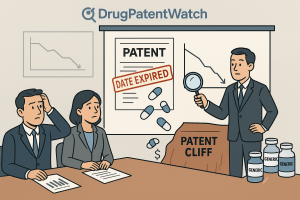
Why a 20-Year Patent Rarely Means 20 Years of Revenue
The statutory term creates a false ceiling. The effective commercial window is far shorter, and everything in pharmaceutical strategy follows from that compression.
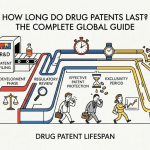
Under the WTO’s TRIPS Agreement, a pharmaceutical patent runs 20 years from the date of filing. That figure means almost nothing to a commercial forecaster. By the time a drug clears Phase III trials and receives FDA approval, 10 to 15 years of that term have typically elapsed, consumed by discovery chemistry, preclinical work, three phases of clinical testing, and the FDA review itself. What remains on the market side is an effective patent life of 7 to 12 years, sometimes less for compounds that entered preclinical development early in their patent cycle.
The economic pressure this creates is enormous. Average fully capitalized R&D costs per approved drug are commonly cited above $2 billion, a figure that includes the cost of the many programs that fail. All of that investment must be recovered in a compressed window at monopoly prices. That pressure explains launch pricing at levels that routinely draw political fire, and it explains why lifecycle management, the art of extending that window by any available legal and regulatory mechanism, has become a discipline in its own right.
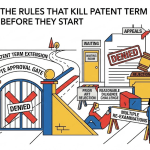
How the Patent Term Extension Calculation Works (and Where It Fails)
The Hatch-Waxman Act of 1984 created a mechanism for restoring some of the patent life consumed during FDA review: the Patent Term Extension, or PTE. The formula adds the full FDA review period plus one-half of clinical testing time, subject to two hard caps. The total extension cannot exceed five years, and the total remaining patent life after extension cannot exceed 14 years from the date of FDA approval.
Eligibility requires that the patent has not previously been extended, has not expired, and that the application reaches the USPTO within 60 days of approval. Analysts who miss the 60-day window in their models, or who fail to account for the 14-year post-approval ceiling, will systematically overestimate how long a drug’s composition-of-matter patent runs. For a $10 billion annual product, a one-year modeling error on patent expiry translates into a multi-billion-dollar discrepancy in revenue forecasts and DCF valuations.
FAQ — People Also Ask
What is the difference between a patent and regulatory exclusivity in pharma? A patent is a property right granted by the USPTO that lets the owner sue for infringement. Regulatory exclusivity is a marketing right granted by the FDA that prevents the agency from approving a competing application for a defined period. Both timelines run simultaneously, and the later date typically defines the true loss of exclusivity. A drug can have an expired composition-of-matter patent but still be protected by unexpired regulatory exclusivity, and vice versa.
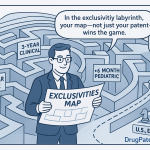
The Full Menu of FDA-Granted Exclusivities and What Each Is Worth
New Chemical Entity status gets the most attention, but pediatric exclusivity has a better return-on-investment calculation than almost any other lifecycle management tool available.
New Chemical Entity (NCE) exclusivity runs five years from the date of the drug’s first approval and blocks the FDA from accepting a generic ANDA for the first four years. Orphan Drug Exclusivity (ODE) runs seven years and is available for products approved to treat conditions affecting fewer than 200,000 U.S. patients. It blocks FDA approval of another application for the same drug in the same orphan indication, though it does not block generics from seeking approval for non-orphan uses of the same compound.
The most financially precise tool is pediatric exclusivity under Section 505A. When a company conducts pediatric studies in response to a formal FDA Written Request, it receives an additional six months of protection added to the end of every existing patent and exclusivity period for all products containing that active moiety. For a drug generating $20 billion annually, six months of additional exclusivity is worth roughly $10 billion in incremental revenue, net of the pediatric study costs that typically run in the low tens of millions. No other lifecycle management investment has a comparable risk-adjusted return. AbbVie’s Humira, Merck’s Keytruda, and Pfizer’s Eliquis partnership have all used this mechanism.
Biologics exclusivity under the BPCIA is distinct from the small-molecule framework. New biologic license applications receive 12 years of exclusivity from first licensure. The four-year “data exclusivity” sub-period within that window blocks the FDA from accepting a biosimilar application until year four, while the full 12 years bars approval of any biosimilar or interchangeable. This longer exclusivity period reflects the higher development costs and technical complexity of large-molecule development, and it has been the subject of persistent policy debate, with proposals to reduce it to seven years appearing periodically in legislative discussions.
Protection Type
Granting Body
Standard Duration
Commercial Value
Notes
Composition of Matter Patent
USPTO
20 yrs from filing
Primary LOE anchor
Covers the API itself. Most important for initial revenue modeling.
New Chemical Entity (NCE) Exclusivity
FDA
5 years
Blocks ANDA for 4 yrs
Requires no-prior-approval of active moiety.
Orphan Drug Exclusivity (ODE)
FDA
7 years
High for rare disease
Does not block generics seeking non-orphan approvals.
New Clinical Investigation Exclusivity
FDA
3 years
Evergreening tool
Covers new indications, dosage forms, patient populations.
Pediatric Exclusivity (PED)
FDA
+6 months on all
Best ROI tool
Added to every existing patent and exclusivity for that moiety.
Biologics Exclusivity (BPCIA)
FDA
12 years
Critical for biologics
Subject to ongoing legislative proposals to reduce duration.
Patent Term Extension (PTE)
USPTO/FDA
Up to 5 years
Restores review time
Hard cap at 14 yrs remaining post-approval. 60-day filing window.
Part II
The Revenue Cliff: Numbers and Timelines
Which Drugs Face the Largest Revenue Cliff Between 2025 and 2030
The scale of this cycle is unprecedented. The combination of blockbuster biologics, checkpoint inhibitors, and GLP-1 adjacents hitting loss of exclusivity in a compressed window has no historical parallel.
Across the 2025–2030 window, approximately $236 billion to $400 billion in branded annual sales are at risk globally, depending on the scope of the drugs included. About 190 drugs lose exclusivity across this period, of which 69 are classified as blockbusters with annual sales above $1 billion. The variance in those estimates reflects genuine uncertainty about which secondary patents and regulatory exclusivities survive legal challenge, and which biosimilar programs actually reach market on the timeline their developers project.
The drugs with the largest absolute revenue at risk include Merck’s pembrolizumab (Keytruda), which generated roughly $25 billion in 2023 and is tracking toward $30 billion annually by the time its key U.S. composition-of-matter patents expire in 2028; Bristol Myers Squibb’s Eliquis (apixaban), co-promoted with Pfizer, with approximately $12 billion in 2023 sales and a patent estate that has already faced successful Paragraph IV challenges; and Johnson & Johnson’s Stelara (ustekinumab), an IL-12/23 inhibitor that lost European exclusivity in 2024 and faced its first U.S. biosimilar entries in 2025.
Drug (INN / Brand)
Company
Class / Target
2023 Sales (USD)
Key U.S. LOE
Primary Threat
Pembrolizumab / Keytruda
Merck
Anti-PD-1 mAb
~$25.0B
2028
Biosimilar, subcut product hop
Apixaban / Eliquis
BMS / Pfizer
Factor Xa inhibitor
~$12.0B
2026–2028
Paragraph IV settlements
Ustekinumab / Stelara
J&J
IL-12/23 mAb
~$10.9B
2025
Biosimilar (Hadlima, Amjevita alt.)
Nivolumab / Opdivo
Bristol Myers Squibb
Anti-PD-1 mAb
~$9.0B
2026–2028
Biosimilar competition + Keytruda
Dulaglutide / Trulicity
Eli Lilly
GLP-1 agonist
~$7.0B
2027
Generic, tirzepatide cannibalization
Dapagliflozin / Farxiga
AstraZeneca
SGLT2 inhibitor
~$6.0B
2025
Generic entry, formulary erosion
Aflibercept / Eylea
Regeneron / Bayer
VEGF trap
~$5.9B
2027–2028
Biosimilar + Eylea HD product hop
Rivaroxaban / Xarelto
Bayer / J&J
Factor Xa inhibitor
~$4.5B
2025–2026
Generic entry
Omalizumab / Xolair
Novartis / Genentech
Anti-IgE mAb
~$3.9B
2025
Biosimilar, Dupixent competition
Ipilimumab / Yervoy
Bristol Myers Squibb
Anti-CTLA-4 mAb
~$2.2B
2025
Biosimilar; primarily used in combo
What Happens Financially in the Year After Loss of Exclusivity
For small molecules, the pattern is extremely consistent. Within 12 months of the first generic entrant reaching market, branded drugs lose 80–90% of unit volume to generic substitution, while the generic price settles roughly 80–85% below the original brand price. The combination produces a revenue collapse that cannot be offset by volume. Pfizer’s Lipitor, the most studied example, saw global revenues fall 59% in 2012 alone, the first full year after generic entry in November 2011.
Biologics erode differently. The greater manufacturing complexity of monoclonal antibodies, the additional clinical data requirements for biosimilar approval, the interchangeability designation barrier, and the physician preference for branded reference products all produce a more gradual but still substantial erosion curve. AbbVie’s Humira saw U.S. sales decline roughly 40% year-over-year in early 2024 following the January 2023 biosimilar launch, while European Humira revenues had already fallen dramatically in the years since 2018. The rate of U.S. biosimilar erosion for biologics is accelerating as payers and pharmacy benefit managers become more aggressive about biosimilar preferred formulary placement, as demonstrated by the Humira experience with CVS and Express Scripts.
“The cliff is not a single date. It is the outcome of five overlapping decisions: how many patents were filed, which ones survive litigation, what biosimilars actually launch, how fast payers switch, and whether the company successfully moved the market to a follow-on product.”
Why U.S. and European Revenue Erosion Patterns Diverge After Patent Expiry
International investors frequently make the error of applying U.S. erosion benchmarks to global revenue models. European generic and biosimilar uptake is shaped by national procurement frameworks that differ substantially from the U.S. pharmacy benefit structure. Germany and the Netherlands operate mandatory generic substitution at the pharmacy level, producing rapid uptake curves that rival the U.S. Japan historically showed much slower generic penetration due to prescribing habits and reimbursement policy, though that has shifted following government reform. France uses reference pricing for generics but adoption has been slower than northern European markets.
For biosimilars, European entry often precedes the U.S. by several years, as the EMA’s biosimilar approval pathway predates the BPCIA and European patent systems have been less receptive to the aggressive secondary patent strategies that defined the U.S. Humira defense. Analysts modeling AbbVie, Novartis, or Roche biologic assets should build separate LOE curves for the U.S., EU5, Japan, and emerging markets rather than applying a blended global erosion rate.
Part III
Defensive Strategies: The Innovator Playbook
How Patent Thickets Work and Why They Are Harder to Build for Small Molecules
A patent thicket is not a strategy; it is a consequence of filing every patentable claim around a molecule, including ones that individually have limited commercial value but collectively create litigation cost and delay.
The mechanism depends on secondary patents. A composition-of-matter patent covers the active pharmaceutical ingredient. Everything else, formulation patents, method-of-use patents, dosing regimen patents, metabolite patents, polymorph patents, manufacturing process patents, covers what are commonly called secondary or derivative patents. Each is typically narrower than the composition-of-matter patent and more vulnerable to invalidity challenges, but each one also requires a generic or biosimilar challenger to either design around it, invalidate it in court, or settle. The cumulative cost of litigating a 30-patent thicket can run into the hundreds of millions of dollars for a challenger, even if they expect to win most individual cases.
AbbVie’s Humira estate is the most cited example. The company filed 247 patent applications related to adalimumab, with roughly 89% filed after the drug was already on market. The estate covered manufacturing processes, formulation concentrations, dosing intervals, methods of treating specific patient subpopulations, and syringe designs. Challengers including Amgen, Samsung Bioepis, Mylan, and Pfizer’s Hospira unit eventually settled, accepting delayed U.S. launch dates rather than litigating the full thicket. The final settlement structure kept all biosimilar entrants out of the U.S. market until January 2023, approximately five years after European biosimilars launched following the expiration of European patents in October 2018.
Small molecules are harder to thicket effectively because the chemical space around a given active moiety is well-defined and prior art accumulates quickly. A new polymorph or salt form patent on a small molecule faces greater scrutiny under obviousness doctrine than a manufacturing process patent on a large-molecule biologic, where the production technology is proprietary, complex, and genuinely non-obvious. This asymmetry is one of the reasons biologics command longer effective commercial monopolies even before accounting for the 12-year BPCIA exclusivity.
Why AbbVie’s Humira Patent Strategy Lasted So Long
The Humira defense was not primarily about patent quality. Many of the secondary patents in the estate were vulnerable and would likely have been invalidated in inter partes review proceedings or district court litigation. The strategy worked because of economics, not law. Each biosimilar developer faced the prospect of litigating a multi-hundred-million-dollar campaign against an opponent with vastly greater resources, fighting through two or three dozen individual patent cases, while their own product sat on the shelf generating no revenue. Settlement at a discounted rate, with a defined launch date, was a rational decision for most challengers.
The U.S. cost to the healthcare system from the delayed biosimilar entry is estimated at $14.4 billion in excess spending over the period between when European biosimilars launched and when the first U.S. biosimilar entered. Congress, the FTC, and state attorneys general have since scrutinized the settlement terms, and the FTC under Commissioner Lina Khan brought increased attention to “pay-for-delay” arrangements embedded in some of these deals. The Humira settlement structures have become a reference point in ongoing legislative proposals to limit the scope of patent thicket strategies for biologics.
How Product Hopping Defends Against Generic Erosion
Product hopping is the commercial complement to patent thicket construction. As a drug’s composition-of-matter patent approaches expiration, the innovator launches a reformulated version, typically an extended-release formulation, a fixed-dose combination with a complementary drug, or a new delivery mechanism, and deploys its sales force to transition physicians and patients to the new product before the generic of the original formulation reaches shelves.
The canonical small-molecule example is Warner Chilcott’s Doryx (doxycycline hyclate), where the company repeatedly reformulated the product and discontinued the prior version just before generic entry. The FTC challenged this practice, and the resulting litigation clarified the legal limits of hard versus soft switches. A hard switch, where the innovator stops selling the original version entirely, is more legally problematic than a soft switch, where the new version is promoted alongside the continuing original but with far greater commercial effort. Regeneron’s Eylea HD (8 mg aflibercept), approved in 2023, represents a more recent case: the higher-dose, longer-interval formulation is designed to reduce treatment burden and is being marketed aggressively while the original Eylea faces biosimilar entry. Regeneron holds additional patents on the 8 mg dose and the q12-week dosing interval, and the clinical data supporting reduced injection frequency provides a genuine patient benefit narrative that makes the switch commercially defensible.
The Authorized Generic as a Deterrence Weapon
Authorized generics occupy a peculiar strategic position. An authorized generic is the brand-name drug sold under a generic label by the innovator or its subsidiary. Because it is not filed as an ANDA, it is not subject to the 180-day first-filer exclusivity that normally rewards the first Paragraph IV challenger with a temporary duopoly period.
When Pfizer launched its own authorized generic of Lipitor simultaneously with Watson’s first-generic launch in November 2011, it converted Watson’s anticipated duopoly into a three-way price competition from day one. Watson’s projected profitability from the 180-day window was severely reduced. Pfizer also offered its own brand at $4 per month through the “Lipitor for You” program, competing on price across all channels. The strategic logic is not profit maximization for the authorized generic itself but deterrence, signaling to current and future Paragraph IV filers that the 180-day exclusivity prize will be diluted whenever the innovator chooses. This reduces the expected value of patent challenges across the portfolio, not just for the drug in question.
Part IV
Challenger Strategies: Paragraph IV, Biosimilars, and the 180-Day Race
How Paragraph IV Litigation Changes Drug Valuation
A Paragraph IV certification is a formal legal claim that a listed patent is invalid, unenforceable, or not infringed. It is also one of the most significant near-term catalysts in pharmaceutical equity research.
When a generic company files an ANDA containing a Paragraph IV certification against a brand’s Orange Book-listed patent, it is considered a technical act of patent infringement under Hatch-Waxman. The brand company has 45 days to file a patent infringement lawsuit. If it does, the FDA is automatically barred from granting final ANDA approval for 30 months, giving the parties time to litigate the patent. The 30-month stay is not a foregone outcome, however. Courts can shorten it if either side engages in dilatory tactics. The brand can also waive the stay strategically, for example if it believes it will lose the patent case and prefers to negotiate a settlement on favorable terms before the litigation fully develops.
The financial implications of a Paragraph IV outcome are substantial in both directions. A successful invalidity or non-infringement ruling removes a patent from the Orange Book, eliminates the 30-month stay protection for subsequent ANDA filers, and opens the market to generic competition. For a branded drug generating $3 billion annually, even a two-year acceleration of generic entry has a present value impact in the hundreds of millions. Conversely, a successful defense of a key patent, particularly one the market had priced as vulnerable, can materially extend a company’s revenue runway and create positive estimate revisions.
FAQ — People Also Ask
What is a Paragraph IV filing and why does it matter to investors? A Paragraph IV certification is a generic company’s legal assertion that a brand drug’s Orange Book patent is invalid, unenforceable, or will not be infringed. Filing one triggers a predictable sequence: the brand sues within 45 days (usually), the FDA is blocked from approving the generic for up to 30 months, and the first filer wins 180 days of marketing exclusivity if successful. Each step in that sequence is a publicly visible catalyst with direct revenue and valuation implications for both the brand and the challenger.
Key Humira Biosimilar Settlement Terms Explained
The Humira biosimilar settlements are the most studied set of Paragraph IV and patent dance agreements in biologic history. Between 2017 and 2019, AbbVie reached settlements with all major biosimilar developers, including Amgen (Amjevita), Samsung Bioepis (Hadlima), Mylan’s Fulphila biosimilar unit, and eventually Pfizer (Abrilada) and Sandoz (Hyrimoz). The common structure gave each developer a license to launch in the U.S. beginning January 1, 2023, in exchange for their agreement not to challenge the remaining secondary patents in AbbVie’s estate.
The royalty terms within these settlements are not public, but analysts have estimated AbbVie receives a royalty on biosimilar Humira sales that partially offsets the revenue decline from biosimilar competition. This royalty income stream is a component of AbbVie’s long-term financial model that is often underweighted in sell-side analysis. The January 2023 coordinated launch date was also unusual in that multiple biosimilars entered simultaneously rather than sequentially, which accelerated market fragmentation and deepened price competition faster than a staggered entry would have. By early 2024, multiple Humira biosimilars were available at discounts ranging from 5% to 85% below the WAC price of branded Humira, with the deepest discounts available in the unbranded generic segment.
What Makes GLP-1 Manufacturing Difficult for Generic Entrants
The GLP-1 receptor agonist class presents a specific manufacturing challenge that has shaped the competitive timeline for generic and biosimilar entry. Semaglutide (Ozempic, Wegovy), tirzepatide (Mounjaro, Zepbound), and dulaglutide (Trulicity) are peptide-based drugs. They are not small molecules and they are not large-molecule biologics in the conventional sense. They occupy an intermediate category that complicates both the regulatory pathway and the manufacturing economics for challengers.
Semaglutide, for example, is a 31-amino-acid acylated peptide. Synthesizing it at commercial scale requires solid-phase peptide synthesis (SPPS) chemistry followed by fatty acid conjugation and purification steps that demand specialized process chemistry expertise. Few generic manufacturers have the installed SPPS capacity to produce GLP-1 peptides at the volumes demanded by the obesity and diabetes markets. Novo Nordisk and Eli Lilly have each invested billions in dedicated manufacturing facilities, creating a capital barrier that is harder to overcome than the patent estate alone. Indian generic manufacturers including Sun Pharma and Dr. Reddy’s have filed Paragraph IV ANDAs for dulaglutide, but the manufacturing scale-up required to compete meaningfully in the U.S. market represents a multi-year investment even after regulatory clearance is obtained.
How Biosimilar Interchangeability Status Changes Market Dynamics
An FDA interchangeability designation allows a pharmacist to substitute a biosimilar for the reference biologic without a new prescription from the physician. This is the functional equivalent of generic substitution for small molecules, and it is the single most commercially significant regulatory milestone for a biosimilar developer beyond initial approval. Without interchangeability, the biosimilar requires active physician or payer switching, a far slower process.
Achieving interchangeability requires clinical switching studies demonstrating that alternating between the reference biologic and the biosimilar does not produce greater safety or efficacy concerns than using the reference product alone. These studies add cost and time to the development program, typically $50 million to $100 million and 12 to 18 months. Not all biosimilar developers pursue interchangeability; those targeting hospital formulary or payer-driven substitution can achieve meaningful market penetration without it. Coherus BioSciences and Boehringer Ingelheim both sought interchangeability for their adalimumab biosimilars (Yuflyma and Cyltezo, respectively), with Cyltezo receiving the first interchangeability designation for an adalimumab biosimilar in 2023.
Part V
Three Case Studies in Value Creation and Destruction
Pfizer’s Lipitor: The Benchmark for Small-Molecule Revenue Collapse
Lipitor’s cliff is the most documented patent expiration in pharmaceutical history. It generated the empirical benchmarks every subsequent analyst has used to model generic erosion.
Atorvastatin, sold as Lipitor, generated peak annual sales of roughly $13 billion and cumulative lifetime revenues exceeding $125 billion, the largest in pharmaceutical history to that point. Its primary U.S. composition-of-matter patent expired in November 2011. Watson Pharmaceuticals filed the first Paragraph IV certification and, after litigation, reached a settlement that gave Watson the right to launch the first generic on the patent expiration date, accompanied by a 180-day exclusivity period. Ranbaxy, which had also filed an early Paragraph IV, had its exclusivity forfeited due to a consent decree with the FDA related to manufacturing violations, a detail that altered the competitive dynamics of the 180-day period considerably.
Pfizer responded with three simultaneous tactics: an authorized generic launched through its Greenstone subsidiary to erode Watson’s 180-day exclusivity advantage; a “Lipitor for You” patient program offering the branded drug at $4 per month to compete directly on price; and aggressive payer contracting designed to maintain formulary position through rebates. None of it stopped the cliff. Lipitor revenues fell from $9.6 billion in 2011 to $3.9 billion in 2012, a 59% decline in 12 months. Pfizer’s total revenue fell 10% in 2012, with Lipitor LOE accounting for the majority of that decline. The episode established the working benchmark: regardless of defensive tactics, expect 50–70% revenue erosion in year one for a major small-molecule product, with further erosion in subsequent years as additional generic manufacturers receive ANDA approvals.
AbbVie’s Humira: How a 247-Patent Estate Bought Five Extra Years in the U.S.
The Humira defense did not rely on any single strong patent. It relied on the cumulative cost of challenging dozens of weak ones.
Adalimumab’s primary composition-of-matter patent expired in 2016. The European biosimilar market opened in October 2018 following expiration of European supplementary protection certificates. U.S. biosimilar entry was delayed until January 2023 under the settlement terms AbbVie negotiated with all major developers. That five-year differential between European and U.S. biosimilar entry had no scientific or regulatory justification. It was entirely a function of the patent thicket strategy and the economics of biosimilar litigation.
In Europe, where the patent system is less permissive of secondary patents and supplementary protection certificates provide a cleaner cliff, biosimilars launched at discounts of 40–85% in national tenders within months of the October 2018 expiry. Multiple European countries moved Humira biosimilars to preferred formulary status within a year. U.S. Humira sales, meanwhile, continued at over $15 billion annually through 2022, pricing that reflected the absence of any competitive pressure. The financial benefit to AbbVie from the delayed U.S. entry, measured against a counterfactual where biosimilars launched in 2018, runs into the tens of billions. The financial cost to the U.S. healthcare system from the same delay is estimated at $14.4 billion by the Institute for Clinical and Economic Review (ICER) and the initiative for Medicines, Access & Knowledge (I-MAK).
Following the January 2023 U.S. launch of seven biosimilars, AbbVie’s management team executed the financial transition it had been preparing for years. Skyrizi (risankizumab) and Rinvoq (upadacitinib), two next-generation immunology drugs with distinct mechanisms and independent patent estates running into the 2030s, were already growing rapidly. Combined Skyrizi and Rinvoq sales exceeded $11 billion in 2023 and are projected to approach $25 billion annually by 2027. The strategy of using Humira’s monopoly cash flows to fund the development and launch of its successors, while simultaneously delaying biosimilar entry to maximize the overlap period, is the clearest modern example of lifecycle management executed as a comprehensive financial strategy rather than a narrow IP tactic.
Why Keytruda’s Patent Expiry Matters for Merck Investors
The Keytruda LOE is the largest revenue cliff event in pharmaceutical history. The drug’s 2028 patent expiration date is the central organizing event in Merck’s corporate strategy for the next decade.
Pembrolizumab, a PD-1 checkpoint inhibitor approved across more than 40 indications, generated approximately $25 billion in 2023 and is approaching $30 billion annually. It accounts for roughly 45–50% of Merck’s total revenue, a concentration level that makes the 2028 LOE the most consequential single patent expiration any pharmaceutical company has faced. Merck’s CEO Rob Davis has described it explicitly as a “hill, not a cliff,” a framing that signals strategic intent but also reflects genuine preparation.
The subcutaneous pembrolizumab formulation is Merck’s primary product-hopping vehicle. The company filed for FDA approval of the subcutaneous version and has targeted a launch well ahead of the 2028 IV patent expiry. The subcutaneous formulation would carry its own patent estate and offer patients a more convenient administration route, the same clinical rationale Regeneron used for Eylea HD. If Merck succeeds in transitioning a substantial portion of the Keytruda patient base to the subcutaneous version by 2026 or 2027, the commercial position of IV pembrolizumab biosimilars, which would launch against the original IV formulation, is materially weakened.
On the M&A side, Davis has signaled appetite for acquisitions up to $15 billion targeting late-stage pipeline assets. Merck’s 2023 acquisition of Prometheus Biosciences for approximately $10.8 billion, targeting tulisokibart for inflammatory bowel disease, and its $4 billion acquisition of Harpoon Therapeutics represent the first installments. The cardiovascular drug Winrevair (sotatercept), approved in 2024 for pulmonary arterial hypertension following the 2021 Acceleron acquisition, is the first internally developed replacement revenue stream with genuine blockbuster potential.
What Investors Are Watching: Keytruda 2028 LOE
The key monitoring variables between now and 2028 are the subcutaneous pembrolizumab approval and uptake curve, the number and identity of biosimilar BLA filers for IV pembrolizumab, the court outcomes of any patent litigation against those biosimilar programs, the pace of Winrevair and tulisokibart clinical readouts, and the scale and target selection of Merck’s M&A activity. A failure of the subcutaneous product hop, combined with a weak pipeline and aggressive biosimilar entry, would change the 2028 LOE from a hill to the cliff Davis is trying to avoid.
Part VI
Extended Analysis: Specific Therapeutic Classes and Competitive Dynamics
How Bristol Myers Squibb Defended Opdivo Against Patent Challenges
Nivolumab (Opdivo) and pembrolizumab (Keytruda) were developed in parallel and target the same PD-1 receptor. The IP dispute between Bristol Myers Squibb and Merck over PD-1 patent priority was one of the most significant patent battles in oncology history, ultimately settling in 2017 with BMS receiving a royalty on Keytruda sales. That royalty, initially in the mid-single-digit percentage range with tiered reductions over time, has contributed meaningfully to BMS’s financials even as Keytruda outgrew Opdivo in sales.
BMS faces its own LOE challenges with the Opdivo patent estate expiring in the mid-to-late 2020s. The company’s strategy centers on fixed-dose combinations, specifically the Opdivo + Yervoy (nivolumab + ipilimumab) combination, which has its own formulation patents and method-of-use patents covering specific tumor types and dosing regimens. If BMS can establish the combination as the clinical standard of care across its approved indications, the reference product for biosimilar development becomes more complex. A biosimilar developer targeting the individual nivolumab component would need to address whether their product can be used in the combination regimen, adding a layer of clinical development complexity.
Revenue at Risk: Companies With the Highest LOE Exposure as a Percentage of Sales
Revenue concentration in a product facing LOE is the first variable any analyst should model. The list of companies with the greatest near-term exposure, measured by the revenue percentage at risk within a five-year window, includes Merck (Keytruda at ~47% of sales), AstraZeneca (Farxiga erosion already underway at ~10%), Bristol Myers Squibb (Eliquis and Opdivo combined represent ~50% of revenue), and Johnson & Johnson (Stelara, post-2025 biosimilar entry underway, was ~10–12% of pharmaceutical revenue).
Eli Lilly sits in a categorically different position. Its GLP-1 franchise, comprising semaglutide competitor tirzepatide (Mounjaro, Zepbound) and the longer-dated dulaglutide (Trulicity), faces different competitive pressures. Dulaglutide LOE in 2027 will accelerate patient migration to tirzepatide or semaglutide rather than to a true generic, since the GLP-1 class itself remains the preferred therapy. Lilly benefits from manufacturing capacity constraints that limit generic entry even after patent expiry. The company’s aggressive capacity expansion at its manufacturing sites in Indiana, Ireland, and Germany is as much a competitive moat strategy as a supply response.
How Evergreening Works in Biologics: The BPCIA Patent Dance and Secondary Filing Strategy
The Biologics Price Competition and Innovation Act created a specific information-sharing process between biosimilar applicants and reference product sponsors, commonly called the patent dance. Under this process, the biosimilar applicant shares its application and manufacturing information with the sponsor; the sponsor identifies patents it believes would be infringed; the parties then negotiate which patents will be litigated immediately and which will be reserved for later. The process was designed to front-load patent disputes before biosimilar launch rather than after, avoiding the post-launch injunction scenarios that had complicated small-molecule generic entry.
In practice, reference product sponsors have used the patent dance selectively. Participation is not strictly mandatory under the Supreme Court’s 2017 ruling in Sandoz v. Amgen, which held that biosimilar applicants cannot be compelled to engage in the dance under the BPCIA’s injunction provisions. Some sponsors have found it strategically advantageous to participate to obtain manufacturing information from challengers. Others have found it more advantageous to reserve litigation options. The resulting legal landscape varies by molecule, which is why biosimilar patent timelines require drug-specific analysis rather than categorical assumptions.
Part VII
The Investor’s Analytical Toolkit
How to Read the FDA Orange Book for Patent Cliff Signals
The Orange Book is the starting point. It is also frequently misread. The date that matters is the last-expiring patent or exclusivity across the entire listed estate, not the composition-of-matter patent alone.
The FDA’s Orange Book lists every patent the brand company has certified as covering the approved drug product and every exclusivity the FDA has granted. Searching by brand name or active ingredient pulls up the application number, which then links to the full patent and exclusivity data. Each patent entry shows its expiration date. Regulatory exclusivities are listed separately with their own expiration dates. For a drug with multiple listed patents, the relevant LOE date for modeling is the expiration of the last listed patent or the last exclusivity, whichever comes later.
The Orange Book also contains information about patent certification types. When a generic files, the ANDA certification type (Paragraph I through IV) appears in public ANDA filings and FDA databases. The first Paragraph IV certification against a specific patent initiates the litigation clock and starts the 180-day exclusivity race. Investors tracking competitive dynamics for a specific drug should monitor ANDA filings as they appear in FDA databases, which provides advance notice of competitive intent well before any litigation is announced publicly.
How Commercial Data Platforms Extend the Orange Book’s Signal
The Orange Book captures listed patents but not unlisted ones. Companies can and do hold additional patents, particularly for biologics, that are not in the Orange Book because they cover the drug differently or because the BPCIA’s patent listing requirements differ from Hatch-Waxman’s. Commercial platforms like DrugPatentWatch aggregate patent data from the USPTO, European Patent Office, and national patent offices across more than 130 countries, cross-referencing them with regulatory data to build a more complete picture of a drug’s global IP estate.
For institutions monitoring Paragraph IV activity, ANDA filing dates, biosimilar BLA submissions, inter partes review (IPR) petitions at the USPTO, and litigation docket updates, the commercial platforms provide real-time alerting that is not available through public databases alone. IPR petitions at the USPTO are particularly important signals because they are faster, cheaper, and statistically more favorable to challengers than district court litigation. An IPR petition against a key patent in a drug’s thicket is often the first public signal that a generic or biosimilar developer is serious about early market entry.
An Analyst’s Five-Lens Framework for Assessing Patent Cliff Risk
Any systematic assessment of a pharmaceutical company’s patent cliff exposure should work through five variables: revenue concentration, pipeline depth and quality, balance sheet capacity, management track record, and the specific litigation and regulatory calendar for drugs facing LOE.
Revenue concentration is the most immediate risk factor. A drug accounting for more than 30% of total company revenue creates a single-product dependency that amplifies the financial impact of any LOE surprise, whether from earlier-than-expected generic entry or a faster-than-modeled erosion curve. The second variable, pipeline depth, is the primary long-term mitigant. A company with multiple Phase III assets in distinct therapeutic areas, targeting unmet needs with strong clinical data, can absorb a major LOE event as long as the replacement products are commercially timed to overlap with the revenue gap. AbbVie’s Skyrizi and Rinvoq are the clearest recent example of successful pipeline timing.
Balance sheet strength determines strategic flexibility. A company with $10 billion in cash and low leverage can acquire new revenue streams when its internal pipeline proves insufficient. A company with significant debt maturities and limited liquidity entering a patent cliff is constrained to organic solutions, which rarely close the gap fully. Management track record and communication quality are harder to quantify but genuinely predictive. Leadership teams that manage patent cliffs well share three characteristics: they communicate the LOE timeline and the mitigation strategy clearly and early, they execute the clinical and commercial programs necessary to support a product hop or pipeline replacement, and they make the M&A decisions early enough that acquired assets are generating meaningful revenue by the time the cliff arrives.
Risk Lens
Key Question
Danger Signal
Favorable Signal
Revenue Concentration
What % of sales comes from the LOE drug?
>35% from one drug
Diversified across 4+ products
Pipeline Depth
Can Phase III assets replace the lost revenue?
Sparse Phase III, same therapeutic area
Multiple Phase III in distinct areas
Balance Sheet
Is the company positioned to acquire growth?
High debt, limited cash
Net cash, investment-grade debt
Management Track Record
Have they navigated a cliff before?
No prior LOE management experience
Clear, early communication; prior execution
Litigation / Regulatory Calendar
Are Paragraph IV filings or IPRs already active?
Active IPR on composition patent
No filings; strong secondary patent estate
Most Important Ongoing Litigation Investors Should Track Through 2028
The most consequential active litigation by financial exposure involves Merck’s pembrolizumab patent estate, where the first biosimilar BLA filings by Samsung Bioepis and Celltrion are advancing toward potential approval in the 2026–2027 timeframe. The patent dispute between Merck and these filers will determine whether any biosimilar can launch before the primary patents expire in 2028. Merck holds a relatively clean composition-of-matter and formulation patent estate for Keytruda, with fewer of the secondary thicket patents that characterized Humira’s defense, making early successful biosimilar litigation more plausible than it was against AbbVie.
For apixaban (Eliquis), BMS and Pfizer resolved the primary patent disputes through settlements with generic developers including Mylan, Teva, and others, with agreed-upon launch dates that vary by defendant. The settlement terms are not fully public, but analysts tracking ANDA approval dates and launch announcements through the FDA’s ANDA database can track the competitive entry timeline with reasonable precision. For ustekinumab (Stelara), the U.S. market entered the multi-biosimilar phase in 2025 following settlements between J&J and Amgen, Samsung Bioepis, and others. The J&J-Amgen settlement was notable for its licensing structure, which gave Amgen a broader launch window than some other defendants.
Part VIII
Pipeline Replacement Risk and M&A Implications
How Patent Expiry Timelines Drive Big Pharma M&A Strategy
A company’s LOE schedule is the best available predictor of its acquisition activity over the following three to five years. Revenue gaps have deadlines; M&A is how large-cap pharma addresses them when the internal pipeline is insufficient.
The relationship between patent expiry and M&A is well-established empirically. Pfizer’s acquisitions of Wyeth (2009) and Hospira (2015) occurred during periods of significant Pfizer LOE pressure. AbbVie’s $63 billion acquisition of Allergan in 2020, which brought Botox and other non-immunology products into the portfolio, was explicitly framed as diversification ahead of Humira’s LOE. Merck’s string of acquisitions since 2020, including Acceleron, Prometheus Biosciences, and Harpoon Therapeutics, are direct responses to the 2028 Keytruda cliff. Bristol Myers Squibb’s acquisitions of Celgene (2019) and MyoKardia (2020) came during the period when the BMS-Opdivo and BMS-Eliquis patents were beginning to appear in long-range LOE models.
The premium paid in pharma acquisitions is not arbitrary. It reflects the acquirer’s urgency, which is directly related to the timeline and magnitude of its revenue exposure. Companies with three or four years until a cliff will pay more for late-stage assets than those with seven or eight years of runway. Sell-side analysts routinely screen for this dynamic when assessing acquisition targets: a biotech with a Phase III readout expected in 18–24 months, in a therapeutic area adjacent to a large-cap acquirer’s core business, commands a premium that is partly driven by the acquirer’s LOE clock.
Which Competitors Could Benefit From Each Major LOE Event
Biosimilar developers stand to gain most directly from biologic LOEs, but the beneficiaries differ by molecule and competitive set. The Humira LOE benefited a defined group of biosimilar developers who had settled with AbbVie: Amgen (Amjevita), Boehringer Ingelheim (Cyltezo), Coherus (Yuflyma), Pfizer (Abrilada), Samsung Bioepis (Hadlima), Sandoz (Hyrimoz), and others. Each negotiated different launch timing and royalty structures, creating a competitive dynamic among the biosimilars themselves, with interchangeability-designated products commanding higher formulary placement.
The Keytruda LOE will primarily benefit biosimilar developers who have submitted BLAs and are positioned to launch in the 2028 window, including Samsung Bioepis, Celltrion, and Pfizer’s biosimilar division. In the GLP-1 space, the Trulicity LOE in 2027 will benefit generic manufacturers with the SPPS capacity to produce dulaglutide at scale, but the commercial impact on Lilly will be partially cushioned by the migration of patients to tirzepatide rather than to a generic dulaglutide equivalent.
Part IX
Common Investor Questions
Common Investor Questions on Pharmaceutical Patent Expiry
How does biosimilar launch timing work after BPCIA exclusivity ends?
A biosimilar developer can file a BLA after the reference biologic’s four-year data exclusivity period ends, but FDA approval cannot be granted until the 12-year market exclusivity expires. From there, launch timing depends on patent litigation outcomes or settlements. If no patents are in dispute, the biosimilar can launch immediately after the 12-year exclusivity ends. If patents are active, the developer must either litigate to invalidity or non-infringement, design around the patents, or negotiate a settlement with a licensed launch date. The typical timeline from BLA submission to market entry, assuming clean patent resolution, runs 18–30 months.
What happens to a drug’s price after exclusivity ends?
For small molecules, U.S. generic entry drives a 80–85% price reduction at the generic level within six to twelve months, while branded prices may initially stay elevated or even rise as the brand targets patients with strong insurance coverage. Over 24 months, the branded drug typically retains 5–20% of its original unit volume at a premium price, while generics capture the rest at deep discounts. For biologics, price erosion is slower and depends heavily on interchangeability status, payer formulary decisions, and the number of biosimilar competitors. The Humira biosimilar market has seen branded Humira retain meaningful U.S. share at its original price through premium formulary positioning, while biosimilars compete at discounts in the unbranded segment.
How do I find out when a specific drug’s patent expires?
Start with the FDA’s electronic Orange Book, which lists all patents the brand company has certified as covering the approved product, along with their expiration dates. The Orange Book also lists regulatory exclusivities. For a more complete picture, including patents not in the Orange Book, IPR petitions at the USPTO, and global patent data, commercial platforms like DrugPatentWatch aggregate data across patent offices in more than 130 countries with litigation monitoring and alerting. The relevant LOE date is the later of the last-expiring listed patent or the last-expiring regulatory exclusivity.
What is the 30-month stay in Hatch-Waxman and how does it affect generic entry timing?
When a brand company files a patent infringement lawsuit within 45 days of receiving a Paragraph IV notice letter from a generic applicant, the FDA is automatically barred from granting final ANDA approval for 30 months from the date the generic company provided notice. This stay is not automatic if the brand does not sue within 45 days. The 30-month period gives the parties time to litigate. If the generic wins at trial or the patent expires during the stay, the FDA can proceed with final approval. The stay can also be shortened by court order if the brand engages in dilatory tactics.
Can a drug company extend a patent after it has already filed?
The composition-of-matter patent term is fixed from the filing date and can only be extended via Patent Term Extension, which requires an application within 60 days of FDA approval and is capped at five years of extension with 14 years of remaining life post-approval. New secondary patents can be filed on new aspects of the drug at any point during development and commercialization, but they must meet the standard patentability requirements of novelty and non-obviousness. Pediatric exclusivity can add six months to existing patent and exclusivity periods if the FDA grants it following completion of requested pediatric studies.
Key Takeaways
The effective patent life for most approved drugs runs 7–12 years, not 20, because discovery and clinical development consume the majority of the statutory term before the drug reaches the market.
Regulatory exclusivities, particularly pediatric exclusivity and biologics exclusivity under the BPCIA, often define the true loss of exclusivity date rather than the composition-of-matter patent alone.
Small-molecule revenue erosion following patent expiry is rapid and severe. Biologics erode more slowly, but the pace is accelerating as payers become more aggressive about biosimilar formulary placement.
The 2025–2030 window puts an estimated $236–$400 billion in annual branded sales at risk globally, with Keytruda, Eliquis, Opdivo, and several other blockbusters representing the largest individual exposures.
Patent thickets work through economics, not legal strength. The cumulative litigation cost of challenging dozens of secondary patents deters most challengers from pursuing full invalidation, even when individual patents are vulnerable.
Product hopping is the most reliable commercial defense for drugs where a next-generation formulation can be developed and launched ahead of generic or biosimilar entry into the original product.
Authorized generics deter Paragraph IV filings by diluting the 180-day exclusivity prize that motivates challengers, but their deployment signals to the market that generic entry is imminent.
Patent expiry schedules are the strongest predictor of M&A strategy. Companies facing material LOE exposure within three to five years are the most likely acquirers of late-stage pipeline assets.
Investment Strategy: How to Position Around Pharmaceutical Patent Cliffs
The patent cliff creates distinct investment opportunities at multiple points in the cycle. The most common and tractable opportunity is identifying brand-name companies that are mispriced relative to their actual LOE exposure, either because the market has not fully priced the cliff or because a successful defensive strategy is undervalued. The Merck-Keytruda subcutaneous product hop, for example, is a catalyst that could materially extend the effective LOE date if the new formulation captures sufficient market share before biosimilar entry in 2028. If the market prices Merck as if the full Keytruda IV cliff arrives on schedule in 2028 without adjustment for a successful product hop, there is a potential mispricing.
On the generic and biosimilar side, the first-mover advantage for companies achieving early ANDA or BLA approval ahead of a major LOE is well-documented. The 180-day first-filer exclusivity for small molecules, and the analogous early-market period for biosimilars before additional entrants receive approval, generates outsized profitability relative to the steady-state generic or biosimilar market. Identifying which companies hold first-filer status for high-value ANDA targets, tracking the litigation outcomes that determine their launch dates, and modeling the revenue impact of the 180-day window represents a discrete and repeatable analytical approach for sector specialists.
The third category of opportunity is acquisition targets. A biotech with a late-stage Phase III asset, a clean patent estate, and clear commercial overlap with a large-cap acquirer facing an LOE gap in the same therapeutic area has a structural reason to command a premium. The patent expiration calendar of potential acquirers defines the urgency and therefore the premium threshold. Mapping that calendar against the biotech landscape is a systematic way to identify likely M&A targets before announcement. The specifics of which indication, which mechanism, and which stage of development matters, but the fundamental insight is that LOE timelines create demand for pipeline assets that the market prices into acquisition premiums.
Nothing in this article constitutes investment advice. Pharmaceutical IP analysis involves forward-looking elements subject to litigation outcomes, regulatory decisions, and clinical results that can change rapidly. Patent expiration dates shown in this article are based on publicly available information and are subject to change through extensions, litigation outcomes, and subsequent filings. Consult primary sources, including the FDA Orange Book and USPTO records, for current data. Source analysis based on DrugPatentWatch, FDA Orange Book, USPTO PTE records, IQVIA, I-MAK, ICER, company filings