The pursuit of alpha, or investment outperformance relative to a market benchmark, is a core objective for financial professionals. While traditionally viewed through the lens of financial metrics, generating alpha in the highly specialized pharmaceutical and biotech sectors demands a more sophisticated, multi-disciplinary approach. The industry’s unique dynamics—characterized by long development timelines, massive R&D costs, and binary, high-stakes outcomes—render conventional financial analysis often insufficient. A superior, predictive framework relies on identifying and leveraging what this report defines as “alpha signals”: forward-looking, non-financial data points derived from sources like patent filings and clinical trial data.
This report provides a comprehensive guide for business professionals, law firms, consultants, and investors on how to transform these unstructured data streams into actionable, strategic intelligence. It details a framework that synthesizes legal analysis, scientific diligence, and quantitative modeling to gain a durable competitive advantage. By moving beyond reactive analysis of public announcements and instead focusing on the subtle, pre-catalyst signals hidden within the intellectual property and clinical landscapes, stakeholders can predict market shifts, de-risk investments, and proactively capitalize on opportunities. The report presents a step-by-step methodology for leveraging patent metrics, tracking clinical trial milestones, and integrating AI-driven analytics to build a robust, forward-looking valuation and competitive intelligence strategy.
1. The Alpha Imperative: Defining an Edge in Pharma & Biotech Investing
1.1. Decoding “Alpha”: Financial and Biological Contexts
In the lexicon of investing, alpha (α) is a measure of an investment’s performance against a relevant market index or benchmark, with its value representing the active return generated by a portfolio manager or strategy after adjusting for risk.1 A positive alpha indicates outperformance, suggesting the manager’s skill in stock selection and timing has added value beyond what could be achieved through passive market exposure.2 In contrast, a negative alpha signifies underperformance, and a value of zero suggests the investment has simply tracked the benchmark.1 This metric is a cornerstone of performance evaluation, differentiating returns earned through active management from those associated with systematic market risk, which is quantified by beta (
β).1
The application of this financial concept to the pharmaceutical and biotech industries requires an understanding of a critical semantic distinction. The term “alpha signal” in the life sciences sector carries a dual meaning, encompassing both its financial definition and a separate, domain-specific biological context. For example, scientific literature refers to “alpha-emitting isotopes” such as radium-223 and actinium-225, which are used in targeted alpha therapy for cancer treatment.3 Similarly, researchers in protein expression utilize the
Saccharomyces cerevisiae α-mating factor secretion signal to facilitate the secretion of recombinant proteins.4 These biological signals have a direct bearing on therapeutic efficacy, a concept that underpins the value of a drug candidate, but they are not, in themselves, a direct financial metric.
The potential for misinterpretation of these terms underscores the fundamental challenge of generating alpha in this sector: success requires a deep synthesis of financial acumen and specialized scientific and legal domain expertise. A novice investor might encounter a news release on a new “alpha-emitting isotope” and mistakenly conflate it with a financial signal, a misstep that could lead to significant capital misallocation. The true “alpha” in this context is the ability to recognize and exploit the predictive power of non-traditional, forward-looking indicators, transforming seemingly disparate technical and legal data points into a cohesive, actionable investment thesis.
The distinction between financial and biological alpha signals is a microcosm of the entire analytic challenge in the life sciences. A rigorous approach must first disambiguate these terms to establish a precise and unambiguous analytical foundation.
Type of “Alpha”
Definition
Context & Use Case
Key Data Sources
Strategic Goal
Financial Alpha
An investment’s excess return above its risk-adjusted benchmark.
Portfolio management, fund evaluation, and active investing.
Market indices, asset returns, risk-free rates.
Generating market-beating performance and justifying management fees.
Biological Alpha
A scientific or molecular signal that enables a biological process (e.g., cell secretion, therapeutic decay).
Drug discovery, therapeutic development, and preclinical research.
Scientific papers, clinical data, and research protocols.
Scientific discovery, validating a therapeutic mechanism of action, and demonstrating efficacy.
1.2. Alpha Signals as Predictive Indicators
In the context of modern investment analysis, alpha signals are not merely backward-looking performance metrics. They are forward-looking indicators derived from data that can predict a company’s future ability to outperform the market.5 For the pharmaceutical and biotech industries, this predictive power is unlocked by going beyond conventional financial statements and earnings reports. The true edge comes from analyzing a company’s R&D pipeline, patents, and legal activities, as these elements are the fundamental drivers of value in an industry where future revenues depend on regulatory approvals and protected market exclusivity.6 Advanced analytic tools, often powered by AI, are designed to identify these “alpha-generation stock and ETF features” by analyzing millions of data points, from scientific literature and regulatory filings to clinical trial results and court dockets.5 This systematic approach allows for the discovery of non-obvious relationships and subtle shifts that can signal a market-moving event long before it becomes public knowledge.9
2. Foundational Alpha Signals: The R&D and Clinical Pipeline
2.1. The Pipeline as a Primary Value Driver
For many pharmaceutical and biotechnology companies, particularly those in the early stages of development, the R&D pipeline represents the core of their valuation. In an industry where a single drug can generate billions of dollars in revenue, the pipeline is regarded as the company’s “lifeblood”.10 Investors in these firms cannot rely on traditional financial metrics such as earnings or cash flow, as these companies are often pre-revenue and operate at a loss.10 Instead, the investment thesis is built on a qualitative assessment of the pipeline’s potential, which is driven by several key factors.
First, the quantity and scope of a company’s pipeline are critical. An ideal company develops a technology “platform” that offers multiple therapeutic opportunities rather than a single one, which diversifies risk.10 A platform that leverages AI-driven approaches, for instance, can accelerate early drug discovery timelines by 50% and reduce costs by 40%.13 Companies like Allogene, for example, have a multi-product pipeline, with projects targeting various indications. The company’s pivotal Phase 2 ALPHA3 study for large B-cell lymphoma and other clinical programs targeting solid tumors and multiple myeloma illustrate a strategic, diversified approach.14 This approach reduces reliance on any single drug candidate and provides multiple avenues for value creation.10
Second, the choice of therapeutic areas is a key qualitative driver. Companies that focus on diseases with large patient populations, such as cancer, cardiovascular diseases, or central nervous system disorders, have a greater potential for significant returns on investment.10 Furthermore, a company’s R&D should focus on developing breakthrough therapies that address unmet medical needs rather than producing “me too” drugs that offer similar results to existing treatments.10 The later the stage of development, the greater the likelihood of regulatory approval and commercial success, which directly correlates with an increase in the company’s valuation.10
2.2. Clinical Trial Milestones as Catalysts
The progression of a drug candidate through clinical trials is a series of critical, market-moving events. These milestones, from the initiation of a trial to the readout of its results, serve as potent alpha signals.16 The FDA approval process follows a predictable, multi-phase structure, with each stage representing a significant hurdle.11 Phase 1 focuses on safety, Phase 2 on efficacy, and Phase 3 on long-term safety and effectiveness in a large patient population.11
The market’s reaction to these events can be immediate and dramatic. A prime example is ProKidney, whose stock surged over 600% in a single week following the release of encouraging Phase 2 trial data for its cell therapy, rilparencel.18 This surge demonstrates the immense value the market places on positive efficacy data, even when a drug is years away from potential approval.19
However, the true alpha is often generated not by reacting to the headline itself, but by identifying the subtle signals that precede it. Research indicates that stocks with positive Phase 3 results often experienced a pre-announcement run-up, climbing approximately 14% in the 120 days before the public release.9 This phenomenon confirms that information asymmetry exists and that sophisticated investors can detect early indicators of success or failure. These subtle shifts can include delays beyond a certain period, which can significantly increase the risk of trial termination, or a failure to meet enrollment goals, which may undermine the statistical power of the study.9 Analyzing these operational data points, often only available through proprietary datasets, provides a crucial early warning system for investors, allowing them to adjust positions before the broader market reacts.9
2.3. The Regulatory Gauntlet: PDUFA Dates and Approvals
Regulatory milestones are among the most powerful and well-defined catalysts in the biotech sector. The most significant of these is the Prescription Drug User Fee Act (PDUFA) date, which represents the FDA’s deadline for making a decision on a new drug application.21 A standard review period is 10 months, while a Priority Review designation, granted to therapies for serious diseases that demonstrate a significant improvement over existing options, shortens the timeline to six months.21 These dates provide a predictable timeline for a high-stakes event, making them a central feature of many investment strategies.22
The market’s behavior around these dates is often driven by a well-known phenomenon: “buy the rumor, sell the news”.24 This strategy involves opening a position on the speculation that positive news is forthcoming, as a stock’s price often rises in anticipation. By the time the news is officially announced, the expected outcome may already be “priced in” to the stock’s value, leading to a subsequent sell-off, even if the news is positive.24
This behavior highlights a key aspect of market psychology in the sector. The market tends to overreact to the release of information, and this overreaction is more pronounced and more likely to lead to a correction in the case of negative news.25 The outcome of a regulatory decision is often binary, with a positive result leading to a stock surge and a negative one causing a stock to plummet.23 For example, when FibroGen’s roxadustat failed to receive a positive recommendation from an FDA advisory committee, its stock price gapped down 42% overnight, leaving investors with little time to react.26 The ability to anticipate these outcomes, rather than simply reacting to them, is where a true investment edge is found.
Catalyst Category
Signal Type
Representative Data Points & Sources
Strategic Implications & Market Impact
Clinical Trial Data
Pre-announcement Indicators
Trial delays, enrollment shortfalls, site selection changes.9
Identifying these early signals can position an investor ahead of the broader market, as a stock may run up or fall in the months leading up to a formal data readout.9
These are the most significant catalysts. Positive results can lead to a stock surge of hundreds of percentage points, while failures can cause a total collapse.18
Regulatory Data
PDUFA Dates & Approvals
FDA/EMA regulatory submission dates, PDUFA dates, and formal approval/rejection announcements.21
PDUFA dates are a major catalyst, especially for small-cap companies, providing a predictable timeline for a binary event. Often, the stock price moves on the “rumor” and a sell-off occurs on the “news”.21
Breakthrough & Fast-Track Designations
Official FDA/EMA designations for promising drugs.17
These designations signal regulatory confidence and can accelerate the review process, providing a powerful positive catalyst.17
3. The Alchemist’s Playbook: Transforming Patent Data into Competitive Advantage
3.1. The Patent as a Financial Asset
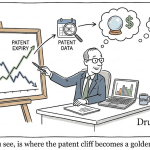
The patent is arguably the most critical and underutilized source of alpha signals in the life sciences sector. It is not merely a legal document but a strategic financial asset that serves as the “moat” protecting a company’s revenue “castle”.7 In an industry where the cost to bring a single drug to market can exceed 2 billion dollars, a patent is the legally enforced monopoly that allows a company to recoup its massive R&D investment.6 To an untrained eye, a patent is a dense, jargon-filled document; to a trained analyst, it is a “rich tapestry” of technical, legal, and commercial information.7
For startups and capital-constrained firms, a patent serves a crucial financial role by acting as a signal that reduces information asymmetry.29 A company’s decision to file for patents credibly signals the quality and importance of its invention to potential investors.29 This credible signaling is paramount in a sector where founders possess private information about their technology’s uncertain quality. Strong patents can also be used as collateral in debt financing and serve as the primary input for sophisticated IP valuation models and patent-backed financing structures.7 The ability to leverage these intangible assets into tangible capital is a significant indicator of a company’s strategic maturity and financial health.
3.2. Quantitative Patent Metrics for Investment Analysis
Beyond the qualitative analysis of a patent’s claims, there are several quantitative metrics that provide powerful, data-driven alpha signals.
Citation Analysis: The number of times a patent is cited by later patents—known as forward citations—is a strong indicator of its technological importance and a reliable proxy for its value.6 The more frequently a patent is cited, the more foundational its technology is considered to be. Conversely, backward citations—the patents a document cites—can be used to map the technological lineage and understand the foundational research upon which a new invention is built.6
Patent Family Size: A patent is rarely a standalone document. It is part of a “patent family,” a collection of related applications filed in various countries to protect the same or similar inventions.7 A broad international patent family is a clear signal of a company’s perceived global commercial potential for a drug, indicating a strategic plan for worldwide market exclusivity. Analysis of a company’s patent family can also reveal strategic moves, such as the use of continuation-in-part applications to broaden protection and block competitors.7
Filing Velocity: The rate at which a company files new patents can be a proxy for its R&D spending and innovation velocity. An analysis of a company’s SEC filings, for example, can determine if its stated R&D spending aligns with its patent filing velocity. A high velocity can signal an active and robust innovation engine, while a sudden slowdown may indicate a redirection of resources or a strategic shift.6
3.3. Advanced Competitive and Legal Intelligence from Patents
Patent data is a real-time guide to the competitive landscape, providing a direct view into the strategic decisions of both innovators and generic competitors.6 This is particularly true in the context of litigation. The outcomes of these legal battles, as well as the filings that initiate them, are some of the most potent alpha signals available.
The Paragraph IV (PIV) Filing: In the United States, a Paragraph IV (PIV) certification is a formal claim by a generic manufacturer that an innovator’s patent is either invalid or will not be infringed by their generic product.6 This filing is widely considered an “act of war” and the “single most important early signal” of an impending generic challenge to a blockbuster drug.6 The filing of a PIV certification transforms a company’s private strategic decision into a public declaration of intent, setting in motion a predictable cascade of legal and financial events that a savvy analyst can track.32
Inter Partes Review (IPR): Beyond PIV filings, a company’s patents can also be challenged through an Inter Partes Review (IPR), a trial proceeding conducted by the United States Patent Trial & Appeal Board (PTAB).33 These are often high-stakes cases initiated by a defendant in a federal court patent lawsuit, and the outcome of an IPR directly impacts the enforceability and value of the patent.33 The success or failure of a patent owner in an IPR proceeding is a significant, data-rich signal for investors, shedding light on the patent’s robustness and the company’s litigation risk.33
Litigation Outcomes as Signals: Research has demonstrated that the outcome of patent litigation directly and predictably impacts a firm’s market value.31 A successful litigation outcome can result in a firm gaining a measurable percentage of its market value, while a loss can result in an equivalent decline.31 This is particularly evident in the case of litigation funding, which has emerged as a profitable investment avenue for firms looking to finance a patent holder’s legal fees in exchange for a portion of the settlement.36 By monitoring court dockets and litigation outcomes, an analyst can gain a direct window into the financial and strategic health of a company and its intellectual property portfolio.6
Data Point
Description & Context
What It Signals for a Professional Analyst
Forward Citations
The number of times a patent is cited by later patents.6
Indicates a patent’s technological importance and foundational value. A high number suggests a broad influence on subsequent innovation.6
Patent Family Size & Breadth
The collection of patent applications filed in various countries for a single invention.7
Signals a company’s perceived global commercial potential. A large, international patent family indicates a robust, well-funded strategy for market protection.7
Paragraph IV Filings
A formal certification by a generic company challenging an innovator’s patent.6
This is the single most important signal of an impending generic challenge and the start of a predictable legal and financial battle. It provides a forward-looking view on the timing of generic entry.6
Inter Partes Review (IPR)
A post-grant proceeding to challenge a patent’s validity before the PTAB.33
Signals a high-stakes, adversarial test of a patent’s strength. The outcome directly impacts the patent’s enforceability and a company’s financial position.33
4. Integrating Qualitative and Quantitative Frameworks
4.1. The Blended Valuation Model (rNPV)
Valuing pharmaceutical and biotech companies, especially those in the pre-revenue stages, is a significant challenge for analysts. Given the lack of traditional financial metrics like earnings or cash flow, a purely quantitative approach is not feasible.10 Instead, the standard for valuation is a blended model that integrates qualitative insights into a quantitative framework, most notably the Risk-Adjusted Net Present Value (rNPV) model.15
The rNPV model estimates the value of a company’s pipeline drugs by forecasting future cash flows and then adjusting them for the inherent risks of drug development. The model’s key components are:
Estimated peak sales: The projected maximum annual revenue a drug could generate if successful.15
Forecasted cash flows: The revenue minus costs over the drug’s projected patent life.7
Probability of Success (POS): A crucial factor that accounts for the risk of failure at each stage of clinical development. The forecasted cash flows are multiplied by the POS for each phase.15
A key aspect of this framework is the direct link between qualitative analysis and the quantitative output. The POS is not an arbitrary number; it is a subjective but data-driven judgment based on a rigorous evaluation of non-numerical factors. For example, a drug’s scientific novelty, the expertise of the management team, and the strength of its partnerships are all qualitative inputs that justify a higher or lower POS in the model, directly impacting the final valuation.10 This approach acknowledges that in the absence of a proven market product, the value is derived from the quality of the science, the people, and the strategy.
4.2. Beyond the Numbers: Analyzing Leadership and Partnerships
In a sector where a single trial failure can lead to an 80% stock price drop overnight, an investment thesis must be built on a rigorous analysis of factors that go beyond simple financial projections.23 The strength and experience of the management team are a critical alpha signal.10 The ideal team includes executives who have a proven track record of developing and commercializing treatments and have a history of meeting publicly stated goals and development milestones.10 A management team’s ability to navigate the complex regulatory environment and demonstrate foresight in anticipating challenges is a key indicator of long-term success.27
Furthermore, strategic partnerships and collaborations are essential for a company’s survival and success. Given the exorbitant costs of drug development, few companies can finance clinical trials and commercialization on their own.10 A company’s ability to secure a promising collaboration is a powerful signal of external validation from a larger, more established player. The terms of a licensing agreement, particularly the inclusion of generous upfront and milestone payments, provide a reliable indication of the market’s perceived value of the technology.10 A robust cash position, whether from a partnership or existing reserves, is also a crucial signal, as it provides a company with the financial runway to continue its R&D without being forced to accept an unfavorable deal.10
The effective integration of these qualitative and quantitative factors is the only way to build a credible and defensible valuation. A disciplined, objective analysis of the team, the science, and the partnerships is what allows an analyst to justify the assumptions in a model and, by extension, generate a true alpha signal.
Qualitative Metric
Description & Relevance
How It Translates to a Quantitative Model
Team & Management
Experience of the leadership team in drug development and commercialization.10 A track record of meeting milestones.10
A team with a history of success can justify a higher Probability of Success (POS) in a Risk-Adjusted NPV (rNPV) model, as their expertise reduces execution risk.15
Novelty of Science / Platform Technology
The scientific and technological foundation of the drug candidate. Focus on breakthrough therapies addressing unmet needs and platform technologies with multiple applications.10
A novel platform technology can be used to justify a wider array of pipeline candidates and a higher POS across the portfolio due to reduced risk and shortened timelines.12
Strategic Partnerships & Deal Terms
The presence of durable, well-funded collaborations with larger pharmaceutical companies.10
A strategic partnership provides external validation of the company’s technology. Generous upfront and milestone payments from a partner are direct inputs into a financial model and can improve a company’s financial runway.10
Market & Patient Population
The target patient population and the degree of unmet medical need.10
A larger target market allows for higher Peak Sales Projections in a valuation model. A significant unmet need can justify a higher market share and premium pricing assumptions.39
5. The Role of AI and Analytics in a Modern Approach
5.1. AI-Driven Signal Detection
The pharmaceutical industry operates on a massive scale of data. From preclinical studies and clinical trials to patent filings and regulatory documents, the “deluge of data” is a monumental task to process manually.13 The modern alpha-seeking strategist understands that the human mind cannot effectively synthesize this volume of information. This is where AI and machine learning (ML) are not just a convenience, but a strategic necessity.41 The primary value of AI in this context is not to find alpha signals on its own but to act as a force multiplier, processing, synthesizing, and interpreting data to enable human analysts to make better, faster decisions.
AI-driven platforms are transforming the process of signal detection in several ways:
Natural Language Processing (NLP): A significant portion of a company’s strategic and scientific intent is buried in unstructured text—scientific literature, clinical notes, and legal documents.13 NLP allows AI to parse this text, extracting key insights such as safety signals from patient records, identifying technological themes in patents, or even summarizing a competitor’s strategic goals from earnings transcripts.13
Predictive Analytics: AI can analyze vast historical datasets to identify subtle, non-obvious patterns that indicate future risks or opportunities.9 For example, ML models can predict the likelihood of a clinical trial’s success or failure by analyzing factors such as patient recruitment rates, changes in study design, or preclinical toxicology data.9 Even minor deviations, such as a trial delay beyond 150 days, can increase the termination risk by over 40%.9
Generative AI: The latest advancements in generative AI can further streamline the research process. Platforms trained on high-quality content can synthesize complex data, generate summaries of key insights, and even draft reports, allowing analysts to focus on higher-value tasks such as strategic decision-making and due diligence.8
5.2. Algorithmic and Data-Driven Trading Strategies
The application of AI in the pharmaceutical sector extends to algorithmic trading strategies, which move beyond traditional technical indicators like moving averages.46 Modern algorithms are designed to process the complex, non-traditional alpha signals discussed in this report. These systems can be programmed to monitor a company’s R&D pipeline, track clinical trial updates, and scan for regulatory announcements in real time.42
By leveraging AI and ML models, a trading algorithm can identify and act on highly specific signals, such as the announcement of a new drug-device combination that could extend a patent’s life, or a PIV filing that signals an imminent generic threat.32 However, these sophisticated models are not without their risks. They are often “black box” systems, where the logic behind a trading decision can be difficult to debug or explain.49 Furthermore, a model can be overfit to historical data, leading to poor real-world performance.49 The efficacy of any data-driven strategy is contingent on a strong infrastructure and the use of clean, reliable data sources to avoid significant “slippage” and ensure timely, accurate execution.49
6. Case Studies and Strategic Recommendations
6.1. The Patent Cliff: AbbVie’s Humira
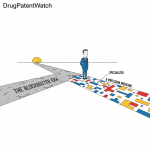
The “patent cliff” is a predictable event in the pharmaceutical industry where a drug’s revenue plummets following the expiration of its patent and the subsequent entry of generic competitors.6 AbbVie’s Humira, once the world’s best-selling drug, provides a classic case study of this phenomenon. Following its primary patent expiry in 2022, Humira’s sales recorded a massive decline, dropping from a peak of $21.2 billion in 2022 to just $8.99 billion in 2024.6
However, the case of Humira is not just a tale of decline; it is a masterclass in strategic lifecycle management. AbbVie proactively managed the inevitable cliff by investing heavily in new immunology drugs, Skyrizi and Rinvoq.6 These new assets generated over $19 billion in sales in 2024, effectively “cushioning the blow” of Humira’s revenue loss.6 This contrasts sharply with the experience of other companies, such as Pfizer’s Lipitor, which experienced a “picture-perfect patent cliff” with an immediate two-thirds drop in sales following its patent expiration.48 This comparison demonstrates that the impact of a patent cliff is not uniform; it is a direct function of a company’s foresight and strategic planning, which can be analyzed through its patent filings, R&D pipeline, and financial disclosures.6
6.2. Investing in Innovation: The Startup Success Story
For investors, the opportunity to generate life-changing returns often lies in identifying and funding early-stage biotech startups. Success stories from Harvard’s Blavatnik Biomedical Accelerator illustrate the power of foundational, early-stage alpha signals.52 Companies like Vesigen Therapeutics and Sana Biotechnology, for example, secured significant initial funding rounds by leveraging powerful, patented platform technologies that addressed a clear unmet need.52
These ventures succeeded because they demonstrated a unique value proposition, built a strong team with diverse expertise, and secured funding through a combination of venture capital and strategic partnerships.37 A strong patent portfolio and a novel, first-in-class scientific approach were the critical signals that enabled them to attract investment. These companies were able to “turn intangible assets into tangible capital” through the strength of their intellectual property, which provided the credible foundation for their financial projections and future valuation.7
6.3. Recommendations for Professionals
The analysis presented in this report provides a clear set of strategic recommendations for professionals operating at the intersection of science, law, and finance.
For Investors: Adopt a holistic, multi-disciplinary approach that combines quantitative valuation models like rNPV with a rigorous qualitative analysis of a company’s pipeline, management team, and partnerships. Prioritize identifying pre-catalyst signals from clinical trial data, rather than reacting to public headlines, and use patent data to proactively assess a company’s defensible market position and long-term financial health.
For Business Development Professionals: Leverage patent data for competitive intelligence. Use it to map competitor R&D pipelines, identify “white space” opportunities in underserved therapeutic areas, and conduct a thorough freedom-to-operate analysis to mitigate legal risks.53
For Law Firms & IP Managers: Go beyond simply tracking patent filings. Utilize advanced analytics to monitor litigation, anticipate PIV and IPR challenges, and proactively manage the patent portfolio as a strategic asset. The goal should be to advise clients on how to build and maintain a “secondary patent portfolio” to extend market exclusivity and mitigate the impact of an inevitable patent cliff.6
For Consultants: Advise clients on integrating AI-driven platforms to streamline their internal processes, from drug discovery and development to supply chain optimization and sales strategy.40 Emphasize the value of turning a “data deluge” into “actionable intelligence” to enhance research productivity and improve outcomes.13
Appendix: Glossary of Key Terms
Alpha (α): In finance, a measure of an investment’s excess return over a benchmark, adjusted for risk. It represents the value added by an active manager.1
Beta (β): A measure of an investment’s volatility in relation to the overall market.1
PDUFA Date: The deadline set by the FDA for its decision on a new drug application, typically 10 months from filing.21
Patent Family: A collection of patent applications filed in different countries that are related to the same invention.7
Paragraph IV (PIV) Filing: A legal certification by a generic drug company claiming that an innovator’s patent is invalid or not infringed by their generic product. It is a key signal of an impending generic challenge.6
Inter Partes Review (IPR): A legal proceeding before the U.S. Patent Trial & Appeal Board (PTAB) to challenge the validity of a granted patent.33
Risk-Adjusted Net Present Value (rNPV): A financial valuation model used for pre-revenue biotech companies that forecasts a drug’s potential cash flows and adjusts them by the probability of success at each stage of development.15
Buy the rumor, sell the news: A trading phenomenon where a stock’s price rises in anticipation of good news and then falls once the news is publicly announced, as the positive outcome has already been “priced in” by the market.24
Patent Cliff: The steep and sudden decline in a drug’s revenue following the expiration of its patent and the entry of generic competitors.6
Predicting Institution Outcomes for Inter Partes Review (IPR) Proceedings at the United States Patent Trial & Appeal Board by Deep Learning of Patent Owner Preliminary Response Briefs – MDPI, accessed August 20, 2025, https://www.mdpi.com/2076-3417/12/7/3656