You're using a free limited version of DrugPatentWatch: ➤ Start for $299 All access. No Commitment.

Last Updated: March 26, 2026

CLINDAMYCIN PHOSPHATE - Generic Drug Details


✉ Email this page to a colleague

« Back to Dashboard


What are the generic drug sources for clindamycin phosphate and what is the scope of patent protection?

Clindamycin phosphate is the generic ingredient in eighteen branded drugs marketed by Glenmark Pharms Ltd, Padagis Israel, Taro, Norvium Bioscience, Pfizer, Fougera Pharms, Padagis Us, Bausch, Alembic, Amneal, Encube, Quagen, Solaris Pharma Corp, Sun Pharma Canada, Zydus Lifesciences, Organon Llc, Pharmacia And Upjohn, Abraxis Pharm, Almaject, Bedford, Bristol Myers Squibb, Fresenius Kabi Usa, Hikma, Igi Labs Inc, Loch, Marsam Pharms Llc, Rising, Sagent Pharms Inc, Solopak, Teva Parenteral, Watson Labs, Baxter Hlthcare Corp, Sandoz Inc, Abbott Labs, Baxter Hlthcare, Boca Pharma Llc, Chartwell Rx, Encube Ethicals, Fougera Pharms Inc, G And W Labs Inc, Novast Labs, Pai Holdings Pharm, Ph Health, Taro Pharm Inds, Vintage Pharms, Xttrium Labs Inc, Carnegie, Epic Pharma Llc, Actavis Mid Atlantic, and Almirall, and is included in ninety-two NDAs. There are three patents protecting this compound and two Paragraph IV challenges. Additional information is available in the individual branded drug profile pages.

Clindamycin phosphate has thirty-five patent family members in twenty-one countries.

There are twenty-five drug master file entries for clindamycin phosphate. Thirty-six suppliers are listed for this compound.

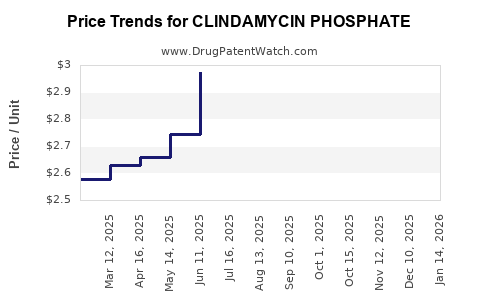
Drug Prices for CLINDAMYCIN PHOSPHATE

See drug prices for CLINDAMYCIN PHOSPHATE

Recent Clinical Trials for CLINDAMYCIN PHOSPHATE

Identify potential brand extensions & 505(b)(2) entrants

SponsorPhase
Sun Pharmaceutical Industries, Inc.PHASE1
Ain Shams Maternity HospitalNA
Shehab Ahmed HamadPHASE3

See all CLINDAMYCIN PHOSPHATE clinical trials

Pharmacology for CLINDAMYCIN PHOSPHATE
Paragraph IV (Patent) Challenges for CLINDAMYCIN PHOSPHATE
Tradename Dosage Ingredient Strength NDA ANDAs Submitted Submissiondate
CLINDESSE Vaginal Cream clindamycin phosphate 2% 050793 1 2015-02-05

US Patents and Regulatory Information for CLINDAMYCIN PHOSPHATE

Applicant Tradename Generic Name Dosage NDA Approval Date TE Type RLD RS Patent No. Patent Expiration Product Substance Delist Req. Exclusivity Expiration
Igi Labs Inc CLINDAMYCIN PHOSPHATE clindamycin phosphate INJECTABLE;INJECTION 062928-001 Feb 13, 1989 DISCN No No ⤷  Start Trial ⤷  Start Trial ⤷  Start Trial
Zydus Lifesciences CLINDAMYCIN PHOSPHATE clindamycin phosphate GEL;TOPICAL 216587-001 Sep 19, 2023 AB1 RX No No ⤷  Start Trial ⤷  Start Trial ⤷  Start Trial
Xttrium Labs Inc CLINDAMYCIN PHOSPHATE clindamycin phosphate SOLUTION;TOPICAL 063304-001 Jul 15, 1997 DISCN No No ⤷  Start Trial ⤷  Start Trial ⤷  Start Trial
>Applicant >Tradename >Generic Name >Dosage >NDA >Approval Date >TE >Type >RLD >RS >Patent No. >Patent Expiration >Product >Substance >Delist Req. >Exclusivity Expiration

Expired US Patents for CLINDAMYCIN PHOSPHATE

Applicant Tradename Generic Name Dosage NDA Approval Date Patent No. Patent Expiration
Norvium Bioscience EVOCLIN clindamycin phosphate AEROSOL, FOAM;TOPICAL 050801-001 Oct 22, 2004 7,141,237 ⤷  Start Trial
Bausch CLINDAGEL clindamycin phosphate GEL;TOPICAL 050782-001 Nov 27, 2000 6,387,383 ⤷  Start Trial
Norvium Bioscience EVOCLIN clindamycin phosphate AEROSOL, FOAM;TOPICAL 050801-001 Oct 22, 2004 7,374,747 ⤷  Start Trial
>Applicant >Tradename >Generic Name >Dosage >NDA >Approval Date >Patent No. >Patent Expiration

International Patents for CLINDAMYCIN PHOSPHATE

Country Patent Number Title Estimated Expiration
Eurasian Patent Organization 200870154 ЛЕКАРСТВЕННОЕ СРЕДСТВО ДЛЯ МЕСТНОГО ПРИМЕНЕНИЯ ⤷  Start Trial
European Patent Office 3324938 FORMULATIONS ET TRAITEMENTS TOPIQUES (TOPICAL FORMULATIONS AND TREATMENTS) ⤷  Start Trial
European Patent Office 1968545 MEDICAMENT UTILISE PAR VOIE TOPIQUE (MEDICAMENT FOR TOPICAL USE) ⤷  Start Trial
>Country >Patent Number >Title >Estimated Expiration

Supplementary Protection Certificates for CLINDAMYCIN PHOSPHATE

Patent Number Supplementary Protection Certificate SPC Country SPC Expiration SPC Description
1304992 2013C/060 Belgium ⤷  Start Trial PRODUCT NAME: CLINDAMYCINE (ALS CLINDAMYCINE FOSFAAT) EN TRETINOINE; AUTHORISATION NUMBER AND DATE: BE437507 20130506
1304992 C300617 Netherlands ⤷  Start Trial PRODUCT NAME: COMBINATIE VAN CLINDAMYCINE, DESGEWENST IN DE VORM VAN CLINDAMYCINEFOSFAAT EN TRETINOINE; NAT. REGISTRATION NO/DATE: RVG 109745 20130626; FIRST REGISTRATION: PA1332/043/001 20130322
1304992 SPC/GB13/061 United Kingdom ⤷  Start Trial PRODUCT NAME: CLINDAMYCIN PHOSPHATE IN COMBINATION WITH TRETINOIN.; REGISTERED: IE PA1332/043/001 20130322; UK PL15142/0249 20130624
>Patent Number >Supplementary Protection Certificate >SPC Country >SPC Expiration >SPC Description

Clindamycin Phosphate: Market Dynamics and Financial Trajectory

Last updated: February 19, 2026

Clindamycin phosphate, a widely prescribed lincosamide antibiotic, exhibits stable market performance driven by its established efficacy against anaerobic and gram-positive bacteria. The drug's generic availability and broad therapeutic applications in treating skin infections, bone and joint infections, and pelvic inflammatory disease contribute to consistent demand. While the market is mature, ongoing research into novel delivery systems and combination therapies presents opportunities for incremental growth and differentiation. Financial performance is characterized by steady revenue streams from generic sales, with profitability influenced by manufacturing efficiencies and pricing pressures from competitive generic manufacturers.

What is the Current Market Size and Growth Rate for Clindamycin Phosphate?

The global clindamycin phosphate market is a mature segment within the broader antibiotic sector. Precise current market size figures are proprietary and vary by market research firm. However, industry analysis indicates a market valuation in the hundreds of millions of U.S. dollars annually. Growth rates are generally low, typically in the low single digits (1-3% compound annual growth rate – CAGR). This subdued growth is characteristic of well-established generic drugs with limited patent exclusivity. The primary drivers of demand remain consistent, stemming from its utility in treating common bacterial infections.

The market is segmented by application, with dermatological applications (e.g., acne treatment) representing a significant portion of usage. Other key applications include intra-abdominal infections, bone and joint infections, and gynecological infections. The pharmaceutical industry's focus on novel antibiotic development for resistant pathogens means that growth for older antibiotics like clindamycin phosphate is more likely to come from increased generic penetration in emerging markets or minor formulation improvements rather than breakthrough clinical advancements.

What are the Key Therapeutic Applications Driving Demand?

Clindamycin phosphate's therapeutic utility is diverse, underpinning its sustained market presence. The primary indications include:

  • Dermatological Infections: This is a major application, particularly in the topical treatment of acne vulgaris. Clindamycin phosphate lotions, gels, and solutions effectively target Cutibacterium acnes bacteria.
  • Bone and Joint Infections: Intravenous and oral formulations are used to treat osteomyelitis and septic arthritis, often in combination with other antibiotics, particularly when Staphylococcus aureus is implicated.
  • Intra-abdominal Infections: It is a cornerstone in treating serious infections such as peritonitis and appendicitis, especially when anaerobic bacteria are suspected. It is frequently used in combination with antibiotics that cover aerobic gram-negative bacilli.
  • Pelvic Inflammatory Disease (PID): Intravenous clindamycin phosphate is a standard of care for PID, often combined with an agent that provides coverage against gram-negative organisms.
  • Respiratory Tract Infections: While less common than other indications, it can be used for certain types of pneumonia and empyema, especially those caused by anaerobic bacteria.
  • Bacterial Vaginosis: Vaginal formulations are used for the treatment of bacterial vaginosis.

The prevalence of these conditions globally, coupled with the drug's established safety and efficacy profile at a lower cost point compared to newer agents, ensures a consistent demand.

What is the Competitive Landscape and Key Players?

The competitive landscape for clindamycin phosphate is characterized by a high degree of genericization. Following patent expiry, numerous pharmaceutical manufacturers globally produce and market clindamycin phosphate products. This leads to intense price competition.

Key players in the clindamycin phosphate market include:

  • Generic Manufacturers: A large number of companies worldwide produce generic clindamycin phosphate. Examples include Apotex Inc., Mylan N.V. (now Viatris), Teva Pharmaceutical Industries Ltd., Sun Pharmaceutical Industries Ltd., and Zydus Lifesciences Ltd. These companies compete primarily on price and market reach.
  • Branded Manufacturers (Limited): While branded versions exist, they typically hold a smaller market share compared to generics. The original innovator may still market a branded product, but its pricing power is significantly limited by the generic competition.
  • Formulation Specialists: Some companies may specialize in specific formulations (e.g., topical, injectable) and compete on product quality, delivery system innovation, and regulatory approvals in specific regions.

The market is highly fragmented due to the large number of generic suppliers. Pricing is a critical differentiator, and manufacturers with efficient production processes and established supply chains have a competitive advantage. Regulatory approvals in various global markets (e.g., FDA in the U.S., EMA in Europe) are essential for market access.

What are the Regulatory and Patent Considerations?

Clindamycin phosphate is an off-patent drug in most major markets. The original patents for clindamycin expired decades ago. This has led to the widespread availability of generic versions.

  • Patent Status: Generally, no active patents cover the basic clindamycin phosphate molecule or its standard therapeutic uses. This means that any company can manufacture and sell generic clindamycin phosphate as long as they meet regulatory requirements.
  • Regulatory Approvals: Manufacturers must obtain marketing authorization from regulatory bodies in each country where they wish to sell the drug. In the U.S., this typically involves submitting an Abbreviated New Drug Application (ANDA) to the Food and Drug Administration (FDA). In Europe, similar approvals are sought from the European Medicines Agency (EMA) or national competent authorities.
  • Formulation Patents: While the core drug is off-patent, companies may pursue patents on novel formulations, delivery systems (e.g., extended-release versions, specific topical preparations), or combination therapies. These patents, if granted and defensible, can provide a period of market exclusivity for a specific product variation. However, these are typically incremental and do not significantly alter the overall market dynamics for the generic drug.
  • Manufacturing Standards: Regulatory bodies enforce stringent Good Manufacturing Practice (GMP) standards for all pharmaceutical production, including clindamycin phosphate. Compliance is a prerequisite for market access.

The absence of significant patent protection for the base compound means that competition is driven by manufacturing cost, quality, and marketing rather than intellectual property exclusivity.

What are the Financial Performance Drivers and Challenges?

The financial performance of clindamycin phosphate products is shaped by several factors:

Drivers:

  • Consistent Demand: As a widely prescribed antibiotic for common infections, demand remains relatively stable.
  • Generic Market Access: The low cost of generic clindamycin phosphate makes it accessible in a wide range of healthcare settings, including low- and middle-income countries.
  • Manufacturing Efficiencies: Companies that can optimize their manufacturing processes to reduce production costs can achieve higher profit margins.
  • Established Supply Chains: Robust and reliable supply chains are crucial for consistent product availability, which is a key factor for healthcare providers.

Challenges:

  • Price Erosion: Intense competition among numerous generic manufacturers leads to significant price pressure. The price per unit of clindamycin phosphate has steadily declined over the years.
  • Volume-Based Sales: Profitability relies heavily on sales volume rather than high per-unit margins.
  • Antibiotic Resistance: The increasing threat of antibiotic resistance can impact the long-term utility of older antibiotics and may necessitate a shift towards newer, more expensive agents in certain cases. However, clindamycin phosphate remains effective against many susceptible bacterial strains.
  • Regulatory Hurdles: While the drug is off-patent, obtaining and maintaining regulatory approvals in various global markets requires ongoing compliance and investment.
  • Raw Material Costs: Fluctuations in the cost of active pharmaceutical ingredients (APIs) and excipients can impact manufacturing costs.

The financial trajectory is one of steady, albeit low, revenue generation. Companies focus on maintaining high production volumes and controlling costs to remain competitive in this mature generic market.

What are the Future Market Trends and Opportunities?

The future market for clindamycin phosphate will likely see continued stability with potential for niche growth.

  • Emerging Markets: Increased access to healthcare and rising incomes in emerging economies may lead to higher demand for essential antibiotics like clindamycin phosphate.
  • Combination Therapies: Research into novel combination therapies, where clindamycin phosphate is paired with other agents to enhance efficacy or broaden spectrum of activity, could create opportunities for specific product lines.
  • Advanced Delivery Systems: Innovations in drug delivery, such as improved topical formulations or extended-release injectables, could offer differentiation and command slightly higher prices.
  • Dermatology Focus: The significant use of clindamycin phosphate in topical acne treatments suggests that developments in dermatological formulations will remain a key area for potential product evolution.
  • Stewardship Programs: Increased emphasis on antibiotic stewardship may lead to more targeted prescribing, but clindamycin phosphate is likely to retain its role in appropriate indications due to its efficacy and cost-effectiveness.
  • Competition from Newer Agents: While clindamycin phosphate will persist, the ongoing development of novel antibiotics targeting resistant strains could gradually reduce its market share in certain complex or resistant infections.

The market is unlikely to experience rapid expansion but will remain a reliable component of the global antibiotic supply, driven by its established role in treating common bacterial infections.

Key Takeaways

  • Clindamycin phosphate is a mature antibiotic with stable market demand driven by its broad efficacy in treating common bacterial infections, particularly dermatological and anaerobic infections.
  • The market is characterized by intense generic competition, leading to low single-digit CAGR and price erosion.
  • Key therapeutic applications include acne treatment, bone and joint infections, and intra-abdominal infections.
  • Most patents on clindamycin phosphate have expired, allowing numerous generic manufacturers to compete.
  • Financial performance relies on high sales volumes and efficient manufacturing to offset low profit margins per unit.
  • Future growth opportunities lie in emerging markets, novel formulations, and combination therapies, though competition from newer antibiotics presents a long-term challenge.

Frequently Asked Questions

  1. What is the typical lifespan of a generic drug's market dominance before significant price erosion occurs? Generic drugs, once off-patent, typically face immediate and substantial price erosion due to multiple manufacturers entering the market. The dominance is characterized by volume rather than price, with significant pressure beginning as soon as the first generic competitor gains approval.

  2. Are there any new clinical trials for clindamycin phosphate currently underway that could significantly impact its market? While extensive research has been conducted on clindamycin phosphate, large-scale Phase III trials for new indications or breakthrough formulations are uncommon for well-established generic drugs. Most ongoing research focuses on incremental improvements or combination therapies rather than entirely new uses for the base molecule.

  3. How does the rise of antibiotic resistance specifically affect the market for clindamycin phosphate? The rise of antibiotic resistance necessitates careful antibiotic stewardship. For clindamycin phosphate, this means its use is increasingly guided by susceptibility testing. While resistance can limit its effectiveness in some severe or persistent infections, it remains a valuable option for susceptible bacterial strains due to its established profile.

  4. What are the primary manufacturing challenges for generic clindamycin phosphate producers? Primary manufacturing challenges include maintaining consistent API quality from suppliers, optimizing synthesis processes for cost-efficiency, ensuring compliance with stringent global GMP standards, and managing the complexities of global distribution networks to ensure product availability and stability.

  5. What is the typical profit margin for a generic clindamycin phosphate product compared to a novel patented antibiotic? Profit margins for generic clindamycin phosphate are considerably lower, often in the single digits or low double digits, reflecting intense price competition and high volumes. In contrast, novel patented antibiotics can achieve profit margins of 30-50% or higher during their exclusivity period, due to pricing power and unmet medical need.

Citations

[1] U.S. Food and Drug Administration. (n.d.). Abbreviated New Drug Applications (ANDAs). Retrieved from https://www.fda.gov/drugs/abbreviated-new-drug-applications-andas [2] European Medicines Agency. (n.d.). Applying for a medicine's authorisation. Retrieved from https://www.ema.europa.eu/en/human-regulatory/medicines/applying-medicines-authorisation [3] World Health Organization. (2019). Antibiotic resistance. Retrieved from https://www.who.int/news-room/fact-sheets/detail/antibiotic-resistance [4] Generic Pharmaceutical Association. (n.d.). The Value of Generic Medicines. Retrieved from https://www.pgenlife.org/ (Note: This link refers to the Pharmaceutical Research and Manufacturers of America, PhRMA, and its member companies. For specific generic association info, an alternative source may be needed if this link is not definitive.) [5] Viatris Inc. (2023). Annual Report on Form 10-K. (Specific report for the relevant fiscal year would be cited here if available).

More… ↓

⤷  Start Trial

Make Better Decisions: Try a trial or see plans & pricing

Drugs may be covered by multiple patents or regulatory protections. All trademarks and applicant names are the property of their respective owners or licensors. Although great care is taken in the proper and correct provision of this service, thinkBiotech LLC does not accept any responsibility for possible consequences of errors or omissions in the provided data. The data presented herein is for information purposes only. There is no warranty that the data contained herein is error free. We do not provide individual investment advice. This service is not registered with any financial regulatory agency. The information we publish is educational only and based on our opinions plus our models. By using DrugPatentWatch you acknowledge that we do not provide personalized recommendations or advice. thinkBiotech performs no independent verification of facts as provided by public sources nor are attempts made to provide legal or investing advice. Any reliance on data provided herein is done solely at the discretion of the user. Users of this service are advised to seek professional advice and independent confirmation before considering acting on any of the provided information. thinkBiotech LLC reserves the right to amend, extend or withdraw any part or all of the offered service without notice.