You're using a free limited version of DrugPatentWatch: Upgrade for Complete Access

Last Updated: December 12, 2025

CLINDAGEL Drug Patent Profile


✉ Email this page to a colleague

« Back to Dashboard


When do Clindagel patents expire, and what generic alternatives are available?

Clindagel is a drug marketed by Bausch and is included in one NDA.

The generic ingredient in CLINDAGEL is clindamycin phosphate. There are fifty-five drug master file entries for this compound. Thirty-six suppliers are listed for this compound. Additional details are available on the clindamycin phosphate profile page.

AI Deep Research
Questions you can ask:
  • What is the 5 year forecast for CLINDAGEL?
  • What are the global sales for CLINDAGEL?
  • What is Average Wholesale Price for CLINDAGEL?
Drug patent expirations by year for CLINDAGEL
Drug Prices for CLINDAGEL

See drug prices for CLINDAGEL

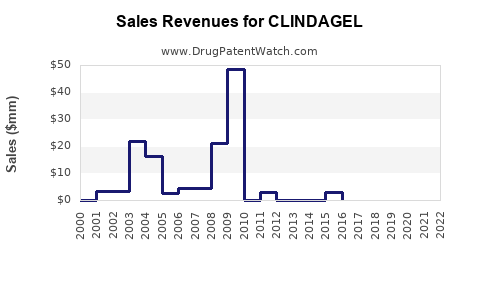
Drug Sales Revenue Trends for CLINDAGEL

See drug sales revenues for CLINDAGEL

Recent Clinical Trials for CLINDAGEL

Identify potential brand extensions & 505(b)(2) entrants

SponsorPhase
Stiefel, a GSK CompanyPhase 1
GlaxoSmithKlinePhase 1

See all CLINDAGEL clinical trials

Pharmacology for CLINDAGEL

US Patents and Regulatory Information for CLINDAGEL

Applicant Tradename Generic Name Dosage NDA Approval Date TE Type RLD RS Patent No. Patent Expiration Product Substance Delist Req. Exclusivity Expiration
Bausch CLINDAGEL clindamycin phosphate GEL;TOPICAL 050782-001 Nov 27, 2000 AB2 RX Yes Yes ⤷  Get Started Free ⤷  Get Started Free ⤷  Get Started Free
>Applicant >Tradename >Generic Name >Dosage >NDA >Approval Date >TE >Type >RLD >RS >Patent No. >Patent Expiration >Product >Substance >Delist Req. >Exclusivity Expiration

Supplementary Protection Certificates for CLINDAGEL

Patent Number Supplementary Protection Certificate SPC Country SPC Expiration SPC Description
1304992 PA2013025,C1304992 Lithuania ⤷  Get Started Free PRODUCT NAME: CLINDAMYCINUM + TRETINOINUM; REGISTRATION NO/DATE: LT/1/13/3279/001, 2013 04 26 LT/1/13/3279/002, 2013 04 26 PA1332/043/001 20130323
1304992 PA2013025 Lithuania ⤷  Get Started Free PRODUCT NAME: CLINFAMYCINUM + TRETINOINUM; REGISTRATION NO/DATE: LT/1/13/3279/001, 2013 04 26 LT/1/13/3279/002, 2013 04 26 PA1332/043/001 20130323
1304992 474 Finland ⤷  Get Started Free
>Patent Number >Supplementary Protection Certificate >SPC Country >SPC Expiration >SPC Description

Market Dynamics and Financial Trajectory for CLINDAGEL

Last updated: July 29, 2025


Introduction

CLINDAGEL, a topical formulation of clindamycin phosphate, is primarily utilized in treating bacterial skin infections such as acne vulgaris, impetigo, and other dermatological conditions caused by susceptible bacteria. Its market presence, driven by clinical efficacy, rising dermatological concerns, and evolving healthcare landscapes, warrants comprehensive analysis to guide strategic decision-making. This report evaluates the current market dynamics and forecasts the financial trajectory of CLINDAGEL, emphasizing factors shaping its future outlook.


Market Landscape and Key Drivers

1. Growing Incidence of Skin Disorders

The prevalence of skin conditions like acne vulgaris and bacterial infections has surged globally, fueled by urbanization, pollution, lifestyle changes, and increased awareness. According to the World Health Organization, over 85% of adolescents and young adults suffer from acne at some point, creating a persistent demand for effective topical treatments like CLINDAGEL [1].

2. Antibiotic Resistance and Treatment Paradigms

While topical clindamycin remains a staple for bacterial skin infections, rising antibiotic resistance is reshaping prescribing patterns. The emergence of resistant strains necessitates combination therapies or alternative agents, affecting CLINDAGEL’s market share. However, as resistance nurtures the demand for effective topical agents with minimal systemic absorption, CLINDAGEL retains a niche, especially with appropriate stewardship.

3. Regulatory and Patent Dynamics

CLINDAGEL’s patent status influences its market exclusivity. Patent expirations open opportunities for generic manufacturers, intensifying competition and exerting downward pressure on prices. Conversely, new formulations or combination products may provide alternative revenue streams and prolong market relevance.

4. Competitive Landscape

Key competitors include other topical antibiotics (e.g., erythromycin), benzoyl peroxide, and emerging non-antibiotic formulations. Market differentiation hinges on efficacy, safety profile, patient adherence, and formulation convenience—all factors impacting sales and adoption rates.


Market Constraints and Challenges

1. Safety Concerns and Side Effects

Associations between topical antibiotics and superinfection risks or antibiotic resistance pose challenges. Patient and clinician preference is shifting towards non-antibiotic or combination treatments with reduced resistance potential, possibly limiting CLINDAGEL’s growth trajectory.

2. Regulatory Scrutiny

Authorities like the FDA and EMA emphasize responsible antibiotic use, encouraging formulary restrictions and stewardship. Such measures potentially limit prescribing volumes, especially in regions with stringent policies, impacting revenue.

3. Pricing and Reimbursement Policies

Healthcare payers influence drug utilization through reimbursement frameworks. Cost-containment efforts, particularly in cost-sensitive markets, may favor generics or alternative therapies, thereby impacting CLINDAGEL’s sales.


Financial Trajectory and Revenue Projections

1. Current Revenue Performance

Global sales of CLINDAGEL are driven predominantly by North America, Europe, and parts of Asia. The drug’s revenue has experienced modest growth, bolstered by the rising burden of dermatological conditions and consistent prescribing habits. However, patent expiries and increased generics competition challenge top-line stability.

2. Impact of Patent Expiry and Generics

Patent expiration in key markets is poised to trigger a wave of generic entries, which historically reduce branded drug revenues by 50-70% within the first few years. The timing of patent cliff forecasts suggests potential revenue erosion starting within the next 2-3 years, but this varies depending on jurisdiction.

3. Emerging Opportunities

Innovations such as combination topical therapies blending clindamycin with benzoyl peroxide or adapalene are creating adjacent growth avenues—either as new formulations or direct competition. Investment in new delivery systems (e.g., foam, gel formulations) can enhance patient adherence and expand market share.

4. Geographic Expansion and Market Penetration

Expanding into underserved markets, especially in Asia-Pacific and Latin America, presents significant growth potential due to increasing dermatological awareness, rising disposable incomes, and improved healthcare infrastructure. Tailored pricing strategies and partnerships can accelerate adoption.

5. Digital and Telemedicine Trends

The digital health revolution facilitates remote diagnosis and prescription, broadening access to CLINDAGEL. Companies leveraging teledermatology platforms can capture incremental sales, especially in regions with limited specialist availability.

6. Pricing Strategies and Market Penetration

Price flexibility, especially amidst generic competition, remains critical. Tiered pricing, rebate programs, and formulary negotiations will shape profit margins and revenue streams.

7. Long-term Financial Outlook

Forecast models indicate a gradual decline in branded sales over the next 3-5 years due to patent expiries and market saturation. However, revenues from formulations with novel delivery systems, combination therapies, and emerging markets can offset declines. Overall, a compound annual growth rate (CAGR) of approximately 2-4% is plausible if strategic initiatives are effectively implemented.


Regulatory and Patent Landscape Impact

Patent protections typically extend 20 years from filing, with variations across jurisdictions. The expiration timelines for CLINDAGEL are projected to open floodgates for generic manufacturers, emphasizing the importance of lifecycle management strategies. Extensions via patent linkage or supplementary protection certificates, if applicable, can prolong exclusivity.

Key Strategies for Sustaining Financial Trajectory

  • Developing combination products to enhance efficacy and reduce resistance
  • Investing in novel formulations with improved patient experience
  • Expanding into emerging markets with tailored access strategies
  • Engaging in stewardship programs to promote responsible antibiotic use
  • Exploring digital marketing and telehealth platforms for increased reach

Conclusion

The market dynamics for CLINDAGEL are shaped by a complex interplay of clinical demand, resistance patterns, regulatory scenarios, and competitive pressures. While patent cliffs and evolving treatment standards present challenges, strategic innovation, geographic expansion, and proactive lifecycle management can sustain its financial trajectory. Companies that adapt swiftly to changing landscape nuances will optimize revenue streams and reinforce their market position.


Key Takeaways

  • Demand drivers like increasing dermatological conditions underpin ongoing clinical need for CLINDAGEL, supporting steady revenue streams.
  • Patent expiries pose significant risks, emphasizing the importance of lifecycle management and innovation in formulations.
  • Emerging combination therapies and novel formulations offer opportunities to enhance market appeal and mitigate resistance issues.
  • Expanding into emerging markets is crucial for future growth, leveraging increasing healthcare access and awareness.
  • Regulatory policies and stewardship efforts necessitate adaptive strategies to balance market share with responsible antibiotic use.

Frequently Asked Questions (FAQs)

1. What factors influence CLINDAGEL’s market share in the dermatological segment?
Market share is primarily influenced by efficacy, safety profile, resistance patterns, formulary access, and the availability of alternative therapies. Patient adherence and physician prescribing habits also significantly impact uptake.

2. How will patent expiries affect CLINDAGEL's financial outlook?
Patent expiries typically lead to increased generic competition, exerting downward pressure on prices and revenues. Strategic investments in new formulations or combination therapies can mitigate these effects.

3. Are there emerging alternatives to topical clindamycin for bacterial skin infections?
Yes. Alternatives include other topical antibiotics, benzoyl peroxide, retinoids, and non-antibiotic agents like dapsone. Advances in microbiome-focused therapies are also emerging.

4. What are the regulatory considerations impacting CLINDAGEL?
Regulatory agencies prioritize responsible antibiotic use, monitor resistance development, and may impose restrictions on prescriptions. Approval of new formulations requires demonstrating improved safety or efficacy.

5. How can companies sustain CLINDAGEL’s revenue amid increasing generics?
Implementing lifecycle management, developing combination products, expanding into new markets, and enhancing patient compliance through innovative delivery systems are key approaches.


Sources

[1] World Health Organization. "Global reporting and surveillance of acne prevalence." 2021.

More… ↓

⤷  Get Started Free

Make Better Decisions: Try a trial or see plans & pricing

Drugs may be covered by multiple patents or regulatory protections. All trademarks and applicant names are the property of their respective owners or licensors. Although great care is taken in the proper and correct provision of this service, thinkBiotech LLC does not accept any responsibility for possible consequences of errors or omissions in the provided data. The data presented herein is for information purposes only. There is no warranty that the data contained herein is error free. We do not provide individual investment advice. This service is not registered with any financial regulatory agency. The information we publish is educational only and based on our opinions plus our models. By using DrugPatentWatch you acknowledge that we do not provide personalized recommendations or advice. thinkBiotech performs no independent verification of facts as provided by public sources nor are attempts made to provide legal or investing advice. Any reliance on data provided herein is done solely at the discretion of the user. Users of this service are advised to seek professional advice and independent confirmation before considering acting on any of the provided information. thinkBiotech LLC reserves the right to amend, extend or withdraw any part or all of the offered service without notice.