In the high-stakes world of generic pharmaceuticals, the difference between a blockbuster success and a costly failure often hinges on one critical factor: predictability. For decades, the path to market for many generic drugs, particularly complex ones, was a fog of regulatory uncertainty. Companies would invest millions in research and development, only to find their bioequivalence (BE) studies fall short of the U.S. Food and Drug Administration’s (FDA) unwritten expectations. It was a game of educated guesswork, where the house—the regulator—held all the cards.
Then, everything changed. The introduction and subsequent empowerment of the FDA’s Product-Specific Guidances (PSGs) program has been nothing short of a revolution. What began as a helpful but sporadic series of recommendations has evolved into a core pillar of the generic drug development ecosystem—a predictable, GDUFA-funded deliverable that provides a clear, scientifically-vetted roadmap to approval.
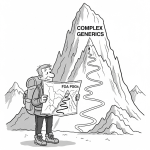
But to view a PSG as merely a technical manual is to miss its true power. For the savvy portfolio manager, the business development executive, or the C-suite strategist, a PSG is far more than a set of instructions. It is a starting gun. It is a market signal. It is a de-risking instrument that can turn a speculative R&D project into a bankable investment. It is the strategic linchpin around which modern, successful generic drug development now revolves.
This report is designed to move you beyond the basics of PSGs. We will not just explain what they are; we will decode what they mean. We will explore how to interpret these documents as powerful business intelligence, how to integrate them with patent and competitive data to build a winning portfolio strategy, and how to leverage them to conquer the next frontier of high-value complex generics. In this new landscape, the companies that thrive will be those that learn to stop reacting to regulatory guidance and start using it as a trigger for strategic action. Let’s begin.
Part I: The Strategic Foundation – Understanding PSGs Beyond the Basics
To truly harness the strategic power of Product-Specific Guidances, we must first appreciate the landscape they transformed. The journey from a world of ambiguity to one of structured predictability is not just a regulatory story; it’s a narrative about the maturation of an entire industry and a fundamental shift in how risk is managed and value is created.
The PSG Revolution: From Regulatory Guideline to Strategic Linchpin
Imagine trying to build a complex piece of machinery with only a vague sketch of the final product. You know the general shape and function, but the precise measurements, the specific materials, and the assembly order are left to your interpretation. You might succeed through costly trial and error, but the risk of a catastrophic failure looms large. This was the world of generic drug development before the advent of a robust PSG program.
The key steps in creating a generic drug have always been clear in principle: characterize the innovator’s Reference Listed Drug (RLD), design a formulation that is pharmaceutically equivalent, and then conduct a pivotal bioequivalence study to prove it performs the same way in the human body. The challenge, however, was in the details. The “pivotal bioequivalence study” was often a black box. For complex products, particularly those that act locally (like a topical cream or an eye drop) and don’t rely on systemic absorption, this could mean embarking on expensive, time-consuming, and unpredictable clinical endpoint bioequivalence studies. These studies, which can cost anywhere from $2 million to $6 million, could single-handedly render a potential generic product commercially non-viable, effectively killing development before it even began.
The legal framework for this high-stakes endeavor was established by the landmark 1984 Drug Price Competition and Patent Term Restoration Act, better known as the Hatch-Waxman Act.2 This legislation was a grand bargain: it gave brand-name drug companies patent term extensions to compensate for the time lost during the lengthy FDA review process, and in return, it created a streamlined pathway for generic drugs. This pathway, the Abbreviated New Drug Application (ANDA), allowed generic manufacturers to rely on the brand company’s original safety and efficacy data, requiring them only to prove that their product was bioequivalent. This act gave birth to the modern generic industry, but it also created an urgent need for clarity on exactly how to prove that bioequivalence.
In 2007, the FDA took a monumental step to provide that clarity by formally launching the Product-Specific Guidances program. The concept was simple yet profound: for individual drug products, the FDA would publish guidance documents describing the agency’s current thinking on the evidence needed to demonstrate therapeutic equivalence. These PSGs were designed to be a “value-added proposition,” providing a practical, science-based pathway where none existed before, or offering a clearer, more efficient alternative to an existing one. The goal was to streamline development, promote the timely approval of ANDAs, and, by fostering competition, improve patient access to high-quality, affordable medicines.7 By November 2022, the agency had published nearly 2,070 such guidances, each one a beacon of clarity in a once-murky sea.
While the program’s launch was a significant step, its true potential was unlocked by the Generic Drug User Fee Amendments (GDUFA). First enacted in 2012, GDUFA authorized the FDA to collect user fees from the generic industry to fund and expedite the review of ANDAs. This created a direct financial link between the industry and the FDA’s performance, transforming the agency’s relationship with generic manufacturers. No longer was the FDA just a gatekeeper; it was now a partner, contractually obligated through “goals letters” to meet specific performance metrics.
A cornerstone of these GDUFA commitments was the expansion and formalization of the PSG program. GDUFA provided the resources for the FDA to conduct critical regulatory science research, creating new tools and methodologies to evaluate generic equivalence, especially for complex products.9 This research became the scientific backbone of new and revised PSGs, enhancing transparency and dramatically improving the quality of ANDAs submitted to the agency. For industry, the impact was immediate and transformative. As one study found, industry representatives believe that the existence of a PSG can save
years of development time for complex products.
This evolution marks a fundamental shift in the FDA’s posture—from reactive regulator to proactive facilitator of market competition. The GDUFA commitments, particularly under the second and third reauthorizations (GDUFA II and III), established firm timelines for PSG issuance. For instance, for non-complex New Chemical Entities (NCEs), the FDA committed to issuing a PSG within two years of the brand drug’s approval for 90% of such products.5 For more challenging complex products, the commitment is to issue PSGs for 50% of them within two years and 75% within three years of the brand’s approval.13 This creates a level of predictability that was once unimaginable. A portfolio manager can now look at a newly approved complex drug and build a multi-year development plan around the high probability that a detailed regulatory roadmap will be available. The PSG has been transformed from a helpful but uncertain possibility into a strategic instrument for long-range planning and capital allocation.
Anatomy of a PSG: Decoding the Blueprint for Success
To the untrained eye, a PSG can appear to be a dry, technical document. But for a strategist, it is a rich text, filled with signals that reveal a product’s development risk, cost, and complexity. Understanding the anatomy of a PSG is the first step toward decoding these signals and using them to make smarter portfolio decisions. Every section provides a piece of the puzzle, but the core of the document—the bioequivalence recommendations—tells the most important part of the story.
The Core Requirement: Bioequivalence (BE) Recommendations
The central purpose of a PSG is to recommend the “most accurate, sensitive, and reproducible approach” to BE testing.15 The specific approach the FDA chooses is a direct reflection of the drug’s properties and the scientific challenges associated with proving equivalence.
In Vivo Studies: These studies, conducted in human subjects, are the traditional backbone of BE testing. The PSG will specify the type of study required, and each choice is a strategic signal. It will detail whether the study should be conducted in a fasting or fed state (or both), which speaks to potential food effects on the drug’s absorption. It will specify a single-dose or multiple-dose design, and a crossover (where each subject receives both the generic and brand drug) or parallel design (where different groups receive each drug). For many years, the standard for many oral drugs was to conduct two separate studies: one fasting and one fed. However, in a significant move toward global harmonization and efficiency, the FDA recently issued the final ICH M13A guidance, which for many immediate-release oral products, now recommends only one BE study under either fasting or fed conditions, a change that could save companies millions of dollars and months of development time.18 A PSG reflecting this new, streamlined approach is a clear positive signal.
In Vitro Studies: These are laboratory-based tests that do not involve human subjects. The most common is dissolution testing, which measures how quickly the active ingredient dissolves from the dosage form in a specified medium.17 For certain products, particularly locally acting ones like topical creams, the FDA may recommend more advanced in vitro methods like the In Vitro Permeation Test (IVPT), which measures the rate at which a drug permeates through a skin model. A PSG that allows for an in vitro pathway in lieu of an in vivo study represents a massive reduction in cost, time, and complexity, and is a powerful green light for development.6
Comparative Clinical Endpoint Studies: This is the most arduous, expensive, and risky BE pathway. It is typically reserved for locally acting drugs where systemic absorption in the bloodstream is not a reliable indicator of the drug’s therapeutic effect at the site of action (e.g., the eye, the skin, the gastrointestinal tract). These studies are essentially mini-efficacy trials, requiring the recruitment of patients with the target disease and measuring a clinical outcome. When a PSG provides a viable alternative to a clinical endpoint study—for example, by recommending a new, validated set of in vitro tests—it can single-handedly unlock a previously inaccessible market. The 2021 PSG for doxycycline hyclate, a periodontal treatment, did just this, recommending a “totality of evidence-based in vitro approach” as an alternative to a clinical endpoint study, a direct result of GDUFA-funded research.
By simply analyzing the type of BE study recommended, a strategic team can create a risk score for a potential project. A BCS-based waiver or a simple in vitro test signals low risk. A standard single in vivo PK study signals moderate and manageable risk. A requirement for a comparative clinical endpoint study signals high risk and high cost, demanding a much stronger commercial justification to proceed.
Critical Ancillary Information
Beyond the headline BE study, PSGs contain other crucial details that shape the development strategy.
Waiver Options: Many PSGs explicitly mention the possibility of a “biowaiver” based on the Biopharmaceutics Classification System (BCS). The BCS categorizes drugs based on their aqueous solubility and intestinal permeability. For drugs that are highly soluble and highly permeable (BCS Class 1), the FDA may waive the requirement for an in vivo BE study altogether, provided the generic product’s formulation is qualitatively and quantitatively similar to the brand’s and it exhibits similar in vitro dissolution. A PSG that confirms a BCS biowaiver option is available makes the development path significantly faster and cheaper.5
Dissolution Methods: The PSG provides highly specific recommendations for dissolution testing, including the type of apparatus to use, the composition of the dissolution medium (e.g., pH, surfactants), the rotation speed, and the time points for sampling.17 This information is invaluable for formulation scientists working to match the release profile of the RLD.
Device and User Interface Recommendations: For complex drug-device combination products like metered-dose inhalers, dry powder inhalers, or auto-injectors, proving BE is not just about the drug; it’s also about the device. The PSG will provide critical guidance on the studies needed to demonstrate that the generic device is acceptably similar to the brand’s device in terms of design, user interface, and performance. This guidance is essential for navigating one of the most challenging areas of generic development.13
The PSG Lifecycle: How and Why Guidance is Born and Evolves
Understanding the process by which PSGs are created, published, and updated is key to anticipating regulatory trends and positioning your company to act swiftly. The lifecycle is no longer an opaque internal FDA process; thanks to GDUFA, it is a transparent and predictable cycle with multiple points for industry engagement.
The development of a new PSG can be initiated by a variety of events. The most common trigger, especially under GDUFA, is the approval of a new brand-name drug (an NDA) or a significant supplement to an existing one.5 The FDA also proactively analyzes its list of approved drugs to identify those that lack guidance but are likely candidates for generic competition. However, the industry itself plays a crucial role. Requests from companies during pre-ANDA meetings, formal inquiries submitted via the “controlled correspondence” pathway, public requests submitted to the official docket, and even citizen petitions can all trigger the development of a new PSG.
Once developed, new and revised PSGs are typically published in batches on a quarterly basis, usually in February, May, August, and November, and announced in the Federal Register.6 To further enhance transparency, the FDA maintains a dedicated webpage for “Upcoming Product-Specific Guidances”. This page provides a forward-looking pipeline of PSGs the agency plans to issue in the coming year, including details on the active ingredient, RLD, and planned publication month. For revisions, it even includes the revision category and a brief description of the planned changes. This “upcoming” list is one of the most powerful and underutilized competitive intelligence tools available. A team that only reacts to a
published PSG is already months behind a strategic competitor that actively monitors the upcoming list and begins preliminary planning, API sourcing inquiries, and business case development in advance.
PSGs are not static documents; they evolve as scientific understanding advances. The FDA classifies revisions into several categories, each with different strategic implications :
Editorial: Non-substantive changes like correcting typos or updating references. No strategic impact.
Minor: Changes not considered major, such as adding an alternative BE option or clarifying study design. Can be beneficial by providing more development flexibility.
In Vitro Major / In Vivo Major: The revision includes additional in vitro or in vivo BE studies that are now considered necessary to support approval. This is a significant change that can impact development programs.
Critical: The revision includes additional BE evidence that reflects a change in the safety or effectiveness of the drug product. This is the most serious type of revision, as it has the potential to impact all ANDAs, including those already approved and on the market.
Finally, the process is not a one-way street. The FDA actively solicits public comments on all draft PSGs, providing an opportunity for companies to provide feedback and scientific data that could influence the final guidance.24 For more specific questions or to propose an alternative BE approach not outlined in the PSG, companies can use the controlled correspondence pathway or request a pre-ANDA meeting to engage directly with the agency, gaining valuable feedback before committing to a costly development program.13 This interactive lifecycle ensures that PSGs remain living documents that reflect the cutting edge of regulatory science.
Part II: The PSG as a Business Catalyst – Triggering Development and Investment
With a firm grasp of what PSGs are and how they come to be, we can now shift our focus to their most important function: serving as a catalyst for business decisions. The publication of a PSG is not a passive event to be noted in a regulatory filing; it is an active signal that should trigger a cascade of strategic evaluations, financial modeling, and, for the right opportunities, decisive investment.
The Starting Gun: Why a New PSG is Your Call to Action
In the fiercely competitive generic drug market, timing is everything. The publication of a new PSG, especially for a first-generic or complex product opportunity, is the equivalent of a starting gun firing at a track meet. It signals three critical realities that demand immediate attention and action.
First, it signals regulatory readiness. The release of a PSG is the FDA’s public declaration that its Office of Generic Drugs has done the scientific legwork, established a valid and reviewable pathway to approval, and is now officially open for business for that specific product. It removes the enormous uncertainty of trying to guess what the agency wants, which is often the single biggest barrier to initiating a new development program.
Second, it levels the playing field. By providing all potential applicants—from multinational giants to smaller niche players—with the exact same technical roadmap, the PSG shifts the basis of competition. The advantage no longer goes to the company with the largest R&D budget capable of brute-forcing a solution through trial and error. Instead, competitive advantage shifts to operational excellence: speed of execution, efficiency in formulation and manufacturing, and a savvy legal and commercial strategy. A well-resourced but slow-moving organization can easily be beaten to market by a more agile competitor that uses the PSG to execute flawlessly.
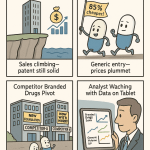
Third, and most importantly, it initiates a high-stakes race against the clock of price erosion. The economics of the generic drug market are brutal and unforgiving. The first company to launch a generic version of a brand-name drug often reaps the greatest rewards, capturing significant market share at a relatively high price. However, as each subsequent competitor enters the market, the price plummets with astonishing speed.
According to data from IQVIA, generic drugs saved the U.S. health care system $2.2 trillion from 2009 to 2019. A single generic competitor can lead to price reductions of 30%, while five competing generics are associated with prices drops of nearly 85%.
This dramatic price decay underscores the immense financial premium placed on being among the first wave of entrants. A delay of even a few months can mean the difference between a highly profitable product and one that barely breaks even. The following table illustrates this stark reality, providing the economic justification for treating a PSG publication as an urgent call to action.
Number of Generic Competitors
Approximate Price Reduction vs. Brand Price
Strategic Implication for a Generic Manufacturer
1 (First Generic / Exclusivity)
30% – 39%
Highest potential for profitability. The primary goal is to capture maximum market share from the brand before other generics launch.
2-3 Competitors
50% – 70%
The market is still profitable, but price competition begins to intensify. Speed to market remains critical to secure a viable position.
4-6 Competitors
~80%
Significant price pressure. Profitability becomes highly dependent on low cost of goods sold (COGS) and efficient manufacturing scale.
7-10 Competitors
~90%
The product is rapidly becoming a commodity. Market share is fought over fractions of a penny. Only companies with superior scale can compete.
10+ Competitors
70% – 95%
Margins are razor-thin or non-existent. The market may become unsustainable for all but the largest, most efficient, high-volume manufacturers.
(Data synthesized from 26)
Reading the Tea Leaves: Interpreting PSGs for Market Potential and Technical Feasibility
Once the starting gun has fired, the next step is to determine if this is a race worth running. The PSG itself is the central document in a structured Go/No-Go decision framework, providing critical data points to assess both the technical hurdles and the commercial opportunity.
Gauging Technical Difficulty
As we established in Part I, the recommended BE pathway in a PSG is a direct and reliable proxy for the project’s technical complexity. A portfolio selection team can quickly triage opportunities based on this single factor. Does the PSG allow for a simple in vitro dissolution study and a BCS-based biowaiver? This indicates a low technical hurdle, primarily a chemistry and formulation challenge. Does it require a standard in vivo pharmacokinetic (PK) study in healthy volunteers? This represents a moderate, well-understood challenge that is the bread and butter of the generic industry. Or does it mandate a complex comparative clinical endpoint study in a patient population? This signals a high-risk, high-cost development program that requires specialized clinical capabilities and a very strong commercial case to justify the investment.1 A PSG that offers a new, less burdensome path—like an
in vitro alternative to a previously required clinical study—can instantly elevate a product’s priority in the portfolio.
Estimating Development Costs
With the technical path clarified, the PSG enables a much more accurate estimation of development costs. The cost to develop a generic drug typically ranges from $2 million to $10 million, a mere fraction of the hundreds of millions or even billions required for a new brand-name drug.29 The PSG helps pinpoint where a specific project will fall within that generic range. A simple oral solid with a biowaiver will be at the lowest end of the spectrum. A complex topical or inhalation product requiring multiple specialized
in vivo and in vitro studies, device engineering, and potentially patient trials will be at the highest end. This ability to forecast R&D expenditures with greater confidence is crucial for effective capital allocation and building a credible business case.
Assessing the Competitive Landscape
The nature of the PSG itself can provide clues about the competitive landscape. A newly issued PSG for a highly complex product—one that has been on the market for years without any generic competition—is a strong signal of a “low-competition opportunity”. The very fact that a PSG was needed, and that it likely required extensive GDUFA-funded research to create, implies that the barriers to entry are high. This suggests that the number of competitors will be limited, at least initially, allowing for a longer period of profitability before severe price erosion sets in. These are often the most lucrative opportunities for companies with the technical expertise to act on them.
Financial Modeling with PSG Clarity: Building the Business Case for an ANDA
Ultimately, the decision to invest in a generic drug program is a financial one. The gold standard for valuing pharmaceutical assets, particularly those still in development, is the risk-adjusted Net Present Value (rNPV) model. Unlike a standard NPV calculation, which simply discounts future cash flows by a cost of capital, the rNPV model adds another critical layer of discounting: the probability of success. Each projected cash flow is multiplied by the probability that the drug will successfully pass its current development stage and all subsequent stages to reach the market.33
This is where the PSG demonstrates its immense financial value. It directly and powerfully impacts the key variables in the rNPV calculation, transforming a project’s financial profile and providing the quantitative justification needed to secure investment.
De-risking the Probability of Success (PoS): The single greatest risk in a generic development program is the failure to demonstrate bioequivalence. Before a PSG is available for a complex product, a financial analyst might have to assign a low probability of technical and regulatory success (PTRS)—perhaps 50% or less—to reflect the high degree of scientific uncertainty. This low PoS would severely penalize the projected future revenues in the rNPV model, potentially yielding a negative valuation and marking the project as “un-investable”. The publication of a clear, detailed PSG fundamentally changes this calculation. By providing an FDA-sanctioned scientific roadmap, it gives a competent R&D team a high degree of confidence that they can meet the regulatory requirements. The PTRS can be justifiably increased to 85%, 90%, or even higher. This seemingly small change has a massive positive impact on the final rNPV, often turning a money-losing proposition into a highly attractive one.
Improving Cash Outflow Projections: By specifying the exact studies required, the PSG allows for much more precise budgeting of R&D expenses. The costs of clinical studies, analytical method development, and formulation work can be forecast with greater accuracy, leading to more reliable cash outflow projections in the financial model.
Accelerating Cash Inflow Timelines: A well-executed development program based on a PSG is more likely to result in a high-quality ANDA submission with fewer deficiencies. This increases the likelihood of a first-cycle approval and reduces the overall review time, which can average over 28 months and require multiple review cycles. By shortening the time to market, the PSG effectively pulls forward the start of the revenue-generating cash inflows in the rNPV model, which, due to the time value of money, further increases the project’s present value.6
In essence, the PSG’s primary financial function is to convert ambiguity and uncertainty into quantifiable risk. It provides the hard data needed to build a credible, defensible financial model. It is the tool that allows the R&D team to speak the language of the finance department, justifying the allocation of capital by demonstrating, in clear numerical terms, how regulatory clarity has transformed a speculative scientific venture into a calculated and valuable business opportunity.
Part III: Integrating Intelligence – The Synergy of PSGs, Patents, and Competition
A Product-Specific Guidance tells you how to develop a generic drug. But it doesn’t tell you when you can launch it, or who you’ll be competing against. To build a truly dominant portfolio strategy, you must move beyond analyzing the PSG in isolation. The most successful generic companies create a powerful synergy by integrating PSG analysis with deep intellectual property (IP) intelligence and a real-time understanding of the competitive landscape. This integrated approach is what separates tactical execution from strategic mastery.
The Two-Sided Coin: Combining PSG Timelines with Patent Expirations
The entire generic drug industry operates on a timeline dictated by the brand-name drug’s patent and exclusivity status. The central repository for this information is the FDA’s publication, “Approved Drug Products with Therapeutic Equivalence Evaluations,” universally known as the Orange Book.2 For every RLD, the Orange Book lists the relevant patents and any periods of regulatory exclusivity that protect it from generic competition.
A critical provision of the Hatch-Waxman Act grants a five-year period of market exclusivity to New Chemical Entities (NCEs)—drugs containing an active ingredient never before approved by the FDA. The Act, however, includes a crucial carve-out: a generic company can submit its ANDA after just four years, provided it includes a “Paragraph IV” certification challenging one or more of the brand’s patents.4 This “NCE-1” filing window (one year before NCE exclusivity expires) is often the starting point for the first wave of generic competition for a new blockbuster drug.
Here we see the brilliant nexus between GDUFA, PSGs, and patent law. The GDUFA II and III commitment letters obligate the FDA to issue PSGs for 90% of non-complex NCEs at least two years prior to the earliest lawful ANDA submission date. Think about what this means strategically. The FDA is committed to providing the detailed development roadmap (the PSG) well before a company must make the high-stakes decision to file a patent-challenging ANDA. This allows a company to fully vet the technical feasibility and cost of a project before committing millions to a potential legal battle. It is a structured, institutionalized process of de-risking that provides an enormous strategic advantage to the prepared firm.
Leveraging Competitive Intelligence Platforms like DrugPatentWatch
While the Orange Book is the foundational text, it is essentially a static list of patents and dates. To understand the dynamic, real-world context of the market, strategists must turn to more advanced business intelligence tools. Platforms like DrugPatentWatch are indispensable for this purpose, transforming the raw data of the Orange Book into actionable competitive intelligence.
These platforms go far beyond simply listing patent numbers. They provide a comprehensive, 360-degree view of the opportunity landscape, allowing a generic strategist to:
Monitor the Patent Cliff: Proactively identify which blockbuster drugs are scheduled to lose patent protection in the coming years, enabling long-range portfolio planning and resource allocation.2
Track Litigation: Follow Paragraph IV patent lawsuits in real-time. This includes identifying which generic companies have already filed an ANDA, the specific patents being challenged, and the history of litigation involving the brand company. This intelligence is vital for assessing the brand’s litigiousness, the perceived strength of their patent portfolio, and the likelihood of a lengthy legal fight.
Analyze the Competitive Landscape: Get a clear picture of how crowded the field is for a given product. By monitoring ANDA filings, a company can gauge how many other generic players are targeting the same drug. This is a critical input for financial models, as it allows for more realistic projections of future price erosion and market share.
A best-practice integrated workflow for portfolio selection should look like this:
Identify Opportunity: Use a platform like DrugPatentWatch to screen for high-value drugs with patent expirations occurring within a strategic planning horizon (e.g., 3-5 years).
Check for Regulatory Guidance: Cross-reference the target list with the FDA’s PSG database. Does a final PSG exist? Is one listed on the “Upcoming PSGs” page? The presence of clear guidance is a major positive flag.
Assess Technical Feasibility: Use the PSG to conduct a thorough analysis of the R&D requirements, timeline, and cost, as detailed in Part II.
Evaluate IP and Competition: Return to DrugPatentWatch to perform a deep dive into the patent estate and the current competitive intensity. How many patents are listed? Are they strong composition-of-matter patents or weaker method-of-use patents? How many other ANDAs have been filed?
Synthesize and Decide: Integrate all four streams of intelligence—market, regulatory, technical, and legal—into a comprehensive business case and a structured decision matrix to make a final, data-driven Go/No-Go decision.
The following table provides a template for such a decision matrix, operationalizing this integrated approach and allowing for a quantitative comparison of multiple drug development opportunities.
Evaluation Criterion
Key Questions for the Portfolio Team
Data Sources
Market Potential
What are the brand’s annual sales? What is the projected size of the generic market?
Market Research Reports, Sales Data, DrugPatentWatch
PSG Clarity & Risk
What BE pathway is required? Is it in vivo, in vitro, or clinical endpoint? Is a waiver possible?
FDA Product-Specific Guidance (PSG)
Patent Landscape
How many patents are listed? Are they strong? Is a Paragraph IV challenge feasible and defensible?
FDA Orange Book, DrugPatentWatch, Legal/IP Counsel
Competitive Intensity
How many other ANDAs are pending? Who are the filers? Is a first-to-file opportunity available?
FDA ANDA Approvals List, DrugPatentWatch
Technical & Mfg. Feasibility
Do we have the in-house expertise and manufacturing capability, or will we need a CMO?
Internal R&D and Manufacturing Assessment
Projected Profitability
What is the estimated COGS? What is the projected price erosion curve based on competition?
Does this product align with our core therapeutic areas and long-term growth strategy?
Corporate Strategy Documents
The First-to-File Gambit: Using PSGs to Strategize for 180-Day Exclusivity
For many of the most lucrative generic opportunities, the ultimate prize is not just being one of the first to market, but being the first. The Hatch-Waxman Act created a powerful incentive for generic companies to actively challenge brand-name patents through the Paragraph IV certification process. An ANDA filer makes a Paragraph IV certification when it believes that the brand’s patents listed in the Orange Book are invalid, unenforceable, or will not be infringed by the proposed generic product.
Filing a Paragraph IV certification is an inherently aggressive act. It is deemed an “act of infringement” by the statute, which gives the brand company 45 days to file a patent infringement lawsuit. If a suit is filed, it triggers an automatic 30-month stay on the FDA’s ability to grant final approval to the ANDA, kicking off what is often a multi-year, multi-million-dollar legal battle.
So why take such a risk? The reward is the “golden ticket” of generic drug development: 180 days of market exclusivity.4 The first company (or companies, if multiple file on the same day) to submit a substantially complete ANDA with a Paragraph IV certification is granted a 180-day period during which the FDA cannot approve any subsequent generic applications for the same drug.3 This creates a temporary duopoly between the brand and the first-filer generic, allowing the generic to capture substantial market share at a price point significantly higher than what would be possible in a fully competitive market. The profits generated during this 180-day period can often represent the majority of the product’s total lifetime value.
This is where the strategic importance of the PSG becomes paramount. No rational company will commit $5 million to $10 million in legal fees to fight a patent war if it is not supremely confident that it can successfully navigate the scientific and regulatory hurdles of development. The PSG provides that confidence. It validates the technical pathway, confirming that a viable route to approval exists. This allows the company to isolate its risk assessment, focusing its resources and strategic thinking on the legal battle, secure in the knowledge that the science is sound.
The structured nature of the GDUFA-PSG framework has created a new paradigm of sequential de-risking. For most NCEs, the scientific roadmap (the PSG) is now available well before the four-year mark when a Paragraph IV ANDA can be filed.4 This allows a company to conduct its technical and financial feasibility assessment
first. If the PSG reveals a straightforward, low-cost development path, the company can then confidently allocate the budget and resources for the high-risk, high-cost legal challenge. The PSG acts as the foundation upon which the entire first-to-file strategy is built. Without the certainty it provides, the P-IV gambit would be an unacceptably risky bet for all but the most straightforward products.
Part IV: De-Risking the Development Gauntlet
Beyond high-level strategy and portfolio selection, Product-Specific Guidances play a crucial, hands-on role in navigating the day-to-day challenges of the generic drug development process. They are the primary tool for mitigating the scientific and regulatory risks that can derail a project, waste millions of dollars, and delay patient access to affordable medicines. This is particularly true in the high-value, high-hurdle world of complex generics, where PSGs are not just helpful—they are essential.
From Uncertainty to Predictability: How PSGs Mitigate Scientific and Regulatory Risk
The single most valuable function of a PSG is that it dramatically reduces the risk of a catastrophic bioequivalence study failure. By aligning the sponsor’s clinical trial design, analytical methods, and statistical approach with the FDA’s explicit expectations from the very beginning, the PSG minimizes the chance of a rejection that could set a project back years. It transforms the development process from a high-wire act of interpretation into a more predictable exercise in execution.
This predictability extends to the ANDA review process itself. An application that meticulously follows the recommendations laid out in a PSG is, by definition, more likely to be considered complete and of high quality by FDA reviewers. This directly increases the chances of a coveted first-cycle approval, a significant achievement given that the average ANDA requires nearly 2.5 review cycles and takes over 28 months to get approved. With only about 20% of ANDAs achieving first-cycle approval, adherence to a PSG is the most direct and effective strategy for improving these odds and accelerating a product’s journey to market.
Of course, no guidance can anticipate every scientific nuance. There will inevitably be situations where a PSG is ambiguous, or where a company develops an innovative new methodology that it believes is superior to the recommended approach. For these scenarios, the FDA has established formal communication channels that are critical for de-risking the regulatory path. A Controlled Correspondence is a written inquiry submitted to the FDA to ask specific questions about generic drug development.14 It is an efficient way to get clarification on a fine point within a PSG or to get the agency’s initial feedback on a proposed alternative.43 For more complex issues, a company can request a
Pre-ANDA Meeting, which provides a forum for a more in-depth scientific dialogue with FDA reviewers. Using these tools proactively to gain alignment with the agency before committing to expensive and time-consuming studies is a hallmark of a sophisticated regulatory strategy.
The Complex Generic Frontier: GDUFA, PSGs, and the New Horizon of Opportunity
While PSGs are valuable for all generic products, they are absolutely indispensable for “complex generics.” These are products that are harder to develop due to a complex active ingredient (like a peptide or a polymer), a complex formulation (like a liposome or an emulsion), a complex route of delivery (like an inhaled, topical, or long-acting injectable product), or a complex drug-device combination.6
These products represent a significant and growing opportunity for the generic industry. While complex products make up roughly a quarter of all brand-name drugs on the market, they account for only 13% of approved generics. This gap exists precisely because of the scientific difficulty in demonstrating bioequivalence, meaning these markets often face little to no generic competition and can be more profitable for those who can successfully enter.12
Recognizing this, the FDA has made facilitating complex generic competition a central goal of its Drug Competition Action Plan (DCAP) and a key focus of the GDUFA program. The GDUFA III commitment letter includes aggressive targets for issuing PSGs for complex products, promising guidance for 75% of them within three years of the brand’s approval.5 This is more than just a procedural goal; it is a strategic imperative to unlock these high-value markets.
The engine driving this progress is GDUFA-funded research. The FDA’s Office of Generic Drugs uses user fee revenue to fund internal and external research projects aimed at solving the specific scientific challenges that have historically blocked complex generic development.9 This research leads to the development of novel analytical methods,
in vitro testing models, and characterization techniques. The outputs of this research are then translated directly into new and revised PSGs, providing the industry with scientifically-backed pathways where none existed before.7 This cycle—industry fees funding FDA research, which in turn produces enabling PSGs—is the mechanism by which the entire complex generic frontier is being opened for competition.
When the Roadmap Changes: Navigating PSG Revisions Mid-Development
Science is not static. As new analytical techniques emerge and our understanding of drug performance evolves, the FDA’s thinking on the best way to demonstrate bioequivalence can also change. This can lead to a revised PSG, which presents a significant challenge for a company that is already halfway through a development program based on the old guidance. A “Major” or “Critical” revision that adds new study requirements can feel like having the goalposts moved in the middle of the game.
This was a major point of friction between the industry and the agency for years. A company could spend millions on an in vivo BE study, only to have the FDA issue a revised PSG making that study obsolete, with little recourse for the sponsor. Recognizing this as a barrier to early investment in complex products, the GDUFA III agreement introduced a crucial set of new communication tools specifically designed to manage this risk.
PSG Teleconferences: This new meeting type is a rapid-response mechanism for a sponsor whose development is impacted by a new or revised PSG. If a company has already commenced an in vivo BE study (defined as having a signed protocol), it can request a one-hour teleconference with the FDA to get immediate feedback on the potential impact of the new guidance on its program. This provides a formal channel to discuss the situation and understand the agency’s rationale in real-time.10
Pre- and Post-Submission PSG Meetings: Following a teleconference, if a deeper scientific discussion is needed, a sponsor can request a formal PSG meeting. This is the venue to present a detailed scientific justification for why their existing data or an alternative approach might still be sufficient to meet the regulatory standard, even if it differs from the newly revised PSG.
The creation of these formal pathways is a significant maturation of the regulatory framework. It is a tacit acknowledgment by the FDA that it shares a responsibility with industry to manage the risks of evolving science. These tools provide a critical safety net, encouraging companies to be early movers on complex generics. Firms can now invest with greater confidence, knowing that if the scientific consensus shifts, there is a clear, structured process to engage with the FDA to negotiate the impact, rather than simply facing a pass/fail judgment at the end of a long and costly development journey. This collaborative approach to risk management is essential for fostering the very competition the GDUFA program was designed to create.
Part V: Execution and Market Realities – Case Studies and Future Outlook
Strategy and theory are essential, but their true value is revealed in their application. By examining real-world case studies, we can see how the principles of PSG-driven development play out in the complex and competitive pharmaceutical marketplace. These examples, coupled with an analysis of ongoing trends, provide a clear vision of the challenges and opportunities that will define the future of the generic drug industry.
Case Study: The Race for Generic Advair Diskus® – A Complex Inhalation Challenge
For years, GlaxoSmithKline’s Advair Diskus (fluticasone propionate and salmeterol) was the white whale of the generic industry. As a blockbuster combination product for asthma and COPD with billions in annual sales, it was an incredibly attractive target. However, it was also protected by a formidable moat of complexity.
The Challenge: Developing a generic for a dry powder inhaler (DPI) like Advair is a monumental task. A generic manufacturer must not only replicate the two active pharmaceutical ingredients in a complex powder formulation but also reverse-engineer the proprietary Diskus® delivery device. Proving bioequivalence is a multi-faceted challenge, requiring a demonstration of not just equivalent systemic drug exposure (pharmacokinetics) but also equivalent local delivery to the lungs, a concept known as “local equivalence”.50 Furthermore, the generic device must be shown to be sufficiently similar to the brand’s to ensure patients can use it correctly without additional training.
The PSG as a Roadmap: The FDA’s PSG for fluticasone/salmeterol inhalation powder was the essential blueprint that made a generic version possible. It laid out a rigorous, multi-step “totality of the evidence” approach. This included a battery of in vitro studies to characterize the powder formulation and device performance (e.g., aerodynamic particle size distribution, dose content uniformity through the life of the inhaler) and a pivotal in vivo pharmacokinetic study in healthy subjects to establish systemic bioequivalence. While incredibly demanding, this guidance provided a clear, albeit difficult, path to approval.
The Competitors and the Breakthrough: Armed with this roadmap, several companies embarked on the long and expensive development journey. Mylan (now part of Viatris) was at the forefront, initiating a large-scale clinical equivalence study in asthma patients as early as 2014 to support its application. After a lengthy development and review process, the FDA granted the first approval for a generic Advair Diskus to Mylan in January 2019 for its product, Wixela Inhub.54 This landmark approval broke a nearly two-decade monopoly. Following Mylan’s lead, other competitors like Hikma and Teva also successfully navigated the pathway, securing their own approvals in late 2020 and 2021, respectively.55
The Lesson: The Advair case is a powerful testament to the enabling role of PSGs for even the most complex products. Without the detailed scientific and regulatory roadmap provided by the FDA, the market for this critical medicine might still be a monopoly today. The PSG didn’t make the development easy, but it made it possible, providing the clarity and confidence needed for multiple companies to invest the immense resources required to bring competition to market.
Case Study: The Decade-Long Saga of Generic Restasis® – Overcoming Formulation Hurdles
If Advair was a challenge of mechanical engineering and aerosol science, Restasis (cyclosporine ophthalmic emulsion) was a masterclass in formulation chemistry and advanced analytics. Approved in 2003, Allergan’s treatment for chronic dry eye disease was protected not by a complex device, but by its unique and difficult-to-replicate formulation.
The Challenge: Cyclosporine, the active ingredient, is an oily, insoluble molecule. Allergan’s breakthrough was creating a stable, milky-white emulsion that could effectively deliver the drug to the surface of the eye. Replicating this complex emulsion—matching not just the ingredients but also critical quality attributes like globule size distribution, viscosity, and surface tension—was a formidable reverse-engineering task. Furthermore, demonstrating bioequivalence was a major scientific hurdle. Since the drug acts locally on the eye, measuring its concentration in the bloodstream is irrelevant, and directly measuring it on the eye’s surface is not feasible. This meant a traditional clinical endpoint study in thousands of patients seemed to be the only path forward, a prohibitively expensive proposition for any generic company.
The Role of GDUFA Research and the PSG: This is where the GDUFA program became the hero of the story. Recognizing that the Restasis challenge was too great for any single company to solve, the FDA’s Office of Generic Drugs dedicated significant resources from its GDUFA Science and Research Program to crack the code. The agency supported a remarkable 16 different research projects focused specifically on developing the advanced analytical methods and statistical approaches needed to characterize cyclosporine ophthalmic emulsions and establish an in vitro pathway for demonstrating bioequivalence. This decade-long research effort directly informed the FDA’s draft and final PSGs for the product, which outlined a viable path to approval based on a battery of sophisticated physicochemical characterization and in vitro release tests, obviating the need for a massive clinical endpoint study.
The Breakthrough: After nearly a decade of its own R&D efforts, guided by the evolving science and regulatory guidance, Mylan (Viatris) was the first company to successfully meet the FDA’s rigorous standards. In February 2022, the FDA approved the first generic version of Restasis, and Viatris launched the product immediately.59 The FDA’s announcement explicitly credited its GDUFA research program for making this long-awaited approval possible.
The Lesson: The Restasis saga is perhaps the ultimate example of the PSG program’s power to foster competition for complex products. It demonstrates a new model where the FDA, funded by industry user fees, can act as a central R&D hub to solve pre-competitive scientific problems that are too big or too risky for individual companies to tackle. The resulting PSG then disseminates that knowledge, effectively unlocking a market that had been impenetrable for nearly 20 years.
When a PSG Isn’t Enough: Why Development Stalls and How to Avoid Pitfalls
While a PSG is a powerful enabler, it is not a guarantee of success. It is crucial for strategists to maintain a clear-eyed view of the other formidable hurdles that can stall or kill a generic development program, even when a clear regulatory roadmap exists.
Formulation and Manufacturing Challenges: A PSG can define the target, but hitting that target can still be an immense scientific challenge. Replicating a complex formulation requires deep expertise and can be stymied by issues like uncontrolled polymorphism (different crystalline forms of the API), unexpected drug-excipient interactions, or difficulties in scaling up the manufacturing process from the lab to a commercial facility.
Intellectual Property Blockades: A clear regulatory path is useless if the legal path is blocked. Brand-name companies often protect their products with a “patent thicket”—a dense web of overlapping patents covering not just the active ingredient but also formulations, methods of use, and manufacturing processes. Navigating and challenging this thicket can be prohibitively expensive and time-consuming. Furthermore, anticompetitive practices like “pay-for-delay” settlements, where the brand company pays a generic filer to postpone its launch, can illegally block market entry for years.3
Brutal Market Economics: For many products, especially simple oral solids, the business case can evaporate due to extreme competition. With numerous players driving prices down to unsustainable levels, the potential return on investment may not justify even a modest R&D expenditure, regardless of how straightforward the PSG is.27
Political and Administrative Headwinds: The PSG program itself is not immune to external pressures. As witnessed in early 2025, a slowdown in the FDA’s overall guidance production, potentially due to a shift in administration, budget cuts, or staffing reductions, can delay the quarterly publication of PSGs.66 Since the industry relies on this predictable cadence to plan its development pipelines, such delays can create a bottleneck, stalling projects and introducing a new layer of uncertainty into the strategic planning process.16
The Future of PSGs: Harmonization, AI, and Advanced Manufacturing
The PSG program and the generic industry it supports are in a constant state of evolution. Looking ahead, several key trends are poised to reshape the landscape, presenting both new opportunities and new challenges.
Global Harmonization: Regulators are increasingly recognizing that divergent bioequivalence requirements between major markets like the U.S. and Europe create redundant, costly studies and delay global access to medicines. Initiatives like the FDA-EMA Parallel Scientific Advice (PSA) pilot program for complex generics allow sponsors to get concurrent feedback from both agencies, aiming to find a single development program that can satisfy both. Similarly, the adoption of harmonized technical guidelines through the International Council for Harmonisation (ICH), such as the ICH M13A guidance on bioequivalence for oral drugs, is a major step toward reducing regulatory friction for global development programs.
The Rise of Modeling and Simulation: The future of bioequivalence testing will likely involve fewer human studies and more computer modeling. The use of Quantitative Methods and Modeling (QMM), including Physiologically Based Pharmacokinetic (PBPK) models, can simulate a drug’s behavior in the human body under various conditions. This “Model-Integrated Evidence” (MIE) approach has the potential to replace or supplement certain clinical studies, making development faster, cheaper, and more efficient. We can expect future PSGs to increasingly incorporate these advanced modeling approaches as viable pathways to approval.
Guidance for Novel Technologies: As pharmaceutical manufacturing technology advances, the FDA’s guidance must keep pace. We are already seeing the agency grapple with the implications of next-generation platforms:
Nanotechnology: The FDA has issued guidance for drug products containing nanomaterials, acknowledging their unique physicochemical properties and the need for specialized characterization techniques to ensure safety and quality. While no nanotechnology-based generics have yet been approved via the ANDA pathway, this is a clear area of future growth and regulatory focus.73
3D Printing: The advent of 3D printing for pharmaceuticals opens up the revolutionary possibility of personalized medicine, where dosages and release profiles can be tailored to individual patients. This technology fundamentally challenges the traditional batch manufacturing paradigm and will require entirely new frameworks for quality control and regulation, which the FDA is actively beginning to explore.76
Ultimately, the generic industry is bifurcating. One segment will continue to compete in the high-volume, low-margin world of commodity oral solids, where success is dictated by scale and cost efficiency. The other, more profitable segment will push into the high-value, high-complexity frontier of injectables, biosimilars, and drug-device combinations. For companies choosing to compete on this frontier, success will be impossible without a deep, strategic understanding of the regulatory science. In this future, Product-Specific Guidances will be more than just a starting gun; they will be the essential key that unlocks the door to the next generation of accessible, affordable medicines.51
Key Takeaways
PSGs as a Strategic Tool: View FDA Product-Specific Guidances not merely as regulatory requirements, but as foundational strategic documents. Their publication signals regulatory readiness, levels the competitive playing field, and acts as a starting gun for a time-sensitive race to market driven by steep price erosion.
De-Risking Development and Investment: The primary value of a PSG is its ability to de-risk the development process. It provides a clear, FDA-sanctioned scientific roadmap that significantly increases the probability of technical and regulatory success, which in turn provides the quantitative justification for investment by improving a project’s risk-adjusted Net Present Value (rNPV).
Integrated Intelligence is Key: A winning generic strategy requires the synthesis of multiple intelligence streams. PSGs provide the “how” (technical path), while patent intelligence platforms like DrugPatentWatch provide the “when” (patent expiry) and “against whom” (competitive landscape). This integrated approach is critical for effective portfolio selection and first-to-file strategy.
The Complex Generic Frontier: PSGs, fueled by GDUFA-funded research, are the primary mechanism unlocking the high-value market for complex generics. They provide viable pathways for products that were previously too difficult or risky to develop, creating significant opportunities for companies with the requisite technical expertise.
Proactive Regulatory Engagement: The regulatory landscape is dynamic. Utilize formal channels like Controlled Correspondence and the new GDUFA III meeting types (PSG Teleconferences) to proactively engage with the FDA, clarify ambiguities, and manage the risks associated with evolving scientific standards and revised guidances.
The Future is Complex and Harmonized: The generic industry is evolving toward higher-value complex products. Success will depend on mastering the science of complex development, where PSGs are indispensable. Simultaneously, global harmonization efforts will streamline development for multinational players, making a globally-aware regulatory strategy more important than ever.
Frequently Asked Questions (FAQ)
1. How should a smaller generic company with limited resources best leverage the PSG program to compete with larger players?
Smaller companies can use PSGs to level the playing field by focusing on operational excellence and strategic niche selection. Instead of competing on high-volume commodity products, they should monitor the “Upcoming PSGs” list for complex products in therapeutic areas that align with their expertise. A new PSG for a complex product often signals a high-barrier-to-entry market with limited initial competition. By using the PSG to execute a flawless and rapid development program, a smaller, more agile firm can often beat larger, slower-moving competitors to market and establish a profitable foothold.
2. A PSG was just revised for a product in our pipeline, and the new guidance adds a costly in vivo study. What is our most effective immediate course of action?
Your first step is to determine if you qualify for a GDUFA III PSG Teleconference. If you have already commenced an in vivo BE study (i.e., the protocol is signed), you should immediately request this one-hour teleconference with the FDA. The goal is to present your existing scientific rationale and data and get the agency’s real-time feedback on the impact of the new guidance on your specific program. This is your best opportunity to potentially justify why your current approach may still be adequate or to negotiate a more efficient path forward, possibly saving you from having to repeat a multi-million dollar study.
3. We’ve identified a lucrative product with a clear PSG, but patent analysis from DrugPatentWatch shows a “patent thicket” of over a dozen listed patents. How should the PSG factor into our decision-making?
The clear PSG provides confidence in the technical and regulatory pathway, which is a critical prerequisite. This allows you to isolate and focus on the legal risk. The decision now becomes a strategic legal and financial one. You must engage IP counsel to assess the strength and validity of each patent in the thicket. Can some be designed around? Are others weak and vulnerable to a Paragraph IV challenge? The PSG’s clarity means you can more confidently budget for the development costs, allowing you to determine how much capital you can afford to risk on the inevitable and complex litigation. If the legal risk is deemed manageable and the market potential is high enough to justify the fight, the PSG gives you the green light on the scientific front.
4. Why do some generic development programs stall or fail even after a clear and favorable PSG has been issued?
A PSG primarily solves for regulatory uncertainty, but it doesn’t eliminate all development risks. Programs can still stall for several key reasons:
Scientific/Technical Failure: The company may be unable to replicate the brand’s complex formulation or meet the stringent in vitro performance targets outlined in the PSG.
IP Blockades: The brand company may launch aggressive patent litigation that results in a lengthy 30-month stay or a court decision that blocks market entry.
Economic Non-viability: During the development timeline, new competitors may enter the market, causing price erosion to a point where the projected profit margin no longer justifies the investment.
Supply Chain Issues: The company may be unable to secure a reliable and cost-effective source for the active pharmaceutical ingredient (API) or critical excipients.
5. How are emerging technologies like AI and modeling/simulation expected to be integrated into future PSGs?
The FDA is actively encouraging the use of Model-Integrated Evidence (MIE) to modernize generic drug development. We can expect future PSGs, especially for complex products, to increasingly include options for using quantitative methods and modeling (QMM) or physiologically based pharmacokinetic (PBPK) simulations as part of the evidence to support bioequivalence. For example, a PSG might allow a sponsor to use a validated PBPK model to justify a waiver for an in vivo study in a specific patient population or to support an alternative formulation approach. This will reduce the reliance on costly clinical trials, accelerate development timelines, and allow for more efficient evaluation of complex drug performance.
M13A: Bioequivalence for Immediate-Release Solid Oral Dosage Forms – Implementing the Final Guidance – YouTube, accessed August 1, 2025, https://www.youtube.com/watch?v=tkP0lvudsB8
Content and Format of Composition Statement and Corresponding Statement of Ingredients in Labeling in NDAs and ANDAs – FDA, accessed August 1, 2025, https://www.fda.gov/media/178099/download
Review: Role of Model-Informed Drug Development Approaches in the Lifecycle of Drug Development and Regulatory Decision-Making, accessed August 1, 2025, https://pmc.ncbi.nlm.nih.gov/articles/PMC9097888/
Overview of the European Medicines Agency’s Development of Product‐Specific Bioequivalence Guidelines – PMC – PubMed Central, accessed August 1, 2025, https://pmc.ncbi.nlm.nih.gov/articles/PMC6175295/
Bioequivalence, Drugs with Narrow Therapeutic Index and the Phenomenon of Biocreep: A Critical Analysis of the System for Generic Substitution – PubMed Central, accessed August 1, 2025, https://pmc.ncbi.nlm.nih.gov/articles/PMC9394341/
INVESTIGATING GENERICS: America’s Overlooked Drug Crisis – MedShadow Foundation | Independent Health & Wellness Journalism, accessed August 1, 2025, https://medshadow.org/are-generic-drugs-safe/